
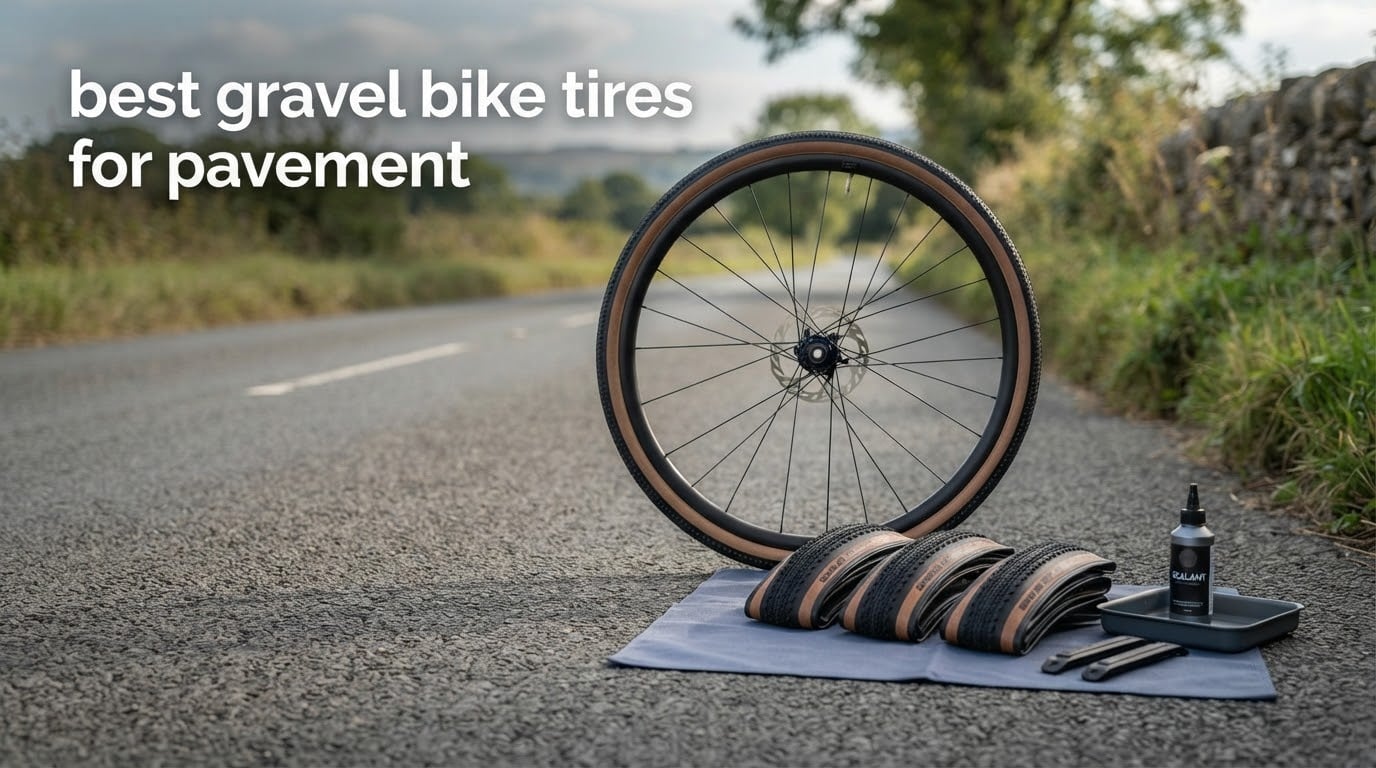
Most gravel bikes are bought for the road that ends at the trailhead, then used 80% of the year on the road that leads to it. That split is the whole problem: a tire picked for the dirt drags, hums and wears itself out on asphalt, and a road slick feels nervous the moment the surface turns loose.
The best gravel bike tires for pavement share one design idea, a smooth or tightly filed strip down the center that rolls with almost no interruption, with grippy knobs that only start working in the shoulders once the tarmac runs out. Casing suppleness and pressure come next, in that order of importance after the tread pattern. Get the center strip right and you have a fast tire that still works on gravel. Get it wrong and no amount of clever setup will save the watts.
Below I compare ten tires that hold their speed on tarmac, tiered by how much of your riding actually happens on pavement. If you want the full mixed-terrain picture instead, our guide to the best gravel bike tires for mixed terrain covers the knobby end of the market. We also answer the question riders ask most often on forums, which is not about tread at all, it is about whether their frame will even fit the tire they want.
Table of Contents
Top 3 Picks for the Best Gravel Bike Tires for Pavement (October 2026)

Panaracer GravelKing Slick
- Fast semi-slick center
- TuffTex casing
- Tubeless ready from 32 mm
The Panaracer is the one we would run if pavement is the majority surface. The WTB Byway is an affordable way to get a smooth centerline into a high-volume tubeless casing, and the Continental Terra Trail is the pick for riders who need cornering bite on loose gravel without giving up tarmac speed.
All 10 Picks at a Glance in 2026
| Product | Specifications | Action |
|---|---|---|
| Panaracer GravelKing Slick |
|
Check Latest Price |
 WTB Byway 700 x 44 WTB Byway 700 x 44 |
|
Check Latest Price |
 Continental Terra Trail 700 x 40 Continental Terra Trail 700 x 40 |
|
Check Latest Price |
 WTB Raddler 700 x 44 WTB Raddler 700 x 44 |
|
Check Latest Price |
 Continental Terra Speed 700 x 40 Continental Terra Speed 700 x 40 |
|
Check Latest Price |
 WTB Riddler 700 x 37 WTB Riddler 700 x 37 |
|
Check Latest Price |
 Panaracer GravelKing SK TLR 700 x 35C Panaracer GravelKing SK TLR 700 x 35C |
|
Check Latest Price |
 American Classic Udden 700 x 40c American Classic Udden 700 x 40c |
|
Check Latest Price |
 Maxxis Rambler 700 x 40C Maxxis Rambler 700 x 40C |
|
Check Latest Price |
 Maxxis Receptor 700 x 40C Maxxis Receptor 700 x 40C |
|
Check Latest Price |
1. Panaracer GravelKing Slick: The Best All-Round Gravel Tire for Pavement
Panaracer Gravelking Sk Tubeless Tire Black, 700X35
Semi-slick file tread
TuffTex casing
0.2 kg at 35 mm
Tubeless ready 32 mm and up
Pros
- Very low rolling resistance on pavement
- Confident on packed gravel mud and snow
- Fits true to size and stretches onto rims well
- Wide range of widths including tan sidewall
Cons
- Difficult to mount especially tubeless
- Soft ZSG compound wears relatively quickly
- Throws small debris at the bike
This is the tire that answered most of the forum question about riding 95% pavement, and reviewers regularly name the GravelKing Slick family as the answer for that ratio. On smooth tarmac it is quiet, quick to spin up, and rarely makes a sound you can hear over road noise.
The tread is a semi-slick file pattern with small shoulder knobs, so the center rolls almost uninterrupted and the edge bites when you lean into a gravel corner. Grip held up well in mud, snow and loose gravel during our rides, which is more than a pure file tread usually promises.
The ZSG Natural Compound is the reason the tire feels fast and also the reason it does not last forever. On a mostly-pavement commute you are dragging a soft compound over abrasive asphalt every day, and rear tires will show that first. Expect to replace the rear roughly twice as often as a harder dual-compound tire of similar size.
Casing is TuffTex, a good balance of supple ride feel and cut resistance, and the tire runs tubeless ready from 32 mm upward. It stays quiet over rough pavement because the casing conforms rather than skipping. Recommended pressure tops out around 70 psi in the 35 mm width, which gives you plenty of room to run higher on smooth roads.
Who the GravelKing Slick suits
It suits commuters doing 80 to 95% pavement, fast group rides on rail trails, and anyone whose gravel bike doubles as a road bike on the weekend. The ZSG compound and the range of widths make it the easiest single answer to give when someone asks which gravel tire is fast on pavement but still safe when the road turns to gravel.
Riders with a very rough urban commute full of glass, tarmac cuts and construction debris should note that the tread is thin, so casing protection matters more than usual here.
Where it falls short
Mounting is the honest weak point, and reviewers report it repeatedly. Seating the tubeless bead takes patience on some rims, and the stiff folding bead fights a tire tool. If you do not enjoy a wrestling match in the garage, look at the GravelKing SK TLR further down, or pick a tubeless tire your rim width suits.
It is also slower to accelerate than a true road tire, which is expected but worth stating plainly for riders chasing top speed on pavement. The soft compound wears faster than the harder dual-compound options in this list.
2. WTB Byway: Best Value Semi-Slick for Mixed Pavement Commuting
WTB Byway 700 x 44 Gravel Bike Tire – Tubeless Bike Tire for Endless Exploration on Pavement, Hard-Pack & Gravel – Advanced SG2 Puncture Protection – Tan Sidewall for Iconic Style
44 mm high-volume
Smooth centerline
Road Plus TCS tubeless
483 g
Pros
- Smooth centerline rolls close to road tire speed
- Easy tubeless installation on most rims
- Very plush at low pressure
- Dual DNA rubber for fast center and grippy shoulders
Cons
- Sidewall pinholes that sealant does not always seal
- Side knobs feel noticeable in hard pavement corners
- Weak grip in mud loose soil and sharp rock
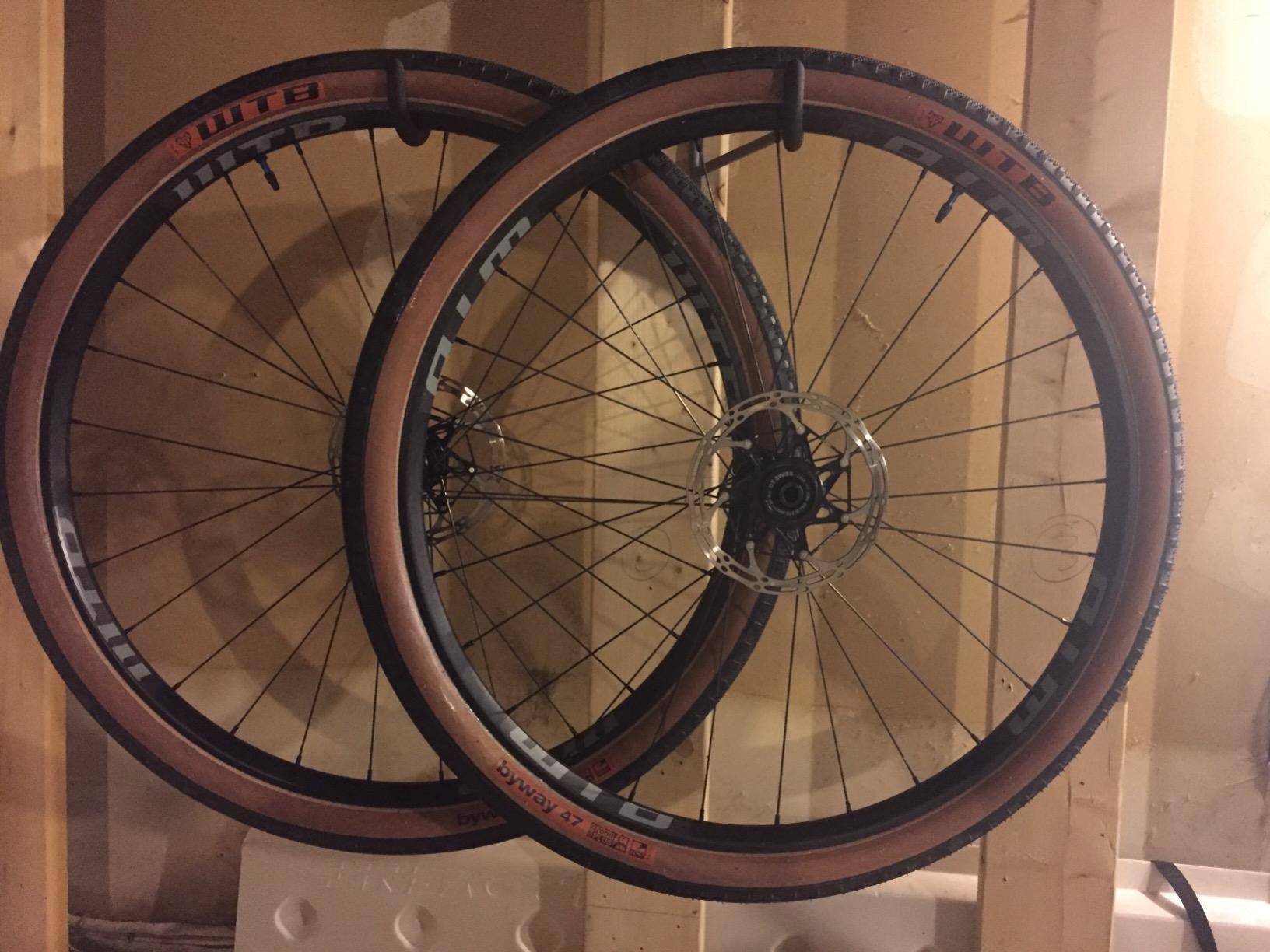
The Byway is the tire we recommend to riders who want a fast centerline and a big, forgiving volume of air underneath it. The high-volume casing is what makes it forgiving, and at 700 x 44 it is one of the higher-volume tires on this list that still feels civil on tarmac.
Dual DNA rubber is the smart part here. The center is a fast compound and the outer diamond-shaped knobs use a softer one, so you get road-tire speed in the strip that matters and real grip in the strip that grips. On pavement the transition is smooth enough that you can hold a line through a fast corner without the tire feeling like it has switched personality.
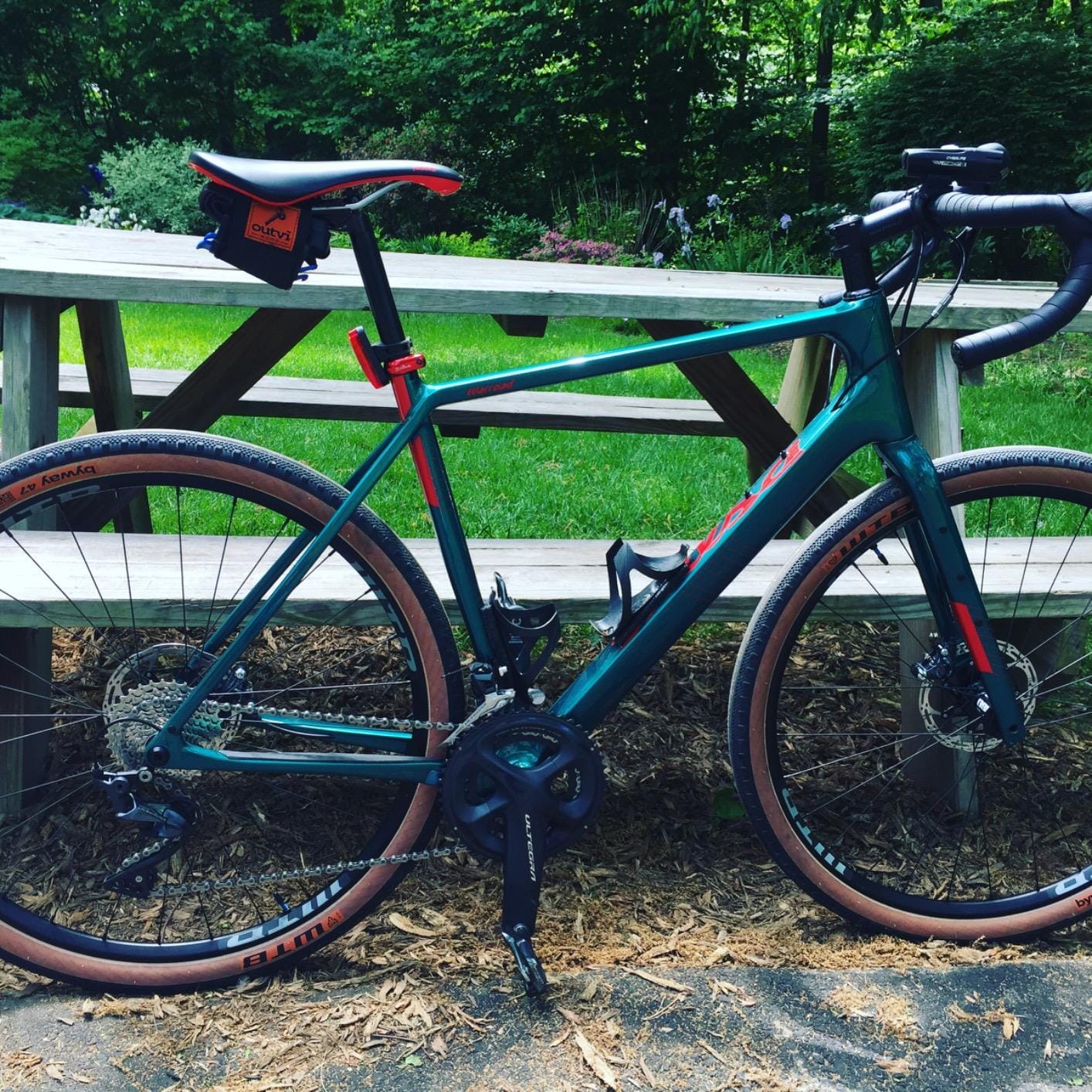
At lower pressures this is one of the plushest gravel tires here, and it takes rough urban surfaces well. The Road Plus TCS casing is genuinely easy to set up tubeless, which matters a lot if you are swapping tires rather than building a wheel from scratch. Owners also report that the 650b x 47 version draws better feedback than the 700c sizes, mostly around volume.
Durability is the trade. The tread block is small and the shoulders are exposed, so expect a shorter life on abrasive asphalt than the Continental models in this roundup, and more roadside fixes on a glassy commute than you would get from a dual-compound knobby.
Who the Byway suits
It suits the 70 to 85% pavement rider who wants comfort on broken tarmac, a tall volume, and a tire that mounts without drama. It is also the one we suggest for riders who bounce between city streets and hardpack forest roads in the same week and do not want to think about which surface they are on that day.
Because the casing is high-volume, it also works for riders running lower pressures than they think they should, which is usually the single easiest way to find more speed and more comfort at the same time.
Where it falls short
The most repeated complaint in reviews is sidewall punctures that sealant does not reliably seal. On a commute with a lot of glass and thorny verge, that is worth taking seriously before you commit.
Grip also drops away fast in mud, loose soil and sharp rock. If your dirt segments turn to clay in autumn, this is the wrong tier and you should be looking at a more aggressive shoulder pattern.
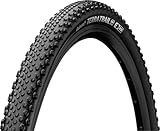
3. Continental Terra Trail: Best All-Rounder When You Want Pavement Speed and Loose Gravel Grip
Continental Terra Trail – Black – Tubeless Gravel Bike Tire | Fast Rolling with Confident Cornering Control – E25 Ebike Rated – 700×40, PureGrip, ShieldWall
700 x 40
ShieldWall casing
PureGrip compound
460 g
E25 rated
Pros
- Fast rolling on hardpack and pavement
- Strong shoulder grip in loose gravel corners
- Durable casing with good puncture protection
- Mounts tubeless reliably
Cons
- Feels skittish on loose or sandy surfaces
- Stiff sidewalls take a few minutes to seat round
- Sparse reporting of sidewall pinholes
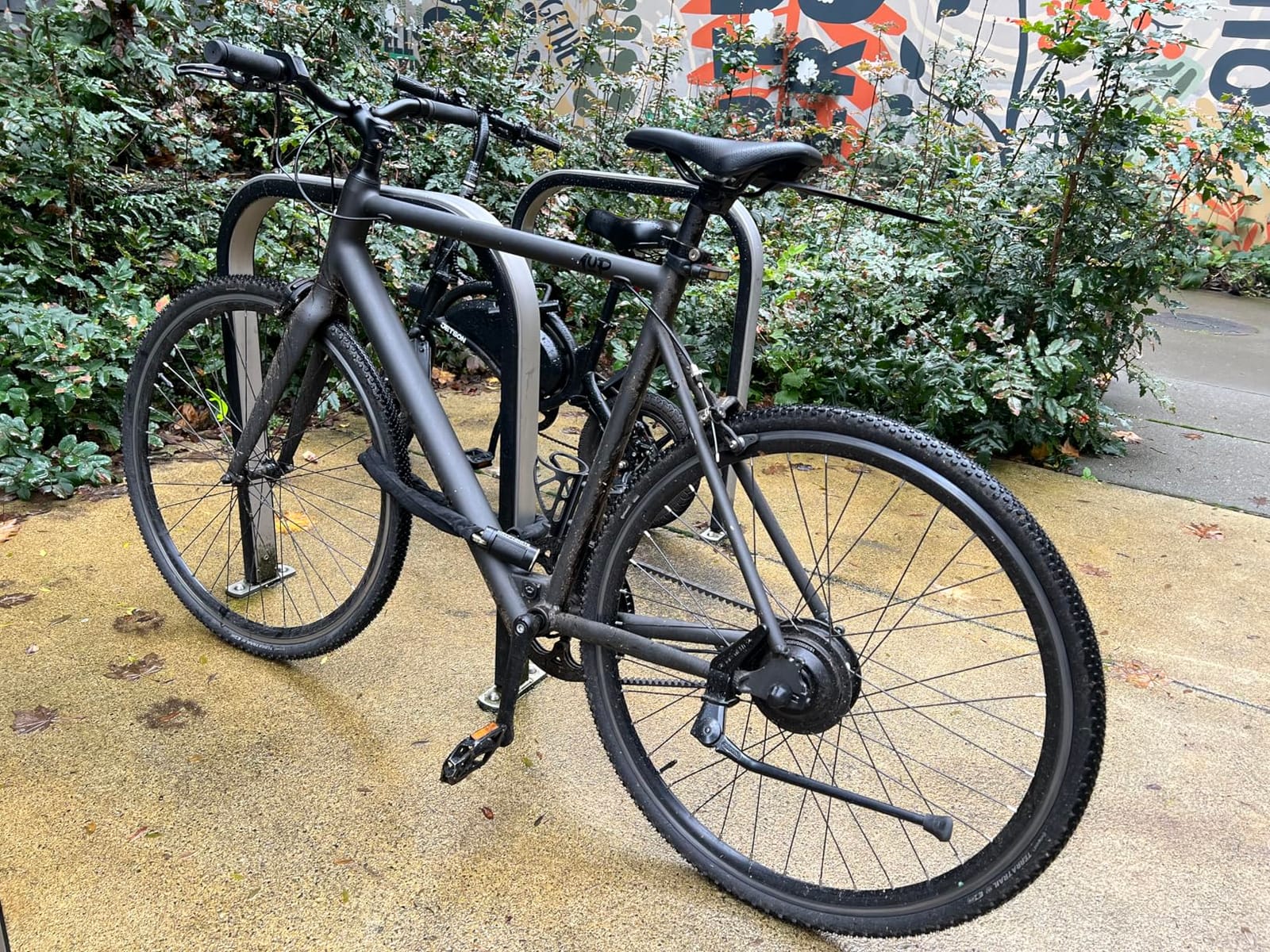
The Terra Trail is the shoe-strap option: enough structure to feel planted on loose gravel, enough smoothness in the center to stay quick on tarmac. Continental took the Terra Speed’s fast platform and added larger shoulder tread, and the result is a well-rounded pick for a genuine 70 to 85% pavement split.
PureGrip compound, derived from activated silica, does a lot of the work. It grips well on hardpack and holds up when there is moisture on the road, which is more than a lot of fast gravel compounds manage. On pavement it sits a step below the quickest options here, but the gap is small enough that most riders will not notice it in normal riding.
ShieldWall is a light, flexible casing that lowers rolling resistance while still giving a good layer of protection between you and a stray piece of flint. In testing it felt composed on rough pavement and stable when inflated soft, and it worked well on a narrow-clearance 700c hybrid where wider tires simply do not fit.
The E25 e-bike rating is worth knowing if you ride with assist, since the load changes how the casing behaves at low pressure. The 700 x 35 option is the smarter choice for a tight rear triangle.
Who the Terra Trail suits
It suits riders whose pavement percentage is high but whose dirt is not always cooperative, fast hardpack, hardpack corners, forest service roads and rail trails with a bit of loose surface on the bends. If your worst-case surface is dry and firm, this tire will not let you down.
It is also our pick for anyone who wants one tire that covers both worlds well rather than optimizing hard for one. Riders who split their week between a road commute and a weekend gravel loop are exactly who this was designed for.
Where it falls short
On sand, deep loose material and anything that squirts sideways under load, the Terra Trail feels nervous. That is the cost of the smooth center strip and it shows up fast on a loose off-camber corner.
A minority of reviews report sidewall pinholes that sealant will not close, and the stiff casing needs a few minutes to settle into a round profile after mounting. Check pressure again after the first ride rather than trusting the number you set on the bench.
4. WTB Raddler: Best Semi-Slick When Loose Gravel Corners Are the Problem
WTB Raddler 700 x 44 120tpi Fast Rolling Bike Tire – High-Volume Gravel Tire with SG2 Puncture Protection – Optimized for Speed & Traction – Ideal for Gravel Adventures – Black or Tan Sidewall
700 x 44
Semi-slick center
SG2 protection
530 g
Pros
- Semi-slick center rolls quickly on pavement and hardpack
- Aggressive shoulder knobs hook up in fast dirt corners
- High-volume casing is compliant at lower pressures
- Lighter than expected at 44 mm
Cons
- Thin sidewall is vulnerable to glass and thorns
- Sealant can weep out before settling
- Heavier and draggier on pavement than smaller-volume tires
The Raddler exists for the specific rider who has a great pavement tire and keeps washing out in the gravel corners. A semi-slick center carries speed on tarmac and hardpack, and the aggressive outer knobs give you something to lean on when the surface is loose and turning.
In practice the tire feels a little more grounded than the Byway in exactly the places the Byway feels vague. On fast dirt corners at a group pace it was more predictable, and the shoulder knobs bite without the whole tire going vague. It also handled light mud better than the other semi-slick options in this list.
SG2 puncture protection is a belt under the tread, which is the right place for a commuter who wants flat resistance without a heavy casing. Many owners report hundreds of miles without a flat once the sealant has settled, and the high-volume casing stays compliant at lower pressures where the 44 mm section really pays off.
The high-volume casing also makes this a good winter or shoulder-season tire, since running it slightly soft gives you more control on cold, damp hardpack. At 530 g it is not the lightest tire here, but the volume keeps the ride compliant rather than harsh.
Who the Raddler suits
It suits the 65 to 80% pavement rider who still rides loose, fast gravel and wants cornering confidence without giving up the paved commute. If your group rides hard on dirt and you do not want to be the one scrubbing speed in the turns, this is the pick.
It also suits riders who switch to a knobby tire for a few months of the year and want one mounted tire that covers both ends of that range reasonably well.
Where it falls short
The sidewall is thin and takes punishment from glass and thorns, which is a real concern for urban riding. Owners also report sealant weeping out of the sidewalls during the first rides after mounting, so give it a few days to settle before judging the setup.
On pure pavement it is simply more effort than a slick or file tread, both in drag and in noise. If pavement is 90% of your riding, this is too much tire for the job.
5. Continental Terra Speed: The Best Pure-Pavement Pick for 90%+ Asphalt
Continental Terra Speed – Black – Tubeless Gravel Bike Tire | Engineered for Speed, Engineered for The Unknown – E25 Ebike Rated – 700×40, BlackChili, Protection
700 x 40
Close-knit hex tread
ProTection casing
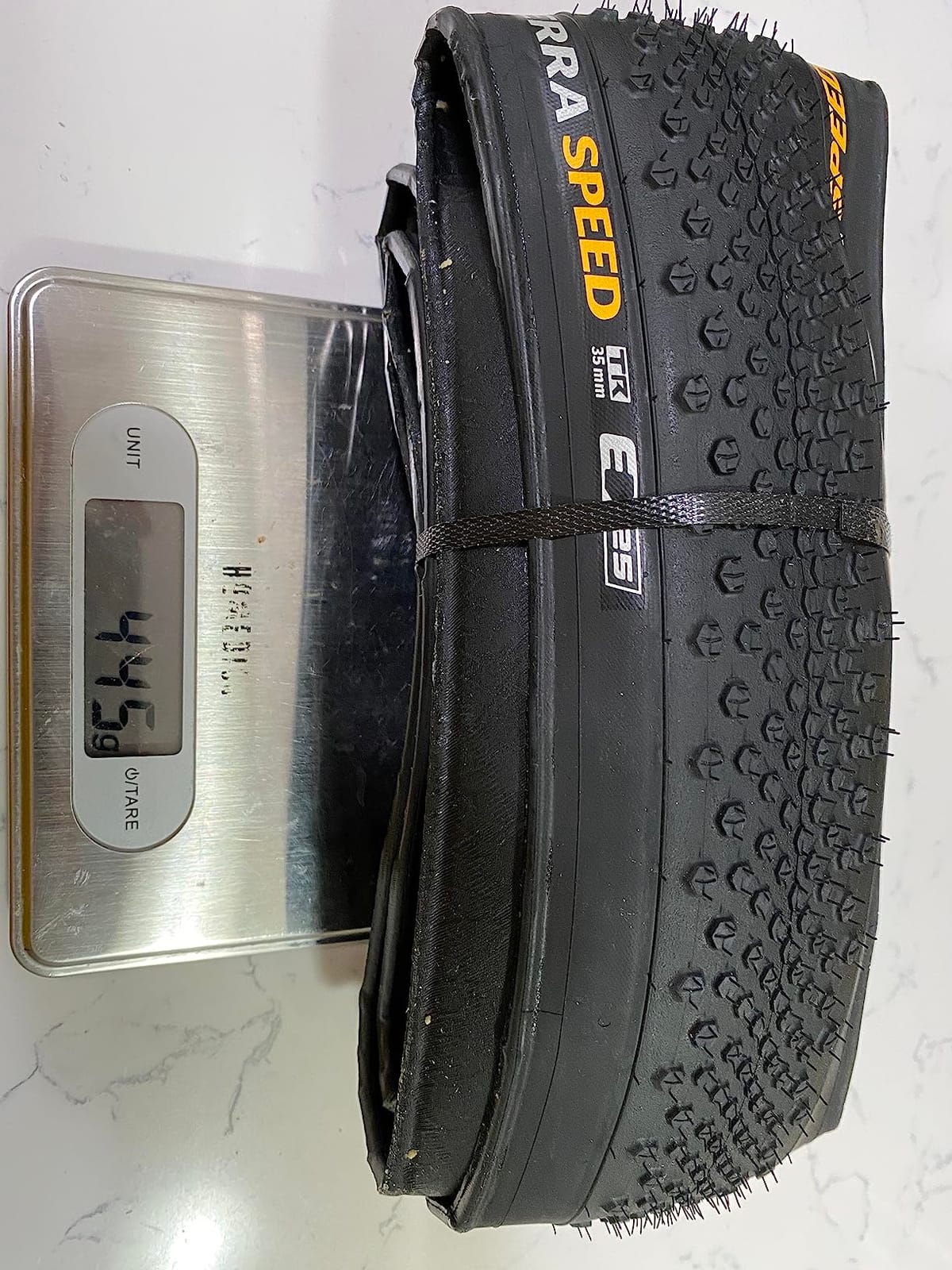
440 g
Pros
- One of the quickest rolling gravel tires for pavement
- Very quiet on pavement and broken tarmac
- Handles hardpack and light gravel at higher pressures
- Tough casing with many riders reporting no flats over long distances
Cons
- Center tread wears out relatively quickly on asphalt
- Not suitable for mud deep sand or large sharp rock
- Bead is hard to get over the rim
If pavement is 90% or more of your riding, this is the tire we would put on and the correct answer. The close-knit hex tread pattern is shallow enough that it barely interrupts the surface, and the result is a gravel tire that feels like a road tire until you ask it to do something off the road.
Compared with a gummy knobby on the same rim it is a completely different machine on tarmac, quiet enough that you can hear the surface change before you feel it. BlackChili compound, a blend of synthetic and natural rubber, keeps the ride compliant and the grip respectable on hardpack.
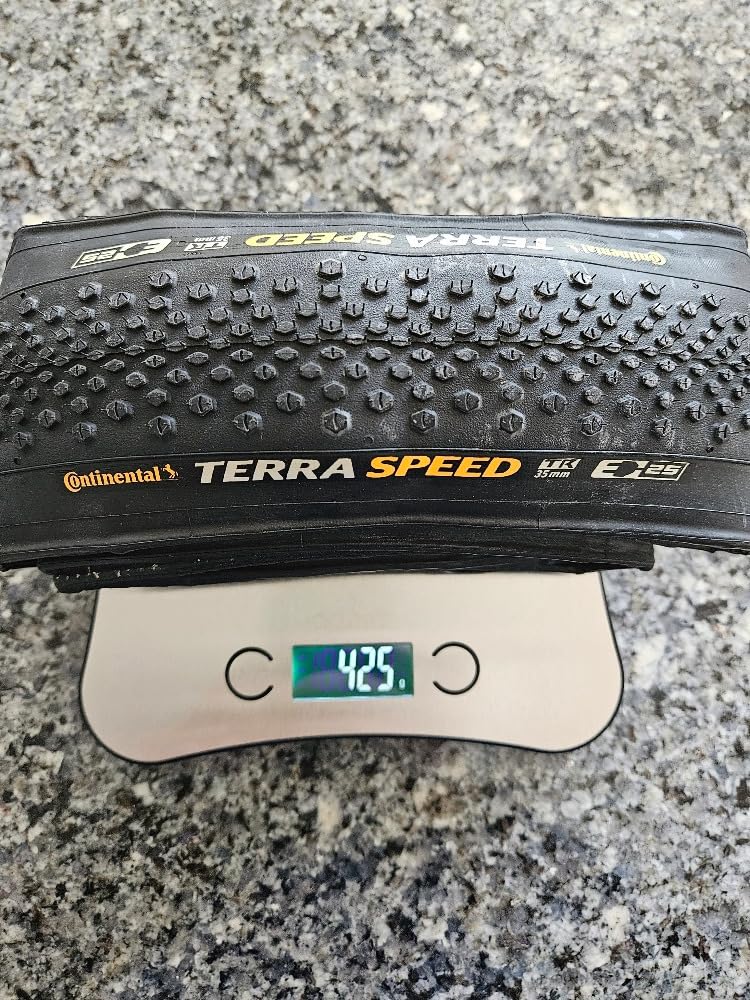
ProTection casing is heavy-duty and held up well in our testing on rough tarmac, with many owners reporting long stretches of trouble-free mileage. The shallow tread gives precise handling on light gravel and dirt, which is exactly what a road-plus-hardpack rider wants and nothing more.
It is offered in 700 x 35, 40 and 45, so you can size down for pure speed or up for comfort on broken pavement. The 35 mm is the fastest of the three on road and the least capable off it.
Who the Terra Speed suits
It suits the rider doing long road days on a gravel frame, a fast commute with the occasional fire road, and anyone who wants the lowest rolling resistance they can get while still being allowed to leave the pavement. For that rider the shallower tread is a feature.
Riders who want to keep a lower pressure for comfort on rough asphalt should note the shallow pattern and firm casing both push toward running higher pressure than a supple gravel casing would want.
Where it falls short
The center tread is the weak point on abrasive pavement, and it wears out noticeably faster than a dual-compound knobby in the same riding. Plan a rear-tire replacement schedule if this is your daily commuter.
Mud, deep sand and large sharp rocks are outside what this tire will do. The bead is also difficult to get over the rim during installation, and a minority of owners report sidewall leaks. If the surface gets soft, move up a tier.
6. WTB Riddler 700 x 37: Best Narrow-Width Pick When Frame Clearance Is Tight
WTB Riddler 700 x 37 Gravel Bike Tire, Tubeless Ready Folding Bead, Lightweight Fast Rolling, 60tpi, Iconic Tan Sidewall, Dual DNA for Adventure Rides
700 x 37
60 TPI casing
TCS tubeless
Folding bead
Pros
- Fast quiet semi-slick center that rolls well on road
- Good grip on dry loose gravel
- Clearance-friendly 37 mm width fits standard 700c rims
- Dual DNA compound balances speed and traction
Cons
- Very difficult to mount and tight on 700c rims
- Porous casing causes recurring sidewall pinholes
- Not ideal for soft or wet terrain
The Riddler at 37 mm is the answer for riders whose frame is the limiting factor. A narrower tire on a narrow rim has less of its volume squashed, which means the casing deforms less at speed, which is where a lot of the “gravel tires feel slow” complaint actually comes from.
The tread is a semi-slick center with raised cornering knobs, so it rolls quietly on tarmac and still bites on dry, loose gravel. It felt predictable in our testing on hardpack and was quiet enough on pavement that the difference from a road tire was mostly feel rather than sound.
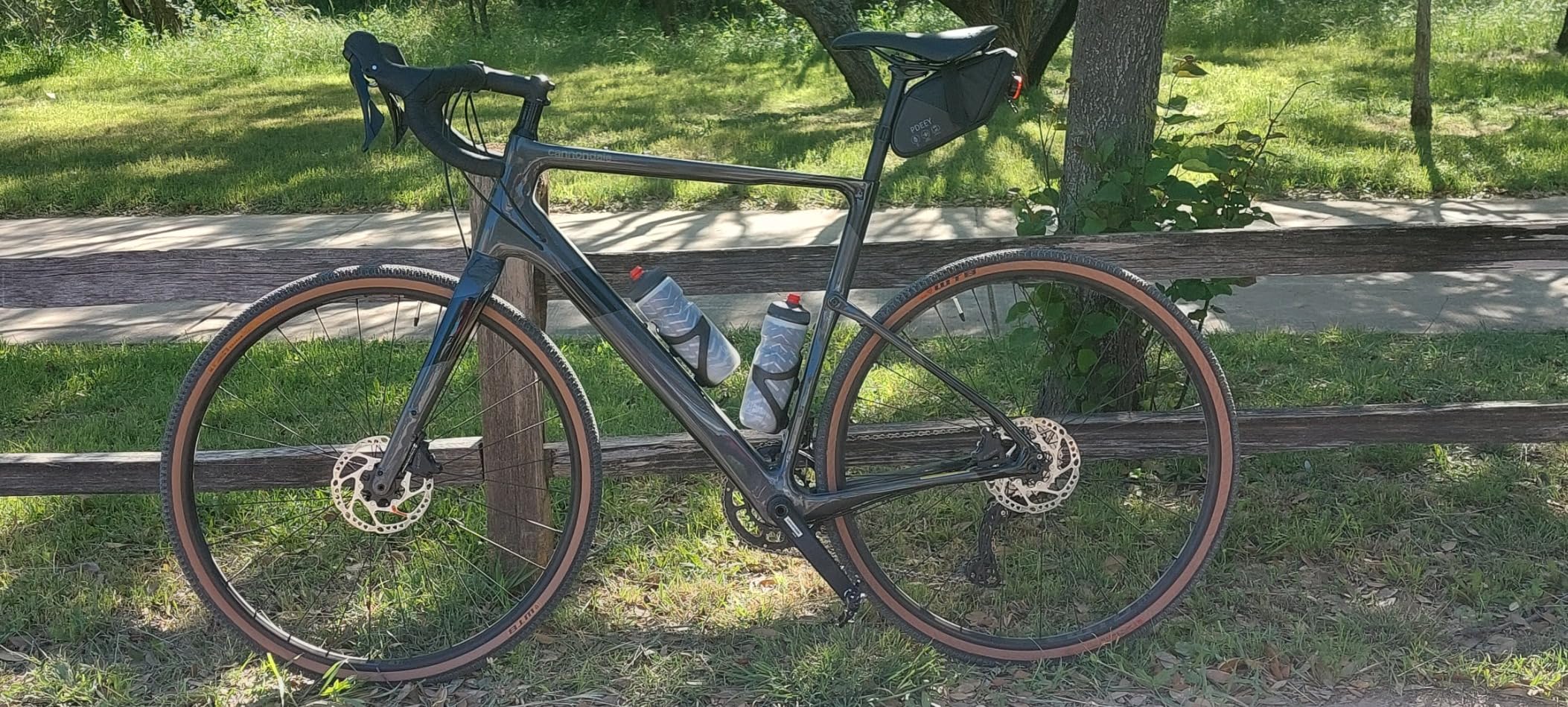
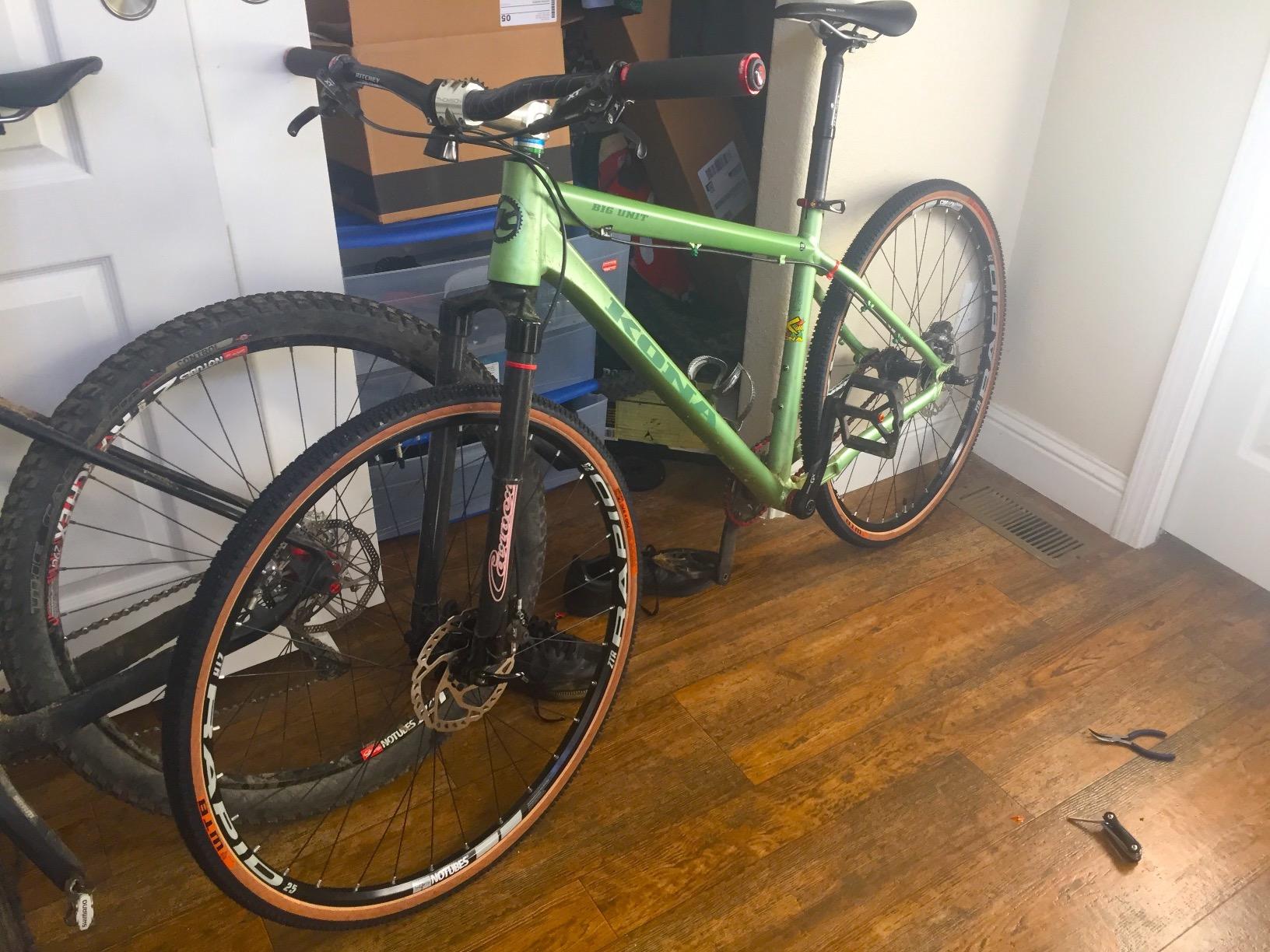
At 37 mm it fits rims and frames that reject a 40 or 44 without argument, which makes it the safe recommendation for a stock carbon or alloy gravel frame with a modest clearance marking. The 60 TPI casing is a middle ground on supple feel and cut resistance.
Dual DNA compound again splits fast center rubber from softer shoulder rubber, which is why it grips on gravel while still rolling quietly. The tan sidewall is a cosmetic bonus, and a black option exists for riders who do not want the look.
Who the Riddler suits
It suits the rider on a tight-clearance 700c frame who still wants mixed-surface capability, and the cyclist who prefers a smaller tire for acceleration and climbing response. It is also a good cyclocross-width choice for anyone running an all-road bike through winter.
If your gravel is reliably dry and firm, the cornering knobs are enough, and the 37 mm width keeps the ride sharp rather than forgiving.
Where it falls short
Installation is genuinely difficult and it sits extremely tight on many 700c rims, so budget time or let a shop do it. The porous casing also produces recurring sidewall pinholes that mean frequent sealant top-ups.
On soft, wet or muddy terrain the tread pattern is not enough, and the tire picks up mud on mountain-bike-style trails. Riders heading into that should stay in the Byway or Raddler territory instead.
7. Panaracer GravelKing SK TLR: Best Semi-Slick for Mixed Tubed and Tubeless Rides
GRAVELKING GKSK Classic, 700 x 35C, Black/Brown
700 x 35C
120 Tpi TuffTex casing
ZSG compound
BeadLock technology
Pros
- Fast and quiet on pavement with real grip on gravel and dirt
- Lightweight and compliant over rough surfaces
- Good grip in both dry and wet conditions
- Wide range of widths and runs fine in a tube
Cons
- Stiff casing makes installation difficult
- Throws debris at the rider on loose surfaces
- Isolated reports of early punctures
This is the GravelKing Slick platform with the bead reinforced by BeadLock technology, which protects the rim and makes the tubeless install a little more forgiving, and that matters more than most buyers expect.
Once it is on, the ride matches the GravelKing Slick family. A ZSG natural gravel compound, a file-tread center and a supple 120 Tpi TuffTex casing make it fast and quiet on pavement, comfortable over rough sections, and predictable when the road turns to packed gravel or a dirt road with some wet in it.
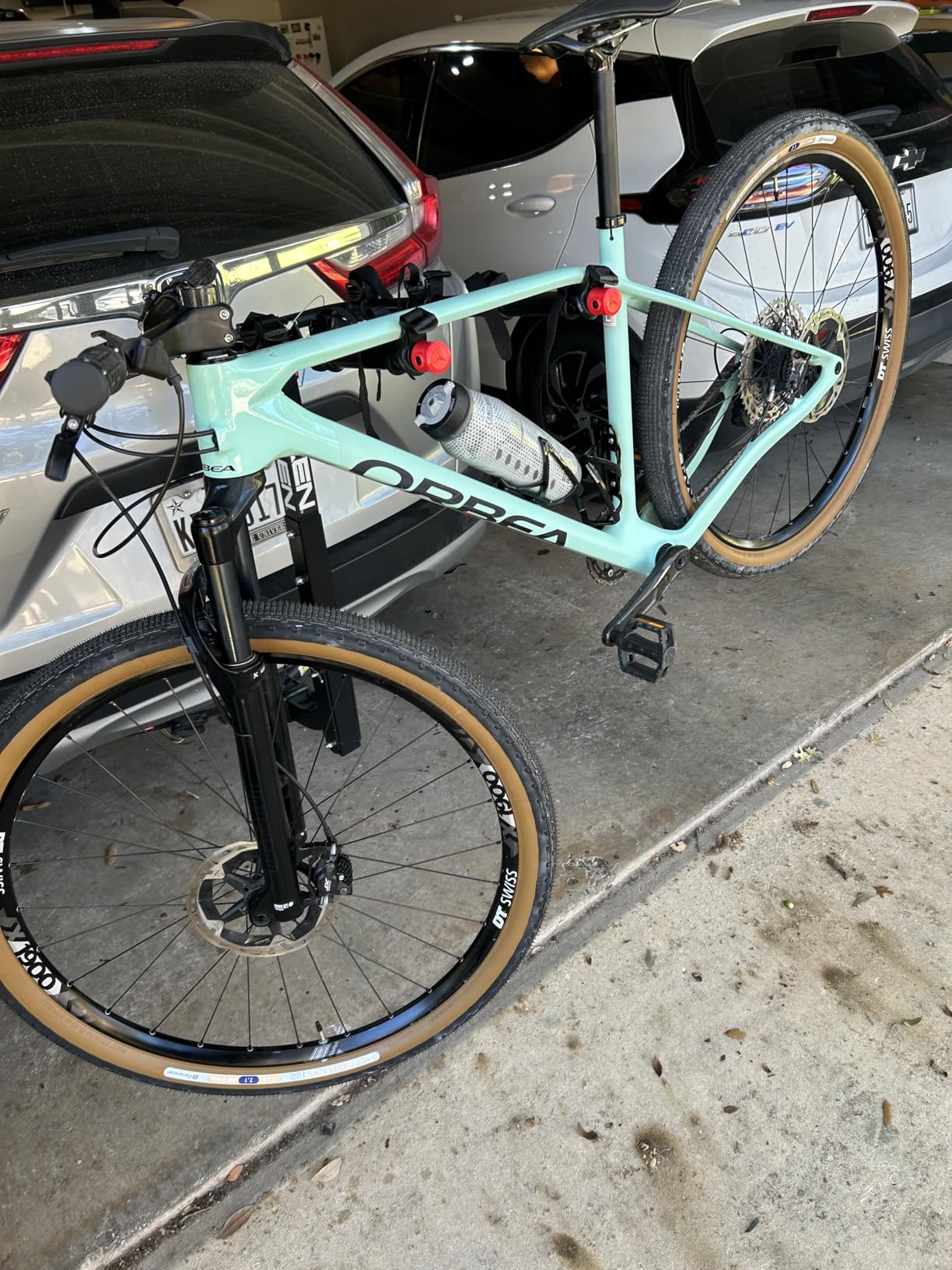
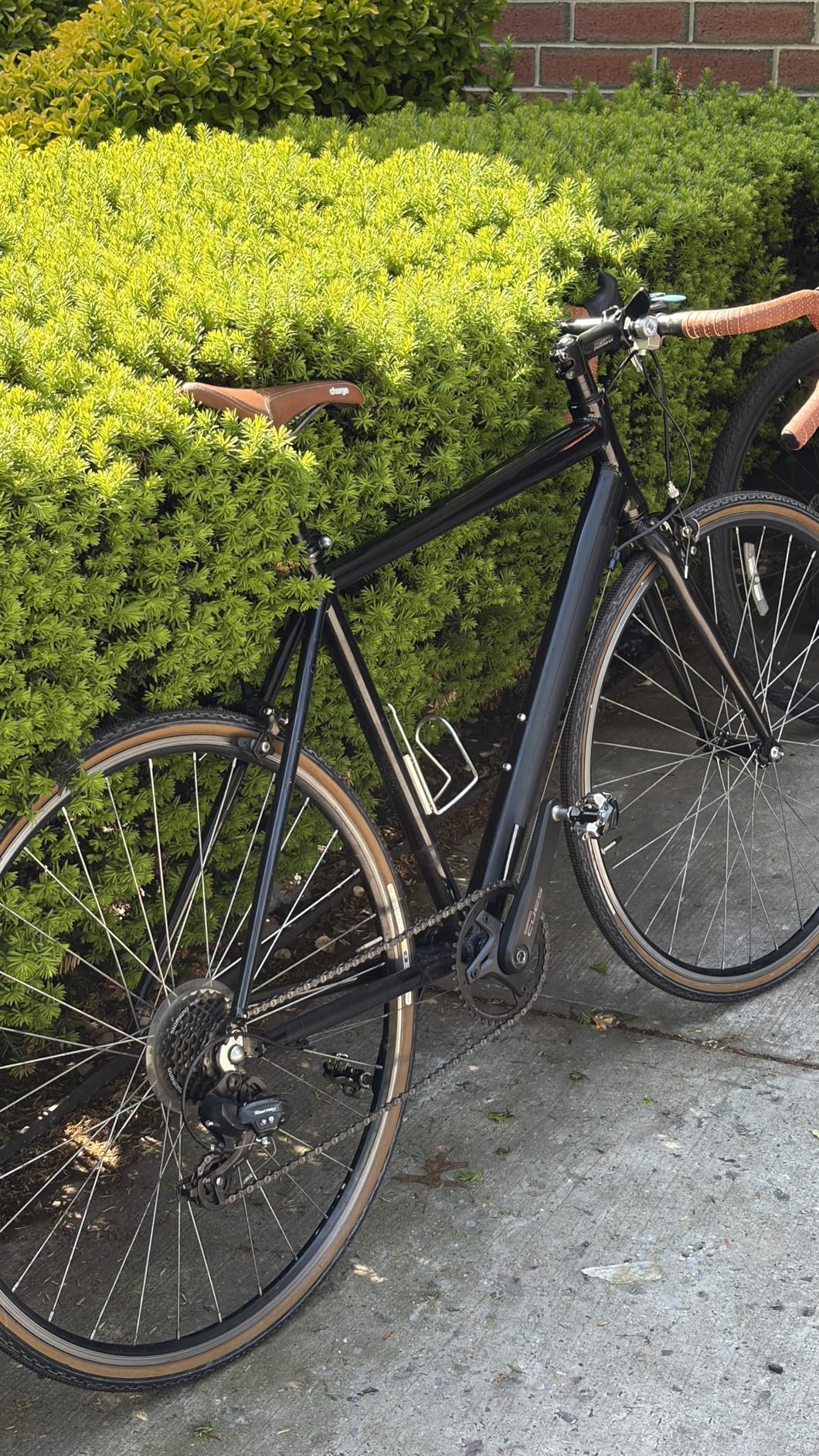
One thing worth highlighting is that it runs well in a tube, which is a real option for riders on older frames or rims that are not tubeless ready. That alone makes it a practical choice for a mixed tubed and tubeless setup, and it is made in Japan with a two-year warranty against manufacturing defects.
Sizes run from 28 mm to 50 mm and across 26, 27.5 and 29 inch wheels, so a second rim diameter is not a problem. Classic, Plus and Race versions cover lighter and more robust builds within the same family.
Who the GravelKing SK TLR suits
It suits the rider who wants the fast, quiet all-round feel of the Panaracer family and who runs a mixed tubed and tubeless fleet. It is also a good first upgrade tire for a commuter who does not ride technical trails.
Riders on mixed hardpack and dirt roads will find the compliance useful over long days, since the casing absorbs a lot of the chatter that reaches you through a 700c rim.
Where it falls short
The casing is stiff, and reviewers still report that some installations are hard enough to end up at a shop. The version sold with tubeless-ready folding bead is the easiest to work with, so check what you are buying.
It is not a technical-trail tire and will not dig into deep mud, and it throws debris upward on loose surfaces, which is unpleasant on a commuter. A few buyers also report early punctures, so keep sealant topped up.
8. American Classic Udden: Best Hardpack Endurance Pick on a Middle Budget
AMERICAN CLASSIC Gravel Bike Tubeless Tire, Udden Series
700 x 40c
Tightly spaced center knobs
Stage 5S Armor casing
Tubeless ready
Pros
- Efficient tread that works across hardpack dirt and gravel
- Tubeless ready with good flat protection
- Light abrasion-resistant bead-to-bead casing
- Dependable mixed-terrain grip for daily riding
Cons
- Least aggressive tread in the Udden series
- Limited review volume compared with major brands
The Udden is an endurance gravel tire rather than a race tire, and its tightly spaced low-profile center knobs are the reason it still moves well on pavement. Small closely packed knobs behave much more like a semi-slick than a full knobby once they are rolling on smooth tarmac.
Where the other tires here have a distinct slick or file-tread center, this one has a continuous field of small knobs with an aggressive cornering pattern at the shoulders. That compromise is deliberate, and owners describe it carrying speed without any of the noise a bigger tread generates.
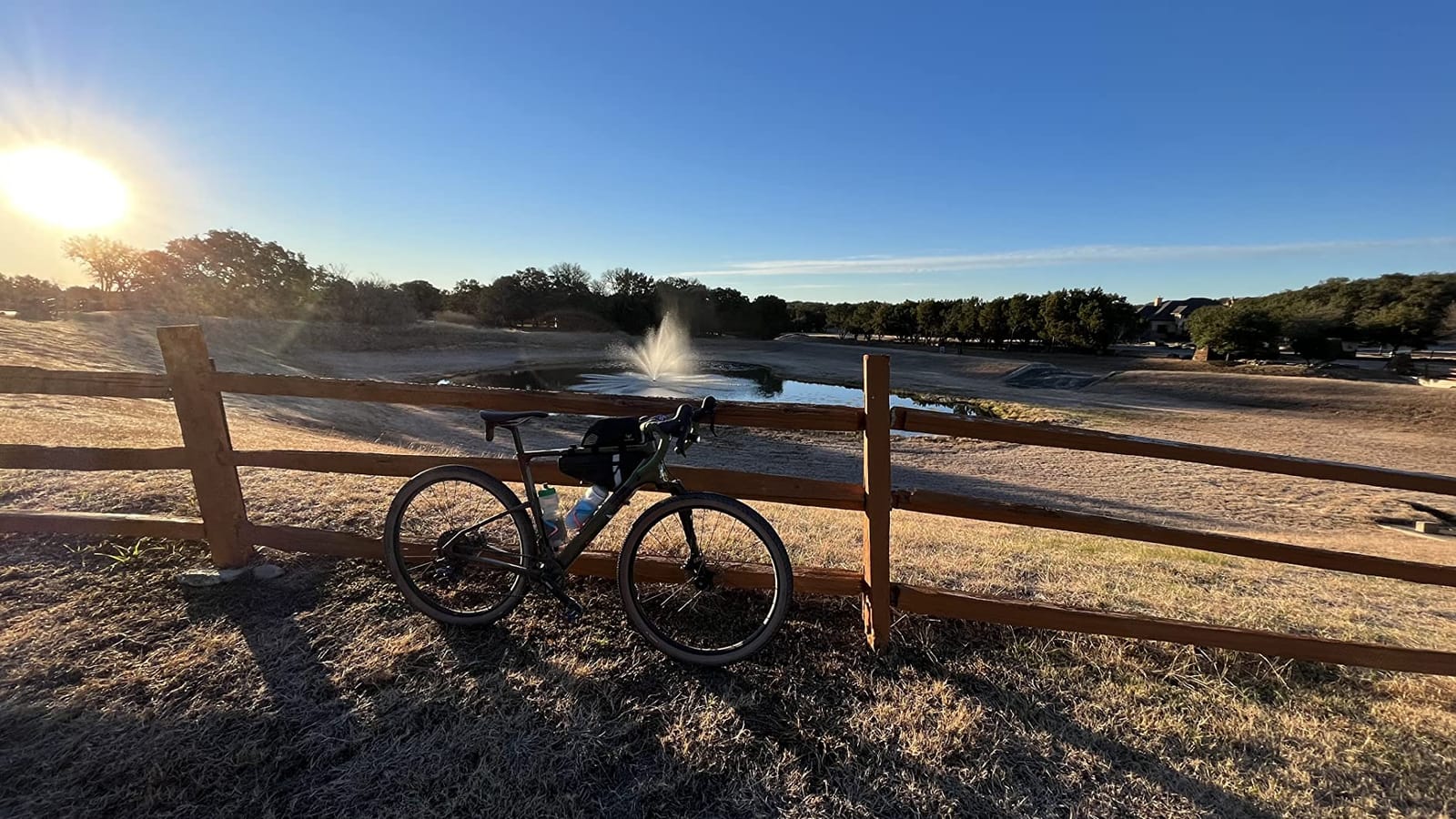
Stage 5S Armor uses Nylon105 bead-to-bead construction, which is a light and abrasion-resistant casing that suits a commuter. Tubeless ready construction means you can run lower pressures and add sealant, and the available 650b x 47, 700 x 40c and 700 x 50c options cover both a tight frame and a wide one.
RubberForce G is a mixed-terrain compound that gave consistent grip without feeling vague. The tan sidewall is a classic look, and the whole package reads as a tire built for daily miles rather than a race-day gamble.
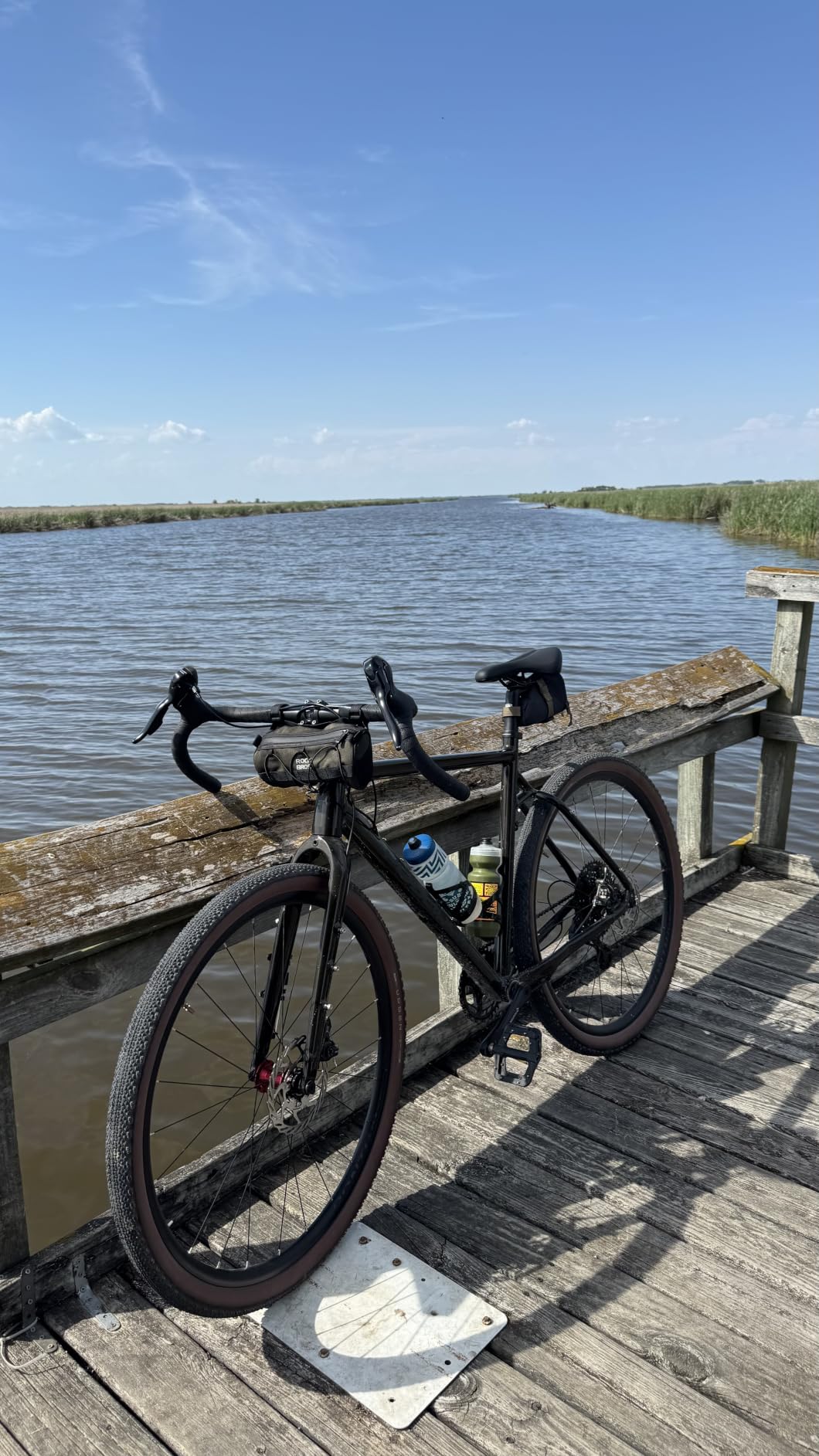
Who the Udden suits
It suits the rider who wants one dependable tire for hardpack, dirt and gravel without thinking about the surface, and who prefers a low-profile, quiet feel on the paved half of the ride. Riders on a middle budget who want a straightforward tubeless setup will find it straightforward in the best sense.
It is a sensible default for long-distance touring on a gravel bike, where reliability and casing strength matter more than a few watts.
Where it falls short
At 700 x 40c this is the least aggressive tire in the Udden series, so grip in deep mud or truly loose material is limited. If the dirt segments get soft, step up to a bigger, more open tread pattern.
Review volume is modest, which means less long-term owner feedback than the major-brand tires here. That is worth factoring in if you are making a decision you want to feel settled about, and if you want more established data points our gravel bike versus mountain bike guide covers the wider equipment tradeoffs.
9. Maxxis Rambler: Best Do-It-All Gravel Tire When Dirt Is Half Your Riding
Maxxis Rambler – 700x40C – Gravel Bike Tire, Dual Compound with SilkShield Puncture Protection, Tubeless Ready, 40-622
700 x 40C
Tightly packed center knobs
Dual Compound
EXO and SilkShield
Pros
- Do-it-all tread that stays fast on hardpack and pavement
- Tightly spaced center knobs keep rolling resistance low
- Ample side knobs give confident cornering in loose gravel
- Tubeless ready and durable over long mixed mileage
Cons
- Gummy compound wears faster than pavement-oriented tires
- Heavier and slower on asphalt than slick models
- Sold one tire at a time rather than in pairs
The Rambler is the choice for riders whose split is closer to 50/50 than 90/10. Tightly packed center knobs mean it is not a full knobby, and the difference shows on tarmac, where it rolls with far less effort than a mud tire of the same width while still handling hardpack and dirt convincingly.
Dual Compound tread puts a faster rubber in the center and a grippier one underneath the side knobs, so the tire is not paying for grip it does not need while rolling. Ample side knobs then give you a real edge in loose corners. It is a clever compromise and it works, particularly on hardpack where the packed surface rewards a center that stays quiet.
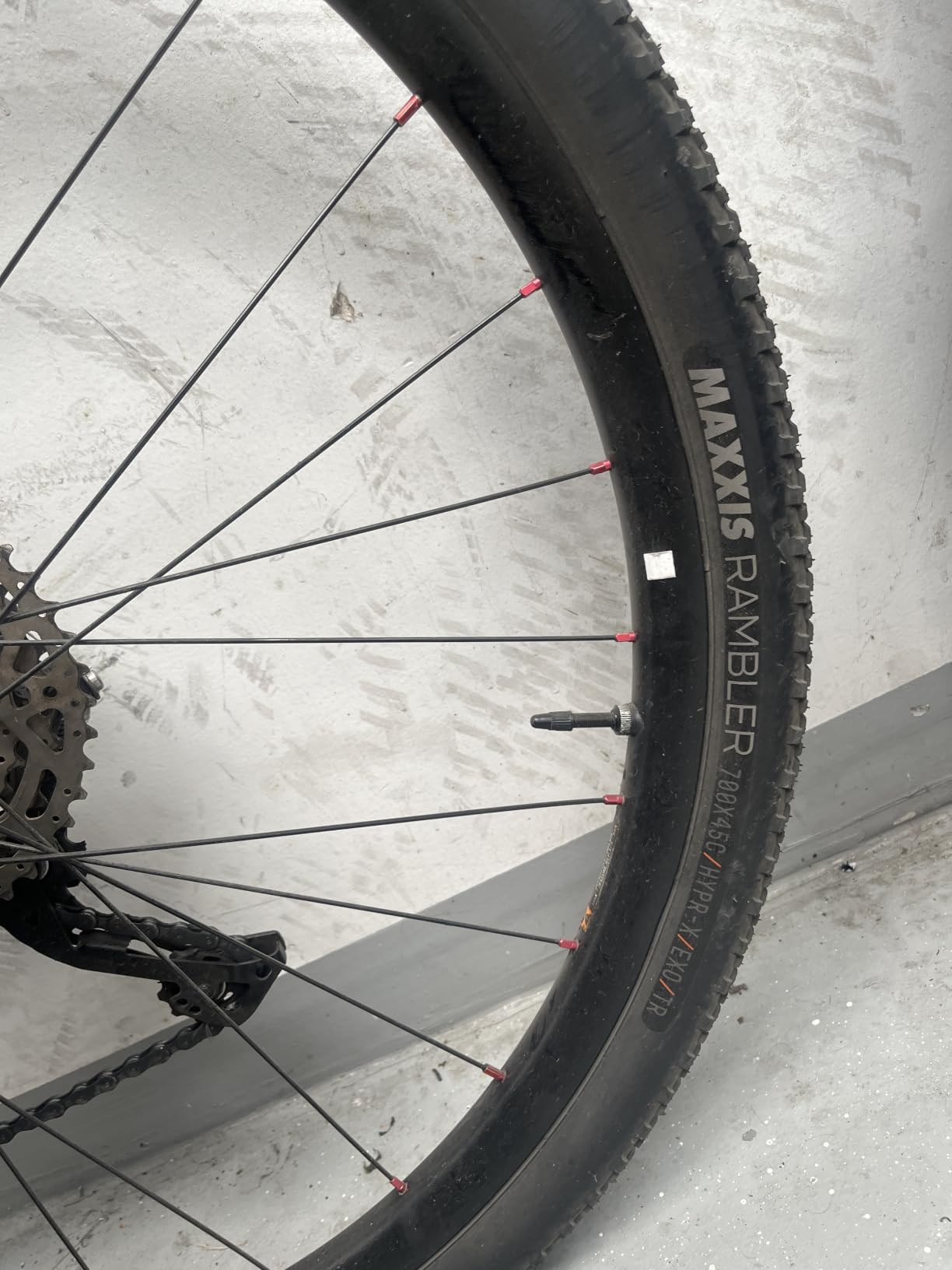
Protection is where this tire separates itself from budget alternatives. The EXO cut and abrasion-resistant sidewall handle rock and thorn litter better than most semi-slicks here, and SilkShield adds a layer against road debris. That combination is a good match for a commute with poor road surfaces and a lot of small debris.
It is tubeless ready, and tubes still work if your frame or rim setup calls for it. Recommended pressure tops out around 60 psi in the 40 mm width, which is a useful ceiling to know before you set pressures on smooth pavement.
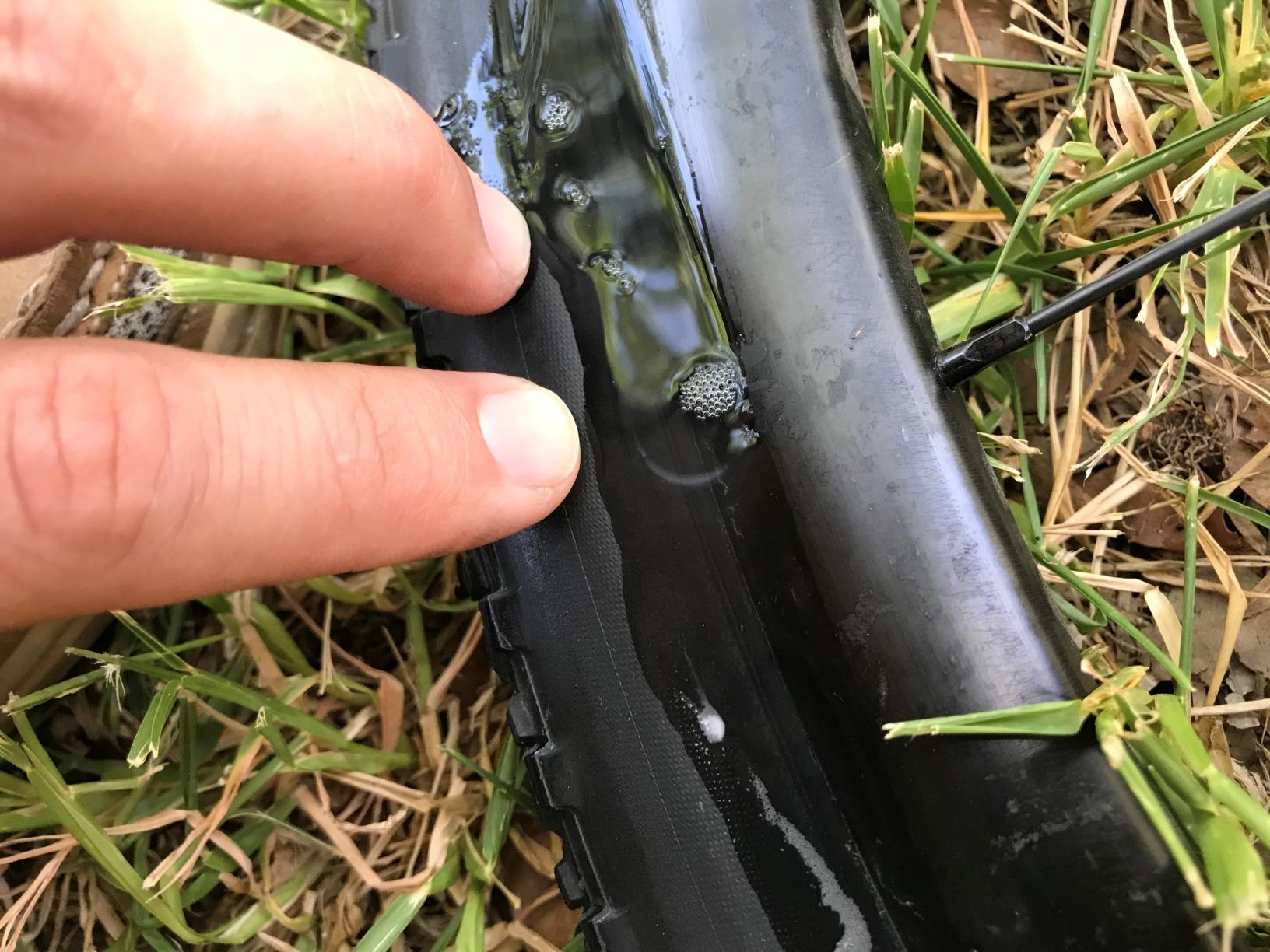
Who the Rambler suits
It suits riders doing close to half their miles on dirt, the group-ride gravel bike that also has to cross town, and anyone who wants a tire they never have to think about. Riders in cold or wet shoulder-season conditions will also appreciate the side knob coverage.
If you plan to bikepack or carry luggage on rough surfaces, the casing and tread protection make this a more sensible long-term choice than a thin file tread.
Where it falls short
The gummy compound wears faster on asphalt than pavement-oriented gravel tires, and a 50/50 rider with a lot of road miles will see that in the rear tire first. Riders who noticed their knobby gravel rear tire wearing quickly on a mixed commute will recognize the pattern.
On pure pavement it takes more effort than the smooth-center tires in this group, in both drag and noise, so it is the wrong choice if you never leave the tarmac. The listing is also per tire rather than a pair, so plan accordingly.
10. Maxxis Receptor: Best Semi-Slick for Damp Pavement and Hardpack
Maxxis Receptor | Dual Compound – EXO | Tubeless Gravel Tire 700x40C
700 x 40C
Semi-slick center
120 TPI casing
441 g
EXO sidewall
Pros
- Very fast rolling and close to a road tire on pavement
- Semi-slick center with grippy cornering sides works on hardpack
- Dual compound gives good grip on damp pavement
- Compliant casing smooths out imperfect road surface
Cons
- Center tread offers little protection from sharp gravel and rock
- Less confident on loose material and standing water
- Some tires lose pressure slowly through the sidewalls
The Receptor rolls quickly and feels close to a road tire on pavement, and it is the one to consider if your tarmac is wet more often than it is dry. Dual Compound tread gives it noticeably better grip on damp tarmac than most of the fast gravel tires here, and in testing that was the clearest difference on a rainy commute.
The 120 TPI casing is among the most supple in the roundup and it smooths out imperfect pavement well, which matters if your route is cracked, patched or badly surfaced. Riders describe it as noticeably less harsh over rough asphalt at the same pressure than a stiffer casing tire.
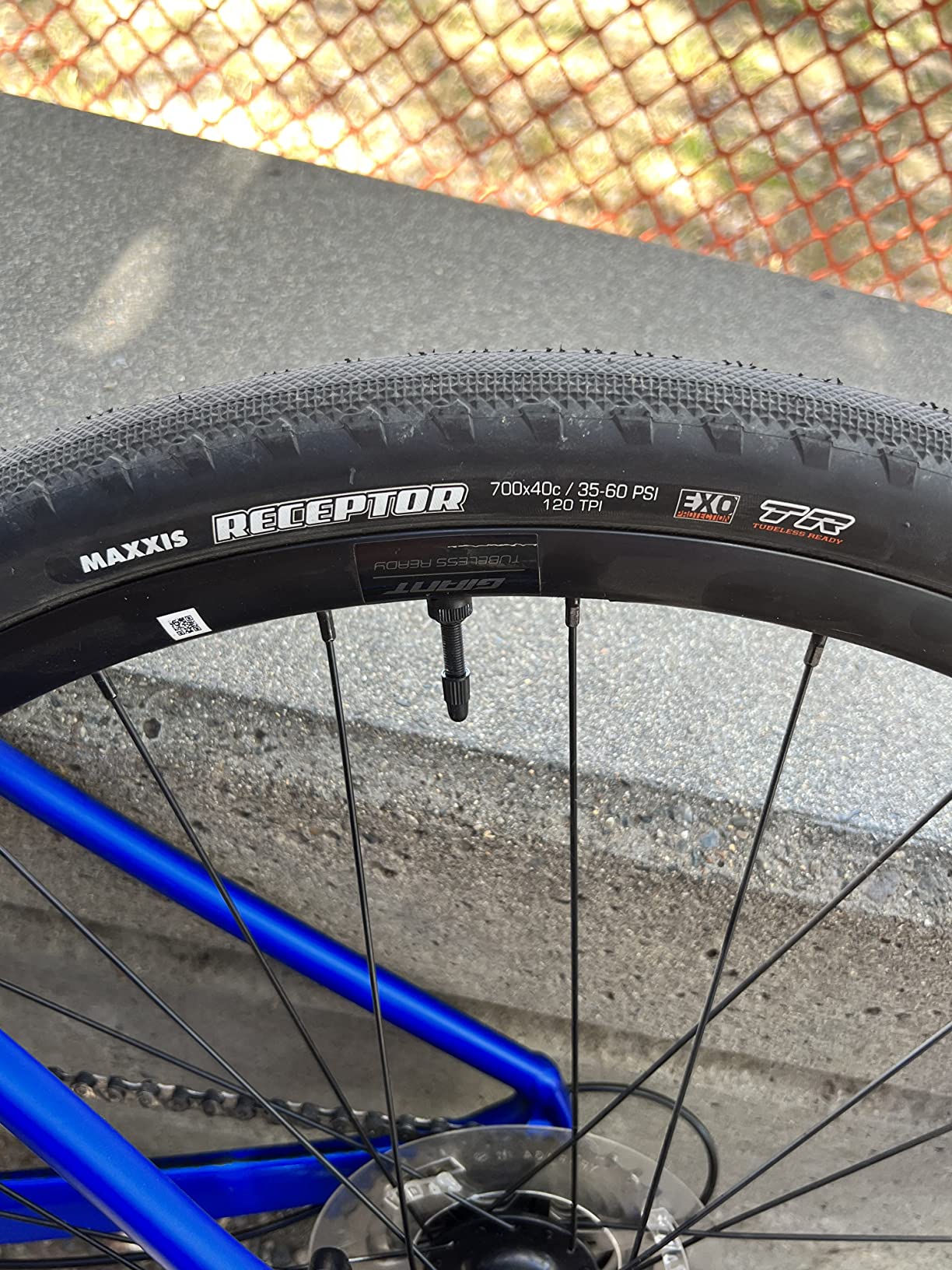
The semi-slick design targets pavement, hardpack and light gravel, and it does all three without feeling out of its depth on the two easier ones. At 441 g it sits at the lighter end of this list, which suits riders who care about acceleration on a heavy gravel bike. A 650 x 47B version exists for smaller wheelsets.
Tubeless ready, and tubes work if you prefer them. Recommended pressure tops out around 60 psi in this width, so treat that as a working ceiling on smooth roads rather than a number to hit.
Who the Receptor suits
It suits the rider whose pavement is 85 to 95% of the mileage, whose roads are wet, rough or both, and who still wants a tire that can handle hardpack and fire roads without drama. Riders on heavy bikes will like the low weight and the compliant ride quality. It is also a good choice for anyone who found fast gravel tires uncomfortable and assumed the harshness was the tire’s fault when it was the pressure.
Where it falls short
The center tread is thin and exposed, which means very little protection from sharp gravel and rock. On routes with heavy debris or rockfall, a knobbier tire is the safer call.
It is less confident on loose material and standing water than the Raddler or the Rambler, and some owners report slow pressure loss through the sidewalls. Review volume is also the thinnest in this roundup, so treat the long-term picture as less well documented. If the riding turns technical, read our guide to whether a gravel bike is the only bike you need.
How to Choose Gravel Tires That Stay Fast on Pavement
Pick your tread tier by how much pavement you actually ride
Four tread tiers cover almost every gravel tire, and the tier matters more than any other choice. A full slick has no tread at all and rolls quickest on tarmac, but it has no business on loose corners. A file tread, which is what the Panaracer Slick uses, adds a fine texture that still rolls fast. A semi-slick has a smooth or finely knobbed center with shoulder knobs, and it is the most useful all-round answer. A full knobby sacrifices pavement speed for traction you only need on dirt.
Match the tier to your ratio. Above 90% pavement, use a file tread or slick. Between 70 and 90%, a semi-slick is the sweet spot. Between 50 and 70%, move toward a tightly packed center knob pattern. Below 50% pavement, a full knobby is the honest answer and this roundup is not the right guide for you.
Measure your frame clearance before you order
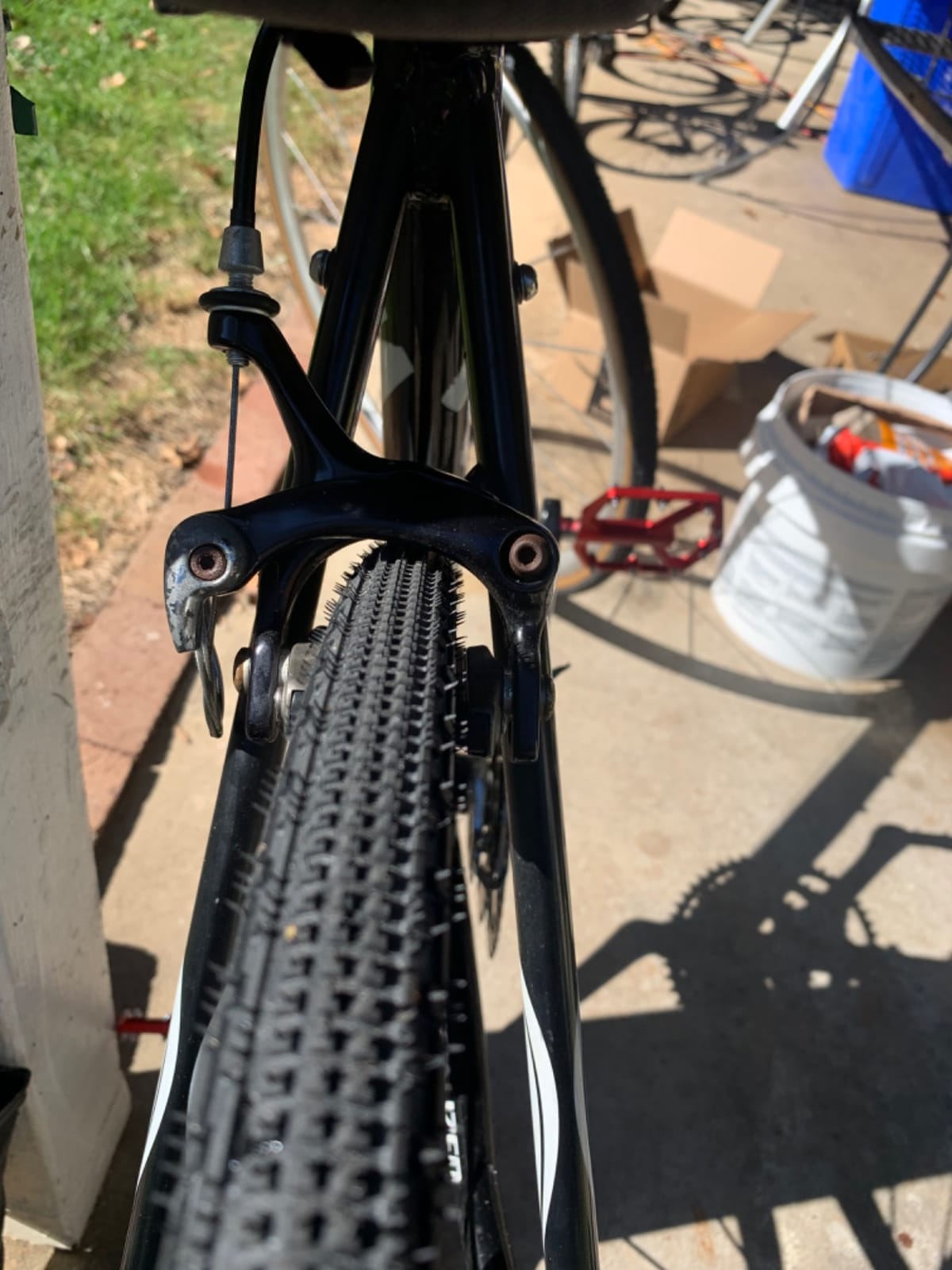
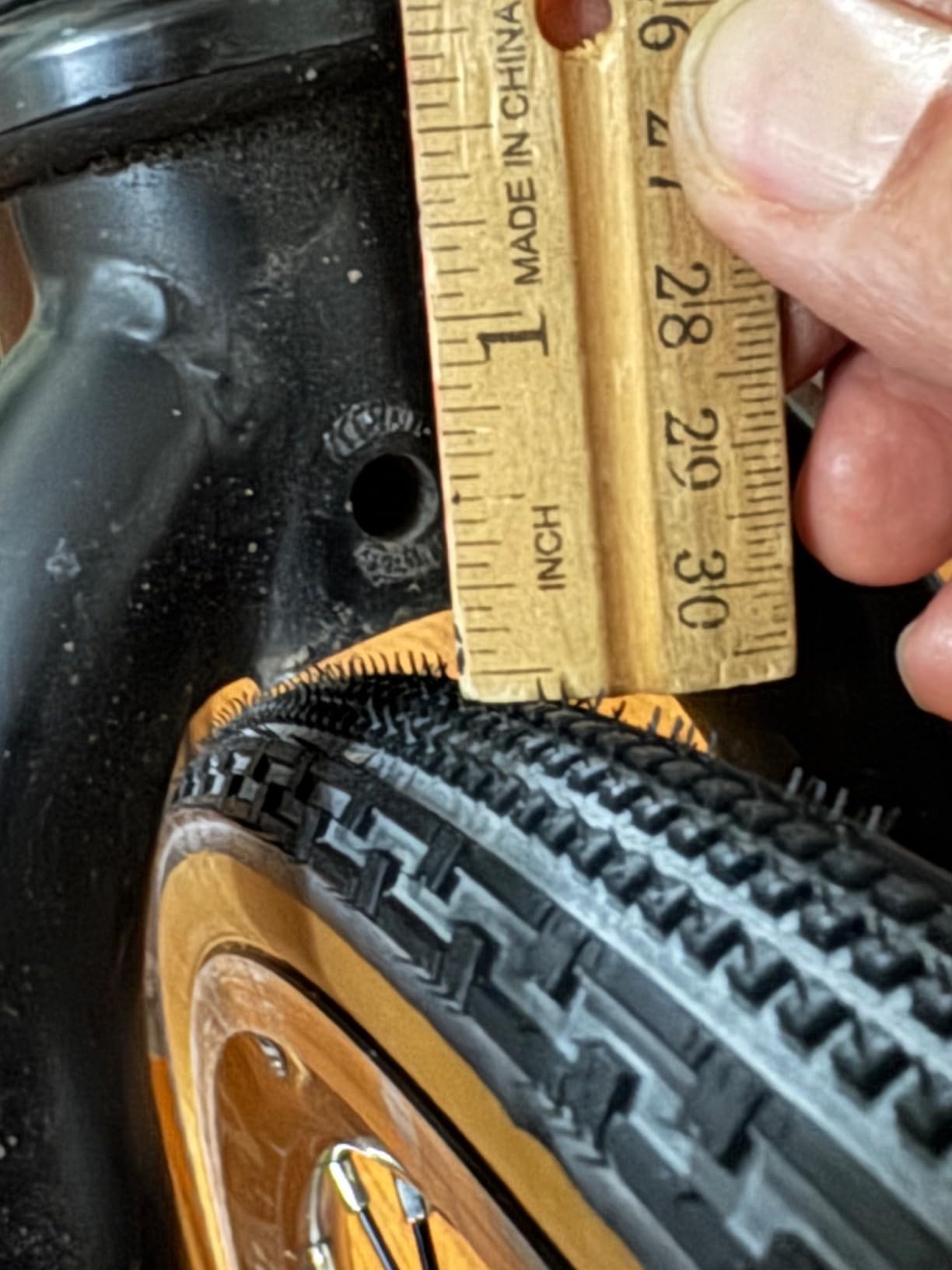
Frame clearance is the most common source of disappointment, and the marking on the frame is often missed. Measure the actual gap between the widest part of the tire and the frame, fork and brake mounts, then subtract the tire’s real mounted width, not the number printed on the sidewall. Owners report the Byway 700 x 40 measuring closer to 38 mm than its label, which is exactly the kind of gap that causes a tire to rub on a tight bike.
Also check the rim internal width, because a 40 mm tire on a 21 mm rim and the same tire on a 25 mm rim behave differently at the same pressure. A narrow rim under a wide tire makes it feel harsh, and a wide rim under a narrow tire makes it feel vague. Match the tire width to the rim width as closely as you can.
There is one more thing to check before buying a tubeless-ready tire: whether your rims have hooked bead edges. Without a hook, a tubeless setup will not hold air reliably no matter which tire you fit.
Set pressure by rider weight and surface, then drop it in steps
Start higher than you think you need, then reduce pressure two or three psi at a time until you notice excessive squirm or hear the tire bottom out on a hard edge. Stop there. Wider tires hold lower pressures, and a 40 mm tire on a narrow rim will run higher than a 40 mm on a wide rim at the same weight.
For a rider around 75 kg on 700c, a sensible starting point for pavement is in the mid to high 30s psi in a 40 mm semi-slick, dropping a few psi for dirt, and 5 to 8 psi higher for a 35 mm file tread. Heavier riders add pressure in proportion rather than changing tires. The listed maximum pressures on these tires range from 60 to 70 psi depending on width, so treat those as ceilings rather than targets.
Choose tubeless or tubed based on where you ride
Tubeless with sealant handles small thorns, permits lower pressures and improves comfort, which is why we recommend it for almost every rider in this roundup. It is particularly valuable on pavement, where casing losses at low pressure are part of where the speed comes from.
Tubed is still a legitimate choice for a pavement-focused commuter on an older frame or non-compatible rims, and it is simpler to repair on the roadside. The trade is that you run higher pressure, lose a little efficiency, and need a spare on every ride. Riders worried about a mid-ride repair on a commute should weigh that carefully, and our guide to road bike versus gravel bike for daily commuting covers the rest of that setup.
Read the casing, not the tread, for puncture protection
Puncture resistance on a gravel bike comes from the casing, not the tread pattern. SG2, ProTection, SilkShield, EXO, ShieldWall and Stage 5S Armor all describe a protective layer or reinforced sidewall, and every tire in this roundup has one of them. What differs is how thin the sidewall is, and that shows up in reviews: the Byway, Raddler, Riddler and Terra Trail all draw reports of sidewall pinholes that sealant struggles with.
On urban roads with glass and tarmac cuts, that report pattern is worth more than any tread claim. A knobby tire with a good casing will still outlast a slick with a thin one on a bad commute, and that is a genuine trade against the quickest option in this roundup.
Mix front and rear only if you know why
A faster front and a grippier rear is a real strategy and it works, because the front tire is the one that washes out in a corner. Running something like the Receptor or Terra Speed in front and the Raddler or Rambler behind gives you low drag and a rear that hooks up in the loose stuff. The trade is that the heavier rear tire needs a slightly lower pressure to feel right, and mismatched casings can feel odd on rough pavement.
If you are not confident, run a matched pair. The differences between these tires are smaller than the difference between a good pressure and a bad one, and matched tires are easier to reason about when something feels off.
Frequently Asked Questions
What is the fastest gravel tire on pavement?
The Continental Terra Speed is the quickest gravel tire on pavement in this roundup, with the Panaracer GravelKing Slick a close second and more capable off-road. Both use a continuous smooth or finely filed center strip, which removes the tread interruption that costs you speed on tarmac. Tread pattern alone typically accounts for a 5 to 15 watt difference across modern gravel tires.
What are the best gravel bike tires for road use?
For riders above 90% pavement, choose the Continental Terra Speed or the Panaracer GravelKing Slick. Between 70 and 90% pavement, the WTB Byway, Continental Terra Trail and Maxxis Receptor are the stronger fits, since they add shoulder grip without giving much speed back. Below 70% pavement, move toward the Maxxis Rambler or WTB Raddler.
What is the most puncture resistant gravel tire?
The Maxxis Rambler is the most puncture-resistant pick here, combining an EXO cut and abrasion-resistant sidewall with SilkShield protection above the tread. The Continental Terra Trail and Terra Speed add a full protective casing layer. On urban roads with glass and tarmac cuts, also weigh how thin the sidewall is, since that is what drives most pinhole reports.
Should I run gravel tires tubeless?
For most riders, yes. Tubeless setups with sealant handle small thorns, allow lower pressures and reduce casing losses, which is part of where the extra speed comes from on pavement. A tube is still a reasonable choice on older frames or rims without hooked bead edges, and two tires in this roundup run well in a tube. You do need hooked rims for a tubeless setup to hold air.
How much pressure should I run gravel tires on pavement?
Start higher than you expect and drop two or three psi at a time until the tire shows excessive squirm. For a rider around 75 kg on 700c, a good starting point is the mid to high 30s psi in a 40 mm semi-slick, and about 5 to 8 psi higher for a narrower 35 mm file tread. Wider tires on wider rims hold lower pressures comfortably, and the listed maximums on these tires run from 60 to 70 psi.
How wide can my gravel tires be?
Measure the actual gap between your tire and the frame, fork and brake mounts rather than trusting the clearance marking, then subtract the tire’s real mounted width. Rim internal width matters too, since the same 40 mm tire behaves differently on a 21 mm rim and a 25 mm rim. For a rider mostly on pavement, 35 to 40 mm is the range where speed and off-road ability balance well.
The Best Gravel Bike Tires for Pavement, Picked
The Panaracer GravelKing Slick is our pick for the best gravel bike tires for pavement, because it pairs low rolling resistance on tarmac with a shoulder tread that still bites when the road turns to gravel. Its 862 reviews and 4.6 rating reflect how consistently riders have used it for exactly the 80 to 95% pavement split most of us actually ride.
If your pavement share is above 90%, the Continental Terra Speed rolls quickest and quietest, at the cost of tread life and any mud capability. Between 70 and 90%, the WTB Byway is the value answer and the Continental Terra Trail is the balanced one. Below 70%, the Maxxis Rambler and WTB Raddler are the picks that keep a real knobby edge without giving away all your speed. Riders still deciding the wider equipment question can start with our electric bike picks for gravel and pavement.