
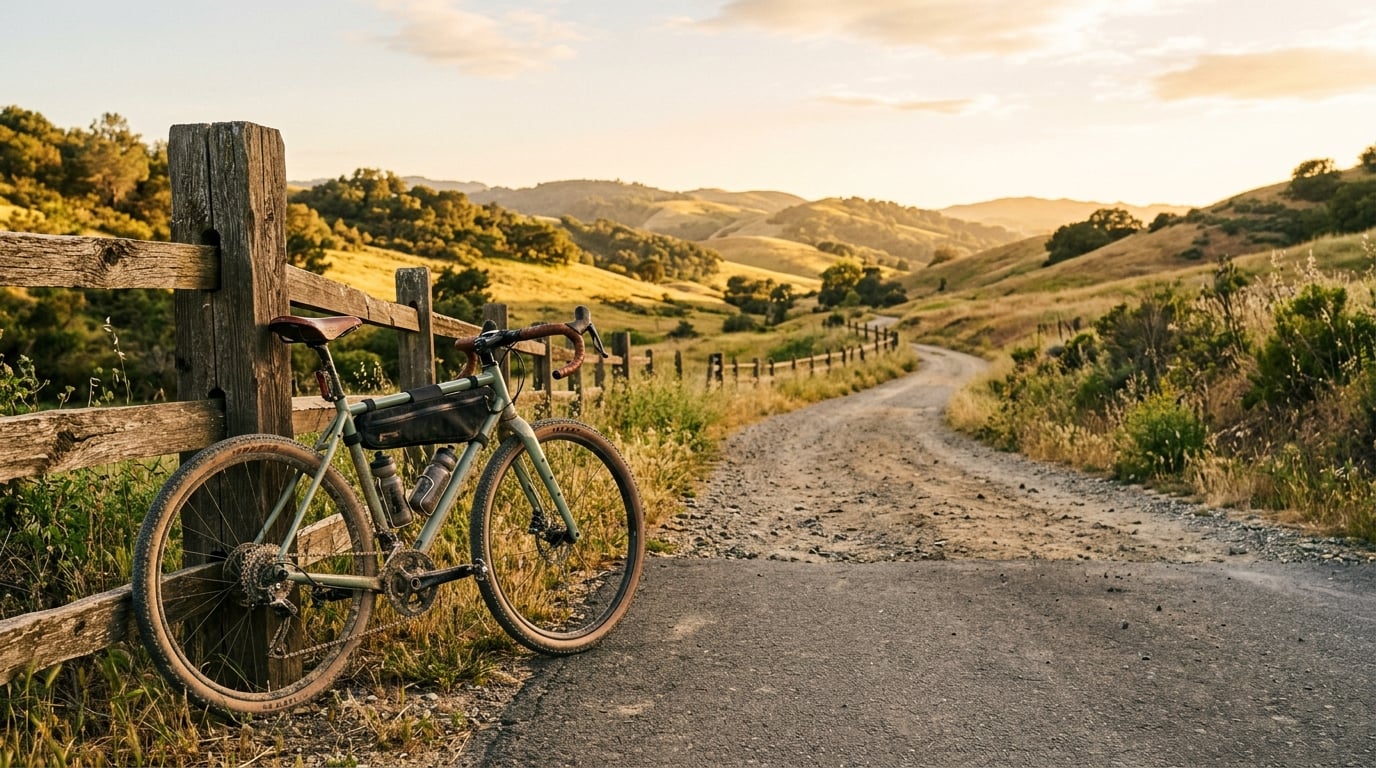
If someone told you that one bicycle could handle your morning commute, a weekend century ride, a multi-day bikepacking trip, and a light off-road adventure, you would probably be skeptical. I was too, until I spent a full year riding nothing but a gravel bike. The experience changed how I think about cycling.
A gravel bike is a drop-handlebar bicycle designed for mixed-terrain riding, combining road bike efficiency with off-road capability through wider tires, relaxed geometry, and disc brakes. It occupies the sweet spot between a road bike and a mountain bike, and for a growing number of riders, it has completely replaced both.
In this guide, I will break down exactly why a gravel bike might be the only bike you need. Our team has logged thousands of miles across pavement, gravel roads, fire trails, and everything in between to give you a real-world perspective. Whether you are new to cycling or a seasoned rider tired of maintaining multiple bikes, this article will help you decide if a single do-it-all bike makes sense for you.
Table of Contents
What Exactly Is a Gravel Bike?
A gravel bike sits between a road bike and a mountain bike in nearly every measurable way. It features drop handlebars like a road bike, but with a wider flare for better control on rough surfaces. The frame geometry is more relaxed, meaning you sit slightly more upright than on a pure road bike, which reduces fatigue on long rides.
The defining characteristics of a gravel bike include wide tire clearance (typically fitting tires from 38mm to 50mm or wider), disc brakes for consistent stopping power in all conditions, and abundant mounting points for bottles, racks, and bags. These features work together to create a bicycle that does not excel at any one discipline but performs remarkably well across all of them.
Think of it this way: a road bike is a scalpel, a mountain bike is a sledgehammer, and a gravel bike is a quality Swiss Army knife. It may not be the absolute fastest on tarmac or the most capable on technical trails, but it handles an enormous range of conditions without complaint. That versatility is precisely what makes it such a compelling candidate for your one and only bike.
Why a Gravel Bike Might Be the Only Bike You Need
This is the question at the heart of the gravel bike movement. Riders across forums, local bike shops, and professional reviews keep arriving at the same conclusion: for most people, one versatile bike is better than three specialized ones. Here are the specific reasons why.
Versatility Across Every Surface
The single biggest argument for a gravel bike as your only bike is surface-agnostic capability. On a given weekend, you can roll out of your driveway onto pavement, transition to a gravel farm road, hit a rail trail, explore a fire road, and ride light singletrack. All on the same bike, without changing anything.
I have done group road rides where I kept up just fine on 38mm tires, then detoured through a dirt shortcut on the way home that my road-bike friends could not follow. That freedom to take any turn, explore any road, and not worry about whether your bike can handle it is genuinely liberating. Forum riders on Reddit’s gravel cycling communities describe this as the core appeal: you stop planning routes around what your bike can survive and start planning routes around what you want to see.
Tire Flexibility Changes Everything
Tires are the most impactful upgrade you can make on any bike, and this is where a gravel bike shines. With a single frame, you can run a set of 28mm slick tires for fast road rides, swap to 38mm all-round tires for mixed surfaces, or bolt on 50mm knobby tires for chunky gravel and light trail duty. Some riders even maintain two wheel sets: one with road tires and one with gravel tires, making the swap a five-minute job.
No other bike category offers this range. A road bike physically cannot fit tires wider than about 32mm in most cases. A mountain bike’s frame is designed around fat tires and cannot accommodate narrow road rubber. A gravel bike’s generous tire clearance is the mechanical foundation of its do-it-all reputation.
Tread patterns matter just as much as width. A smooth file tread rolls fast on pavement but still grips packed gravel. A more aggressive knobby pattern handles loose surfaces and mud. The ability to match your tire to the terrain means your gravel bike adapts to seasonal conditions, ride types, and personal preference without needing a whole new bicycle.
Geometry That Balances Speed and Comfort
Gravel bike geometry is the engineering magic behind its comfort. Compared to a road bike, a gravel bike has a longer wheelbase, slacker head tube angle, and longer chainstays. These measurements create a longer, more stable platform that tracks straight on rough surfaces and reduces the twitchy handling that makes road bikes exhausting on bad roads.
The bottom bracket is typically lower, which drops your center of gravity for stability in corners. The taller head tube and shorter reach put you in a more upright, sustainable position. I have ridden six-hour gravel days with far less neck and lower-back pain than I ever experienced on a road bike with a comparable effort level.
This geometry does make a gravel bike slightly less responsive in a criterium-style sprint. But for the vast majority of riders who are not racing crits, that trade-off is a net positive. You gain comfort, stability, and confidence on descents and rough surfaces, and you lose almost nothing that matters for recreational and fitness riding.
Gearing Options for Any Terrain
Modern gravel bikes offer two main drivetrain philosophies: 1x (single chainring) and 2x (double chainring). A 1x setup uses one chainring in the front with a wide-range cassette in the back. It is simpler, lighter, and less prone to chain drops on rough terrain. Many riders love the clean look and the fact that there is no front derailleur to adjust or maintain.
A 2x drivetrain gives you tighter gear spacing and a broader overall range. This matters if you ride a lot of road and want closely spaced gears for finding the perfect cadence, or if you tackle very steep climbs and fast descents on the same ride. Both options work beautifully, and the choice comes down to your riding style.
The key point is that gravel-specific groupsets, like SRAM Force XPLR and Shimano GRX, are purpose-built for the demands of mixed-terrain riding. They offer clutch derailleurs to keep the chain stable, optimized gear ratios for gravel gradients, and ergonomic controls designed for use with gloves. You get drivetrain technology that works across surfaces, which a road bike or mountain bike groupset cannot match.
The Bikepacking and Touring Advantage
If you have any interest in multi-day adventures, a gravel bike is arguably the best platform available. The frame is covered in mounting points: fork mounts for bottles or cages, top tube mounts for feed bags, down tube mounts, seat tube mounts, and often rear rack mounts. This means you can carry everything you need for a weekend trip or a cross-country tour.
Events like Unbound (formerly Dirty Kanza) have put gravel bikepacking on the map. Riders cover 200 miles of Kansas flint gravel carrying their own supplies. The bikepacking community strongly endorses gravel bikes for their combination of load-carrying capacity, off-road capability, and riding efficiency when loaded.
I have done overnight trips where I attached frame bags, a saddle pack, and a handlebar roll, then ridden 60 miles to a campsite on a mix of pavement and gravel. The bike handled the load beautifully. Try that on a road bike, and you will be miserable. Try it on a mountain bike, and you will be slow. A gravel bike hits the sweet spot.
The Real Cost of Owning One Bike vs Three
Here is something no competitor article talks about: the actual financial math of bike ownership. A quality gravel bike might cost between $1,500 and $4,000 depending on components and frame material. That is a significant investment, but let us compare it to the alternative.
If you want to cover the same range of terrain with specialized bikes, you would need a road bike ($1,500 to $3,000), a mountain bike ($1,500 to $3,500), and possibly a commuter or touring bike ($800 to $2,000). That is potentially $3,800 to $8,500 for three bikes. One gravel bike replaces all of them for the vast majority of riding scenarios.
The savings do not stop at the purchase. Maintenance costs multiply with each bike. Each drivetrain needs cleaning, chain replacement, cassette swaps, brake bleeds, and tire replacements. One bike means one set of components to maintain, one set of spare parts to stock, and one bike to store and transport. Over five years, the financial and practical savings are substantial.
Storage, Maintenance, and Simplicity
Not everyone has a three-car garage. If you live in an apartment, a condo, or a house with limited storage, owning multiple bikes becomes a real logistical problem. Bikes take up significant floor space, they get in the way, and they require some form of wall or ceiling mounting system.
One gravel bike simplifies everything. You need one spot in the garage, one lock, one set of tools, one maintenance schedule. When friends invite you on a road ride, you grab your gravel bike with road tires. When they suggest a dirt trail, you swap tires and go. No decisions, no stress, no hunting for the right bike.
There is also a psychological benefit to simplification. Riders on forums consistently report that having one bike they know intimately makes them better cyclists. You learn how the bike handles in every condition. You dial in the fit perfectly because you are always on the same frame. You stop spending time choosing and start spending time riding.
Beginners Benefit the Most
If you are new to cycling, a gravel bike is arguably the best first bike you can buy. Here is why: beginners do not yet know what type of riding they will enjoy. Some discover they love long road rides. Others find they prefer dirt trails. Many fall in love with bikepacking. A gravel bike lets you explore all of these without committing to a discipline.
The relaxed geometry and wider tires also make gravel bikes more forgiving for new riders. You do not need to worry as much about potholes, gravel patches, or rough road surfaces. The bike absorbs bumps that would rattle a new rider on a stiff road bike with 25mm tires. That confidence translates to more riding, which translates to better fitness and more enjoyment.
The gravel cycling community also tends to be more welcoming and less formal than road cycling culture. Group rides are typically no-drop, the pace is social, and there is less pressure about kit, equipment, or keeping up. For a beginner, that environment makes cycling feel accessible rather than intimidating.
How a Gravel Bike Compares to Other Bikes
Understanding how a gravel bike stacks up against specialized bikes helps clarify whether it can truly be your only bike. Let us look at the key comparisons.
Gravel Bike vs Road Bike
A road bike is faster on smooth pavement, there is no debating that. The question is how much faster, and whether that difference matters to you. Based on real-world testing, including data cited on road.cc and discussed extensively in cycling forums, a gravel bike with road-appropriate tires is approximately 1 to 2 km/h slower than a dedicated road bike at the same power output.
For competitive racing, that gap matters. For everyone else, it is negligible. On a two-hour ride, that translates to roughly two to four kilometers less distance. In exchange for that marginal speed loss, you get dramatically better comfort on rough roads, the ability to take any detour you want, and a bike that does not feel fragile every time you hit a pothole.
Road bikes also limit your route options. Chip-seal roads, rough patches, construction zones, and rural roads with broken surfaces become misery on a road bike with narrow tires. A gravel bike rolls through all of it without complaint. As one Reddit user put it: “My gravel bike with 32mm tires handles roads that used to rattle my teeth on the road bike.”
Gravel Bike vs Mountain Bike
A mountain bike is the right tool for technical trails, steep descents, jumps, and rock gardens. If your primary riding involves lift-accessed trails, gnarly singletrack, or enduro racing, a gravel bike is not going to replace your mountain bike.
However, many mountain bike riders spend significant time on access roads, gravel paths, and connector sections just getting to the trails. A gravel bike covers those sections far faster and with far less effort. Mountain bike riders on forums frequently praise gravel bikes for adventure rides that combine dirt roads, fire roads, and light trails.
The weight difference is substantial. A typical cross-country mountain bike weighs 25 to 30 pounds. A gravel bike comes in at 18 to 22 pounds. On long gravel or mixed-surface rides, that weight savings translates to real speed and efficiency gains. For anything short of technical mountain biking, the gravel bike is the faster, more enjoyable choice.
Gravel Bike vs Hybrid and Commuter Bikes
Hybrid bikes and flat-bar commuter bikes are popular for their practicality, but they sacrifice long-ride comfort and hand position variety. Drop handlebars on a gravel bike offer multiple hand positions: the hoods, the drops, and the tops. This variety prevents numbness and fatigue on rides longer than an hour.
For commuting, a gravel bike works beautifully. It handles rough urban roads, potholes, and debris that would be sketchy on a road bike. With fenders and a rack, it becomes a capable daily commuter. The wider tires provide grip on wet pavement and confidence in traffic. Many riders report that a gravel bike is actually a better commuter than a dedicated commuter bike because of the drop-bar hand position options.
Who a Gravel Bike Is Perfect For (and Who Might Want Something Else)
A gravel bike is the ideal only-bike for riders who want to explore. If you enjoy mixing surfaces on a single ride, if you are curious about bikepacking, if you commute but also ride for fitness on weekends, and if you value one reliable machine over a stable of specialized bikes, a gravel bike was designed for you.
It is also perfect for cyclists who are returning to the sport after a break. The comfortable geometry, stable handling, and tire-based compliance make early rides enjoyable rather than punishing. You can build fitness and confidence simultaneously without fighting your equipment.
There are riders who should look elsewhere. If you are a competitive road racer, you need a road bike for training and events. If you ride technical mountain bike trails regularly, you need a mountain bike with proper suspension and geometry. If you exclusively ride smooth bike paths at a casual pace, a hybrid or fitness bike may be simpler and cheaper.
But for the large middle ground of riders who want to ride roads, trails, gravel, and everything between, a gravel bike is the most capable single-bike solution available in 2026.
Common Objections to Using a Gravel Bike as Your Only Bike
Let me address the three objections I hear most often when I recommend a gravel bike as a do-it-all machine.
“It Is Too Slow on the Road”
This is the most common objection, and it is based on a real but marginal difference. The 1 to 2 km/h speed gap only applies when comparing a gravel bike with wide knobby tires to a road bike. If you put 28mm or 32mm slick tires on your gravel bike, the speed difference shrinks to nearly nothing for non-racing efforts. Most riders never ride at a pace where that gap is perceptible.
“It Cannot Handle Real Trails”
A gravel bike will not replace a mountain bike on technical singletrack. That is a fair limitation. But the vast majority of off-road riding that recreational cyclists do involves gravel paths, fire roads, rail trails, and smooth dirt tracks. A gravel bike handles all of these with confidence. The key is knowing where the line is and respecting it.
“Underbiking Sounds Scary”
“Underbiking” is the gravel community term for riding terrain that is slightly beyond what your bike was designed for. It sounds intimidating, but most riders find it exhilarating rather than dangerous. Riding a gravel bike on a rough section of trail requires more skill and attention, which sharpens your handling and makes you a better overall cyclist. The consensus from forum discussions is that underbiking is liberating, not terrifying.
The 75% Rule and Why Gravel Riding Fits It Perfectly
The 75% rule in cycling is a training principle suggesting that approximately 75% of your riding should be done at low intensity, well below your maximum heart rate. This builds aerobic base fitness, improves fat utilization, and prevents burnout and overtraining. It is a foundational concept for cyclists who want to improve sustainably.
Gravel riding aligns naturally with this principle. The varied terrain, scenic routes, and exploratory nature of gravel cycling encourage a more relaxed pace. You stop to look at views, navigate intersections, and handle technical sections. The ride becomes an adventure rather than a time trial, which is exactly the kind of low-intensity riding that builds long-term fitness.
This is one reason gravel bikes are so appealing as a do-it-all platform. They encourage the type of riding that is best for your body and your long-term enjoyment of the sport. You are not constantly chasing Strava segments or worrying about average speed. You are exploring, and that exploration makes you a healthier, happier cyclist.
FAQ’s
What is special about a gravel bike?
A gravel bike combines the speed and efficiency of a road bike with the off-road capability of a mountain bike. It features drop handlebars, wide tire clearance (typically 38mm to 50mm), relaxed geometry for comfort on long rides, disc brakes for reliable stopping in all conditions, and multiple mounting points for bikepacking gear. This combination makes it the most versatile drop-bar bicycle available, able to handle pavement, gravel roads, fire roads, and light trails without modification.
Is a gravel bike just as fast as a road bike?
A gravel bike is approximately 1 to 2 km/h slower than a road bike on smooth pavement when using gravel tires. However, when you fit road-appropriate slick tires (28mm to 32mm), the speed difference becomes nearly negligible for non-racing riders. For most cyclists, the comfort, versatility, and capability gains far outweigh this marginal speed loss. Competitive road racers still need a dedicated road bike, but recreational and fitness riders will not notice the difference.
Why use a gravel bike instead of a mountain bike?
A gravel bike is lighter, faster on flat and rolling terrain, and more efficient on gravel roads and fire roads than a mountain bike. It excels on mixed-surface rides that combine pavement and dirt. Mountain bikes remain superior for technical singletrack, steep descents, and jumps. If your riding involves gravel paths, rail trails, and adventure routes rather than technical mountain bike trails, a gravel bike is the better choice for speed, distance, and efficiency.
What is the 75% rule in cycling?
The 75% rule is a training principle recommending that about 75% of your cycling should be done at low intensity to build aerobic base fitness. Gravel riding naturally supports this approach because the varied terrain and exploratory nature of gravel cycling encourages a sustainable, enjoyable pace rather than constant high-intensity efforts.
Do gravel bikes have suspension?
Most gravel bikes do not have suspension. They rely on wide tire volume, frame compliance, and relaxed geometry to absorb bumps and vibrations. Some newer models feature micro-suspension systems or short-travel suspension forks (typically 20mm to 40mm of travel), but these are still uncommon in the category. The majority of gravel riders find that running lower tire pressure on wider tires provides sufficient comfort for mixed-terrain riding.
Final Thoughts: Is a Gravel Bike the Only Bike You Need?
After a year of riding nothing but a gravel bike, my answer is an enthusiastic yes for most riders. The versatility to ride any road, the comfort to spend all day in the saddle, the tire flexibility to adapt to any surface, and the simplicity of maintaining one bike instead of three have made me a convert.
Why a gravel bike might be the only bike you need comes down to one core idea: it removes the barriers between you and the ride you want to do. No more checking which bike is appropriate for today’s route. No more wishing you had a different bike for this surface. One bike, ready for anything.
If you are on the fence, I encourage you to test ride a gravel bike on your favorite routes. Bring your usual roads and add a dirt section. The experience of rolling through terrain that would stop a road bike dead, on a bike that also cruises comfortably on pavement, sells itself. For the majority of cyclists, a gravel bike is not just the only bike you need. It might be the best bike you will ever own.