
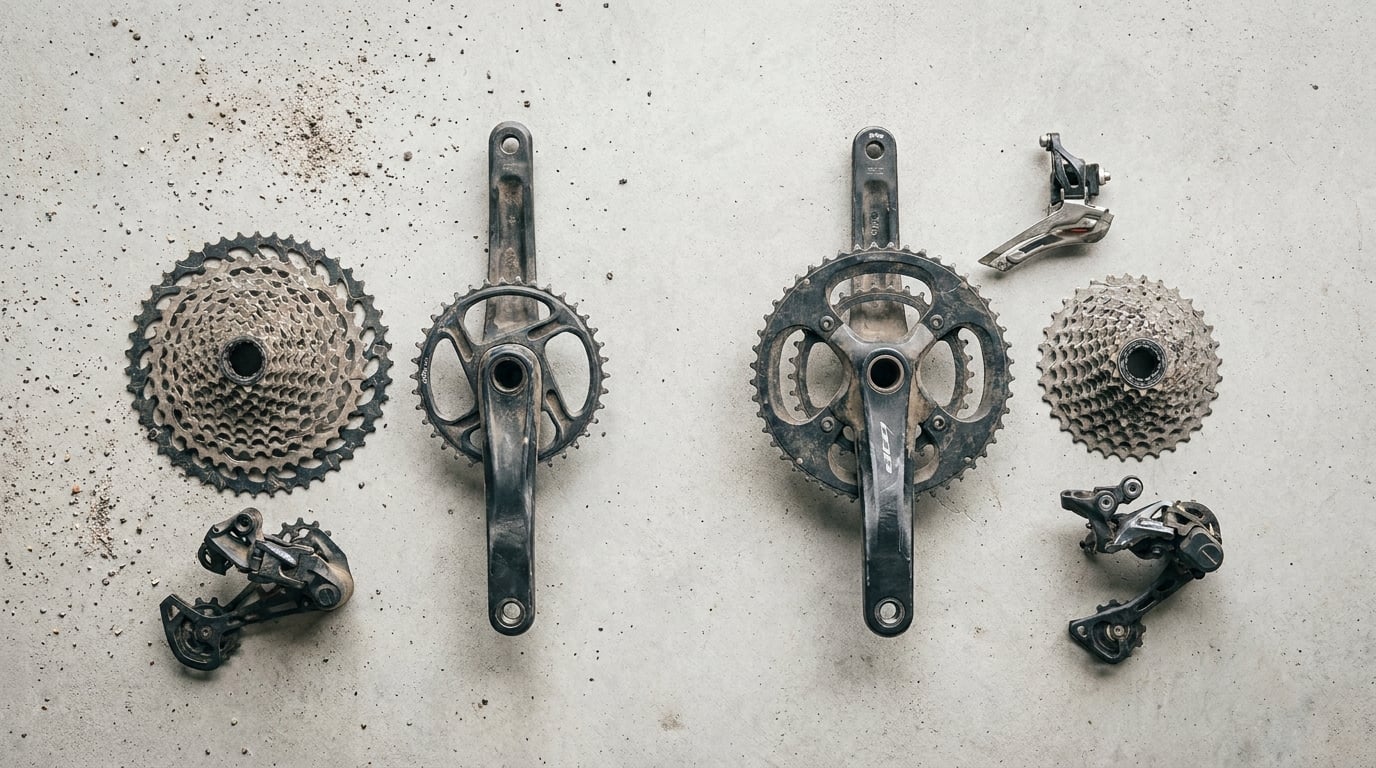
If you are shopping for a gravel bike or setting up a commuter rig in 2026, the 1x vs 2x drivetrain for gravel and commuting debate is one of the first gear decisions you will face. I have spent years riding both systems across rutted gravel roads, rainy city commutes, and everything in between, and the right answer genuinely depends on how and where you ride.
A 1x (one-by) drivetrain uses a single front chainring and no front derailleur. A 2x (two-by) drivetrain uses two front chainrings with a front derailleur to shift between them. Both setups can work for gravel and commuting, but they trade off in ways that matter a lot once you are actually in the saddle.
The choice affects your gear range, shift quality under load, chain retention on rough ground, maintenance time, and even how you ride through stop-and-go traffic. Before diving into specifics, it helps to understand the broader bike drivetrain and gearing considerations that apply across riding styles. In this guide I break down exactly how each system performs on gravel and on the daily commute so you can pick with confidence.
Table of Contents
What Is a 1x vs 2x Drivetrain?
The terms 1x and 2x refer to the number of front chainrings on your bike. A 1x drivetrain has a single chainring up front paired with a wide-range cassette in the rear. A 2x drivetrain has two chainrings (typically a large and a small) paired with a narrower-range cassette and a front derailleur to move the chain between them.
On a 1x setup, the front chainring usually uses narrow-wide tooth profiling that alternates thick and thin teeth to grip the chain more securely. Combined with a clutch-equipped rear derailleur that tensions the chain, this keeps the chain from bouncing off on rough terrain. A common gravel 1x setup is a 40-tooth chainring paired with an 11-42 tooth cassette.
On a 2x setup, the front derailleur handles chain transitions between the two rings. A popular gravel 2x configuration is a 46/30 tooth chainring pair with an 11-34 tooth cassette. The smaller inner ring (30T) gives you a low climbing gear, while the larger outer ring (46T) gives you a higher top speed on flats and descents.
How Gear Range Works
Gear range is the difference between your easiest climbing gear and your hardest pedaling gear. A 2x drivetrain typically offers a wider total range with smaller jumps between adjacent gears. This means you can find a comfortable cadence more easily across varied speeds.
A 1x drivetrain covers a respectable range, but the jumps between gears are larger because you only have one chainring. You might find yourself spinning out slightly too fast or grinding slightly too slow in a given gear compared to a 2x setup where the increments are tighter.
For example, on a 1x with a 40T chainring and 10-42T cassette, you get a 420 percent range. On a 2x with 46/30T rings and an 11-34T cassette, you get roughly 467 percent range with finer steps. That difference matters more than it sounds when you are trying to hold a steady cadence on rolling terrain.
Key Terminology to Know
Chainring: the toothed ring(s) attached to your crankset that the chain rides on. Cassette: the stack of gears on the rear wheel. Clutch derailleur: a rear derailleur with a one-way friction clutch that reduces chain slap and improves retention. Cross-chaining: running the chain at an extreme angle by using the largest or smallest cog opposite the chainring position, which increases wear.
1x vs 2x Drivetrain for Gravel Riding
Gravel riding throws a mix of surfaces at you: loose chatter, packed dirt, steep climbs, fast descents, and sometimes mud. Your drivetrain needs to handle all of it without dropping a chain or leaving you stranded in the wrong gear. Here is how 1x performs on gravel.
1x Gravel Advantages
The biggest win for 1x on gravel is chain retention. With a narrow-wide chainring and a clutch derailleur, the chain stays put over washboard and root crossings where a 2x front derailleur setup might bounce the chain off the inner ring. Riders coming from mountain biking often prefer 1x for exactly this reason.
Simplicity is the second major benefit. There is no front derailleur to adjust, no front shifter to manage, and no second chainring to wear out. You shift one lever in one direction and the other lever in the other direction. In muddy conditions, having fewer moving parts means less gunk to clean and fewer places for things to go wrong.
Weight savings are real but modest. Removing the front derailleur, front shifter, cable, and one chainring typically saves 150 to 250 grams depending on the groupset. That is not transformative, but on a bike you are already trying to keep light for gravel racing or long days, every bit counts.
As one Reddit gravel rider put it: “I wouldn’t go back to a 2x. Especially for gravel. I like the cleanliness and simplicity of 1x. Easier to clean, which for gravel is important.”
1x Gravel Disadvantages
The main complaint about 1x on gravel is gear gaps. When you only have one chainring, the jumps between cassette cogs are bigger. On rolling terrain where you might want a gear between two available options, you end up either spinning too fast or mashing too hard.
On long flat gravel sections, a 1x setup can feel limiting. If your top gear is a 40T chainring with a 10T cog, you may spin out above 30 mph on descents. A 2x rider with a 46T big ring still has gear to spare at that speed.
SRAM’s XPLR groupsets and Shimano’s GRX 1x options have narrowed the gap by offering wide-range cassettes (10-44T and even 10-45T), but the fundamental trade-off of bigger jumps remains. If your gravel rides include long, fast, flat fire roads, 1x can feel slightly compromised.
Chain Retention and Mud Performance on Gravel
On rough, rocky, or muddy gravel, 1x has a clear edge. The clutch derailleur plus narrow-wide chainring combination is purpose-built for chain security. I have ridden washboard sections where 2x riders were dropping chains and the 1x bike ran silent and secure.
In muddy conditions, the front derailleur on a 2x system can pack with debris, making front shifts sluggish or impossible until you stop and clean it. A 1x system has no front derailleur to clog, which is a genuine advantage in late-fall and early-spring gravel riding.
Why 2x Excels on Long Gravel Efforts
While 1x dominates rough conditions, 2x shines when the riding is sustained and fast. For gravel races, long endurance rides, and routes with significant paved connectors, a 2x drivetrain offers advantages that are hard to replicate with a single ring.
2x Gravel Advantages
The headline benefit of 2x is gear range with tight spacing. A 46/30T crankset with an 11-34T cassette gives you a sub-1:1 climbing gear for steep gravel climbs and a tall 46/11 top gear for fast descents. Between those extremes, the steps between gears are smaller, so you can hold your ideal cadence across a wider speed range.
Cadence control matters more than most riders realize. Spinning at 85 to 90 RPM is generally more efficient than grinding at 65 RPM or bouncing at 105 RPM. With 2x, you are more likely to find a gear that lands in your sweet spot at any given speed. Over a 100-mile gravel event, that efficiency adds up.
Top speed is another area where 2x pulls ahead. A 46/11 gear at 90 RPM gets you roughly 33 mph. A 40/10 gear at the same cadence gets you about 31 mph. On fast gravel descents or paved sections between gravel segments, that extra top-end is noticeable.
As Shimano notes in their gravel gearing guide, a 2x drivetrain delivers the widest range and the smallest gear steps. That combination is exactly what long-distance gravel riders need.
2x Gravel Disadvantages
The front derailleur is the Achilles heel of 2x on rough gravel. Even well-tuned front derailleurs can struggle with chain retention on severe washboard or when shifting under load on a climb. A dropped chain on a gravel climb can cost you momentum and energy.
Complexity is the other downside. You have a front derailleur to adjust, a front shifter and cable to maintain, and two chainrings to wear through. In muddy conditions, the front derailleur mechanism collects debris and can become unreliable mid-ride.
Weight is higher, though as noted, by only 150 to 250 grams. For most gravel riders, this is not a deciding factor, but it is worth acknowledging for those who count every gram.
Efficiency Considerations
The Pros Closet noted in their Unbound Gravel analysis that a 1x drivetrain can be slightly less efficient due to more severe chain angles at the extreme ends of the cassette. With 2x, the chain line stays straighter in most gear combinations because the chainring selection offsets the cassette position. Over long events, this marginal efficiency difference can compound.
1x Drivetrain for Daily Commuting
Commuting is where the 1x vs 2x drivetrain conversation gets really interesting, and it is the area most guides gloss over. Commuting has its own demands: stop-and-go traffic, frequent starts from lights, varied speeds, and the need for reliability day in and day out.
Why Commuters Love 1x
The simplicity of 1x is a massive advantage for commuting. When you are starting and stopping at traffic lights, you want to drop gears quickly without thinking about which chainring you are on. With 1x, you just click the rear shifter repeatedly and you are in the right gear for the next start.
Maintenance is the other big draw for commuters. Most bike commuters are not mechanics. They want a bike that works reliably with minimal fuss. A 1x drivetrain has fewer components to adjust, fewer cables to replace, and no front derailleur to knock out of alignment if the bike gets bumped in a bike rack or on transit.
As one Reddit commuter shared: “1x should be enough, especially if your commute is mostly flat. 1x should still be enough even if you throw gravel trails into the mix.”
1x Commuting Pain Points
The gear gap issue that affects 1x on gravel is also present in commuting, and it can be more noticeable at commuter speeds. If your commute includes sections where you cruise at 16 to 20 mph, you may find that one gear is slightly too easy and the next is slightly too hard. With 2x, you would have an in-between option.
For commuters with hilly routes, a 1x setup needs careful chainring and cassette selection. A 40T chainring with an 11-42T cassette handles most hills fine. But if your commute includes 15 percent grades, you might want a 38T or even a 36T chainring, which then limits your top speed on flats.
Another real-world commuter quote from Reddit: “I went 1x on my gravel bike that’s used for gravel and commuting, and while it’s nice with only one ring up front, there are some weird gaps in the gearing.”
Best 1x Setup for Commuting
For a flat to rolling commute, a 40T chainring with an 11-42T cassette is a versatile choice. You get enough top-end for 20 mph cruising and a low enough gear for moderate hills. For hillier commutes, consider a 38T chainring with an 11-42T or 11-45T cassette. The slightly lower top speed is worth the easier climbing.
If your commute is short and flat (under 5 miles, no significant climbs), even a simpler 1x setup with a smaller cassette range works fine. The fewer gears you actually use, the less the gaps matter.
2x Drivetrain for Daily Commuting
2x drivetrains have been the default for road and commuter bikes for decades, and for good reason. The gear flexibility is genuinely useful for the variable speeds and terrain that commuting involves.
2x Commuting Advantages
The tight gear spacing of a 2x system is a real benefit in stop-and-go traffic. When you accelerate from a light, you can shift through closely spaced gears to match your speed as you build momentum. The transitions feel smoother and more natural than the bigger jumps of a 1x cassette.
For hilly commutes, 2x is hard to beat. Dropping into the small ring at the base of a climb is fast and effective. As one Reddit rider explained: “With 2x it is by far easier and faster to shift to a lower gear under load. Dropping the front derailleur is always faster than trying to get multiple rear shifts in.”
That under-load shifting matters in traffic. When you hit an unexpected hill or need to slow for an obstacle and then accelerate, being able to drop to the small ring instantly is a genuine advantage over multiple rear shifts.
2x Commuting Disadvantages
The weight penalty that barely matters on gravel matters even less on a commuter bike, but the complexity does. Commuter bikes take abuse: they get locked to racks, loaded with panniers, ridden in rain, and sometimes left outside. A front derailleur that gets bumped out of alignment is a real frustration when you just want to get to work.
Chain drops are more common with 2x on rough roads. If your commute includes potholed city streets or gravel paths, the front derailleur setup is more vulnerable. A dropped chain on your morning commute is annoying at best and damaging to your paint at worst.
Maintenance frequency is higher with 2x. Two chainrings wear at different rates, the front derailleur needs periodic adjustment, and the front cable stretches and needs replacement. For a daily commuter, these small maintenance tasks add up over a year of riding.
Best 2x Setup for Commuting
A 46/30T gravel crankset with an 11-34T cassette is an excellent commuting setup if your route has hills. The 30T inner ring handles steep climbs even with a loaded backpack or panniers, and the 46T outer ring is plenty for cruising speed.
For flatter commutes, a 48/32T or even a compact road 50/34T crankset works well. You get a tall top gear for open road sections and enough range for the occasional hill without overly tight gear spacing that you will never fully use.
Key Factors: 1x vs 2x Drivetrain Compared
Let me break down the head-to-head comparison across the factors that matter most for gravel riding and commuting. These are the decision criteria you should weigh based on your specific riding.
Weight
1x wins on weight by approximately 150 to 250 grams. Removing the front derailleur, front shifter, cable, housing, and one chainring is where the savings come from. For racing, this matters. For commuting, it is negligible.
Gear Range and Spacing
2x wins on range and spacing. A 2x system gives you a wider total range and smaller steps between gears, which translates to better cadence matching at any speed. 1x has improved with wide-range cassettes, but the jumps between gears remain larger by design.
Maintenance
1x wins on simplicity. Fewer components mean fewer adjustments, fewer cable replacements, and fewer things to break. For commuters who want a reliable bike with minimal upkeep, 1x is the lower-maintenance choice. For riders who do not mind tinkering, the difference is minor.
Cost
1x is generally less expensive at the groupset level. You are buying one fewer chainring, no front derailleur, and one fewer shifter. However, wide-range 1x cassettes can be pricier than narrower 2x cassettes, so the total cost difference depends on the specific components.
Chain Retention
1x wins on chain retention for rough terrain. The narrow-wide chainring and clutch derailleur combination is designed specifically to keep the chain on over bumps. 2x systems have improved, but the front derailleur introduces a chain-drop risk that 1x eliminates entirely.
When to Choose 1x
Choose a 1x drivetrain if you:
1. Ride primarily on rough gravel, singletrack, or mixed surfaces where chain retention matters.
2. Want the simplest possible setup with the least maintenance.
3. Are coming from mountain biking and already think in 1x terms.
4. Have a relatively flat commute and do not mind slightly bigger gear jumps.
5. Ride in muddy or wet conditions where a front derailleur would clog.
When to Choose 2x
Choose a 2x drivetrain if you:
1. Ride long gravel events or routes with extended flat sections where cadence matters.
2. Have a hilly commute where dropping to a small chainring helps on climbs.
3. Want the widest possible gear range for varied terrain.
4. Do a lot of mixed road-and-gravel riding where higher top speeds are useful.
5. Prefer tighter gear spacing for precise cadence control.
Mixed Use: One Bike for Gravel and Commuting
If you want one bike for both gravel adventures and daily commuting, the decision gets more nuanced. My recommendation is to base the choice on your harder use case. If your gravel riding is rough and technical, go 1x because chain retention will matter more on weekends and the commuting gear gaps are tolerable on weekdays. If your gravel riding is fast and endurance-focused, go 2x because the cadence efficiency matters on long rides and the commuting benefit of easy front shifts on hills is a bonus.
For a true do-it-all bike, a 1x setup with a 40T chainring and an 11-42T cassette is the most versatile single configuration. It handles moderate gravel, flats commuting, and reasonable hills without excelling at any one thing. A 2x 46/30T with 11-34T is the do-it-all alternative if you prioritize range and cadence.
Electronic Shifting Considerations
Electronic shifting (SRAM eTap AXS, Shimano Di2) changes the calculus slightly. Front shifts on electronic 2x systems are crisp and reliable, reducing one of the traditional 2x pain points. Electronic 1x systems like SRAM AXS XPLR offer flawless rear shifting and automatic derailleur behavior. If budget allows, electronic shifting narrows the gap between 1x and 2x on shift quality, though the fundamental gear range and spacing differences remain.
FAQ’s
Which is better 1x or 2x gravel bike drivetrain?
Neither is universally better. A 1x drivetrain is better for rough, technical gravel where chain retention and simplicity matter most. A 2x drivetrain is better for long endurance rides and routes with extended flat sections where tight gear spacing and cadence control improve efficiency. Your typical terrain and riding style should drive the choice.
What are the disadvantages of a 1x drivetrain?
The main disadvantages of a 1x drivetrain are larger jumps between gears, a potentially limited top speed on fast flats and descents, and the need to carefully select chainring and cassette combinations for hilly routes. You may also spin out at high speeds or feel the gearing gaps on rolling terrain where a 2x would offer a perfect in-between gear.
Is 1x enough for gravel?
Yes, 1x is enough for most gravel riding. Modern wide-range cassettes like 10-44T or 10-45T paired with a 38T to 42T chainring provide sufficient range for climbs and descents on typical gravel routes. The trade-off is larger gear jumps, but for rough conditions and simplicity-focused riders, 1x is more than adequate.
Why is 1x better than 2x?
1x is better than 2x for riders who prioritize chain retention on rough terrain, simplicity of operation, lower maintenance, and weight savings. The narrow-wide chainring and clutch derailleur keep the chain secure over washboard and roots, and the lack of a front derailleur means fewer components to adjust or fail in muddy conditions.
Making Your 1x vs 2x Drivetrain Decision
The 1x vs 2x drivetrain for gravel and commuting choice comes down to what you value most on the bike. If chain retention, simplicity, and low maintenance top your list, 1x is the clear winner. If gear range, cadence precision, and top-end speed matter more, 2x is the better investment.
For mixed-use riders who split time between rough gravel and daily commuting, I lean toward 1x with a carefully chosen chainring and cassette. The peace of mind from reliable chain retention on weekends and the low-maintenance appeal for weekday commutes makes it the more versatile do-it-all option for most riders.
Whatever you choose, focus on getting the right chainring and cassette combination for your terrain rather than agonizing over 1x versus 2x in the abstract. A well-spec’d 1x will outperform a poorly chosen 2x, and vice versa. Ride the setup that matches your roads, your routes, and your riding style.