
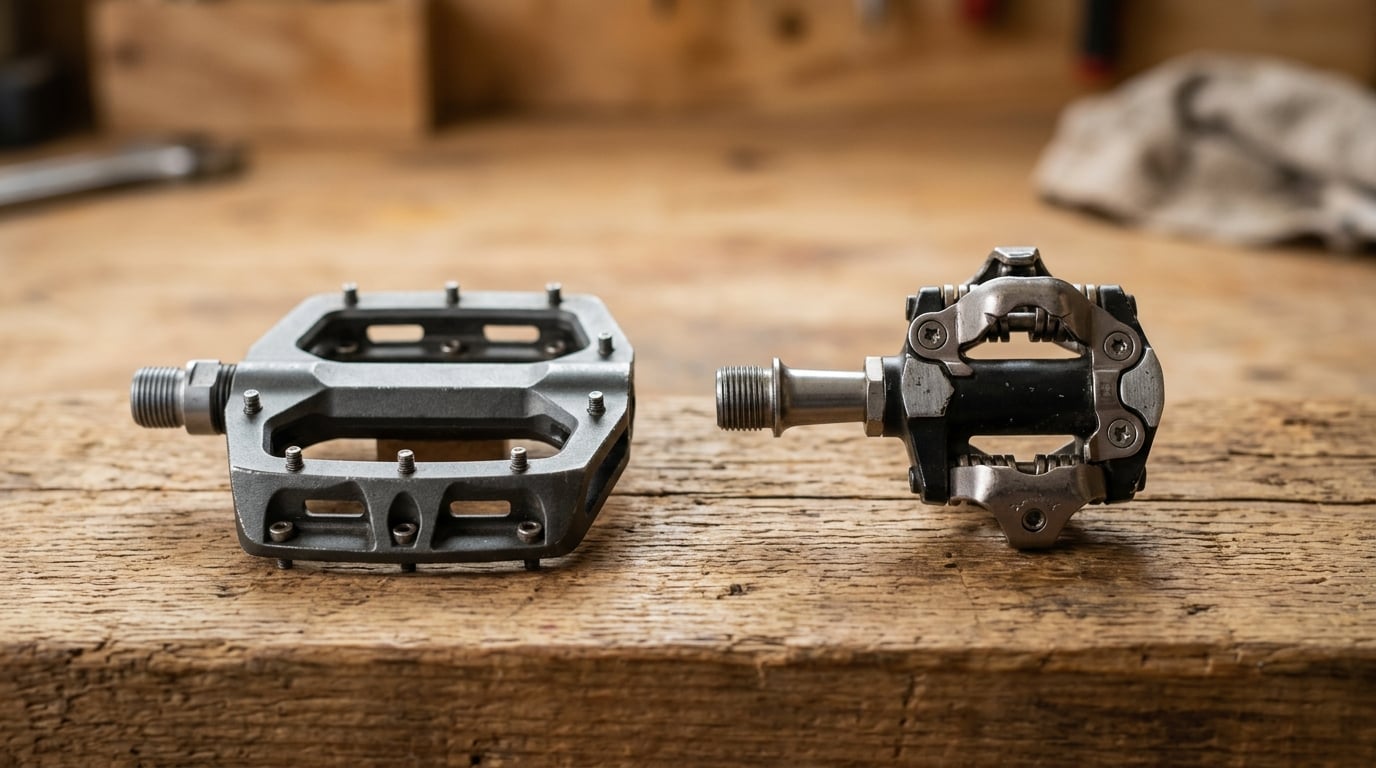
Every new cyclist hits the same fork in the road: clipless vs flat pedals for beginners. It is one of the most-asked questions on cycling forums, in bike shops, and among friends who just bought their first real bike. The answer is not as simple as “pros use clipless, so you should too.”
If you have ever watched a rider topple over at a stoplight because they forgot to unclip, you understand why this decision feels high-stakes. I have been there myself. My first week on clipless pedals involved two slow-motion falls and a bruised ego that took longer to heal than my hip.
This guide breaks down what each system actually does, who it suits, and how to choose without the marketing hype. You will learn the real pros and cons, what science says about efficiency, how to handle the fear of falling, and when (or whether) to make the switch.
By the end, you will have a clear answer for your specific situation, whether you are commuting, hitting trails, or just riding for fitness on weekends.
Table of Contents
What Are Flat Pedals and Clipless Pedals?
Flat pedals are the simple platforms you probably remember from childhood bikes. You place your foot on top, and metal pins or a textured surface keep your shoe from sliding off. You can wear any shoes, and your foot comes off the pedal instantly when you need it to.
Clipless pedals are where the naming gets confusing. Despite the name, you actually clip in to these pedals. The term “clipless” refers to the fact that they replaced old-style toe clips and straps. Your cycling shoe has a small metal or plastic cleat bolted to the sole. That cleat snaps into a spring-loaded mechanism on the pedal, locking your foot in place until you twist your heel outward to release.
The two main clipless families are SPD (Shimano Pedaling Dynamics) and road-style systems like SPD-SL and Look Keo. SPD uses a recessed metal cleat that sits flush with the shoe tread, so you can walk normally. Road systems use a larger plastic cleat that protrudes from the sole, which makes walking awkward but provides a wider, more stable connection for high-power pedaling.
For beginners, this distinction matters a lot. An SPD system is far more beginner-friendly because you can walk into a coffee shop without slipping or damaging the cleat.
Flat Pedals for Beginners: Pros and Cons
Flat pedals are the safest and most accessible starting point for any new cyclist. There is no learning curve for the pedals themselves, you just put your foot on and ride. That simplicity is exactly why most coaches and experienced riders recommend flats for your first few months.
The advantages for beginners are significant:
- Instant foot release. If you need to put a foot down, it just happens. No thinking, no twisting, no delay. This alone prevents most beginner falls.
- Any shoes work. Sneakers, hiking shoes, or dedicated flat-pedal shoes all work. You do not need to buy special cycling shoes before you even know if you like the sport.
- Lower entry cost. A quality set of flat pedals costs a fraction of a clipless pedal-plus-shoe-plus-cleat setup.
- Skill development. Riding flats teaches you proper foot placement, weight distribution, and bunny-hop technique. You cannot cheat by pulling up on the pedal, so your body learns to push correctly.
- Easier to stop and start in traffic. Commuters particularly benefit from being able to plant a foot at every red light without a thought.
The downsides:
- Foot bounce on rough terrain. On chunky trails or washboard roads, your feet can shift or bounce off the pins, especially if your shoes lack grip.
- No upward pull. You can only push down, which matters less than people think but does limit sprint power slightly.
- Shin scrapes from pins. Modern flat pedals grip aggressively, and a slipping pedal can leave nasty shin bruises. This is the trade-off for that grip.
- Perceived amateur status. Some road cycling circles still treat flat pedals as beginner gear. This is a social issue, not a performance one.
For a beginner, every advantage on that first list directly addresses the things that cause early accidents and frustration. The shin scrape risk is real but manageable with shorter pins and decent flat-pedal shoes.
Clipless Pedals for Beginners: Pros and Cons
Clipless pedals offer a locked-in connection that many riders love once they adjust. The transition period is where beginners get into trouble, but the long-term benefits are genuine for certain riding styles.
The advantages:
- Consistent foot position. Your foot is always exactly where it should be. No drift, no bouncing, no repositioning mid-ride.
- Power through the full pedal stroke. You can pull up on the upstroke, which helps on steep climbs and hard sprints. The actual efficiency gain is smaller than marketing suggests, but it exists.
- Better bike control off-road. Mountain bikers can hop, manual, and jump with far more confidence when their feet stay planted over roots and rocks.
- Secure in rough conditions. Mud, water, and vibration will not shake your foot loose the way they can on flats.
- Stiffer shoe soles. Clipless shoes tend to be stiffer, which spreads pressure across your whole foot and reduces hot spots on long rides.
The downsides for beginners:
- The learning curve. It takes most riders one to three weeks of regular practice to unclip instinctively. During that window, slow-speed falls are common.
- Upfront cost. You need pedals, shoes, and cleats. A basic entry-level setup starts around $150 to $200 for everything.
- Walkability issues. With road cleats, walking is awkward and slippery. Even recessed SPD cleats change how your shoe feels off the bike.
- Mental overhead. Every stop requires a deliberate motion to unclip. Forget once at a traffic light and you will fall sideways in slow motion.
- Emergency dismount anxiety. In a sudden stop or crash, you must twist out. This instinct develops over time but causes real fear early on.
None of these downsides are deal-breakers. They are just things you accept and manage. The question is whether the trade-off makes sense for your riding right now.
Clipless vs Flat Pedals: Which Is Better for Your Riding Style?
The right pedal depends heavily on what, where, and how you ride. A trail rider in technical terrain has very different needs from someone commuting eight blocks to work.
Mountain Biking
Mountain biking is where the flat-versus-clipless debate gets loudest. Both systems have legitimate supporters among elite riders, which tells you something important: neither is wrong.
Flats are excellent for beginners on trails because you can dab (put a foot down) instantly when you lose balance. They also force you to learn proper technique, since you cannot rely on being attached to the bike. Many top coaches insist beginners spend at least a season on flats before considering clipless.
Clipless shines once you are comfortable on trails and want to push harder. The security over roots, rocks, and drops lets you focus on line choice rather than foot position. Most endurance and cross-country racers use clipless for the efficiency on long climbs.
Road Cycling
Road cycling leans heavily toward clipless, and for good reason. Road riders spend long stretches in the saddle without stopping, so the unclip-once-at-a-light rhythm becomes second nature quickly. The stiffer shoe soles and secure connection make long, fast rides more comfortable and slightly more efficient.
That said, there is nothing wrong with riding flats on a road bike as a beginner. If you are just building fitness or testing whether road cycling is for you, flats remove one variable from an already steep learning curve.
Commuting
For commuting, flat pedals usually win. You stop frequently at intersections, navigate traffic, and often need to plant a foot quickly. Walking into the office in cycling shoes is also impractical unless you use recessed SPD cleats and keep your work shoes at the office.
If your commute is long, rural, and uninterrupted by traffic, clipless becomes more appealing. But for typical urban commuting with stops every few blocks, flats are the safer and more convenient choice.
Gravel Riding and Bikepacking
Gravel riding splits opinions. The rough terrain and long distances favor clipless for security and efficiency, but the frequent hike-a-bike sections and hikeability needs favor recessed SPD cleats over road-style systems.
For bikepacking specifically, recessed clipless pedals (SPD) are the most popular choice because you walk in your shoes at camp and resupply stops. Flats also work well if you prefer hiking-style shoes for off-bike sections.
Touring
Long-distance touring almost always calls for recessed clipless pedals. The combination of all-day pedaling comfort, walkable shoes, and reliable foot retention makes SPD the touring standard. Flat pedals work for short tours but can cause foot fatigue over multiple consecutive long days.
The Efficiency Question: Does Science Back Clipless?
This is where cycling lore meets actual research. The common claim is that clipless pedals make you significantly more efficient, but the science is more nuanced.
Studies on pedaling biomechanics have found that the efficiency difference between flats and clipless is small, often in the range of 2 to 5 percent for trained riders. Most of your power comes from the downward push, not the upward pull. The upstroke pull that clipless allows contributes only a small fraction of total power output.
Where clipless genuinely helps efficiency is foot stability and shoe stiffness. A stiff-soled shoe on a secure platform spreads pressure evenly across your foot, reducing fatigue and hot spots on long rides. This is a real comfort and endurance benefit, not a power-per-stroke benefit.
CyclingAbout, run by a professional bike fitter, makes a compelling case that grippy flat pedals with quality flat-pedal shoes can match clipless for most recreational riders. The pins on modern flat pedals provide enough retention for all but the most aggressive riding, and the platform stiffness comes from the pedal itself rather than the shoe.
The takeaway: if you are chasing marginal watts in a race, clipless helps. If you are riding for fitness, fun, or commuting, the efficiency gap is small enough that comfort and confidence matter more.
Beginner Fears: Falling, Getting Stuck, and Embarrassment
No competitor guide addresses this directly, but it is the single biggest concern beginners raise on Reddit and in bike shops. The fear is real, and it deserves a real answer.
The classic clipless fall happens at zero speed. You stop, forget to unclip, and tip over sideways. You are not hurt because you are barely moving, but the embarrassment is intense, especially in traffic. Almost every clipless rider has done this at least once.
How to minimize falls:
- Practice in a parking lot first. Spend 20 minutes clipping in and out while leaning against a wall or fence. Build the muscle memory before you ride in traffic.
- Set the release tension low. Most clipless pedals have an adjustable spring tension. Dial it to the lightest setting when you start. You can tighten it later once unclipping is automatic.
- Always unclip one foot before you need to stop. Make it a habit as you approach a light or stop sign, not after you have already stopped.
- Choose which foot to unclip and stick with it. Most riders unclip their right foot, but pick what feels natural and be consistent.
- Practice track stands. Learning to balance briefly at low speed buys you time to unclip calmly instead of panicking.
The timeline: most beginners fall once or twice in their first two weeks on clipless pedals, then rarely again after a month. By the three-month mark, unclipping is fully automatic. The fear fades faster than you expect.
If fear is holding you back, there is zero shame in starting with flats. You are not holding yourself back. You are building confidence and bike handling skills that will make the eventual transition to clipless easier and safer.
Shoes Matter: What to Wear on Each System
Your shoe choice interacts directly with your pedal choice, and getting it wrong undermines whichever system you pick.
For flat pedals, you want a shoe with a flat, sticky rubber sole. Skate-style shoes work, but dedicated flat-pedal shoes from brands like Five Ten (now Adidas Terrex) use rubber compounds that grip pedal pins dramatically better than standard sneakers. The sole should be reasonably stiff to spread pressure but not so stiff that it feels like a board.
Avoid running shoes. Their soft, cushioned soles fold over pedal pins and provide terrible power transfer. If you ride flats regularly, a dedicated flat-pedal shoe is worth the investment.
For clipless pedals, your shoe must match the cleat system. SPD shoes have a recess in the sole for the metal cleat, so they walk almost normally. Road shoes (SPD-SL, Look Keo) have a smooth sole with the plastic cleat exposed, making off-bike walking slippery and awkward.
Beginners should strongly prefer SPD-compatible shoes. The recessed cleat means you can walk into stores, stop for coffee, and carry your bike without the penguin waddle that road shoes demand.
FAQ’s
What are the pros and cons of clipless pedals versus flat pedals?
Flat pedals offer instant foot release, work with any shoes, cost less, and teach proper technique, but your feet can bounce on rough terrain. Clipless pedals provide a secure connection, consistent foot position, and better power transfer, but require a learning period and special shoes.
Do you feel any significant benefit using clipless over flat pedals?
The benefit is real but smaller than commonly claimed. Most riders notice better foot stability, comfort on long rides from stiffer shoe soles, and confidence on rough terrain. Pure pedaling efficiency gains are typically only 2 to 5 percent. The comfort and security improvements matter more than raw power for most beginners.
How long does it take to learn clipless pedals?
Most beginners feel comfortable within one to three weeks of regular riding. Expect one or two slow-speed falls in the first two weeks while muscle memory develops. By the one-month mark, unclipping becomes automatic, and by three months it is fully second nature.
When should you upgrade to clipless pedals?
Consider switching when you can ride confidently on flats, handle your bike in traffic or on trails without thinking, and want to ride longer distances or more technical terrain. If you commute with frequent stops, you may never need to switch, and that is completely fine.
Which is right for you – flat or clipless pedals?
Start with flats if you are a new cyclist, commute in stop-and-go traffic, ride recreationally, or want simplicity. Consider clipless if you ride long distances without frequent stops, tackle technical trails, or want maximum efficiency for racing or fast group rides. There is no wrong answer.
Are clipless pedals safe for beginners?
Yes, with practice. The main risk is the slow-speed fall from forgetting to unclip at stops. This is embarrassing but rarely causes injury. Practicing clipping in and out in a parking lot, setting the release tension to its lowest setting, and unclipping early when approaching stops virtually eliminates the risk.
The Bottom Line
The clipless vs flat pedals for beginners debate has no universal winner because the right answer depends on your riding, your goals, and your comfort level. Start with flats if you value simplicity, safety, and skill-building. Move to clipless when you feel ready and your riding style calls for it. Both choices are valid, and many experienced cyclists use both depending on the bike and the day.