
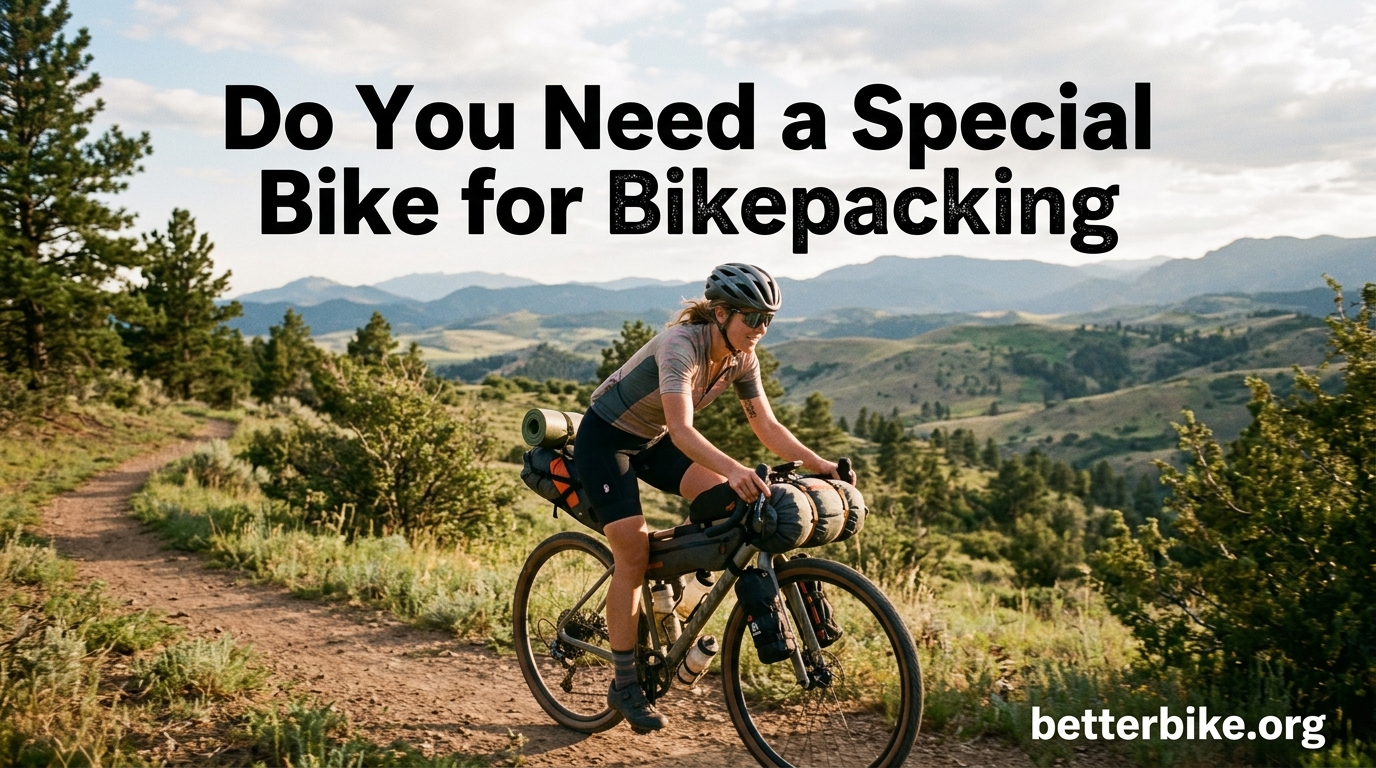
No, you do not need a special bike for bikepacking. The bike sitting in your garage right now will likely work just fine for your first trip. After years of testing setups ranging from vintage steel mountain bikes to modern gravel rigs, our team has learned one consistent truth: the best bikepacking bike is the one you already own.
This guide answers the question honestly. I will walk you through how to tell whether your current bike can handle bikepacking, the five factors that actually matter, and when (if ever) it makes sense to buy something dedicated. Whether you ride a road bike, hardtail, hybrid, or commuter, there is a path forward.
Table of Contents
The Short Answer: Yes, You Can Use Almost Any Bike for Bikepacking
Any bike can be a bikepacking bike. The community has proven this over and over again, with riders completing multi-day routes on rigid 1990s mountain bikes, single-speed commuters, and steel touring frames. The core principle of bikepacking is flexibility, not equipment perfection.
That said, “any bike works” does not mean every bike works equally well for every kind of trip. Your local gravel rail-trail is one thing. A 300-mile backcountry route in the Rockies is another. The honest answer is that your current bike probably works for the trips you have planned today, and you can upgrade later if your ambitions grow.
The cycling industry sometimes pushes the idea that bikepacking requires purpose-built gear. In reality, the bikepacking community has a strong DIY ethos. Riders swap bags between bikes, improvise mounting solutions, and head out with whatever they have. One rider on the r/bikepacking subreddit put it well: “I finished my first overnighter on a 25-year-old rigid mountain bike I bought for $80. The bike wasn’t the problem. My fitness was.”
How to Tell If Your Current Bike Is Ready for Bikepacking
Before you buy anything, run your bike through this quick assessment. I use a similar mental checklist whenever I evaluate a new setup for our team, and it catches the issues that actually matter.
Ask yourself these five questions:
- Does your bike fit you properly and ride comfortably for two to three hours at a time?
- Can it roll over the terrain you plan to ride (pavement, gravel, dirt, singletrack)?
- Does it have at least one set of mounting points for a rear rack or frame bag?
- Are the tires in good condition with enough tread for off-pavement riding?
- Is the drivetrain working smoothly without skipping or chain drops?
If you answered yes to all five, your bike is ready for a first trip. If you answered no to two or more, you have a short list of upgrades or adjustments to consider. None of them require buying a new bike.
Notice what is missing from this checklist: the bike’s age, frame material, and whether it is “officially” a bikepacking model. A 15-year-old aluminum hardtail with working gears and decent tires is a legitimate bikepacking setup. So is a hybrid commuter with a rear rack and a handlebar bag.
The 5 Key Factors That Determine Bikepacking Suitability
When riders ask whether their bike is suitable, they usually focus on the wrong things. They worry about frame material or brand when they should focus on five practical factors. These are what actually determine whether your bike will work on a multi-day trip.
Terrain You’ll Ride On
Terrain matters more than any other factor. The terrain you plan to ride determines everything else: tire choice, gearing range, and whether you need suspension.
For paved and crushed-gravel rail-trails, almost any bike works. For forest service roads and graded dirt, a gravel bike or mountain bike is ideal. For singletrack and technical backcountry routes, you want a mountain bike with at least front suspension. Match your bike to the hardest terrain on your route, and the rest will be easier than expected.
Suspension: Rigid, Hardtail, or Full-Suspension
Suspension is one of the most debated topics in bikepacking. The truth is that all three options work, and each has tradeoffs.
A rigid bike (no suspension) is lightweight, simple, and reliable. There are no fork seals to fail or pivots to service. Many experienced bikepackers prefer rigid setups for this reason. A rigid gravel bike or rigid mountain bike handles rough terrain surprisingly well when you run wider tires at lower pressures.
A hardtail (front suspension fork only) adds comfort and control on rough trails without the weight penalty of full suspension. Hardtails are popular choices for bikepacking because they balance capability and simplicity.
Full-suspension mountain bikes are the most comfortable option for technical terrain but add weight, complexity, and packing challenges. You will need a frame bag designed around the shock, and there is more that can break. For most riders on most trips, a hardtail is the sweet spot.
Gearing for Loaded Riding
Loaded cycling feels different from riding unloaded. Add 25 to 40 pounds of gear and water, and climbs that felt easy suddenly feel hard. Your gearing needs to accommodate this added weight, especially on steep or extended climbs.
Look for a bike with a wide-range cassette (the cluster of cogs on the rear wheel). A 1x drivetrain with an 11- or 12-speed cassette ranging from 11 to 50 teeth gives you all the range most riders need. A 2x drivetrain with a compact crankset and wide-range cassette also works well.
Is 1x or 2x better for bikepacking? Honestly, both work. A 1x system is simpler, lighter, and easier to pack spares for because there is no front derailleur to fiddle with. A 2x system gives you a slightly wider gear range and tighter steps between gears. For beginners, I lean toward 1x for the simplicity. If your current bike has a 2x setup and it works, do not feel pressured to change it.
Wheel and Tire Size Considerations
Tire clearance is one of the most underrated features of a bikepacking bike. You want enough room to run wider tires (at least 45mm for gravel, 2.2 inches or wider for mountain biking). Wider tires at lower pressures give you better traction, comfort, and puncture resistance on rough terrain.
The 700c wheel size is standard on gravel and road bikes. The 650b wheel size allows even wider tires in frames with limited clearance. Mountain bikes typically use 27.5-inch or 29-inch wheels. None of these is wrong. What matters is that your tires match the terrain you plan to ride.
If your current bike has narrow road tires (under 32mm), you may want to upgrade to wider tires for any off-pavement riding. This single change often makes the biggest difference in how your bike handles gravel and dirt.
Frame Material and Mounting Points
Frame material is mostly a question of durability, comfort, and price. Steel (especially chromoly) is the traditional bikepacking favorite because it is strong, repairable, and has a compliant ride feel. Aluminum is lighter and cheaper but stiffer. Carbon fiber is light and strong but harder to repair in remote areas. Titanium is the premium option: light, strong, comfortable, and expensive.
What matters more than material for bikepacking is mounting points. Look for frame bosses for water bottle cages, frame bag anchors, and rear rack mounts. The more mounting options you have, the easier it is to attach bags and carry gear without needing a rack.
Bike Types That Work Best for Bikepacking
Different bikes suit different styles of bikepacking. Here is how the main categories compare, based on what we have seen work across hundreds of trip reports and our own testing.
Gravel Bikes: The Modern Default
Gravel bikes have become the most popular choice for bikepacking, and for good reason. They are efficient on pavement, capable on gravel and dirt, and often come with mounting points for bags and racks. Most gravel bikes accept tires in the 40 to 50mm range, which is plenty wide for most off-pavement routes.
Modern gravel bikes like the Salsa Vaya, Trek 920, or Surly Bridge Club are designed specifically with bikepacking in mind. They have multiple mounting points, stable geometry for loaded riding, and clearance for wide tires. If you are buying a new bike today, a gravel bike is the safe default.
Mountain Bikes (Hardtail and Full-Suspension)
Mountain bikes excel on rougher terrain. A hardtail with front suspension is a versatile option that handles singletrack and rough forest roads with confidence. Tires in the 2.2 to 2.4-inch range roll over rocks and roots easily, and modern hardtails are light enough for long days in the saddle.
Full-suspension mountain bikes work for bikepacking too, especially on routes with lots of technical descent. The challenge is fitting bags around the rear shock. Specialized frame bags and seat packs work, but you may have less capacity than on a hardtail or rigid bike.
Hybrid and Commuter Bikes
Hybrid bikes, commuters, and even some city bikes can work for bikepacking on easier terrain. Add a rear rack, a handlebar bag, and a set of wider tires with some tread, and you have a capable setup for rail-trails, gravel paths, and light forest roads.
The limitations show up on rough or steep terrain. Hybrid bikes typically have limited tire clearance, less aggressive geometry, and components designed for urban use rather than loaded off-pavement riding. But for a first overnighter on mellow routes, a commuter bike is a perfectly valid choice.
Road Bikes: Possible With Limitations
Can I use a road bike for bikepacking? Yes, but with caveats. Road bikes work for bikepacking routes that stay on pavement or hard-packed gravel. Their geometry is fast and efficient but less stable when loaded, and their narrow tires struggle on loose surfaces.
If your road bike has clearance for 32mm or wider tires and you stick to gentler routes, it can absolutely work. Many riders have completed credit-card tours (where you stay in hotels instead of camping) on road bikes. For traditional bikepacking with camping gear, a road bike is the least ideal option but not impossible.
Vintage and Budget Bikes
Some of the most inspiring bikepacking stories come from riders on old bikes. Vintage 1980s and 1990s mountain bikes are popular in the community because they are affordable, durable, and easy to work on. Steel frames from this era can be repaired with basic tools in remote areas. The riding position is more upright than modern bikes, which is comfortable for long days.
If you find an old rigid steel mountain bike in working condition for a few hundred dollars, you have a legitimate bikepacking platform. This is how many riders get into the sport without a major investment.
Bikepacking vs Bike Touring: Why the Bike Matters Less Than You Think
Bikepacking and bike touring are often confused, but they make different demands on your equipment. Understanding the distinction explains why you do not need a special bike for bikepacking.
Bike touring typically uses front and rear panniers mounted to racks. The bike carries all your gear in a stable, low-centered setup, and the bike is usually a dedicated steel touring frame designed for the load. Touring bikes are optimized for long distances on paved or well-graded roads, often across multiple countries.
Bikepacking evolved as a different approach. Instead of racks and panniers, riders use soft frame bags, handlebar rolls, and seat packs that attach directly to the frame. This keeps the bike lighter, narrower, and more maneuverable on rough trails. It also means you can use bikes that would never work for traditional touring, like a full-suspension mountain bike.
Because bikepacking gear straps to the frame rather than hanging from racks, the bike does not need to be a dedicated touring machine. Almost any frame with a few mounting points and enough clearance for bags will work. This is the structural reason why the bike matters less than most people assume.
Practical Modifications to Make Your Current Bike Bikepacking-Ready
If you have decided to use your current bike, here is how to get it ready for a first trip. None of these modifications requires a new bike.
Start with the tires. If your current tires are narrow or worn, replace them with wider tires appropriate for your terrain. For mixed-surface riding, a 40 to 45mm gravel tire on a road or hybrid bike is a good starting point. For mountain biking, look at 2.2 to 2.4-inch tires with aggressive tread.
Next, evaluate your gearing. If you have a triple chainring or compact crankset with a wide-range cassette, you probably have enough gear range for loaded climbing. If not, consider swapping the cassette for a wider-range option. A 11-42 or 11-50 cassette gives you easy gears for steep climbs with a loaded bike.
Add bags that fit your frame. Start with a seat pack (also called a saddlebag) and a handlebar bag. These two alone carry most of what you need for an overnighter. If your frame has room for a frame bag, that is a bonus. Avoid racks and panniers unless you have a dedicated touring bike, since the racks can catch on rough terrain.
Finally, do a basic mechanical check. Make sure your brakes work well, your chain is not stretched, and your tires are in good shape. Carry basic spares: a spare tube, tire levers, a multi-tool, and a patch kit. Most bikepacking problems are tire-related and solvable at the roadside.
When It Is Worth Buying a Dedicated Bikepacking Bike
After all of this, you may still want a dedicated bikepacking bike. That is fine, and there are legitimate reasons to upgrade.
If you find yourself regularly riding rough terrain and pushing the limits of your current bike, an upgrade makes sense. A purpose-built bikepacking bike will have wider tire clearance, more mounting points, and geometry designed for loaded riding. It will also be more comfortable and capable on the kind of routes you want to ride.
If your current bike is the wrong size, has worn components, or needs expensive repairs, sometimes buying new is cheaper than fixing old. A used bikepacking-specific bike in good condition can be a smart investment.
But the most common reason people buy a dedicated bike is that they have caught the bug and want something optimized for the sport. That is a great reason to upgrade, just not before your first trip. Get out there first. Learn what you actually need. Then spend your money wisely.
Frequently Asked Questions
Can you use any bike for bikepacking?
Yes, you can use almost any bike for bikepacking. Rigid mountain bikes, gravel bikes, hardtails, hybrids, and even some road bikes all work for multi-day trips. The key factors are terrain match, tire clearance, gearing range, and comfort over long rides, not the specific bike model or frame material.
What type of bike should I get for bikepacking?
For most riders, a gravel bike is the best starting point. Gravel bikes handle pavement efficiently and are capable on gravel and dirt. Mountain bikes (especially hardtails) are better for technical singletrack. Hybrids work for easier terrain. Match the bike to the hardest terrain on your planned route.
Is 1x or 2x better for bikepacking?
Both work well for bikepacking. A 1x drivetrain is simpler, lighter, and easier to pack spares for, since there is no front derailleur. A 2x drivetrain offers slightly tighter gear steps and a wider overall range. For beginners, 1x is easier to maintain in remote areas. Use whatever your current bike has if it works.
Can I use a road bike for bikepacking?
Yes, you can use a road bike for bikepacking on routes that stay on pavement or hard-packed gravel. Road bikes have limited tire clearance and less stable geometry when loaded, so they are not ideal for rough terrain. For road-based bikepacking with overnight stays, a road bike is a reasonable choice.
How do I know if my bike is suitable for bikepacking?
Check five things: Does it fit you comfortably? Can it handle the terrain you plan to ride? Does it have mounting points for bags? Are the tires in good condition? Does the drivetrain shift smoothly? If yes to all five, your bike is ready for a first bikepacking trip.
The Bottom Line: Use What You Have
You do not need a special bike for bikepacking. The bike you already own is probably the right one to start with. Get out there, do an overnighter close to home, and learn what works and what does not. Real experience on the trail teaches you more than any gear guide.
When you outgrow your current setup, you will know exactly what to look for in your next bike. Until then, save your money for trips and good bags. The bike is the smallest part of the bikepacking equation.