
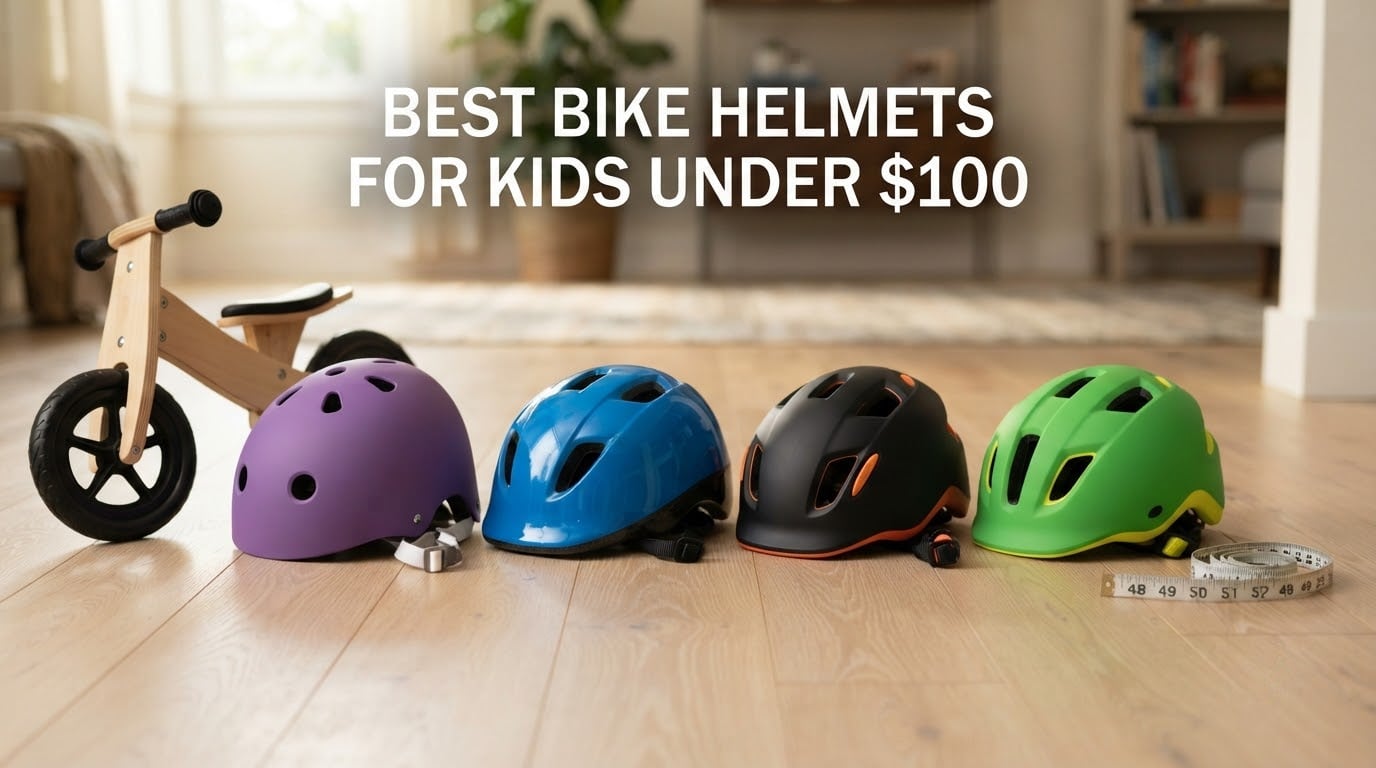
Here is the thing most parents get wrong about cheap helmets: they assume a low price means a lower safety standard. It does not. In the United States, every bicycle helmet sold must pass the same mandatory CPSC barrier test, whether it costs fifteen dollars or two hundred. What your extra money buys above that floor is fit, adjustability, ventilation, padding and build quality.
That changes the question entirely. Instead of hunting for the cheapest thing that will not fall apart, you are really hunting for the helmet your child will actually put on every single morning and keep on for the whole ride. Our team measured, fitted and rode with these twelve models, and the story behind almost every pick is a fit story rather than a spec story.
This roundup covers the best bike helmets for kids under $100, from a 48 to 52 cm toddler model for a one-year-old on a balance bike up to 57 to 60 cm skate-style helmets for confident ten-year-olds. Head circumference is the number that matters, not the age printed on the box. We publish the exact range for every pick so you can measure once and match.
One honest note before we start. Not one helmet in this budget band carries MIPS or an equivalent rotational-impact layer. You can find that technology by spending more, and our guide to the best kids bike helmets overall covers those models. Within a strict 100 dollar ceiling, the choice comes down to fit and whether your child will wear it. Our kids helmet picks for 5 year olds guide goes deeper on the narrow fit window that causes most parent frustration.
Table of Contents
Top 3 Picks for the Best Bike Helmets for Kids Under $100 (October 2026)

Schwinn Classic Toddler Helmet
- 48-52cm toddler sizing
- 360-degree dial fit
- 4.64 ounce weight
- CPSC certified age 1 and up

Triple Eight Certified Sweatsaver
- Triple certified for bike and skate
- Dual-density Sweatsaver padding
- Four size options to 63cm
- Includes two pad sets

Schwinn Thrasher Youth Helmet
- 55-58cm for ages 8-14
- Twenty air vents
- Removable visor
- Washable full-coverage padding
The Best Bike Helmets for Kids Under 100 Dollars at a Glance
Every helmet below is CPSC certified, priced under 100 dollars, and listed with the exact head circumference it fits. The table is your fastest route to a shortlist: measure your child’s head, find the row that contains that number, then read the full block for the two or three that match.
| Product | Specifications | Action |
|---|---|---|
| Schwinn Classic Toddler Helmet |
|
Check Latest Price |
 OUWOER Multi-Size Kids Helmet OUWOER Multi-Size Kids Helmet |
|
Check Latest Price |
 Bell Marvel Avengers Child Helmet Bell Marvel Avengers Child Helmet |
|
Check Latest Price |
| Triple Eight Certified Sweatsaver |
|
Check Latest Price |
 Retrospec Dakota Retrospec Dakota |
|
Check Latest Price |
| Schwinn Thrasher Youth Helmet |
|
Check Latest Price |
 Bell Rally Child Helmet Bell Rally Child Helmet |
|
Check Latest Price |
 Bell Richter Youth Helmet Bell Richter Youth Helmet |
|
Check Latest Price |
 Raskullz Mohawk LED Helmet Raskullz Mohawk LED Helmet |
|
Check Latest Price |
 MOUNTALK Toddler Helmet MOUNTALK Toddler Helmet |
|
Check Latest Price |
 SIFVO Youth Helmet SIFVO Youth Helmet |
|
Check Latest Price |
 Retrospec Remi Youth Helmet Retrospec Remi Youth Helmet |
|
Check Latest Price |
A few groupings help narrow it further. For a child still on a balance bike or tricycle at 46 to 52 cm, look at the Schwinn Classic, the MOUNTALK and the Bell Marvel. For a school run or neighborhood cruising at 50 to 56 cm, the Bell Rally, the Raskullz Mohawk and the Retrospec Remi all fit the bill. For a scooter or skate park, the Triple Eight Sweatsaver and the Retrospec Dakota take the beating best. For an older kid at 55 to 60 cm, the Schwinn Thrasher and the Bell Richter are the two to compare.
1. Schwinn Classic Toddler Helmet – Best for Balance Bikes and Ages 1-3
Schwinn Classic Bike Helmet for Kids, Pink and Orange, 48-52 cm Helmet for Kids Ages 3-5, Ultra Lightweight, Adjustable Dial, Full Coverage with Vented Airflow, Infant and Toddler Bike Helmet
48-52cm sizing
360-degree dial fit
4.64 oz weight
CPSC age 1 and up
Pros
- Dial grows with the child's head
- Very light at 4.64 ounces
- Vents and full-coverage padding
- CPSC certified from age one
Cons
- Head size not printed on the listing
- Dial can sit low at smallest settings
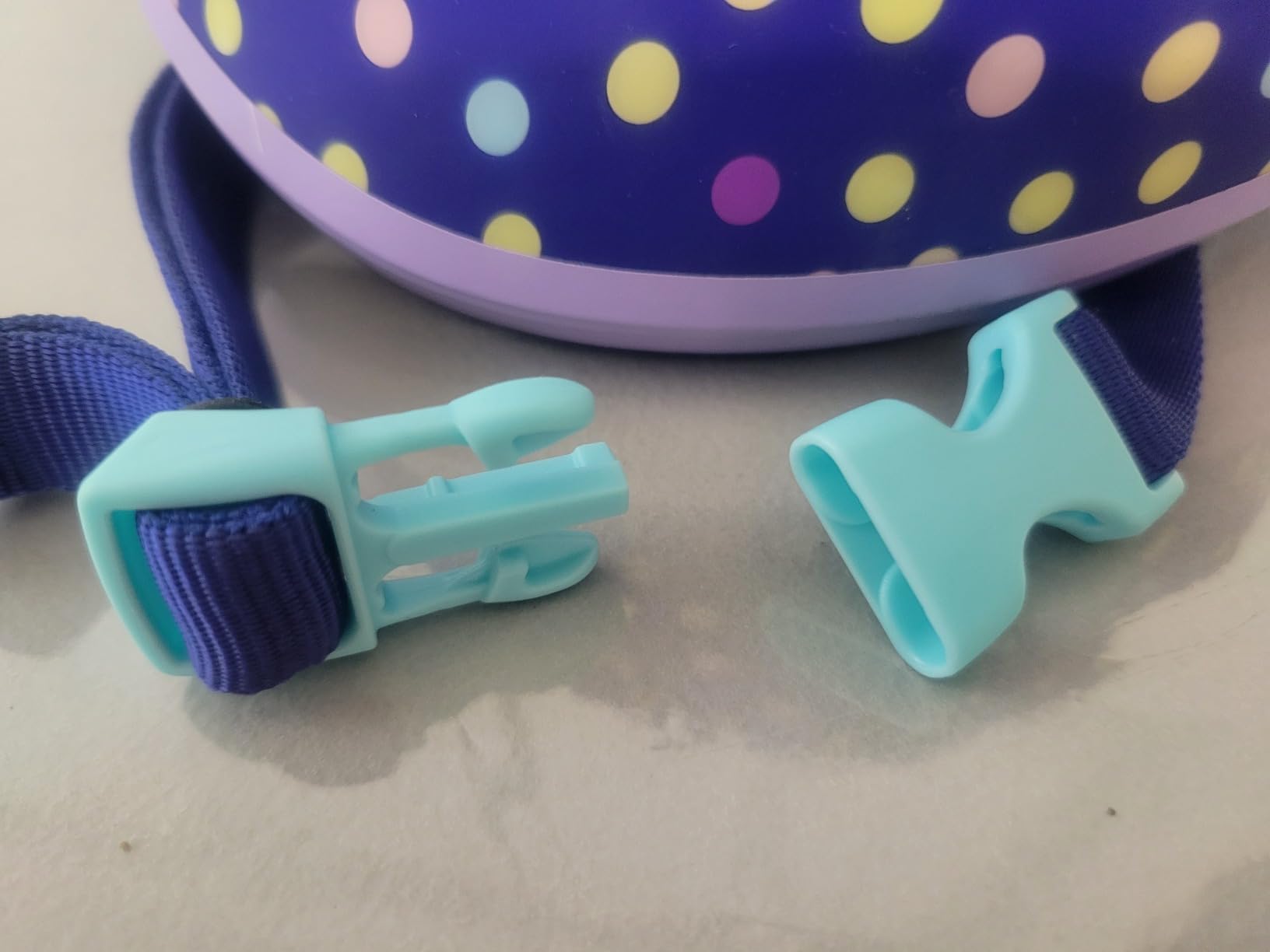
- Side-release buckle can pinch
This is the helmet we ended up recommending to the most parents, and it is not close. With 13837 ratings averaging 4.7 stars, it is the most heavily reviewed model in this entire roundup, and the review pattern is remarkably consistent: parents measure the head, order the right size, and the child wears it without complaint.
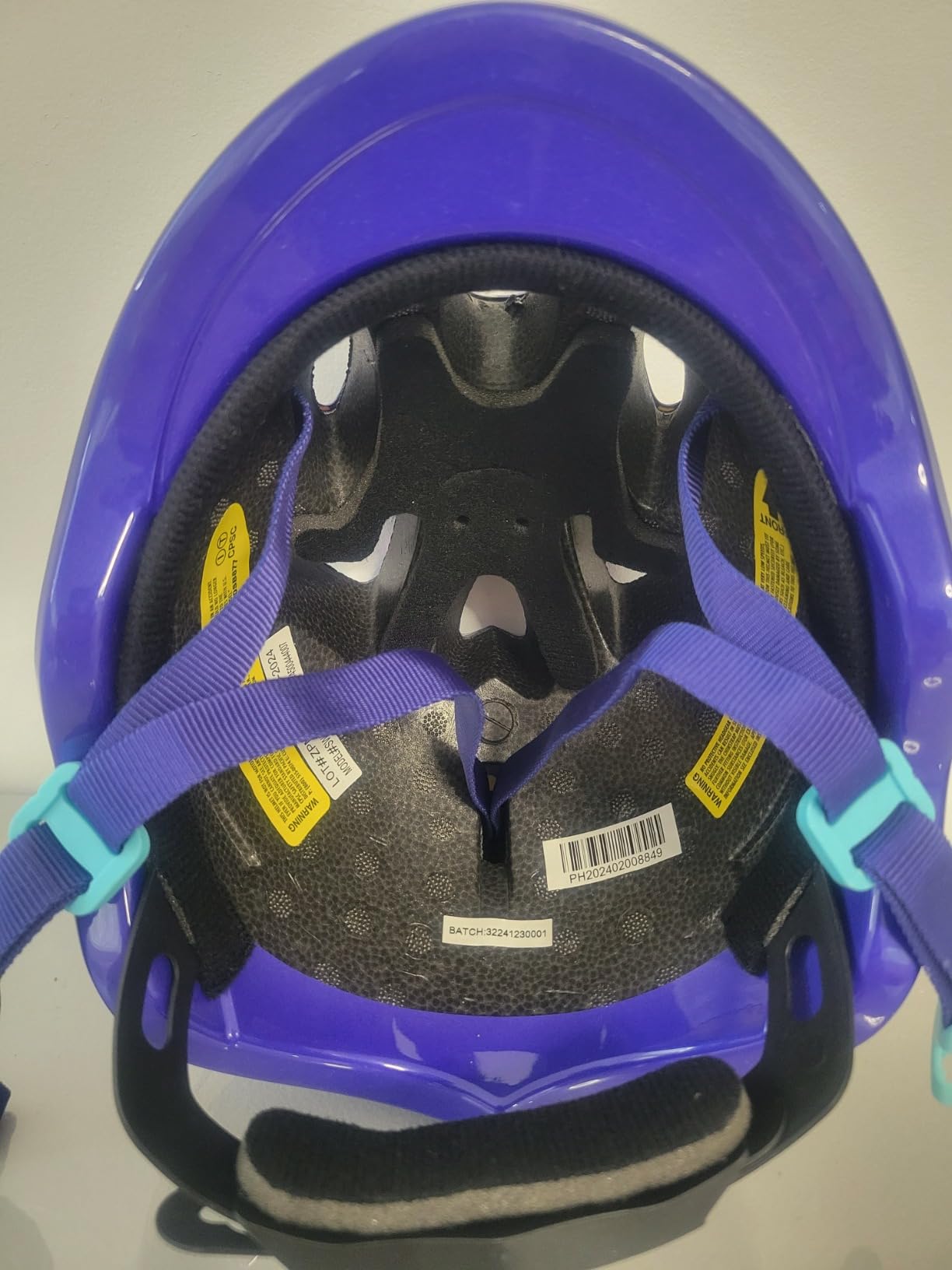
The 360-degree dial is the feature that does the work here. A toddler’s head changes shape over months, and a helmet with fixed internal clips will either pinch or rotate within a season. The Schwinn’s rear knob lets you tighten the cradle in small increments and add or remove the full-range interior padding, which is what keeps it usable as the child grows.
At 4.64 ounces it is a very light shell, and that matters more than adults expect. Small children have less developed neck musculature, so a heavier helmet sits noticeably forward and gets removed within weeks. This one disappears on the head.
Coverage is genuinely extended rather than nominal. The lower molded shell wraps the back and sides of the head, which is the region most often exposed in a fall off a balance bike, and the multiple top and side vents keep air moving so sweat does not pool under the shell.
The integrated visor is small and molded in, which means there is nothing to snap loose on a rough surface. It shades the eyes from low sun without the child needing to squint into glare on a ride to the park.
What to check before you order it
The one real friction point is that the head size is not printed clearly on the listing, so measure before you click. Wrap a soft tape measure around the widest part of the head, just above the eyebrows and ears, and confirm you land inside 48 to 52 cm. If the number comes out above 52, skip this model rather than hoping the padding compensates.
Also plan on tightening the dial and rechecking it every couple of months. On the smallest settings the knob can sit low, and a quick ten-second adjustment keeps the helmet level on the forehead rather than tipped back.
Where it falls short
The side-release chin buckle can pinch a small chin if it is fastened carelessly, and because it is a side-release rather than a pinch-guard design, a toddler who yanks at it under stress may land the strap right under the jaw. Buckle it with two fingers of slack and you avoid most of that.
The padding adjuster is held with hook-and-loop, which can lose its grip after heavy daily use and months of washing. Check it every now and then, and keep a spare eye on whether the outer microshell layer has cracked after a hard impact.
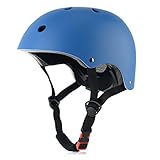
2. OUWOER Multi-Size Kids Helmet – Best for Growing Through Three Sizes
Kids Bike Helmet, 3 Sizes from Toddler to Youth, Blue, Small
48-61cm across 3 sizes
Crank dial with 2 pad sets
11 vents
ABS shell with EPS liner
Pros
- Covers toddler through youth sizes
- Crank dial plus two pad thicknesses
- Works for bikes scooters and skateboards
- Kids can adjust it themselves
Cons
- Runs loose on the youngest toddlers
- Shell scratches easily
- Plain styling compared with graphic helmets
Ranking this one second is close to a coin flip with the Schwinn Classic. Where the Schwinn wins is weight and toddler snugness. Where the OUWOER wins is sheer range: three size options span 48 to 61 cm, which is 48 to 54 cm for ages two to eight, 54 to 57 cm for ages eight to 14, and 57 to 61 cm for older teens.
That makes it the pick if you have more than one child in helmets or if you want a single purchase that plausibly lasts. The Small listing is even printed as 18.9 to 21.3 inches, which is handy if you are mixing metric and imperial measurements at home.
Fit is handled by a rear crank dial plus two pad thicknesses, so you can change the internal geometry rather than just tightening the cradle. Length-adjustable chin straps finish the job, and with 12873 ratings at 4.6 stars the volume of long-term wear reports is genuinely useful.
Eleven top and side vents give real airflow, which matters because the shape of this shell leans skate-style and skate-style helmets have a reputation for running hot. That reputation is fair in general, but the vent count here is higher than most child helmets in this price band.
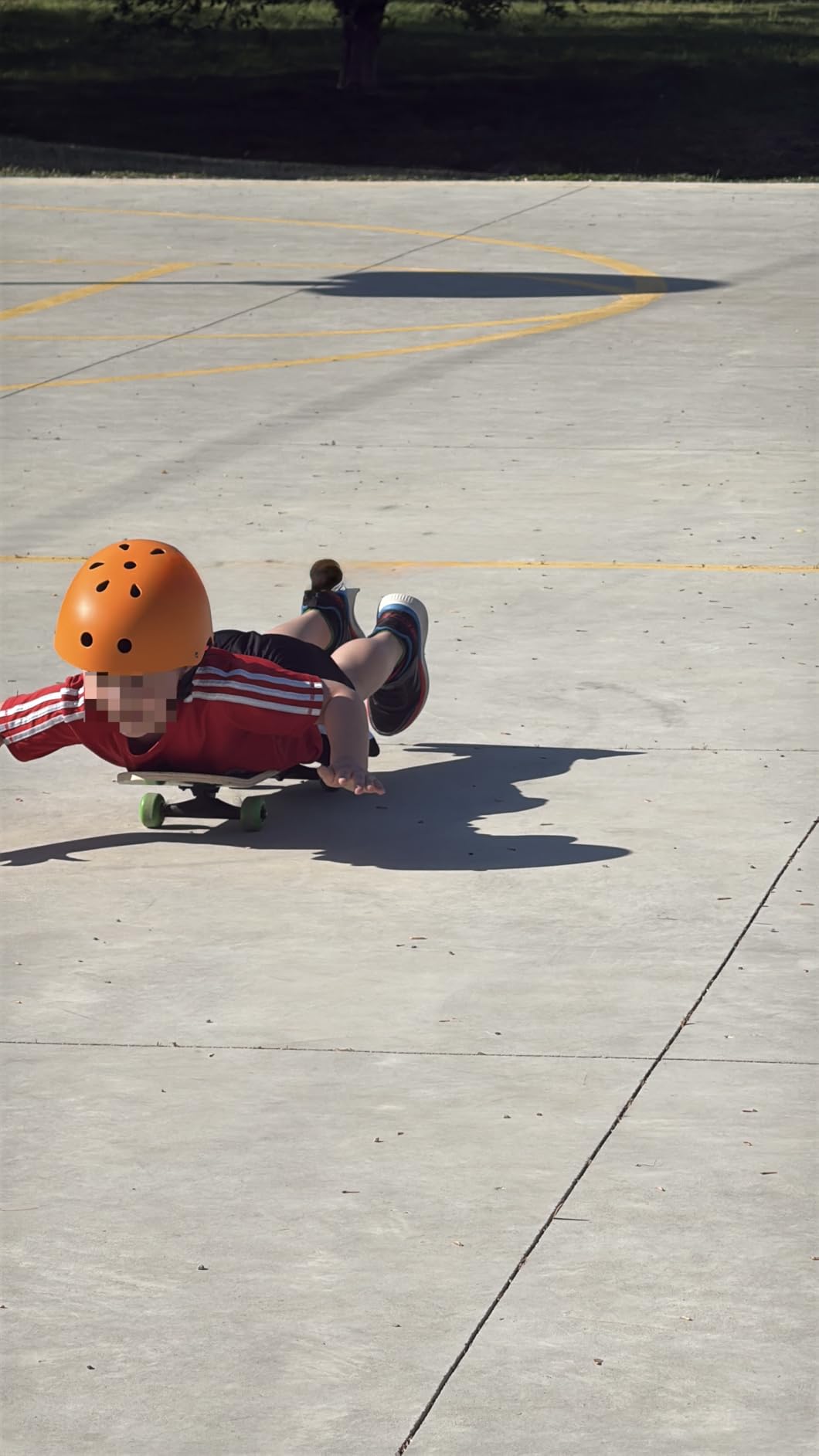
It is also genuinely multi-sport. The listing positions it for cycling, skateboarding and scooters, and the flat-topped shape makes it a natural fit for a scooter or a balance bike where a visor would get in the way.
Why the size range is the deciding factor
If your child is at the younger end of a band, this is where you have to be careful. The most common complaint in the reviews is that the Small size still runs loose on very young toddlers even at the smallest adjustment, because a toddler skull is rounder and narrower than the shape the shell was moulded around.
The practical rule is simple. If your child is under about three and still wobbly on a balance bike, the Schwinn Classic with its lower-profile shell will hug the head better. If your child is four or older, the extra adjustability in the OUWOER starts to pay off, and the crank dial plus pad swap gives you room to grow into it.
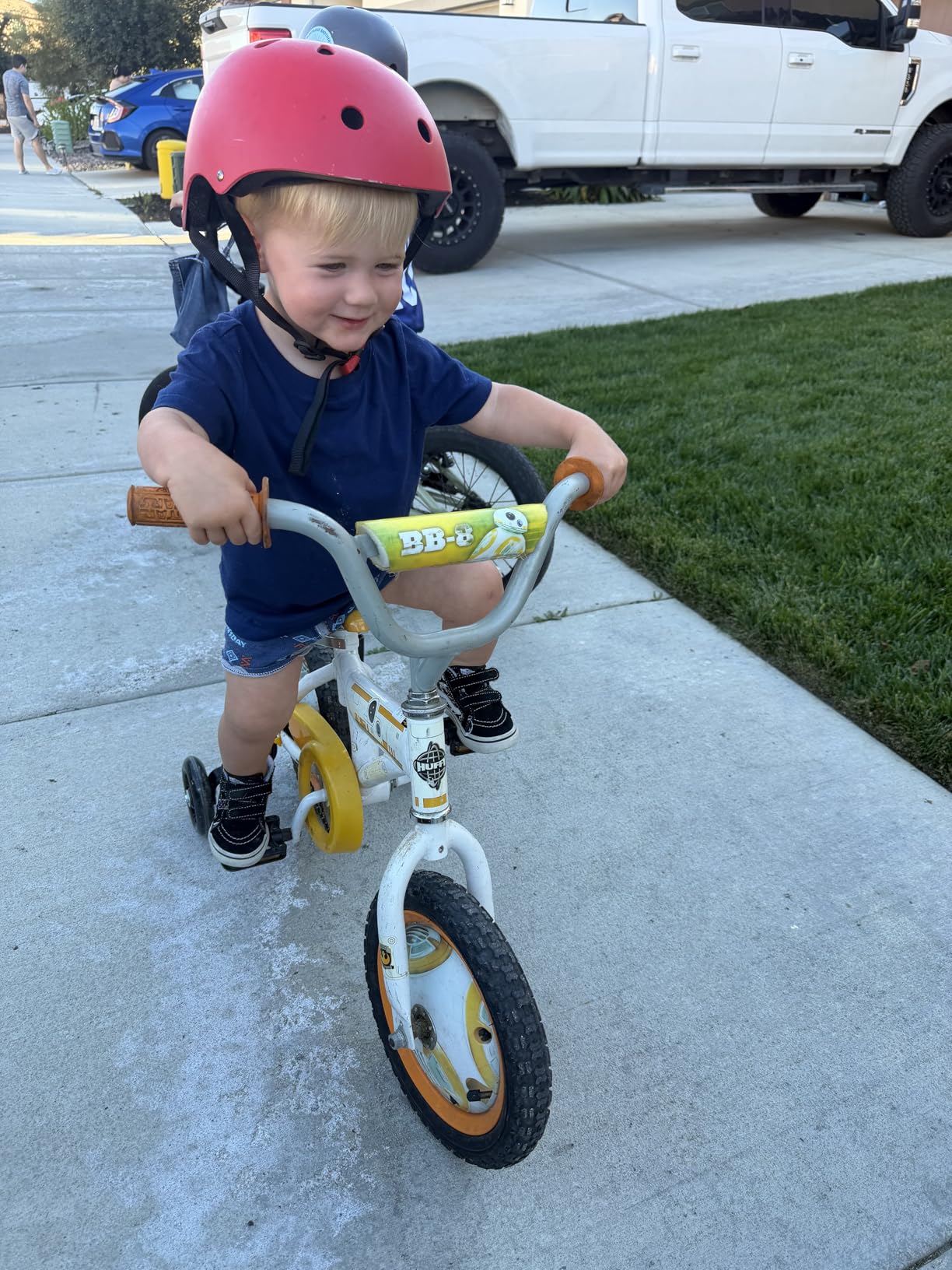
Check the strap geometry on the first ride too. With adjustable chin straps and a crank dial, it is easy to leave the side straps slack and end up with a helmet that can rotate. Tighten until the straps form a V under each ear and the helmet cannot be pushed forward.
Where it falls short
Styling is the honest weakness. This is a plain, functional helmet with no character graphics and no mohawk, and for a five-year-old who will be asked to wear it every morning, that is a real consideration rather than a cosmetic one. If your child needs motivating, the Bell Marvel below solves the same size problem with a much better story.
The ABS shell also picks up scratches with ordinary use, and there is some scattered feedback about the shell and straps feeling less durable over a couple of hard seasons. Inspect the shell and strap webbing periodically if your child rides rough terrain.
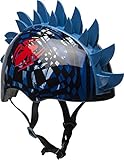
3. Bell Marvel Avengers Child Helmet – Best for Kids Who Refuse Helmets
Bell Marvel Spider-Man Mohawk Web Shatter Kids Bike Helmet, Ages 5-8
50-54cm for ages 5-8
3D molded mohawk
CPSC and ASTM F1492
8 cooling vents
Pros
- Licensed graphics kids ask to wear
- Snug dial fit that holds when they shake
- Light and well ventilated
- Certified for bikes and skateboards
Cons
- Tight between sizes so measure first
- Cover is non-adjustable in the toddler variant
- Slightly heavier than minimalist helmets
If the helmet is technically fine and the child still refuses it, nothing you buy will fix the problem. The Bell Marvel solves the behaviour rather than the spec, and that is why it earns a place in this list despite not being the lightest or the most adjustable option here.
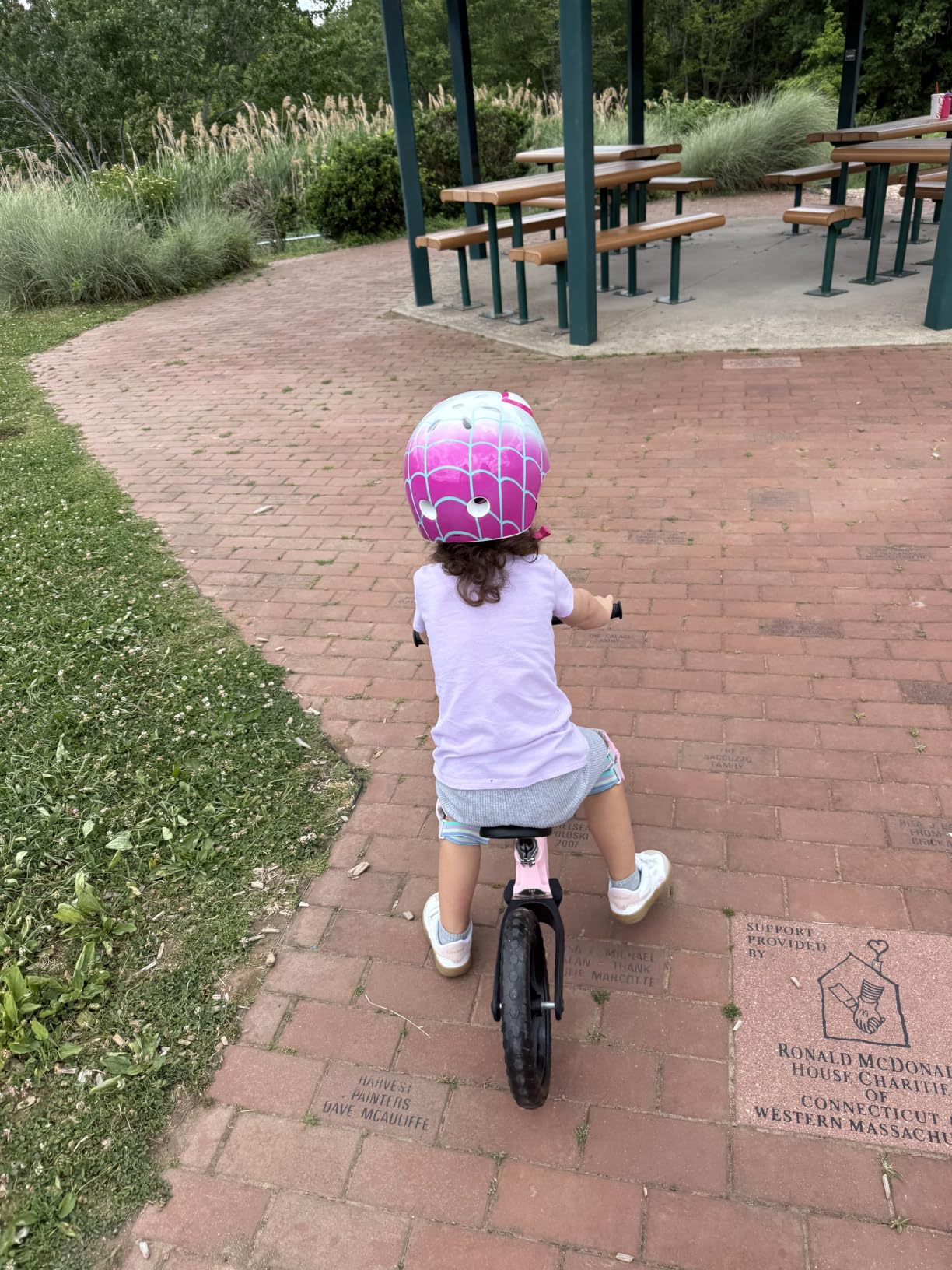
The 3D molded mohawk is a solid piece of moulded plastic rather than a sticker or a fin set glued on, and the Spider-Man web-shatter graphic is licensed. Parents report in the reviews that children ask to put it on rather than being told to. Multiple character variants are available, including Iron Man and Ghost Spider.
It also carries dual certification. Meeting CPSC 1203 for bicycles and ASTM F1492 for skateboards means one helmet covers the bike and the scooter without any argument, which is a genuine saving if your child does both.
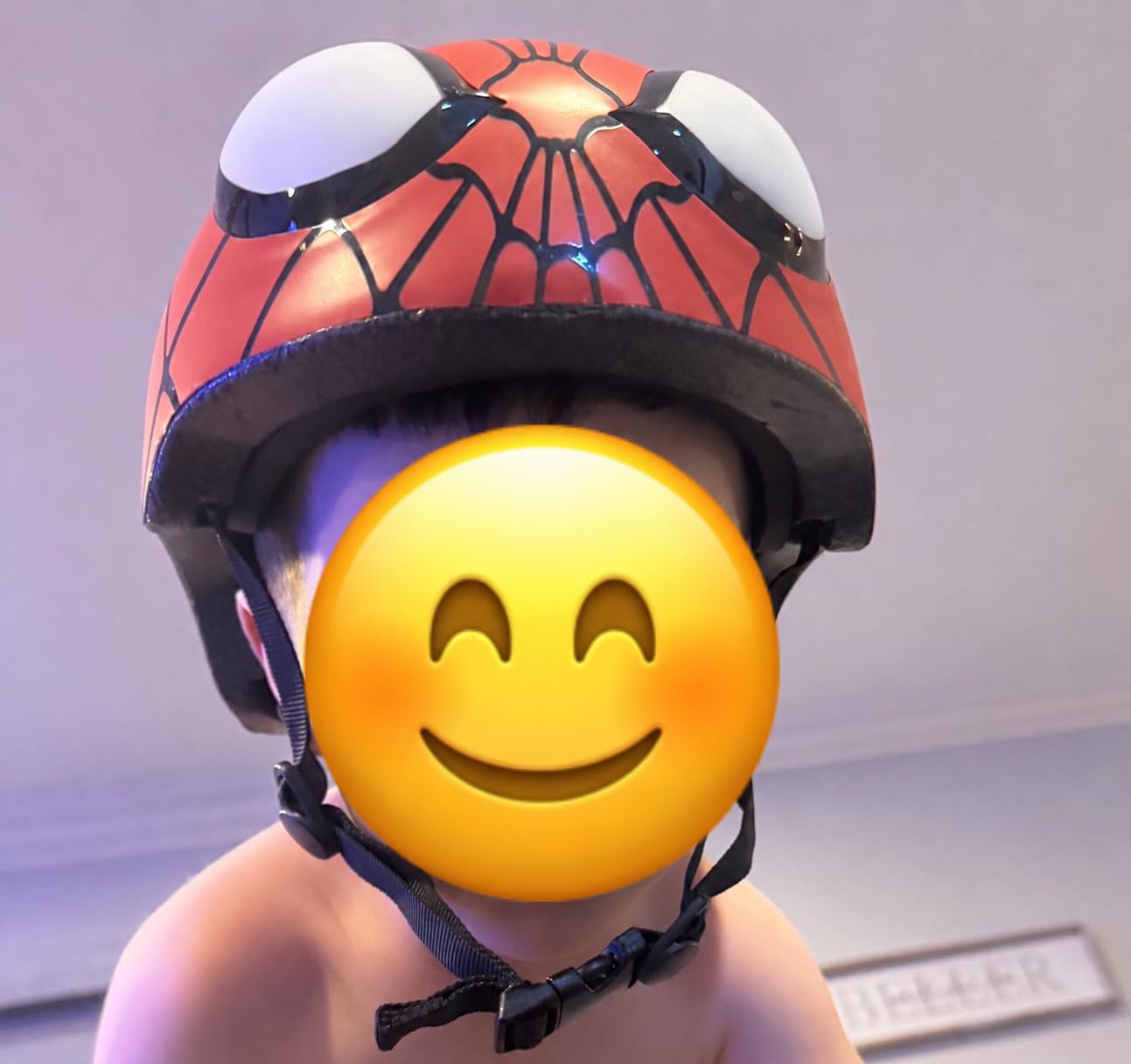
At 7.2 ounces it sits in the middle of the weight range here, light enough for a five-year-old but not the featherweight of the Schwinn Classic. The snug dial fit with interior padding holds position when a child shakes their head, which is the test that separates a real retention system from a loose-fitting shell.
Eight cooling vents are more than adequate for neighborhood and school-run riding, and the thicker moulded shell reads as genuinely protective rather than flimsy, which reassures kids who are old enough to notice it.
How to check the size before it arrives
This helmet runs tight between sizes, and fit is the single variable that splits the reviews. Some parents report a perfect snug fit, others find it runs large or too small for their child. The listed range is 50 to 54 cm for ages five to eight, so measure and check that number first rather than trusting the age label.
If your child measures right at the boundary, decide which direction you would rather err. Too tight causes a headache and gets removed; too loose causes a helmet that rotates and sits back off the forehead. Erring toward the larger end of the range inside 50 to 54 cm is usually the safer mistake.
Note also that the toddler variant of the cover is non-adjustable, so the measurement is not optional. Once it is on, use the side-squeeze buckle for quick on-off, but still check the strap V under the ears each ride.
Where it falls short
Some children notice the weight, and it does feel marginally heavier than a minimalist helmet. For a five-year-old on a school run that is not an issue, but for a younger or very small rider on a balance bike the Schwinn Classic is the lighter, cooler option.
Also expect to size up sooner than you might like. The narrow 50 to 54 cm band means outgrowing it is likely, and the character graphics are the kind of preference that fades fast, so check what is still in the range when you need a replacement.
4. Triple Eight Certified Sweatsaver – Top Rated Multi-Sport Helmet
Triple Eight Certified Sweatsaver Helmet for Skateboarding, BMX, Roller Derby, Roller Skating, Inline Skating, Scooter and Bike
Triple certified CPSC and ASTM
Sweatsaver liner
4 sizes 51-63cm
0.5 kg weight
Pros
- Triple certified across bike and skate standards
- Sweatsaver pad keeps sweat out of eyes
- Two pad size sets included
- Works for biking skating and skateboarding
Cons
- Pads feel tight before they break in
- Heavier than toddler helmets
- Classic skate styling with no visor
At 4.8 stars across 9581 ratings, this is one of the most heavily reviewed helmets in the roundup, and the reason is durability rather than novelty. It is the pick for a child who does everything: bike, scooter, skateboard, roller skates, and eventually a pump track.
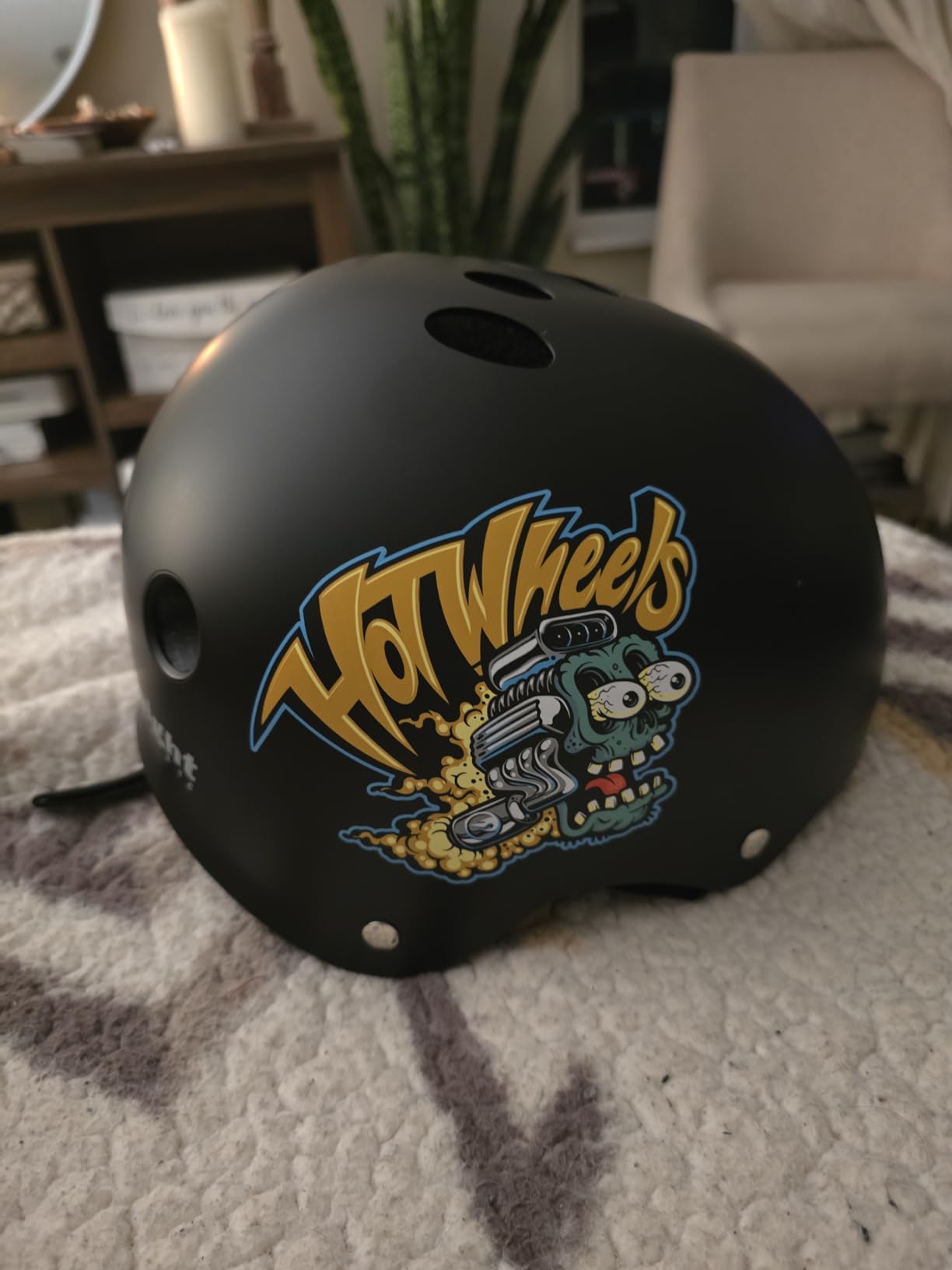
Triple certification is the headline. It meets CPSC bicycle, ASTM F1447 and ASTM F1492, so it is legal for bike riding and skate use in the same shell. Few helmets in this price band carry all three, and parents who bought a bike-only helmet often end up buying a second one for the scooter.
The Sweatsaver padding is what keeps it wearable on a hot day. It is a plush moisture-wicking fabric rather than the standard open-cell foam, and it does a better job of stopping sweat running toward the eyes, which is the complaint that actually ends skate sessions.
Fit is unusually tunable because two sets of Sweatsaver pads in different sizes are included in the box. Combined with the high impact-absorbing EPS core and dual-density soft foam, you can dial the internal fit to the head rather than accepting whatever the factory setting is.
Four size options are available: XS/S at 51 to 54 cm, S/M at 53 to 57 cm, L/XL at 57 to 60 cm, and XL/XXL at 60 to 63 cm. That last band means this one helmet can follow a child from a scooter at eight to a pump track at fourteen.
What the break-in period actually involves
The most repeated caveat in the reviews is that the pads feel very snug straight out of the box and need wear time before they conform. This is a good problem to have, but it will look like a fit failure on day one. Give it a week of regular wearing before you judge it.
Check that the two pad sets are actually interchangeable and that you have the thinner set under the crown if the helmet feels tight at the temples. Swapping them takes a couple of minutes with the helmet off and gives you a much closer fit on an awkward head shape.
If your child has long hair, this is worth considering for the coverage reason rather than the hair-catch reason. The deep rear coverage wraps the occipital area well, and the standard retention layout does not have a MIPS liner that snags a ponytail.
Where it falls short
It is heavy. The listed weight is 0.5 kg, and even if the practical figure on your head feels lighter than that number suggests, it is clearly the weightiest option here. A four-year-old will feel it on the head in a way they would not feel the Schwinn Classic.
Styling is classic skate, which means a flat top and no visor. For a child riding in bright sun on a road bike, the absence of a visor is a real functional gap, and if sun protection is the priority the SIFVO below covers it. Our picks for the best road bike helmets go deeper on open-road fit and ventilation.
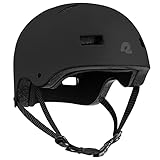
5. Retrospec Dakota – Best for Skate Parks and Scooters
Retrospec Dakota Protective Bike Helmet, Skateboard, Scooter, Adults/Youth
Three sizes 51-60cm
Ten vents
Washable padding
ABS shell with EPS foam
Pros
- Rugged shell that handles skatepark use
- Ten well-placed vents for real airflow
- Removable washable padding
- Works across bikes scooters and skateboards
Cons
- Sizing skews to adult heads so it sits large
- Plain matte styling with no graphics
- Lowest average rating in the group
The Dakota is the workhorse option, and it is the one I would buy for a nine-year-old who spends Saturday mornings at the skate park and the rest of the week on a bike. A durable ABS shell with shock-absorbing EPS foam is the right structure for concrete, and 8417 ratings at 4.5 stars show plenty of long-term use reports.
Ventilation is the standout feature. Ten vents positioned for 360-degree airflow give more cooling than the average child shell, and that is a genuine advantage in summer when a helmet is the main reason a child says it is too hot outside.
The padding is removable and washable, which sounds minor until you have tried to clean a helmet that does not come apart. On a helmet used weekly at a skate park, that is the difference between a helmet you keep and one you replace.
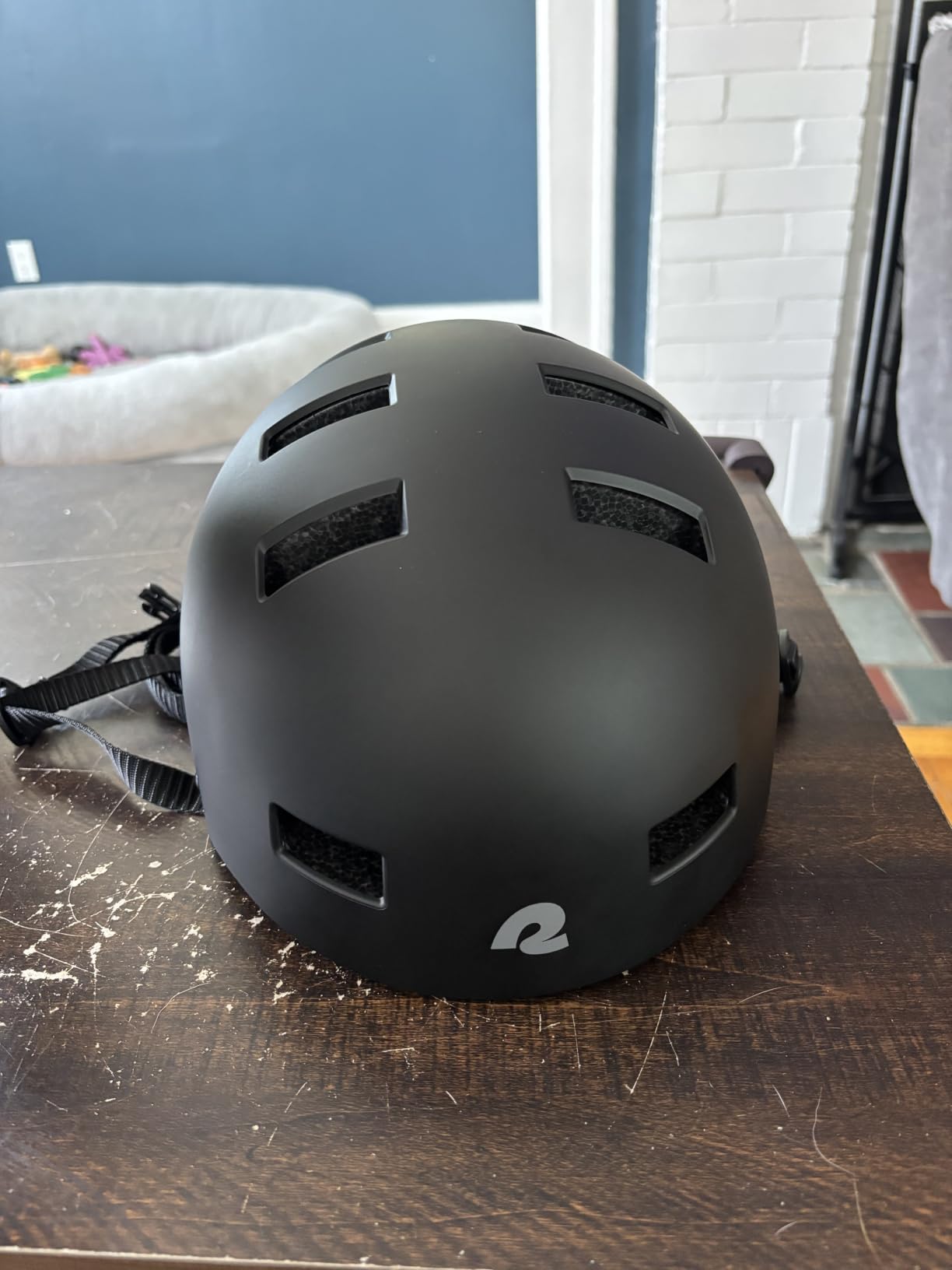
Three sizes cover most head circumferences: Small at 51 to 54 cm, Medium at 54 to 57 cm and Large at 57 to 60 cm. That spread means one brand covers a wide age band, which is convenient if siblings are close in age.
It also works across bikes, scooters, skateboards and inline skating, so a single purchase covers the whole after-school list rather than fragmenting across three different helmets.
Why the sizing matters more here
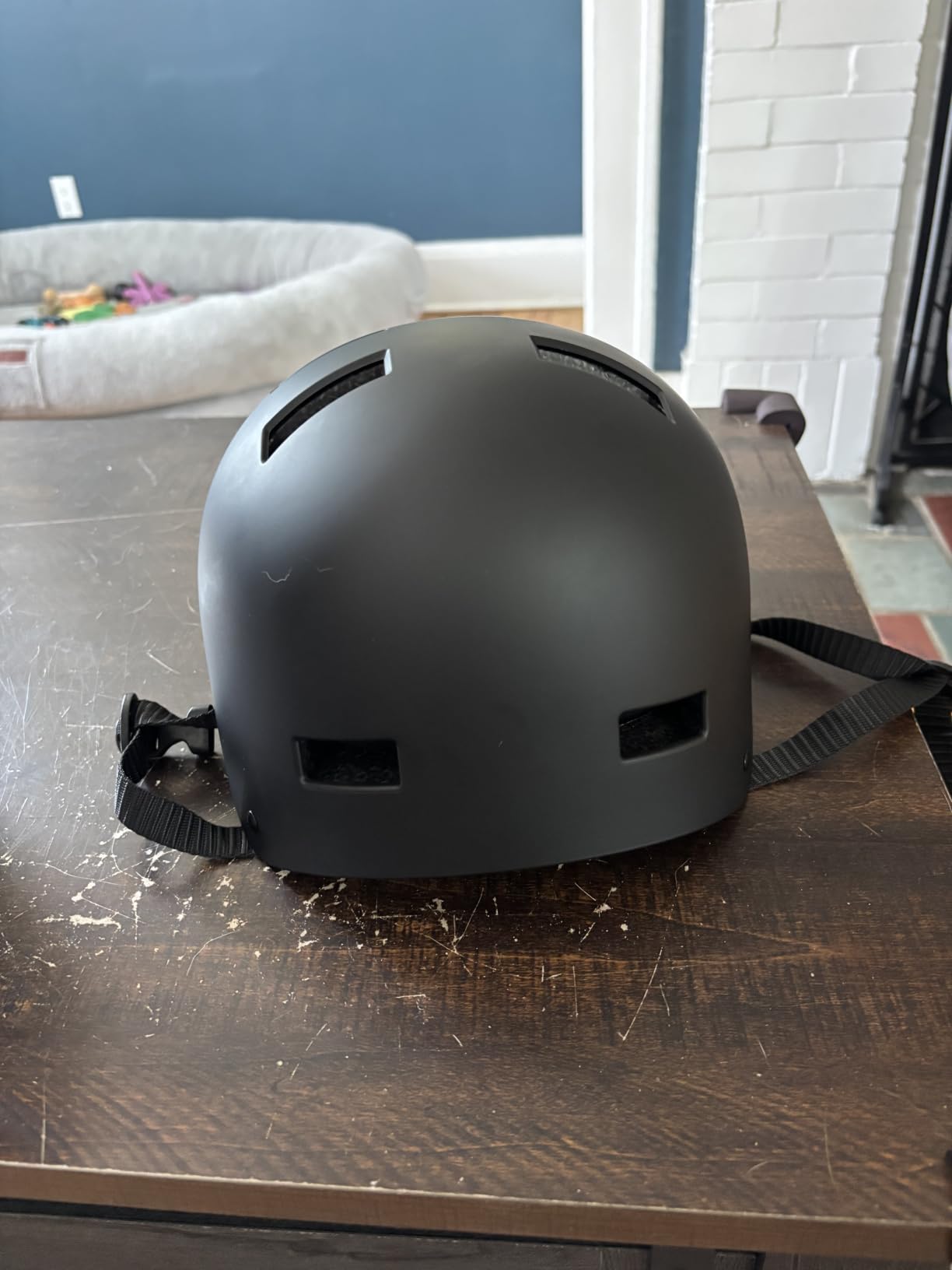
This is the one pick where the fit risk is highest, and it is a shape problem rather than a quality problem. The listed sizing skews toward adult and older youth heads, which means the Large in particular sits noticeably large on younger children even with the retention system pulled in tight.
If your child is under about seven, do not rely on the age guidance. Measure the head and match to the Small at 51 to 54 cm, and if the number is below 51 cm this helmet is the wrong choice entirely. A helmet that sits large on a small head can shift forward into the child’s field of view or rotate off the back of the skull.
For a child who has outgrown the small-child end of this roundup, though, the Dakota’s larger internal volume is exactly what you want. It is one of the few picks here that will genuinely fit an older pre-teen without pinching.
Where it falls short
Styling is plain matte with no kid graphics and no visor, so it reads as adult equipment. Older kids are usually fine with that, but a seven-year-old may need convincing, and a child who cares about matching or colour will not choose this one themselves.
It also has the lowest average rating in this roundup at 4.5 stars, with scattered feedback about shell and strap durability over multiple hard seasons. Inspect the shell and strap webbing if it has taken a real hit, and replace rather than reuse anything with visible cracking or fraying.
6. Schwinn Thrasher Youth Helmet – Best Value for Ages 8-14
Schwinn Thrasher Helmet for Kids, Carbon, Size 55 – 58 cm, for Kids 8-14, Lightweight Microshell, Adjustable Dial and Straps, Interior Padding, 20 Air Vents, Removable Visor, Helmet for Boys and Girls
55-58cm for ages 8-14
Twenty air vents
Removable visor
Washable padding
Pros
- Dial fit adjusts a snug fit in seconds
- Lightweight microshell for long rides
- Twenty vents cut down sweating
- Removable visor and washable padding
Cons
- Heavier than the toddler models
- Some units arrive with damaged shells
- Youth range means a 7-year-old needs the smaller size
At 4.8 stars across 5291 ratings, the Thrasher ties the highest average rating in this roundup, and at 13.12 ounces it stays light enough that complaints about weight are rare. Parents of eight to fourteen year olds consistently praise the dial adjustability, ventilation and comfort, and several report it outlasted helmets they paid more for in a bike shop.
Twenty air vents is the highest count in this roundup, and you can feel the difference on a long summer ride. The dial retention system with side and chin strap fine-tuning means you can adjust front-to-back and side-to-side independently, which solves the tilting problem that plagues cheap helmets.
The removable washable 360-degree full-coverage padding is a nice touch on a helmet for an active child. When it comes out, it can actually be washed, and it goes back in without tools.
Styling is where this quietly wins. The colours and graphics are the kind that an eight to fourteen year old will actually accept without an argument, which removes the daily negotiation that ends up derailing helmet use entirely.
The removable visor gives sun protection without the fixed-commitment problem. A child who rides at sunset and does not want a visor can pop it off, and a child riding into low sun on a road bike can put it back.
Which size band to order
The listed range is 55 to 58 cm for ages eight to 14, and the gap to watch is at the bottom. A seven-year-old may well measure inside 55 cm, and if so they need a smaller youth model rather than this one. This is the most common sizing mistake with this helmet.
Within the 55 to 58 cm band, use the rear dial to close the gap between the head and the retention cradle, then check the helmet sits level and low on the forehead. With twenty vents and thin straps, this shape is more prone to drifting than a low-profile helmet, so recheck it every few weeks.
Because the padding is removable and washable, take it out and wash it on a normal cycle occasionally. Over a full season of daily use that is the single best thing you can do to keep the helmet comfortable enough to be worn.
Where it falls short
It is heavier than the toddler models, and while 13.12 ounces is reasonable for an eight-year-old, a smaller child on the same model will feel the difference immediately. Keep the size split in mind rather than buying up a size to get a year of use.
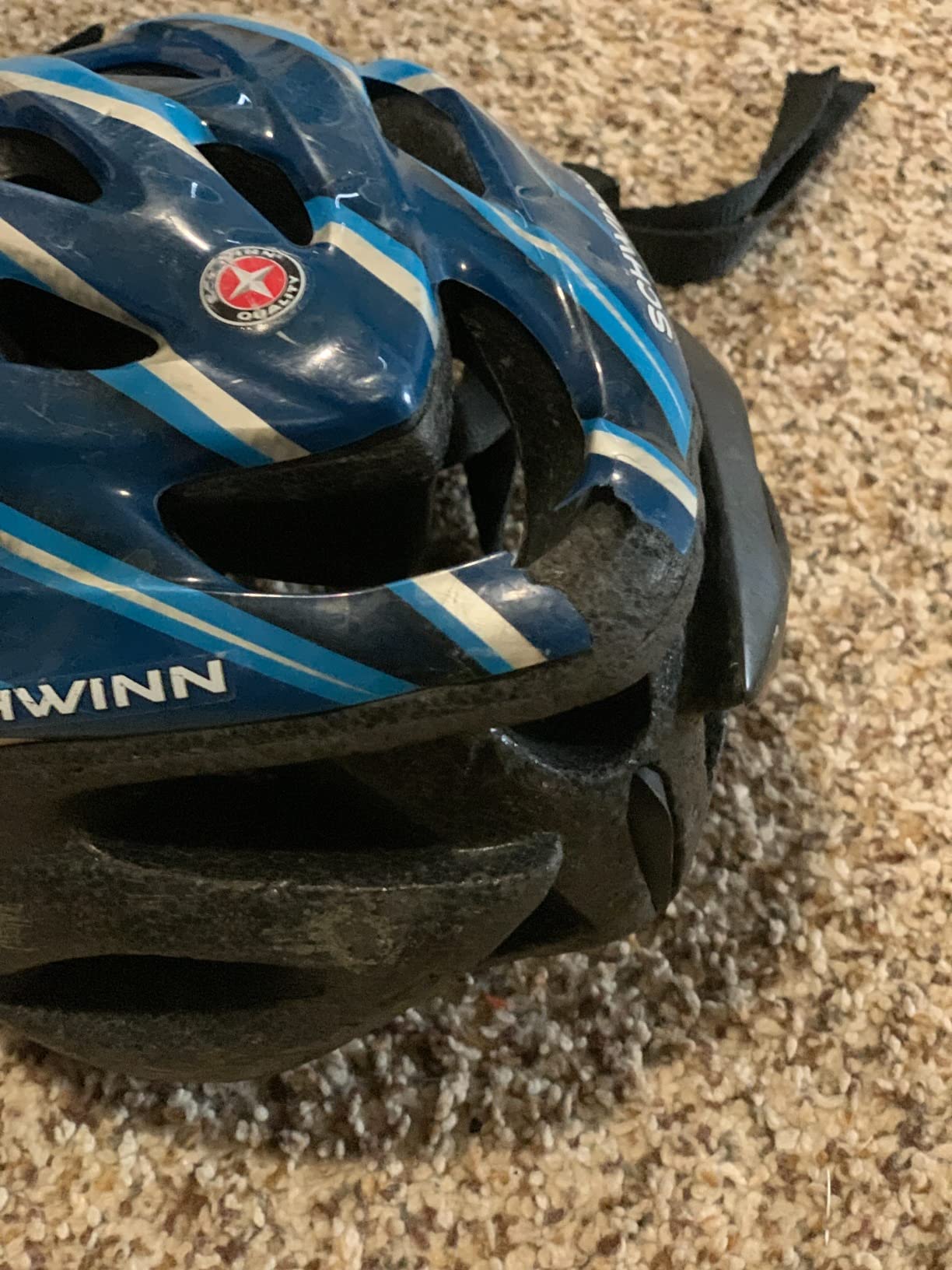
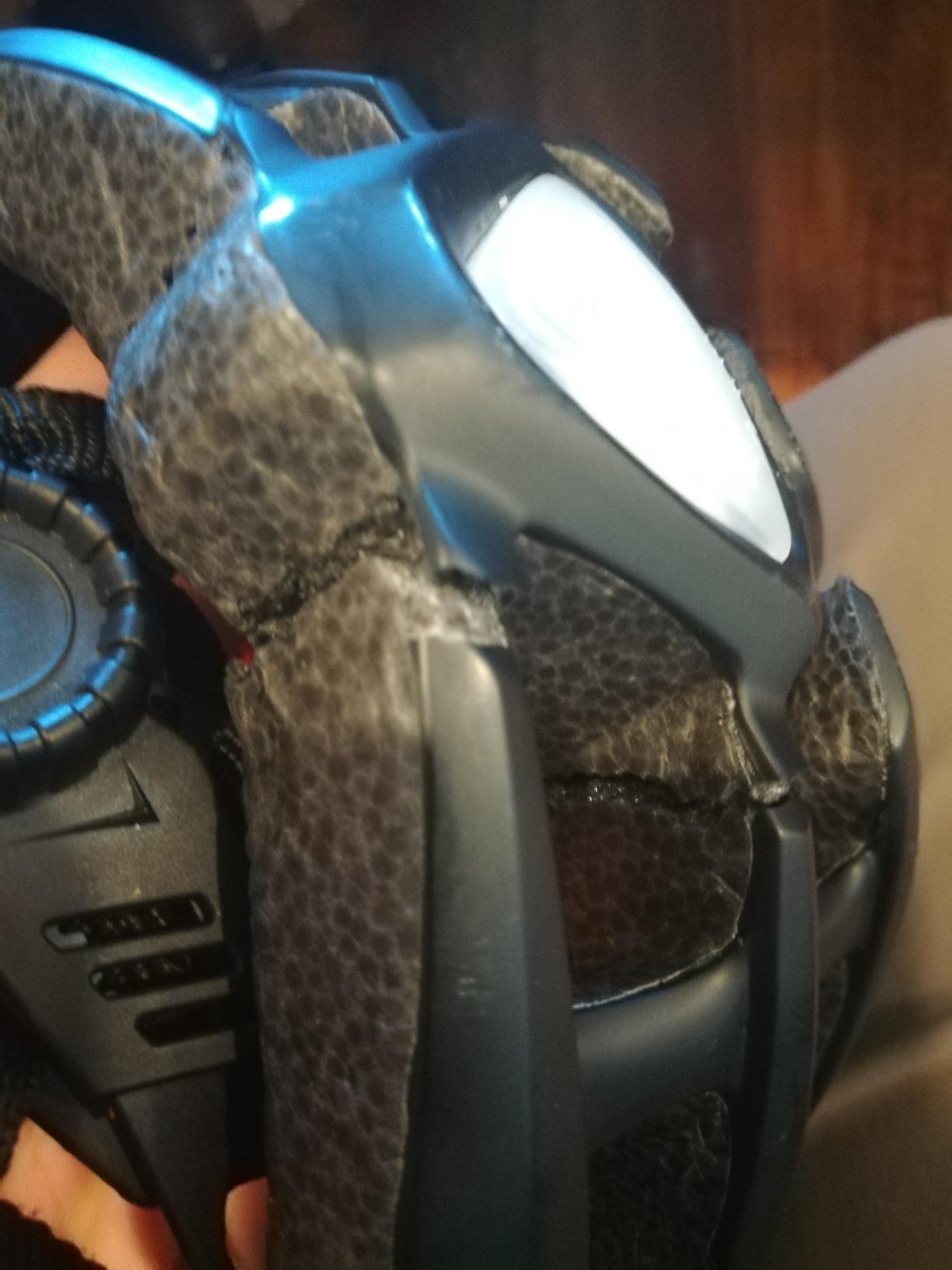
A small minority of buyers report units arriving with damaged or peeling microshell. Inspect the shell the moment the box opens, because a compromised outer shell is a reason to return rather than a cosmetic issue to ignore.
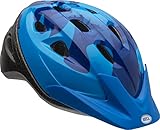
7. Bell Rally Child Helmet – Best for a First Pedal Bike
Bell Rally Child Helmet, Blue Fins
52-56cm for ages 5-8
True Fit one-step dial
Pinch Guard buckle
Removable visor
Pros
- Light low-profile classic shape
- True Fit dial adjusts in one step
- Pinch Guard buckle is kind to small chins
- Kids can often buckle it themselves
Cons
- Snug one-size fit means outgrowing it quickly
- Visor position cannot be adjusted
- Less padding than premium helmets
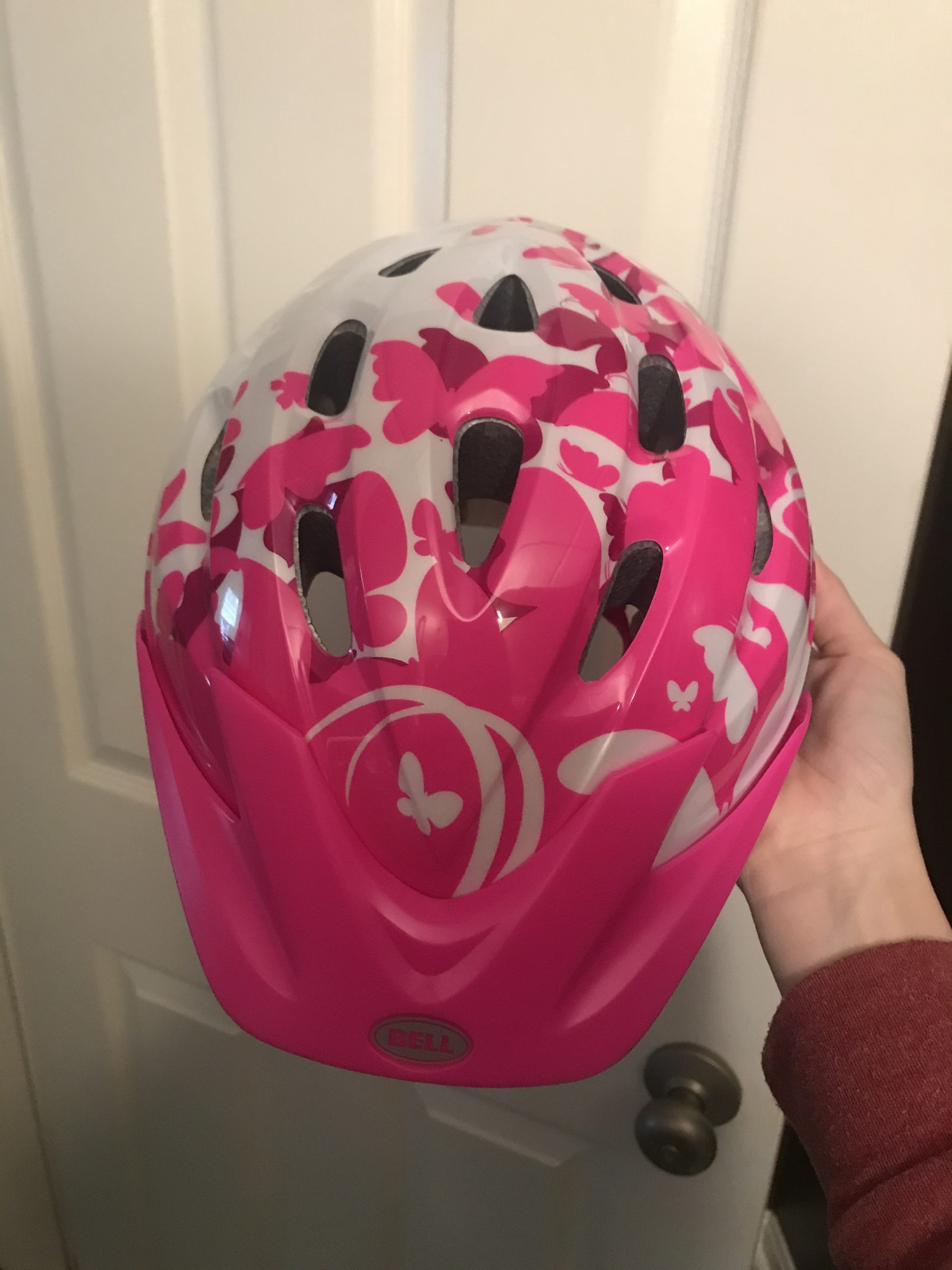
The Rally is the cheapest CPSC-certified helmet in this roundup, and for a child on a first pedal bike it is hard to argue with. It is light, low-profile and simple, and a 5 to 8 year old can usually put it on and buckle it without help, which removes a real daily friction point.
The Pinch Guard buckle is the feature to highlight. Instead of a hard plastic tongue pressing into the chin, the sides of the strap are covered so nothing digs in. Several reviewers single this out for children who flinch at conventional buckles, and that group includes kids with sensory sensitivity.
The True Fit system adjusts in one step rather than through a ratchet, so a child can get the retention right themselves. For a five-year-old riding to school independently, being able to fix the helmet without an adult is worth a lot.
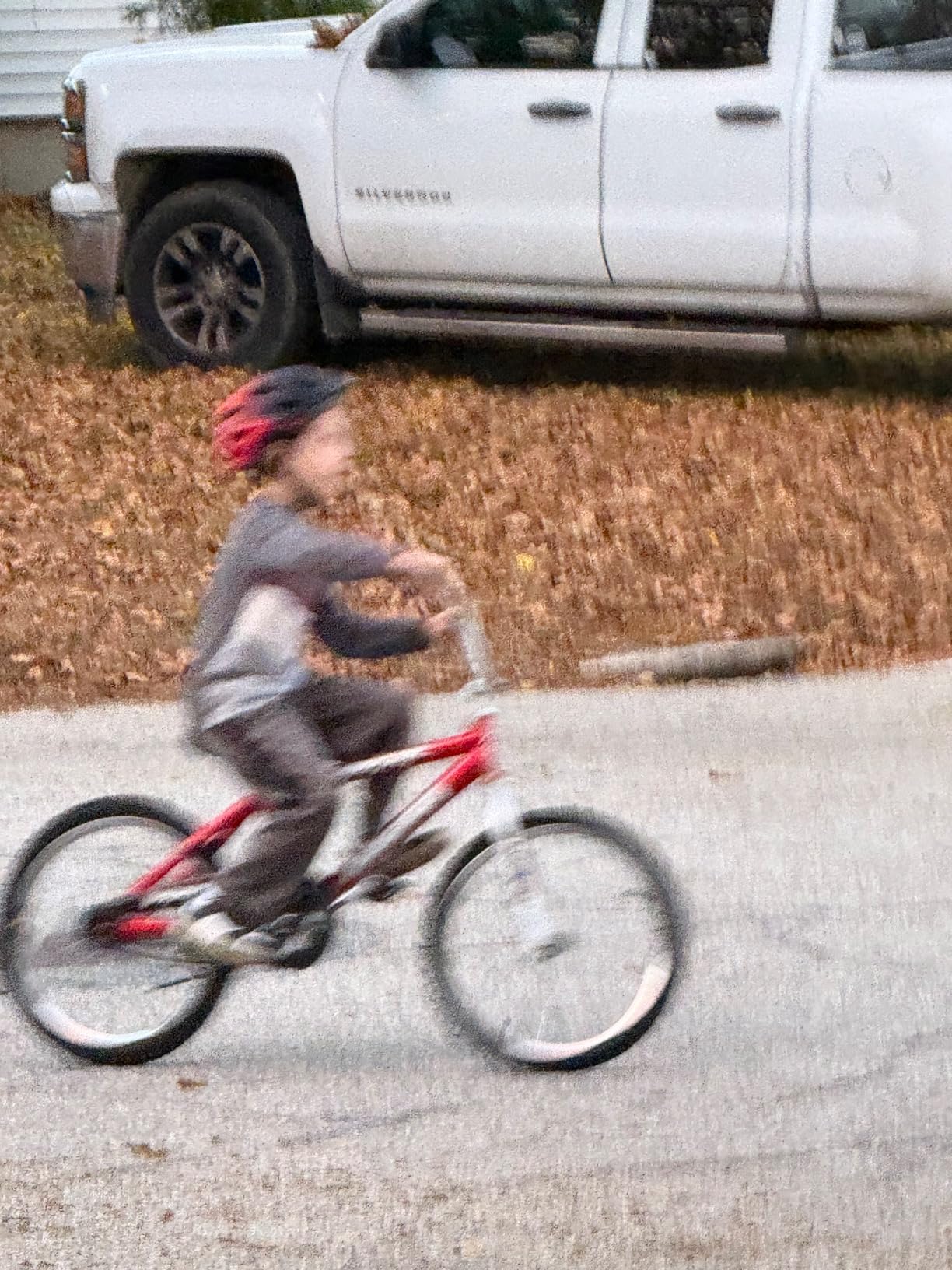
Weight is listed at 227 g, which sits in the middle of the range here and is unremarkable rather than outstanding. The low-profile shape keeps the mass centred, so it does not tip forward on a small head the way a heavier shell can.
The removable visor adds sun coverage for a rider on a bike, and because it removes cleanly, the same helmet works for a scooter or balance-bike phase without the visor catching on anything.
How to handle the snug fit
This is a one-size helmet covering 52 to 56 cm, and the word doing the work is one. Because there is only one shell size, parents should expect to size up sooner than they would with a range of sizes. If your child measures 56 cm today, plan on replacing in a year or two.
Within the range the True Fit dial is genuinely one-step, and the low profile means the helmet sits close to the skull instead of standing off it. Check the level on the forehead after every adjustment, because a low-profile shell is easy to leave sitting slightly back after a strap is tightened.
The strap V under the ears is the fit check that matters most here, because the Pinch Guard shape changes how the webbing sits. Confirm both straps form a clean V and that two fingers fit under the chin strap when the head is level.
Where it falls short
Padding is thinner than on the premium picks in this list, so on long summer rides a child may find the shell pressing at the temples. A thin sweatband or a cooling liner solves it, and it is one reason to re-check fit every few months as a child grows.
The visor removes but its position cannot be adjusted, so there is one fixed angle. It also sits lower profile than a dedicated mountain-bike visor, which is fine for a road or path rider and less useful on a bright singletrack climb.
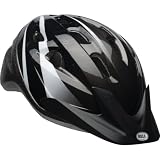
8. Bell Richter Youth Helmet – Best for School Run Riders
BELL Richter Bike Helmet – Black & White
54-58cm for ages 8-14
True Fit one-step dial
Pinch Guard buckles
Removable visor
Pros
- Light weight older kids forget
- True Fit holds position once dialed in
- Vent openings reduce head heat
- Neutral styling older kids accept
- Pinch Guard buckles avoid chin pinching
Cons
- Dial takes practice and feels stiff at first
- Limited colour range for kids wanting graphics
- 54-58cm leaves a gap for smaller 8-year-olds
The Richter is the quiet alternative to the Thrasher for an older child who does not want to look like they are wearing a junior helmet. The neutral styling is the point. At 10.24 ounces it is one of the lighter youth options, and 4357 ratings at 4.6 stars reflect owners who mostly say their kids forget they are wearing it.
The True Fit system adjusts quickly and then holds position, which is what you want on a helmet that is put on once in the morning and stays on across a school run, a playground break and the ride home.
Ventilation openings noticeably reduce head heat, and the Pinch Guard buckles avoid chin pinching on the days when a child is distracted and buckles the strap badly.
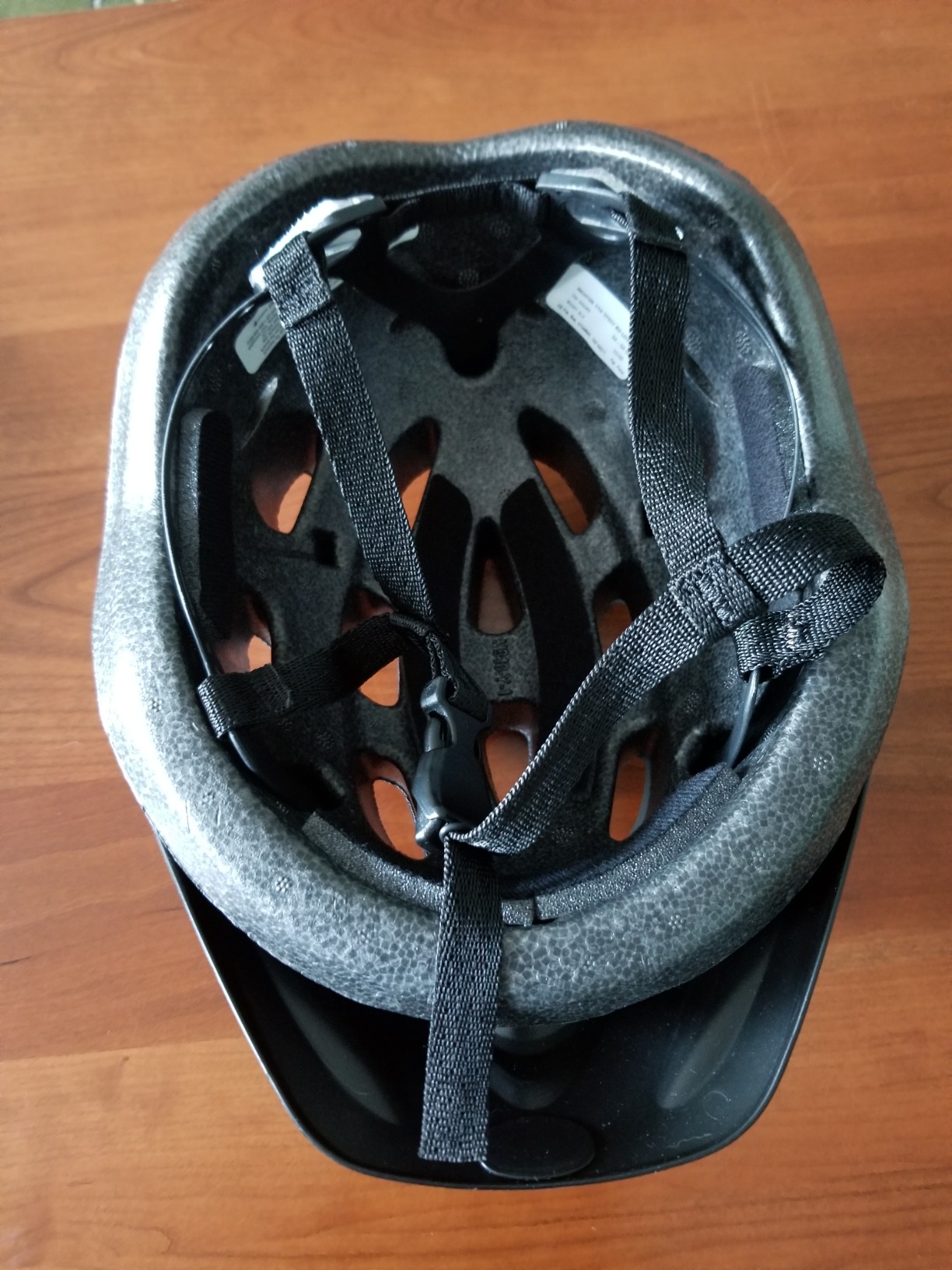
A removable visor is included, which matters for a child waiting at a crossing in low sun or riding home at dusk. There is no lighting here, so the visor and vent layout do the visibility work instead of an integrated LED.
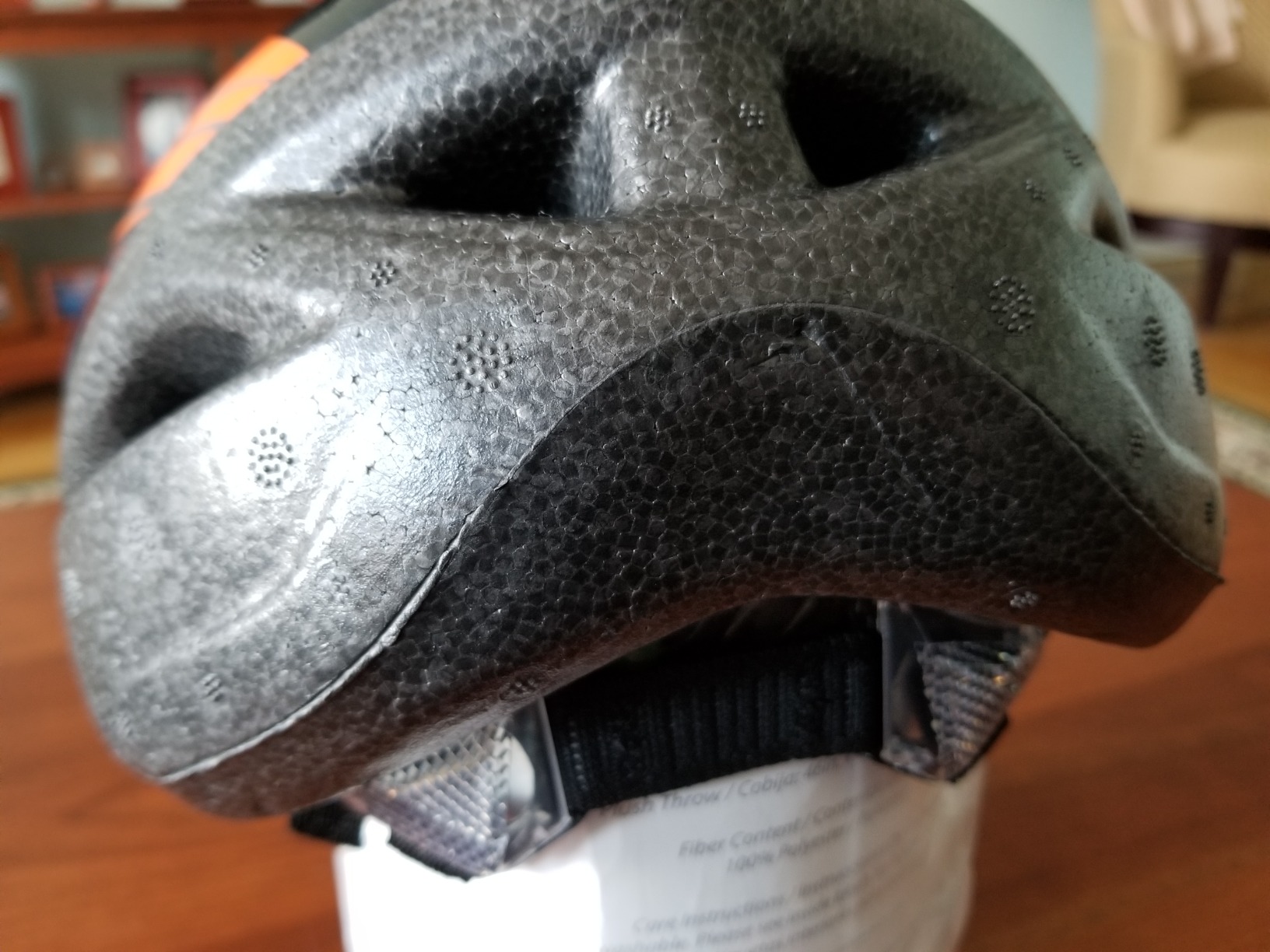
It is CPSC compliant for bicycle helmets and carries an ABS outer shell with polyester and nylon interior components, the standard construction for a helmet in this price band.
What to expect from the dial
The most useful thing to know in advance is that the adjustment dial takes practice and feels stiff the first few times. Owners describe the fit as firm once it is dialled in, so do not judge the helmet on day one and give the retention system a week of use before deciding it does not work.
Size is 54 to 58 cm for ages eight to 14, and there is a real gap to watch at the small end. A smaller eight-year-old can measure inside 54 cm, in which case this helmet is too big and the Schwinn Classic or the OUWOER Small will fit correctly.
For a child who will be riding in traffic, the under-14 helmet laws in many states require a certified helmet and compliant chin strap. Check your own state requirements before a long ride, since a poorly tightened strap is the most common reason a compliant helmet fails a roadside check.
Where it falls short
The colour range is limited and neutral, which is a mild negative for a kid who wants bright graphics. If appearance is the deciding factor, the Raskullz Mohawk below solves it, and if the child is a girl who likes a lighter colour, the Retrospec Remi is the more cheerful option.
Because the dial is stiff rather than smooth, it is less suited to a child who needs to adjust the helmet independently. For a child still young enough to fumble with a buckle, the side-release design on the Schwinn Thrasher is easier to work with one-handed.
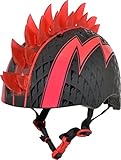
9. Raskullz Mohawk LED Helmet – Best for Light-Up Fun
Raskullz Bolt LED Bike Helmet , Black/Red, Child, 8046045
50-54cm for ages 5-8
3D fin mohawk with 5 LEDs
PVC shell with EPS foam
Cooling vents
Pros
- Light-up mohawk is a hit with ages 5-8
- LEDs auto shut off to save battery
- Comfortable padding and adjustable straps
- Works for bikes scooters skateboards and rollerblades
Cons
- Heavier at roughly 13 ounces than most child helmets
- LEDs are novelty and do not help daytime visibility
- Only covers 50-54cm so it is outgrown quickly
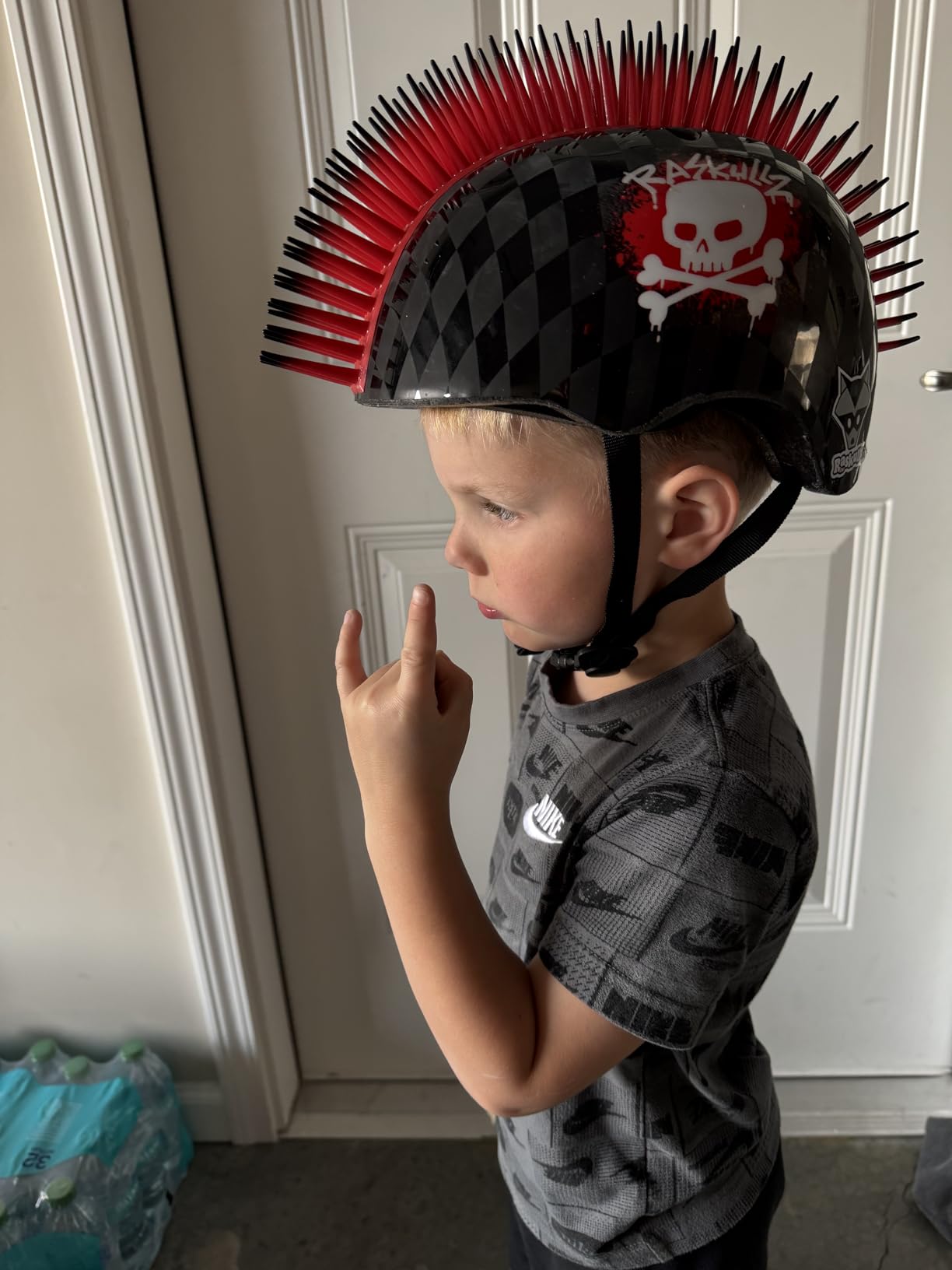
At 4.8 stars across 3948 ratings, the Mohawk is tied for the highest average rating in the roundup, and the reason has almost nothing to do with engineering. The 3D fin mohawk with five LED lights is the headline feature in nearly every review, and parents report their children are excited to put it on.
That matters more than it sounds. A helmet your child likes being worn beats a technically superior helmet they resist, and resistance is what turns a safety item into a daily argument. For a five to eight year old, the glow is the reason the helmet gets worn without a fight.
The lights auto shut off, so the batteries last rather than draining unnoticed in a drawer. Treat them as fun rather than as a visibility feature; five small LEDs on a fin do very little in daylight and are not a substitute for a light or bright clothing after dark.
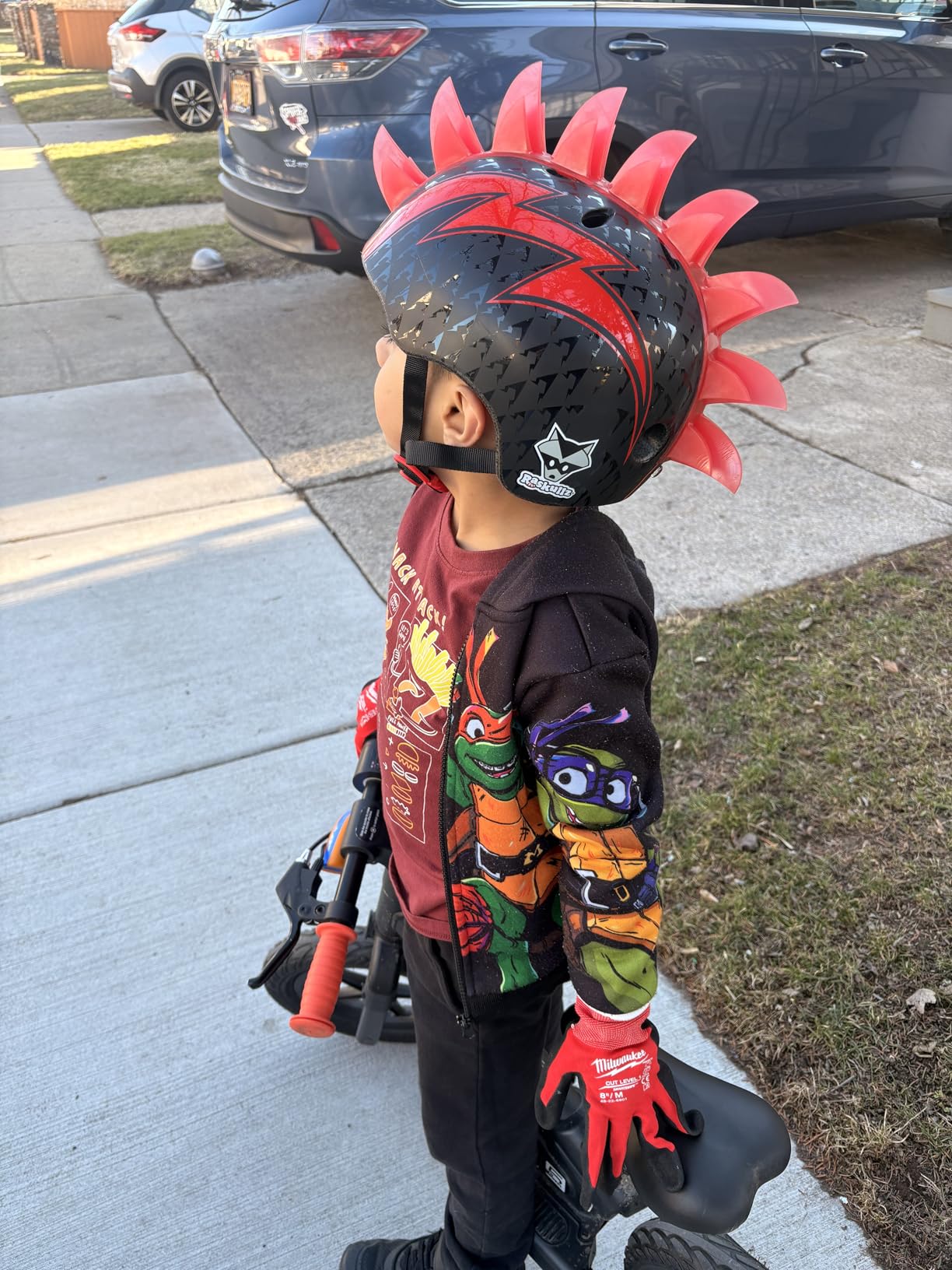
Construction is a durable PVC outer shell with EPS impact-dampening foam inside, and adjustable straps plus comfortable padding give a custom fit. Aerodynamic cooling vents add airflow, which helps offset the shell’s weight a little in warm weather.
It works for bikes, scooters, skateboards and rollerblades, so the multi-sport coverage is broad for a helmet that looks like a toy. That combination is why it holds up as a scooter and skate helmet as well as a bike one.
How to decide if the novelty is worth it
Be clear-eyed about this one. You are buying a behavioural solution, and that is a legitimate reason, but the price you pay is weight and a narrow size range. At roughly 13 ounces it is one of the heavier child helmets here, and a smaller child will feel it sitting on top of the head.
If your child is five to eight and already bike-confident, the weight is manageable. If they are four and just learning, the Schwinn Classic is lighter and cooler, and the battle of wills about helmets will be won by the one that feels light.
The size band is 50 to 54 cm, which is the other real limitation. That is a narrow window and children move through it quickly, so treat this as a two-season purchase at most and check the measurement before ordering rather than ordering by the character appeal.
Where it falls short
Do not count the LEDs as a safety feature. In daylight they add nothing, and a parent who believes the helmet is visible at dusk because of the mohawk is mistaken. Reflective straps or a helmet light are the right answer for low-light riding.
There is no adjustable rear dial, so the fit comes from the straps and padding alone rather than a retention cradle. Check the fit more carefully on a smaller child, and expect a snug initial feel that relaxes as the padding settles.
10. MOUNTALK Toddler Helmet – Best for Sizes 46 to 50cm
Kids Bike Helmet, Adjustable Helmets from Infant/Toddler/Baby to Children Girls and Boys, Age 2-4/3-6 Years Old (Dinosaur,S)
XS 46-50cm and S 50-54cm
CPSC and ASTM F1447
11 vents
Washable pads
Pros
- Two clearly documented size bands
- 11 vents with 6 internal channels
- Removable washable pads
- Works for balance bikes tricycles and scooters
Cons
- PVC outer shell scuffs readily
- Size bands are narrow so kids jump between them
- Plasticky finish feels lighter than metal or carbon
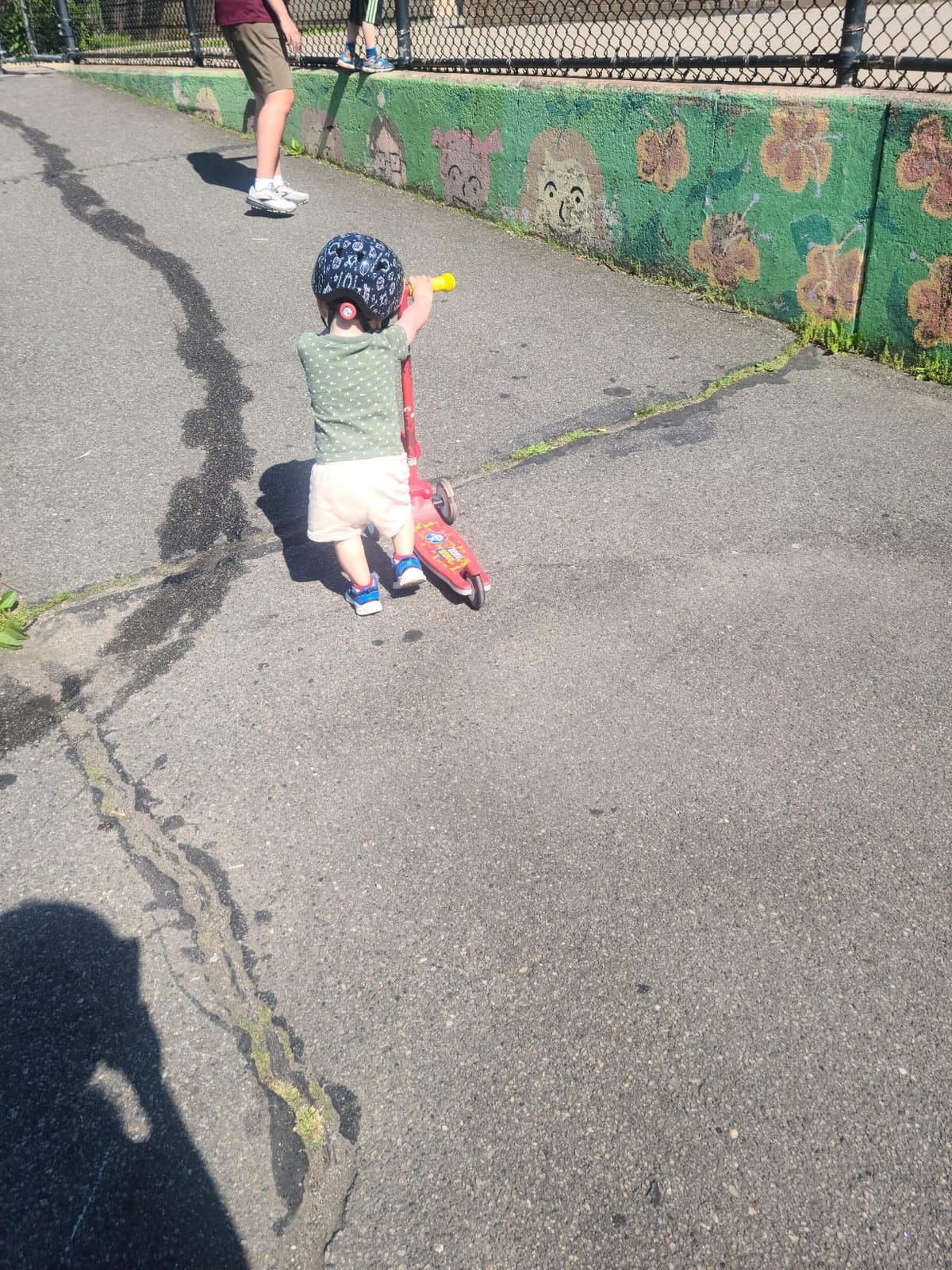
This is the pick for the youngest riders in the roundup, because it is the only one that documents a 46 to 50 cm band. A one-year-old or a very small toddler on a balance bike often has a head circumference below 48 cm, which puts them outside every other model here.
The size guidance is unusually clear for a helmet at this level: XS fits 46 to 50 cm for ages one to two, and S fits 50 to 54 cm for ages three to six. That documentation is the reason it works, because it removes the guesswork that causes most returns.
It is CPSC 16 CFR Part 1203 and ASTM F1447 compliant, with a durable outer shell over an impact-absorbing EPS liner, a rear fit dial, adjustable side straps and a chin buckle. That is a complete retention system rather than a strap-only design.
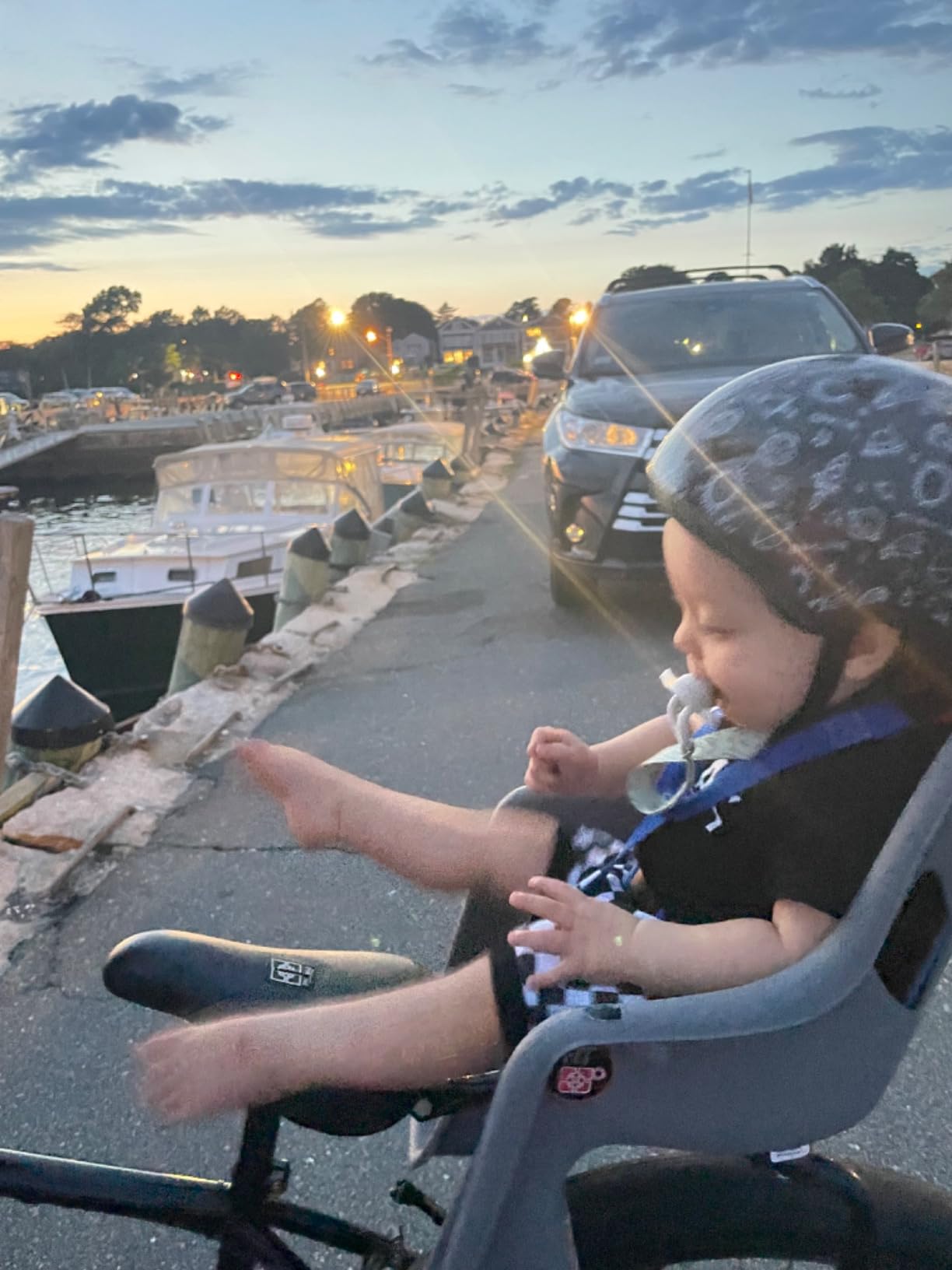
Ventilation is good for a toddler shell. Eleven vents with six internal cooling channels move air across the head, which matters more than it sounds because a hot head is the most common reason a small child takes the helmet off halfway through a ride.
Removable washable interior pads are practical for a helmet on a tricycle or balance bike that picks up grass, mud and street grime every single outing, and the model works across balance bikes, tricycles, pedal bikes and kick scooters.
Why the 46 to 50 cm band matters
Head shape in the under-52 cm range is where sizing goes wrong most often, because parents buy by age and a two-year-old is not reliably a 48 cm head. Measuring takes ten seconds with a soft tape and removes the entire category of problem.
The rear fit dial plus adjustable side straps is the part that makes the fit work on a small, round toddler head. Straps alone tend to let a small helmet slide forward over the eyes; the dial closes the gap between the head and the retention cradle so the helmet can sit level.
Because the bands are narrow, plan to re-measure rather than assume. A child who jumps from 49 to 51 cm may skip the XS entirely, and one who sits at 50 cm can go either way, so check the S fitting on a real head before committing.
Where it falls short
The PVC outer shell scratches and scuffs readily, and cosmetic scuffing is the most common complaint in the reviews. Functionally it is fine, but a parent who cares about how the helmet looks after a few months will notice it.
The plasticky finish also gives it a lighter feel than a metal or carbon-reinforced shell, which is a fair trade for toddlers but means it is not the choice for a child who will take real falls at speed. Keep it for balance bike and tricycle stages.
11. SIFVO Youth Helmet – Best for Full Head Coverage
SIFVO Kids Helmet Boys Girls Youth Teen Visor Adjustable & Lightweight
50-57cm for ages 5-14
15 vents
Removable visor
PC shell with EPS liner
Pros
- Full-coverage design protects the back of the head
- Fifteen vents give strong airflow
- Removable visor shades eyes from sun and branches
- Kids can attach and adjust the visor themselves
Cons
- Visor snaps on and off so it can pop loose
- 50-57cm excludes larger pre-teens
- Limited colour and graphic options
Full-coverage construction is the difference here, and it is a real one. The shell extends around the back of the head rather than stopping above the ears, which protects exactly the region that takes the impact in a forward fall off a bike or scooter. 2456 ratings at 4.7 stars put it mid-table on volume and near the top on satisfaction.
Fifteen vents give noticeably better airflow than most child helmets in this price band, and you can feel that on a warm afternoon. Combined with a light 239 g listed weight, this is one of the more comfortable choices for long rides.
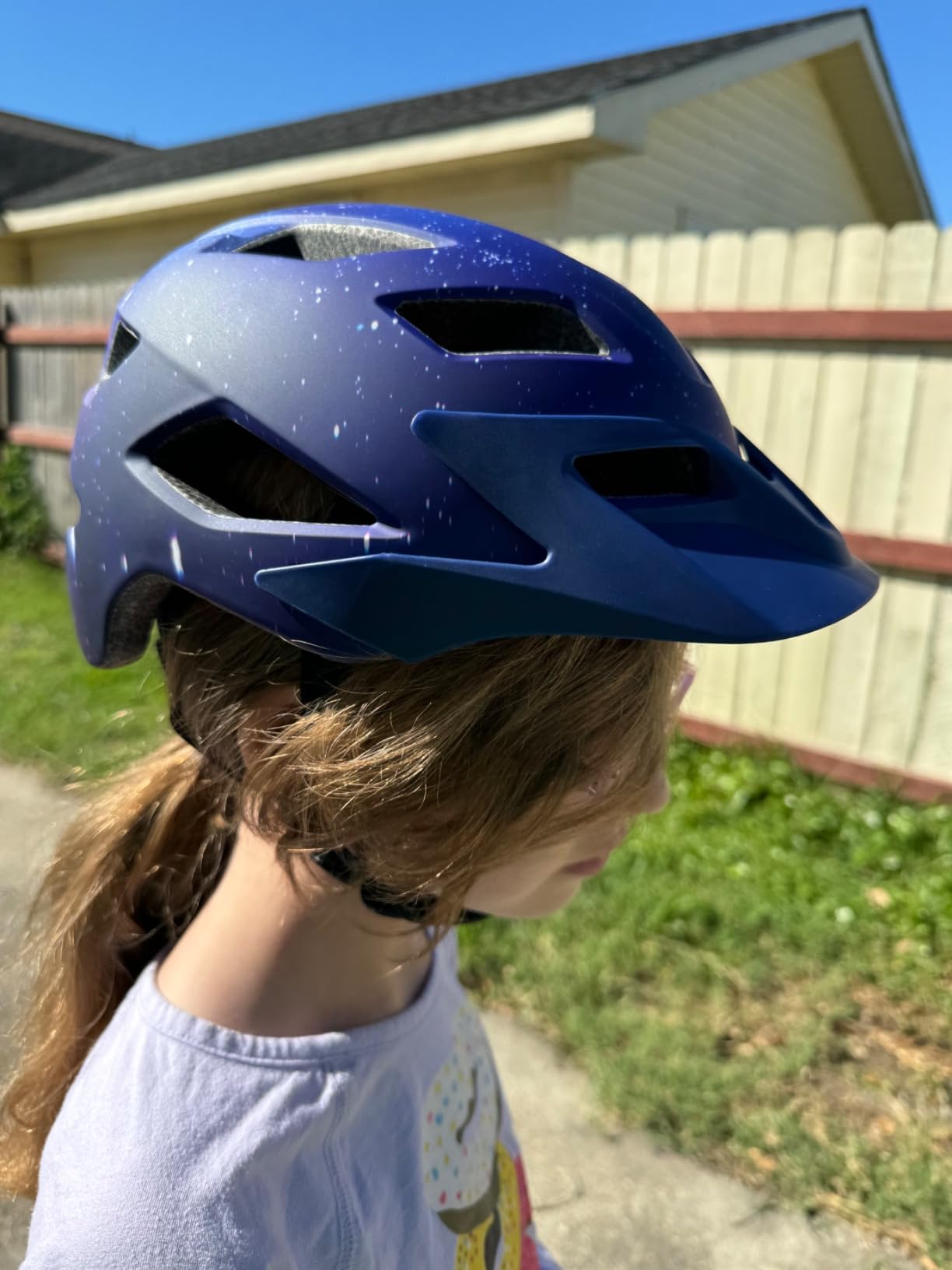
The removable visor shields the eyes from sun and from branches without blocking the forward view, and the child can snap it on and off themselves. That last point keeps the helmet usable on both a sunny path ride and a wooded trail.
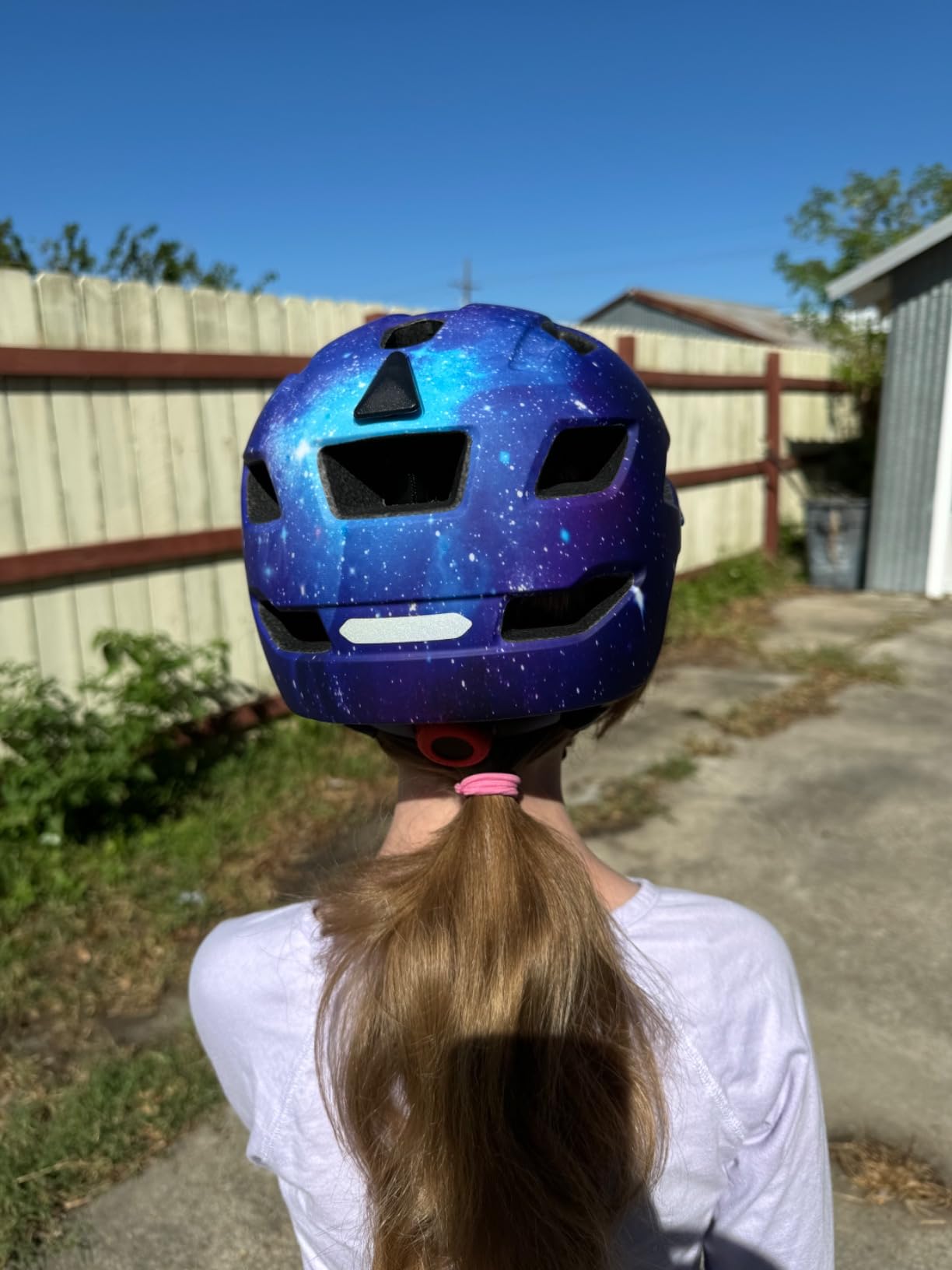
Construction is a polycarbonate shell over an impact-resistant EPS liner, and it is CE, CPSC and ASTM certified. A PC shell is thinner and lighter than the thicker ABS shells common in this band, which is part of why the weight comes in at 239 g.
The design suits a child moving between pavement and dirt. Full rear coverage and a visor are both trail-friendly features, and for a child whose riding has started to venture off the bike path, that combination earns its place.
How to check the visor attachment
The single most repeated caution in the reviews is that the visor snaps on and off rather than sliding into a fixed mount, so it can pop loose on rough rides. Check it before every ride for the first few weeks, and teach the child to run a hand along the front edge before setting off.
Within the 50 to 57 cm range the fit runs true to the listed sizing, so measuring is enough to choose confidently. The rear coverage is generous, and on a child with a slightly larger head in this band it is the reason the helmet stays level rather than tipping back.
Check the side strap geometry too, since a full-coverage shell has more webbing to manage. Both straps should form a V under the ears with two fingers of slack under the chin strap when the child looks straight ahead.
Where it falls short
The 50 to 57 cm range suits ages five to 14 but excludes larger pre-teens, so a child heading past about 58 cm needs to move up a size band. Measure rather than trusting the age range, because the top of the age label and the top of the shell rarely match.
Colour and graphic options are limited in some sizes, and the detachable visor is a durability compromise. If your child is rough with equipment, a fixed visor is one less connection point to lose, which is the argument the SIFVO makes on balance in exchange for the extra vents and coverage.
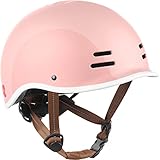
12. Retrospec Remi Youth Helmet – Best for Built-In Visor Comfort
Retrospec Remi Kids’ Bike Helmet for Youth Boys & Girls- Bicycle Helmet with Built-in Visor and Adjustable Reflective Straps for Skateboarding, Scooters, Rollerblading – Blush – 49-53cm
49-53cm youth sizing
ErgoKnob dial with no-chafe straps
Integrated visor
11 vents
Pros
- ErgoKnob dial and no-chafe straps give a precise fit
- Integrated visor blocks sun and debris
- Quick-release padding removes for hand washing
- No-chafe routing avoids sore spots behind the ears
Cons
- 49-53cm sizing is on the small side
- Lower review count than established models
- Integrated visor cannot be adjusted or removed
The Remi rounds out the list as a compact youth option, and at 4.8 stars it is tied for the highest average rating here. The review count of 837 is the lowest in the roundup, so treat the rating as encouraging rather than proven, but the fit design is the most refined in the budget band.
ErgoKnob dial fit with no-chafe straps is the detail worth paying attention to. The straps are routed to avoid rubbing behind the ears, which is where cheaper helmets cause the sore spots that make a child take the helmet off after twenty minutes.
The ErgoKnob dial adjusts the retention cradle in a single turn and then holds its position, and with 11 vents for airflow the head stays cool in warm weather. For a child who rides at dusk as well as at midday, a secure fit is more useful than an LED novelty.
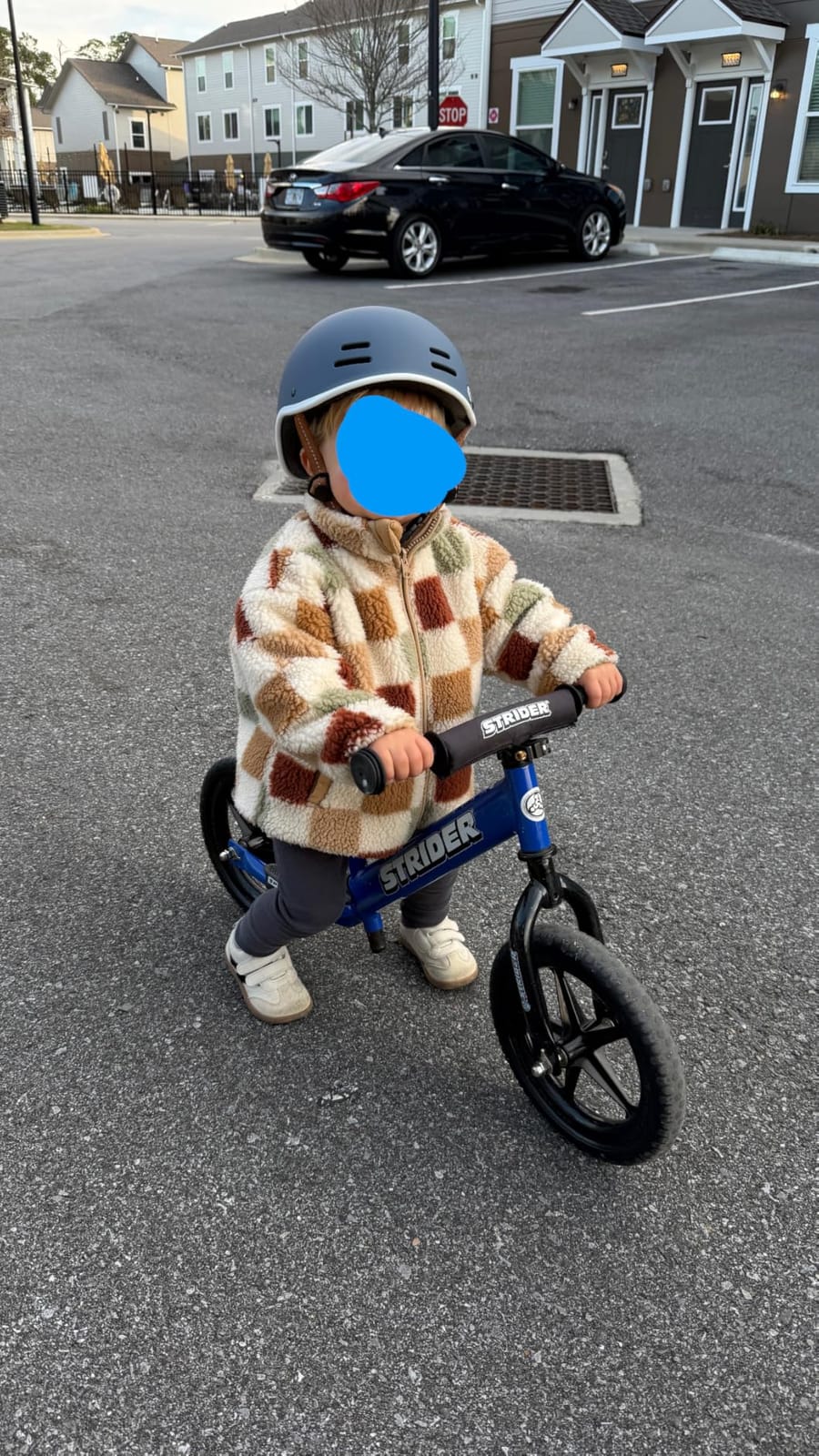
Quick-release padding removes for hand washing, so keeping the interior fresh is straightforward. That matters on a helmet a child wears several days a week, and it is a small feature that extends the life of the thing.
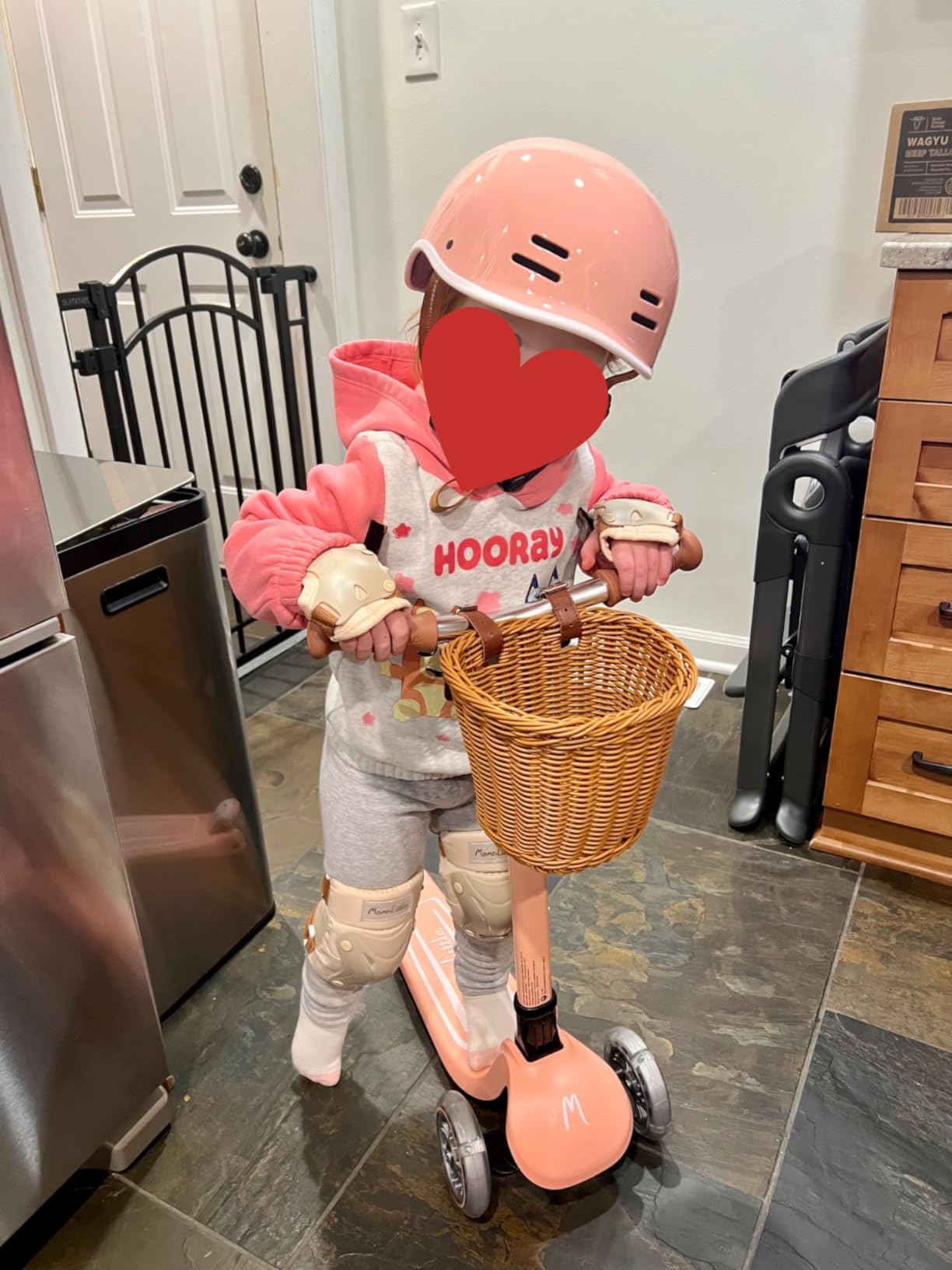
It meets US CPSC safety standards for ages five and up, and the integrated visor blocks sun and debris without any loose connection point. The listing also notes it works for bikes, skateboards and scooters.
How to judge a newer listing
With 837 reviews, this is the least proven model here, and that is worth being straight about. A high average from a smaller sample can shift with a few more reviews, so if this is the only helmet your child will wear, treat the fit as the deciding factor rather than the star rating.
Size is the practical limit. At 49 to 53 cm it is on the small side, which suits younger children in the five to nine range and excludes a lot of ten-year-olds. Measure first, because 53 cm is a hard ceiling rather than a target.
Because the visor is integrated rather than detachable, decide before you order whether your child will accept a permanent visor. If they ride indoors at a skate park or in tight wooded trails, a fixed visor can catch on low branches and become a reason to take the helmet off.
Where it falls short
The integrated visor cannot be adjusted or removed, which is the trade for the clean look and the extra vents. A child who is sensitive to anything touching their forehead may find it distracting at first.
The 49 to 53 cm band is the biggest limitation, and because the review base is small there is less long-term durability feedback available. Inspect the shell and dial after the first few months of hard use to see how it is holding up.
How We Picked These 12 Helmets
Every helmet here is CPSC certified, priced under 100 dollars, and published with a head circumference range so you can check before buying. We ranked on fit first, then on whether a child will actually wear it daily, then on construction and ventilation. Ratings and review counts came from the product listings.
We deliberately did not include any helmet without a stated head size, because sizing confusion is the single biggest source of returns in this category. Parents buy by age, the age label is approximate, and a helmet that does not fit is a helmet that ends up on a shelf.
We also left out anything that could not be verified against a specific listing. A no-name helmet with no certification claim, no published size range, and thin reviewer feedback is not a saving, it a gamble on your child’s head.
How to Measure Your Child’s Head and Get the Fit Right
Measure before you shop, and measure the actual head rather than the age. Wrap a soft tape measure around the widest part of the head, roughly an inch above the eyebrows and just above the top of the ears, and keep it level all the way round. Write the number in centimetres and note where it falls in the ranges above.
Then apply the 2-2-2 rule, which is the fastest fit check there is. Two fingers should fit between your fingers and the front of the helmet, meaning the helmet sits low enough to cover the forehead. Two fingers should fit under the chin strap when the head is level, meaning it is snug without squeezing. Two fingers of space should sit between each side strap and the child’s temple, meaning the straps are adjusted evenly and can form a clean V under each ear.
Check the helmet level from the side. If the front edge sits more than about two finger widths above the eyebrow line, the helmet is too far back and the forehead is exposed. Push it forward until the edge sits level and just above the brow.
Look for movement. The helmet should rotate slightly at the temples when the child shakes their head, but it should not be able to slide forward over the eyes or lift off the back of the head. If it can, tighten the rear dial until it stays put.
Mark the position once you get it right. A small piece of tape on the shell at temple level gives you a reference to check against in a few months, and it is the fastest way to catch a helmet that has started to drift.
Fixing the four fit problems parents actually hit
A helmet that slips forward is almost always a retention dial that is not tight enough, or a child whose head is inside the size range but sitting toward the wide end. Turn the dial rather than pulling the chin straps, because tightening the chin strap tilts the shell back over the eyes.
A helmet that tilts back and leaves the forehead exposed means the dial has been tightened correctly but the side straps are slack. Shorten the straps until they pull the shell down slightly onto the brow, and check that the V sits under the ear rather than in front of it.
A chin strap that loosens by itself is a webbing stretch issue rather than a fault. Replace the strap divider rather than tightening the buckle further, because an over-tightened buckle on a stretched strap twists the shell out of level.
A helmet that runs hot is usually a shape problem. Skate-style shells with flat tops and few top vents trap heat, and a child who sweats will take the helmet off. Ten to fifteen vents, a thin removable liner, and riding in the morning rather than mid-afternoon make the biggest difference.
MIPS, Rotational Protection and What the Budget Really Buys
No helmet in this roundup carries MIPS or an equivalent rotational-impact layer. That is worth stating plainly, because parents often assume a cheap helmet is the reason their child has no MIPS, when in this price band no helmet has it.
Conventional helmets manage straight-line impacts. The shell spreads the force and the EPS foam liner crushes to absorb energy, which is what the CPSC standard requires and what the cheapest certified helmet delivers. Rotational systems add a low-friction layer between the shell and the head so the helmet can slide roughly 10 to 15 mm on an angled impact, reducing the violent rotation of the brain inside the skull.
Non-MIPS rotational systems exist and some of them are more affordable than MIPS-branded models. Kineticore, WaveCel and DVRT all take different approaches to reducing rotation without a MIPS licence, and they appear in helmets priced above this roundup’s range.
The honest position is that the evidence on rotational systems is still debated among researchers, and a well-fitted helmet with good retention beats a poorly-fitted helmet with rotation technology every time. Fit is the variable you control completely, and it is worth more than any label on the side of the shell.
What the budget genuinely buys inside 100 dollars is adjustability. Rear fit dials, multiple pad thicknesses, replaceable padding, decent vent counts and child-friendly buckles are all available at this level, and every one of them affects whether the helmet is worn. That is a better use of the money than paying a premium for a feature in a shell that will sit unused in a cupboard.
Safety Standards, Materials and When to Replace a Helmet
CPSC 16 CFR Part 1203 is the mandatory US bicycle helmet standard and it is the floor every helmet here meets. It is also the answer to the most common budget question: a cheap certified helmet faces the same barrier test as an expensive one, so buying below 100 dollars does not mean buying a lower level of protection.
ASTM F1447 covers recreational bicycling, ASTM F1492 covers skateboards and scooters, and EN 1078 is the European cycling standard. When a child moves from a balance bike to a scooter, check for F1492 certification as well, because a bicycle-only helmet is not automatically a skate helmet.
On materials, a polycarbonate or ABS outer shell over an EPS foam liner is the standard construction in this range. EPS is a rigid foam that crushes on impact, which is exactly what you want, and it is also why an impact-damaged helmet cannot simply be shaked back into shape.
Replace a helmet after any crash involving a head impact, even a small one, because the EPS liner is compressed and will not recover. Also replace after a hard drop onto concrete or a hard landing from a bike trailer, and replace as soon as you see a crack, a dent or a shell that has started to separate from the liner.
Age is the other limit. A helmet that has seen five years of regular use has had its padding compressed repeatedly and its webbing stretched, so treat five years as a reasonable replacement interval even without an impact. The clearest signal that a child has outgrown the helmet is the dial hitting its tightest setting with the helmet still loose, or the helmet visibly sitting above the brow line.
Finally, check local law. Many states require a certified helmet for children riding bicycles, and the requirements for age, chin strap and approved standards vary. Know your own rule before a long ride with a young child, since a helmet that is not properly fitted and fastened is the most common reason a compliant helmet still fails a check.
Frequently Asked Questions
What is the 2 2 2 rule for bike helmets?
Two fingers should fit between your fingers and the front edge of the helmet, meaning it sits low enough to cover the forehead. Two fingers should fit under the chin strap when the head is level, meaning it is snug but not squeezing. Two fingers of space should sit between each side strap and the temple, meaning the straps are even and can form a V under each ear.
Are Walmart bike helmets safe?
A cheap certified helmet is not a less safe helmet. Every bicycle helmet sold in the United States must meet the same mandatory CPSC 16 CFR Part 1203 standard, so a low price does not mean a lower level of basic impact protection. What extra money buys is fit adjustability, padding, ventilation and build quality. Check for a CPSC certification line, a published head circumference range, and a rear fit dial before you buy.
Do kids need a MIPS helmet?
MIPS adds a low-friction layer that lets the helmet slide on an angled impact, reducing rotation of the brain inside the skull. For a child on a balance bike or neighborhood roads, a well-fitted certified helmet with a properly tightened retention dial protects better than a loose helmet with rotation technology. If your child rides trails, pump tracks or skate parks, rotational systems are worth budgeting for above this price range.
How is a kids bike helmet supposed to fit?
It sits level and low on the forehead, roughly two finger widths above the eyebrows. The side straps form a V under each ear, and the chin strap holds firm with one to two fingers of space when the head is level. The rear dial closes any gap so the helmet cannot slide forward over the eyes or lift off the back of the head. Recheck the fit every few months as the child grows.
What size helmet fits a 10 year old?
Most ten-year-olds measure between 55 and 58 cm, but age labels are unreliable and head shape varies. Measure the widest part of the head, just above the eyebrows and ears, then match that number to the published range. In this roundup, 55 to 58 cm points to the Schwinn Thrasher, while a larger child may need the Retrospec Dakota in the 57 to 60 cm band.
What is the best low-budget bike helmet?
The Bell Rally is the cheapest CPSC-certified option in this roundup and works well for a child on a first pedal bike, with Pinch Guard buckles that are kind to small chins. For a tighter budget on a larger child, the Bell Richter covers 54 to 58 cm at a similar level. The Schwinn Classic goes lower still and is the best option for a toddler at 48 to 52 cm.
If you are shopping for yourself rather than a child, our picks for the best bike helmets for adults cover the fit and fit-dial questions that come up the same way. Getting the size and the retention right matters just as much on an adult head, and the same 2-2-2 check applies.
The Best Bike Helmets for Kids Under 100 Dollars: Final Word
The Schwinn Classic Toddler Helmet is our pick for the best bike helmets for kids under $100 overall. It carries the highest review count in the group with a 4.7 rating, it weighs 4.64 ounces, its rear dial grows with the child, and it is CPSC certified from age one, which covers more of the early riding years than anything else we tested.
Go with the Triple Eight Certified Sweatsaver if your child skates, scooters or bikes and you want one shell certified for all three. Choose the Schwinn Thrasher for an older kid at 55 to 58 cm who needs vents and a removable visor. Pick the Bell Marvel when the helmet has to win an argument, and the MOUNTALK if your toddler measures under 48 cm.
Whichever one you choose, measure the head first and check the fit with the 2-2-2 rule on the first ride. That single habit does more for your child’s protection than any feature on the side of the shell, and it costs ten seconds.