
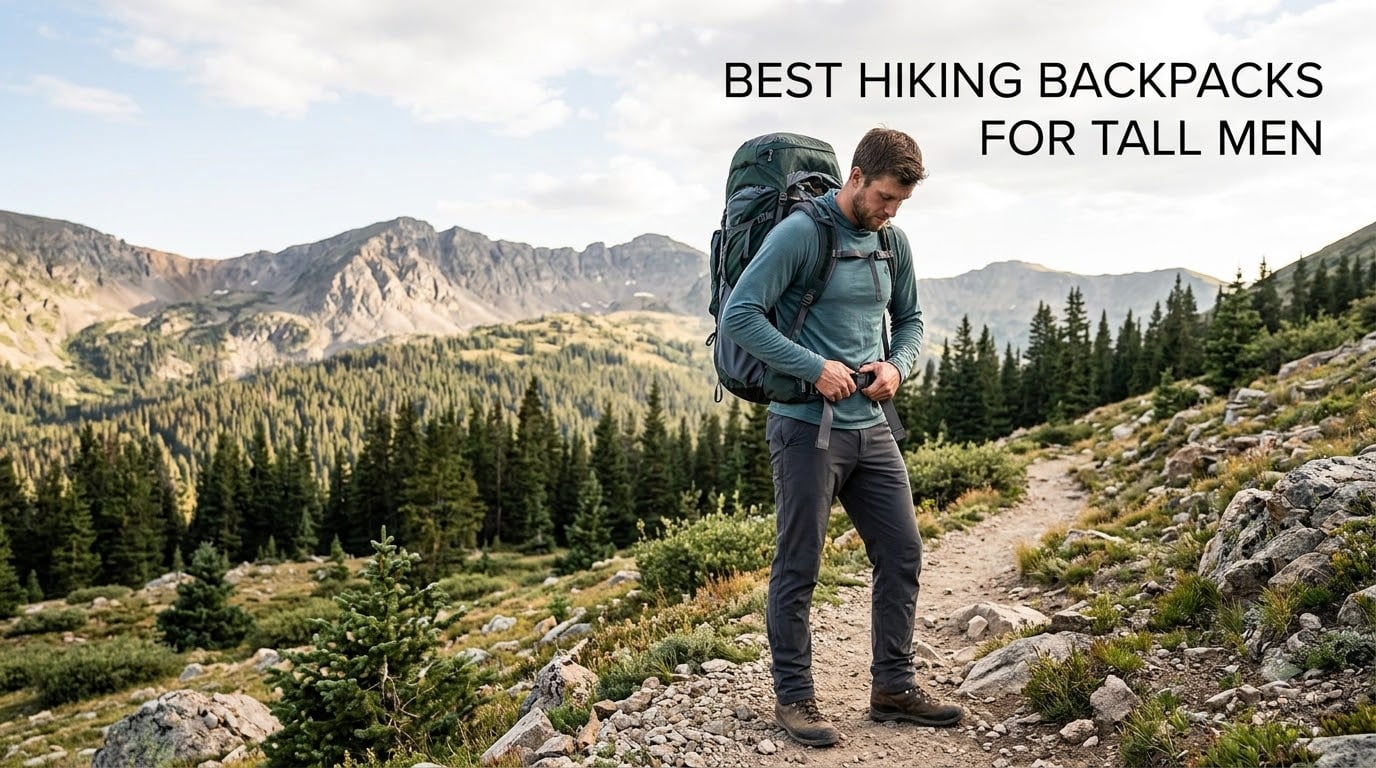
Quick answer: a 6ft man needs the pack size that matches his torso length, not his height. Torso length is measured in inches from the C7 vertebra at the base of your neck down to the iliac crest at the top of your hip bones. Anything around 19.5 to 20 inches or more counts as a long torso, and a long torso needs a pack whose frame length actually reaches past 20 inches. Most of the best hiking backpacks for tall men solve this with an adjustable torso system rather than a bigger number on the size label.
That distinction matters more than anything else in this guide. Our team read the size data and owner reviews on eight packs, and the ones that repeatedly cause trouble are not the cheap ones or the heavy ones. They are the packs where a 6’2″ wearer and a 5’9″ wearer are sent to the same size because the manufacturer stopped measuring bodies at the shoulders. A frame that is too short puts the load on your shoulders, and the soreness shows up on hour four of a long day, not at the counter where you tried it on empty.
Height is a poor proxy. The correlation between height and torso length is real but weak, because a tall person’s extra inches might all be in their legs. We looked through owner reports from hiking forums for exactly this confusion and found the same sentence repeated by people with completely different builds: torso length matters more than height. A 5’11” hiker can need a 23-inch torso range, and a 6’3″ hiker can fit a 19-inch range comfortably. Measure first, then shop. If you want the shorter version of the same topic, our guide to the best hiking backpacks for men covers the general case, and this page is the long-torso version.
Below I break down what actually changes when you are tall, then rank eight packs by how much torso headroom they offer, how adjustable the fit is, and what owners say after months of use. I also added a fit-checkpoint routine you can run in ten minutes before you commit.
Table of Contents
Top 3 Picks for the Best Hiking Backpacks for Tall Men (October 2026)

Osprey Stratos 24L
- Extended-fit frame
- Adjustable ladder torso
- 2.8 lb empty
- Raincover included

Osprey Atmos AG 65L
- Adjustable AG suspension
- L-XL torso
- Handles 35-40 lb loads
- Raincover in pocket

Best Hiking Backpacks for Tall Men in 2026
All eight packs below are ranked in the same order they appear in the reviews, and every one of them has a frame that can reach a long torso. The table is here so you can compare capacity, empty weight and the fit system side by side before you read the individual write-ups.
| Product | Specifications | Action |
|---|---|---|
| Osprey Stratos 24L Men’s Hiking Backpack |
|
Check Latest Price |
 Osprey Kestrel 38L Men’s Backpacking Backpack L-XL Osprey Kestrel 38L Men’s Backpacking Backpack L-XL |
|
Check Latest Price |
| Osprey Atmos AG 65L Men’s Backpacking Backpack L-XL |
|
Check Latest Price |
| Osprey Rook 65L Men’s Backpacking Backpack |
|
Check Latest Price |
 Kelty Coyote 65L Internal Frame Backpack Kelty Coyote 65L Internal Frame Backpack |
|
Check Latest Price |
 Osprey Aether 65L Men’s Backpacking Backpack L-XL Osprey Aether 65L Men’s Backpacking Backpack L-XL |
|
Check Latest Price |
 Deuter Aircontact Lite 40 + 10 L Deuter Aircontact Lite 40 + 10 L |
|
Check Latest Price |
 Osprey Aether Plus 70L Men’s Backpacking Backpack L-XL Osprey Aether Plus 70L Men’s Backpacking Backpack L-XL |
|
Check Latest Price |
1. Osprey Stratos 24L – Best Overall for Tall Men on Day Hikes
Osprey Stratos 24L Men’s Hiking Backpack, Cetacean Blue
2.8 lb empty
24L daypack
Adjustable ladder torso
Extended-fit frame geometry
Pros
- Taller and wider frame geometry extends the fit range
- Adjustable AirSpeed suspension with 3D-tensioned mesh
- Included raincover
- Panel-loading main compartment
- Hydration sleeve with hose port
Cons
- 24L volume is day-hike only
- Soft shell is water resistant not waterproof
Our verdict is simple: this is the pack we would hand a tall hiker who does not want to think about sizing. Osprey built this one with taller and wider frame geometry specifically, and paired it with a molded ladder torso adjustment system, so the back length extends rather than stopping where a standard adult frame stops. For a torso past 20 inches, that extension is the whole reason it works.
It is also the lightest pack in this lineup at 2.8 pounds empty, and the most heavily reviewed with 728 owner ratings averaging 4.7 stars. That combination matters. A huge review count on a daypack means a lot of people have put this exact frame on a lot of different bodies, which is the closest thing to a real fit test you can get before you buy.
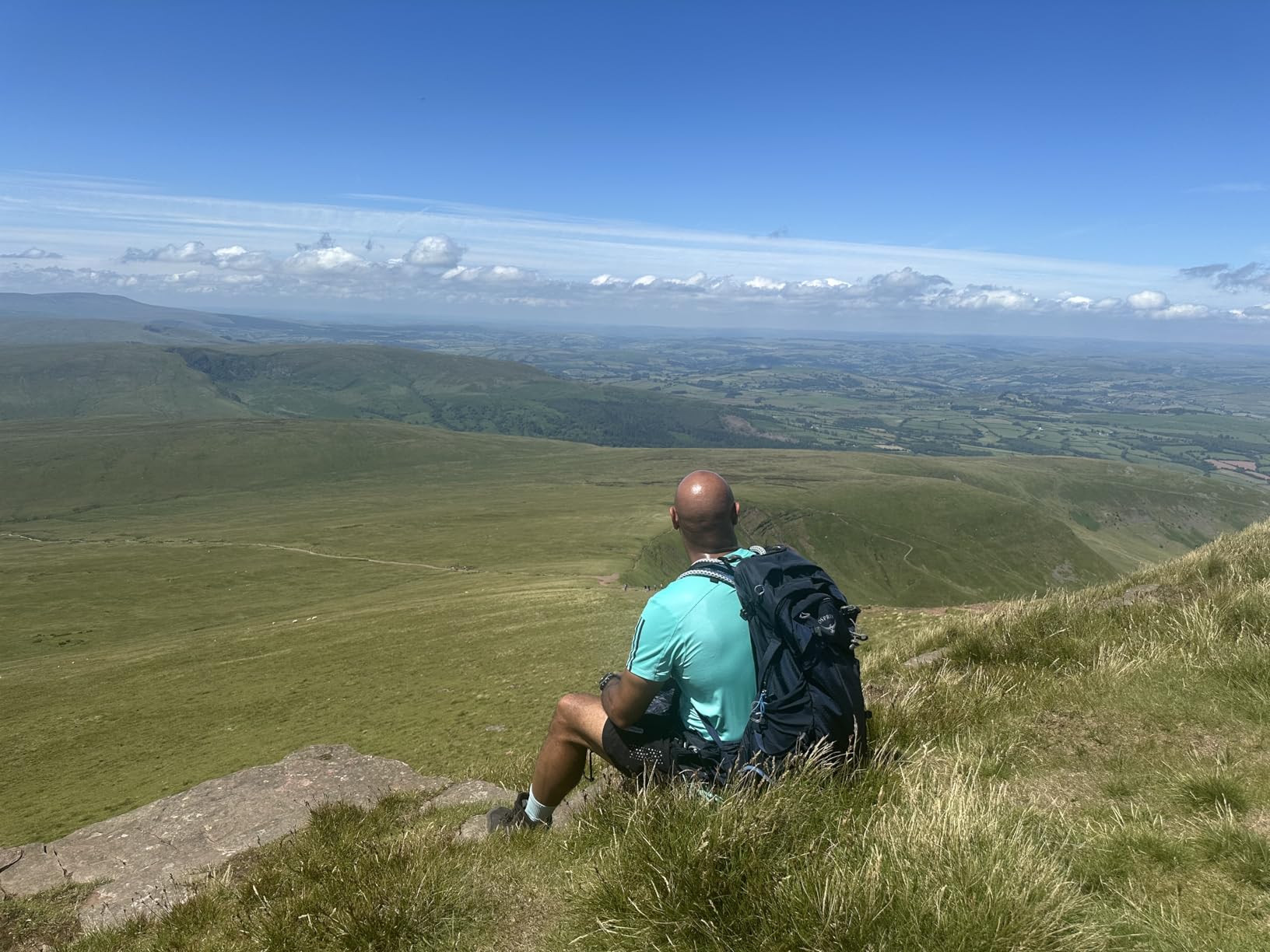
The AirSpeed suspension is adjustable and uses 3D-tensioned mesh across the back, so the contact surface is continuous rather than a set of aluminum stays digging in. Owners credit that for staying cool on climbs, and for keeping the load close enough to the body that the hip belt does most of the work even on a lighter day pack.
The panel-loading main compartment with a heavy duty zipper is the feature I appreciate most on long days. You unzip the front, pack the tent and the food for an overnight, and zip it shut. No digging, no dumping your rain shell on a wet rock, no repacking a cylinder-shaped bag in the dark at 9pm.
The included raincover lives under a dedicated pocket, and there is an internal hydration sleeve with a hose port in the back panel. The nylon body is water resistant rather than fully waterproof, so the raincover is doing real work on sustained rain rather than sitting there as decoration.
Who this pack suits
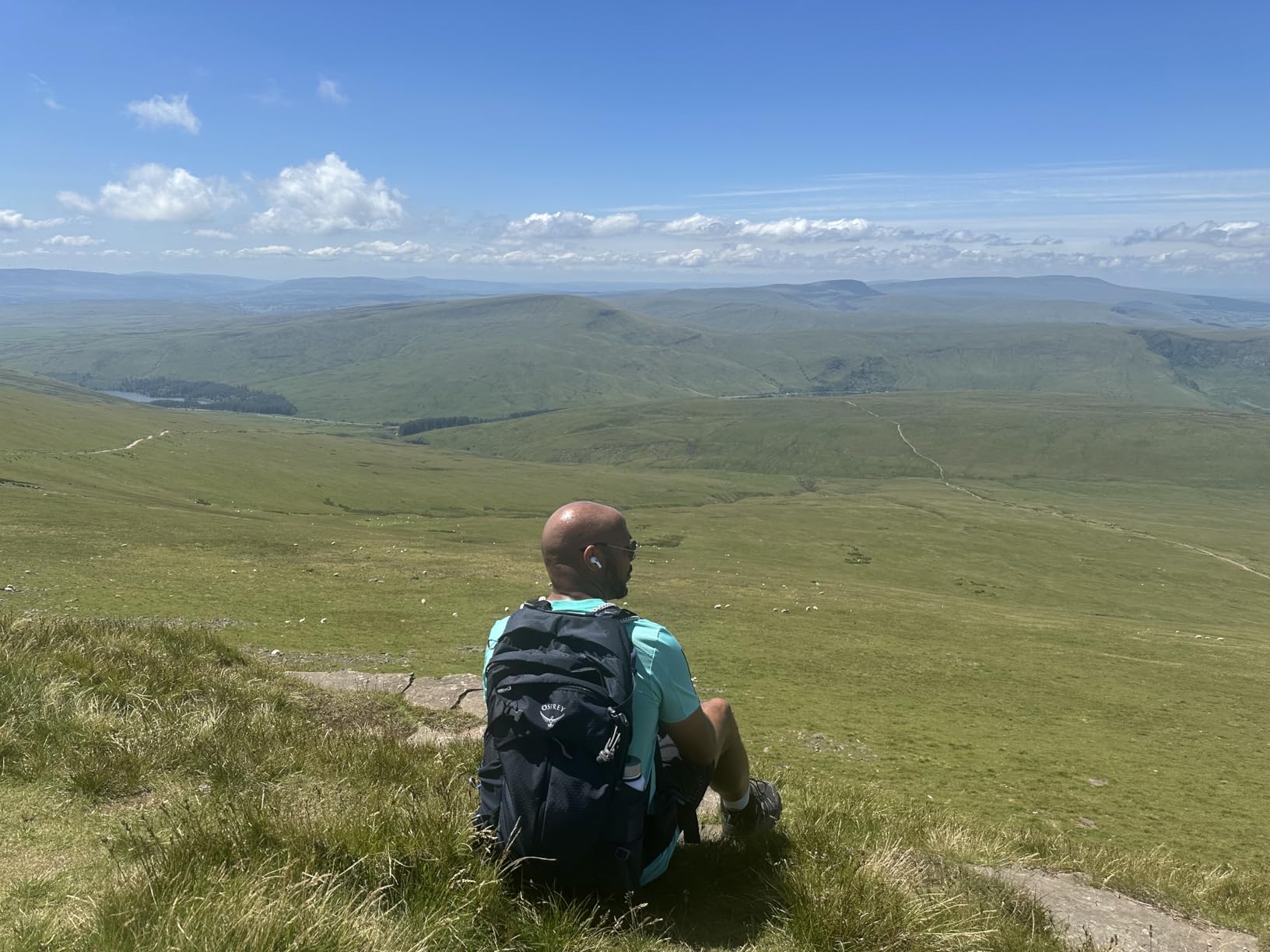
This suits a tall hiker whose weekends are day hikes, or who wants one bag that works for a walk-in-the-park and an overnight at a hut. A 24L volume carries layers, lunch, water and a sleep system for a short night out, and nothing more, which is exactly why I like it for a first long-torso pack purchase.
It also suits anyone who wants to fix their sizing problem once. Because the frame is designed taller and the torso is adjustable, you are not gambling on whether the small is small enough or the large is large enough. Owners with genuinely long backs describe the fit as having room to spare rather than borderline.
Where it falls short
The honest limit is volume. This is not a pack for a three-night trip, and no amount of clever packing changes that. If you are building a kit for a five-day traverse, look at the 65L and 70L options further down this list instead.
The second limit is weatherproofing. Water resistant nylon and an included raincover handle normal mountain weather, but sustained rain on a multi-day trip is a different test. For that, the higher-capacity packs here have more room to protect your sleep system in a dry bag.
2. Osprey Kestrel 38L – Best for Short Overnight Trips
Osprey Kestrel 38L Men’s Backpacking Backpack, Green L-XL
4.25 lb empty
38L
Adjustable torso in L-XL
AirScape backpanel
Pros
- Adjustable torso length in the L-XL size
- Injection-molded AirScape backpanel
- Integrated raincover
- Trekking pole attachment and top lid organization
Cons
- Fixed hipbelt cannot be fine-tuned
- 38L is small for winter or multi-day loads
Our verdict is that this is the pick for a tall hiker who wants a framed pack with real load-carrying ability but does not want the weight of a 65L bag. The L-XL version here runs an injection-molded AirScape back panel with adjustable torso length, so the frame length extends to match a long back rather than being cut for a mid-sized torso.
At 4.25 pounds empty and 38 liters, it splits the difference between a daypack and a full trekking pack. Owners using it for one or two nights report a stable, close-to-body carry that stays comfortable when the trail turns technical, which is the AirScape panel doing its job.
The top lid carries a large zippered pocket plus an under-lid mesh pocket with a key clip, and the frame includes a trekking pole attachment. The integrated raincover is built in, so there is one less item in your gear list to forget in the vestibule at the trailhead.
Who this pack suits
It suits a tall hiker running two or three night trips who still cares about empty weight. A 38L pack leaves room for a real sleep system and three days of food without forcing you to compress a load into a 65L bag, and the shorter frame height keeps the pack from feeling like a wardrobe on your back.
It also suits anyone transitioning from a daypack to something that can carry real weight. The AirScape back panel and the integrated raincover make it a low-drama first framed pack, and the adjustable torso means the long-torso sizing question is already handled inside the L-XL shell.
Where it falls short
The fixed hipbelt is the complaint that comes up most often, and it matters specifically for tall and lean builds. A fixed belt cannot be swapped or re-cut, so if your waist is narrow relative to your torso, you are stuck with whatever range the belt came with.
Thirty-eight liters also runs out fast in winter or on a long carry-heavy trip. Owners doing four-plus nights or hauling a bear canister with a full camera kit tend to stretch the bag past what it was designed for.
3. Osprey Atmos AG 65L – Best for Heavy Loads and Long Days
Osprey Atmos AG 65L Men’s Backpacking Backpack, Black L-XL
4 lb empty
65L
Adjustable AG suspension
L-XL torso
PFAS-free raincover
Pros
- Anti-gravity suspension with on-the-fly height adjustment
- Owners report carrying 35-40 lb without hip or shoulder soreness
- Dual side zip access to the main compartment
- Sleeping bag compartment with removable divider
Cons
- Only two torso lengths so a mid range is missing
- Curved waistband pocket zippers are hard to close one-handed
Our verdict is that this is the pack for a tall man who carries heavy loads over long distances. The anti-gravity suspension is the reason, and it is not a marketing word here. Owners repeatedly describe carrying 35 to 40 pounds without the hip and shoulder soreness they would normally expect at that weight.
Height adjustment happens on the fly rather than at a bench before a trip, which means you can fine-tune the pack while wearing it. That is a bigger deal for long torsos than it first sounds. Most fixed-frame packs force you to guess, dial something in at home, and then discover at mile three that the belt sits half an inch off your hip bones.
This L-XL version is the size that matters here, and owners with tall frames report that the large fits with room to spare rather than being the compromise option. If you have ever had a pack where the top of the frame stopped at your shoulder blades, the difference against this one is immediate.
The access design is genuinely good on the trail. There is curved zip access on one side of the panel, dual side zip access to the main compartment, and a floating top lid with lash points for gear you want reachable without unpacking.
A zippered sleeping bag compartment has a removable divider and removable sleeping pad straps, so your sleep system stays where you put it instead of migrating to the bottom of a 65L bag after three switchbacks. The included raincover uses PFAS-free DWR and bluesign approved materials and lives in a dedicated pocket.
Large side pockets fit bicycle-style bottles, which is the size most hikers actually carry. One detail we would change: the waistband pocket zippers curve upward, so closing them one-handed while wearing the pack is awkward.
Who this pack suits
It suits a tall hiker with a demanding trip list. Multi-day three-season routes, longer trails with a camera or a bear canister, anything where you expect to be above 30 pounds for hours at a time. The suspension is engineered to keep that weight on the hips where it belongs.
It also suits hiker who wants one pack instead of two. At 65L it covers an overnight and a five-day trip without a separate big-bag purchase, which for a tall hiker avoids the second round of torso sizing guesswork.
Where it falls short
Only two torso lengths are offered, which means a mid range is missing between the smaller and larger sizes. If your torso lands in that gap, neither size is a clean match and you are back to compensating with strap tension.
The rounded bottom means the pack will not stand on its own, so at camp you lean it or lay it down. The brain straps also sit underneath where they are hard to reach and adjust, which is a small daily friction on a pack meant for long days.
4. Osprey Rook 65L – Best Value for Long-Torso Backpacking
Osprey Rook 65L Men’s Backpacking Backpack, Gray OS
3.7 lb empty
65L
Adjustable AirSpeed torso
LightWire frame
Raincover
Pros
- Adjustable tensioned backpanel covers a variety of torso lengths
- LightWire frame moves load onto the hipbelt
- Light at 3.7 lb for a 65L pack
- Integrated raincover stows in its own pocket
Cons
- Fixed hipbelt limits torso-shape fine-tuning
- Less ventilated than the mesh-backpanel models
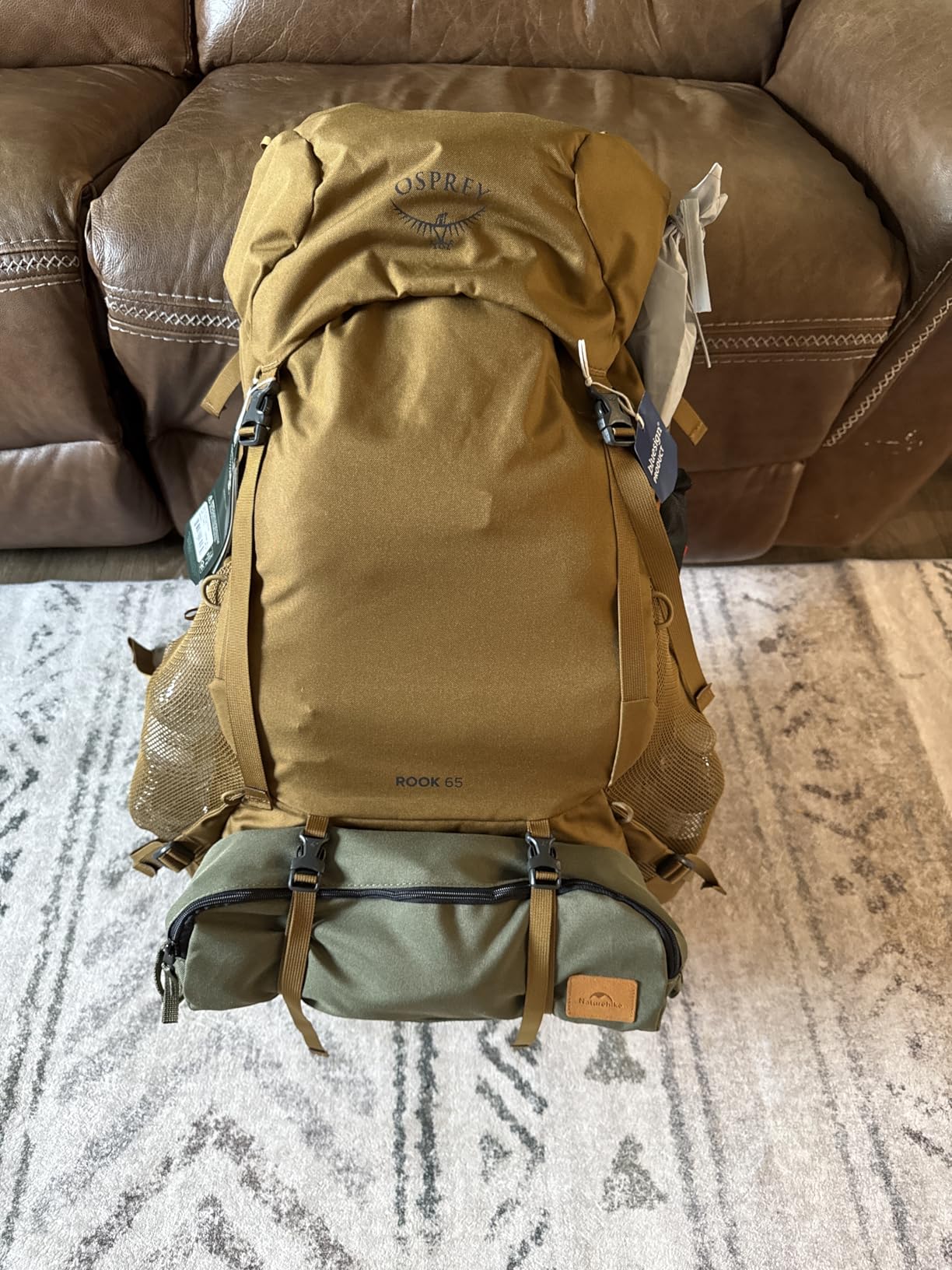
Our verdict is that the Rook is the most straightforward 65L answer here if you want a long torso without a premium tier price tag. The adjustable AirSpeed suspension runs a tensioned back panel that adjusts for a variety of torso lengths, and the LightWire frame transfers load down to the hip belt to take pressure off the shoulders.
At 3.7 pounds empty it is the lightest 65L pack in this group by a clear margin, and that is where most of the value sits. A tall hiker with a 22 to 23 inch torso who is not carrying expedition loads does not need a heavier suspension to get a proper fit.
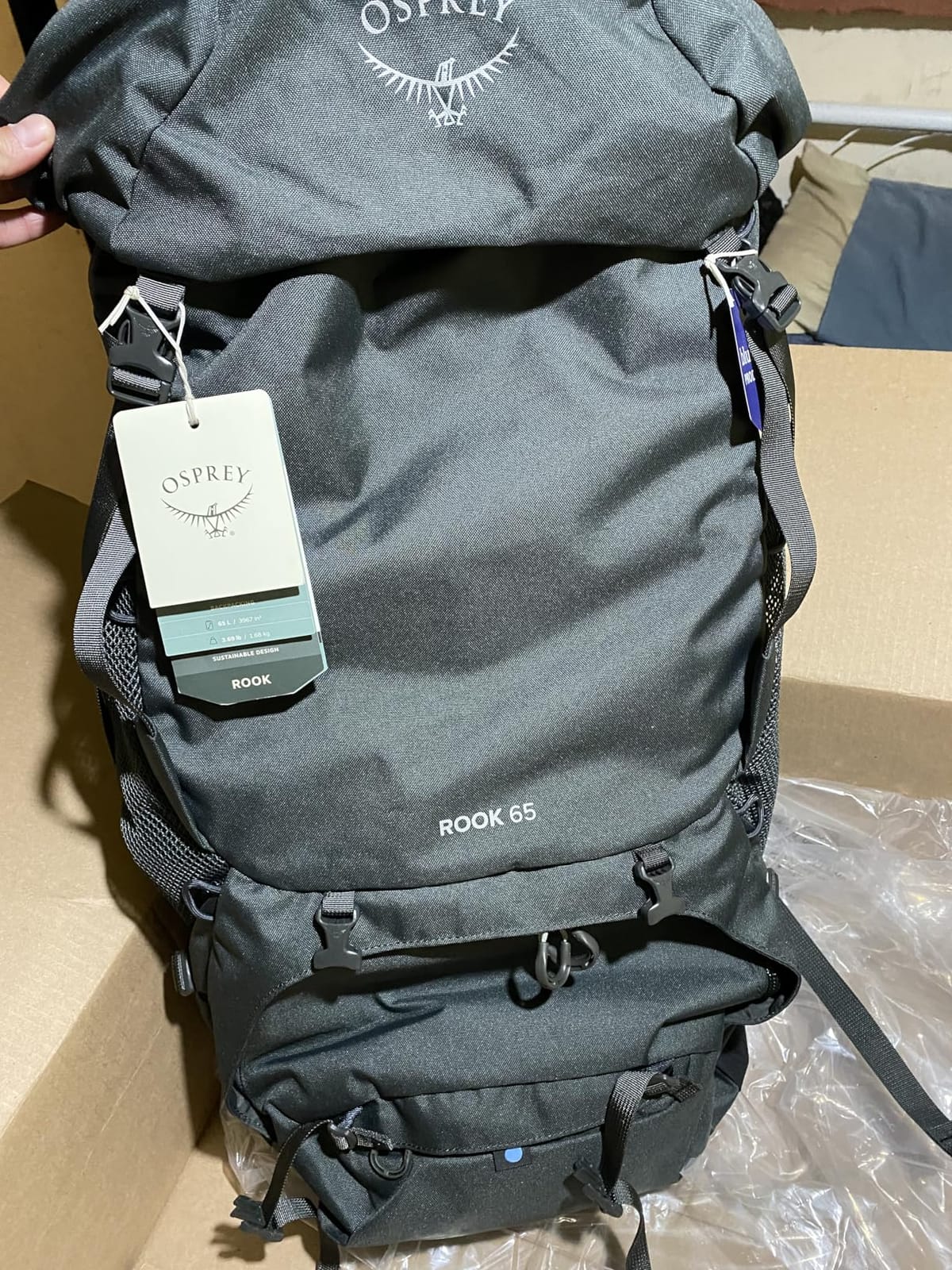
The design is intentionally plain. Six pockets, a utility pocket, adjustable straps, and a zippered sleeping bag compartment with a floating divider. Nothing on it is a gadget, and nothing on it fights you when you need to find a layer at 6am in the rain.
The integrated raincover is removable and stows in its own pocket, so it does not add a permanently occupied layer of fabric to the outside of the pack the way some roll-top covers do. The pack is also Daylite compatible, which means the top portion can work as a smaller daypack on a rest day.
Where we would temper the enthusiasm is ventilation. Compared with the mesh-backpanel packs in this list, the Rook runs plainer back ventilation, and on a hot sustained climb a tall hiker carrying 35 pounds will feel the difference.
Who this pack suits
It suits a tall hiker who wants one bag for a two to five night three-season trip and cares more about fit range than about maximum load rating. The adjustable back panel is the fit tool, and it covers a spread of torso lengths inside a single model.
It also suits anyone who hauls gear rather than weight. A photographer with lenses, a hunter with a bow case, or a hiker carrying a full bear canister gets capacity and frame support at an empty weight most 65L packs cannot match.
Where it falls short
The fixed hip belt is the main compromise. It cannot be adjusted, and for a tall lean build with narrow hips, an XL back length paired with a fixed belt is exactly the combination that leaves a gap at the front or a pad-to-pad closure with nothing to tighten.
The simpler back panel also means less airflow than the mesh designs. If you are a big sweater over your base layer in summer, expect more heat on the back than the Atmos or Aether.
5. Kelty Coyote 65L – Best Adjustable Torso on a Budget
Kelty Coyote 60-105 Liter Internal Frame Backpack – Hiking, Backpacking, Travel, Adjustable Torso (65L / Black)
4 lb empty
65L
Fit Pro adjustable torso
Perimeter frame
55 lb rated
Pros
- Fit Pro torso adjustment can be dialed in while wearing the pack
- Aluminum stay in a perimeter frame keeps heavy loads balanced
- Amp Flow ventilated back panel
- Available in 65L 85L and 105L versions
Cons
- Heavier empty weight than comparable 65L packs
- External frame adds bulk
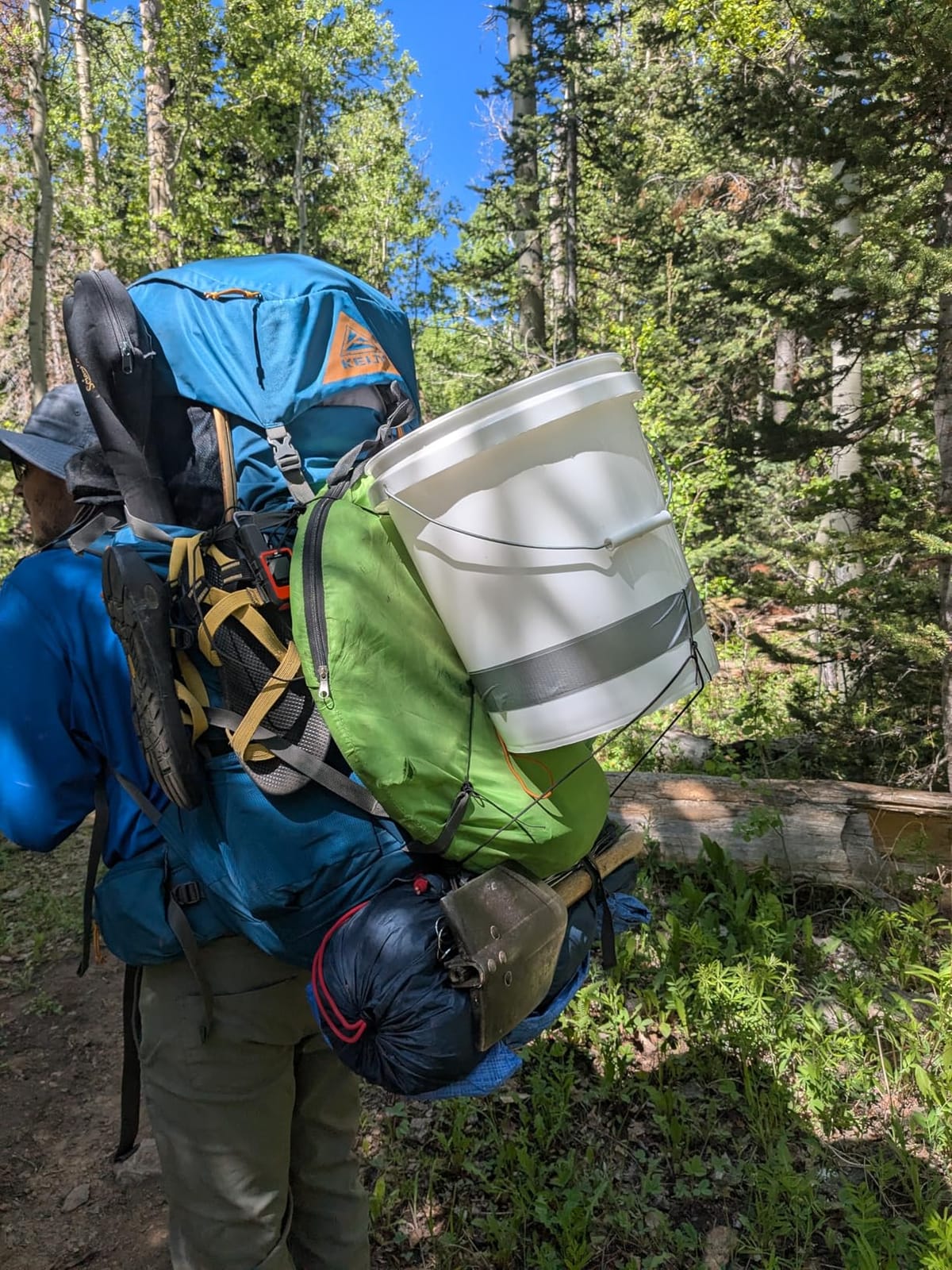
Our verdict is that the Coyote solves the tall-hiker sizing problem in a way few packs do: the torso adjustment is designed to be dialled in on the fly, on the trail, without taking the pack off. Kelty calls it Fit Pro, and the reason we picked it for this list is that reviewers single out that adjustability as the reason the pack works across so many body sizes.
It is a traditional framed pack rather than a modern internal-frame shell, with an aluminum stay in a perimeter frame. That is heavier than most of what we tested, and we will not pretend otherwise, but it is a stable platform for a load and it handles the 55 pound recommended load without complaint from owners.
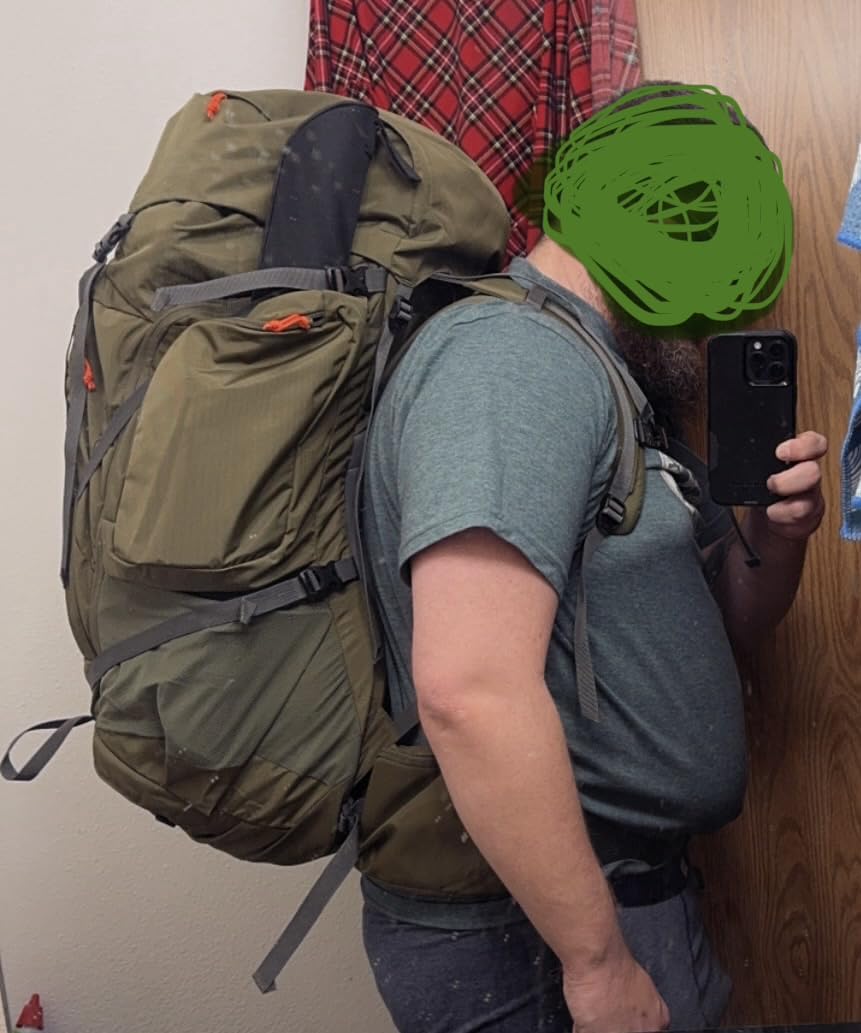
The pocket layout is the other reason people keep recommending it: Kelty signature wing pockets, two front zippered pockets, J-zip top loading into the main compartment, daisy chains, water bottle pockets, and a sleeping bag compartment. For a hiker who reorganizes gear every morning, that is a lot of useful access.
The Amp Flow ventilated back panel is aimed squarely at the sweaty-back problem that tall hikers report on hot climbs. The aluminum stay in the frame is what keeps the load secure and balanced when you are moving on uneven ground.
The same family comes in 65L, 85L and 105L versions, so if you are 6’4″ and planning winter or extended trips, the size ladder exists without changing brands or re-learning a fit system.
Who this pack suits
It suits a tall hiker who does not yet know their exact torso measurement and wants room to adjust on the trail. Fit Pro is the most forgiving adjustment in this group, and it removes the guesswork that trips up people who have never fitted a pack properly.
It also suits a hiker who plans to grow into bigger trips. Starting at 65L with a stable framed platform, then moving to 85L or 105L in the same system, is an easy path for someone who expects to carry camera gear, cold weather kit, or a long resupply-free stretch.
Where it falls short
The empty weight is the drawback. At roughly 4 pounds listed, with the frame adding bulk, it is the heaviest-per-liter option here, and it is noticeable on a base weight budget or a long approach with a small load.
The external frame is what makes the stability possible and what makes the pack awkward with a sleeping pad, a bike repair, or anything you need to strap to the outside in a hurry. Ultra runners and fast-and-light hikers will find it too much.
6. Osprey Aether 65L – Best Fit Adjustment for Long Torso
Osprey Aether 65L Men’s Backpacking Backpack, Black L-XL
4.96 lb empty
65L
Fit-on-the-Fly belt and torso
AirScape backpanel
Raincover
Pros
- Fit-on-the-Fly hip belt and shoulder straps with adjustable torso
- Ventilation rated best in class among framed packs
- Tall rather than deep shape keeps the load close
- Full front zip access plus separate sleeping bag compartment
Cons
- Stretch side pockets tear out quickly
- No bottom loops for a sleeping pad
- 65L label is generous in practice
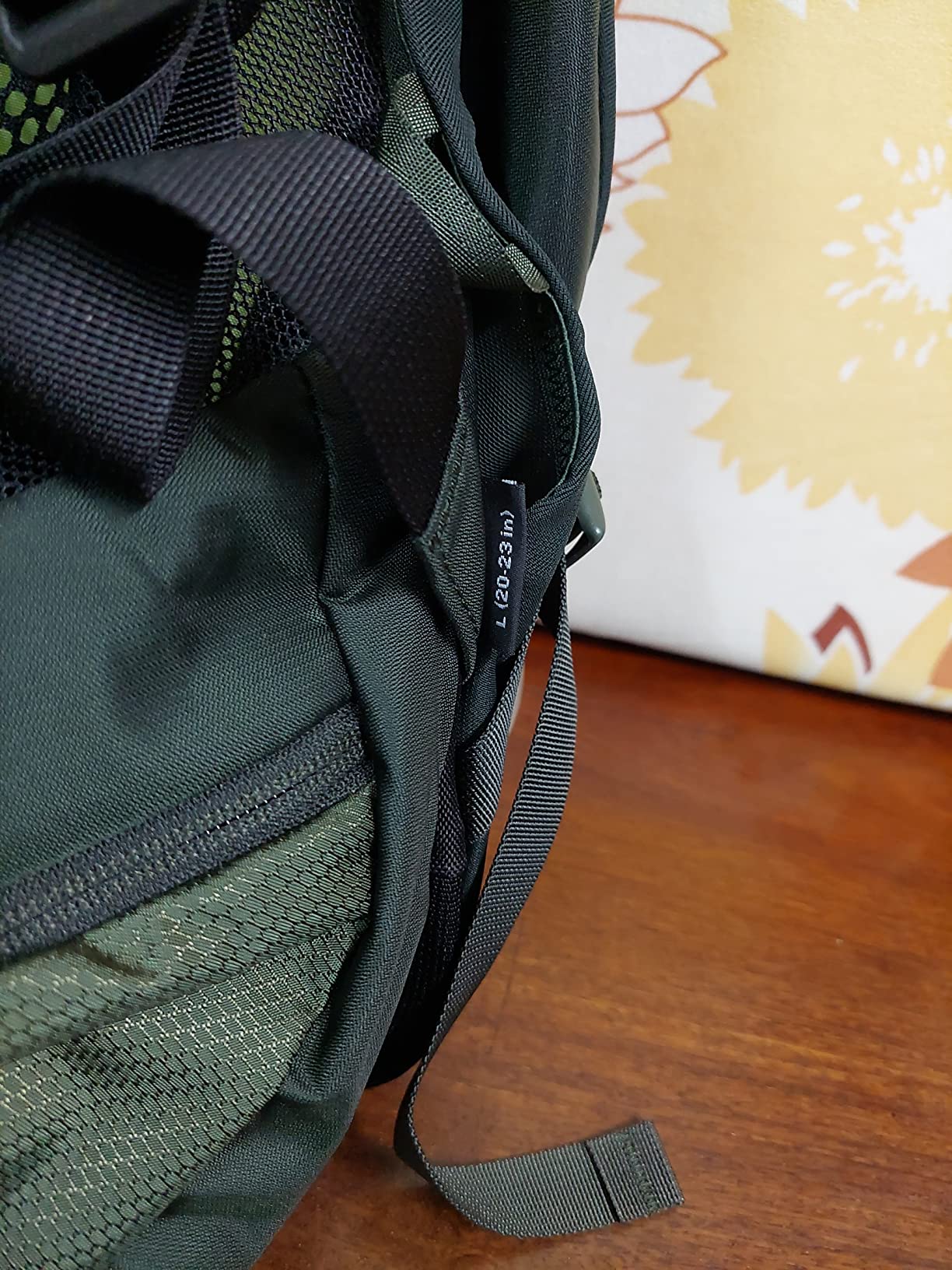
Our verdict is that this is the most precisely adjustable pack in the lineup, and for a tall hiker whose frame length is right but whose shape is unusual, precision is what removes the last bit of shoulder pull. The Fit-on-the-Fly system adjusts the hip belt, the shoulder straps, and the torso length, which is three separate adjustment points instead of one.
The L-XL version here is a tall shape rather than a deep one. That distinction is not cosmetic on a 6’3″ frame. A tall-shaped pack keeps the load close to your back and keeps the center of gravity over your hips instead of swinging behind you, which is the difference between a pack that feels stable and one that pulls you backward under 40 pounds.
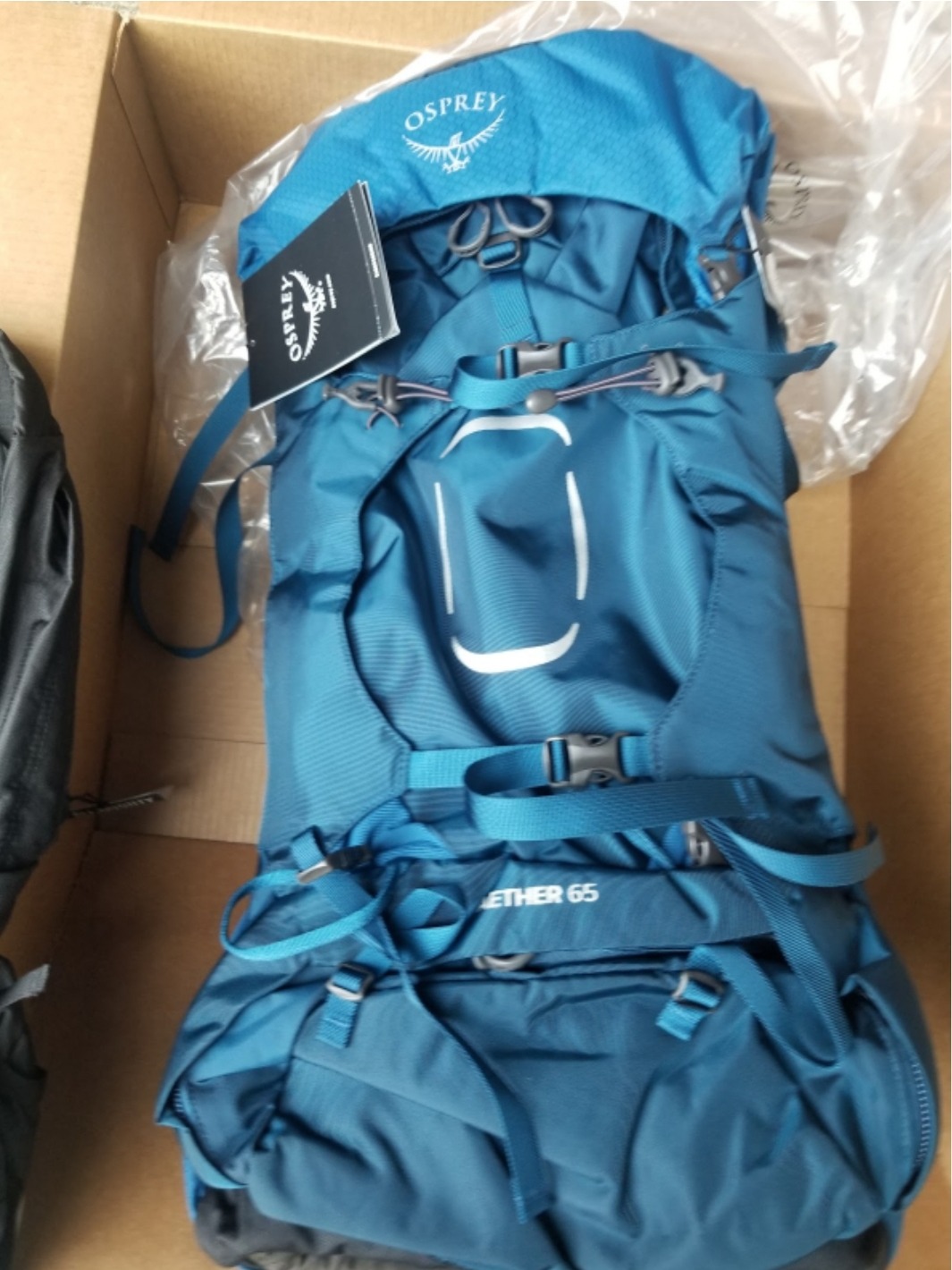
Back ventilation is the quiet strength here. The injection-molded, die-cut foam AirScape back panel is reported as best in class among framed packs in this group, and for a tall hiker on long hot climbs that airflow is worth more than a pocket or two.
Access is thorough: full front zip access to the main compartment plus a separately accessible removable sleeping bag compartment with a removable divider. Over-top buckles protect the zipper pulls from strain, which is a small engineering detail that adds years to a pack.
Worth knowing before you buy: this is the heaviest and priciest option short of the Aether Plus, and some buyers find the 65L label generous in practice. It runs smaller than you might picture when you picture a 65L pack.
Who this pack suits
It suits a tall hiker with a long torso who has already struggled with packs that were the correct size but still felt wrong. When the frame length is adjustable and the belt is adjustable and the shoulder straps are adjustable, there is very little left to compensate for with strap tension alone.
It also suits long-distance and multi-day hikers. The close-to-body carry and the ventilation both favour putting miles under the pack, and the separate sleeping bag compartment keeps your sleep system from being crushed under everything else.
Where it falls short
The stretch side pockets tear out quickly, and that is the most-cited complaint in owner reviews. If you plan to carry frequently used items where you can reach them, treat those pockets as temporary.
There are no bottom loops for strapping a sleeping pad or extra gear, and this version has no removable convertible hood. Plan your outside-gear strategy before the trip rather than at the trailhead.
7. Deuter Aircontact Lite 40 + 10 L – Best for Ultralight Loads
Deuter Unisex Aircontact Lite 40 + 10 L, Lightweight Backpacking & Hiking Backpack for Men & Women, 40 + 10 Liters – Atlantic-Ink
3.5 lb empty
50L (40+10)
Vari Quick back length
Aircontact system
Pros
- Vari Quick adjustable back length extends the pack for a taller torso
- Aircontact hollow foam moves weight close and stays ventilated
- Light at 3.5 lb for a 50L pack
- Height-adjustable detachable lid adds flexible capacity
Cons
- One size per capacity so the torso range is narrower
- 50L is smaller than the 65L and 70L packs here
Our verdict is that this is the light approach to the long-torso problem. The Vari Quick system adjusts the back length continuously, so instead of jumping between discrete sizes you extend the pack to fit your torso. At 3.5 pounds empty for 50 liters, it is the second-lightest pack here and the lightest per litre.
The Aircontact back system uses hollow chamber foam rather than a solid panel, which keeps the pack close to the body and ventilates through the pump effect as you move. Reviewers single out the comfortable internal structure, the adjustable back panel, and the material quality as the standouts.
Who this pack suits
It suits a tall hiker who wants a pack that disappears on the trail. Owners like that it is carry-on friendly when lightly packed, which is genuinely useful if you are combining travel with hiking. This is the pick if your base weight is the number you actually care about.
It also suits a hiker whose torso sits mid-range and who wants continuous adjustment rather than a step. The Vari Quick back length, the continuously adjustable chest strap, the load adjustment straps, and the pull-forward hip fin adjustment give a lot of tuning without tools.
The height-adjustable detachable lid, docking loops for helmet, ice axe, and trekking poles, a separate bottom compartment, and 3L drinking system compatibility make it a genuine one-bag setup for a moderate trip.
Where it falls short
The torso range is the real limit. Deuter offers one size per capacity here, so the spread you get is narrower than the Osprey S/M and L/XL split. If your torso is at the far end of long, the adjustment range is not as wide as the models with two frame lengths to choose from.
Fifty liters total is also smaller than the 65L and 70L packs in this group. That is a capacity ceiling, not a fit problem, and it decides your trip length rather than your torso.
8. Osprey Aether Plus 70L – Best for Big Loads and Long Trips
Osprey Aether Plus 70L Men’s Backpacking Backpack, Black L-XL
6.2 lb empty
70L
Fit-on-the-Fly belt and torso
Convertible lid
60 lb rated
Pros
- Custom Fit-on-the-Fly hip belt and shoulder straps with adjustable torso
- Removable top lid converts to a DayLid daypack
- Stow-on-the-Go trekking pole attachment
- 12 pockets including dual front zip panels
- Rated to carry loads up to 60 lb
Cons
- Heaviest pack in the group at 6.2 lb empty
- Wrong tool for fast and light trips
Our verdict is that this is the most capable pack in the lineup for a tall hiker hauling serious weight, and it holds the highest owner rating in the group at 4.8 stars across 155 ratings with 94 percent five-star. The custom Fit-on-the-Fly hip belt, Fit-on-the-Fly shoulder straps, and adjustable torso length give a precise L-XL fit, which is the combination a long torso needs.
At 70 liters with a 60 pound load rating, this is the pack for winter trips, extended expedition travel, or a tall hiker carrying camera gear, a full kitchen, or a long stretch with heavy resupplies. The top lid removes and converts to a DayLid daypack, so camp excursions do not require you to repack anything.
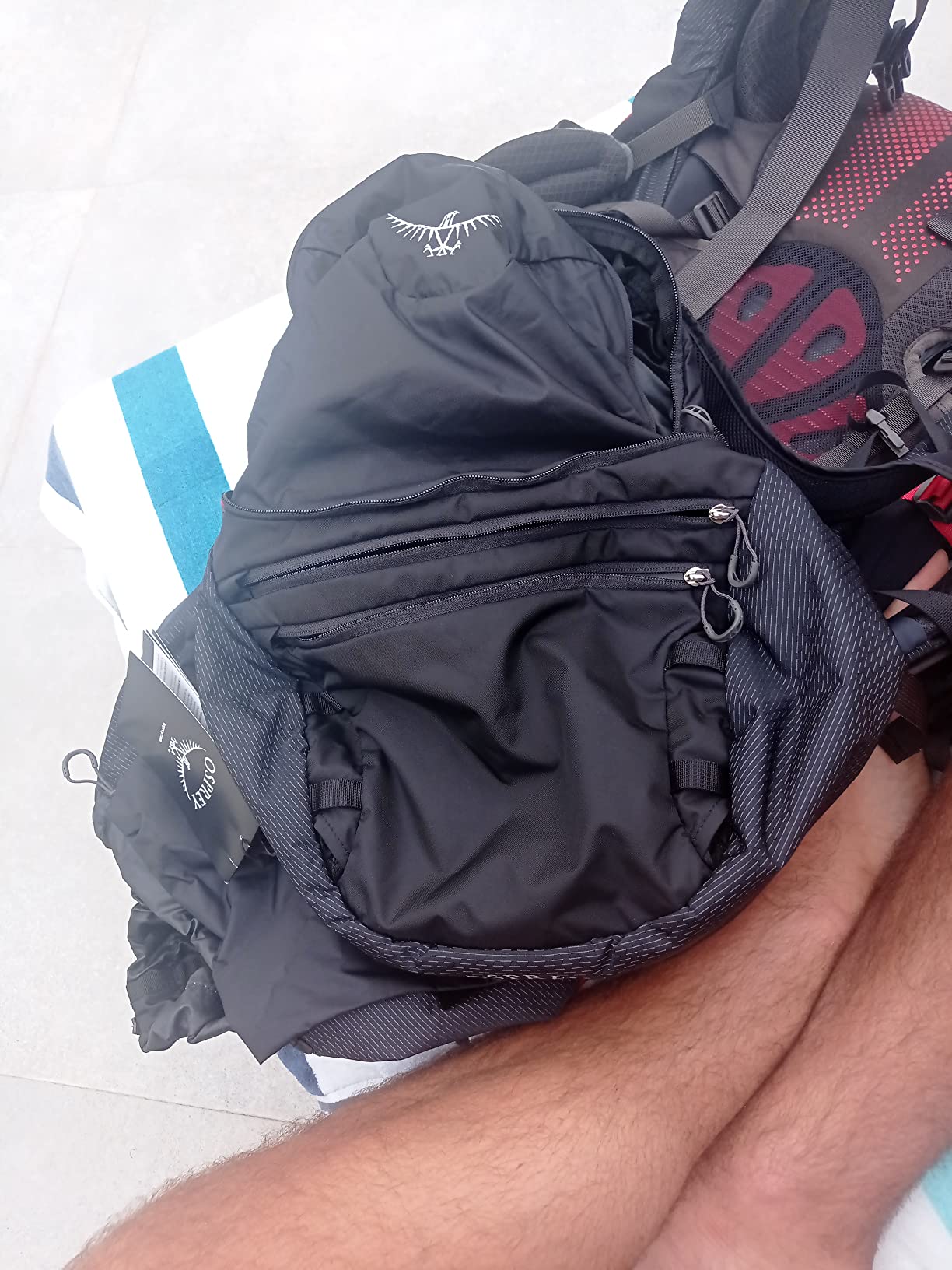
Organization is the quiet feature. Twelve pockets including dual front zippered panels for easy-access storage, plus stow-on-the-go trekking pole attachment that you can deploy without unpacking the lid. For a pack this size, that is the difference between a usable trip and a frustrating one.
Owners are enthusiastic about the highly adjustable custom fit and the well-distributed 60 pound rated carry. The adjustable torso plus custom belt is the most complete fit system in this guide, and for a hiker who has repeatedly struggled with shoulder pain it is worth the step up.
The trade is weight. At 6.2 pounds empty it is the heaviest pack here by a wide margin, and that number sits in your pack before you add a single piece of gear.
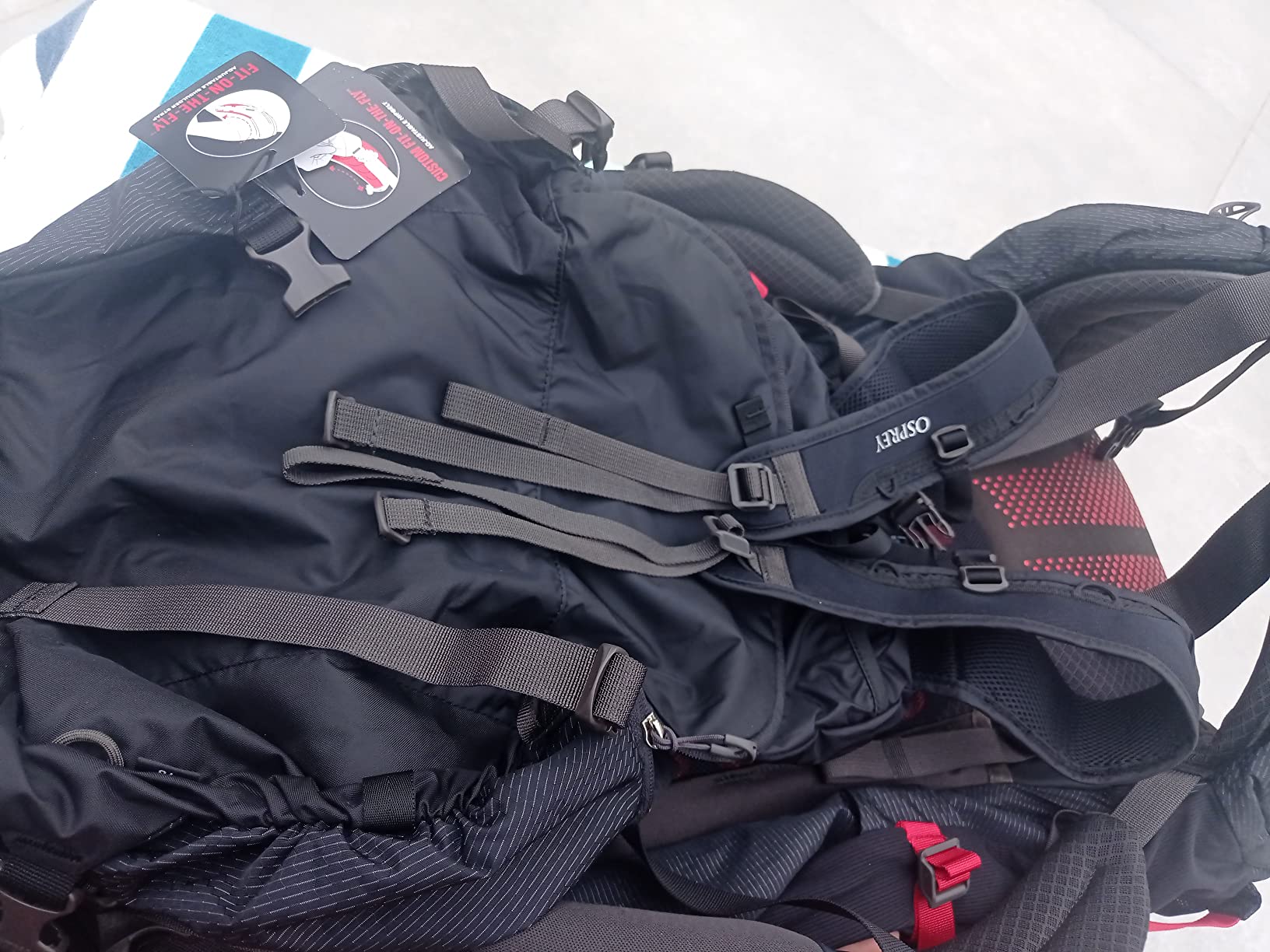
Who this pack suits
It suits a tall man who carries loads well past what a lighter pack handles, and who has a specific reason for the weight. Winter kit, a five to seven day trip with a full food carry, a photography load, or a hunting load all justify this pack where they would not justify a 50L.
It also suits anyone who wants the widest fit adjustment available. Custom hip belt, custom shoulder straps, adjustable torso, in a single L-XL frame, is the most forgiving combination here, and it absorbs more unusual body shapes than any fixed belt in the group.
Where it falls short
The 6.2 pound empty weight rules it out for anyone who strips weight for speed. If you are counting grams on a fast-and-light trip, this pack is the wrong tool no matter how well it fits.
It is also the premium tier option, so the fit advantages come with the heaviest carry in the group. We would only reach for it when the load is genuinely there, not as an upgrade for its own sake.
How to Choose a Backpack When You Are Tall
Start with the measurement, because everything else depends on it. Find the C7 vertebra, the bony bump at the base of your neck when you tilt your head forward, and the iliac crest, the top of your hip bone where the front of your hip meets your side. Measure the curve between those two points and write the number down to the nearest half inch. Get someone to help, bend your knees slightly, and keep the tape against the curve of your back rather than pulling it straight.
Measure a second time. The difference between a 20 and a 23 inch reading is common when people measure to the top of the hip bone instead of the iliac crest, and one brand may use C7 to the navel while another uses C7 to the iliac crest. That inconsistency is the source of a lot of the sizing confusion in forums. If a brand’s chart uses a different endpoint, add or subtract accordingly before you compare it to another brand.
Then check three things on the pack, in this order:
Hip belt position. The belt should sit on your hip bones, not on your stomach or your lower back. A belt riding high is a frame that is too long for your torso. A belt sliding down onto your glutes is a frame that is too short.
Shoulder straps. With a properly loaded pack, the shoulder straps should wrap the tops of your shoulders and take roughly a quarter of the weight. If they are taking nearly everything, the frame is too short and the load is not reaching the hips.
Load-lifter straps. These small straps between the shoulder straps and the top of the frame should angle roughly 25 to 45 degrees from horizontal. If they run flat or point down, the pack is not settled onto your shoulders and hips yet. If they are pulled tight and the load is still on your neck, the frame length is wrong.
Before buying, do the loaded test. Owners consistently credit loading a pack with 10 to 20 pounds and walking with it as the only reliable fit check, and we agree. A pack can look right empty and fall apart after ten minutes with weight in it. Put a load on, walk around the store or a parking lot for a few minutes, then recheck the belt position and the load-lifter angle while your body is warm.
On capacity, tall hikers get pushed toward oversized packs and should resist it. A day hike on a maintained trail rarely needs more than 30 to 40 liters. A two to four night three-season trip sits around 50 to 60 liters. Seventy liters is genuinely large for a single overnight, and it becomes right for winter gear, a bear canister plus a full food carry, or a five-night-plus trip. The correct answer for a tall hiker is usually the same capacity as everyone else, with a longer torso range.
One more case worth naming: the tall and lean build. If your torso is long and your hips are narrow, an extra-large back length paired with a standard large belt can leave the front closure pad-to-pad with nothing left to tighten. In that situation, prioritize a pack with a custom or adjustable hip belt, like the Aether or Aether Plus, over one that simply has a longer frame.
If you are still comparing options, our backpack guide for women and camera backpack picks cover narrower and gear-heavy setups where load distribution matters for different reasons. For a solar-charging load on a long trail, our solar backpack guide covers the panel and battery weight you would need to plan around.
Frequently Asked Questions
What size backpack do I need for my height?
Height is a poor guide on its own. Measure your torso from the C7 vertebra at the base of your neck to the iliac crest at the top of your hip bone, then pick a pack whose stated torso range includes that number. Around 19.5 to 20 inches or more counts as a long torso and needs a frame that reaches past 20 inches. Some 5’11u0022 hikers need a 23-inch range and some 6’3u0022 hikers fit a 19-inch range, so measure before you shop.
Do I need an extra large backpack because I am tall?
Usually not. A longer torso calls for a longer frame, not more capacity. Pick the same capacity you would choose at any other height and then confirm that the pack’s torso range covers your measurement. If a brand’s large frame runs out around 20 to 21 inches, an extra large in the same brand will not reach further, so check the stated range rather than the size label.
Why do my shoulders hurt when the backpack size is right?
A correct capacity with a wrong frame length will still hurt your shoulders. If the frame is too short for your torso, the hip belt cannot seat on your hip bones, so the load transfers to the shoulder straps. The pain usually appears late in the day rather than at the counter. Check whether the hip belt sits on your hip bones, and whether the load-lifter straps angle roughly 25 to 45 degrees from horizontal.
Is a 70L backpack too big for backpacking?
It depends on trip length, not on height. Seventy liters is oversized for a single overnight and reasonable for a five-night or longer three-season trip, winter gear, or a heavy carry such as a bear canister plus a full food load. A two to four night trip usually sits between 50 and 60 liters. Pick the smallest volume that holds your kit, then focus on torso range.
Which brand fits tall hikers best, Osprey or Deuter?
Osprey publishes two frame lengths in most of its mainline packs, so the L-XL version gives a wider fit spread within one model, and its custom hip belts on the Aether and Aether Plus add the most belt adjustment. Deuter uses a continuously adjustable back length on the Aircontact Lite, which is a single range per capacity rather than two sizes. If your torso runs past 20 inches, the two-length systems are the safer bet.
Which Hiking Backpack Fits Your Torso Best
Measure your torso before you choose anything, then buy for frame length rather than capacity. For most tall men the Osprey Stratos 24L is the easiest first answer, because the extended-fit frame and ladder torso adjustment cover a long back without a sizing gamble. For a heavy multi-day load, the Atmos AG 65L is the comfort pick, and the Aether Plus 70L is the one to reach for when you are genuinely carrying a lot.
Update your kit in 2026 and take the loaded fit test seriously: 10 to 20 pounds, a few minutes walking, then recheck where the hip belt sits and how the load lifters angle. That ten-minute routine prevents almost every bad purchase in this category.