
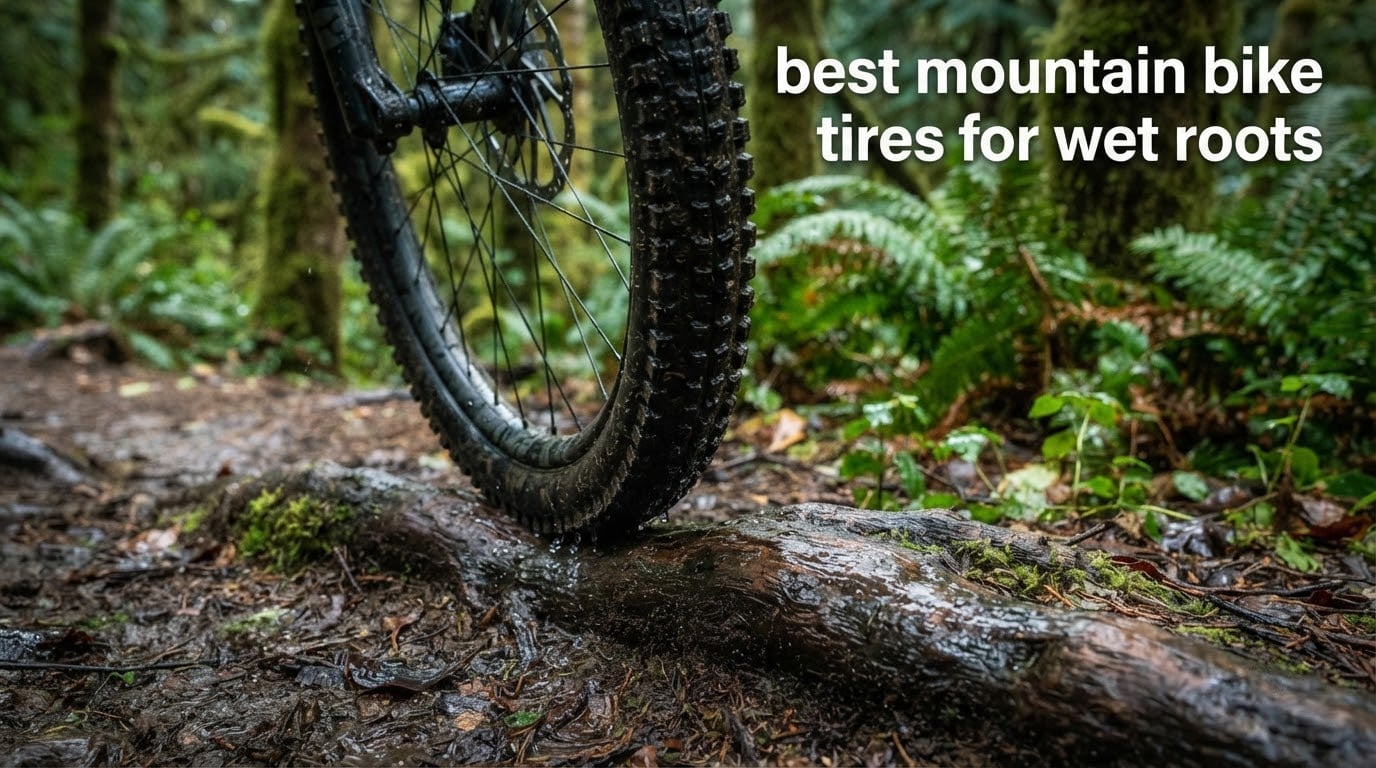
There is a specific moment on a damp rooty descent where a tire that felt precise on dry hardpack suddenly skates, and the front end washes out from under you with almost no warning. That failure is not a rider error, and it is not bad luck. It is a compound, knob and pressure problem, and it is the reason the best mountain bike tires for wet roots deserve their own roundup rather than a general “best knobbies” list.
So this roundup is sorted by one criterion: how a tire behaves when a wet root is the primary contact surface. Every tire here was judged on compound softness, whether the tread sheds water and mud, how the carcass drapes over a rounded root rather than bridging across it, and how much usable traction is left when the trail is slick instead of merely loose. I have leaned on published rider reports to fill out the impressions, since wet-root performance is something that only shows up after months of PNW winters, not a weekend in a car park.
What that produced is a shorter list than you might expect. I only include tires with a soft or dual/triple compound, a casing that can be run wide and low, and a tread layout with enough spacing to clear mud. Hard 60a XC compounds are deliberately absent as a category, because they are the single most common reason riders tell me they “already have grippy tires” and still cannot hold a wet root. If you also ride dry trail for most of the year, our best mountain bike tires for trail riding guide covers the wider range.
Riders in the Pacific Northwest, the UK, the Pacific coast and the Southeast US in winter are the core audience here. So is anyone who trains on dry hardpack all summer and then discovers in October that their race setup has no idea what to do with a root slick with water. For the truly frozen months, our picks on studded bike tires for winter riding cover a different problem entirely.
Table of Contents
Top 3 Picks for the Best Mountain Bike Tires for Wet Roots (October 2026)

Maxxis Minion DHF 29×2.50
- Dual compound tread
- EXO sidewall
- Tubeless ready
- 30mm internal rim ideal

Maxxis Minion DHR II 27.5×2.80
- 3C MaxxTerra compound
- EXO sidewall protection
- Deep side lugs for ruts and roots
- Tubeless ready

Continental Mountain King 29×2.30
- PureGrip compound
- ShieldWall casing
- Tubeless ready
- Mud-shedding uniform tread
Those three are the picks I keep coming back to when a rider describes the same problem in different words. The Minion DHF is the most-used and most widely reported option, the DHR II is the choice when the rear wheel has to dig through wet soil and ruts, and the Mountain King is the all-rounder that still holds a line when the money runs out.
All 7 Picks Compared for Wet Roots in 2026
| Product | Specifications | Action |
|---|---|---|
| Maxxis Minion DHF 29×2.50 |
|
Check Latest Price |
| Maxxis Minion DHR II 27.5×2.80 |
|
Check Latest Price |
| Continental Mountain King 29×2.30 |
|
Check Latest Price |
 Michelin Wild Enduro 27.5×2.80 Michelin Wild Enduro 27.5×2.80 |
|
Check Latest Price |
 Continental Trail King 27.5×2.40 Continental Trail King 27.5×2.40 |
|
Check Latest Price |
 WTB Vigilante 26×2.3 WTB Vigilante 26×2.3 |
|
Check Latest Price |
 Vittoria Mazza 27.5×2.6 Vittoria Mazza 27.5×2.6 |
|
Check Latest Price |
Read that table as a decision tool rather than a ranking. Two things matter more than position: whether the compound is soft enough to deform against slick wood, and whether the tread is open enough to dump the water film that sits on top of a wet root. A tire can be excellent at the second job and still skate at the first, which is exactly where hard single-compound XC rubber falls down.
What Actually Makes a Tire Grip Wet Roots
Wet root grip comes from three things working together: a soft enough compound to conform to the curve of the root, siping on the knob faces to bite into wet wood, and enough casing volume that the tire drapes over the root instead of spanning it like a bridge. A hard compound skips across the surface instead of gripping it, and a stiff narrow casing treats a rounded root as a small ledge rather than a ramp.
Compound is where most riders get burned. A durometer of 60a is on the hard side, and a single-compound 60a XC tire is designed to roll fast and last long, not to conform. Dual and triple compounds fix this by putting firmer rubber in the center, where rolling resistance matters, and softer rubber in the side knobs, where cornering and braking grip matter. On a wet root, that softer side rubber is doing almost all of the work. Triple compounds go further and add an intermediate layer, which is why treadwear usually holds up better than a pure grip compound.
Knob shape and siping matter as much as hardness. Sipes are the small slits cut into each knob face; when a knob presses into a wet root, the sipes open and the rubber edges bite into the surface film. Knobs with sharp, ramped leading edges shear cleaner through mud. Knobs with blunt, rounded edges tend to skate, because they present a smooth rubber pad to the root rather than an edge.
Knob spacing is the mud variable, and it is worth separating from the root variable. Tightly spaced knobs give a large contact patch and feel connected on roots and hardpack, but they clog fast in sticky mud and stop rotating. Widely spaced knobs with tall, square or ramped lugs shed packed dirt, and a mud-caked tire that has stopped rotating will not grip a root either. Most wet-season trails are the combination, so an open-but-aggressive pattern is the safer bet than a tight one.
Finally, casing and pressure. A wide casing run at a lower pressure creates a longer, wider contact patch, which increases the number of knobs touching the root at once. That works only if the casing can actually sit at low pressure without folding, which is what EXO, ShieldWall and GravityShield protection are for. Run a thin XC casing at 15 psi and you trade wet grip for pinch flats on the sharp rock edges that always accompany wet roots.
1. Maxxis Minion DHF 29×2.50 – Best Overall for Wet Roots
Maxxis Minion DHF | Dual Compound – EXO | Mountain Bike Tire E25 29×2.50WT
Dual compound tread
EXO sidewall
29x2.50 wide trail
Tubeless ready
1.02 kg
Pros
- Predictable cornering and braking grip on wet roots
- Dual compound balances rolling speed and grip
- EXO sidewall survives multiple seasons
- 30mm internal rim width suits 2.5 casing
- E25 rated for light e-bikes
Cons
- Heavy drag when pedalling to the trailhead
- Brief vague feel in tight switchbacks
- Many size and compound variants to sort through
The Minion DHF is the tire I recommend to riders who ask a single question: what should I put on if I do not want to think about it again for two seasons. The dual compound puts a fast-rolling rubber in the center and a grippier one in the side knobs, which is almost exactly the layout you want when the trail alternates between wet root, off-camber and hardpack.
Multiple MTBR forum posters describe the Minion DHF in 2.4 and 2.5 as the boring but dependable answer for wet roots, noting that it handles mud without caking over. That matches what the tread layout does: a fast-rolling center section with widely spaced intermediate knobs, and large, well-separated side knobs that push through the film of water sitting on top of a root.
At 29×2.50 this is the widest version listed here, and the wide trail casing is designed around modern rim internals, with 30mm called out as ideal. On a modern trail bike that is exactly the volume you want, because it lets the carcass deform over a root instead of bridging it, and the lower pressure you run at that width gives the contact patch more length.
The dual compound is the quiet hero. A single hard compound would roll faster but skate, and a pure grip compound would give up too much tread life for a rider putting hundreds of miles through winter conditions. The split gives you a center that is not the limiting factor on a root, which is a side knob, and side rubber that stays tacky in the cold.
EXO protection is a cut and abrasion-resistant material added to the sidewalls, and on a wet-root tire it earns its place twice: it resists the sharp root ends and rock edges that puncture, and it stiffens the sidewall enough that the extra volume at 2.5 does not turn into a pinch flat. The tire is tubeless ready, and the E25 rating covers light-duty e-bike use with assistance up to 16.1 mph.
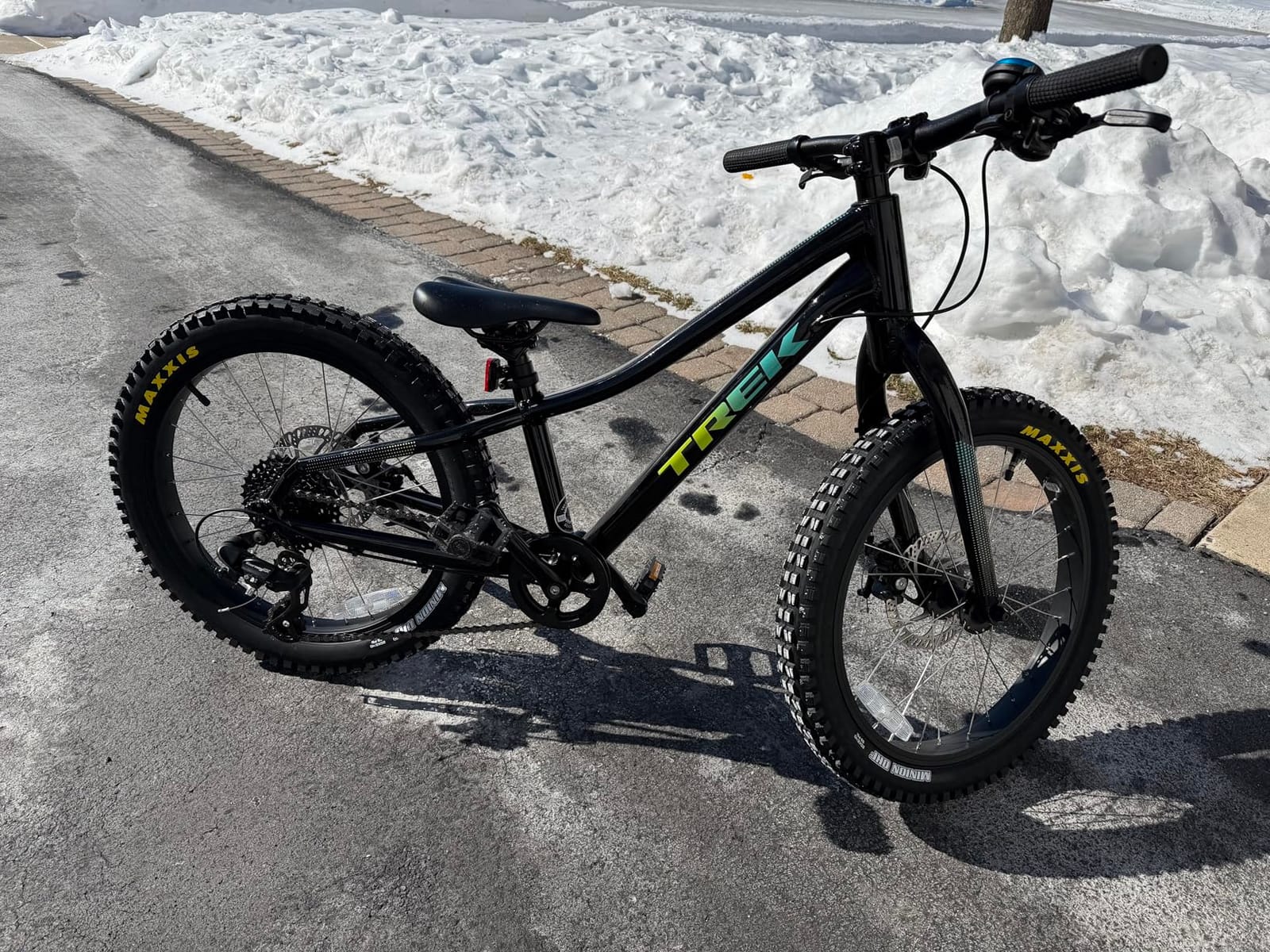
What the Minion DHF does that other tires do not
The DHF is the only tire here that combines a genuinely fast center section with side knobs large enough to clear mud, and that combination is why it works as both a front and a rear. Most aggressive tires are rear-only because their tread pattern is unusable when pedalling. This one rolls forward acceptably enough to be a front tire, a climbing tire or a rear tire without compromise.
Riders report the standout strengths as cornering and braking traction on aggressive trail terrain, with the EXO sidewall holding up across multiple seasons of hard riding. The 4862 reviews at a 4.8 average make this by a wide margin the most thoroughly reported tire in the group, which matters when a pick has to hold up in conditions you cannot test on demand.
Where the Minion DHF will disappoint you
It is a heavy tire. At 1.02 kg for the 29×2.50 version, you will feel it on the road to the trailhead and on long climbs, and reviewers consistently name the drag when pedalling as a real drawback. If your winter riding includes a lot of fire road climbing and you care more about efficiency than absolute grip, look at the Michelin Wild Enduro further down.
There is also a brief vague zone in the transition between the center and side knobs in tight switchbacks and berms, and a lot of part numbers to sort through. Maxxis makes this tire in many diameters, widths and casing levels, so check the listing carefully to confirm you are getting 29×2.50 wide trail with EXO and dual compound rather than a different version.
2. Maxxis Minion DHR II 27.5×2.80 – Best Rear Tire for Muddy Root Ladders
MAXXIS Minion DHR II – 3C MaxxTerra – 26, 27.5, 29 – DH, EXO+, DD, EXO – E50 Rating, Tubeless | Excellent Braking and Cornering Traction in Steep Terrain, Size 27.5×2.80-3CT, EXO, E25
3C MaxxTerra triple compound
EXO sidewall
27.5x2.80
992 g
Tubeless ready
Pros
- Very strong cornering and braking traction
- 3C MaxxTerra wears better than pure grip compounds
- Deep side lugs power through ruts and roots
- EXO and Double Down casing options
- Many wheel sizes available
Cons
- Heavy and draggy on pavement
- Some orders arrive as a different version than pictured
- Traction drops at a point in the knob transition
The DHR II is the rear-wheel answer when the wet-root section turns into a muddy ladder, a root-filled switchback or a bike park line with ruts. The side knobs are borrowed from the DHF and widened for support, which is what lets it hold a line under hard cornering forces on terrain that is loose on top of wet.
What separates it from the DHF is the 3C MaxxTerra triple compound, an intermediate rubber with more traction than MaxxSpeed and less rolling resistance than MaxxGrip. On wet roots that middle layer is the compromise that keeps the tread from disappearing in a season, which is the honest weakness of many soft single-compound tires in year-round damp conditions.
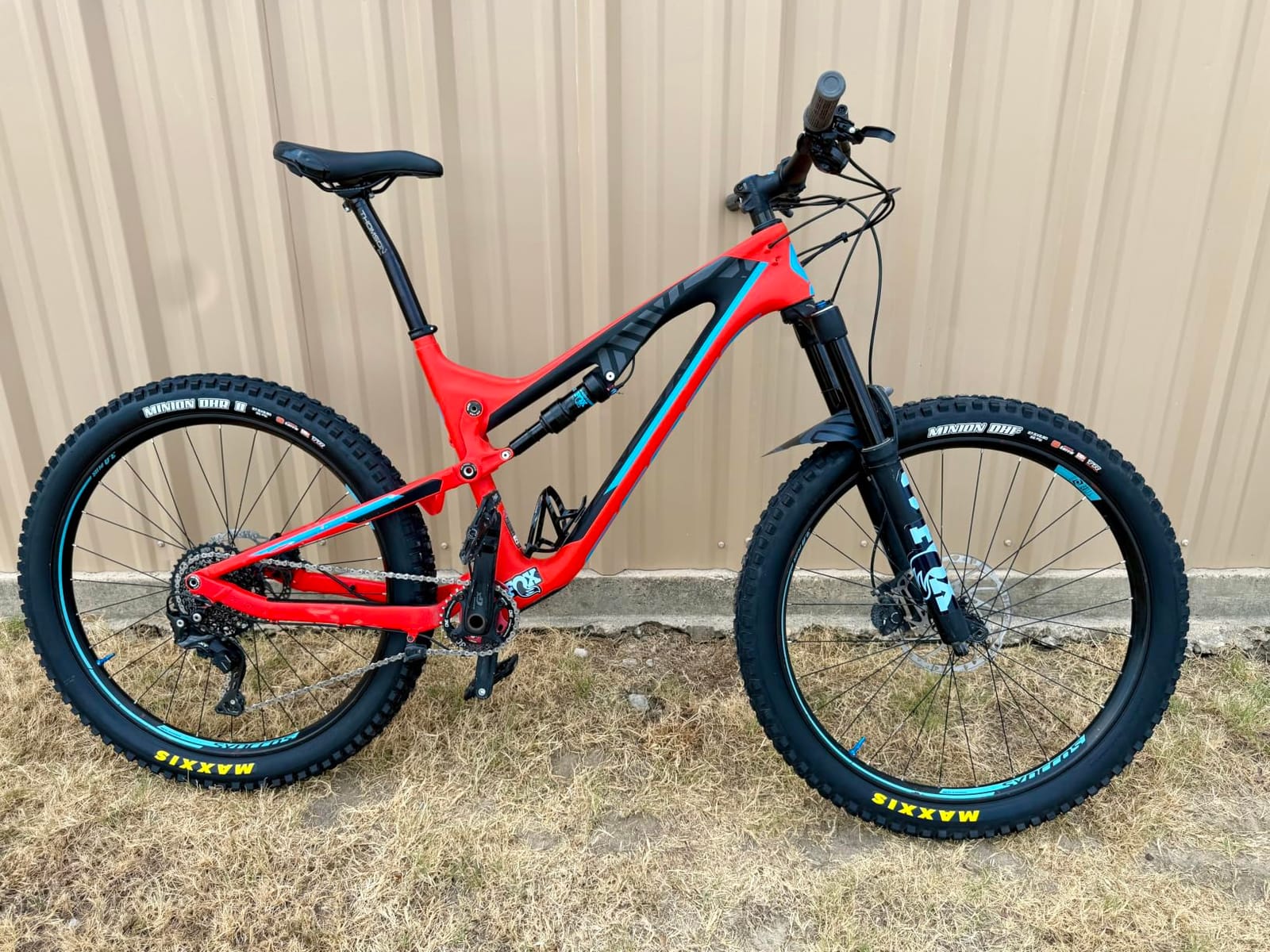
At 27.5×2.80 this is one of the widest casings in the roundup, and volume is exactly what you want when the tire has to conform to a rounded root rather than bounce off it. Wide casings also let you run lower pressure before the rim is in danger, which increases both the contact patch length and the number of knobs engaged with the wood.
Reviewers consistently describe it as an ultra-grippy enduro and bike park rear tire that holds lines in loose soil, roots and hardpack while still climbing, with a 4.8 average across 2598 reviews. EXO protection handles the cut edges, and Double Down is available on other widths if you are running bike park lines where rock strike is a bigger concern than roots.
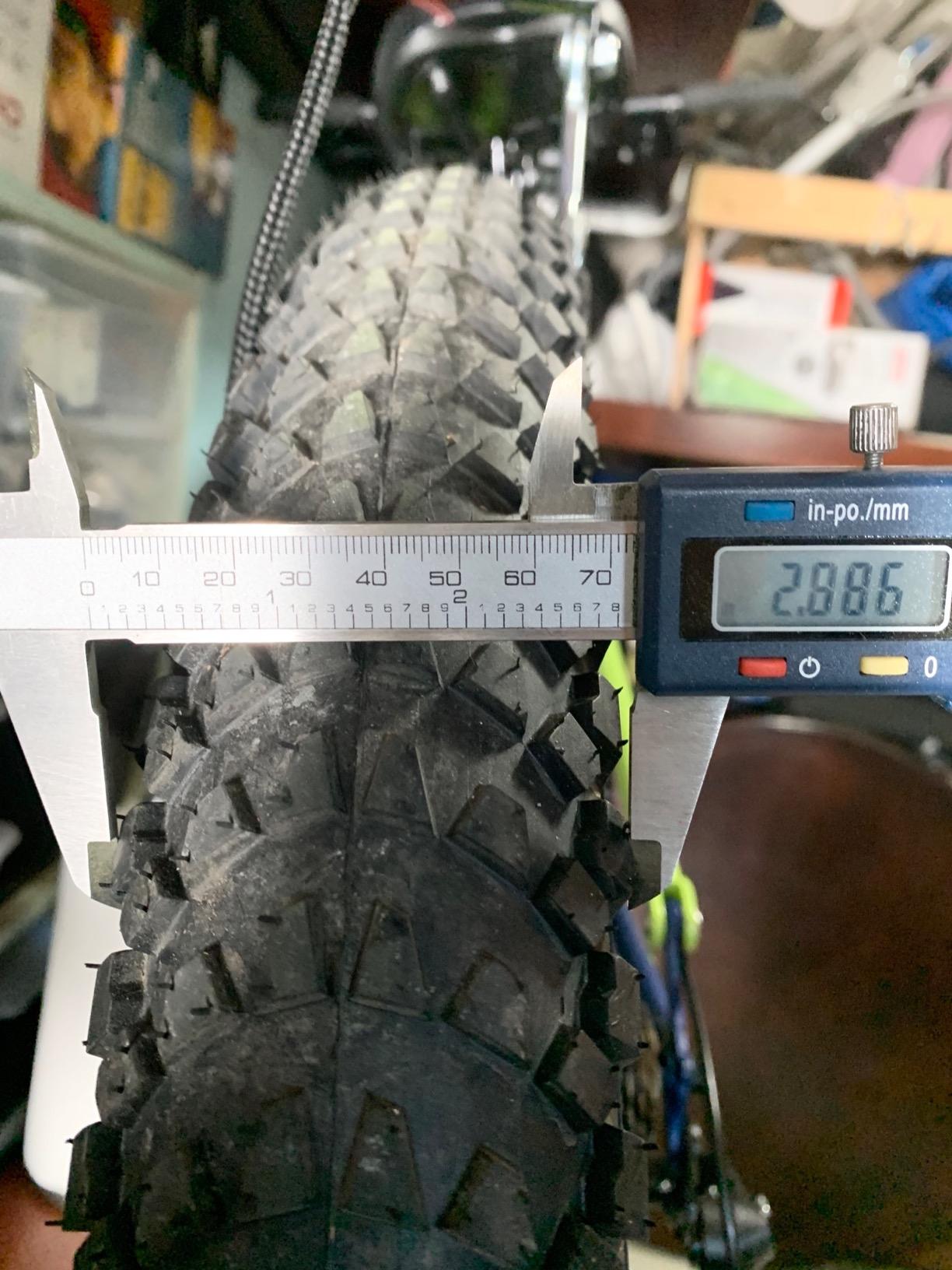
Why the DHR II beats a softer compound on wet roots
Because on wet roots, traction is not a straight line. A 50a single compound gives maximum bite when it is new and falls away quickly, and a worn 50a tire on a root slick is arguably worse than a fresh 60a tire, because the tread edge that was doing the work is gone. The triple compound is designed to keep a usable edge over a long wet season.
It is also the tire to pick when mud is involved rather than just water. The deep side lugs dig into ruts and washouts while keeping momentum, and the spacing means packed mud has somewhere to go. If your winter trails are more mud than root, pair this on the rear with a tire that has a tighter contact patch up front.
Where it is the wrong choice
Weight and rolling resistance, full stop. At 992 g for this size it is heavy, and reviewers flag the added drag when you have to pedal a long climb, especially on pavement. If you ride a lot of tight loop trails or a bike park session with a shuttle you rarely use, the drag is paid for with grip. If you ride long back-to-back descents and ride home, it is not.
Second, some buyers report receiving an older version or a different version than the one pictured, and reviewers note that traction can drop off sharply at a certain point in the knob transition. Check the compound and casing on the listing before you order, because Maxxis changes these models and the visual differences are subtle.
3. Continental Mountain King 29×2.30 – Best Value All-Rounder for Damp Trails
Continental Mountain King – Tubeless Mountain Bike Tire – for Safe Off-Roading – Black – E25 Ebike Rated (29 x 2.30 PureGrip, ShieldWall)
PureGrip compound
ShieldWall casing
29x2.30
0.6 kg
Tubeless ready
Pros
- Confident grip on loose
- off-camber and damp ground
- Short non-rolling knobs climb and brake well
- Good mud shedding for the class
- Light enough for an all-round trail build
- Listed in 26
- 27.5 and 29 inch widths
Cons
- Not the easiest tire to seat on the rim
- Wears and drags quickly on pavement
- Less suitable for deep sticky mud
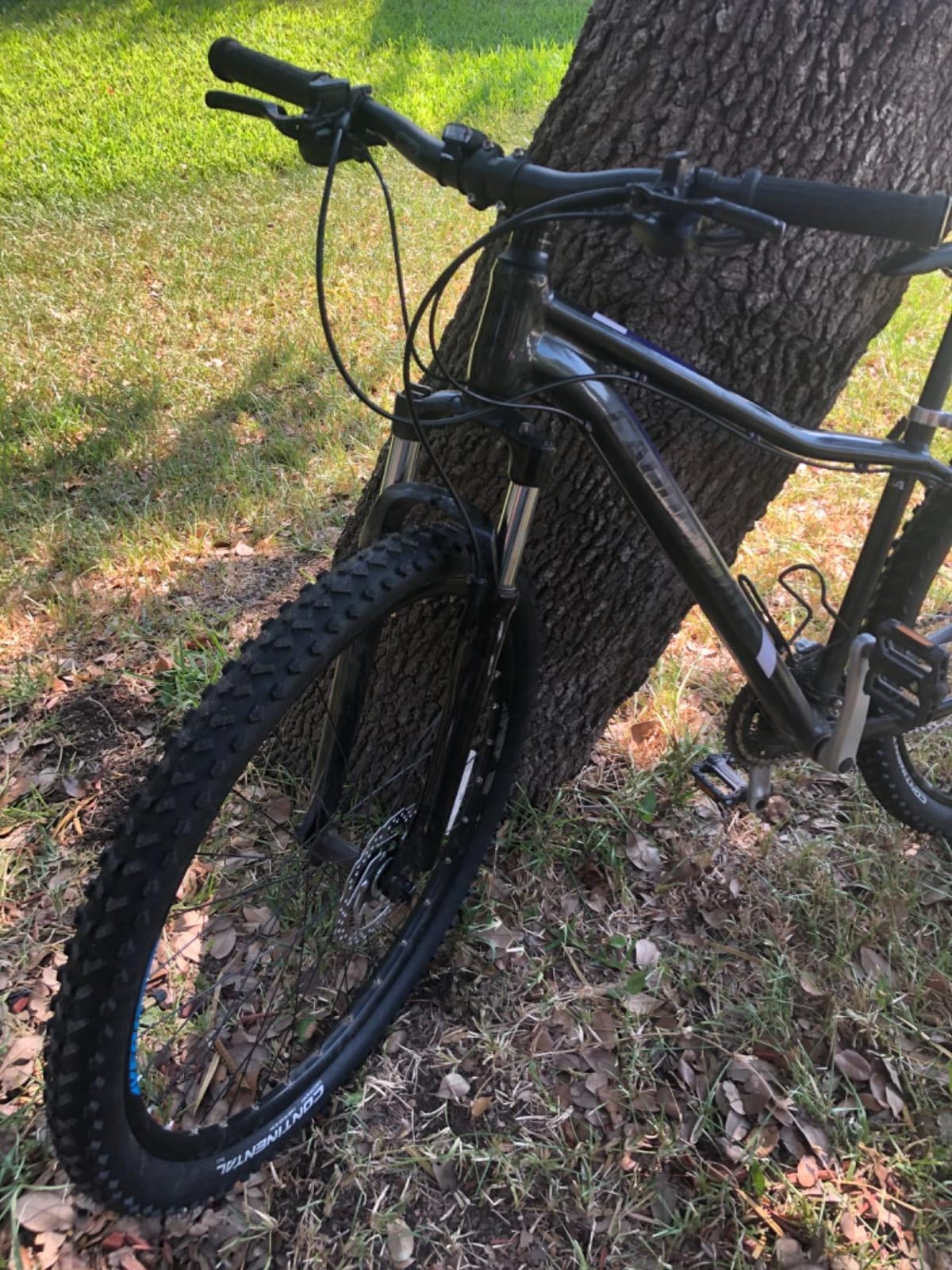
The Mountain King is the pick when you want a tire that grips wet roots without turning your bike into a brick, and it is the one I suggest to riders who have one tire and need it to work in every condition. The tread is uniformly spaced and aggressive rather than XC-quiet, which is what gives it that all-round confidence.
The PureGrip compound is derived from an activated silica compound, and it lands in the middle of the softness range rather than at the soft end. On a wet root that middle ground is safer than a very soft compound because it keeps a defined tread edge, but it is a step below the Minion DHF and DHR II for pure bite.
At 0.6 kg it is the second-lightest tire here and it is noticeably quicker to spin up than the two Minions, which matters on the muddy climbs that punctuate rooty descents. Reviewers specifically praise the climbing and braking traction that comes from short, non-rolling knobs, and the tread pattern does shed mud, which is unusual for a tire with this much contact area.
ShieldWall is a light, flexible casing with all-round protection for low rolling resistance, and the E25 e-bike rating adds structural reinforcement for the extra driving force of a powered bike. Continental lists it in 26, 27.5 and 29 inch widths, so the same approach works across wheel sizes.
What the Mountain King gets right that pricier tires get wrong
It is the tire that does not need a dedicated wet-season set. Because the compound is not the softest option and the tread is not the tallest, it still pedals, still climbs and still lasts on dry days, which means one pair covers a rider who is caught out in November as readily as a rider who planned for it. For riders on one bike, that is the most valuable property a tire can have.
It is also the easiest recommendation for a hardtail or a lighter trail build. The weight is low enough not to change how the bike feels, and the 2.30 width at 29 inch is a size that fits almost any modern rim without squashing the casing, which is exactly the compromise riders stuck on narrower rims are forced to make.
What gives the Mountain King away on a root slick
Contact patch size. The 29×2.30 casing gives you less volume than the 2.40 and 2.50 options here, so at the same pressure it drapes over a root less dramatically and gives you fewer knobs in contact with the curve. If your rooty terrain is technical and slow, that difference is felt, especially on the front.
It is also the least easy to install of the group, and reviewers mention needing dish soap or high pressure to seat it, which matters more if you are running it tubeless. Deep sticky mud is the other weak point, because a tire with this much rubber in contact with the ground clogs sooner than a widely spaced aggressive tread.
4. Michelin Wild Enduro 27.5×2.80 – Best Tire for Mud and Cold Winters
Michelin Wild Enduro Rear Mountain Bike Tire for Mixed and Soft Terrain,
GUM-X 3D compound
GravityShield casing
3x33 TPI folding
Up to 50 psi
Pros
- Strong cornering traction across roots and loose dirt
- Rolls faster than equivalent enduro Maxxis tires
- Durable GUM-X holds a full season
- Handles winter conditions and mud
- Front and rear widths for 26
- 27.5 and 29
Cons
- Noticeable drag on pavement
- Difficult to mount without help on stiff knobs
- Tread wear faster than premium Maxxis
The Wild Enduro is the pick for the rider whose winter problem is moisture rather than just slick wood. Owners report good performance in mud and in winter conditions specifically, and the GUM-X compound keeps working in cold temperatures where some compounds start to feel like plastic.
What makes it interesting on wet roots is the balance rather than the peak grip. Reviewers consistently describe it as rolling faster and lighter than equivalent Maxxis DHR II tires, with only a small grip trade-off, which for many riders is the more realistic choice because the DHR II’s drag is a genuine daily annoyance rather than an occasional one.
The GravityShield casing combines durability with low weight and ride comfort, and the 3×33 TPI construction uses high-density fibers for puncture resistance, flexibility and low weight. On wet roots that flexibility is not a marketing line: a supple casing absorbs the impact of a root edge instead of deflecting off it, which is how you avoid the square-edged hits that end rides.
Why the GUM-X compound works in the cold
Silica-based compounds like GUM-X and Continental’s PureGrip behave more predictably in cold, wet conditions because the filler does not stiffen the way a pure hydrocarbon rubber can. Practically, that means the tire still conforms to a wet root on a January morning rather than turning into a hard slick puck, and the 2.80 width gives it a large contact patch to work with.
Michelin caps it at pressures up to 50 psi for the 2.80 width, and the lug pattern is designed to be progressive, which means the tread engages more gradually and gives feedback rather than snapping on and off. That matters when you are picking lines through a root network and need to feel the front loading up before the corner arrives.
Where the Michelin is not the answer
Tire wear. Owners note tread wear is faster than premium Maxxis equivalents, and if you are running this through a full wet season you should expect to replace sooner. The counter-argument is that the Wild Enduro is a lighter, faster tire to begin with, so the cost calculus is not one-sided.
The second limitation is installation. Reviewers report difficulty mounting the tire on the rim without a heat gun because the knobs are tall and stiff. Add wet-season tubeless pressure loss and a frustrating afternoon in the garage, and set aside time for the first setup. Third, the brand is the official tire of USA Cycling, which is a nice detail but tells you nothing about your local terrain.
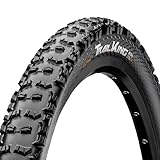
5. Continental Trail King 27.5×2.40 – Best Pick for Puncture Protection
Continental Trail King Performance Mountain Bike Tire, Folding 27.5 x 2.4 Black
PureGrip compound
Triple Layered Protection
27.5x2.40
Enduro ready
Tubeless ready
Pros
- Strong traction with long tread life
- Three-layer casing resists punctures
- Voluminous casing suits bikes over 140mm travel
- Works tubed or tubeless
- Mounts round on most examples
Cons
- Some examples arrive out of round
- Heavier than some plus-size rivals
- Check the size and casing on the listing
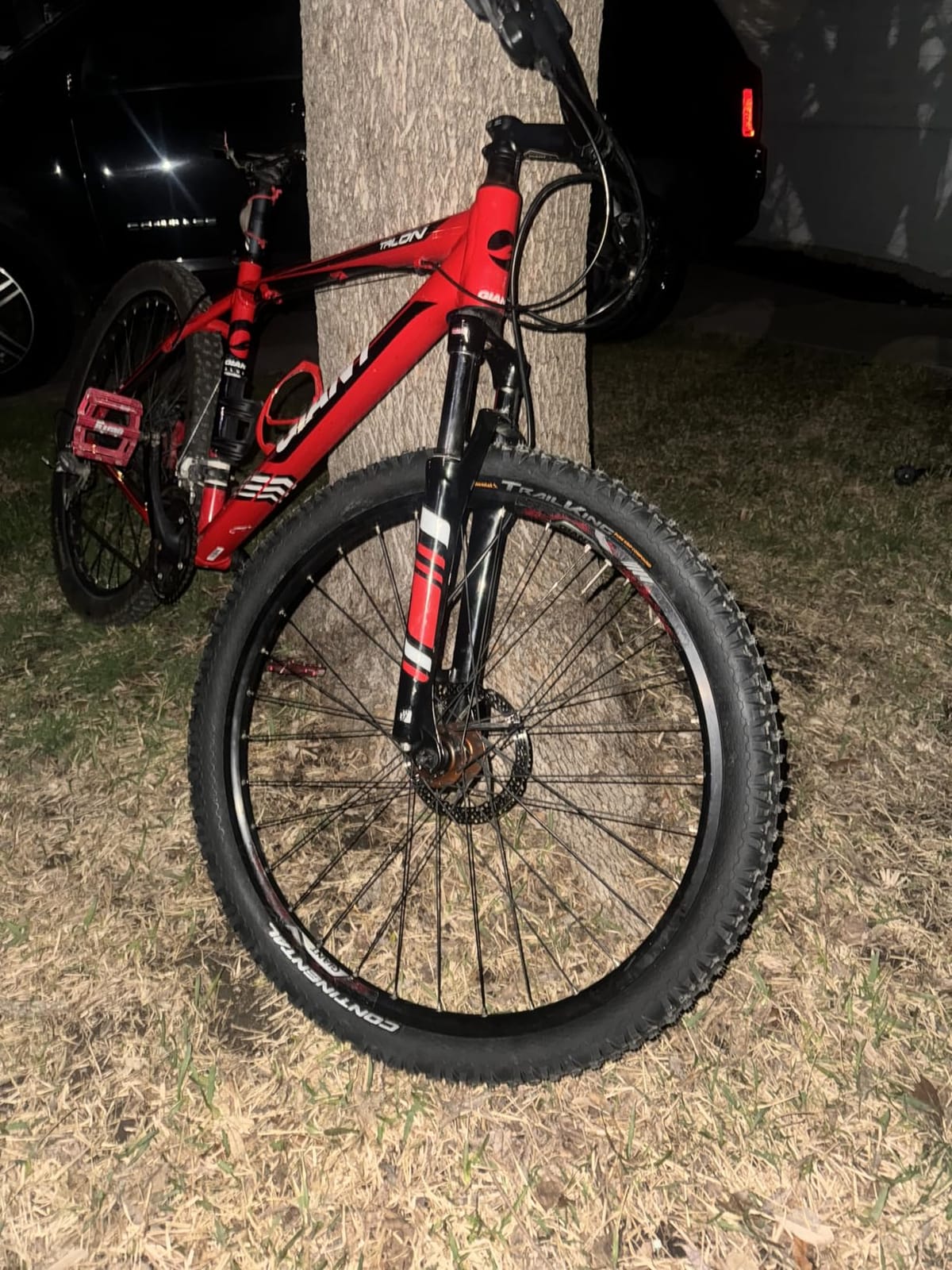
The Trail King is the choice when your wet-root riding is also a puncture-risk problem, which on rooty trails it almost always is. Sharp root ends and wet rock edges are the two things that reliably end a ride, and the Triple Layered Protection casing is the most explicit answer to that in this roundup.
The PureGrip compound is the same family as the Mountain King, and it earns the same description here: long-lasting, high mileage, and more durable than the softest compounds. On wet roots that means the tread edge stays defined for longer, which is the difference between a tire that bites into a slick root and one that rolls over it.
At 27.5×2.40 the casing is voluminous, and Continental positions it for enduro and all-mountain bikes with more than 140mm of travel. That volume is what lets it run at lower pressure, and lower pressure is the single cheapest traction gain available on a wet root without changing anything else on the bike.
Why the three-layer casing matters in the wet
Wet roots produce square-edged hits rather than sharp punctures, and those load the sidewall and shoulder rather than the tread. A three-layer tubeless ready casing distributes that load across more material than a single-layer XC casing, which is the difference between a ride-ending cut and a plug you fix at the trailhead. It also holds air well, and riders report the tire mounting round on most examples.
The flexible construction is a second quiet benefit. Reviewers praise the long tread life and grip on rock, gravel, sand and dirt, and a supple casing is part of why the traction holds up on mixed surfaces. It also works mounted with tubes on non-tubeless rims, so if your rims are not tubeless compatible this remains a usable wet-season option.
What to watch out for with the Trail King
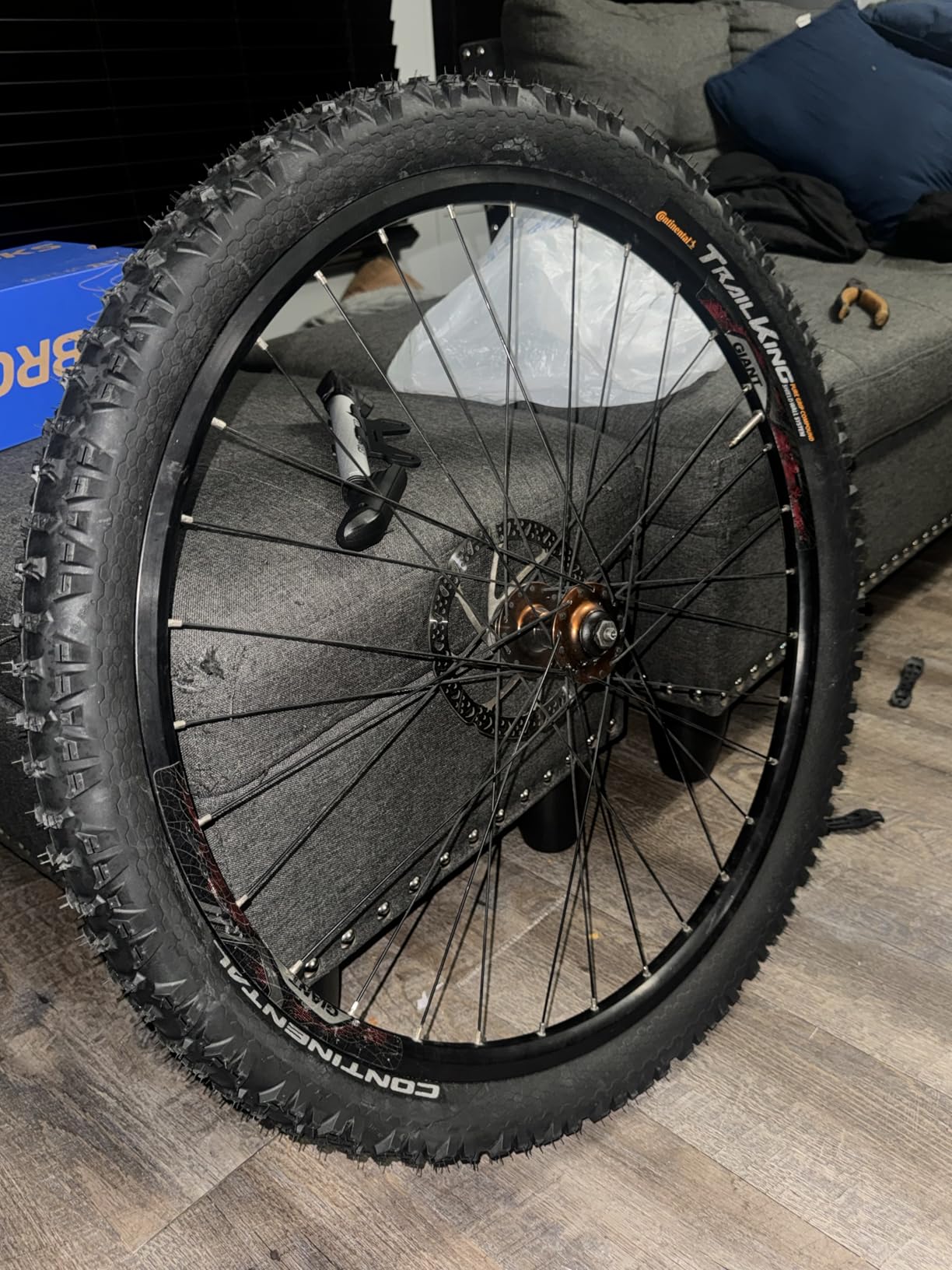
Out-of-round deliveries. Across 271 reviews at 4.4 stars, the single most repeated complaint is that some tires arrive slightly out of round, which can look like a bent rim. Check the tire seated before you inflate fully, and if the runout persists, exchange it rather than riding it, because an out-of-round tire will never sit square on a root.
Continental backs it with a limited warranty of up to two years from purchase or five from manufacture, or until no serviceable tread depth remains.
6. WTB Vigilante 26×2.3 – Best Tire for 26 Inch Bikes in the Wet
WTB Vigilante Mountain Bike Front Tire (26″ x 2.3″) Wire Bead 30tpi, Light Casing, Aggressive Trail & Enduro
Dual DNA compound
Square lug pattern
26x2.3 wire bead
0.45 kg
Light casing
Pros
- Square lugs dig into wet and muddy ground
- Reinforced side knobs hold at speed
- Dual DNA gives a grippy sidewall
- Handles wet loose rocky and muddy ground
Cons
- Only available in 26 inch
- Durable wire bead is heavy and less tubeless-friendly
- Front-focused tread is not a rear-tire pattern
The Vigilante earns its place for a specific rider: someone on a 26 inch trail or enduro bike who still rides wet rooty terrain and has run out of modern options. The tread is an aggressive square lug pattern, and WTB specifies lug spacing that sheds packed dirt in wet conditions, which is exactly the combination you want where root and mud alternate.
The Dual DNA compound is a two-part construction: a firmer center compound for fast rolling and durability, with softer grippier rubber in the side knobs for cornering control. On a wet root that split is the whole argument, because the side knobs are what meet the wood, and they are where the compliance is.
At 0.45 kg it is the lightest tire in this roundup by a wide margin, and the light casing suits all-mountain and enduro use on smaller wheels where weight matters more. Owners praise the aggressive cornering grip and the tough casing on wet, rocky trails, with a 4.4 average from 243 reviews.
What the square lug pattern does on wet roots
Square lugs give a full, blunt contact face that resists shear, and they are the pattern to have when you are trying to hold a line across a root mat rather than pick your way through it. The reinforced side knobs add stability at speed and under hard cornering forces, which is the failure mode on a wet off-camber root traverse where a supple tire folds under you.
WTB lists the intended conditions as wet to dry, loose, rocky and mud, and intended usage as all-mountain and enduro, so the design brief and the wet-root use case line up unusually well. This is a front tire by design, with a front-focused layout that is not intended to deliver the rear traction you would want for climbing out of a rut.
Why most riders should skip it
Wheel size, plainly. The Vigilante is a 26×2.3 only, so it fits 26 inch rims and nothing else, and the model has been superseded for most trail use. If you have moved to 27.5 or 29 inch, this is not relevant to you and any of the four tires above is a better use of the same money.
Second, the wire bead at 30 TPI in a durable casing is heavier and less reliable for tubeless setups than a tubeless-ready folding bead. On a bike without tubeless-compatible rims, plan around extra pressure checks and a plug kit. Third, the front-focused tread means do not try to solve a rear traction problem with it.
7. Vittoria Mazza 27.5×2.6 – Best Grippy Option for Tubed Riders
Vittoria Mazza Mountain Bike Tires for Mixed Terrain Conditions – Enduro TNT G2.0 MTB Tire (27.5×2.6), Black
Enduro TNT G2.0 construction
27.5x2.6
Stepped center tread
Tube required
Pros
- Progressive sipe width for grip on roots and rocks
- Ample sipe spacing sheds mud
- Usable as front and rear
- Fast-rolling stepped center tread
- Grippy on hardpack and slippery muck
Cons
- Tubular construction cannot run tubeless
- Sits well above comparable trail tires
- Smallest review base in the group at 96 reviews
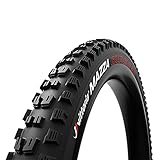
The Mazza is included for the riders who cannot run tubeless at all. If your rims are not tubeless compatible, this is the most grip-focused tire here that still works with a tube, and the progressive sipe width is the feature that makes it interesting on wet roots specifically.
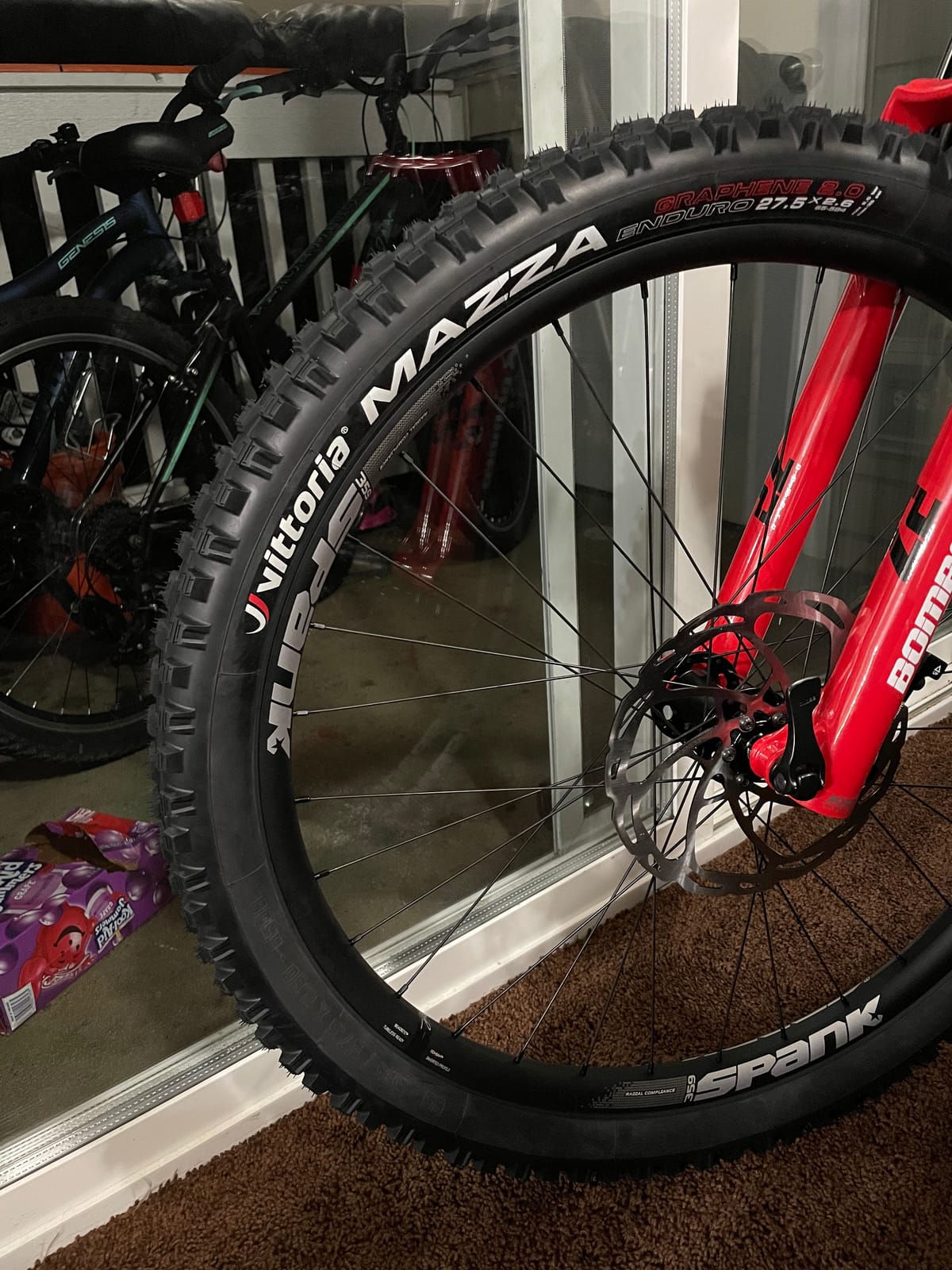
Sipes are the slits cut into the knob faces. When the tread loads up against a wet root, the sipes open and the rubber edges bite into the surface, and Vittoria specifies progressive sipe width, meaning the slits vary in size across the tread so that different zones bite to different depths. The ample sipe spacing also keeps the contact area open, which helps in muck.
At 27.5×2.6, with 29×2.6 and 29×2.4 also listed, the casing is among the widest here. The stepped leading-edge center tread maintains speed and delivers climbing traction, which is the part of the design that keeps a tire this aggressive usable on the muddy climbs between rooty descents.
Why sipe width beats simple siping on a wet root
Uniform sipes are a compromise. Wide sipes open dramatically on a soft compound but feel vague, while fine sipes give feedback and hold an edge on rock yet bite less on a root. Progressive width gives you both by varying the opening size across the tread, so the section meeting the root in a corner bites harder than the section rolling on top of it.
Owners report the tire is grippy on hardpack, slippery muck and gravel, and usable as either a front or a rear tire, which is unusual for something this aggressive. Vittoria backs it with a serviceable-life limited warranty, meaning it is covered against defects for as long as you own it rather than for a fixed period.
What the Mazza costs you
Tubeless. The Enduro TNT G2.0 construction here is tubular, so it requires an inner tube and will not run tubeless. That removes your main defense against pinch flats on sharp wet roots, and it means pressure management becomes a manual task on every ride rather than an occasional check.
It also sits well above comparable plus-size trail tires, and it has the smallest review base in the group at 96 reviews, so the long-term wet-condition picture is less well documented than the Maxxis or Continental picks. If your rims support tubeless, the Michelin Wild Enduro or a Maxxis Minion is the more sensible place to spend the same money.
How to Choose MTB Tires for Wet Roots
Choose in this order: compound first, then width within your rim’s internal width limit, then casing, then tread pattern. Compound is the largest traction lever and the one most often compromised by price, because the cheapest version of a given tire is frequently the hard-compound one. Check the compound name on the listing before you order, not the tire name.
Width is the second lever. Tires in this roundup run from 2.30 to 2.80, and wider is generally better for wet roots because a larger casing at a lower pressure gives a longer contact patch and more conforming volume. The catch is rim internal width: a 2.5 or 2.6 casing on a narrow rim squashes the profile, which reduces the volume you get and makes the bike feel vague. If you have 25mm internal rims, a 2.4 is the realistic ceiling. If your internal width is around 30mm, the 2.5 in the Minion DHF is properly supported.
Casing tiers follow a similar logic. EXO, ShieldWall and GravityShield are cut and abrasion-resistant sidewall layers that let you run lower pressure without folding the casing, which matters more on wet roots than on dry trail because root ends are square-edged. Double Down and DH casings add further impact protection for bike park and enduro speeds, at the cost of weight. Tires that will not run tubeless, like the Vittoria Mazza above, cannot use low pressure as safely because there is no sealant cushion.
On tubeless, the win in wet conditions is not just traction. Sealant plugs the small cuts a root end opens, and it lets you run lower pressure without the pinch flat risk that would otherwise force you to run a hard tire at high pressure to survive the terrain. Bring a plug kit and a mini pump anyway, because a large sidewall cut is a trailhead repair, not a ride-ending one.
Front and rear pairing is where most wet setups go wrong. The front tire does the steering and the braking, so it wants the grippier compound and the more open side knobs; the rear carries drive torque and sits in more mud, so it can take a slightly firmer and more durable compound. Running a softer front on a firmer rear, or an open mud tread on the front where you need root bite, are both common setups that feel wrong in exactly the way you would expect.
On pressure, use lower pressure in the wet than you do on dry hardpack, because the roots are smoother and more slippery and the extra contact patch is what compensates. As a starting point, run the wide trail and enduro casings in the low-to-mid 20s at 2.4 to 2.5, and the narrower all-mound casings a few psi higher. Check pressure cold, before you ride, because a warm tire reads several psi high and most riders underinflate as a result.
Finally, think about seasonal switching. A tire tuned for wet roots is a compromise everywhere else, and the reverse is also true, so if you have a second wheelset, dedicating it to one condition is worth more than any single tire choice. If you ride into genuine snow and ice rather than just wet roots, our picks for fat bike tires for snow cover the studded and very low pressure end of the spectrum.
Frequently Asked Questions
What are the best MTB tires for wet roots?
The best mountain bike tires for wet roots are the Maxxis Minion DHF in a wide trail casing, the Maxxis Minion DHR II for muddy rear traction, and the Continental Mountain King for riders who need one tire that also works dry. All three use a softer or dual compound with open side knobs rather than a hard 60a XC rubber.
What is the best MTB tire for wet conditions?
For general wet conditions rather than roots specifically, the Michelin Wild Enduro is the strongest pick, because owners report good performance in mud and in winter cold, and the GUM-X compound keeps conforming to slick surfaces in low temperatures. The Minion DHR II is the alternative when the wet sections are deep, muddy and rutted.
What are the best mountain bike tires for muddy conditions?
For mud, prioritize knob spacing and depth over compound softness. The Maxxis Minion DHR II, WTB Vigilante and Maxxis Minion DHF all use widely spaced, deep lugs that shed packed dirt, and all three have compound options soft enough to grip a wet root afterward. Tightly spaced XC tread clogs and stops rotating, which loses grip on everything.
Which Maxxis tire is best for riding on wet roots?
The Minion DHF is the all-round answer, and multiple forum riders describe it as the dependable wet-roots choice because the dual compound pairs a fast center with grippy, well-spaced side knobs that handle mud without caking. Choose the DHR II on the rear when the terrain turns muddy and rutted, and the wider, higher-volume casing suits the bike better.
Are Maxxis better than Schwalbe for wet conditions?
It depends on the tire rather than the brand. For the exact-match wet-root question, the Maxxis Minion DHF and DHR II are the most widely reported picks, using dual and triple compounds with EXO sidewall protection. Schwalbe is strongest where mud shedding and puncture protection matter most, and where you want a radial construction. Judge each tire on compound, casing and tread spacing instead of on the label.
What tire pressure should I run on wet roots?
Run lower pressure in the wet than on dry hardpack, because the smoother slick surface needs a longer contact patch to compensate. Start in the low-to-mid 20s psi for wide trail and enduro casings at 2.4 to 2.5 inches, and slightly higher for narrower all-mound casings. Check pressure cold, and make sure the rim’s internal width supports the tire size you are running.
The Best Mountain Bike Tires for Wet Roots in 2026
The Maxxis Minion DHF is the best mountain bike tires for wet roots choice for most riders in 2026, because it is the only tire here that pairs a fast-rolling center with side knobs big enough to clear mud, and it comes in a 2.50 wide trail casing that supports a low-pressure contact patch. Riders report it as the dependable answer across thousands of reviews, and it works as a front tire, a rear tire or both.
Add the Minion DHR II on the rear when the wet-root terrain turns muddy and rutted, the Michelin Wild Enduro when cold and mud matter more than outright bite, and the Continental Trail King when puncture protection is the priority. The Mountain King is the sensible single-tire answer, and the Mazza is there for tubed bikes that cannot run tubeless at all.
Before the season starts, do four things: confirm the compound on the listing rather than trusting the model name, check the tire size against your rim’s internal width, set pressures cold in the low-to-mid 20s for wide casings, and put a plug kit and sealant in your bag. On wet roots, those four checks deliver more traction than switching brands.