
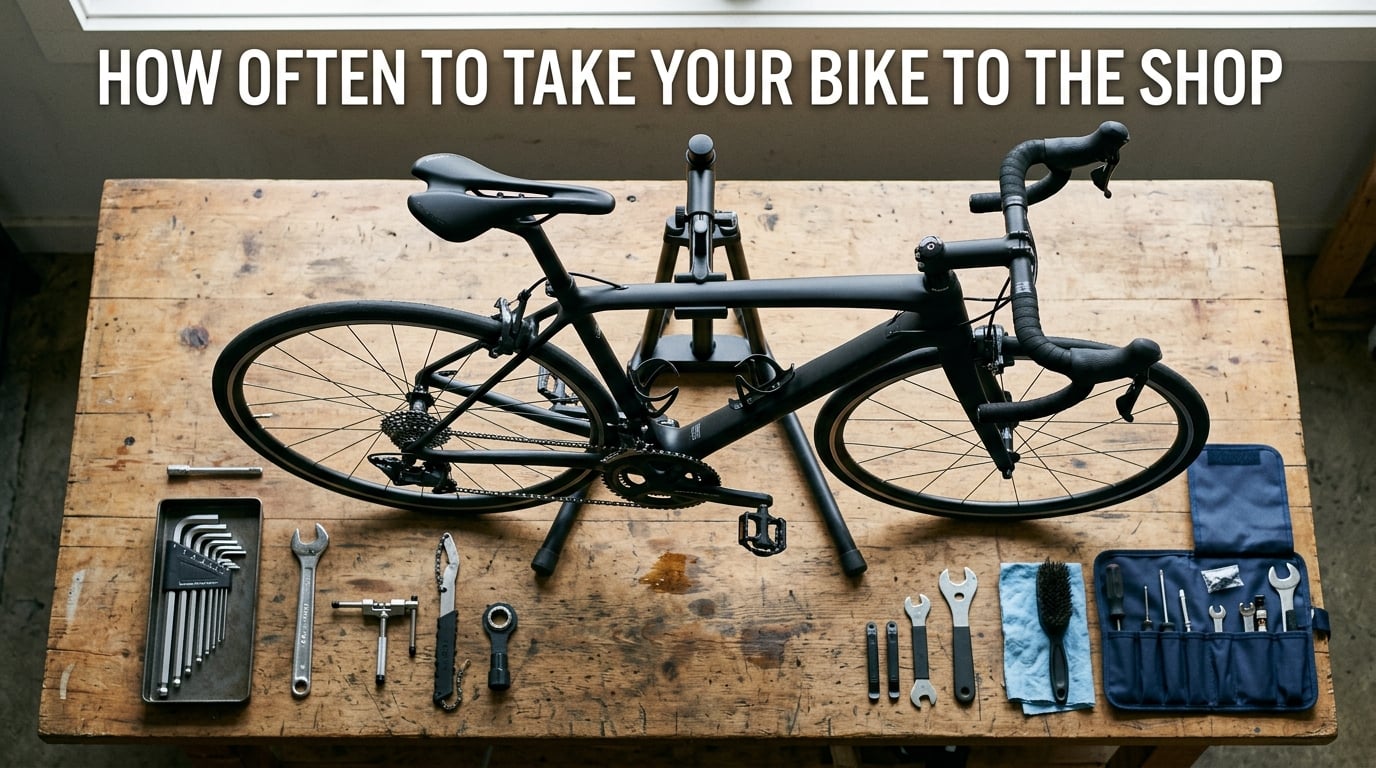
If you have ever typed “how often take bike to shop” into a search engine, you have probably gotten the same vague answer we all did: “once a year.” That is a decent starting point, but it leaves out a lot. Our team has spent years riding road, gravel, mountain, and commuter bikes in all kinds of weather, and the real answer depends on what you ride, where you ride, and how often you ride it.
In this guide, we break down actual service intervals by time and mileage, share the warning signs that mean a shop visit is overdue, and give you rider-type specific recommendations. We also pulled in real forum insights from Reddit and BikeForums to back up the numbers. By the end, you will know exactly when to book that tune-up and when you can handle the work yourself.
Table of Contents
How Often You Really Need to Take Your Bike to the Shop
Most cyclists should take their bike to the shop at least once a year for a full service, but many riders need to go more often. The honest answer is that service frequency depends on three things: how many miles you ride, the conditions you ride in, and whether you catch small problems early.
As a baseline, here is what our experience and community data suggest:
- Casual riders (under 1,000 miles a year): once a year, usually before peak riding season.
- Regular commuters (1,000 to 3,000 miles a year): every 6 months, plus quick safety checks more often.
- Serious road and mountain bikers (3,000+ miles a year): every 3 to 4 months for a full inspection.
- Racers and daily commuters in wet or gritty conditions: every 2 to 3 months for a professional service.
These intervals are not pulled from thin air. A long-running BikeForums poll of 116 riders found that about 27 percent visit the shop monthly, another 27 percent visit weekly, and the rest go a few times a year or less. Reddit threads on r/cycling back this up, with most riders reporting major service every 1,000 to 2,000 miles. If you fall into any of the higher-mileage buckets, annual service is not enough.
The Standard Service Schedule: Time and Mileage
Think of bike service in three tiers. Each tier covers different work, and the time or mileage trigger depends on how you ride.
Quick Safety Check: Before Every Ride or Weekly
This is the kind of inspection you do at home, not at a shop. It takes 5 minutes and catches the dangerous stuff before you head out. For guidance on keeping your drivetrain clean enough to actually inspect it, our guide on washing a bike without ruining the bearings is a good starting point.
What to check:
- Tire pressure and quick visual scan for cuts or embedded debris.
- Brake lever feel and pad thickness (squeeze both levers hard).
- Quick hop test with the front brake locked to confirm the fork and headset are solid.
- Chain, frame, and fork stanchions wiped down and inspected for oil leaks.
If anything feels off, that is your cue to dig deeper or visit a shop.
Basic Tune-Up: Every 3 to 6 Months or 500 to 1,000 Miles
This is the most common service level. A basic tune-up covers the wear items that build up with regular riding.
What a basic tune-up includes:
- Drivetrain cleaning and lubrication (chain, cassette, chainrings).
- Brake adjustment and pad inspection.
- Derailleur tuning for clean shifting.
- Tire inspection and inflation.
- Quick safety check of all fasteners.
Most bike shops price this as a “minor service” or “safety check.” It is the work that keeps a bike feeling new and prevents small issues from snowballing into expensive repairs.
Full Service or Overhaul: Every 12 Months or 1,000 to 2,000 Miles
Once a year (or every 1,000 to 2,000 miles, whichever comes first), your bike needs deeper attention. This is the work that touches the bearings, cables, and parts you do not see every day.
What a full service includes:
- Bottom bracket inspection, cleaning, or replacement.
- Headset and hub bearing inspection and repacking.
- Cable and housing replacement (brake and shift cables stretch and corrode).
- Wheel truing and spoke tension check.
- Brake bleed (for hydraulic systems) and pad replacement.
- Frame inspection for cracks, especially around the dropouts and head tube.
Riders in harsh conditions, including wet climates, dusty trails, or coastal salt air, should treat the lower end of that mileage range as the trigger. If you store the bike outside or commute through winter slush, plan on a full service every 12 months or 1,000 miles, whichever comes first.
What Happens During a Professional Tune-Up
A professional bike service is a comprehensive inspection and maintenance performed by trained mechanics to ensure your bike is safe, performs well, and lasts as long as possible. Most shops follow a similar workflow, and knowing what to expect helps you avoid being upsold on work you do not need.
A typical appointment starts with a full inspection. The mechanic checks the frame for cracks, looks at the wheels for trueness, and confirms the bearings in the hubs, headset, and bottom bracket turn smoothly. From there, they move into drivetrain service, brake adjustment, and any part replacements you have agreed to.
For a comprehensive pre-ride safety check you can do at home, our pre-ride safety checklist guide walks through the same inspection points. Use it before a big ride and you will know if you need a shop visit before the trip.
One mechanic we trust puts it this way: a good tune-up is mostly inspection. The labor of cleaning, adjusting, and replacing consumables is what you are paying for. If a shop does not put the bike on a stand and go through it systematically, you are probably paying for a quick wash and a cable tweak.
Warning Signs That Always Mean a Shop Visit
Beyond the calendar, your bike tells you when something is wrong. These are the six warning signs we never ignore, and neither should you. Each one points to a likely cause so you can describe the problem clearly when you drop the bike off.
- Grinding or roughness when you turn the handlebars: usually a dirty or worn headset bearing.
- Grinding or squealing when you pull the brakes: contaminated or worn brake pads, or a pad that has glazed over from heat.
- Clicking from the drivetrain or gears that hesitate to shift: a stiff link in the chain, a bent derailleur hanger, or a worn cable.
- Tires that consistently lose air overnight: a slow puncture, dried-out rim tape, or a leaky valve core.
- Creaking or popping when you pedal: a loose crank, a dry bottom bracket, or pedals that need service.
- Oil dripping from the fork or shock: a failed seal that will only get worse and can damage the stanchions.
None of these are jobs to put off. A grinding headset can seize mid-ride. Worn brake pads can fail in wet conditions. A slow tire leak can become a blowout at speed. If you hear or feel any of these, book the shop visit and avoid riding in the meantime.
Rider-Type Service Recommendations
How often you ride, and how hard, changes everything. Here is a rider-type breakdown based on community data and our own experience.
Casual and Weekend Riders
If you ride a few times a month on paved paths or short road loops, you are looking at under 1,000 miles a year. A single annual tune-up, ideally in early spring before peak riding, is enough. Do a quick safety check before every ride and clean the chain every few weeks.
Daily Commuters
Commuters put on miles fast, often 2,000 to 4,000 a year, and they deal with road grime, rain, and potholes. Plan on a basic tune-up every 4 to 6 months and a full service once a year. Keep a small repair kit and know your bike’s specific maintenance needs for the conditions you face.
Road Cyclists and Endurance Riders
Road riders who log 3,000 to 6,000 miles a year eat through chains, brake pads, and tires faster than casual riders. Aim for a basic service every 3 months and a full overhaul at the end of the riding season. Replace the chain every 2,000 to 3,000 miles to protect the cassette and chainrings.
Mountain Bikers and Trail Riders
Mountain bikes take a beating. Dust, mud, water crossings, and the occasional crash all add up. A basic service every 2 to 3 months is smart, with a full suspension service annually. After every wet or muddy ride, clean and re-lube the chain and check the suspension for oil leaks. If you ride technical terrain often, our guide on descending steep terrain with confidence covers the handling skills that reduce component stress.
Competitive Racers
If you race, you know your bike is a precision tool. Treat it like one. Basic service monthly, full overhaul every 1,000 to 1,500 miles, and replacement of consumables (chain, tires, brake pads) on a strict schedule. Many racers keep a backup bike to rotate through, which spreads the wear and keeps the shop visits more predictable.
DIY vs Professional Service: What You Can Handle at Home
You do not need a shop for everything. A lot of routine maintenance is genuinely DIY-friendly, and doing it yourself saves money and helps you catch problems early.
What most riders can handle at home:
- Chain cleaning and lubrication (every 100 to 200 miles, more in wet conditions).
- Tire pressure checks and tube or tubeless sealant top-ups.
- Brake pad visual inspection and replacement on most rim and disc systems.
- Bar tape, grips, and saddle adjustments.
- Cleaning the frame, fork stanchions, and drivetrain after wet rides.
What belongs at the shop:
- Bearing service (headset, hubs, bottom bracket) without specialty tools.
- Hydraulic brake bleeding, especially with mineral oil systems.
- Wheel truing and spoke tensioning.
- Suspension service on forks and rear shocks.
- Frame inspection for cracks or damage after a crash.
The general rule: if the job requires a torque wrench, a press, or a specific bleed kit, take it to a shop. If you are just cleaning, lubing, or adjusting cable tension, do it at home. Keeping up with the easy stuff means the shop visits stay focused on the work that actually requires their tools and training. For broader bike care routines, our bike care and maintenance guide is a useful companion read.
What a Professional Service Actually Costs in 2026
Cost is the biggest reason riders put off shop visits, so here are realistic ranges based on what shops across the U.S. charge in 2026. Your local market will vary, but these numbers are a fair baseline.
- Quick safety check or basic adjustment: usually part of a flat-rate tune-up package.
- Basic tune-up (drivetrain clean, brake and shift adjust, tire check): the most common service tier, priced as a flat package.
- Full service or overhaul (bearings, cables, full inspection): the premium tier, priced higher due to labor.
- Individual part replacements (cassette, chain, brake pads): usually itemized separately from labor.
The smartest move is to find a shop that offers a flat-rate basic tune-up. That single package, done twice a year, will catch most problems before they cost you a new wheelset or a replacement drivetrain. The full overhaul is a once-a-year investment that resets the bike’s wear clock.
Seasonal Maintenance Considerations
Season matters more than most riders think. Spring is the obvious time for a tune-up because the bike has been sitting all winter, but the end of the riding season is just as important.
A pre-season tune-up gets the bike ready for the miles ahead. A post-season service (or a winter storage prep) protects it during the off months. If you store the bike somewhere with temperature swings or humidity, ask the shop to clean and lube the drivetrain thoroughly, drop the tire pressure, and check the brake fluid if you run hydraulic discs.
Winter riders have their own checklist. Plan on more frequent chain lubing, a brake bleed if you ride in slush, and a quick check of the bottom bracket and hubs every few weeks. Salt and grit will find every seal on the bike, and the only defense is staying ahead of it.
Frequently Asked Questions
How often should I take my bike to the shop for maintenance?
Most cyclists need at least one full service per year, but the right interval depends on mileage, conditions, and riding style. Casual riders can get by with an annual tune-up, commuters should service every 4 to 6 months, and serious road or mountain bikers should plan on a full service every 1,000 to 2,000 miles or every 3 to 4 months.
What is the 75 rule in cycling?
The 75 rule is a training guideline that suggests spending about 75 percent of your riding time at an easy, conversational pace to build endurance without overtraining. It is a fitness concept rather than a maintenance rule, so it does not change how often you should service your bike, but it can affect how many miles you put on the bike each year.
How do I know if my bike needs a professional service?
Watch for warning signs like grinding or rough steering, squealing brakes, clicking from the drivetrain, slow tire leaks, creaking when you pedal, or oil leaking from suspension components. If you notice any of these, schedule a shop visit right away. Also book a service if it has been more than 12 months since your last full inspection or if you have hit 1,000 to 2,000 miles since the last overhaul.
What is included in a full bike service?
A full bike service covers inspection and maintenance of the bearings (headset, hubs, bottom bracket), replacement of stretched or corroded cables, brake adjustment or hydraulic bleed, wheel truing, drivetrain cleaning, and a full frame check for cracks or damage. Most shops also replace consumables like the chain, brake pads, and tires as needed during the service.
Final Thoughts on How Often to Take Your Bike to the Shop
The “once a year” rule is a starting point, not a finish line. If you ride often, in tough conditions, or just want your bike to feel new for as long as possible, plan on more frequent service. Use the rider-type guide above to set your schedule, listen for the warning signs we covered, and handle the simple stuff at home so the shop visits stay focused on the work that needs their tools.
Our team has used this exact approach for years, and it is the best way to keep a bike safe, fast, and fun. Bookmark this guide, check your mileage, and book that tune-up. Your bike will thank you, and your next long ride will be a lot smoother for it.