
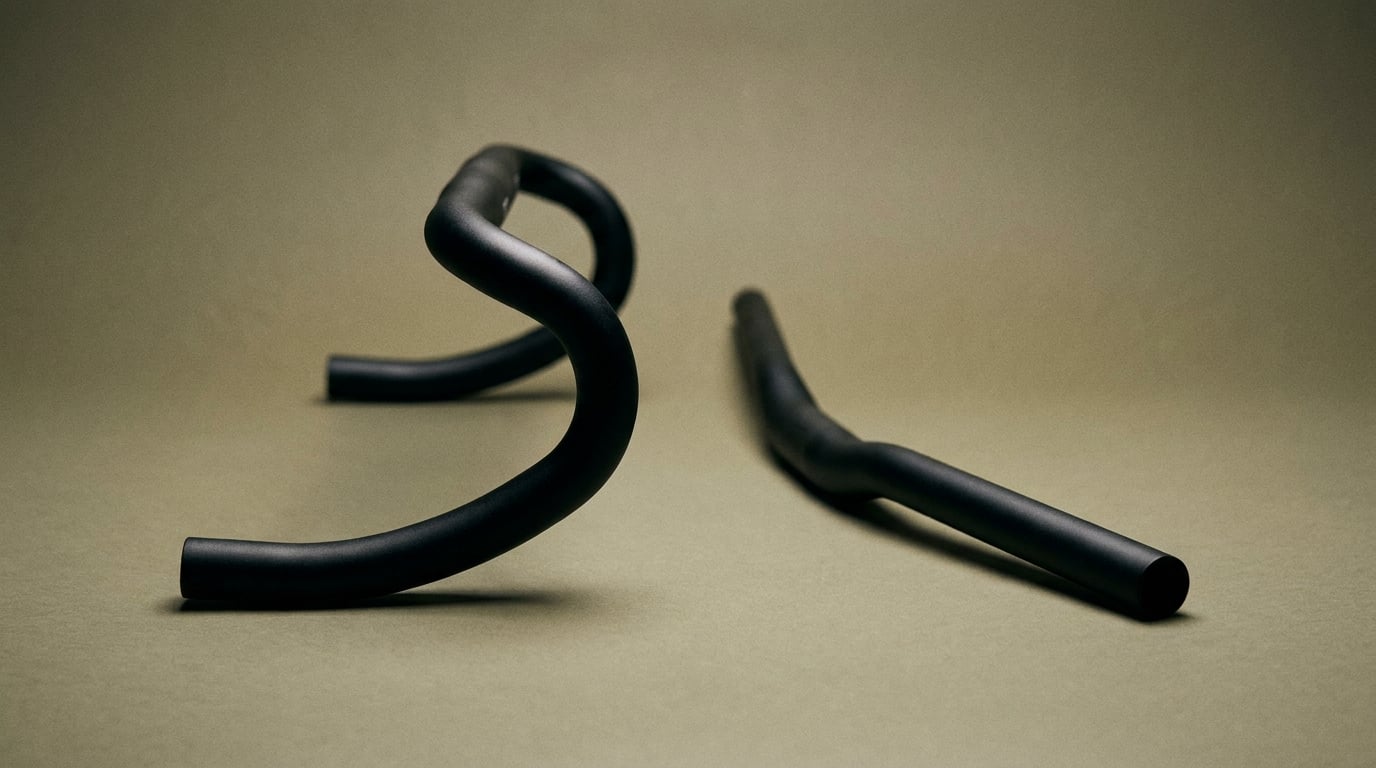
Every cyclist faces this decision at some point: drop bars vs flat bars for comfort and control. I have spent years riding both setups across commuting, long-distance road rides, gravel adventures, and technical trails, and the answer is never as simple as one being objectively better than the other.
The handlebar is your single point of contact for steering, your primary lever for bike control, and a major factor in how your body feels after two hours in the saddle. Choose wrong and you deal with numb hands, aching shoulders, or sketchy handling in situations where confidence matters most.
In this guide, I will break down exactly how drop bars and flat bars differ in comfort, control, hand positions, and real-world use cases. I will include real rider experiences from cycling forums, a comparison table no competitor bothers to provide, and a section on gravel handlebars as the hybrid solution more riders are turning to. If you want to dig into specific proper braking techniques after picking your bar type, we have a separate guide for that.
Table of Contents
Drop Bars vs Flat Bars: The Core Difference
Drop bars curve forward and then hook downward, creating a loop that gives you multiple grip positions. They are standard on road bikes, most gravel bikes, and many touring setups. Flat bars run straight across (or with a slight backsweep) and give you one primary grip area with a wider stance.
The fundamental difference comes down to riding posture. Drop bars put you in a leaned-forward, more aerodynamic position that distributes your weight across your arms, core, and saddle. Flat bars keep you more upright, which feels natural and stable but exposes more of your body to wind resistance.
One Reddit cyclist on r/cycling summed it up well: “The flat bar has better and more confident handling in sharp turns, but the drop bars have multiple hand positions.” That single sentence captures the core tradeoff you are choosing between when comparing drop bars vs flat bars for comfort and control.
Quick Comparison: Drop Bars vs Flat Bars
I built this comparison table because not a single top-ranking competitor includes one. Sometimes you just need to see the data side by side before diving into the details.
- Riding position: Drop bars = leaned forward, aero. Flat bars = upright, relaxed.
- Hand positions: Drop bars = 3+ (tops, hoods, drops). Flat bars = 1 main position.
- Aerodynamics: Drop bars significantly reduce wind drag. Flat bars create more frontal area.
- Low-speed control: Flat bars win with wider grip leverage. Drop bars feel twitchy at slow speeds.
- Long-distance comfort: Drop bars win for rides over 2 hours due to position changes.
- Traffic visibility: Flat bars keep your head up. Drop bars can limit peripheral vision in the drops.
- Typical bike type: Drop bars = road, gravel, touring. Flat bars = mountain, hybrid, commuter.
- Learning curve: Flat bars are intuitive for beginners. Drop bars take practice to use the hoods and drops properly.
Comfort: Which Bar Type Treats Your Body Better
Comfort is not universal. The same bar that feels amazing on a 50-mile road ride can make your wrists ache after 20 minutes of stop-and-go city traffic. Your body type, flexibility, core strength, and riding duration all change the comfort equation.
Drop Bars and Body Pressure
Drop bars shift more of your body weight onto your hands and arms because of the forward lean. For riders with good core strength and flexibility, this weight distribution feels efficient and powerful. For riders with weaker cores or tight hamstrings, that same position can create lower back pain and shoulder fatigue.
One forum rider on r/gravelcycling described it this way: “For me, drop bar puts more pressure on lower back and shoulders; flat bar causes soreness in my wrists and forearms.” Different riders, different pain points. The key with drop bars is that you can rotate through three or more hand positions during a long ride, which prevents any single pressure point from building up over hours.
Flat Bars and Wrist Strain
Flat bars keep you upright, which feels comfortable for the first 30 to 60 minutes. The problem is that you are locked into essentially one hand position. Over longer rides, that single grip angle can create forearm tightness, wrist soreness, and numbness in your palms. Many flat bar riders add bar ends or ergonomic grips to add a second hand position and relieve this pressure.
The wider grip on flat bars also changes how your wrists align. If your flat bar is too wide for your shoulder width, you end up with your wrists bent outward, which compounds fatigue over time. This is a fit issue that many riders overlook until they develop persistent hand numbness.
What Real Riders Report
I pulled dozens of forum discussions to find consistent patterns. Here is what experienced riders actually say about comfort differences between these two bar types.
A rider on r/bikecommuting shared: “I have always had a strong preference to use drop bars for anything exceeding 2 hours, but equally I like to have a shopper with flat bars for short rides.” This matches what I have found in my own riding. Duration is one of the biggest comfort factors.
Another rider on r/cycling noted: “I prefer drop bar for longer rides because it enables me to change easily my hand position and reduce fatigue.” The ability to move your hands every 15 to 20 minutes is the single biggest comfort advantage of drop bars for endurance riding.
Body Mechanics and Fatigue Points
Here is where most comparison articles fall short. Drop bars and flat bars fatigue your body in completely different ways because they change your weight distribution and muscle engagement.
With drop bars, you engage your core muscles to support your upper body weight. Your triceps, shoulders, and lower back all work to hold your position. If your core is strong, this feels efficient. If it is weak, you collapse onto your hands and develop numb fingers within an hour.
With flat bars, you sit more upright and your skeleton supports most of your weight through your spine. This requires less muscular effort but puts your wrists in a fixed position that can compress the carpal tunnel area over time. Riders who develop hand numbness on flat bars often benefit from grips with ergonomic palm support.
Control and Handling: Where Each Bar Type Shines
Control is where the drop bars vs flat bars debate gets interesting. The answer completely depends on what kind of riding you are doing and at what speed.
Low-Speed and Technical Control: Flat Bars Win
Flat bars give you a wider grip, which means more steering leverage. At low speeds and in technical terrain, that extra leverage translates directly to confidence and control. This is why every mountain bike on the planet uses flat bars. When you are navigating rock gardens, threading between trees, or making tight switchbacks, the wide grip of a flat bar lets you make quick, precise steering inputs.
One mountain biker on mtbr.com put it bluntly: “Flat bars allow more control. That is why mountain bikers use them.” If you want to improve your handling on rough terrain, flat bars give you the leverage you need.
High-Speed Stability and Cornering
At higher speeds, the equation shifts. Drop bars put your center of gravity lower and farther forward, which improves high-speed stability and makes the bike feel planted through sweeping corners. The narrower profile also means less twitchiness from wind gusts or road imperfections.
That said, flat bars still offer superior control in tight, sharp turns at moderate speeds. The wider grip gives you something to push against when you need to make a quick direction change. For techniques on maximizing this advantage, check out our guide on cornering control techniques.
Braking Control
Brake lever access differs between the two. On drop bars, you primarily brake from the hoods position, which keeps your fingers in a natural curl around the levers. You can also brake from the drops for maximum leverage, which is useful on steep descents. Flat bars give you a single brake position, but it is always right at your fingertips with no hand repositioning needed.
For descending specifically, weight distribution matters more than bar type. Our guide on confident descending covers how to manage your body position regardless of which bars you run.
Traffic and Urban Control
In stop-and-go traffic, flat bars have a clear advantage. The upright position gives you better visibility over cars, and the wider grip makes slow-speed maneuvering around obstacles feel natural. You can also signal, check over your shoulder, and scan intersections more easily from an upright posture.
Drop bars can work for commuting, but they require more awareness of your head position. In the drops, your forward lean limits how easily you can scan behind you. Most urban drop bar commuters spend most of their time on the hoods, which is a reasonable middle ground.
Hand Positions: The Long-Distance Secret
This is the single most underrated factor in the drop bars vs flat bars debate. Drop bars give you at least three distinct hand positions, and understanding each one helps you appreciate why road and touring riders prefer them.
The tops are the flat section of the bar closest to the stem. This position sits you most upright and gives your hands a break from the brake levers. It is great for climbing, cruising on flat roads, and stretching your back.
The hoods are where the brake levers attach to the curved section. This is the default position for most road riding. Your hands rest on the rubber lever hoods with your fingers draped over the levers, giving you braking access and a moderately aerodynamic position.
The drops are the lowest curved section. This position puts you in the most aerodynamic posture with the lowest center of gravity. You use the drops for sprinting, descending into headwinds, and any situation where you want maximum power transfer or minimum wind resistance.
Flat bars give you essentially one position. You can move your hands inward or outward slightly, and you can add bar ends or inner bar ends for a second option, but the fundamental grip stays the same. For rides under an hour, this is rarely a problem. For rides over two hours, the inability to change hand positions becomes a real comfort limitation.
Use Case Recommendations: Which Bar for Your Riding
Let me break this down by the most common riding scenarios so you can match the bar type to what you actually do on a bike.
Commuting
For most urban commuters, flat bars are the better choice. They offer better visibility in traffic, easier low-speed maneuvering around pedestrians and cars, and a more upright position that feels less fatiguing for short rides. You also do not need the aerodynamic benefits of drop bars when your top speed is 15 mph in a bike lane.
That said, if your commute is long (over 10 miles each way) and includes open roads or bike paths where you can sustain 18 mph or more, drop bars start to make sense. The aerodynamic savings reduce fatigue on longer commutes, and the multiple hand positions help on the way home.
Long Distance and Touring
For rides over two hours, drop bars are almost always the better choice. The ability to change hand positions every 20 minutes prevents the numbness and fatigue that flat bar riders experience on long days. The aerodynamic position also means you cover more ground with less effort, which compounds over a long day in the saddle.
Touring riders who carry heavy loads often prefer drop bars because the forward position helps balance front pannier weight. The multiple hand positions also help on multi-day trips where comfort over consecutive long days is critical.
Mountain Biking
This one is not really a debate. Flat bars are standard on mountain bikes for good reason. The wide grip gives you the leverage needed for technical climbs, the control needed for descents, and the quick steering response needed for tight trail features. Drop bars on a mountain bike would be dangerous in technical terrain because they lack the width for quick corrections.
Modern mountain bike bars have gotten wider over the years, with many now measuring 760mm to 800mm. This width maximizes control but can be too wide for smaller riders, which is why bar width should be matched to your shoulder width and riding style.
Gravel Riding
Gravel is where the debate gets nuanced. Most gravel bikes come with drop bars because gravel riding often involves long distances on mixed surfaces where aerodynamics and hand position variety matter. However, the drop bars on gravel bikes typically have significant flare, which widens the drops and gives you more stability on rough surfaces.
Some gravel riders prefer flat bars for their simplicity and control on technical sections. If your gravel riding leans more toward mountain-bike-adjacent terrain, flat bars might serve you better. If your gravel riding is more about covering long distances on dirt roads, drop bars are the standard for good reason.
Bikepacking
Bikepacking is the ultimate test of bar choice because you are dealing with multi-day rides, loaded weight, and varied terrain. Most bikepackers choose drop bars with flare for the hand position variety on long days, plus the ability to mount handlebar packs on the bar itself.
A small but vocal group of bikepackers prefer flat bars or alternative bars like Jones H-bars for their control on technical terrain and the ability to mount accessories across the wider bar surface. For more on multi-day preparation, our bikepacking essentials guide covers what you need to know.
Gravel Handlebars: The Hybrid Solution Nobody Talks About Enough
If you are torn between drop bars and flat bars, gravel handlebars might be your answer. These are drop bars designed with significant flare (the drops angle outward from the hoods) and sometimes compact drop shapes that make the drops more accessible and comfortable.
Flare angles on gravel bars typically range from 12 to 24 degrees, compared to the near-zero flare on traditional road bars. This flare widens your grip in the drops, giving you more of the stability and control that flat bar riders enjoy, while still preserving the aerodynamic and multi-position benefits of a drop bar.
Compact drops reduce the vertical distance between the tops and the drops, making it easier for riders with less flexibility to reach the drops comfortably. This addresses one of the most common complaints about traditional drop bars: that the drops are too low and uncomfortable to actually use.
One forum rider on r/gravelcycling explained the appeal: “It makes no sense to use flat bars on a gravel bike, the geometry will be messed up, you lose hand positions and aero benefits.” The implication is that flared drop bars solve the gravel handlebar problem without forcing you to choose between control and comfort.
If you are considering a gravel handlebar, look for flare angles between 12 and 16 degrees for a road-like feel with slightly more stability, or 16 to 24 degrees for maximum control on technical terrain. Brands like ENVE, Whisky, and Salsa have popular options in this category that experienced riders frequently recommend in forum discussions.
How to Choose Between Drop Bars and Flat Bars
I want to give you a practical decision framework instead of a vague “it depends.” Here is how I would approach the choice based on your riding style, body type, and experience level.
Choose Flat Bars If
You ride primarily in traffic or urban environments where visibility and low-speed control matter most. You are a beginner who wants an intuitive, confidence-inspiring handling feel without a learning curve. Your rides are typically under an hour and you do not experience hand numbness on your current setup.
You ride mountain bikes or technical trails where wide grip leverage is essential for safety and control. You carry heavy loads on a rack or in baskets where an upright position helps with balance and visibility.
Choose Drop Bars If
You regularly ride for more than two hours and want the ability to change hand positions to prevent fatigue. You ride on open roads, bike paths, or gravel where you can sustain higher speeds and benefit from aerodynamic efficiency. You are interested in road cycling, gravel riding, or touring as your primary discipline.
You have good core strength and flexibility, or you are willing to develop them. Drop bars reward riders who can hold a forward position without collapsing onto their hands. If you have back issues or limited flexibility, test ride a drop bar bike before committing.
Choose Gravel Bars (Flared Drops) If
You want the benefits of drop bars but find traditional road bars too narrow or too low. You ride mixed terrain where you need both aerodynamic efficiency on smooth sections and stability control on rough patches. You are a gravel rider or adventure cyclist who wants the best of both worlds.
Switching Bar Types: What You Need to Know
Switching from flat bars to drop bars (or vice versa) is not as simple as bolting on a new bar. The handlebar is integrated with your bike’s geometry, and changing it affects everything from reach to steering response to brake compatibility.
Frame Geometry Is Designed for Specific Bars
Bike frames are designed around a specific bar type. A road bike frame has a longer top tube and different head tube angle to work with the forward reach of drop bars. A mountain bike frame has a shorter top tube to work with the upright position of flat bars. If you put drop bars on a mountain bike frame, the reach becomes too long and the handling feels wrong.
This is why the question “can you put drop bars on a mountain bike” has a complicated answer. Technically yes, with the right components, but the resulting geometry will not feel good. The same applies in reverse for putting flat bars on a road bike.
Component Compatibility
Drop bars and flat bars use completely different shifters and brake levers. Drop bar levers mount on the curved section and integrate shifting with braking. Flat bar levers are separate components that mount directly on the straight bar. You cannot mix and match these systems, so a bar swap almost always requires a full drivetrain and brake component change.
This makes bar swaps expensive. You are looking at new bars, new levers, new shifters, possibly new cables and housing, and a bike fit to dial in the new position. For most riders, it is more cost-effective to buy a bike that already has the bar type you want.
Transition Tips for New Drop Bar Riders
If you are moving from flat bars to drop bars, start by spending most of your time on the hoods. This position feels the most natural for flat bar converts because it gives you access to the brakes while keeping your hands in a comfortable position. The hoods are where you will spend 70 to 80 percent of your riding time.
Practice using the drops on flat, open roads before you need them on a descent or in a headwind. The drops feel different and can be intimidating if you have never used them. Start with short stretches and gradually increase your time in the drops as your flexibility and confidence improve.
Get a professional bike fit after the switch. Drop bars are less forgiving of poor fit than flat bars because your weight distribution changes. A fitter can adjust your saddle position, bar reach, and lever angle to prevent the wrist and back pain that derail so many flat-to-drop conversions.
Frequently Asked Questions
Are flat bars more comfortable than drop bars?
For short rides under an hour, flat bars are typically more comfortable because they keep you upright and require no learning curve. For rides over two hours, drop bars become more comfortable because you can rotate through multiple hand positions to prevent fatigue and numbness.
Why don’t pro riders use the drops anymore?
Modern pro riders do use the drops, but less frequently than in the past. Improvements in bar and lever ergonomics mean the hoods position now offers most of the aerodynamic and control benefits that used to require the drops. Most pros spend the majority of their time on the hoods.
What handlebar shape is most comfortable?
There is no single most comfortable shape because comfort depends on your body, flexibility, and riding duration. Compact drop bars with shallow drop and moderate flare are considered the most universally comfortable drop bar shape. For flat bars, those with slight backsweep and ergonomic grips reduce wrist strain.
What are the disadvantages of a flat bar?
Flat bars offer only one hand position, which causes wrist and forearm fatigue on long rides. They create more wind resistance at speed, and they cannot match the aerodynamic efficiency of drop bars. Flat bars also limit your mounting options for accessories compared to the wider surface of drop bars.
Should I get a drop bar or flat bar bike?
Get a flat bar bike if you commute in traffic, ride trails, prefer an upright position, or are a beginner. Get a drop bar bike if you plan to ride long distances on roads or gravel, want speed efficiency, or already know you enjoy road cycling. Test ride both before deciding.
Are drop bar bikes harder to ride?
Drop bar bikes have a steeper learning curve because you need to learn multiple hand positions and get comfortable with a forward-leaning posture. They are not inherently harder to ride, but they require more technique and core strength than the intuitive feel of flat bars.
Why don’t mountain bikes have drop bars?
Mountain bikes use flat bars because the wide grip provides the steering leverage needed for technical terrain, tight turns, and quick corrections. Drop bars are too narrow for the rapid steering inputs that mountain biking demands, making them unsafe on trails.
Final Thoughts on Drop Bars vs Flat Bars
The drop bars vs flat bars debate comes down to how and where you ride. Flat bars win for short rides, technical terrain, and traffic where control and visibility matter. Drop bars win for long distances, open roads, and any scenario where aerodynamic efficiency and hand position variety reduce fatigue.
My recommendation is to match your bar type to your most common riding scenario, not the riding you aspire to do. Test ride both if possible, and remember that gravel bars with flare offer a compelling middle ground if you cannot decide. Your hands, back, and shoulders will tell you within a few rides whether you made the right choice.