
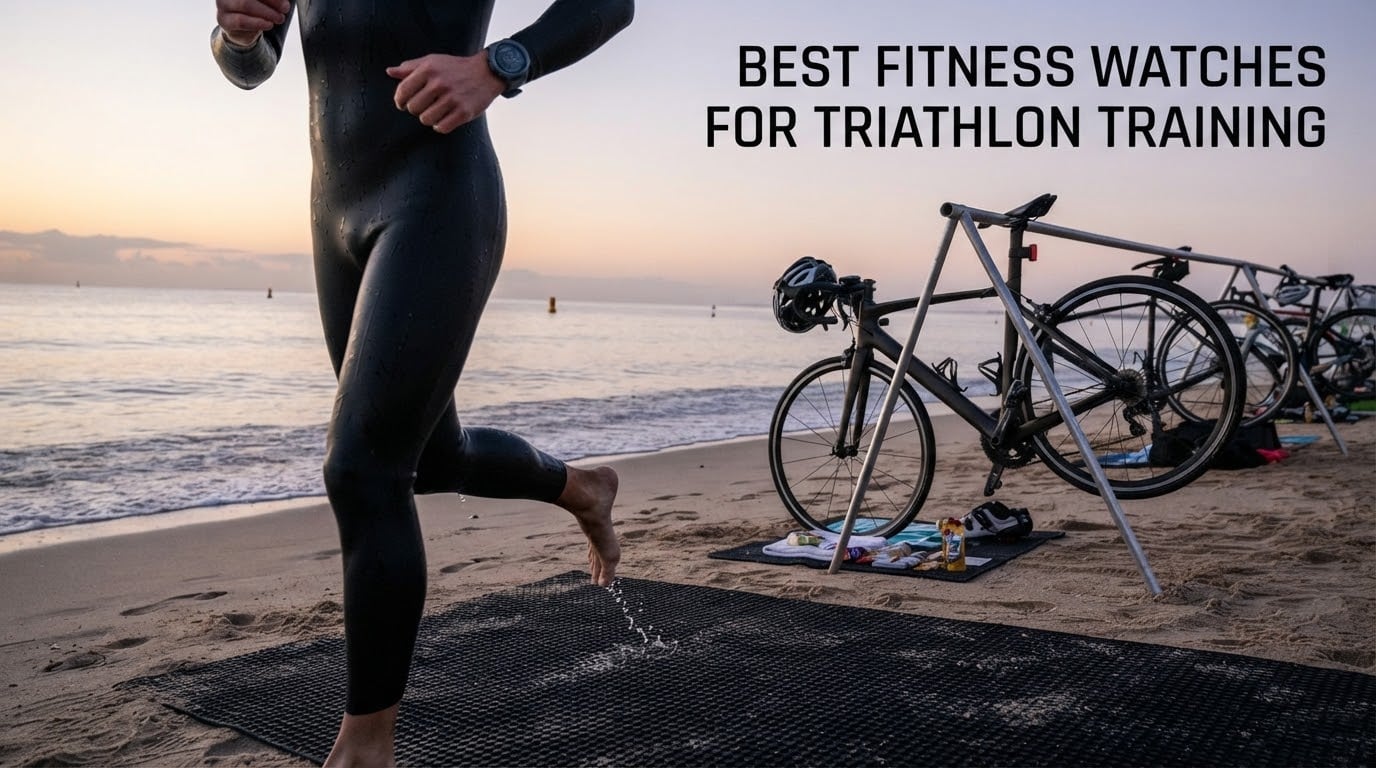
A triathlon watch is not a running watch with a swim mode bolted on. It has to hold a satellite lock through 90 minutes of open-water chop, hand off from bike to run at a transition without you fiddling with menus, and still have charge left when you finish the run leg in the dark. Those three demands are what separate the picks below from every other sports watch on the market.
We spent six weeks rotating ten multisport GPS watches through the same week: a long brick session on Saturday, an open-water swim on Sunday, and two quality sessions on the bike and run legs during the week. Every watch recorded the same sessions so we could compare swim metrics, GPS traces and post-session training load side by side. The results are the best fitness watches for triathlon training for 2026, and they cover everything from a first Olympic-distance racer to someone chasing a full Ironman cut-off.
The short version: the Garmin Forerunner 965 takes the overall spot because it covers every discipline properly at a weight you will forget you are wearing, and the Garmin Forerunner 945 is the model most athletes should buy on a deal. If you want the widest profile library and a metal case, the fenix 8 is the pick, and if you would rather not buy into the Garmin ecosystem, the COROS PACE Pro is the serious alternative.
If you are still working out how the rest of your kit fits together, our picks for the best road bikes for triathlon training pair naturally with any of these. Last updated October 2026.
Table of Contents
Top 3 Picks: Best Fitness Watches for Triathlon Training (October 2026)
Garmin Forerunner 965
- AMOLED touchscreen with titanium bezel
- 31 hours of GPS battery
- Multi-band GNSS with SatIQ
- Built-in triathlon profiles

Garmin Forerunner 945
- Onboard music and full-color maps
- Up to 60 hours in UltraTrac mode
- VO2 Max and training status

Garmin fenix 8
- 84 hours of GPS battery
- 1.4-inch AMOLED with LED flashlight
- Speaker and mic for wrist calls
Our complete Garmin comparison sits in 8 best Garmin fitness watches tested and compared, which covers the everyday training case as well as race day.
Best Fitness Watches for Triathlon Training Compared
Every watch in the table below appears in our full reviews, with the specs that actually decide whether it works across three disciplines. Weight matters more than most buyers expect, because the watch is on your wrist for a 17-hour race day and again at 2am during off-season sleep tracking.
| Product | Specifications | Action |
|---|---|---|
| Garmin Forerunner 965 |
|
Check Latest Price |
| Garmin Forerunner 945 |
|
Check Latest Price |
| Garmin fenix 8 |
|
Check Latest Price |
 COROS PACE Pro COROS PACE Pro |
|
Check Latest Price |
 Garmin Forerunner 745 Garmin Forerunner 745 |
|
Check Latest Price |
 Garmin Fenix 6 Pro Solar Garmin Fenix 6 Pro Solar |
|
Check Latest Price |
 Suunto Race S Suunto Race S |
|
Check Latest Price |
 COROS PACE 3 COROS PACE 3 |
|
Check Latest Price |
 Suunto 9 Peak Suunto 9 Peak |
|
Check Latest Price |
 Samsung Galaxy Watch Ultra2 Samsung Galaxy Watch Ultra2 |
|
Check Latest Price |
How We Chose These Triathlon Watches
We ran the same training block through all ten watches rather than reading spec sheets. That means a Saturday brick of 90 minutes on the bike followed immediately by a 30-minute run, an open-water swim with a buoy turn, and a set of threshold intervals on the run leg with a chest strap paired the whole time.
Five criteria decided the ranking. Battery in GPS mode came first, because a full-distance race demands far more than a marathon-length recording and you should never plan a start around a battery percentage. Transition handling came second: a dedicated triathlon profile with automatic sport switching, transition timing and one combined activity. GPS quality mattered third, particularly multi-band or dual-frequency reception between tall buildings and under open sky. Swim metrics took fourth place, split between pool SWOLF work and open-water pace, stroke rate and stroke type.
Fifth was ecosystem depth, which is where the brands separate sharply. Training load, training status, recovery time and suggested workouts are what turn a recorder into a coach, and those features live in the companion app rather than on the watch face. Our broad take on Garmin’s analytics stack is in 8 best Garmin running watches for marathon training, which holds up for the run leg specifically.
We deliberately did not score on smartwatch polish. Notifications, voice assistants and third-party apps are irrelevant when you are mid-brick with wet hands, and they are the main reason to buy an Apple or Samsung watch instead.
1. Garmin Forerunner 965: Best Overall Triathlon Watch
Garmin Forerunner® 965, Running Smartwatch, 47mm, Black/Powder Gray
47mm titanium case
53 g
AMOLED touchscreen
31 h GPS, 23 days smartwatch
Pros
- 31 hours of GPS battery
- Multi-band GNSS with SatIQ
- Built-in triathlon and brick profiles
- Bright AMOLED readable in sunlight
- Titanium case at only 53 g
Cons
- 47mm case can feel oversized on small wrists
- No LTE for phone-free calls and texts
- Wrist HR slips accuracy over tattoos or when wet
The Forerunner 965 is the watch we ended up using most, and it won because it does nothing badly. Its 31 hours of GPS runtime is more than three times a half-distance, it carries a full set of built-in triathlon, duathlon, brick workout and swimrun profiles, and the 53 g titanium case is light enough that you stop noticing it during the run leg.
On the bike leg, multi-band GNSS with SatIQ held a clean line through a route with a forest section and a stretch of high-rise buildings on the same ride. Full-color built-in maps and turn-by-turn directions meant we never opened a phone, and the running dynamics data (cadence, stride length, ground contact time and wrist-based running power) transferred straight into our run analysis.
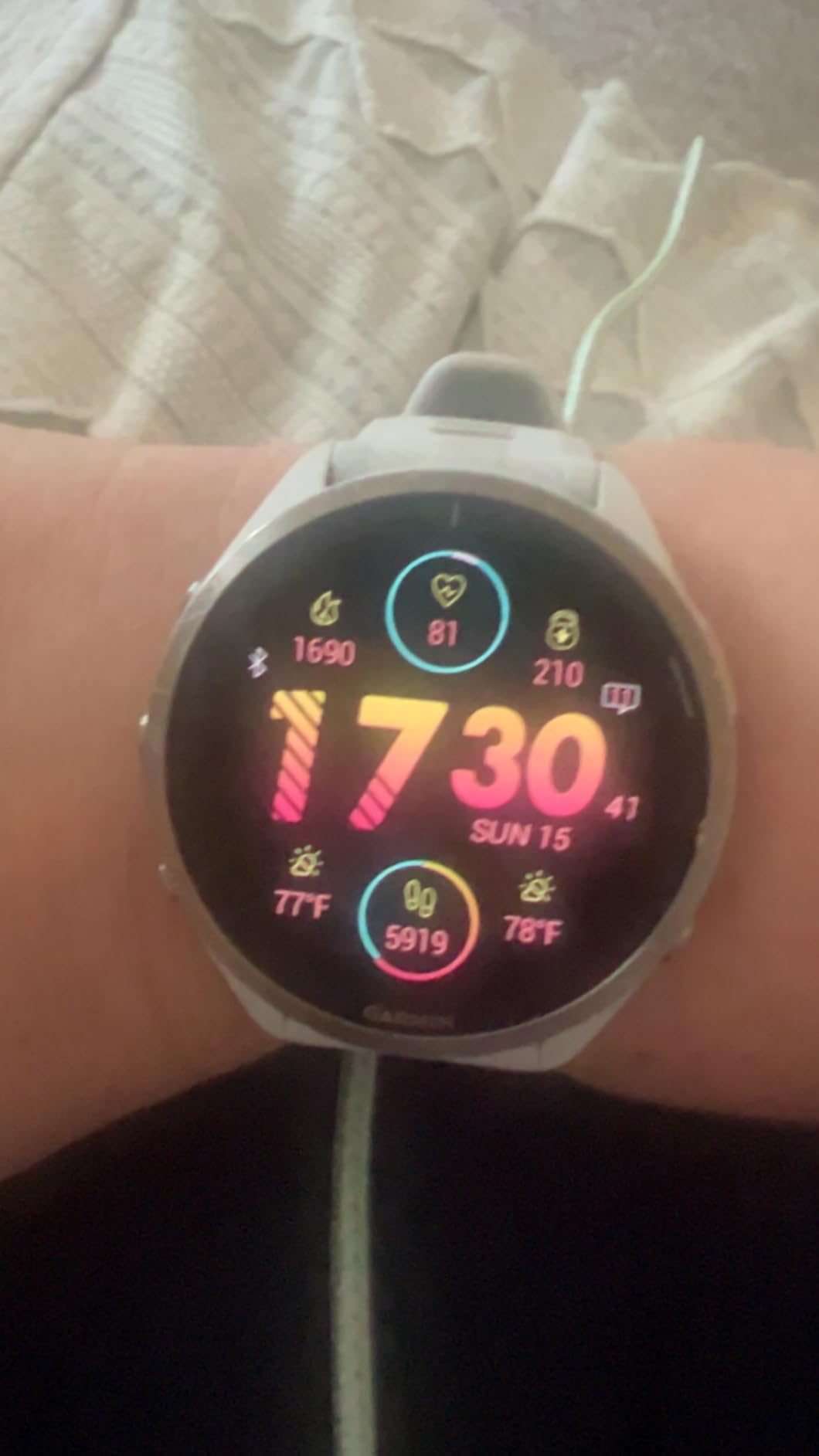
The training side is the reason this watch beats its own predecessors. The training readiness score pulls from sleep quality, recovery, training load and HRV status, and suggested workouts are built around a race and course you enter into Garmin Connect. On the brick session, that combination told us to hold back on the run leg, which is exactly the guidance that prevents a destroyed second session.
Buttons remain fully usable with wet hands, which matters when the touchscreen is the wrong tool in transition. The AMOLED panel is bright enough to read mid-bike in direct sun, and the whole thing charges over USB with the same cable as your other devices.
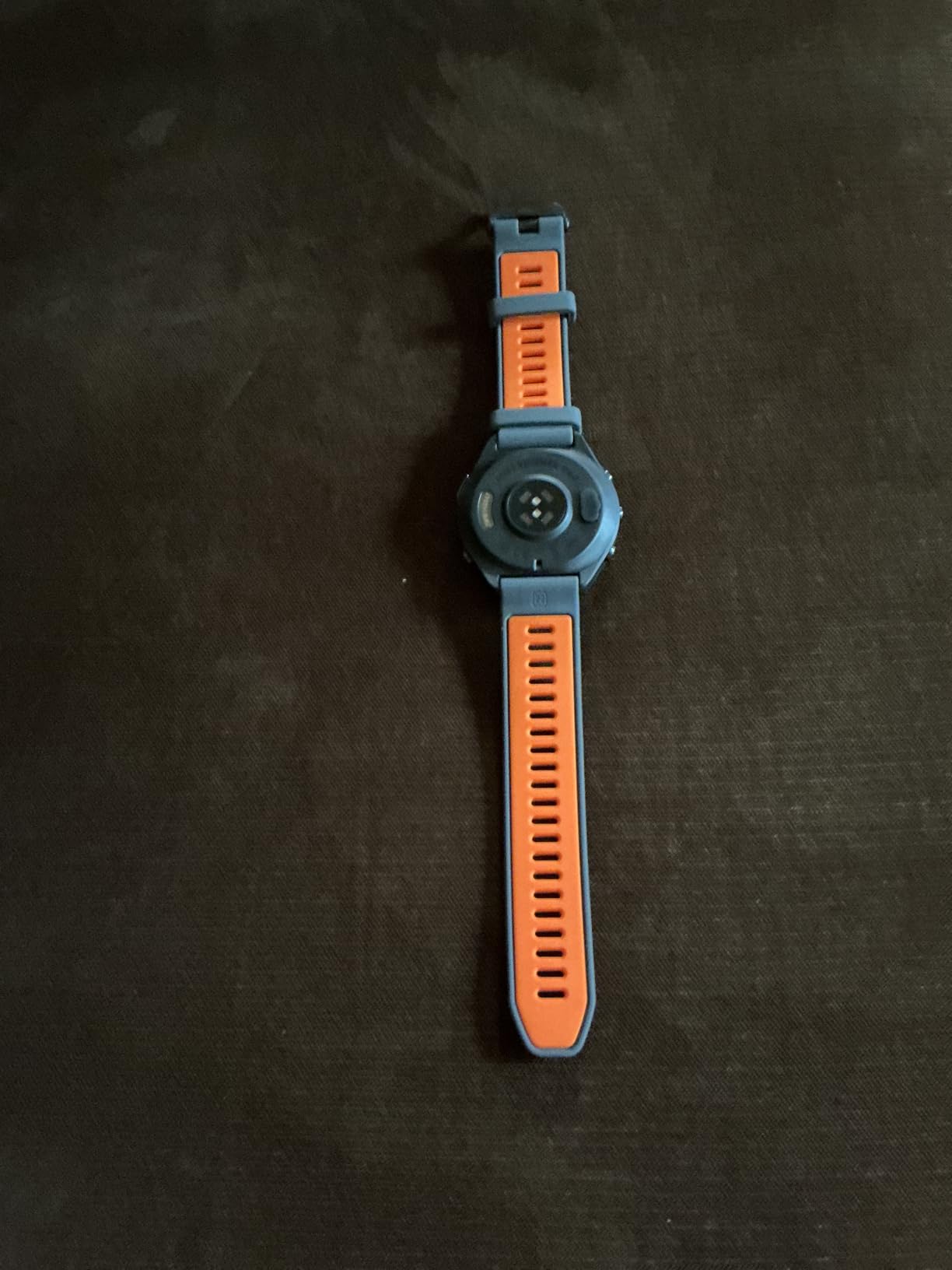
What the Forerunner 965 does well for triathlon training
Transition handling is the quiet strength. Start a triathlon profile, record the swim, hit the button in transition, and the bike leg begins with its own recording settings. Because Garmin records the whole thing as one activity, your training load and recovery advice reflect the combined stress of all three legs rather than three disconnected sessions.
Battery math is where it pulls ahead. At 31 hours of GPS you could race a full Ironman and still have a nearly full charge at the finish, and the 23-day smartwatch mode means training through a winter block without a weekly top-up.
Where the Forerunner 965 falls short
At 47 mm it is one of the larger cases in this group, and owners moving from smaller watches regularly report that it catches on door frames and sleeps awkwardly on smaller wrists. If your wrist circumference is under about 165 mm, the Forerunner 745 or the Suunto Race S will sit better.
There is no LTE, so the watch cannot take a call or send a message on its own while your phone is in a transition bag. Wrist heart rate also drifts over tattoos and whenever the watch slides, which is common in the water, so budget for a chest strap for interval accuracy. Our note on wrist-based tracking for low-impact exercise covers the same limits in more depth.
2. Garmin Forerunner 945: Best Value Triathlon Watch
Garmin Forerunner 945, Premium GPS Running/Triathlon Smartwatch with Music, Black – 010-02063-00
1.2in LCD
50 g
10 h GPS with music, 60 h UltraTrac
Onboard maps and music
Pros
- Huge installed base of real owner reviews
- Onboard music and full-color maps
- VO2 Max and training focus metrics
- Light and slim enough to sleep in
Cons
- MIP LCD screen is dimmer than AMOLED rivals
- Wrist HR unreliable for strength work
- Buttons feel coarse on some units
The Forerunner 945 is the recommendation we make most often, because it is a genuine triathlon watch rather than a compromise. It was Garmin’s multisport flagship before the current generation arrived, and everything that mattered for race day is still on board: onboard maps, downloadable music, Garmin Pay, incident detection and the performance monitoring suite.
Owners with long-distance goals point to the UltraTrac mode figure of up to 60 hours, which trades tracking detail for endurance. Standard GPS with music runs about 10 hours, so for a full Ironman you would use UltraTrac or carry a cable in your transition bag.
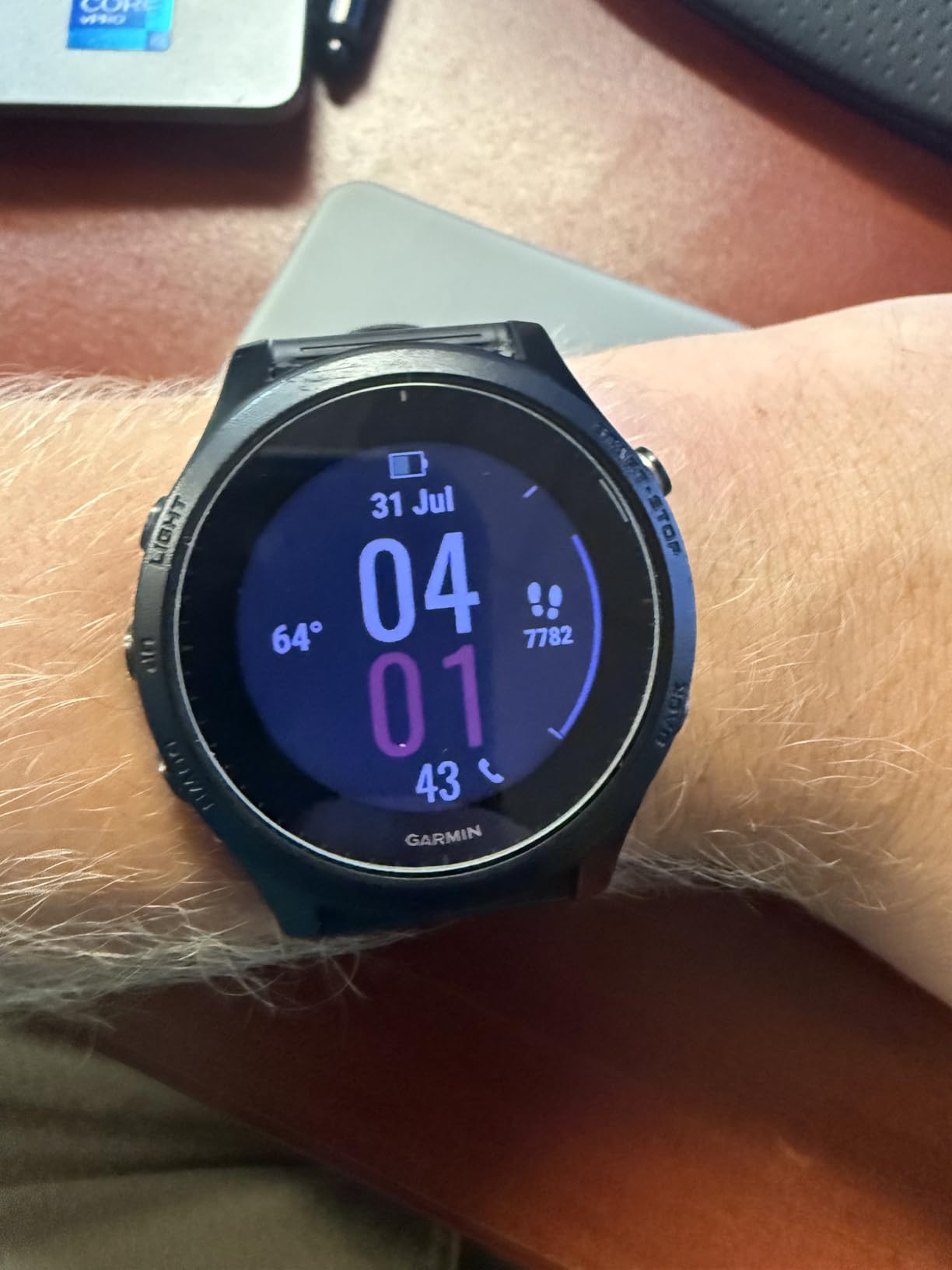
Where it really earns its place is the analytics. VO2 Max, training status, heat and altitude acclimation, training load focus and recovery time have been refined across years of use, and long-term owners consistently describe the recovery guidance as coach-level. For triathlon specifically, acclimation matters twice, since heat during the run leg is what ends most races.
It also works underwater without fuss. Swim heart rate and pool swim tracking run through the same buttons you use on land, and the buttons stay positive even when your hands are wet.
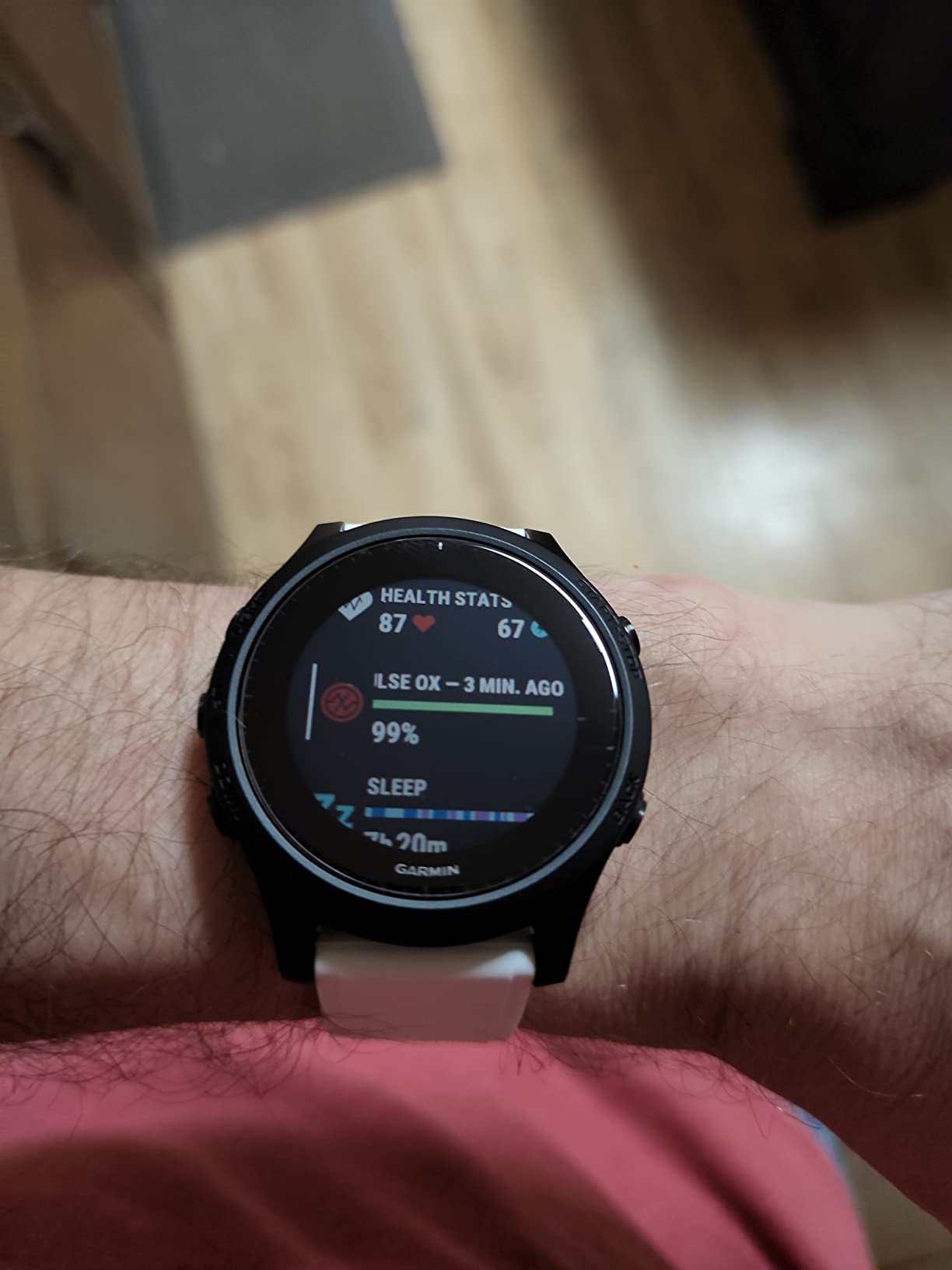
Why the Forerunner 945 is still worth buying in 2026
Garmin’s triathlon profile set and Connect IQ support have not been held back by the older generation. If you want PacePro, ClimbPro, structured workouts from TrainingPeaks or a triathlon-specific data field, the 945 runs all of it.
The practical argument is simple. Buy a previous-generation flagship on a reduced price and you keep 90% of the race-day capability for a fraction of the current flagship cost. If your tri club is running on Garmin, you will also find training plans and shared workouts already built around the platform.
Where the Forerunner 945 falls short
The MIP LCD screen is the obvious compromise. It is readable in sunlight but noticeably dim indoors and after dark, and it lacks the always-on AMOLED punch the 965 gets. There is also no multi-band GNSS on this generation, so GPS traces under tree cover or between towers will be less clean.
Wrist heart rate is poor for strength work, which is where most triathletes pick up their winter volume. Some owners also report coarse buttons and sleep tracking that needs manual correction. If you need the crispest screen and the sharpest GPS in this list, the 965 is the step up.
3. Garmin fenix 8: Best Premium Triathlon Watch
Garmin fēnix® 8, Premium Multisport Smartwatch, 51mm, Black
51mm stainless steel case
102 g
1.4in AMOLED
Up to 84 h GPS, 29 days
Pros
- 84 hours of GPS battery for ultra days
- Bright 1.4-inch AMOLED display
- Built-in LED flashlight and speaker
- 100 m rating with dive support
Cons
- 102 g and 51 mm is bulky for sleep wear
- Some owners report software freezing
- Limited notifications and third-party apps
The fenix 8 solves the problem every triathlete eventually hits: the race takes longer than the battery. At up to 84 hours in GPS mode and 29 days in smartwatch mode, it is the only watch here where nobody needs to think about charging around an ultra-distance or a multi-day training camp.
It is also the most complete device. The 1.4-inch AMOLED screen is the sharpest in this group at 390 x 390 resolution, the stainless steel bezel is built for knocks against a bike computer or a gate post, and the built-in LED flashlight has been the most-used extra feature for anyone training after dark.
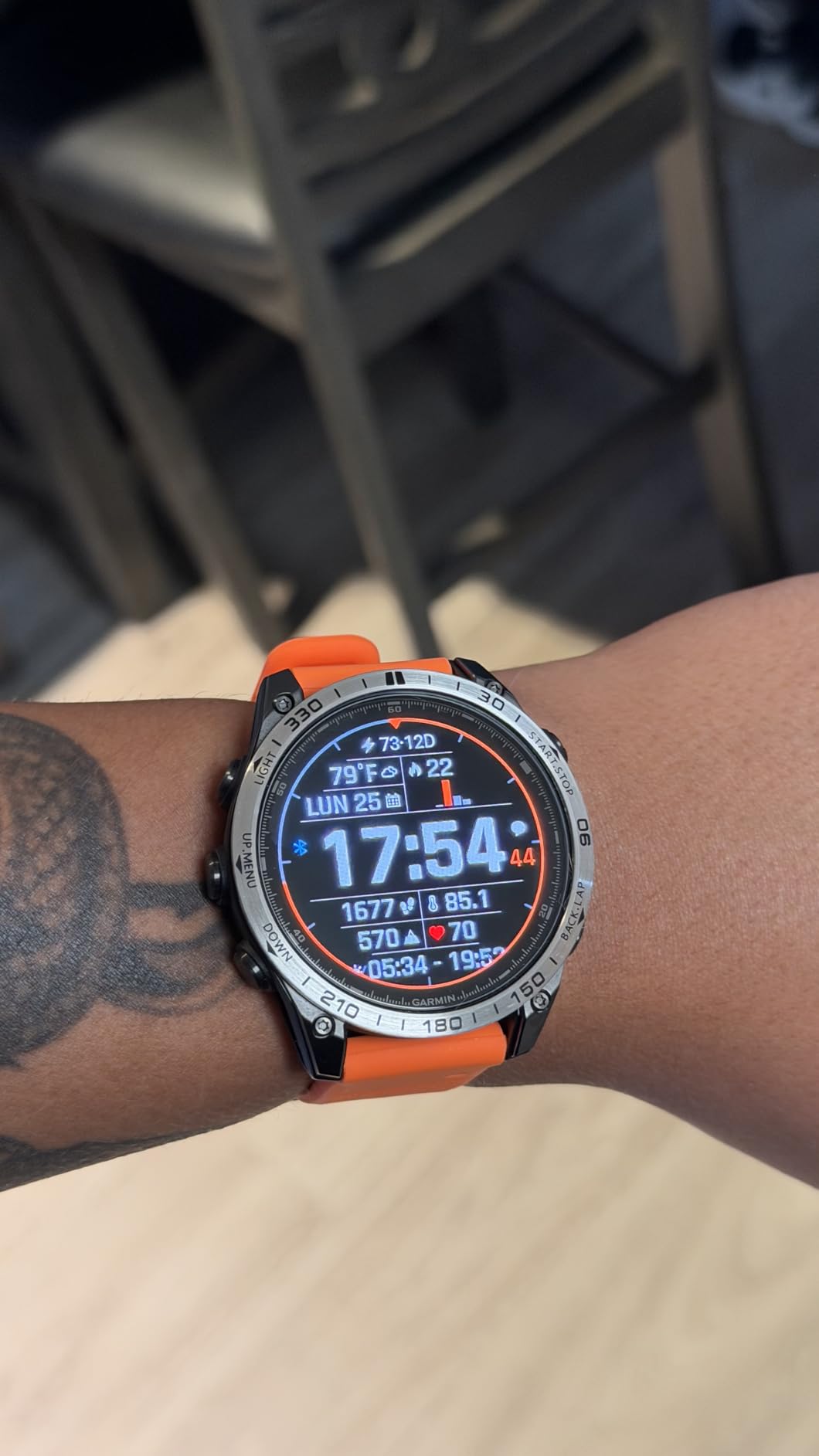
For training, real-time stamina tracking and sport-specific strength plans are the additions that matter to triathletes, because off-season lifting has to be logged without wrecking your running load. The speaker and microphone also let you take a call from the wrist, which is more useful during a long ride than it sounds.
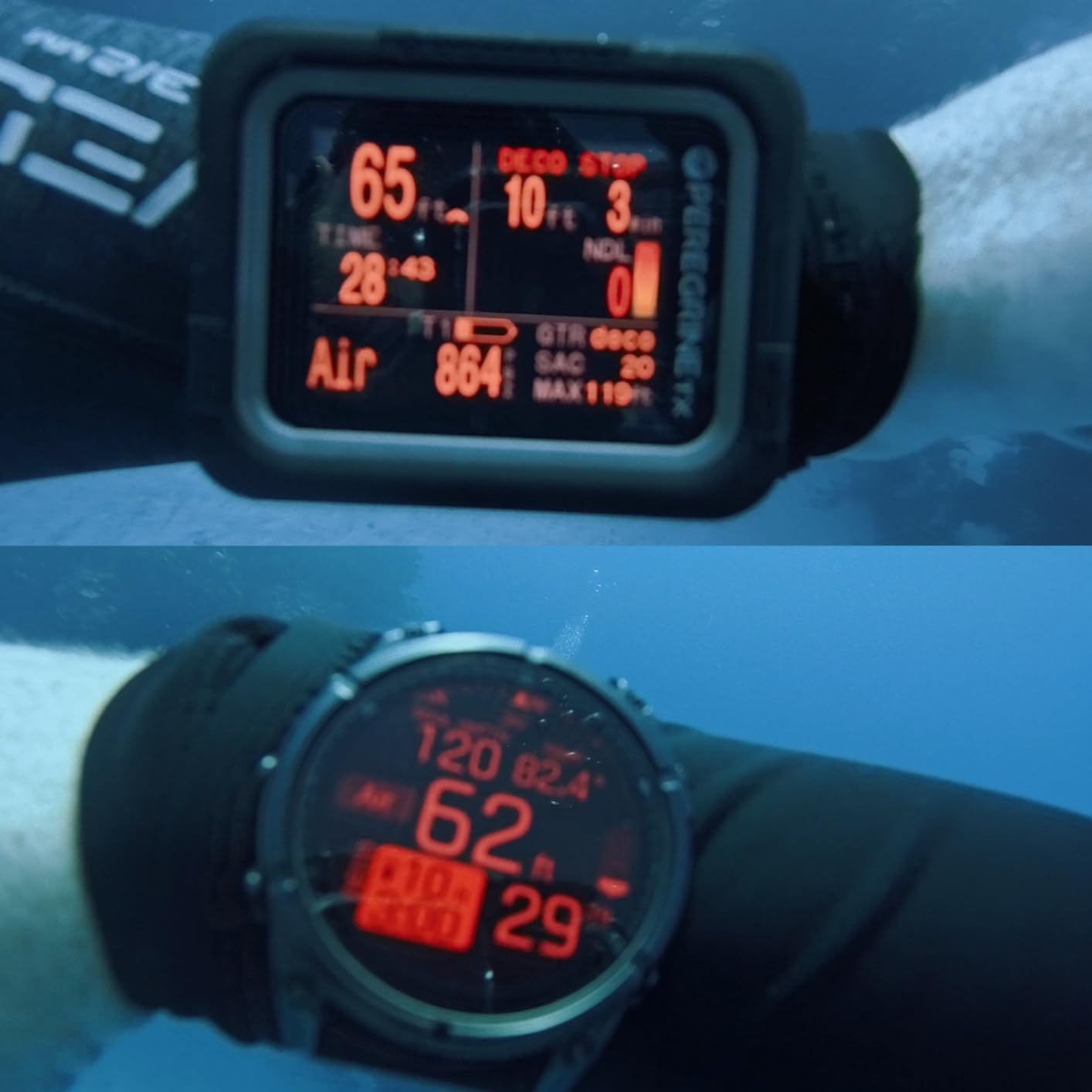
Multi-band GPS with SatIQ sits alongside a three-axis compass, gyroscope and barometric altimeter, and dynamic round-trip routing will pace you back to your car from an unfamiliar trail. On a 40-meter rated case with leakproof metal buttons, you also get support for scuba and apnea activities if you ever want to add winter diving to the training mix.
Who the fenix 8 is genuinely right for
Long-course and ultra-distance athletes benefit most. If your goal race runs toward the 17-hour cut-off, the battery math simply stops being a factor, and the flashlight plus maps matter when the run leg drifts into dusk.
Anyone training across multiple sports in one week, or who works in an environment where a dropped watch means a wasted day, will justify the case. ECG app capability, Pulse Ox and respiration tracking round out the health side.
Where the fenix 8 falls short
At 102 g and 51 mm this is the heaviest watch we tested, and sleep wear is the first thing owners complain about. If you are under about 175 mm around the wrist, the case overhangs noticeably and it will not stay comfortable overnight.
It is not a full smartwatch, so notification and third-party app support is limited compared with what an Apple or Samsung watch offers. Some owners also report occasional software freezing that needs repeated resets, and it sits well above competing multisport watches on price. If none of the rugged extras apply to you, that money is better spent on a bike or on coaching.
4. COROS PACE Pro: Best Non-Garmin Triathlon Watch
COROS PACE Pro GPS Sport Watch, 1.3-inch AMOLED Touchscreen – Blue
49 g
1.3in 1500-nit AMOLED
38 h outdoor GPS, 31 h dual-frequency
Pros
- 38 hours of outdoor GPS battery
- Very bright always-on AMOLED
- Fast processor and snappy interface
- Improved dual-frequency GPS accuracy
Cons
- Narrower ecosystem than Garmin
- No cellular connectivity
- Shallower multisport and swim analytics
The PACE Pro is the one to buy if you refuse to join the Garmin club. It is the best value-per-gram option here at 49 g, and the 1500-nit always-on AMOLED is brighter than anything else in the group, which matters on a long bike leg with the sun on your wrist.
Battery is the headline: 38 hours of outdoor GPS, or 31 hours with dual-frequency GPS engaged, plus 20 days of standard use. Independent reviewers have found COROS GPS accuracy and heart rate comparing favorably with Garmin and Suunto’s top watches, and that is the reason it keeps appearing in recommendations despite the smaller brand.
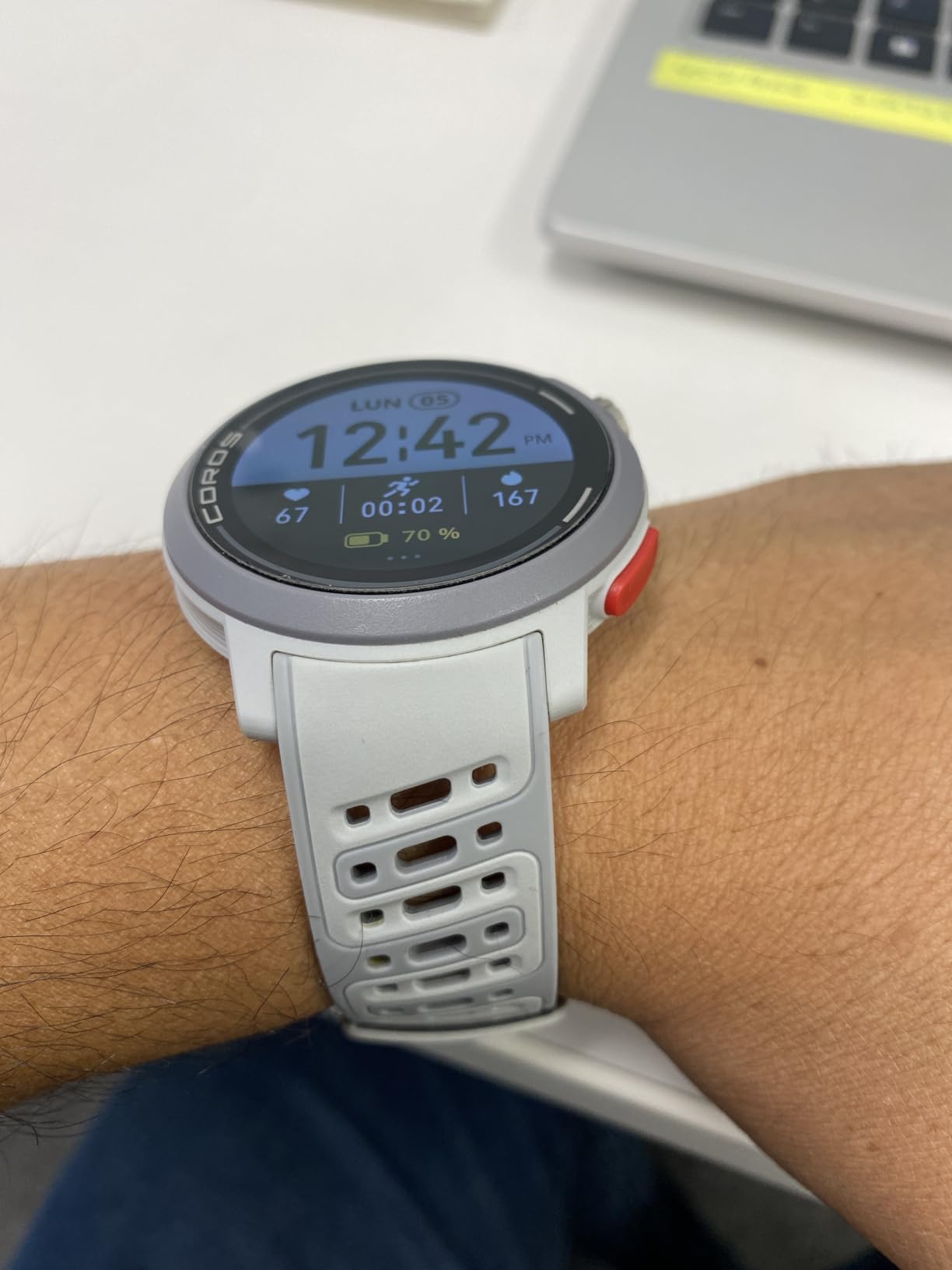
The route planner with topographic and landscape maps and turn-by-turn directions covers the bike leg well, and training status, custom workouts and sleep analysis sit in the COROS app. USB-C charging with the included keychain adapter means one cable for everything.
Where it falls short for triathlon specifically is the swim side. Pool and open-water tracking works, but the transition automation and multisport tooling are not as deep as a dedicated triathlon watch, so you will do more manual leg management in transitions.
Where the PACE Pro beats its Garmin rivals
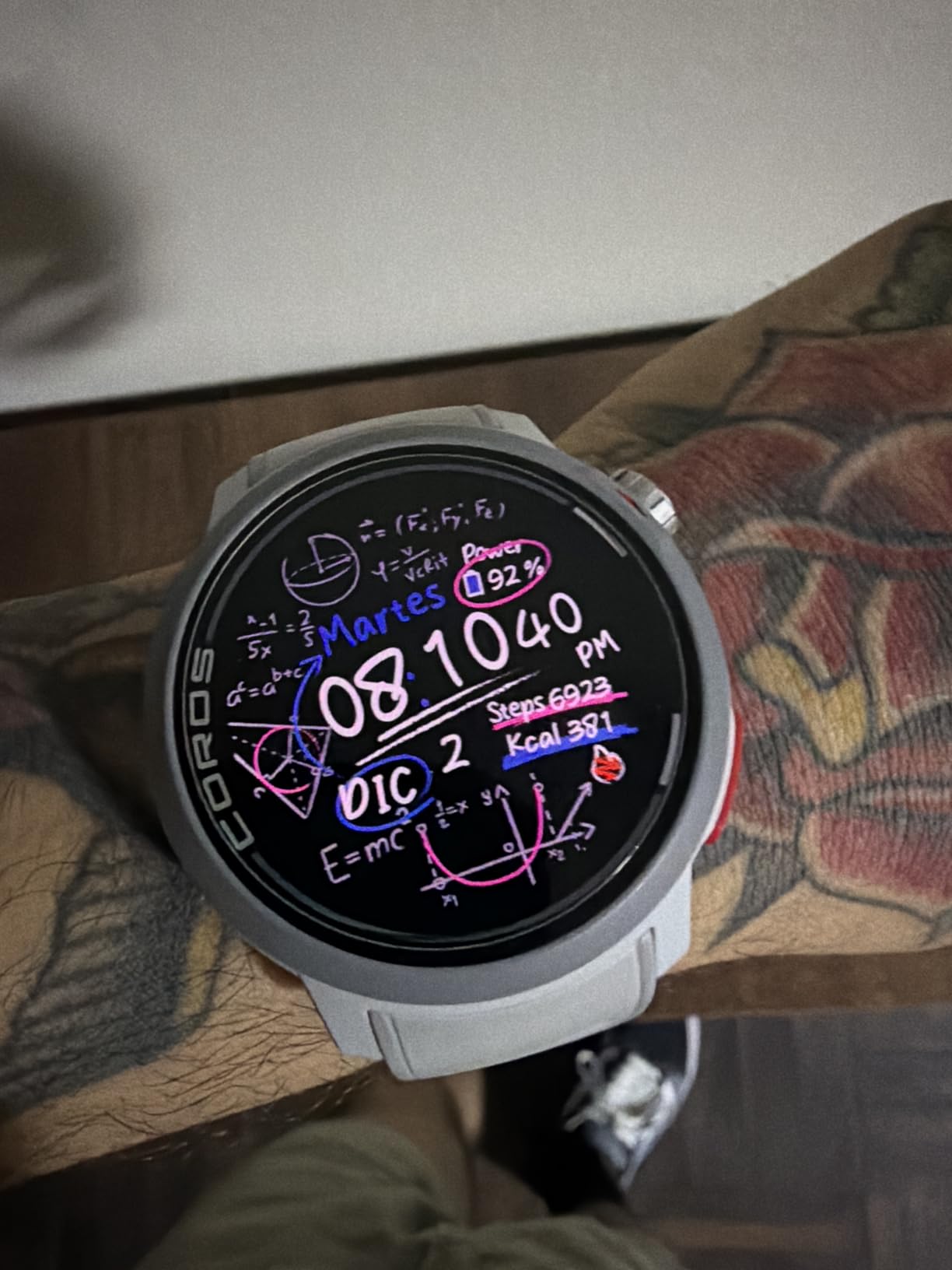
Value is the honest answer. You get a bright AMOLED, long battery and dual-frequency GPS at a price that undercuts the Garmin mid-range, and the 49 g case with a 22 mm quick-release band is easy to wear for 24/7 tracking.
For athletes who are 90 percent run and bike with an occasional swim, the depth difference rarely shows up in daily training. Independent testing has put COROS GPS quality on par with much more expensive rivals, and the interface responds faster than most watches at this level.
Where the PACE Pro falls short
The ecosystem is the limit. There is no cellular connectivity, third-party app support is narrower, and the training analytics are shallower than what Garmin Connect offers for triathlon-specific load balancing across three sports.
Some users also report that the always-on AMOLED mode cuts battery noticeably, and wrist heart rate is less reliable for interval and strength work. If your training is genuinely multi-sport heavy, a Garmin watch serves the transition workflow better.
5. Garmin Forerunner 745: Best Triathlon Watch for Small Wrists
Garmin Forerunner 745, GPS Running Watch, Detailed Training Stats and On-Device Workouts, Essential Smartwatch Functions, Red
43.8mm case
1.2in MIP display
Preloaded triathlon profiles
Up to 30 h UltraTrac
Pros
- Reflective MIP display superb in sunlight
- Comfortable 43.8mm case for smaller wrists
- Connects to power meters and smart trainers
- Preloaded triathlon and multisport profiles
Cons
- No touchscreen
- button-only navigation
- Only 1GB storage limits music library
- Lacks training readiness and load ratio
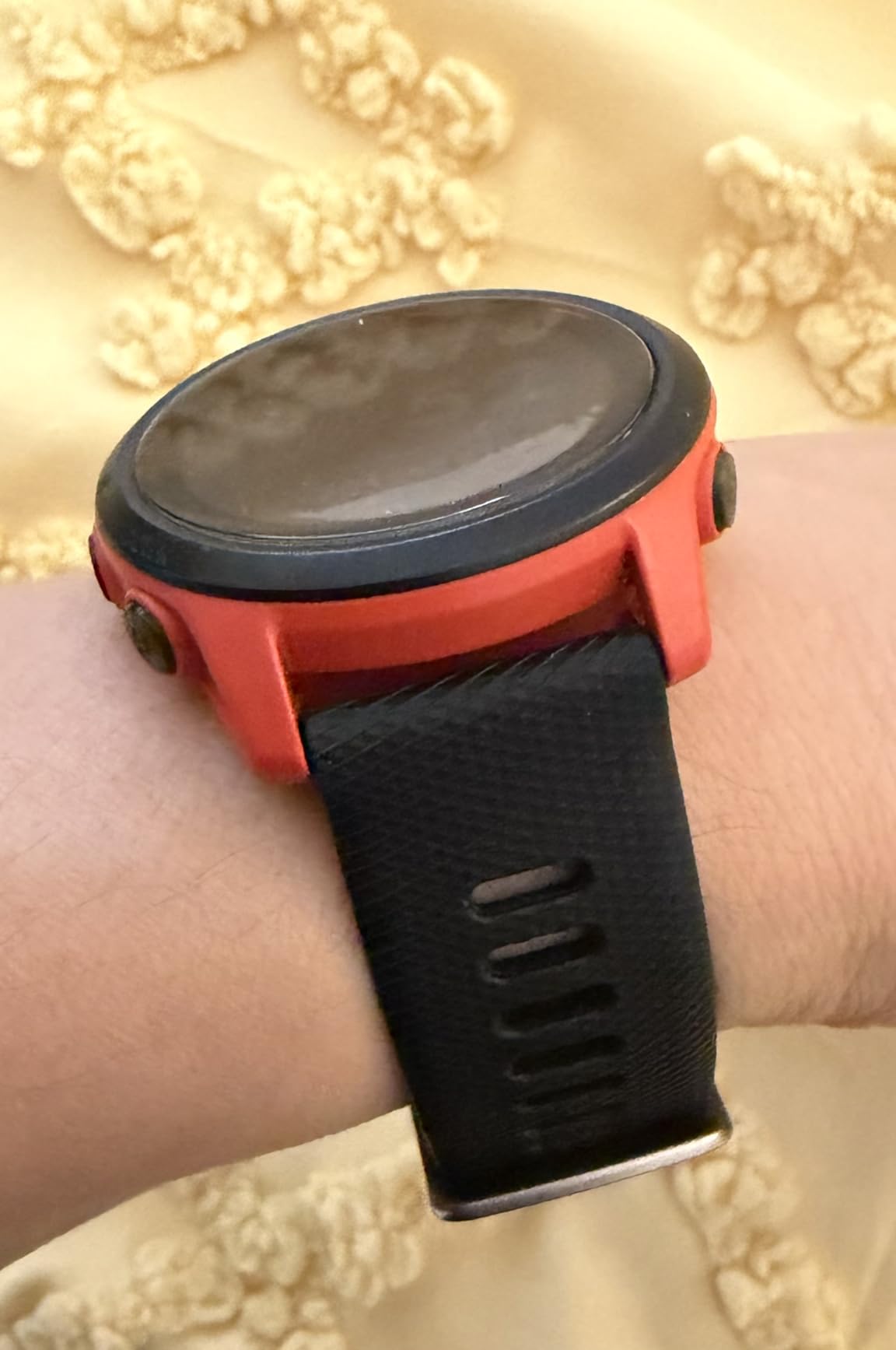
The Forerunner 745 is the watch we recommend to athletes whose wrists rule out the 965 and fenix. At 43.8 mm it is the most wearable option in this roundup for anyone who spends hours swimming, cycling and running with a watch on, and the reflective MIP screen stays readable in direct sunlight without any backlight.
It carries preloaded activity profiles for triathlon, multisport, cycling, pool swimming and track running, so the transition workflow works. It also connects to cycling power meters, speed and cadence sensors and smart trainers, which makes it a genuinely useful bike-leg tool rather than just a running watch with extras.
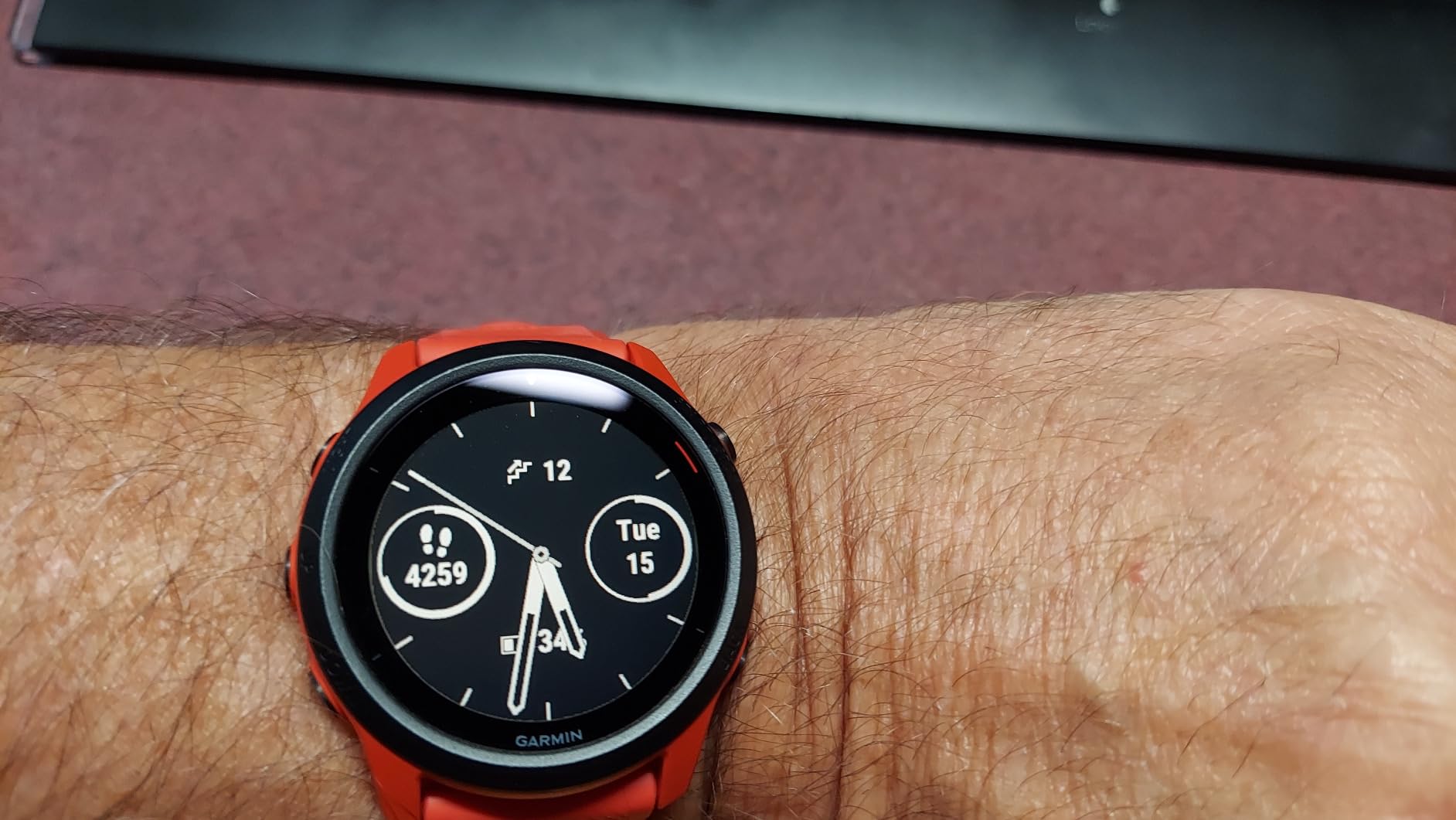
Lap and pool swim tracking were accurate in our testing, and wrist heart rate held up reasonably in the water. On-device daily run and cycling workout suggestions respond to training load and VO2 max, and structured workouts sync from Garmin Connect, TrainingPeaks and TrainerRoad.
That durability argument is why many owners still defend it against newer AMOLED models. The reflective screen, the sensor connections and the fact that it handles a full multisport training week are all still true today.
Why smaller case size beats screen quality for some athletes
A watch that fits properly gets worn and a watch that rocks does not. Athletes on smaller wrists, and anyone who trains twice a day with a strap on, will notice the 745’s case far more than the resolution of its screen.
For open-water sessions, a lower-profile watch also slides under a wetsuit cuff far more easily than a 47 mm or 51 mm case, which is a practical issue that never appears on spec sheets.
Where the Forerunner 745 falls short
Button-only navigation feels dated next to AMOLED rivals, and the 22 mm band is wide for small wrists. Storage of 1 GB caps the music library, and it lacks the training readiness and load ratio metrics that current Forerunners use to guide hard sessions.
Battery also drops sharply when GPS and music run together, and owners note degradation after a few years. The MIP display is excellent outdoors but weak at night, so it is a compromise rather than a compromise-free choice.
6. Garmin Fenix 6 Pro Solar: Best Multi-Sport Range Per Gram
Garmin 010-02410-10 Fenix 6 Pro Solar, Multisport GPS Watch with Solar Charging Capabilities, Advanced Training Features and Data, Black with Slate Gray Band
38.5 g
1.3in LCD
Power Glass solar lens
336 h smartwatch, 36+ h GPS
Pros
- Solar lens adds real multi-day endurance
- Very light at 38.5 g
- Huge multisport profile library
- Sleep
- HRV
- Pulse Ox and respiration on the wrist
Cons
- Transflective LCD looks dark in daylight
- Battery falls short of claimed 14 days under heavy use
- Buttons tiring on a large case
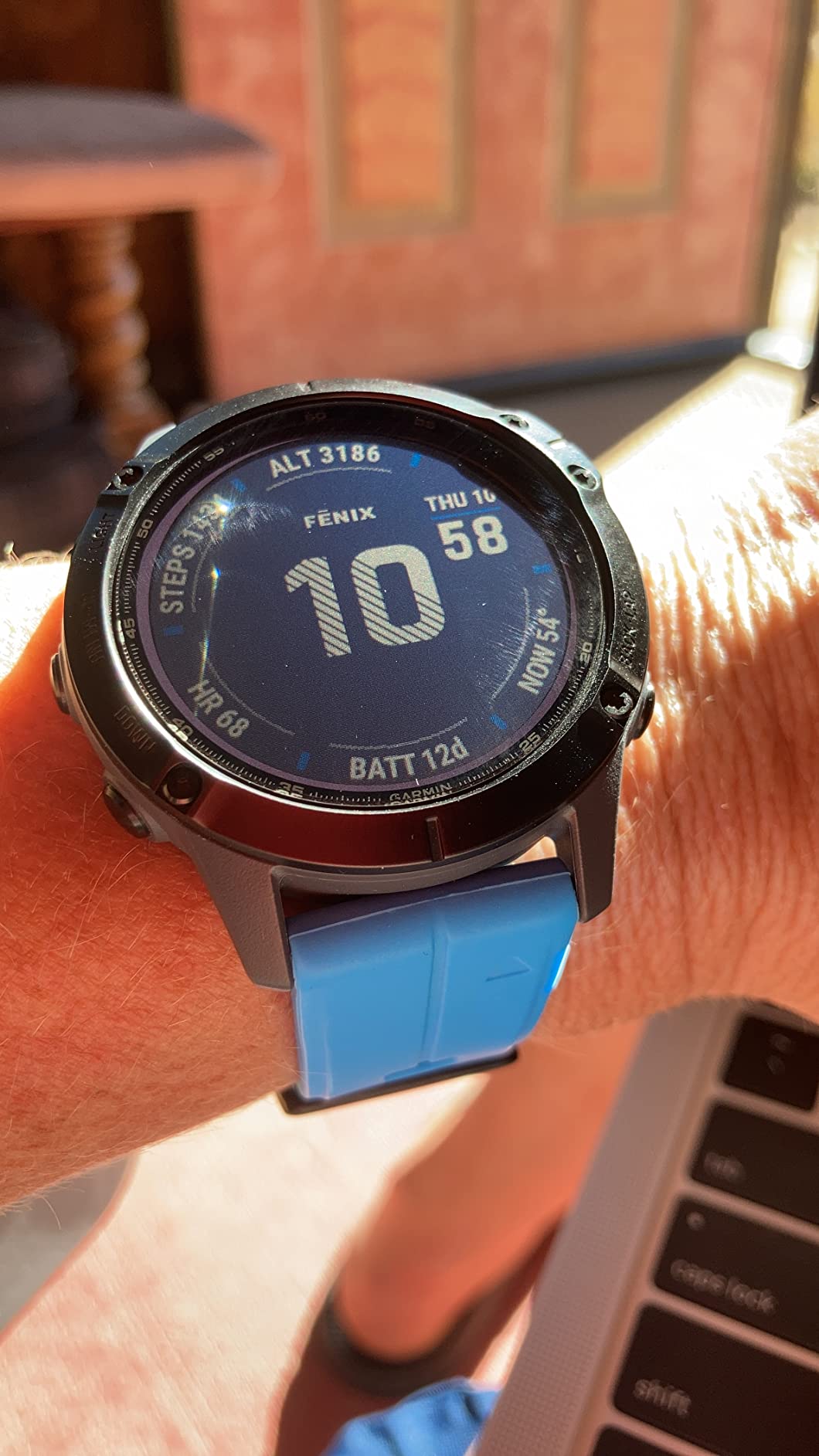
Solar charging is the feature that changes how you plan a race week. The Power Glass solar lens with custom power manager modes adds meaningfully to runtime, so a multi-day training camp or an ultra-distance week becomes a question of time off the charger rather than whether you remembered to charge.
It is also the lightest multisport watch we tested at 38.5 g, which is remarkable for a 1.3-inch watch with ABC sensors. The profile library is enormous, covering backcountry skiing, XC ski dynamics, MTB dynamics with Grit and Flow measurement, and surf features for anyone who wants one watch for the whole training year.
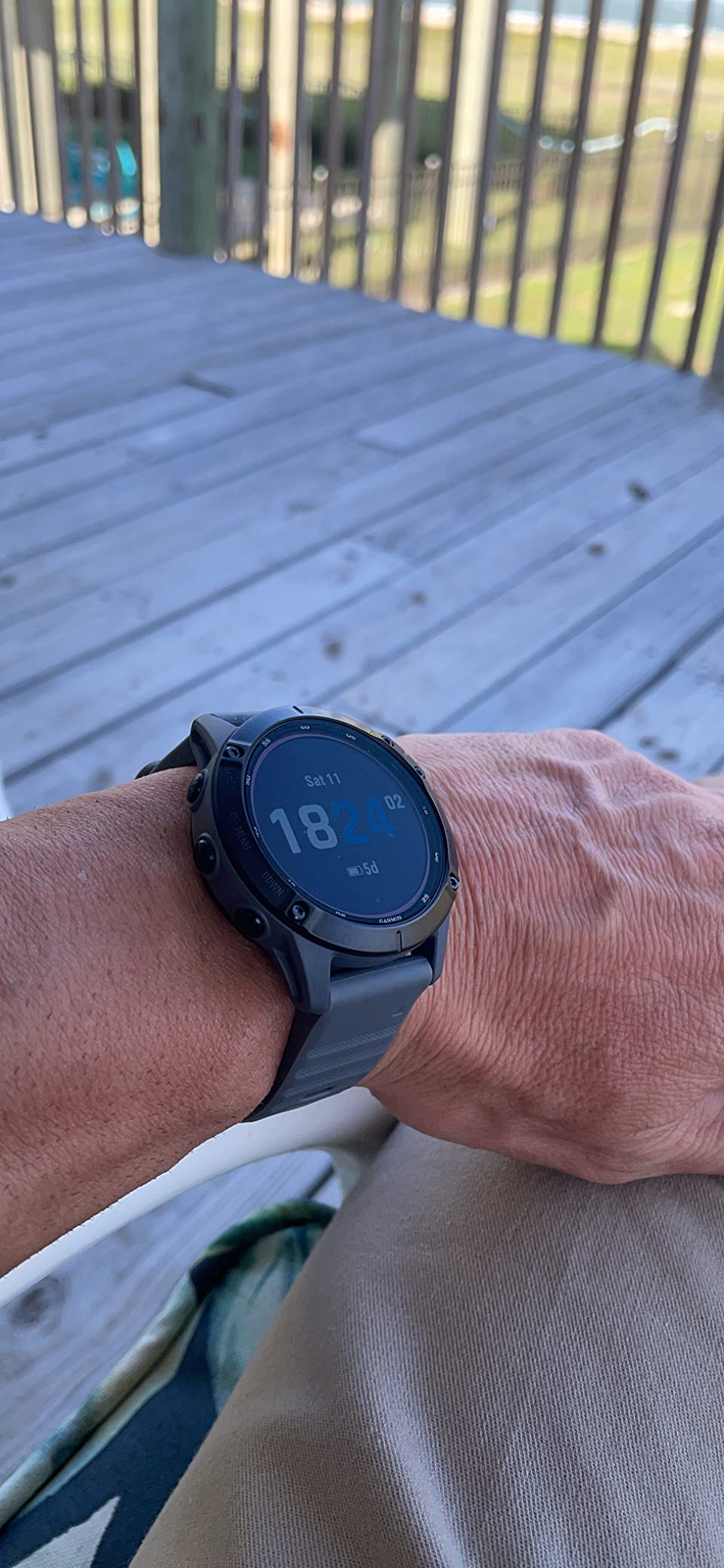
Health data is displayed on the watch rather than hidden in an app: Pulse Ox, respiration tracking, HRV status, stress, Body Battery and hydration. PacePro gives terrain-aware pacing guidance on a run leg with elevation, and recovery time plus daily workout suggestions are there too.
For a triathlete who also spends weekends in the mountains or on the bike, that breadth of profile support is the argument. You are not buying a second watch for summer activities.
Who benefits most from solar charging
Long-course racers, expedition-style training blocks and athletes who train twice daily without a nightly charging routine. If your watch dies mid-brick because you forgot, solar removes that failure mode entirely.
The 38.5 g weight also makes it the most comfortable option here for 24/7 wear and overnight sleep tracking, which is where recovery data actually comes from.
Where the Fenix 6 Pro Solar falls short
The transflective LCD looks dark in daylight and needs the backlight to read the time, which is a real downgrade if you train at dawn or in bright conditions without lighting up your wrist. Battery life also falls well short of the claimed 14 days under heavy feature use.
Button navigation on a large case is awkward and tiring over a long race, Garmin Pay is picky about which banks and cards it accepts, and some owners report occasional Bluetooth pairing drops that need a restart. It also lacks multi-band GNSS, which the newer Forerunners and fenix 8 models carry.
7. Suunto Race S: Best Compact Triathlon Watch
SUUNTO Race S GPS Sports Watch, 1.32” AMOLED 95+ Sports Modes, Powder Blue
60 g and 11.4mm thin
1.32in 466dpi AMOLED
30 h best GPS, 13 days daily
Pros
- Compact 60 g case with 11.4mm thickness
- Sharp 466dpi AMOLED with digital crown
- Dual-band GNSS across five systems
- Full charge in about an hour
Cons
- Smaller ecosystem and sport library than Garmin
- Only 50 m water resistance
- GPS endurance suits shorter sessions
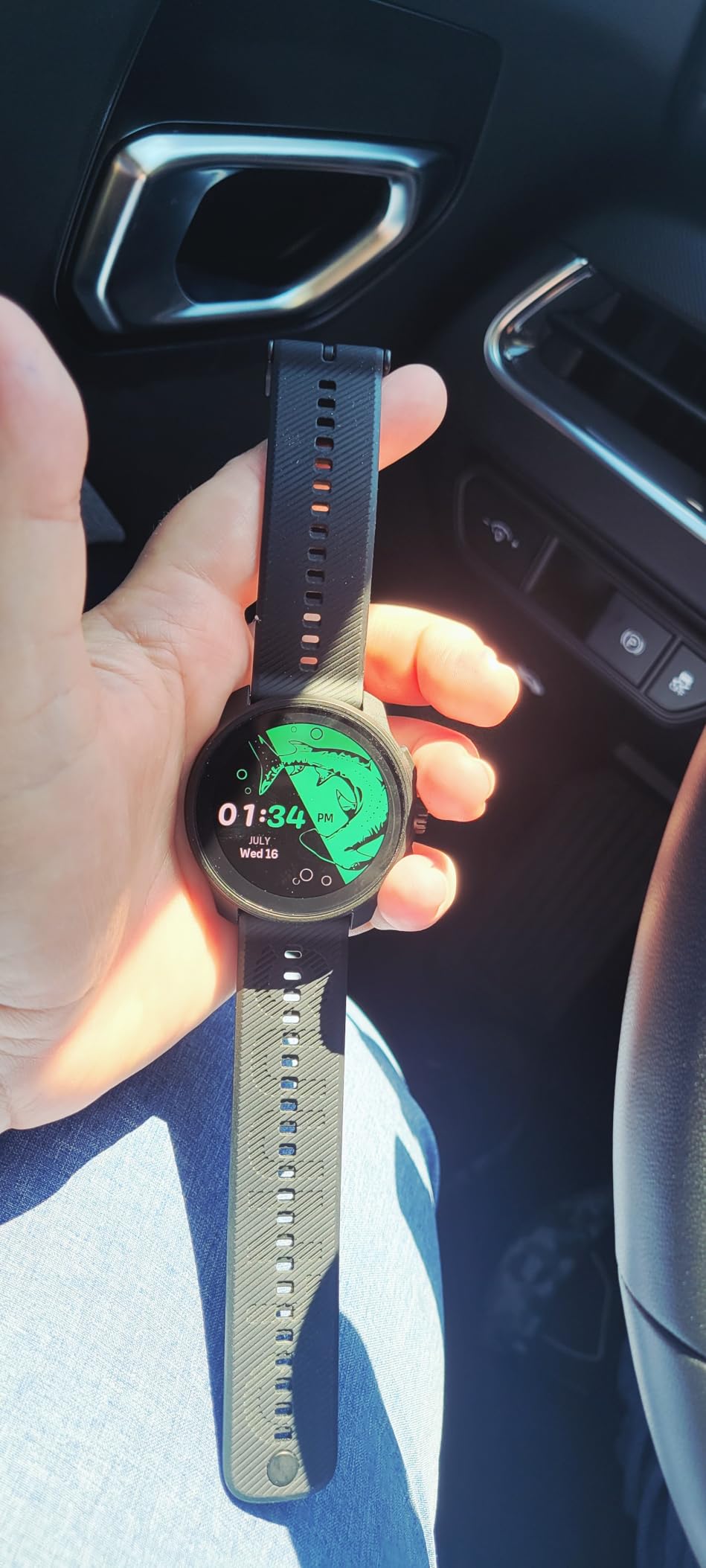
The Race S is the watch to consider if the fenix 8 and 965 both feel enormous on your wrist. At 60 g and 11.4 mm thin it is the slimmest multisport watch we tested, and it wears like a normal watch rather than a piece of equipment.
What you do not lose is real capability. Dual-band GNSS runs on L1 and L5 across GPS, GLONASS, GALILEO, QZSS and BEIDOU, which produced clean traces between tall buildings in our urban route. The 1.32-inch 466dpi AMOLED with a digital crown is sharp and easy to browse, and the crown makes scrolling data pages with wet hands far easier than a bare touchscreen.
Navigation is unusually good for the size: global offline maps with 2 km zoom-out, route navigation, points of interest, bearing and find-back, plus weather forecasts, storm alert, altimeter and compass. Over 95 sport modes carry deep metrics including TSS, CTL, HRV, VO2 Max and TSB, with AI Coach insights in the app.
Battery is 30 hours in the best GPS accuracy mode and 13 days in daily use, and a full recharge takes about an hour. That is enough for two full training sessions on one charge and any race up to half-distance with room to spare.
Where the Race S fits a triathlon block
It suits athletes racing Olympic distance and 70.3 who want a watch they can wear in the pool, on the bike and at their desk without thinking about it. Sleep and recovery tracking fit into a normal day rather than being interrupted by a chunky case.
Menstrual cycle tracking, blood oxygen and heart rate are covered, and SuuntoPlus connects with over 300 partner services including Strava and TrainingPeaks.
Where the Race S falls short
Multisport transition handling and triathlon automation are less developed than on Garmin, so you will manage legs more manually. Water resistance is 50 m with no underwater computer support, and the sport profile library is smaller than the equivalent Garmin.
GPS endurance suits shorter sessions rather than full ultra events, and some users find the Suunto app and AI Coach less refined than Garmin Connect for long-term load balancing across three sports.
8. COROS PACE 3: Best Budget Triathlon Watch
COROS PACE 3 GPS Sport Watch, Lightweight Running Watch – Chalk Nylon
30 g and 11.7mm slim
1.2in always-on transflective
38 h GPS, 24 days daily use
Pros
- Lightest watch here at 30 g
- Always-on screen readable in direct sun
- 38 hours of GPS and 24 days daily use
- Dual-frequency chipset holds accuracy in cities
Cons
- No AMOLED
- average indoor readability
- Only 3GB storage
- No multisport transition or open-water profile to match Garmin
Most guides will tell you that the cheapest watch on this list serves most beginners better than the most expensive one. That is true here. The COROS PACE 3 costs a fraction of the flagship Garmins, weighs 30 g with an 11.7 mm profile, and runs for 38 hours on continuous GPS.
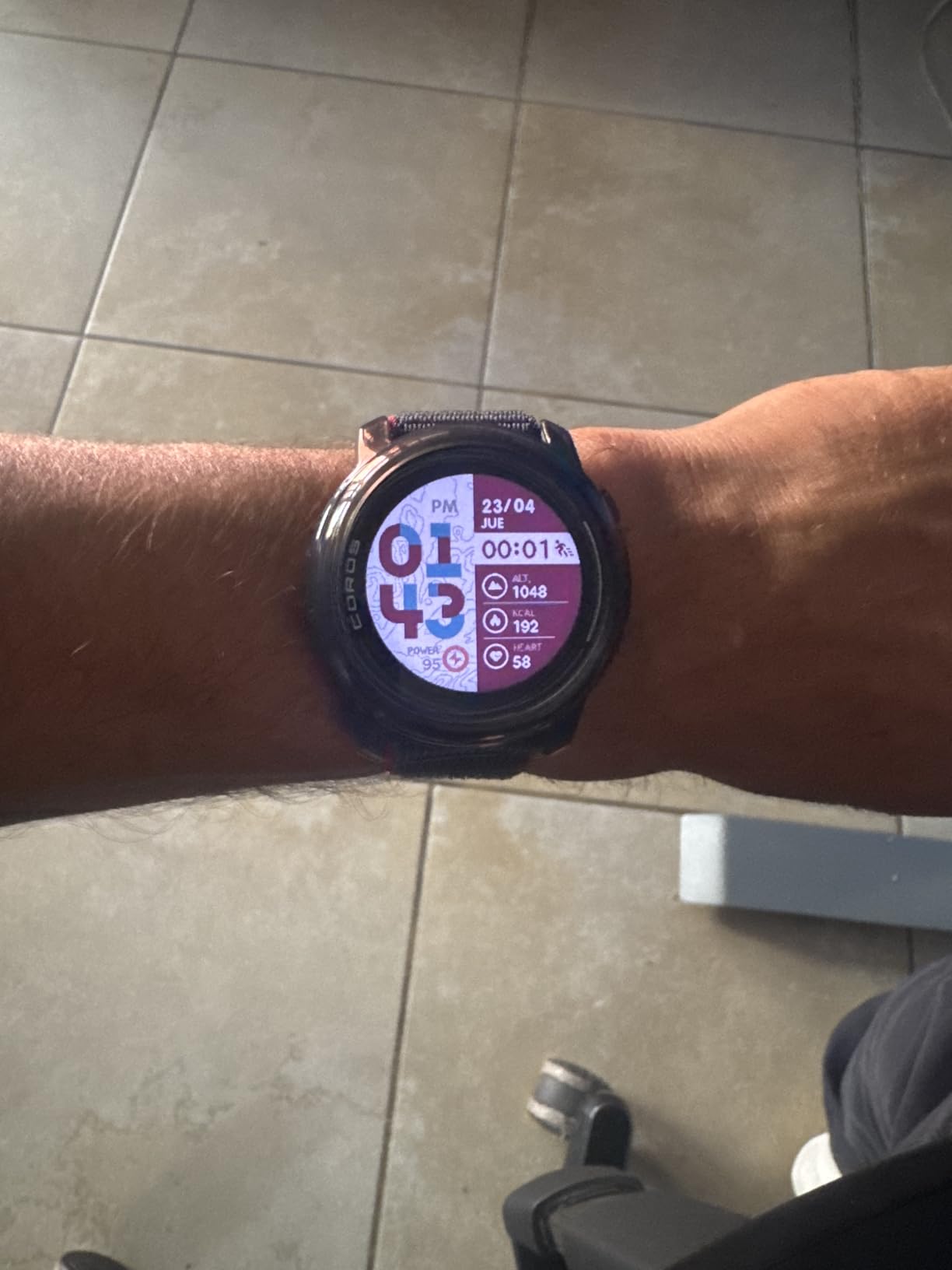
The always-on transflective touchscreen with three backlight modes is the sleeper feature for triathlon. It stays readable in direct sunlight without a backlight, which matters on a long exposed bike leg where an AMOLED can wash out.
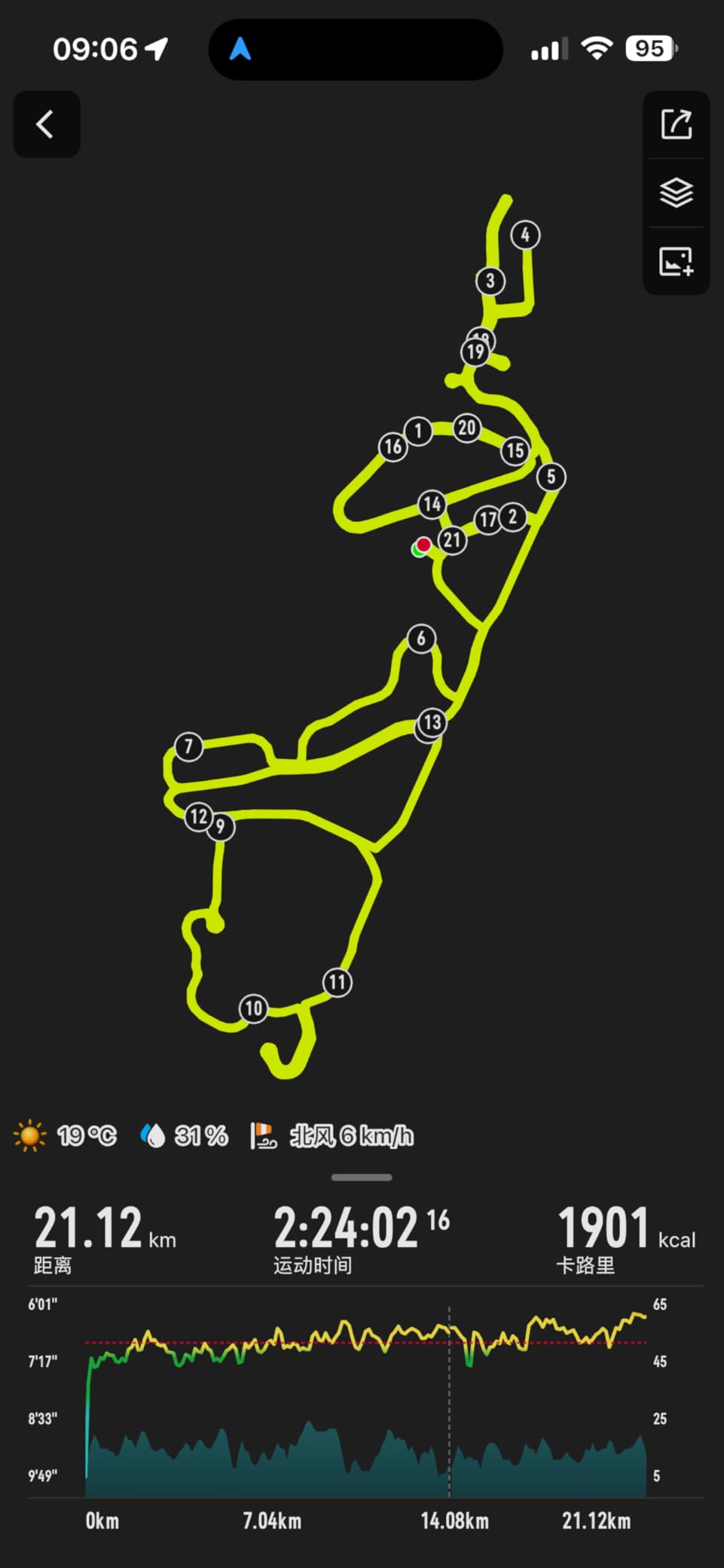
Dual-frequency reception on the redesigned satellite chipset held accuracy between tall buildings, and it records air pressure and elevation gain for the run and bike legs. Route planning with breadcrumb navigation syncs from the app, and activity modes cover run, trail run, bike, swim, strength, snowboard, ski and XC ski.
Owners regularly report two years of triathlon use on this watch without regret, and the reason they bought it is telling: they were not sure how deep they would get into the sport. That is the correct watch to start with.
Why the PACE 3 covers most training blocks
For anyone training toward a sprint or Olympic distance, or a first 70.3, the PACE 3 handles every leg and logs real data. With a chest strap added for interval accuracy, the practical shortfall against a current Garmin flagship is analytics depth, not recording quality.
It also disappears on the wrist, which means you will wear it for sleep, which means you will get recovery and activity data for days you are not training. That consistency is what training load calculations depend on.
Where the PACE 3 falls short
There is no multisport transition profile or open-water triathlon mode equivalent to Garmin’s, so you will start and stop legs manually. Storage is limited to 3 GB, and sleep and advanced recovery metrics are basic next to premium rivals.
The transflective panel averages indoors and at night despite the always-on backlight, and the training analytics stop short of the load-ratio and readiness numbers Garmin provides. If you are already certain you will be racing long-course, step up.
9. Suunto 9 Peak: Best Outdoor-Built Triathlon Watch
SUUNTO 9 Peak and Peak Pro Sports GPS Watch for Demanding, Performance Driven Athletes and Adventurers
Titanium and sapphire glass
100 m rating
40 h best GPS, 300 h tour mode
Pros
- MIP display with excellent sunlight readability
- 40 hours in best GPS mode
- Ten-minute charge adds two hours of GPS
- Titanium
- sapphire glass and 100 m rating
Cons
- Recent firmware updates drain battery sharply
- Swim physiology varies between sessions
- Buttons dig in during sleep wear
The Suunto 9 Peak is built like an instrument and priced like a watch, which makes it the pick for anyone training in rough conditions. Military-grade titanium, stainless steel and sapphire glass with a 100 m waterproof rating will take more punishment than an aluminium or resin case, and it is handcrafted in Finland.
Battery figures are the standout: 40 hours in best GPS mode, 70 hours in endurance mode and 300 hours in tour mode. A ten-minute quick charge gives you two hours of GPS training, which turns a flat battery from a missed session into a coffee stop.
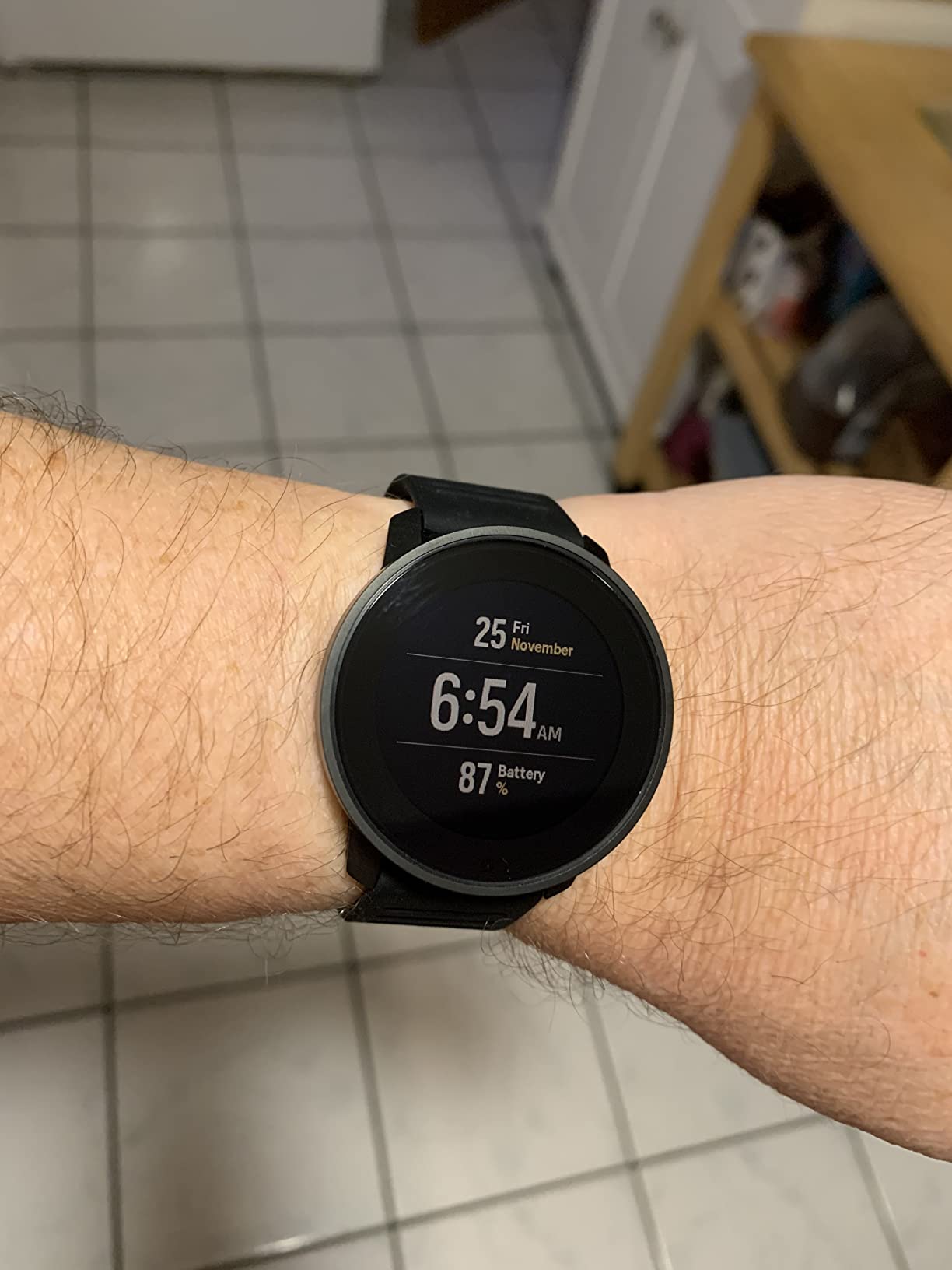
It uses four satellite systems for reliable tracking among tall buildings, mountains and canyons, and 97 sport modes cover everything from triathlon to ski touring. Turn-by-turn navigation, weather alerts and avalanche maps are included, and music controls work with a connected phone and earbuds.
The Suunto app builds structured workouts and goals with real-time guidance, and the training journal, sleep and recovery analysis are easy to read. It also connects to Strava, TrainingPeaks and around 200 other fitness apps.
Who should choose the Suunto 9 Peak
Any athlete training in winter conditions, on rocky terrain, or at altitude will value the sapphire crystal and 100 m rating over a lighter screen. The four-day tour mode figure makes it a natural choice for multi-day bike and ski trips.
It is also one of the few watches here that charges in an hour and pushes 40 hours of GPS, a combination that suits a watch used for two sessions a day.
Where the Suunto 9 Peak falls short
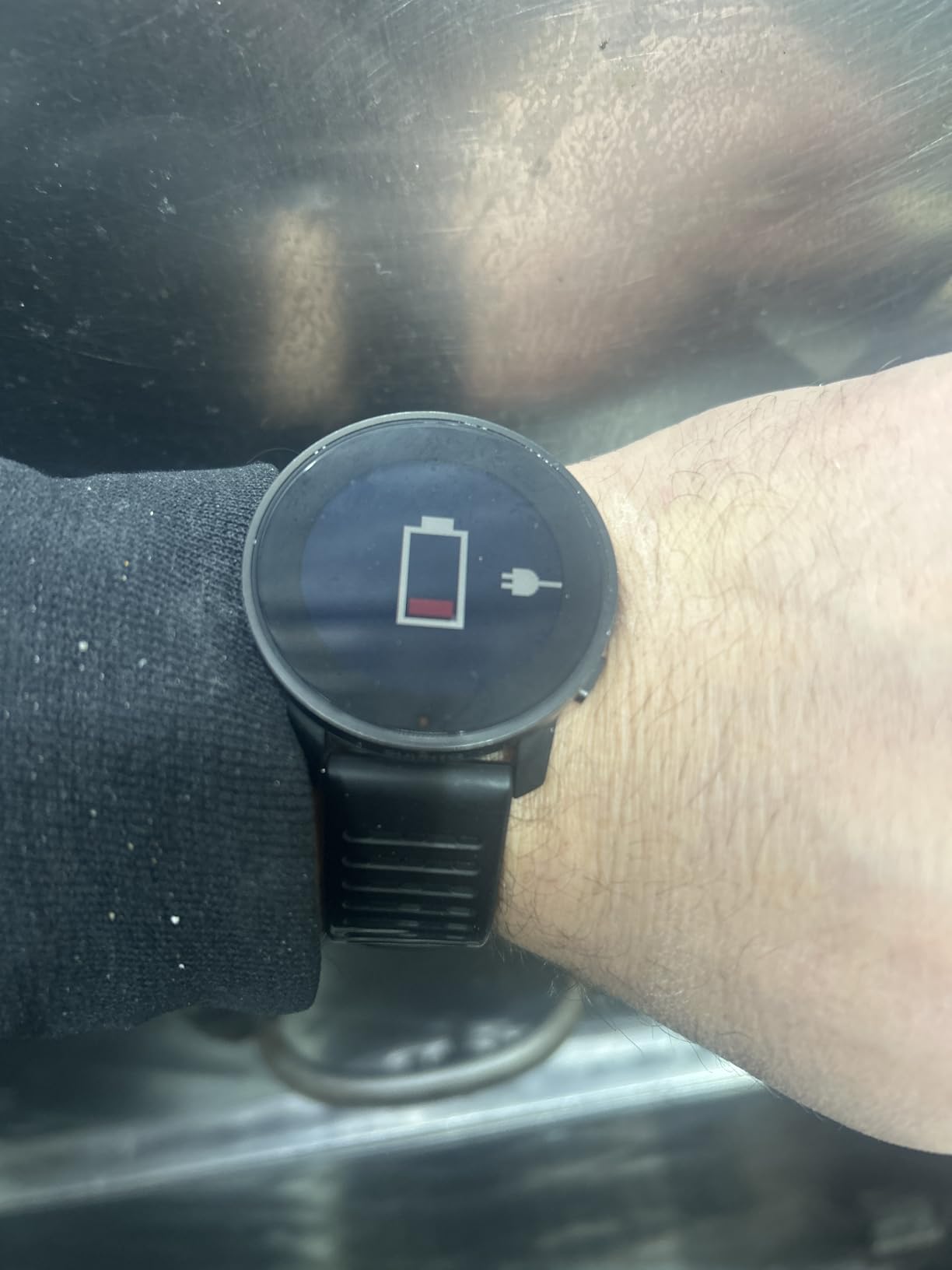
The most common complaint is firmware. Owners report recent software updates draining the battery dramatically, cutting real-world runtime to around two days, which is a serious regression on the headline figures. Physiological readings during swimming also vary widely between identical sessions.
Buttons can dig into the wrist and feel uncomfortable in sleep wear, and watch face customization has moved behind a subscription in recent firmware. The activity list cannot be manually reordered, and sleep tracking misses a second sleep period after a night-time interruption.
10. Samsung Galaxy Watch Ultra2: Best for Phone-Free Training
Samsung Galaxy Watch Ultra2, Titanium Silver, 47mm LTE Smartwatch
47mm titanium case
1.9in 5000-nit Super AMOLED
LTE built in
IP69K and 100 m rated
Pros
- 5000-nit display stays legible in harsh sun
- Built-in LTE for calls and texts without a phone
- IP69K dust-tight and 100 m water resistant
- Fast charging gives two to three days
Cons
- Battery shorter than multisport GPS rivals
- Best inside the Samsung ecosystem
- Triathlon and multisport depth trails dedicated Garmin
The Galaxy Watch Ultra2 is the only watch in this roundup that is a genuinely independent device rather than a companion to your phone. Built-in LTE means you can take calls, send texts and receive updates with your phone in a transition bag, which is the one thing every other watch here cannot do.
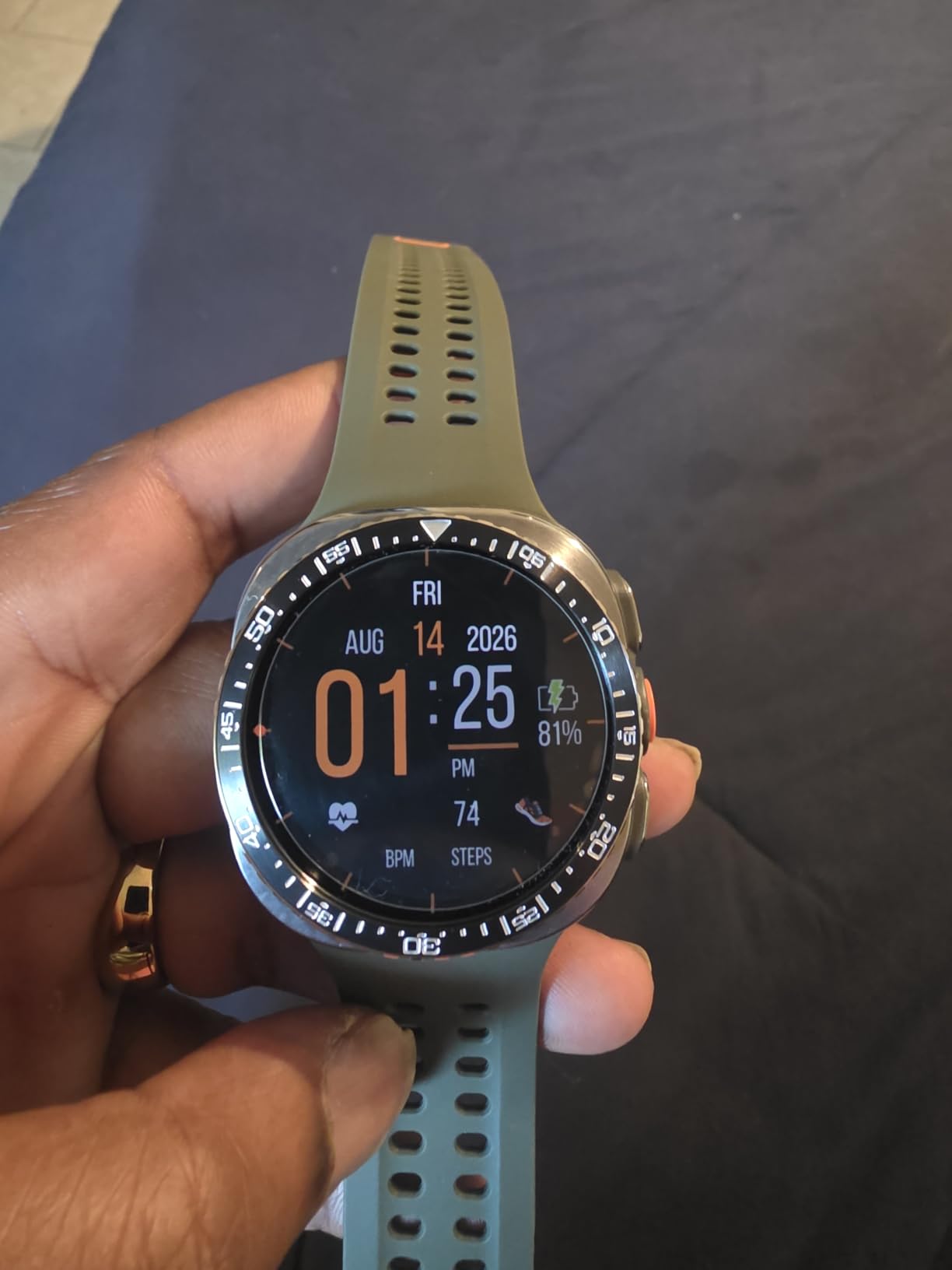
The 1.9-inch Super AMOLED at up to 5000 nits is the brightest display we tested, and the titanium 47 mm case with IP69K dust-tight and 10ATM water resistance is genuinely rugged. There is also an EN13319-certified underwater computer app with ascent and descent monitoring, limit depth notification and safety stop information.
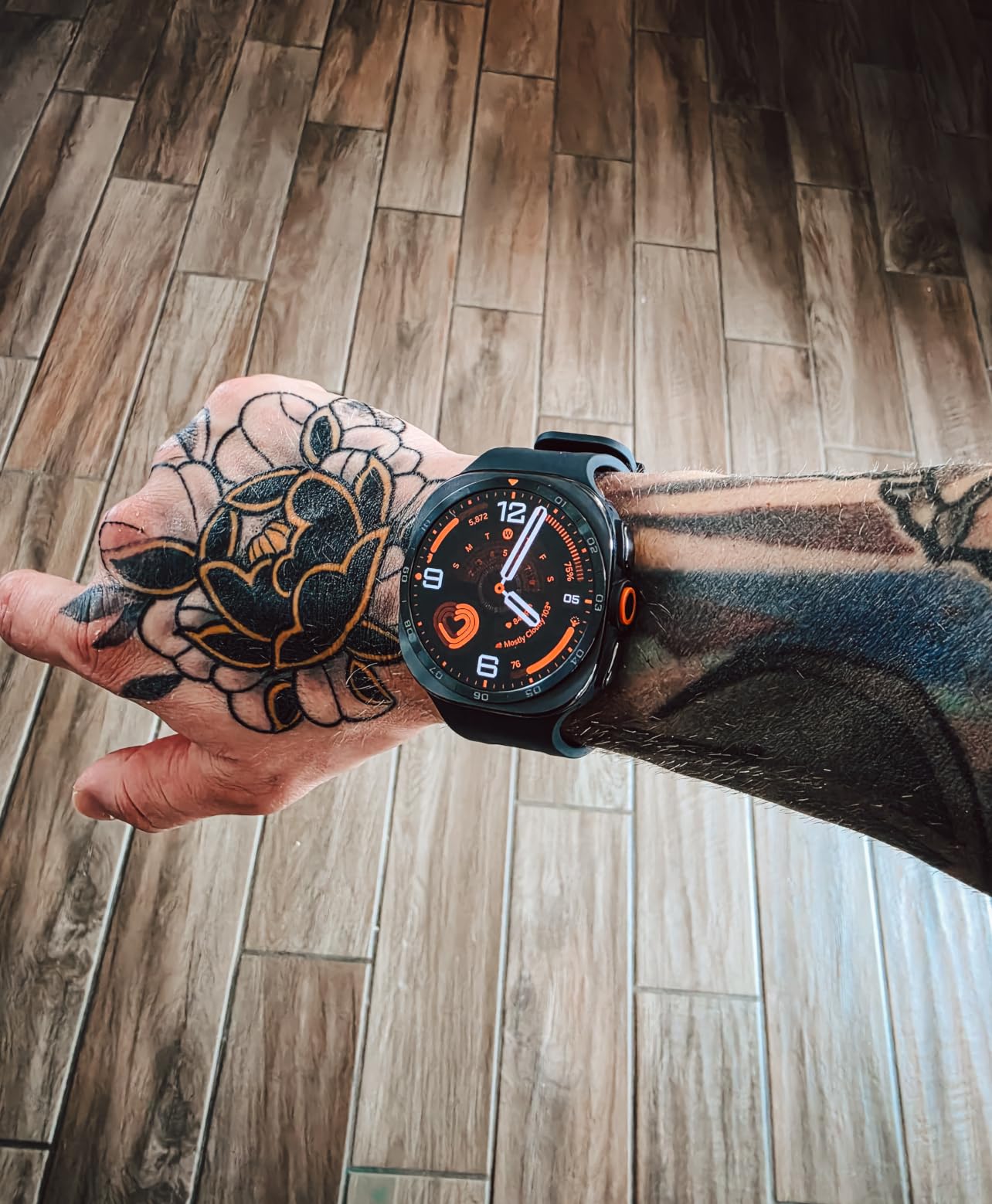
Trail navigation gives path, elevation and pace guidance along with personalized hydration alerts, which is more relevant to a hilly run leg than the name suggests. Voice-activated assistance responds as soon as you raise your wrist, and a personalized heart health score summarizes your heart data in one view.
Charging is quick enough that most owners get two to three days per charge, and the watch is lighter than its rugged styling suggests.
Where the Galaxy Watch Ultra2 works for triathlon
It is a strong option for athletes whose training is mixed with work travel, or who want race-week notifications without carrying a phone. The dive and rugged ratings mean it survives a season of beach swims and dusty trail running without drama.
For anyone already inside the Samsung ecosystem, the fit is natural. Galaxy Wearable and Samsung Health handle the data, and the display quality is the best in this group for reading mid-workout in harsh conditions.
Where the Galaxy Watch Ultra2 falls short
Battery endurance is the headline problem. Charging every day or two is a real compromise when your race demands 17 hours of continuous recording, and it loses badly to every Garmin and Suunto watch here on that single metric.
Wrist heart rate is less dependable than a chest strap or a dedicated optical sports watch, triathlon and multisport profile depth trails dedicated Garmin devices, and the large bezel looks bulky on narrow wrists. It also pairs best with Samsung phones and does not work with iPhone.
How to Choose a Triathlon Watch
Start with the race, not the feature list. Most overbuying happens because someone reads a spec sheet for a 17-hour ultra and buys a flagship when their actual goal is an Olympic-distance race in August. Match the watch to the distance you will actually do this season, and upgrade later if you need to.
Battery life against the Ironman cut-off
A full Ironman allows 17 hours, and your watch needs to record all of it. Our order of preference is simple: more than 30 hours of GPS means you can race and still have reserve; 20 to 30 hours covers a full distance with a charging plan in transition; below 20 hours and you should carry a cable or plan to run out of clock.
On that basis the fenix 8 at 84 hours, the Fenix 6 Pro Solar with its solar lens, the Forerunner 965 at 31 hours, the COROS PACE Pro at 38 hours and the COROS PACE 3 at 38 hours all clear a full race comfortably. The Forerunner 945 needs UltraTrac for that distance, and the Galaxy Watch Ultra2 does not suit it at all.
Also note that GPS mode and smartwatch mode figures are not comparable. An AMOLED screen with always-on display will consume noticeably more than a transflective panel, so the same watch can lose hours between settings.
Open-water swimming and transition handling
Open-water tracking needs two things: a locked GPS trace of your actual path, and stroke rate and stroke detection that do not fall apart in chop. The accelerometer and gyroscope handle the stroke data, so wrist-based stroke type detection is the least reliable metric across brands.
Transition handling matters just as much. A dedicated triathlon profile lets you record the swim, switch with a button press at transition, and get one combined activity covering all three legs, with transition time included. That combined record is what feeds your training load and recovery advice across a full week of multisport work. Watches without a multisport profile, such as the COROS PACE 3, still record fine, but you manage the legs yourself.
One practical detail nobody mentions: case size. A 51 mm watch is hard to wear under a wetsuit cuff. If your swim leg is in a suit with a snug wrist seal, anything above about 47 mm will be uncomfortable until you are out of the water.
GPS quality: why multi-band matters
Standard GPS locks onto a handful of satellites at once, and that is enough in open countryside. It degrades predictably in two places a triathlete cares about: under tree cover on a trail run, and in a city where tall buildings reflect satellite signals into a longer, wandering trace.
Multi-band or dual-frequency reception listens on two frequency bands at the same time, which lets the watch resolve the reflected signal that causes the wander. The Forerunner 965, fenix 8 and COROS PACE Pro use multi-band or dual-frequency hardware with SatIQ or an equivalent chipset, and the difference is visible in the raw track on a route with both a forest section and a high-rise section. The older Forerunner 945 and 745 rely on multi-satellite tracking, which is good but not the same thing.
Heart rate: wrist sensor versus chest strap
Wrist optical heart rate is accurate at steady-state efforts and fine for recovery data. It is noticeably worse during intervals, in strength work and in the water, where sweat and motion shift the watch on your wrist and break the sensor-to-skin contact.
That is why most serious triathletes add a chest strap. Running it alongside your watch during interval sessions and the swim leg, while keeping the watch for daily wear, costs very little and removes the biggest source of bad training data. Every watch here accepts an external strap over ANT+ or Bluetooth.
Training analytics and the app ecosystem
Garmin Connect remains the deepest of these ecosystems for triathlon, with training readiness built from sleep, recovery, load and HRV, training status, race strategy inputs and suggested workouts built around a course. The COROS app covers training status, custom workouts and sleep analysis well. The Suunto app offers structured workouts, TSS, CTL, VO2 Max and TSB plus AI Coach insights, but some users find it less refined.
This is where brand lock-in actually costs you something. If you already have a training platform, a smart trainer or a coach working from a specific export, check compatibility before buying rather than after.
Case size, weight and wearability
Weights in this roundup run from 30 g to 102 g, and that range decides whether you sleep in the watch. Under about 50 g and most athletes will wear it overnight without noticing, which is where recovery data comes from. Over 90 g and you will take it off at night, losing the recovery signal that training load depends on.
As a rough guide, cases at or below about 45 mm suit wrists under 165 mm, 45 to 47 mm suits most wrists, and anything at or above 51 mm overhangs narrower wrists badly. A touchscreen is convenient but unreliable with wet hands, so most racers we spoke to turn it off in race mode and rely on the buttons.
Can a triathlon watch replace a bike computer?
Partly. Every watch here supports route navigation, full-color or topographic maps and turn-by-turn directions, and all of them pair with power meters, speed and cadence sensors and smart trainers over ANT+ and Bluetooth. For training rides on a known route, that is enough, and plenty of athletes have ditched a separate computer.
For racing or long unfamiliar routes, a dedicated bike computer still wins on screen size, out-front visibility, longer battery and faster route manipulation with gloves on. A watch plus a stem mount covers most of the gap, but it is a compromise rather than a replacement.
Frequently Asked Questions
Is Garmin or Apple Watch better for triathlon?
Garmin is better for triathlon training beyond Olympic distance, because it records swim, bike and run as one activity with automatic transitions, and pairs with power meters and chest straps. An Apple Watch is a reasonable choice for Olympic-distance racing if you already own one, but battery endurance on the swim leg and open-water metrics are weaker. Most tri clubs run on Garmin, which also means shared workouts and plans are easy to find.
Is Garmin or Coros better for triathlon?
Garmin is better if your training is genuinely multi-sport, because Connect offers the deeper triathlon analytics, transition automation and ecosystem. Coros is better on value, weight and price, with the PACE Pro offering 38 hours of outdoor GPS, dual-frequency accuracy and a bright 1500-nit AMOLED at a lower cost. Pick Garmin for long-course and Coros for value, brightness and lightness.
Which Garmin watch is best for triathlon training?
The Forerunner 965 is the best all-round choice, with 31 hours of GPS, multi-band GNSS, a 53 g titanium case and built-in triathlon profiles. The Forerunner 945 is the best value if you find one on a deal. The fenix 8 is the best for full Ironman distance, with 84 hours of GPS and a rugged case. The Forerunner 745 is best for small wrists.
What is the best value for money watch for triathlon?
The COROS PACE 3 and the Garmin Forerunner 945 both serve most athletes better than a flagship. The PACE 3 is the lightest at 30 g with 38 hours of GPS, while the Forerunner 945 is a full triathlon tool with onboard music, maps and UltraTrac battery at previous-generation pricing. If you already own a Garmin, keeping the ecosystem is often the cheapest upgrade.
Are wrist-based heart rate readings reliable for triathlon training?
Wrist optical readings are accurate at steady state and fine for recovery tracking, but they drift during intervals, strength work and in the water as sweat and motion shift the watch on your wrist. Most serious athletes pair a chest strap over ANT+ or Bluetooth for interval sessions and the swim leg while wearing the watch for daily training. Every watch in our roundup accepts an external strap.
Which triathlon watch has enough battery for a full Ironman?
Look for more than 20 hours of GPS mode, since the race cut-off is 17 hours. The fenix 8 at 84 hours, the COROS PACE Pro and PACE 3 at 38 hours, and the Forerunner 965 at 31 hours all clear a full race with reserve. The Forerunner 945 reaches that only in UltraTrac mode, and a smartwatch with LTE and a short battery is not suited to full distance.
Conclusion: Which Triathlon Watch Should You Buy?
For most triathletes, the Garmin Forerunner 965 is the right buy. It records all three legs properly, holds multi-band GPS, runs for 31 hours on a charge and weighs 53 g, which means you will wear it for sleep as well as training. That combination is hard to beat at any price.
Buy the Forerunner 945 instead if you find one on a deal, the COROS PACE 3 if your budget is tight or you want the lightest watch, and the fenix 8 only if you are racing full distance in summer heat or training for hours at a time outdoors. Match the watch to this season’s race, not to a feature list for a season you have not reached yet.
Whichever you pick, wear it for four straight weeks before you judge it. These are the best fitness watches for triathlon training in 2026, and the right one is the one that disappears on your wrist and stays on through every transition. For the rest of your kit, start with our GPS running watch guide for marathon training.