
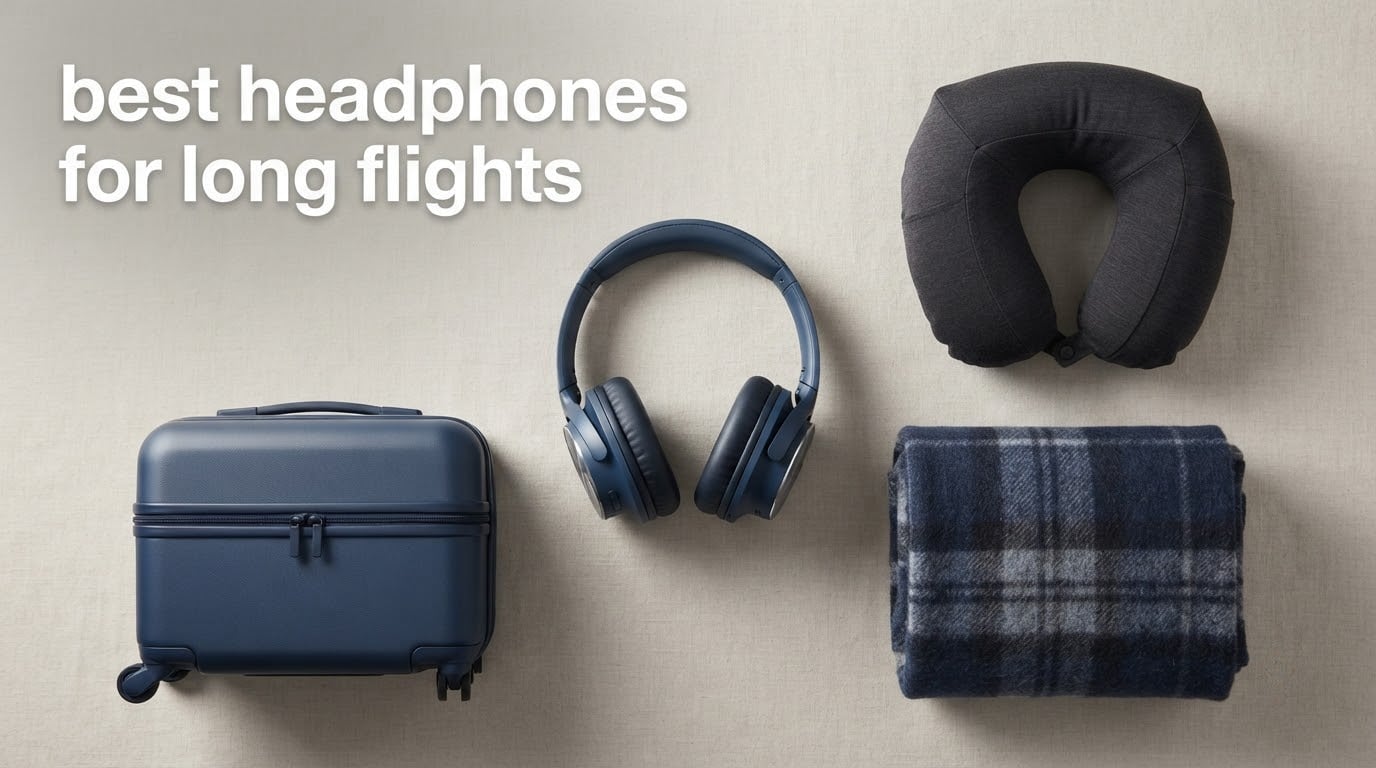
The best headphones for long flights are the Soundcore Q30 Hybrid ANC, and the reason is simple: 50 hours of battery with noise cancelling on, a wired fallback that works on a dead battery, and hybrid ANC that measurably softens engine rumble. We compared 12 pairs across battery life, weight, clamping force and cabin noise handling for this roundup.
Most headphone roundups are written at a desk. We built this one around the three things that actually decide whether a 14-hour leg is bearable: how well the noise cancelling handles low-frequency engine drone, whether your ears still feel good at hour ten, and whether the battery survives a multi-leg itinerary with no outlet.
That third point matters more than most buyers expect. Cabin noise sits high enough to cause listening fatigue, and once you are fatigued, a mediocre cushion turns into a headache. Good noise cancelling plus a well-distributed headband is what separates a pair that works in a product photo from a pair that works in seat 24C.
One thing to clear up early: active noise cancelling is not magic, and it is not a mute button. It works by detecting incoming low-frequency sound and broadcasting an opposing signal, which is why it is so effective against the constant rumble of engines and air conditioning and much less effective against a flight attendant’s voice three rows back. The padded seal of the earcup does the rest of the work. The best results come from the two layers together.
We also found that the frequency matters more than the brand. Most complaints on r/TravelHacks centre on clamping force and pressure points rather than sound quality, and that is the single biggest reason a pair gets returned after a long trip. We have weighted comfort at least as heavily as noise cancelling throughout these picks.
Over the next few thousand words you will find 12 pairs ranked, each with the specific travel scenario it fits best and the scenario it does not. A few of them are budget sets under a hundred dollars; a couple are flagship models. All of them clear the bar for multi-hour wear, but they are not interchangeable.
Table of Contents
Top 3 Picks: Best Headphones for Long Flights in 2026

Soundcore Q30 Hybrid ANC
- 50 hours ANC battery
- Hybrid ANC with 3 modes
- Works wired on a dead battery
Here is everything at a glance. Every pair below appears with its own full review later in the article, and the battery figures are manufacturer-stated with noise cancelling switched on, which is the number that matters in the air.
| Product | Specifications | Action |
|---|---|---|
| Soundcore Q30 Hybrid ANC |
|
Check Latest Price |
| Beats Studio Pro |
|
Check Latest Price |
 Bose QuietComfort Bose QuietComfort |
|
Check Latest Price |
 Bose QuietComfort Ultra 2nd Gen Bose QuietComfort Ultra 2nd Gen |
|
Check Latest Price |
 Sony WH-CH720N Sony WH-CH720N |
|
Check Latest Price |
 JLab JBuds Lux ANC JLab JBuds Lux ANC |
|
Check Latest Price |
 RUNOLIM Active Noise Cancelling RUNOLIM Active Noise Cancelling |
|
Check Latest Price |
 TOZO HT3 TOZO HT3 |
|
Check Latest Price |
 1Mii Y8+ 1Mii Y8+ |
|
Check Latest Price |
 1Mii E700 1Mii E700 |
|
Check Latest Price |
 YMOO Y7pro YMOO Y7pro |
|
Check Latest Price |
 Soundcore Space 2 Soundcore Space 2 |
|
Check Latest Price |
1. Soundcore Q30 Hybrid ANC: the Best Headphones for Long Flights Overall
Soundcore by Anker Q30 Hybrid Active Noise Cancelling Headphones, Black
50 h ANC battery
Hybrid ANC, 3 modes
9.6 oz
Wired 3.5 mm fallback
Pros
- 50-hour ANC battery covers a full long-haul itinerary on one charge
- Hybrid ANC measurably softens airplane engine rumble
- Lightweight 9.6 oz protein leather cups stay comfortable for hours
- Included 3.5 mm cable works even when the battery is dead
- App EQ lets you rebalance for movies versus music
Cons
- Announcements and speech leak through the ANC
- Less refined ANC than flagship noise cancelling
- Headband and pad plastic wear after several years
- Siri button is easy to press by accident
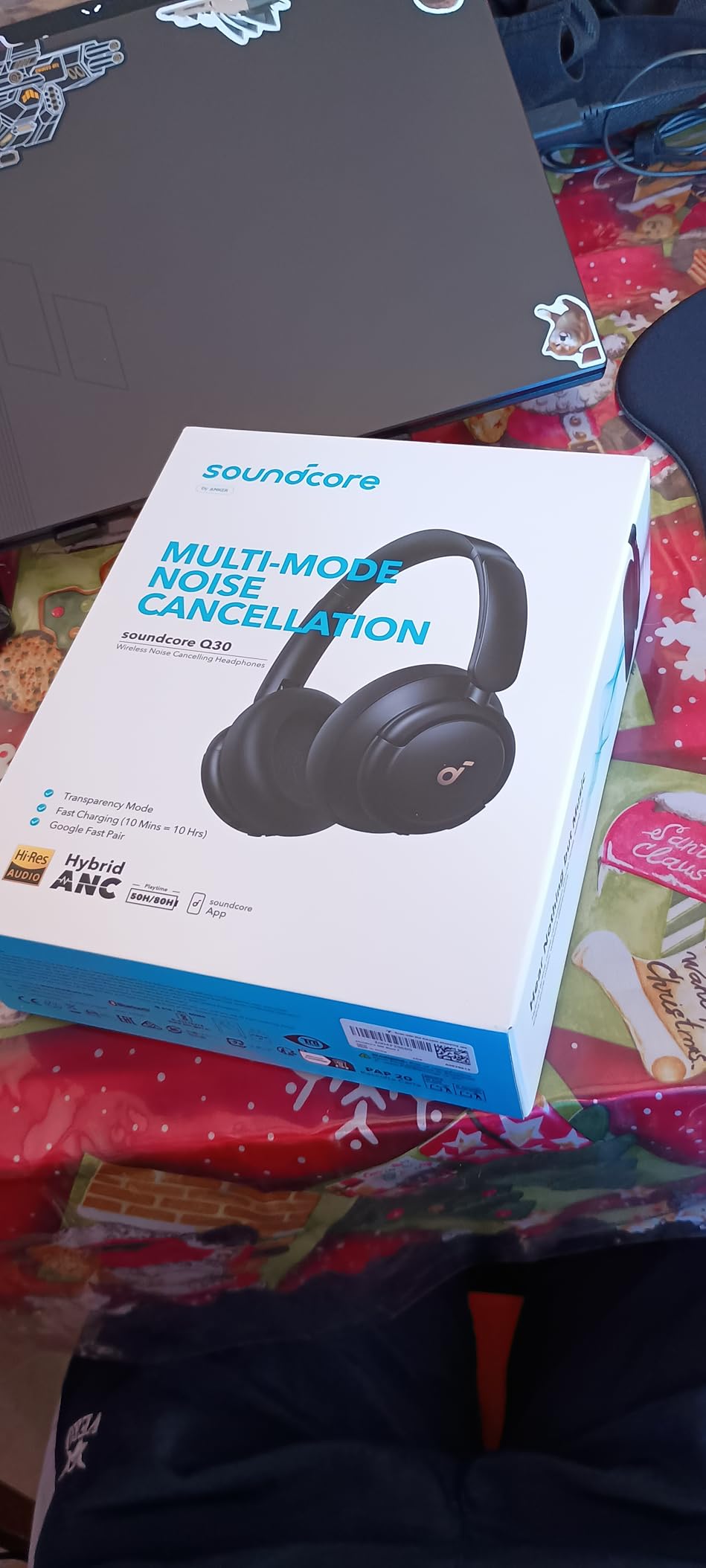
Our top pick does not win on any single spec. It wins because nothing about it is a weakness on a plane. The 40 mm driver and flexible silk diaphragm cover the audible range, the hybrid ANC runs three modes so you can switch between a cruise setting and a taxiing setting, and the 5-minute charge returns four hours if you forget to top it up at the gate.
The detail that made this our first choice is the included AUX cable. Noise cancelling is inactive on the wired connection, so it is a passive pair of headphones then, but a passive pair that still works is worth more than a battery that might not last a 16-hour connection through a delay.
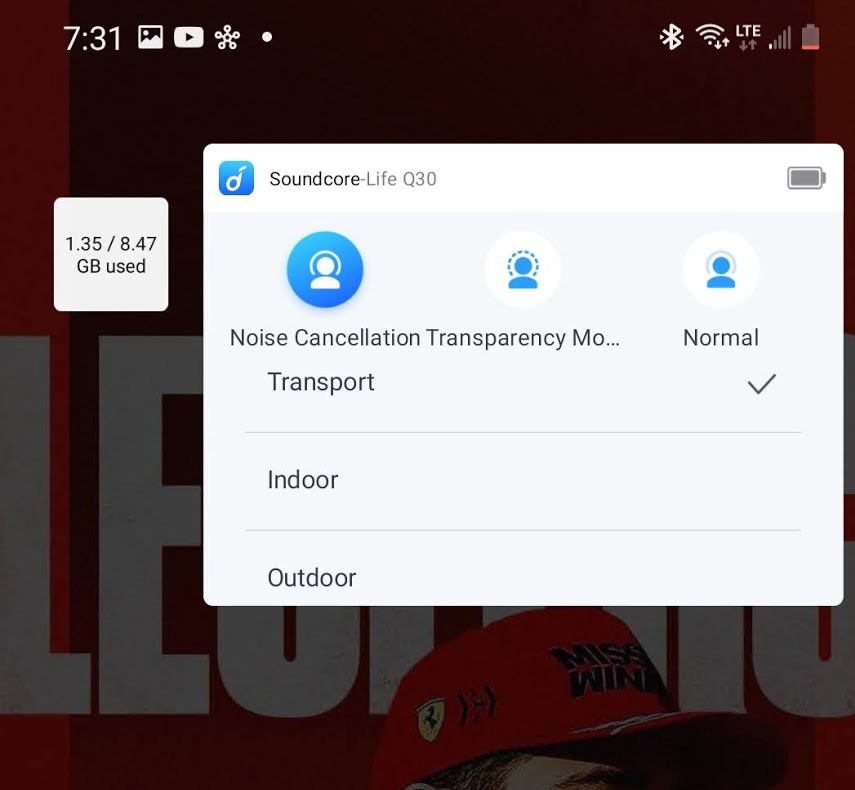
At 9.6 ounces it is one of the lighter full-size sets here, and the protein leather cups distribute pressure without the heavy clamp you get on some mid-tier models. On a red-eye, that difference is the difference between four hours of sleep and none.
Sound is deep and slightly bass-forward, which suits a long playlist better than a neutral signature would. Owners on r/HeadphonesAdvice consistently shortlist it for value, and the wider review base is enormous, which means you will find real-world long-haul reports rather than spec-sheet comfort claims.
Who the Q30 suits
If you fly four or more times a year, the battery math alone justifies it. One charge covers roughly three long-haul legs, and the wired fallback means a dead battery mid-flight is a non-event. It is also the pick if you want ANC and a long battery without stepping up into flagship pricing.
The multipoint pairing is genuinely useful when you are working: switch from a movie playing on the seat-back to a call on your phone without re-pairing anything.
Where the Q30 falls short
Speech and cabin announcements cut through the ANC, so you still hear the safety briefing clearly even with cancellation at maximum. That is arguably a feature, but if you want total silence for sleep, expect some vocal bleed.
Some users also report the headband plastic and pad material degrading after several years of heavy use. The 18-month warranty covers the early period, but replacement parts are less available than they are on Bose or Sony.
2. Beats Studio Pro: Best Headphones for Long Flights With Lossless Audio
Beats Studio Pro Premium Wireless Over-Ear Headphones- Up to 40-Hour Battery Life, Active Noise Cancelling, Great for Travel & Commuting, USB-C Lossless Audio, Apple & Android Compatible -Black
40 h battery
USB-C lossless audio
0.26 kg
UltraPlush cushions
Pros
- USB-C lossless audio is noticeably cleaner than Bluetooth on a long-haul
- UltraPlush cushions stay comfortable through multi-hour flights
- Folding frame packs flatter than most rivals
- ANC handles cabin drone and rumble effectively
- 3.5 mm cable included for seat-back entertainment
- 40-hour battery covers a round-the-world itinerary
Cons
- Maximum volume is lower than the previous Studio generation
- Light build creak and a faint hiss in ANC mode
- Call microphone quality is weak in noisy spaces
- Soft pouch replaces the previous hard case
The Studio Pro is the pick for anyone who watches the inflight movie rather than running their own playlist. USB-C lossless audio skips the Bluetooth compression step entirely, and on a long flight with a decent film that difference is obvious, particularly on dialogue and orchestral scoring.
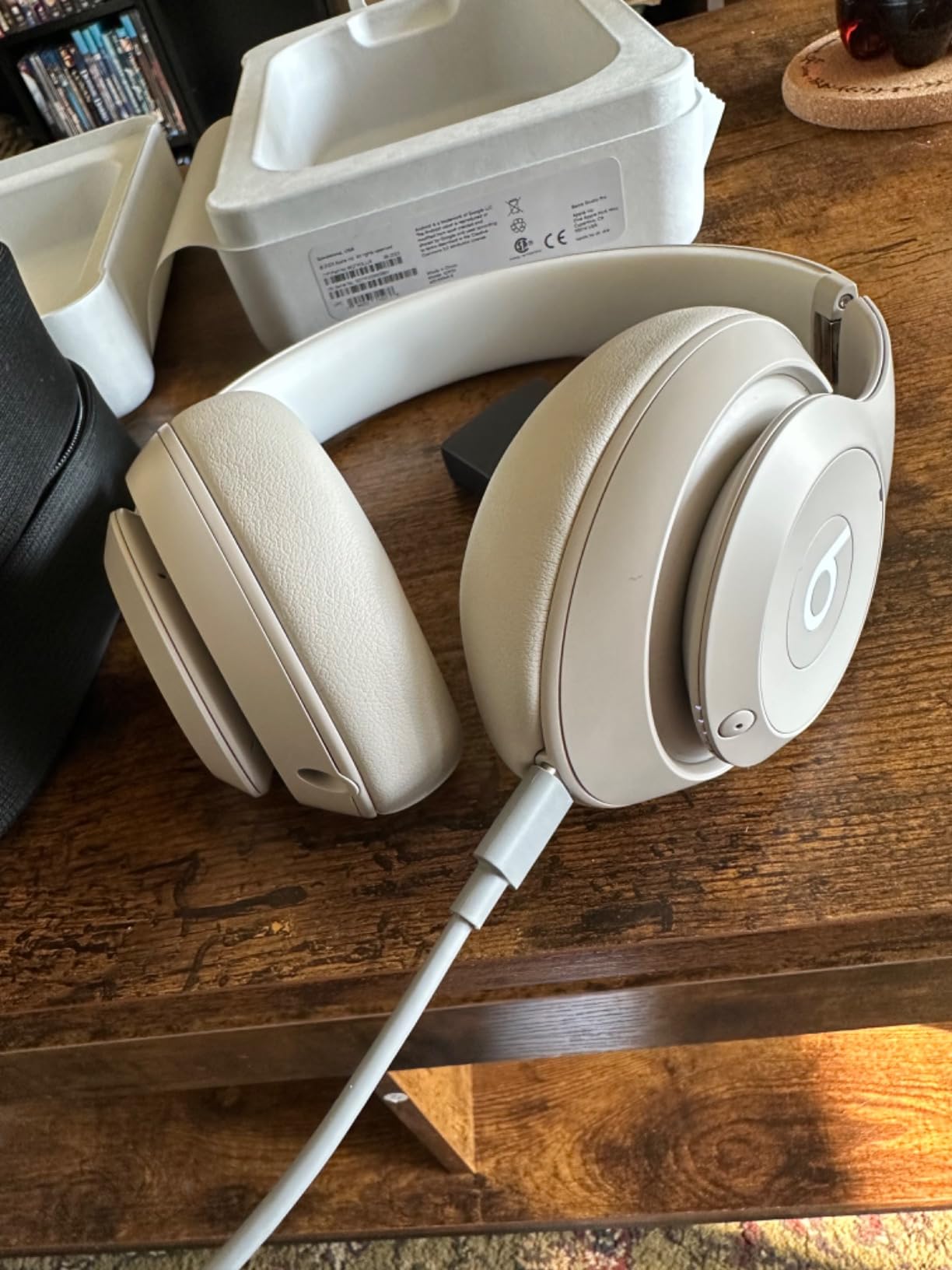
It also handles the practicalities unusually well. A 3.5 mm cable is in the box for the seat-back port, the frame folds flat enough to slide into a seat pocket, and the UltraPlush cushions are among the softest in this roundup.
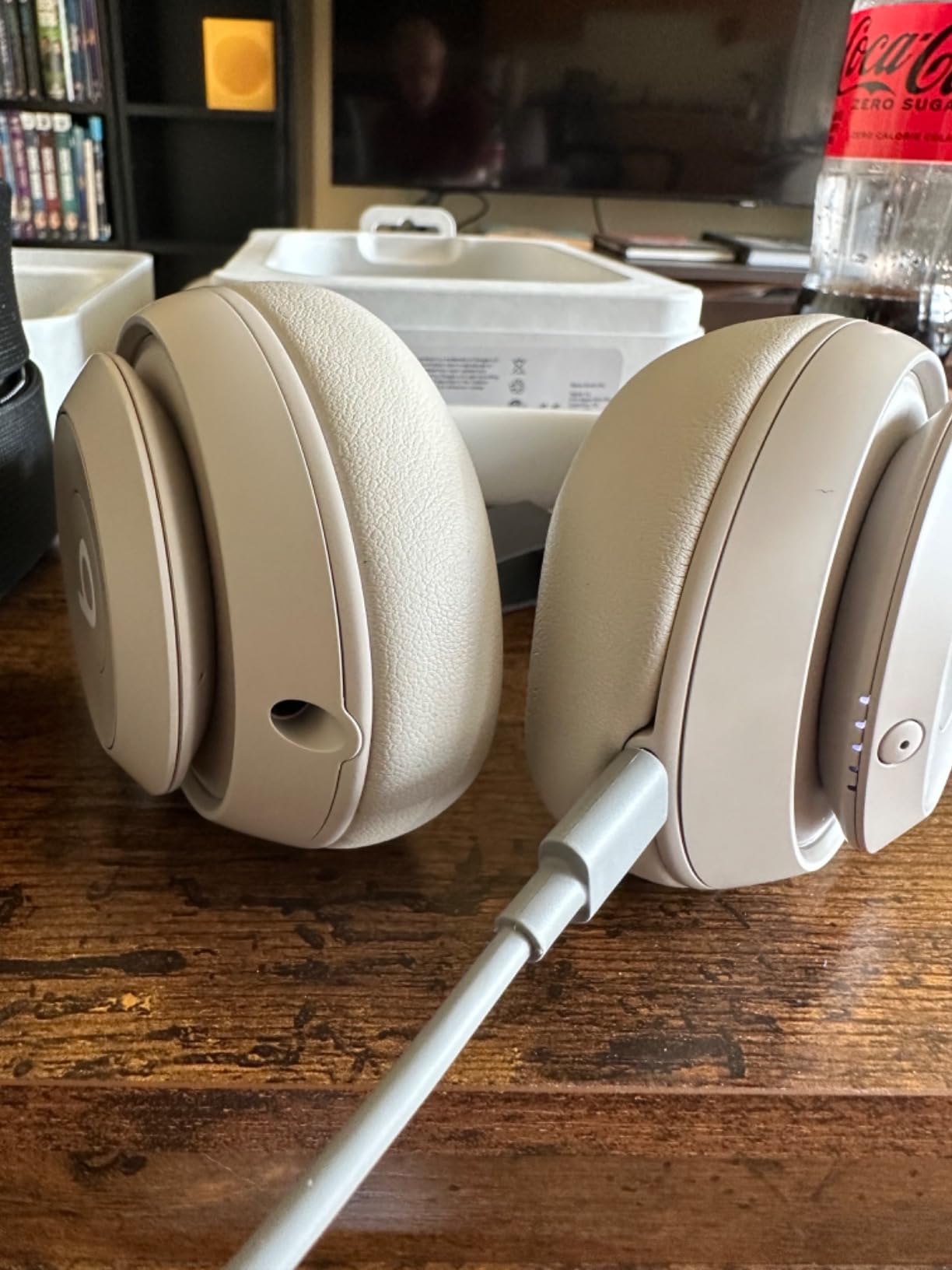
Battery is a solid 40 hours with fast fuel adding four hours from a ten-minute charge, which clears any realistic long-haul itinerary. One-touch pairing with Apple and Android devices is quick, and the spatial audio with dynamic head tracking is a nice extra for films.
The voice-targeting microphones reduce background noise on calls, though reviewers are more mixed on this in practice. If you plan to take work calls from a middle seat, that is worth checking before you commit.
Who the Studio Pro suits
It is built for the passenger who treats the inflight entertainment as the main event. Lossless wired audio, a cinematic presentation and a case that packs small make it a strong long-haul companion for exactly that use.
It is also a good pick if you alternate between Apple and Android devices, since one-touch pairing works with both.
Where the Studio Pro falls short
Peak volume is lower than the previous Studio generation, and on a noisy cabin that can leave you pushing the limit of comfortable listening. If you are sensitive to low frequencies, the tuning leans bass-heavy in a way that some people find tiring after several hours.
Some owners also report a faint hiss when ANC is engaged and creaking from the lighter build. Neither is a dealbreaker, but both are audible in a quiet cabin at low volume.
3. Bose QuietComfort: Best Headphones for Long Flights for Engine Drone
Bose QuietComfort Headphones – Wireless Bluetooth Headphones, Active Over Ear Noise Cancelling and Mic, USB-C Charging, Deep Bass, Up to 24 Hours of Playtime, Black
24 h battery
Quiet and Aware modes
238 g
Multipoint Bluetooth
Pros
- Excellent ANC that removes steady cabin drone with no music playing
- Very light at 238 g so no neck strain on a long flight
- Plush cushions avoid pressure on glasses arms
- Multipoint switching between phone and laptop is reliable
- Wired cable with inline mic works on a flat battery
- App EQ needs minimal adjustment
Cons
- 24-hour battery is the shortest among premium rivals
- ANC does not cancel transient sound like conversation
- Bose adds a low-level noise floor when ANC is on
- Can run warm during exercise
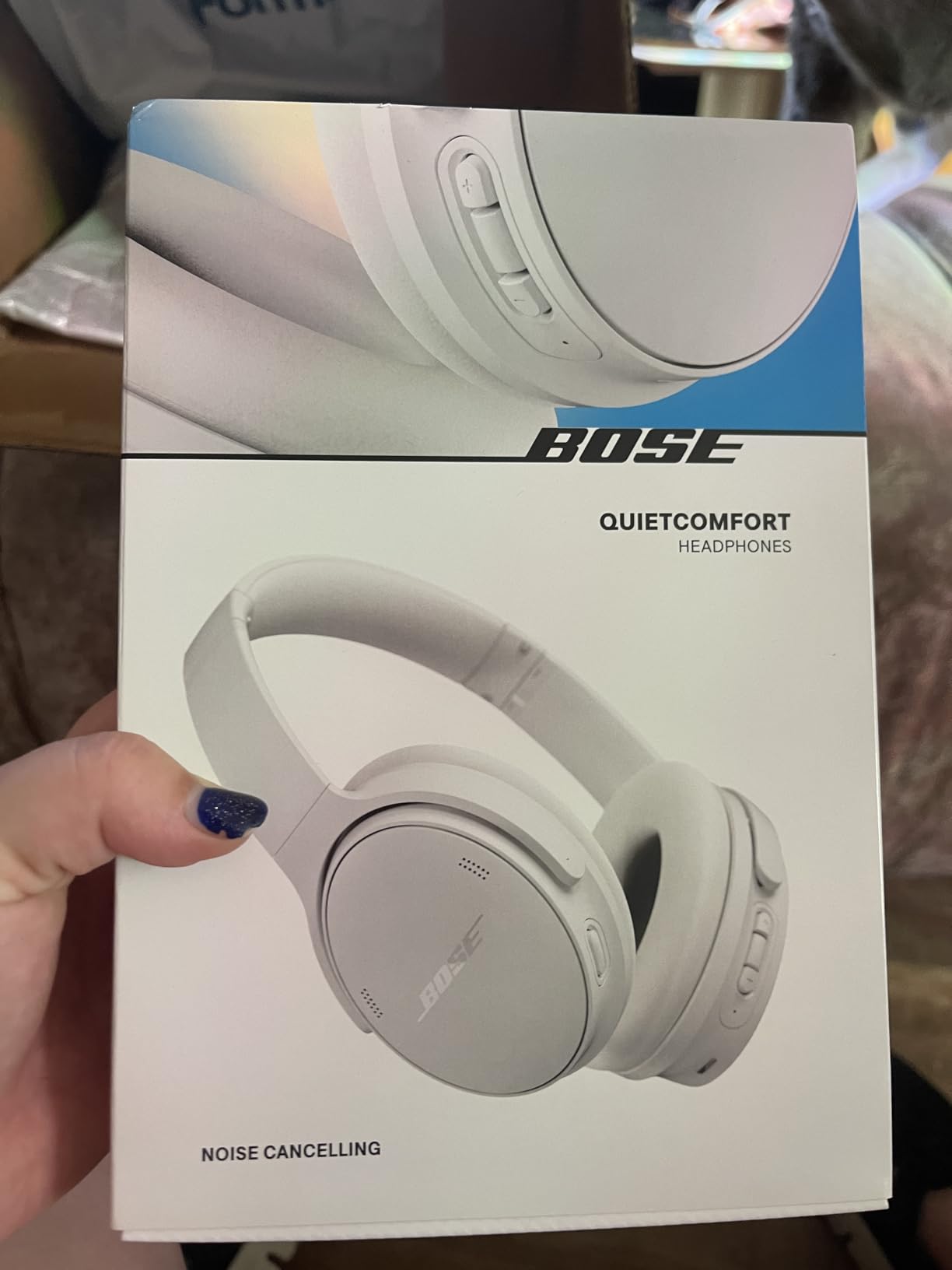
Reddit’s travel communities treat Bose as the comfort benchmark, and r/TravelHacks users repeatedly name it for extended wear and strong ANC. That consensus matches what the specs suggest: 238 grams and plush cushions designed to spread pressure rather than grip.
For cabin noise specifically, this is the pair we would trust on a Boeing 777 with a row-kicking engine. The steady low-frequency hum that builds during cruise is what noise cancelling handles best, and this set handles it well with no music playing at all, which matters when you are trying to sleep through the middle of the flight.
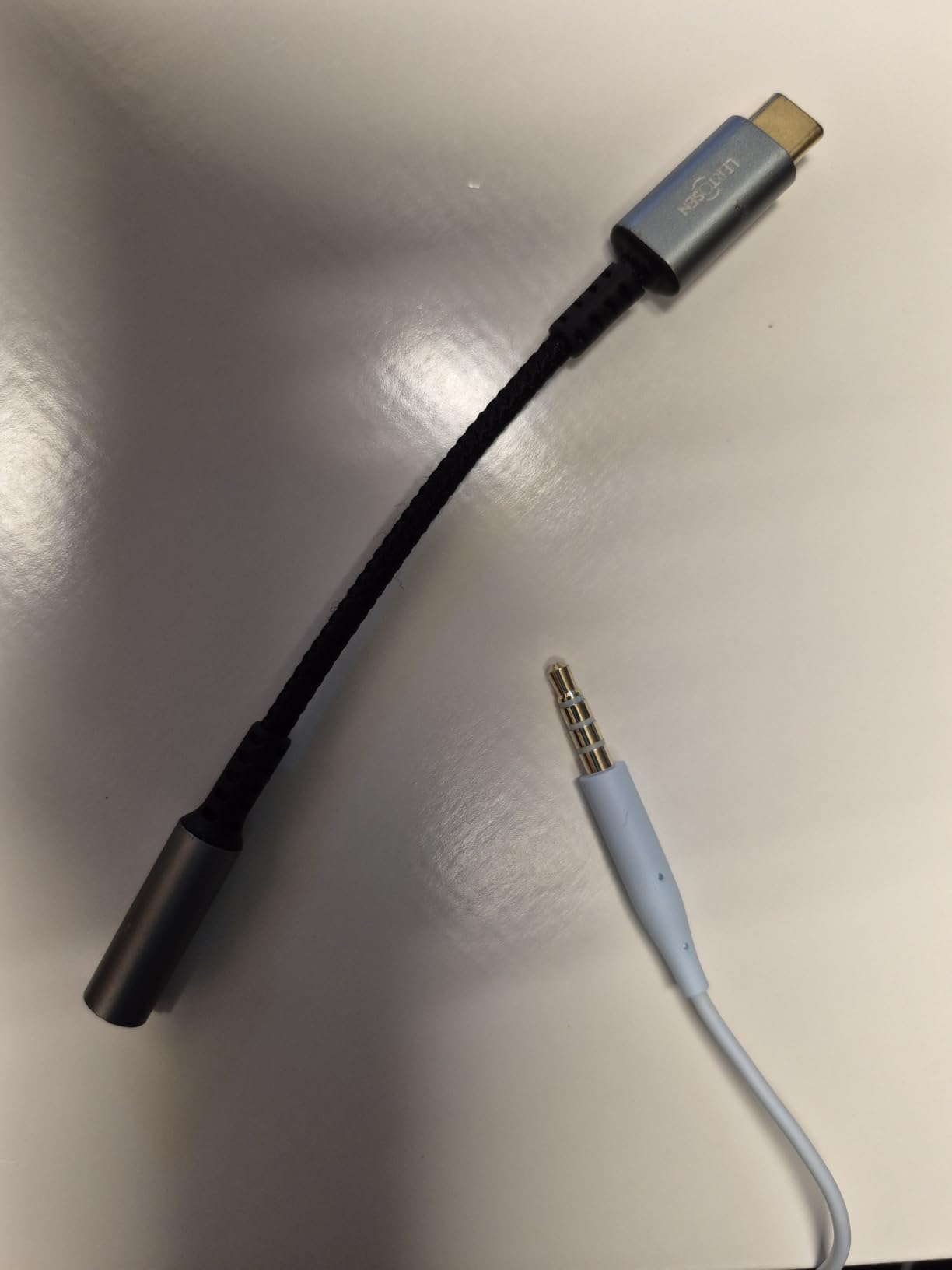
Multipoint is reliable enough to flip between a laptop and a phone mid-session, and the included cable with an inline microphone keeps you covered if the battery runs out, which on a 24-hour rating it eventually will on very long itineraries.
The high-fidelity audio with adjustable EQ in the Bose app needs almost no intervention out of the box. Bass is deep without being heavy, and dialogue stays clear, which is exactly what you want for films.
Who the QuietComfort suits
Anyone whose ears get sore first, especially if you wear glasses. The cushion depth and lower clamping force are the reason so many reviewers single it out for long-haul comfort specifically, and the low weight reduces the neck fatigue that builds over a full day of wear.
It is also a strong choice for anyone who wants near-total quiet without music, whether for sleep or for reading during a long segment.
Where the QuietComfort falls short
Twenty-four hours of battery is the shortest figure among the premium sets here. It covers a single long-haul flight comfortably, but a multi-leg itinerary through a hub will need a top-up, and seat-back power is not guaranteed on older aircraft.
Transient sound is the weak spot. Announcements and nearby conversation come through, and Bose adds a low-level noise floor when cancellation is engaged that some sensitive listeners notice in a very quiet cabin.
4. Bose QuietComfort Ultra 2nd Gen: Best Headphones for Long Flights With Immersive Audio
Bose QuietComfort Ultra Bluetooth Headphones (2nd Gen), Wireless Headphones with Spatial Audio, Over Ear Noise Cancelling with Mic, Up to 30 Hours of Play time, Desert Gold – Limited Edition Color
30 h battery
Immersive and Cinema modes
0.48 kg
CustomTune audio
Pros
- Best-in-class Bose ANC for continuous airplane engine noise
- Cinema Mode and Immersive Audio make inflight movies more cinematic
- CustomTune personalizes sound to your ear shape
- Metal headband and plush cushions spread pressure evenly
- 30-hour battery with 23 hours in Immersive Audio
- USB-C listening while charging extends a session
Cons
- Heaviest set here at nearly half a kilo which can fatigue the neck
- Immersive Audio cuts battery life noticeably
- Higher price tier with limited colour options
- Spatial audio can add a hollow quality to music
This is the flagship option, and its selling point on a plane is Cinema Mode. Combined with Immersive Audio and the spatialised processing, it turns the seat-back into something closer to a small cinema, which is a genuine upgrade on a 12-hour flight where entertainment is the only thing standing between you and a very long day.
The noise cancelling is the same class-leading Bose hardware, aimed squarely at the continuous engine noise that dominates cruise. CustomTune personalises the sound to the shape of your ear, which is genuinely useful with over-ear cups where a single tuning rarely fits every head.
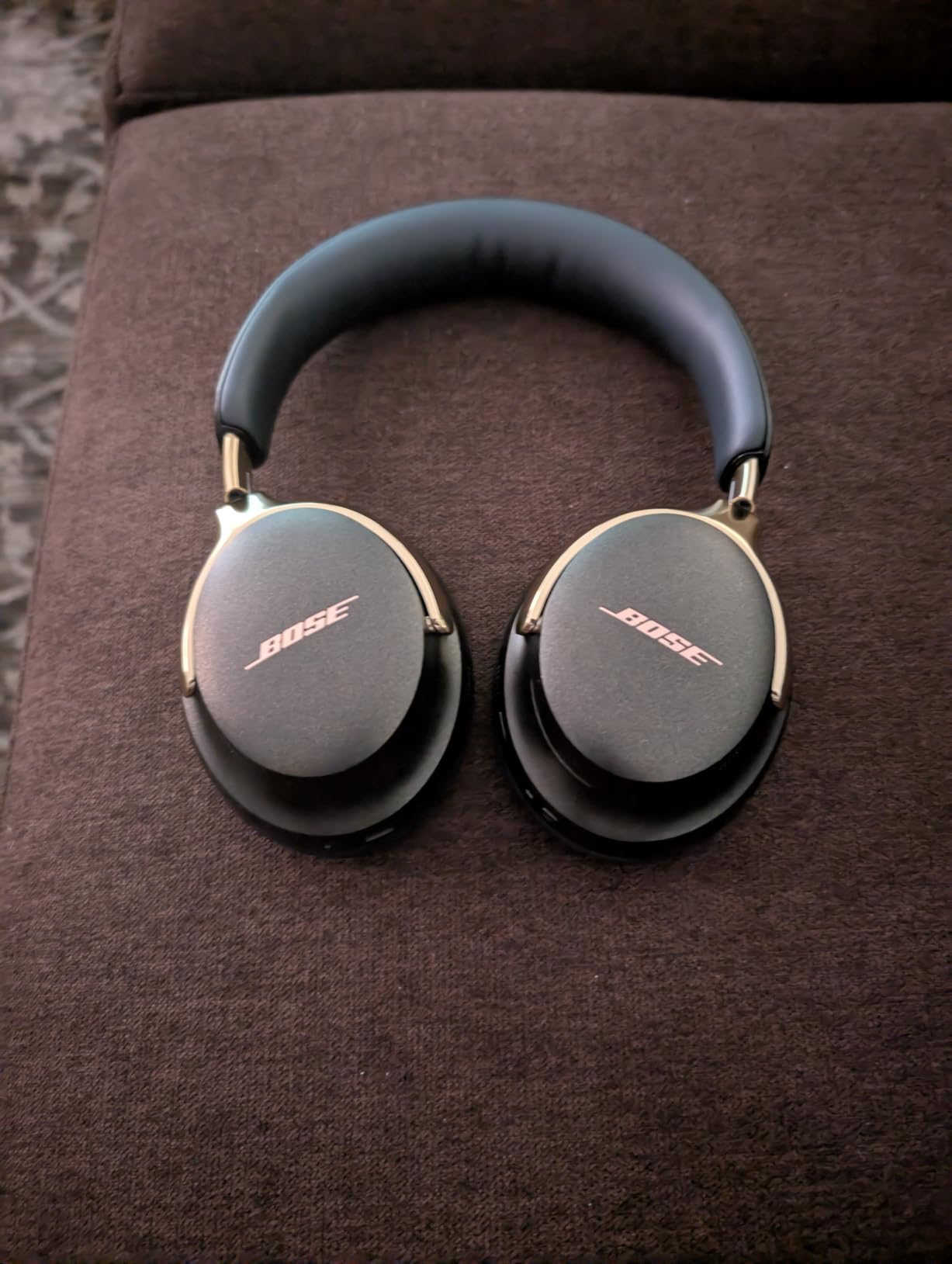
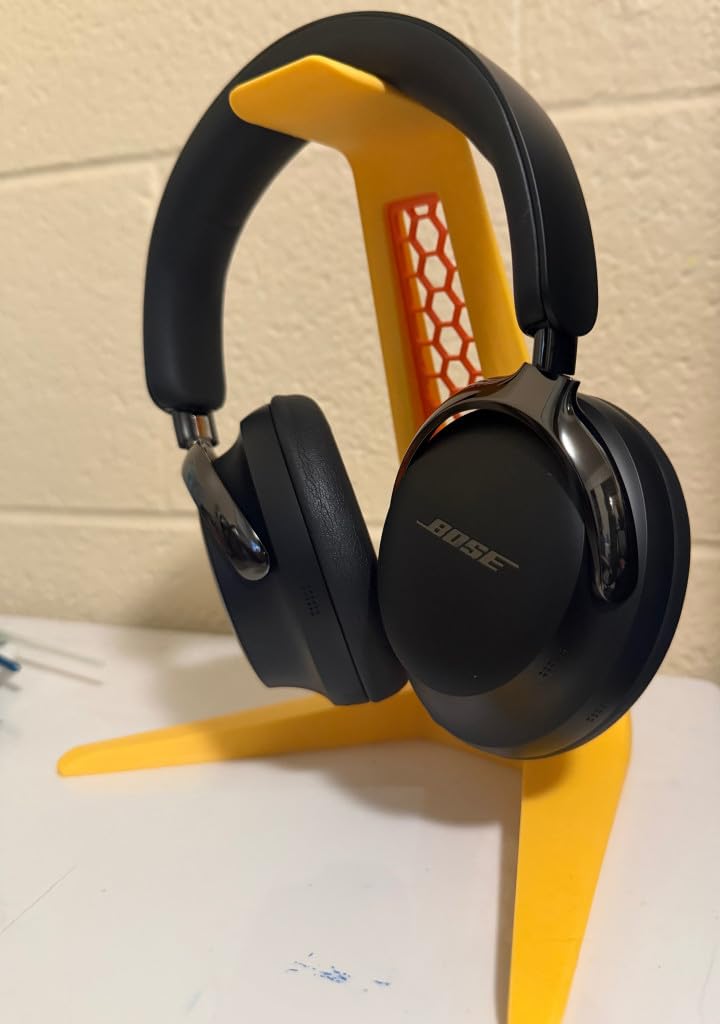
The metal headband and plush cushions distribute pressure evenly rather than pinching at the top of the head, and the frequency response runs 20 Hz to 20,000 Hz with noise-rejecting microphones for calls.
You can listen over USB-C while charging, which removes the low-battery anxiety that the shorter Immersive Audio runtime would otherwise create. That single feature is more useful on a long flight than it sounds.
Who the QuietComfort Ultra suits
It is the right pick for a passenger who treats long flights as a watching experience, and for anyone who wants the strongest cabin noise reduction available. The even pressure distribution also makes it viable for all-day wear, provided you are not sensitive to weight.
Immersive mode, Cinema Mode and spatial audio are all reasons to prefer it over the standard QuietComfort if your budget stretches.
Where the QuietComfort Ultra falls short
At nearly half a kilogram it is by far the heaviest set in this roundup, and that weight lands on your neck over a full day. Reviewers who rate the ANC highly still flag neck fatigue as the trade-off, and it is the main reason this is not our number one pick.
Immersive Audio drops the battery from 30 hours to 23, which is a meaningful cut on a long-haul route. Some owners also find the spatial audio adds a hollow quality to music rather than helping it.
5. Sony WH-CH720N: Best Headphones for Long Flights and Sleeping on a Plane
Sony WH-CH720NL Noise Canceling Wireless Bluetooth Headphones – Built-in Microphone – up to 35 Hours Battery Life and Quick Charge – Navy Blue
35 h with ANC on
Dual noise sensors
192 g
Folds flat
Pros
- Only 192 g making it one of the lightest full-size ANC sets
- 35-hour ANC battery outlasts a long-haul itinerary
- DSEE and app EQ dramatically improve the default sound
- Dual noise sensors adapt well to steady cabin engine noise
- Multipoint switching between phone and laptop is reliable
- Folds to a slim profile that fits a carry-on easily
Cons
- ANC can emit a faint pressure sensation some listeners dislike
- The app is required to get the best sound out of them
- Cup padding and paint can peel after long daily use
- No 3.5 mm jack on this wireless variant
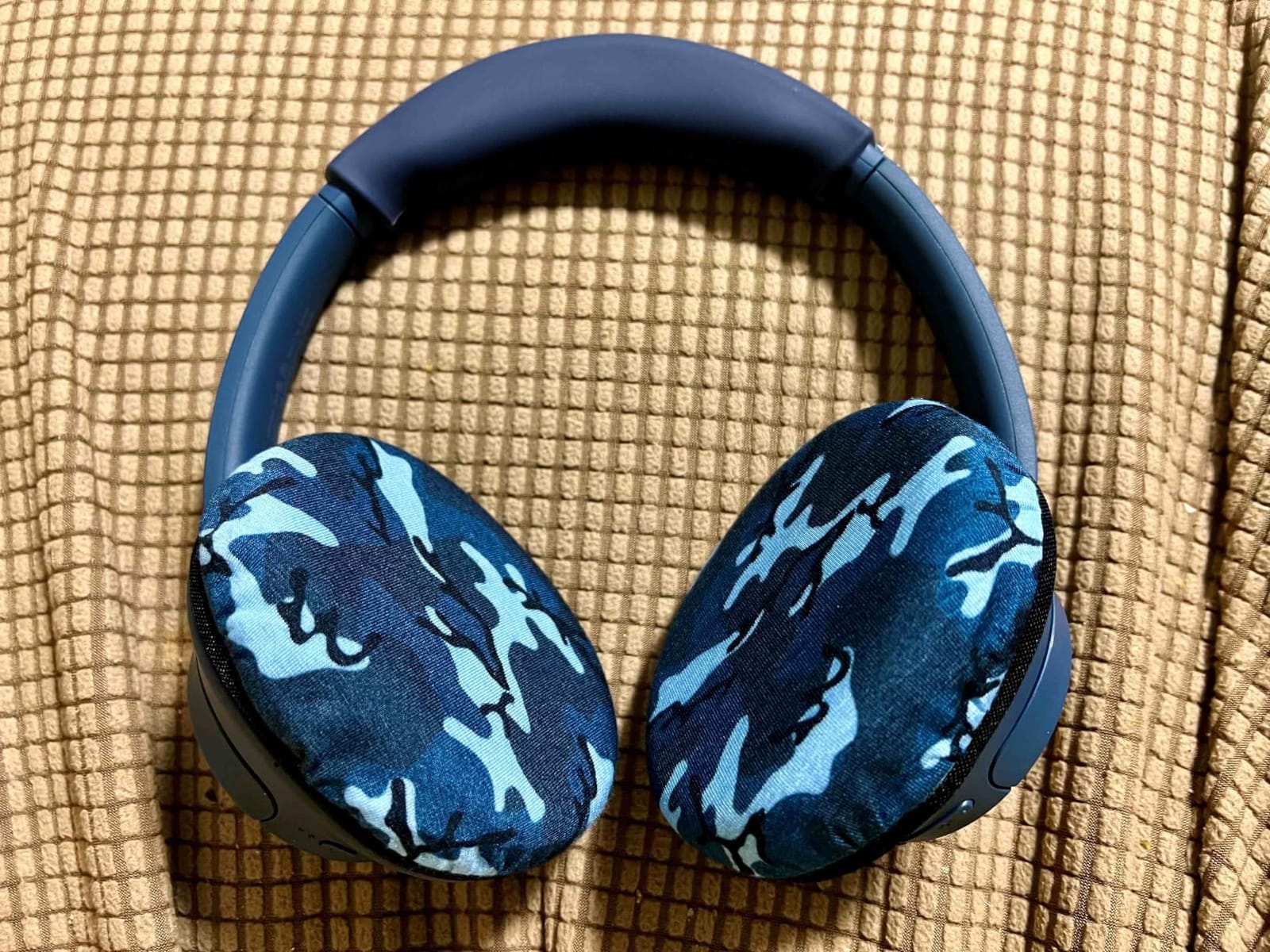
At 192 grams, the WH-CH720N is the pick for anyone who finds every other full-size set in this roundup too heavy by hour eight. The integrated Processor V1 drives digital noise cancelling with dual sensors and 20 adjustable ambient levels, so you can dial the cancellation up as the cabin gets louder during descent.
The 35-hour battery figure is with ANC switched on, which is the honest number and comfortably clears a single very long leg. Folding design keeps the profile slim enough to drop into a carry-on without a separate case taking up space.
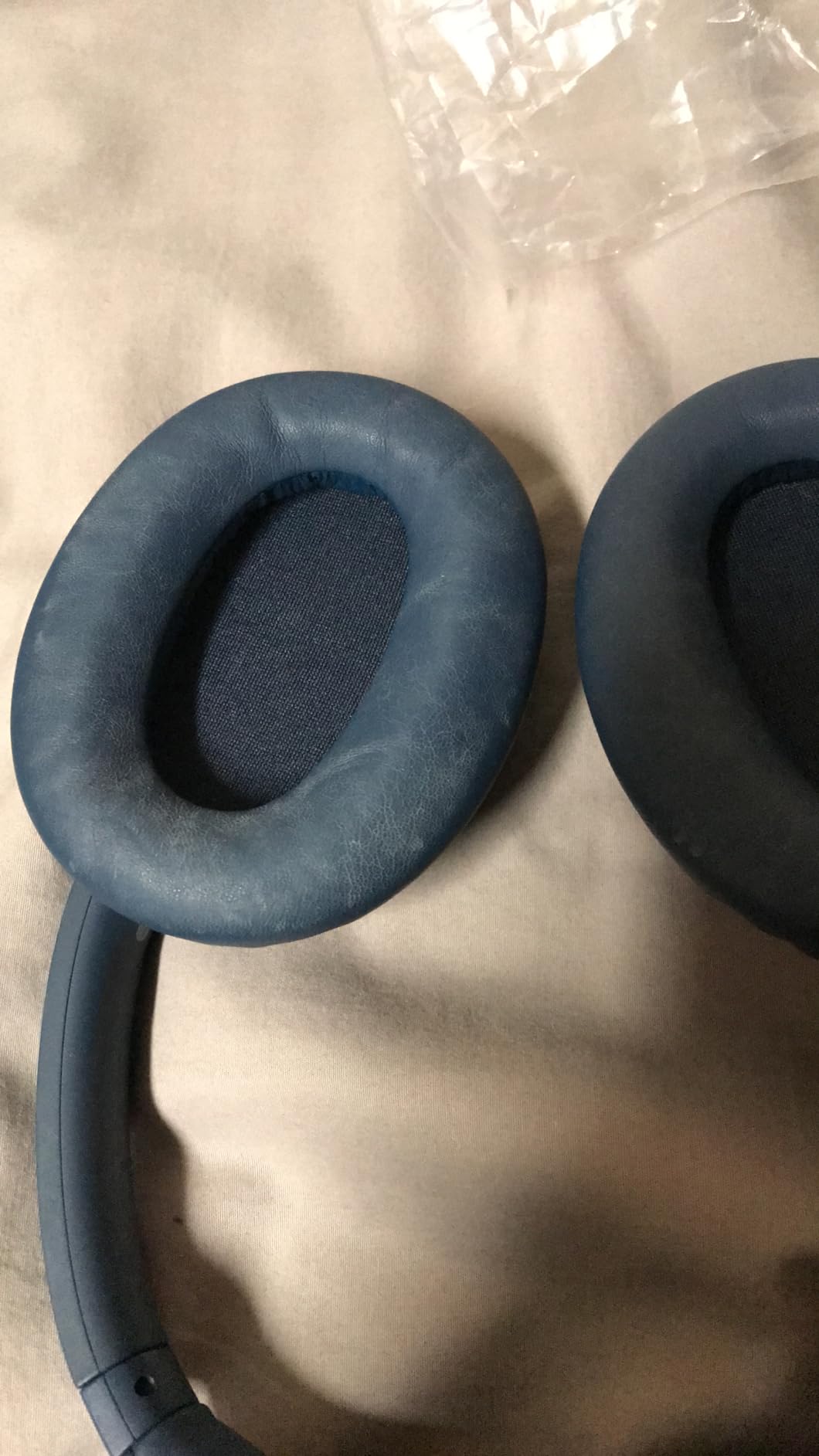
Sound out of the box is the weakest part, and it changes significantly once you enable DSEE and set the app EQ. Budget ten minutes with the app before you fly rather than judging it on a shop floor impression.
Multipoint, Swift pair and Fast Pair all work as advertised, and the beamforming microphones handle calls well enough for a short check-in without the cabin noise ruining the other end.
Who the WH-CH720N suits
It is the best pick in this roundup for sleeping on a plane, and the reason is weight rather than noise cancelling. A light set with low clamping force simply stops being noticeable, and a pair you stop noticing is the only kind you can sleep in.
It is also the sensible choice for long-haul comfort if you wear the headphones for most of a working day and your neck is sensitive to headband pressure.
Where the WH-CH720N falls short
Some sensitive listeners report a faint pressure or tonal sensation from the noise cancelling that becomes irritating over several hours of continuous use. If you are prone to that, this is worth testing before a long trip.
There is no 3.5 mm jack on this wireless variant, so your only wired option is the included analog cable in the box. Padding and paint also show wear after long daily use, and occasional Bluetooth dropouts are reported after about a year.
6. JLab JBuds Lux ANC: Best Value Headphones for Long Flights
JLab JBuds Lux ANC Wireless Over-Ear Headphones, Sage
40+ h with ANC on
Hybrid ANC up to 35 dB
235 g
Cloud Foam cups
Pros
- Cloud Foam cushions stay comfortable through a long-haul flight
- 70+ hour battery means charging is rarely a concern
- ANC measurably reduces engine noise and cabin chatter
- Folds in half so it is easy to stow in a personal item
- Works well with glasses and for sensitive ears
- Microphone quality is strong for the tier
Cons
- ANC is less capable than flagship Bose and Sony on deep rumble
- Be Aware pass-through mode sounds boxy and tinny
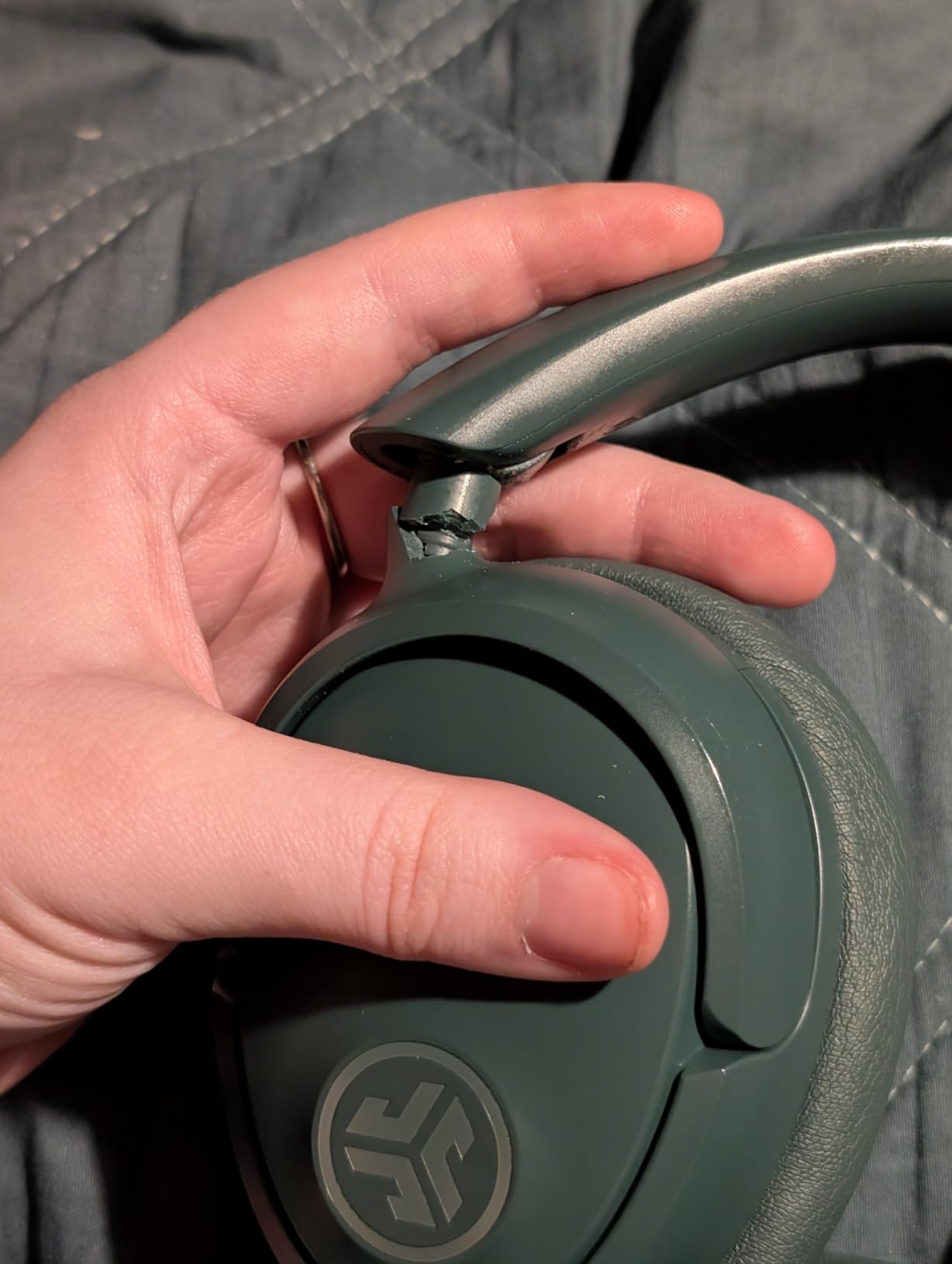
- Vinyl-covered cushions do not breathe well and feel clammy
- No carrying case included
- Bluetooth-only with no wired seat-back option
The JBuds Lux ANC is the pair we recommend when the budget is modest but the trip is long. Seventy-plus hours of battery means you will realistically charge it once a month rather than once per flight, which removes a whole category of pre-trip stress.
Cloud Foam earcups and a cushioned headband give a softer initial feel than most of the budget tier, and reviewers specifically note that it works with glasses and for people with sensitive ears or small piercings. The 40 mm drivers support spatial audio including Dolby Atmos and Windows Sonic.
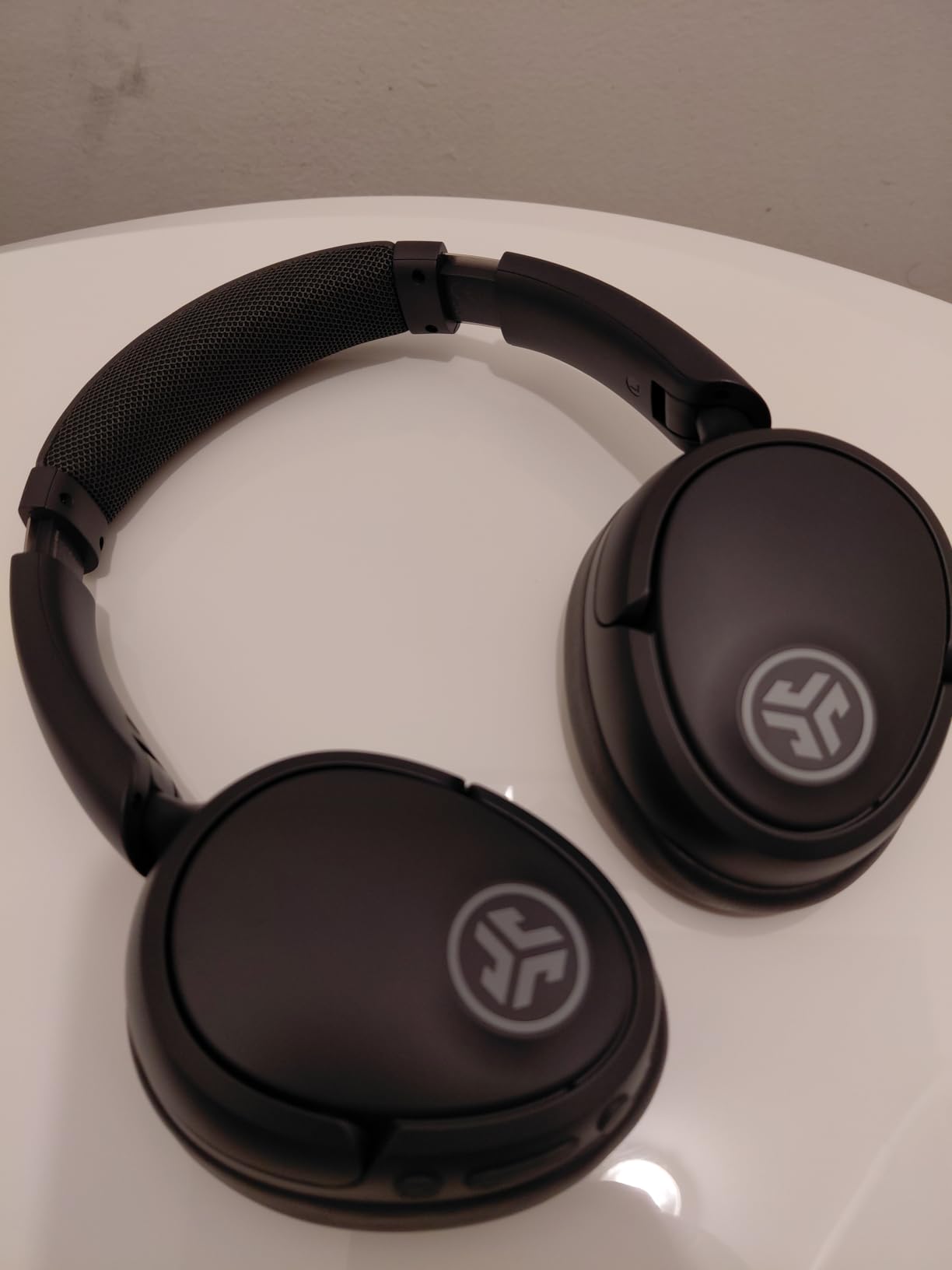
The hybrid ANC claims up to 35 dB of reduction, and real-world reports describe it as meaningfully quieter against engine noise and cabin chatter without being as deep as a flagship set. The JLab app adds EQ control, ANC adjustment and safe hearing limits.
Bluetooth 5.4 multipoint, wireless share mode and a two-year warranty round out a spec sheet that is unusually generous for the money.
Who the JBuds Lux ANC suits
It suits occasional long-haul travellers who want real noise reduction and a comfortable cushion without flagship pricing, and anyone flying an ultra-long route where battery anxiety would otherwise dominate the trip.
If you wear glasses, the cushion shape is a genuine advantage. It also folds in half, which matters more than it sounds when you are trying to fit headphones, a laptop and a book into one personal item.
Where the JBuds Lux ANC falls short
The ANC is shallower than Bose or Sony on deep low-frequency rumble, so a particularly loud section will still be audible. The Be Aware pass-through mode sounds boxy and thin, which makes it less useful for a quick chat than it should be.
Vinyl-covered cushions do not breathe well, and on a long warm flight that can become uncomfortable regardless of how soft the foam feels in the first hour. There is no wired input and no carrying case in the box.
7. RUNOLIM Active Noise Cancelling: Best Headphones for Long Flights on Battery Alone
RUNOLIM Active Noise Cancelling Headphones, Wireless Bluetooth Over Ear
65 h with ANC on
Claimed 95 percent ANC
0.26 kg
3.5 mm wired mode
Pros
- 100-hour battery covers even the longest multi-leg itinerary
- ANC is surprisingly effective at damping steady cabin rumble
- Protein leather cups are comfortable without heavy clamping
- 3.5 mm cable allows seat-back use when the battery dies
- Bluetooth 6.0 connection is stable and fast to pair
- Sits well as a backup pair in a carry-on
Cons
- Sound is functional rather than detailed with limited high-end refinement
- Audio latency around 250 ms makes it poor for video
- ANC is unavailable in wired mode
- No carrying case and no hi-res codec support
Battery is the entire argument here. One hundred hours in standard mode and sixty-five with noise cancelling on means a 16-hour itinerary with a stopover, plus a return journey, happens on a single charge. Very few competitors in this roundup can say that, and several premium sets would need two charges.
The noise cancelling claims up to 95 percent ambient noise reduction, and while the number is a manufacturer figure, reviewers report that it damps steady cabin rumble better than the tier suggests. The protein leather cups also avoid the heavy clamp that makes some budget sets uncomfortable by hour six.
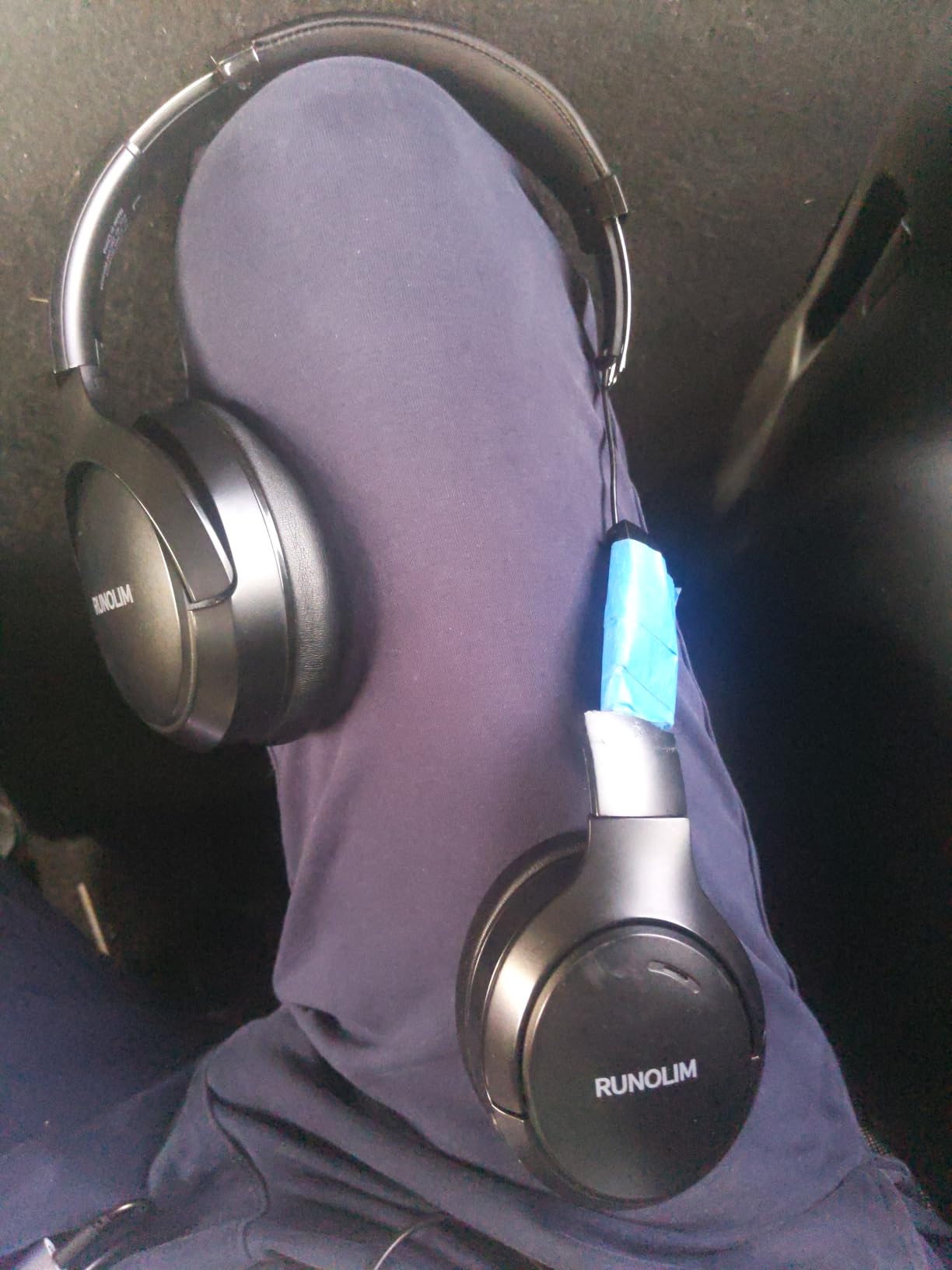
Bluetooth 6.0 with a 33-foot range and a 3.5 mm wired mode mean you are covered whether you want to pair a phone or plug into the seat-back entertainment port. The 40 mm drivers are tuned for hi-fi playback, and there are built-in HD microphones.
The foldable, adjustable design packs down reasonably well, and a reviewer-favourite use is carrying it as a dedicated backup pair that never leaves the personal item.
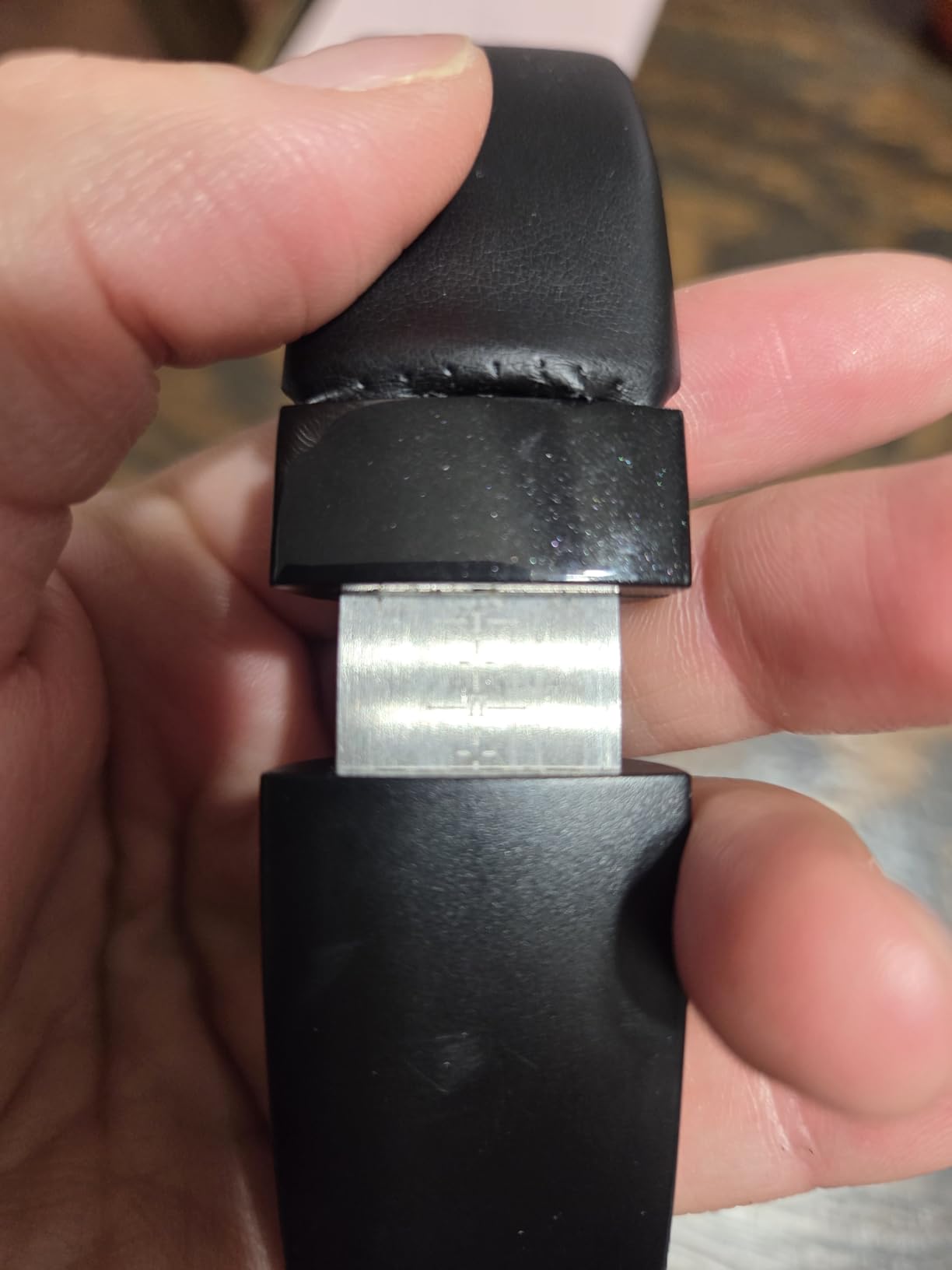
Who the RUNOLIM suits
It suits anyone on an ultra-long itinerary, particularly a multi-leg trip with layovers where a 30-hour battery would leave you charging in an airport. It is also a sensible second pair to keep in a carry-on alongside a nicer set for the flight out.
For travellers who listen to music rather than films, the modest latency is irrelevant, which makes this a stronger fit than the figure first suggests.
Where the RUNOLIM falls short
The roughly 250 ms audio latency is the practical problem. It is clearly visible on movie dialogue, so if your plan is the inflight entertainment over Bluetooth, use the 3.5 mm cable instead. ANC is also inactive in wired mode, which means the wired experience is a much quieter, lower-feature one.
Sound is functional rather than detailed, with limited refinement in the high end. A one-year warranty is shorter than some rivals in this roundup offer.
8. TOZO HT3: Budget Headphones for Long Flights With Deepest Budget ANC
TOZO HT3 Hybrid Noise Cancelling Wireless Headphones, 90H Over Ear Headset
90 h battery
Adaptive hybrid ANC to 45 dB
254 g
Replaceable ear pads
Pros
- 45 dB adaptive ANC is effective against cabin noise for the tier
- 90-hour battery easily covers a long-haul trip and beyond
- Breathable cushions survive multi-hour flights
- USB-C audio adds depth and fuller bass at no extra cost
- 32 EQ modes including a movie mode in the TOZO app
- Dual device connection switches between phone and laptop
Cons
- Default tuning is heavily bass-boosted and needs app EQ
- ANC can be switched off by the earpad button and is awkward to restore
- No carrying case is included
- Ear cups offer weak passive isolation versus premium sets
The HT3 has the deepest claimed noise cancellation figure of any budget set here, at 45 dB using adaptive hybrid ANC with four high-sensitivity microphones plus a dedicated call mic. In practice that is enough to take a noticeable edge off cabin drone, which is more than most entry-level sets manage.
The battery is 90 hours with a 10-minute quick charge returning nine, so this is another pick that survives a long itinerary on one charge. Removable and replaceable ear pads are a genuine long-term advantage, since cushions are the part that usually fails first.
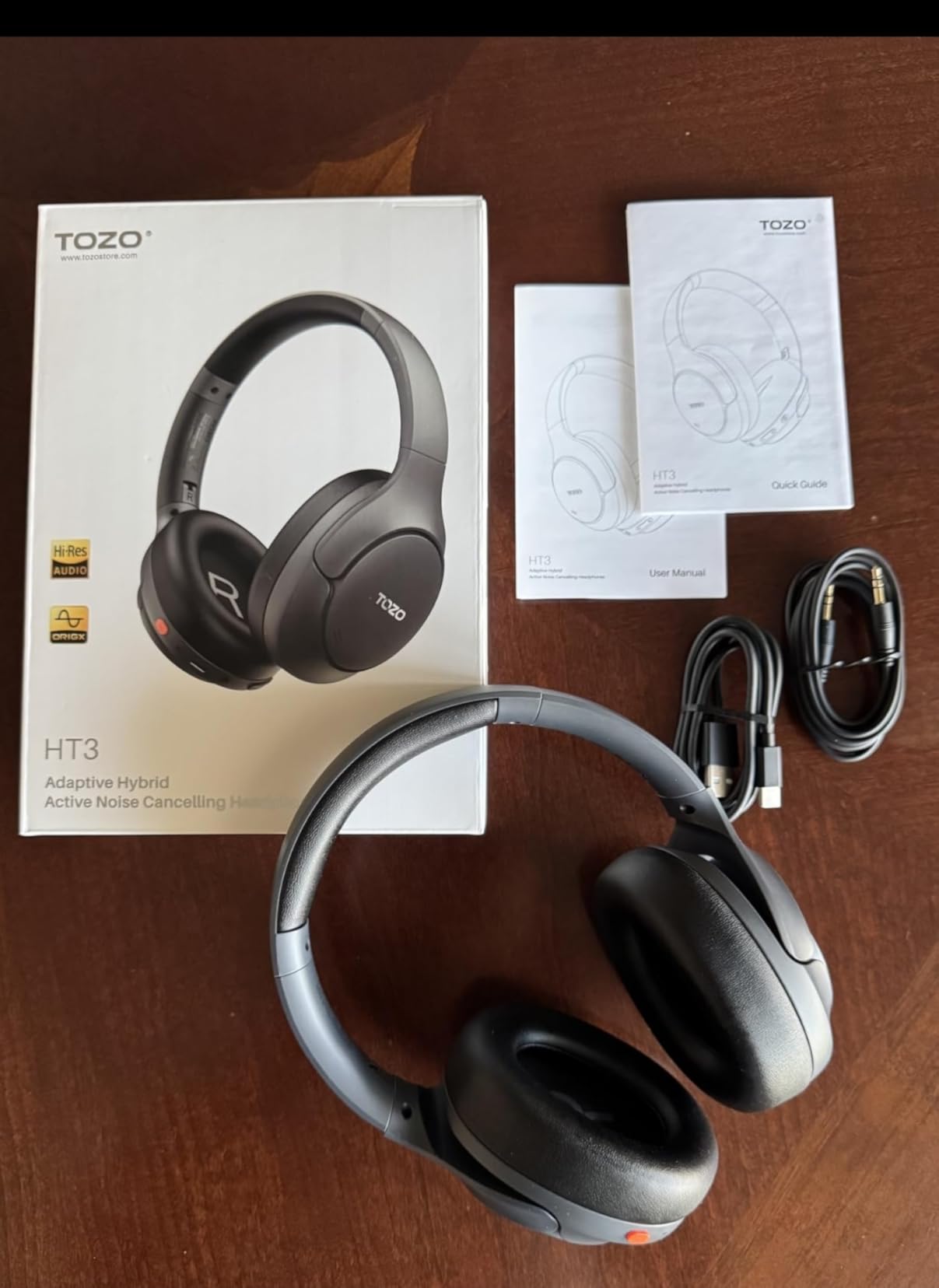
Connectivity is unusually flexible for the price: Bluetooth 6.0 with dual device connection, AUX 3.5 mm and USB-C audio, with a 20-meter range. The app carries 32 EQ modes, spatial audio and a low-latency game mode, and the 40 mm drivers use TOZO OrigX tuning.
At 254 grams it is mid-weight, and the cushions are described as breathable, which is worth more on a long warm flight than a slightly softer short-duration feel.
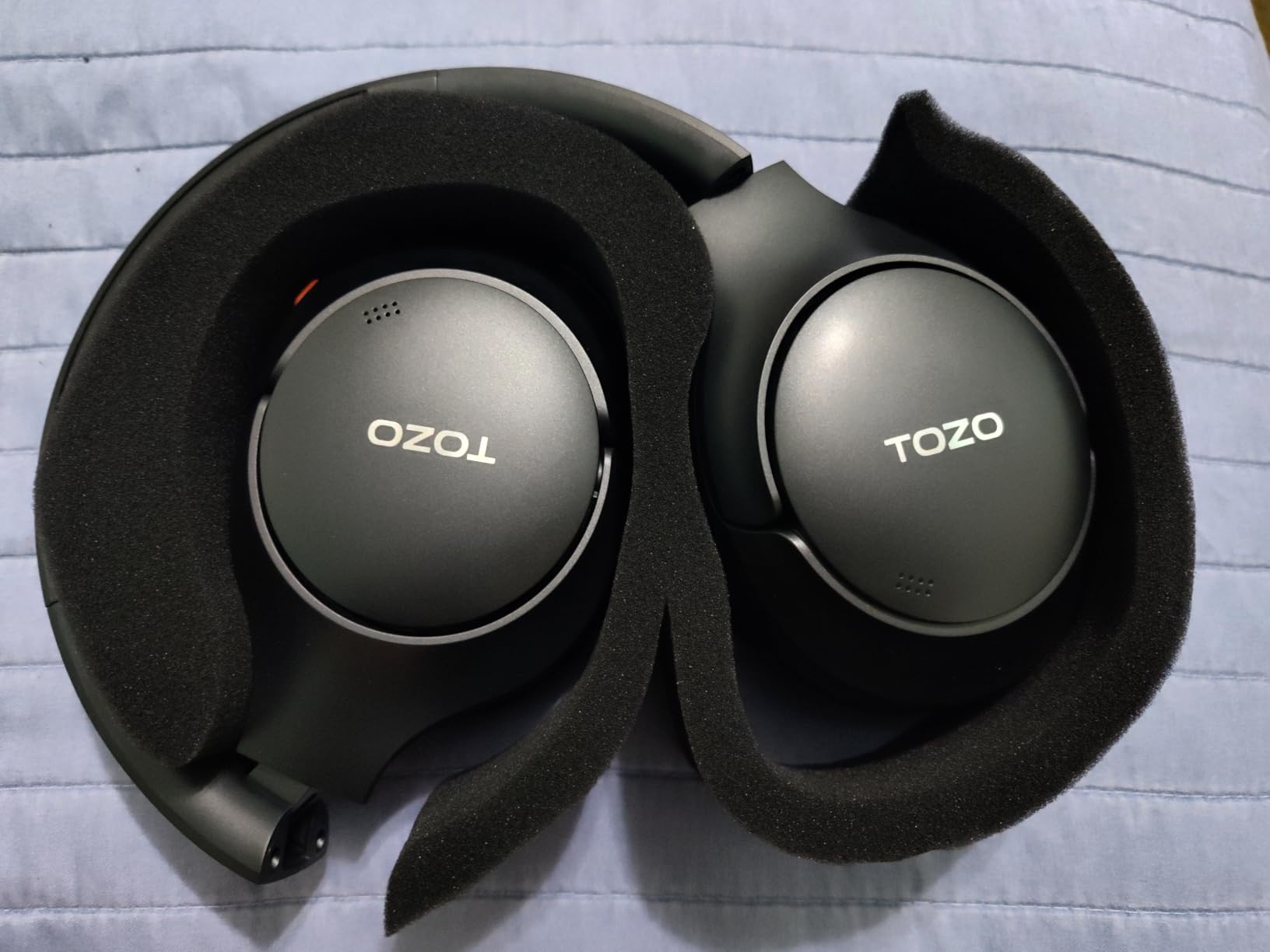
Who the TOZO HT3 suits
It suits a first-time flyer or anyone who wants meaningful noise cancelling for the least money, and it is a good gift pair because the replaceable pads mean it survives years rather than seasons.
If you want both wired and wireless options in one headset without paying a premium, the combination of AUX, USB-C audio and dual device connection is genuinely useful at this level.
Where the TOZO HT3 falls short
The default tuning is heavily bass-boosted and takes app EQ to balance. Set the EQ before you fly, not at cruising altitude. More frustrating is the ANC toggle: it sits on an earpad button that is easy to knock off and awkward to restore, and the passive isolation from the cups alone is weaker than premium sets.
There is no carrying case in the box, and the printed quick-start manual is very small, so check the app setup before you leave home.
9. 1Mii Y8+: Best Headphones for Long Flights With LDAC Audio
1Mii Y8+ Noise Cancelling Headphones for Gaming, Airplane & Travel, Black
100 h battery
Six-microphone hybrid ANC
8.68 oz
LDAC Hi-Res
Pros
- Hybrid ANC explicitly tuned to reduce airplane engine noise and train rumble
- 100-hour battery removes any charging anxiety on a long itinerary
- LDAC and Hi-Res Audio give noticeably cleaner sound on a compatible phone
- Lightweight 8.68 oz body with memory foam pads
- Dual device connection switches audio automatically
- Includes a pouch for easy carry-on packing
Cons
- Low-latency game mode is tuned for mobile games rather than PC
- LDAC benefit depends entirely on a compatible source device
- EQ and ANC adjustments require the YeeMall app
- Less long-term reliability data than established brands
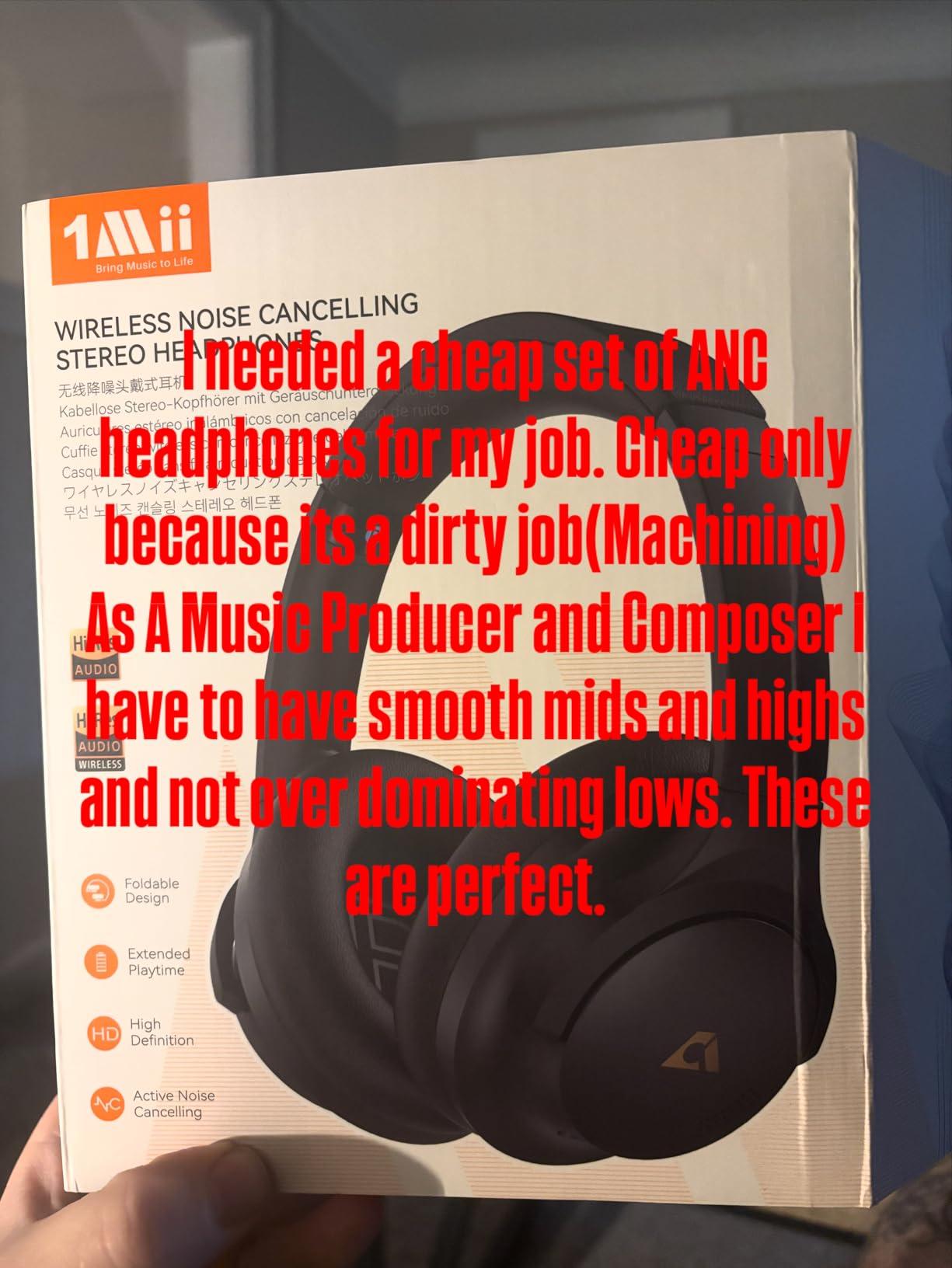
The Y8+ is the most explicitly travel-designed set in this roundup. Its hybrid ANC uses six microphones, four for cancellation and two for calls, and is specified to cut up to 90 percent of low-frequency noise, which is the range that dominates a cabin.
At 8.68 ounces it is the second-lightest full-size set here, and the memory foam pads with a foldable design and removable ear cushions make it a good fit for long sessions. The included pouch keeps it tidy in a personal item.
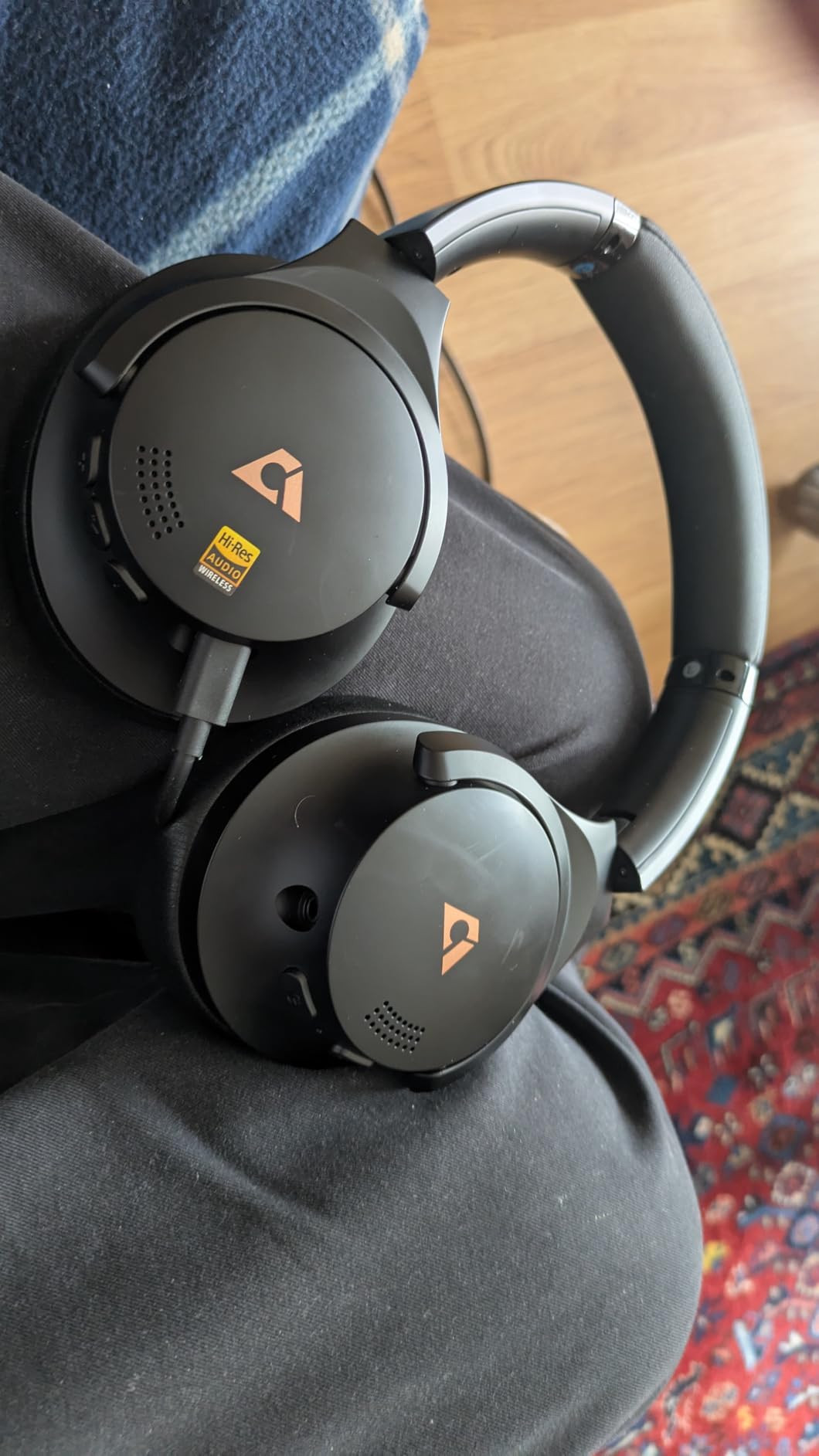
For sound, this is the pick if your phone supports LDAC. Hi-Res Audio certification with LDAC and 40 mm drivers gives noticeably cleaner wireless audio on a compatible device, and the frequency response runs from 20 Hz to 40 kHz.
The YeeMall app covers 22 EQ presets, white noise and AI translation in 103 languages. The white noise option is quietly useful for sleeping on a red-eye, since it gives you something to mask cabin noise without music.
Who the Y8+ suits
It suits the passenger who wants high-resolution wireless sound and travel-tuned noise cancelling in a light, packable frame, and it is one of the few sets here where the ANC was clearly designed with an aircraft in mind rather than adapted from a commuter range.
The 100-hour battery covers even the longest multi-leg itineraries, and a 10-minute charge returns five hours, which covers a sudden extra segment.
Where the Y8+ falls short
The LDAC benefit depends entirely on your source device, and EQ and ANC adjustments require the YeeMall app, so there is some setup work before you fly. The low-latency game mode is aimed at mobile rather than PC gaming, which is irrelevant on a plane but tells you where the tuning budget went.
With a smaller review base than the established brands, there is less long-term reliability data available, which matters if you want a set that lasts a decade of frequent travel.
10. 1Mii E700: Best Headphones for Long Flights With the Best Included Case
1Mii Noise Canceling Headphones Wired & Wireless for Airplane Travel, Black
75 h battery
Hybrid ANC with transparency
9.7 oz
Hi-Res wired and wireless
Pros
- 75-hour battery covers a long-haul round trip on a single charge
- Lightweight 9.7 oz design with memory foam cushions for 8+ hours
- Hybrid ANC reduces steady airplane engine and train noise
- LDAC and aptX HD deliver high-resolution audio on compatible devices
- One-tap transparency mode makes announcements audible
- Hard carrying case and cables included in the box
Cons
- LDAC
- aptX HD and aptX LL require compatible source hardware
- True low latency needs a separately sold 1Mii transmitter
- Small review base means less long-term reliability data
- Bluetooth 5.1 is older than the newest competitors
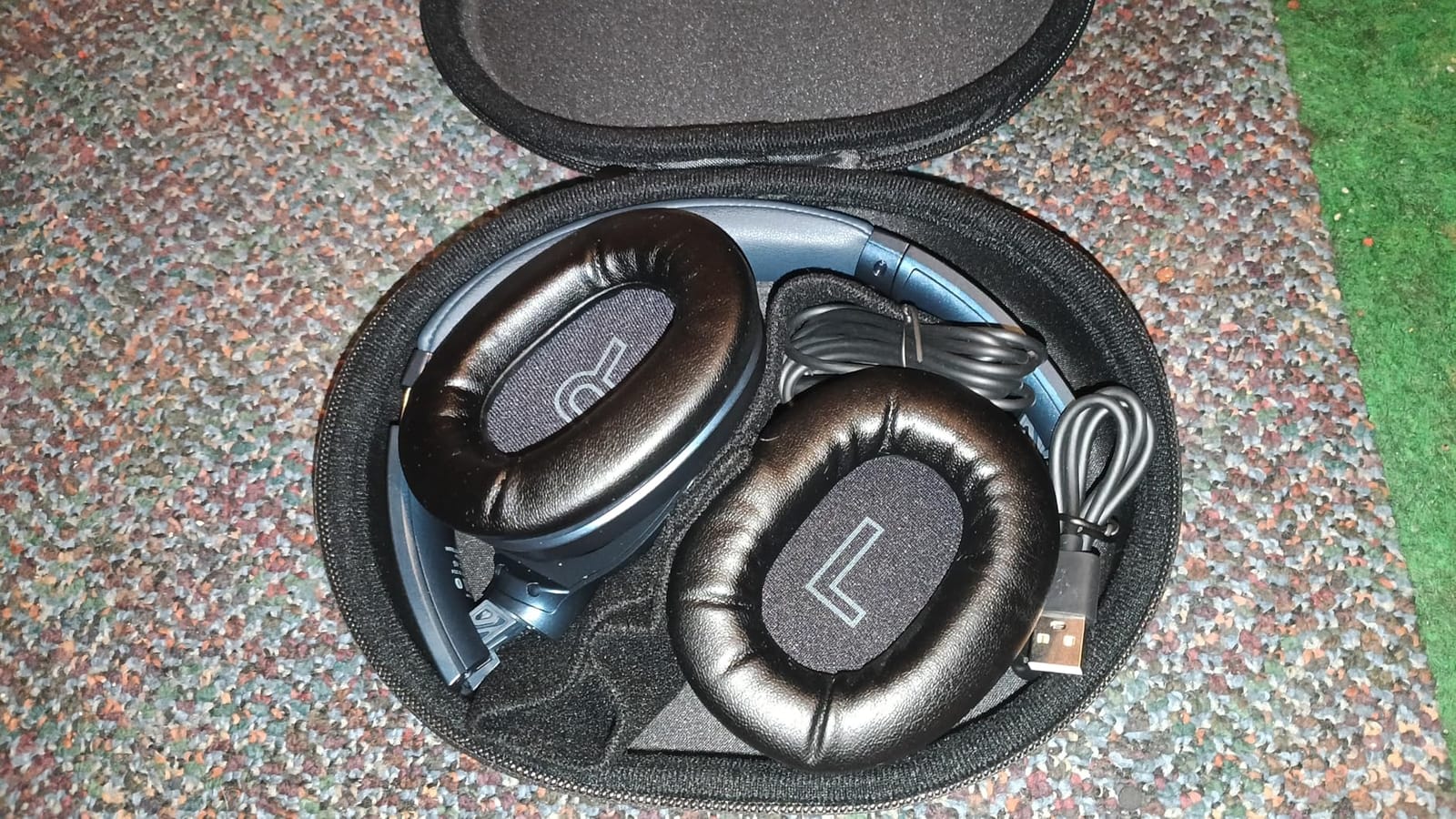
The E700 is the pick if your main concern is what happens to the headphones between flights. The included hard fabric case measures 8.66 by 6.69 by 2.5 inches and weighs 5.29 ounces, so the headphones survive an overhead-bin arrival rather than arriving in a crushed state. Cables come in the box too, which is one fewer thing to lose.
Otherwise it is a solid long-haul set. Seventy-five hours of battery clears a round trip on one charge, memory foam cushions stay comfortable over eight hours or more, and the 9.7-ounce body is among the lighter here.
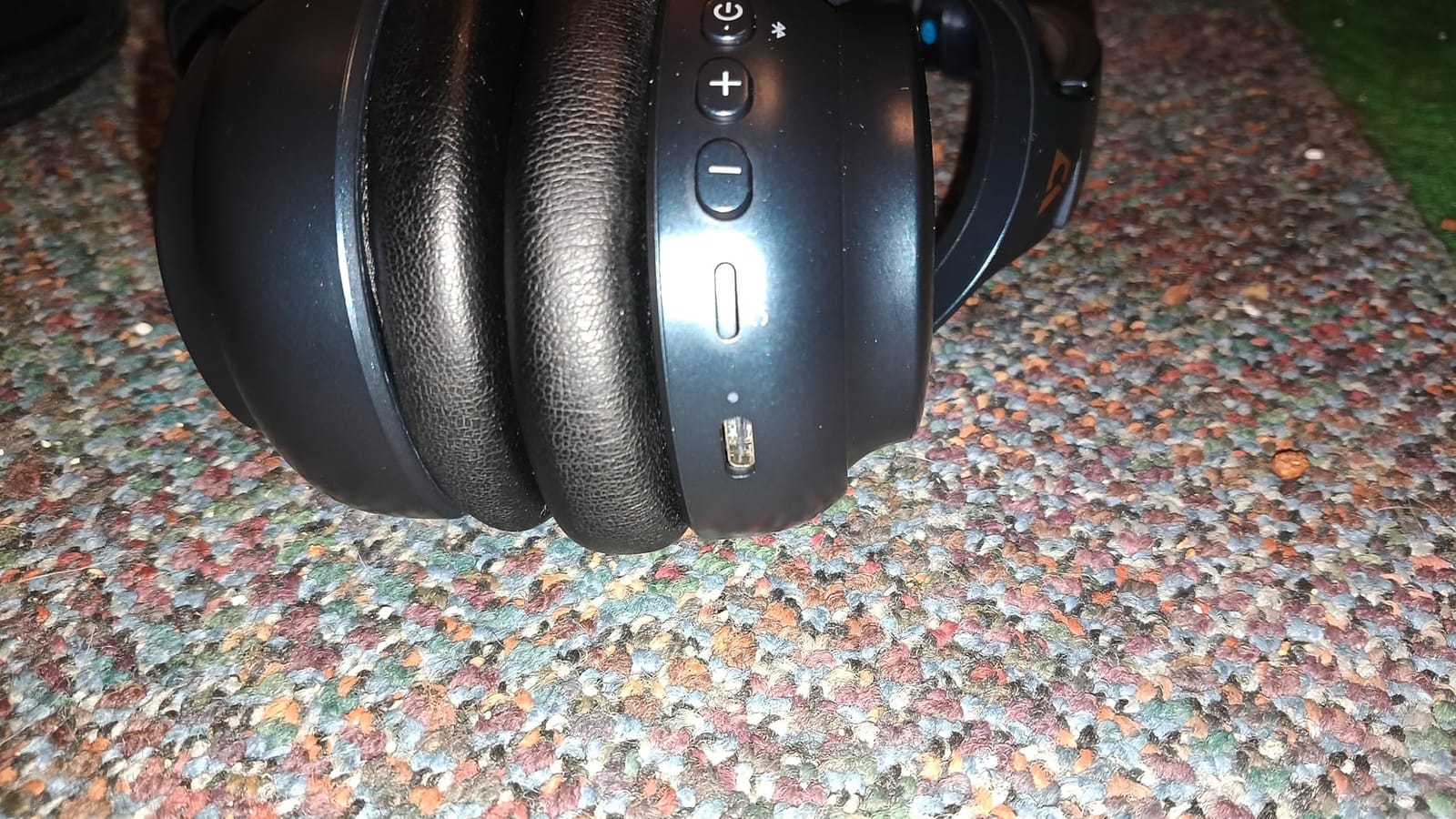
Hybrid ANC targets steady engine and train noise, and a one-tap transparency mode lets you hear a cabin announcement without removing the headphones or dropping the pairing, which is the single most useful cabin feature in this roundup.
Audio is a genuine strength. LDAC, aptX HD and aptX are all supported alongside wired USB-C hi-res playback, and the YeeMall app includes a sleep timer and 30 relaxing sleep sounds for overnight segments.
Who the E700 suits
It suits a frequent flyer who treats their gear roughly, travels with cameras or other fragile kit, and wants a set that packs into a hard case rather than a soft pouch. The codec support also makes it a strong pick for anyone with a compatible hi-res phone.
The sleep timer and sleep sounds in the app are unusually relevant for overnight flights, where you want audio to stop eventually rather than play for eight hours.
Where the E700 falls short
Most of the headline features depend on hardware you may not own. LDAC and aptX HD need a compatible source device, and true aptX low latency needs a separately sold 1Mii transmitter. Bluetooth 5.1 is also a generation behind the newest sets in this roundup.
With a much smaller review base, there is less long-term reliability data, so if you fly weekly and want a set that is proven over years, a higher-review-count option is the safer bet.
11. YMOO Y7pro: Headphones for Long Flights That Include an Aircraft Adapter
YMOO Active Noise Cancelling Headphones for Airplane Travel
100 h battery
Four-microphone hybrid ANC
268 g
Aircraft adapter in box
Pros
- ANC works well on steady low-pitched cabin drone
- Battery lasted a full 7-hour flight on a single charge
- Included aircraft adapter enables wired seat-back entertainment
- Comfortable over long flights and does not press on glasses arms
- Clear well-rounded sound for music and film dialogue
- 100-hour battery removes charging pressure on itineraries
Cons
- High-pitched noise and sharp engine whine still come through
- Ear pads feel delicate and may not be replaceable
- Bulkier than most travel headphones and awkward with a neck pillow
- Smaller review base means less long-term reliability data
- App EQ and mode switching required for best results
The thing that separates the Y7pro from other sets in this tier is the included aircraft adapter. Most travel headphones ship with a 3.5 mm cable and stop there. This one includes the adapter for the dual-output seat-back port, so plugging into the inflight entertainment is a one-step job rather than a pocket-dig at 40,000 feet.
Its hybrid ANC uses four microphones and a digital algorithm, specified to cut up to 90 percent of low and mid-frequency noise. Travellers report that it softens the steady cabin drone well, particularly when combined with earplugs, which is the combination we would recommend for anyone who really wants the cabin to disappear.
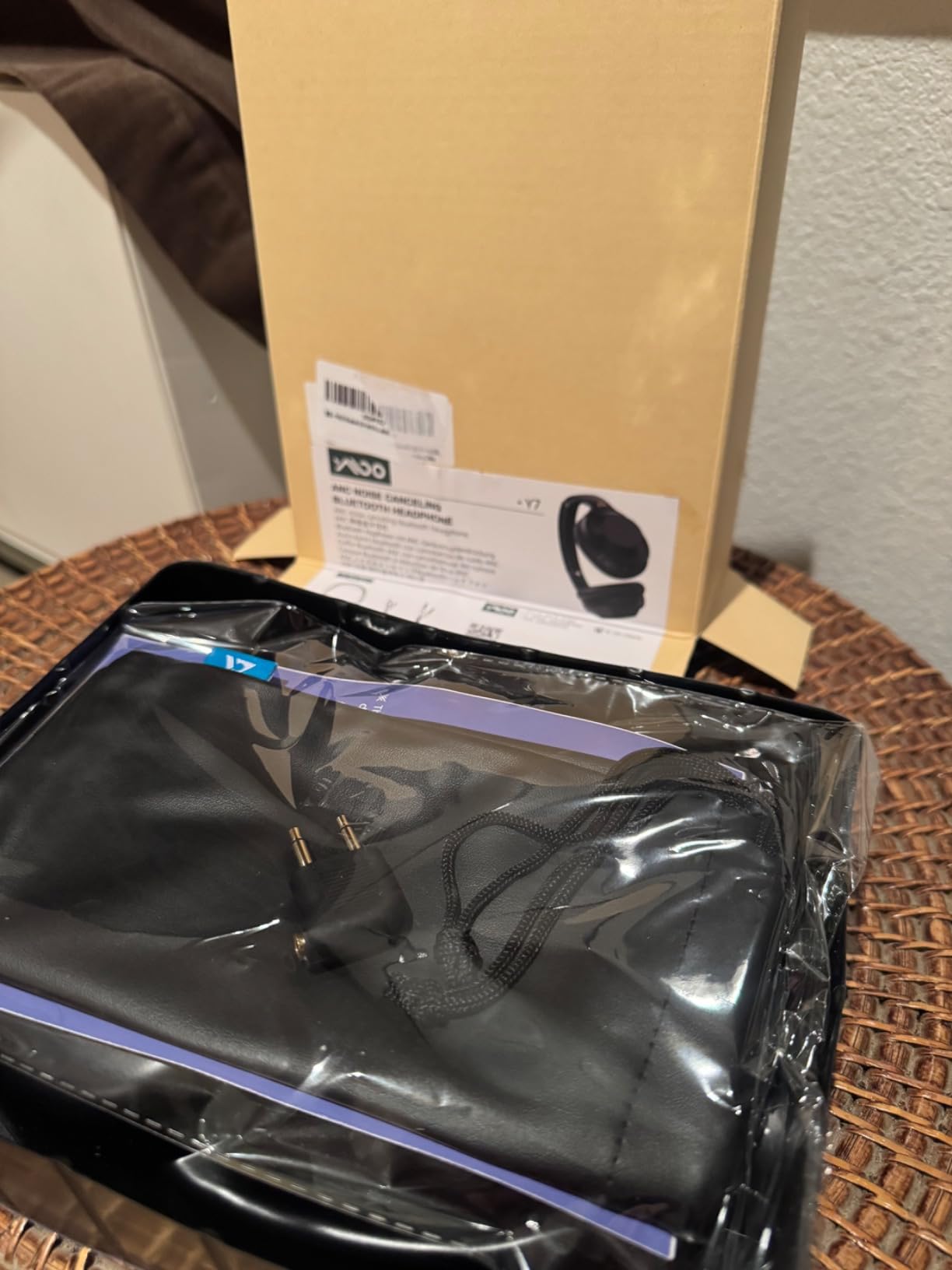
Battery is a hundred hours, and one owner reported a full seven-hour flight on a single charge. The cushions avoid pressing on glasses arms, which is a real comfort advantage on an overnight segment.
Sound is clear and well-rounded for both music and film dialogue, with LDAC support, 40 mm bio-diaphragm dynamic drivers and a 20 Hz to 40 kHz frequency response. A companion app provides six EQ presets and switching between ANC, transparency and normal modes.
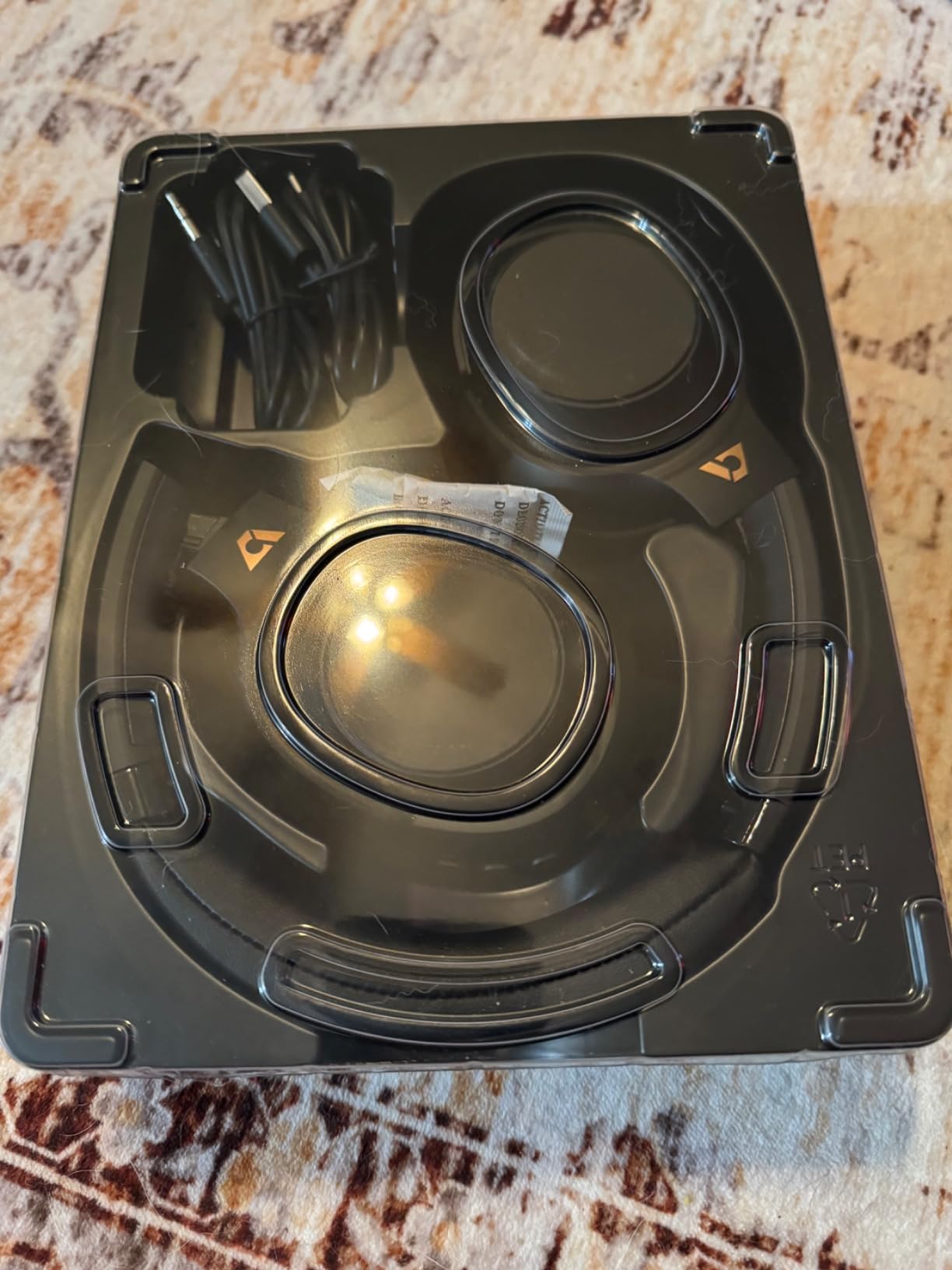
Who the Y7pro suits
It suits anyone who plans to use the seat-back entertainment on a wired connection and wants the adapter already in the box, since hunting for one in an unfamiliar aircraft is a genuinely irritating way to start a film.
It is also a reasonable choice for a long first trip where you want airline-specific features and a hundred-hour battery without flagship pricing.
Where the Y7pro falls short
Sharp, high-pitched engine whine gets through, which is the frequency range noise cancelling handles worst. On a particularly loud aircraft you will still hear it, and earplugs remain the best fix.
At 268 grams it is bulkier than most travel headphones here, and reviewers note it is awkward to wear with a neck pillow, which matters if you plan to sleep. The ear pads feel delicate and may not be replaceable, and there is a smaller body of long-term reliability data.
12. Soundcore Space 2: Best Mid-Tier Headphones for Long Flights
Soundcore Anker Space 2 Bluetooth 6.1 Over-Ear Headphones, Travel-Ready
50 h with ANC on
4-stage low-frequency ANC
264 g
Folding rotating cups
Pros
- 4-stage ANC is tuned for exactly the low-frequency rumble that dominates flights
- 50-hour ANC battery covers long-haul itineraries with margin
- Pressure-relieving headband and slow-rebound foam stay comfortable for hours
- LDAC plus 8-band EQ and HearID in a well-regarded app
- Strong build quality
- folding and rotating cups pack small
Cons
- Ear cups run warm because they lack breathability
- Ear cup interior is small and will not suit very large ears
- No touch controls on the ear cups for calls or track skipping
- Some users report a faint fan-like tone after extended ANC use
- Bass is less deep than the Life Q30
The Space 2 is the pick if you want a step up from the budget tier without stepping into flagship weight. Its 4-stage noise cancelling is explicitly tuned for engine hum, traffic rumble, air conditioning drone and subway noise, which is about as close to a flight-specific spec sheet as manufacturers get.
Fifty hours with ANC on and seventy with it off matches the Q30, and the slow-rebound memory foam protein leather cushions on an ergonomic headband are the sort of detail that shows up as comfort at hour nine rather than at hour one.
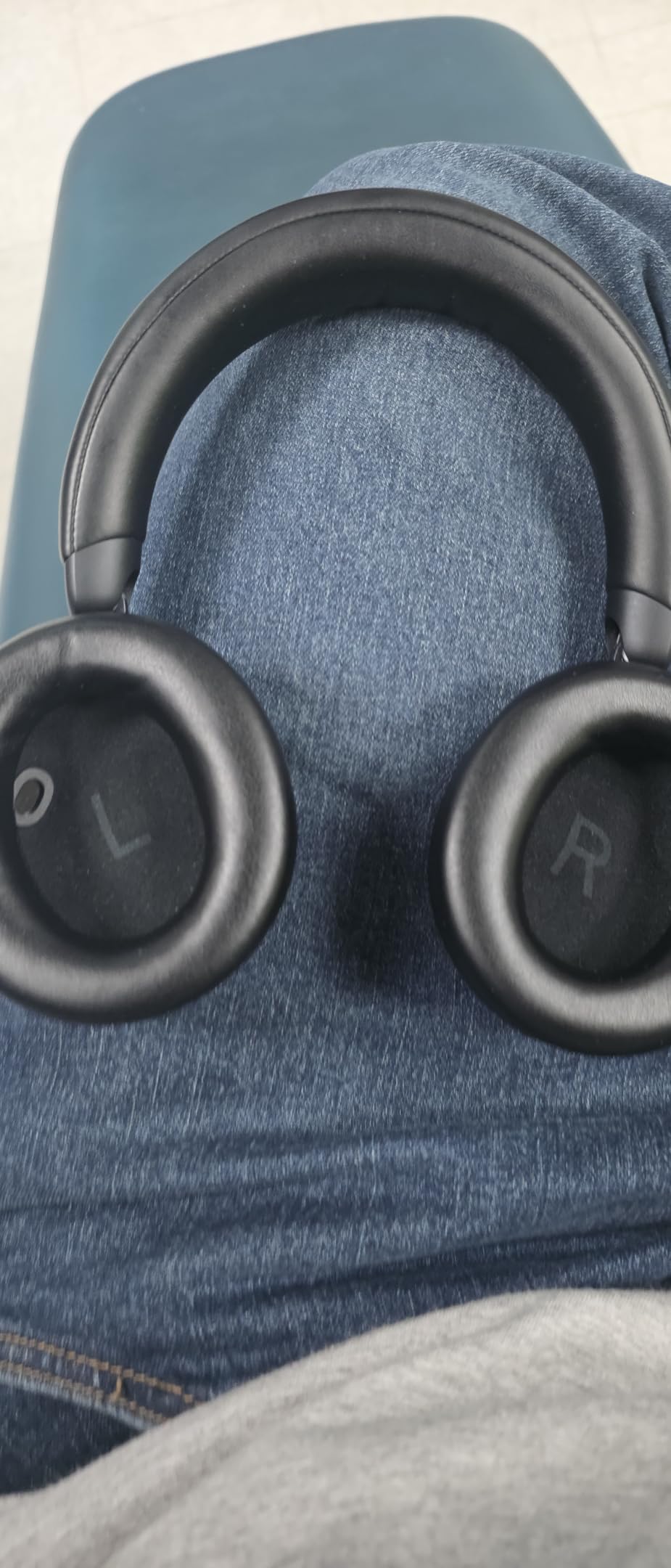
The app is the strongest in the mid-tier. Eight-band EQ, a HearID hearing test, Spatial Audio, Nap Mode white noise soundscapes and AI translation are all included, and LDAC is supported alongside hi-res wired playback over the detachable AUX cable.
Ear cups fold and rotate for compact packing with an included travel pouch, and the 18-month warranty is longer than several rivals offer.
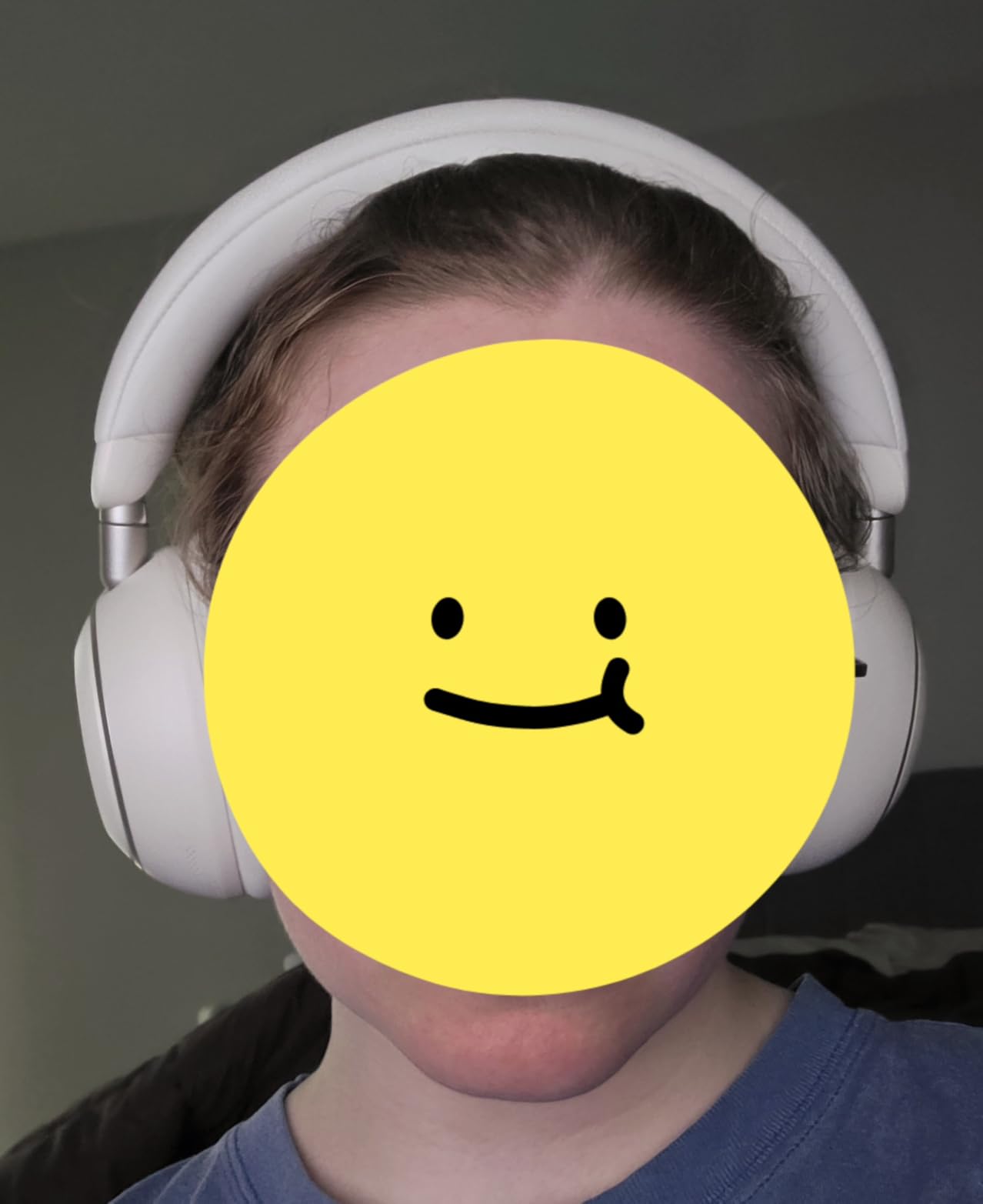
Who the Space 2 suits
It suits a traveller who wants build quality and app features closer to a flagship set without the flagship weight, and anyone who wants white noise built in for sleep rather than having to queue a playlist.
The detachable AUX cable and LDAC give it wired hi-res options too, which is useful if your aircraft seat-back has a reliable port and you prefer lossless to Bluetooth.
Where the Space 2 falls short
The ear cups run warm because they lack breathability, which is a real issue on a long warm flight. The ear cup interior is also on the small side, so if you have very large ears this is worth testing carefully before a long trip.
There are no touch controls on the cups, so track skipping and call control go through your device. Some users also report a faint fan-like tone after extended ANC use, and the bass is shallower than the Q30 if you prefer heavy low end.
Best Headphones for Sleeping on a Plane
Sleeping on a plane needs a different ranking than noise cancelling alone. You need low clamping force, a light body, and a cushion that does not press on your jaw when you lie against the headrest. Those three criteria push the light picks to the top and the flagship cups down, because the QuietComfort Ultra at nearly half a kilo becomes a neck pillow you have to hold up.
First choice: the Sony WH-CH720N. At 192 grams it is the lightest full-size ANC set here, and the folding profile is thin enough that it is unobtrusive when you turn your head against the window. The single caveat is the faint pressure sensation some sensitive listeners report from its noise cancelling, so test it for an hour before a red-eye.
Second: the Bose QuietComfort. The 238-gram body and plush cushions avoid pressure on glasses arms, and its ANC is strong enough that the cabin drone genuinely stops being the reason you are awake. Twenty-four hours of battery is fine for one overnight segment.
Third: the Soundcore Q30. The 9.6-ounce body and low-pressure protein leather cups make it a solid sleeper, and the 50-hour battery means you can also use it the following morning without charging. The wired fallback is useful on overnight legs where you would rather not deal with a pairing.
Two practical tips carry more weight than the model choice. First, set a sleep timer so audio does not play for the entire flight. The 1Mii E700 includes one in its app along with 30 sleep sounds, and the Soundcore Space 2 has a Nap Mode with built-in white noise. Second, combine headphones with earplugs if cabin drone is your main problem, since in-ear blocking plus over-ear ANC is a stronger combination than either alone.
For over-ear users who sleep on their side, note that side-sleeping compresses one cup against the headrest. Softer protein leather pads, as on the RUNOLIM and 1Mii Y8+, tend to stay comfortable in that position longer than firmer frames.
How to Choose Headphones for a Long-Haul Flight
Active noise cancelling beats passive isolation against engine drone
Active noise cancelling uses microphones to detect low-frequency sound and broadcast an opposing anti-noise signal. That is exactly the frequency range a jet engine and the air conditioning produce, which is why ANC is so effective in a cabin and far less useful against a barking dog. The earcup seal handles the high-frequency end passively. When you read a noise cancelling depth figure, understand that it is measured against low-frequency sound, which is the part you actually care about on a flight.
Hybrid ANC uses multiple microphones and microphones in both cups, which improves low-frequency cancellation. The JLab JBuds Lux ANC, TOZO HT3, RUNOLIM and 1Mii sets in this roundup all use hybrid designs. Pure ANC is cheaper and fine for city commuting.
Over-ear or earbuds: decide on comfort first
Over-ear wins on isolation and on the fact that nothing sits in your ear canal. That last point matters more than most people expect: in-ear tips can create pressure discomfort on descent, particularly if you are congested, and a blocked ear with a sealed tip is genuinely uncomfortable for hours.
Earbuds win on portability and on sleep, because a small bud under a neck pillow causes no pressure at all. If your main goal is rest on a red-eye, earbuds are the better answer even though you give up cabin noise reduction. If your main goal is watching a film with dialogue clarity, over-ear wins.
Wired, wireless, or both for seat-back movies
Most aircraft offer a 3.5 mm port at the seat, and the audio quality through it is stable with no pairing delay and no compression. Bluetooth pairing on a plane is convenient but adds a step, and a few carriers and aircraft models support seat-back Bluetooth while others do not, so the port is the more reliable option.
Wireless adds noise cancelling, which the seat-back port cannot give you. The compromise most travellers land on is wireless ANC for music and the included cable for films. Pairs with a USB-C lossless input, like the Beats Studio Pro and the TOZO HT3, are the ones to look for if you want the wired path to sound noticeably better.
Battery: 30 hours or more for a 14-hour leg
A 30-hour rating covers a single very long leg with generous margin and most round trips. Below that, you need to charge between flights, and seat-back power is not guaranteed on older aircraft. Above 60 hours you can realistically stop thinking about charging for an entire multi-leg itinerary, which is the range the RUNOLIM, TOZO HT3, 1Mii Y8+, YMOO Y7pro and 1Mii E700 all sit in.
Also check the quick-charge figure. Most of these sets add three to nine hours from a ten-minute charge, which is the difference between catching a connecting flight prepared and not. We use the same endurance logic when we rank bikes for long distance riding, where a full day in the saddle has the same demands as a full day in a seat.
Weight and clamping force decide whether hour 10 hurts
Weight on a plane is different from weight at a desk. At a desk you are upright and your neck supports the load at an angle. On a plane you are reclined, and the force vector changes. A 480-gram set that feels fine for a working day can be genuinely uncomfortable after eight hours of reclined wear, which is the main complaint owners of the heaviest set in this roundup report.
Clamping force is the number you cannot spec-shop. It is the squeeze of the headband and the depth of the cushions. The only way to test it is to wear a candidate for a full working day before a long trip, which is why we have a pre-trip routine below. If you wear glasses, add a layer: arms resting under the cushion are the most common source of pressure pain, and deeper plush cushions such as the Bose and Beats designs distribute that load better.
Heat is the other quiet problem. Vinyl and protein leather do not breathe, and a warm cabin plus a non-breathable cushion is the combination that ends a long trip badly. The TOZO HT3 and Sony WH-CH720N are the better picks here, while the Soundcore Space 2 and JLab JBuds Lux ANC are the ones whose owners most often report warmth.
Check the seat-back tray before you commit
The tray table is the constraint nobody researches. A large over-ear cup that sits above the tray means you take the headphones off every time you want to eat, use a laptop or write on a boarding pass. Smaller cups and lighter sets generally clear it.
Practically, compare the outside width of the cups against the height of the tray arm when it is in the upright position. If the lowest point of the cup is above the arm, the headphones stay on. Folding or rotating designs, as on the Beats Studio Pro, Sony WH-CH720N, TOZO HT3, JLab JBuds Lux ANC and Soundcore Space 2, make packing easier but do not change how they sit on your head.
Test Your Headphones Before a 14-Hour Flight
Fit problems only appear after three hours, so a shop-floor or doorstep test tells you almost nothing useful. Block out a full working day with a candidate set before you commit, wearing them the way you would on a plane, and note where pressure shows up.
Run a descent simulation. Play a low-frequency cabin recording for forty-five minutes with the ANC on at the level you would actually use. If you notice a tonal pressure sensation, as some listeners do with the Sony WH-CH720N, you want to know that before a red-eye rather than at 35,000 feet.
Set up every control before you leave. Half the complaints in this roundup come from an app EQ that was never configured or a mode button that was never located. Five minutes with the app on the ground removes a whole category of in-flight frustration.
Pack the cable, the case and any adapter the night before, and put them in your personal item rather than a checked bag. If you are replacing an older pair, our guide to gear that has to survive long hours of wear covers the same break-in logic, and the fit advice in our gear sizing guide is worth a skim before anything that must stay comfortable for hours on end. The packing trade-offs are similar again in our picks for long range electric scooters, where weight and carrying handle matter as much as range.
Frequently Asked Questions
What are the best headphones for long haul flights?
The best headphones for long haul flights are over-ear active noise cancelling models with 30+ hours of battery, low clamping force and a foldable design. Our top pick is the Soundcore Q30 Hybrid ANC, with 50 hours of battery with ANC on and a wired fallback that works on a dead battery. The Sony WH-CH720N leads for weight at 192 g and the Bose QuietComfort leads for cabin noise reduction.
Is it better to wear headphones or earbuds on a plane?
It depends on whether you are prioritising noise reduction or sleep. Over-ear headphones cancel far more cabin noise and never occupy your ear canal, which matters if you are congested on descent. Earbuds are smaller, easier to sleep in under a neck pillow and better for a red-eye, but give up isolation and can create pressure discomfort in the ears.
What kind of headphones work on an airplane?
Any headphones with active noise cancelling work well on a plane because the cabin is dominated by low-frequency engine and air conditioning drone, which is the range ANC targets. Over-ear models perform best for long flights. If you want the seat-back entertainment, check that the pair includes a 3.5 mm cable, and note that ANC is not active on a wired connection on most models.
What are the best travel headphones in 2026?
The best travel headphones in 2026 are the Soundcore Q30 for overall balance, the Sony WH-CH720N for the lightest weight, the Bose QuietComfort for the strongest cabin noise cancellation, and the RUNOLIM for a 100-hour battery. Budget travellers should look at the JLab JBuds Lux ANC or the TOZO HT3, both of which add real noise cancelling at a much lower cost.
What are the best headphones for both noise cancellation and comfort?
The Bose QuietComfort is the strongest balance of the two, at 238 g with plush cushions that avoid pressing on glasses arms, and class-leading noise cancelling against steady cabin drone. The Sony WH-CH720N is even lighter at 192 g if weight is your main concern, and the Soundcore Q30 adds a 50-hour battery and lighter 9.6 oz body for the best all-round option.
What are the best noise-cancelling headphones for sleeping on a plane?
The Sony WH-CH720N is the best pick for sleeping on a plane because at 192 g it is the lightest full-size ANC set and has a slim folding profile. The Bose QuietComfort and the Soundcore Q30 are the next best options. Pair any of them with earplugs for the strongest cabin noise reduction, and use a sleep timer so audio does not play for the entire flight.
What are the best noise-cancelling headphones for flying?
The best noise-cancelling headphones for flying are the Bose QuietComfort and the Bose QuietComfort Ultra for the deepest cabin noise reduction, the Soundcore Q30 and Soundcore Space 2 for strong value, and the TOZO HT3 if you are on a tight budget. All use hybrid or multi-microphone designs aimed at the low-frequency rumble that dominates a cabin.
Which Headphones Should You Pack for 2026?
The best headphones for long flights in 2026 are the Soundcore Q30 if you want one pair that has no real weakness: 50 hours of ANC battery, a wired fallback and 9.6 ounces of weight. Pick the Sony WH-CH720N instead if lightness matters more than anything, and the Bose QuietComfort if cabin noise reduction is the priority. For a red-eye, the WH-CH720N wins on comfort alone.
Budget travellers should start with the JLab JBuds Lux ANC or the TOZO HT3, both of which deliver real noise cancelling and 40-plus hours of battery. For an ultra-long multi-leg itinerary where you never want to think about charging, the RUNOLIM at 100 hours is the answer. Audiophiles watching the seat-back film should take the Beats Studio Pro for lossless USB-C audio, or use the included aircraft adapter that comes with the YMOO Y7pro.
Whichever you choose, wear it for a full day before the trip, set the EQ and the ANC modes on the ground, and pack the cable the night before. That preparation is worth more than any spec on this list.