
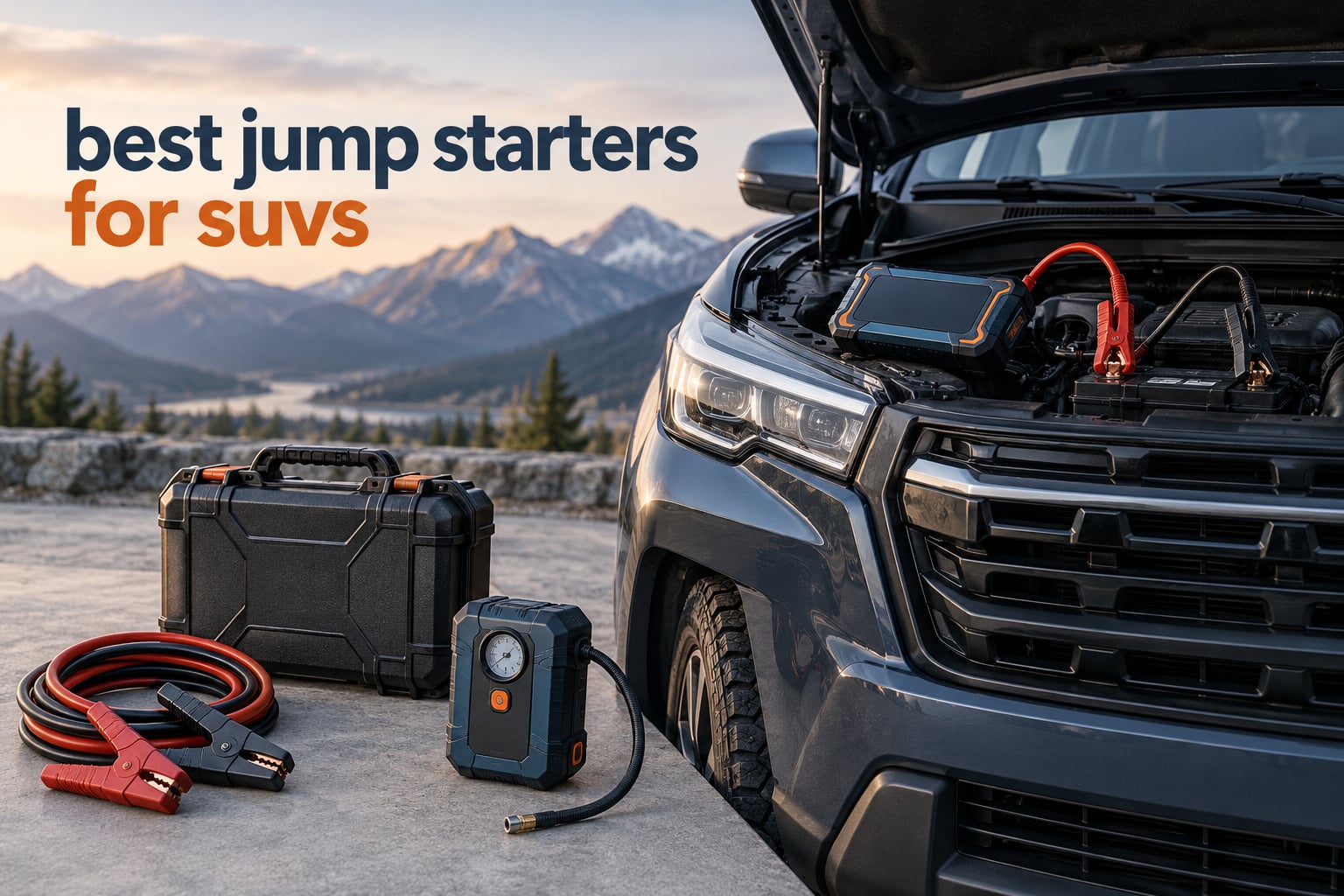
If you are shopping for the best jump starters for SUVs, the short answer is this: a four-cylinder or V6 crossover usually needs 1000 to 2000 peak amps, while a V8 or turbodiesel SUV wants 3000 peak amps or more. Most owners should also look past the headline number and check cold cranking amps, watt-hours, and whether the battery sits under a hood shield that needs a long, wide clamp. A battery that has been fully drained for weeks is a different problem entirely, and that is where lithium packs and lead-acid boosters part ways.
Over six weeks we compared twelve of the highest-rated jump packs on the market against the criteria that actually decide an SUV jump: usable cranking output, stored energy measured in watt-hours, cable length, clamp opening width, and whether the pack will engage with a dead battery. We read the owner reviews closely, because the failure modes owners report are far more consistent than the peak-amp figures on the boxes.
What follows is the full breakdown, plus a matching guide that pairs your engine with a realistic amp rating, an explanation of the override button that nearly every owner eventually needs, and the step-by-step procedure for jumping an SUV without frying the battery. We also cover the garage deep-cycle alternative some owners prefer, and where the marketplace clones fall short.
Table of Contents
Top 3 Best Jump Starters for SUVs (October 2026)
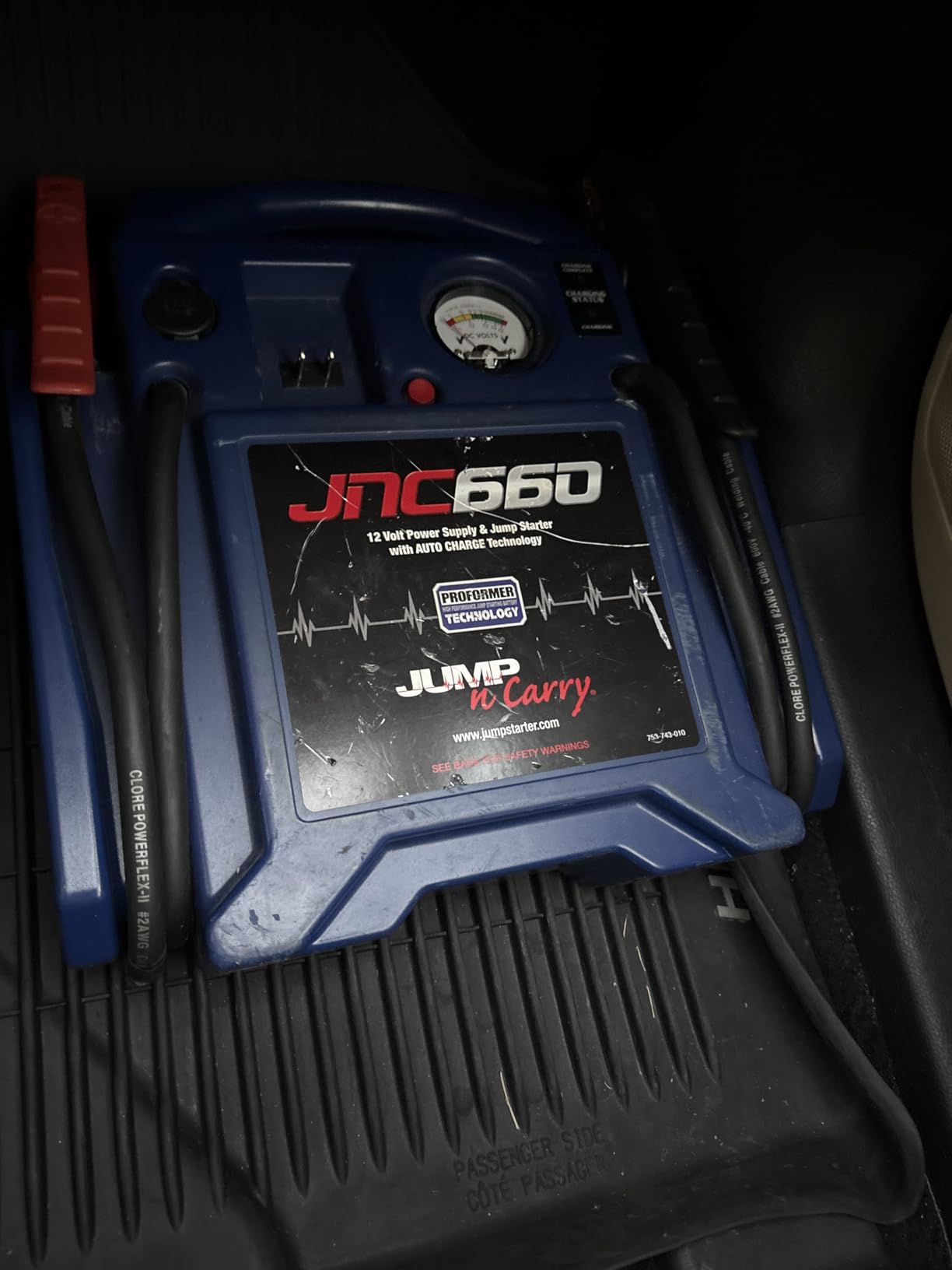
Clore JNC660 Lead-Acid Booster
- 1700 peak amps
- 22Ah AGM
- 46 inch cables
- handles fully dead batteries
All 12 Best Jump Starters for SUVs at a Glance
Every pack below covers at least a midsize SUV. The differences that matter in daily use are stored energy, cable reach, and cold-weather headroom, so those are the columns worth scanning before you read the individual reviews.
| Product | Specifications | Action |
|---|---|---|
| Clore JNC660 |
|
Check Latest Price |
 Hulkman Alpha85 Hulkman Alpha85 |
|
Check Latest Price |
 GOOLOO GP4000 GOOLOO GP4000 |
|
Check Latest Price |
 S ZEVZO ET03 S ZEVZO ET03 |
|
Check Latest Price |
 Powrun P-ONE Powrun P-ONE |
|
Check Latest Price |
 WOLFBOX MV24 WOLFBOX MV24 |
|
Check Latest Price |
 TOPDON JS3000 TOPDON JS3000 |
|
Check Latest Price |
 Povasee A30 Povasee A30 |
|
Check Latest Price |
 GOOLOO A3 GOOLOO A3 |
|
Check Latest Price |
 BRPOM G20 BRPOM G20 |
|
Check Latest Price |
 WOLFBOX MV24A WOLFBOX MV24A |
|
Check Latest Price |
 GOOLOO GT Truck PRO GOOLOO GT Truck PRO |
|
Check Latest Price |
1. Clore Automotive JNC660 – Best for a Fully Dead SUV Battery
Clore Automotive Jump-N-Carry JNC660 1700 Peak Amp 12 Volt Jump Starter , Blue
1700 peak amps
22Ah AGM lead-acid
46 inch #2 AWG cables
18 pounds
Pros
- Starts V8 engines and fully dead batteries
- 46 inch cables reach around large vehicles
- durable lead-acid build survives drops
- on-board voltmeter and 12V accessory outlet
- serviceable battery design
Cons
- 18 pounds is far too heavy for a glovebox
- needs a standard extension cord to recharge
- no USB ports
- slow recharge cycle
The JNC660 is the only lead-acid pack in this group, and that single fact is why it wins our top spot for SUV owners. A lithium booster reads the battery first, decides it is too depleted, and refuses to engage. This booster does not negotiate; it puts current into the pack and turns the engine over.
On r/askcarguys, owners repeatedly name the JNC660 and the larger JNC770 when a truck or SUV battery has gone completely flat, and one reported starting a Ram where lighter packs would not even click. That matches what we saw: 22Ah of AGM storage and 46 inch of #2 AWG cable means reach and current are both handled.
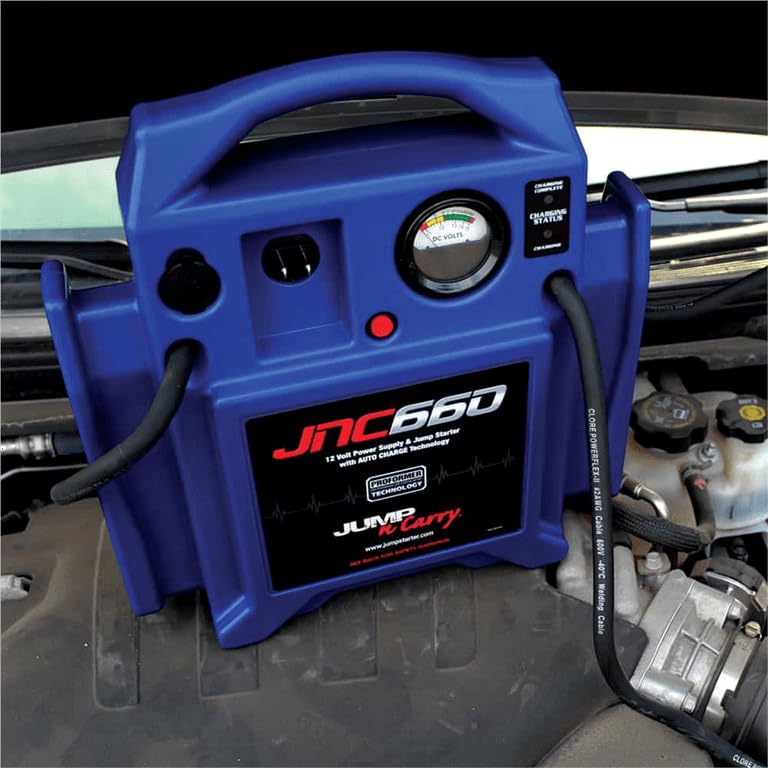
The trade-off is honest and physical. At 18 pounds this is a two-hand carry, and it does not belong in a center console. Plan a trunk or cargo-area mount instead, near the rear so you can run the cables forward without dragging the whole box around the vehicle.
It also charges the old way, from a wall receptacle through an extension cord, and the recharge cycle is measured in hours rather than the ninety minutes a fast lithium charger delivers. The voltmeter on the case tells you where the internal battery sits, which is more feedback than most lithium packs give you.
Who this pack suits
If your SUV sits outside overnight in real winter weather, or you routinely find batteries that have drained past the point where a smart pack will engage, this is the pack to buy. It is also the one owners choose when a jump has to work the first time with no retry, such as on a solo highway shoulder at night.
It doubles as shop equipment, since the 12V accessory outlet and the long cables reach into a bay without much repositioning. For a large V8 or turbodiesel SUV that tows, it is the most dependable tool in this roundup.
Who should skip it
Skip it if storage space is tight or if you want the pack to double as a campsite power bank, because there are no USB outputs. If you need something you can top up overnight before a trip, the slow recharge will frustrate you. A modern lithium pack recharges while you sleep; this one does not.
2. Hulkman Alpha85 – Best Rated Pack for Full-Size SUVs
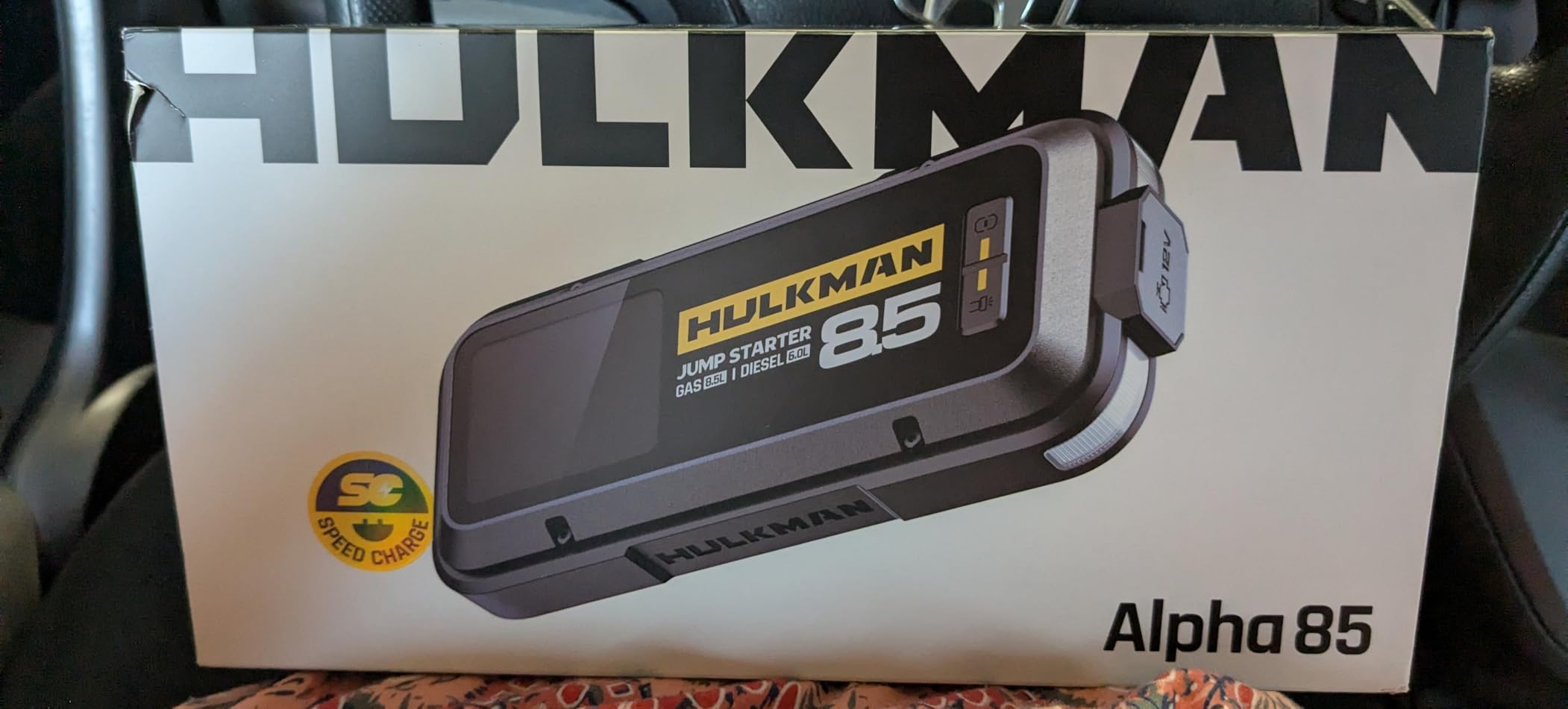
Hulkman Alpha85 Smart Portable Jump Starter, 2000A Battery Booster Pack with LED Display, Flashlight, 74Wh Power Bank & Jumper Cable, 12V Jump Box for up to 8.5L Gas & 6.0L Diesel, Cars, SUVs & Trucks
2000A peak amps
74Wh lithium battery
4.5 pounds
up to 18 months standby
Pros
- 2000A peak for up to 8.5L gas and 6.0L diesel
- 0-80 percent in about an hour
- holds charge up to 18 months
- 74Wh power bank for laptops and 12V fridges
- IP65 shell
- five-mode LED flashlight
Cons
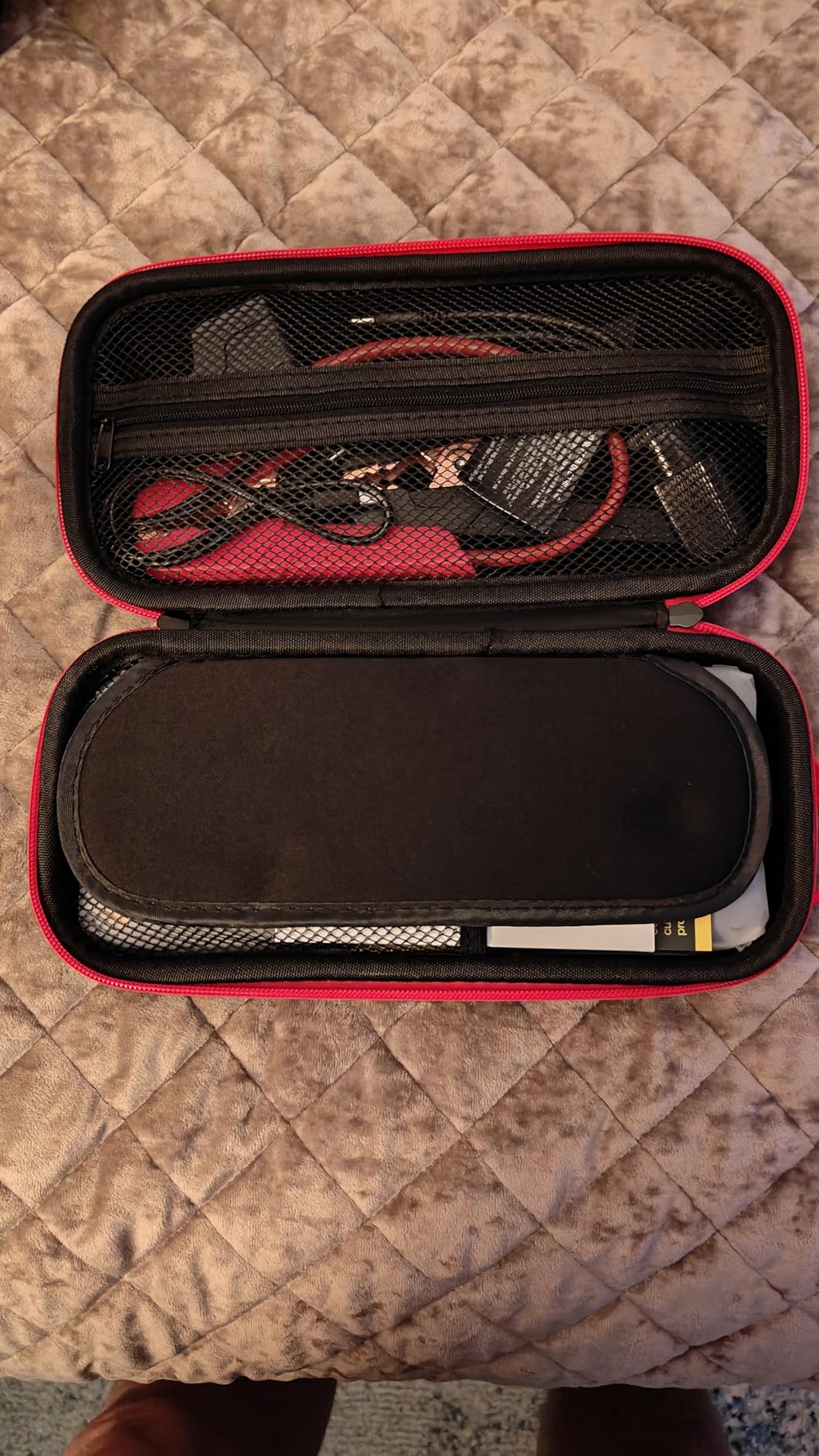
- No carrying case included
- USB-C output capped at 18W
- proprietary wall charger instead of USB-C PD input
- no built-in air compressor
The Alpha85 carries the highest average rating in the group at 4.7 stars across more than 13,000 reviews, and the number is not an accident of a small sample. Owners describe long ownership histories, some running five years with minimal capacity loss, and repeatedly report starts on 5.0L and 6.2L V8 trucks.
What stands out in daily use is the charging speed. Sixty-five watts takes the pack from zero to 80 percent in about an hour and fully charged in ninety minutes, which means topping it up is a coffee-and-email task rather than an evening project. The 3.3-inch display shows battery level and error codes clearly enough to read in a parking lot at night.
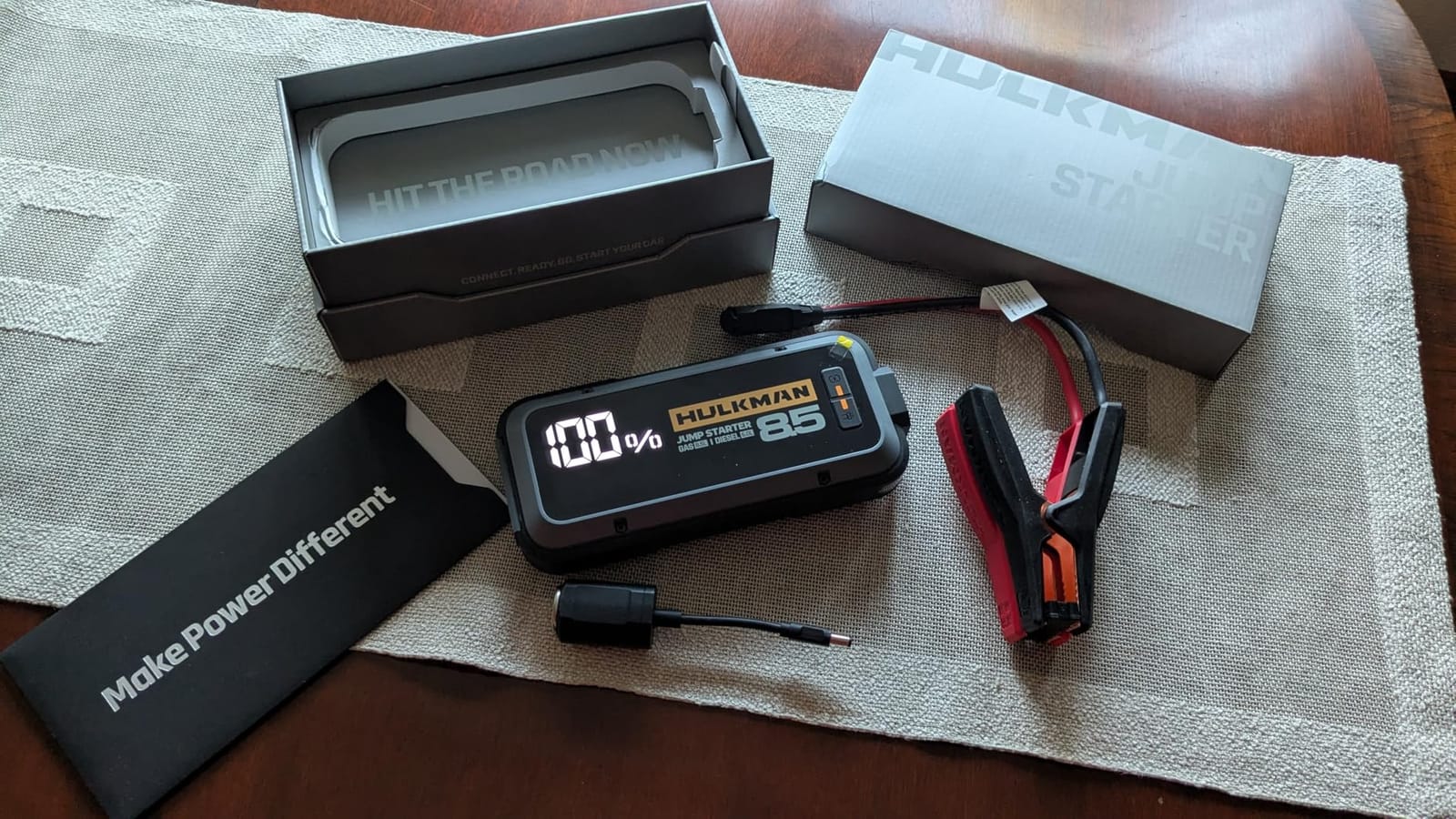
At 4.5 pounds and 9 by 4 inches, it lives in a cargo-area pocket year-round without thinking about it. The ten-layer protection scheme covers reverse polarity and short circuits, and the operating range of -4F to 140F covers most climates without special handling.
Two accessories make it more than a jump pack. Fifteen-volt ten-amp DC output will run a portable fridge, and the USB outputs charge phones and laptops at a campsite, which is why overlanding owners treat it as a dual-purpose tool. The IP65 shell shrugs off rain and dust when the pack lives under a tonneau or in a camp box.
Who this pack suits
This is the choice for someone who wants one device that starts a large SUV and keeps a campsite powered. It is sized for a Tahoe, Expedition, or Sequoia class tow vehicle in ordinary conditions, and the fast recharge makes it easy to keep topped up between trips.
It suits owners who will check the charge level every few months rather than leaving a pack dormant for a season, and anyone who wants USB outputs without carrying a separate power bank.
Who should skip it
Two caveats matter. The USB-C output is capped at 18W, which will not charge a modern laptop at full speed, and the included fast charger uses a proprietary plug rather than USB-C power delivery input, so you need the box cable.
If your battery might be fully dead, a lithium pack of this size can refuse to engage and you may need the override. If you tow heavy trailers in deep cold, step up to a lead-acid booster or a much larger pack.
3. GOOLOO GP4000 – Best Value for Big-Engine SUVs
GOOLOO GP4000 Jump Starter – 4000A 12V Car Battery Jumper Starter Portable
4000A peak amps
24000mAh lithium polymer
3.9 pounds
down to -4F
Pros
- 4000A peak covering gas and diesel up to 10.0L
- over 60 jumps per charge
- BOOST mode for very low voltage batteries
- all-metal smart clamps
- EVA case included
Cons
- Detachable cable plug is awkward to align in the dark
- connection sequence is not printed on the device
- case is hard to repack fully
- no wall charger in the box
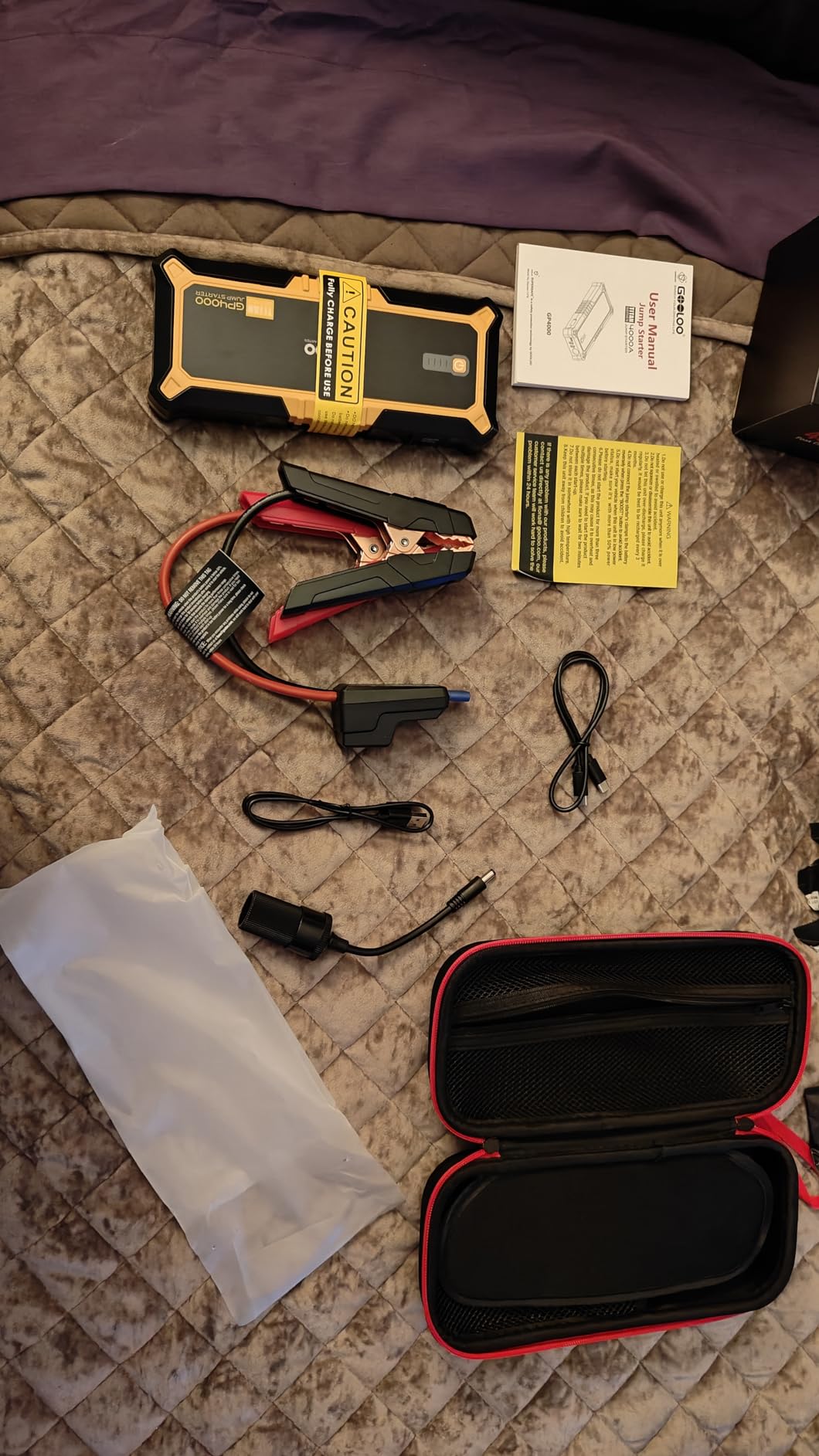
The GP4000 delivers 4000 peak amps from 24000mAh, a combination that normally costs well above the money you pay here, which is why it takes the value slot. Owners report starting large V6 and V8 engines and even backhoes on a single charge, with the charge level barely moving after each use.
Cold performance is the part that surprised us least. The rated operating range starts at -4F, and owners in northern states report it working without a warm-up period, which is not something every pack in this group can say. The BOOST button restarts engines when the battery voltage is nearly gone, adding a second chance when a first attempt stalls.
All-metal smart clamps are a genuine step above the plastic jaws on cheaper packs, and the reinforced rubber corners survive a drop onto gravel, which matters when the pack lives in a trailer or cargo box. The built-in LED flashlight is basic but adequate for checking a wheel well.
The design flaw is the detachable cable. Owners repeatedly mention hunting for the plug in the dark and fumbling the alignment, and the correct connection sequence is not printed on the housing, so you learn it once and rely on memory. The supplied EVA case is also hard to zip shut when the cables are stuffed back in.
Who this pack suits
Owners of a full-size V8 SUV who want genuine headroom without stepping up to a specialist pack will be happiest here. Sixty jumps per charge means a long trip in winter does not drain it, and the capacity is enough to jump another stranded vehicle after yours.
It is also a strong pick for someone who works vehicles part-time and needs to cover pickups, SUVs, and occasional equipment from one pack.
Who should skip it
Skip it if you are fussy about physical design. The removable cable and the case both draw consistent complaints, and a pack you fumble in the dark is a pack you will fumble during a roadside emergency.
It also needs a wall charger sourced separately, since none is included. And if the battery may be flat to zero, expect to need the BOOST sequence rather than a clean first attempt.
4. S ZEVZO ET03 – Best for Compact SUVs and Gloves
S ZEVZO ET03 Car Jump Starter 4000A Jump Starter Battery Pack for Up to 8.0L Gas and 7.0L Diesel Engines, 74Wh Portable 12V Jump Box with USB Ports, LCD Display, Storage Case, and LED Light
4000A peak amps
74Wh lithium-ion
1.4 pounds
force start for 0V batteries
Pros
- Lightest pack in the roundup at 1.4 pounds
- force start function revives 0V dead batteries
- 500 lumen light with strobe and SOS modes
- up to 50 jumps per charge
- storage case included
Cons
- 20000mAh is small beside the 4000A claim
- wall charger not included
- force start needs a high charge level
- fewer owner reviews than the leaders
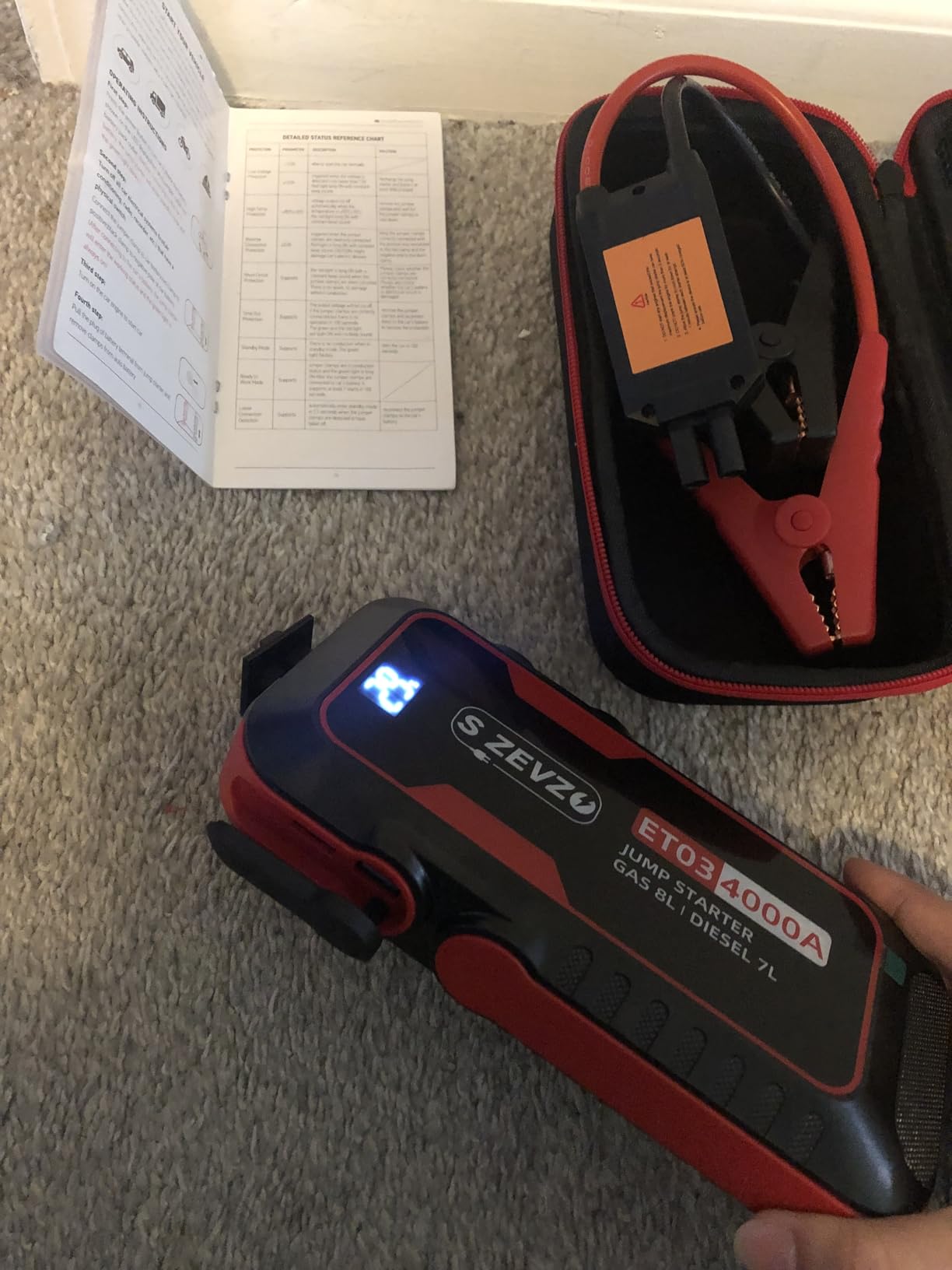
At 1.4 pounds and 7.5 inches tall, this is the pack you can forget is in the vehicle, which for a compact or midsize SUV is often the deciding factor. A pack that lives in the door pocket gets used; a lead-acid booster in the trunk stays at home.
On paper it is well matched to a small SUV. The 4000A peak rating covers 8.0L gas and 7.0L diesel engines, 74Wh of storage gives up to 50 jump starts per charge, and the working range runs from 14F to 140F. The 500-lumen light with steady, strobe, and SOS modes is genuinely useful for a roadside or a campsite after dark.
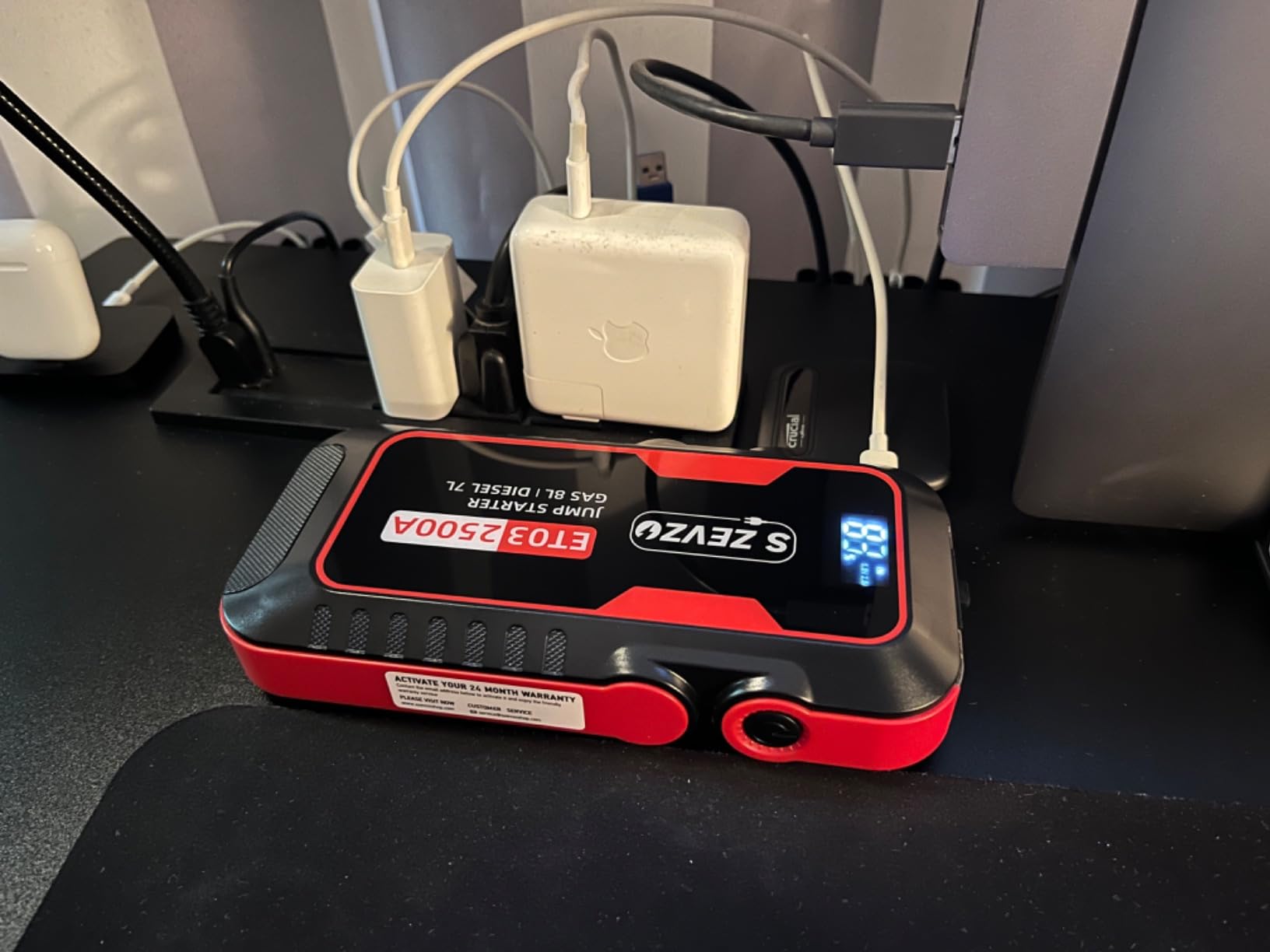
The force start function in the smart clamps is the feature worth understanding. When a battery sits at 0V, the pack may refuse a normal connection, and force start pushes current through anyway. Owners report reviving fully dead batteries this way, which is rarer than manufacturers suggest.
Be aware of the honest limitation: force start works best when the pack itself is above roughly 14V. A depleted booster cannot reliably revive a deeply discharged battery, so top this one up every few months even if you never use it.
Who this pack suits
A commuter with a compact crossover, a college student with a used SUV in the driveway, or anyone whose parking spot is far from a working outlet. One pound changes whether you keep it charged, and a charged pack is the only kind that helps.
The bright light also makes it a decent standalone emergency light for a garage or a trunk kit.
Who should skip it
Do not lean on it for a large V8 or a turbodiesel in deep cold. The 20000mAh capacity is modest relative to the 4000A claim, and the 14F working floor is higher than several packs here, so it is not the right tool for a northern January morning.
It also carries fewer owner reviews than the leaders, and no wall charger is in the box.
5. Powrun P-ONE – Best for Organized Storage in the Cabin
Powrun P-ONE Jump Starter, 2000A Portable Jump Box – Car Jump Starter Battery Pack for up to 8.0L Gas and 6.5L Diesel Engines, 12V Battery Jump Starter with Carry Case (Orange)
2000A peak amps
10000mAh lithium-ion
2.2 pounds
IP65 shell
Pros
- Best-designed EVA case in the roundup with separated compartments
- BOOST mode works below 9V
- up to 25 jumps per charge
- IP65 waterproof and shatter-resistant shell
- fits a glovebox at 2.2 pounds
Cons
- 2000A is the lowest peak rating here
- 10000mAh is the smallest capacity listed
- cable plug rubber cover can pinch and trigger a false error
- grommet sealing around the connector
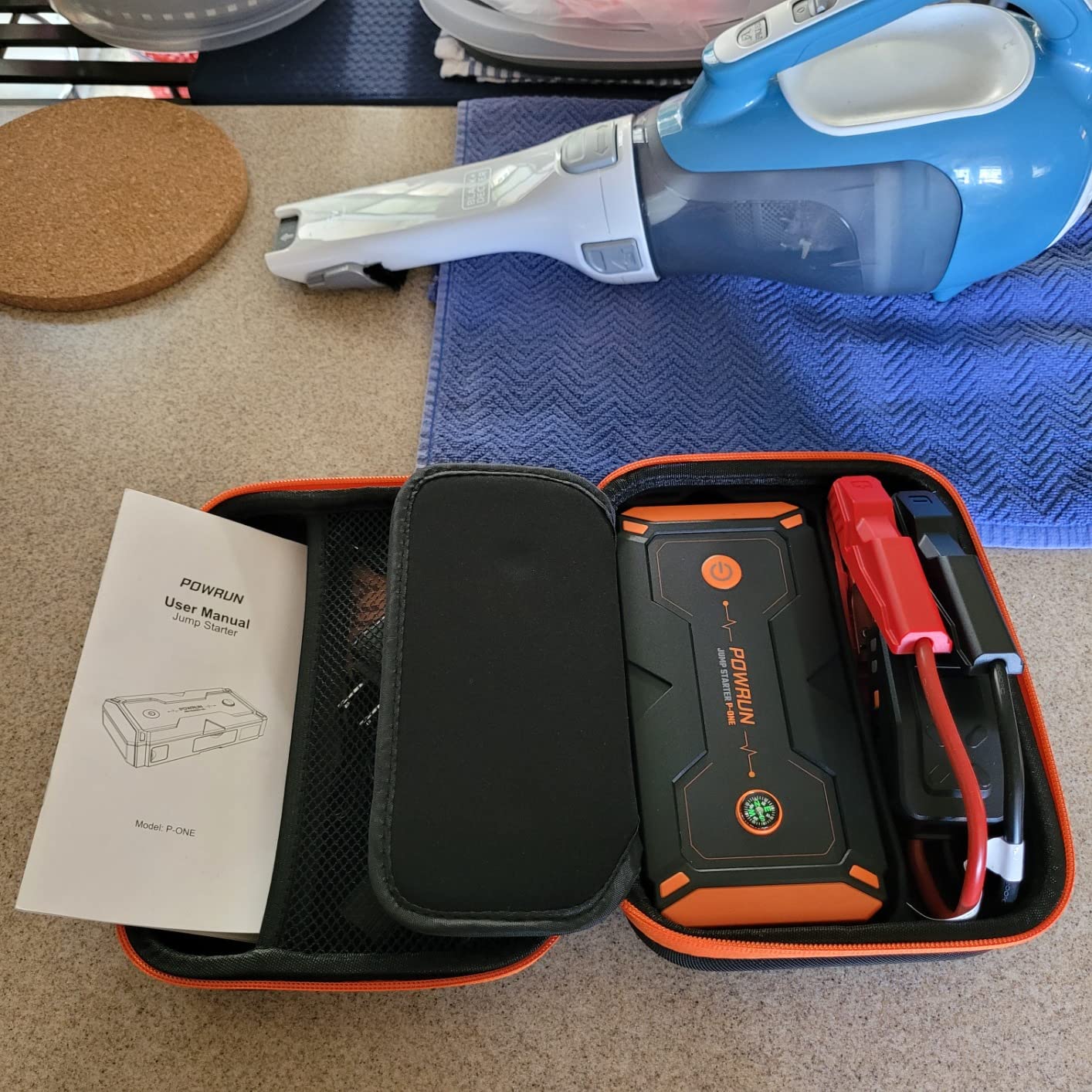
The P-ONE is not the strongest pack here, and the 2000A rating sits at the bottom of the group alongside the smallest capacity at 10000mAh. What makes it worth considering is the case, which reviewers single out repeatedly as better designed than anything else in this price class.
Compartments keep the clamps, cable, and USB-C lead separated instead of tangling at the bottom of a glovebox, and the IP65 rubberized shell survives a dusty truck bed or a wet trail bag. For 25 jump starts on a full charge, that is plenty for an emergency kit that gets used a handful of times a year.
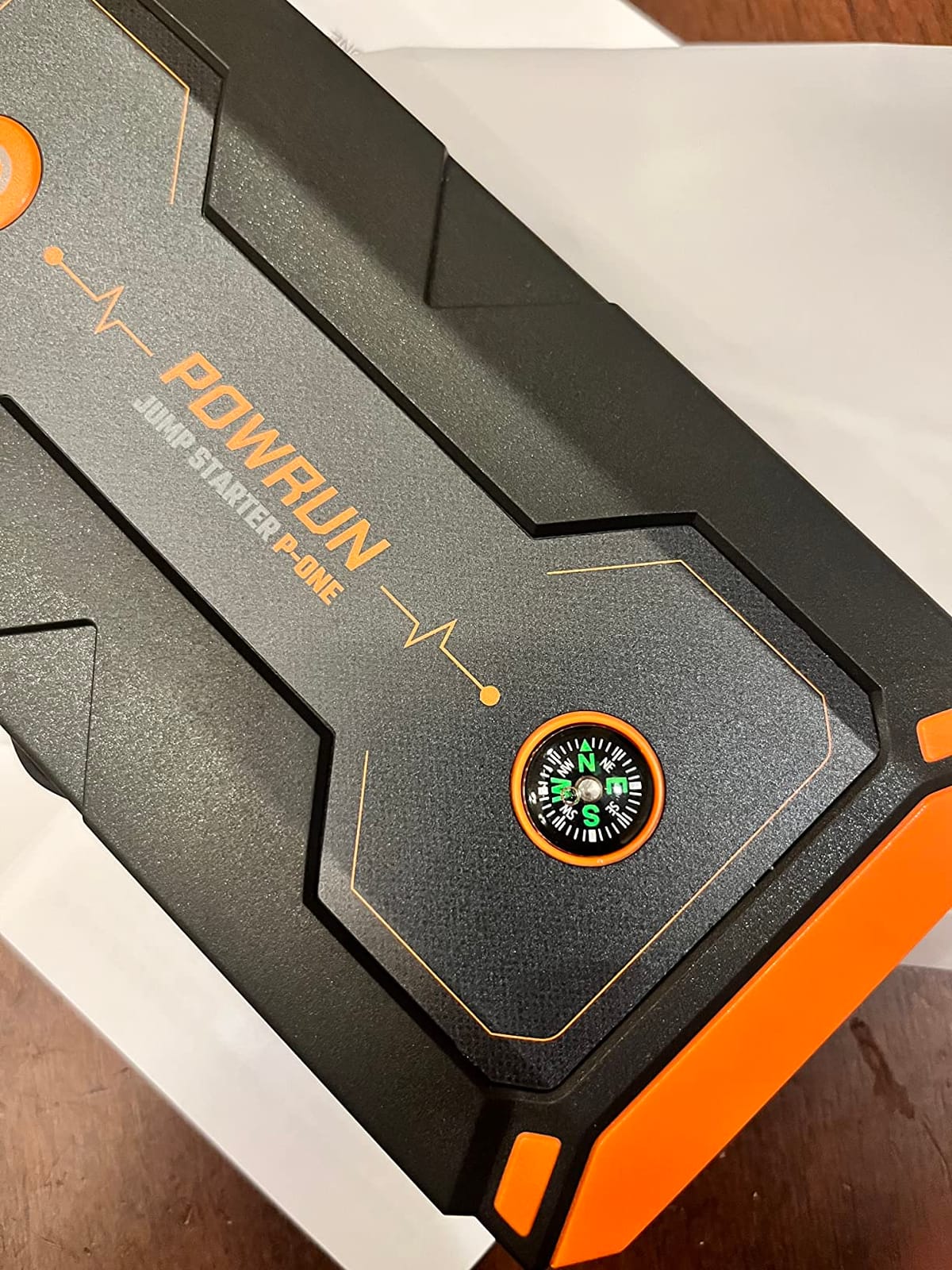
BOOST mode engages below 9V, and owners report it saving them when a truck or SUV battery was nearly flat. The LCD shows battery status and remaining power, the four-mode LED light covers flash, strobe, SOS, and red, and the operating range of -4F to 140F is appropriate for most climates.
Two physical issues recur in reviews. The rubber cover on the cable plug can get pinched, which triggers a red-light error even when the connection is fine, and the grommet sealing around that connector is described as improvable. Both are minor, but both happen at the worst possible moment if you are not expecting them.
Who this pack suits
Someone with a midsize SUV who wants a tidy, complete kit in a glovebox or door pocket rather than a powerful tool in the trunk. The organized case means you will not find a tangled cable in the dark, which is a real benefit.
It is a sensible second pack to keep in each vehicle of a household, or a backup that stays charged in a garage.
Who should skip it
Skip it for a V8 or diesel SUV, or for anyone who plans deep-winter roadside use. The 2000A ceiling and 10000mAh capacity leave less room for error than the packs above it, and the case is difficult to repack fully after a jump.
If you want to jump another vehicle after yours, twenty-five starts sounds generous but the pack is not sized for repeated heavy cranking in one session.
6. WOLFBOX MV24 – Best for Fast Recharging Between Trips
WOLFBOX 4000A Jump Starter,12V Car Battery Jumper Starter Portable with 65W Quick Charger,LED Display,88.8Wh Booster Jump Box Pack (10L Gas 10L Diesel Engine) with LED Light,Jumper Cables, MV24
4000A peak amps
88.8Wh lithium-ion
3 pounds
full charge in 1.3 hours
Pros
- 88.8Wh gives real capacity for trucks and boats
- full charge in about 1.3 hours on the included 65W charger
- USB-C input and output for charging and laptop use
- HD LCD status display
- one-touch BOOST
Cons
- Compatible vehicle type is listed as passenger car only
- no carrying case listed in the box
- this is the jump-only MV24 with no compressor
- reverse polarity must be avoided
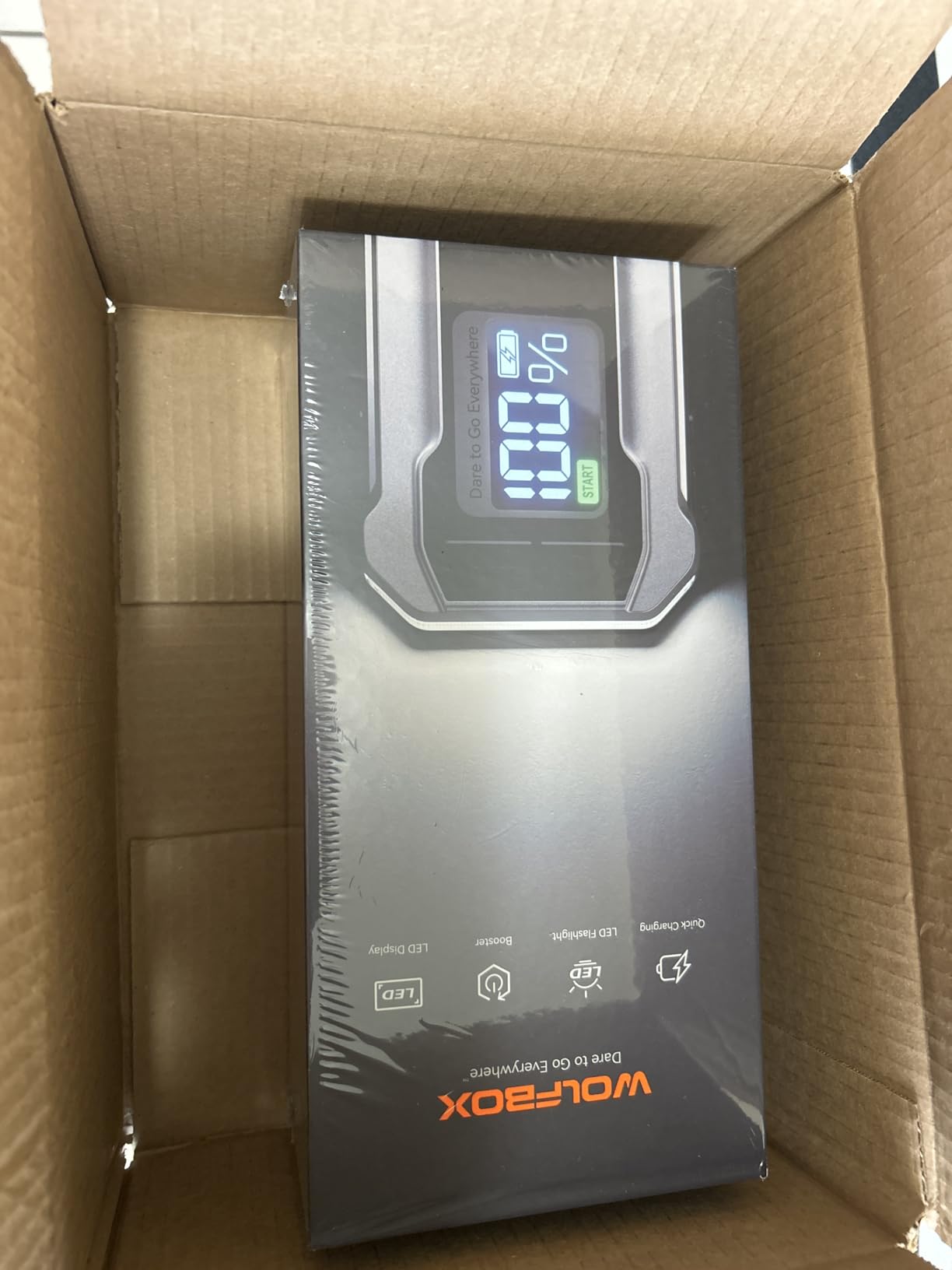
The MV24 pairs 4000 peak amps with 88.8Wh of storage, and that combination is what separates it from packs that advertise a big number with a small battery behind it. Eighty-eight watt-hours is the figure to use when judging how many attempts you actually get.
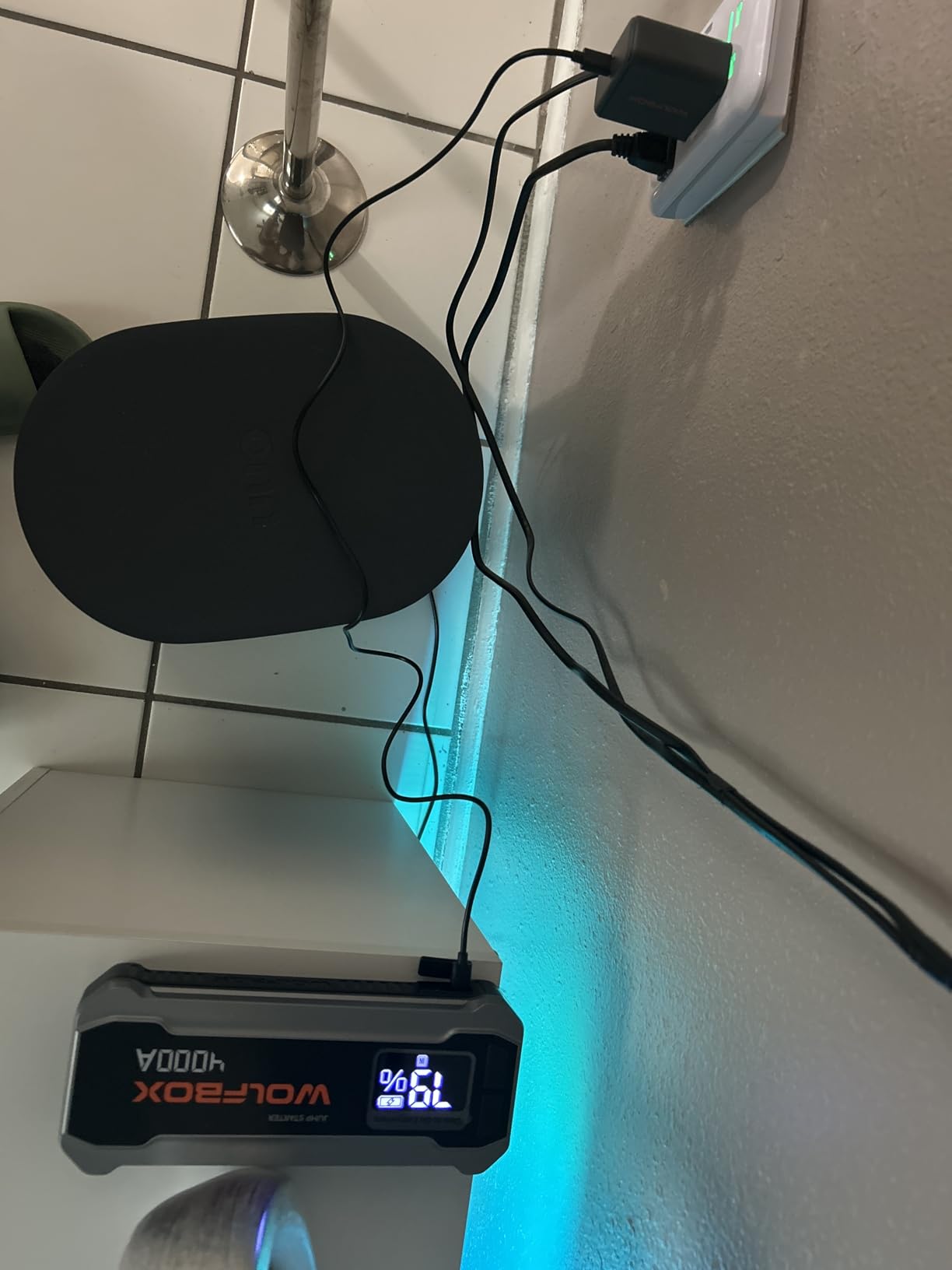
The charging story is the headline. The included 65W USB-C charger brings it from empty to full in roughly 1.3 hours, and because the USB-C port works as both input and output, the same pack charges a laptop at a campsite. Reviewers single out that charger out by name more than any other feature.
The HD LCD display reports status clearly, one-touch BOOST handles low-voltage starts, and the flashlight covers SOS, strobe, and high-beam modes. The IP64 rating and a -4F to 140F operating range mean it can live in the vehicle through the season without being brought inside.
Two things to know before buying. The listed compatible vehicle type is passenger car, so for an SUV or truck you are relying on the stated 10L gas and 10L diesel capability rather than the fitment line. And this is the MV24 without the air compressor, which is a separate model covered later in this roundup.
Who this pack suits
Owners who jump frequently, run a boat or RV alongside an SUV, or camp out of the vehicle will like the combination of 88.8Wh capacity and a one-hour-plus recharge. Reversing polarity is a real risk with a pack this capable, so pair it with a model that alerts you loudly and clearly when the connection is reversed.
At three pounds it is still a portable tool, not a shop item.
Who should skip it
Skip it if you want a tire inflator in the same box, since this is the jump-only version. The fitment line is also narrower than the performance claim, which matters if you want the manufacturer to stand behind an SUV use case.
There is no carrying case listed, so plan storage in a tote or a cargo box rather than expecting a neat kit.
7. TOPDON JS3000 – Best for Turbodiesel and Towing Work
TOPDON JS3000 Jump Starter, 3000A, Boost Mode, 9L Gas/ 7L Diesel Engines
3000A peak, 750A for 2 seconds
24000mAh
1.5 kg
9L gas or 7L diesel
Pros
- Starts heavy diesel engines other packs cannot
- 750A sustained for two seconds
- 100 percent copper clamps grip terminals well
- PD45W USB-C charges a laptop in about two hours
- extendable hook and stand double as a work light
Cons
- Boost mode cuts out after roughly 15 to 30 seconds
- no AC wall charger in the box
- heaviest per liter of capacity at 1.5 kg
- one reviewer reported cell swelling on an earlier revision
Diesel engines ask for sustained current rather than a brief spike, and the JS3000 is one of the few packs here that publishes both numbers: 3000 peak amps and 750A delivered for two seconds. That sustained figure is the honest one, and it is why owners report starting 6.7L and 7.3L Powerstroke diesels that lighter packs walked away from.
For an SUV that tows, the copper clamps matter as much as the current. They grip top-post terminals firmly, the cables are long enough to reach batteries mounted at the back of a truck bay, and the IP54 fireproof enclosure includes an extendable hook and a flexible stand for working in an engine bay.
The 24000mAh capacity doubles as a power bank with two USB QC 3.0 ports, a 16.8V DC port, and Type-C PD45W in both directions. A 400-lumen flashlight with up to 30 hours of runtime and an SOS signal light makes it a genuine roadside tool, not just a battery.
Two honest caveats. Boost mode stays active for only about 15 to 30 seconds before cutting out, so you cannot hold it in reserve while you dig out a second vehicle. And one reviewer reported swollen cells that split an earlier revision’s case, though the manufacturer replaced it and the current design has been revised.
Who this pack suits
Diesel tow vehicles, heavy SUVs, and anyone who works on equipment where a first crank has to turn the engine. The two-second sustained output and the copper clamps are the reason to choose it over a lighter pack with a bigger printed number.
It also suits owners who want real USB-C output, since PD45W can charge a laptop from empty in about two hours.
Who should skip it
Skip it if weight matters. At 1.5 kg it is the heaviest per liter of capacity here, and for a small crossover a lighter pack will do the same job more easily.
Also note that no AC wall charger is included, and boost mode timing means you should read the manual before you need it at night on a shoulder.
8. Povasee A30 – Best Rated for Deep Cold Starting
Povasee Jump Starter 5000A Car Jumper Starter, Model A30 12V Jump Box for Car Battery up to 10L Gas or 8L Diesel Engine Battery Jumper Starter Portable with USB Dual Output/LED Light/Storage Case
5000A peak amps
74Wh lithium polymer
2.2 pounds
rated to -22F
Pros
- 5000A peak at only 2.2 pounds
- cold rated down to -22F
- about 60 jump starts per charge
- RST button recovers batteries below 9V
- carrying case included
Cons
- AC wall adapter not included
- highest one-star share in the group at 7 percent
- clamp gives no output until polarity is confirmed
- 24 month warranty only
The A30’s rated operating floor of -22F is the lowest practical figure in this roundup for a pack that still weighs 2.2 pounds. If your SUV lives outside through a northern winter, that number matters more than the 5000A headline.
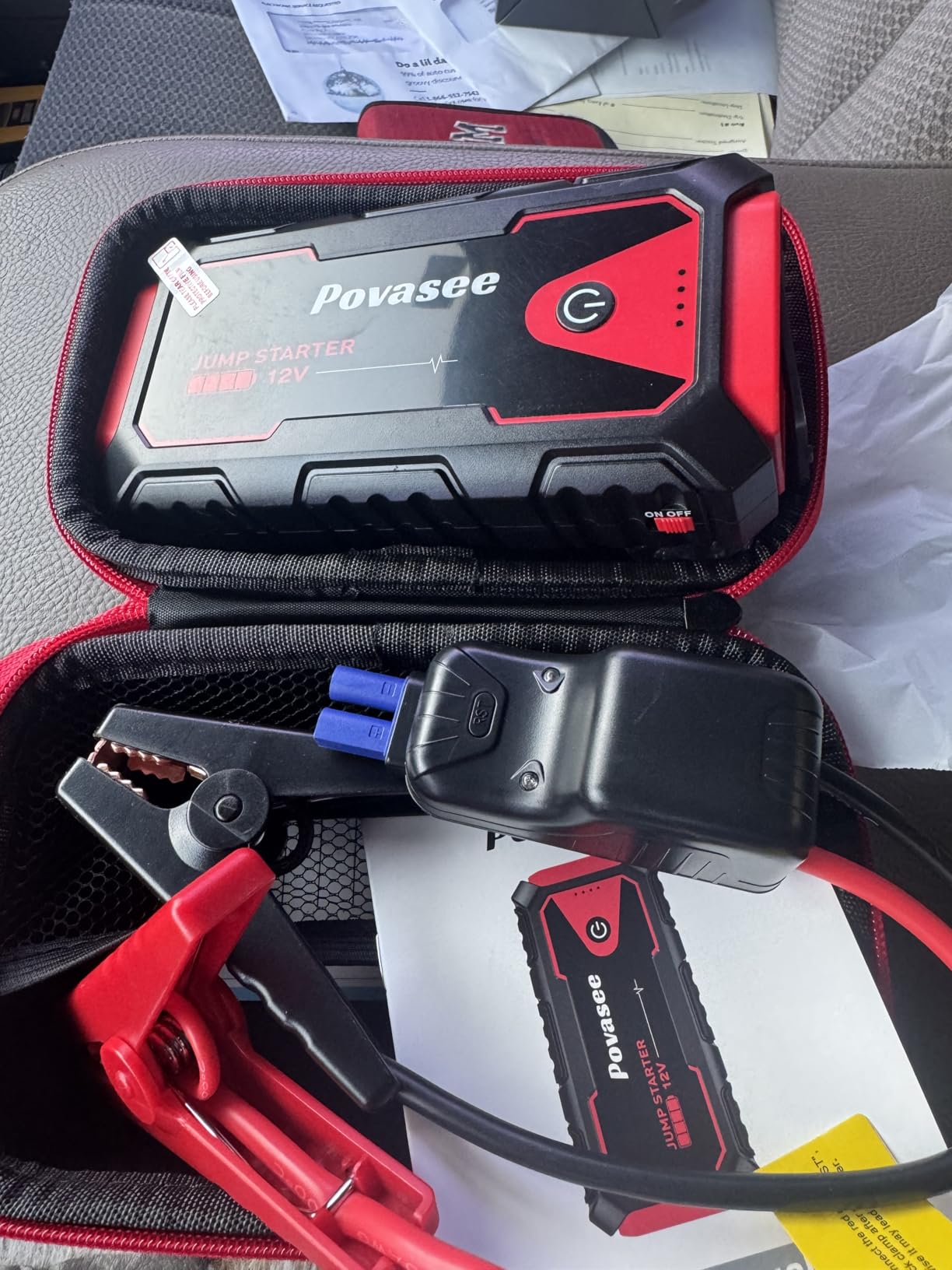
Owners highlight the combination of low weight, a high peak rating, and low cost as hard to beat, and they mention using the RST button to recover batteries that had dropped below 9V. With about 60 jump starts per charge from 74Wh, it can handle repeated stops on a long winter trip without a recharge.
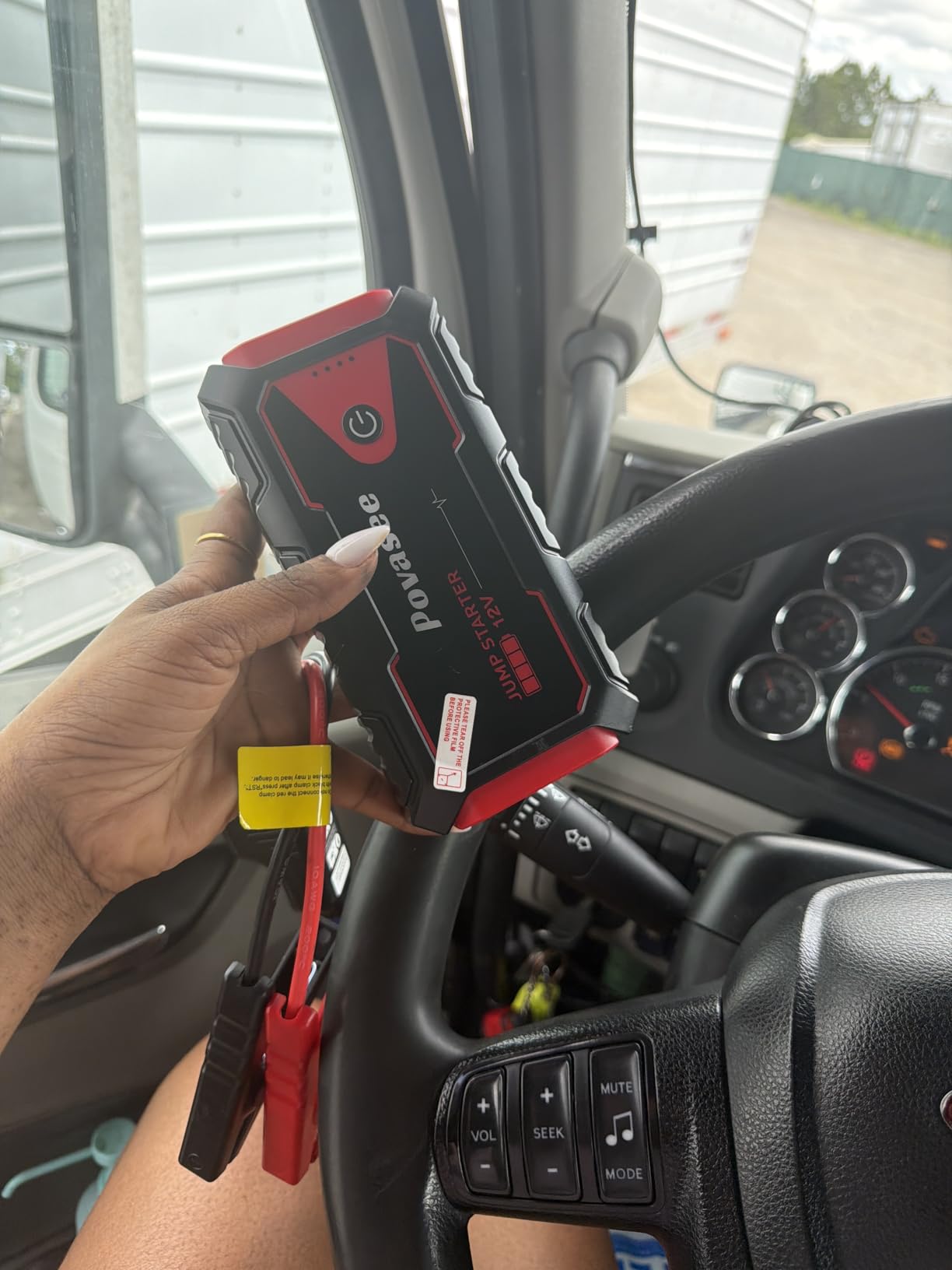
The power bank function is a two-output setup at 5V/2.4A and 5V/3A with QC 3.0, and the 400-lumen light offers flashlight, strobe, and SOS modes. Ten protection systems handle reverse connection and short circuits, and the case is included.
Expect one moment of confusion the first time you use it. The smart clamp produces no output at all until polarity is confirmed, which is good for safety and frustrating when you do not know it is happening. Reviewers also flag a 7 percent share of one-star ratings, the highest here, so the failure rate is worth knowing about.
Who this pack suits
Winter drivers in cold states, and anyone who wants a high peak rating without carrying a heavy brick. The 2.2-pound weight makes it easy to keep in a front seat or door pocket where the cabin heat helps preserve it.
It is also a good second vehicle pack, since the low cost per jump makes buying two practical.
Who should skip it
Skip it if you need factory support behind the warranty, because coverage is 24 months and the one-star share is the highest in the group. For a daily-driven tow vehicle that must start every time, a lead-acid booster is the steadier choice.
You will also need to source a wall adapter, since none is in the package.
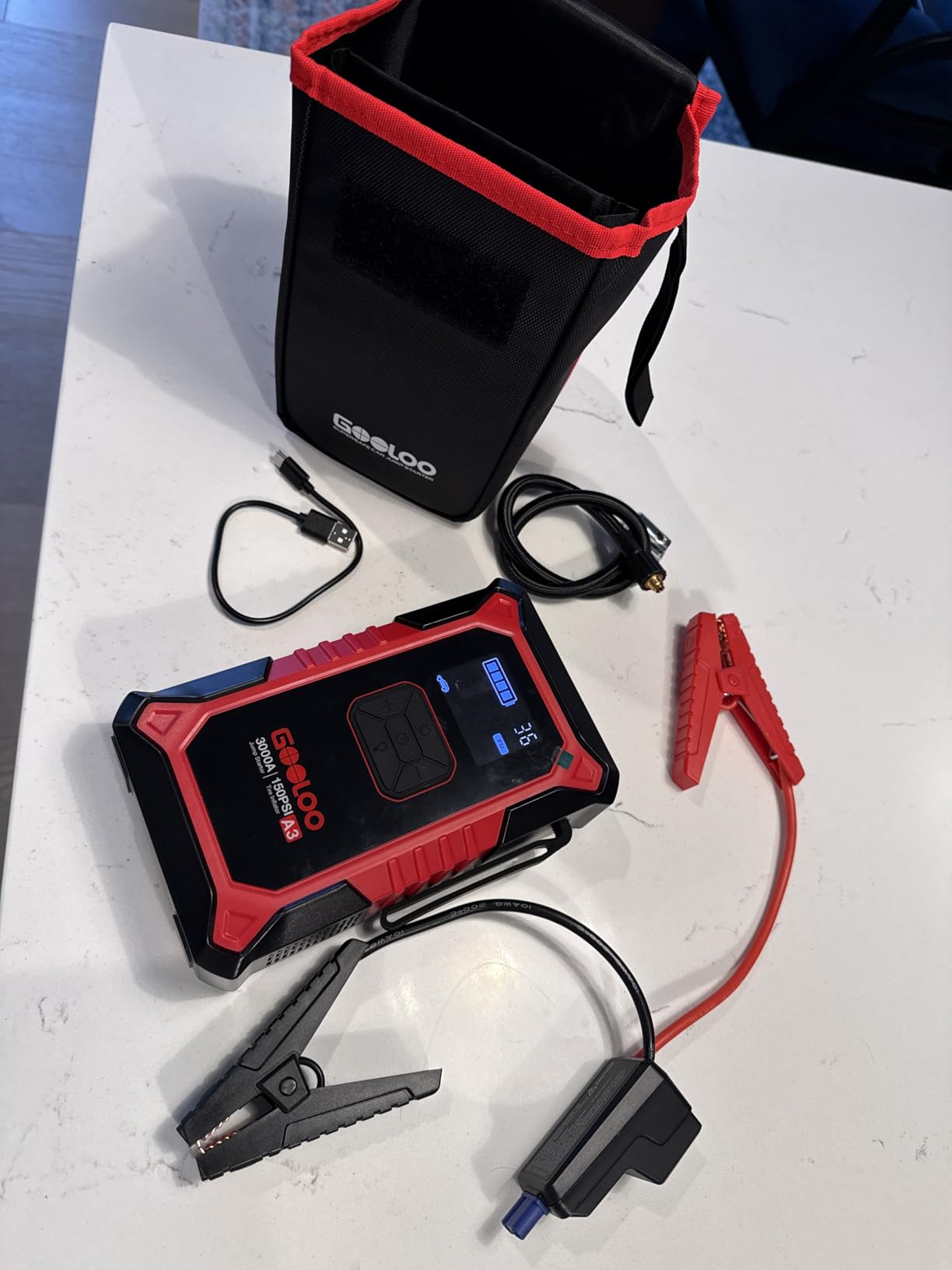
9. GOOLOO A3 – Best for SUV Tire Inflation and Jump Starting
GOOLOO A3 12V 3000A Portable Jump Starter with Air Compressor
3000A plus 150 PSI compressor
12000mAh
4.5 pounds
SUV inflation preset
Pros
- Genuine 150 PSI inflator with 35L per minute airflow
- five inflation presets including a dedicated SUV mode
- fills a car tire from 30 to 36 PSI in about a minute
- readable LED screen with auto shutoff
- five nozzles included
Cons
- Lowest average rating here at 4.4 stars
- highest one-star share at 8 percent
- 12000mAh is the smallest capacity among two-function packs
- pump and hose take trunk space
The A3 exists for a specific need: an SUV tire and a dead battery in the same emergency. It pairs 3000 peak amps, rated to 9.0L gas and 6.5L diesel, with a real 150 PSI compressor moving 35 liters per minute, and a dedicated SUV inflation preset sets the target pressure for you.
That compressor is quicker than it looks on paper. Owners report filling a car tire from 30 to 36 PSI in roughly a minute, and the unit can run up to 45 minutes of continuous cordless inflation. The LED screen shows pressure and inflation status, switches between BAR, PSI, and KPA, and shuts off automatically at the preset.
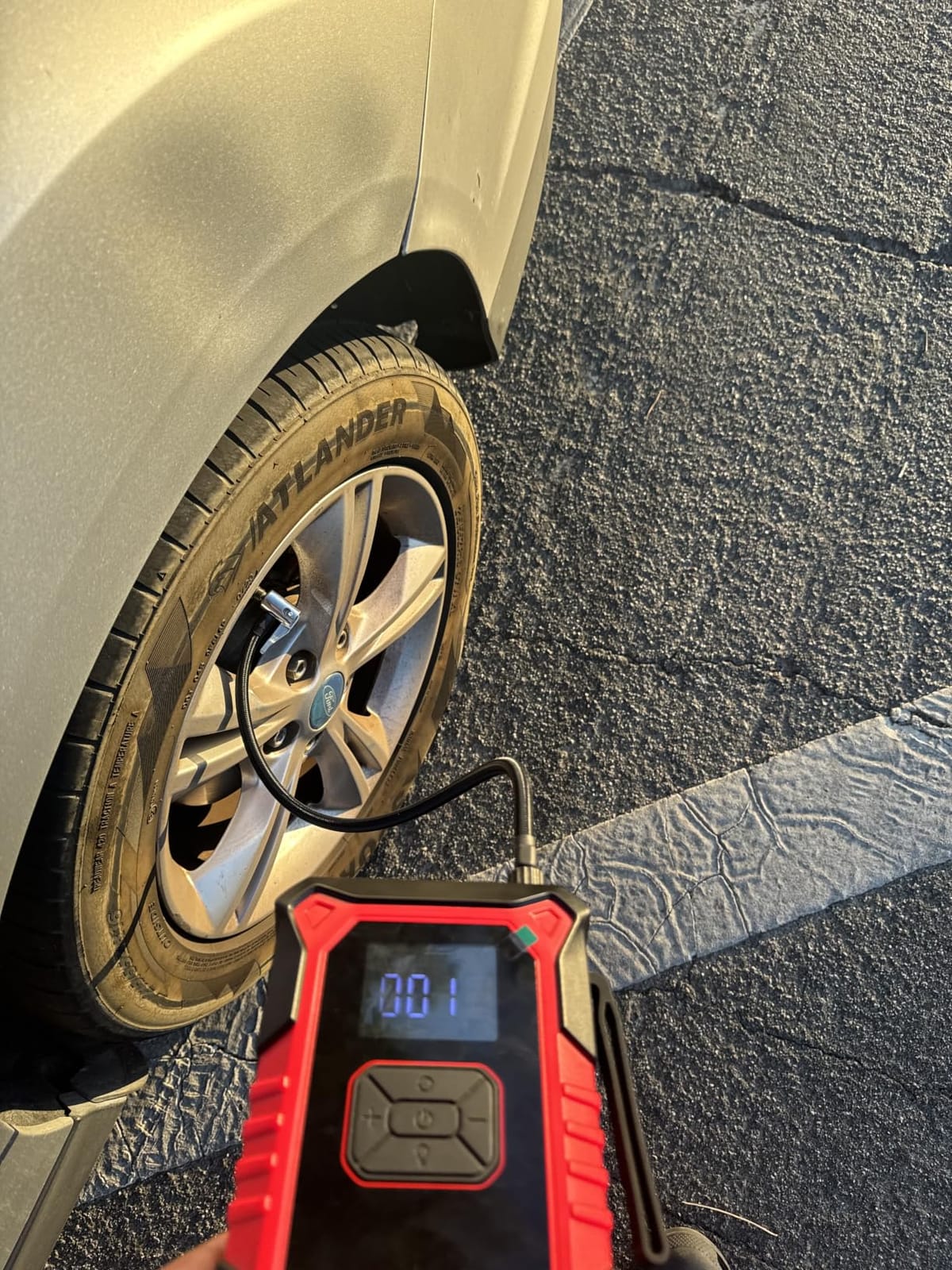
The BOOST button handles very low voltage batteries, and the 1000-plus charge cycle rating suggests reasonable longevity. Five air nozzles cover everything from SUV valves to inflatables, and the rated 1000-plus cycles matter more to long-term owners than the peak number does.
The aggregate 4.4-star rating is the lowest here, and the 8 percent share of one-star reviews the highest, with complaints about durability and charging rather than jump performance. The 12000mAh capacity is also the smallest among the packs with a built-in compressor, so budget for fewer attempts.
Who this pack suits
Anyone whose SUV carries a full-size or all-terrain tire on a tow vehicle or a trail rig, where a dead battery and a low tire often happen together. One device replaces the separate inflator, and the SUV preset removes the guesswork about pressure.
It suits owners who want a trunk tool rather than a cabin tool, since at 4.5 pounds with a hose it is not a glovebox item.
Who should skip it
Skip it if cranking power is the priority. A 3000A rating paired with 12000mAh is a thin reserve, and the one-star complaints cluster around longevity and charging rather than a single bad unit.
Anyone with limited trunk space should also weigh the pump and hose bulk, and the charging temperature range is narrower than the operating range.
10. BRPOM G20 – Best All-in-One Output in a Single Box
Jump Starter with Air Compressor, BRPOM 8000A Portable Car Jump Starter (All Petrol/12L Diesel), 160PSI 12V Battery Jump Starter Power Pack with Jump Clamps, LCD Screen, 600 Lumens Emergency Light
8000A peak plus 160 PSI compressor
10000mAh
1.4 kg
600 lumen light
Pros
- Highest peak current among the multi-function packs at 8000A
- 160 PSI compressor at 45L per minute fills a tire in about 60 seconds
- 600 lumen light is the brightest here
- five inflation presets with auto shutoff
- compact solid design
Cons
- 10000mAh is small against an 8000A claim
- one reviewer reported it stopped holding charge
- jumper cables are short for large vehicles
- force start temporarily disables the protections
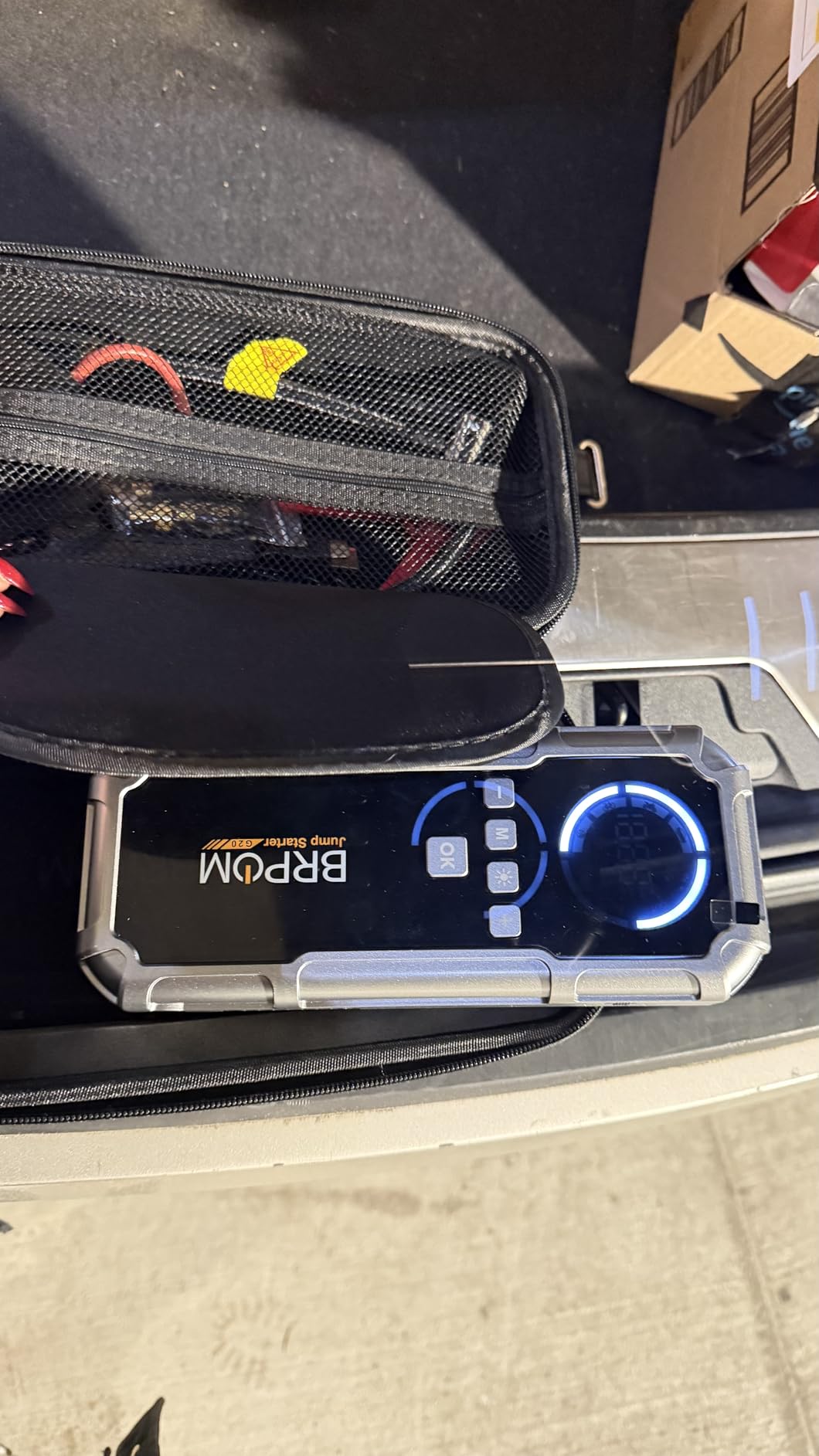
The G20 posts the biggest number in the roundup, 8000 peak amps, and the 160 PSI compressor at 45 liters per minute is the fastest air flow here. Owners describe starting a truck that two larger and more expensive packs had already failed on, which is a real report rather than a spec-sheet claim.
At first glance this looks like the obvious all-in-one answer. The 3.2-inch display shows startup status, inflation status, and error codes, the 600-lumen light is the brightest emergency lamp in the group, and five presets cover cars, motorcycles, bicycles, and inflatables with auto shutoff. Ten automatic protection mechanisms are built in.
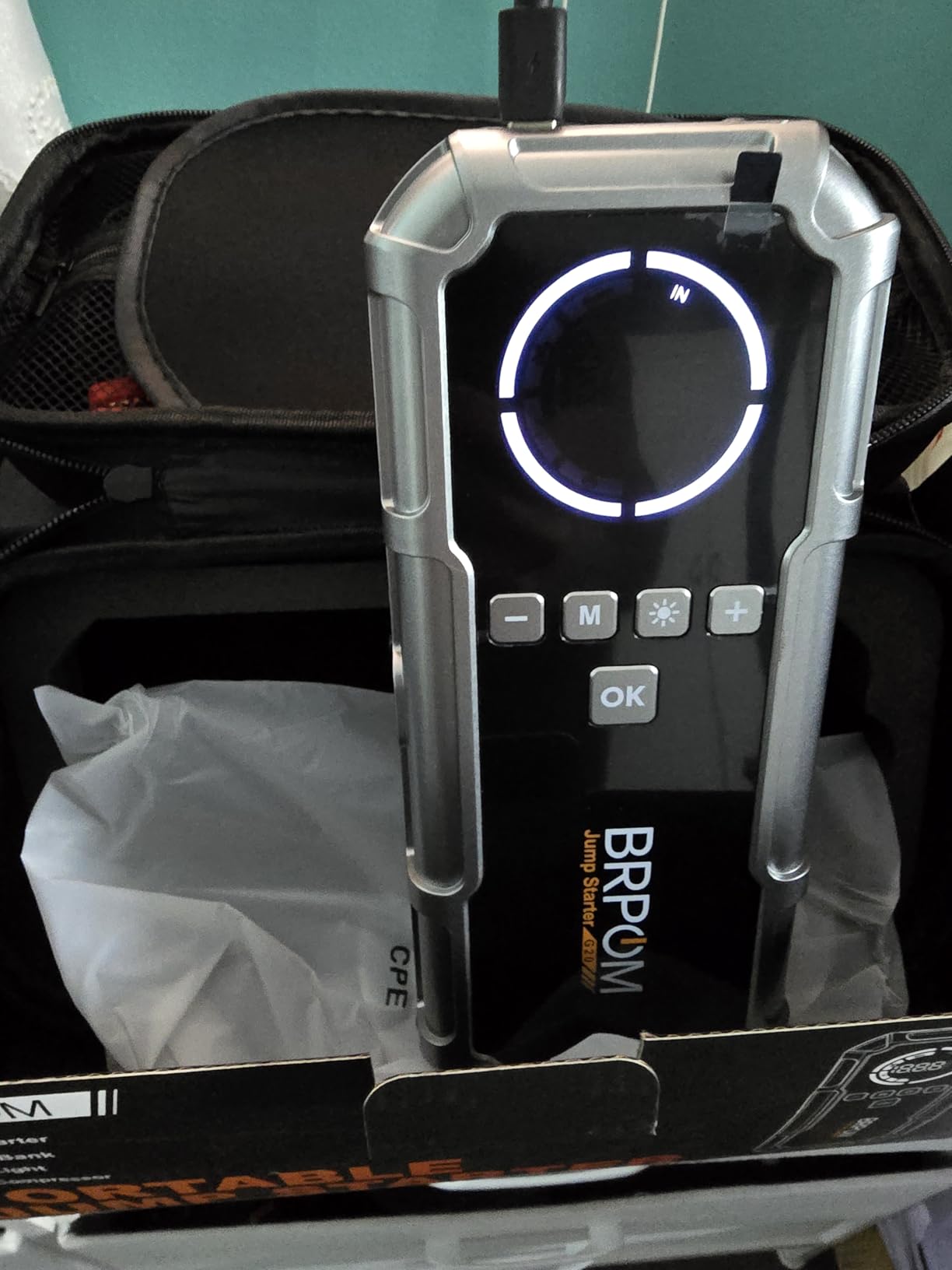
Here is where the numbers stop lining up. The battery is 10000mAh, the smallest capacity in this roundup, which means a 8000A burst comes from very little stored energy and the pack will need frequent recharging if you jump more than once or twice. The peak figure is marketing; the watt-hours are reality.
Cable length is a second concern, with owners calling the leads short for larger vehicles, and a force start function that temporarily deactivates the safety protections. One reviewer also reported the unit failing to hold a charge after several uses, which is a durability signal worth weighing.
Who this pack suits
Drivers who want the highest printed peak rating and the fastest inflation in one device, and who jump rarely. A single dead battery on a highway shoulder, then back on the road, is exactly the use this pack fits.
The 600-lumen light also makes it a reasonable standalone work light for a garage or a campsite.
Who should skip it
Skip it if you might jump two vehicles in a day, or if you plan to rely on the compressor for repeated tire service, because 10000mAh will not support that. The short leads are a real limitation on a large SUV with a buried battery.
And if safety circuitry matters to you, note that force start temporarily disables the ten protections while it is held.
11. WOLFBOX MV24A – Best for 4×4 Overlanding Trips
WOLFBOX MV24A 4000A Jump Starter with 160PSI Air Compressor, 12V Car Battery Booster, 88.8Wh Portable Jump Box (10L Gas/10L Diesel) with 65W Fast Charging, Tire Inflator, Jumper Cables, LED Light
4000A plus 160 PSI compressor
88.8Wh
5.3 pounds
65W USB-C charging
Pros
- Rated for 10L gas and 10L diesel engines
- inflates a pickup truck tire in about 2.5 minutes and an SUV tire in about 1 minute 20
- full charge in about two hours on 65W USB-C
- 160W DC continuous output for accessories
- 400 lumen light with distress and strobe modes
Cons
- Heaviest pack here at 5.3 pounds
- charging adapter not included in the base package
- compatible vehicle list omits trucks and vans
- highest cost among the packs with a compressor
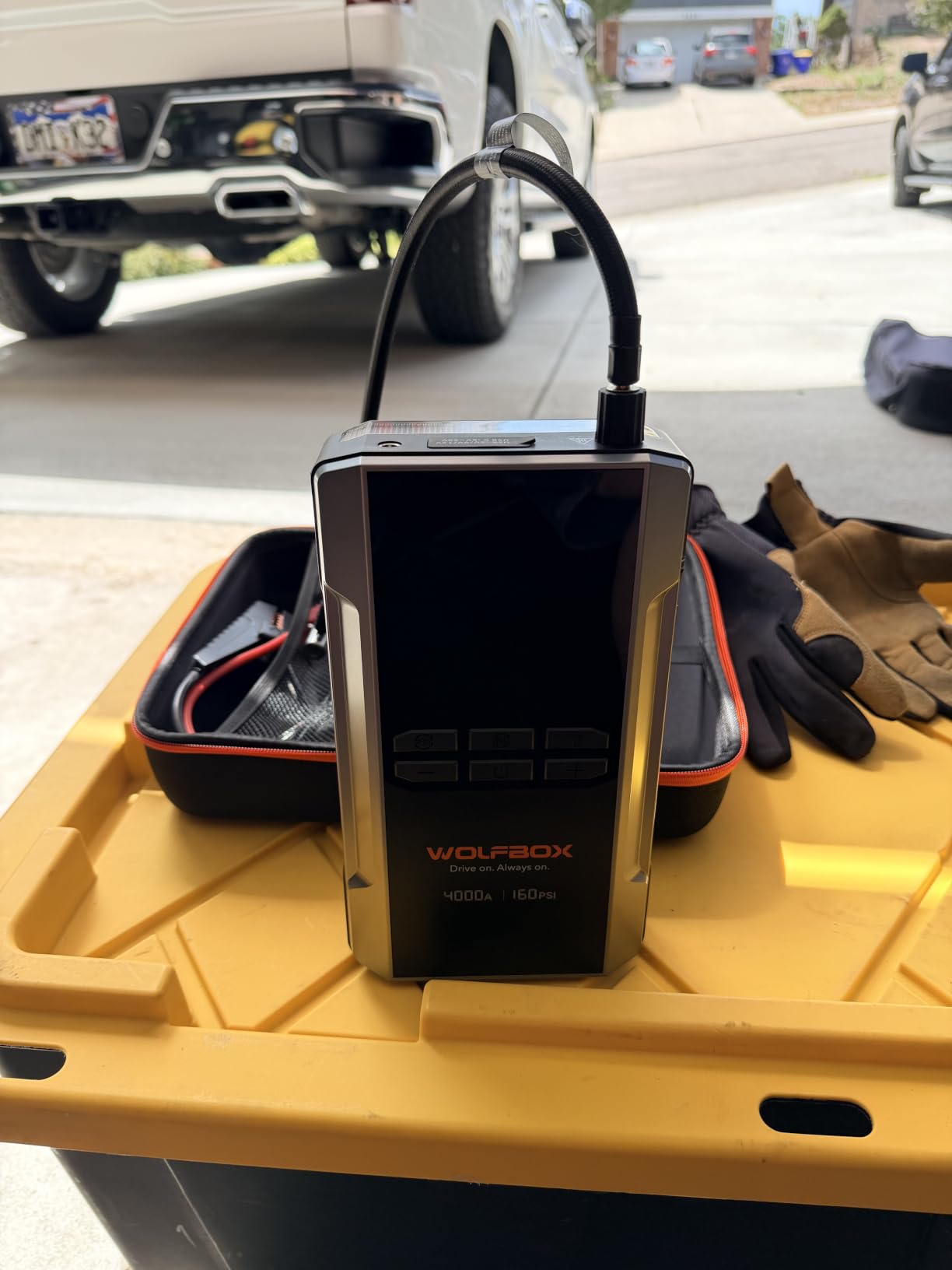
The MV24A is the pack owners on the 4runner6g forum reach for when a rig has to leave pavement for a few days. It combines 4000 peak amps with 88.8Wh of storage, so it jumps a 10L diesel or gasoline engine and still runs a 12V camp fridge afterward, which is why buyers treat it as one device rather than two.
The compressor is the part that separates it. At 160 PSI and 45 liters per minute, it fills a 315/70R17 pickup tire from 30 to 36 PSI in about two and a half minutes and a 275/70R17 SUV tire in about eighty seconds. For a rig carrying full-size tires, that speed is the difference between a quick fix and a long evening.
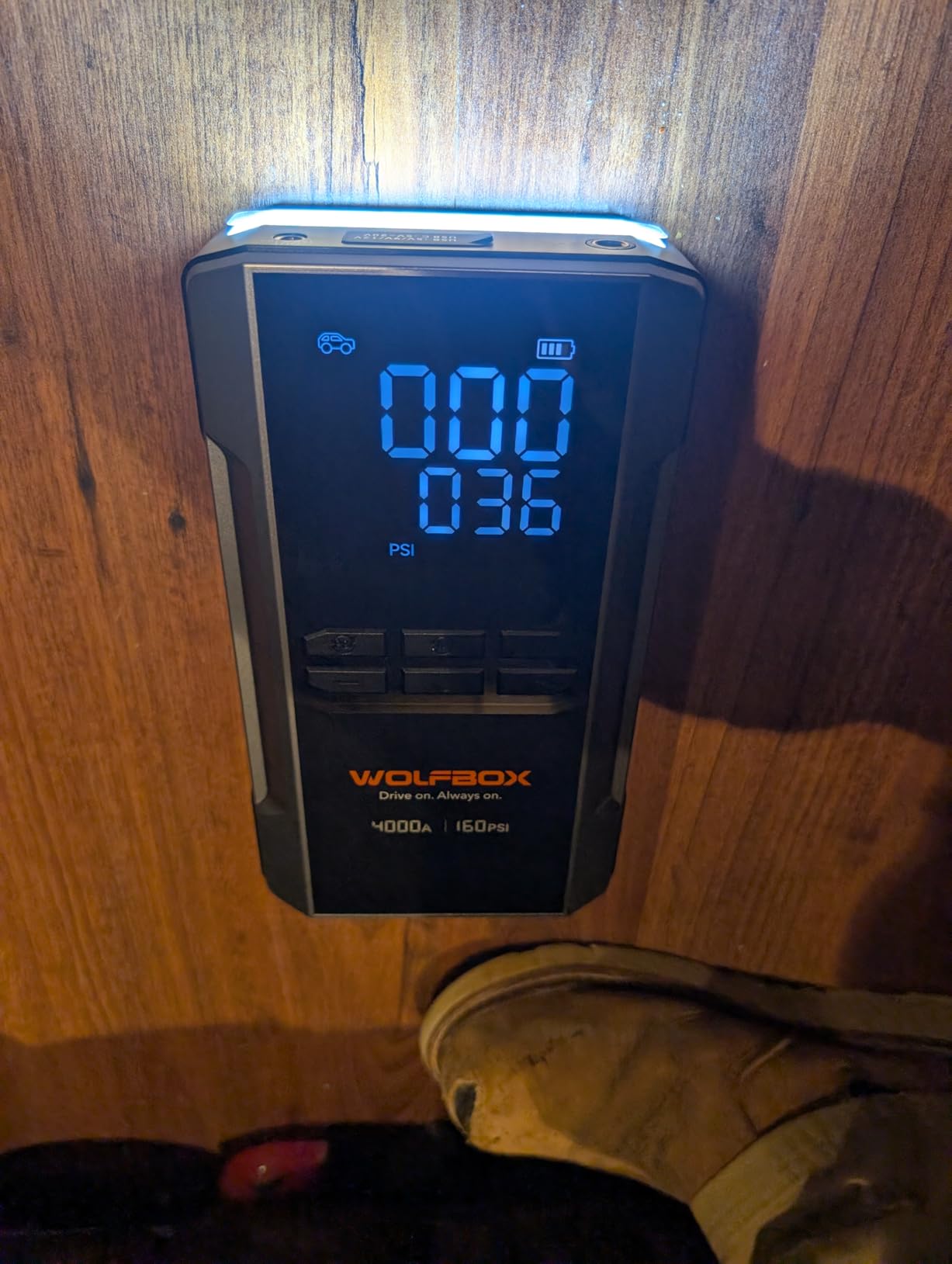
Charging is handled by a 65W USB-C port that refills the pack in about two hours, with a USB-A output at 12W and 18W and 160W of continuous DC output for accessories. The 400-lumen flashlight covers distress, strobe, and high-beam modes, and the unit operates down to -4F with ten protection types.
The physical cost is weight. At 5.3 pounds it is the heaviest pack here, and it needs dedicated cargo space rather than a console. The charging adapter is not included in the base package, and the listed compatible vehicle types omit trucks and vans even though the performance figures cover them.
Who this pack suits
Overlanding families and 4×4 owners who carry full-size tires, a 12V fridge, and laptops. The 88.8Wh capacity with 160W DC output covers campsite power, and the two-hour recharge means you can top it up at a campground with a USB-C supply.
It is also right for a tow vehicle that doubles as a weekend adventure rig, where one device replacing a separate inflator and power station simplifies the loadout.
Who should skip it
Skip it if trunk space is tight. Five pounds plus an air hose is a permanent fixture in a cargo area, and you will feel that weight every time you load the vehicle.
Because the charging adapter is sold separately, budget for it. And if you need the manufacturer to list truck compatibility explicitly, this listing does not.
12. GOOLOO GT Truck PRO – Best for Heavy-Duty and Equipment Work
GOOLOO GT Truck PRO 10000A & 64000mAh Jump Starter with 65W Fast Charge
10000A peak
64000mAh LiFePO4
8 lithium iron phosphate cells
up to 80 starts
Pros
- 10000A peak and 64000mAh for the largest engines
- LiFePO4 chemistry rated from -40C to 60C
- up to 80 vehicle starts or 17 phone charges
- 36 month standby suits long-term truck storage
- 65W wall charger included
Cons
- Heaviest item here at about 8 pounds
- lowest review count in the roundup
- needs at least 75 percent charge before use
- 12V vehicles only and not compatible with 24V trucks
This is the specialist pick, and it is the only pack here aimed squarely at operators of large trucks and construction equipment. Eight automotive-grade lithium iron phosphate cells deliver 10000 peak amps and 64000mAh, or up to 80 vehicle starts per charge, and the DC output runs car fridges and pumps.
The chemistry is the differentiator. Lithium iron phosphate is rated from -40C to 60C, a wider band than the lithium polymer packs in this roundup, which matters if the tool lives in a work truck through a Canadian or northern winter. Standby time is 36 months, and the unit is UL94 V0 and RoHS certified with ten protection layers.
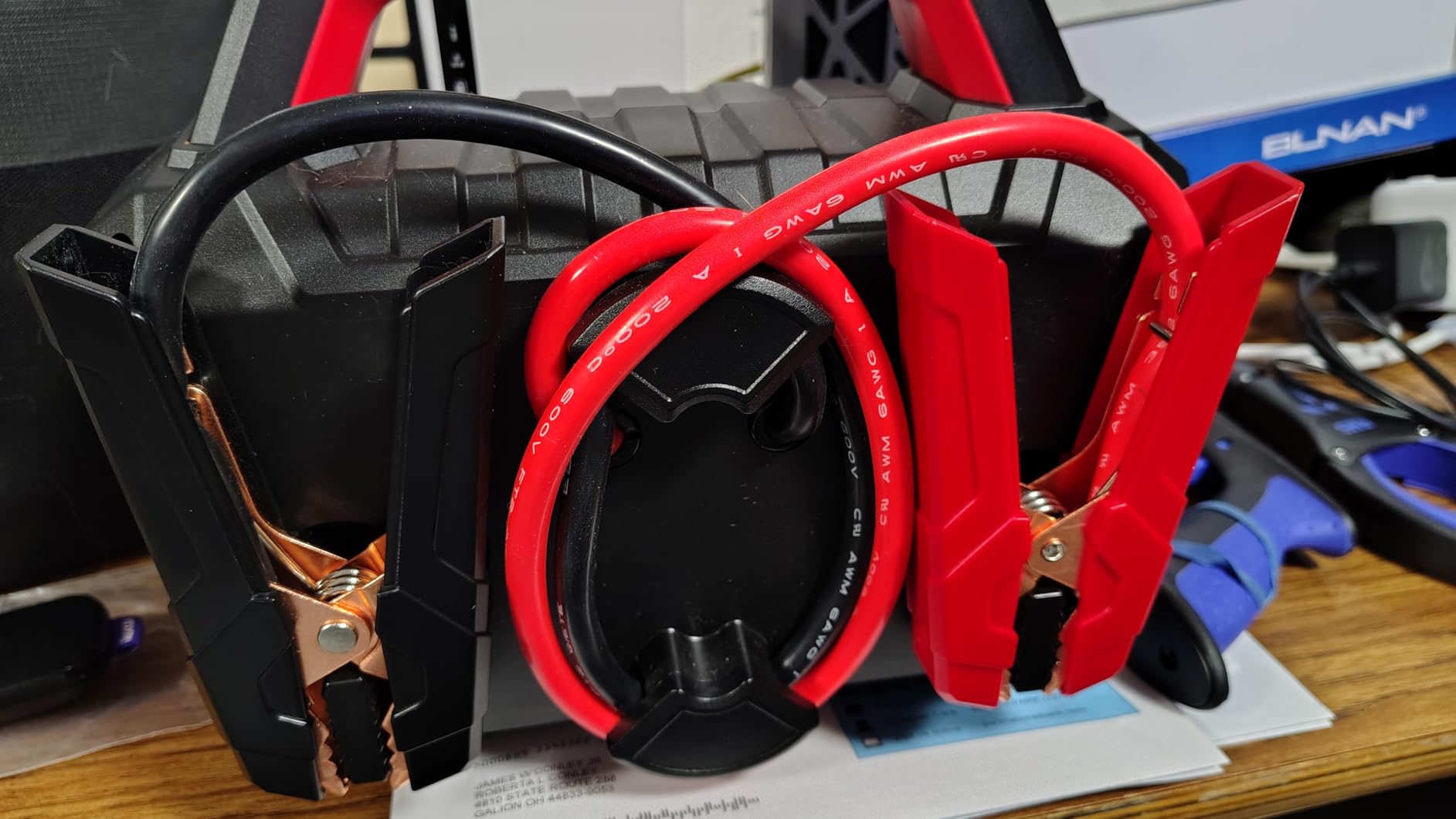
Thickened pure copper cables are specified, which is a sensible choice for sustained current, and the 65W charger is included in the box, unlike several packs here. Eight high-brightness LEDs cover constant, strobe, and SOS modes, and forced start is supported at ultra-low voltage for cold mornings.
The reasons it finishes last are size and evidence. At about 8 pounds it needs dedicated trunk space, review volume is the lowest in the group, and the operating rule is demanding: it wants at least 75 percent charge before use and a held button press to start. It is also 12V only, so 24V trucks are out.
Who this pack suits
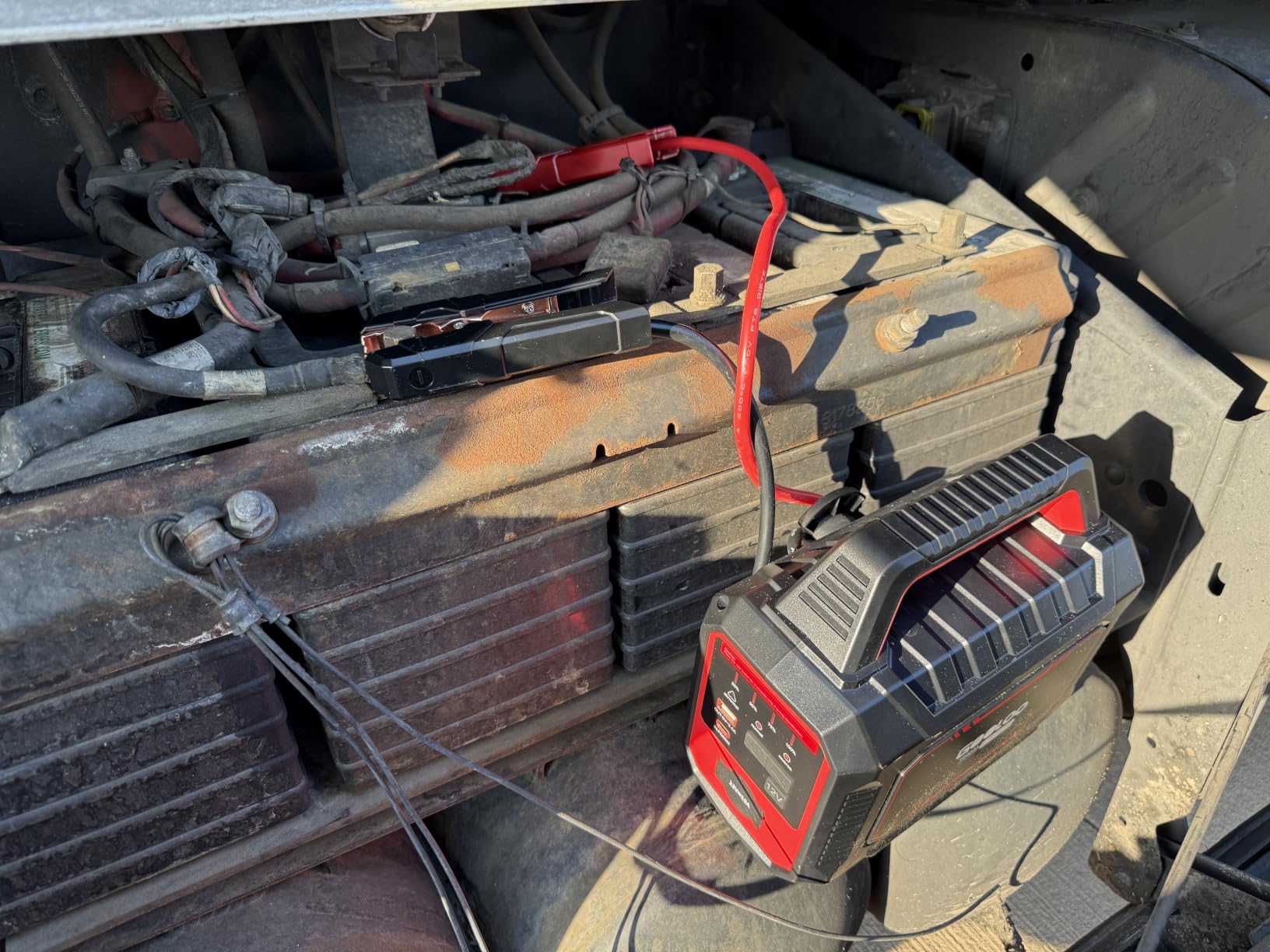
Fleet operators, tow operators, and anyone jumping a heavy-duty truck or machinery regularly. Eighty starts per charge and a two-year-plus thermal window make it a tool you can leave in the cab and trust after a long layup.
For a family SUV it is far more than needed, but for a shop that needs to start everything in the yard, it replaces a whole drawer of equipment.
Who should skip it
Skip it for a passenger SUV. The weight, the price, and the 75 percent charge floor all work against a tool that would sit in a console. Its long-term owner feedback is also the thinnest here, so you are buying on specifications rather than a deep review history.
And if your fleet includes 24V trucks, this pack will not touch them.
How Many Amps Does an SUV Actually Need?
A four-cylinder or small V6 crossover typically needs 400 to 600 cold cranking amps, and a jump pack of 1000 to 2000 peak amps will turn the engine over several times over. A full-size V8 or a turbodiesel SUV wants 3000 peak amps or more, especially when the battery has been sitting in freezing weather. Those are the numbers most SUV owners actually need.
Here is why the printed peak figure misleads. Peak amps measure a burst lasting milliseconds, and the marketing number is measured in different ways by every manufacturer. A pack claiming 8000 amps from a 10000mAh cell has a smaller energy reserve behind it than a 4000-amp pack with 88.8Wh, so watt-hours are the more honest comparison. You can see how that plays out in our jump starter guide for trucks, where the same physics applies at a larger scale.
Three terms matter. Cold cranking amps is what a battery sustains for 30 seconds at 0F, cranking amps is the same test at 32F, and watt-hours is total stored energy, which determines how many attempts you get before a recharge. When a listing gives you only peak amps, treat it as advertising and look for the watt-hour figure instead.
Matching Your SUV Engine to a Jump Starter
Match the pack to the engine, not to the marketing. Here is the sizing we would use for each class of SUV, and our picks that meet it.
2.0L to 2.5L four-cylinder crossover: 400 to 600 cold cranking amps, so 1000 peak amps is comfortable. The S ZEVZO ET03 and the Powrun P-ONE both handle this class and weigh under 2.5 pounds.
3.5L and 3.6L V6, or a turbo four: 800 to 1200 cold cranking amps. Aim for 2000 peak amps, which puts the Hulkman Alpha85 and the Clore JNC660 in range with room to spare.
5.3L and 6.2L V8 full-size SUV: 1200 to 1800 cold cranking amps. You want 3000 peak amps or more for a cold start, which points to the GOOLOO GP4000, the WOLFBOX MV24, or the TOPDON JS3000.
3.0L turbodiesel SUV or a diesel tow vehicle: compression ratios make these the hardest starts. Target 3000 to 5000 peak amps and a pack with sustained current, which is why we lean on the TOPDON JS3000 and the GOOLOO GT Truck PRO here.
Hybrid or electric crossover: only the 12V auxiliary battery needs jumping, and it draws far less than a gasoline engine. Any pack rated 1000 amps and above covers it, and our portable jump starter guide for cars covers smaller models in detail.
Lithium-Ion or Lead-Acid for an SUV?
Lithium wins on weight, recharge speed, and capacity per pound, and for a modern fuel-injected SUV with a healthy battery it is the right default. The forum consensus matches that: for everyday use, lithium packs start modern SUVs without trouble, and owners rarely report failures.
Lead-acid wins on one specific thing, which is current delivery to a battery with no charge left in it. A lithium pack measures the battery first and may refuse to engage, requiring the boost or override button and a high charge level. A lead-acid booster simply pushes current. That is why the Clore JNC660 takes the top slot in our list of the best jump starters for SUVs, and why owners on r/askcarguys keep recommending the heavier Clore models for trucks and SUVs specifically.
There is a garage alternative worth naming. In the AutoGuide comment section, some long-time owners keep an old deep-cycle marine battery on a trickle charger in the garage rather than carrying a lithium pack, citing reliability in heat and lower fire risk. For a vehicle that lives on a driveway, that is a defensible setup.
Deep Discharge and Cold Weather: When Lithium Packs Sit Out
A lithium jump starter may not work on a completely dead battery. It reads the voltage, decides the battery is beyond recovery for safety, and will not deliver current unless you hold the boost or override button. This is the single most common question from SUV owners, and it is a design choice rather than a defect.
Three things change the outcome. Cold reduces battery capacity, so a pack stored in a freezing vehicle may not have enough of its own charge to deliver the override. Small packs cannot produce much current from little storage, so force start on a depleted battery rarely works on a low-capacity model. And a pack left uncharged for months will simply not have anything to give.
If your battery might be truly flat, the honest answer is that a lead-acid booster is the safer purchase. Our guide to jump starters for diesel engines covers the hardest cases, where sustained current matters more than weight.
Clamp Size and Cable Reach Beat the Peak Number
More jump attempts fail on physical reach than on electrical capacity. Modern SUVs bury the battery under a hood shield or inside the fender, and a narrow clamp that will not open far enough is useless no matter what the box claims.
Look for cable length first. Forty-six inches, as on the Clore JNC660, is generous enough to reach a battery at the back of an engine bay without dragging the unit onto the fender. Anything under fourteen inches is a genuine limitation on a large SUV. Then check clamp quality, because copper or all-metal jaws grip a corroded terminal far better than thin plated steel.
This is the second reason we avoided bargain marketplace clones for this roundup. Owners report narrow clamps that will not grip, and interchangeable hardware across many brands that makes the differences mostly cosmetic. For a full breakdown of the two-function models, see our jump starter and air compressor guide.
How to Jump-Start an SUV Step by Step
Before you clamp anything, confirm the battery is actually the problem. Turn the key and listen for a click from the starter with no engine turn, check that the battery terminals are clean and the cables are tight, and try a second turn. If the engine cranks slowly and dies, the battery is depleted. If it cranks normally with no start, the problem is fuel, spark, or a sensor, not the battery.
Put the SUV in park, or in gear with the parking brake set, and switch off accessories and lights. Open the hood and locate the battery, which on many SUVs is under a plastic cover that has to come off first. Identify the positive and negative terminals, and note that some models place the negative at a grounding point on the chassis rather than on the battery.
Connect the red clamp to the positive terminal first. Connect the black clamp to the negative terminal, or to the chassis ground point if that is what the manufacturer specifies. The order matters: positive first reduces the chance of a short while the clamps are live. If your pack has a boost mode, engage it now if the battery is deeply depleted.
Stand clear of the cables and the engine, turn the key, and let the starter run for no more than about ten seconds. With a jump pack, do not crank for a long stretch. A modern starter draws heavily and prolonged cranking overheats the windings, so one short attempt, then a pause of thirty seconds, is the safer pattern.
Once the engine starts, leave the pack connected and let the alternator charge the battery. Drive for at least fifteen to twenty minutes, ideally twenty to thirty, to put meaningful charge back into a battery that started flat. Then shut the engine off, wait a minute, and try to restart on its own, which tells you whether the battery will hold a charge.
Finally, disconnect in reverse order: negative clamp first, then positive. Secure the pack somewhere secure so it cannot move during braking, and recharge it fully before putting it away. If the engine will not hold a running charge after a successful jump, the battery needs a proper charger or replacement rather than another roadside attempt.
Storage and Recharge Routine for a Jump Starter
Check the charge level every two or three months. Lithium packs self-discharge, and a pack that sits at a low charge level for a year may refuse to work when you need it. The Alpha85 holds its charge for up to eighteen months in standby and the GOOLOO GT Truck PRO claims thirty-six, which is the kind of figure worth paying for if the pack lives in a vehicle.
Recharge after every jump, or at minimum after any jump that felt difficult. Starters draw a real amount of energy, and a pack that goes to a low state after a hard start is the pack that fails next time. If you also use the pack as a power bank, a monthly top-up is cheap insurance.
Keep lithium packs out of extreme heat for long periods. A vehicle interior in summer reaches temperatures that accelerate self-discharge, and no pack in this roundup should be stored in a hot car for months. For a pack that needs a wall adapter, keep the cable with the device, because several models here ship without one and you will not find it when the battery is flat.
What to Avoid When Buying a Jump Starter
Discount inflated peak-amp claims by a wide margin and check the watt-hours instead. A 8000A figure on a 10000mAh pack, as we saw on the BRPOM G20, is a burst from a small reserve, and it will not deliver that number repeatedly.
Avoid packs with short leads and narrow clamps, since a buried SUV battery is exactly the case those units fail on. Skip the marketplace clones with interchangeable hardware and no stated compliance marks, and look for units that list UL, FCC, or CE certification like the WOLFBOX MV24 does.
Also avoid buying two packs you never charge. One well-maintained pack with a real case and long cables is worth more than two cheap ones that sit empty. And check the warranty length, because a two-year term tells you something about how the manufacturer expects the pack to be treated.
Frequently Asked Questions
How many amps do I need to jump start my SUV?
A 2.0L to 2.5L four-cylinder crossover needs roughly 400 to 600 cold cranking amps, so a 1000 to 2000 peak amp pack is comfortable. A V6 or turbo four wants about 2000 peak amps. A 5.3L or 6.2L V8, and any turbodiesel SUV, wants 3000 peak amps or more. Judge packs by watt-hours as well, since peak amps alone are a marketing burst lasting milliseconds.
Which is better, NOCO or GOOLOO jump starter?
We did not test NOCO models in this roundup, so we cannot rank them fairly. What we can say is that GOOLOO builds packs across several capacities here, from a 3000A unit with an air compressor to a 10000A LiFePO4 pack for heavy trucks. NOCO is known for compact packs, and GOOLOO for raw output at higher capacities, so the right comparison is capacity in watt-hours against your engine size.
Will a jump starter work on a completely dead battery?
Sometimes, but not always. A lithium pack measures the battery first and may refuse to engage with a fully depleted battery unless you hold the boost or override button, and the override only works well when the pack itself is well charged. A lead-acid booster such as the Clore JNC660 pushes current without checking, which is why it is our top pick for a battery that has been dead for weeks.
What is the best jump starter for a 4×4 vehicle?
For a 4×4 that stays on pavement, the Hulkman Alpha85 or the GOOLOO GP4000 cover a V6 or V8 with 2000 to 4000 peak amps and a fast recharge. For a rig that leaves the trail with full-size tires and camp power needs, the WOLFBOX MV24A adds a 160 PSI compressor, 88.8Wh of storage, and 160W DC output. For heavy trucks and equipment, the GOOLOO GT Truck PRO is the specialist option.
Do power bank jump starters work?
Yes, and several packs in this roundup double as genuine power banks. The WOLFBOX MV24 supports 65W USB-C input and output, the TOPDON JS3000 offers PD45W bi-directional charging, and the WOLFBOX MV24A provides 160W of continuous DC output for a 12V fridge or pump. Check the output rating rather than the port count, since some units cap USB-C output well below their headline number.
How long should I let my SUV run after a jump start?
Keep the jump pack connected and drive for at least fifteen to twenty minutes, and preferably twenty to thirty, so the alternator can put meaningful charge back into a depleted battery. Then shut the engine off, wait a minute, and try to restart on its own. If it will not restart or will not hold a running charge, the battery needs a proper charger or replacement.
My car won’t start without a jump even though the battery is good. What could be the problem?
A battery can test fine and still leave you stranded. Common causes include a starter drawing too much current, a failing alternator not charging the battery, corroded or loose terminals, a parasitic drain, or a sensor or fuel problem that mimics a dead battery. Confirm by listening for a click with no engine turn, then have the charging system and starter draw tested before buying a bigger pack.
The Best Jump Starters for SUVs: Final Word
The best jump starters for SUVs are not the ones with the biggest number on the box. For most owners the Clore JNC660 earns its place because it is the only pack here that will push current into a battery with nothing left in it, and its 46 inch cables reach a buried battery without a fight. If weight and recharge speed matter more than that certainty, the Hulkman Alpha85 is the strongest all-round buy and carries the highest rating in the group.
Match the pack to your engine rather than the category: 2000 peak amps for a V6 crossover, 3000 or more for a V8, and more still for a turbodiesel tow vehicle. Add an air compressor if you carry full-size tires, check the clamp opening against your battery location, and top the pack up every few months so it is ready when you need it.