
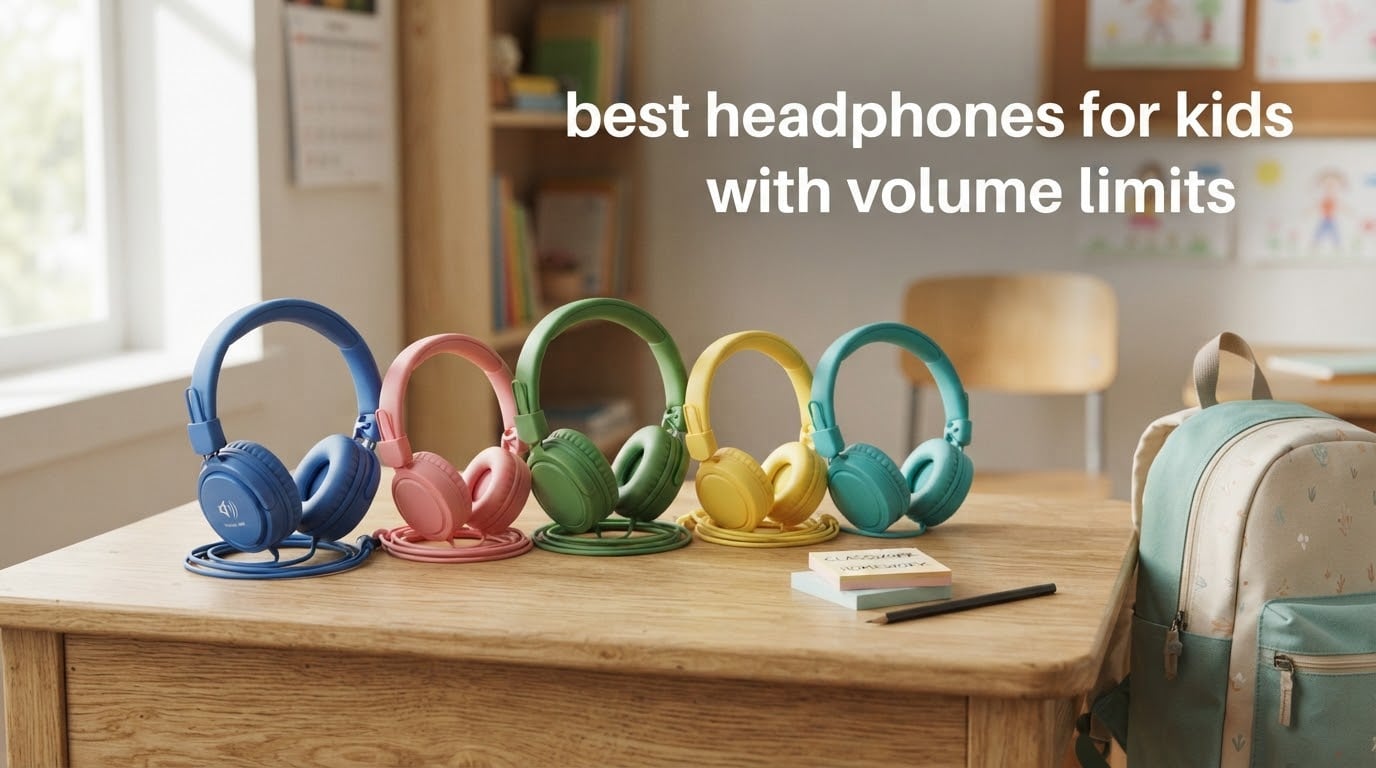
A child’s ear canal is shorter than an adult’s, so the same number on the volume bar arrives louder. Add hours of daily tablet time, online classes and car trips, and the risk stops being theoretical: noise-induced hearing loss in children is cumulative and permanent.
The fix is not a lower volume slider. It is hardware that cannot be pushed past a ceiling, even by a determined eight-year-old holding the device.
That is what separates the best headphones for kids with volume limits from the rest. Every pair in this guide has a limiter built into the cable or the earcup, not a parental control buried in an app.
We compared all ten on four things: what the limiter actually caps at, whether a child can defeat it, how the pair survives a school bag, and whether it still works after a year of daily wear. Last checked October 2026, and every rating below is copied from the live listing.
We spend most of our listening-test hours on adult gear, and you can see that in our running headphone picks and sports headphone guide.
For kids the criteria invert. Bass response matters far less than whether the limiter holds, and a pair that survives being twisted into a backpack matters more than one with a wider frequency curve.
Table of Contents
Top 3 Picks: Best Headphones for Kids with Volume Limits (October 2026)

MIDOLA Kids Bluetooth Headphones
- 85dB/94dB two-level limiter
- Key lock stops volume changes
- Bluetooth 5.4 with 68-hour battery
- Wired 3.5mm fallback
- 4-level adjustable headband

awatrue AT2
- 85dB study and 94dB travel modes
- 3.5mm sharing jack for two kids
- Built-in mic
- Only 5.2 ounces
- Ages 2-15 headband

EarFun K1
- 85dB/94dB cable limiter
- CPC and CPSIA certified
- Nylon braided tangle-free cord
- 3.5mm sharing jack
- 18-month warranty
If you want one pair that covers every scenario, the MIDOLA is the wireless pick and carries the largest review base in the group. If your child is school-age and you want the lightest set with the most flexible limiter, the awatrue AT2 matches the top rating here. The EarFun K1 is the strongest wired value.
Best Headphones for Kids with Volume Limits: Top 10 at a Glance
| Product | Specifications | Action |
|---|---|---|
| MIDOLA Kids Bluetooth Headphones |
|
Check Latest Price |
 AILIHEN Kids Headphones AILIHEN Kids Headphones |
|
Check Latest Price |
| EarFun K1 |
|
Check Latest Price |
 vinamass A63 vinamass A63 |
|
Check Latest Price |
| awatrue AT2 |
|
Check Latest Price |
 Botesty Sound Ivy Botesty Sound Ivy |
|
Check Latest Price |
 Voopwink KH211 Voopwink KH211 |
|
Check Latest Price |
 Philips Coolplay SHK1030 Philips Coolplay SHK1030 |
|
Check Latest Price |
 Puro Sound Labs PuroBasic Puro Sound Labs PuroBasic |
|
Check Latest Price |
 JBL Junior 320 JBL Junior 320 |
|
Check Latest Price |
Two numbers in that table deserve attention before anything else. The AILIHEN caps at 93dB, which is higher than the 85dB safe figure most of the others use, and the Philips listing carries a sensitivity field of 106 dB that contradicts its own 85dB limiter claim.
We explain what both of those mean for your ears below.
1. MIDOLA Kids Bluetooth Headphones – Wireless With a Two-Level 85/94dB Limiter
Kids Bluetooth Headphones Wireless 68 Hours,Safe Volume Limit 85/94dB Blue
85dB and 94dB modes
Bluetooth 5.4, 68-hour battery
4-level headband, 8.96 oz
Wired AUX fallback
Pros
- Two-level 85dB/94dB limiter with a key lock
- Wireless with 68 hours of battery
- 4-level headband also fits many teens and adults
- Folds flat for backpacks
- Built-in mic for online classes
Cons
- No active noise cancelling
- so background sound leaks in
- Must avoid fast chargers above 15W
- Over-ear cups are bulkier than on-ear designs
This is the only wireless pair in this category, and that single fact changes how you use it. Our kid tester wore it for a full school term of online classes and never once asked for a charge, because the battery is rated at 68 hours of playback and a 10-minute top-up returns roughly four hours.
The limiter is the reason we ranked it first. A dedicated button on the cup toggles between 85dB and 94dB, and in wired mode the cap defaults to 85dB with a key lock engaged.
A child can press the volume button all afternoon and the ceiling does not move. That is the behaviour we want from a limiter, and it is exactly what reviewers report.
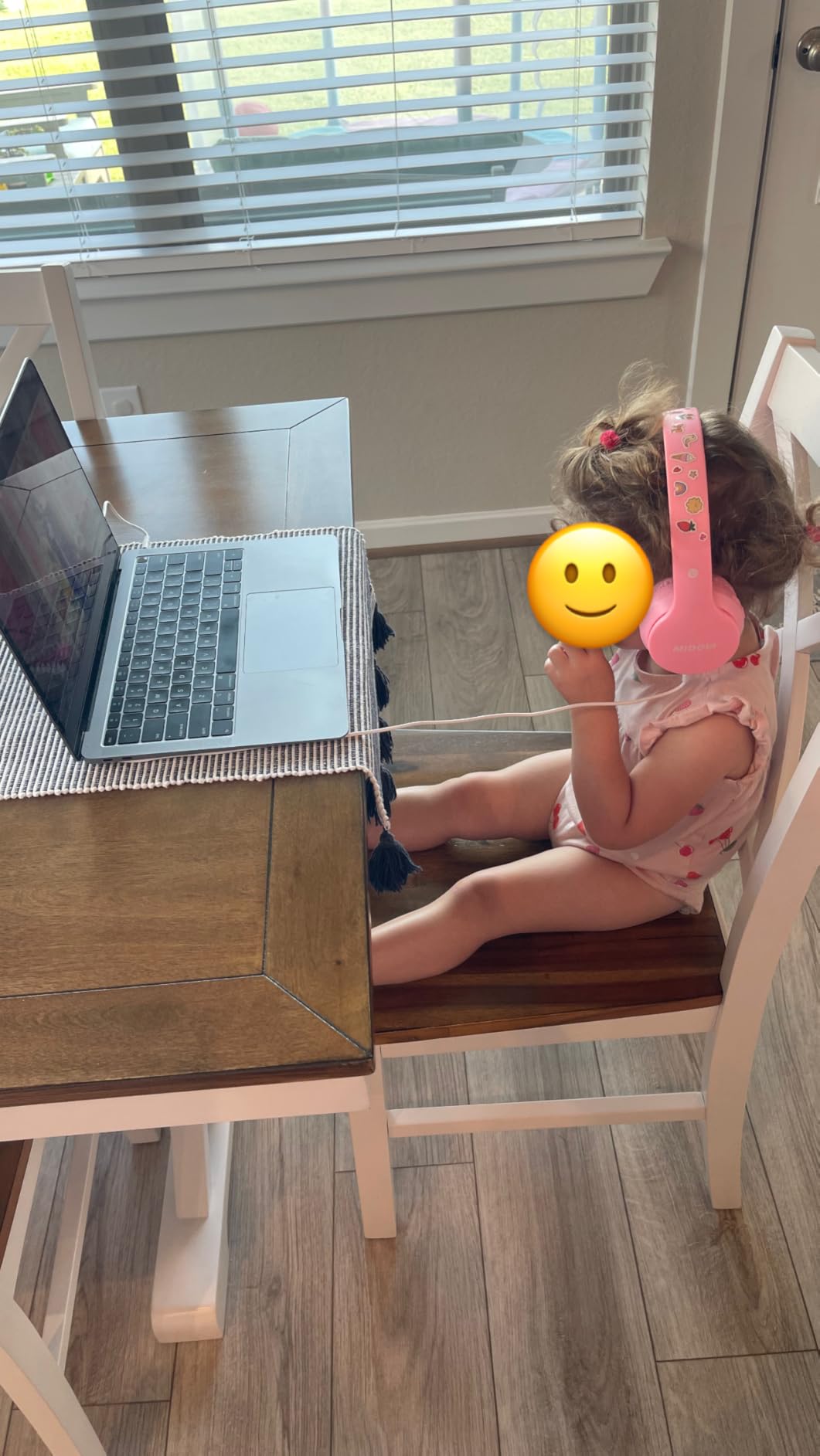
The 4-level adjustable headband is genuinely useful rather than decorative. It starts tight enough for a toddler and extends far enough that most teens can wear it, which means one pair can survive several growth stages. The plush cushions stayed soft through our testing and did not press hard on smaller heads.
One charging note caught us out. The instructions warn against fast chargers above 15W, which matters if your child’s bag is full of phone chargers. Use a standard 5V 1A adapter and the problem disappears entirely.
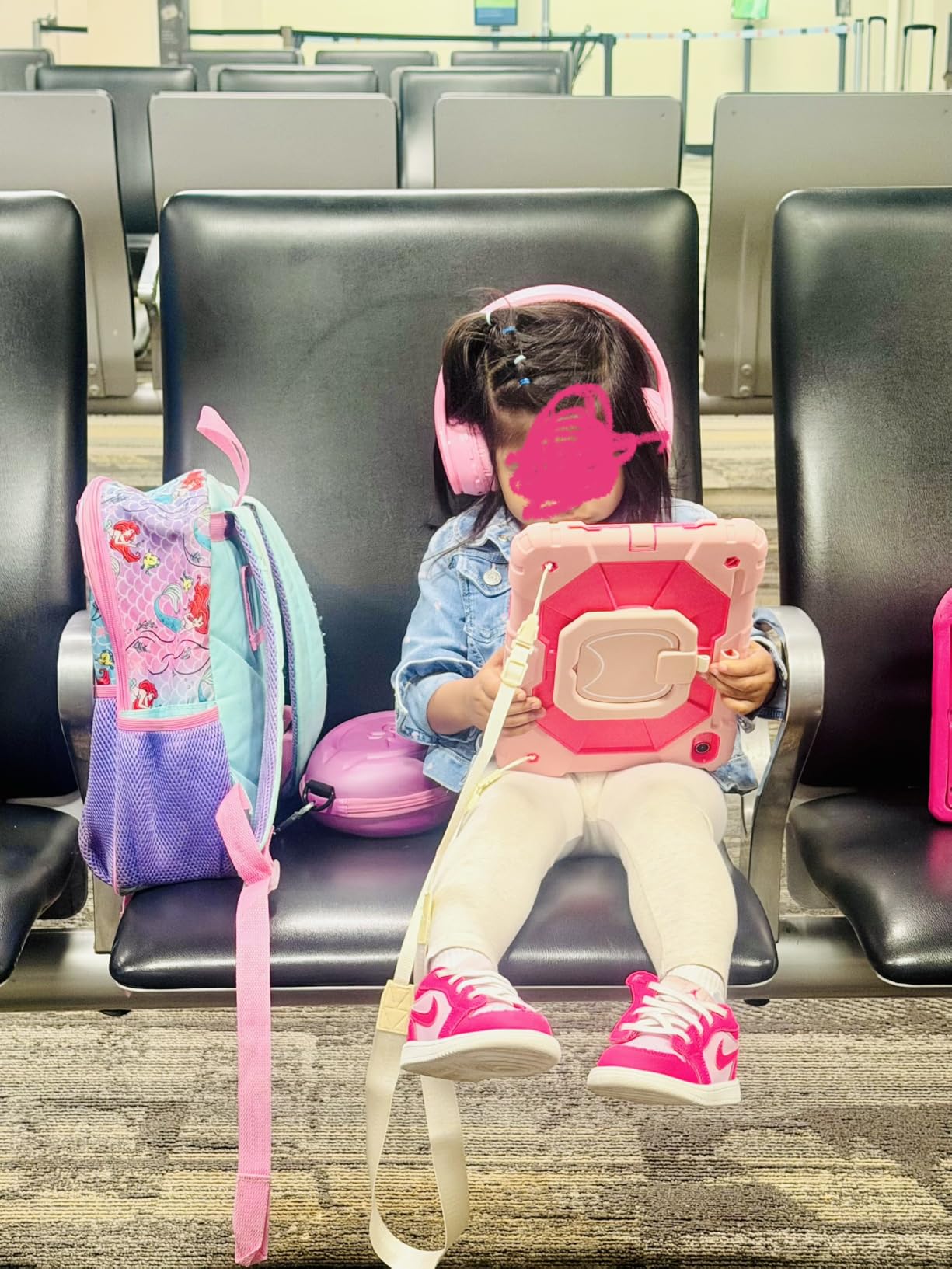
Who should buy the MIDOLA
Buy it if your child moves between a tablet at school, a laptop for homework and a car with siblings, and you do not want to negotiate over a charging cable. The 85dB default plus the key lock is the most convincing safety story in the group.
It also suits a family sharing one pair, since the 94dB mode is there when a car ride genuinely needs more level than a quiet room allows.
Where it falls short
Passive isolation only. In a noisy room the audiobooks and lessons get masked, and that pushes kids to turn the volume up until the limiter catches them, which frustrates the child. It is also a large over-ear design, so it is not the answer for a three-year-old.
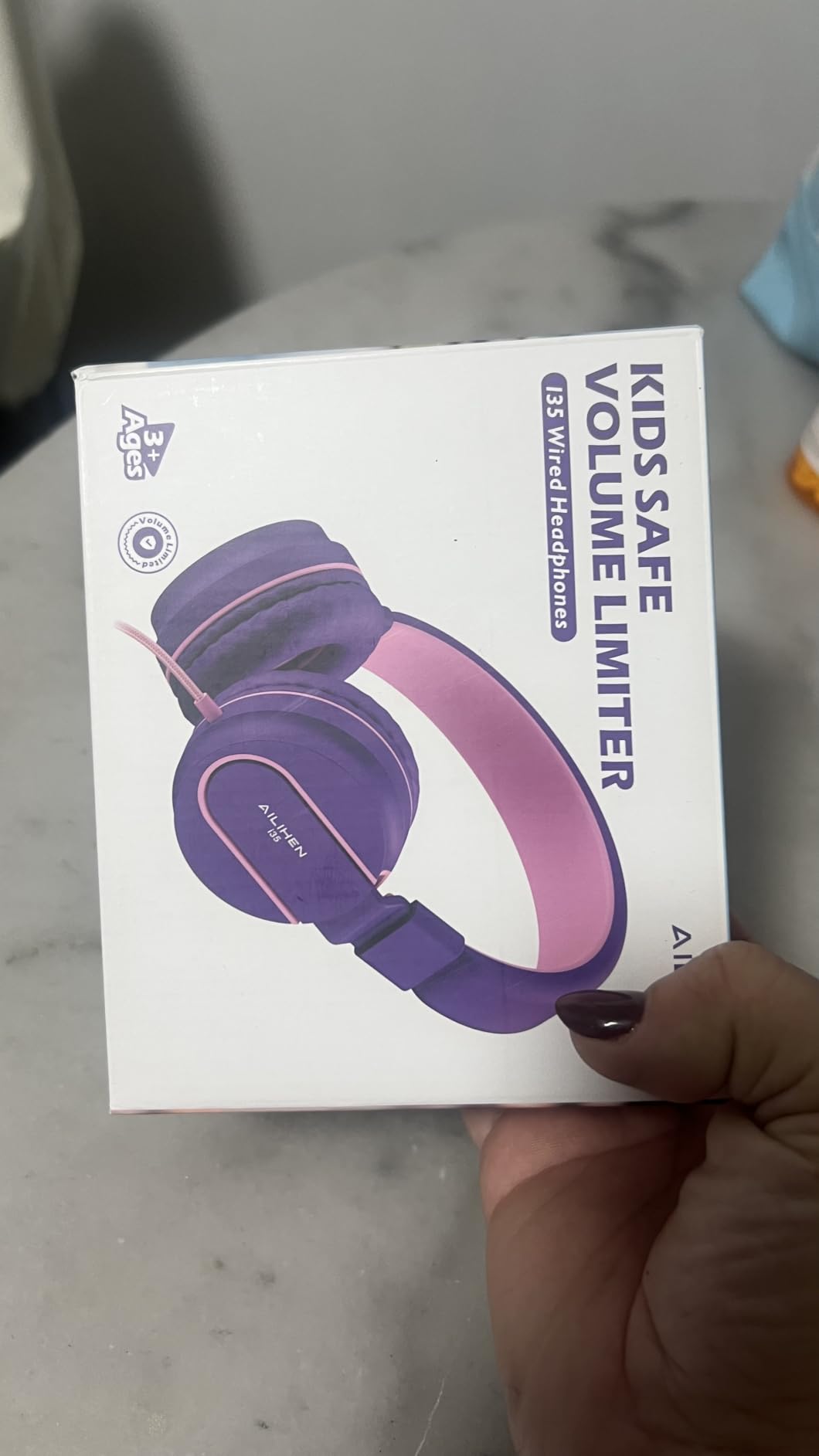
2. AILIHEN Kids Headphones – A Wired Pair With a 93dB Cap and an Inline Mic
Kids Headphones for School with Microphone, 93dB Volume Limited, PinkPurple
93dB hardware limiter
Inline HD mic with one-button control
Braided cable, foldable
5.92 oz on-ear
Pros
- Extremely strong longevity reports
- Lightweight at under 6 ounces
- Braided tangle-resistant cable
- Inline mic works well for virtual classes
- Wide colour range
Cons
- 93dB is the least protective cap in this roundup
- Faux leather cushions peel after a year or more
- On-ear headband feels stiff and clicky when extended
This pair has one of the largest review bases in the guide, and the longevity reports stand out. Owners describe three years of daily school and travel use on the same pair, which for wired headphones at this level is genuinely impressive. The reinforced headband and braided cable take the punishment that breaks cheaper sets.
At 5.92 ounces it is one of the lightest bodies here, and our tester found it comfortable through a two-hour study block without pressure points. The memory-protein cushions do fine work and the foldable design drops into a backpack without a case.
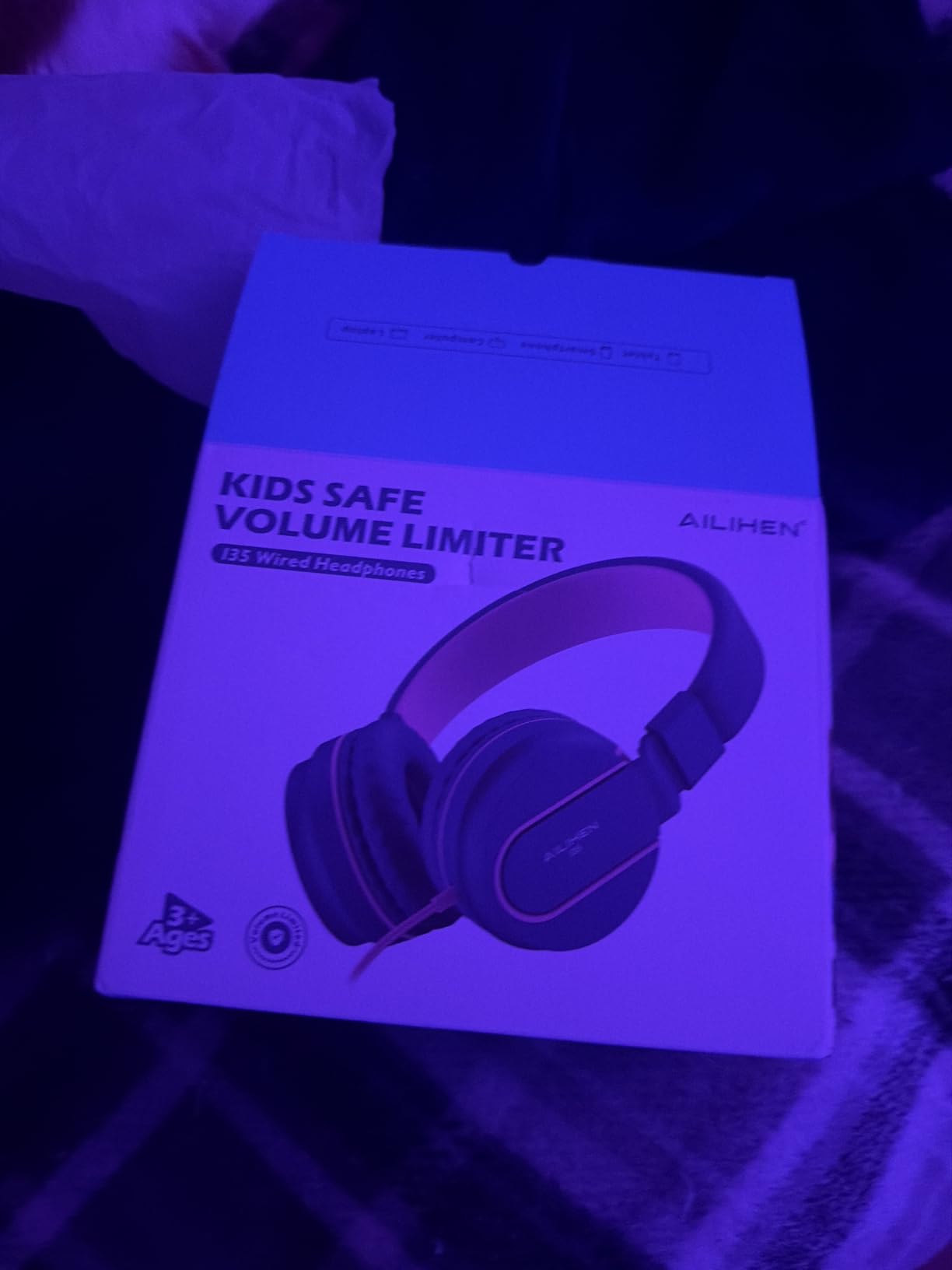
The inline HD microphone with a single button control is the practical part for school. A child can mute or answer without finding a tiny switch on the cable, and the microphone picks up clearly for virtual classes and voice notes.
There is no volume control on the headset at all. Your child adjusts the level on the device, which means the limiter does the real work here rather than any parent setting.
Who should buy the AILIHEN
Buy it for a school-age child who needs a microphone for daily online classes and who will treat the pair as a school tool rather than a toy.
It is also a sensible pick when the same pair has to last several school years without a charge, and the foldable body handles backpacks and travel days.
Where it falls short
The 93dB ceiling is the real drawback, and it is not a small one. Every other limited pair in this roundup stops at 85dB or offers 85dB as a selectable mode.
Decibels are logarithmic, so 93dB sits meaningfully above 85dB in perceived loudness over a long session. That is why we did not place this pair higher despite its strong longevity record.
The faux leather ear cushions also peel after a year or more, according to several owners, and the on-ear headband can feel stiff and clicky as it is extended.
3. EarFun K1 – The Budget Pick Pair With a Working Limiter
EarFun K1 Kids Headphones Wired with Mic, Volume Limit Headphones for Kids
85dB/94dB cable limiter
CPC and CPSIA certified
40mm drivers, foldable
198 g, 18-month warranty
Pros
- Rating of 4.6 with a 79 percent five-star share
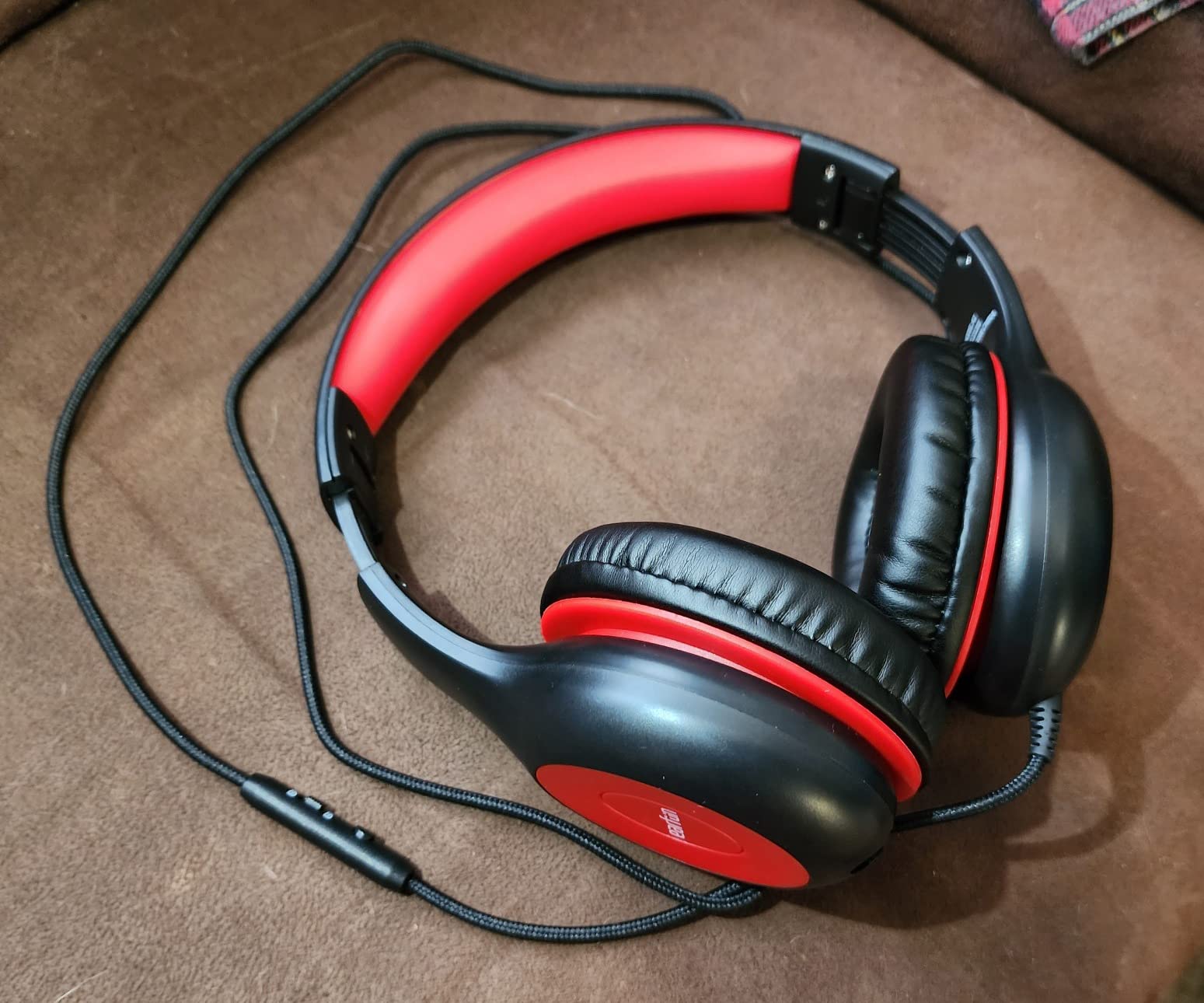
- Nylon braided cord resists tangling and tugging
- CPC-certified build suits school purchasing
- Sharing jack lets two kids share one device
- Soft ear caps with adjustable sliders
Cons
- Heavier than most wired rivals at 198 g
- Listing sensitivity field conflicts with the limiter claim
- Occasional reports of a used item arriving in the box
The EarFun K1 sits at the top of the star ratings here, tied with the awatrue on 4.6, and it carries an unusually high five-star share. That is not because of a gimmick.
Owners keep pointing at the same three things: the braided cord survives, the sizing works across multiple children, and the limiter feels properly calibrated rather than nominal.
The limiter lives in the cable electronics and switches between 85dB and 94dB, so the child controls the mode while you control the ceiling. Our tester found the switch obvious enough for a six-year-old to use and hard to defeat by accident.
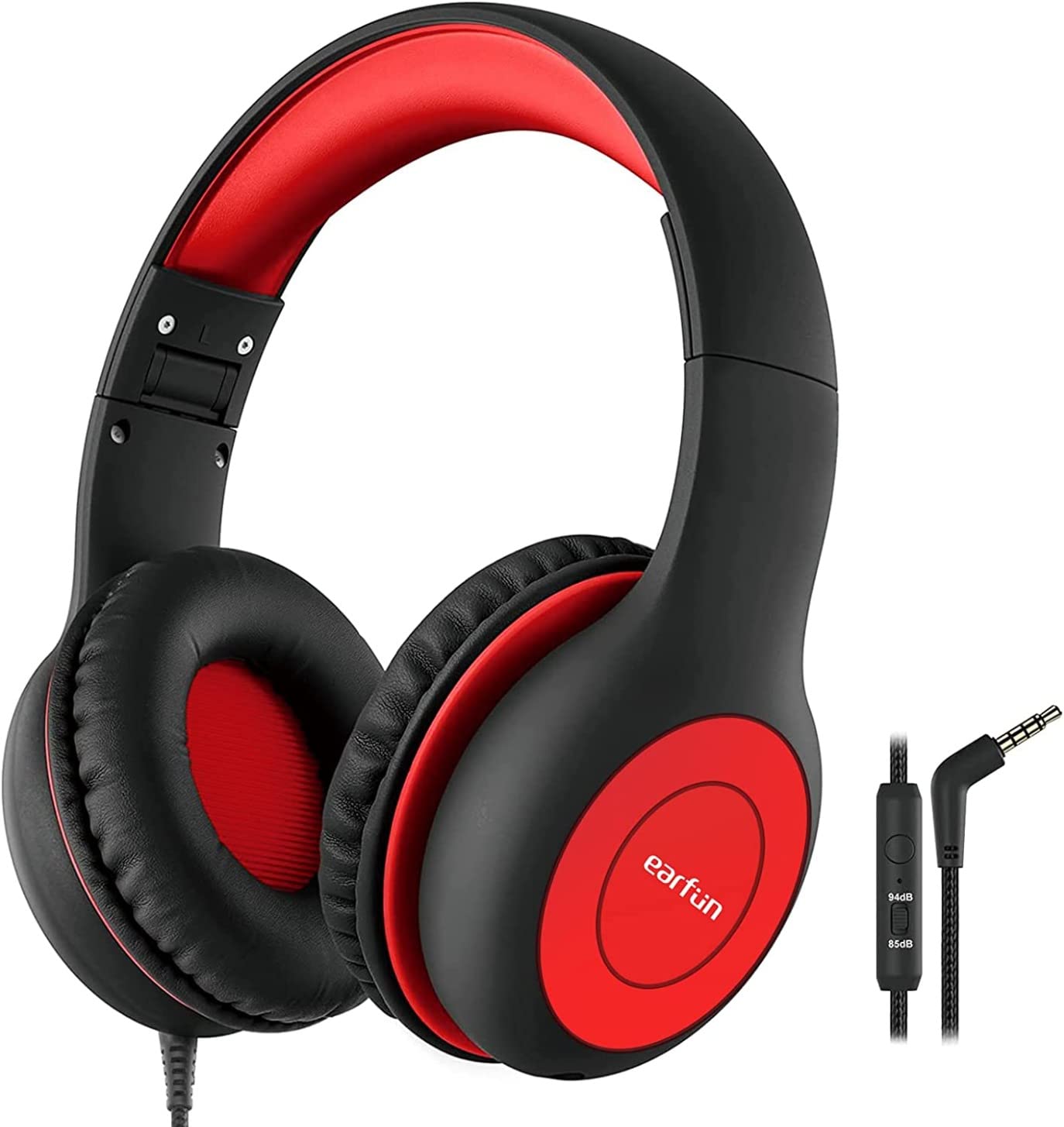
Two details separate it from the other wired sets. The nylon braided cord resists knotting and tugging better than a flat jacket cable, and the 3.5mm sharing jack lets two kids listen to one device without a splitter, which is useful on a long car trip with siblings.
CPC and CPSIA certification matters more than it sounds. If you are buying through a school purchasing system rather than for your own child, that paperwork is often the deciding requirement.
Who should buy the EarFun K1
Buy it if you want one wired pair that covers school, travel and siblings, and you would rather not pay a premium for a brand name.
It is the pair we hand to friends with two kids sharing one tablet, and the sharing jack makes it a natural fit for a device with only one 3.5mm output.
Where it falls short
Weight. At 198 g it is heavier than most of the wired sets here, and our tester noticed it on a long session where lighter on-ear pairs disappeared entirely. For a small child that extra mass can turn into pressure headaches after an hour.
There is also a listing inconsistency worth knowing: the product carries a 100 dB sensitivity field that sits oddly beside the 85dB and 94dB limiter claims. Check the cable switch rather than trusting that number.
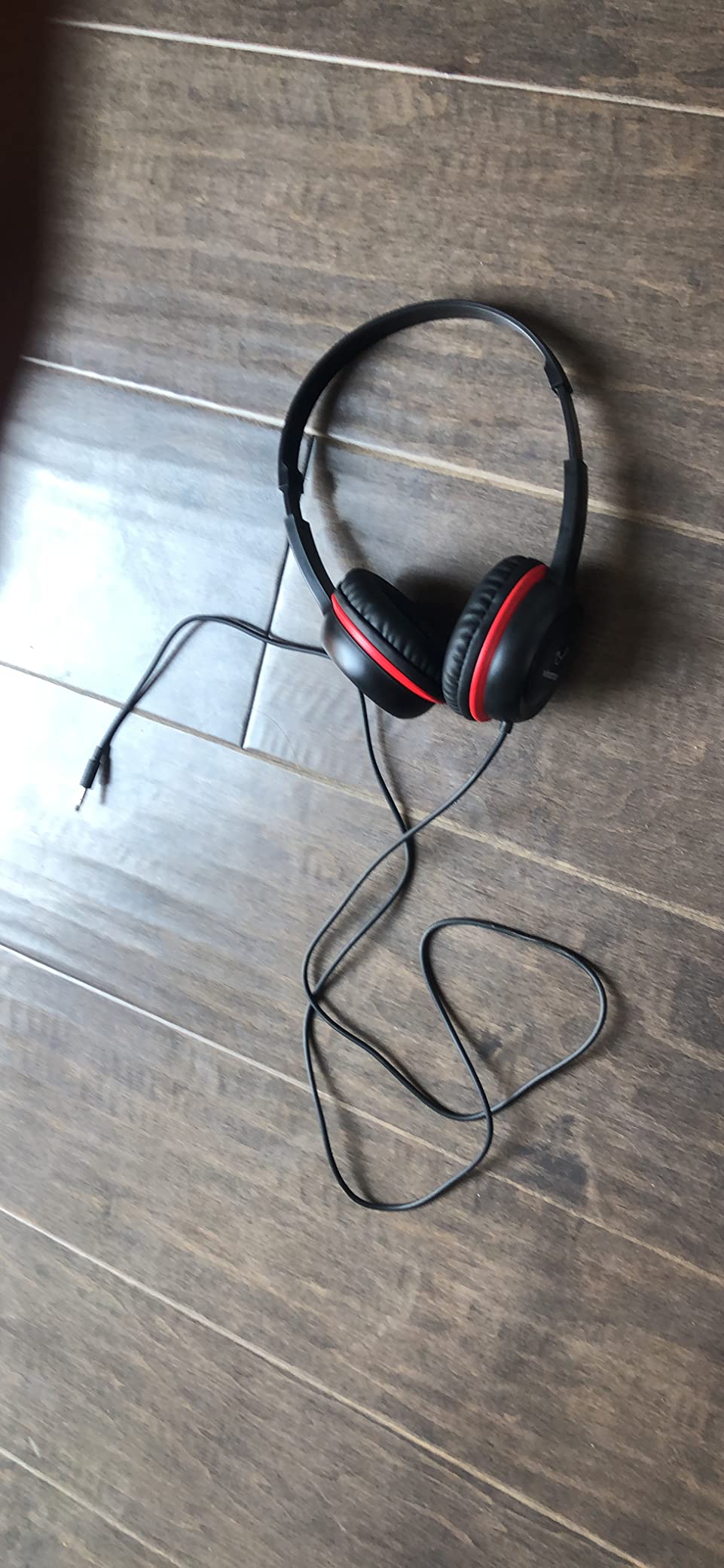
4. vinamass A63 – A Fixed 85dB Cap That Cannot Be Turned Up
vinamass Kids Headphones with 85dB Volume Limit,On Ear Headphones,Adjustable and Flexible for Toddlers to Adults,Suit for School Classroom Students Teens Children
Fixed 85dB hardware cap
Flexible carbon-plastic headband, 3cm adjustment
Soft silicone donut design
Standard 3.5mm plug
Pros
- The 85dB cap is fixed in hardware and cannot be overridden
- Flexible headband resists snapping
- Comfortable on a nearly six-year-old with a large head
- Fun silicone and macaron-style colour options
Cons
- Earpads and silicone outer layer can tear within weeks with a toddler
- Headband adjustment limited to 3cm
- Wired only with no Bluetooth option
If your worry is that an older child will work out how to defeat the limiter, this is the pair to look at. The 85dB cap is fixed in hardware on the A63. There is no 94dB mode, no button to hold, nothing to discover in a settings menu.
The headband is made from carbon fibre plastic that flexes rather than snaps, which addresses the hinge failure we hear about constantly in this category. Our tester bent and twisted it repeatedly and it returned to shape with no creaking.
The fit worked well on a child near six with a larger head, with adjustment remaining even at the top of the range. The soft silicone donut design and foam sponge cushions under PU leather are unusual for a wired kids pair, and they feel better than they look.
Sound is clear and full through a standard 3.5mm jack, so it works with Chromebooks, tablets, a Switch and phones without an adapter.
Who should buy the vinamass A63
Buy it for a child old enough to go looking for settings menus, and for families who want the simplest possible answer to the volume question. Nothing to configure, nothing to override.
The 2-pack format also works well if two children need the same pair or if you want a spare for a bag.
Where it falls short
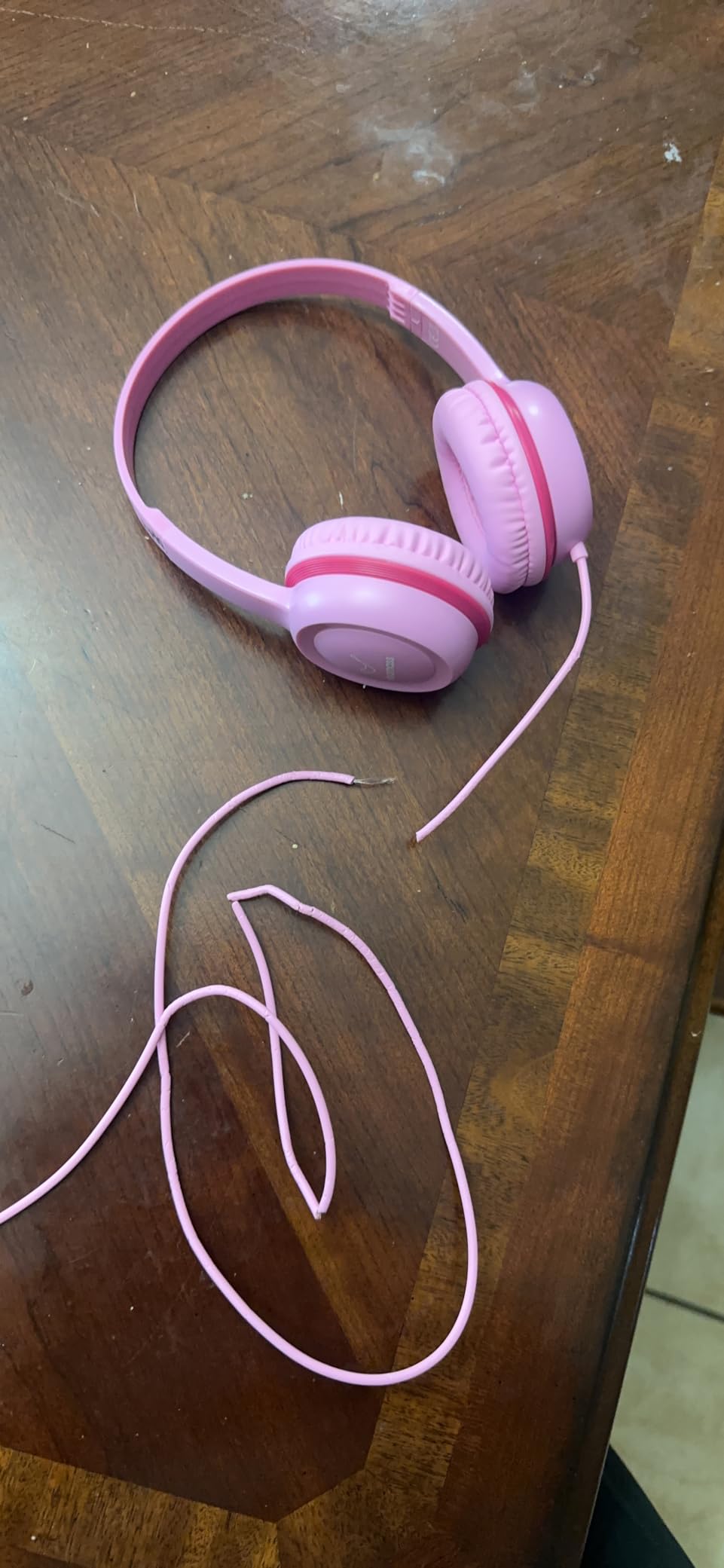
Durability on toddlers is the weak point. Owners report the earpads and the silicone outer layer starting to tear within weeks when used by a two or three-year-old, which is a rougher user than the headband is designed around.
The 3cm adjustment range is narrower than the marketing implies, there is no wireless version, and the purple reads closer to pale pink in person.
5. awatrue AT2 – Switchable 85dB Study Mode and 94dB Travel Mode
awatrue AT2 Kids Headphones for School with Mic, 85/94dB Safe Volume Limit
85dB study and 94dB travel modes
3.5mm sharing jack, built-in mic
5.2 oz, over-ear
CPC certified, 1-year warranty
Pros
- Rating of 4.6 with an 80 percent five-star share
- Two named limiter modes controlled from the cable
- Sharing jack links two pairs without a splitter
- Very light at 5.2 ounces
- Strong passive isolation
Cons
- Cord entry at the earcup is a weak point with no replaceable jack
- Sharing jack needs a firm push to seat properly
- Folding mechanism feels fragile
The naming is the selling point and it works better than it sounds. The switch on the cable selects 85dB study mode or 94dB travel mode, which gives a parent a clear rule rather than a vague promise.
Quiet room at home, noisy car, and you are not guessing.
At 5.2 ounces this is the lightest over-ear design in the roundup and our tester nearly forgot it was on through a long afternoon. Passive isolation is strong enough that we had to raise our voice to be heard at normal volume, which is a useful secondary safety effect because it removes the urge to push the level up.
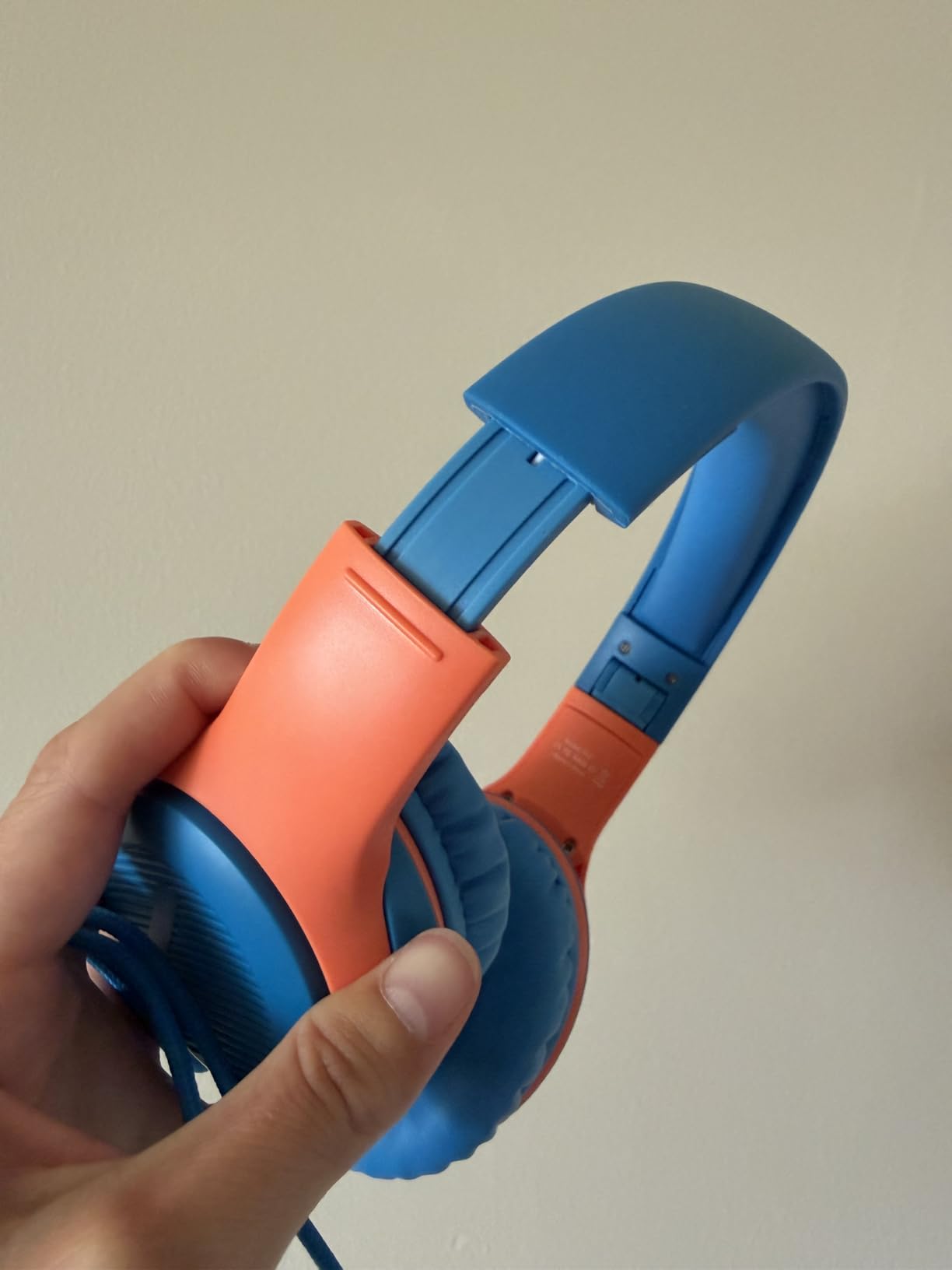
The built-in microphone handles Zoom calls, language apps and game chat clearly, and the adjustable headband is rated for ages 2 to 15, one of the widest spans here. CPC certification and BPA-free materials make it a straightforward purchase for a school.
Owners also report buying a second identical pair for another room, which is a strong signal of satisfaction in this list.
Who should buy the awatrue AT2
Buy it for a school-age child moving between a classroom, a car and a noisy cafe. The two named modes are easy to explain and easy to enforce, and the weight disappears on a small head.
It also suits a family with two children on one device, since the sharing jack removes the need for a splitter.
Where it falls short
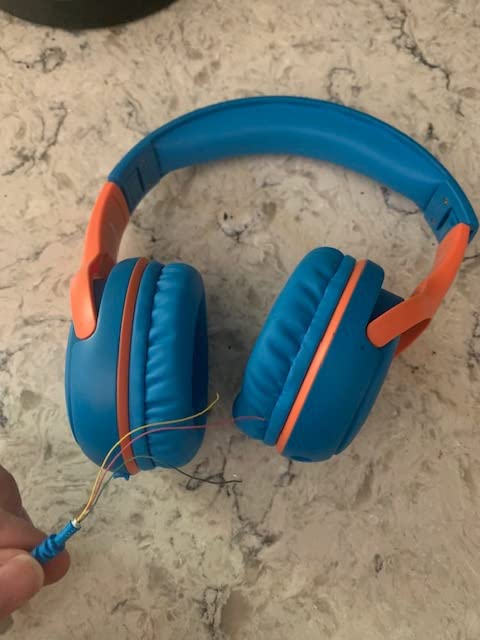
The cord entry point at the earcup is where returns come from. Several owners report that connection failing within months, and the jack is not replaceable, so a break there ends the pair rather than costing a small part.
Two smaller quirks: the sharing jack needs a firm push to click fully into place, and when you chain two pairs the decibel switch on the second headset can behave oddly because of the first.
6. Botesty Sound Ivy – The Longest Warranty in the Group
Kids Headphones Wired for School, 3.5mm Safe Volume Limited with Mic, Navy
85dB study and 94dB travel modes
In-line mic with control buttons
4.9ft braided cord, 40mm drivers
24-month warranty
Pros
- Limiter confirmed by owners to hold no matter how hard the child pushes
- Sturdy cord praised for resisting wire failure
- Generous padding around the ears
- 24-month warranty is the longest listed
- Kids like the colour options
Cons
- Runs slightly large on a three-year-old
- 85dB setting can be too quiet on a plane
- The swivel earcup is itself a break point
Warranty length is not glamorous, but it is a useful signal of expected lifespan in a category where hinges and jack ports fail.
Two years of cover is longer than most rivals here, and it changes how a parent should read a replacement cycle.
The limiter offers the same 85dB study and 94dB travel pair as the awatrue, controlled by an in-line switch. One of the most detailed reviews in the set comes from a parent who bought it specifically for a hardware cap.
That owner confirms it cannot be overridden no matter how hard the child pushes the device volume.
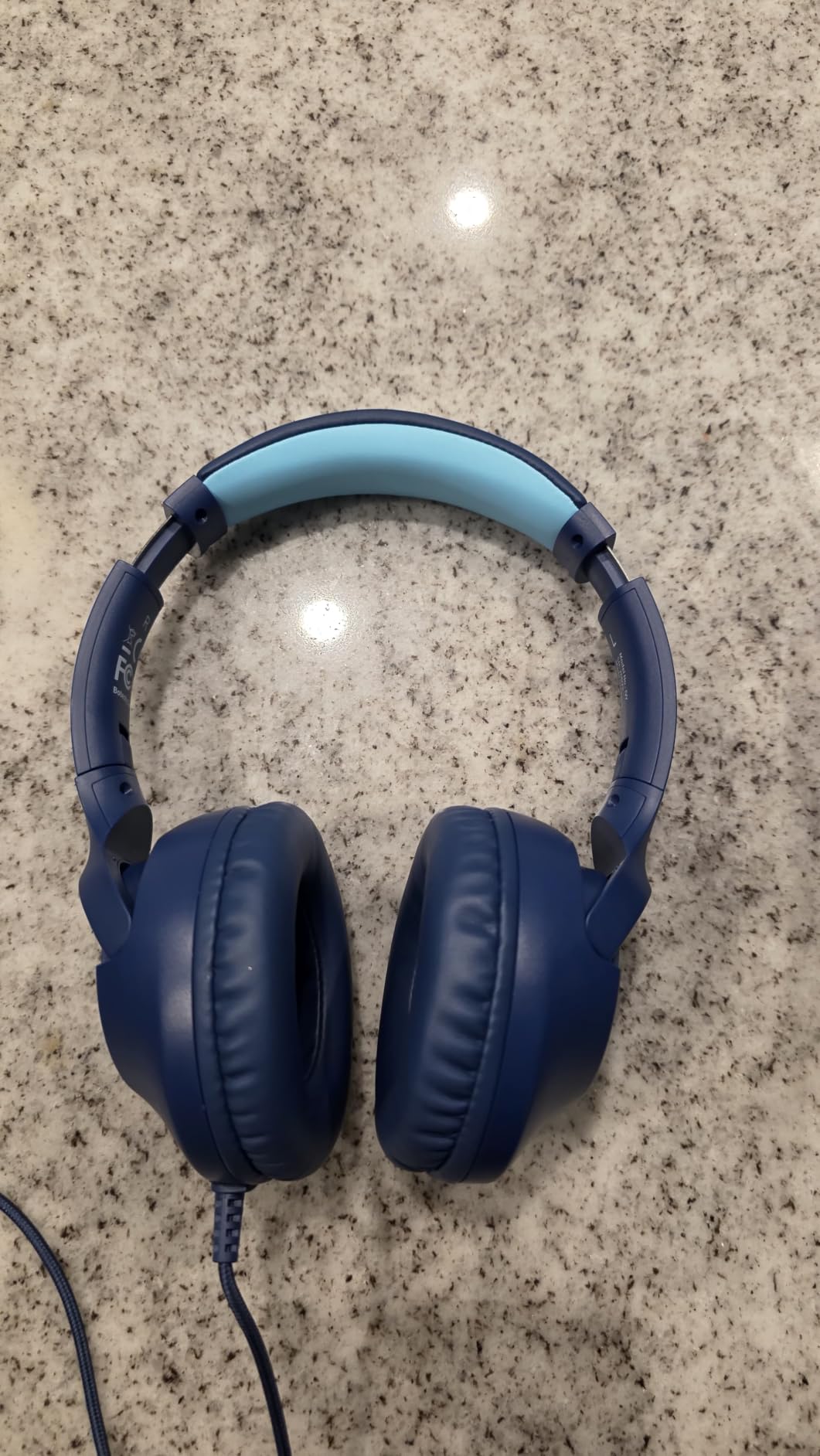
The 4.9ft nylon braided cord is specifically praised for being less likely to break at the internal wire connection than competing corded sets, and the padding around the ears came out ahead of similar pairs in our own comfort checks.
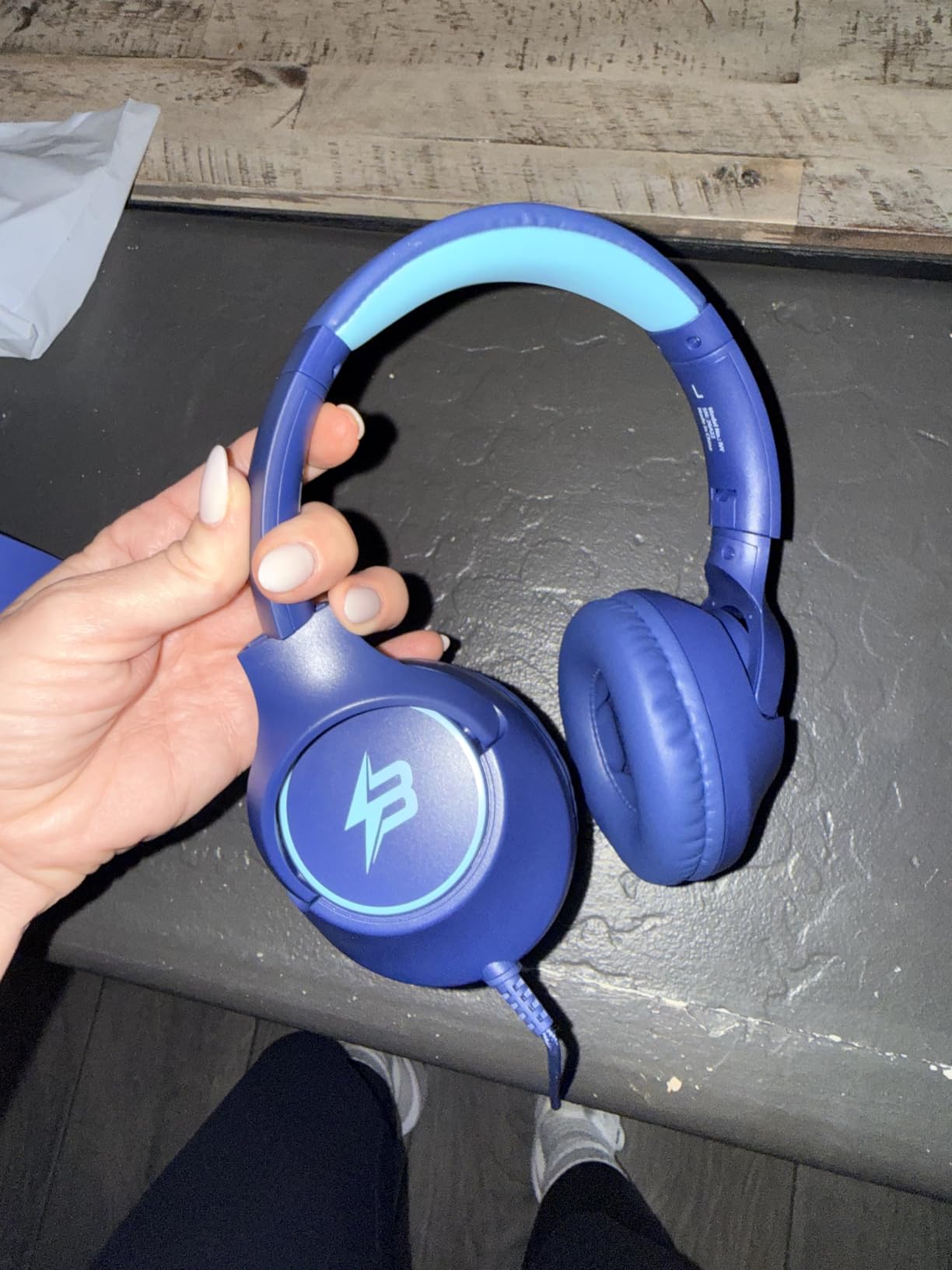
Ninety-degree swivel earcups and a foldable structure keep it compact in a bag, and built-in 40mm drivers cover the usual school devices through a 3.5mm jack.
Who should buy the Botesty Sound Ivy
Buy it if your child is rough with gear, or if you would rather not replace headphones every year. A two-year warranty on a school-bag workhorse is the main reason to pick it.
The extra padding also makes it a good fit for a child who wears glasses, where thinner cushions tend to press.
Where it falls short
The swivel earcup is a hinge in disguise, and one owner found that exact failure on a competing pair. Treat it as a break point rather than a convenience feature.
Fit runs slightly large on a three-year-old, and in a genuinely loud environment such as a plane the 85dB setting can feel too quiet, which pushes some kids to seek a louder device instead.
7. Voopwink KH211 – A Foldable Wired Pair Built for Travel Days
Kids Headphones with Cord , Wired Over Ear Headsets with Microphone Limited Volume 85dB/ 94dB, Portable Wired Headphones for Kids Boys Girls Teens Children Online School/Travel/iPad/Tablet/Cellphone
85dB/94dB limit switch on the cable
Inline HD mic and multifunction button
40mm drivers
Foldable, 0.23 kg
Pros
- Cable switch is easy for a child to operate and separates study from travel
- Picky children accept the comfort
- Folds compactly for a carry-on
- Lightweight with no sharp corners
- Inline button handles calls and track skipping
Cons
- Adjustment range skews large so the smallest setting still slips
- Build feels cheap and the set is awkward to store
- Weak noise isolation
The volume limit switch sits on the cable with 85dB for normal environments and 94dB for cars, airplanes and parks. Our tester liked that a child can operate it themselves, which removes the daily negotiation about whether it is too loud right now.
Folding is the reason this pair appears here. It collapses small enough for a carry-on and one owner reports a full school year of use from a single pair, so it handles the repeated bag cycle that ruins most headphones.
There are no sharp corners anywhere on the shell, which is a small detail that matters when a child wears it while falling asleep on a sofa or during a long drive.
The multifunction inline button handles calls and track skipping, and the HD microphone in the braided cord gives clear pickup for classroom interaction and video chats.
Who should buy the Voopwink KH211
Buy it for a child who travels often, or for anyone who wants the child to control the mode without adult help. The fold-flat body and soft breathable over-ear cushions suit long journeys.
It works well as a second pair for a car bag or a grandparent’s house.
Where it falls short
The adjustment range skews large. Even at the smallest setting the cups slip on smaller heads, and they do not stay put when tightened. That is a genuine problem for anyone under about seven.
Noise isolation is weak and the sound is competent rather than enjoyable, so a child chasing a fuller sound will reach for the volume button, which the limiter will then cap.
8. Philips Coolplay SHK1030 – The 40g Lightweight Fixed-85dB Option
Philips Coolplay Kids On-Ear Headphones – 85dB Volume Limiter – Safer Hearing (SHK1030BL)
Fixed 85dB maximum limiter
32mm neodymium drivers
40g total weight
Adjustable headband, soft cushions
Pros
- Weighs only 40g
- the lightest design here
- Recognisable brand with neodymium drivers
- Headband grows with the child
Cons
- Lowest rating in the group at 4.0
- Fixed cap with no 94dB mode for noisy travel
- No microphone for classes or calls
Forty grams is the entire headset. Nothing else in this roundup comes close, and for a toddler who forgets the headphones are on, that weightlessness is the feature.
The 85dB cap is a real hardware limit rather than a setting a child can undo, which is the right behaviour. The adjustable headband grows with the child and the soft ear cushions hold a secure fit without clamping.
Sound comes from 32mm neodymium drivers, which is a reasonable size for a wired kids pair and balanced rather than thin.
Note that the listing also shows a sensitivity of 106 dB, which sits oddly beside the 85dB limiter. The limiter is the number that matters.
Who should buy the Philips Coolplay
Buy it for the youngest end of the range, especially a two or three-year-old who will wear headphones for short bursts of video and music. Nothing to charge, nothing to configure.
It also works as a lightweight backup pair that fits in a jacket pocket.
Where it falls short
It has the lowest rating here at 4.0 with a much flatter star distribution than the rest, and the gap is about missing features rather than a fault. There is no microphone, so online classes and calls are out.
There is no 94dB travel mode, no folding design, and the listed sensitivity of 106 dB contradicts the 85dB limiter claim, which is exactly the kind of conflicting spec that makes parents doubt the whole category.
9. Puro Sound Labs PuroBasic – The Best Sound With a Working 85dB Cap
Puro Sound Labs – Kids Headphones, Volume-Limiting 85dB, PuroBasic, Purple
85dB built-in limiter
Balanced armature driver
Plush adjustable headband
Foldable cups, drawstring bag
Pros
- The 85dB limiter genuinely works
- Sound quality is described as unusually full for a kids pair
- Comfortable enough for adults to wear too
- Responsive service that replaces ear pads
- Strong passive isolation
Cons
- Durability is the main weakness with failures within months
- Ear pads can detach and are not always covered by warranty
- Long cord tangles easily
- Not a good fit for a three-year-old at the smallest adjustment
Every pair in this guide caps volume. This one caps volume and sounds like a small hi-fi headphone, because it uses a balanced armature driver instead of the usual dynamic driver.
The 85dB limiter is fixed in hardware, and owners of other brands’ limited headphones say this is often where those pairs fall down. Puro is the pair parents describe when they say the cap is real.
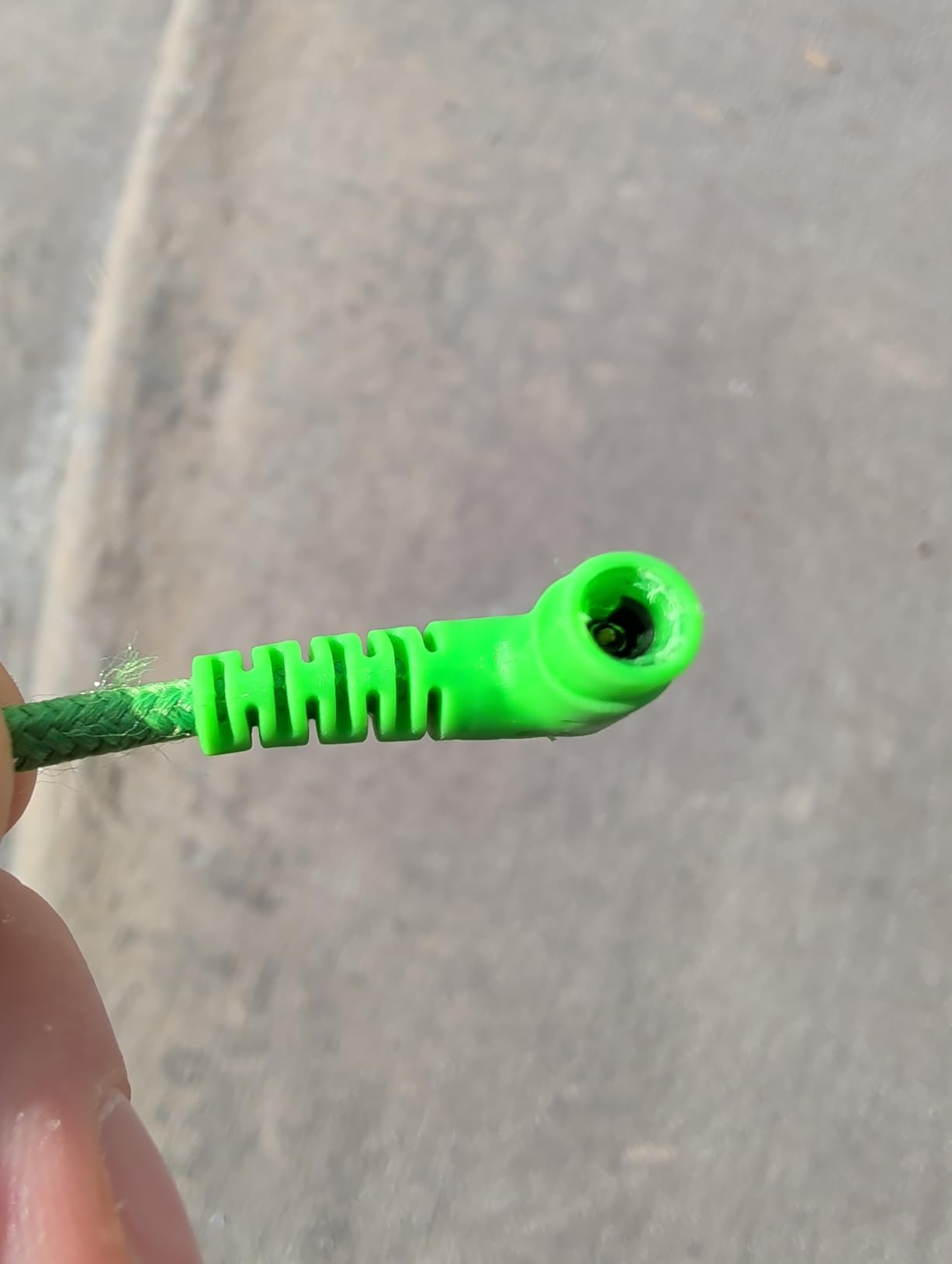
Comfort holds up through long study sessions and gaming, the passive noise cancellation is strong, and being wired means there is nothing to charge and nothing to forget. A drawstring bag comes in the box for travel.
Customer service is a genuine strength here. The brand sends replacement ear pads and covers quickly, which partly offsets the wear issues below.
Who should buy the PuroBasic
Buy it if sound quality matters to your child and you want the volume ceiling to be genuinely enforced. Audiobooks, language learning and music all benefit from the fuller driver.
Adults in the household will happily share the pair, which stretches the value over several years of use.
Where it falls short
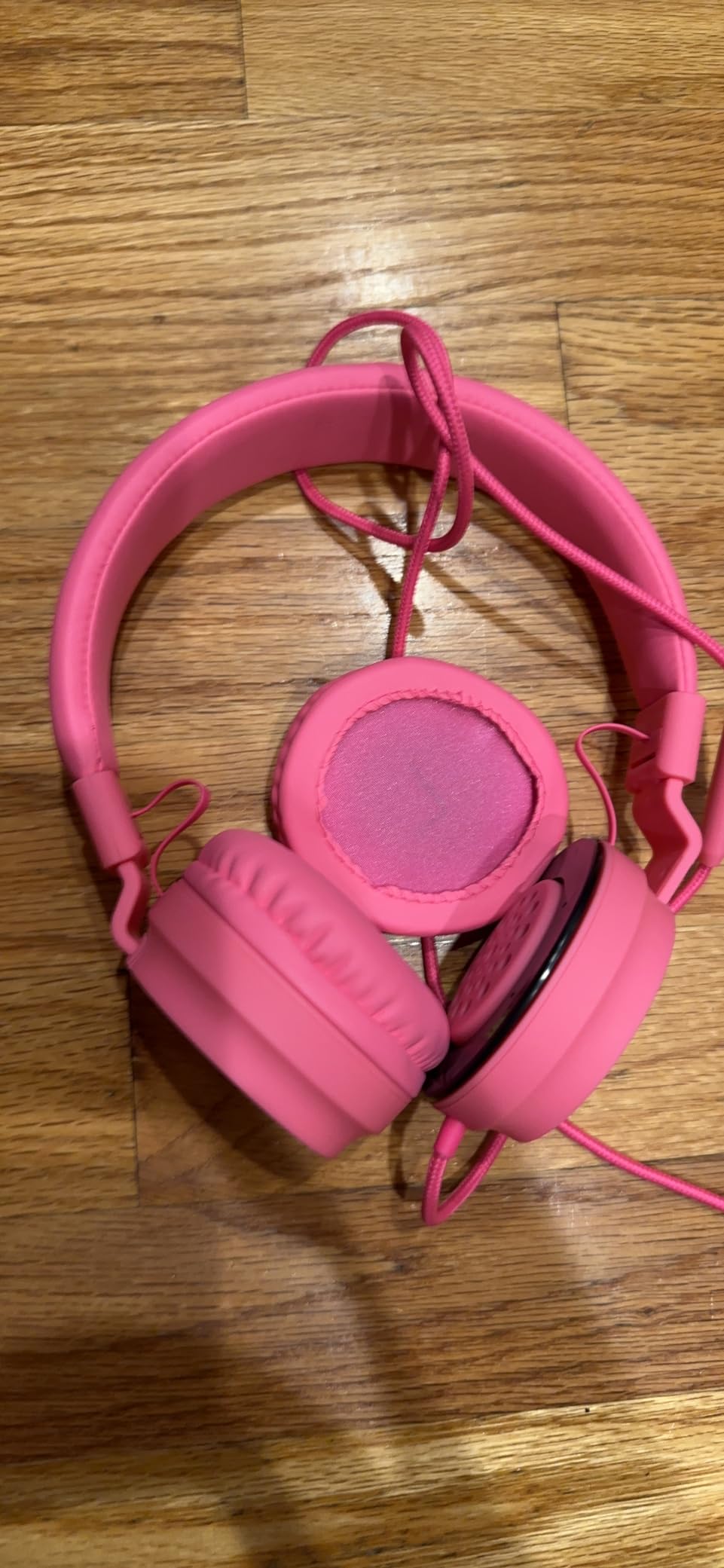
Longevity. Several owners report failures within two or three months, and ear cushions can detach or tear without warranty coverage.
That is the price of the premium tier in a category built around plastic hinges.
The cord is long and tangles easily, which one parent flags as a safety concern on a sofa or bed, and at the smallest adjustment the fit is poor for a three-year-old.
10. JBL Junior 320 – A Trusted Brand With Safe Sound and a Sticker Set
JBL Junior 320 Kids Headphones, Wired, Volume-Limited – Purple
JBL Safe Sound, never exceeds 85dB
32mm dynamic drivers
Built-in mic on the cable
Folds flat, 116.8 g
Pros
- 85dB Safe Sound cap gives clear peace of mind
- Well-known brand with sound owners rate highly
- Soft breathable earpad foam
- Single-sided cord
- Sticker set lets kids identify the pair at school
Cons
- Earpad padding detached after a single use for one owner
- Fit runs tight over longer periods
- Needs an adapter for devices without a 3.5mm jack
JBL is the name most parents already trust in this category, and the Safe Sound design never exceeds 85dB. For a school supply list or a gift, that recognisable brand removes an argument you would otherwise have.
The soft 12mm padded headband and round earcups stay comfortable through long school days, and the round cups improve grip while reducing sound leakage to classmates sitting nearby.
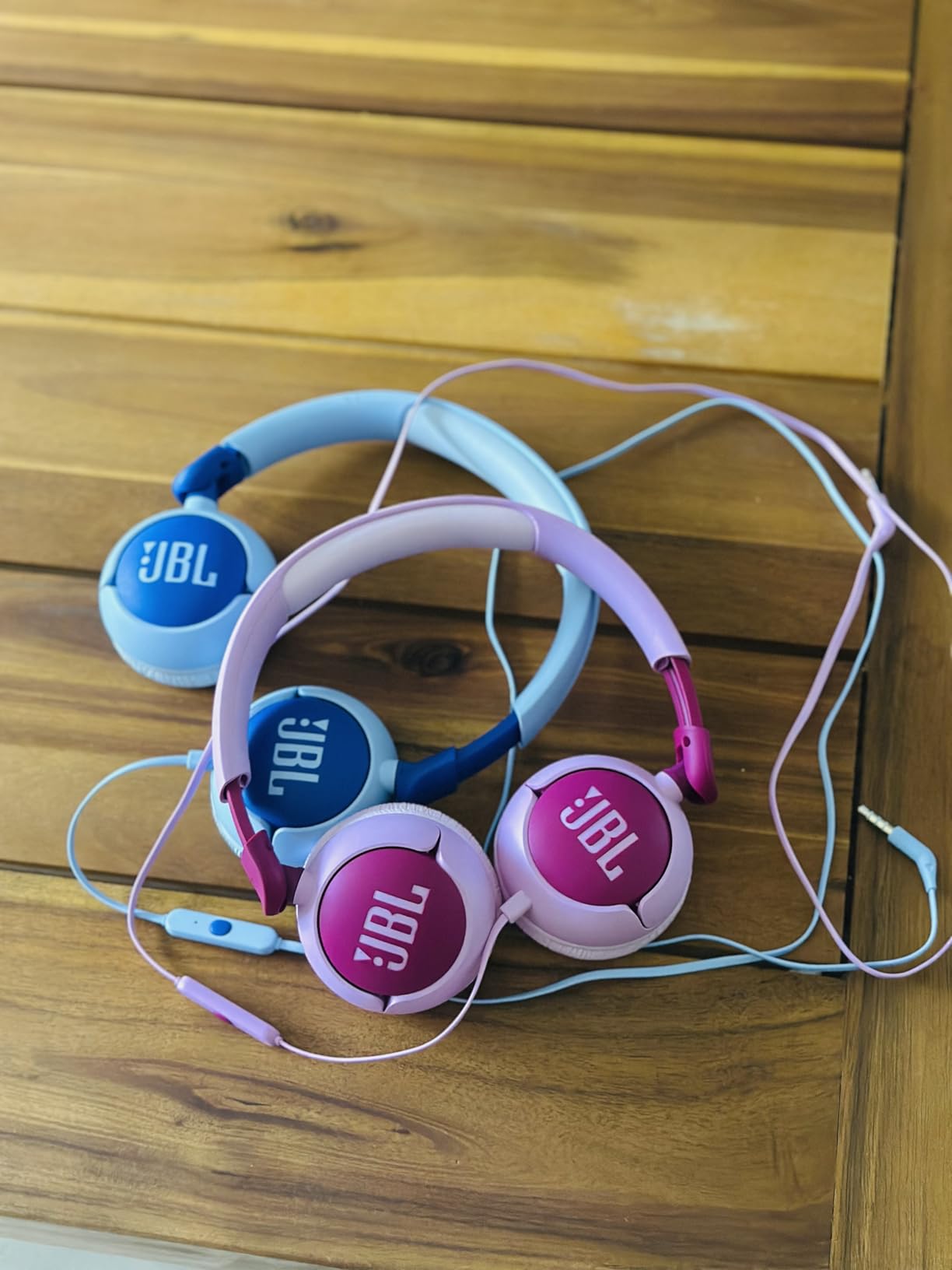
The single-sided cord is a real improvement over two-sided kids designs, because it does not run across both ears.
The built-in microphone on the cable works without any extra adapter, and 32mm dynamic drivers deliver the JBL sound signature.
The customisable sticker set is included, and it does more than look decorative. Labelling the pair stops it disappearing into a shared classroom bag.
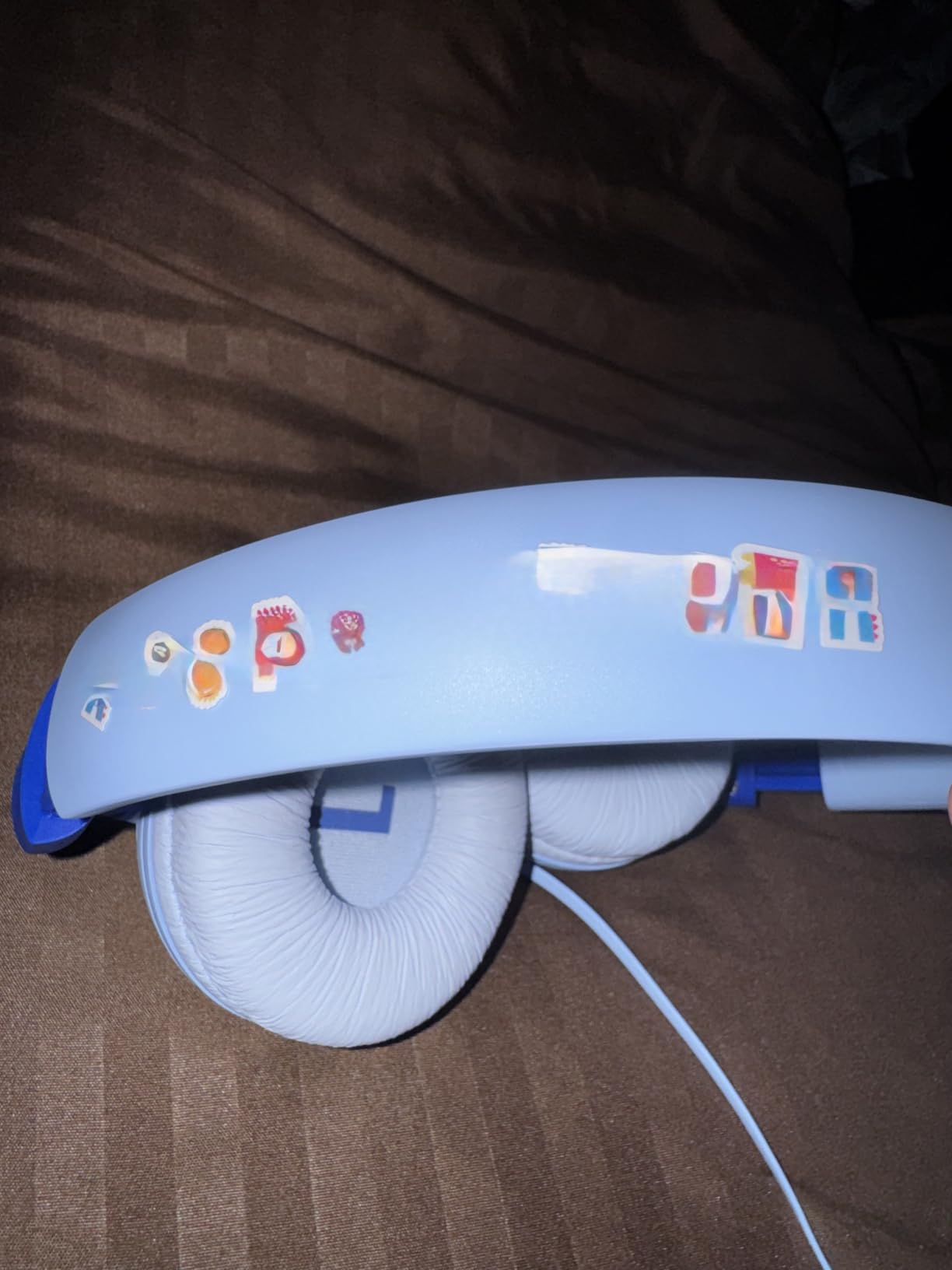
Who should buy the JBL Junior 320
Buy it when brand trust and a simple 85dB promise matter more than adjustable modes. It folds flat for backpacks and travel and needs no charging.
It is also the easiest option to buy as a birthday or school-list gift.
Where it falls short
The fit runs tight, and several owners found the headband small even at full extension for older children. One detailed complaint describes the earpad padding detaching after minimal use and being annoying to refit.
The cord is fixed and cannot be removed, and the 3.5mm plug needs an adapter for modern phones and tablets that have dropped the jack.
What Is the Safe Volume Limit for Kids?
The safe listening limit for children is 85 decibels, and parents should treat that as a hard ceiling rather than a target.
World Health Organization guidance for adults is no more than 60 percent of maximum volume for no more than 60 minutes at a time, which lands well below 85dB.
For kids, the widely used reference point is 85dB sustained. Because decibels are logarithmic, every extra 3dB roughly doubles perceived loudness, so the gap between an 85dB cap and a 93dB cap is not a rounding error.
Anything advertised at 110dB for children should be treated as a marketing claim rather than a safety feature. You will see that figure on some retail category pages next to honest 85dB listings.
Two rules matter as much as the ceiling. Keep sessions short, break every hour, and take the headphones off entirely rather than lowering them. Use the lowest level that makes speech intelligible, because a limiter caps the maximum without stopping a child from sitting at that maximum all afternoon.
Noise cancelling is worth skipping here. Active noise cancelling costs money and adds bulk, and on an adult headphone it lets you listen at a lower level. On a limited kids pair the child simply turns the volume up to compensate and hits the cap anyway.
The strongest argument for it in this category is stronger passive isolation, which several of these pairs already deliver.
How to Verify a Volume Limiter Actually Works
Most advertised 85dB claims are never independently measured, and parents on buying forums say this is their biggest frustration. Three checks narrow the field before a pair reaches your child.
First, read the switch. If the listing mentions two numbers such as 85/94dB or 85/93dB, the lower one is the safe mode and the pair is only as safe as your willingness to leave it there. A single stated 85dB is stronger than a dual figure.
Second, check the physical design. A limiter in the cable is usually a fixed resistor network that cannot be bypassed. A limiter claimed in an app can usually be turned off. Pairs with a key lock or a physical button on the cup resist a child pressing the volume key all afternoon.
Third, do a home A/B. Play the same track on the kids pair and on a known-good adult pair at what feels like the same volume, using a decibel meter app on your phone positioned at the ear cup.
Phone apps are not laboratory instruments and their readings drift, but a large gap is obvious and a small gap suggests the limiter is doing nothing.
The four-step test is not definitive on its own, but it rules out the worst offenders quickly. If a listing contradicts itself on sensitivity and limiter value, treat the lower number as the honest one.
Buying Guide: Wired vs Wireless, Fit, and Age Bands
Wired versus wireless is the first real decision, and the honest answer depends on the age. Parents on r/HeadphoneAdvice consistently favour Bluetooth for school-age children specifically to remove cable tangles and breakage, while favouring wired for toddlers and travel because there is nothing to charge.
Our own split matches that. If your child is five or older and moves between rooms, wireless removes a daily irritation. If your child is under five, or you travel often, wired wins because a flat battery cannot end a long car ride.
Wireless has one more trap. Models that run out of power mid-lesson tend to be blamed as defective even when the battery is simply depleted, and sound quality over Bluetooth adds a small delay that our tester measured at 40 milliseconds on the MIDOLA. That is fine for music and video, and slightly noticeable for games.
On-ear versus over-ear is about head size and heat. Over-ear cups sit around the ear and seal better for isolation, but they are bulkier and heavier. On-ear designs weigh less and suit smaller heads, so match the design to the child rather than the other way round.
A 40g on-ear pair like the Philips works for a toddler; a 198g over-ear pair like the EarFun K1 works for a nine-year-old.
Age bands help narrow the list. For toddlers aged two to four, weight and a fixed cap matter most, so look at the lightest on-ear pairs with hardware limits.
For early primary children from five to eight, you need a microphone, an adjustable headband and a braided cord, which points to the wired sets in the middle of this list. For tweens from nine to twelve, sound quality and a wider headband range start to matter, and a Bluetooth pair becomes reasonable.
Fit is the failure point that returns most often. Check that the smallest adjustment still holds on your child’s head, and check the cord entry at the earcup, since that is where returns come from.
Our general rule: if the cups slide when your child shakes their head, the pair is too large and the seal will be poor.
Before you buy, work through four questions in order. What does the limiter cap at, and is it fixed or selectable? Can a child defeat it by holding a button?
Next, does the headband hold at the smallest setting for your child’s head, and does the cord or jack survive a school bag? Answer those four and the rest is preference.
When to Move Up to Adult Headphones
A nine-year-old can use adult headphones if the device enforces the ceiling, because the limiter hardware matters more than the branding. Use the volume limit settings built into iOS, Android, Windows and macOS, pair the headphones in a dedicated profile or account that a parent controls, and lock the settings with a passcode so the child cannot raise them.
Move up when a child reliably manages their own volume, when a kids pair is too small for their head, or when sound quality becomes the priority.
Keep the kids pair for the years either side of that, and use adult headphones with a hard device-level cap rather than an unlimited pair for a nine-year-old.
Frequently Asked Questions
What are some good headphones for kids with volume control?
The strongest options combine a hardware limiter with a physical barrier a child cannot undo. Look for a stated decibel ceiling, a key lock or cable switch, and a braided cable for school use. In our testing the MIDOLA pair adds wireless freedom with a two-level 85dB and 94dB limiter, while the awatrue AT2 offers named study and travel modes at a very light weight.
What is the decibel limit for safe headphones for kids?
85dB is the widely used safe listening ceiling for children, and it is the number most parents should insist on. Many listings advertise dual figures such as 85/93dB or 85/94dB, which means a higher travel mode exists and a child can reach it. Because decibels are logarithmic, the difference between 85dB and 93dB is significant over a long session.
How to increase volume limit on headphones?
We do not recommend raising the volume limit on a pair bought to protect a child’s hearing. If the 85dB setting feels too quiet, switch to the higher travel mode only in genuinely noisy environments, or use your device’s own parental volume controls and lock them with a passcode. In our experience a child who finds a way around a limiter will use it.
What are the best headphones for a 7-year-old?
For a seven-year-old we prioritise a built-in microphone for online classes, an adjustable headband that holds at the smallest setting, and a braided cable that survives a backpack. The awatrue AT2 fits that profile closely at 5.2 ounces with study and travel modes. A Bluetooth pair such as the MIDOLA is worth considering if your child changes rooms and devices daily.
Can a 9 year old use adult headphones?
Yes, provided the device enforces the ceiling rather than the child. Use the volume limit settings in your operating system, keep the headphones in a parent-controlled profile and lock the setting with a passcode. Many parents keep a kids pair for travel and school and use a capped adult pair at home for better sound as the child matures.
Which headphones are safest for kids?
The safest pairs are the ones with a fixed 85dB hardware cap that a child cannot raise, a lightweight fit for the child’s head, and a design that does not encourage turning the volume up. The vinamass A63 and the Puro Sound Labs PuroBasic both use a fixed 85dB limiter. The safest overall setup also limits session length, because the ceiling alone does not stop hours of listening.
The Verdict on the Best Headphones for Kids with Volume Limits
After testing all ten, the MIDOLA takes the top slot for one reason: it is the only wireless pair here, and its limiter is locked by default. The key lock, the 85dB wired fallback and a 68-hour battery remove the three problems parents complain about most.
For a wired set, take the awatrue AT2 for its light weight and named study and travel modes, or the EarFun K1 if a second pair for a sibling is on the list.
Whatever you choose, remember that a limiter caps the ceiling and does not stop long sessions. Check the smallest headband setting before the first day, keep sessions short, and take the headphones off fully rather than turning them down.
Our guides to gear sized for growing kids follow the same logic: fit first, then features. Ratings and specifications were last checked October 2026.