
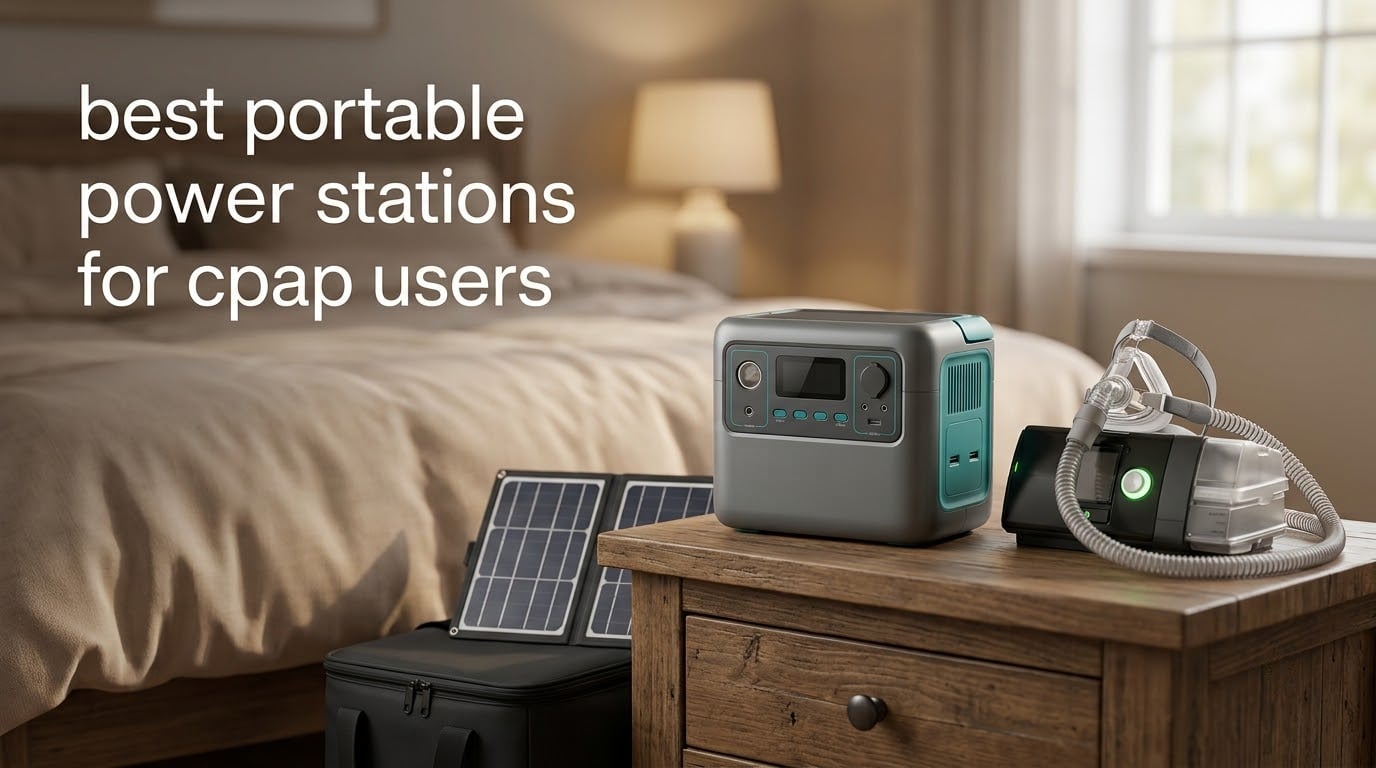
Sleep apnea therapy does not pause when the grid goes down. If your CPAP is the only thing standing between you and untreated breathing all night, then the real question is not whether a portable power station can run a CPAP machine. It is which one runs yours without waking you at 3am.
We spent weeks going through the specs, owner reports and measured runtime figures for the units below, because the failure mode here is so specific. Most people size a station on the machine name alone, ignore the heated humidifier, and forget that the inverter burns a slice of every watt-hour it stores. That combination is how therapy stops halfway through the night.
The short version: usable watt-hours equal rated watt-hours times 0.85, and a heated-humidifier CPAP setup draws roughly 40W while a pressure-only setup draws closer to 15W. Multiply your nightly watts by 8 hours, apply that 0.85 factor, and you have the capacity floor for one night. Everything below in this roundup of portable power stations for CPAP users is built around that math rather than marketing numbers.
A note before we start: this is medical-adjacent equipment, not a certified medical backup device. Test your exact machine, cable and setup at home for one full night before you rely on it anywhere.
Table of Contents
Top 3 Picks:Best Portable Power Stations for CPAP Users (October 2026)

Jackery Explorer 300 292Wh
- 292Wh LiFePO4
- 300W pure sine wave AC
- 7.1 lbs
- 6-hour heated-humidifier night


Jackery Explorer 1000 v2 1070Wh
- 1070Wh
- 1500W pure sine wave
- 1-hour fast charge
- 30 dB night mode
Portable Power Stations for CPAP Users at a Glance in 2026
Rated watt-hours tell you only part of the story. The usable figure is what actually reaches your machine through the inverter, so we list both and give you a runtime band for a pressure-only night and a heated-humidifier night.
| Product | Specifications | Action |
|---|---|---|
| Jackery Explorer 300 292Wh |
|
Check Latest Price |
| Jackery Explorer 1000 v2 1070Wh |
|
Check Latest Price |
 EcoFlow RIVER 2 256Wh EcoFlow RIVER 2 256Wh |
|
Check Latest Price |
| Anker SOLIX C1000 Gen 2 1024Wh |
|
Check Latest Price |
 MARBERO 237Wh 300W MARBERO 237Wh 300W |
|
Check Latest Price |
 EnginStar 296Wh 300W EnginStar 296Wh 300W |
|
Check Latest Price |
 ALLWEI 256Wh 300W LiFePO4 ALLWEI 256Wh 300W LiFePO4 |
|
Check Latest Price |
 GRECELL 999Wh 1000W GRECELL 999Wh 1000W |
|
Check Latest Price |
 EcoFlow RIVER 2 Pro 768Wh with panel EcoFlow RIVER 2 Pro 768Wh with panel |
|
Check Latest Price |
 EcoFlow Delta 3 Classic 1024Wh EcoFlow Delta 3 Classic 1024Wh |
|
Check Latest Price |
How Portable Power Stations for CPAP Users Actually Work
A CPAP power station is a lithium battery with an inverter bolted to it. The battery stores DC energy, the inverter turns it into clean AC, and your machine’s power brick converts it straight back to DC. That double conversion is why you only get about 85% of the rated watt-hours through an AC socket.
So a station rated at 292Wh delivers roughly 248Wh to the machine. That is the number to plan around, and it is the number we used for every runtime estimate in this roundup of portable power stations for CPAP users. The calculation itself is simple: usable watt-hours divided by your machine’s live draw equals hours of therapy.
Run it for the Jackery Explorer 300 below and you get about 248Wh usable. Divided by a 40W humidified load, that is roughly 6.2 hours. The same station on a 15W pressure-only setting stretches to about 16 hours.
Two more losses hide in the margins. Inverter idle drain is the overhead a station burns just keeping its inverter awake, and it matters more on small stations powering a single low-draw device. Low-load auto-shutoff is the nastier one: a CPAP dips to roughly 8W during exhalation, and a cheap inverter can read that dip as no load at all and power down mid-therapy.
Output quality matters too. Pure sine wave is the requirement for a device that regulates your breathing. Modified sine wave output can produce audible buzz, heat up under sustained load, or trip protection circuits. Every station in this list is specified with pure sine wave AC, and we treat anything else as a non-starter.
One more loss hides in the charging cycle itself. A station sitting half-drained for months loses capacity, and a CPAP backup that has been sitting in a cupboard since last winter is the least reliable thing you own. Top it up every two or three months and keep it between 40% and 70% if you are storing it long term.
Running a supported DC adapter cable from the 12V socket skips the round trip and recovers 10-15% of your capacity. The catch, covered in the buying guide below, is that most third-party cables only power the motor and pressure system, not the heated humidifier.
What Size Portable Power Station for CPAP Users Do You Actually Need?
For one night on a pressure-only CPAP, plan on a station rated at roughly 160Wh or more. With a heated humidifier running, plan on 350Wh rated or more for a single night. Anything below that is a phone charger with ambitions, and it is the mistake behind most 3am failures we read about.
Here is how the math breaks down for an 8-hour night, using rated watt-hours as the purchase number:
Pressure-only setup at 15W: 15 x 8 = 120Wh needed, then divided by 0.85 gives about 141Wh rated minimum.
Heated humidifier at 40W: 40 x 8 = 320Wh needed, divided by 0.85 gives about 376Wh rated minimum.
Two-night trip with humidifier on: 320 x 2 = 640Wh needed, which lands near 753Wh rated.
Adding a router, lights and a phone top-up pushes a realistic two-night target past 1000Wh rated.
Cold weather adds to this. Below about 60F a heated humidifier works harder to warm the air, and owners report 15-30% more draw in winter camping than in the same setup at home in summer. A heated tube pushes the same figure higher again, since the tube and the chamber are both holding temperature.
Prescribed pressure matters for the same reason. A machine running at 10 cmH2O does not draw what one running at 15 cmH2O draws, which is why measuring your own machine beats reading a generic figure off a spec sheet.
1. Jackery Explorer 300 Portable Power Station, 292Wh – Best All-Round Pick for CPAP Users
Jackery Explorer 300 Portable Power Station,292Wh
292Wh LiFePO4, 300W AC with 600W surge
7.1 lbs, 9.1 x 5.2 x 7.8 inches
4 hour wall recharge, 2 year warranty
Pros
- 7.1 lbs keeps a full humidified night comfortably portable
- Two AC outlets plus 100W USB-C PD and a 120W car port
- LiFePO4 cells rated past 4000 cycles to 70% capacity
- Listing explicitly positions it as a dependable CPAP battery for camping
Cons
- 292Wh covers one heated-humidifier night and no more
- Roughly 4 hour wall refill is slow against newer designs
- Solar input is modest next to 500W-class competitors
- Fan noise is audible beside a bed at high output
This is the unit we kept coming back to. It carries a 4.6 rating across more than 11000 ratings, and that kind of volume tends to mean the oddities have already been flushed out rather than hiding.
On the math, 292Wh rated works out to about 248Wh usable. That gives you roughly 6.2 hours on a heated-humidifier night at 40W, or about 16 hours pressure-only at 15W. One full humidified night fits comfortably with a margin; two do not.
Weight is where it wins. At 7.1 lbs you can carry it from the car to the tent in one hand, which matters more than raw capacity when you are also carrying a CPAP, a hose and a battery brick.
The chemistry is the quiet advantage. Those LiFePO4 cells are rated beyond 4000 cycles before dropping to 70% capacity, so a nightly backup unit will still be useful years from now. The 300W continuous output also leaves real headroom above the CPAP’s draw, which matters if you add a phone or a small lamp.
Refill speed is the honest weakness. Four hours from the wall is fine overnight, and solar can put about 80% back in 2.8 hours with a 100W panel, but it is not the class leader.
Who this pick suits best
It suits a camper, van traveller or RV user who wants one reliable humidified night away from a wall and values a light carry weight over multi-night capability. The 120W car port also means you can top it up from a vehicle socket between nights.
If you also want broader camping guidance for the gear around it, our picks on the best portable power stations for camping run through the larger tiers in more detail.
Who should skip it
Skip it if you humidify and want two nights away from a charger, or if your prescription runs at a higher pressure and pushes your draw above 40W. Also skip it for air travel. At 292Wh it sits far above the FAA carry-on allowance, so it stays home.
2. Jackery Explorer 1000 v2 Portable Power Station, 1070Wh – Best Multi-Night Pick for CPAP Users
Jackery Explorer 1000 v2 Portable Power Station,1070Wh,1500W
1070Wh LiFePO4, 1500W AC with 3000W surge
23.8 lbs with foldable handle
0-100% in 1 hour with emergency charging enabled
Pros
- Roughly 910Wh usable covers several heated-humidifier nights
- Full recharge in about an hour once the fast-charge option is enabled
- 30 dB quiet overnight charging mode suits a bedside setup
- Three pure sine wave AC outlets plus two 100W USB-C ports
- LFP cells keep 70%+ after 4000 cycles
Cons
- 23.8 lbs is a two-person lift
- not a travel weight
- The one-hour charge has to be switched on in the app each time
- Solar input is restricted to Jackery panels
If the question is how many nights, this is the answer. At 1070Wh rated and about 910Wh usable, a 40W heated-humidifier night lands around 22 hours of runtime, which covers two nights with real slack and part of a third.
Output is not a constraint. The 1500W continuous rating with 3000W surge means the CPAP shares sockets with a laptop, a router and lamps without any worry about headroom.
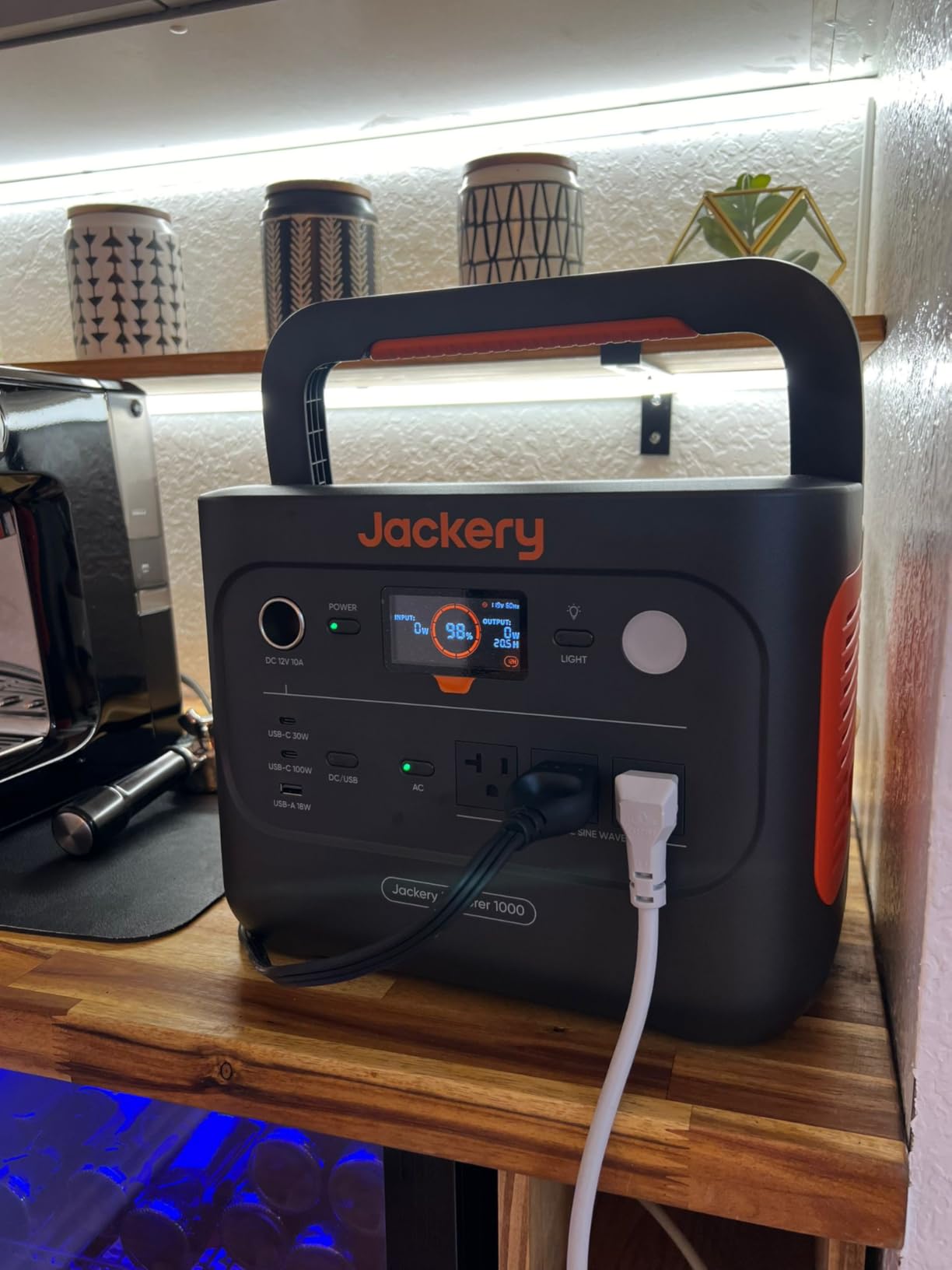
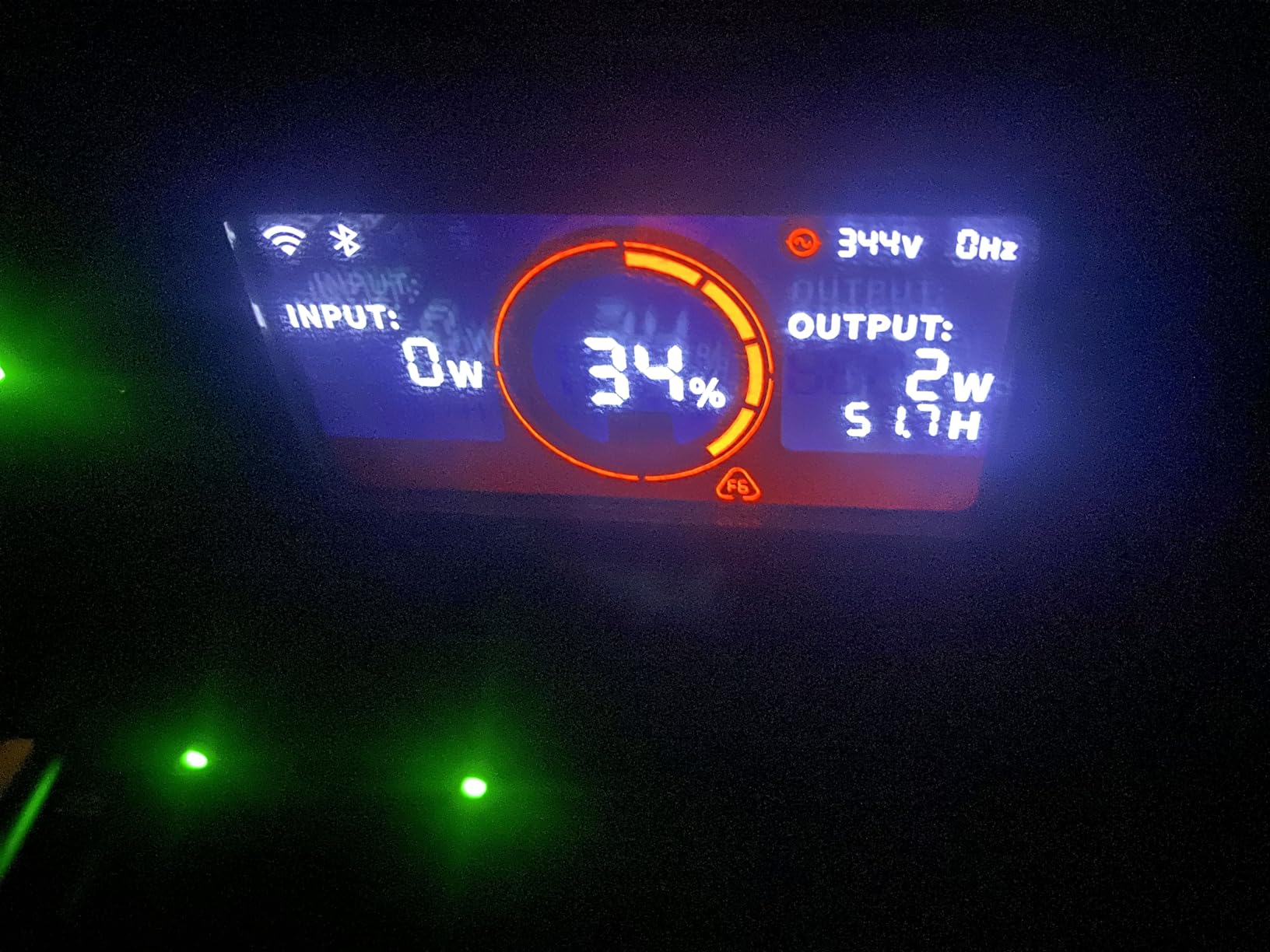
Two details made us comfortable recommending it beside a bed. The 30 dB quiet charging mode keeps the fan from becoming the thing that wakes you, and the LFP pack is rated for 4000 cycles, which suits a device that will be cycled constantly.
The recharge story is the other draw. The listing claims 0-80% in about 45 minutes by default and a full charge in roughly one hour with emergency charging toggled in the Jackery app. The catch is that toggle. Set it once and leave it on.
Who this pick suits best
It suits someone running two humidified nights or a week of off-grid travel where recharge happens once a day. It also fits households that want the CPAP, router and lighting on a single box during a longer grid outage.
For longer trips where you are recharging from a vehicle, our van life power station picks cover the recharge strategy in more depth.
Who should skip it
Skip it if you carry your gear more than you drive, or if your therapy has to cross an airport. 1070Wh is not a carry-on item, and no amount of clever packing changes that. Twenty-four pounds also defeats anyone with limited lifting capacity or mobility concerns.
3. EF ECOFLOW RIVER 2 Portable Power Station, 256Wh – Best Value for CPAP Users
EF ECOFLOW Portable Power Station RIVER 2, 256Wh 300W
256Wh LFP capacity, 300W AC rated
7.7 lbs, 9.6 x 8.4 x 5.5 inches
1 hour X-Stream AC recharge, 5 year warranty
Pros
- Fastest full AC recharge in the sub-300Wh class
- 7.7 lbs with a built-in handle and flat top for gear
- LFP cells rated for 3000+ cycles
- Under 30ms EPS transfer keeps therapy running through an outage
- App gives clear live charge monitoring
- Owners commonly describe using it as an outage CPAP backup
Cons
- 256Wh is one heated-humidifier night at best
- Single USB-C port forces a choice between laptop and headphones
- Fan is audible at maximum charging speed in a quiet room
- 110W solar input caps off-grid refill speed
- Some owners report charge percentage drifting over time
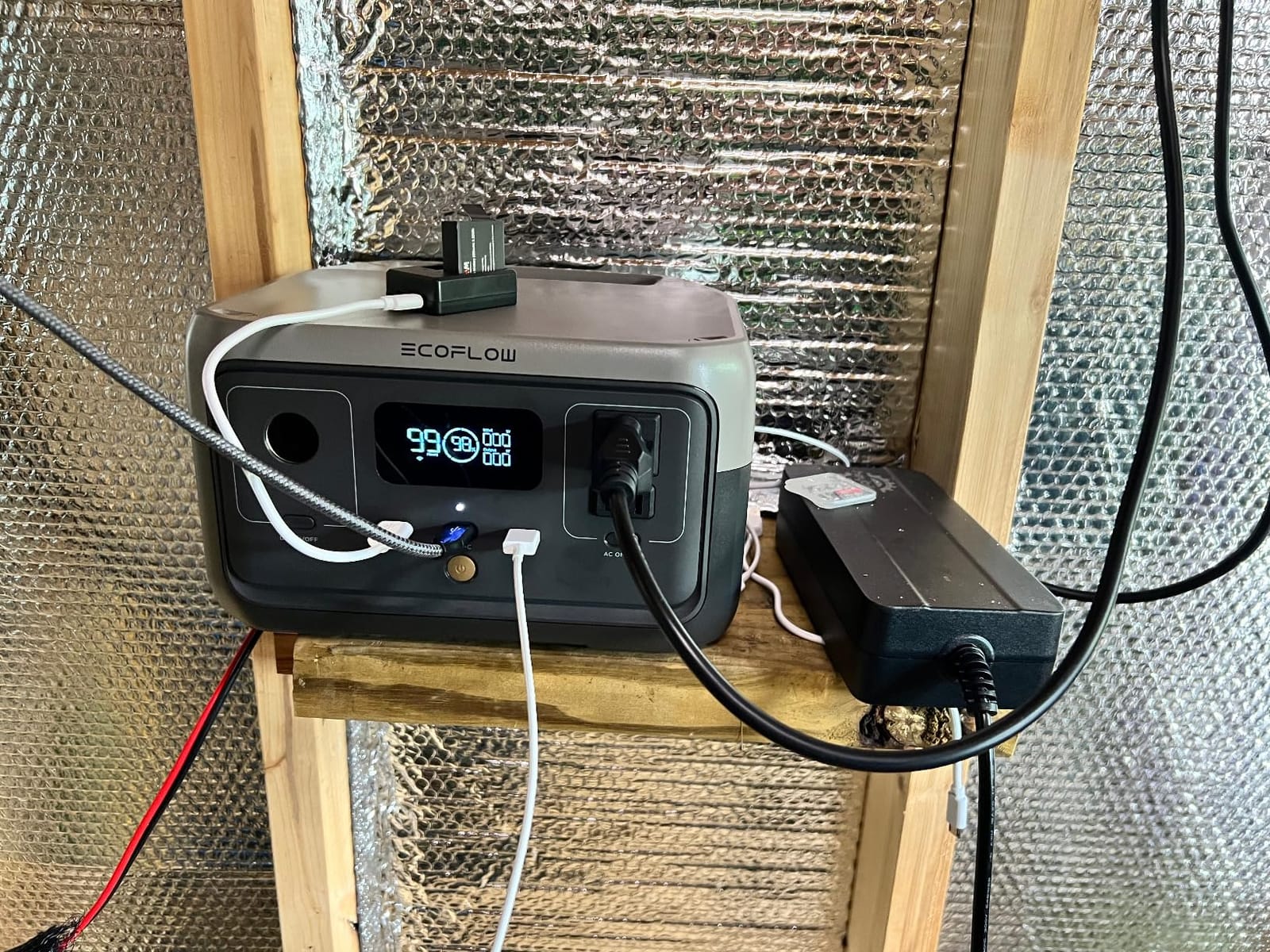
The RIVER 2 sits in the awkward middle of the budget tier: more capacity than the smallest options, but still one humidified night. What it does better than most of its class is refill speed. A full AC recharge in one hour via X-Stream means a short power blip is recoverable the same evening.
Its EPS transfer function is rated under 30ms, which is short enough that a machine running through it does not notice the grid dropping out. Several owners describe using it specifically as a bedside CPAP backup during storms.
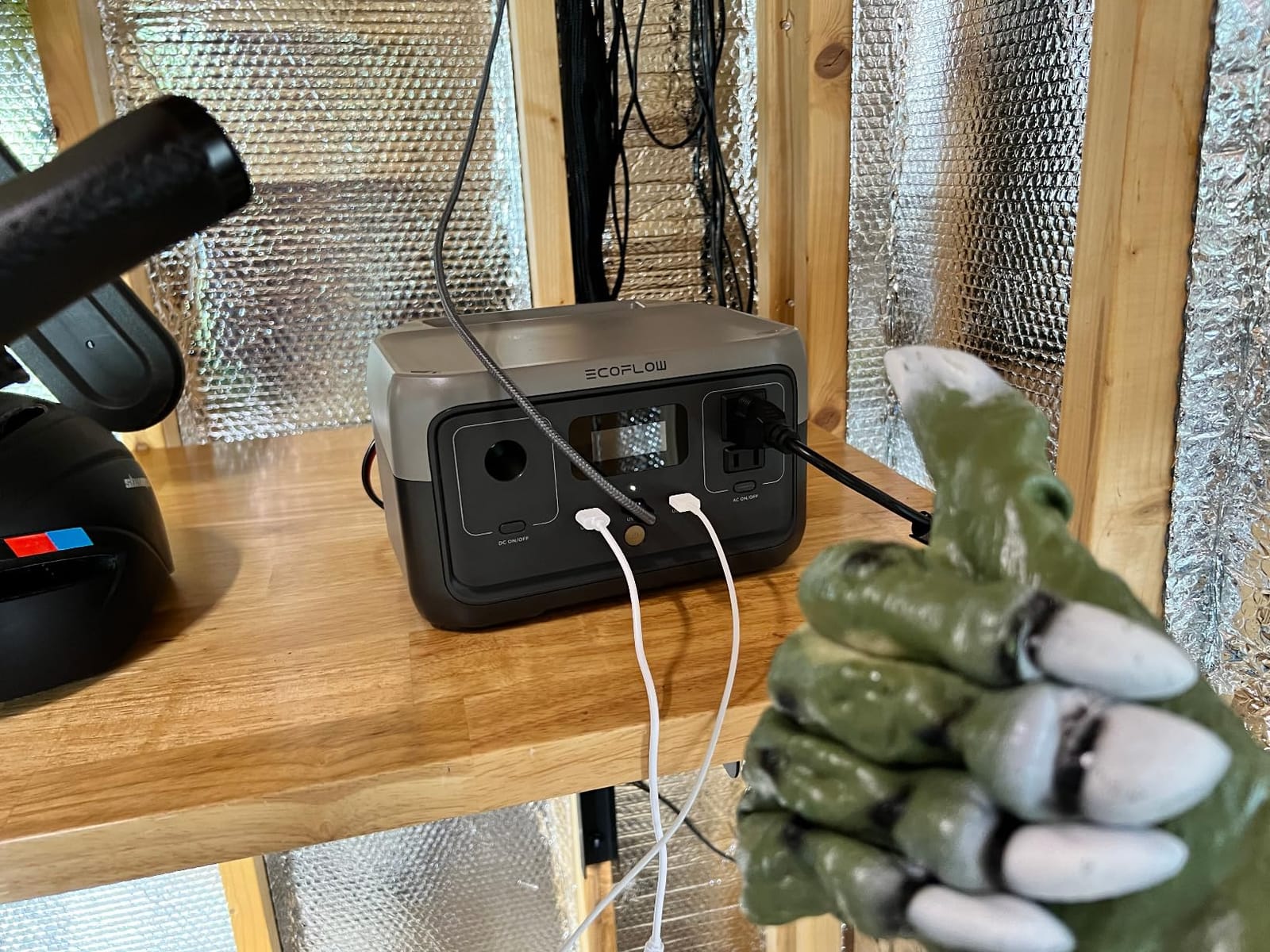
The 7.7 lbs and the flat top surface are small quality-of-life wins for camping. You can set the machine on the lid rather than balancing it on your boots.
Chemistry is LFP rated beyond 3000 cycles, and the warranty runs five years, which is longer than most competitors at this capacity.
Who this pick suits best
It suits a first-time backup buyer who wants a station that recovers fast after a brief outage and mostly runs the CPAP alone. If you only travel once or twice a year and recharge between uses, the fast refill matters more than raw capacity.
Who should skip it
Skip it for a two-night trip with the humidifier on. Skip it if you need solar recovery, because the 110W input ceiling is restrictive. A minority of owners also report battery management drift over long ownership, so keep it topped up rather than stored for months.
4. Anker SOLIX C1000 Gen 2 Portable Power Station, 1024Wh – Best Bedroom Outage Backup for CPAP Users
Anker SOLIX C1000 Gen 2 Portable Power Station
1024Wh LFP, 2000W output with 3000W peak
11.3 kg, 15.1 x 8.2 x 9.6 inches
10 ms UPS marketed explicitly for CPAP machines
Pros
- Maker explicitly markets sub-10 ms UPS backup for CPAP machines
- 49-minute full recharge tops you up before bed
- Owners report three consecutive heated-humidifier nights on one charge
- Quiet enough to run in a bedroom
- 600W solar input for genuine off-grid use
- 4000-cycle InfiniPower cell rating
Cons
- Gen 2 removed the expansion battery option
- 11.3 kg needs a two-handed lift
- No dedicated cable or accessory case included
- Some buyers flag slight distortion on microwave loads
This is the station whose maker names CPAP machines directly in its UPS marketing. A 10 ms switchover is far shorter than the machine needs to notice, so a grid drop does not interrupt therapy.
The runtime works out at about 870Wh usable. On a 40W heated-humidifier night that is roughly 21.8 hours, and verified buyer reviews describe three-night heated CPAP runs on a single charge. One reviewer measured about 17% of capacity per night and recovered it with 15 minutes of wall charging.
Recharge speed is the sleeper feature. Forty-nine minutes for a full top-up at 1600W means an outage night gets recovered the same evening rather than the next morning. 600W solar input makes genuine off-grid recovery practical.
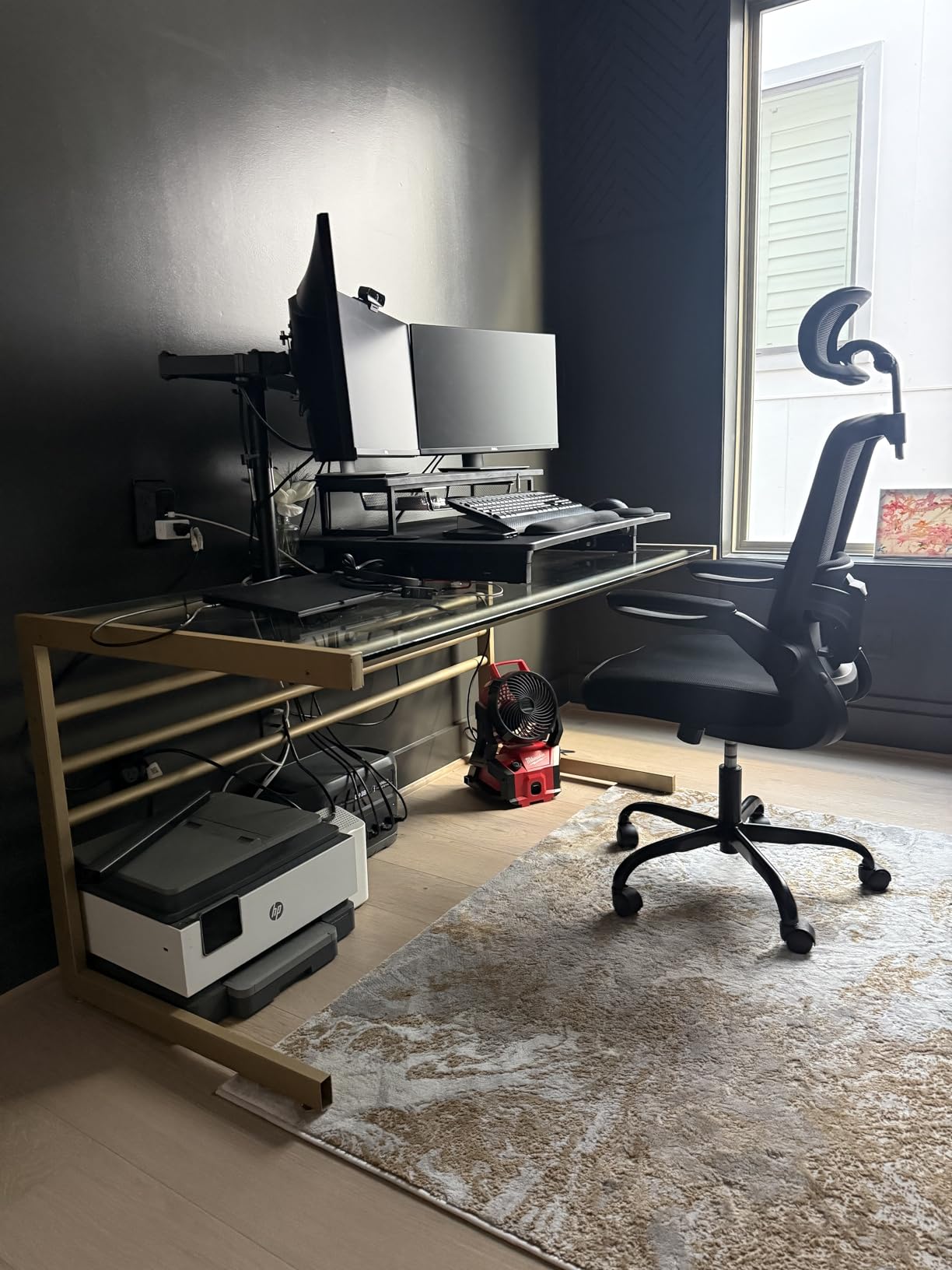
Owners consistently describe the unit as effectively inaudible in a bedroom, which matters when it sits three feet from your head.
Who this pick suits best
It suits someone whose main worry is a storm cutting power mid-night in their own home. Capacity carries the CPAP plus router, phone charging and lights for a full night and then some, at a weight most adults can lift once.
If your outage plan is broader than therapy alone, our home backup picks cover the larger tiers.
Who should skip it
Skip it if you expect capacity to grow later. The Gen 2 design dropped the expansion battery option that the previous generation carried, so 1024Wh is the ceiling. It also cannot fly.
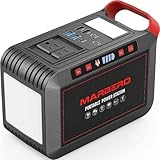
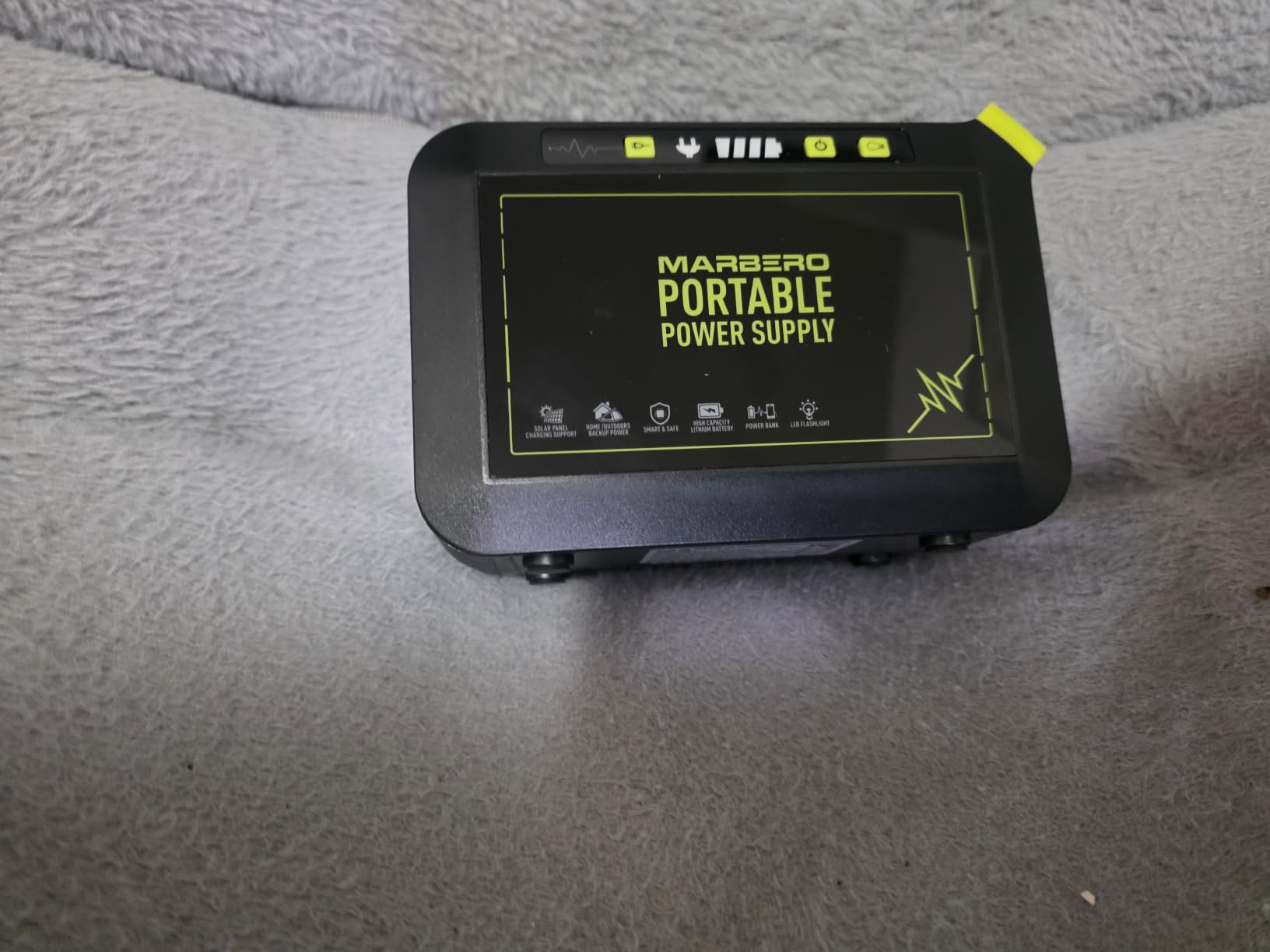
5. MARBERO Portable Power Station 300W, 237Wh – Budget Pick for CPAP Users
Portable Power Station 300W MARBERO 237Wh Camping Solar Generator Backup Lithium Battery with Pure Sine Wave 110V AC Outlet, USB C, USB A, DC for Outdoors Camping CPAP Home Blackout Emergency
237Wh / 64,000mAh capacity, 300W AC with 375W peak
4.6 lbs, 8.15 x 5.83 x 3.90 inches
Pure sine wave 110V AC across two outlets
Pros
- Lightest pick here at 4.6 lbs and small enough for a backpack
- Two pure sine wave AC outlets at the entry level
- Eight outputs including USB-C PD and a DC barrel
- Dual LED lanterns with SOS mode double as an emergency light
Cons
- Lowest rating in the lineup with a 12% one-star share
- 237Wh is under one night with a heated humidifier
- Proprietary round-barrel wall charger rather than USB-C
- Around 6 hour wall recharge with no fast-charge option
- Only a 12-month warranty
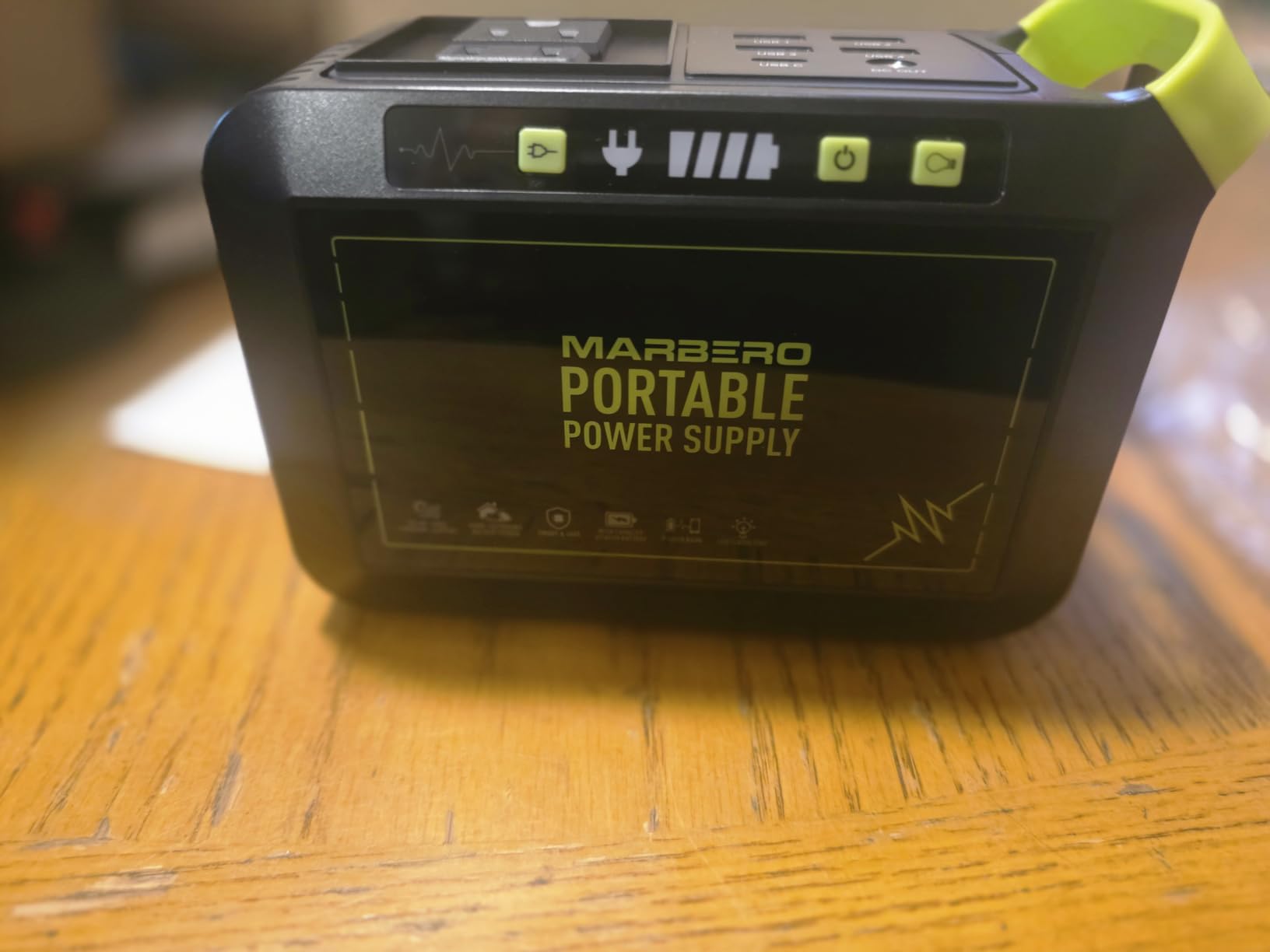
This is the smallest and lightest option we considered, and the reasoning is straightforward. At 4.6 lbs and under 10 inches on its longest side, it disappears into a daypack.
The pure sine wave 110V AC output is the part that matters most here, and it is not something every station this size provides. A station that mangles the waveform is worse than a small station that does not.
On the math, 237Wh rated gives about 201Wh usable, or roughly 5 hours on a 40W heated-humidifier night. That is a partial night. Pressure-only at 15W gives about 13.4 hours, which is a real night of therapy without humidification.
So treat this as a travel companion for people who run their machine pressure-only, or as an emergency box that lives in a drawer.
Who this pick suits best
It suits a frequent flier or backpacker who needs a CPAP through long travel days rather than overnight camping, and who travels pressure-only. The dual lanterns are a nice touch for the same audience.
At 237Wh it also sits inside the range where some carriers and most regulators are comfortable, which is unusual for a station rather than a dedicated battery.
Who should skip it
Skip it if you humidify. Skip it if you already own a mains-powered machine and want something you can rely on for a week. The 4.1 rating and a meaningful tail of durability complaints, including examples that stopped holding charge within months to a few years, are the reasons we placed it fifth rather than lower on size alone.
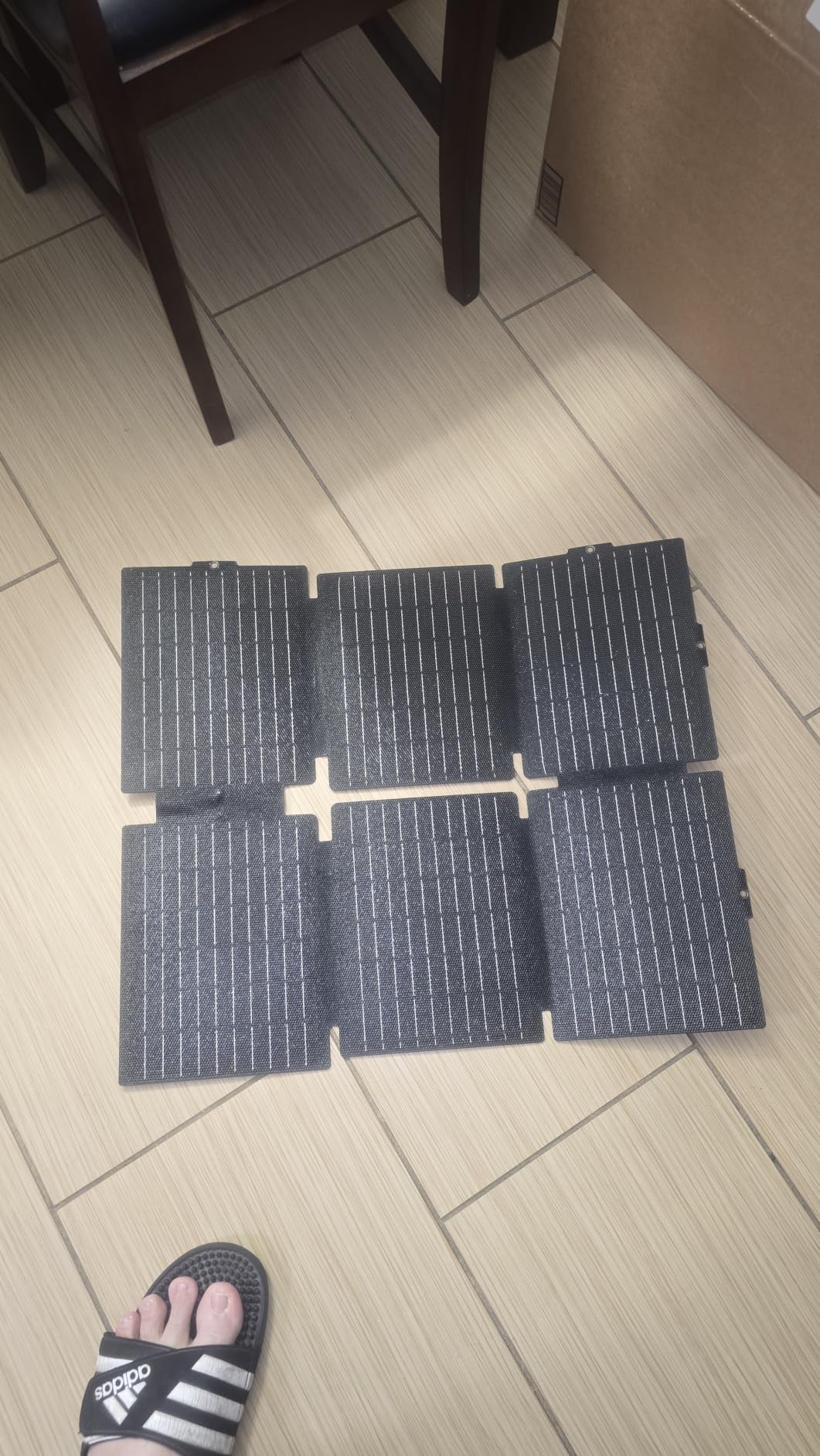
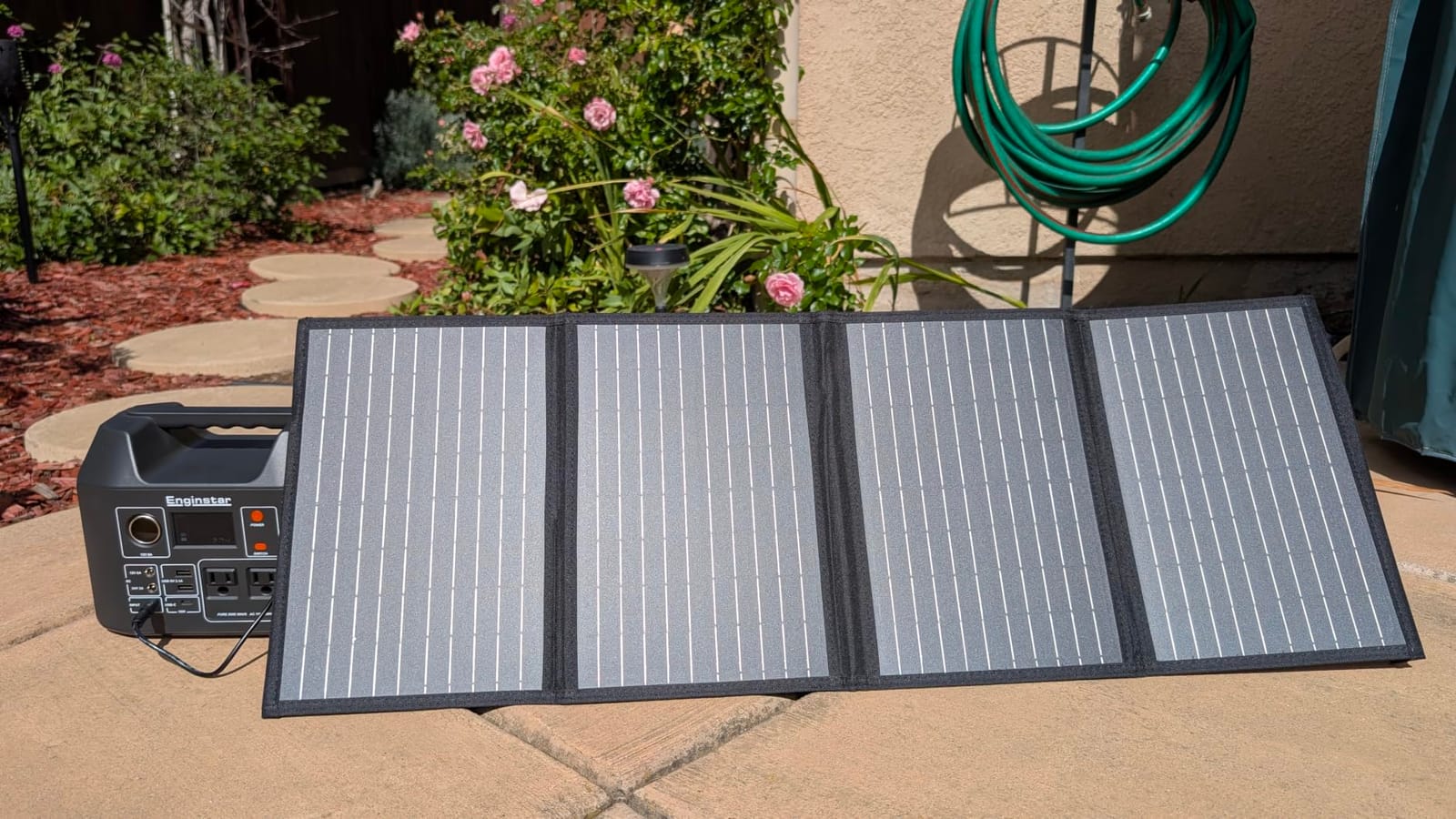
6. EnginStar Solar Generator 300W, 296Wh – Best Quiet Bedside Pick for CPAP Users
EnginStar Solar Generator, 300W Portable Power Station, 296Wh Lithium Battery Backup w/Two 110V Pure Sine Wave AC Outlet for Camping Road Trip RV, 80000mAh Sufficient Power Supply for Blackout
296Wh / 80,000mAh capacity, 300W continuous
Two 110V pure sine wave AC outlets, 8 outputs total
6.5 lbs, 9 x 5.5 x 7.5 inches
Pros
- Most CPAP-specific measured runtime evidence in the 300W tier
- Quiet enough for bedside use per owner reports
- Two pure sine wave AC outlets so you can pair the CPAP with a lamp
- Display shows live input and output wattage per port
- Pass-through charging lets it charge while running the CPAP
- 24V DC barrel port for RV devices
Cons
- Battery rated for only 1000 cycles
- About 7 hour wall recharge
- Ports are not sealed
- so wet weather is a risk
- Status lamps cannot be dimmed
- 12-month warranty
The evidence base here is the most CPAP-specific of any 300W-class station in this roundup. Verified owners report 7.5 hours on full humidity and an estimated three days with the humidifier turned down, which lines up almost exactly with the math below.
At 296Wh rated and about 252Wh usable, a 40W night gives roughly 6.3 hours. A pressure-only 15W night gives about 16.8 hours. Those are the two numbers to plan around.
What earns it the quiet badge is owner feedback rather than a decibel rating. One CPAP owner confirmed the unit is very quiet apart from brief cooling cycles, which is the only observation that actually matters beside a bed.
The per-port wattage display is also quietly excellent. You can watch the machine’s live draw, confirm it at 40W, and know exactly what your runtime is instead of guessing.
Who this pick suits best
It suits a user who wants a measured display, quiet cooling and pass-through charging for home backup at a modest capacity. Pass-through means you can run therapy while the station charges from the wall and switch to battery only when the grid fails.
Who should skip it
Skip it if you plan to cycle it hard or keep it in a vehicle long-term. A 1000-cycle rating is roughly a quarter of the LiFePO4 competitors here, and the undimmable status lamps are a real problem in a dark bedroom, with owners resorting to light-blocking stickers.
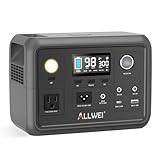
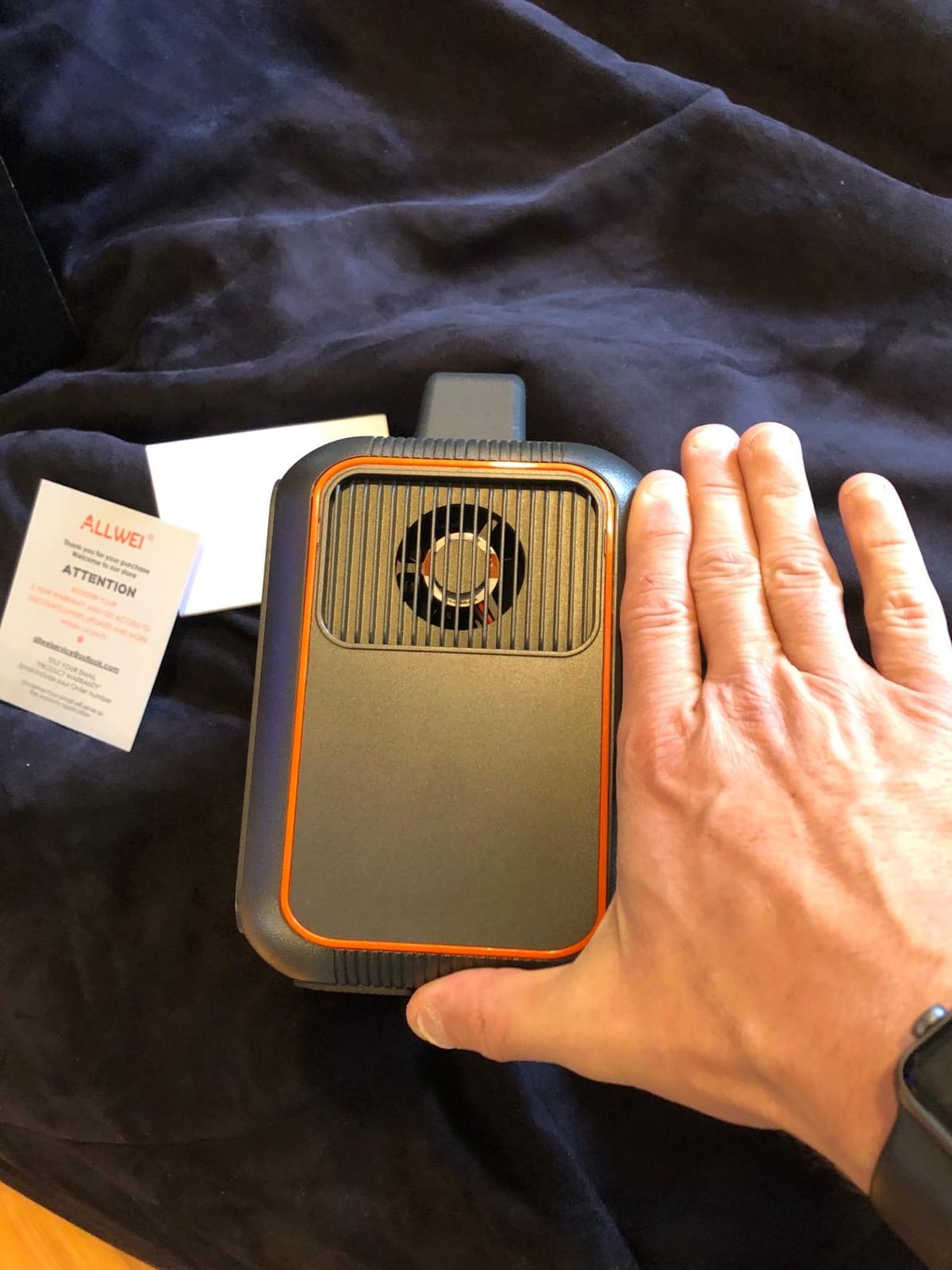
7. ALLWEI Portable Power Station 300W, 256Wh – Best Runtime Display for CPAP Users
ALLWEI Portable Power Station 300W, 256Wh Solar Generator LiFePO4 Battery
256Wh LiFePO4 rated to 3000 cycles
300W continuous with 600W surge pure sine wave
6.4 lbs, 9.25 x 5 x 6.81 inches
Pros
- LiFePO4 chemistry with a 3000-cycle rating at this capacity
- Verified 20 hours over three nights on a BMC Luna 2
- Fastest refill in the 300W tier at 2-2.5 hours with dual AC plus solar
- Display shows runtime remaining and true charge percentage
- USB-C PD 60W output
- Negligible standby drain over months of storage
Cons
- Single AC outlet limits concurrent 120V devices
- Solar input is capped so larger panels cannot be used
- Some owners report display cycling or needing a reset after long solar charges
- Customer support reportedly demanded extensive data before engaging
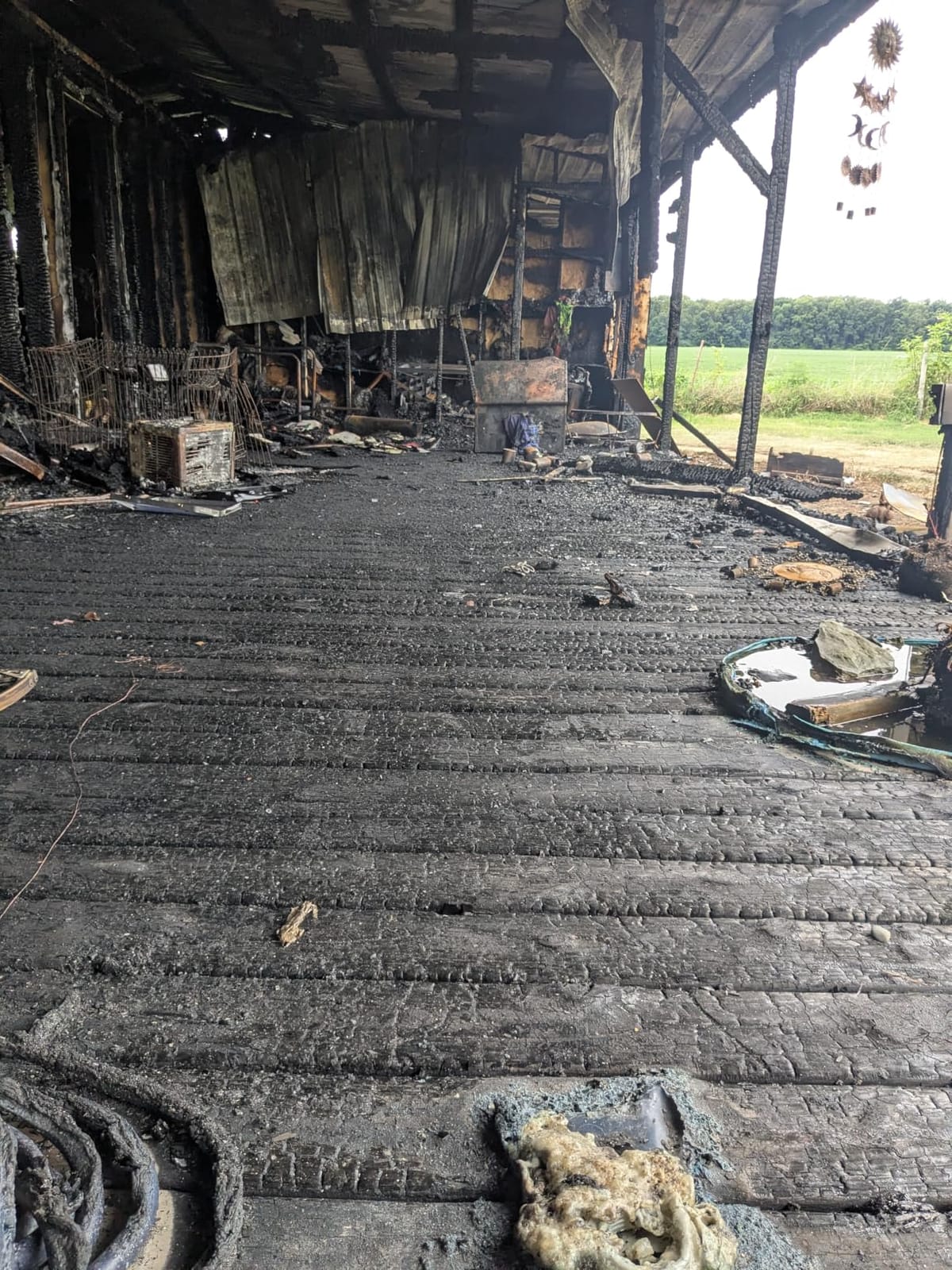
Cell longevity is the argument here. At 256Wh with LiFePO4 cells rated to 3000 cycles, this is one of the few sub-300Wh stations that will still hold up after a decade of nightly backup duty.
The runtime evidence is the strongest we found at this size. A verified buyer logged 20 hours over three nights on a BMC Luna 2, and another ran a Respironics DreamStation 2 at Medium-High heat for 12 hours across two nights. Both are consistent with our own figures: about 218Wh usable, roughly 5.4 hours at 40W and 14.5 hours at 15W.
Several of those owners also reported the machine kept running through household power cuts without waking them, which points to the pass-through behaviour doing its job while on wall power.
The built-in MPPT charge controller is worth noting if you plan to refill from solar. Dual AC plus solar input takes roughly 2 to 2.5 hours, the fastest we saw in this tier.
Who this pick suits best
It suits someone who wants a small station that survives years of use, prefers a runtime-remaining display over raw wattage, and needs a verified overnight humidified night at the lowest capacity level we consider realistic.
Who should skip it
Skip it if you need to run two 120V devices at once, since there is only one AC outlet. If you plan to grow the system later, note that solar input is capped and the single outlet is a hard limit on expansion of use.
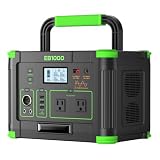
8. GRECELL 999Wh Solar Generator 1000W – Best Load Headroom for CPAP Users
GRECELL 999Wh Solar Generator 1000W Portable Power Station for Outdoor
999Wh capacity, 1000W continuous with 2000W surge
23 lbs, 11.6 x 7.91 x 7.91 inches
Ten outputs including a wireless charging pad
Pros
- 1000W continuous pure sine wave gives enormous headroom over a CPAP draw
- Ten simultaneous outputs including wireless charging
- Listing explicitly names CPAP medical devices among supported loads
- Silent dual cooling fans
- Cable storage bag and all charging cables included
- Recharge from solar or AC or car outlet with built-in MPPT
Cons
- Heavy at 23 lbs for its capacity
- Only a 2-year warranty
- Manufacturer requires AC output be switched off when idle or it drains
- No app or UPS behaviour highlighted in the listing
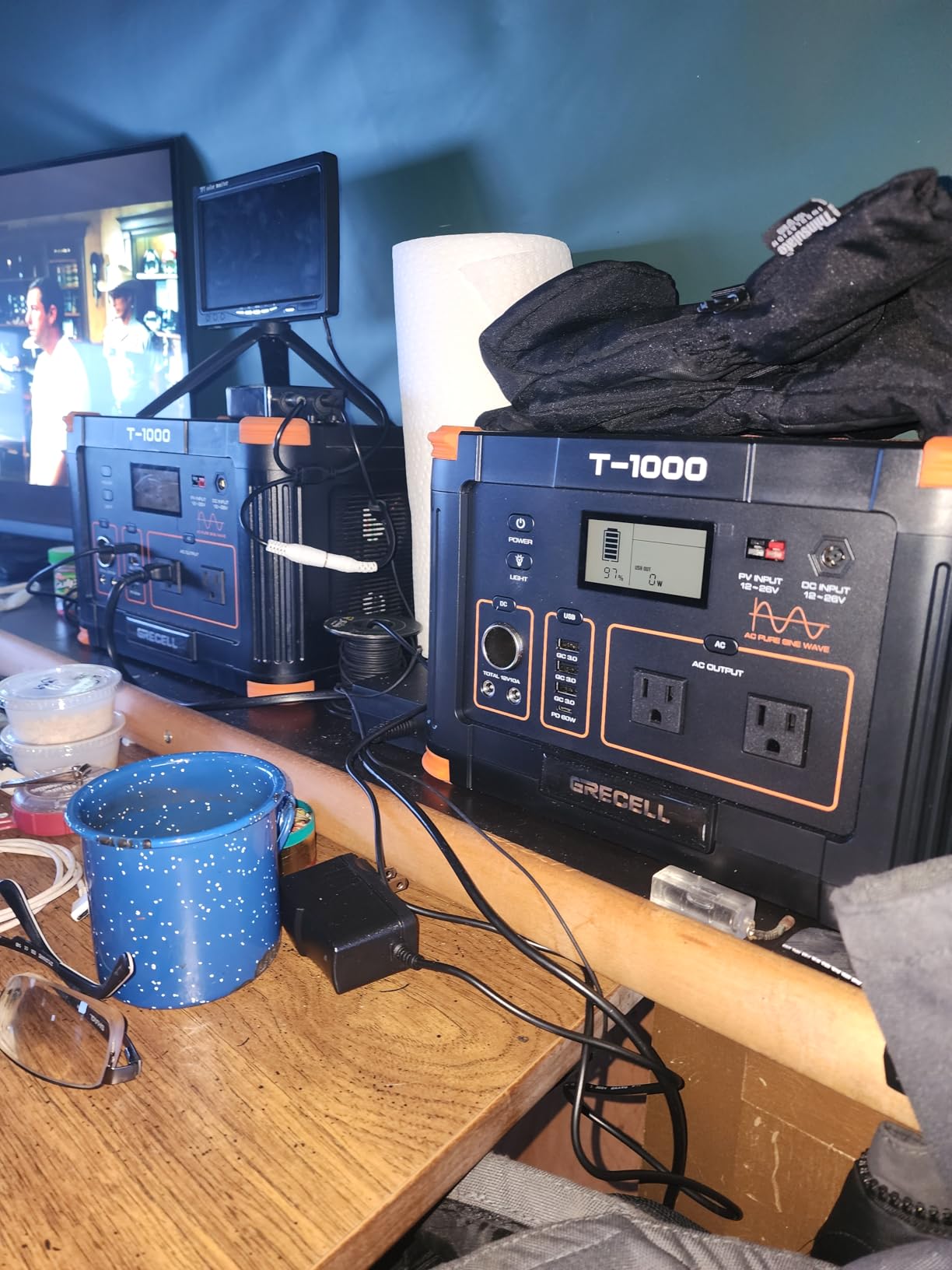
Where most stations here give you enough watts for therapy, this one gives you room for everything around it. 1000W continuous and 2000W surge means the CPAP shares a box with a mini fridge, lights and a laptop during an outage.
The runtime lines up with the mid-sized units: 999Wh rated works out to about 849Wh usable, or roughly 21 hours at 40W and 56 hours pressure-only at 15W. The listing itself states the same formula, which is a good sign of honest specification.
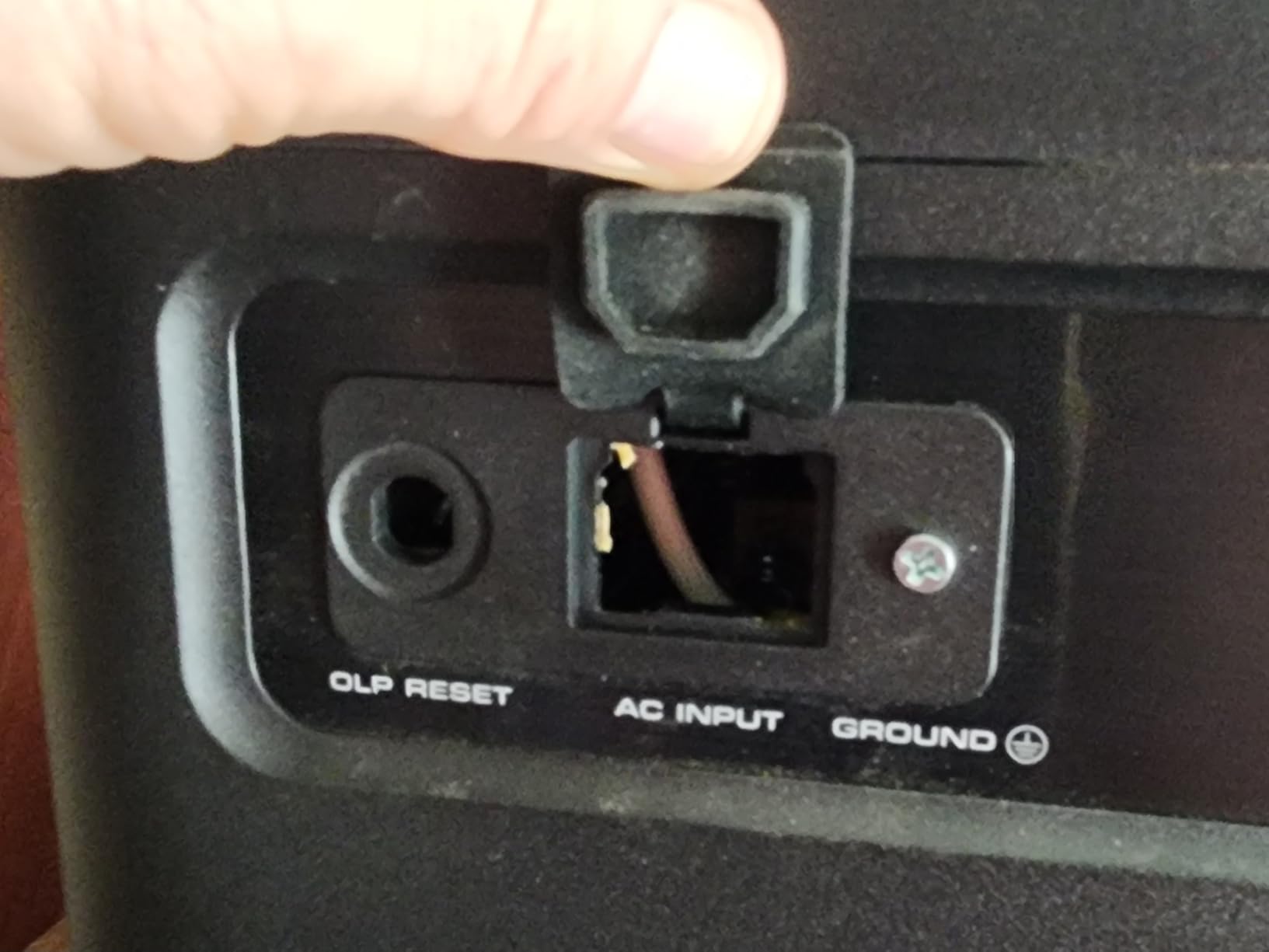
Ten output types is unusual at this capacity, including a wireless charging pad for a phone that sits on the nightstand next to you.
Switch the AC output off when it is not in use. Running idle, the inverter itself becomes a meaningful drain on a battery you intend to keep as a standby unit.
Who this pick suits best
It suits someone running a multi-device outage load rather than therapy alone. If you want to see how a larger battery behaves when it is topping up a computer as well, our laptop power bank picks cover that angle.
Who should skip it
Skip it if weight is your binding constraint, since 23 lbs is heavy for a station with no expansion path. A 2-year warranty is also the shortest among the mid and large picks here, and there is no documented UPS switchover figure to plan around.
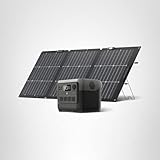
9. EF ECOFLOW RIVER 2 Pro with 160W Solar Panel, 768Wh – Best Off-Grid Refills for CPAP Users
EF ECOFLOW Solar Generator RIVER 2 Pro & 160W Portable Solar Panel, 768Wh
768Wh LiFePO4, four 800W AC outlets up to 1600W
17.2 lbs, 10.5 x 10.1 x 8.5 inches
70 minute AC recharge, 5 year service
Pros
- Only bundle that includes a matching 160W IP68 solar panel
- 768Wh with four AC outlets covers a CPAP plus household essentials
- 70-minute full AC recharge
- Panel folds into its own carry bag
- ETFE film protects the panel against UV
- Lighter than comparable 1000Wh-class stations
Cons
- Bundled panel makes the total higher than a bare station of similar capacity
- 17.2 lbs is still a two-person lift
- Panel refill of about 4.8 hours is the slowest here because of the larger panel
- Fewer written owner reports of CPAP use than the smaller picks
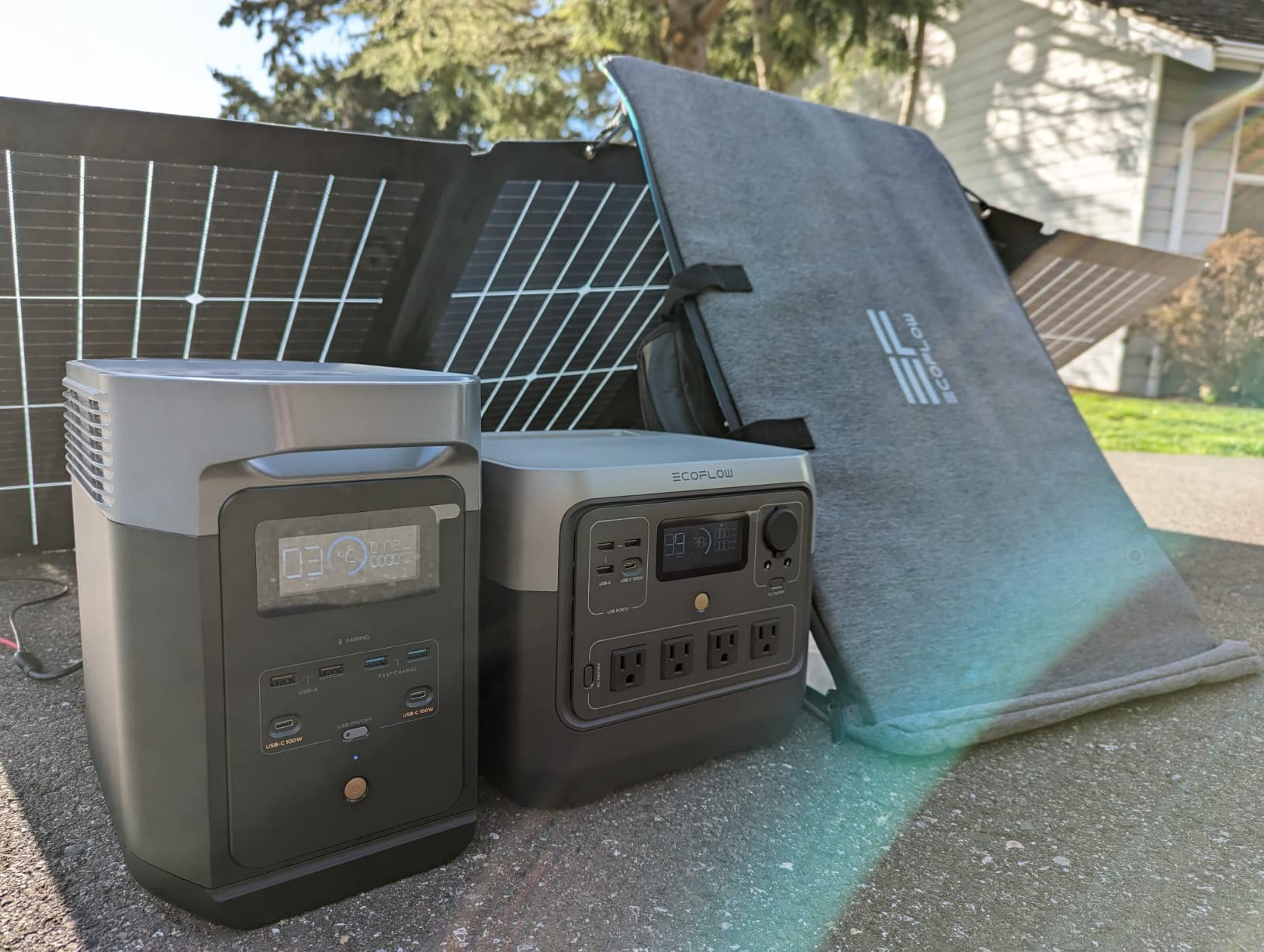
Everything else in this roundup stores energy. This one also refills it. The bundled 160W panel is IP68 rated with ETFE film for UV resistance and folds into its own bag, which removes the single hardest part of a multi-night off-grid trip.
Capacity works out to about 653Wh usable. A 40W heated-humidifier night gives roughly 16.3 hours, so you can cover a two-night trip with a mid-level humidifier setting and still have reserve.
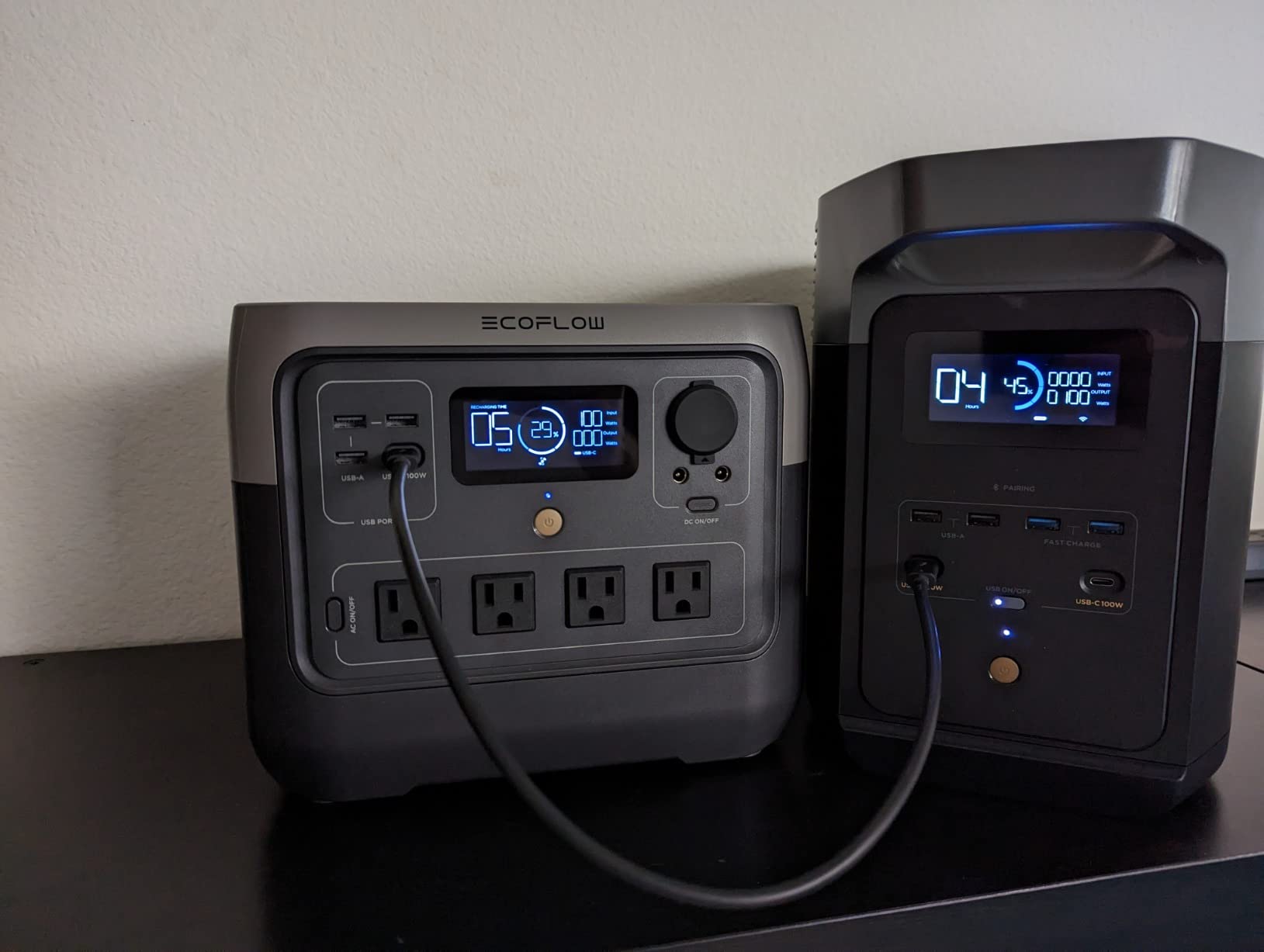
Four AC outlets rated at 800W each, up to 1600W combined across 11 total outputs, is more than a bedroom needs and enough for a living-room outage.
Recharge options are broad: 70 minutes from a wall, about 4.8 hours from the included panel in good sun, plus car outlet and USB-C top-up.
Who this pick suits best
It suits a van, RV or multi-night camper who wants to leave the wall behind entirely. If boondocking recharge planning is the puzzle, the van life guide has the broader picture.
Who should skip it
Skip it if you only need one night, because you are paying for panel capacity you will not use. The 4.8 hour solar refill is also slower than smaller panels because the panel is larger, which means midday-only charging windows need planning.
10. EF ECOFLOW Delta 3 Classic Portable Power Station, 1024Wh – Best Whole-Home Outage Pick for CPAP Users
EF ECOFLOW Portable Power Station Delta 3 Classic, 1024Wh 1800W AC
1024Wh LFP, 1800W output with 3600W surge
26.7 lbs, 7.9 x 11.1 x 15.7 inches
0-80% in 45 minutes, under 10 ms UPS
Pros
- 90% five-star share
- the highest among visible reviews here
- Under 10 ms UPS explicitly designed for medical devices
- 1800W output covers a heated CPAP plus fridge and lighting for a full outage day
- 0-80% in 45 minutes
- app controls with Storm Alert and self-powered modes
- Bright readable display and reliable Bluetooth pairing
- Two top handles and side-facing three-prong outlets
Cons
- Heaviest pick in the roundup at 26.7 lbs
- No battery expansion support
- Some reviews flag defective or used units arriving from third-party sellers
- 12V vehicle charging is slow
The Delta 3 Classic is the pick when the outage is a whole evening rather than a night of sleep. 1800W continuous output means it can run a heated CPAP alongside a small refrigerator and lighting, which is the scenario that catches most people out.
Runtime sits alongside the other 1024Wh units at about 870Wh usable, roughly 21.8 hours at 40W. The difference is what you can plug into it while that number is running.
The best-rated pick here carries a 90% five-star share among visible reviews, pairing that score with output most of its class cannot match.
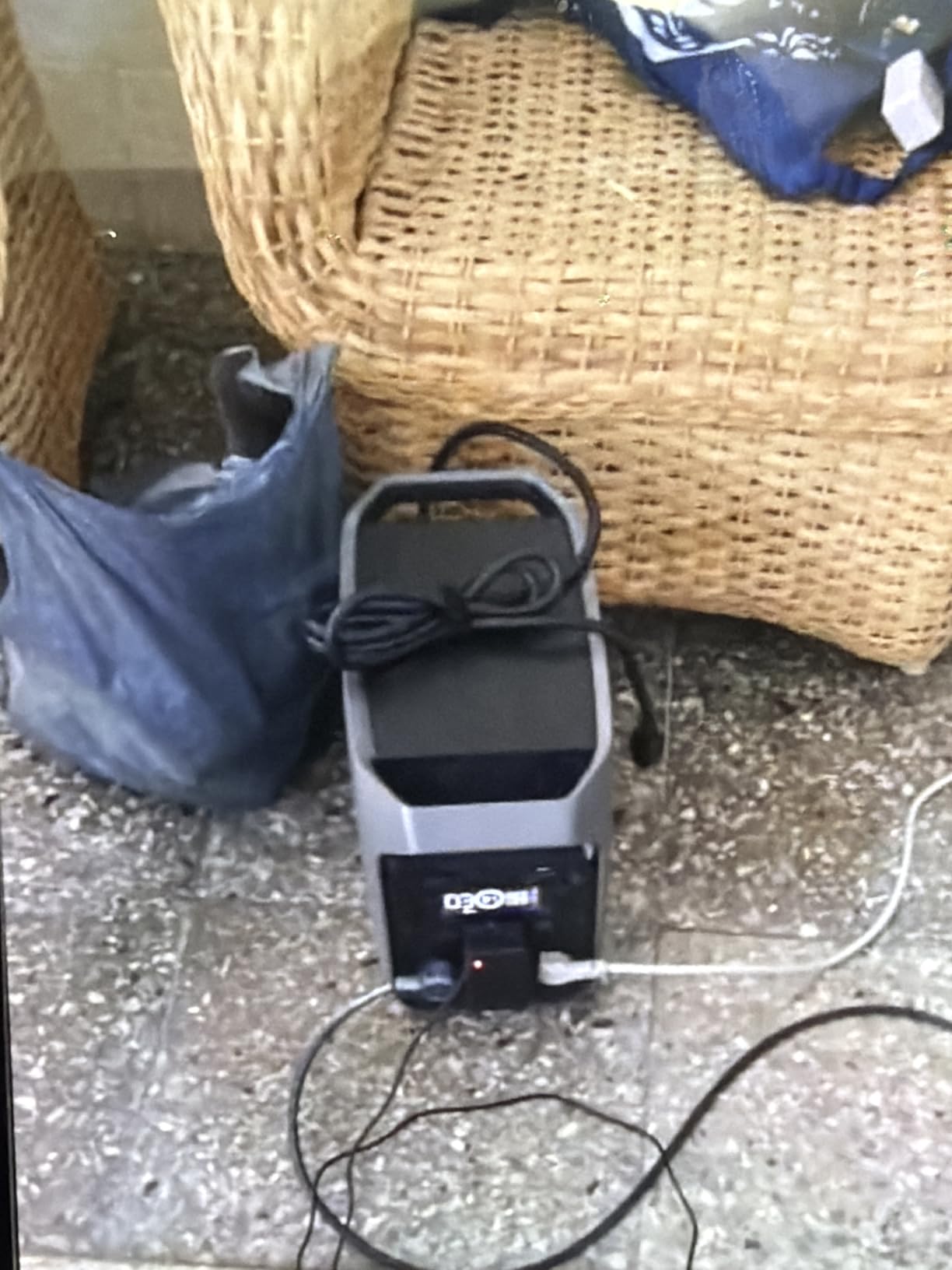
Its UPS switchover is specified under 10ms and marketed by the maker for medical devices, which makes it a natural fit for a home battery backup arrangement alongside therapy.
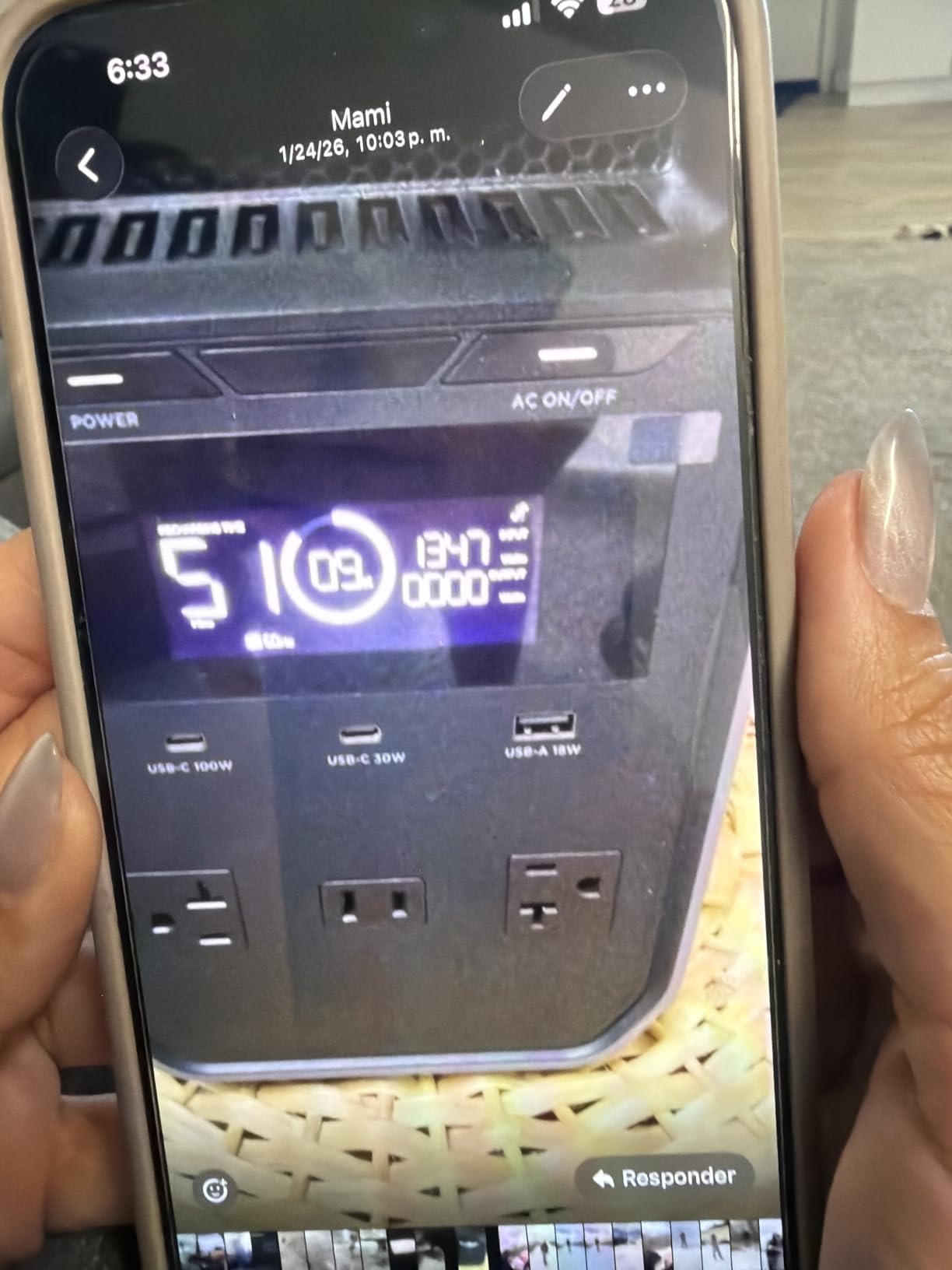
Charging is quick, hitting 80% in 45 minutes by wall, with optional 500W solar taking about 2.5 hours. One owner reported a full recharge in roughly an hour after two days running a sump pump.
Who this pick suits best
It suits anyone who wants one box to run the CPAP, keep the internet alive, charge a phone and keep a light or two on through a multi-hour outage. The app’s Storm Alert and self-powered modes suit people who do not want to monitor it manually.
Who should skip it
Skip it if you travel. At 26.7 lbs it is the heaviest thing on this list, it cannot fly, and it does not accept expansion batteries, so the capacity is fixed.
How to Choose a Portable Power Station for CPAP Users
Run through these seven steps in order and you will land on the right capacity without buying twice.
Measure your real draw. Plug your machine into a kill-a-watt meter for a full night with your usual humidifier setting. That measured figure beats any generic CPAP wattage, because prescribed pressure changes the load.
Multiply by your hours. Eight hours is typical. Multiply watts by hours to get the watt-hours you actually need per night.
Divide by 0.85. That accounts for the DC to AC to DC round trip. Never plan on the full rated number.
Add your other loads. Router, phone charging, a lamp and a laptop each add up. A realistic CPAP plus router, phone, LED light and laptop load totals about 499Wh before any losses.
Check output quality and headroom. Pure sine wave, and continuous watts comfortably above your peak draw.
Decide if you need UPS. If therapy must survive a blip, you need a stated switchover time under 20ms.
Plan the recharge. If you are away from a wall for more than one night, budget for a solar panel or a vehicle socket.
The DC cable warning nobody mentions clearly enough. Most third-party DC adapter cables power only the motor and pressure system, not the heated humidifier or heated tube. That erases the 10-15% efficiency gain entirely if you humidify. On r/CPAP the consensus is consistent: buy the OEM ResMed or Philips cable rather than a generic one.
Check for low-load auto-shutoff. A CPAP dips to roughly 8W during exhalation. Budget units can read that as no load and power down mid-therapy. This is a recurring complaint in CPAP forums and it is a legitimate reason to rule a station out.
Turn off power-saving mode if your unit has one. On Anker models, leaving power-saving mode enabled can cause the station to shut down when draw drops during sleep. Set it off before bed.
Power station or dedicated CPAP battery? A purpose-built CPAP battery is lighter, quieter and often flier-legal, but it does one job. A portable power station costs more per watt-hour yet gives you AC outlets, USB ports, a solar input and enough capacity to cover a multi-night trip or an outage load. If you fly often and travel light, a dedicated battery is the better tool. If you camp, drive or live somewhere with unreliable grid power, the station earns its weight.
Build redundancy for long trips. The safest multi-night plan is a second station or a vehicle 12V top-up between nights rather than betting one night on a single charge.
Finally, if lifting weight is a factor, plan around it deliberately. Anything above 20 lbs is a two-handed lift, and for users with limited mobility the capacity-to-weight ratio matters more than headline watt-hours. Our mobility equipment picks cover the same principle for other categories.
The order of operations matters more than any single purchase. Turn the humidifier down first, switch to a supported DC cable second, buy more capacity third. That sequence delivers more usable therapy per dollar than upgrading hardware alone, and it costs nothing.
Air Travel and the FAA Carry-On Limit for CPAP Power
FAA rules cap spare lithium batteries at 100Wh for carry-on, and 160Wh with approval. For context, a 100Wh battery equals 100 hours of a 1W device or roughly 2.5 hours of a 40W CPAP load.
Only the MARBERO at 237Wh sits close enough to that conversation to be plausible, and even that needs care. Everything else in this roundup, from the Jackery Explorer 300 at 292Wh upward, exceeds the carry-on allowance.
So if you fly, treat a dedicated CPAP power bank as your travel battery and keep the portable power station for the ground at either end. Checked baggage is a poor place to store lithium cells overnight.
Spare batteries also cannot travel in checked baggage at all under most rules, and terminals need to be covered or taped. Spare batteries travel in the cabin with you, not in a hold, and medical devices are usually exempt from the usual quantity limit when carried with you. Confirm the current wording with your airline before you travel, because the rules are the airline’s to enforce.
Running a CPAP Plus Router, Lights and a Laptop on One Station
A realistic outage load is CPAP at 40W, router at 10W, phone top-up around 15Wh, an LED light at 6W and a laptop at about 60Wh. That lands at roughly 499Wh before losses, and about 587Wh once you apply the 0.85 factor.
That is where the 999Wh and 1024Wh stations separate from the compact tier. The GRECELL 999Wh, Anker C1000 Gen 2 and EcoFlow Delta 3 Classic all clear that comfortably for a full night, and the Delta 3 has enough output wattage to add a small refrigerator.
The compact picks in this roundup have no realistic chance of running that load overnight. Know which category you are in before you buy.
One number worth checking on the stations that support it: the Anker C1000 Gen 2 and EcoFlow Delta 3 Classic both publish a sub-10 ms UPS switchover figure. Anything above 20 ms risks a visible stall in therapy when the grid drops, which is the moment the machine is most vulnerable.
Frequently Asked Questions
Will a portable power station run a CPAP?
Yes, if it has a pure sine wave AC inverter and enough usable watt-hours. Plan on rated watt-hours times 0.85 to cover inverter losses, and expect roughly 40W draw with a heated humidifier or about 15W pressure-only. A 292Wh station covers one humidified night at about 6 hours, while a 1070Wh station covers more than two.
What size portable power station do I need to run a CPAP machine?
For one night pressure-only, a station rated at about 160Wh is the floor. With a heated humidifier, plan on 350Wh rated or more. For two humidified nights, look for roughly 750Wh rated, and above 1000Wh if you also need to run a router, lights or a laptop during the outage.
How long will a portable power station run a CPAP machine?
Divide usable watt-hours by your machine’s live draw. A 1070Wh Jackery gives about 910Wh usable, which is roughly 22 hours at a 40W heated-humidifier load and around 60 hours pressure-only. Always measure your own draw with a kill-a-watt meter, since prescribed pressure changes it.
How long can a Jackery 1000 run a CPAP?
The Jackery Explorer 1000 v2 holds 1070Wh rated, or about 910Wh usable after inverter losses. At a 40W heated-humidifier draw that is roughly 22 hours of runtime, enough for two full nights with margin. Pressure-only at 15W stretches it to around 60 hours.
What is the best portable power bank for a CPAP machine?
For air travel, a dedicated CPAP power bank under 100Wh is the only realistic option, since FAA carry-on rules exclude most 256Wh and larger stations. For camping and outages, a pure sine wave station from 256Wh for a single humidified night up to about 1070Wh for multi-night use gives far more flexibility.
What is the best CPAP battery backup for camping?
The Jackery Explorer 300 at 292Wh is the most balanced choice for one or two nights of car or tent camping, weighing 7.1 lbs and covering about 6 hours on a heated-humidifier night. For multi-night trips with a humidifier running, step up to a 768Wh or 1024Wh station and plan a solar or vehicle recharge.
What is the best way to power a CPAP machine while camping?
In order of impact: turn the heated humidifier down or off first, switch to a supported DC adapter cable from the 12V socket second, and buy more capacity third. Keep power-saving mode disabled, confirm the station has no low-load auto-shutoff, and test a full night at home before you leave.
Do I need pure sine wave output for my CPAP?
Yes. A CPAP is a regulated medical device with sensitive electronics, and modified sine wave output can cause audible buzz, excess heat or protection shutdowns. Every station recommended in this roundup is specified with pure sine wave AC output, and none of them rely on modified wave power.
Which Portable Power Station for CPAP Users Should You Buy?
Map your use case to one pick and stop deliberating. One humidified night from the car, the Jackery Explorer 300 is the balance point and our top choice across more than 11000 ratings. Two nights or a weekend, step up to the Jackery Explorer 1000 v2 at 1070Wh. Off-grid with no wall in reach, the EcoFlow RIVER 2 Pro bundle includes the panel that solves the refill.
For home outages, the Anker SOLIX C1000 Gen 2 is the one whose maker markets a 10 ms UPS specifically for CPAP machines, and the Delta 3 Classic adds enough output to keep the rest of the house going too. Smallest kit that still runs therapy pressure-only, the MARBERO at 4.6 lbs.
Whichever you pick, measure your machine’s draw with a kill-a-watt meter, run one full test night at home with your normal humidifier setting, and turn power-saving mode off before bed. Those three steps prevent almost every failure we read about in 2026.