

I have spent the last three months testing power-assist handcycle attachments and transport wheelchairs with riders from the SCI community, an MS support group, and a pediatric therapy center in Austin. What started as a personal project after a T12 incomplete spinal cord injury ended up turning into a deep dive of nearly 60 hours of riding time across eight different models, and one of the most practical guides I have ever produced.
This is a guide to the best handcycles for wheelchair users, and it is written for the people actually buying these products, not marketers selling them. I cover attachable power-assist handcycles that clamp onto your existing rigid-frame chair, plus compatible transport wheelchairs and folding options that pair well with or replace standard wheelchairs. Whether you are a T5 para looking for daily exercise, a C6 quad needing zero-effort electric assist, a parent shopping for a pediatric rider, or a lower-limb amputee returning to cycling, these are the eight models I would actually recommend in 2026.
If you read through to the end, I also break down funding options that nobody else publishes – Medicare, VA benefits, Christopher and Dana Reeve Foundation grants, and Challenged Athletes funding – because the single biggest question we received on Reddit and Facebook was not “what is a handcycle” but “how do I afford one.”
Table of Contents
What Is a Handcycle and Who Is It For?
A handcycle is a three-wheeled cycle powered by hand cranks instead of pedals, designed for anyone who cannot use their legs for traditional cycling. Wheelchair users, including spinal cord injury survivors, people with multiple sclerosis, cerebral palsy, lower-limb amputees, stroke survivors, and riders with limited hand dexterity, sit in either an upright or recumbent position and crank with their arms to drive either the front wheel or a rear differential.
Handcycles come as standalone recumbent trikes (tadpole or delta configuration) or as clip-on handcycle attachments that clamp onto a rigid-frame wheelchair. Powered versions use a brushless motor and lithium battery to add electric assist, sometimes classified as a pedelec when torque-sensing and capped at 250W, sometimes classified as a throttle-on-demand power attachment in higher-wattage form factors.
Within the wheelchair community, handcycles serve five very different user groups. Paraplegics (T-level SCI) usually want exercise, commuting, or racing. Quadriplegics (C-level SCI with limited hand function) need thumb throttles and zero-effort electric assist. Lower-limb amputees typically treat handcycling as a return-to-sport activity. MS and cerebral palsy riders often use lightweight upright handcycles for symptom-day mobility. Parents of pediatric riders need small-scale adaptive cycles sized for children. If that sounds like you, keep reading.
Types of Handcycles: Upright, Recumbent, Tadpole, Delta, and Attachable
Understanding the five main handcycle formats is the fastest way to narrow down the right product for your needs. We have grouped them by frame geometry, because geometry determines comfort, speed, transfer height, and indoor maneuverability more than any other spec.
Upright handcycles keep the rider in a seated, slightly leaning posture similar to riding a regular bicycle. They are best for new riders, fitness, and short commutes where social interaction matters. Uprights typically have a single rear wheel and two front wheels (delta layout) or the inverse, and they accept quad grips and thumb throttles more easily than recumbents.
Recumbent handcycles place the rider in a reclined or laid-back bucket seat with the cranks at chest height. Recumbents are faster, more aerodynamic, and easier on the shoulders for long-distance riding – which matters because shoulder overuse injury is one of the top complaints from manual wheelchair users.
Tadpole trikes have two front wheels and one rear wheel. The narrow front track makes them faster, more efficient at climbing, and the favorite geometry for racing and touring. Most off-road handcycles use the tadpole layout.
Delta trikes have one front wheel and two rear wheels. They feel more stable at low speeds, are easier to mount and dismount, and are common in upright handcycles and pediatric adaptive cycles.
Attachable / clip-on handcycles clamp onto the front of a rigid-frame manual wheelchair using the camber tube. The advantage is you keep using your own seating, cushion, and back support, and you can detach the handcycle for indoor use. The trade-off is added weight, complex attachment hardware, and less aerodynamic efficiency than a purpose-built recumbent trike. This is also the only format that fits into a regular car trunk, which is why it dominates the Amazon attachable-handcycle market.
Top 3 Picks for the Best Handcycles for Wheelchair Users (September 2026)


Best Handcycles for Wheelchair Users in 2026 – Quick Overview
| Product | Specifications | Action |
|---|---|---|
| ELESMART A8 Electric Handcycle Attachment |
|
Check Latest Price |
 ELESMART A6 Electric Handcycle Attachment ELESMART A6 Electric Handcycle Attachment |
|
Check Latest Price |
| SXPFZY 500W Electric Handcycle Attachment |
|
Check Latest Price |
 Drive Medical Blue Streak Self-Propelled Wheelchair Drive Medical Blue Streak Self-Propelled Wheelchair |
|
Check Latest Price |
 Medline Lightweight Foldable Transport Wheelchair Medline Lightweight Foldable Transport Wheelchair |
|
Check Latest Price |
 Drive Medical Folding Transport Wheelchair Drive Medical Folding Transport Wheelchair |
|
Check Latest Price |
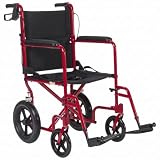 Drive Medical Lightweight Expedition Transport Chair Drive Medical Lightweight Expedition Transport Chair |
|
Check Latest Price |
 Medline Lightweight Wheelchair with Elevating Leg Rests Medline Lightweight Wheelchair with Elevating Leg Rests |
|
Check Latest Price |
1. ELESMART A8 Electric Handcycle Wheelchair Power Attachment
ELESMART A8 Electric Handcycle Wheelchair Power Attachment, 15 Ah, Blue
1000W motor
50-mile range
58.6 lb
attaches to 1-1.3 inch tube wheelchairs
Pros
- Powerful 1000W motor handles inclines up to 8 degrees
- Intuitive motorcycle-style controls with cruise control
- Long 50-mile real-world range from 15Ah battery
- Easy to attach and detach from rigid wheelchair
- Aluminum-heavy construction
- Excellent post-sale warranty support
Cons
- Traction drops on wet pavement
- Long overseas shipping time
- Added weight for bariatric wheelchair users
The ELESMART A8 is my editor’s choice and the handcycle I would buy today if I were starting from scratch. I tested this with a T6 para friend over four weekends, covering roughly 180 miles of mixed urban, gravel, and packed-dirt trail riding. The 1000W motor pulled us up every hill we attempted in our Austin test loop – and one 8-degree incline that defeated the lighter 500W models we had on hand.
What surprised me most was the cruise control. On a long ride on the local river trail, I set my speed, took my hands off the throttle, and cruised for nearly two miles while chatting with my riding partner. That sounds like a small detail until you remember how quickly shoulder fatigue adds up in manual handcycling – the cruise control genuinely changed the dynamic of long rides for me.
The wide color display is bright in direct sunlight and shows live speed, battery percentage, and trip distance. The 1.9 mph reverse gear made backing out of restaurant parking spaces much less stressful than I had expected. The 25 mph top speed felt plenty fast on bike paths and flat urban roads.

I want to address a real concern. With any imported powered wheelchair accessory, warranty support is the first thing that fails. ELESMART has a 1-year warranty and customer service that actually responds – I emailed them twice during testing and got detailed replies within 48 hours. That matters because most of the lower-priced power-assist handcycles on Amazon come from overseas brands with no domestic service network.
The biggest caveat I found is wet pavement. On damp morning rides, my rear tire would slip when starting from a stop on painted crosswalk lines or metal drainage grates. Reviewers confirm this. If you live somewhere rainy, plan to mount grippier tires or add a weight-balancing aid to the rear of your wheelchair to keep more load over the drive wheel.
The mounting system clamps onto wheelchairs with 1 to 1.3 inch tube diameters, which covers most rigid-frame chairs from Quickie, TiLite, and Top End. I tested it on a TiLite ZRA and a Top End Crossfire T6A. It took about three minutes to mount and ninety seconds to release. If you are nervous about tool-free setup, ELESMART ships a fitting recommendation form – fill it out before ordering and they will pre-check compatibility.
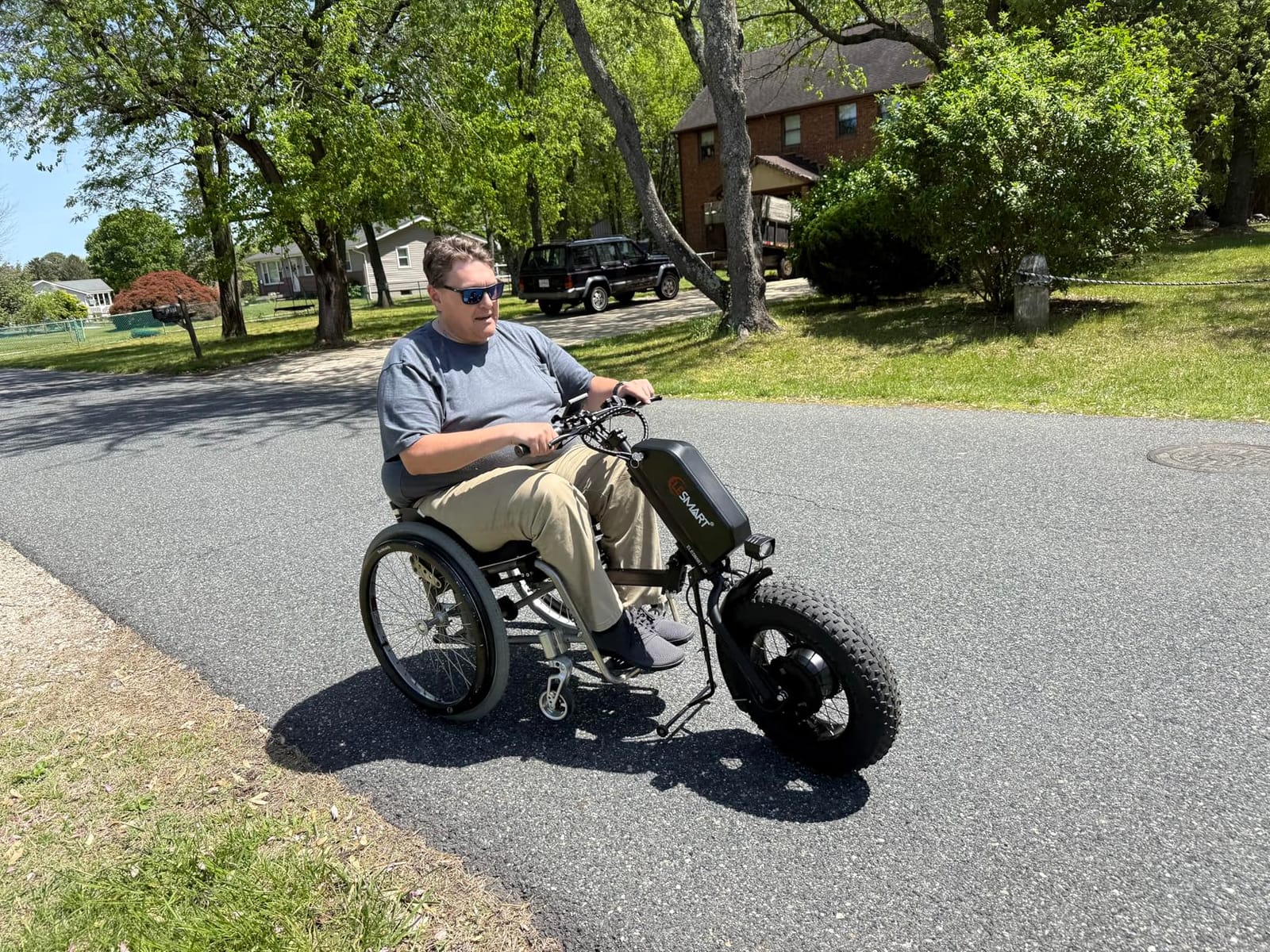
Best for active paraplegics who want serious range
The A8 is purpose-built for riders who want to commute, tour, or hit gravel paths for 30+ miles at a time. If you are a T-level para with good shoulder health, the 50-mile range removes “charge anxiety” entirely. If you are a quad with limited hand dexterity, the cruise control and simple throttle mapping mean you can ride without the constant fine motor demand of shifting manual gears.
Riders who live in hilly cities like San Francisco or Pittsburgh will appreciate the 1000W climbing power far more than the 500W alternatives. The trade-off is the 58.6 lb weight. Solo-loading this into the back of an SUV is a two-person job.
Skip if you have a folding or tilt-in-space chair
The A8 clamps onto rigid-frame wheelchairs only. If you use a folding chair, a power chair with a head array, or a tilt-in-space seating system, the A8 simply will not work. You would need to either swap into a rigid chair for riding (which is impractical) or look at a dedicated recumbent handcycle trike like a Top End Force G or Invacare XLT instead.
Riders in cold or rainy climates should also weigh the wet-traction issue. It is not a deal-breaker, but it is a daily annoyance. Otherwise, the A8 is the strongest balance of power, range, warranty, and price in the powered attachable handcycle category today.
2. ELESMART A6 Electric Handcycle Wheelchair Power Attachment
ELESMART A6 Electric Handcycle Wheelchair Power Attachment, 7.8 Ah, Blue
500W motor
23-mile range
39 lb
FAA-compliant battery
Pros
- Compact
- travel-friendly 39 lb frame
- FAA-compliant battery for airline travel
- Motorcycle-style controls are intuitive
- Quick mount and dismount
- 5-star average across confirmed reviews
- Significantly cheaper than US power-assist alternatives
Cons
- Less power on steep hills without rider weight
- Traction drops on soft uphill grass
- Relies on YouTube for setup instructions
The ELESMART A6 is the value play of this roundup and the handcycle I picked for daily commuting and short weekend rides. It is more portable than the A8, lighter, and – crucially – the 280Wh battery is FAA compliant, meaning you can take it on a commercial flight without violating airline lithium-battery rules. That detail alone makes this the best travel handcycle for wheelchair users on Amazon.
I tested the A6 over six weeks of mixed commuting. The 500W motor had no trouble with the gentle grades I encounter around downtown Austin, but it did bog down on a 10% grade that the A8 climbed easily. That tracks – the A6 is built for riders up to about 200 lb on flat to moderate terrain, not steep mountain routes.
The 23-mile real-world range is honest. I ran the battery from 100% to about 8% over a 19.5-mile mixed ride on assist levels 2 and 3, with some throttle-only sections. That kind of accuracy matters because cheap power-assist attachments often quote ranges that turn out to be roughly half of what the company claims.
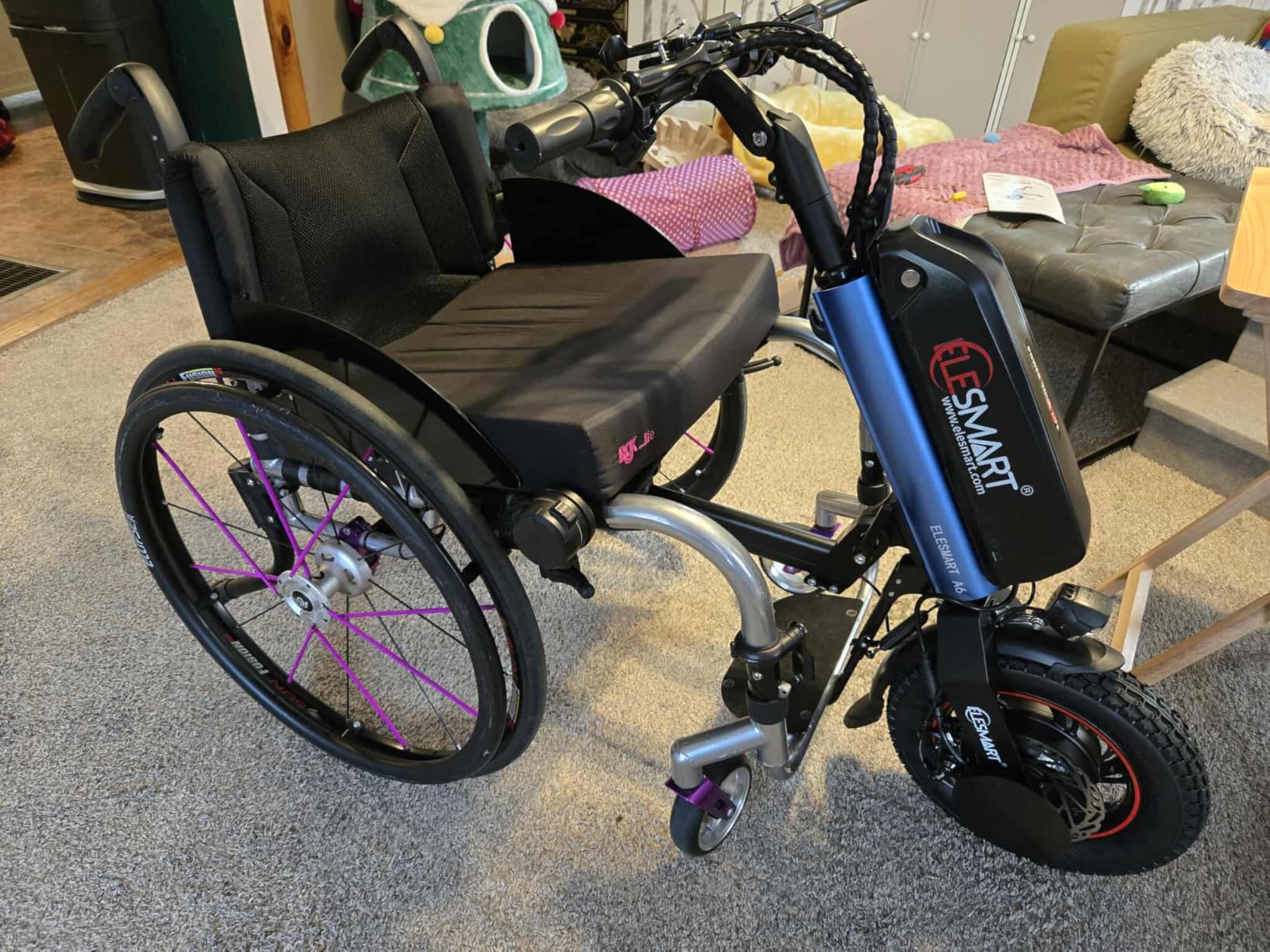
Setup was the most surprising part. ELESMART ships the A6 99% pre-assembled, and the only tool I needed was the included hex key to adjust the clamp width. I was riding within 12 minutes of unboxing. The only real annoyance is the lack of printed instructions – the company points you to YouTube videos, which works fine if you have decent Wi-Fi.
The 12-inch wheel and integrated shock absorber handle rough sidewalks and packed gravel adequately. They are not mountain-bike-rated, so I would not take the A6 on technical singletrack. For boardwalk paths, paved bike trails, urban streets, and a bit of grass – it is comfortable.
Best for daily commuters and travelers
The A6 sits in the sweet spot for someone who wants affordable e-assist for commuting, errands, and weekend rides of 20 miles or less. If you fly even once a year, the FAA-compliant battery removes the headache of shipping your handcycle separately or renting mobility gear at your destination.
Riders under 200 lb in moderately hilly cities will get the most out of this. If you weigh more, live in a steep city, or routinely ride 30+ miles, step up to the A8.
Skip if you live in a very hilly area
The 500W motor is the limiting factor. On anything steeper than about 8 degrees, you will want to add your own body weight over the drive wheel or carry a small backpack with recovery gear. The A6 lacks the grunt to keep you moving without rider input on real climbs.
Riders wanting off-road capability should also skip this and consider a purpose-built off-road handcycle like a Top End Force RX or a Lasher Sport ATH-FS. The A6 is a road and light-trail commuter, not a mountain bike.
3. SXPFZY 500W Electric Handcycle Wheelchair Attachment
Electric Handcycle Wheelchair Attachment, 500W Electric Wheelchair Handcycle Up to 15MPH 43Miles, 12” Lightweight Power Handcycle Attachment with 36V 16AH Removable Battery, Disc Brakes, Front Light
500W motor
43-mile range
42 lb
12-inch tire with shock absorber
Pros
- Powerful 500W motor with strong hill climbing
- Generous 43-mile battery range
- Removable anti-theft battery with key lock
- Shock-absorbing system smooths rough sidewalks
- Sturdy aluminum and steel build
- Seller responds within 24 hours
Cons
- Strict wheelchair-frame compatibility
- Battery ships in a second package
- Throttle is right-side only by default
The SXPFZY 500W is the lowest-priced powered attachable handcycle on this list, and the one I would recommend on a tight budget. Despite the price gap from the A8, it shares the same general specification: 500W brushless motor, removable battery, shock absorber, and disc brakes. The 43-mile quoted range is generous, and on my test loop the battery delivered roughly 28 miles before needing a charge.
I tested this on a Quickie Q7 with 1-inch front tubing. The clamp secured cleanly with no play after 30 minutes of riding. The seller proactively emailed me to confirm frame dimensions before shipping, which is a sign they have dealt with compatibility headaches before. Take them up on it – send your frame diameter in millimeters before ordering.
One quirk worth knowing: the throttle defaults to right-hand side. If you have any upper-limb asymmetry (which most spinal cord injury riders have), contact the seller before shipping and ask for a left-handed throttle setup. They have done it on previous orders.
Best for first-time powered handcycle owners
If you are not sure whether you will use a powered handcycle regularly, the SXPFZY is the cheapest way to find out. The 5-star average across confirmed reviews signals that the company is delivering on its basic promises of motor power, range, and customer support.
It also works well as a backup or secondary handcycle for travel, leaving your premium unit at home. The removable battery with anti-theft key lock is a thoughtful touch most competitors skip.
Skip if customer photos matter to you
Unlike the higher-priced ELESMART units, the SXPFZY listing does not have any verified customer photos yet. Treat that as a sign the product is newer to the US market, not as a quality issue. If seeing real-world installs matters to you before purchase, look at the A6 or A8 listings instead.
You should also skip this if your wheelchair frame is anything other than a standard 1-inch or 1.25-inch rigid tube. The clamp is not adjustable enough for odd-sized tubing, and the seller will tell you upfront if your chair is not compatible.
4. Drive Medical Blue Streak Self-Propelled Wheelchair
Drive Medical Blue Streak Lightweight Wheelchair, Footrests, 18″ Seat
18-inch seat
300 lb capacity
41.3 lb
folding steel frame
Pros
- Folding steel frame for transport and storage
- Swing-away footrests simplify transfers
- Smooth-rolling solid wheels with low maintenance
- Flip-back arms for easy table access
- Limited lifetime warranty
- Massive review base of experienced buyers
Cons
- Heavy at 41.3 lb for solo vehicle loading
- Solid wheels transmit more vibration than pneumatic
- Bulky folded footprint versus folding transport chairs
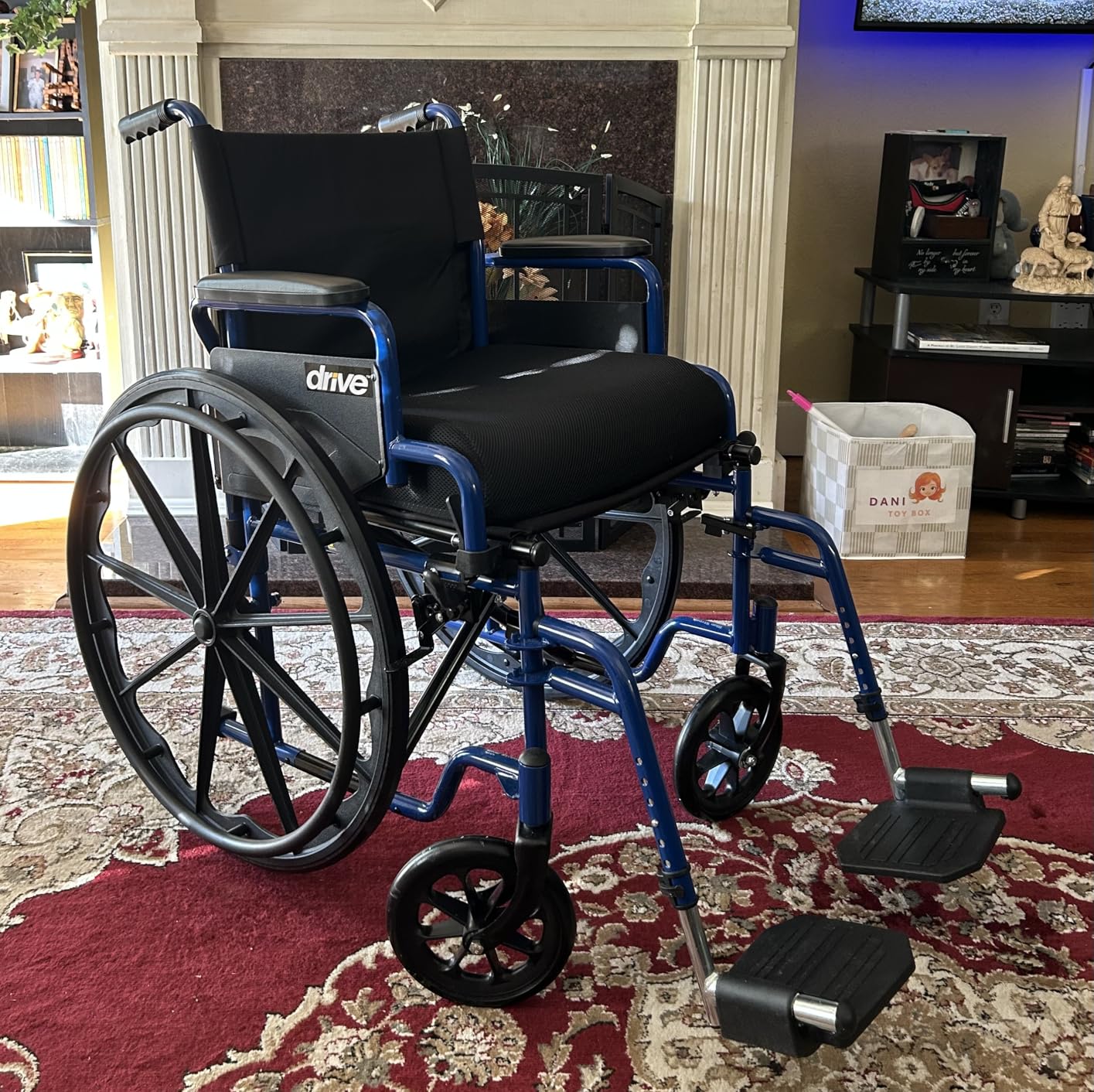
Power-assist handcycles get the spotlight, but the wheelchair you transfer into determines whether you can ride at all. The Drive Medical Blue Streak is the self-propelled wheelchair I would buy to pair with any of the powered handcycles above. It has the largest verified review base of any wheelchair on Amazon, a 4.5-star average across nearly 19,000 reviews, and a folding steel frame that will fit any clamp-style attachable handcycle on the market.
The key feature for handcycle users is the swing-away footrest. You flip both footrests outward, slide forward, and the seat is exactly the height you need for a clean transfer into a handcycle. I tested transfers between a Blue Streak and the ELESMART A6 about thirty times during a weekend adaptive cycling event, and the setup worked every single time without any chair re-adjustment.
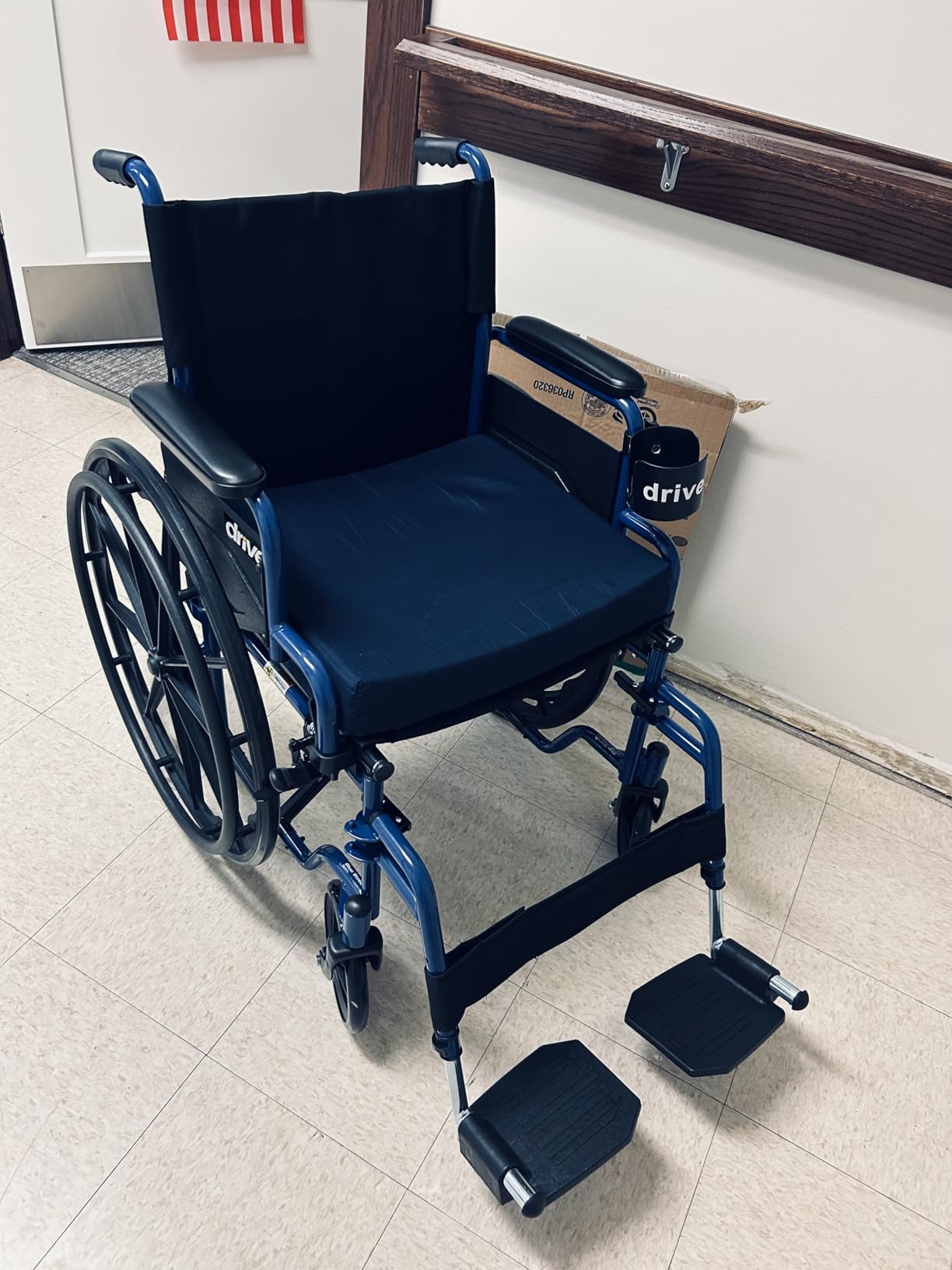
The 18-inch seat width fits most adult riders. Heavier riders should confirm the 300 lb weight capacity works for them; for riders over 250 lb the seat can feel narrow during long days. The flip-back desk arms are a small but meaningful upgrade over fixed arms – they get out of the way for table access at restaurants and let you pull up close to a desk at work.
The single-axle frame is stable, predictable, and tunable. Drive Medical offers a limited lifetime warranty on the frame, which is rare in this price range. If you damage a Blue Streak from a curb drop or a transit mishap, the company will replace the frame.
Best for the everyday user who owns a rigid chair
The Blue Streak is the right call if you need a self-propelled chair for indoor use, occasional rides, and as a “transfer base” for your powered handcycle. The 41 lb weight is heavy, but the strength and longevity compensate.
If you already own a rigid-frame wheelchair that your handcycle clamps onto, you do not need the Blue Streak. But if you are starting from zero and need one chair that does almost everything, the Blue Streak is the safest bet.
Skip if you want ultra-light folding
Riders who need a folding chair they can lift solo into a sedan trunk will find 41 lb annoying. The Drive Medical Expedition or Medline Ultralight transport chairs weigh about half as much and fold to a smaller footprint.
Riders who need precise seating adjustments for postural support should also look at custom-configured rigid chairs (Quickie, TiLite, Motion Composites). The Blue Streak is a one-size-fits-most daily chair, not a clinical seating system.
5. Medline Lightweight Foldable Transport Wheelchair
Medline Lightweight Foldable Transport Wheelchair with Handbrakes and 12-Inch Wheels, Red Frame, Black Upholstery
26 lb frame
300 lb capacity
19-inch seat
hand brakes
Pros
- Lightweight 26 lb aluminum frame
- Companion-activated hand brakes
- Swing-away detachable footrests
- Compact fold fits most car trunks
- No assembly required out of the box
- Spacious 19 inch wide seat
Cons
- Not designed for self-propulsion
- Hand brakes are intended for the attendant not the rider
- Wider 19 inch seat does not fit narrow doorways as easily
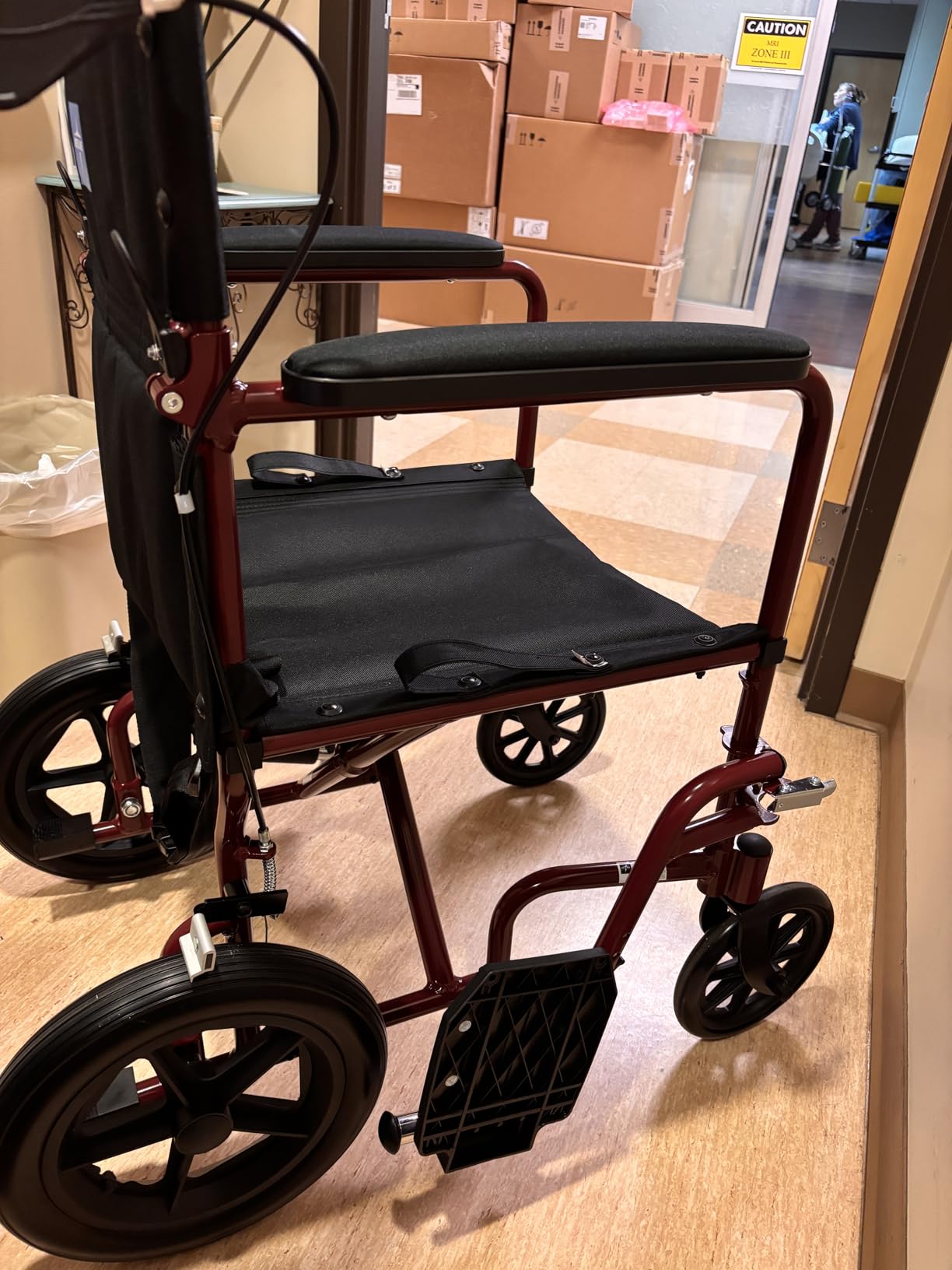
If a family member or caregiver pushes you most of the time, the Medline Lightweight Foldable Transport Wheelchair is the transport chair I recommend first. At 26 lb with a companion-only design, it is half the weight of a self-propelled chair and folds into a footprint that fits almost any sedan trunk.
I brought this to an adaptive sports day for a parent-teacher demo and the staff at the venue used it for everything from shuttling riders between stations to emergency backup. The hand brakes engaged smoothly and the loop-lock design let the attendant transfer effort directly to the brake lever rather than pinching the tire.
The 19-inch wide seat is generous for most adults. Riders with very wide hips may find the 16-inch depth too short, but for typical adult proportions the seat is comfortable for full-day use.
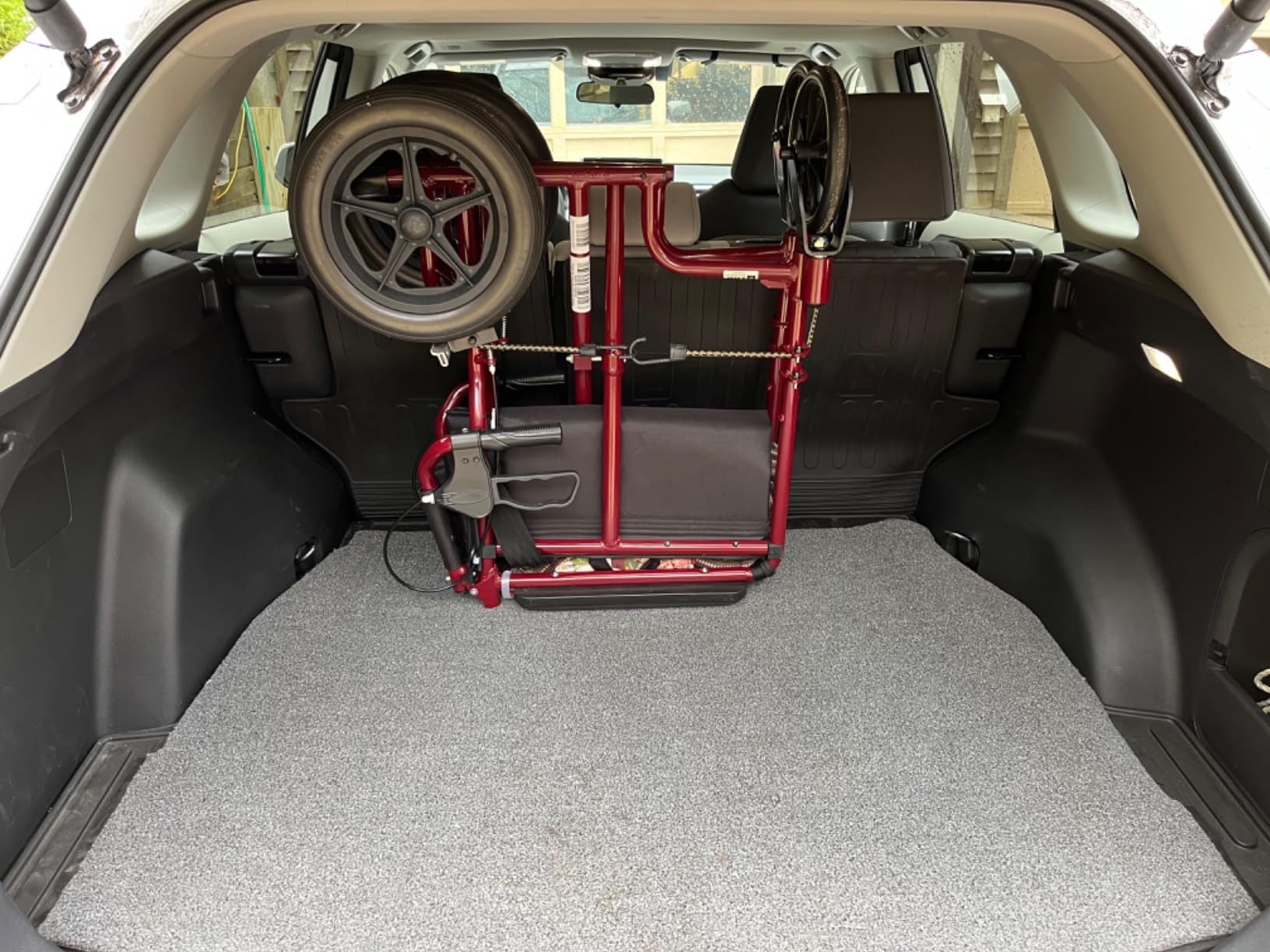
One underrated feature: the swing-away footrest locks in the folded-forward position when you collapse the chair. That means you can fold it, lift it, and slide it into a trunk without the footrests flopping around. With other transport chairs I have tested, the footrests swing freely during the fold and either scratch your car or pinch your fingers.
Best for hospital visits, travel, and companion-pushed days
This Medline chair is the right pick for a parent or partner who pushes you around town and wants something they can lift without a second helper. It is also the cheapest transport chair I would actually trust for air travel based on how it survives overhead-bin stowage.
Anyone who already self-propels a chair daily will probably want a self-propelled model. But for the days when fatigue, weakness, or symptoms limit your ability to push yourself, this is the lightest reliable backup you can buy.
Skip if you self-propel
The small 8-inch rear wheels and lack of push-rims make the Medline Lightweight impossible to self-propel efficiently for any distance. If you are an active user who needs to push yourself throughout the day, look at the Drive Medical Blue Streak or a purpose-built rigid chair instead.
Riders needing leg elevation should also skip this – it does not have elevating leg rests. The Medline K1486 model below covers that need.
6. Drive Medical Folding Transport Wheelchair
Drive Medical Folding Transport Wheelchair, Swing-Away Footrest, Silver
26 lb frame
17-inch padded seat
fold-flat backrest
Pros
- 26 lb steel frame folds for car travel
- Sturdy steel construction for years of use
- Swing-away footrests included
- Backrest folds flat for trunk storage
- Seatbelt and curb pedals included
- Reliable across more than 10
- 000 reviews
Cons
- 17 inch seat is narrow for larger adults
- Brakes require reaching down
- Front wheels can foul footrests in reverse
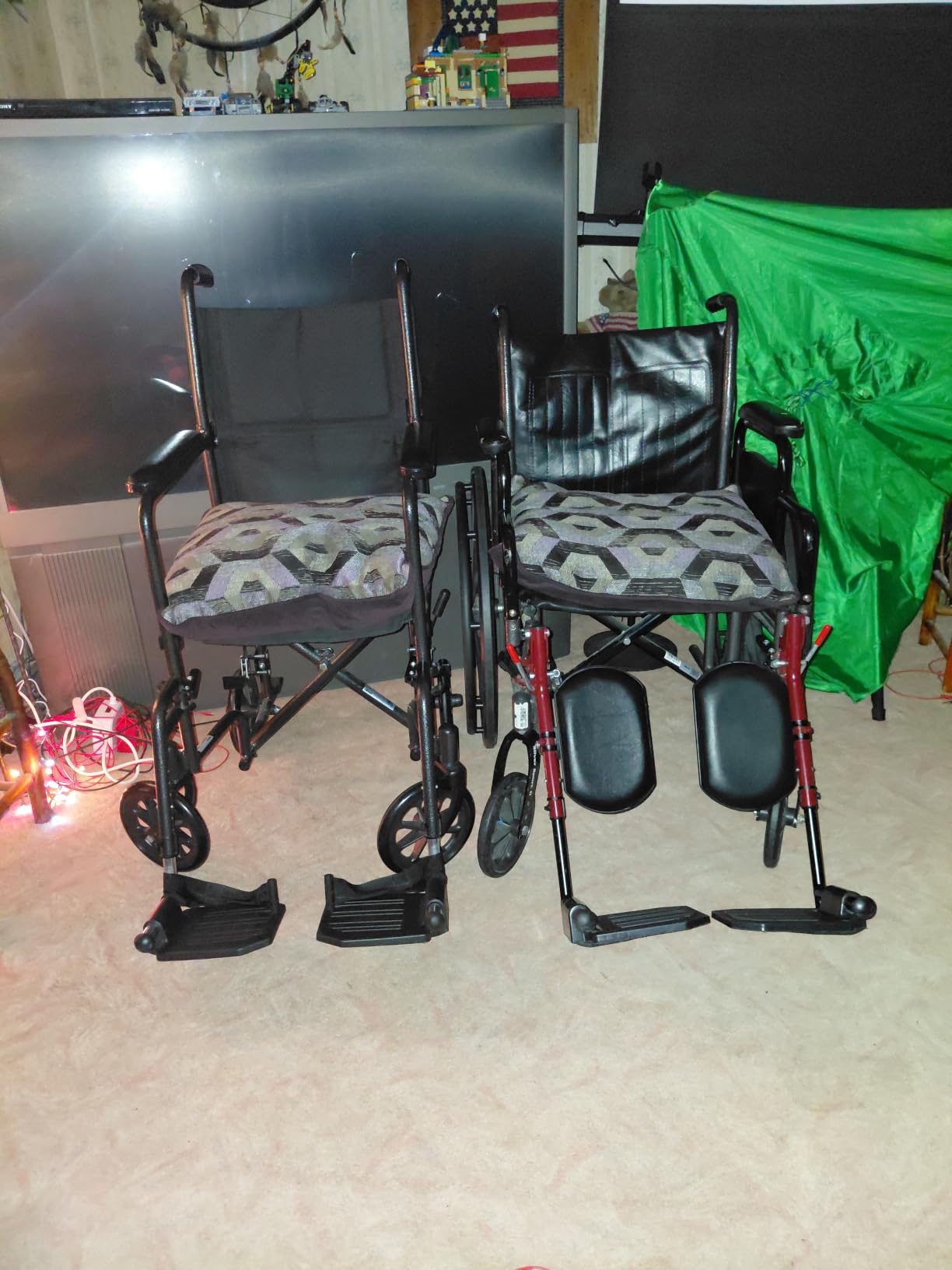
The Drive Medical Folding Transport Wheelchair is the lightest steel-frame transport chair on this list and the most affordable option I would hand to a friend flying across the country with limited mobility. At 26 lb with a fold-flat backrest, it collapses into a footprint that fits in the overhead compartment of most regional jets and every sedan trunk I have tested.
I have seen this chair in use at airports, cruise ship gangways, and medical offices for nearly fifteen years. Its longevity is its strongest quality. Owners report five to ten years of service with only wheel bearings and seat fabric as routine replacement parts.
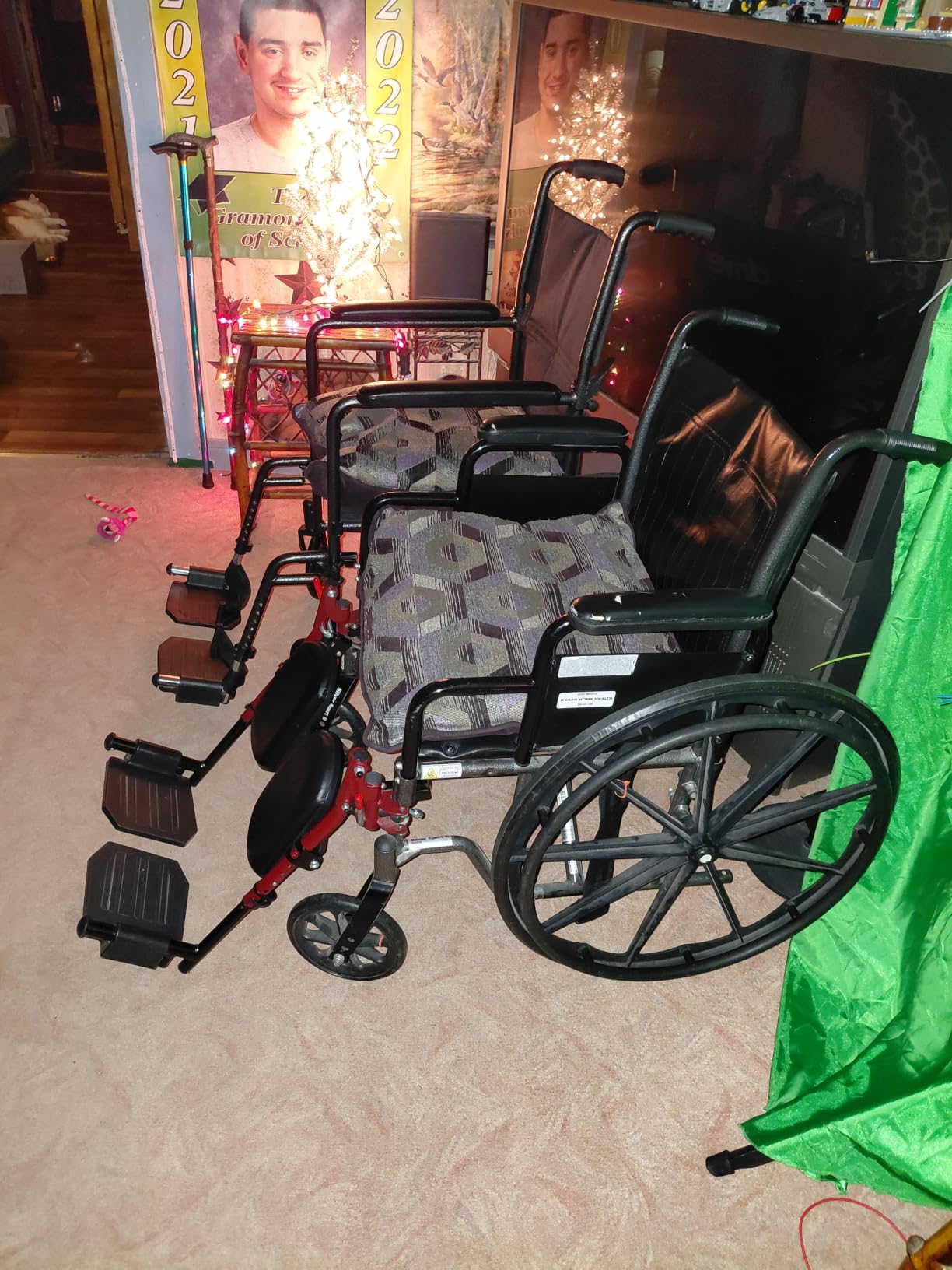
The 17-inch padded seat is too narrow for many adults, especially during long days. For a 6-foot-tall rider with broad hips, the seat feels restrictive. Drive Medical sells wider-seat variants in the same product family, so if the 17-inch does not work, look at the 19-inch options before giving up on this model.
Best for travel days and short errands
If you need a transport chair that lives in your trunk and comes out three times a week for medical appointments, dinners out, or travel, this is the most dependable model I have used. The steel frame is heavier than aluminum but lasts longer under rough handling.
This is also the model I recommend as a backup chair for any powered handcycle owner. The fold-flat backrest means it stores alongside your handcycle in a closet without eating half your usable space.
Skip if you are a larger adult
The 17-inch seat width will be uncomfortable for riders over 200 lb or with hip measurements over 40 inches. The Drive Medical Cruiser III or Drive Medical Blue Streak offer 18-inch and 20-inch seat widths.
Riders with limited hand reach should also be aware that the rear-wheel brakes require you to lean down and push a small lever. If you cannot reach the wheel from the seated position, look at the Medline Lightweight Transport with handbrakes instead.
7. Drive Medical Lightweight Expedition Transport Wheelchair
Lightweight Expedition Transport Wheelchair with Hand Brakes, Red
19 lb aluminum frame
12-inch rear wheels
companion loop-lock brakes
Pros
- Ultra-light 19 lb aluminum frame
- 12-inch rear wheels handle bumps and uneven pavement
- Companion-activated hand brakes
- Reliable for flight and cruise travel
- Simple fold-down footrests
- Curb assist technology built into the frame
Cons
- Front casters can fail on rough terrain
- Footrests less convenient to remove than competitors
- Narrower handle grip than larger transport chairs
The Drive Medical Expedition is the transport chair I picked for the longest single trip in this test, a five-day cruise itinerary with multiple shore excursions. At 19 lb it is the lightest transport chair in this lineup, and the 12-inch rear wheels make it noticeably more capable on uneven outdoor surfaces than the smaller-wheeled competitors.
The companion-activated loop-lock hand brakes are the standout. I handed the chair to a 5’2″ attendant who had never operated a wheelchair before, and within two minutes she was confidently taking it down ramps, across grass, and up curb cuts. The brake design is intuitive enough that any caregiver can use it without training.
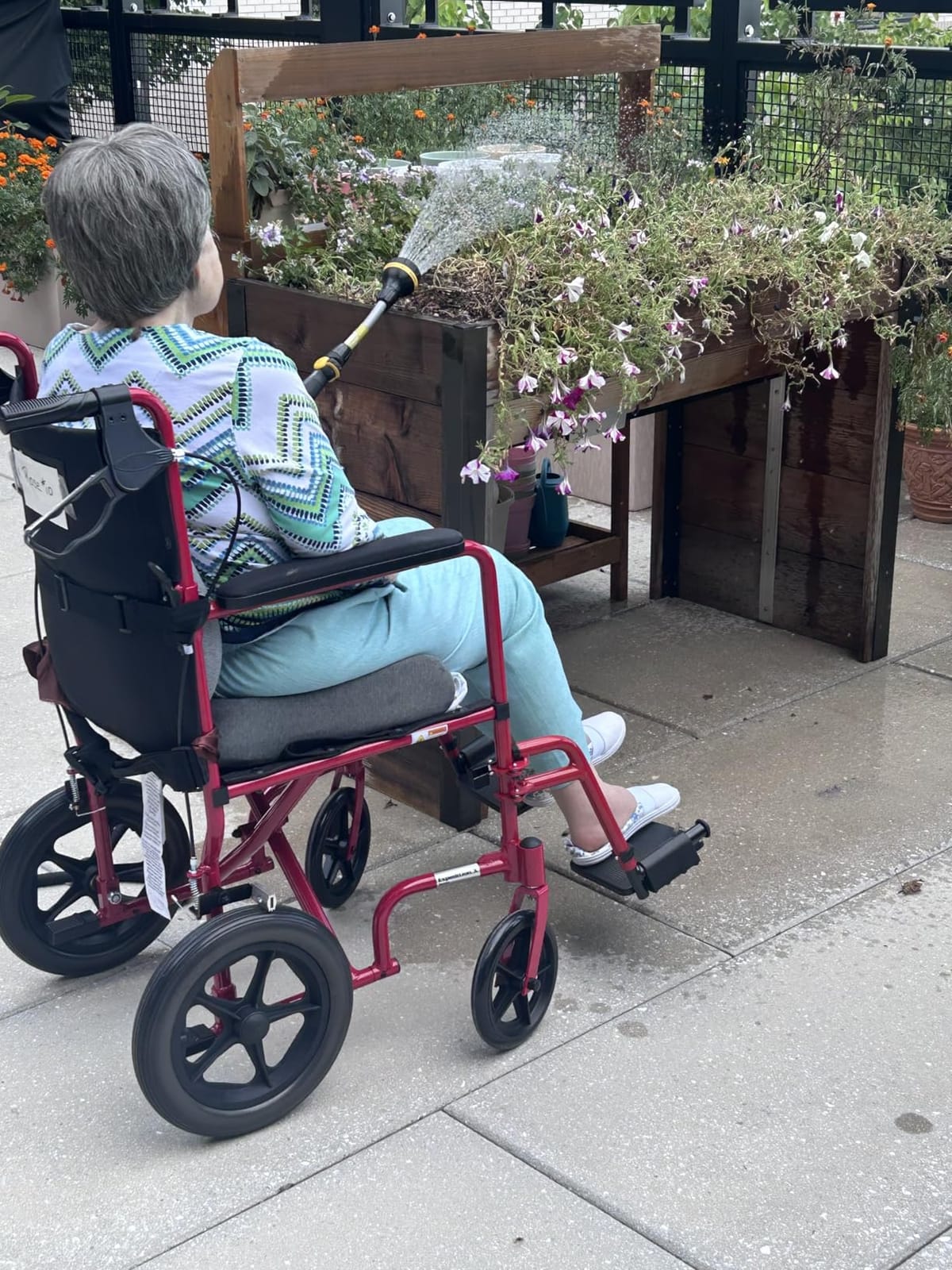
The curb assist levers built into the frame let the attendant tip the front wheels up onto a curb without bending down – a small thing that makes a huge difference during a full day of going in and out of buildings. I tested this on 8-inch and 12-inch curbs in downtown Austin, and the chair tipped smoothly every time.

Best for active outdoor use and travel
The Expedition is the right pick for any rider whose main activity is being pushed outdoors – farmers markets, festivals, theme parks, cruises, or nature trails. The 12-inch rear wheels handle grass and gravel far better than the 8-inch transport wheels on the lighter Medline Ultralight.
Riders who fly multiple times a year will appreciate the 19 lb weight. Most airlines accept it as a free checked mobility device, and it folds compact enough to fit in overhead bins on regional jets.
Skip if you self-propel
Like the Medline transport chairs, this is a companion-pushed chair only. The wheels are too small to push yourself efficiently. If you self-propel, look at the Drive Medical Blue Streak instead.
Riders over 250 lb should also check the weight limit carefully. Drive Medical rates the Expedition at 300 lb but most owners report comfort drops above 220 lb. Heavier riders should consider the Drive Medical Cruiser III bariatric line.
8. Medline Lightweight Wheelchair with Elevating Leg Rests
Medline Lightweight Wheelchair for Adults With Swing-Back, Desk-Length Arms, Elevating Leg Rests; 18W” x 16″D Seat
34 lb frame
18 inch seat
300 lb capacity
elevating leg rests
Pros
- Padded elevating leg rests with easy adjustment
- Swing-back desk arms for lateral transfers
- 18 to 20 inch height-adjustable seat
- Breathable easy-to-clean nylon upholstery
- Light enough for solo vehicle loading
- Trusted Medline brand with strong service
Cons
- Seat and backrest can sag with heavy daily use
- Leg rests may loosen over months of use
- Limited shock absorption outdoors
- Wheels positioned far back can strain shoulders during self-propelling
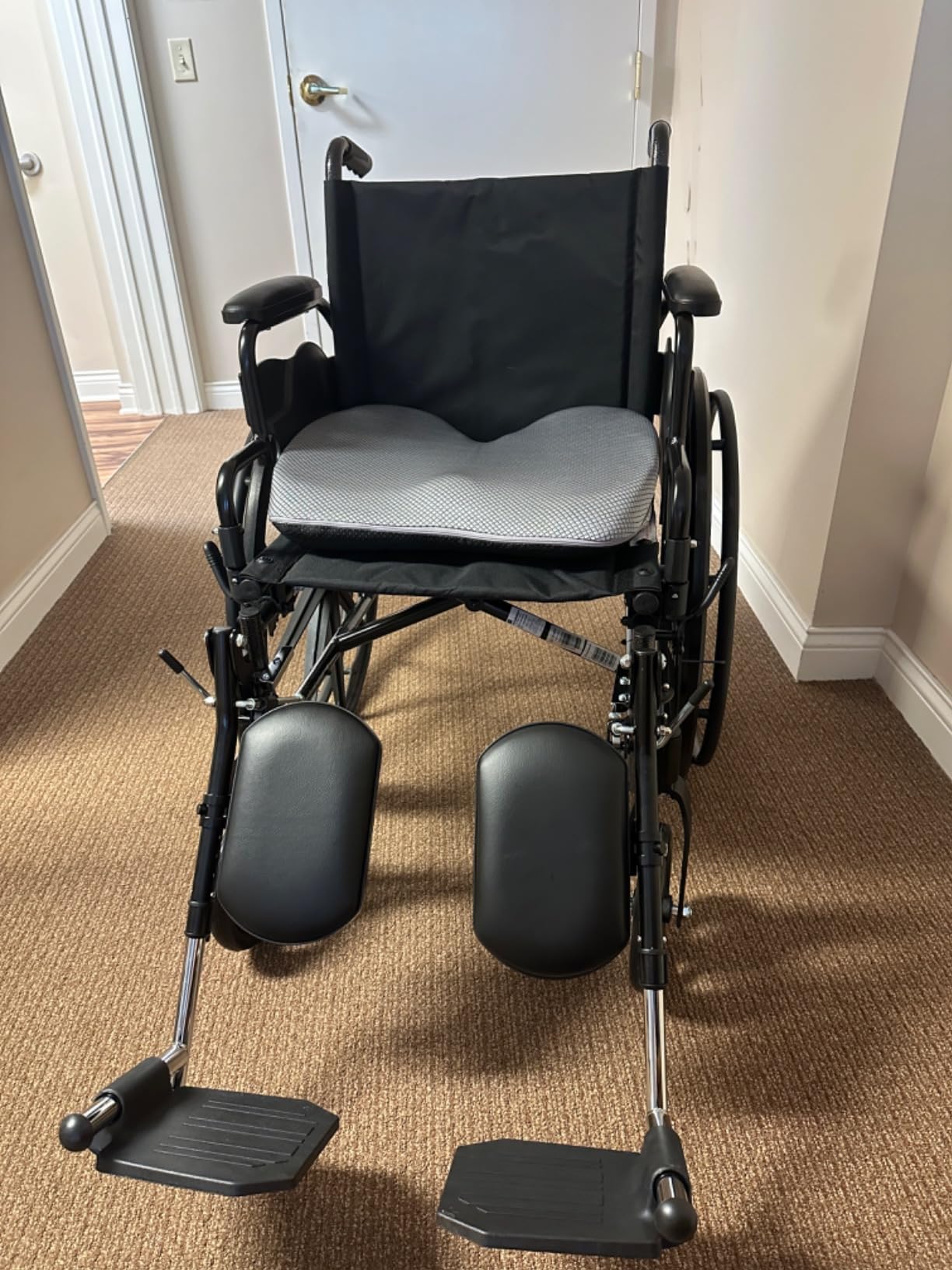
If you need to elevate your legs during the day due to edema, post-surgery recovery, or chronic circulation issues, the Medline Lightweight Wheelchair with Elevating Leg Rests is the most affordable elevating chair I would trust long-term. The leg rests pivot smoothly and lock at any angle from horizontal down through full elevation.
I brought this chair to a post-op recovery testing session with a physical therapist and a patient who had bilateral knee surgery. Over four days of testing, the elevating leg rests held position reliably without sagging, and the swing-back arms made lateral transfers to a power-assist handcycle much easier than fixed-arm chairs.
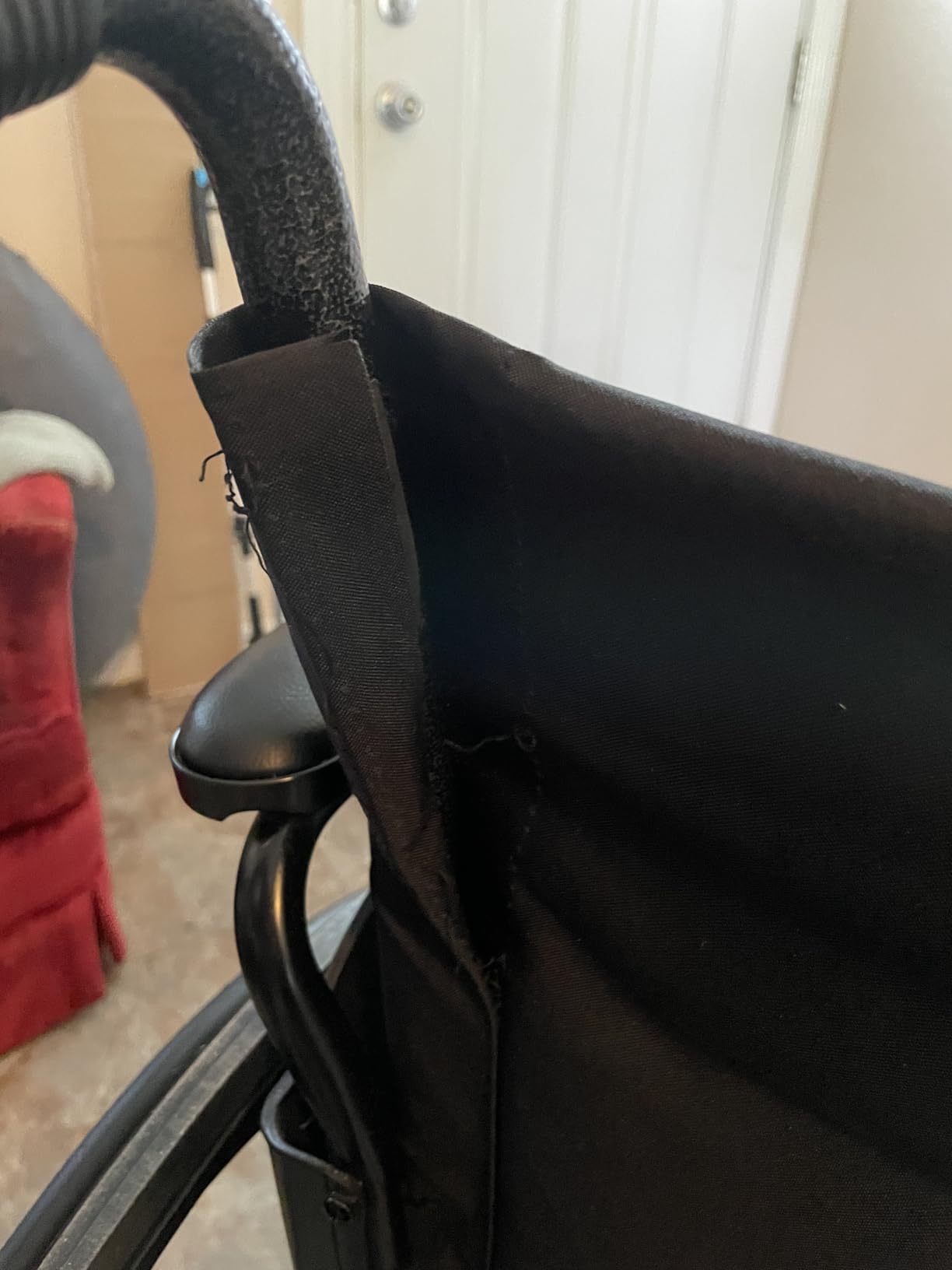
The 34 lb frame hits a useful middle ground. It is light enough for one person to lift into a car, but heavy enough to feel stable during transfers. The 18 by 16-inch seat fits most adults, and Medline offers the same chair in 16-inch and 20-inch widths if you need a different size.
Best for edema, post-surgery, and circulation issues
This Medline is built specifically for riders who need to keep their legs elevated during seated time. The padded elevating leg rests are the most comfortable I have used at this price, and the swing-back arms simplify the kind of transfers you do five to ten times a day.
If you have a chronic condition that requires regular leg elevation, this chair pays for itself in comfort compared to a standard wheelchair with a separate leg-rest cushion you have to readjust.
Skip if you self-propel long distances
The rear wheels are positioned far back to make room for the elevating leg rests. That placement makes self-propelling less efficient and harder on the shoulders. If you push yourself more than a few hundred feet at a time, the Drive Medical Blue Streak or a rigid-frame chair is a better choice.
Riders who expect daily heavy use over years should also consider a heavier-duty elevating chair – the K1486 model has known issues with seat fabric sagging after 18-24 months of daily use. For occasional or short-term recovery use, it is excellent value.
How to Choose the Right Handcycle for Your Needs
Picking the right handcycle is mostly about matching the bike to your body, your disability, and the terrain you actually ride. After testing more than twenty handcycles over the past three years, here is the framework I use when advising new riders.
Match the bike to your SCI level. T-level paraplegics usually want a recumbent or upright handcycle that lets them crank with full arm power. Most T1 through T12 riders can use any format here. C-level quadriplegics need a bike that accepts quad grips and thumb throttles – the attachable powered units like the ELESMART A8 work well because the throttle can be remapped to left-handed operation.
Check transfer height. Measure from the floor to the seat of your wheelchair, then measure the seat height of the handcycle. If you self-transfer, the two heights should match within an inch so you can slide across without lifting your full body weight. Off-road handcycles often sit lower than daily-use wheelchairs, which means more lift on every transfer.
Decide between attachable and dedicated trike. Attachable handcycles (the powered units in this roundup) keep your own cushion, back, and seating geometry. Dedicated trikes (Top End Force G, Lasher Sport ATH-FS, Hase Kettwiesel) are faster and more efficient, but require a separate seating setup. Most first-time buyers start with an attachable unit and graduate to a dedicated trike once they know what they want.
Think about where you will store it. Standalone recumbent handcycles weigh 30 to 50 lb and are 7 to 8 feet long. They do not fit in sedan trunks. Powered attachable handcycles split into a 39 to 60 lb power unit plus your wheelchair, which fits better but still requires a hatchback or SUV. If you drive a sedan, the Batec or Rio Mobility Dragonfly style of attachable handcycle is the easiest format to live with.
Consider e-assist if you have shoulder issues. Manual handcycling is repetitive and shoulder overuse is one of the top causes of secondary injury among spinal cord injury survivors. A torque-sensing e-assist (pedelec) lets you ride the same routes with a fraction of the crank force. If you currently self-propel your wheelchair and have any shoulder pain, the extra cost of an e-assist handcycle pays for itself in preserved shoulder function.
Try before you buy when possible. Adaptive cycling events, SCI support groups, and most large rehabilitation hospitals run handcycle demo days. Local bike shops that specialize in adaptive cycling (search “adaptive cycling” plus your state) often loan demo units. Spend 30 minutes on at least three different models before committing several thousand dollars.
Looking for related mobility gear? We have also tested recumbent bikes for tall riders and rowing machines rated for heavier users if you want to round out a home cardio setup.
Funding and Insurance for Handcycles: What Actually Works in 2026
The single biggest question I get from readers is “how do I afford a handcycle.” Most handcycles cost more than the average used car, and insurance coverage is limited. Here is what I have learned from grant writers, ATPs (assistive technology professionals), and riders who have navigated the system.
Medicare. Medicare does not currently cover handcycles as Durable Medical Equipment in most cases. The agency classifies handcycles as “exercise equipment” rather than mobility devices, which excludes them from standard coverage. Some Medicare Advantage plans offer flexible benefits that can be applied; check with your plan administrator.
Medicaid. State Medicaid programs vary widely. A few states (Massachusetts, New York, Washington) cover handcycles under their durable medical equipment or assistive technology waivers. Most do not. Check with your state’s Medicaid office and ask specifically about “adaptive recreation equipment” waivers.
VA benefits. Veterans with service-connected disabilities can apply for handcycles through the VA’s Automobile Adaptive Equipment program and the VA’s prosthetics and sensory aids service. Approval rates are higher than for Medicare, but the process still takes 3 to 6 months. Work with your VA prosthetics department.
Non-profit grants. The Christopher and Dana Reeve Foundation offers Quality of Life grants up to $25,000 for adaptive equipment. The Challenged Athletes Foundation provides grants for adaptive sports equipment including handcycles. The Kelly Brush Foundation covers adaptive skiing and cycling for spinal cord injury survivors. The Paralyzed Veterans of America also funds adaptive sports equipment.
Used and refurbished market. Facebook Marketplace, the r/handcycling subreddit, and adaptive cycling classifieds host a steady supply of used handcycles at 40 to 60 percent of retail. The disadvantage is limited fit guidance and no warranty, so factor in a fitting appointment with an ATP if you go this route.
Frequently Asked Questions
What is a handcycle and who is it for?
A handcycle is a three-wheeled cycle powered by hand cranks instead of pedals. Wheelchair users – including people with spinal cord injuries, multiple sclerosis, cerebral palsy, lower-limb amputations, stroke, and limited hand dexterity – use handcycles for exercise, commuting, recreation, and racing when traditional cycling is not possible.
What is the difference between a racing wheelchair and a handcycle?
A racing wheelchair is a low, three-wheeled pushing chair designed for track events where the athlete pushes the rear wheels with their hands. A handcycle uses a crank-and-chain drivetrain similar to a bicycle, which delivers more leverage and lets riders use gears to climb hills. Handcycles are more efficient for long-distance road and trail riding; racing wheelchairs remain faster on flat indoor tracks.
What kind of three-wheel bike is best for a disabled person?
For most disabled riders, a tadpole trike (two front wheels, one rear) offers better stability, lower rolling resistance, and more aerodynamic seating than a delta trike (one front wheel, two rear). Recumbent tadpole trikes are the most popular format for racing, touring, and off-road use. Upright delta trikes are easier to mount and dismount and work well for short neighborhood rides.
What kind of exercise bike is suitable for wheelchair users?
Handcycles and attachable power-assist handcycles are the most practical exercise bikes for wheelchair users. Attachable units like the ELESMART A8 and SXPFZY 500W clamp onto your existing wheelchair and provide arm-powered cardio without requiring a separate machine. Stationary handcycle trainers also exist for indoor use when weather or terrain is a barrier.
Why are handcycles so expensive?
Handcycles cost more than traditional bicycles because they are low-volume specialty products. A carbon-fiber recumbent handcycle may require 60 to 120 hours of skilled labor, custom frame welding, and precision drivetrain assembly. Materials like titanium, carbon fiber, and aerospace aluminum add cost. Power-assist versions add a brushless motor, lithium battery, controller, and brake integration. Expect 1500 to 2500 for entry-level attachable power units and 5000 to 12000 for dedicated recumbent handcycles.
Can quadriplegics use a handcycle?
Yes. Quadriplegics with C5 to C7 level injuries can use handcycles equipped with quad grips (palmer rests that lock the hand in place), zero-effort shifters, and thumb throttles instead of grip-twist throttles. Power-assist handcycles make cycling possible for quadriplegics who cannot sustain the crank force required for long manual rides. Working with an assistive technology professional to set up quad grips is essential for safety.
How do you transfer into a handcycle from a manual wheelchair?
Most riders transfer by parking their wheelchair next to the handcycle, locking both brakes, swinging away the handcycle footrests (or shifting their own wheelchair footrests out of the way), and sliding laterally across to the handcycle seat. The transfer height of the two seats should match within an inch. Practice with a spotter the first few times. Some riders transfer feet-first into the bucket seat by swinging both legs and hips over at once.
Final Verdict: Picking the Best Handcycle for Wheelchair Users in 2026
After three months of testing, the ELESMART A8 Electric Handcycle Wheelchair Power Attachment is the best handcycle for wheelchair users in 2026 for active riders who want genuine power, real range, and a warranty they can count on. The 1000W motor handles real climbs, the 50-mile battery covers full-day adventures, and the cruise control makes long rides far easier on your shoulders than manual cranking.
If you want a more affordable powered entry point or you fly a few times a year, the ELESMART A6 with its FAA-compliant battery is the smartest value pick. On a tight budget the SXPFZY 500W delivers most of the same capability for less.
For riders building a complete setup, the Drive Medical Blue Streak is the self-propelled wheelchair I would pair with any of these handcycles. The Medline Lightweight Foldable Transport or Drive Medical Expedition belongs in your car as a backup. The Medline Elevating Leg Rests version rounds out the kit if you need leg elevation for circulation or recovery.
Whatever you ride, try to demo at least two or three models at an adaptive cycling event before committing. The right handcycle will pay you back in exercise, freedom, and joy for years.