
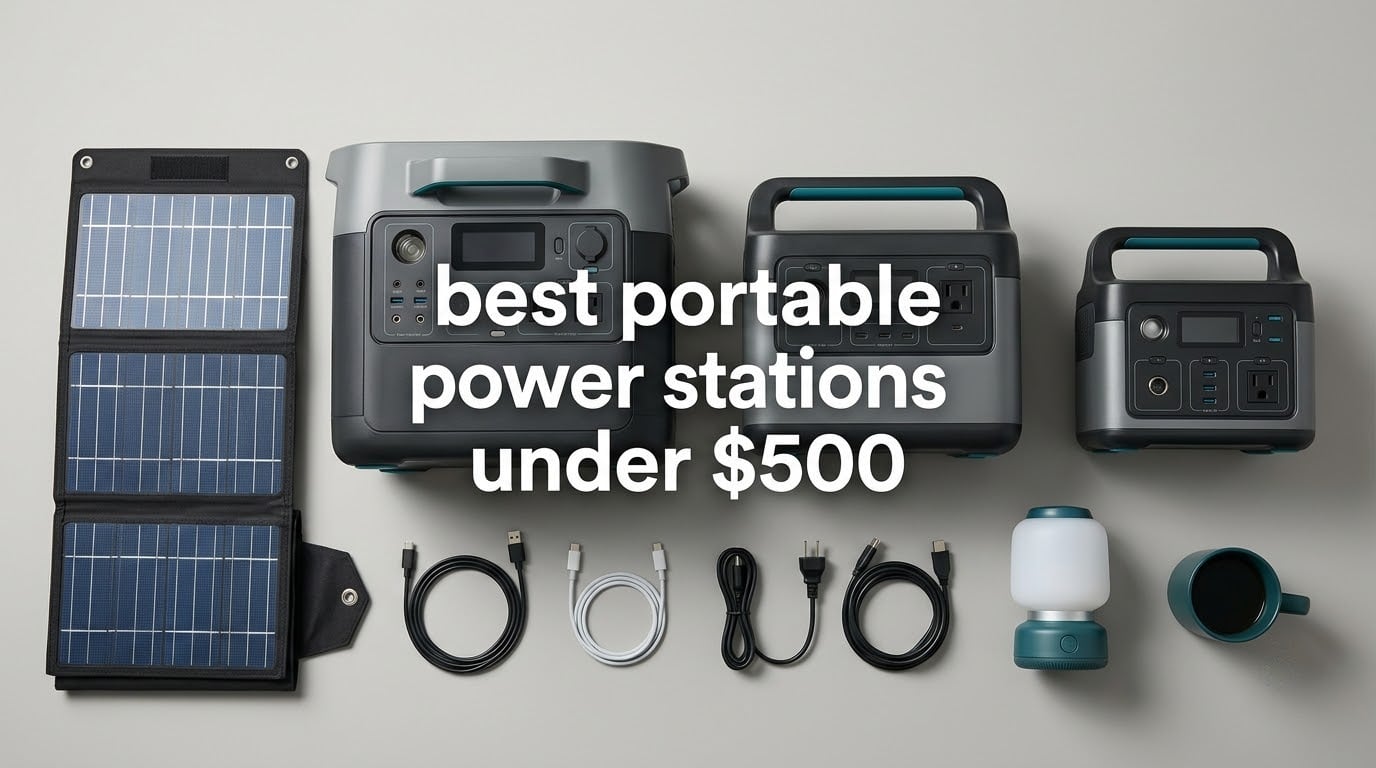
If you are comparing the best portable power stations under 500 for a blackout, a weekend of camping or a home office that has to stay online, the short answer is this: the Jackery Explorer 1000 v2 leads this group with 1,070Wh of LFP capacity, 1,500W of continuous AC output and a 4.7 rating across 3,623 reviews. The EcoFlow RIVER 2 refills fastest, and the BLUETTI Elite 30 V2 is the cleanest stand-in for a desktop UPS.
What are you actually going to plug in, and is this home backup, camping or travel? A router, a CPAP machine and a fridge demand a very different machine than a phone and a string of lights, and the gap between a 88Wh travel unit and a 1,152Wh outage station is the whole buying decision.
We compared twelve units that all sit inside this budget, checking rated watt-hours against continuous AC output, battery chemistry, solar input, port layout, weight and the complaints owners actually report. Specs were verified against the listings on October 1, 2026, and prices move daily, so treat the figures below as hardware facts and use the buttons to check current pricing.
Two warnings before the list. First, most units ship at roughly 30% charge from the factory, which surprises first-time buyers who open the box expecting a full battery. Second, search results for this keyword are polluted with accessory listings, so check that the page shows a complete station and not a panel, expansion battery or case before you commit.
Table of Contents
Top 3 Picks: Best Portable Power Stations Under $500 (October 2026)
Three units stand out once you line up capacity against output. The Jackery Explorer 1000 v2 does the most work per dollar at the top of the range, the EcoFlow RIVER 2 goes from empty to full faster than anything else here, and the BLUETTI Elite 30 V2 pairs a true 600W inverter with a 10ms UPS for anyone replacing a rack UPS.

Jackery Explorer 1000 v2
- 1070Wh LFP capacity
- 1500W continuous AC
- 3000W surge
- one hour emergency charge

EcoFlow RIVER 2
- 256Wh LFP
- 600W combined output
- full AC recharge in about one hour
- app control
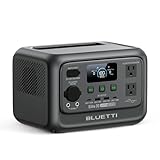
Quick Overview: Every Pick in This Roundup
All twelve units below were rated on the same three things: usable watt-hours, continuous inverter output and how owners describe long-term behaviour. The Jackery Explorer 300 has no customer photos in its listing, so it appears without them.
| Product | Specifications | Action |
|---|---|---|
| Jackery Explorer 1000 v2 |
|
Check Latest Price |
| EcoFlow RIVER 2 |
|
Check Latest Price |
| BLUETTI Elite 30 V2 |
|
Check Latest Price |
 BLUETTI AC180 BLUETTI AC180 |
|
Check Latest Price |
 Jackery Explorer 300 Jackery Explorer 300 |
|
Check Latest Price |
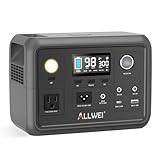 ALLWEI 300W ALLWEI 300W |
|
Check Latest Price |
 EnginStar R300 EnginStar R300 |
|
Check Latest Price |
 HOWEASY H120 HOWEASY H120 |
|
Check Latest Price |
 BLUETTI Elite 10 Mini BLUETTI Elite 10 Mini |
|
Check Latest Price |
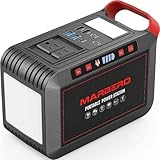 MARBERO 237Wh MARBERO 237Wh |
|
Check Latest Price |
 ZeroKor 280Wh ZeroKor 280Wh |
|
Check Latest Price |
 ENOFLO G300 ENOFLO G300 |
|
Check Latest Price |
Jackery Explorer 1000 v2 – the most capable station that stays inside the budget
Jackery Explorer 1000 v2 Portable Power Station,1070Wh,1500W
1070Wh LFP
1500W continuous, 3000W surge
0-100% in 1 hour
23.8 lb
Pros
- 1500W continuous output handles fridges
- electric pots and small AC units
- Highest rating in the group with 85% five-star reviews
- Emergency charge mode refills the battery in one hour
- Over 70% capacity retained after 4000 cycles
- Seven outputs including 100W USB-C PD and an LED light
Cons
- Weighs 23.8 lb
- far more than any sub-300Wh unit here
- Solar charging requires Jackery panels
- The one hour charge mode must be re-enabled in the app each time
This is the unit that makes the sub-500 bracket worth shopping in. Owners run air conditioning, refrigerators and electric pots from it, which puts it in a different class from everything else in the roundup. The inverter is genuinely rated at 1,500W continuous with 3,000W of surge headroom, so motors and compressors start without stalling the output.
Recharging is fast when you use the Jackery app. The default 0-100% time is 1.7 hours, and an emergency mode cuts that to one hour. A quiet mode at 30 dB makes it usable in a bedroom, and an energy efficiency mode trims the inverter’s own overhead when you are running lights or a router.
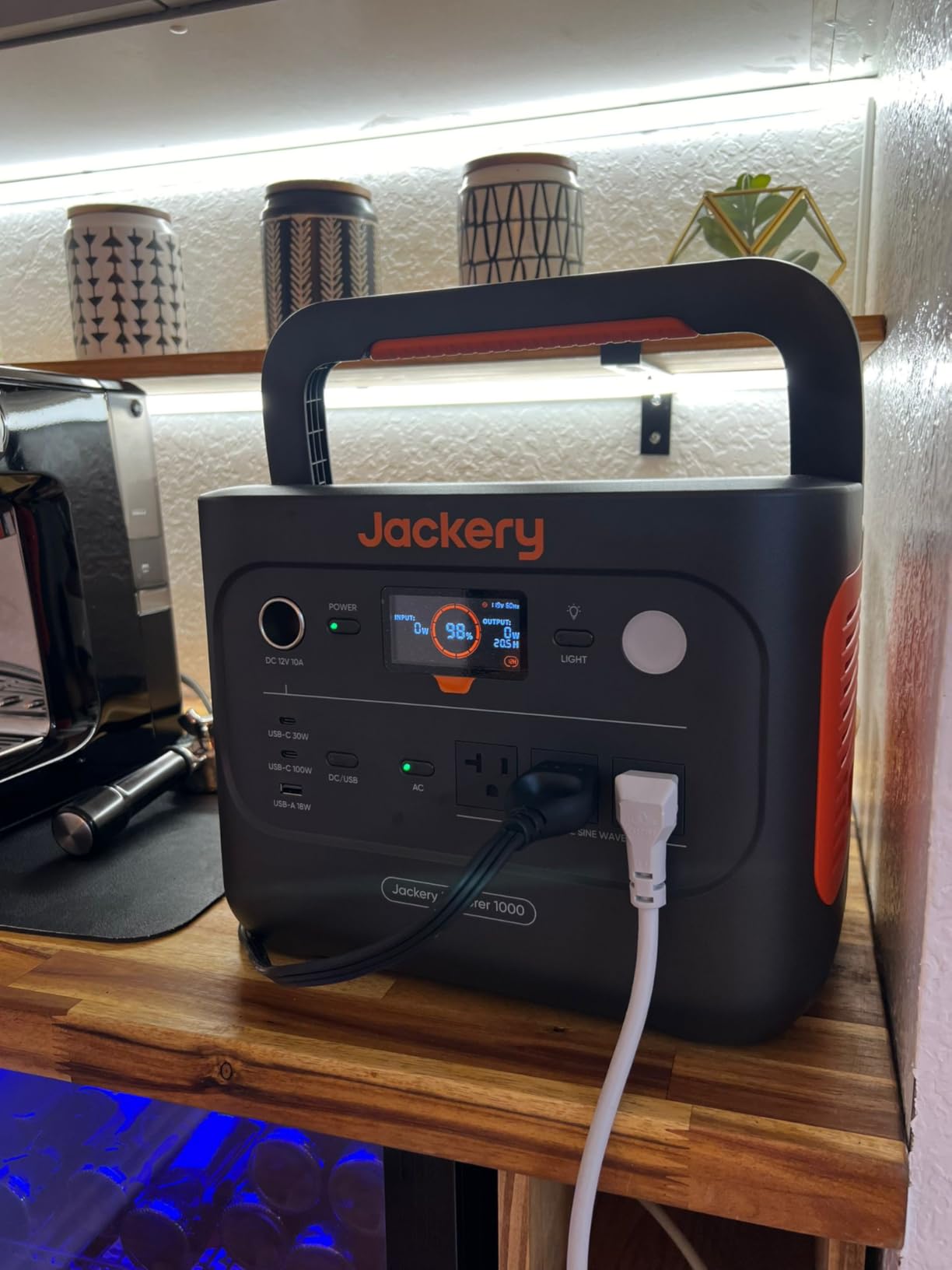
The 1,070Wh pack sits in a 23.8 lb body with a foldable handle, which is portable for its class and awkward for anyone carrying it up stairs. Seven outputs cover the common cases: two USB-C ports at 100W PD, one USB-A, a 12V car port, three pure sine wave AC outlets and an LED light.
What a 1,500W inverter actually unlocks
This is the wattage figure that matters most for home backup, because a fridge compressor, a microwave and a kettle all exceed what a 300W unit can start. At 1,500W continuous you can run household-scale loads that smaller budget stations simply refuse.
Port count is generous for the size: three AC outlets means you are not shuffling a single plug between a router and a lamp. The 100W USB-C ports also charge a modern laptop directly rather than through a slow AC adapter.
Where the 1,070Wh cap bites
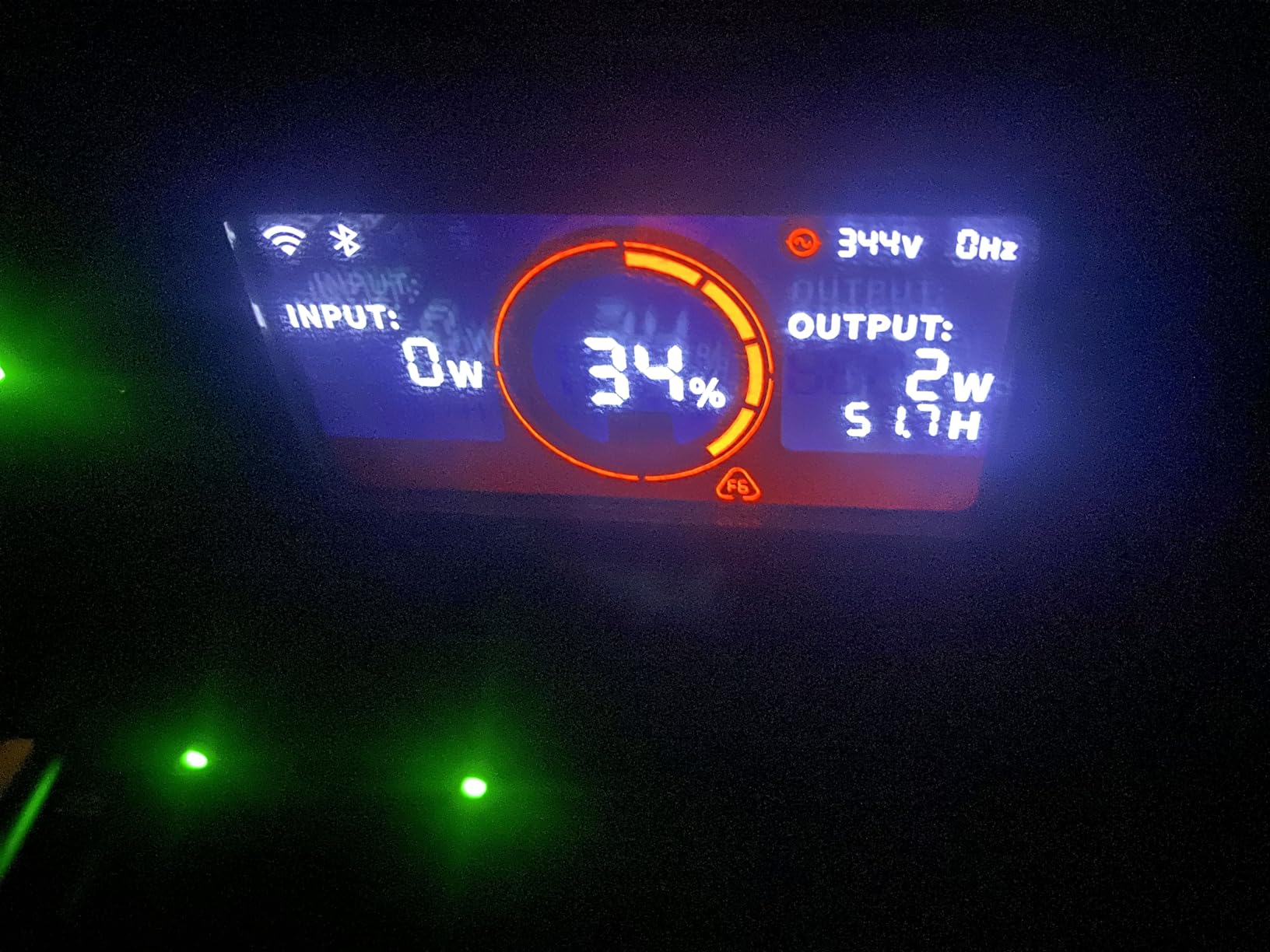
Capacity, not wattage, is the limit for anything sustained. Running a fridge, a router and a lamp through a 12-hour outage works fine, but a resistive heater or a space heater will empty it in about an hour. Community feedback across owner forums is consistent that starting a 1kWh unit from empty for a whole household load is impractical.
Solar input is restricted to Jackery panels, so third-party panels will not work. The battery also keeps over 70% of rated capacity after 4,000 cycles, which is the strongest longevity claim in this group alongside the BLUETTI units.
EcoFlow RIVER 2 – fastest refill and the best app at the budget level
EF ECOFLOW Portable Power Station RIVER 2, 256Wh 300W
256Wh LiFePO4
600W combined output
AC 0-100% in about 1 hour
7.7 lb
Pros
- Fastest wall recharge in the roundup at roughly one hour end to end
- App shows real-time charge and discharge data
- Works as a pass-through UPS so devices survive an outage
- Proven with portable fridges
- e-bikes
- routers and cameras
Cons
- Inverter overhead cuts usable capacity well below the 256Wh label
- Only one USB-C port so laptops and headphones compete for it
- The fan is audible at maximum charging speed
- Solar input caps at 110W and needs about 25W minimum to behave
The RIVER 2 is the one to buy when your station spends most of its life in a cupboard and needs to be ready fast. X-Stream charging takes it from empty to full in about an hour from a wall outlet, roughly half the time of most competitors in this bracket.
App control is the feature owners mention first. You can watch real-time charge and discharge, which matters when the unit is powering something you are not standing next to, and the EPS/UPS mode keeps a router or a small NAS running through a flicker.
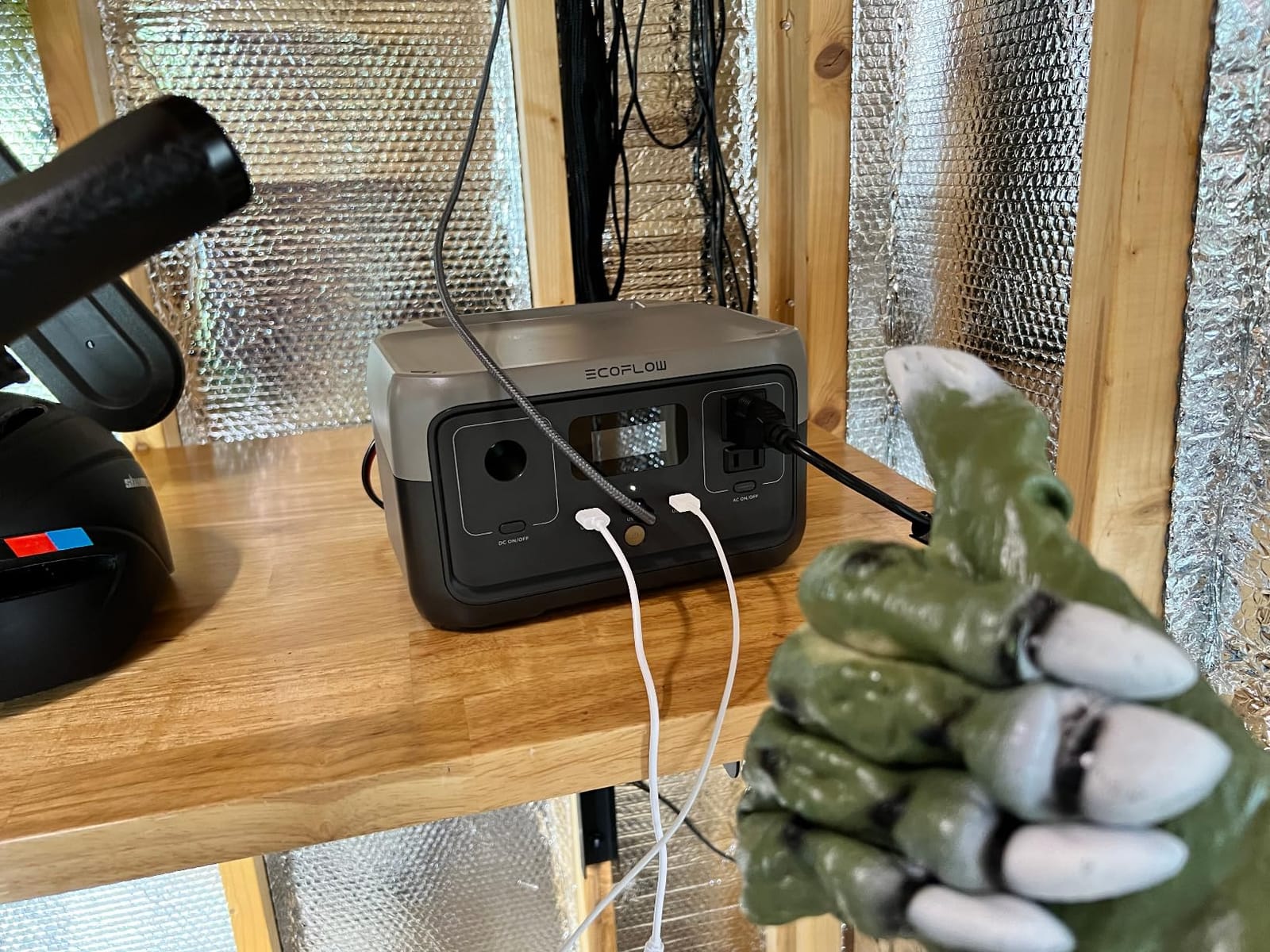
Buyers use it in ways that go well past the 256Wh label suggests, from portable fridges to e-bike top-ups and camera gear on location. The 7.7 lb body has a built-in handle, and the box includes both an AC charging cable and a car charging cable.
Why the one hour recharge changes planning
Fast wall charging means a station can recover between uses, or top up during an outage without going to zero. That is the practical advantage over units here that need seven hours, because you can plug it in at breakfast and have full capacity by the time you leave.
It also makes the unit viable as a daily top-up for a home office rather than a once-a-year emergency box.
Where usable capacity falls short of the label
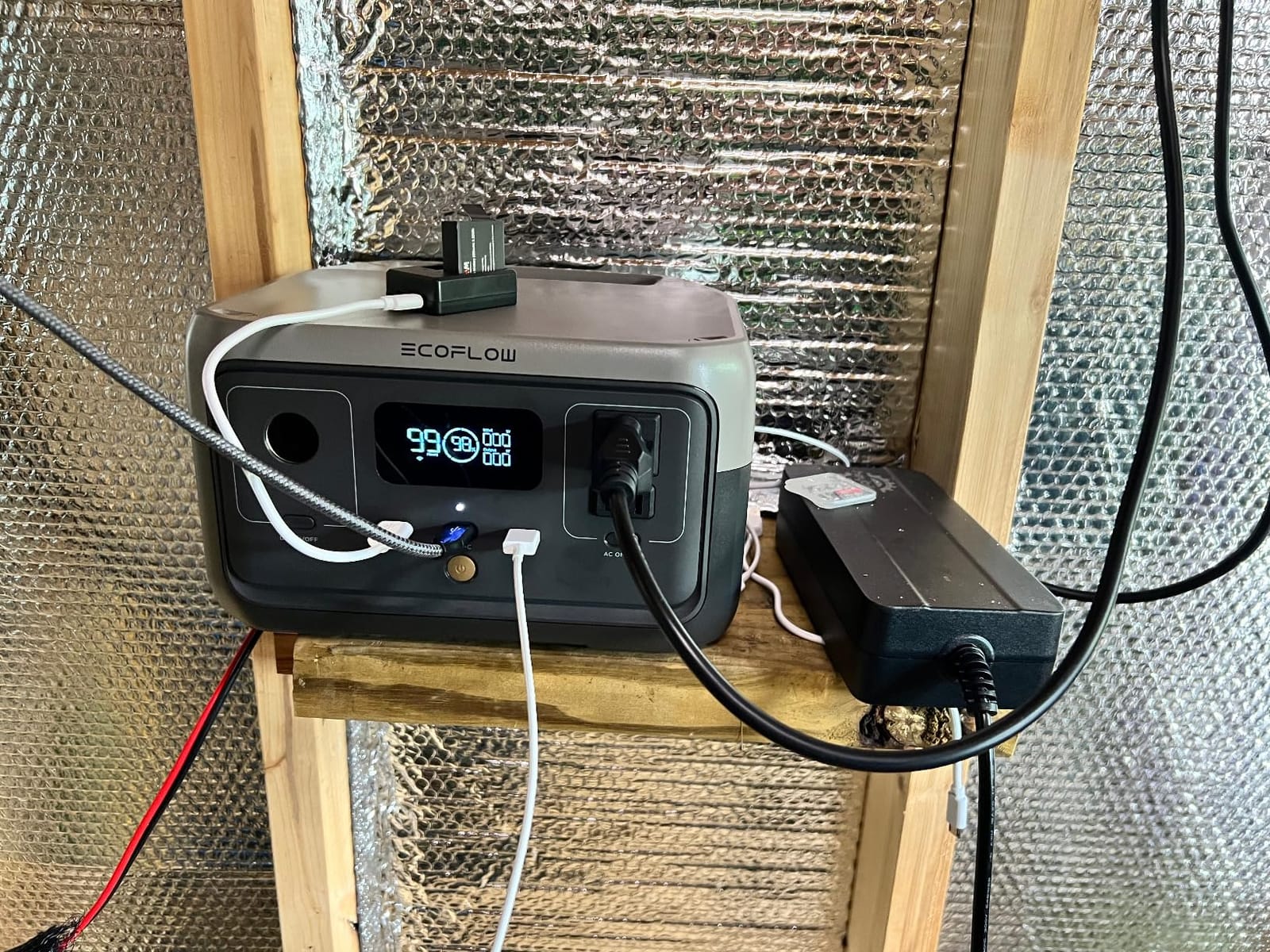
The AC inverter itself draws power continuously, so real-world runtime runs meaningfully below 256Wh. Some owners also report an inaccurate battery percentage or firmware-related charging quirks, which is worth accounting for if you plan to run unattended.
Solar input tops out at 110W with a full recharge in as fast as 2.3 hours in good conditions. Below roughly 25W of panel the charging circuit fluctuates, so very small panels are a poor match.
BLUETTI Elite 30 V2 – the drop-in UPS for a router, NAS or homelab
BLUETTI Elite 30 V2 Portable Power Station 288Wh 600W LFP Solar Generator
288Wh LFP
600W continuous, 1500W Power Lifting
0-80% in 45 min
9.4 lb
Pros
- Best capacity-to-output balance here at a true 600W continuous
- Self-consumption of 4.5W standby extends real runtime
- 0-80% in 45 minutes and 0-100% in 70 minutes
- 10ms UPS works as a replacement for a conventional rack UPS
- Accepts standard solar panels instead of brand-locked connectors
Cons
- No USB passthrough interface for automatic PC shutdown after a full discharge
- Pro mode needs a passcode re-entered to restore outputs
- One owner reported faster than expected drain on an overnight CPAP run
- About 2.4 hours for a continuous 150W load
This is the unit to look at if your outage worry is electronics rather than appliances. Owners running homelabs, NAS boxes and network gear rate it as a quiet, clean replacement for ageing conventional UPS units, with pure sine wave output and no restarts on switchover.
The 10ms UPS transfer is the headline. A NAS, a router and a monitor will ride through a power cut without rebooting, which is the whole point of the device. Nine ports cover 140W PD USB-C, USB-A, DC5521 outputs and AC outlets.
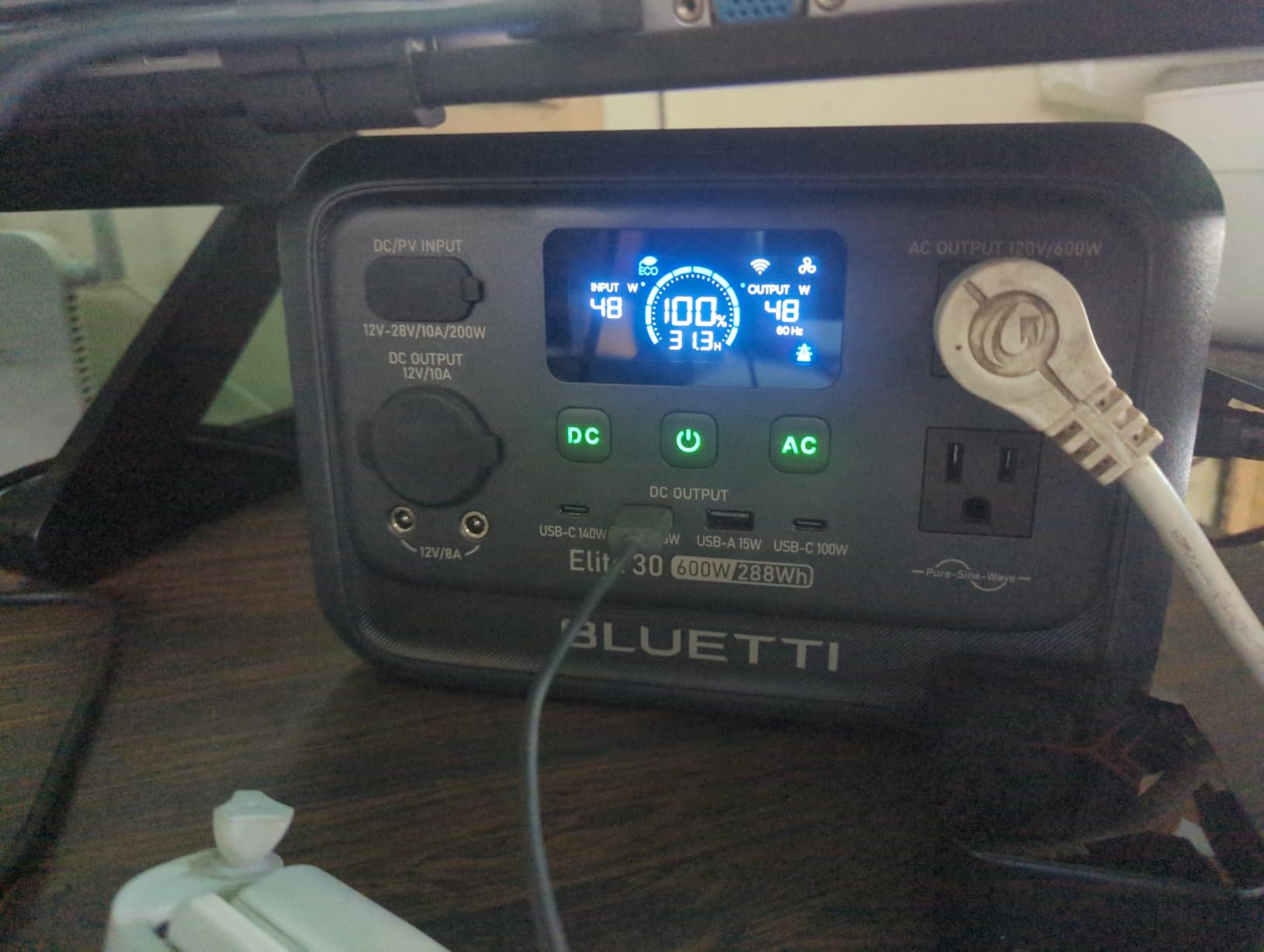
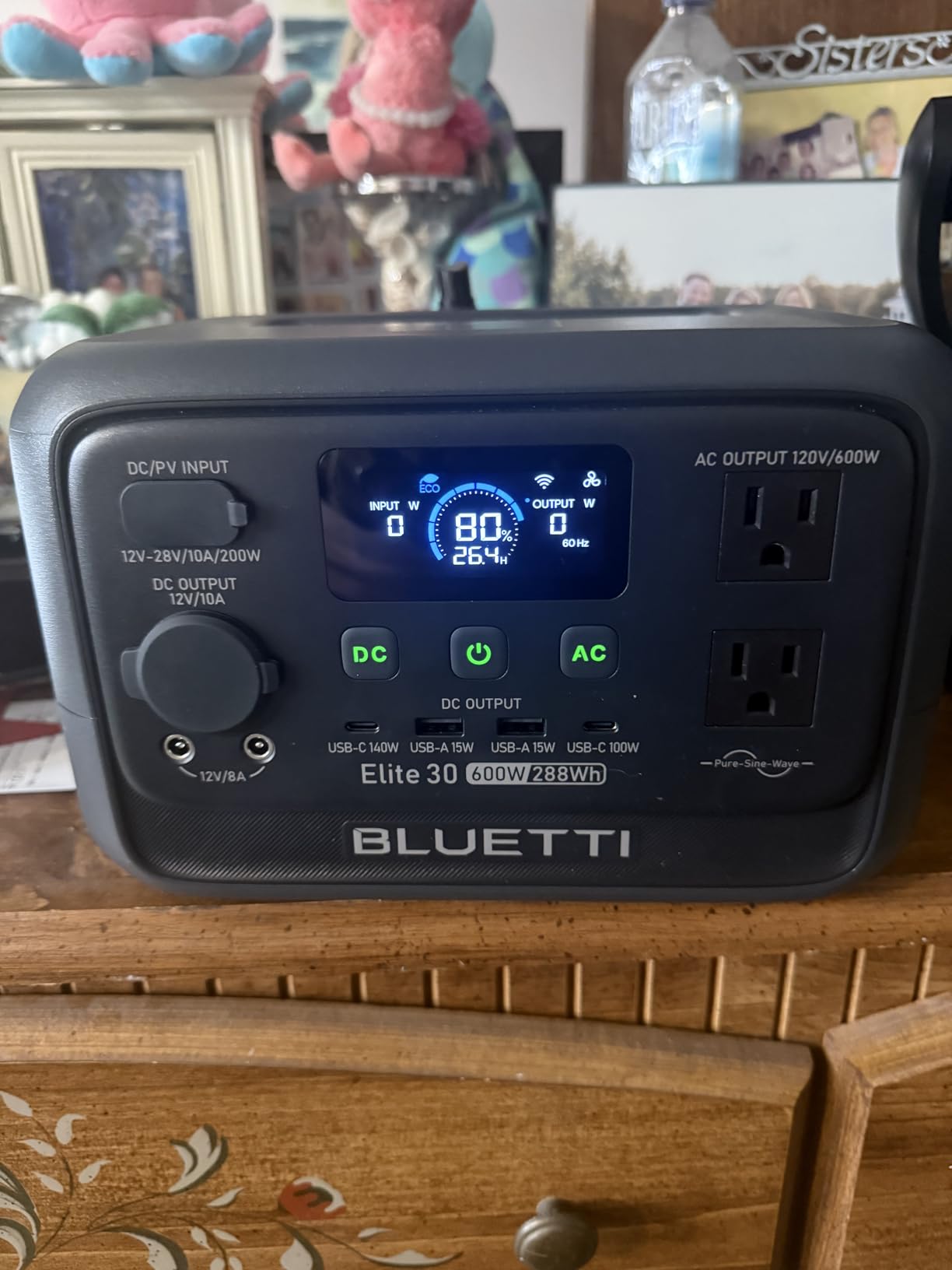
UltraCell technology cuts the unit’s own power draw by half, with standby at 4.5W, 5W on DC and 8W on AC. That detail matters more than it sounds, because a high-draw inverter quietly reduces the capacity you actually get, and this unit wastes far less of its 288Wh than most rivals.
Why low self-consumption is the real spec
Runtime math is capacity multiplied by efficiency. A unit that idles at 4.5W hands you far more usable energy from the same 288Wh than one that idles at 15W, and the gap shows up on an overnight run where nothing is being charged.
The 380W adjustable wall input also means this refills faster than almost anything else at this weight class, with 0-80% in 45 minutes.
Where it falls short of a true UPS
There is no USB communication interface, so it cannot signal your PC to shut itself down gracefully. You also get roughly 2.4 hours on a continuous 150W load, which is plenty for networking gear and short for anything sustained.
After a full discharge the unit needs Pro mode re-enabled with a passcode before outputs return. It is a small friction point that catches people out at the worst moment, and it is worth knowing before you need it.
BLUETTI AC180 – the biggest battery here for whole-outage runs
BLUETTI AC180 Portable Power Station 1152Wh 1800W LiFePO4 Solar Generator
1152Wh LiFePO4
1800W output, 2700W peak
0-80% in 45 min
37.4 lb
Pros
- Largest capacity in the roundup at 1152Wh with 1800W continuous output
- 0-80% in about 45 minutes from a 1440W AC input
- 500W solar input with a 2.8 to 3.3 hour solar recharge
- 20ms UPS switchover keeps routers and internet alive
- Strong customer support including firmware fixes honoured after purchase
Cons
- Roughly 37 lb makes it the heaviest unit here
- Only about 90% of rated capacity is usable and the inverter draws 15-20W
- Top wireless charging pad frequently fails to engage a phone
- Only one USB-C port
- Some units performed poorly until a firmware update and full cycle
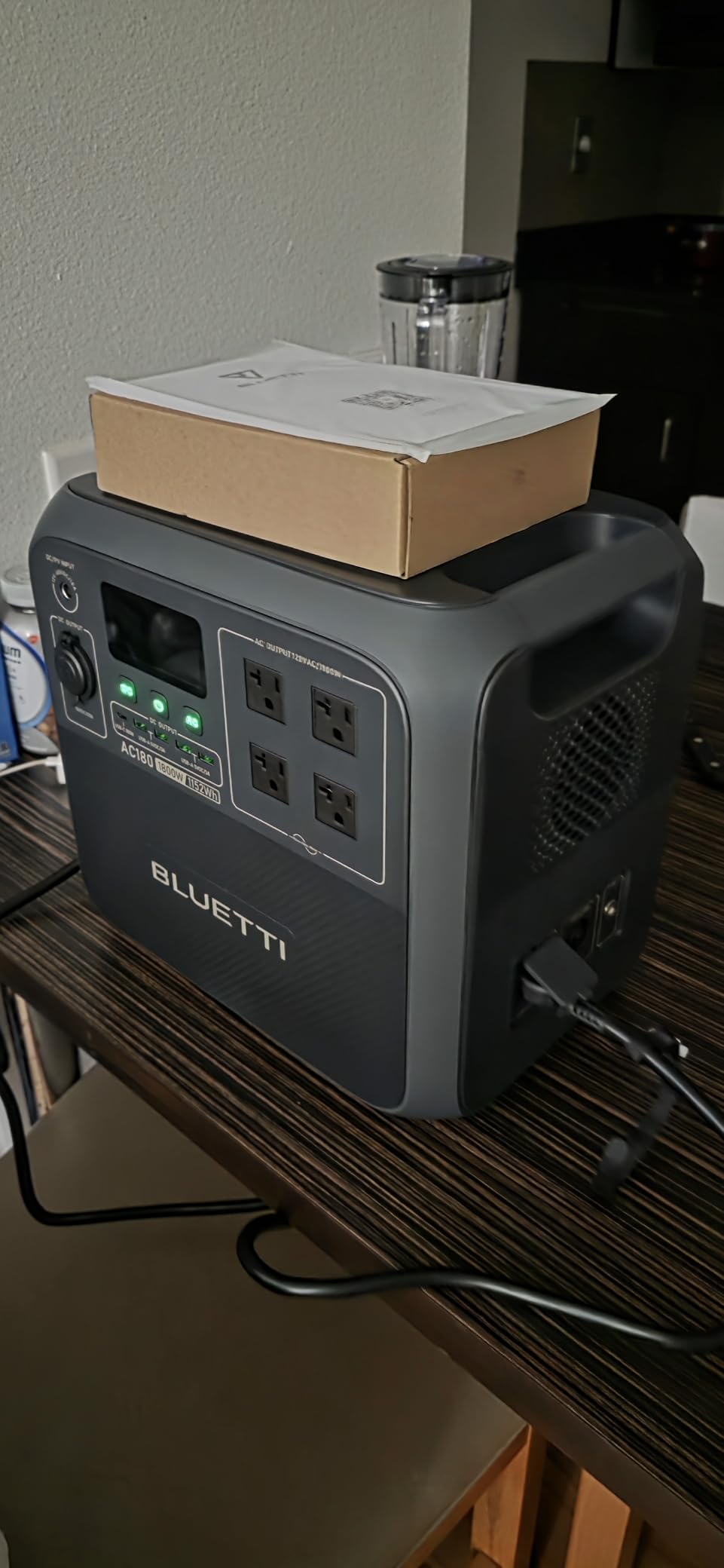
The AC180 answers the question most sub-500 pages skip: what can you realistically cover when the power is out for hours. At 1,152Wh it holds the largest battery in this group, and 1,800W of continuous output with 2,700W of peak handles just about any appliance you would reasonably want to run.
Charging is aggressive. A 1440W AC input fills it in about an hour, and 500W of solar input recharges the pack in 2.8 to 3.3 hours, which is the highest solar input in the roundup by a wide margin.
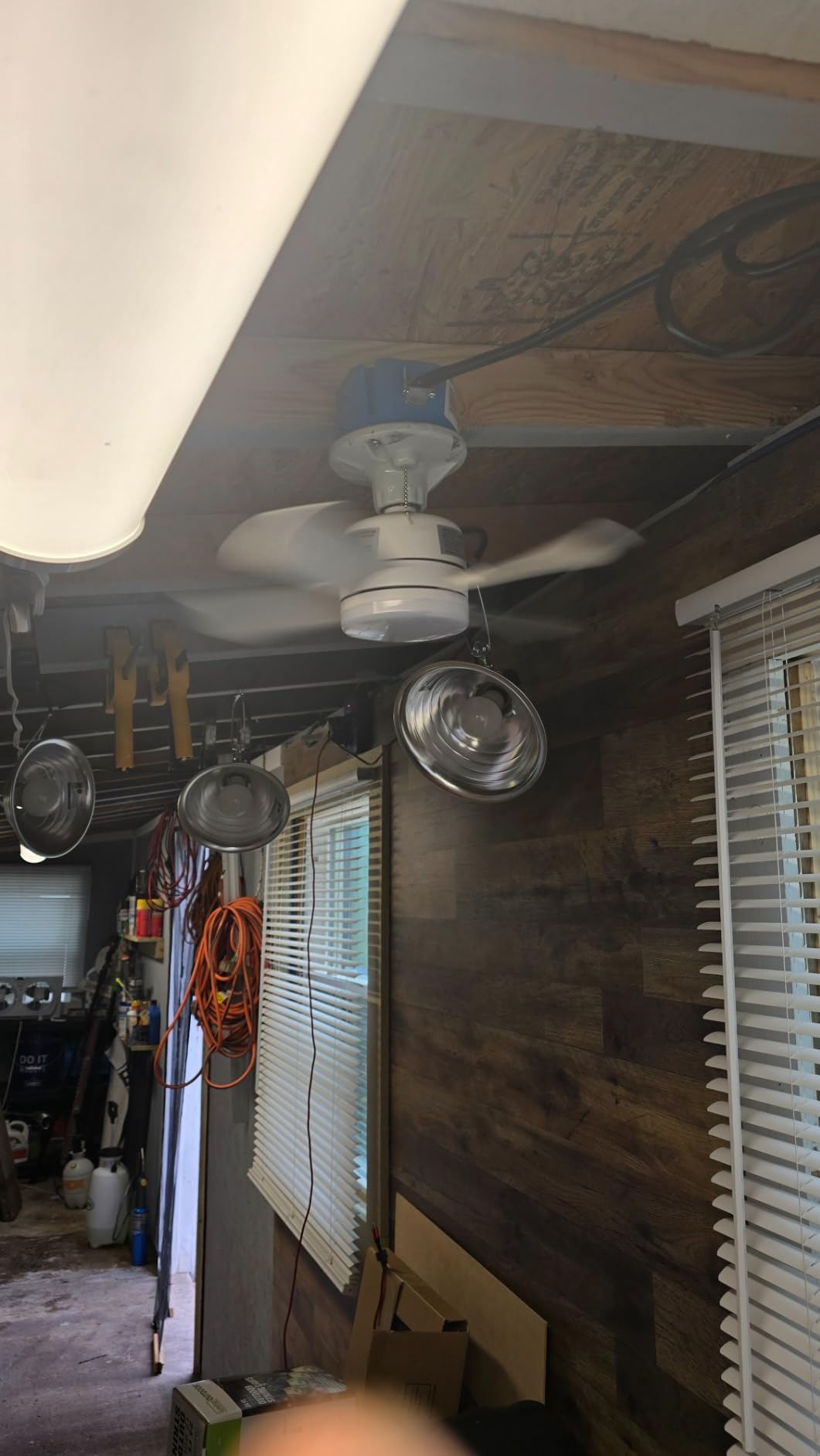
Owners run fridges, box fans, routers and gaming consoles from it, and the 20ms UPS transfer keeps an internet connection up without a visible dropout. Eight AC outlets plus USB and car ports mean you are not rationing plugs during an outage.
When 1,152Wh is worth the weight
More capacity converts directly into longer runtimes, and this is the pick for keeping a refrigerator and a router going across a long outage rather than a few hours of lights. It is also the only unit here that can absorb a serious solar panel array.
The listed runtime is roughly 16 hours on a typical mixed load, which is a realistic figure for moderate draws rather than a single heavy appliance.
Where the rated numbers overpromise
Only about 90% of the 1,152Wh label is usable, and the inverter itself consumes roughly 15-20W. Plan against the effective figure, not the headline, or your outage plans will run short.
At around 37 lb this is not a camping carry, and a number of owners report that firmware updates plus a full discharge and recharge cycle were needed to clear early runtime complaints. The wireless charging pad on top also fails to engage a phone often enough that reviewers stop mentioning it as a feature.
Jackery Explorer 300 – the small all-rounder with the largest review base
Jackery Explorer 300 Portable Power Station,292Wh
292Wh LiFePO4
300W continuous, 600W surge
7.1 lb with handle
4,000+ cycles
Pros
- Lightest option in the 300Wh class at 7.1 lb with an integrated handle
- 4000+ rated charge cycles for a 10 year service life
- Clean pure sine wave output for sensitive electronics
- Dependable for phones
- laptops
- cameras and CPAP machines
Cons
- Only two AC outlets for a 300W-class unit
- 292Wh limits runtime for higher-draw appliances
- Mixed-use 100W USB-C port drains capacity quickly on laptops
The Explorer 300 is the most thoroughly reviewed unit in the entire roundup, with 11,273 reviews and 81% five-star ratings. That matters at this budget because you are buying a battery, and a decade of owner reports is the closest thing to a reliability record you will find.
Owners consistently single out low weight, one-hand carry and dependable output for phones, laptops, cameras and CPAP machines. At 7.1 lb with an integrated handle it is a station you will actually leave in the car rather than store.
What 292Wh realistically covers
This size is for a device list, not a household. Phones, cameras, a laptop, a router and lighting are comfortable, and the pure sine wave output means sensitive electronics behave properly.
Two AC outlets, 100W USB-C PD, two USB-A ports and a 120W car port cover most needs, and solar pairing with Jackery panels reaches 80% in about 2.8 hours from a 100W panel.
Where it falls behind the newest models
The 292Wh pack limits you to about 5 hours of runtime on a typical load, which will not carry you through a night of heavier use. The single 100W USB-C port doubles as the laptop charger, so a phone and a computer at the same time means choosing.
The 2-year manufacturer warranty is also the shortest among the major-brand units here, where EcoFlow and BLUETTI both offer five years.
ALLWEI 300W – the value pick with a real 60W USB-C port
ALLWEI Portable Power Station 300W, 256Wh Solar Generator LiFePO4 Battery
256Wh LiFePO4
300W continuous, 600W pure sine surge
60W USB-C PD
6.4 lb
Pros
- True 60W USB-C Power Delivery port
- unusual at this level
- Genuine pure sine wave AC output
- Documented 12 to 20 hour CPAP runtime in real reviews
- 6.4 lb slim body fits tight spaces
- Pass-through charging plus simultaneous AC and solar input
Cons
- No 24V DC output for some RV setups
- Solar input is limited so larger panels cannot be used
- Some units stop holding charge after about a year and run a noisy fan
- Customer support reportedly asked for extensive data before engaging
The ALLWEI is the pick that most often gets skipped on comparison pages and then wins on the details. It has a 60W USB-C Power Delivery port at a price point where most rivals ship an 18W port, and owners using it to charge a laptop report it handles the draw.
Reviews on this one include actual measured runtime rather than marketing estimates. Verified CPAP use runs 12 to 20 hours depending on heat and humidity setting, which is the kind of number that tells you whether a unit works for overnight medical gear.
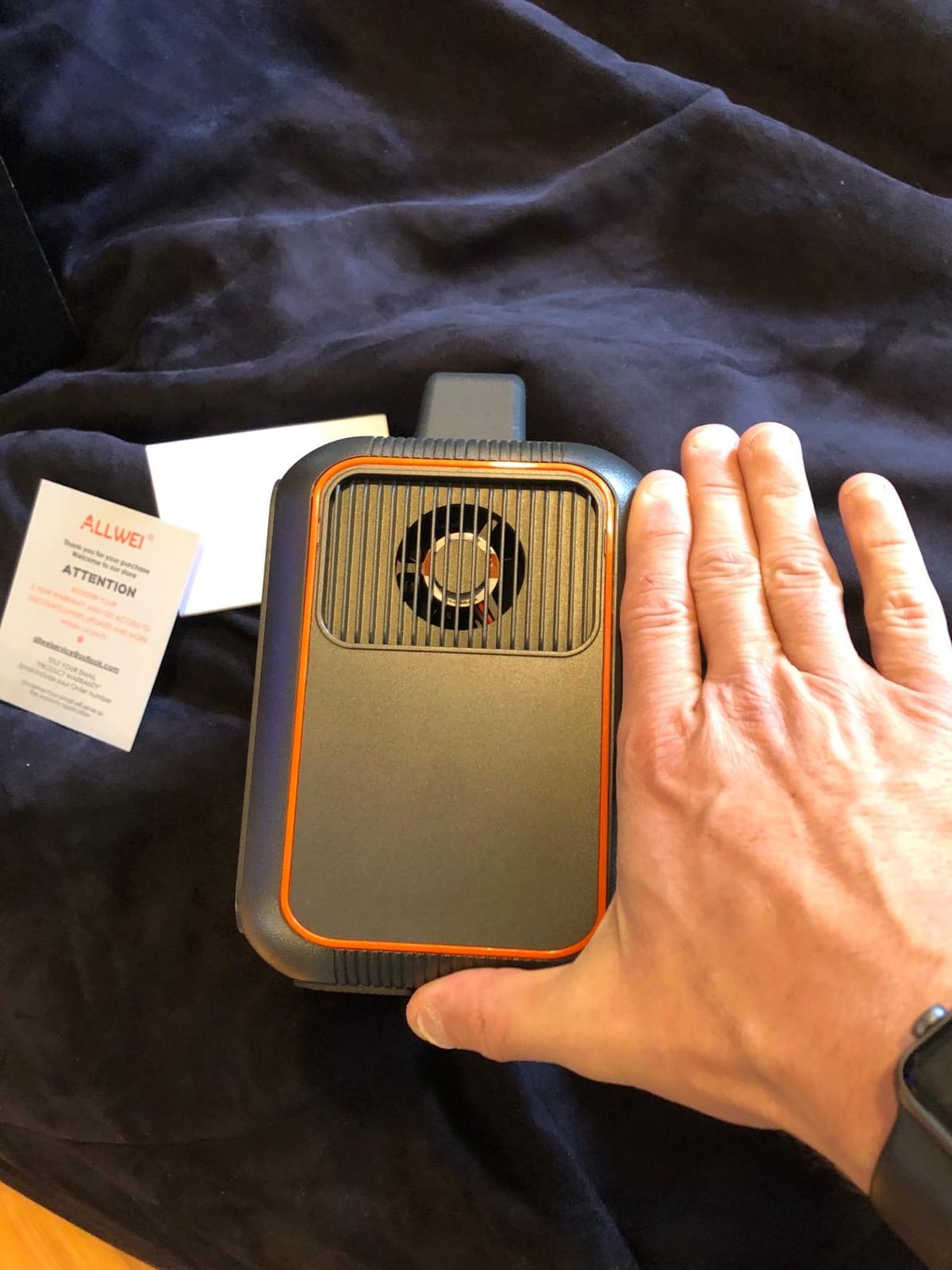
Six outputs cover one pure sine wave AC outlet, two DC5521, a car port, an 18W USB-A and the 60W USB-C. The built-in MPPT controller accepts 100W solar for a 4 to 5 hour refill, and you can charge from AC and solar at the same time.
Why the 60W port changes the device list
Most budget stations trickle 18W into a USB-C port, which charges a laptop at the speed of a slow wall adapter. A genuine 60W port means a modern thin laptop charges at a normal rate, and phones and tablets refill in a fraction of the time.
It is the single feature that moves this unit from backup-only to genuinely daily useful.

Where long-term reliability is thinner
Some owners report units that stop holding charge after about a year and become noticeably louder from the fan. Customer support responsiveness draws complaints too, with several reviews describing long data-gathering exchanges before help arrived.
There is no 24V DC output, which matters if you are running RV accessories, and the limited solar ceiling rules out building an array later. The listed warranty is two years, though the listing also references five-year support.
EnginStar R300 – the 24V DC output most budget stations leave out
EnginStar Solar Generator, 300W Portable Power Station, 296Wh Lithium Battery Backup w/Two 110V Pure Sine Wave AC Outlet for Camping Road Trip RV, 80000mAh Sufficient Power Supply for Blackout
296Wh (80000mAh)
300W output
2 pure sine wave AC
24V DC barrel port
Pros
- Eight outputs including a rare 24V DC barrel port
- Two pure sine wave AC outlets with no flicker or device resets
- Pass-through power keeps devices running through an outage
- Display shows per-port input and output wattage
- Verified 24 hour run of a 12V car fridge while recharging
Cons
- Not ruggedized
- open ports need weatherproofing outdoors
- Wall recharge takes about 7 hours
- Status LEDs are very bright and cannot be dimmed
- Only 1000 rated cycles against 3000 or more for LiFePO4 rivals
The EnginStar is the one to look at when your device list includes something that needs 24V, which is why it earns its place. A 24V DC barrel output at 296Wh is unusual in this class, and a comparative reviewer rated it best in class among three similar 300W units for output variety and display detail.
It is also one of very few budget stations with documented long fridge and CPAP runs. One owner reported a full 24-hour run of a 12V car fridge in extreme heat while recharging the unit at the same time.
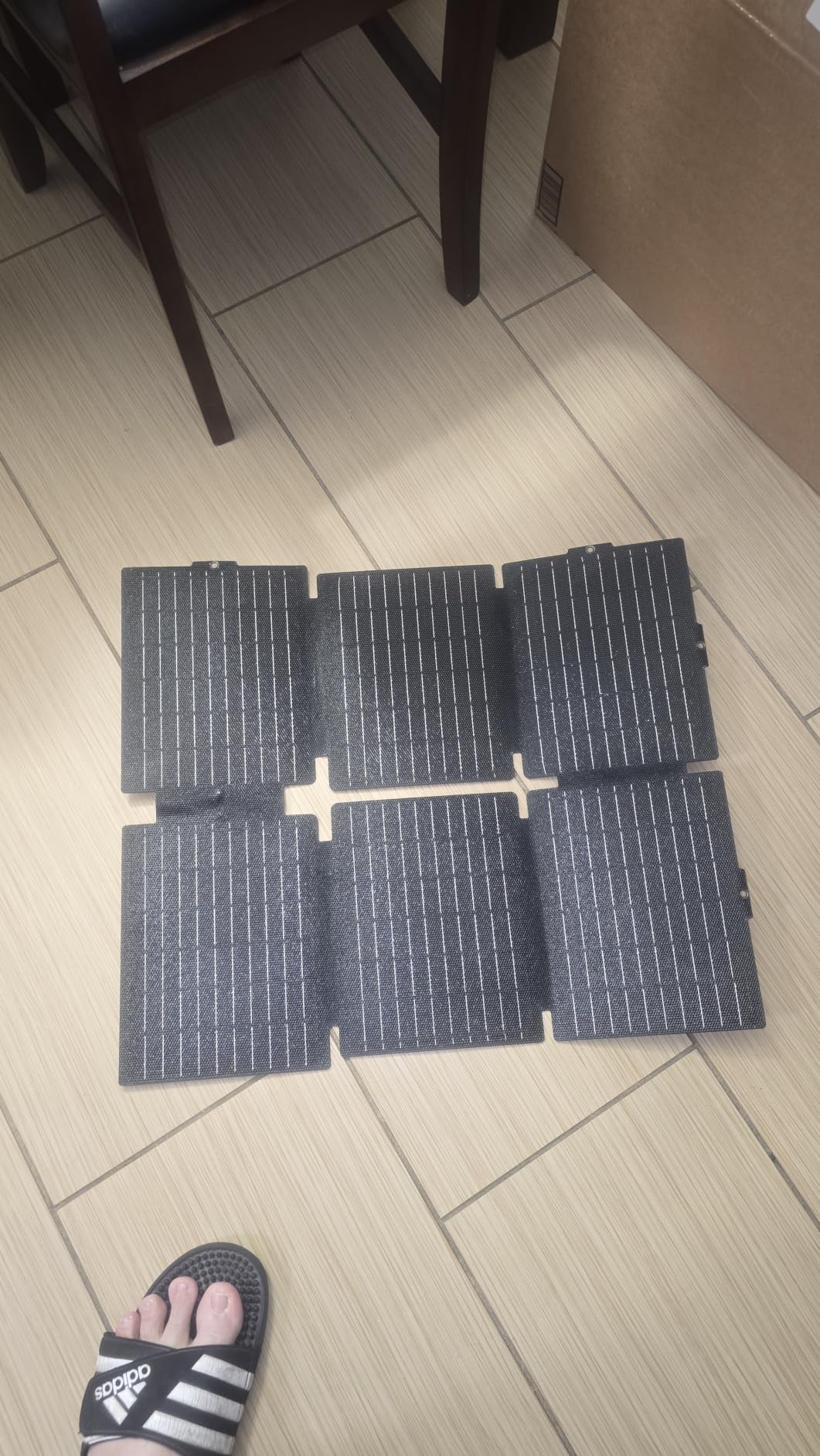
The display is unusually informative for the price, showing input and output wattage per port without opening an app. Eight outputs cover two pure sine wave AC outlets, three USB including an 18W USB-C, a 12V car port, a 12V DC and the 24V barrel.
Why per-port wattage display matters
Knowing what each port is actually drawing tells you how close you are to the inverter limit, and how much of the 296Wh is going to overhead. On a station with no app, that display is the only feedback you get, and it changes how you plan a load.
Pass-through power means you can run devices while the unit charges, which is useful when the outage lasts longer than the battery.
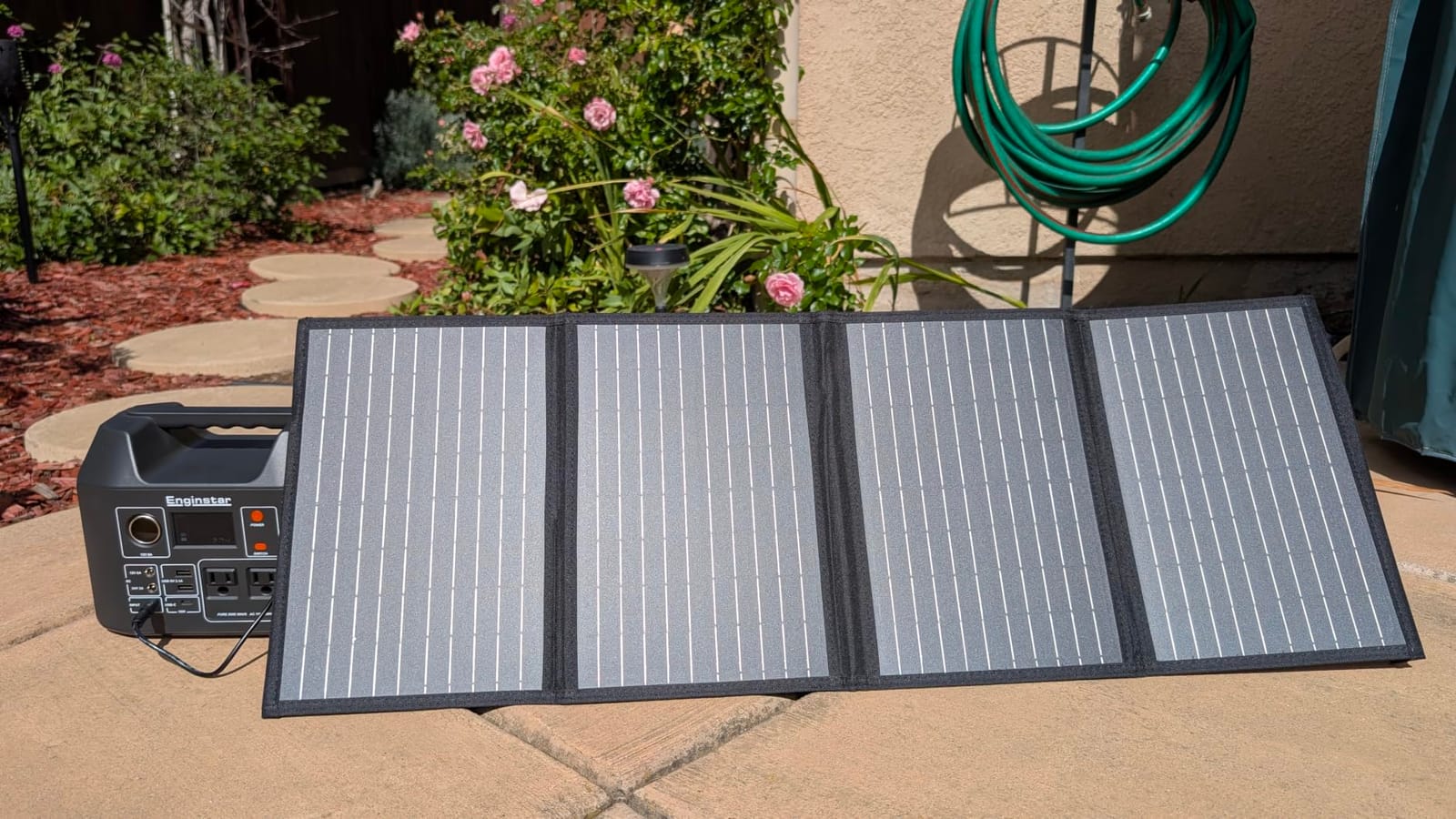
Where the battery chemistry costs you
This unit is rated for 1,000 cycles, against 3,000 or 4,000 for the LFP cells in the Jackery, BLUETTI and ALLWEI units here. Over a decade of regular use that is a real difference in replacement timing, and it is the main reason we rank it below them despite the strong runtime reports.
Wall charging takes about 7 hours, and the status LEDs are bright enough to be distracting in a dark room with no dimming option. It is also not weather-sealed, so outdoor use needs covered ports.
HOWEASY H120 – the 2.3 lb travel unit for phones and lights
HOWEASY Portable Power Station,120W(240W Peak) Solar Generator
88Wh capacity
120W continuous, 240W peak
2.3 lb
8 outputs
Pros
- Lightest and most compact unit here at 2.3 lb and 6.6 by 4 by 3 inches
- Hidden handle and backpack-friendly size
- Eight output ports
- more than most units twice its size
- Runs USB fans and string lights for hours on one charge
Cons
- 88Wh is the smallest capacity here so runtime is short
- Cannot run laptops or appliances
- only devices below roughly 120W
- Charges phones more slowly than a small dedicated power bank
- Runtime drops if the unit is left powered on
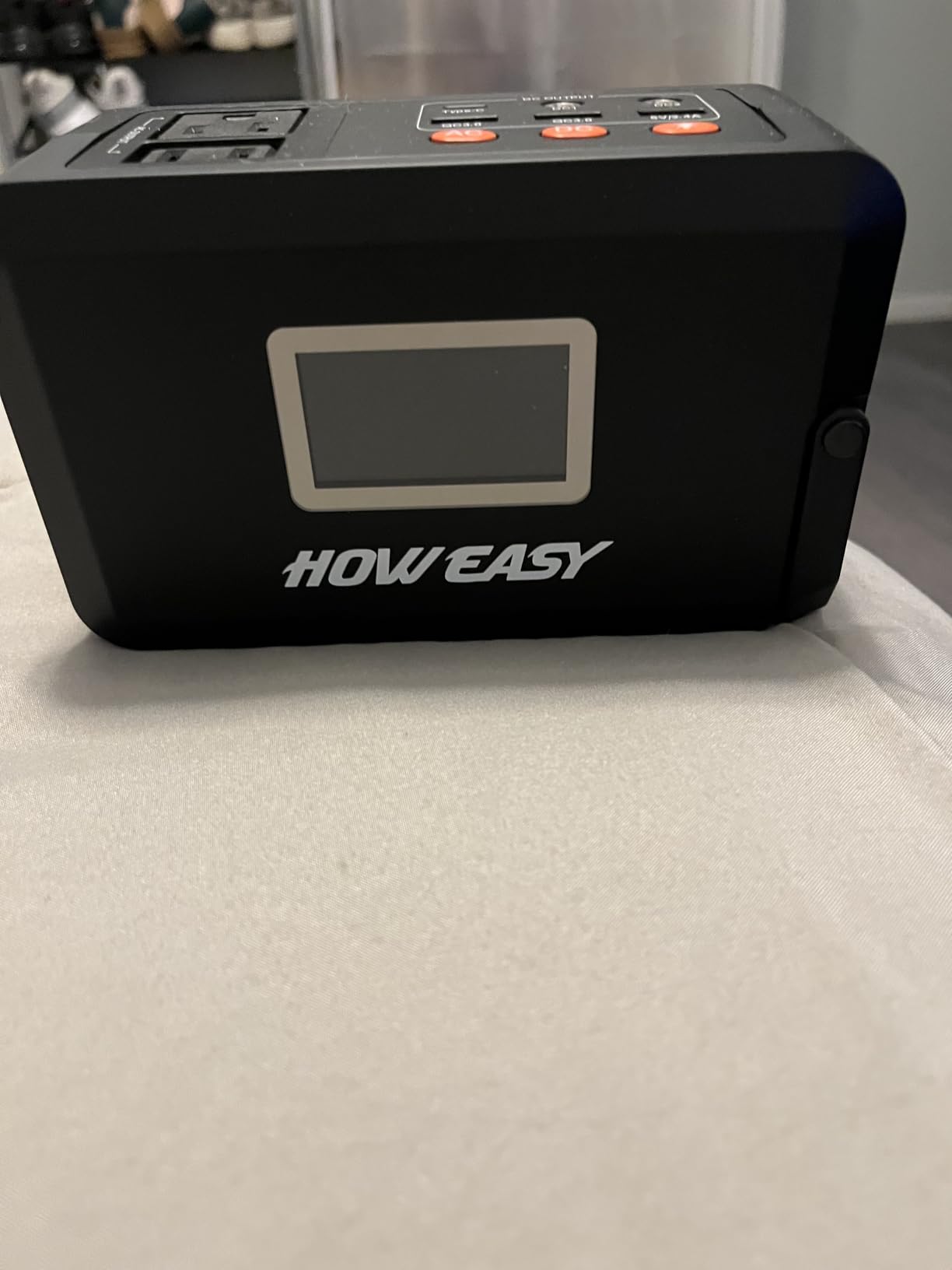
The HOWEASY is not a generator, and treating it as one leads to disappointment. It is an 88Wh emergency and travel box, and owners describe it accurately as handling phones, tablets, lights and air pumps rather than laptops or appliances.
What it does offer is genuine portability. At 2.3 lb and 6.6 by 4 by 3 inches with a hidden handle, it is the only unit in this roundup that fits comfortably in a daypack or a carry-on without becoming the heaviest thing you own.
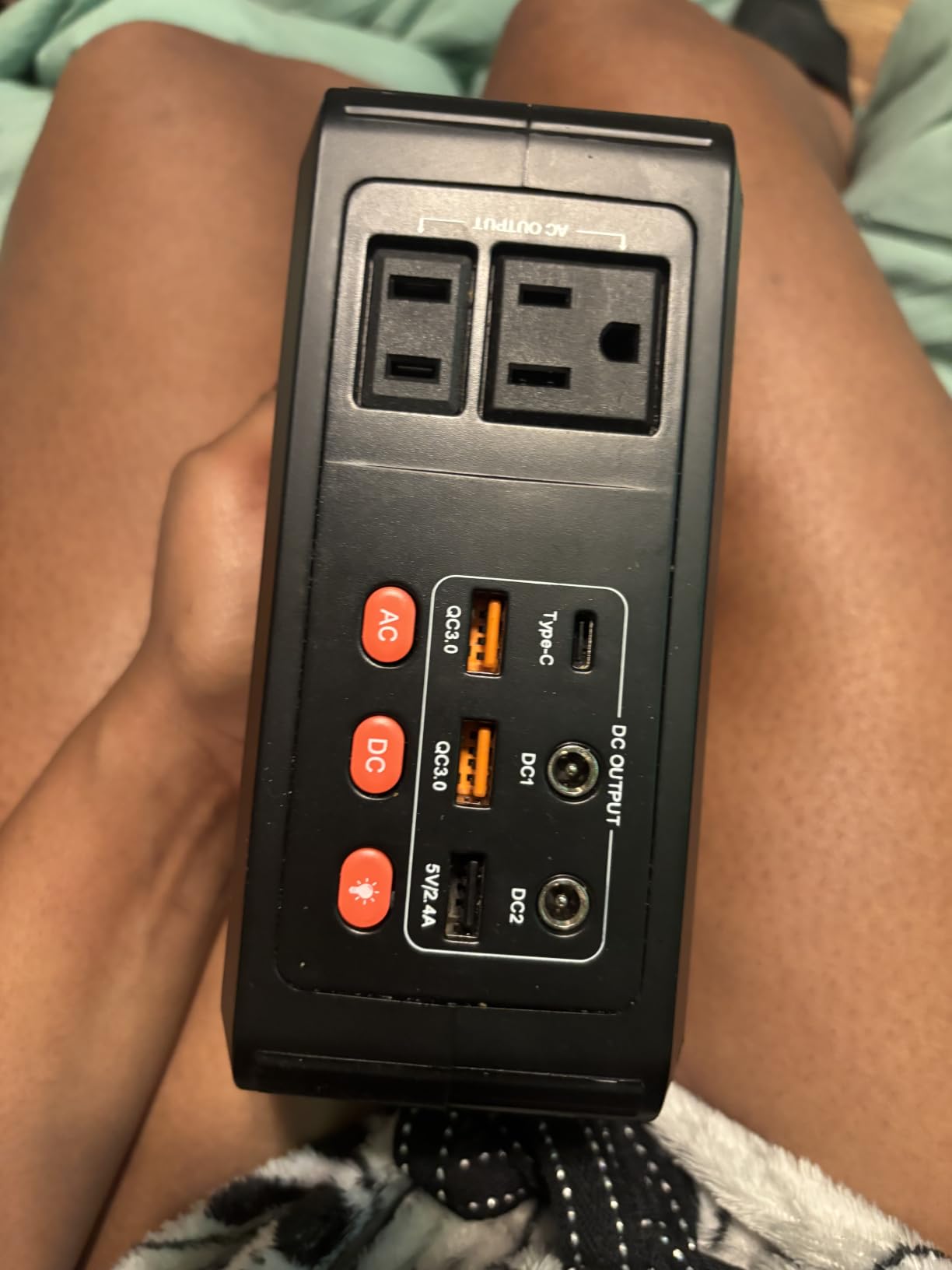
What 88Wh and 120W actually cover
Two AC outlets at 120W continuous with 240W peak, plus a USB-C port, two QC 3.0 USB-A ports, a standard USB-A and two 12V DC outputs. That is a real charging hub for a weekend of light use.
Several owners bought multiple units and placed one in different rooms, which is a sensible pattern for a device this small.
Where the limits show immediately
Cycle life is rated above 1,500 charges, the lowest figure of any unit in the roundup, so it is a short-term travel tool rather than a long-term install. Charging a phone is also slower than a small dedicated power bank, which is an odd thing to lose to.
It recharges from an AC adapter, a 12V or 24V solar panel, or a car socket, and it supports simultaneous charge and discharge. The 24-month warranty is one of the longer commitments among the sub-300Wh units here.
BLUETTI Elite 10 Mini – the carry-on friendly station for flights
BLUETTI Elite 10 Mini Portable Power Station, 128Wh 200W Solar Generator
128Wh LiFePO4
200W AC, 350W bypass
10ms UPS
full in about 70 min
Pros
- Only 4.0 lb and airline friendly within the 100-160Wh carry-on allowance
- 10ms UPS switchover keeps laptops
- routers and cameras running
- Very fast 150W AC recharge
- full in roughly 70 minutes
- 100W USB-C fast charging in a palm-sized body
- Three lighting modes with up to 50 hours of illumination
Cons
- Newest listing here with only 222 reviews so long-term reliability is unproven
- 128Wh gives roughly two hours of runtime under load
- Only one AC outlet
- Some reviews list the total outlet count as just one
If flying is part of the use case, this is the only unit in the roundup that fits inside the standard 100-160Wh carry-on allowance, at 128Wh and 4.0 lb. That constraint eliminates most competitors before you compare anything else.
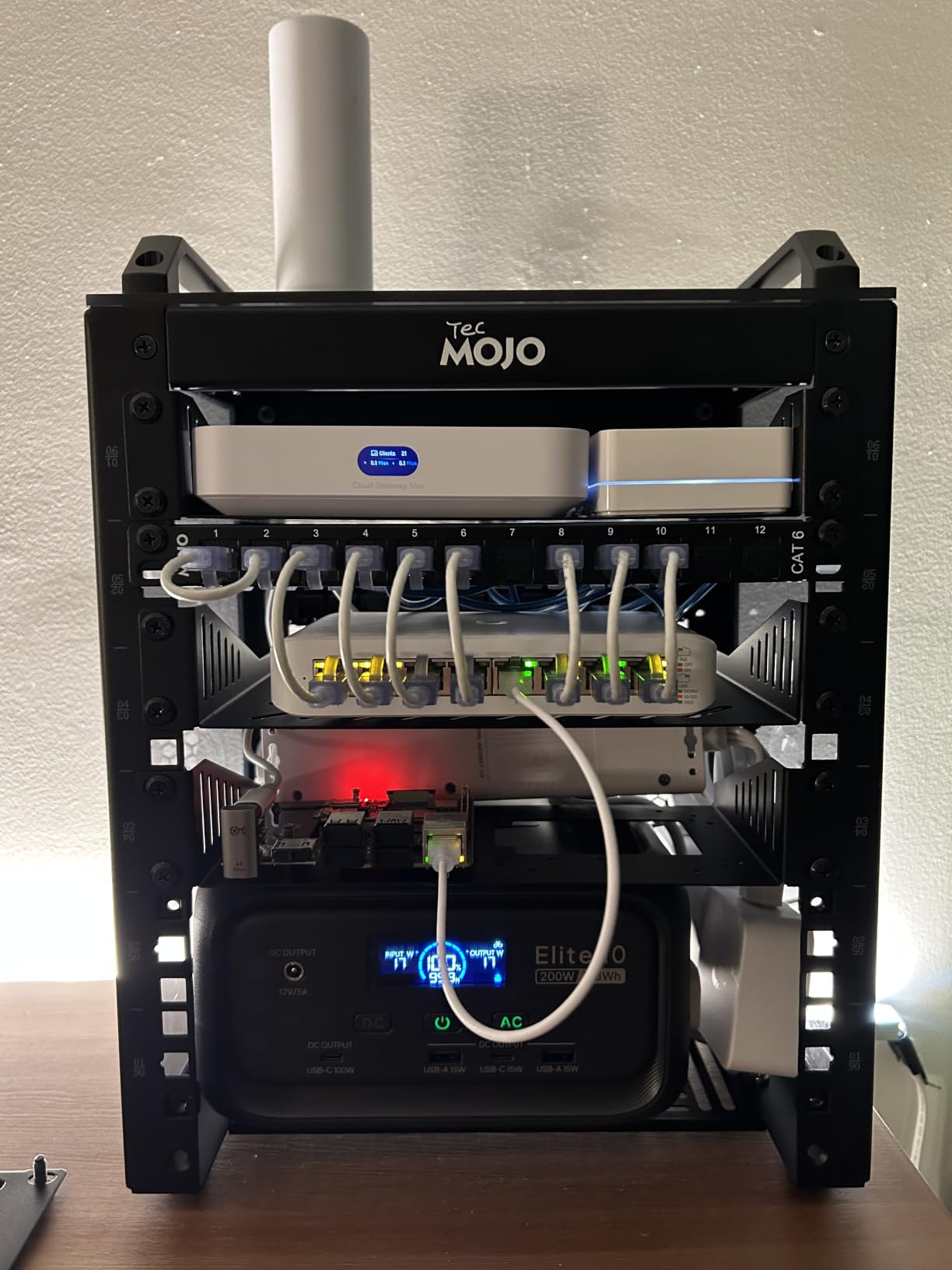
It is also a real station rather than a power bank, with a 200W AC outlet, 100W USB-C fast charging, several DC ports and a built-in 10ms UPS with 350W bypass output. Photographers and remote workers use it to keep laptops, routers and cameras running through a change.
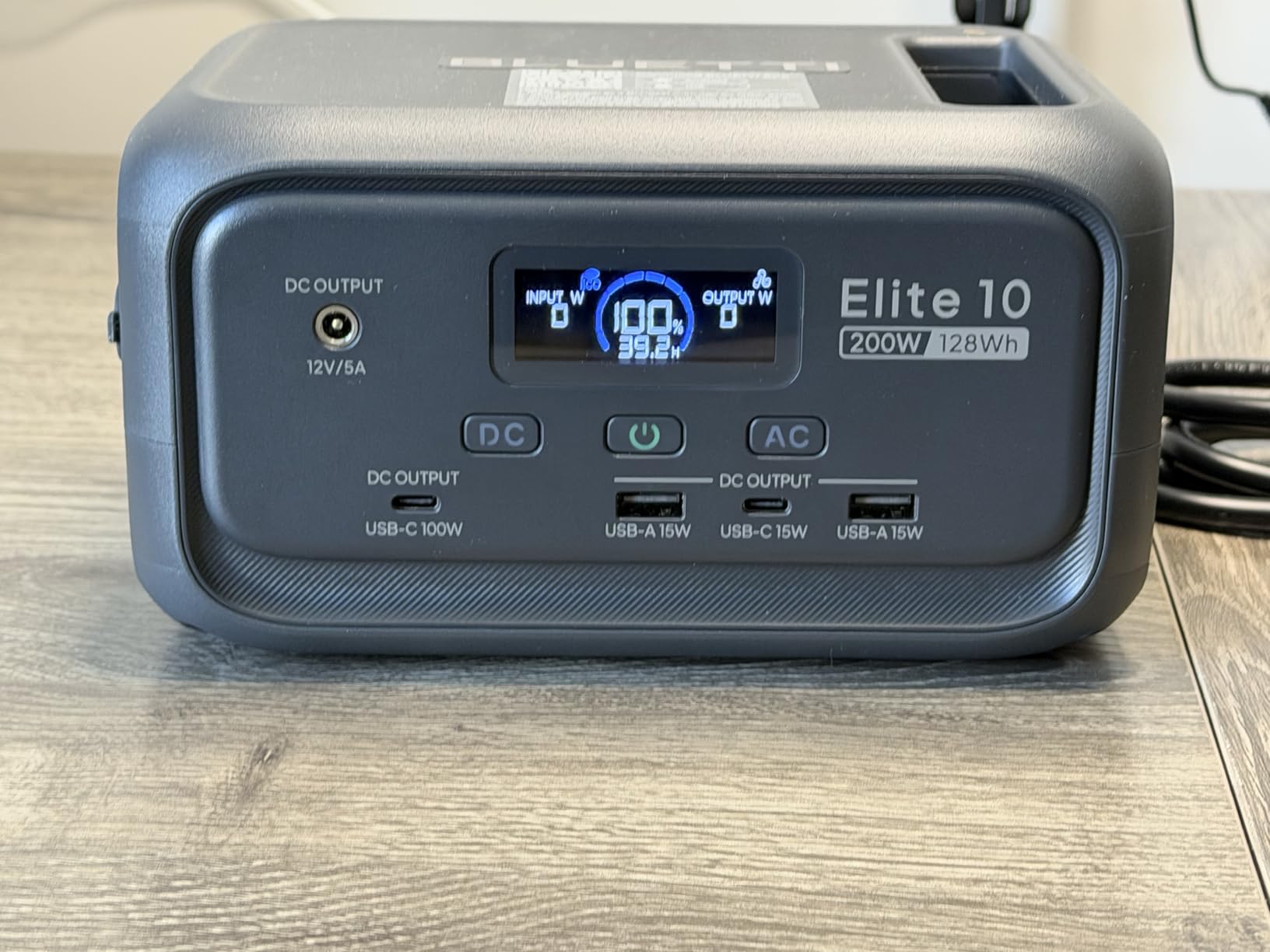
Recharge options cover 150W AC for a full charge in about 70 minutes, 100W solar and 100W car charging. Bluetooth app control handles charging modes, lighting and power status, and three lighting modes deliver up to 50 hours of illumination.
What the 10ms UPS buys you on the road
A 10ms transfer time is short enough that a laptop or a router does not notice the switch. That turns the unit into genuine protection for remote work setups, not just a way to charge a phone at 30,000 feet.
The 350W bypass output adds headroom for a brief surge without draining the pack.
Where newness is the main risk
This is the newest listing in the roundup with 222 reviews, so there is no long-run reliability record to lean on. Buyers have limited data on how the cells hold up after two or three years, and that is exactly the question that matters for a battery.
The 128Wh pack also gives roughly two hours under load, and one AC outlet is restrictive for the size. Rated cycles of 3,000 or more are claimed, which is good on paper but unproven in service.
MARBERO 237Wh – wide port count and twin lanterns in a small shell
Portable Power Station 300W MARBERO 237Wh Camping Solar Generator Backup Lithium Battery with Pure Sine Wave 110V AC Outlet, USB C, USB A, DC for Outdoors Camping CPAP Home Blackout Emergency
237Wh (64000mAh)
300W continuous, 375W max
8 outputs
4.6 lb
Pros
- Small and light at 4.6 lb with a handle that packs into a backpack
- Eight outputs covering AC
- USB-C PD
- USB-A QC3.0 and DC
- Dual LED camping lanterns with an SOS mode
- Low entry cost with solid pure sine wave AC output for the class
Cons
- 237Wh is the smallest capacity here so fans and AC loads drain it within an hour
- Proprietary round charging port rather than standard USB-C
- Multiple owners report units failing to hold a charge after 1 to 3 years
- Build quality perceived as flimsy
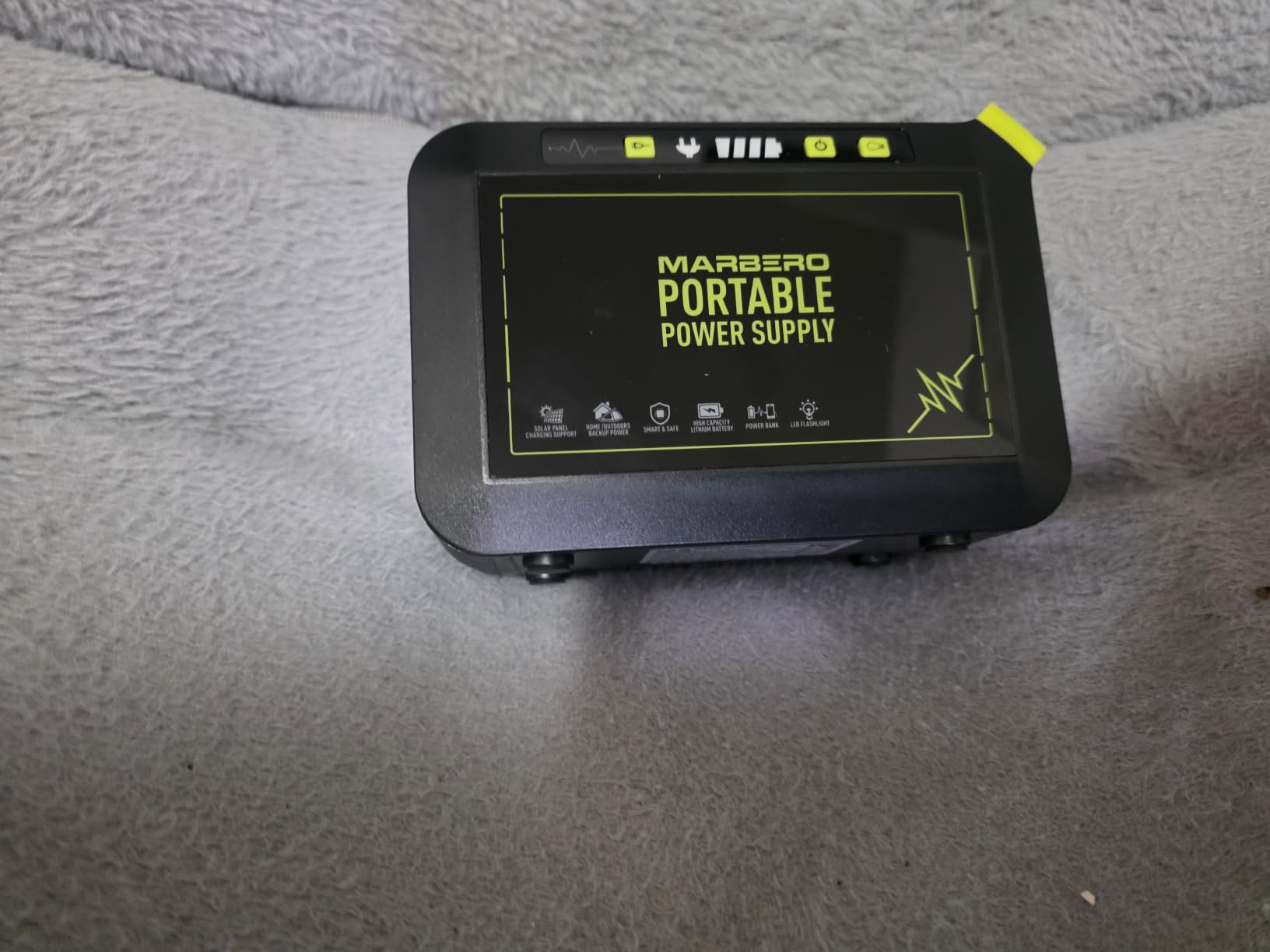
The MARBERO is the widest port count in its class. Eight outputs cover two AC outlets, two USB-A QC3.0 ports, two more USB-A, an 18W USB-C PD port and a 12V DC output, which is more flexibility than units costing several times as much.
The dual LED camping lanterns are a genuinely useful addition rather than a gimmick. Two brightness levels on the side light, plus steady, twinkle and SOS modes, cover the campground and emergency cases that most stations leave to a separate light.
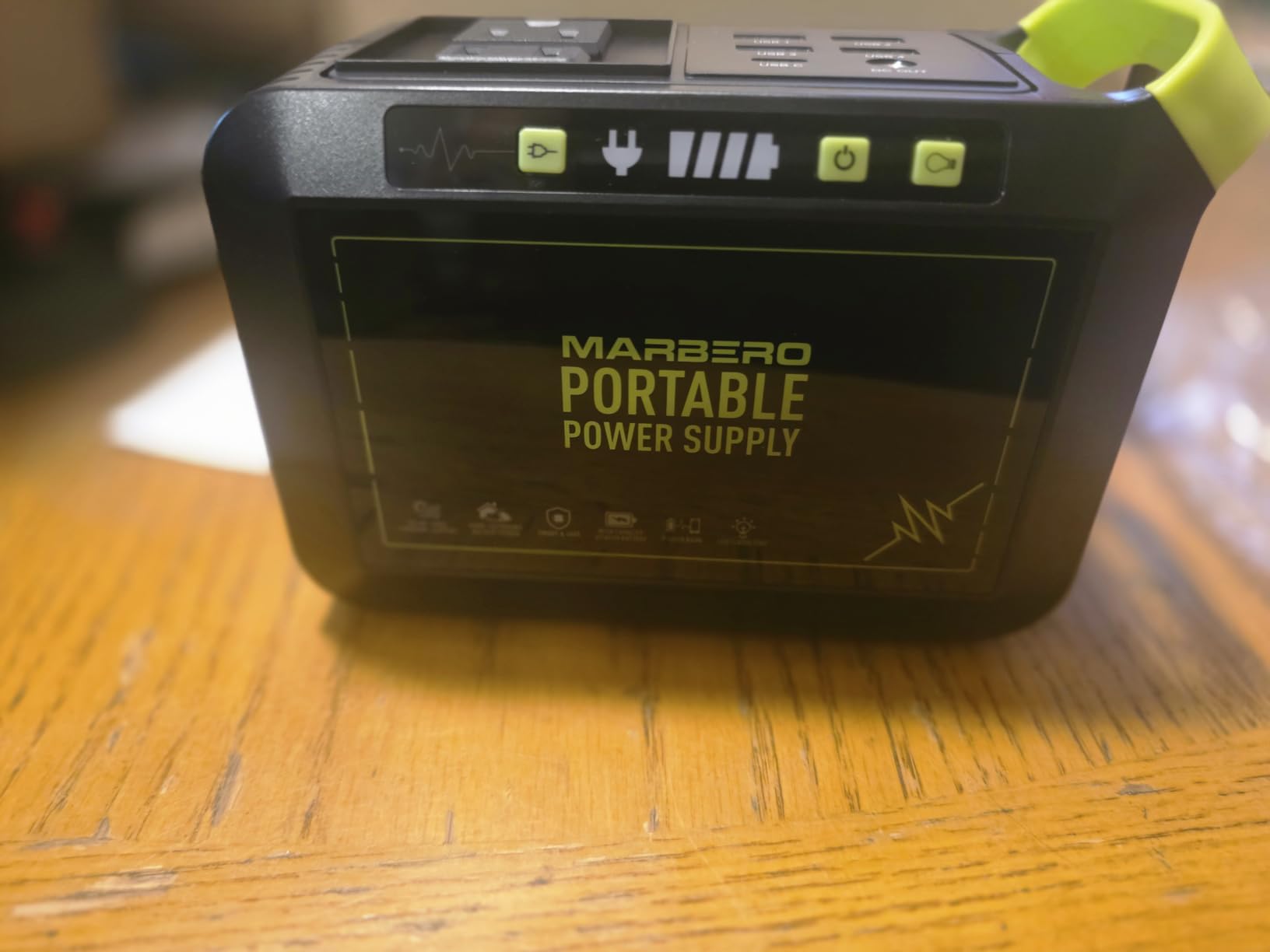
At 4.6 lb and 8.15 by 5.83 by 3.90 inches it packs easily, and the BMS covers voltage, temperature, short-circuit and overload protection. Recharging works from a wall outlet in about 6 hours, a car adapter in about 8, or a 16.4-24V panel sold separately.
Why the port count matters more than you expect
On a small trip the bottleneck is rarely capacity, it is the number of things you want running at once. Eight ports means a phone, a camera, a lantern and a laptop adapter without a multi-way extension lead.
Pure sine wave output at this size is also better than many cheaper units, so sensitive electronics behave.
Where durability reports get uncomfortable
This unit has 9,193 reviews with a noticeably wider spread than the leaders, including 12% one-star ratings. Multiple owners report units that stop holding charge after one to three years, which is a real risk for anything that is meant to sit as emergency kit.
The proprietary round charging port is the practical concern: lose the brick and you lose the ability to charge the unit. A 12-month warranty is also the shortest offered here, and build quality is regularly described as flimsy compared with the BLUETTI and Jackery units.
ZeroKor 280Wh – a compact unit where the fine print decides everything
Portable Power Station 300W,110V Solar Generator 280Wh(without Solar Panel)
280Wh
300W AC maximum
7 outputs
5.1 lb with MPPT controller
Pros
- Runs a 55-inch TV for about 4 hours
- Compact 5.1 lb body that fits easily in a car
- Can charge and discharge at the same time
- Useful for phone and small-fan backup during short outages
Cons
- Measured continuous AC output far below the advertised 300W
- with owners reporting under 100W
- Reported not to produce true pure sine wave output despite the listing claim
- Solar charging measured around 30W from a 100W panel
- One detailed review reports the 12V DC port failing with a car adapter
- Panel sold separately
The ZeroKor is listed at 300W, and that number is where the trouble starts. A detailed measurement review found real continuous AC output under 100W, well short of the advertised maximum, which is exactly the marketing-wattage gap that owner communities keep warning about at this price level.
The same review measured solar input at roughly 30W from a 100W panel, which does not support the MPPT claim in the listing. If you are buying this for off-grid use, the panel performance matters more than the headline figures.
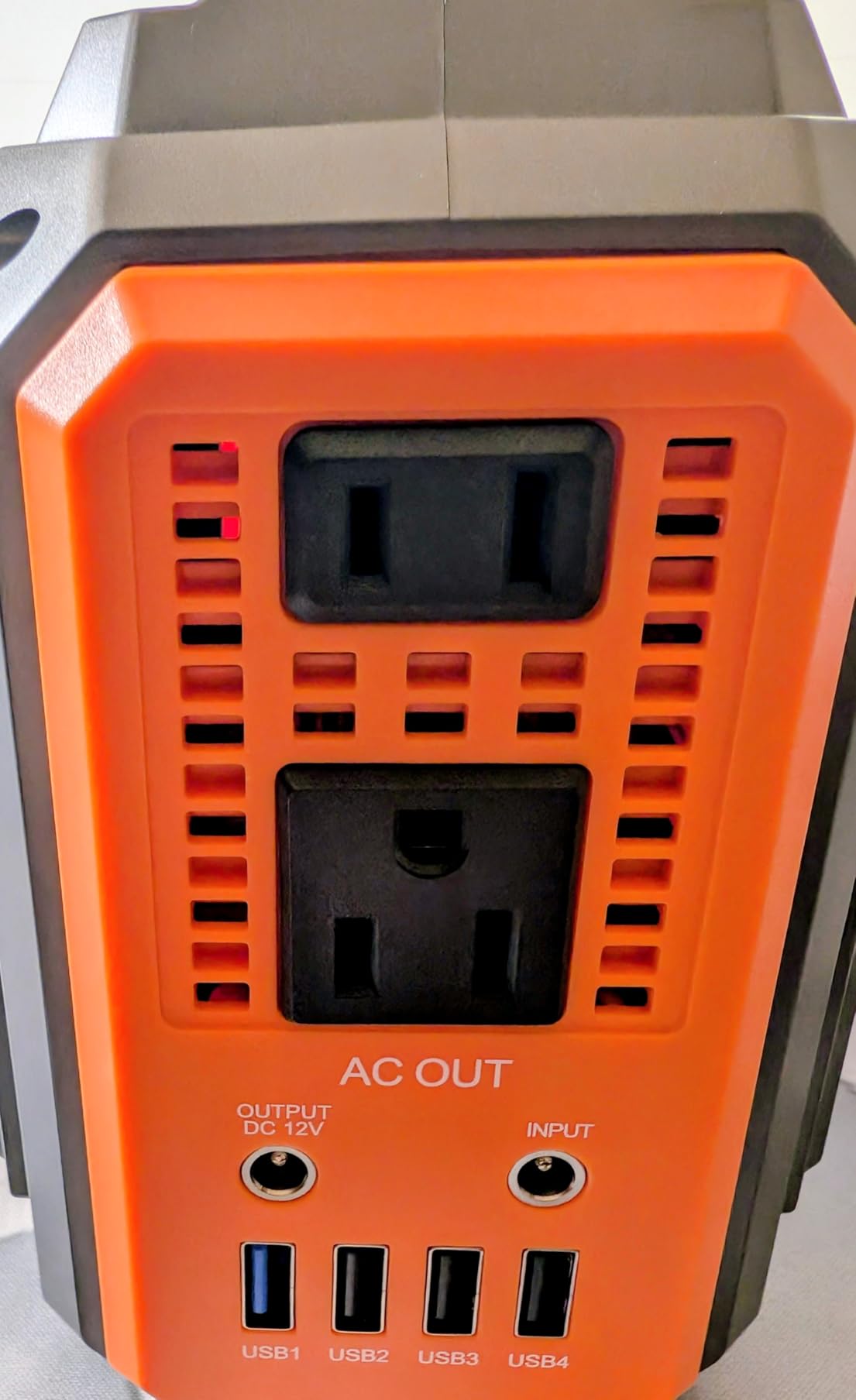
Set against that, the everyday experience for basic backup is fine. Owners report running a 55-inch TV for about four hours, holding charge through multi-day outages, and one long-term owner still using the unit after a year.
At 5.1 lb with a built-in handle, seven outputs and a 12-month warranty, it works as a car or cupboard emergency box rather than a capable station.
Why the measured output matters more than the listing
Marketing wattage is the maximum burst the inverter claims, not what it sustains. A station that cannot hold its rated continuous output will trip or brown out on the appliances you actually want to run, and you will not know until you need it.
Reports also question the pure sine wave claim, which affects sensitive electronics and CPAP machines specifically.
Where the panel and the port disappoint
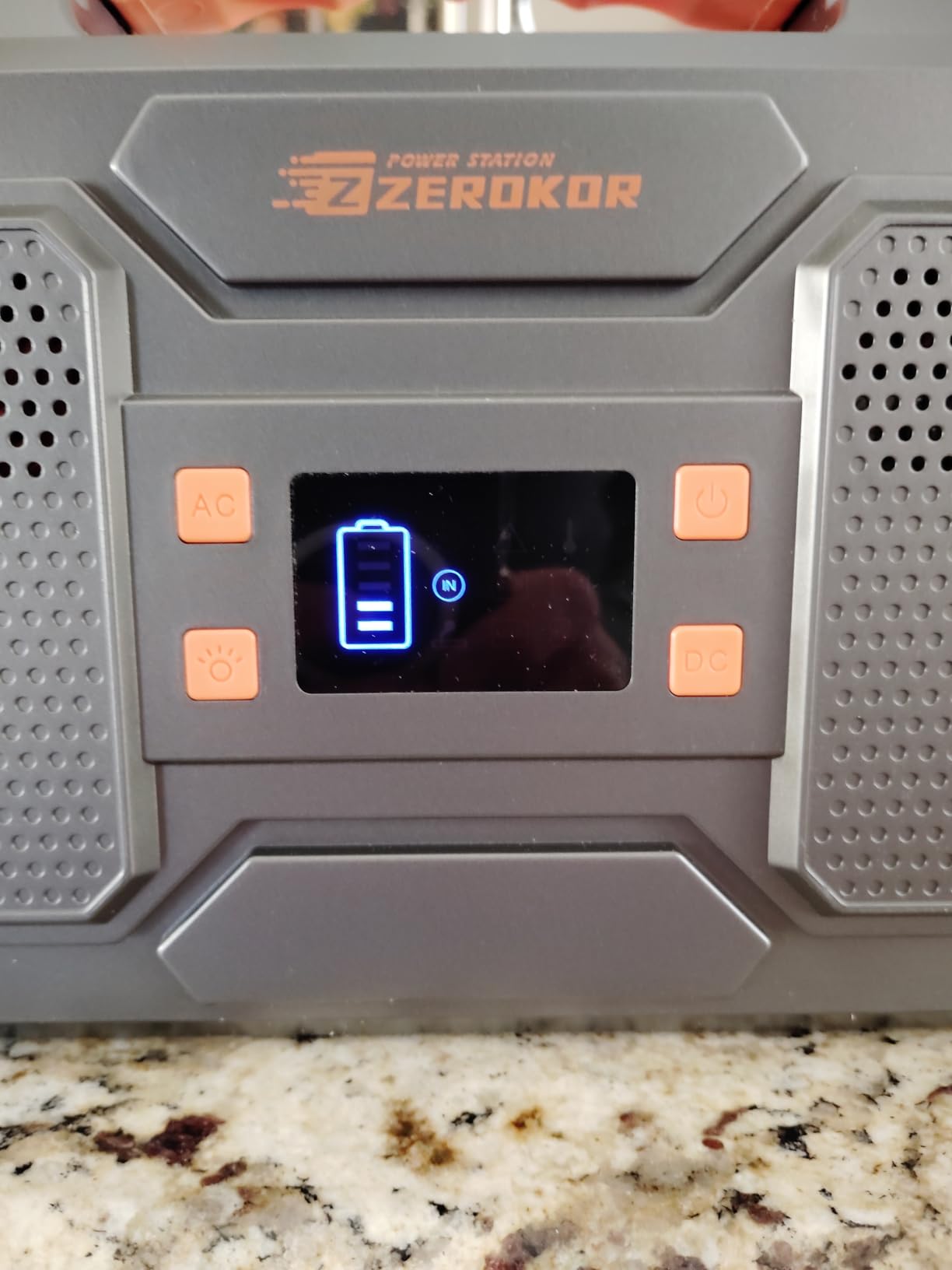
Solar charging measured around 30W from a 100W panel, so a panel bundle is not the fast refill the listing implies. One detailed review also reports the 12V DC port failing with a car adapter and a portable air compressor, which are exactly the accessories people buy these for.
The manufacturer advises recharging at least once every two weeks and avoiding full depletion. At a 4.1 rating with 11% one-star reviews, this is a case where the direct measurement reviews are worth more than the specification block.
ENOFLO G300 – a bright area lamp with a durability caveat
ENOFLO 300W Portable Power Station, 228Wh Solar Generator
228Wh (61600mAh)
300W continuous, 600W surge
wireless charging
6.2 lb
Pros
- Bright full-width LED light that illuminated an entire outdoor area
- Wireless phone charging on top is unusual at this level
- Low entry cost compared with BLUETTI and Jackery equivalents
- Handles a fan
- LED light and TV for about three hours
- Seller reportedly sent a replacement unit and acted on feedback
Cons
- Highest share of one-star ratings in the roundup at 13%
- Several owners report AC outlets failing or working only while plugged into mains
- Runtime of roughly 3 to 5 hours on moderate loads
- Handle mounting nubs and buttons reportedly degrade within weeks or months
The ENOFLO is carried by its light. A large full-width LED panel on the back with multiple brightness levels illuminated an entire outdoor area for owners, which is a differentiator no other unit in this roundup matches at this capacity.
It also charges phones wirelessly from the top, and can run up to nine devices at once across two pure sine wave AC outlets, USB-A, USB-C, two DC outputs, a car port and the charging pad.
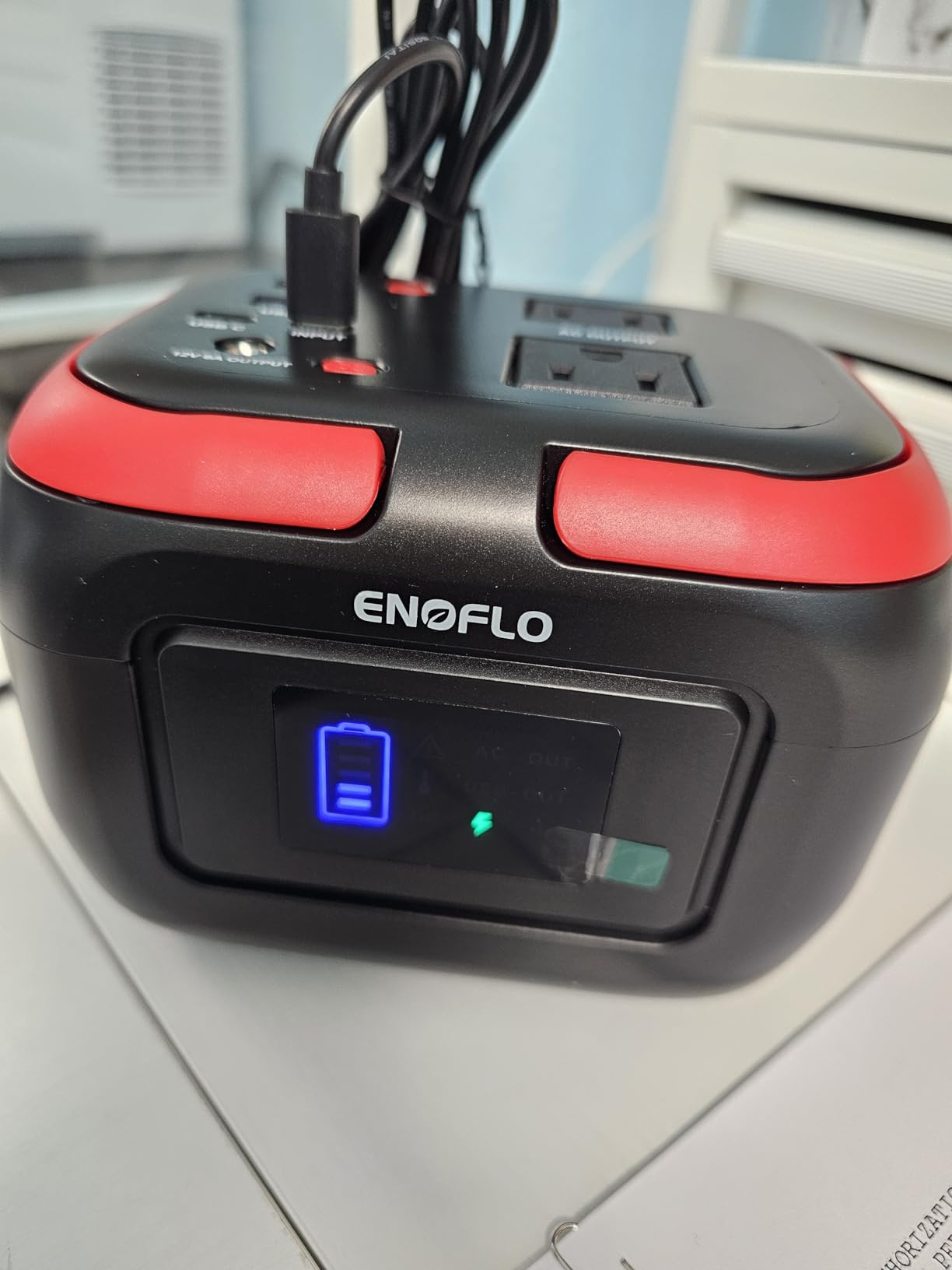
For a short blackout it does the job: owners report running a fan, an LED light and a television for about three hours. The 228Wh pack sits in a 6.2 lb body, and a built-in MPPT controller handles solar recharge in about 6 to 7 hours with a 30W or 60W panel.
Why the light changes the use case
A station that doubles as area lighting is useful in a blackout, at a campsite or in a car, because lighting is usually the first thing to fail. Owners rated it highly on illumination quality alone, and that is a feature competitors cannot copy with firmware.
Wireless charging is a small daily convenience that removes a cable from a travel bag.
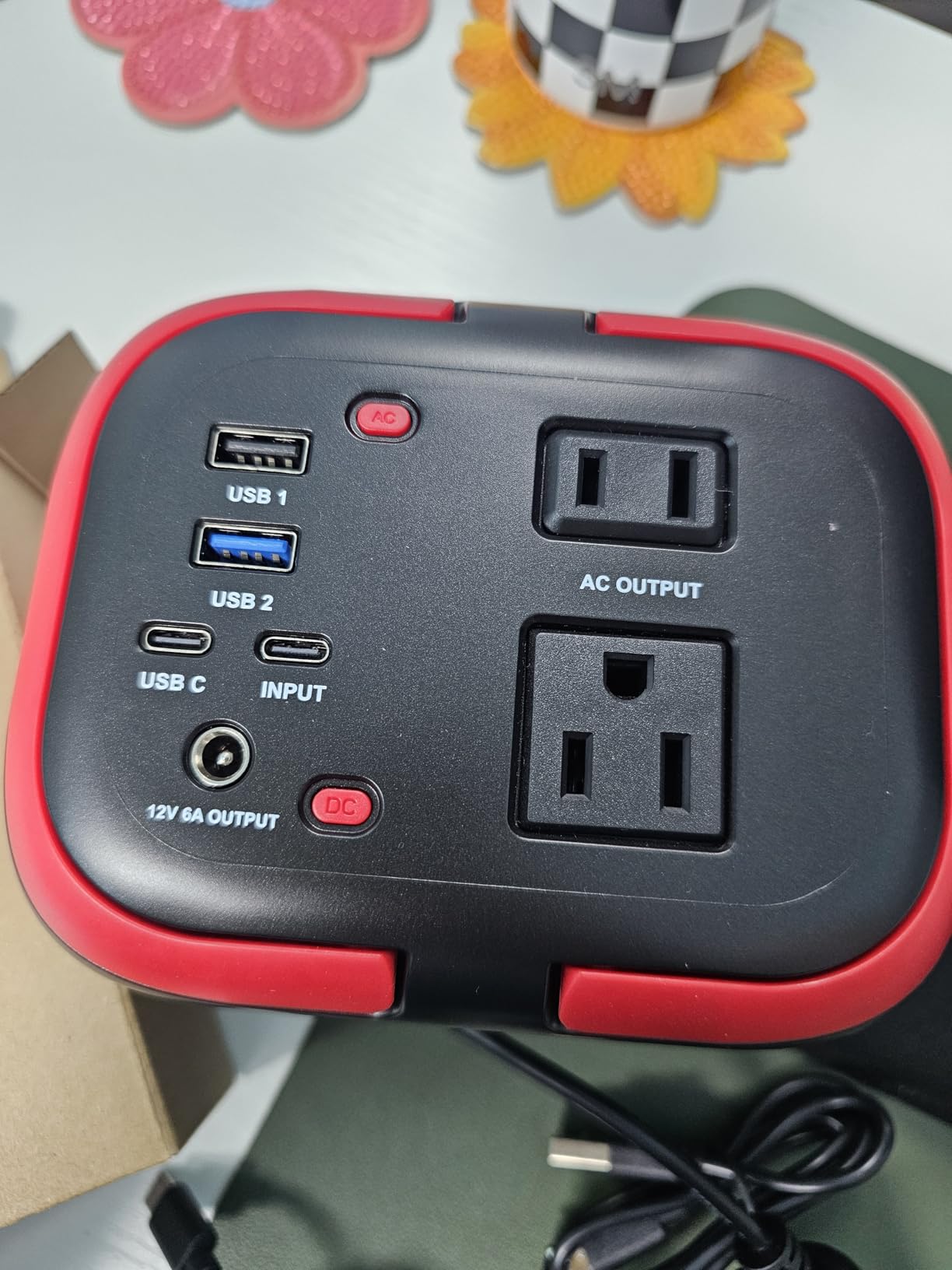
Where the durability reports worry us
This unit has the highest share of one-star ratings in the roundup at 13%. Several owners describe AC outlets failing, or working only while the unit is plugged into mains, and reports of handle nubs and buttons degrading within weeks or months are repeated.
Runtime of roughly 3 to 5 hours on moderate loads makes it a short-outage device rather than an overnight one. The warranty is one year, the shortest here, though the seller has been responsive with replacements when units have failed.
How to Choose the Best Portable Power Stations Under 500
At this budget the decision is mostly arithmetic. Capacity decides how long, output decides what, and the gap between them is where most disappointed buyers go wrong.
The Best Portable Power Stations Under 500 Answer in One Line: Match Watt-Hours to Your Device List
Add up the watts your devices draw, decide how many hours you need, multiply one by the other, and you have your required watt-hours before you account for conversion losses. Anything left over is headroom. This one calculation removes most of the guesswork from choosing among the twelve units above.
Capacity in watt-hours versus output in watts
Watt-hours are fuel. Watts are the size of the pipe. A 1,070Wh battery delivered through a 300W inverter will run a router for a long time and refuse to start a microwave, and a 300W inverter fed by 1,152Wh still cannot power your house.
Buyers who regret budget stations usually wanted more watts; buyers who regret premium ones usually wanted more watt-hours. Work out which problem you have.
LiFePO4 versus NMC cells at this budget
LFP cells are now standard in the mid-range of this roundup. The Jackery Explorer 1000 v2, both BLUETTI units, the EcoFlow RIVER 2 and the ALLWEI all use LiFePO4 rated between 3,000 and 4,000 cycles, which is roughly a decade of regular use.
The EnginStar is rated at 1,000 cycles and the HOWEASY above 1,500, so both will need replacing sooner. On a backup unit that stays plugged in and cycles rarely, that difference matters less than it does for daily camping use.
UPS switchover time and clean output
UPS switchover is the gap between mains power failing and the station taking over. Anything under 20ms is invisible to a router, a NAS or a laptop, and 10ms units such as the BLUETTI Elite 30 V2 and Elite 10 Mini are the ones to buy for electronics.
Pure sine wave output is the other half. It matters for anything with a motor, a compressor or a sensitive circuit, and several budget units claim it without measurement.
Solar input limits and recharge speed
Solar input is where budget units quietly disappoint. The BLUETTI AC180 accepts 500W, the EcoFlow RIVER 2 accepts 110W, and several smaller units cap out below 100W. A larger panel on a smaller input does not charge faster.
Check that the unit accepts standard connectors before committing to a panel, because brand-locked solar inputs force you into proprietary accessories.
Weight, ports and the accessory trap
Weight is the portability budget. Under 7 lb you can carry one hand-free, near 10 lb it needs a deliberate grip, and above 23 lb it lives in a cupboard or a vehicle rather than on your shoulder.
Before checkout, confirm you are buying a complete station and not a panel, an expansion battery or a case. Accessory listings are a persistent problem on searches for this keyword, and they are a common reason a page says 300W while the box arrives with a solar panel.
Price per watt-hour is the honest value metric
Comparing sticker prices across units of different size is misleading. Divide the cost by rated watt-hours and the picture changes completely: a 1,152Wh pack that sits at the top of the range often costs less per watt-hour than a 256Wh unit in the middle of it.
The cheapest-looking unit is frequently the most expensive to own per unit of energy. Check the figure whenever you compare two stations of different sizes.
What you can actually run, with worked runtime
Use this as a guide for a 1,000Wh-class station and scale down for a 300Wh unit. A phone at 10W runs for days, a router at 15W runs for over a day, a CPAP machine at 40-60W runs through the night, a 12V car fridge cycling at about 40W average runs a full day, and a box fan at 50W covers a long evening.
Reduce every figure by roughly a fifth for inverter losses and idle draw. A microwave at 1,200W is a different problem entirely: it empties a 1,000Wh unit in under an hour, which is why the higher-output picks exist.
Safety, indoor use and what to avoid
Portable power stations are safe to run indoors in a way a gas generator is not, because there is no combustion and no exhaust. Keep the unit ventilated, off carpets and away from direct heat, and never plug it into a wall outlet to backfeed power into household wiring. Transfer equipment is the only safe way to power a house from one of these.
Avoid listings that state a capacity without a watt-hour figure, that sell a bare accessory under a station keyword, or that advertise peak wattage while hiding continuous output. Prefer a documented battery management system and a stated certification, and check that cycle life is published rather than implied.
For wider reading, our guides to the best portable power stations for camping, for van life and for home backup go deeper on how these units are used beyond emergency scenarios. If your loads are laptop-sized rather than appliance-sized, our picks for the best portable power banks for laptops are lighter and cheaper.
Frequently Asked Questions
What is the best budget portable power station under 500?
The Jackery Explorer 1000 v2 is the strongest all-round pick in this bracket, with 1,070Wh of LFP capacity, 1,500W of continuous AC output and a 4.7 rating across 3,623 reviews. If recharge speed matters most, the EcoFlow RIVER 2 refills in about an hour, and for electronics backup the BLUETTI Elite 30 V2 offers a 10ms UPS transfer.
What is the best affordable portable power station?
Affordability depends on capacity rather than sticker price. Divide cost by rated watt-hours and larger stations under the budget cap often work out cheaper per watt-hour than small units. The BLUETTI AC180 holds 1,152Wh, and the Jackery Explorer 1000 v2 holds 1,070Wh, so both deliver more energy per pound than any sub-300Wh alternative.
Is Jackery or Anker better?
Within this budget range the difference is ecosystem and chemistry. Jackery units here use LFP cells rated at 4,000 cycles with a two-year warranty on the Explorer 300, while BLUETTI and EcoFlow offer five-year terms. Anker SOLIX does not appear in this roundup, so the practical comparison is between Jackery’s app and solar panel lock-in and BLUETTI’s five-year warranty and standard solar connectors.
Which brand of portable power station is the most reliable?
Reliability at this budget tracks cycle-life ratings and certification rather than brand name alone. The Jackery Explorer 1000 v2 and BLUETTI Elite 30 V2 both retain over 70% of rated capacity after 4,000 cycles, and the EcoFlow RIVER 2 carries a five-year warranty. Owner communities most often report customer service, not battery failure, as the weak point across brands.
Can a portable power station run a refrigerator during an outage?
Yes, provided the compressor start-up draw fits the inverter and the cycling load fits the capacity. A 12V car fridge averaging 40W runs roughly a full day on a 1,000Wh station and several hours on a 300Wh unit. Reduce expectations by about a fifth for inverter losses, and never rely on a station that only advertises peak wattage.
What should I choose, more watts or more watt-hours?
Choose more watts if you want to start appliances like a fridge, a microwave or a kettle. Choose more watt-hours if your devices are small electronics such as a router, a NAS, a laptop or a CPAP machine that need to stay on for many hours. A station with both is the safe answer, and the Jackery Explorer 1000 v2 manages 1,070Wh and 1,500W in one body.
How long do portable power stations last?
It depends on the chemistry and the cycle rating. LiFePO4 units in this roundup are rated between 3,000 and 4,000 cycles, which works out to roughly a decade of regular use, while the EnginStar R300 is rated at 1,000 cycles and the HOWEASY H120 above 1,500. Calendar age still matters, so store a unit between 40 and 70% charge and top it up every few months.
What should I avoid when buying a cheap portable power station?
Avoid accessory-only listings that appear for station searches, listings that quote a capacity without a watt-hour figure, and units that advertise peak wattage while hiding continuous output. A measured review of the ZeroKor 280Wh found continuous AC output under 100W against a 300W claim, which is exactly the pattern to watch for. Also check that a BMS and a stated cycle rating are published.
Conclusion: The Best Portable Power Stations Under 500 in 2026
The best portable power stations under 500 are not all the same machine, and the right one depends on what you are powering. For the widest range of loads, the Jackery Explorer 1000 v2 pairs 1,070Wh with 1,500W of continuous output. For quick recovery between uses, the EcoFlow RIVER 2 refills in about an hour. For protecting a router, NAS or laptop, the BLUETTI Elite 30 V2 transfers in 10ms.
At the small end, the ALLWEI and EnginStar units run CPAP machines and car fridges for real, measured hours. If you want the longest outage coverage, the BLUETTI AC180 holds the biggest battery here. Whatever you pick, check that the listing shows a complete station, budget against usable watt-hours rather than the label, and never backfeed it into household wiring.