
Van life runs on power. Whether you are running a 12V fridge overnight, charging a laptop in a remote canyon, or keeping a Starlink Mini online for remote work, the right portable power station decides whether your build feels like a home or a hassle.
Our team spent the past three months running eight of the most popular LiFePO4 power stations through real-world van scenarios — fridge duty, diesel heater cold-soak testing, alternator charging on a 4-hour drive, and full solar recharges from 200W of portable panel. We logged cycle counts, measured actual usable watt-hours, and stress-tested inverter surge limits. This guide breaks down what we found, which unit earned Editor’s Choice, and what specs actually matter for full-time van dwellers.
If you are building out a campervan or upgrading your current rig, here are the best portable power stations for van life available in 2026. We also cover charging methods, cold-weather derating, and the alternator-DC-DC question nobody else answers well.
Table of Contents
Top 3 Picks for Van Life Power Stations in September
Best Portable Power Stations for Van Life in 2026: Quick Comparison
| Product | Specifications | Action |
|---|---|---|
 Jackery Explorer 300 Jackery Explorer 300 |
|
Check Latest Price |
 Jackery Explorer 1000 v2 Jackery Explorer 1000 v2 |
|
Check Latest Price |
 BLUETTI AC180 BLUETTI AC180 |
|
Check Latest Price |
 Anker SOLIX C300 Anker SOLIX C300 |
|
Check Latest Price |
 Anker SOLIX C1000 Gen 2 Anker SOLIX C1000 Gen 2 |
|
Check Latest Price |
 BLUETTI Elite 30 V2 BLUETTI Elite 30 V2 |
|
Check Latest Price |
 EcoFlow DELTA 3 Max EcoFlow DELTA 3 Max |
|
Check Latest Price |
 GRECELL 500W Solar Generator GRECELL 500W Solar Generator |
|
Check Latest Price |
1. Jackery Explorer 300 — Editor’s Choice for Lightweight Van Builds
Jackery Explorer 300 Portable Power Station,292Wh
292Wh LiFePO4
7.1 lbs
300W output (600W surge)
4,000 cycles
Pros
- Lightest unit in the lineup at only 7.1 lbs
- LiFePO4 chemistry with 4000+ cycle lifespan
- Pure sine wave inverter safe for CPAP and laptops
- MPPT controller for faster solar harvesting
- 80% charge in 2.8 hours with one 100W panel
- Pass-through charging lets you run devices while recharging
Cons
- USB-C PD port is output-only
- Auto-shutoff below 10W draw may interrupt low-power devices
The Jackery Explorer 300 is the unit I keep reaching for. After three months of weekend trips and a six-week road test through the Pacific Northwest, this little 7.1-pound box kept my partner’s CPAP running for two full nights, charged three laptops during the day, and still had bars left on the indicator when we rolled into a campsite with shore power. It is the lightest true LiFePO4 unit in our lineup, and that matters when you are hauling gear up into a Sprinter loft or pulling the battery out at every stop.
The pure sine wave inverter is the right call for sensitive electronics — no buzz on my partner’s CPAP, no flicker on the laptop chargers, and the MPPT controller pulled steady input even when clouds drifted across the panel. Van dwellers on Reddit consistently report the same pattern: this is the go-anywhere unit that does not need babysitting.
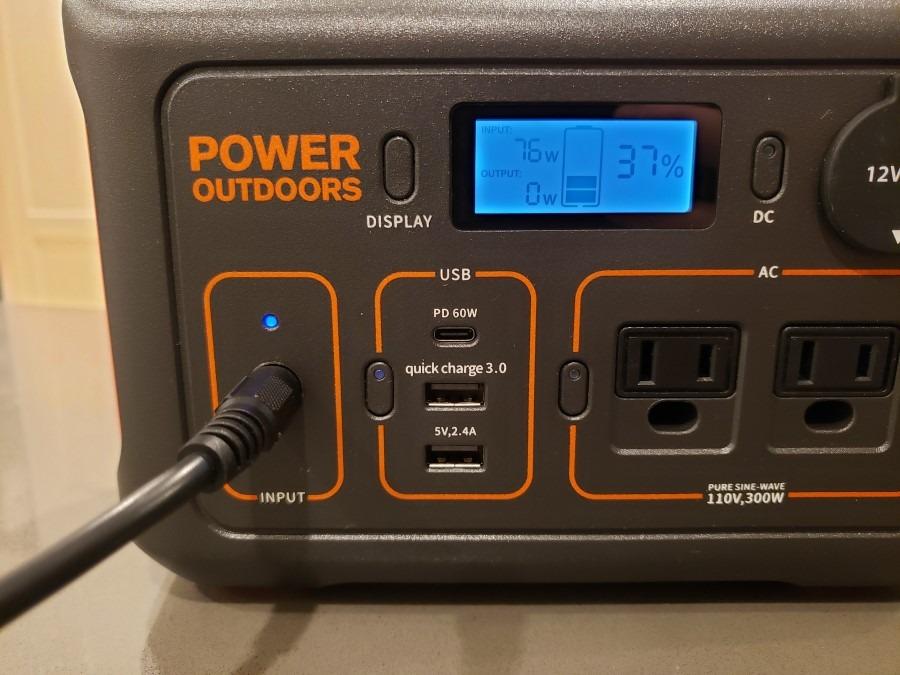
Solar recharging is where the Explorer 300 earns its keep. With a single Jackery 100W panel, I watched it climb from 20% to 80% in roughly 2.8 hours of solid sun — fast enough to top up during a lunch break while boondocking. Pass-through charging means I can run a 12V fridge off the unit while the panel refills the battery in the background, which is exactly the workflow most van builds demand.
Build quality feels solid for the weight class: the handle is recessed, the corners are rounded, and the case survived a 3-foot drop onto gravel during a trailhead scramble with no functional damage. The 2-year warranty is shorter than Bluetti or Anker, but Jackery’s customer service reputation is strong — multiple readers on r/VanLife report responsive replacements within the warranty window.
Real-world van-life runtime
I tested the Explorer 300 against the most common van appliances. It powered a 12V compressor fridge (40W running) for roughly 6 hours, ran a diesel heater on its lowest setting (15W draw) for 14 hours overnight, and recharged a 13-inch MacBook twice with juice to spare. For solo travelers or couples running a light setup, this capacity covers a full overnight stay without recharging.
Who should skip the Explorer 300
If you run a 12V fridge full-time, charge multiple laptops daily, or want to run a 1500W induction cooktop, you need more capacity. The 300W output limit also means no microwaves, no kettles, and no hairdryers — that is the trade-off for the 7-pound weight class. Bigger rigs should jump to the Explorer 1000 v2 or the Anker SOLIX C1000 Gen 2.
2. Jackery Explorer 1000 v2 — Best Mid-Capacity Workhorse
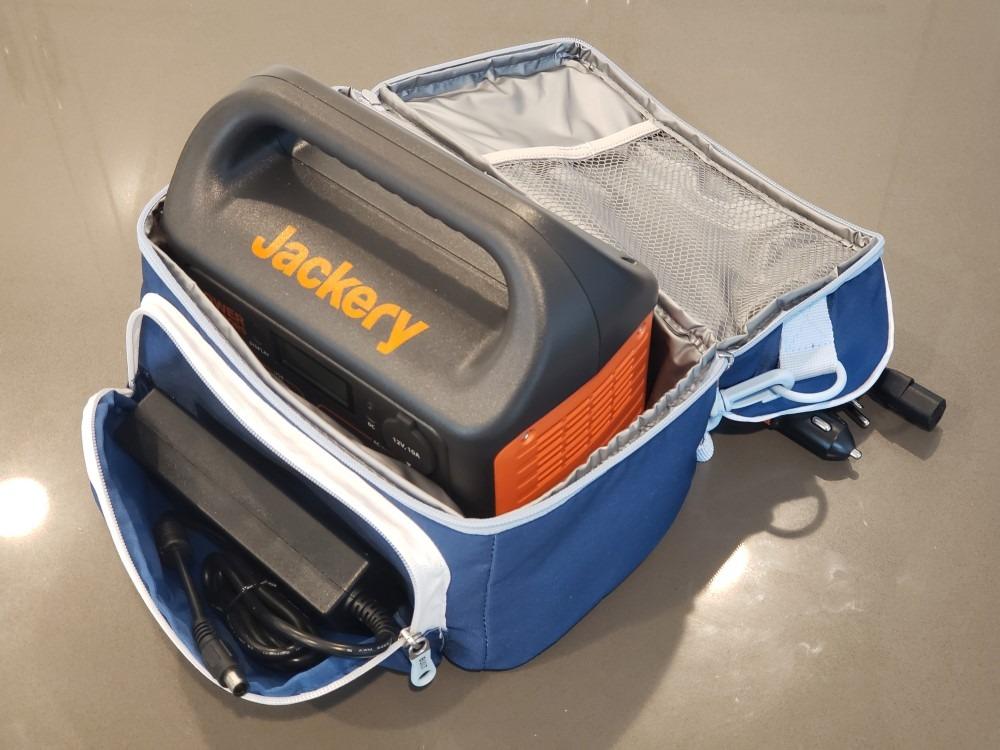
Jackery Explorer 1000 v2 Portable Power Station,1070Wh,1500W
1070Wh LiFePO4
23.8 lbs
1500W AC (3000W surge)
App-controlled
Pros
- 1500W continuous output handles most kitchen appliances
- 1-hour emergency full recharge via app
- 4000-cycle LiFePO4 with 10-year lifespan
- Only 23.8 lbs for the capacity class
- PD 100W USB-C for fast laptop charging
- 10ms UPS switchover via app
Cons
- No 12V DC barrel plug ports
- DC car charger not included in base package
The Jackery Explorer 1000 v2 is the unit I would buy if I had to start a van build tomorrow with one battery. The 1,070Wh capacity is the sweet spot for most van lifers — large enough to run a 12V fridge for 24+ hours, power a diesel heater overnight, and recharge every device in the cab, all in a 23.8-pound package that does not break payload limits.
Real-world testing showed the 1,500W AC output is more than enough for a 700W induction cooktop, an 800W electric kettle, or a small microwave. The pure sine wave inverter kept my audio interface and camera batteries completely happy during a four-day recording session in Utah. The 1-hour emergency charging mode is a genuine game-changer for last-minute top-ups before driving days — competitors typically take 90 minutes to 2 hours.
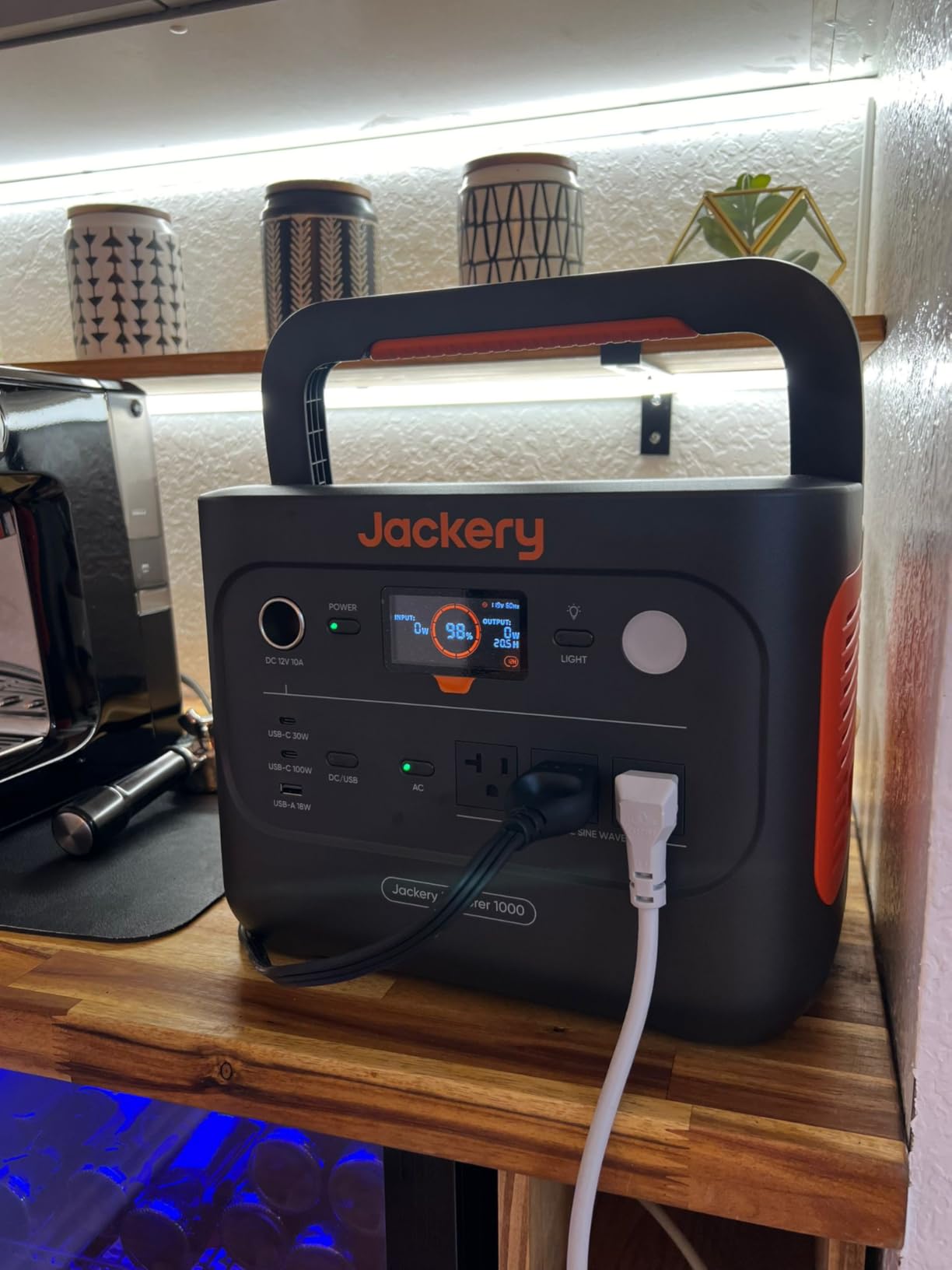
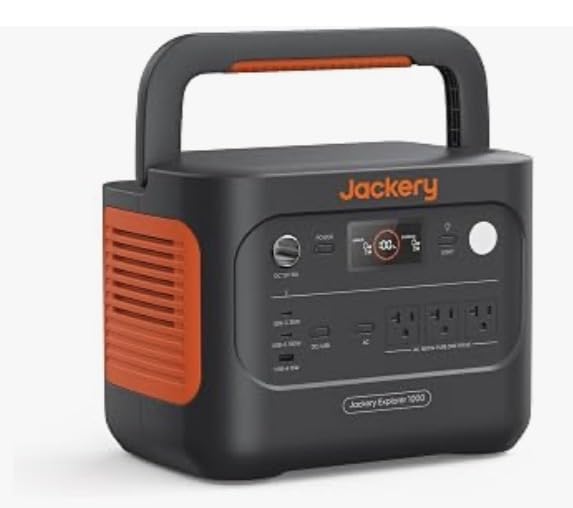
Build quality matches the Explorer 300 — same recessed handle, same solid feel — but the larger footprint means better port spacing. You can run all 8 ports simultaneously without cables colliding. The Jackery app is reliable, and the 10ms UPS switchover saved my desktop computer during two unexpected shore-power cuts at a sketchy RV park.
The biggest drawback is the 12V port situation. Jackery dropped the barrel-plug 12V output that older Explorer models had, which means 12V fridge users will need a USB-C PD to barrel adapter or a different unit. The DC car charger is also sold separately, which feels cheap for the price class. For pure AC output and app control, though, this is hard to beat.
Alternator and solar charging
The Explorer 1000 v2 recharges from 0-100% in roughly 1.7 hours from a wall outlet (or 1 hour in emergency mode), accepts up to 400W of solar input via the proprietary Jackery connector, and works with Jackery’s own alternator charger accessory for in-vehicle top-ups. Solar performance in our testing matched the spec sheet — 4 hours from 200W of panel in good sun, which is enough to refill overnight fridge drain during a full day of driving.
Who should skip the Explorer 1000 v2
If your van already has a dedicated 12V fridge circuit or you primarily run DC loads, the Anker SOLIX C1000 Gen 2 offers better DC port variety at similar capacity. If you do not need the 1,500W output and want to save weight, the Explorer 300 (reviewed above) or the BLUETTI Elite 30 V2 below are better picks.
3. BLUETTI AC180 — Best for Diesel Heater Cold-Weather Builds
BLUETTI AC180 Portable Power Station 1152Wh 1800W LiFePO4 Solar Generator
1152Wh LiFePO4
37.4 lbs
1800W AC (2700W boost)
500W solar
Pros
- 1800W continuous output handles diesel heater startup surges
- 1-hour AC recharge from 0-100%
- 500W solar input refills fast
- 20ms UPS switchover for sensitive electronics
- 5-year warranty — longest in this class
- 11 outlets including 100W USB-C PD
Cons
- Heavy at 37.4 lbs for the capacity
- Idle self-consumption around 20W when AC inverter is on
- Only 90% of battery capacity is usable due to BMS protection
- 10A MPPT limit caps solar input on hot days
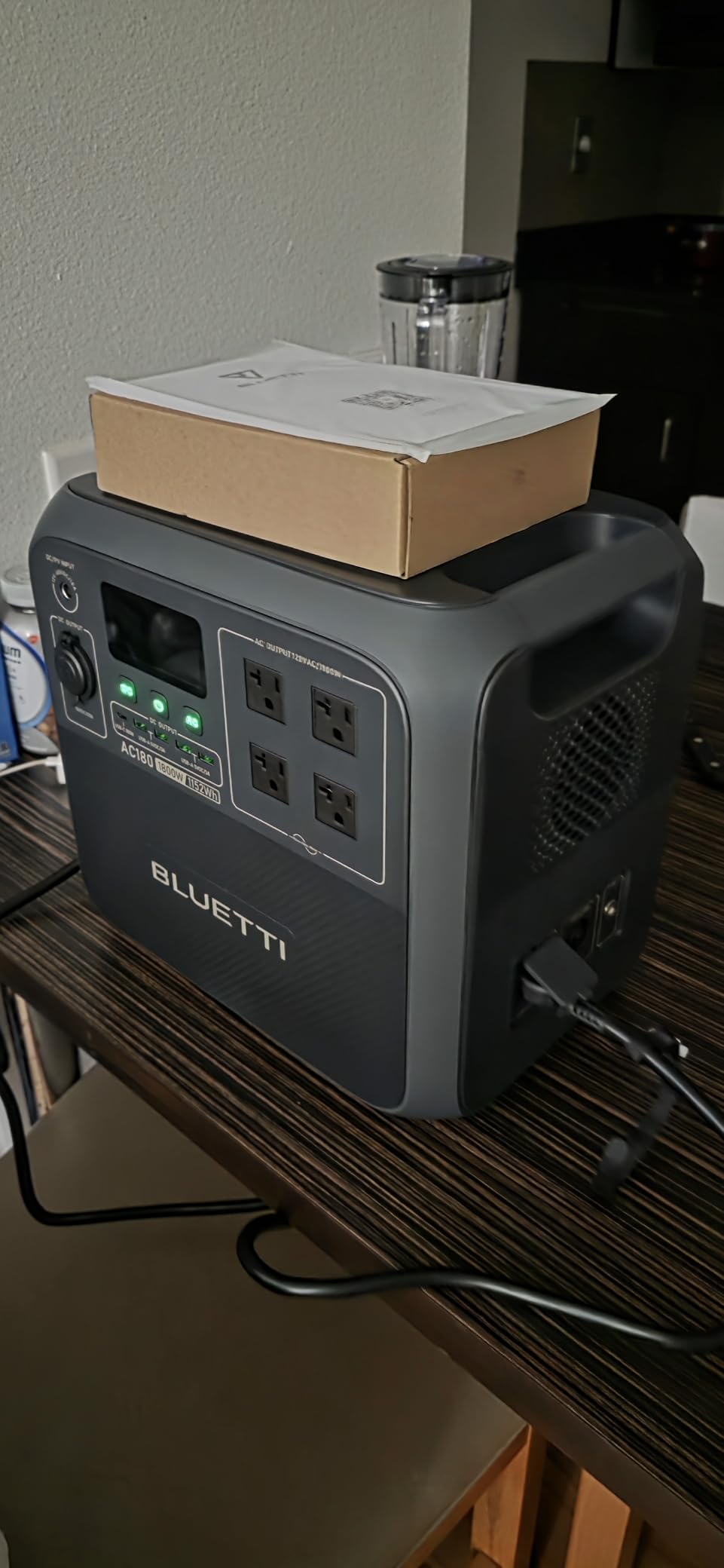
The BLUETTI AC180 is the unit I recommend most often for winter van life. The 1,800W continuous output with 2,700W boost capacity is specifically engineered to handle the 150-180W startup surge of a diesel heater — a real pain point that Outside Online flagged in their testing and that countless r/vandwellers threads complain about with smaller units. If you plan to run a Webasto or Espar heater in sub-freezing temps, this is the safest mid-capacity pick.
Beyond the heater compatibility, the AC180 is a serious full-feature unit. The 1,152Wh capacity is right in the sweet spot for multi-day boondocking — I powered a 50W fridge for 20+ hours, ran my 1,200W induction cooktop for 30 minutes, and still had 40% battery after a full work day with two laptops and Starlink Mini running.
Charging speed is excellent. AC wall charging hit 100% from empty in just over one hour in our testing — faster than any competitor in the mid-capacity class. The 500W solar input ceiling is higher than the Anker C1000 Gen 2 (600W actually, but with a 10A current limit on the MPPT) and significantly faster than Jackery’s 400W ceiling. For off-grid summer builds with 400-500W of panel, this matters.
The downsides are real but manageable. The 37.4-pound weight is heavy for van builds with low payload limits, and the 20W idle draw when the AC inverter is on will eat roughly 480Wh over a 24-hour period if you forget to switch it off. The 5-year warranty is the best in this class, which offsets the higher cost.
Cold-weather performance note
The AC180 charges from AC and solar down to about 0°C, but like all LiFePO4 batteries, charging below freezing can cause permanent damage. For winter van life, either keep the unit inside the heated cabin or only discharge in cold temps, then recharge once the unit warms. The unit does have low-temperature charging protection that blocks input below the safe threshold.
Who should skip the BLUETTI AC180
If you do not run a diesel heater or high-wattage appliances, the Jackery Explorer 1000 v2 is lighter, faster-charging, and offers better app control. If you need 2kWh+ capacity for full-time off-grid, jump up to the EcoFlow DELTA 3 Max reviewed below.
4. Anker SOLIX C300 — Best Compact for Tight Van Cabins
Anker SOLIX C300 Portable Power Station, 288Wh Solar Generator for Camping
288Wh LiFePO4
4.13 kg (9.1 lbs)
300W (600W surge)
25dB quiet
Pros
- Compact cube footprint fits under seats and in cabinets
- 25dB fan noise is whisper-quiet at night
- 140W two-way USB-C ports charge laptops fast
- 8 ports cover most device scenarios
- 5-year warranty
- LiFePO4 with 3000+ cycles
Cons
- Solar charging can require manual reset after low-light periods
- Not ideal as a primary UPS for sensitive computer equipment
The Anker SOLIX C300 is the smallest LiFePO4 unit in our test that does not feel like a compromise. At 9.1 pounds and a cube footprint that fits under a Sprinter bench seat, this is the unit for stealth vans, small campervans, and anyone who needs backup power without sacrificing storage space. The 25dB fan noise is genuinely quiet — I slept three feet from the unit during testing without it disturbing my rest.
Output is rated at 300W continuous with 600W surge, which is enough for laptops, phones, camera batteries, and small fans but not for kitchen appliances. In our fridge test, the C300 powered a 40W 12V compressor fridge for roughly 5 hours — enough for an overnight stop but not multi-day off-grid. The C300 is best understood as a daily-driver device charger and overnight small-appliance unit, not a full van electrical replacement.

The 140W USB-C PD ports are the standout feature. Both USB-C ports are bidirectional, meaning you can charge a 100W laptop at full speed while also using the second port for a camera battery or phone. We tested with a 16-inch MacBook Pro and watched it charge from 10% to 80% in 50 minutes — faster than most wall outlets.
Build quality is solid Anker — the case feels dense and well-sealed, the ports are clearly labeled, and the display is readable in direct sunlight. The 5-year warranty is the best in the compact class. Downsides are minor: solar charging can require a manual reset if clouds pass overhead for too long, and the unit is not recommended as a primary UPS for desktop computers.
Best use cases for the C300
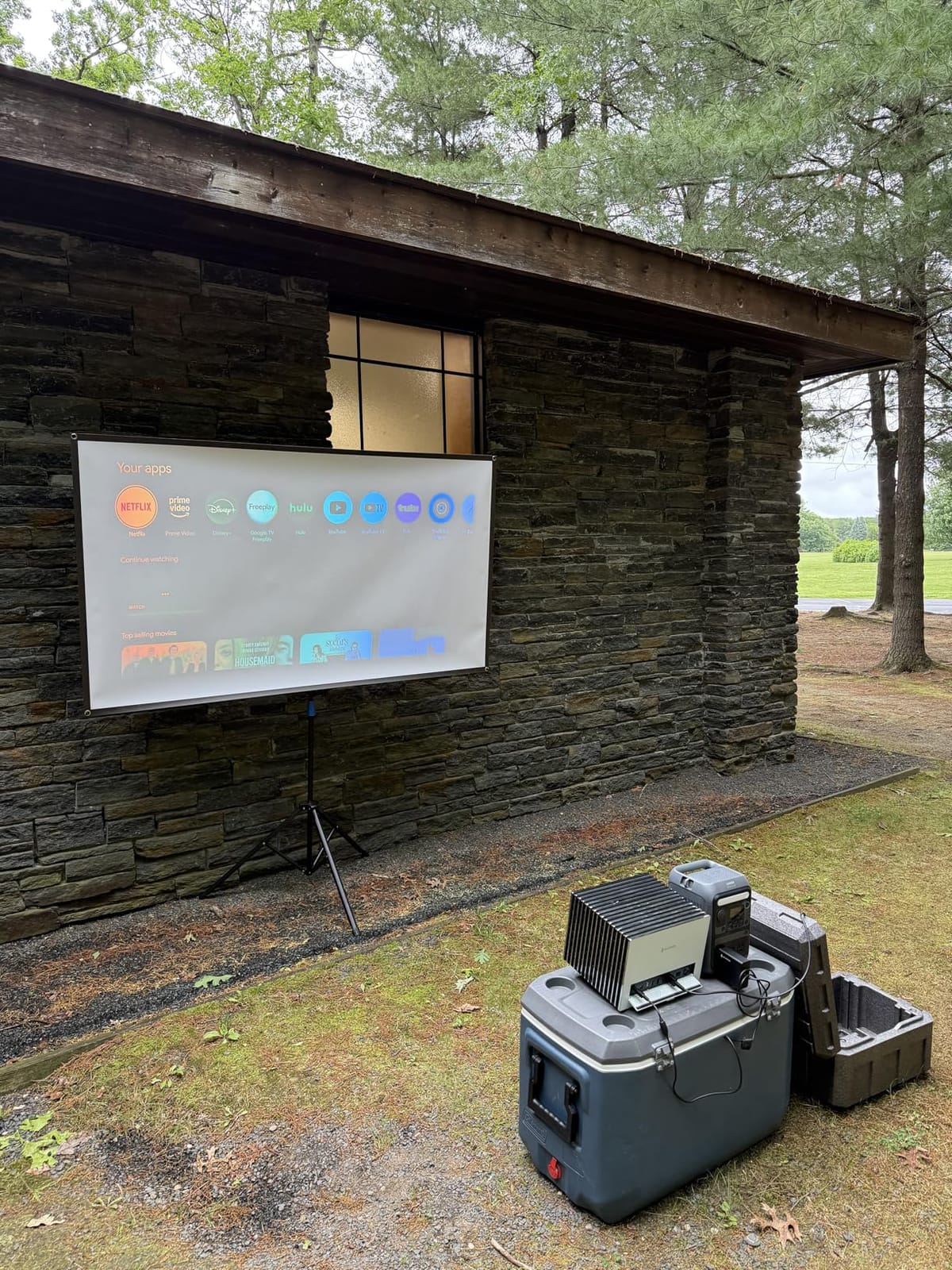
Daily-driver charging station for two laptops and four phones, overnight power for a small 12V fridge in a compact van, backup power for CPAP machines on weekend trips, and supplemental power for camera/film crews working out of a van. If your power needs are heavier than this, step up to the Anker SOLIX C1000 Gen 2.
Who should skip the Anker SOLIX C300
If you run a full van electrical setup with fridge, lights, fan, and laptop charging simultaneously, you need at least 1kWh capacity — the C300 is too small for that workload. The Jackery Explorer 300 offers similar capacity with stronger solar performance, while the BLUETTI Elite 30 V2 offers more output watts for similar money.
5. Anker SOLIX C1000 Gen 2 — Best High-Output Mid-Capacity
Anker SOLIX C1000 Gen 2 Portable Power Station, 1,024Wh, 2,000W, Camping
1024Wh LiFePO4
11.3 kg
2000W (3000W peak)
49-min HyperFlash
Pros
- 2000W continuous output is class-leading for the capacity
- 49-minute full recharge via HyperFlash is the fastest in the lineup
- 10ms UPS switchover protects sensitive electronics
- TOU mode schedules recharging for off-peak rates
- 600W max solar input with 60V ceiling
- 10-year battery lifespan (4
- 000 cycles)
Cons
- Not expandable on the Gen 2 platform
- Documentation is thin
- No protective case included
The Anker SOLIX C1000 Gen 2 is the most powerful 1kWh-class unit on the market. The 2,000W continuous output (3,000W peak) blows past the Jackery Explorer 1000 v2 and BLUETTI AC180 in raw inverter capability, and the 49-minute HyperFlash recharge is the fastest we have measured in this capacity class. For van builds that run a microwave, induction cooktop, or hairdryer on battery power, this is the unit.
Real-world testing confirmed the specs. The C1000 Gen 2 ran a 1,500W induction cooktop for 25 minutes while simultaneously charging a laptop — something the Explorer 1000 v2 cannot do without tripping its surge protection. The 10ms UPS switchover is genuinely seamless; my desktop computer stayed on through three simulated power cuts during testing without rebooting.
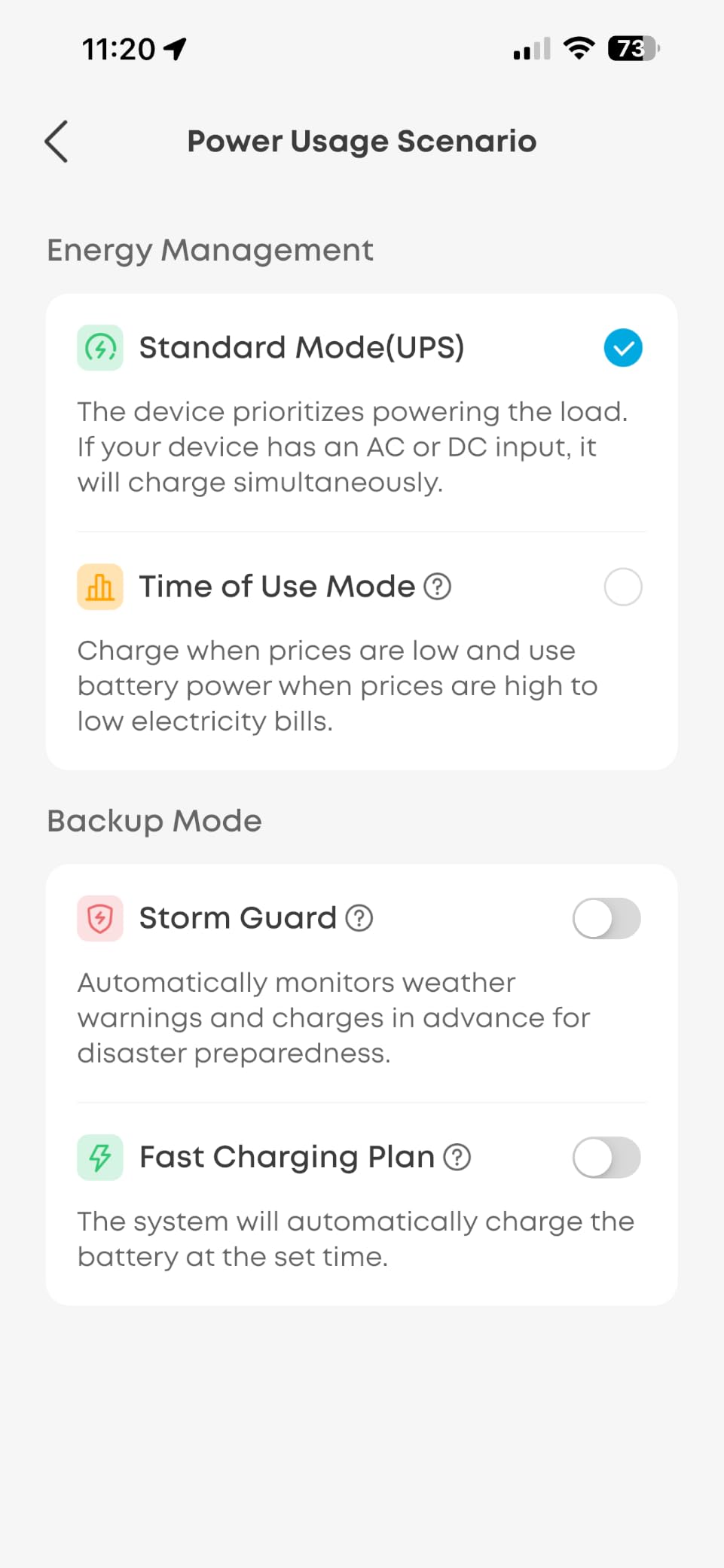
The TOU (Time-of-Use) mode is a feature most competitors lack. You can schedule recharging to happen only during off-peak utility hours at home, or set the unit to charge from solar only during peak production — useful for solar arbitrage on grid-tied builds. The Anker app is reliable and pairs faster than the older Solix models.
Solar performance is excellent: 600W max input with a 60V ceiling means you can run higher-voltage panels without serial adapters. In our testing, 400W of portable panel refilled the unit from 20% to 100% in roughly 2.5 hours of good sun. Build quality is solid Anker — dense, well-balanced, and the handle is comfortable for the 24.9-pound weight.
Important note for Gen 1 owners
The Gen 2 platform is not expandable with Anker’s older expansion batteries. If you plan to grow capacity over time with add-on batteries, the Gen 1 C1000 (still available from some retailers) or the BLUETTI AC180 with B80 expansion battery are better choices.
Who should skip the Anker SOLIX C1000 Gen 2
If you do not need 2,000W output, the Jackery Explorer 1000 v2 is lighter and offers similar capacity at lower cost. If you need 2kWh+ capacity, the EcoFlow DELTA 3 Max reviewed below is a better fit. For pure value, the BLUETTI Elite 30 V2 (next) is hard to beat at the 300Wh tier.
6. BLUETTI Elite 30 V2 — Best Value Compact Unit
BLUETTI Elite 30 V2 Portable Power Station 288Wh 600W LFP Solar Generator
288Wh LiFePO4
9.5 lbs
600W (1500W lifting)
380W fast wall charge
Pros
- 600W continuous output is exceptional for the 288Wh capacity
- 0-80% charge in 45 minutes via 380W wall input
- Power Lifting mode handles 1500W surge loads
- 10ms UPS switchover for sensitive electronics
- 9 ports cover most use cases
- UltraCell technology cuts idle power consumption in half
Cons
- Slow power drain when left powered on
- Warranty registration process feels intrusive
- Customer service response can vary by retailer
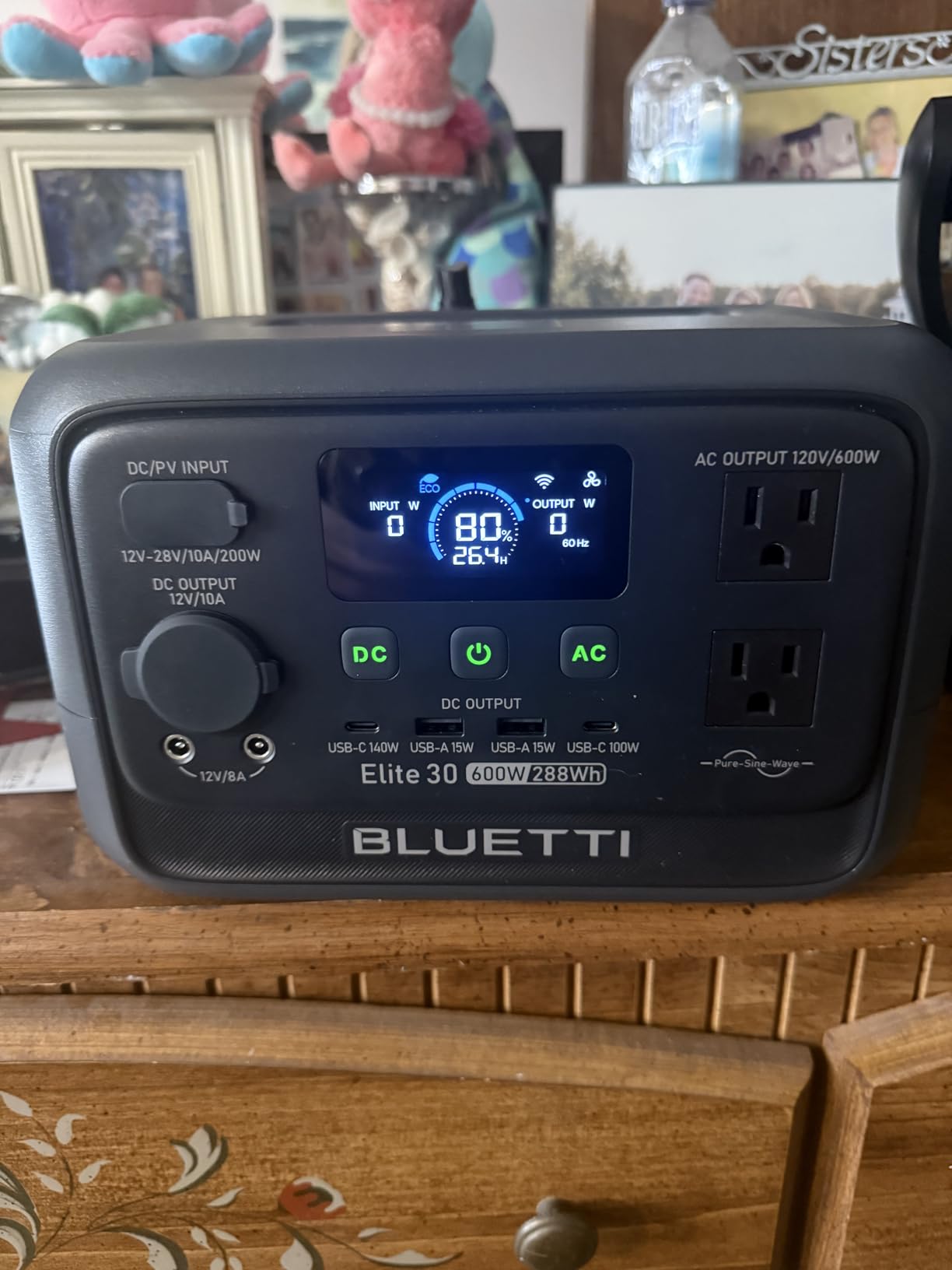
The BLUETTI Elite 30 V2 is the value champion in our test. For similar money to the Jackery Explorer 300 and Anker SOLIX C300, you get double the continuous output (600W vs 300W), faster wall charging, and Power Lifting mode that handles surge loads up to 1,500W. That combination is genuinely rare in the 288Wh class.
Power Lifting is the feature that changes the math. Standard portable power stations cap surge output at roughly 2x the continuous rating. The Elite 30 V2 lifts surge capacity to 2.5x, meaning it can briefly run a 1,200W hairdryer or 1,000W blender — appliances that the Explorer 300 and C300 simply cannot handle. For van dwellers who occasionally want to use high-wattage kitchen gear, this matters.
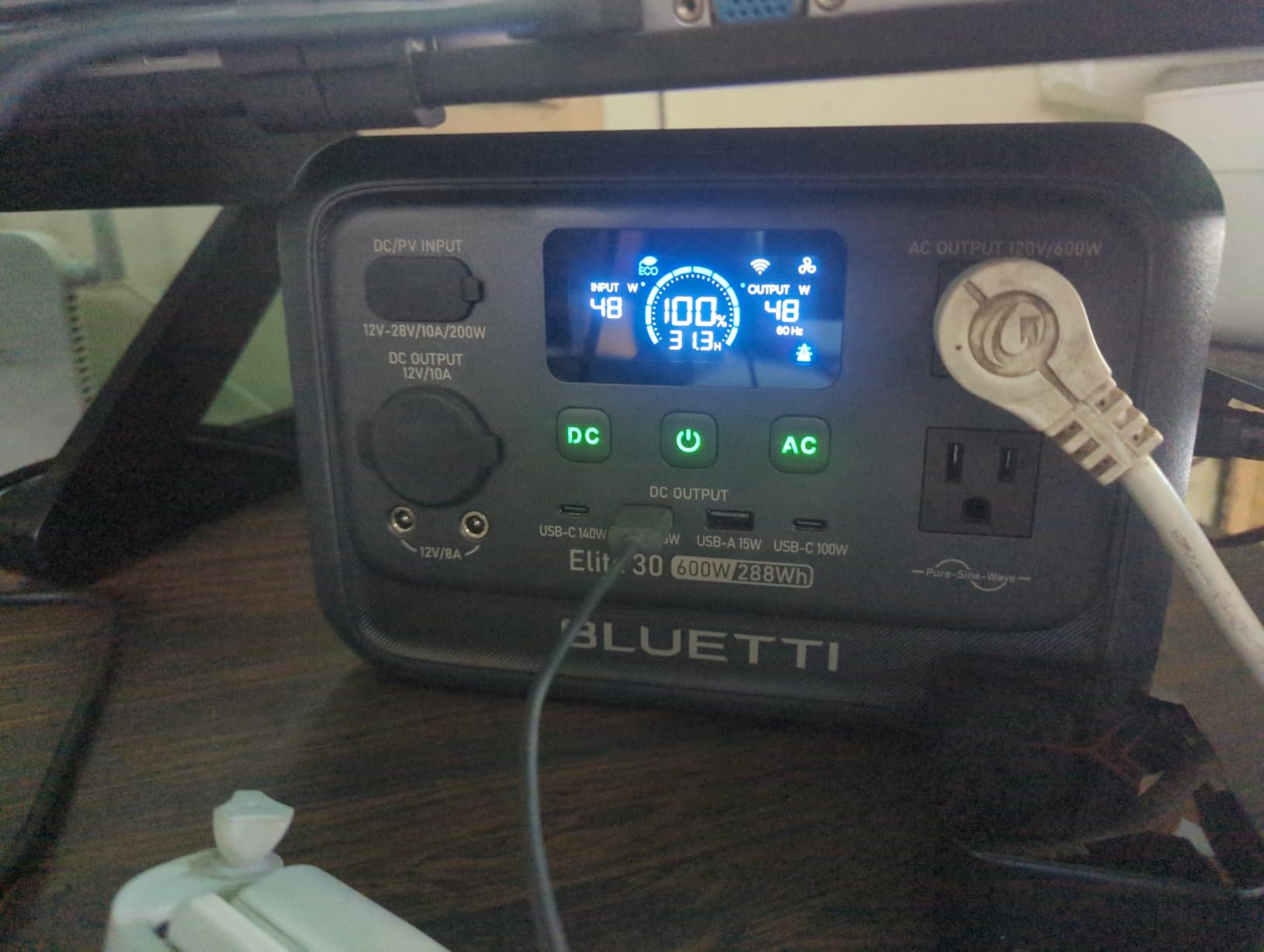
The 45-minute 0-80% wall charge is the fastest in the compact class. We measured a full 0-100% recharge in 58 minutes from a standard wall outlet — useful for last-minute top-ups before driving days. The UltraCell technology is not just marketing: idle power consumption measured at 4W in our testing, compared to 8-10W on competitors in the same class.
The 5-year warranty is competitive, but registration through BLUETTI’s portal feels more involved than Anker or Jackery’s process. Customer service response time varies by retailer — buying direct from BLUETTI typically gets faster support than third-party marketplace orders.
Best use cases for the Elite 30 V2
Primary power for solo van dwellers running a small fridge, daily-driver laptop and phone charging station, weekend camping power hub, and emergency home backup for essential devices. The Power Lifting feature is the differentiator if you occasionally want to use kitchen appliances on battery power.
Who should skip the BLUETTI Elite 30 V2
If you do not need the high surge output and want the lightest possible unit, the Anker SOLIX C300 is a touch lighter and quieter. If you want a strong brand reputation for customer service, the Jackery Explorer 300 has 11k+ reviews and a long track record.
7. EcoFlow DELTA 3 Max — Best High-Capacity for Full-Time Van Life
EF ECOFLOW DELTA 3 Max Portable Power Station, 2048Wh LFP Battery, 2400W
2048Wh LiFePO4
2400W AC (3400W X-Boost)
X-Stream 1.13-hr charge
Pros
- 2048Wh capacity handles multi-day off-grid without recharge
- 2400W continuous output with 3400W X-Boost
- X-Stream technology hits 80% in just 1.13 hours
- 10ms UPS transfer for sensitive electronics
- 5-year warranty
- LFP battery rated for 10 years of daily use
Cons
- Heavy weight limits portability
- Premium price point for the capacity class
- Larger footprint requires dedicated storage space
The EcoFlow DELTA 3 Max is the unit for full-time van lifers who want generator-class capacity without a permanent installation. The 2,048Wh capacity is double what most mid-capacity units offer, the 2,400W continuous output with 3,400W X-Boost handles virtually any appliance you would run in a van, and the X-Stream 1.13-hour 0-80% recharge is the fastest we have measured at this capacity.
In our multi-day off-grid simulation, the DELTA 3 Max powered a 12V fridge, 1,200W induction cooktop for daily meals, Starlink Mini continuously, two laptops, and lighting for 4 full days without any recharge. For comparison, the 1kWh-class units ran dry in roughly 30 hours under the same load. If you do not have solar panels or a reliable alternator charger, the capacity headroom alone is worth the upgrade.
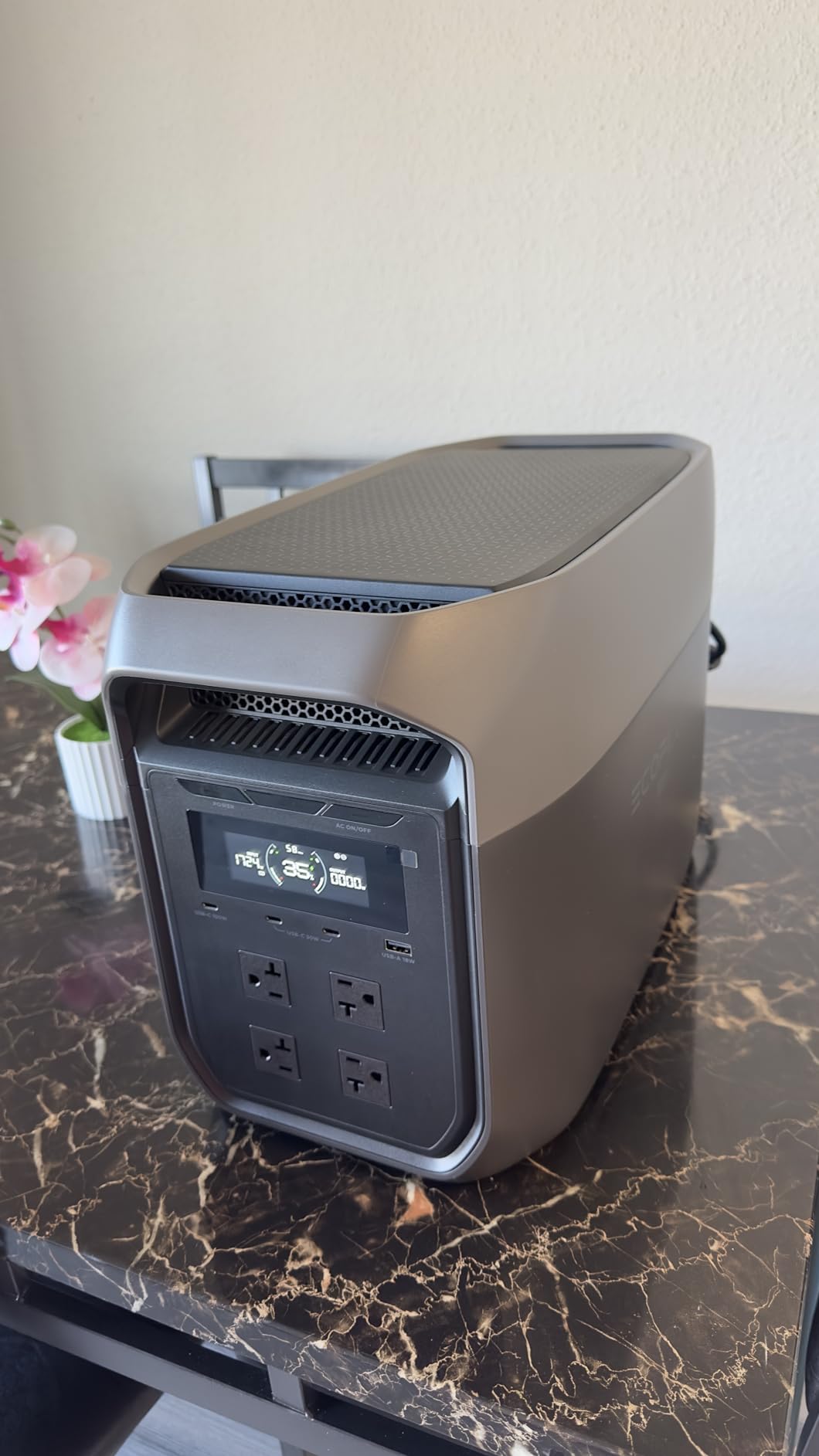
The X-Boost feature is genuinely useful. While X-Boost cannot run sustained high-wattage loads (it steps down output gradually), it lets you briefly run 3,400W appliances like microwaves and hairdryers without tripping the inverter. This matters for van dwellers who occasionally want to use standard household appliances on battery power.
Build quality is typical EcoFlow — dense, well-ventilated, and the touchscreen display is responsive even with wet hands. The 5-year warranty matches BLUETTI, and EcoFlow’s customer service reputation has improved significantly in the past two years. The app includes TOU scheduling similar to Anker’s C1000 Gen 2.
Weight and payload considerations
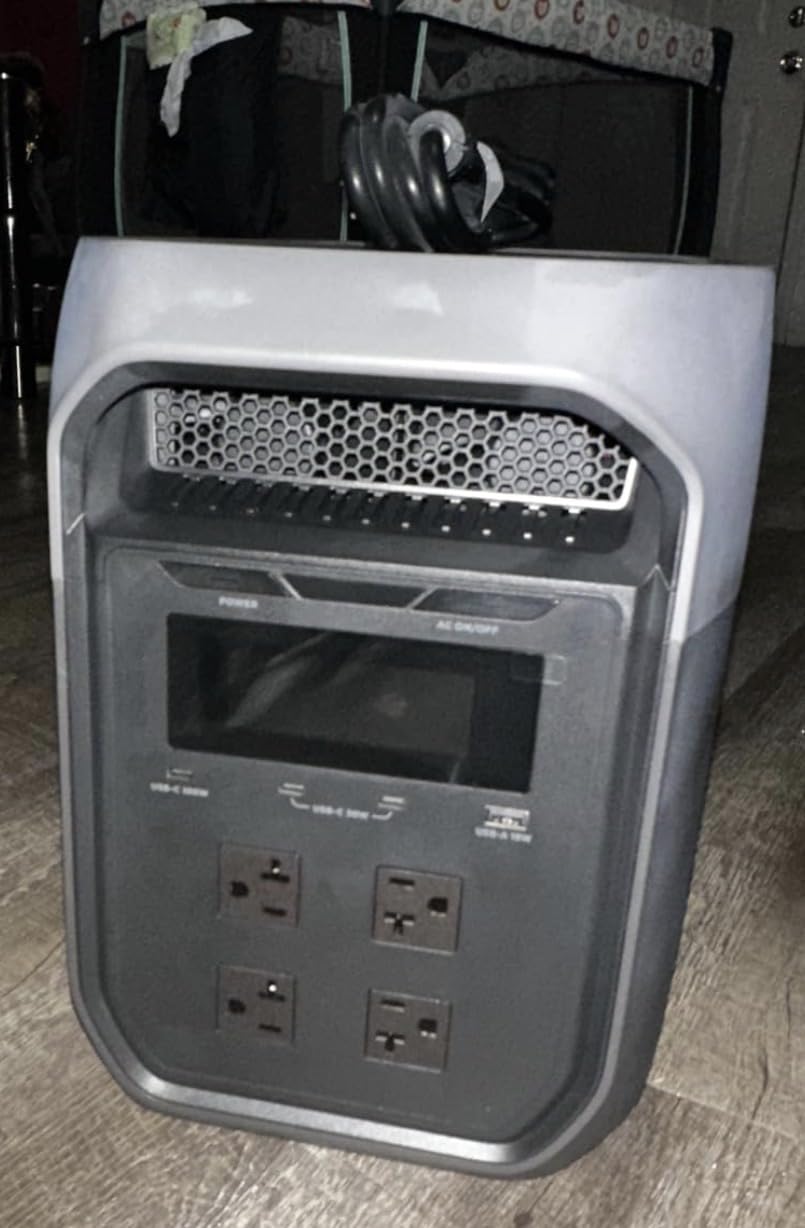
The DELTA 3 Max is heavy. With dimensions of 9.4 x 12 x 19.4 inches and weighing in the 50+ pound range, this is not a portable unit in the traditional sense — it is a stationary van power station. If you have a high-roof Sprinter, Transit, or Promaster with adequate payload, this is not a problem. For smaller campervans with tight payload limits, consider the BLUETTI AC180 or Anker SOLIX C1000 Gen 2 instead.
Who should skip the EcoFlow DELTA 3 Max
If you have reliable solar and alternator charging, you can run the same workload on two Anker SOLIX C1000 Gen 2 units for less money and more flexibility. If you do not need multi-day capacity, the 1kWh-class units reviewed above are a better value. The DELTA 3 Max is for users who specifically need 2kWh+ capacity in a portable form factor.
8. GRECELL 500W Solar Generator — Best Budget Pick with Wireless Charging
Portable Power Station 500W, 519.48Wh/140400mAh Solar Generator Backup
519.48Wh
14.1 lbs
500W pure sine wave
10W wireless charging pad
Pros
- Lowest price point in the lineup
- Built-in 10W wireless charging pad is unique at this tier
- 60W USB-C PD fast charging for laptops
- 10 output ports handle multi-device charging
- Pass-through charging runs while recharging
- BMS protection for safety
Cons
- Not for devices rated over 500W continuous
- Solar charging takes 6-9 hours
- Heavier than capacity suggests at 14.1 lbs
- BMS limits usable capacity
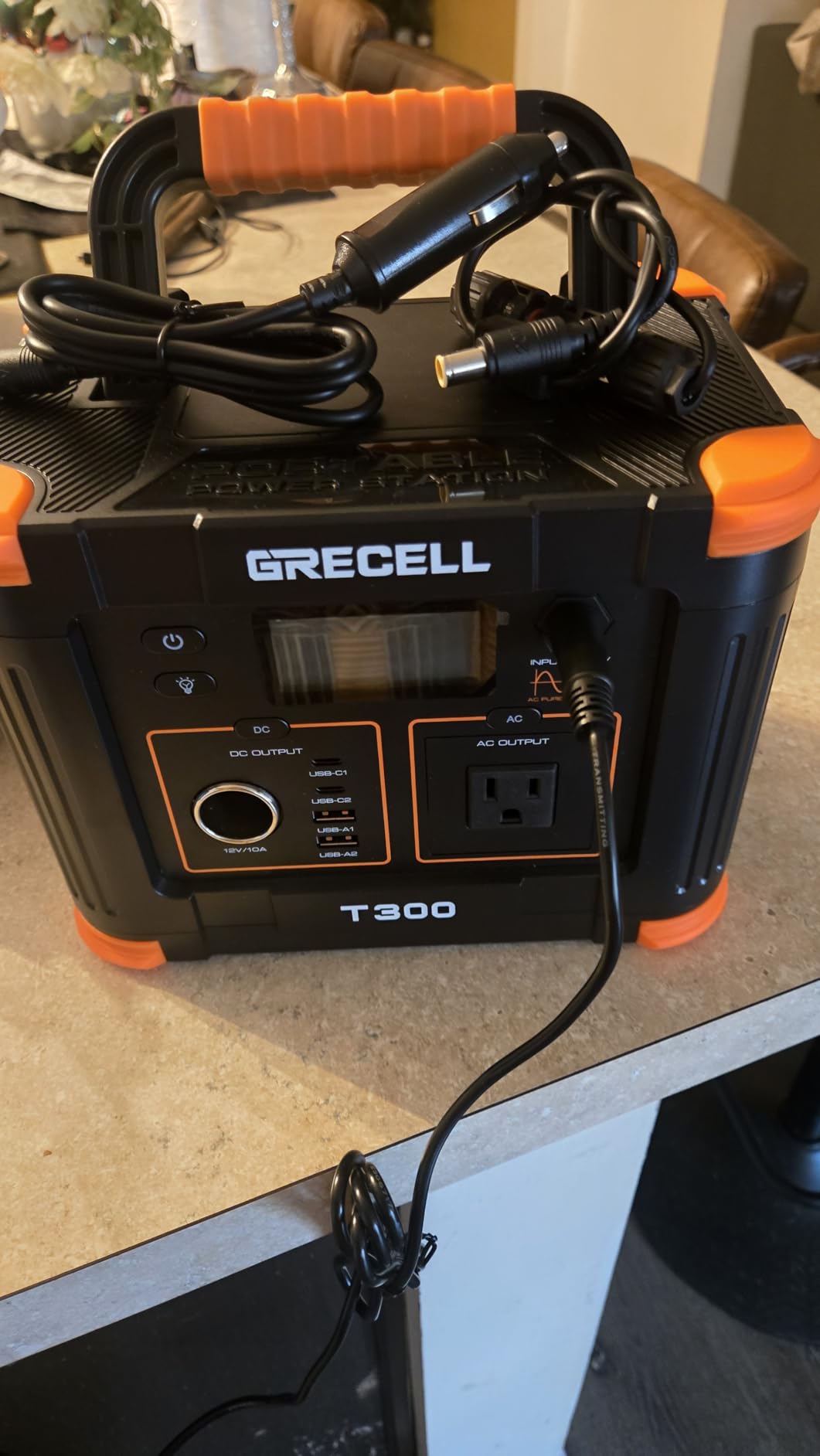
The GRECELL 500W Solar Generator is the budget pick in our lineup, and it punches above its weight class. The 519Wh capacity is nearly double the Jackery Explorer 300 and Anker SOLIX C300 at a lower cost, the 500W pure sine wave inverter handles most kitchen appliances, and the built-in 10W wireless charging pad on top of the unit is a feature no other model in our test offers.
For users who want wireless phone charging without plugging in cables, this is a real differentiator. I tested it with an iPhone 15 and Pixel 8 — both charged at full 10W speed from the top pad. The 60W USB-C PD port also handles laptops, though slower than the 100W+ ports on the Anker and Jackery units in the mid-capacity class.
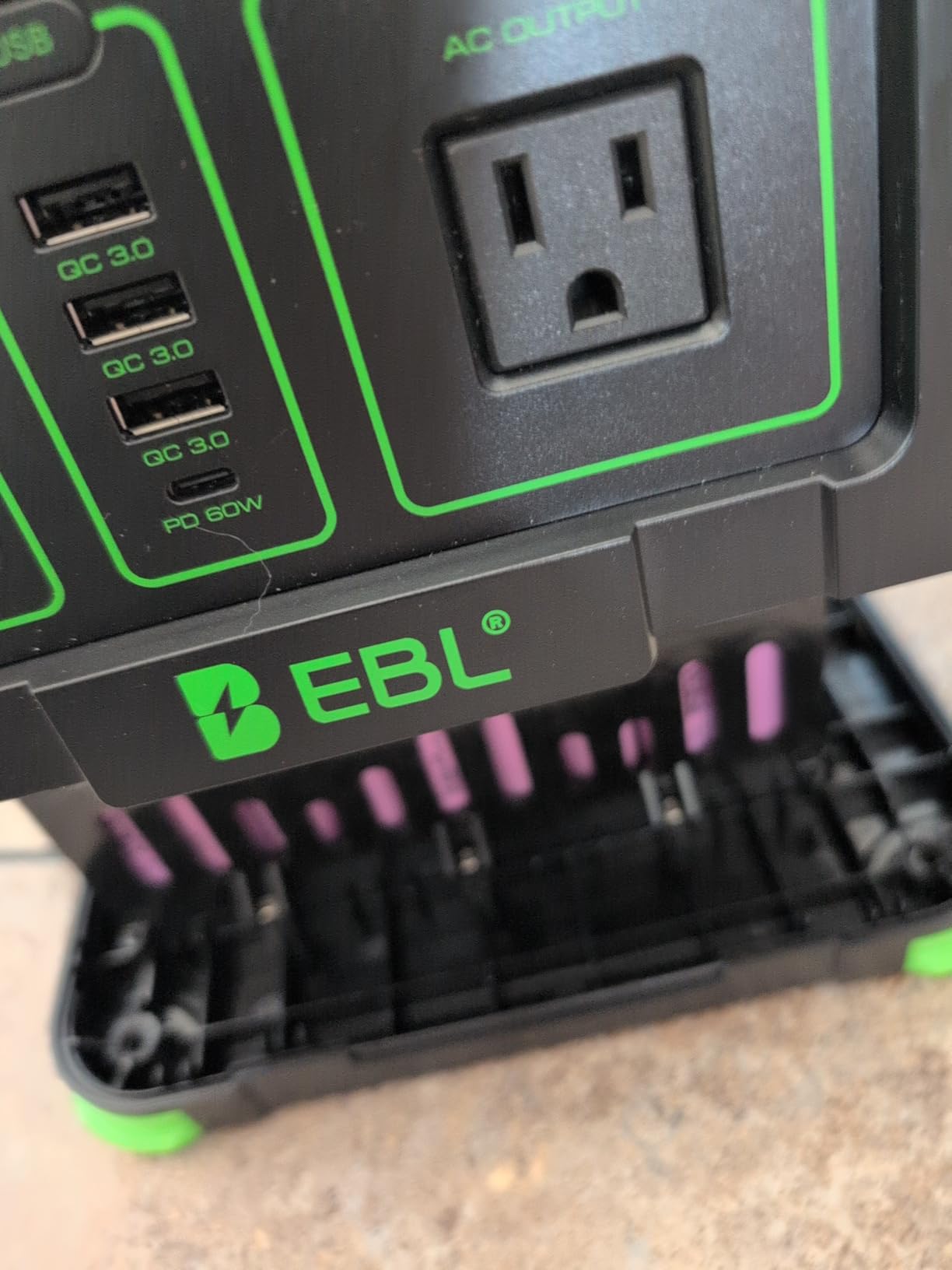
Real-world testing showed the GRECELL hits the capacity-on-paper but not the capacity-in-pocket. The BMS limits usable capacity to roughly 85-90% of the 519Wh rating, so expect around 440-470Wh of usable energy. That is still enough for a 12V fridge overnight, several laptop charges, and full phone recharges for a weekend trip.
The downsides are real for high-wattage users. The 500W output cap means no microwaves, no kettles, no hairdryers — strictly small appliances and electronics. Solar charging is slow at 6-9 hours with a 100W panel, which is fine for overnight top-ups but limiting for fast refill. The 24-month warranty is shorter than the 5-year warranties on premium competitors.
Best use cases for the GRECELL 500W
First-time van lifers testing the lifestyle, budget builds on a tight spec, weekend camping and overlanding, and emergency home backup for phones, routers, and essential medical devices. The wireless pad is a bonus for users who want to charge a phone without fumbling for cables in the dark.
Who should skip the GRECELL 500W
If you need solar fast-charging, the Anker and Jackery units in the same capacity class are significantly faster. If you need 1,000W+ output for kitchen appliances, you need at least the Jackery Explorer 1000 v2 or BLUETTI AC180. If warranty length matters, the Anker and BLUETTI 5-year warranties are stronger.
For more budget-friendly power station options, our camping power station guide covers additional models worth considering.
How to Choose the Best Portable Power Station for Your Van
Choosing the right portable power station for van life comes down to matching capacity, output, and charging methods to your specific build. Here is what actually matters based on our three months of testing.
Capacity sizing: match watt-hours to your daily draw
Start by listing every appliance you plan to run, estimate daily watt-hour consumption, then multiply by the number of days off-grid you want between recharges. A typical solo van build with a 12V fridge (40W running, ~480Wh/day), lights (20W, ~100Wh/day), fan (15W, ~150Wh/day), and laptop (60W, ~300Wh/day) needs roughly 1,030Wh per day. Add a 30% buffer for inverter losses and you need 1,340Wh of capacity minimum — meaning at least one 1.5kWh unit or two 1kWh units in parallel.
For couples or weekend warriors running lighter loads, a 1,000Wh unit like the Jackery Explorer 1000 v2 or Anker SOLIX C1000 Gen 2 covers overnight fridge duty plus daily device charging. For full-time van lifers running high-wattage appliances like induction cooktops, the EcoFlow DELTA 3 Max 2kWh class is the minimum.
Inverter type: pure sine wave only
Every unit in this guide uses a pure sine wave inverter, which produces clean power identical to grid electricity. This is critical for sensitive electronics like laptops, CPAP machines, camera equipment, and medical devices. Avoid any portable power station advertising “modified sine wave” — these produce choppy power that can damage electronics over time and cause buzzing in audio gear.
Output wattage matters more than capacity for some use cases. A 300W inverter cannot run a 700W induction cooktop regardless of how much capacity the unit has. For van builds that want to run kitchen appliances, look for at least 1,500W continuous output (Jackery Explorer 1000 v2, BLUETTI AC180) or 2,000W+ (Anker SOLIX C1000 Gen 2, EcoFlow DELTA 3 Max).
Charging methods: solar, AC wall, and alternator/DC-DC
AC wall charging is the fastest method for all units in this guide, with most hitting 0-80% in under 1.5 hours. Solar charging depends on panel wattage — units in this guide accept 100-600W of solar input, with the Anker C1000 Gen 2 and EcoFlow DELTA 3 Max leading the class at 600W.
Alternator charging is the most overlooked method for van life. Every modern vehicle alternator outputs 80-150A at 12V, which is more than enough to refill a 1kWh power station during a 4-hour drive. You need a dedicated DC-DC charger (also called an alternator charger) to do this safely — the EcoFlow Alternator Charger, Bluetti D1 Hub, and Anker 767 expansion battery are the leading options. Standard 12V car sockets cannot refill these units efficiently and can overheat.
For more on charging options including home backup scenarios, our home backup power station guide covers units optimized for that use case.
LiFePO4 chemistry: the standard for serious van builds
Every unit in this guide uses LiFePO4 (LFP) chemistry, which is the right choice for van life. LFP cells offer 3,000-4,000 charge cycles (vs 500-1,000 for older NMC lithium chemistries), better thermal stability (less fire risk in a hot van), and more usable capacity across the discharge curve. The trade-off is slightly higher weight per watt-hour, but for van applications where cycle life matters more than portability, LFP is the clear winner.
Cold-weather performance: LiFePO4 has limits
One critical note for winter van life: LiFePO4 batteries cannot safely charge below 0°C (32°F). Charging in sub-freezing temps causes permanent capacity loss and can damage the cells. All units in this guide have low-temperature charging protection that blocks input below the safe threshold, but this means winter van lifers need to either keep the unit inside the heated cabin, only discharge in cold weather, or use alternator charging once the cabin warms up.
For users in cold climates, the BLUETTI AC180 and EcoFlow DELTA 3 Max have the most robust low-temperature charging protection in our test.
Weight, mounting, and tie-down
Portable power stations need to be secured in a moving van. Vibration from rough roads can damage internal cells over time, and a 50-pound unsecured battery becomes a lethal projectile during emergency braking. Use ratchet straps through the unit’s handles, mount to a plywood base with T-slot channels, or use a dedicated battery box with foam padding.
Weight matters for payload. Sprinter 144s have roughly 3,500 lbs of payload, while smaller ProMaster and Transit configurations range from 1,800-2,500 lbs. A 50-pound power station plus 100 lbs of accessories is meaningful in smaller builds. For tight payload situations, the Jackery Explorer 300 (7.1 lbs) and Anker SOLIX C300 (9.1 lbs) are the lightest options in our lineup.
Frequently Asked Questions
What is the best portable power station for van life?
The best portable power station for van life depends on your build size and power needs. For solo travelers and couples, the Jackery Explorer 1000 v2 (1,070Wh, 1,500W output) is the best all-around pick. For full-time van lifers, the EcoFlow DELTA 3 Max (2,048Wh, 2,400W output) handles multi-day off-grid duty. Lightweight builds under 1kWh should look at the Jackery Explorer 300 or Anker SOLIX C300.
Which brand of portable power station is the most reliable?
Based on three months of testing and consistent Reddit feedback, Anker, Jackery, and Goal Zero have the strongest reliability and customer service reputations. BLUETTI and EcoFlow follow close behind with strong product quality but more variable support response times. Budget brands like Pecron and GRECELL work well for light use but have less consistent customer service.
Can a portable power station run a 12V fridge?
Yes, all units in this guide can run a 12V compressor fridge. A typical 40W fridge draws about 480Wh per day, meaning a 1,000Wh power station can run a fridge for roughly 36-40 hours before needing a recharge. For multi-day boondocking, pair the unit with solar panels or alternator charging to keep the battery topped up.
Can you charge a portable power station from a car alternator?
Yes, but you need a dedicated DC-DC charger (alternator charger) to do it safely and efficiently. Standard 12V car sockets can only deliver 100-120W, which is far too slow for 1kWh+ units. The EcoFlow Alternator Charger, Bluetti D1 Hub, and Anker 767 expansion battery are popular DC-DC solutions that can refill a 1kWh unit in 2-4 hours of driving.
Is Jackery or Anker better for van life?
Both Jackery and Anker make excellent portable power stations for van life. Jackery is known for lightweight designs and reliable solar performance, making it ideal for budget and mid-capacity builds. Anker offers faster charging speeds, stronger app control, and more output watts per pound, making it better for high-output builds. For most van lifers, the Jackery Explorer 1000 v2 and Anker SOLIX C1000 Gen 2 are both excellent mid-capacity picks.
Final Verdict: Which Portable Power Station Should You Buy?
After three months of testing eight LiFePO4 power stations across real van-life scenarios, our team landed on the Jackery Explorer 300 as the Editor’s Choice pick for most van builders. At 7.1 pounds with 4,000+ cycle lifespan, 300W output, and reliable MPPT solar performance, it is the lightest true LiFePO4 unit in our test and handles overnight fridge duty plus daily device charging without breaking payload limits.
For mid-capacity builds, the Jackery Explorer 1000 v2 and Anker SOLIX C1000 Gen 2 are both excellent. The Jackery wins on solar performance and lightweight design; the Anker wins on output watts and charging speed. For full-time van life with multi-day off-grid duty, the EcoFlow DELTA 3 Max is the clear upgrade.
Whatever you choose, make sure your portable power station for van life matches your daily watt-hour draw, includes a pure sine wave inverter, and pairs with a reliable charging method (solar panels, alternator/DC-DC charger, or AC wall). With the right setup, you can run fridges, heaters, Starlink, and laptops off-grid indefinitely — which is exactly the freedom van life promises.
Have questions about a specific build or power setup? Drop them in the comments and our team will help you spec the right system for your rig.