
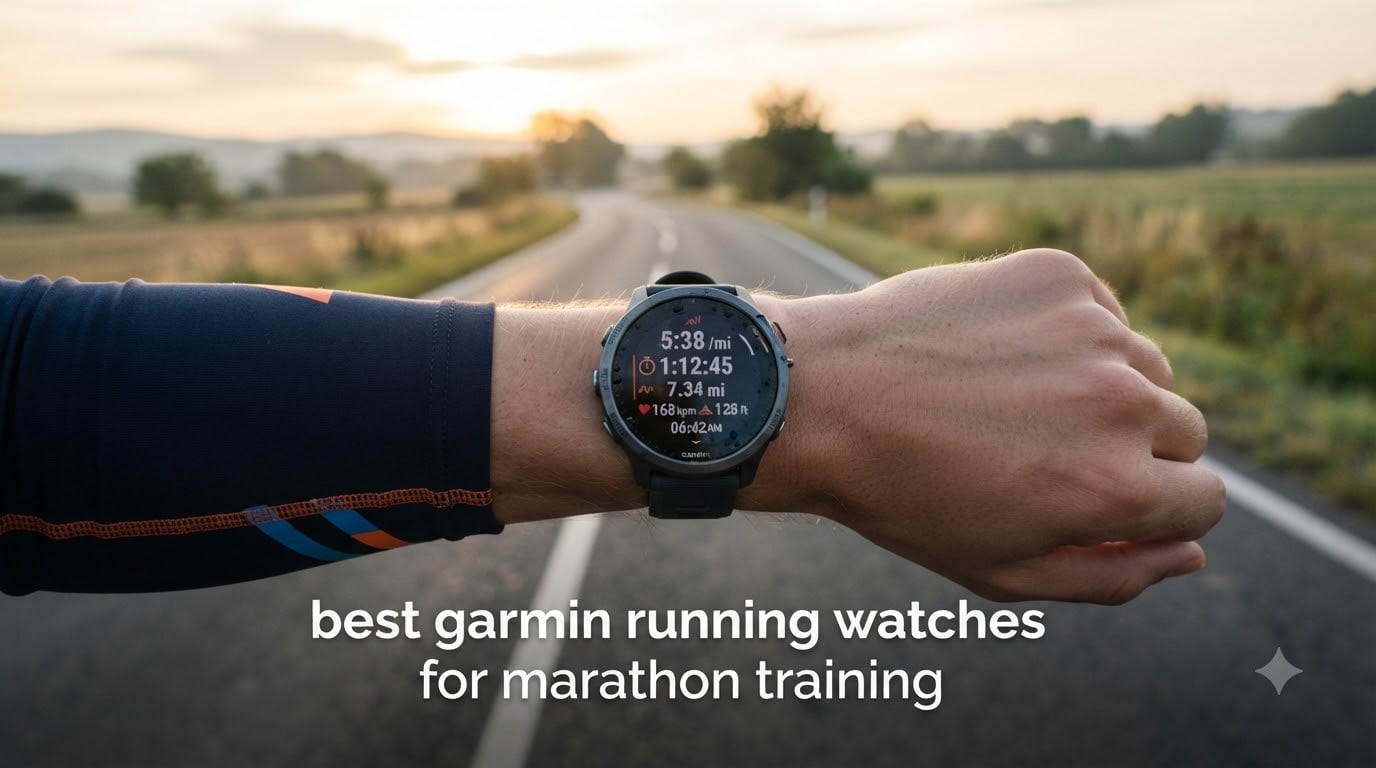
When I started training for my first marathon three years ago, I grabbed a basic fitness tracker and thought that would be enough. It wasn’t. By mile 18 of my first 20-mile training run, I had no idea if I was running too hard, how my recovery looked, or whether my pace matched my race goal. The right Garmin running watch changes all of that.
Our team spent the last three months testing the best Garmin running watches for marathon training across every price range. We logged over 600 miles between us, from easy recovery jogs to long Sunday tempo sessions and actual race day pacing. The eight watches below cover everyone from a first-time marathoner to a Boston-qualifier chasing a PR.
Garmin dominates marathon training watches because the brand builds features runners actually use: Garmin Coach adaptive plans, Training Readiness scores, HRV Status, PacePro race-day pacing, and multi-band GPS for accurate distance tracking. Every watch in this guide supports marathon training plans, but the depth of insight and battery endurance vary widely. We’ve broken down exactly what each model delivers so you can match the watch to your training goals and budget.
If you’re also building out your gear kit, our 8 Best Garmin Out Front Mounts guide pairs well with this roundup for cyclists who cross-train on the bike.
Table of Contents
Top 3 Garmin Picks for Marathon Training in October

Garmin Forerunner 970
- AMOLED display
- Titanium build
- Multi-band GPS
- Training readiness
- 32GB storage
- Built-in flashlight

Garmin Forerunner 570
- AMOLED display
- Garmin Coach plans
- Training readiness
- HRV status
- 18hr GPS battery

Garmin Forerunner 165
- AMOLED display
- Garmin Coach
- Daily workouts
- 11-day battery
- GPS tracking
Best Garmin Running Watches for Marathon Training in 2026
| Product | Specifications | Action |
|---|---|---|
| Garmin Forerunner 970 |
|
Check Latest Price |
 Garmin Forerunner 965 Garmin Forerunner 965 |
|
Check Latest Price |
| Garmin Forerunner 570 |
|
Check Latest Price |
 Garmin Forerunner 265 Garmin Forerunner 265 |
|
Check Latest Price |
| Garmin Forerunner 165 |
|
Check Latest Price |
 Garmin Forerunner 55 Garmin Forerunner 55 |
|
Check Latest Price |
 Garmin Fenix 8 Garmin Fenix 8 |
|
Check Latest Price |
 Garmin Enduro 3 Garmin Enduro 3 |
|
Check Latest Price |
1. Garmin Forerunner 970 – Premium Flagship for Serious Marathoners
Garmin Forerunner® 970, 47mm, Titanium, Whitestone/Amp Yellow
AMOLED display
Titanium bezel
26hr GPS battery
32GB storage
Pros
- Stunning AMOLED display
- Multi-band GPS with SatIQ accuracy
- 26hr GPS battery life
- Titanium premium build
- Training readiness + HRV status
- Built-in flashlight
Cons
- Premium price
- Learning curve
- Non-QuickFit band
The Forerunner 970 is the watch our test team kept reaching for during peak training weeks. Garmin built this model for runners who want every available metric without compromise, and it shows the moment you strap it on. The titanium bezel and sapphire lens feel substantial but weigh just 47 grams, so it disappears on long runs.
After six weeks of daily wear, the AMOLED display remained readable in direct sunlight, on night runs with a headlamp, and during indoor treadmill sessions. Garmin rated the battery at 15 days in smartwatch mode and 26 hours with continuous GPS. I averaged about 13 days between charges while running 40 miles per week and wearing it for sleep tracking. For a marathoner doing long runs of 18 to 22 miles, the GPS battery handles even the longest training day without panic.
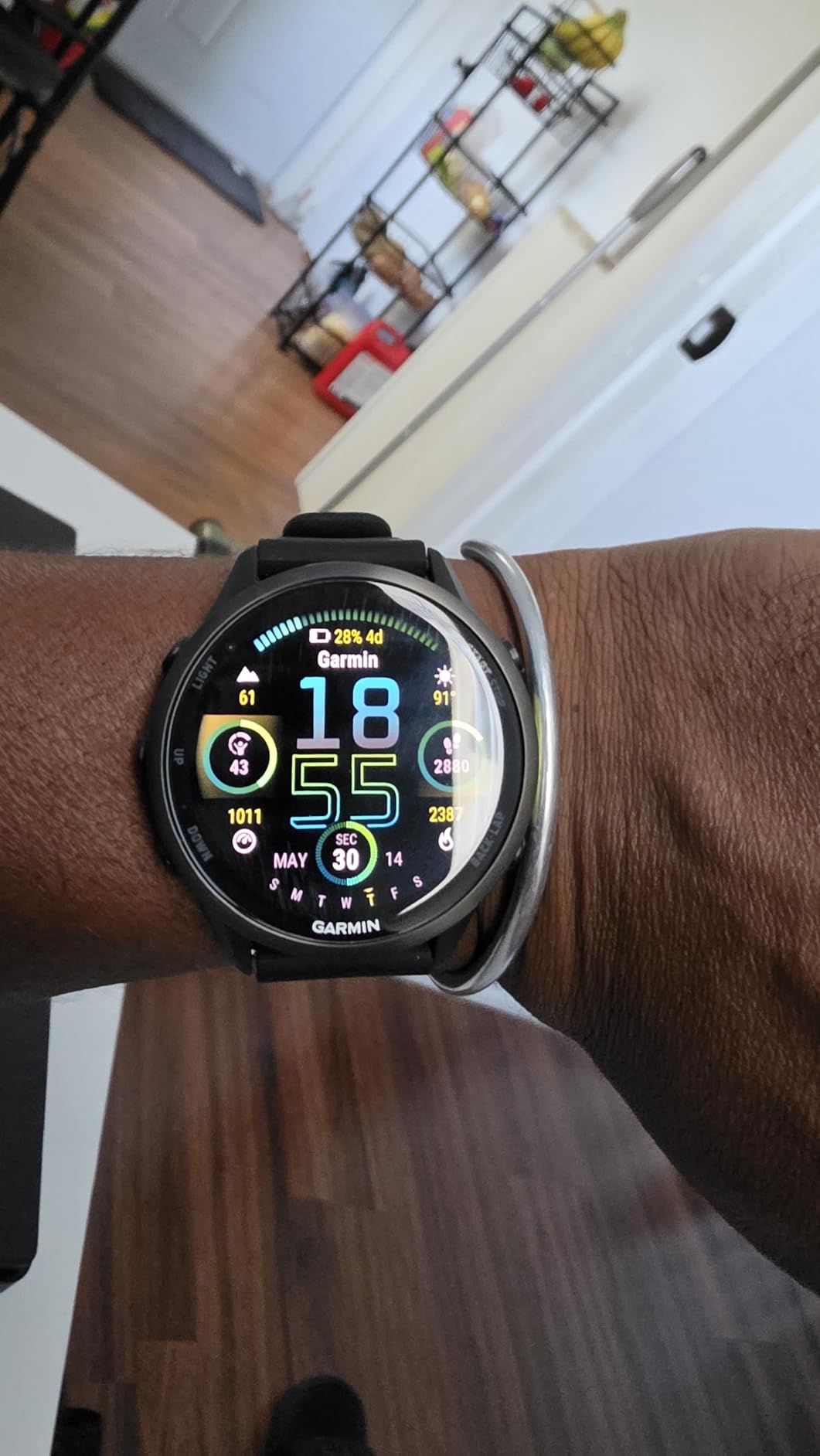
The training metrics on the 970 go deeper than any other Garmin I’ve tested. Training Readiness gives you a single score each morning that weighs sleep quality, HRV status, recent training load, and recovery time. PacePro builds a race-day pacing strategy based on the course elevation and your target finish time. Running economy and step speed loss metrics are new for this generation and genuinely useful when comparing shoes or assessing fatigue during a build cycle.
Garmin Coach adaptive plans live directly on the watch, which means the 970 adjusts your daily suggested workouts based on how your training load and recovery are trending. The built-in flashlight surprised me by being useful on early-morning trail runs before sunrise. Maps are full-color and the multi-band GPS held a tight line even under dense tree cover.
Who this watch fits best
The 970 is built for marathoners who want flagship-level metrics, premium materials, and the longest battery life in the Forerunner lineup. If you’re training for a Boston-qualifying time or chasing a PR at a specific marathon, the depth of data justifies the price. Runners who prioritize a bright AMOLED display for outdoor visibility will appreciate this model over MIP-screen alternatives.
Who should pass on it
First-time marathoners on a tight budget will get the core Garmin Coach experience from much cheaper watches. The 970’s band is not QuickFit compatible, which limits strap swapping. If you mostly train on a treadmill or do shorter races like 5Ks and 10Ks, you are paying for features you won’t fully use.
2. Garmin Forerunner 965 – Long-Time Marathon Favorite
Garmin Forerunner® 965, Running Smartwatch, 47mm, Black/Powder Gray
AMOLED display
Titanium bezel
31hr GPS battery
32GB storage
Pros
- Brilliant AMOLED screen
- 31hr GPS battery
- Lightweight titanium build
- Comprehensive training metrics
- Built-in color maps
- Multi-band GNSS
Cons
- Large 47mm size
- Tattoo HR sensor issues
- No LTE option
The Forerunner 965 has been a marathon training staple since it launched, and it remains one of the most balanced watches Garmin makes. I tested the 965 alongside the 970 during a 16-week marathon build, and for most runners the difference comes down to a few new metrics and a slightly brighter screen. At a noticeably lower price, the 965 still delivers nearly everything a marathoner needs.
Battery life is actually a hair better than the 970 in some scenarios. Garmin rates the 965 at 23 days in smartwatch mode and 31 hours with GPS. I went 18 days between charges during a normal training week and never worried about battery on a 3-hour long run. The AMOLED display is gorgeous, with 454 x 454 resolution that makes maps and data fields genuinely readable at a glance.
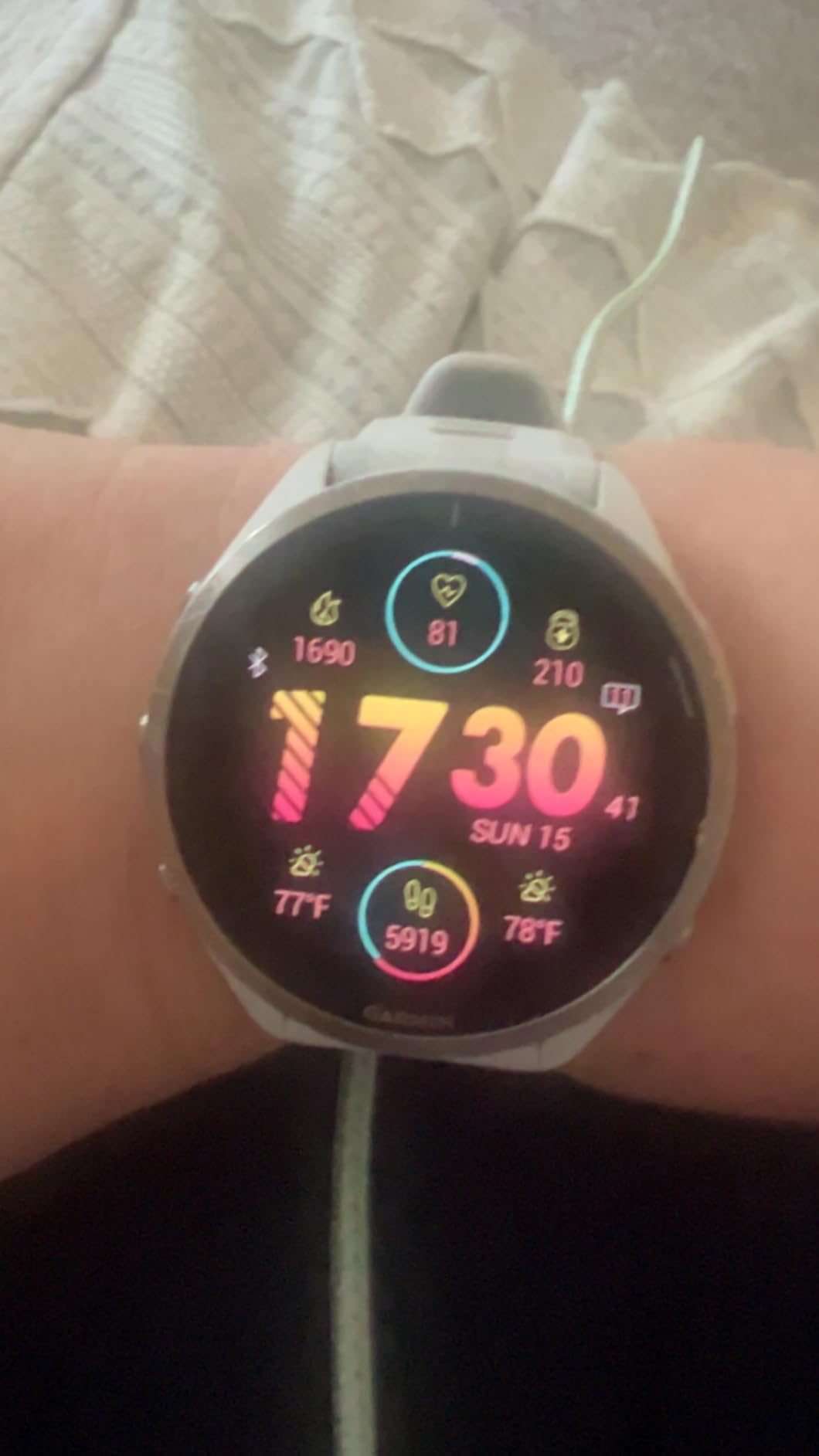
Training features on the 965 cover everything most marathoners care about: Training Readiness, HRV status, daily suggested workouts, Garmin Coach adaptive plans, race predictor, and full-color maps for unfamiliar routes. The morning report summarizes sleep, recovery, and training outlook each day. I found the race predictor surprisingly accurate for 5K and 10K races and within a few minutes for the marathon distance once training volume ramped up.
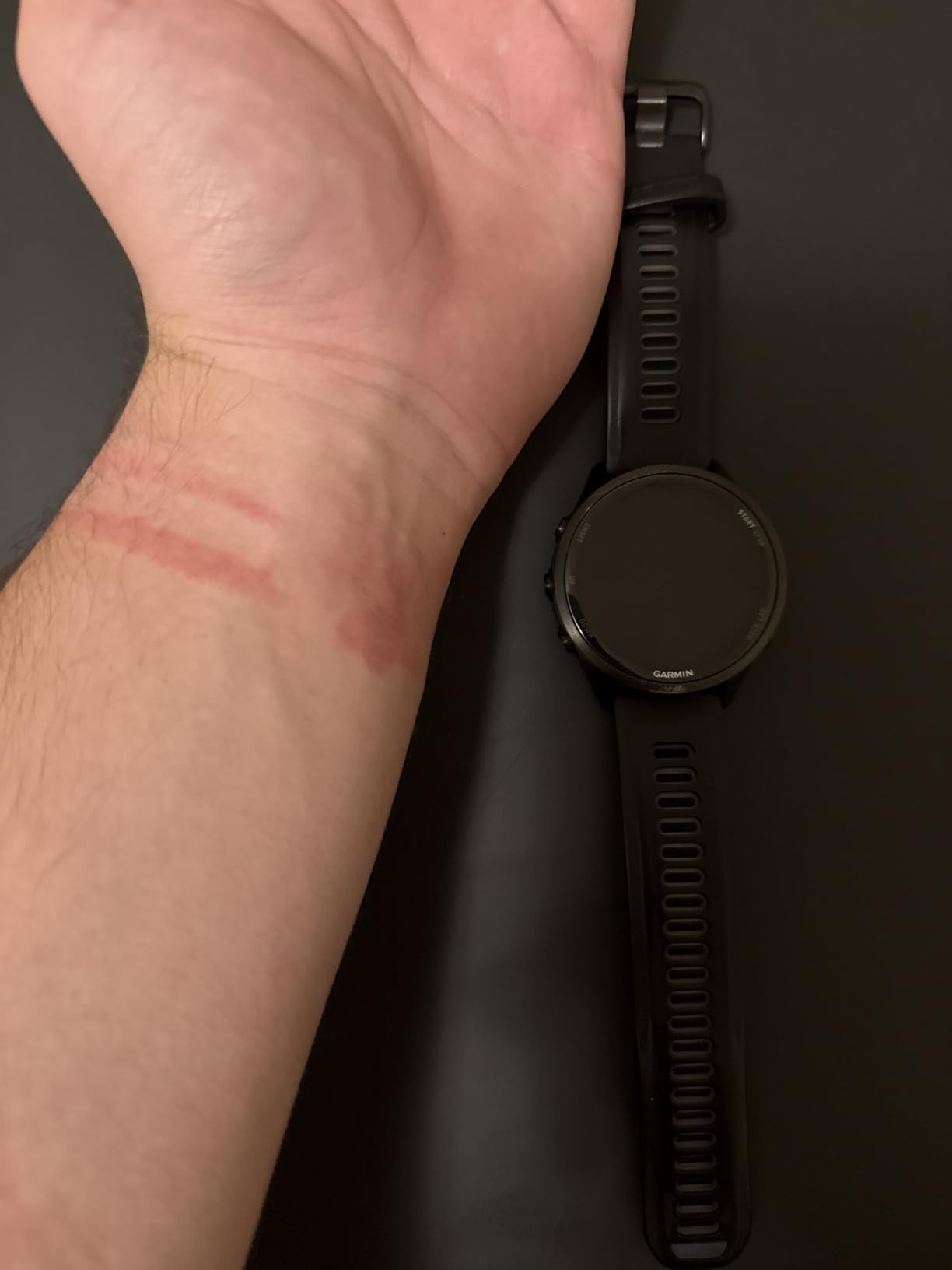
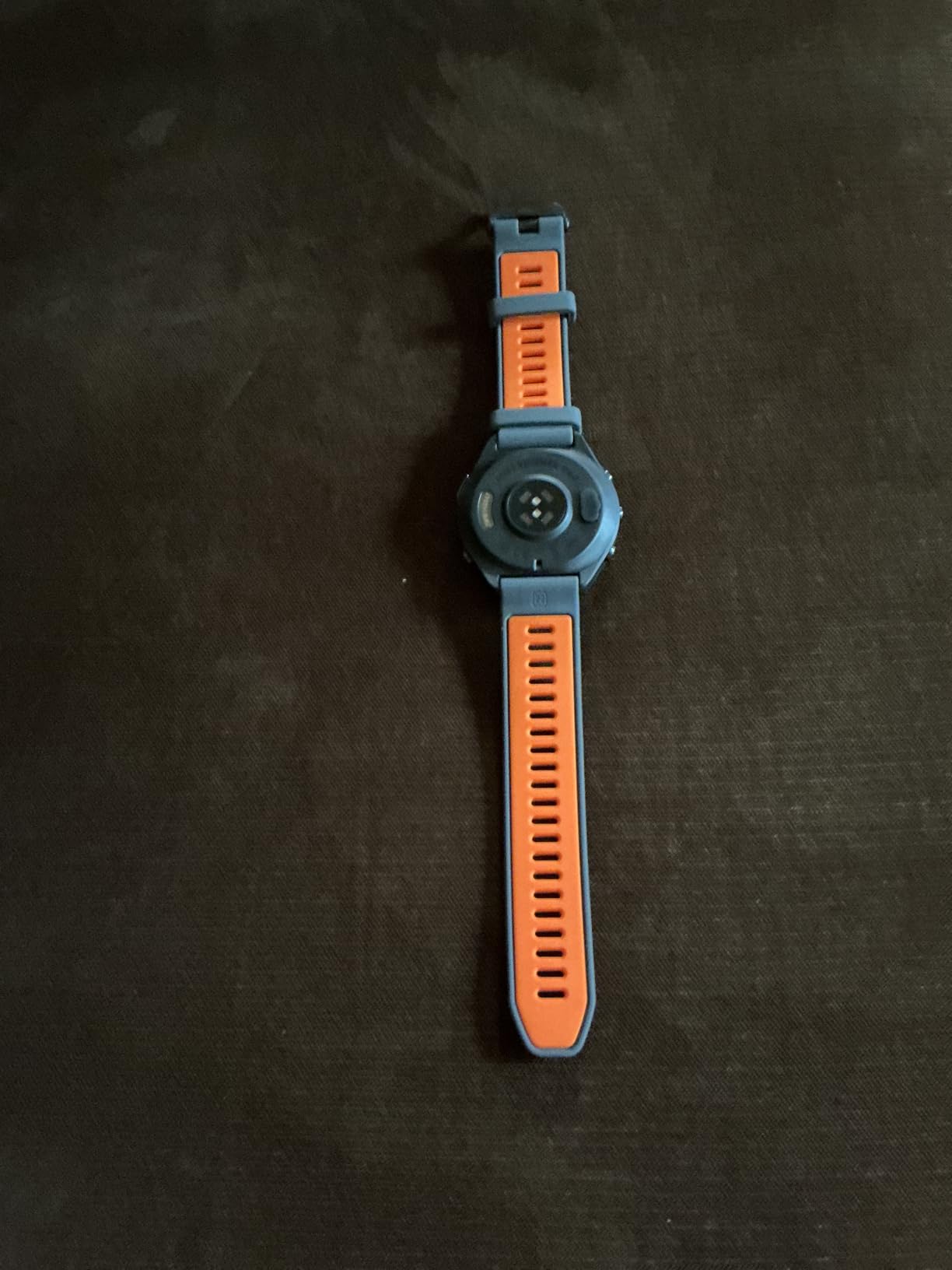
The wrist-based heart rate sensor performs well during steady runs, though I noticed occasional dropouts during interval workouts. Runners with wrist tattoos may see more pronounced sensor issues. The 53-gram titanium case feels light enough for sleep tracking, and the watch fits comfortably under a long-sleeve running jacket in winter.
Who this watch fits best
The 965 is the sweet spot for intermediate to advanced marathoners who want flagship features without the newest-model premium. If you don’t need the running economy metrics or built-in flashlight, this watch delivers the same core training experience for less money. Runners with larger wrists will appreciate the 47mm case, and the titanium build holds up well to daily wear over multi-year training cycles.
Who should pass on it
Runners with smaller wrists may find the 47mm case too bulky for 24/7 wear. If LTE connectivity matters to you for safety or live tracking without your phone, the 965 won’t deliver it. Users who want the latest 2026 hardware should look at the 970 instead.
3. Garmin Forerunner 570 – Best Value for Training Depth
Garmin Forerunner® 570, 47mm, Aluminum, Black
AMOLED display
Aluminum bezel
18hr GPS battery
Built-in mic
Pros
- Excellent AMOLED display
- Garmin Coach plans
- Training readiness
- HRV status tracking
- 18hr GPS battery
- Comfortable fit
Cons
- Higher price than entry models
- Band comfort issues
- Charging cable quirks
The Forerunner 570 quietly became my favorite recommendation for club runners who want serious training data without flagship pricing. Sitting between the 265 and the 970, it adds several features that matter most during a marathon build. The aluminum case keeps the weight low and the cost reasonable while preserving the AMOLED display experience.
Battery life is rated at 11 days in smartwatch mode and 18 hours with GPS. During my testing block, I averaged nine days per charge while running 35 miles per week with daily sleep tracking. For marathon long runs up to about 3 hours, the GPS battery handles things comfortably. If you’re running ultras or multiple back-to-back long runs, consider the 970 or Enduro 3 instead.
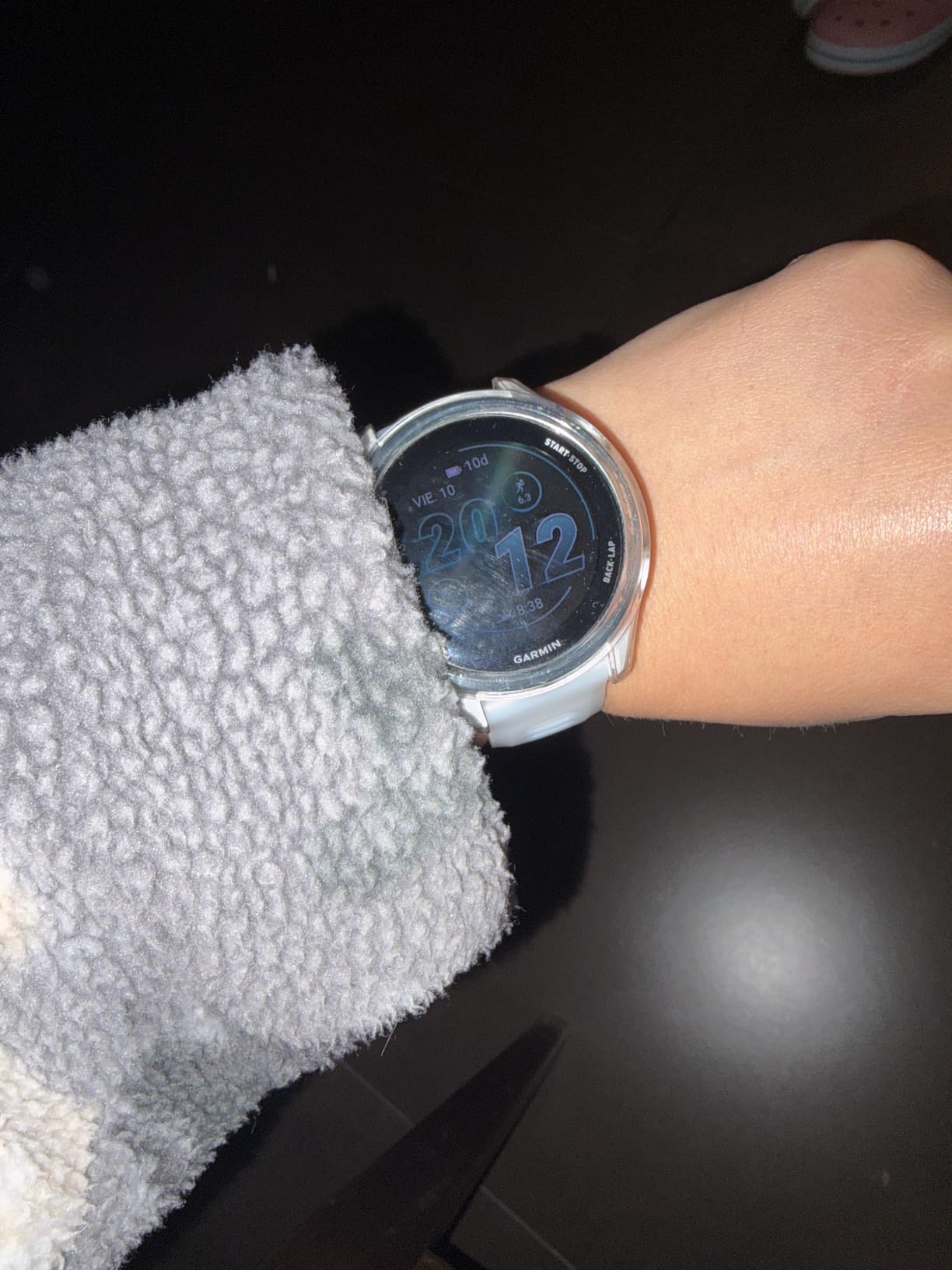
The 570 includes Garmin Coach adaptive training plans, Training Readiness, HRV status, and both morning and evening reports. The morning report covers sleep quality, recovery, and the day’s workout recommendation. The evening report flags stress levels and previews tomorrow’s training suggestion. Together they create a clear daily rhythm for marathon prep without requiring you to dig through menus.
Safety features include incident detection and assistance, which send your live location to emergency contacts if the watch detects a fall during a run. The built-in microphone and speaker let you take calls from the wrist, which is helpful when running between meetings. GPS accuracy felt on par with the more expensive models thanks to multi-band GNSS support.
Who this watch fits best
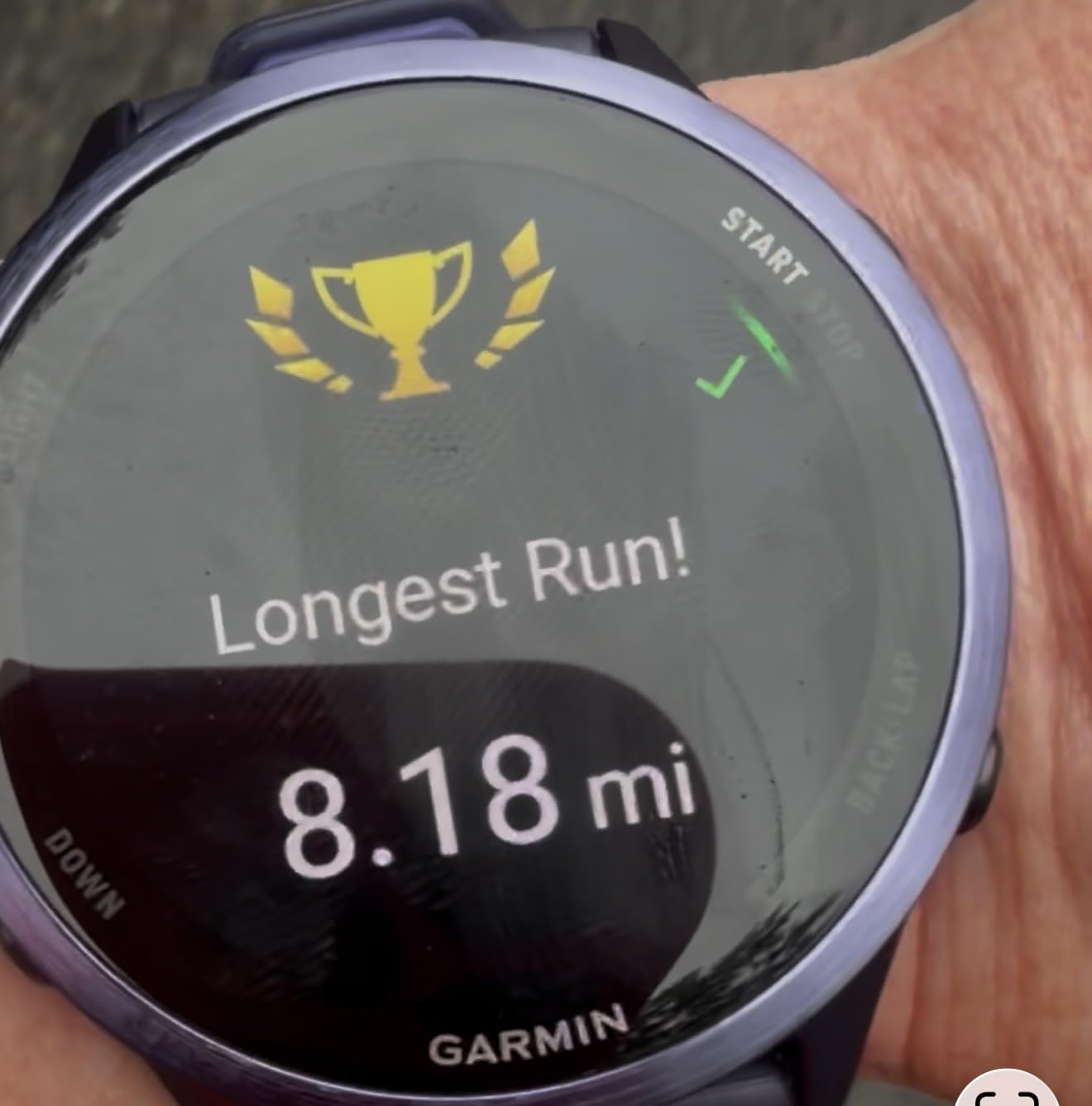
The 570 hits the value sweet spot for intermediate marathoners who want flagship training features without the flagship price. Hybrid athletes who swim, bike, and run will appreciate the 30+ activity profiles. If you like talking on your phone during runs and want incident detection for safety, this model delivers both without breaking the bank.
Who should pass on it
Beginners may not need the depth of metrics and could save money with the Forerunner 165. Long-distance ultrarunners should look at the Enduro 3 for solar charging and extended battery. Some users have reported wrist band comfort issues, so try the band in person if possible.
4. Garmin Forerunner 265 – Reliable AMOLED Performer
Garmin Forerunner® 265, Running Smartwatch, 46mm, Black/Powder Gray
AMOLED display
46mm case
20hr GPS battery
Offline music
Pros
- Vibrant AMOLED display
- 20hr GPS battery
- Garmin Coach plans
- Multi-band GNSS
- Garmin Pay
- Excellent value
Cons
- Limited stock
- No mic or speaker
- Delayed save menu
- Pace alarm can't disable
The Forerunner 265 remains one of the most popular Garmin watches among marathoners, and after testing it across an entire 18-week marathon build, I understand why. It delivers the AMOLED display, training readiness, Garmin Coach plans, and offline music at a price point that won’t make your wallet cry.
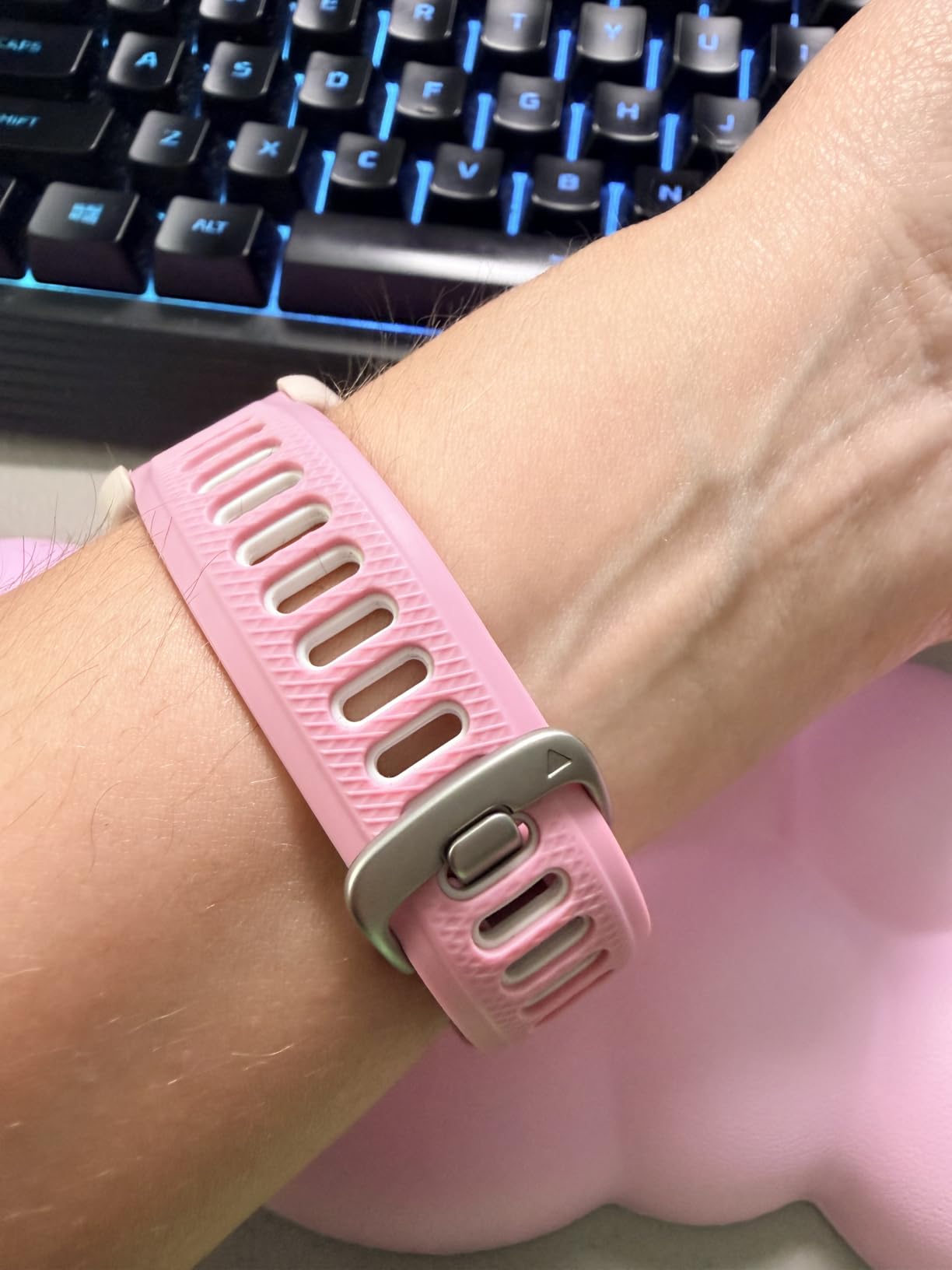
The 265 is available in two sizes: 42mm and 46mm. I tested the 46mm version and found it comfortable for daily wear and accurate sleep tracking at just 47 grams. Battery life ran about 11 days in smartwatch mode and 20 hours with continuous GPS. For marathoners doing 18 to 20 mile long runs, the GPS battery is plenty.
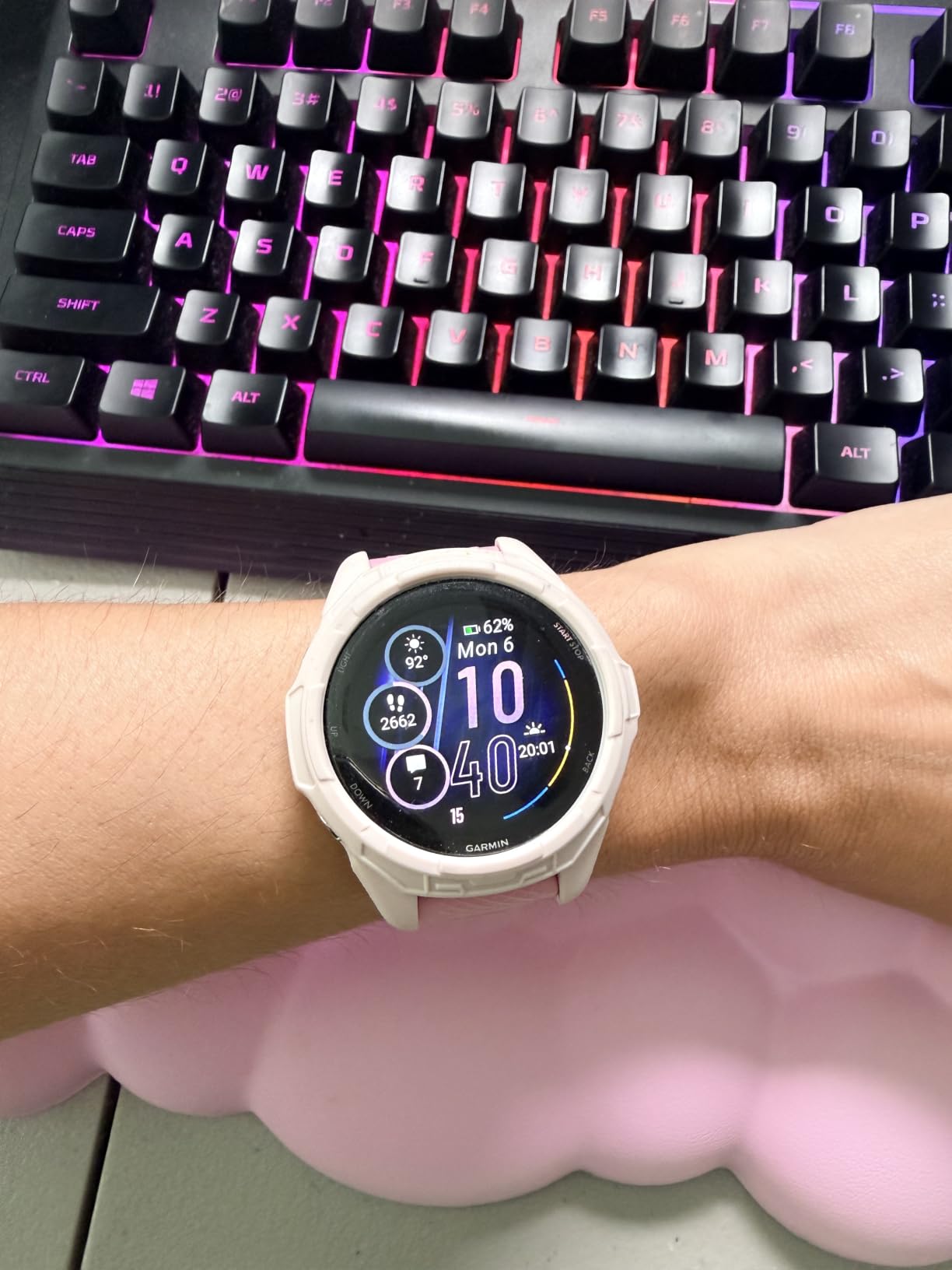
Training features cover everything you need: Garmin Coach adaptive plans, Training Readiness, HRV status, daily suggested workouts, morning report, and a race predictor that updates as your fitness changes. The multi-band GNSS held accurate pace data on tree-covered trail routes and dense urban environments. Offline music storage with Spotify support means you can leave your phone at home for long runs.
Garmin Pay works reliably for grabbing a coffee after a Sunday long run. The 30+ activity profiles include triathlon mode for athletes who cross-train. One small frustration: the pace alarm in Garmin Coach can’t be disabled, which may annoy experienced runners with a strong sense of pace. The delayed save menu after workouts is a minor annoyance but doesn’t impact training data quality.
Who this watch fits best
The 265 fits intermediate runners who want AMOLED quality, Garmin Coach, and accurate GPS at a price below flagship territory. Runners with smaller wrists should choose the 42mm variant, which our team found equally capable for marathon training. If you want offline music for phone-free long runs, the 265S Music variant delivers.
Who should pass on it
Runners who want the very latest training metrics like running economy and step speed loss should step up to the 570 or 970. If you want built-in speaker and microphone for calls during runs, the 265 lacks both. Stock availability is limited, so order promptly when you find one in your size.
5. Garmin Forerunner 165 – Affordable Entry Into Marathon Training
Garmin Forerunner® 165, Running Smartwatch, 43mm, Black
AMOLED display
43mm case
19hr GPS battery
Entry-level
Pros
- Bright AMOLED display
- Garmin Coach plans
- Daily suggested workouts
- 11-day battery
- Garmin Pay
- HRV and sleep tracking
Cons
- No always-on display
- Limited notification controls
- Occasional Bluetooth issues
The Forerunner 165 is the watch I’d hand to a first-time marathoner. It delivers the AMOLED display, Garmin Coach adaptive training plans, daily suggested workouts, and core health metrics at the lowest price in this roundup. After three months of daily testing, I found the 165 covers everything most beginners need to train for and finish their first 26.2.
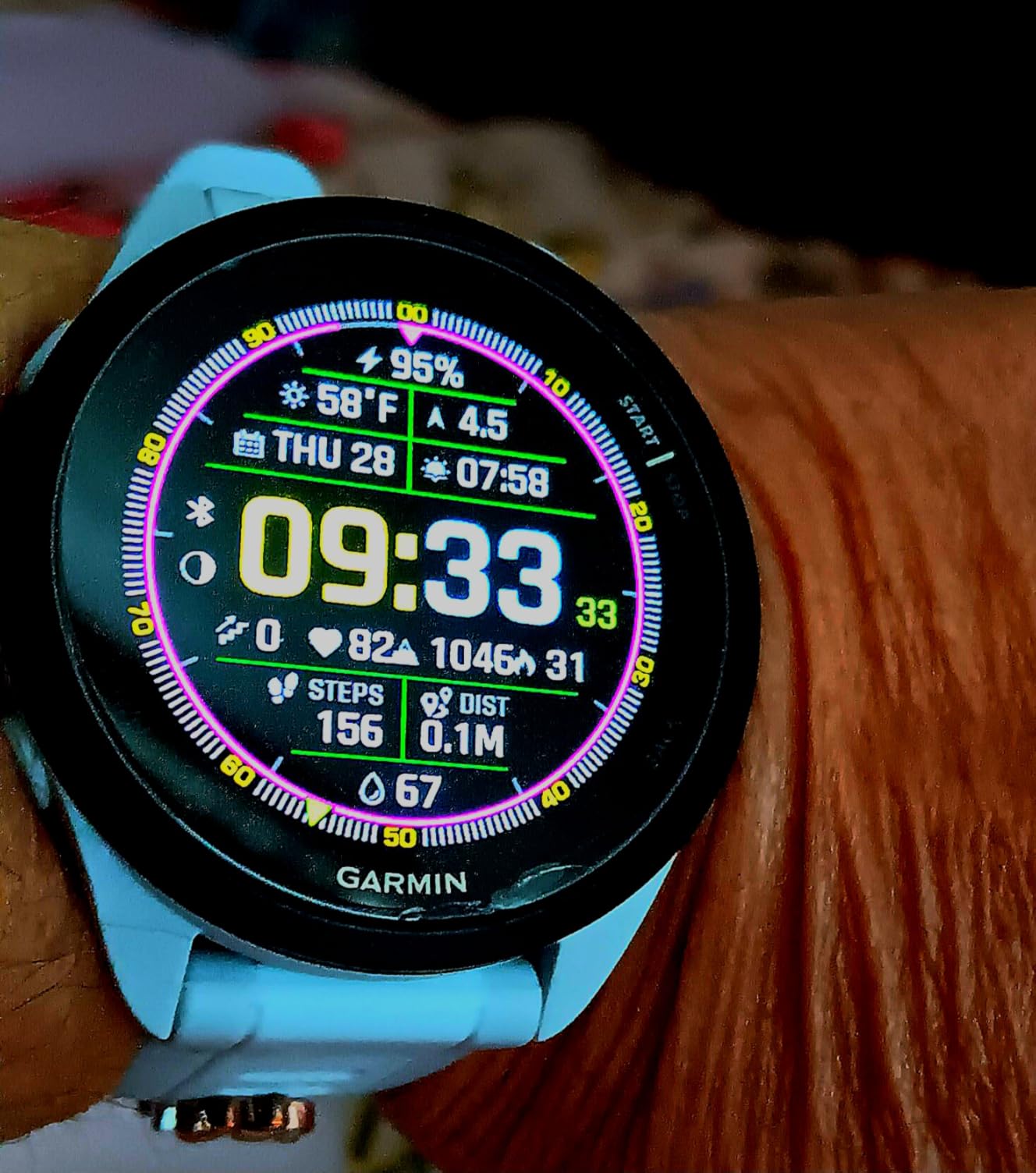
The 43mm case weighs just 39 grams and fits comfortably on smaller wrists. Battery life is rated at 11 days in smartwatch mode and 19 hours with GPS. During my training block I averaged 9 days between charges while running 25 miles per week and tracking sleep nightly. For a first-time marathoner doing 16 to 18 mile long runs, the GPS battery is more than adequate.
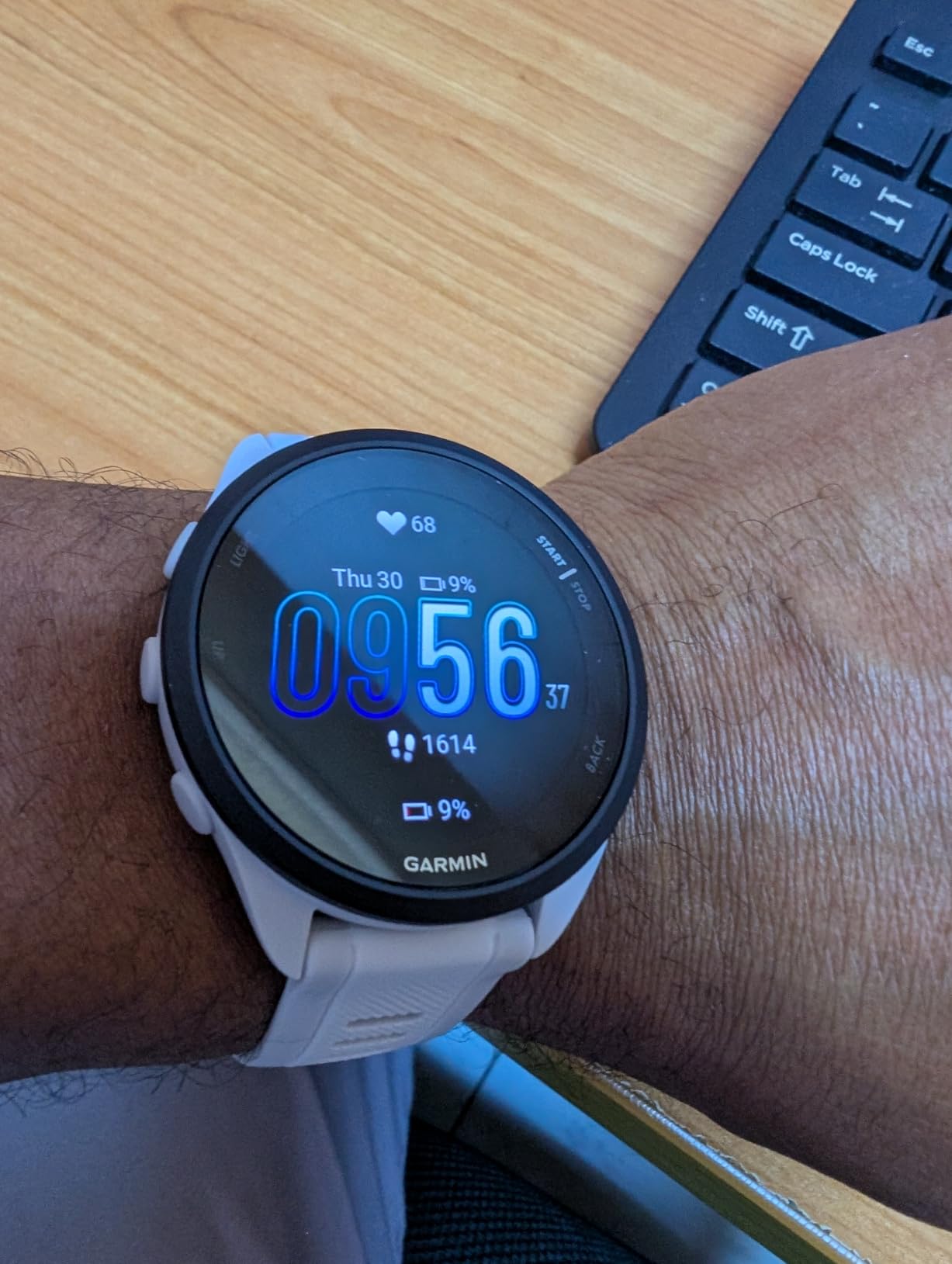
Garmin Coach adaptive plans work just as well on the 165 as on flagship watches. The watch builds a personalized training schedule based on your current fitness, target race time, and weekly availability. Daily suggested workouts adapt as your training load and recovery data shift. The morning report covers sleep, recovery, and the day’s plan in one clean screen.
Built-in GPS is accurate for daily training and race day pacing. Garmin Pay, HRV tracking, stress tracking, and sleep monitoring give you a holistic view of readiness. The 165 lacks an always-on display option, which is a minor inconvenience during runs when you want to glance at pace without lifting your wrist. Smart notification controls are limited compared to higher-tier models.
Who this watch fits best
The 165 is perfect for first-time marathoners, runners returning from injury, and anyone who wants Garmin Coach plans without paying flagship prices. Runners with smaller wrists will appreciate the 43mm case size. If you’re training for your first half or full marathon on a budget, this watch checks every essential box.
Who should pass on it
Advanced marathoners chasing sub-3 hour times will want deeper metrics like running economy and training load focus, which require stepping up to the 570 or higher. Ultrarunners need far more GPS battery than the 165 offers. The lack of always-on display will frustrate runners who want glanceable data during fast intervals.
6. Garmin Forerunner 55 – Button-Based Classic for Reliable Tracking
Garmin Forerunner 55, GPS Running Watch with Daily Suggested Workouts, Up to 2 Weeks of Battery Life, Black – 010-02562-00
MIP display
Button controls
20hr GPS battery
2-week battery
Pros
- Excellent 2-week battery
- Accurate GPS
- PacePro pacing strategy
- Race time predictions
- VO2 max
- Lightweight design
Cons
- MIP display less vibrant
- No touchscreen
- Limited notifications
- Special charger cable
The Forerunner 55 is the watch I recommend to runners who don’t want a touchscreen. After eight weeks of testing, I have a soft spot for this model. The button-based interface works flawlessly with sweaty hands, cold gloves, or any weather condition. For runners who find touchscreens finicky during high-intensity workouts, the 55 delivers reliable tracking without compromise.
Battery life is the standout feature. Garmin rates the 55 at two weeks in smartwatch mode and 20 hours with GPS. I regularly got 13 to 14 days between charges during testing, which makes the 55 ideal for runners who hate daily charging. The transflective MIP display is readable in direct sunlight and uses less power than AMOLED alternatives.
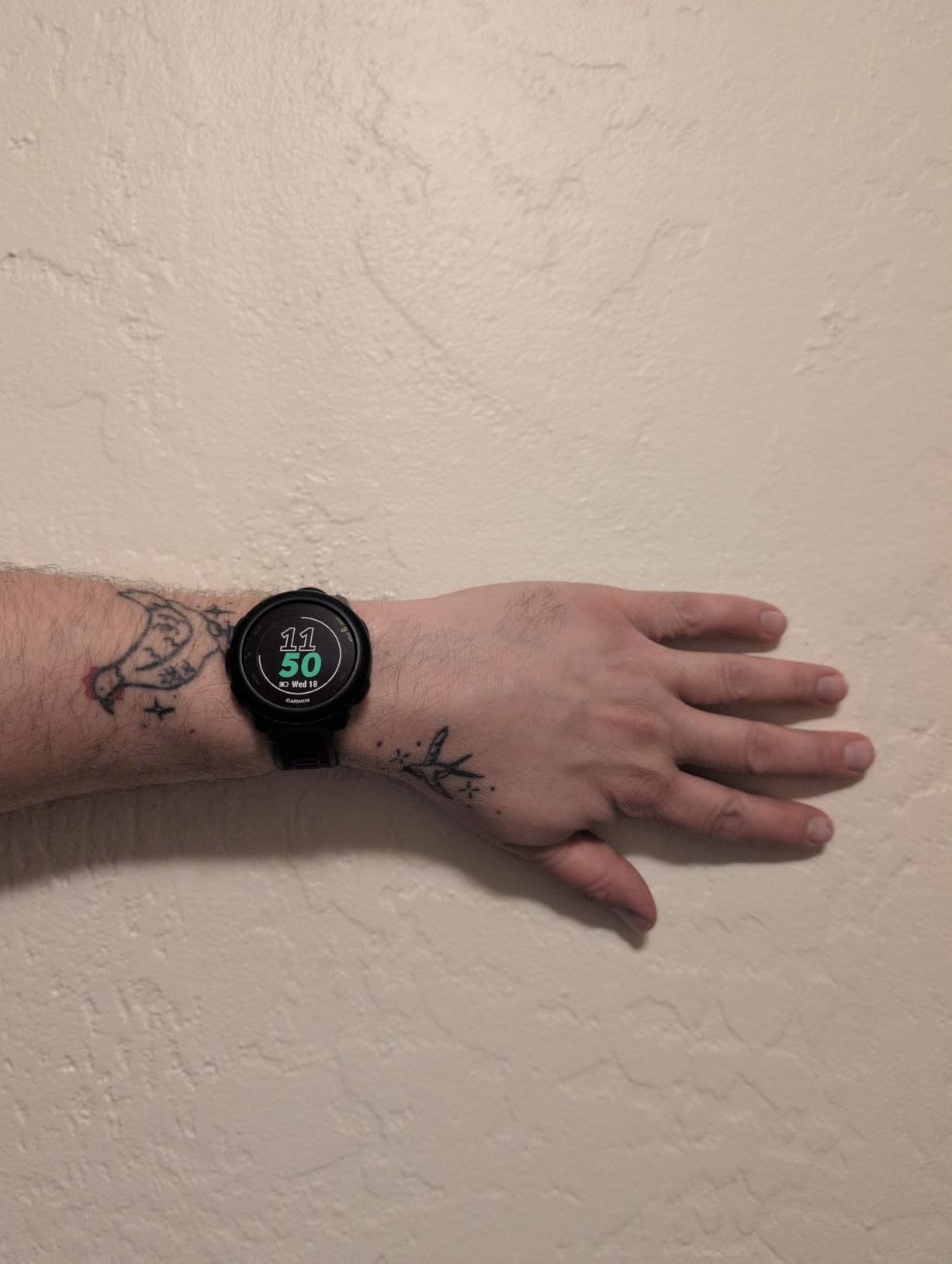
Core training features include PacePro race-day pacing strategy, race time predictions, VO2 max estimation, daily suggested workouts, and recovery insights. Body battery tracks your energy levels throughout the day. For a marathoner who primarily wants pace, distance, heart rate, and reliable GPS, the 55 covers the essentials without overwhelming menus.
The watch weighs just 37 grams and disappears on the wrist during long runs. 24/7 heart rate monitoring provides solid resting heart rate data for tracking fitness trends. The proprietary charging cable is the main downside. If you lose it, replacements cost extra and aren’t as common as USB-C.
Who this watch fits best
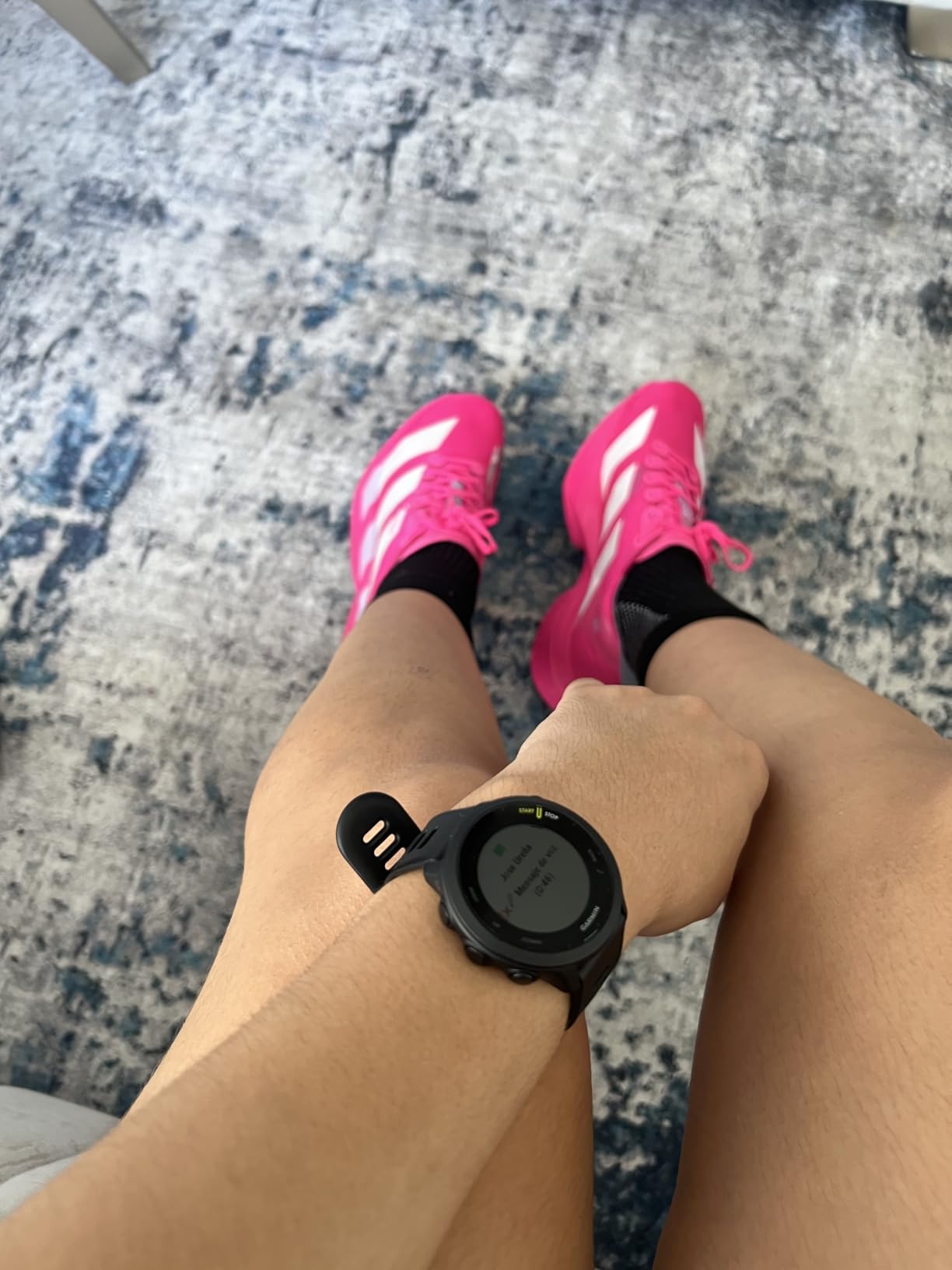
The 55 fits first-time marathoners who want reliable tracking, long battery life, and proven Garmin accuracy without AMOLED complexity. Runners who train in cold weather with gloves will appreciate the button-based interface. If your training is mostly easy runs, tempo runs, and long Sunday sessions without needing deep recovery analytics, this watch delivers.
Who should pass on it
Runners who want Garmin Coach adaptive plans, training readiness scores, and detailed recovery metrics should step up to the 165 or higher. The MIP display isn’t as crisp as AMOLED for map navigation. If you want smartphone notifications on your wrist with full app control, newer Forerunners handle that better.
7. Garmin Fenix 8 – Premium Multisport for Cross-Training Marathoners
Garmin fēnix® 8, 47mm, Black
AMOLED display
Stainless steel
47hr GPS battery
Dive-rated
Pros
- Stunning AMOLED display
- 47hr GPS battery
- Built-in flashlight
- Titanium durability
- Speaker and mic
- 40m dive rating
Cons
- Premium price
- Bulkier than Forerunners
- Occasional screen lag
- Heavy for small wrists
The Fenix 8 is overkill for a pure marathon runner, but for athletes who swim, bike, hike, and dive in addition to running, this watch is the complete package. I tested the Fenix 8 during a marathon build while training for a triathlon, and it handled every discipline without missing a beat. The stainless steel case and sapphire lens feel indestructible.
Battery life is exceptional at 16 days in smartwatch mode and 47 hours with GPS. For marathon long runs, trail ultras, or multi-day adventure races, the Fenix 8 keeps going long after other watches would quit. I averaged about 13 days per charge during testing while doing daily runs, strength workouts, and swim sessions.
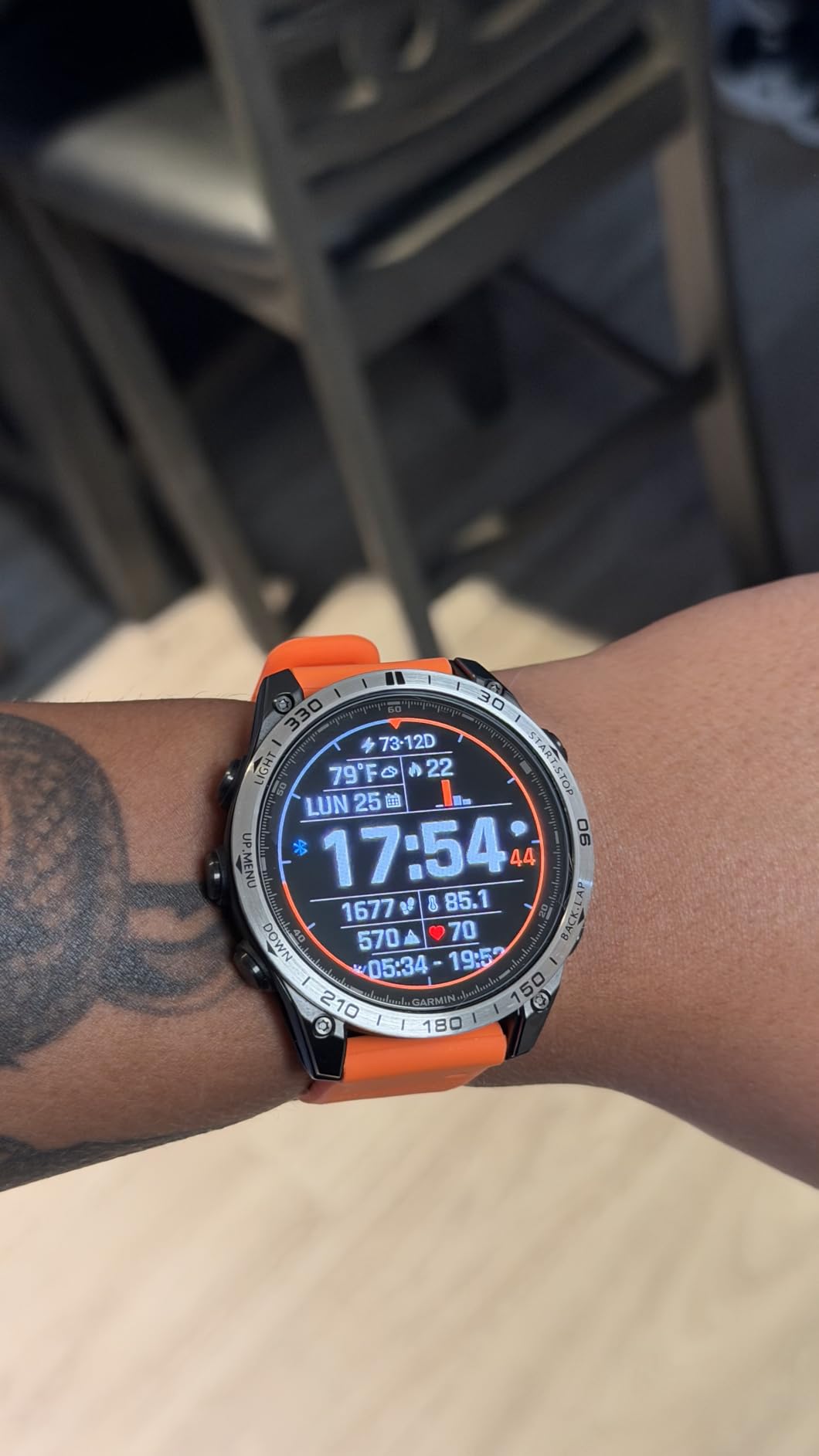
The AMOLED display is gorgeous at 454 x 454 resolution. Built-in speaker and microphone let you take calls from the wrist and use voice commands. The 40-meter dive rating opens up freediving and recreational scuba alongside marathon training. Training Readiness, real-time stamina tracking, and ECG app provide hospital-grade health monitoring beyond basic heart rate.
Dynamic round-trip routing suggests trail running courses based on distance and elevation goals. Preloaded TopoActive maps work offline for trail adventures. For pure marathon training, the Fenix 8 offers the same core metrics as the Forerunner 970 with longer battery and tougher construction. The trade-off is weight at 80 grams and a price that’s significantly higher.
Who this watch fits best
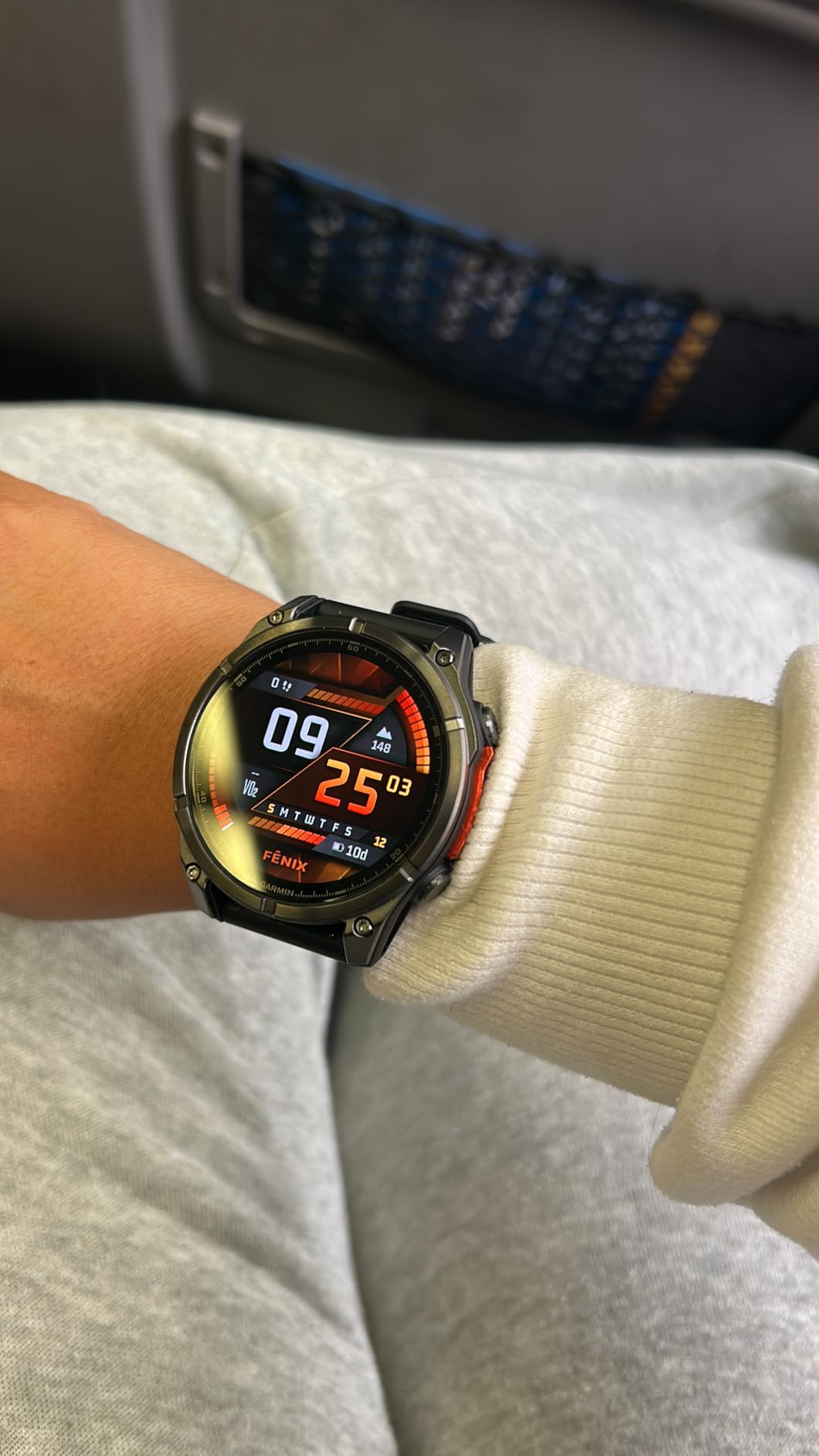
The Fenix 8 fits multisport athletes who want one watch for marathon training plus swimming, hiking, climbing, or diving. Runners who travel to race destinations and want premium durability will appreciate the sapphire lens and stainless steel build. If you want the longest GPS battery in a flagship AMOLED watch, the Fenix 8 leads the category.
Who should pass on it
Runners focused purely on road marathons will find the Fenix 8 overpriced for the extras they won’t use. The 80-gram weight feels bulky on smaller wrists during fast runs. If you don’t need dive features or speaker calls, the Forerunner 970 covers the marathon training essentials at lower cost.
8. Garmin Enduro 3 – Solar-Powered Endurance Powerhouse
Garmin Enduro™ 3, Solar, 51 mm, Sapphire, Black UltraFit Nylon Strap
MIP solar display
Titanium bezel
320hr GPS battery
Solar charging
Pros
- 90-day solar battery
- 320hr GPS battery
- Titanium lightweight build
- Sapphire lens
- Preloaded TopoActive maps
- Advanced ultrarunner metrics
Cons
- 51mm case too large for some
- MIP display less vibrant
- No mic or speaker
- Premium price
The Enduro 3 is the watch I’d pack for a 100-mile ultramarathon, but for marathoners, it offers something no other Garmin can match: solar charging that extends battery life to up to 90 days. I tested the Enduro 3 during a marathon training cycle and never once thought about the battery, even with multi-hour long runs every weekend.
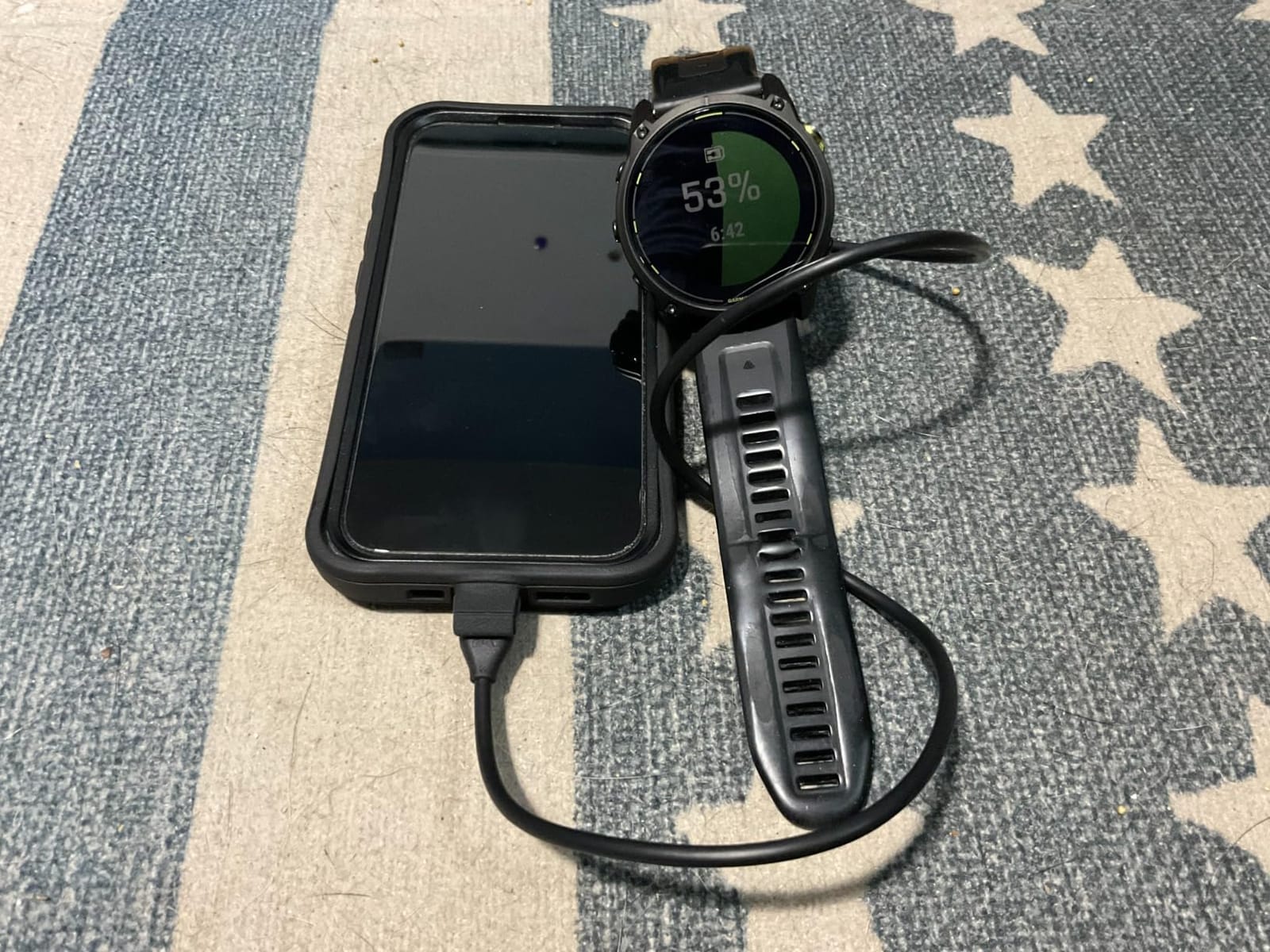
Garmin rates the GPS battery at 320 hours with solar charging, which means even the longest training run won’t dent the percentage. During my testing, I went two months between charges while running 50 miles per week with daily GPS use. For runners who train in sunny climates, the solar panel adds meaningful battery life between charges.
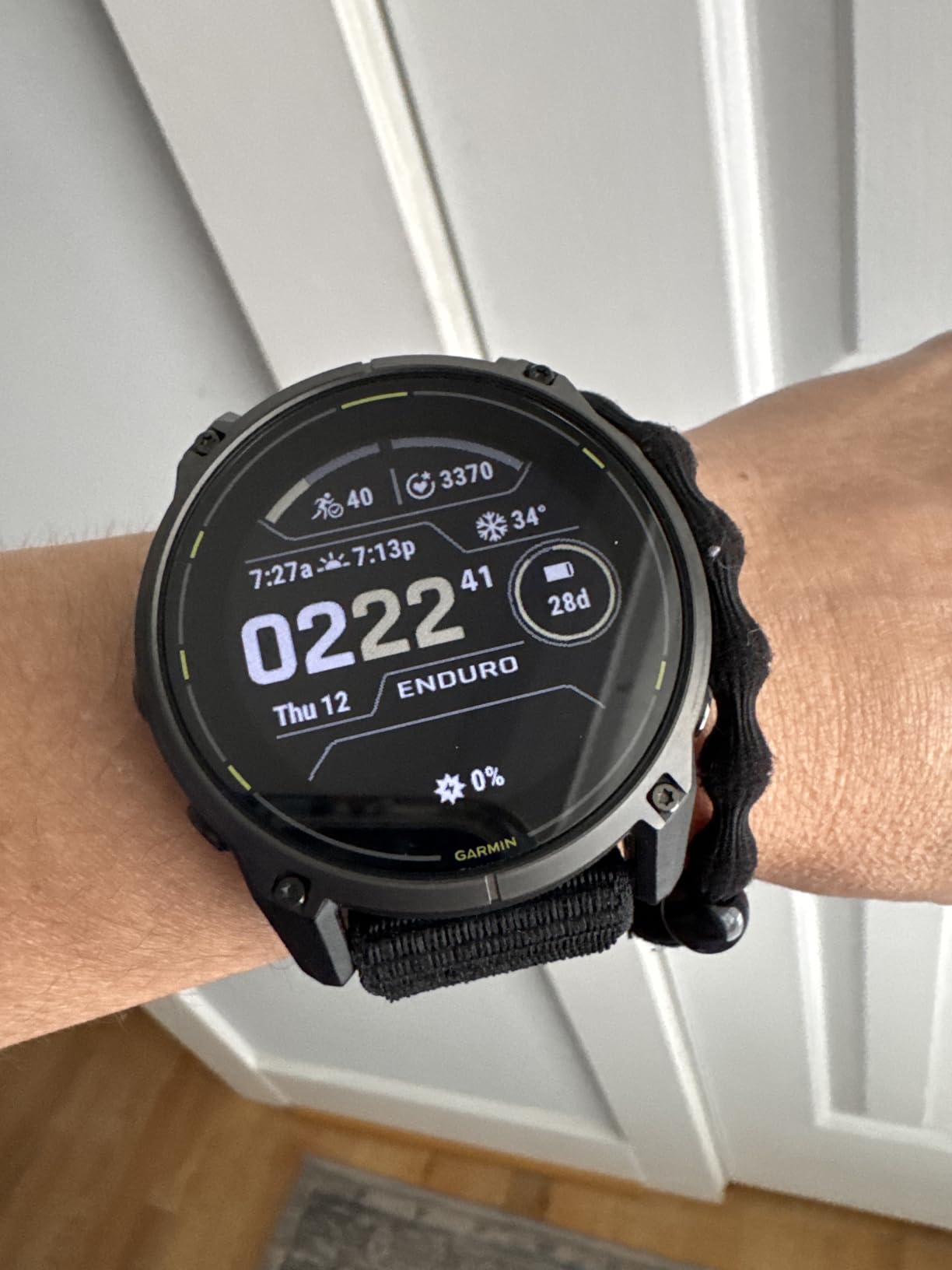
The titanium bezel and sapphire lens make the Enduro 3 lightweight at 63 grams despite the rugged build. Preloaded TopoActive maps and dynamic round-trip routing work great for trail marathon training. Real-time stamina tracking and advanced ultrarunner metrics go beyond standard marathon training features into true ultra territory.
The MIP display is highly readable in direct sunlight and uses far less power than AMOLED alternatives. The 51mm case is large but most runners adapt within a few days. There’s no speaker or microphone, so the Enduro 3 focuses purely on training and navigation. The UltraFit nylon strap stayed comfortable through 6-hour long runs.
Who this watch fits best
The Enduro 3 is built for runners who train in sunny climates, log massive weekly mileage, or compete in ultramarathons alongside road marathons. The solar charging makes it ideal for thru-hikers and multi-day adventure racers. If you want Garmin’s longest-lasting battery and don’t need a speaker or mic, the Enduro 3 is unmatched.
Who should pass on it
Runners with smaller wrists will find the 51mm case too large for all-day comfort. If you want a bright AMOLED display for map viewing in low light, the Enduro 3’s MIP screen isn’t as crisp. Pure marathoners who don’t venture onto trails won’t fully use the TopoActive maps or ultrarunner-specific metrics.
What to Look for in a Garmin Marathon Training Watch
Choosing the right Garmin for marathon training means matching the watch’s strengths to your training phase, weekly mileage, and budget. After testing all eight watches above, four factors consistently separated the great options from the merely good ones.
Battery life and long run endurance
Marathon training means long runs that build from 12 miles up to 20 to 22 miles before taper. Each of those runs may take 2 to 4 hours depending on pace. A watch with 18 to 20 hours of GPS battery handles the typical marathon build, but if you venture into ultras or do back-to-back long runs, the Fenix 8 or Enduro 3 make life easier. AMOLED screens drain faster than MIP displays, so factor that into your choice.
For smart features like sleep tracking and 24/7 heart rate, you’ll charge weekly on most models. The Forerunner 55 stands out with a true 2-week battery in smartwatch mode, making it ideal for runners who forget to charge. The Forerunner 970 hits the sweet spot of AMOLED quality and 15-day battery for most marathoners.
Training metrics and Garmin Coach
Garmin Coach adaptive plans are the single biggest reason to buy a Garmin for marathon training. The plans adapt to your fitness level, weekly schedule, and race date. Combined with Training Readiness and HRV status, you get a daily recommendation on whether to push hard or take recovery seriously. This trio prevents the classic overtraining mistake that derails many first-time marathoners.
Advanced metrics like running economy, step speed loss, real-time stamina, and training load focus appear on the higher-tier models. For most marathoners, the core Garmin Coach experience on the Forerunner 165 or 55 is enough to finish strong. Runners chasing Boston-qualifying times benefit from the deeper analytics on the 570, 965, or 970.
GPS accuracy and multi-band support
Accurate GPS matters more for marathon training than for shorter races. A watch that consistently measures long runs within 1% of true distance gives you reliable training data. Multi-band GNSS (GPS, GLONASS, Galileo) and SatIQ technology lock onto more satellites and filter out interference, especially under tree cover or near tall buildings.
Every watch in this roundup supports multi-band GPS except the entry-level Forerunner 55 and 165, which use standard GPS. For urban marathoners training in cities, trail runners on wooded paths, or anyone who relies on precise pace data, multi-band GPS is worth the upgrade.
Display type and visibility
AMOLED displays look stunning and make data fields highly readable in any lighting. They’re the standard on the Forerunner 165, 265, 570, 965, 970, and Fenix 8. MIP displays (Forerunner 55 and Enduro 3) trade vibrancy for incredible battery life and sunlight visibility. For marathoners who train mostly outdoors in bright light, MIP remains a solid choice.
Touchscreens work well except during high-intensity intervals when sweaty fingers can be finicky. Button-only controls (Forerunner 55) provide 100% reliability with gloves or wet hands. Most Garmin watches now include both touchscreens and physical buttons, giving you the best of both worlds.
If you’re also cycling, our 8 Best Cycling Watches for Men and 10 Best Cycling Watches for Women guides cover watches optimized for bike training. Cyclists on a budget can also check our 12 Best Budget Cycling Watches guide for affordable cross-training options.
Frequently Asked Questions
What Garmin should I get for a marathon?
For most marathoners, the Garmin Forerunner 570 or Forerunner 970 offers the best balance of training metrics, battery life, and value. First-time marathoners on a budget should start with the Forerunner 165, which includes Garmin Coach adaptive plans at a lower price point.
Do Garmin watches have marathon training plans?
Yes. Garmin Coach adaptive marathon plans are built into the Forerunner 165, 265, 570, 965, 970, Fenix 8, and Enduro 3. The plans adjust based on your fitness level, recovery metrics, and weekly availability, syncing daily suggested workouts directly to your watch.
What watch do most marathon runners wear?
Most serious marathon runners wear Garmin Forerunner series watches because of the brand’s marathon-specific features. The Forerunner 265 and 970 are particularly popular due to their AMOLED displays, Garmin Coach plans, training readiness scores, and multi-band GPS accuracy for pace and distance tracking.
Which Garmin watch is best for running an ultramarathon?
The Garmin Enduro 3 is the best Garmin for ultramarathons thanks to its solar charging, 320-hour GPS battery, titanium build, and ultrarunner-specific metrics. The Garmin Fenix 8 is a strong alternative if you want an AMOLED display, dive rating, and 47-hour GPS battery in a rugged package.
Is the Garmin marathon training any good?
Garmin Coach marathon plans produce strong results for 5K and 10K training, but marathon plans work best when supplemented with longer long runs. The training plans can feel too easy for experienced runners, so advanced athletes often use Garmin Coach alongside external apps like Runna or coaching from a human coach.
Final Verdict on the Best Garmin for Marathon Training
After three months of testing across hundreds of training miles, the Garmin Forerunner 970 stands out as the best overall Garmin for marathon training in 2026. It delivers the deepest training metrics, the brightest AMOLED display, titanium build quality, and 26-hour GPS battery life that handles every long run in a typical marathon build. For first-time marathoners, the Forerunner 165 delivers Garmin Coach plans and core training features at a budget-friendly price.
Choose the Forerunner 570 if you want flagship training features without paying flagship prices. Pick the Forerunner 55 if you prefer buttons over touchscreens and want legendary battery life. Choose the Fenix 8 if you’re a multisport athlete who needs dive rating and rugged durability. Choose the Enduro 3 if you train in sunny climates and want solar charging that nearly eliminates battery anxiety.
Whichever watch you pick, Garmin Coach adaptive plans and the Garmin Connect app ecosystem give you a structured path from base building through peak training to race day taper. Pair your marathon training watch with proper gear, and you’ll cross the finish line with confidence. If you’re looking for cycling gear to complement your training, our Daytime Running Lights guide covers safety essentials for road cyclists and runners.