
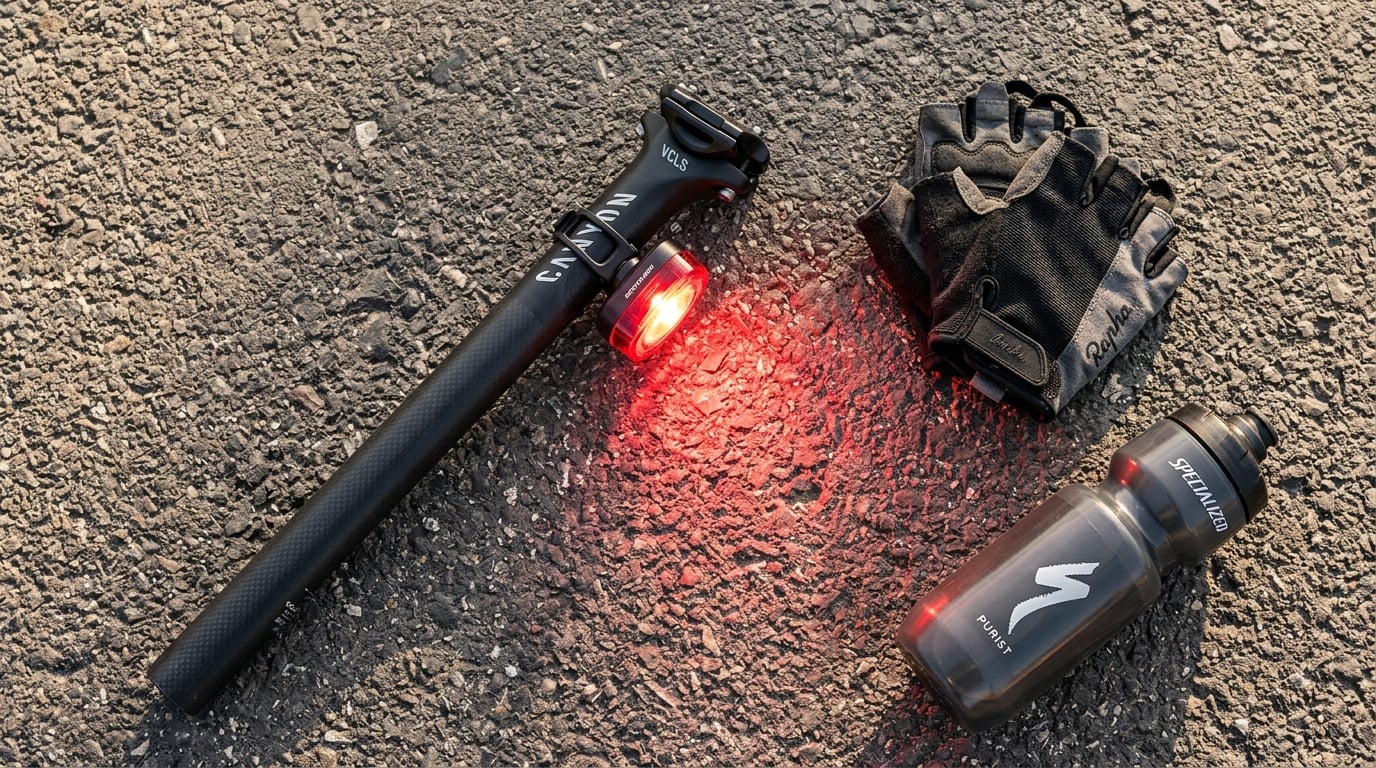
Yes, daytime running lights are absolutely worth it for road cycling. Research shows that cyclists using daytime running lights (DRLs) are 2.4 times more noticeable to motorists, experience a 19% lower accident rate, and reduce their crash risk by up to 33% according to a landmark Denmark study. Given that 80% of cycling accidents occur during daylight hours, running a bright light during the day is one of the simplest safety upgrades you can make.
I used to think bike lights were strictly a night-riding accessory. Then a close friend got clipped by a distracted driver on a sunny Saturday morning ride. She had no light, wore bright kit, and the driver claimed he “never saw her.” That moment changed how I think about visibility on the road.
After digging into the research and talking with dozens of cyclists in forums and group rides, I realized most riders dramatically overestimate how visible they actually are. Studies show cyclists think they are about seven times more visible to drivers than they really are. That gap between perception and reality is exactly where daytime running lights for cycling close the safety net.
In this guide, we will break down what DRLs are, what the science says about their effectiveness, the flash versus steady debate, legal requirements, and practical tips for getting the most out of your lights. Whether you are a daily commuter, a weekend roadie, or a competitive racer, this information could genuinely change your ride.
Table of Contents
What Are Daytime Running Lights?
Daytime running lights are high-intensity bike lights specifically engineered to make cyclists more conspicuous to motorists during daylight hours. Unlike standard night-riding lights that prioritize illuminating the road ahead, DRLs are designed around being seen rather than seeing.
The core difference lies in output and beam pattern. A night light spreads its beam wide to light up potholes, cracks, and debris in your path. A daytime running light concentrates its energy into a focused, attention-grabbing signal that cuts through ambient sunlight. Some premium DRLs claim visibility from up to 2 kilometers away.
How DRLs Differ From Standard Bike Lights
Standard bike lights typically range from 100 to 800 lumens and are optimized for seeing in darkness. DRLs push brightness higher and use specialized optics designed to compete with sunlight. Trek’s DRL technology, for example, is built around three principles they call Flash, Focus, and Range.
The flash pattern is intentionally irregular. The human brain evolved to notice movement and pattern breaks in the environment, so a non-rhythmic flash is harder to tune out than a steady or predictable blink. This is why modern DRLs avoid the simple on-off patterns older lights used.
Focus refers to the beam concentration. Rather than scattering light in all directions, a quality DRL channels its output into a tight cone aimed directly at driver eye level. Range covers how far away that focused beam remains visible and recognizable as a cyclist warning signal.
Front Versus Rear Daytime Lights
Most cycling safety experts recommend running both a front and rear DRL. The rear light is the more critical of the two for road cycling, since the majority of car-on-cyclist collisions are rear-end or side-swipe events where the driver approaches from behind. A bright red flashing tail light is your primary defense.
The front light matters too, especially at intersections and oncoming-traffic scenarios. Drivers pulling out of side streets or making left turns across your path benefit from seeing a white front light that confirms a cyclist is approaching. In group rides, the front DRL also helps riders behind you track your position.
The Safety Case: Why Daytime Lights Matter
Here is the statistic that surprised me most when I started researching this topic: 80% of cycling accidents happen during daylight hours. Not at dusk. Not at night. In broad daylight, when most riders assume visibility is a non-issue.
This counterintuitive fact makes sense when you think about exposure patterns. Most cyclists ride during the day, so the raw number of daylight hours dwarfs night riding. But it also reveals something about how drivers perceive cyclists. In daylight, drivers expect to see cars, trucks, and pedestrians. A slim cyclist on a thin frame simply does not register the way a vehicle does.
The human visual system uses something called selective attention. When a driver is scanning for threats, their brain filters out anything that does not match the expected pattern of a car-shaped, car-sized, car-moving object. A cyclist blends into the background noise of trees, signs, and parked vehicles. This is not about drivers being careless. It is about how perception works at a neurological level.
Daytime running lights solve this problem by interrupting that visual filtering. The irregular flash pattern triggers the brain’s threat-detection response, forcing the driver to consciously notice something unusual in their visual field. That split-second of attention is often the difference between a safe pass and a collision.
Riders consistently overestimate their own conspicuity by a factor of seven. You feel bright, visible, and obvious in your neon jersey, but to a driver doing 45 mph with the sun in their eyes, you are nearly invisible until it is too late.
What the Research Says About DRL Effectiveness
The research on daytime running lights for cycling is surprisingly robust, with multiple independent studies confirming significant safety benefits. Let us walk through the most cited findings.
The Denmark Study: 33% Crash Reduction
The most influential research comes from Denmark, where researchers conducted a large-scale study on the safety impact of permanent running lights for cyclists. The study equipped participants with lights designed for daytime visibility and tracked accident rates over an extended period.
The results were striking. Cyclists using permanent running lights experienced a 33% reduction in crashes involving personal injury compared to the control group. This reduction was most pronounced in multi-party accidents with motor vehicles, exactly the scenario road cyclists fear most. The Denmark study is frequently cited by safety advocates, law enforcement, and cycling organizations as the strongest evidence for DRL effectiveness.
The Trek and Clemson University Study: 2.4x More Noticeable
Trek Bicycles partnered with researchers at Clemson University to study how daytime lights affect cyclist visibility. They used eye-tracking technology and real-world driving simulations to measure how quickly and reliably drivers detected cyclists with and without lights.
The Clemson study found that cyclists using a daytime rear light were 2.4 times more noticeable to drivers than those riding without lights. When the light was set to flash mode rather than steady burn, detectability improved even further, making riders approximately 1.4 times more visible than with a steady beam.
The study also measured detection distance. With a quality DRL, drivers could identify a cyclist from over 400 meters away in daylight conditions. Without a light, that detection distance dropped dramatically, sometimes to under 100 meters depending on clothing and road conditions.
The 19% Accident Reduction Figure
Additional research and meta-analyses have pegged the accident reduction rate from daytime light usage at approximately 19%. This figure represents a conservative average across multiple studies and riding conditions. It accounts for variables like urban versus rural riding, weather conditions, and light quality differences.
Even using the conservative 19% figure, the cost-benefit math is overwhelmingly favorable. A decent DRL setup costs roughly the same as a single tire or a pair of bar tape. For that investment, you get nearly a one-in-five reduction in your accident risk every single ride.
Forum discussions on Reddit’s r/cycling and r/bicycling communities consistently reinforce these findings with real-world anecdotes. Riders who switched to running daytime lights report fewer close calls, more respectful passing distances from drivers, and a general sense that they are being noticed earlier and more reliably on the road.
Flash Mode vs Steady Burn: Which Is Better?
This is one of the most debated topics in cycling forums, and the answer is more nuanced than a simple either-or. Both modes have distinct advantages, and the best choice depends on your riding conditions.
Flash Mode: Maximum Attention
Flashing lights are the clear winner for pure attention-grabbing power. The Clemson study confirmed that irregular flash patterns make cyclists approximately 1.4 times more visible than steady burn. Flash mode exploits the human brain’s natural tendency to notice movement and pattern changes, making it extremely effective at breaking through a driver’s visual filtering.
Most modern DRLs use what manufacturers call interruptive or irregular flash patterns. Rather than a simple metronome blink, these lights vary the rhythm, intensity, and duration of each pulse. Trek’s DRL flash pattern, for instance, is specifically designed to be unpredictable so the brain cannot habituate to it and tune it out.
The downside of flash mode is that it can be annoying or distracting to other road users and fellow cyclists. In pace lines and group rides, a hyper-bright flashing light inches from the rider behind you becomes genuinely hazardous. Some cyclists also report that aggressive flash patterns cause eye fatigue on long rides.
Steady Burn: Better Distance Perception
Steady burn mode provides a continuous beam that helps drivers better judge your distance, speed, and direction of travel. A flashing light tells a driver something is there, but a steady light helps them understand where you are, how fast you are moving, and whether you are getting closer or farther away.
For this reason, many safety experts recommend running both modes simultaneously. A flashing light on the seatpost grabs attention, while a steady light on the seatstay or helmet provides spatial reference. This dual-setup approach maximizes both detectability and depth perception for approaching drivers.
Steady mode also drains your battery faster since the light is outputting at full intensity continuously. Flash mode effectively extends runtime by pulsing the output, which is why most DRL-specific flash modes can run all day on a single charge while steady mode might only last two to four hours.
Recommended Approach for Road Cyclists
For solo road cycling in traffic, flash mode on both front and rear lights is the safest choice. The attention-grabbing benefit outweighs the downsides. In group rides, consider switching to a lower-intensity steady mode or a gentle pulse that will not blind the riders behind you. For early morning or dusk rides when ambient light is changing, a combination of steady front and flashing rear is popular among experienced roadies.
Legal Requirements by Region
Legal requirements for bike lights vary significantly depending on where you ride. Most regions mandate lights after dark, but daytime light laws are less common and sometimes surprising.
United States
In the United States, the vast majority of states require a front white light and rear red reflector or light between sunset and sunrise. Daytime light requirements are rare, but a few states have notable regulations worth knowing.
Pennsylvania is the most frequently cited example, with a law specifying minimum lumen requirements for bike lights. Florida and Georgia have detailed bicycle equipment statutes, though these primarily address nighttime visibility rather than mandating daytime use. Always check your local state laws, as requirements change and enforcement varies by jurisdiction.
Even in states where daytime lights are not legally required, running them cannot hurt you from a liability standpoint. In the event of an accident, demonstrating that you were running lights during the day strengthens your position and shows you took reasonable safety precautions.
Europe and International
Several European countries have more progressive cycling safety regulations. The Be Bright Wear A Light campaign in the Netherlands has pushed for greater daytime light adoption, and some German manufacturers design lights specifically to comply with strict German road traffic regulations that govern flash patterns and brightness levels.
One important legal note involves photosensitive epilepsy. Some jurisdictions and safety advocates caution against extremely bright, rapidly flashing lights because they can trigger seizures in susceptible individuals. This is rare, but it is why some countries limit the maximum flash rate on consumer lighting products. If you ride in areas with heavy pedestrian or vehicle traffic, consider a moderate flash rate rather than the most aggressive setting.
Best Practices for Road Cyclists Using DRLs
Running a daytime light is only effective if you use it correctly. Here are the practices I have adopted after years of road cycling and discussions with safety experts.
Mount your rear light at the widest, flattest part of your bike, typically the seatpost. Position it so the beam points directly backward and sits level, not angled up at driver eye level or down at the road. Many cyclists mount their light too low or at an angle that reduces effectiveness dramatically.
For front DRLs, the handlebar is the standard mounting position. Ensure the beam is level or angled slightly downward. A front light aimed too high can blind oncoming traffic and actually reduce your safety by causing aggressive reactions from drivers.
Lumens matter, but they are not the whole story. For daytime road cycling, aim for at least 200 lumens on the front and 50 to 100 lumens on the rear. Anything less struggles to compete with direct sunlight. Premium DRLs push well beyond these minimums, and the extra brightness does make a measurable difference in bright conditions.
In group rides and pace lines, be considerate with your light settings. Drop to a lower intensity or switch to a steady mode so you are not flashing directly into the eyes of riders behind you. The Florida Cycling Law blog notes that overly bright lights in pace lines are a real source of conflict in the cycling community.
Keep your lights charged. Many modern DRLs offer USB rechargeable batteries with runtime indicators. Make charging your lights part of your post-ride routine, the same way you refill your bottles and clean your drivetrain. A dead light is worse than no light because it gives you a false sense of security.
Common Misconceptions About Daytime Running Lights
Several myths about DRLs persist in the cycling community, and they prevent riders from taking advantage of a proven safety tool.
The biggest misconception is that bright clothing provides the same benefit as a light. While high-visibility kit helps, research shows that without a light source, even neon apparel blends into the visual background for drivers at speed. A moving light fundamentally changes how your brain processes an object in the visual field.
Another common myth is that daytime lights waste battery and are unnecessary. Modern DRLs are incredibly efficient, with daytime-specific flash modes lasting 10 to 20 hours on a single charge. The battery cost argument does not hold up against the safety data.
Some riders worry that a bright light will irritate drivers and provoke aggressive behavior. In practice, the opposite tends to be true. Drivers give cyclists with running lights more space and notice them earlier, which reduces the frustration that often leads to close passes.
Finally, there is a belief that DRLs are only for commuting or urban riding. Professional cyclists, including World Tour riders like Mads Pedersen, now run DRLs during training. If the pros trust their lives to daytime lights on open roads, the technology has clearly moved beyond the commuter niche.
FAQ’s
What is the 80% rule in cycling?
The 80% rule refers to the statistic that approximately 80% of cycling accidents occur during daylight hours. This counterintuitive figure highlights why daytime visibility matters as much as nighttime lighting, since most riders assume daylight riding is inherently safe.
What is the best light for road cycling?
The best light for road cycling is a high-output DRL with an irregular flash pattern, at least 200 lumens front and 50 to 100 lumens rear, USB rechargeable, and weatherproof with an IPX4 or higher rating. Quality options include models from Trek Bontrager, Garmin Varia, and Lupine.
Do flashing bike lights really reduce accidents?
Yes. Research from the Denmark study showed a 33% reduction in injury crashes, and the Trek-Clemson study found flash-mode DRLs make cyclists 2.4 times more noticeable and 1.4 times more visible than steady mode alone.
How many lumens do I need for daytime cycling?
For daytime road cycling, aim for a minimum of 200 lumens on the front light and 50 to 100 lumens on the rear light. Brighter is better in direct sunlight, with premium DRLs exceeding 500 lumens for maximum conspicuity.
Are daytime running lights required by law for cyclists?
In most regions, daytime running lights are not legally required for cyclists, though nighttime light requirements are standard. Pennsylvania has specific lumen requirements, and some European countries encourage daytime use through safety campaigns, but daytime mandates remain uncommon.
Conclusion
Are daytime running lights worth it for road cycling? The evidence is overwhelming. A 2.4x boost in noticeability, a 19% lower accident rate, and a 33% crash risk reduction from a simple, affordable light setup represents one of the highest-value safety investments any cyclist can make. When 80% of accidents happen in daylight, relying on bright clothing alone is a gamble your body cannot afford to lose.
The research is clear, the technology is accessible, and even professional riders have adopted the practice. If you are not already running daytime lights on your road bike, today is the day to start. Your future self, and the drivers who will see you just a few seconds earlier, will be grateful you did.