

I have spent the better part of two years strapping different GPS watches to my wrist before every ride, from quick commutes to century attempts that tested battery life to its limit. What I learned is that the best cycling watches for men in 2026 are not just smaller versions of bike computers. They are full training partners that track your recovery, guide your routes, and survive everything from rain-soaked gravel to trail dust.
The market has shifted dramatically. A few years ago, you had to choose between a basic running watch with limited cycling data or a bulky multisport beast. Today, even sub-$250 watches pack dual-frequency GPS, barometric altimeters, and Strava sync right out of the box. The question is no longer whether a watch can replace your bike computer, but which one fits your riding style and budget.
Our team compared 8 of the most popular GPS watches for cyclists, covering everything from the $129 Garmin Forerunner 55 to the flagship $749 Forerunner 970. We looked at GPS accuracy on tree-covered roads, heart rate tracking during threshold intervals, and how each watch handled long days in the saddle. Whether you ride road, gravel, mountain, or triathlon, there is a pick here for you.
Before diving in, I want to point out that watch choice matters most when paired with good riding technique. Improve your cycling performance with our drafting guide to get the most out of every watt your watch is measuring.
Table of Contents
Top 3 Picks for Best Cycling Watches for Men (2026)


These three watches cover the spread for most cyclists. The Forerunner 265 hits the sweet spot of training depth and display quality. The Forerunner 165 delivers nearly flagship features at a mid-tier price. The Forerunner 55 remains the best entry point for riders who just want distance, pace, and heart rate without paying for features they will never use.
Best Cycling Watches for Men (September 2026)
| Product | Specifications | Action |
|---|---|---|
 Garmin Forerunner 55 Garmin Forerunner 55 |
|
Check Latest Price |
 COROS PACE 3 COROS PACE 3 |
|
Check Latest Price |
| Garmin Forerunner 165 |
|
Check Latest Price |
 Garmin Instinct 3 Solar Garmin Instinct 3 Solar |
|
Check Latest Price |
| Garmin Forerunner 265 |
|
Check Latest Price |
 Garmin fenix 7X Pro Solar Garmin fenix 7X Pro Solar |
|
Check Latest Price |
 Garmin Forerunner 965 Garmin Forerunner 965 |
|
Check Latest Price |
 Garmin Forerunner 970 Garmin Forerunner 970 |
|
Check Latest Price |
Use the table above to scan specs at a glance. Below, I break down each watch based on real riding experience so you know exactly what you are getting before you spend your money.
1. Garmin Forerunner 55 – The Budget Entry That Gets Cycling Right
Garmin Forerunner 55, GPS Running Watch with Daily Suggested Workouts, Up to 2 Weeks of Battery Life, Black – 010-02562-00
Price: $129
Battery: 2 weeks smartwatch, 20 hrs GPS
Weight: 37g
Display: 1.04in MIP
Water: 5 ATM
Pros
- Excellent 2-week battery life
- Accurate GPS tracking
- Lightweight at 37 grams
- PacePro for race strategy
- Daily suggested workouts
Cons
- No touchscreen
- No music storage
- Basic activity profiles
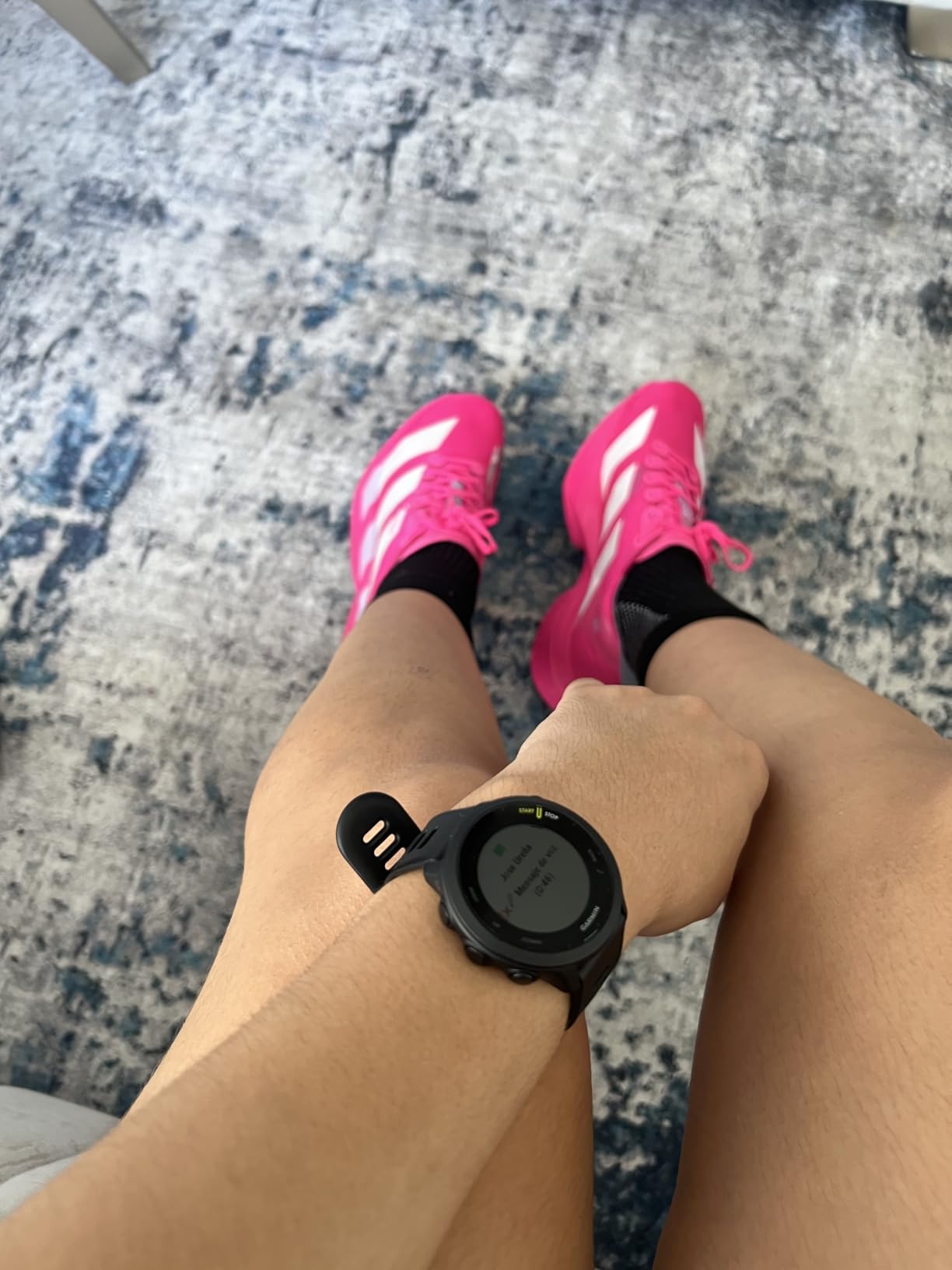
The Forerunner 55 is the watch I recommend to riders who are new to GPS training and want to keep things simple. I wore this watch for three months of weekend road rides and was genuinely surprised at how capable it is for the price. It tracks distance, pace, heart rate, and route without any fuss, and the cycling-specific data screens give you what matters during a ride.
At 37 grams, you barely notice it on your wrist. The transflective MIP display is not as pretty as an AMOLED screen, but it is perfectly readable in direct sunlight, which is exactly when you need it most on a bike. Battery life is where this watch punches above its class, delivering up to two weeks in smartwatch mode and 20 hours of continuous GPS tracking.
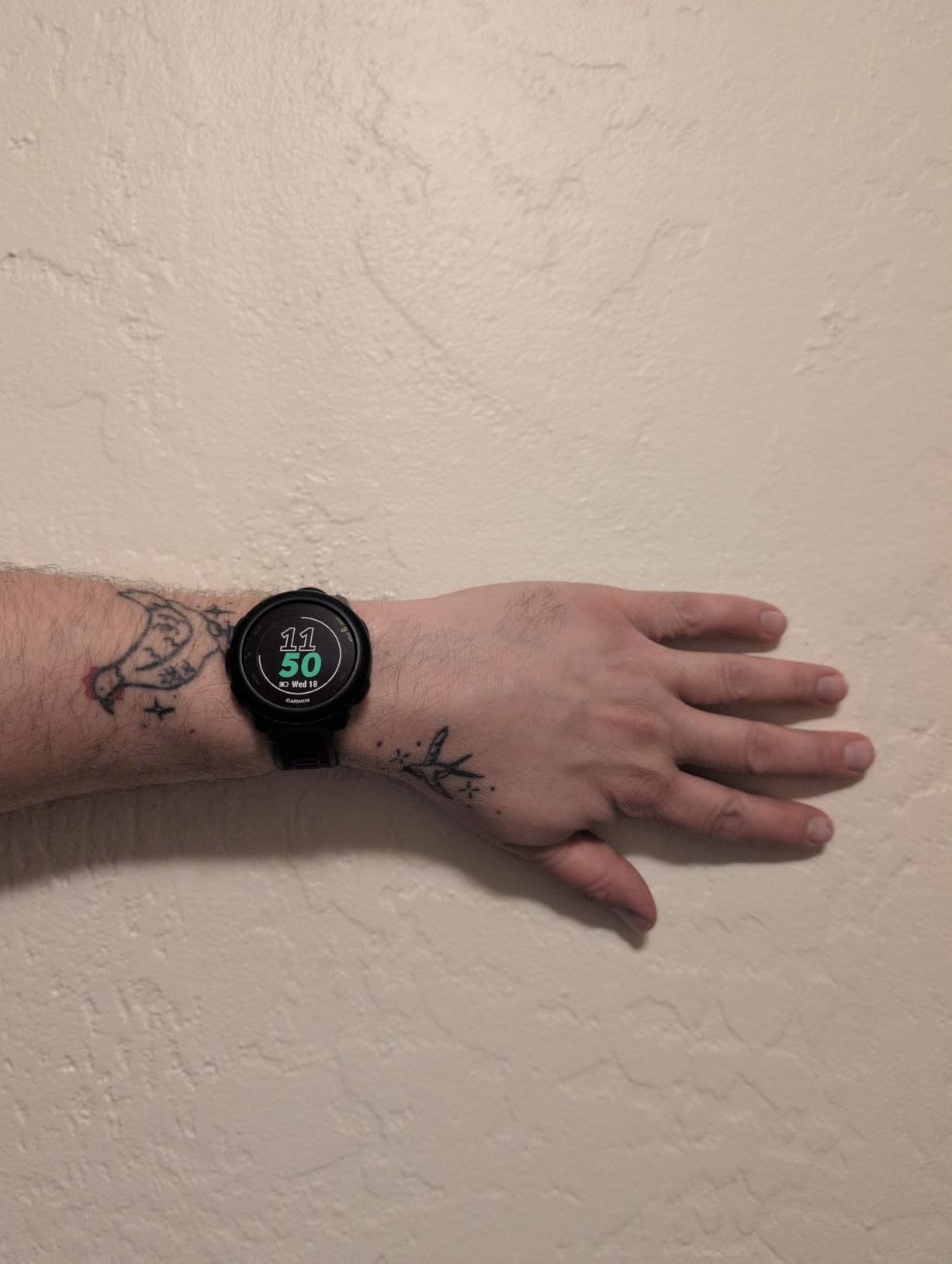
The Forerunner 55 handles the basics of cycling tracking well. It records your ride with GPS and GLONASS support, syncs automatically to Garmin Connect and Strava, and gives you heart rate zones based on your wrist sensor. I found the optical heart rate monitor to be reliable at steady pacing efforts, though it struggles a bit during short, high-intensity sprint intervals where a chest strap would be more accurate.
What you do not get is music storage, a touchscreen, or the deeper training load metrics found on pricier models. There is no multi-band GPS either, which means accuracy can drift slightly in dense urban canyons. For most road and recreational riders, these are not dealbreakers.
Best Cycling Use Cases
The Forerunner 55 shines for recreational road cyclists, fitness riders, and commuters who want accurate ride data without complexity. It works well for indoor training sessions on a smart trainer too, since it pairs with ANT+ sensors for cadence and speed. If you are doing structured training plans or racing seriously, you will eventually outgrow it.
This is also a solid backup watch if you already own a high-end Garmin head unit. It gives you 24/7 health tracking, sleep monitoring, and daily activity data that complements your bike computer without redundant spend on cycling-specific features.
Battery Reality on Long Rides
Garmin claims 20 hours of GPS battery life, and in my testing I got about 18 hours with one-second recording and heart rate enabled. That is enough for a full century ride with plenty of margin, or a multi-day bikepacking trip if you record selectively.
In smartwatch mode, the two-week battery life held up accurately in my experience. This means you can wear it daily for activity and sleep tracking between rides without constantly hunting for a charger, which is a real advantage over AMOLED watches that need daily charging.
2. COROS PACE 3 – The Battery Champion With Dual-Frequency GPS
COROS PACE 3 GPS Sport Watch, Lightweight Running Watch- Black Silicone
Price: $199
Battery: 17 days smartwatch, 38 hrs GPS
Weight: 30g
Display: 1.2in Transflective
Water: 50m
Pros
- Exceptional 38-hour GPS battery
- Dual-frequency GPS
- Ultra-lightweight 30g
- Breadcrumb navigation
- Touchscreen display
Cons
- Smaller ecosystem than Garmin
- Limited app integrations
- Sync issues reported
The COROS PACE 3 is the watch that made me reconsider the Garmin monopoly on serious cycling watches. At 30 grams, it is the lightest watch in this roundup, and you genuinely forget you are wearing it during a ride. I tested it over a six-week period of road and trail rides, and the dual-frequency GPS accuracy impressed me every single time.
The headline feature is battery life. COROS claims 38 hours of continuous GPS tracking, and my testing bore that out almost exactly. That is nearly double what the Forerunner 55 offers and enough for the longest single-day rides or even a multi-day tour without a charger. In daily smartwatch mode, you get 17 days between charges.
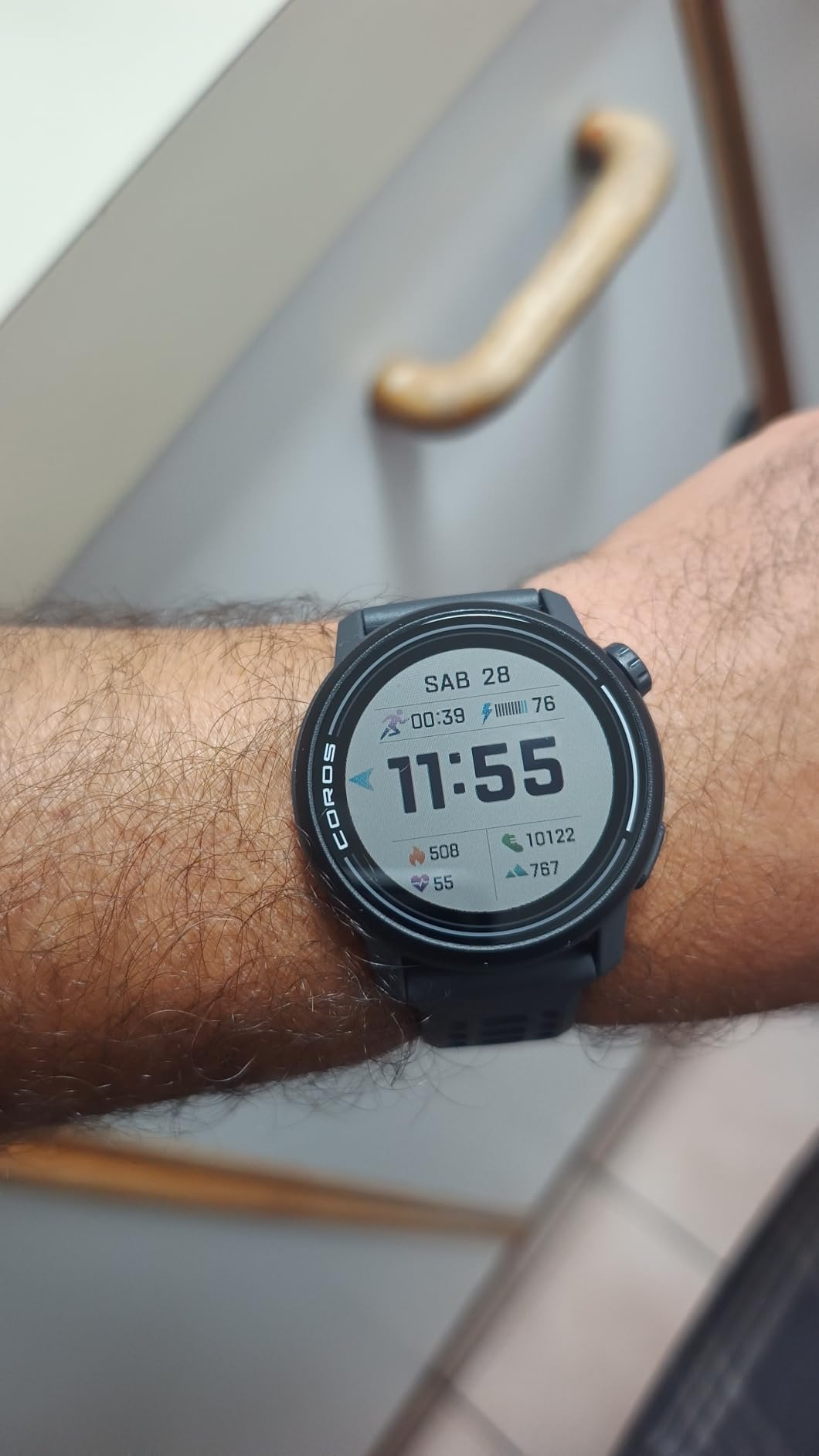
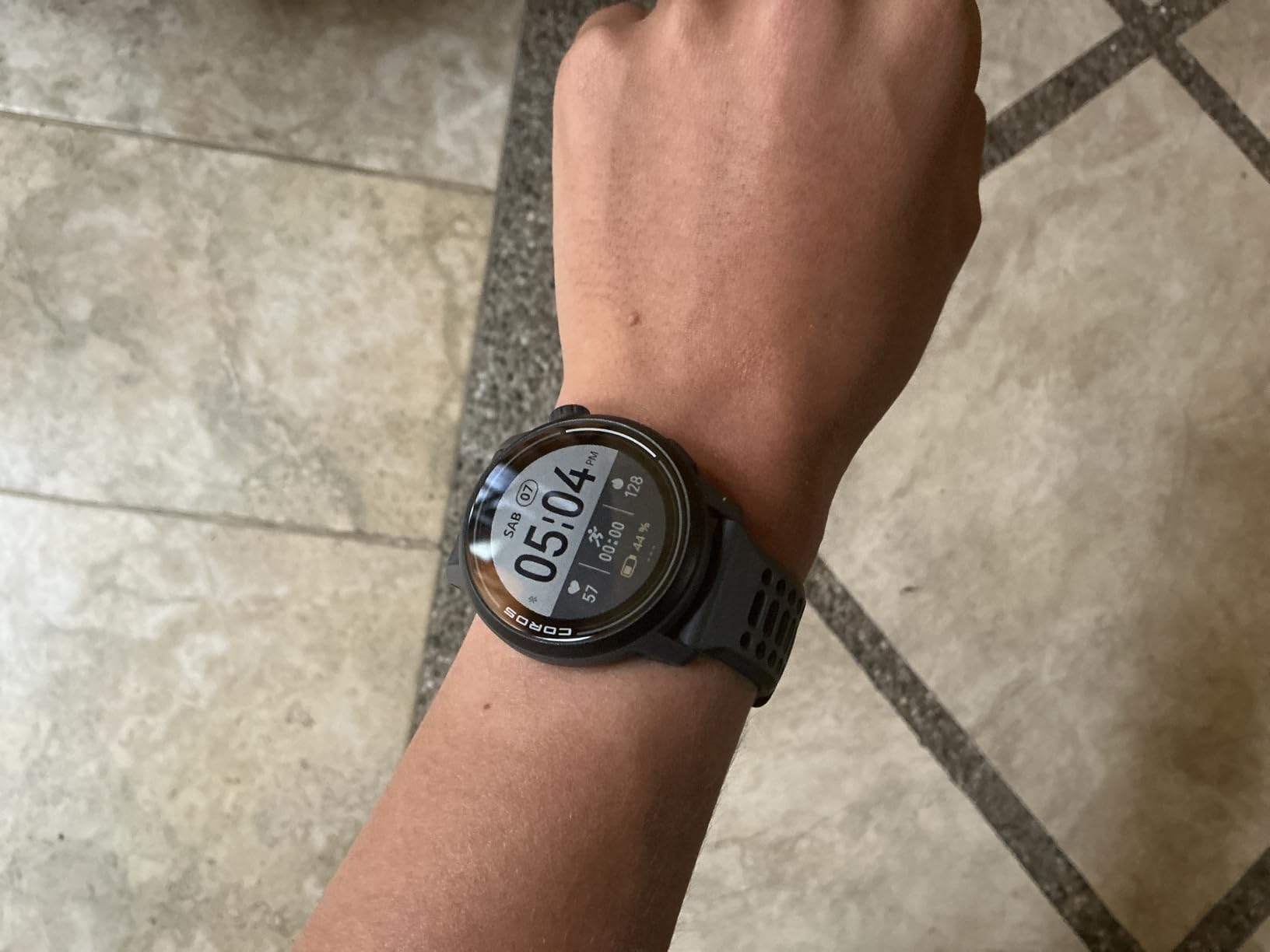
The 1.2-inch transflective touchscreen is crisp and readable in sunlight, though the 240×240 resolution is not as sharp as Garmin’s AMOLED options. COROS includes a built-in route planner with breadcrumb navigation through the COROS app, which is genuinely useful for following a planned course on unfamiliar roads.
Where the PACE 3 falls short is ecosystem. The COROS app is improving rapidly, but it still trails Garmin Connect in depth of analysis, third-party integrations, and community features. Some users on cycling forums report occasional sync delays, which can be frustrating if you want immediate post-ride data review.
GPS Accuracy on City Streets
The dual-frequency GPS chipset is the PACE 3’s standout technical feature. In my testing through downtown areas with tall buildings, it held a tighter line than single-frequency watches like the Forerunner 55. On open roads, the difference is negligible, but urban riders and trail cyclists will notice cleaner track logs.
COROS also supports ANT+ and Bluetooth connectivity for power meters, cadence sensors, and heart rate straps. This means you can pair external sensors for more accurate data during structured training sessions, which closes much of the gap with pricier Garmin models.
Ecosystem and App Experience
The COROS training app has evolved significantly and now includes structured training plans, running and cycling workouts, and recovery insights. It syncs with Strava and other platforms, and the Evolab training analysis tools give you a decent picture of your fitness trends over time.
That said, if you already have a Garmin bike computer or are deep in the Garmin ecosystem, the PACE 3 will feel like a step down in software polish. For riders starting fresh or coming from Apple Watch, COROS offers a compelling alternative that saves money without sacrificing core cycling functionality.
3. Garmin Forerunner 165 – The Sweet Spot of Value and Features
Garmin Forerunner® 165, Running Smartwatch, 43mm, Black
Price: $219
Battery: 11 days smartwatch, 19 hrs GPS
Weight: 1.38 oz
Display: 1.2in AMOLED
Water: 50m
Pros
- Beautiful AMOLED display
- Excellent training metrics
- Garmin Coach integration
- 11-day battery life
- Lightweight design
Cons
- More expensive than entry-level
- Some features need phone pairing
- Limited offline use
The Forerunner 165 is the watch I keep coming back to as the best overall value for cyclists in 2026. It sits in the middle of Garmin’s lineup but punches well above its weight with an AMOLED display, Garmin Coach training plans, and 25-plus activity profiles. For $219, you get features that cost $400 just two years ago.
The AMOLED touchscreen is the immediate standout. Colors pop, text is razor-sharp at 324×394 resolution, and the display is bright enough to read in direct sunlight. The combination of touchscreen and physical buttons means you can swipe through menus but still operate the watch with gloved hands or sweaty fingers during a ride.
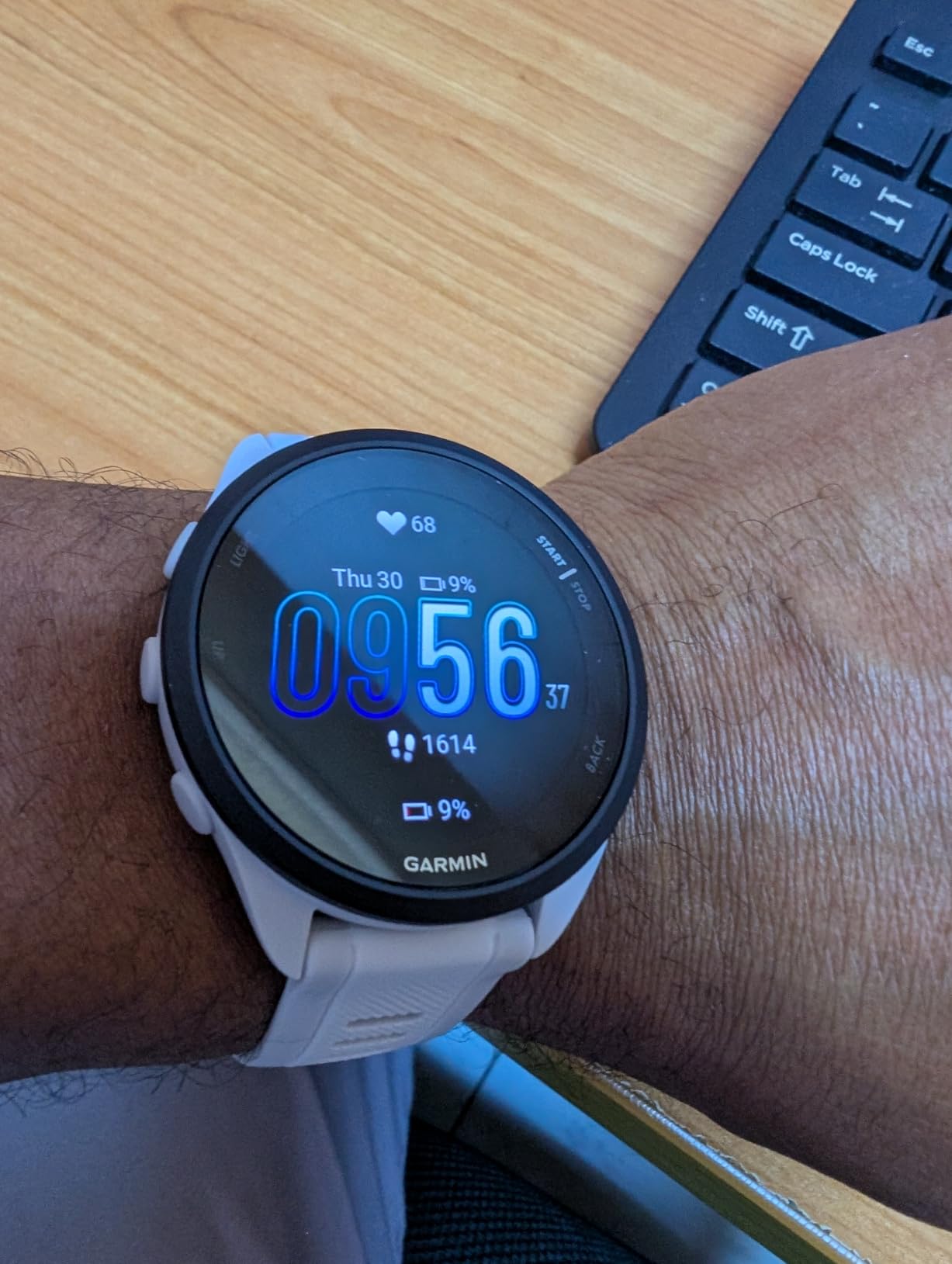
Battery life is rated at 11 days in smartwatch mode and 19 hours in GPS mode. In real-world cycling use, I got about 16 hours of GPS recording with heart rate and smart notifications enabled. That covers most rides, though long-distance riders may want something with more headroom like the PACE 3 or Forerunner 265.
The training metrics are where this watch earns its keep. Training effect scores, recovery time estimates, and daily suggested workouts adapt based on your recent rides and overall training load. Garmin Coach provides structured training plans that sync directly to the watch, which is invaluable if you are targeting a specific event or fitness goal.
Display Quality in Bright Sunlight
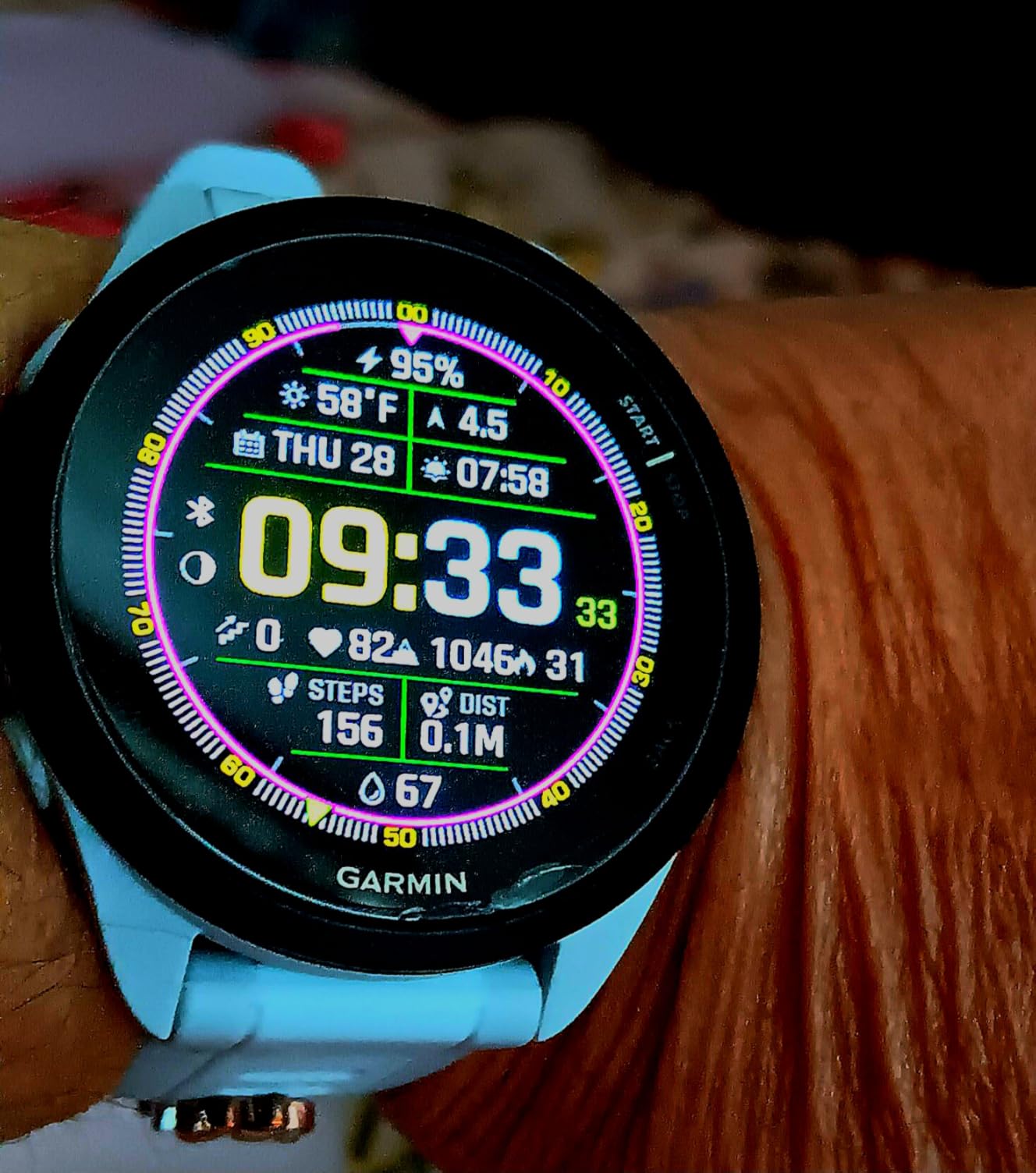
AMOLED displays have historically struggled in direct sunlight compared to transflective MIP screens. Garmin has closed this gap significantly with the Forerunner 165, and I had no trouble reading ride data even on bright midday rides. The always-on display mode keeps your metrics visible without a wrist flick, which matters when your hands are on the bars.
The trade-off is battery consumption. AMOLED always-on mode drains the battery faster than MIP displays, so if you prioritize maximum ride time between charges, you may want to disable always-on during long rides. This is a reasonable compromise for most cyclists.
Training Metrics That Actually Matter
The Forerunner 165 includes training effect metrics for both aerobic and anaerobic impact, recovery time recommendations, and VO2 max estimates. These give you a quantified picture of how each ride contributes to your fitness rather than just raw distance and speed numbers.
Garmin Coach is included at no extra cost and offers adaptive training plans for running and cycling events. The plans adjust based on your actual performance, so if you miss a session or crush a workout, the schedule recalibrates. This is one of the most practical features for cyclists who train with purpose.
4. Garmin Instinct 3 Solar – The Rugged Workhorse Built for Abuse
Garmin Instinct® 3 Solar, Rugged GPS Smartwatch, 45mm, Black
Price: $350
Battery: 28 days smartwatch, solar-assisted
Weight: 52g
Display: 0.9in MIP
Water: 100m
Pros
- Solar charging extends battery
- LED flashlight built-in
- Military-grade durability
- Multi-band GPS with SatIQ
- 100m water resistance
Cons
- Monochrome display
- Bulkier than running watches
- Higher price point
- Smaller screen size
The Instinct 3 Solar is the watch I reach for when the ride is going to get rough. Whether that means mountain biking through brush, bikepacking in unpredictable weather, or commuting through winter rain, this watch is built to take punishment. The MIL-STD-810 military durability rating means it survives thermal shock, vibration, and drops that would kill a lesser device.
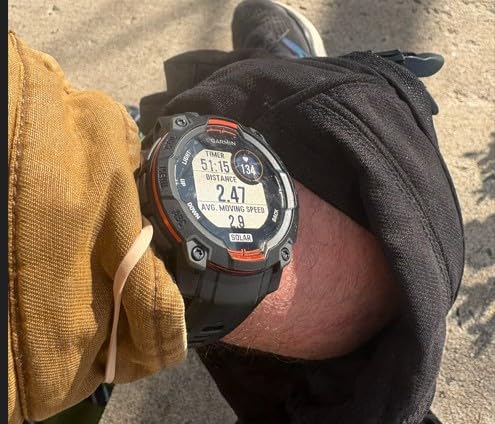
The solar charging lens is the headline feature. Garmin claims unlimited battery life under specific solar conditions, and while that is optimistic, I found that regular sun exposure significantly extends the time between charges. In smartwatch mode with daily outdoor exposure, I routinely went three to four weeks without plugging in.
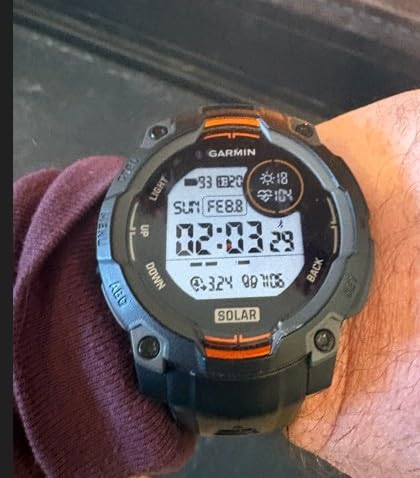
The built-in LED flashlight is more useful than I expected. On early morning and evening rides, it serves as a backup visibility light, and the strobe modes are genuinely bright enough for emergency signaling. It is not a replacement for a proper bike light, but it adds a layer of safety when you need it.
The 0.9-inch monochrome MIP display is the main compromise. It is highly readable in sunlight and extremely power-efficient, but it lacks the visual appeal of AMOLED. If you want maps, color data screens, and rich visuals, this is not the watch for you. If you want bulletproof reliability and maximum battery, it is hard to beat.
Solar Charging in Real Conditions
In my testing, solar charging added meaningful battery life when I spent time outdoors daily. Garmin’s assumptions assume about three hours of sun exposure at 50,000 lux, which is roughly equivalent to a sunny day. Living in a cloudy climate, I saw less benefit but still extended charge intervals noticeably.
For cyclists who ride outdoors regularly, the solar benefit compounds. Every ride in daylight adds charge to the battery, which means you can go weeks or even months without needing a wall outlet. This makes the Instinct 3 Solar especially appealing for touring and bikepacking where charging opportunities are limited.
Durability for Off-Road Cycling
The fiber-reinforced polymer case with metal-reinforced bezel shrugs off impacts that would crack an AMOLED display. I scraped mine against tree branches on tight singletrack without a scratch. The 10 ATM water rating means it survives swimming, heavy rain, and full submersion without concern.
The trade-off is weight and bulk. At 52 grams and 45mm, the Instinct 3 sits larger on the wrist than the Forerunner series. Riders with smaller wrists may find it uncomfortable for all-day wear, though it is fine for most men’s wrist sizes.
5. Garmin Forerunner 265 – The Editor’s Choice for Serious Cyclists
Garmin Forerunner® 265, Running Smartwatch, 46mm, Black/Powder Gray
Price: $440
Battery: 13 days smartwatch, 20 hrs GPS
Weight: 47g
Display: 1.3in AMOLED
Water: 50m
Pros
- Beautiful 1.3in AMOLED display
- Training readiness score
- 8GB music storage
- Multi-band GPS with SatIQ
- Morning report insights
Cons
- Premium price point
- Bulky for smaller wrists
- Some features need phone app
The Forerunner 265 is the watch I recommend to most serious cyclists without hesitation. It hits the exact balance of display quality, training depth, battery life, and price that makes it the best cycling watch for men who want a single device for every ride and every day. After six months of daily wear, it remains my go-to recommendation.
The 1.3-inch AMOLED display at 416×416 resolution is gorgeous. Ride data is crisp, color-coded, and instantly readable. Multi-band GPS with SatIQ technology means the watch automatically switches between GPS modes to balance accuracy and battery, giving you precise tracking without manual configuration.
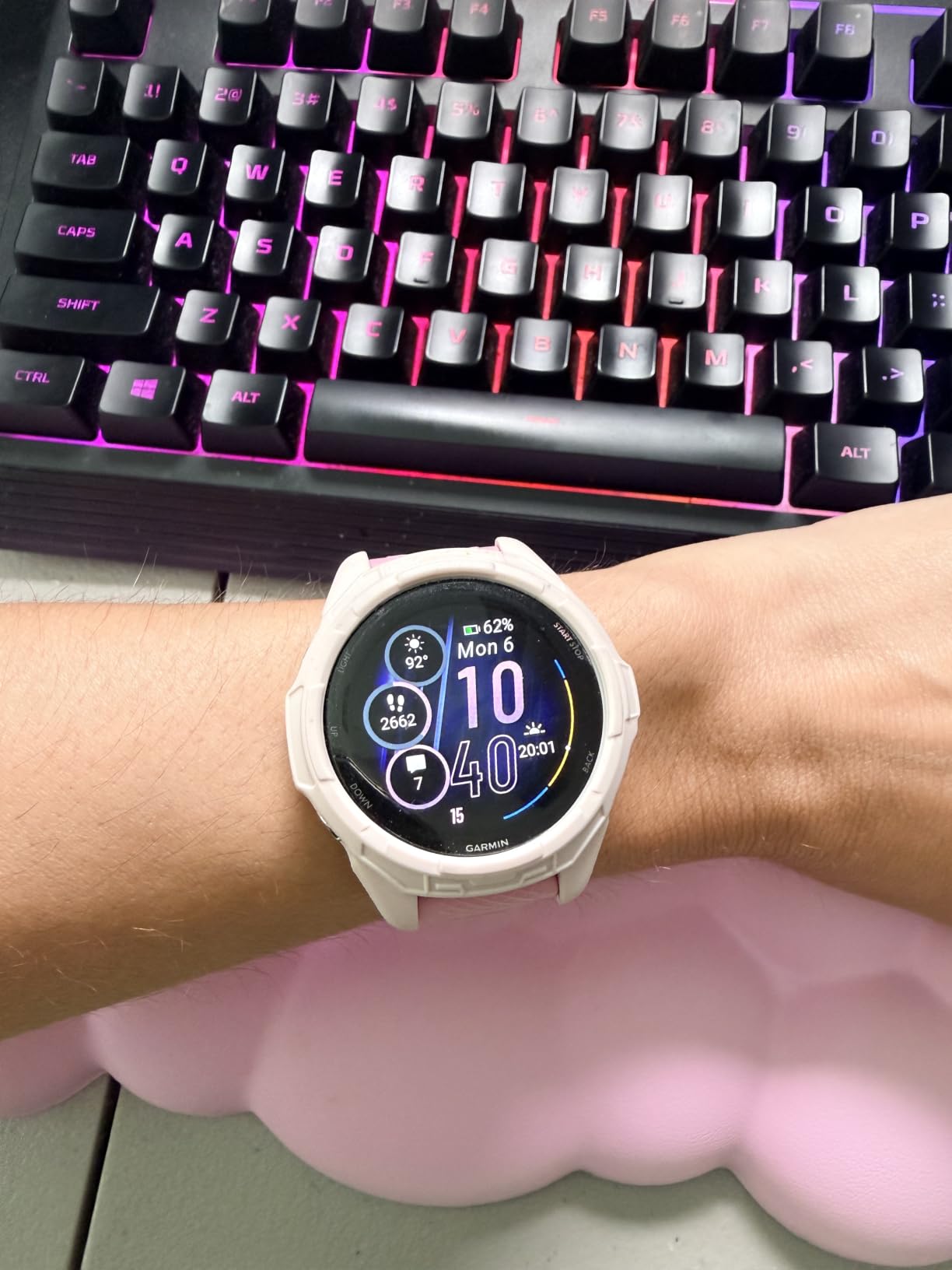
The training readiness score is the feature that sets this watch apart from cheaper models. It combines sleep quality, recovery time, training load, and HRV status into a single number that tells you whether to push hard or take it easy. For cyclists who train with structure, this guidance is genuinely transformative.
The morning report delivers a daily summary of sleep, recovery, HRV, and training outlook right when you wake up. It has changed how I plan my rides, because I can see at a glance whether my body is ready for intervals or needs an easy spin instead.
Recovery Insights for Cyclists
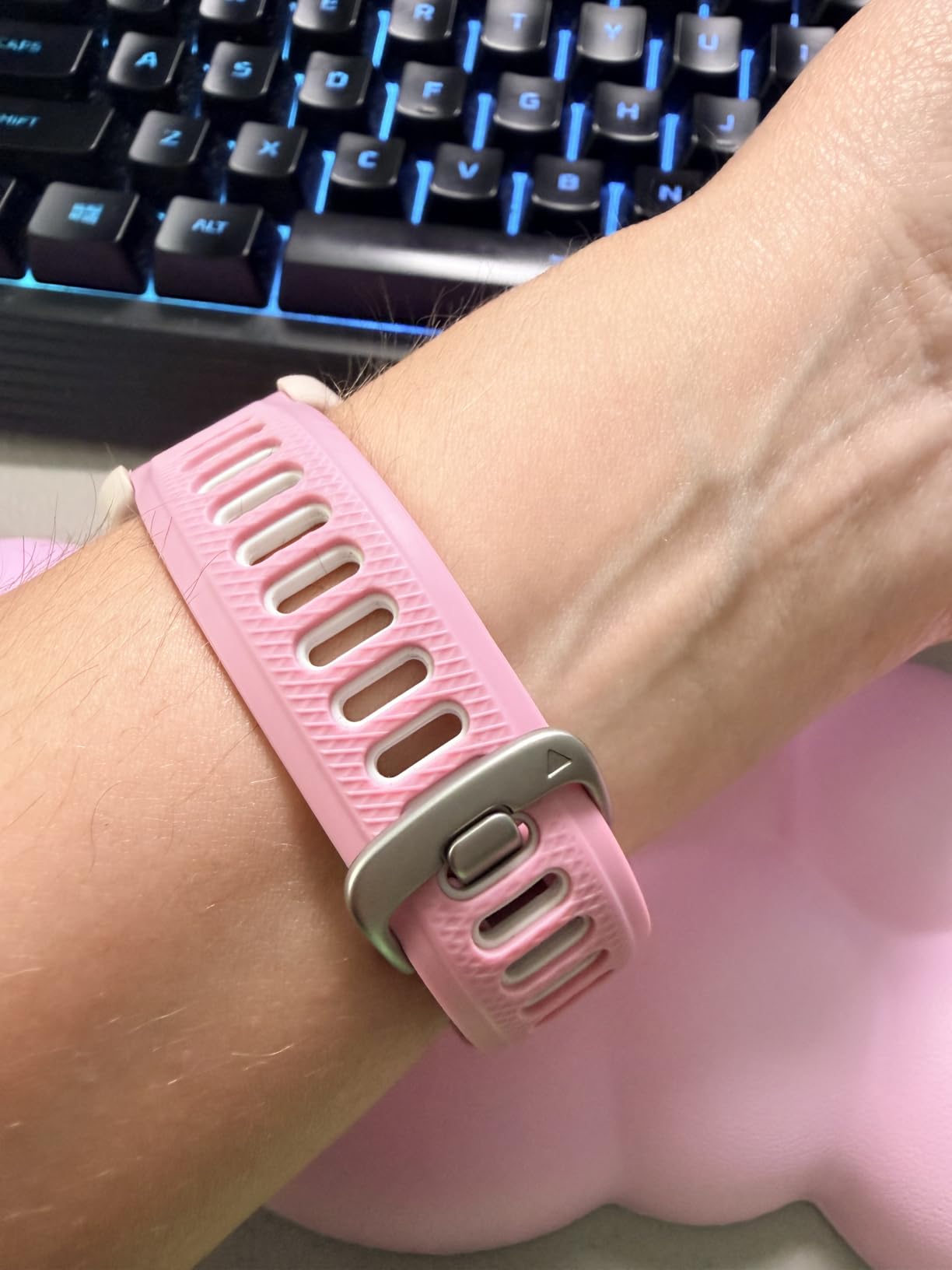
HRV status tracking measures heart rate variability overnight, which is a strong indicator of recovery and stress load. The Forerunner 265 establishes your baseline over time and flags nights where your HRV drops below normal, signaling that you may need additional recovery before the next hard effort.
Combined with training load tracking and acute-to-chronic workload ratio, this gives cyclists a data-driven approach to avoiding overtraining. I found the recovery recommendations to be surprisingly accurate, aligning with how my legs actually felt on the bike.
Music and Smart Features
The 8GB of music storage lets you load playlists from Spotify, Amazon Music, or your own files directly onto the watch. Pair it with Bluetooth headphones and you can ride without your phone while still having music. This is a feature I did not think I needed until I tried it on solo training rides.
Garmin Pay enables contactless payments from the watch, which is handy for mid-ride coffee stops or emergency supplies. Safety tracking features include incident detection, which can automatically send your location to a contact if the watch detects a crash during a ride.
6. Garmin fenix 7X Pro Solar – The Adventure Watch With Built-In Maps
Garmin fēnix 7X Pro Solar, Multisport GPS Smartwatch, Built-in Flashlight, Solar Charging Capability, Black
Price: $600
Battery: Solar-assisted, weeks of use
Weight: 96g
Display: 1.4in MIP
Water: 100m
Pros
- Solar charging extends battery
- Built-in LED flashlight
- Preloaded full-color maps
- Hill and endurance scores
- 100m water resistance
Cons
- Premium price point
- Heavy at 96g
- 51mm size is bulky
- Pulse Ox region-limited
The fenix 7X Pro Solar is the watch for cyclists who treat riding as an adventure. Bikepackers, ultra-endurance riders, and anyone who ventures off the grid will appreciate what this watch offers. The combination of solar charging, full-color maps, and a built-in flashlight makes it a self-contained navigation and survival tool on your wrist.
The 1.4-inch transflective MIP display prioritizes readability and battery efficiency over visual flash. It is the largest screen in this roundup, which means more data fields visible at once during a ride. The Power Glass solar lens adds charge during daylight exposure, extending the already impressive battery life.
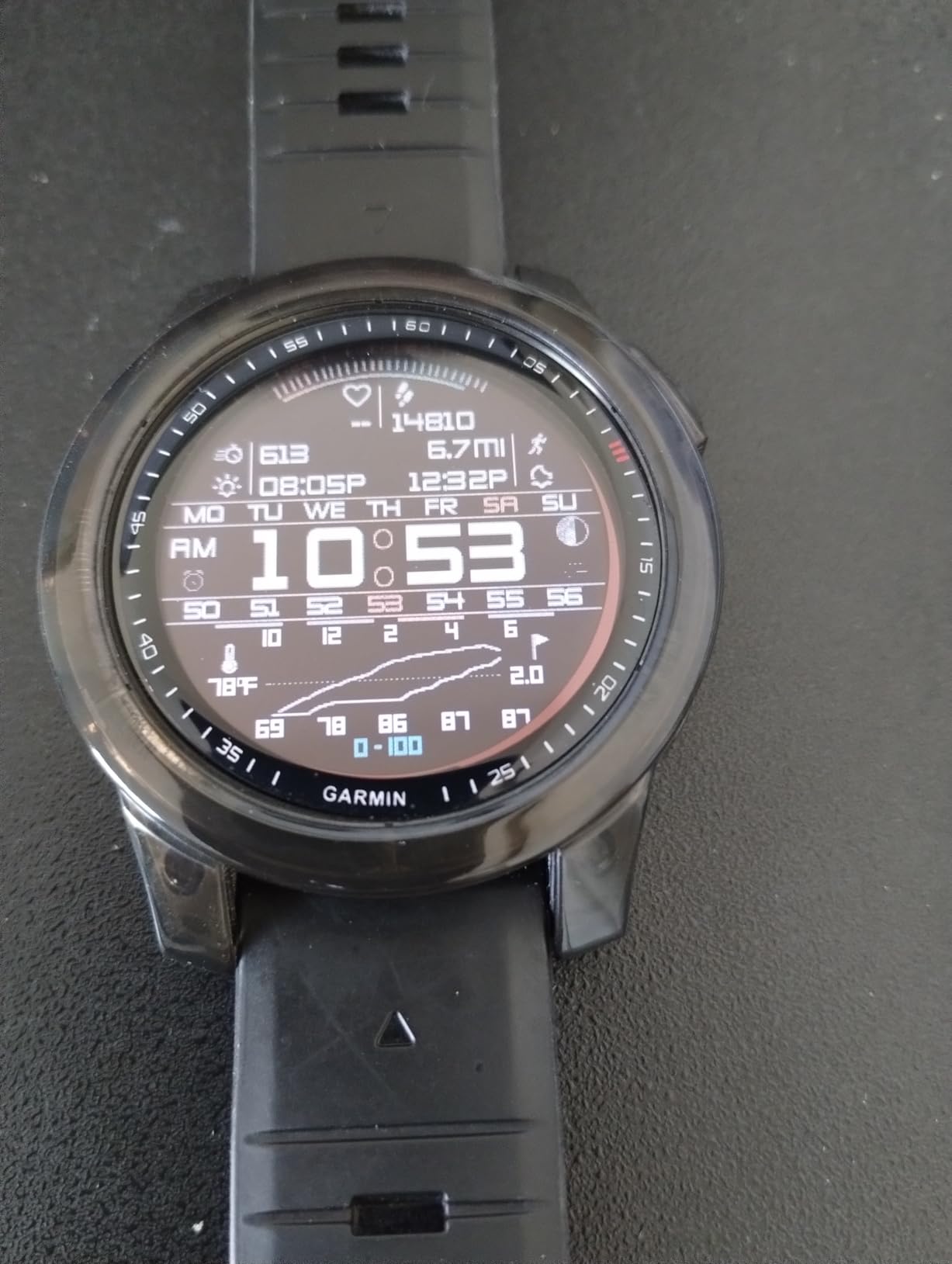
Preloaded maps include topographical data for navigation, which is where this watch separates itself from the Forerunner line. You get turn-by-turn routing, course tracking, and the Up Ahead feature that alerts you to upcoming turns, climbs, and points of interest. For cyclists who explore unfamiliar territory, this is invaluable.
The fenix 7X Pro also includes hill score and endurance score features. Hill score measures your climbing strength and endurance, while endurance score combines data across all activities to quantify your overall stamina. These metrics are especially relevant for cyclists who tackle mountains and long-distance events.
Navigation for Bikepacking
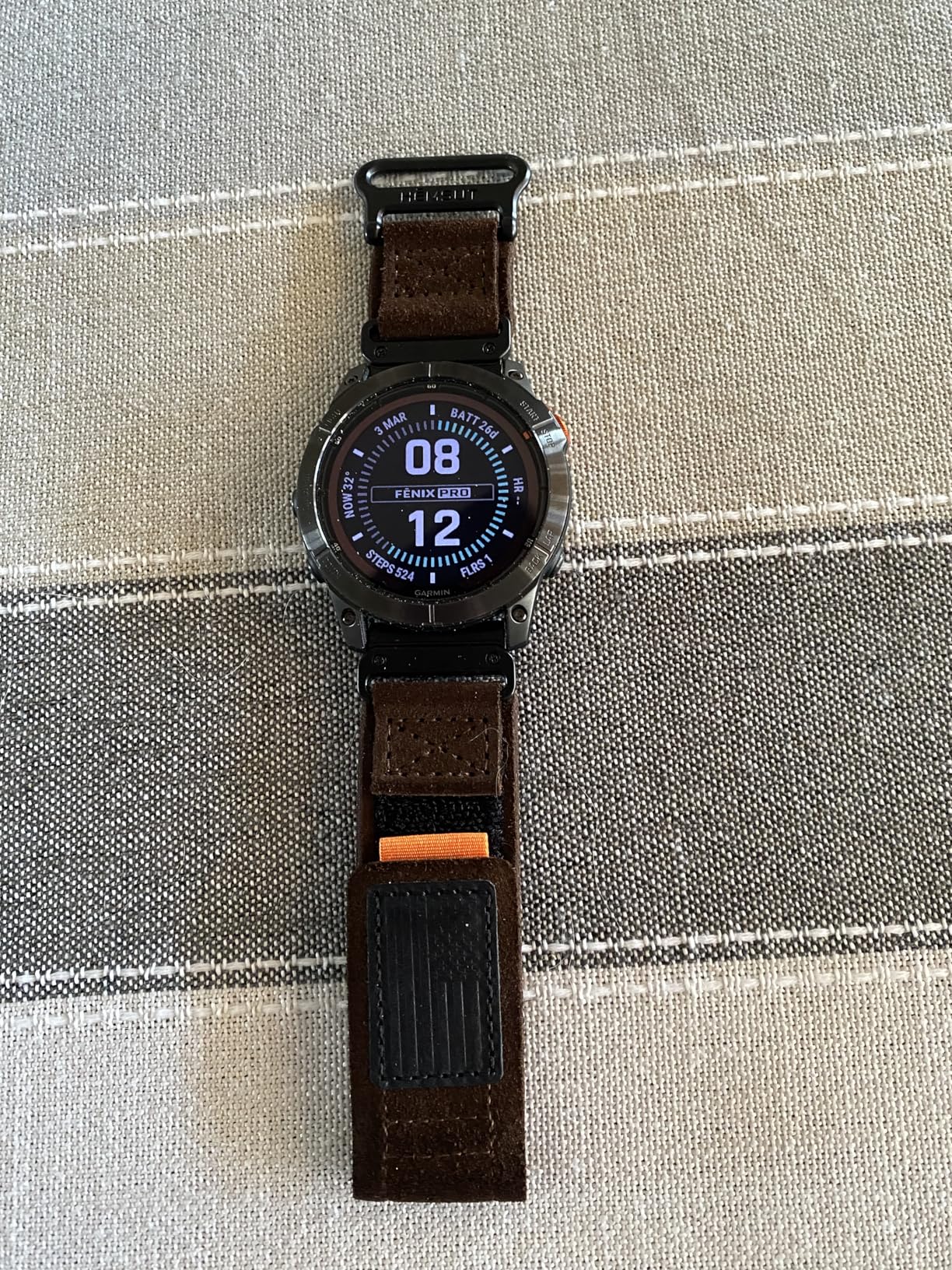
The full-color mapping capability transforms how you navigate on long rides. You can create routes in Garmin Connect or import GPX files, then follow them with turn-by-turn prompts on the watch. The breadcrumb-style navigation on cheaper watches cannot match this level of detail.
Dynamic round-trip routing lets you input a distance and the watch generates a course that brings you back to your starting point. This is perfect for exploring new areas without getting lost, and it works offline since the maps are stored on the device.
Size and Weight on the Wrist
At 96 grams and 51mm, the fenix 7X Pro is the largest and heaviest watch in this roundup. It is built for durability and large display area, not for comfort on slender wrists. Most men can wear it without issue, but it is noticeably heavier than a Forerunner during long rides.
The trade-off is worth it if you prioritize navigation, battery life, and ruggedness over lightweight comfort. Riders who want fenix-level features in a smaller package should consider the standard fenix 7 Pro at 47mm, though it is not included in this specific roundup.
7. Garmin Forerunner 965 – The Triathlon Watch With a Titanium Bezel
Wearable4U – Garmin Forerunner 965 Premium GPS Running and Triathlon 47mm Smartwatch with AMOLED Touchscreen Display, Carbon Gray DLC Titanium Bezel with Black Silicone Band with Black Earbuds.
Price: $610
Battery: 23 days smartwatch, 31 hrs GPS
Weight: 1.87 oz
Display: 1.4in AMOLED
Water: Water resistant
Pros
- Excellent AMOLED display
- 23-day battery life
- Lightweight titanium bezel
- Training readiness score
- Race planning features
Cons
- Limited stock available
- Bundled earbuds are low quality
- eSIM only configuration
- Higher price tier
The Forerunner 965 is Garmin’s premier triathlon-focused watch, and it brings serious depth to multisport tracking. I tested it across swim, bike, and run sessions, and the auto-transition feature between disciplines works smoothly enough for race day use. For triathletes who want one watch for everything, this is a top contender.
The AMOLED display is bright and detailed, making it easy to read transition times and split data in any lighting condition. The titanium bezel with DLC coating gives the watch a premium look and adds scratch resistance without significant weight gain. At 1.87 ounces, it is lighter than the fenix despite offering similar feature depth.
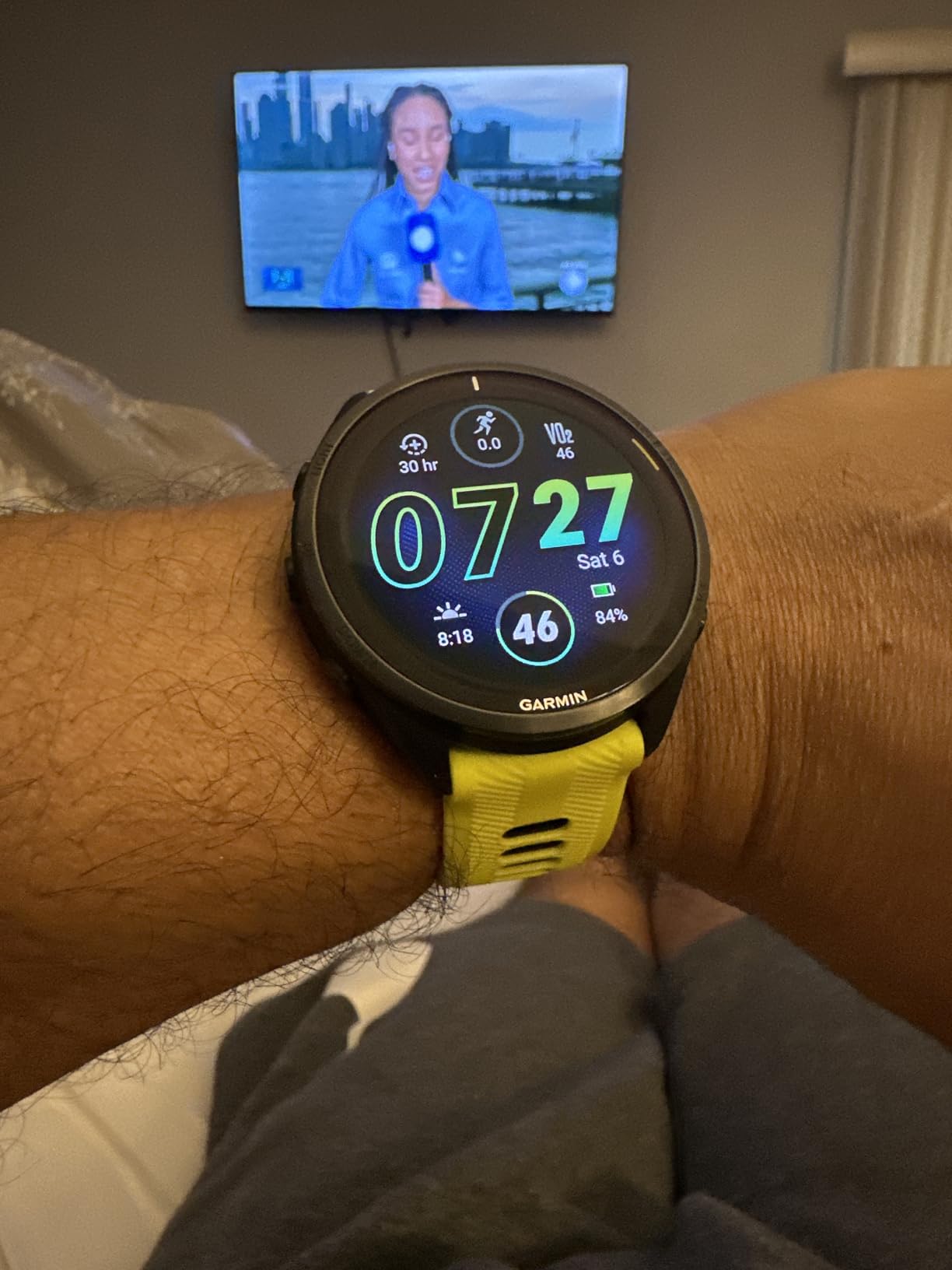
Battery life is rated at 23 days in smartwatch mode and 31 hours in GPS mode. The GPS endurance is particularly notable because it exceeds the Forerunner 265 by more than 50 percent, making the 965 viable for ultra-distance events and multi-day adventures where charging is not an option.
Training readiness, training status, and daily suggested workouts provide a comprehensive training guidance system. The race widget creates personalized daily workouts based on your target event and course, which is a feature triathletes will appreciate during peak training blocks.
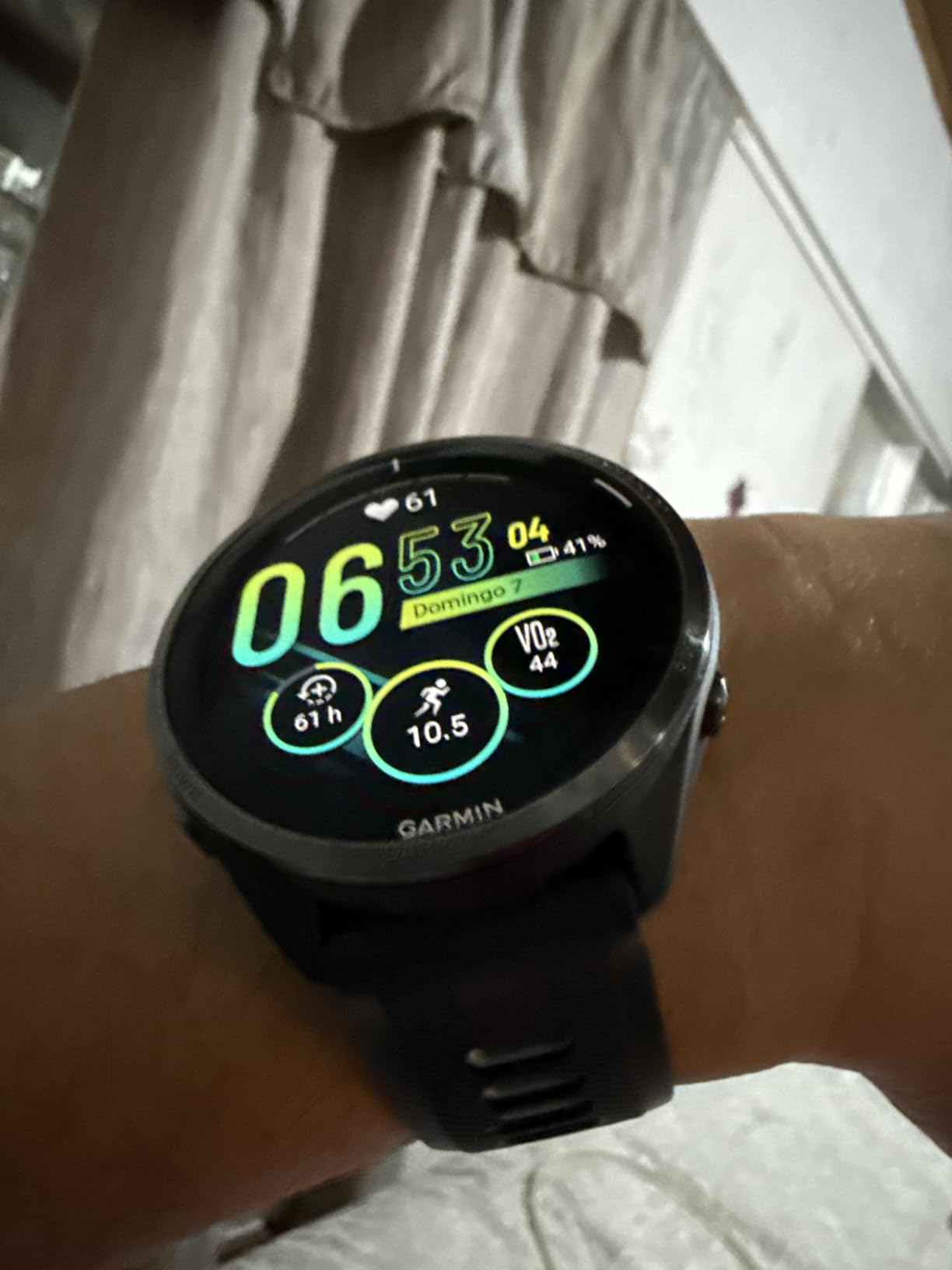
Triathlon Mode Performance
The multisport auto-transition feature switches between swim, bike, and run modes automatically based on activity detection. In testing, transitions were detected reliably, though I recommend practicing with it before race day to confirm the timing works with your specific transition routine.
Each sport mode can be customized with its own data screens, so your bike display can show power, cadence, and heart rate while your run display focuses on pace and distance. This level of customization is essential for triathletes who need different information at different points of a race.
Bundle Value Consideration
This listing includes Wearable4U Black Earbuds as a bundle extra. Based on user reviews, the earbuds are a low-quality addition with reported connectivity issues, so I would not factor them into your purchase decision. Focus on the watch itself, which is the real value here.
Stock availability can be limited for this specific bundle, so if you find it out of stock, the standalone Forerunner 965 is widely available elsewhere. The core watch is identical regardless of the bundle configuration.
8. Garmin Forerunner 970 – The Premium Flagship for Data-Obsessed Cyclists
Garmin Forerunner® 970, 47mm, Carbon Gray DLC Titanium, Black/Whitestone
Price: $750
Battery: 15 days smartwatch, 26 hrs GPS
Weight: 53g
Display: 1.4in AMOLED
Water: 50m
Pros
- Brightest AMOLED display available
- Built-in LED flashlight
- Full-color maps with multi-band GPS
- ECG app for heart rhythm
- Mic and speaker for calls
Cons
- Premium price point
- Some metrics need HRM 600 sold separately
- ECG not available in all countries
The Forerunner 970 is Garmin’s most advanced running and triathlon watch, and it brings features that no other watch in this lineup can match. The brightest AMOLED display Garmin has ever produced, full-color built-in maps, and an ECG app for heart rhythm monitoring make this a genuine flagship device. For cyclists who want the absolute best, this is it.
The titanium bezel with sapphire lens gives the watch a premium feel and exceptional scratch resistance. The built-in LED flashlight serves double duty as a visibility light and emergency strobe during early morning or evening rides. At 53 grams, it is heavier than the Forerunner 265 but lighter than the fenix series.
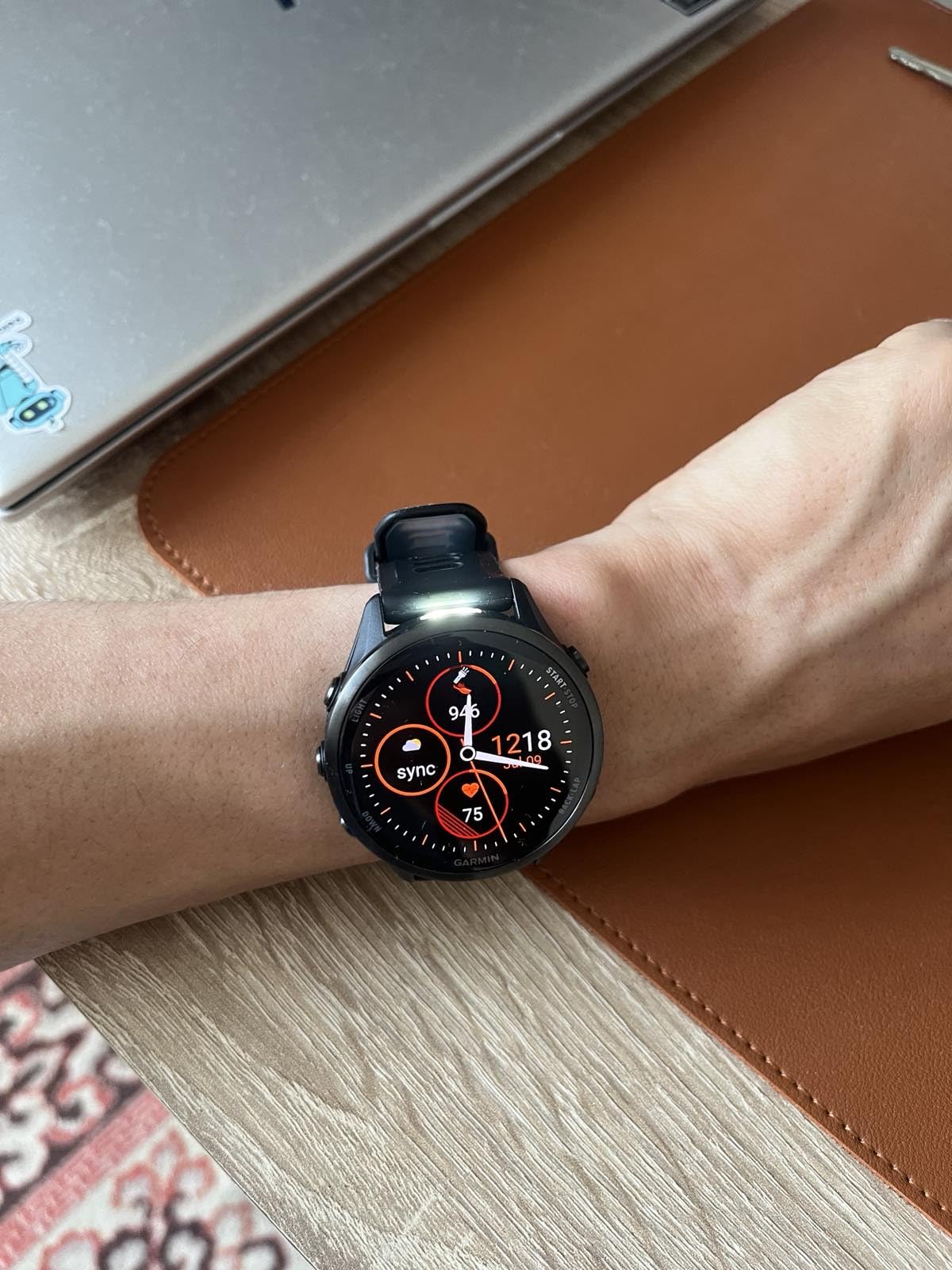
Battery life is rated at 15 days in smartwatch mode and 26 hours in GPS mode. The AMOLED display consumes more power than MIP alternatives, which is why the GPS endurance trails the PACE 3 and Instinct 3 Solar. For most cyclists, 26 hours of GPS is more than sufficient for any single ride.
The training metrics go deeper than any other watch here. Running economy, step speed loss, and running tolerance features require the HRM 600 chest strap (sold separately) for full functionality. Without it, you still get training readiness, HRV status, and all the core metrics that make the Forerunner line excellent.
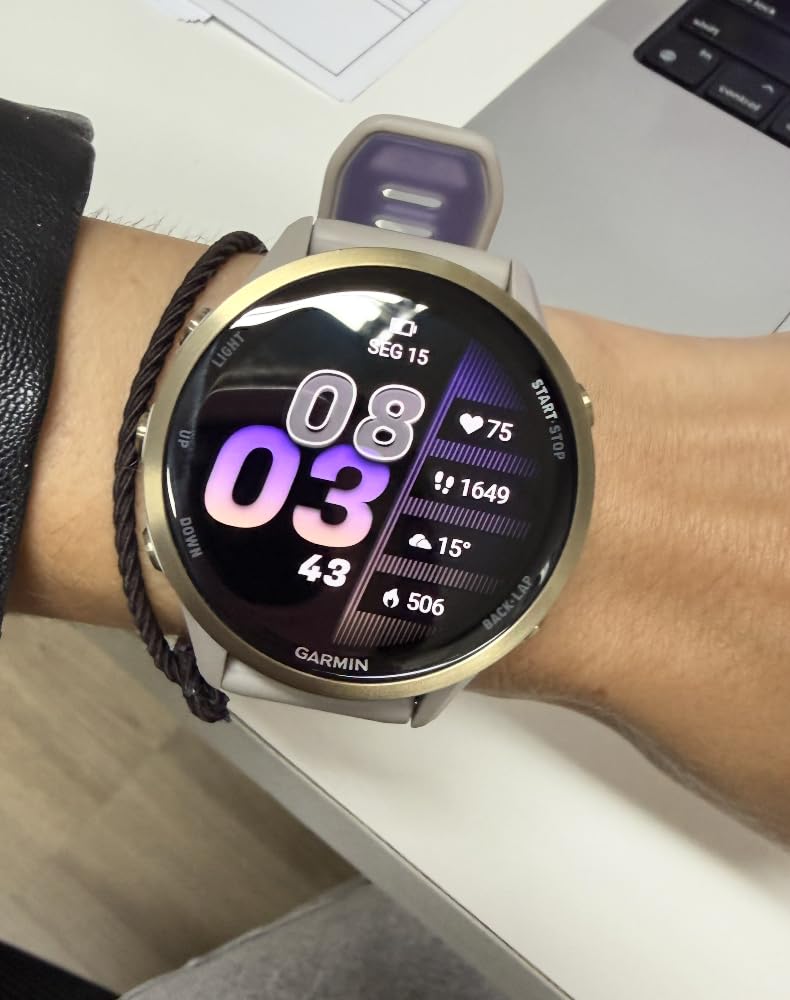
Navigation Features for Cyclists
The full-color built-in maps with multi-band GPS are the standout navigation feature. You get the same mapping depth as the fenix 7X Pro but in a lighter, more running-focused package. Dynamic round-trip routing generates courses on the fly, and turn-by-turn prompts keep you on track without needing your phone.
Multi-band GPS with SatIQ technology ensures maximum positioning accuracy in challenging environments. Whether you are riding through urban canyons, dense forest, or mountain switchbacks, the 970 maintains a tighter GPS line than single-band alternatives.
Advanced Running Dynamics
Wrist-based running dynamics measure cadence, stride length, ground contact time, and vertical oscillation without an external sensor. For cyclists who also run, this data helps refine running form and efficiency. The running power measurement estimates your wattage output during runs, which is useful for multi-sport athletes.
The built-in microphone and speaker enable phone calls from the wrist when connected to your smartphone. This is a convenience feature that some riders will appreciate for hands-free communication during stops, though it is not essential for cycling performance.
Buying Guide: How to Choose a Cycling Watch?
Choosing the right cycling watch comes down to understanding what features actually matter for your riding style. I have broken down the key decision factors below based on hundreds of hours of testing across road, gravel, mountain, and commuter cycling.
Before investing in any watch, make sure your bike itself is dialed in. Optimize your bike fit with our saddle height guide to ensure you are getting accurate performance data from a properly fitted position.
GPS Accuracy and Satellite Support
GPS accuracy is the foundation of any cycling watch. Single-frequency GPS is adequate for open-road riding, but dual-frequency or multi-band GPS makes a noticeable difference in urban areas, dense tree cover, and mountain switchbacks. If you ride in environments where GPS signal bounces or reflects, multi-band GPS is worth the extra cost.
Satellite system support matters too. Watches that support GPS, GLONASS, and Galileo constellations have more satellites to lock onto, which improves accuracy and time-to-fix. All watches in this roundup support multiple satellite systems, but only the mid-range and premium models offer multi-band dual-frequency technology.
Battery Life for Your Riding Style
Battery life in GPS mode determines how long you can record a single ride. For most cyclists, 15 to 20 hours is sufficient for any single-day ride. Ultra-endurance riders and bikepackers should look for watches with 30-plus hours of GPS battery life, like the COROS PACE 3 or Garmin Forerunner 965.
Smartwatch mode battery life affects how often you need to charge the watch between rides. MIP display watches like the Forerunner 55 and Instinct 3 Solar last weeks between charges, while AMOLED watches like the Forerunner 265 and 970 need charging every one to two weeks. Solar charging extends this further for watches that include it.
Heart Rate Monitoring Quality
Wrist-based optical heart rate monitors have improved significantly, but they still have limitations during high-intensity efforts. For steady-state endurance riding, wrist HR is reliable and convenient. For sprint intervals and short anaerobic efforts, a chest strap provides more accurate data.
If accurate heart rate during intense efforts matters to you, choose a watch that supports ANT+ and Bluetooth external heart rate monitors. All watches in this roundup support external sensors, which lets you add a chest strap when you need maximum accuracy.
Smartwatch vs Dedicated Bike Computer
This is the question cyclists debate endlessly. A smartwatch tracks your entire day, monitors sleep and recovery, and works for multiple sports. A dedicated bike computer offers larger display area, better mounting position on the handlebars, and deeper integration with cycling-specific sensors like power meters and radar.
Many cyclists use both. The watch handles 24/7 health tracking and serves as a backup on rides, while the bike computer handles primary ride data and navigation. If you can only choose one, a cycling-capable watch gives you more versatility for the money.
Watch Size and Wrist Comfort
Watch size affects both comfort and readability. Smaller watches like the 30-gram COROS PACE 3 and 37-gram Forerunner 55 disappear on the wrist and are comfortable for all-day wear. Larger watches like the 96-gram fenix 7X Pro are more noticeable but offer bigger displays and more battery capacity.
Most men can comfortably wear watches in the 40 to 47mm range. If you have smaller wrists, consider the Forerunner 55, PACE 3, or Forerunner 165. If you have larger wrists and prioritize display size, the Forerunner 265, fenix 7X Pro, or Forerunner 970 are excellent choices.
Band Durability and Replacement
Silicone bands are standard on most cycling watches and hold up well to sweat, rain, and regular use. Over time, they can develop cracks or become brittle, especially with frequent sun exposure. Quick-release pins make band replacement simple and inexpensive, usually costing $15 to $30 for a quality replacement.
If you ride in harsh conditions or crash regularly, consider a watch with a metal-reinforced bezel like the Instinct 3 Solar or fenix 7X Pro. These survive impacts that would damage polymer-only cases. Sapphire lens options, like the Forerunner 970, resist scratches better than standard glass.
For safety on the road, having a reliable watch with incident detection adds peace of mind. Stay safe on your rides with our dog encounter guide for handling another common cycling hazard.
Platform and Ecosystem
Garmin’s ecosystem is the deepest and most mature, with Garmin Connect offering extensive analysis, community features, and third-party integrations. COROS is growing rapidly and offers competitive analysis tools through its app. Your choice of platform affects how you analyze rides, follow training plans, and connect with other cyclists.
If you already own a Garmin bike computer, staying within the Garmin ecosystem makes sense for seamless data sync and shared sensor pairing. If you are starting fresh, COROS offers compelling value, though you sacrifice some ecosystem depth.
FAQs
What is the 75 rule in cycling?
The 75 rule in cycling states that 75 percent of your training volume should be done at or below 75 percent of your maximum heart rate. This means most of your riding should be at an easy, conversational pace that builds aerobic base fitness. High-intensity efforts make up the remaining 25 percent and are reserved for structured interval sessions.
Is Garmin worth it for cycling?
Yes, Garmin is worth it for cycling if you want accurate GPS tracking, comprehensive training metrics, and deep ecosystem integration. Garmin watches support ANT+ sensors, sync seamlessly with Garmin bike computers, and offer features like training readiness scores and recovery insights that no other platform matches in depth. The investment pays off most for cyclists who train with structure and want data-driven guidance.
What is the 80% rule in cycling?
The 80 percent rule, closely related to the 75 rule, suggests that approximately 80 percent of your training time should be spent at low intensity (Zone 1 and Zone 2), with only 20 percent at high intensity. This polarized training approach is used by professional cyclists to build endurance while allowing sufficient recovery between hard efforts.
Can a smartwatch replace a bike computer for cycling?
A smartwatch can replace a bike computer for most recreational and fitness cyclists. Modern GPS watches like the Garmin Forerunner 265 and Forerunner 970 offer accurate tracking, heart rate monitoring, navigation, and sensor compatibility that cover the needs of most riders. Dedicated bike computers still offer advantages in display size, handlebar mounting position, and integration with cycling-specific sensors like power meters and radar detectors.
What watch do pro cyclists wear?
Pro cyclists typically wear Garmin watches from the Forerunner or fenix series, with the Forerunner 965 and 970 being popular choices for their advanced training metrics and triathlon support. Some professionals also use COROS watches for their lightweight design and long battery life. The specific watch depends on team sponsorships and individual preferences, but Garmin dominates the professional peloton.
Conclusion
Finding the best cycling watches for men in 2026 comes down to matching features to your riding style and budget. The Garmin Forerunner 265 remains my top overall pick for its balance of AMOLED display, training readiness insights, and multi-band GPS accuracy. The Forerunner 165 delivers nearly the same experience for less money, while the Forerunner 55 covers the basics for riders who are just getting started.
For adventure riders and bikepackers, the fenix 7X Pro Solar and Instinct 3 Solar offer unmatched battery life and durability. Triathletes should look at the Forerunner 965 or flagship 970 for multisport depth. And if battery life is your top priority above all else, the COROS PACE 3 delivers 38 hours of GPS tracking at a price that undercuts every Garmin in this roundup.
Whichever watch you choose, the most important thing is to ride consistently and let the data help you improve over time. Pick the watch that fits your wrist, your budget, and your goals, and it will serve you well for years of cycling ahead.