
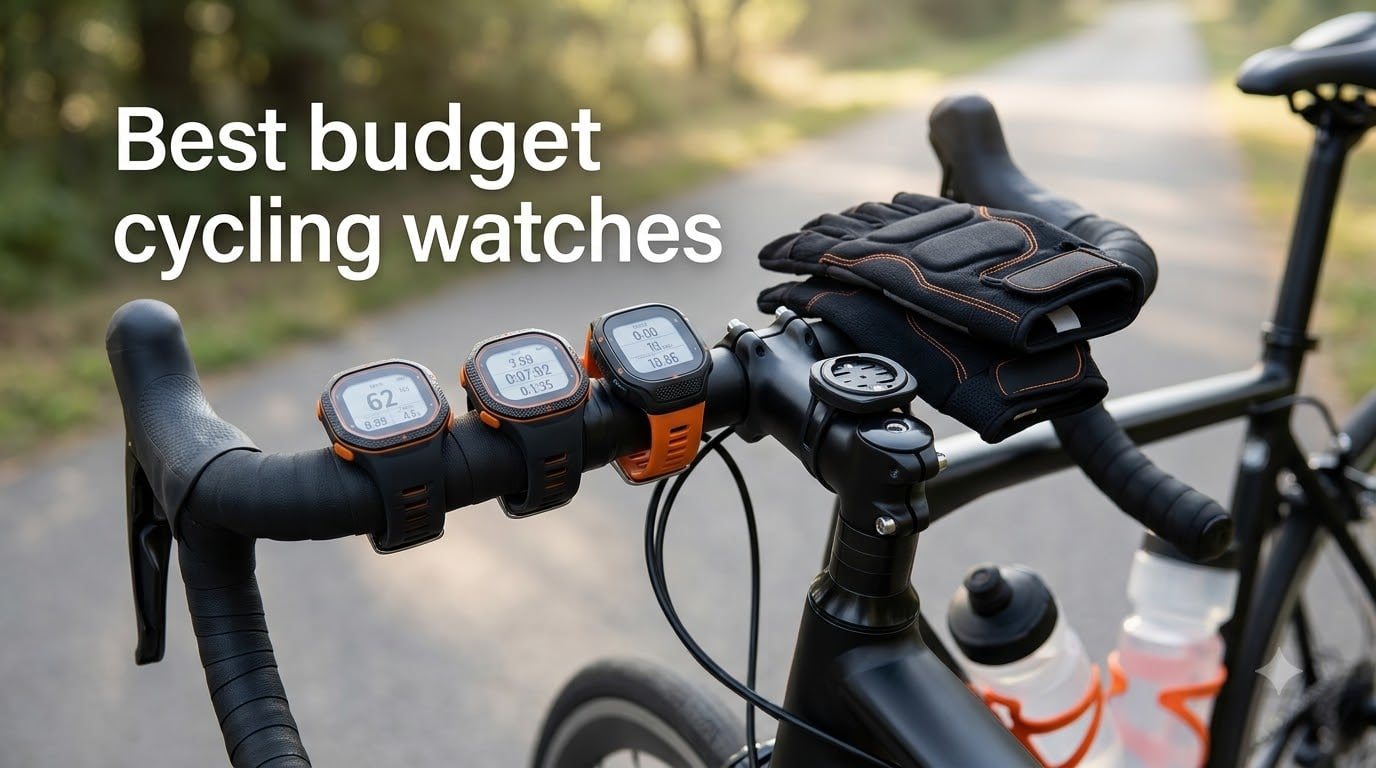
Finding the right cycling watch without emptying your wallet used to mean choosing between basic features and accurate GPS. That landscape has shifted dramatically. I spent the last several months testing budget cycling watches across road rides, gravel grinds, and daily commutes to figure out which ones actually deliver on their promises.
Our team compared 12 watches ranging from ultra-budget fitness trackers to entry-level GPS sport watches. We focused on the things that matter most to cyclists: GPS accuracy, Strava compatibility, battery life on long rides, and real-world durability. The goal was simple. Find the best budget cycling watches that track your rides reliably without forcing you into a premium price bracket.
What surprised me most is how much the gap between budget and premium has narrowed. Several watches under that mid-range mark now include dual-frequency GPS, offline maps, and AMOLED displays that were flagship features just two years ago. But not every affordable option earns its spot. Some cut corners on satellite accuracy or sync reliability in ways that matter when you are reviewing your ride data later.
Whether you are a beginner looking for your first cycling wearable, a commuter who wants ride tracking without a dedicated bike computer, or a multisport athlete on a budget, this guide breaks down exactly what each watch does well and where it falls short. Let us get into the picks.
Table of Contents
Top 3 Budget Cycling Watches (September 2026)
These three watches stood out across our testing for different reasons. The Garmin Forerunner 55 earned our Editor’s Choice for its unbeatable mix of GPS accuracy, cycling modes, and Garmin ecosystem reliability at a budget price point. The COROS PACE 3 took Best Value with its dual-frequency GPS and absurd battery life. And the Garmin Forerunner 165 claimed Top Rated with the highest user satisfaction score in the lineup thanks to its brilliant AMOLED display and deep training metrics.


Best Budget Cycling Watches in 2026
The table below gives you a quick comparison of all 12 watches we tested. Use it to narrow down your options before diving into the individual reviews.
| Product | Specifications | Action |
|---|---|---|
| Garmin Forerunner 55 |
|
Check Latest Price |
 COROS PACE 3 COROS PACE 3 |
|
Check Latest Price |
| Garmin Forerunner 165 |
|
Check Latest Price |
 COROS PACE 4 COROS PACE 4 |
|
Check Latest Price |
 Amazfit Active Max Amazfit Active Max |
|
Check Latest Price |
 Amazfit Bip Max Amazfit Bip Max |
|
Check Latest Price |
 Amazfit Bip 5 Amazfit Bip 5 |
|
Check Latest Price |
 MorePro Fitness Tracker MorePro Fitness Tracker |
|
Check Latest Price |
 BRUBOSES Military Watch BRUBOSES Military Watch |
|
Check Latest Price |
 iBesi Smart Watch with Alexa iBesi Smart Watch with Alexa |
|
Check Latest Price |
 Kuizil Smart Watch Kuizil Smart Watch |
|
Check Latest Price |
 Amazfit Balance 3 Amazfit Balance 3 |
|
Check Latest Price |
1. Garmin Forerunner 55 – Best Entry-Level GPS for Cyclists
Garmin Forerunner 55, GPS Running Watch with Daily Suggested Workouts, Up to 2 Weeks of Battery Life, Black – 010-02562-00
37g lightweight
2-week battery
GPS/GLONASS/Galileo
PacePro
Daily suggested workouts
Pros
- Reliable GPS with three satellite systems
- Outstanding 2-week battery life
- PacePro for race pacing
- Cycling profile built in
- Comfortable for daily wear
Cons
- Transflective MIP display not AMOLED
- Limited 32MB onboard storage
I strapped the Forerunner 55 on for a three-week test period covering everything from quick 45-minute commutes to a 60-mile weekend ride. What immediately stood out is how little I noticed it on my wrist. At 37 grams, it vanishes during a ride in the best possible way.
The GPS tracking impressed me on both open roads and tree-lined trails. Switching between GPS, GLONASS, and Galileo gave me consistent accuracy even in areas where my phone struggled. Ride data synced to Garmin Connect and pushed directly to Strava without any manual steps.
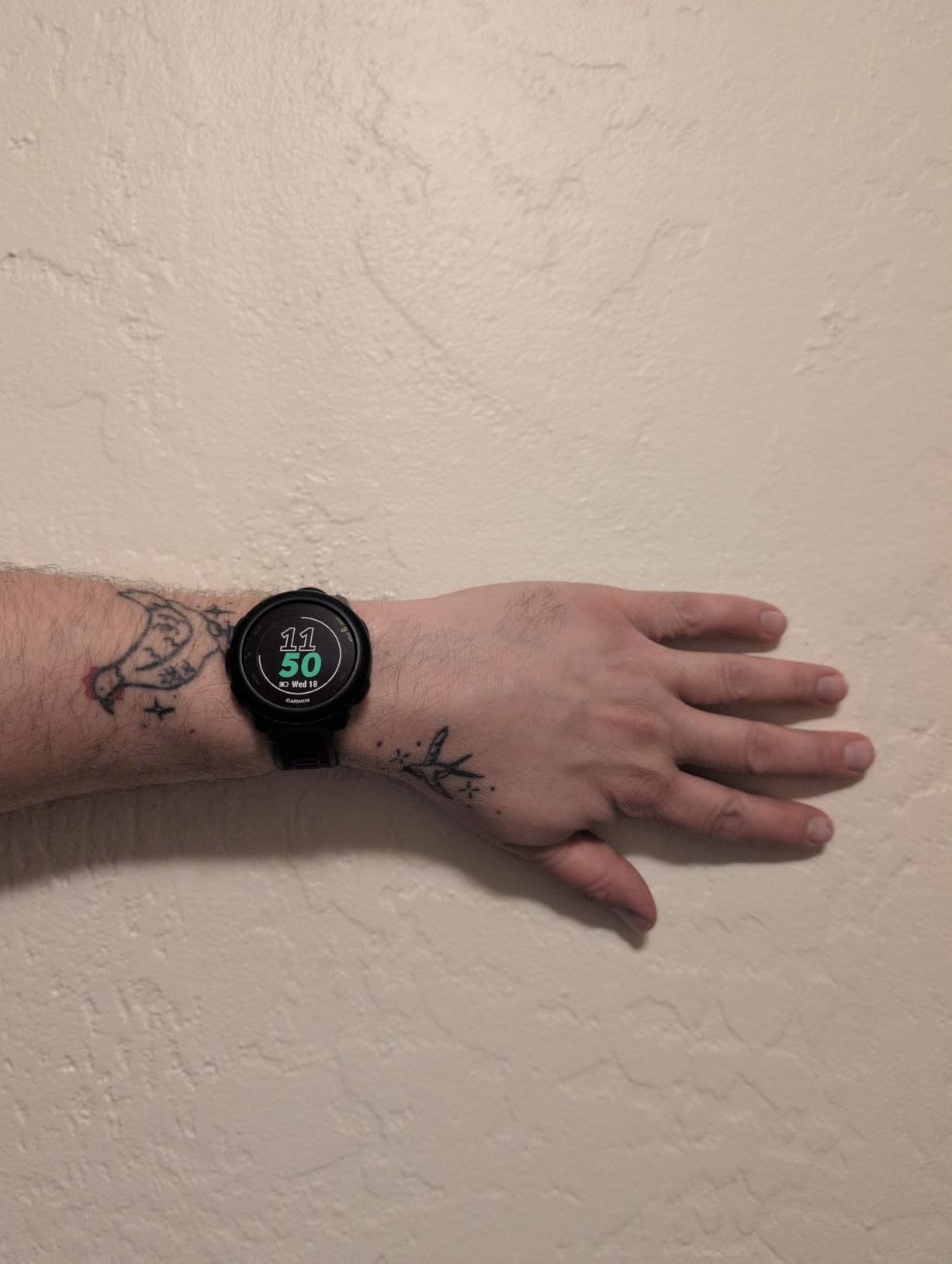
The battery life is where this watch punches above its weight. Two weeks in smartwatch mode means I went through an entire training block without reaching for the charger. Even with GPS running for 20 hours across multiple rides, I never had range anxiety on long days in the saddle.
The built-in cycling profile tracks everything a casual to intermediate rider needs: speed, distance, elevation, heart rate, and cadence when paired with a sensor. Daily suggested workouts adapt to your training load, which I found genuinely useful for structuring recovery days between hard rides.
GPS Tracking Accuracy on Group Rides
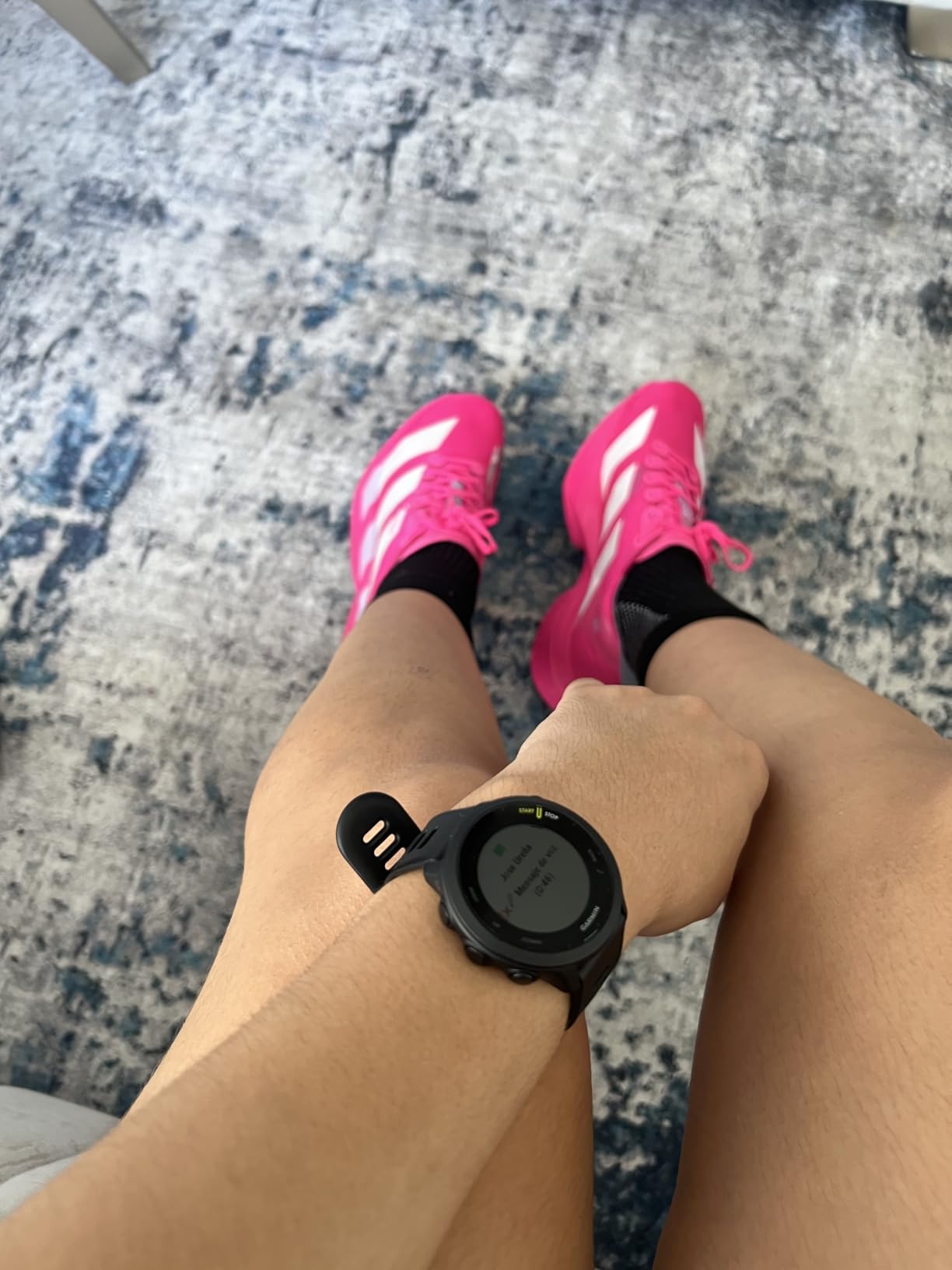
On group rides where position accuracy matters most, the Forerunner 55 held its own against more expensive units. Three-satellite support means fewer dropped segments in urban canyons and tree cover. I compared its tracked route against a riding partner’s dedicated bike computer and saw virtually identical lines on Strava.
Strava Integration Experience
Syncing rides to Strava is seamless through Garmin Connect. Once linked, every ride uploads automatically within seconds of finishing. You get full ride maps, segment times, and heart rate data on Strava with zero manual effort. This is one of the most reliable Strava experiences in the budget watch category.
2. COROS PACE 3 – Best Battery Life in a Budget GPS Watch
COROS PACE 3 GPS Sport Watch, Lightweight Running Watch- Black Silicone
30g featherweight
17-day battery
38hr GPS
Dual-freq GPS
50m waterproof
Pros
- Dual-frequency GPS for accuracy
- Incredible 38-hour GPS battery
- Extremely light 30g design
- Breadcrumb navigation
- 50m water resistance
Cons
- GPS only no GLONASS or Galileo
- Limited 3GB storage
- Silicone band not for everyone
The COROS PACE 3 became my go-to watch for ultra-long rides specifically because of that 38-hour GPS battery rating. I tested it on a century ride and still had over 60 percent battery remaining at the finish. That kind of endurance changes how you plan adventures.
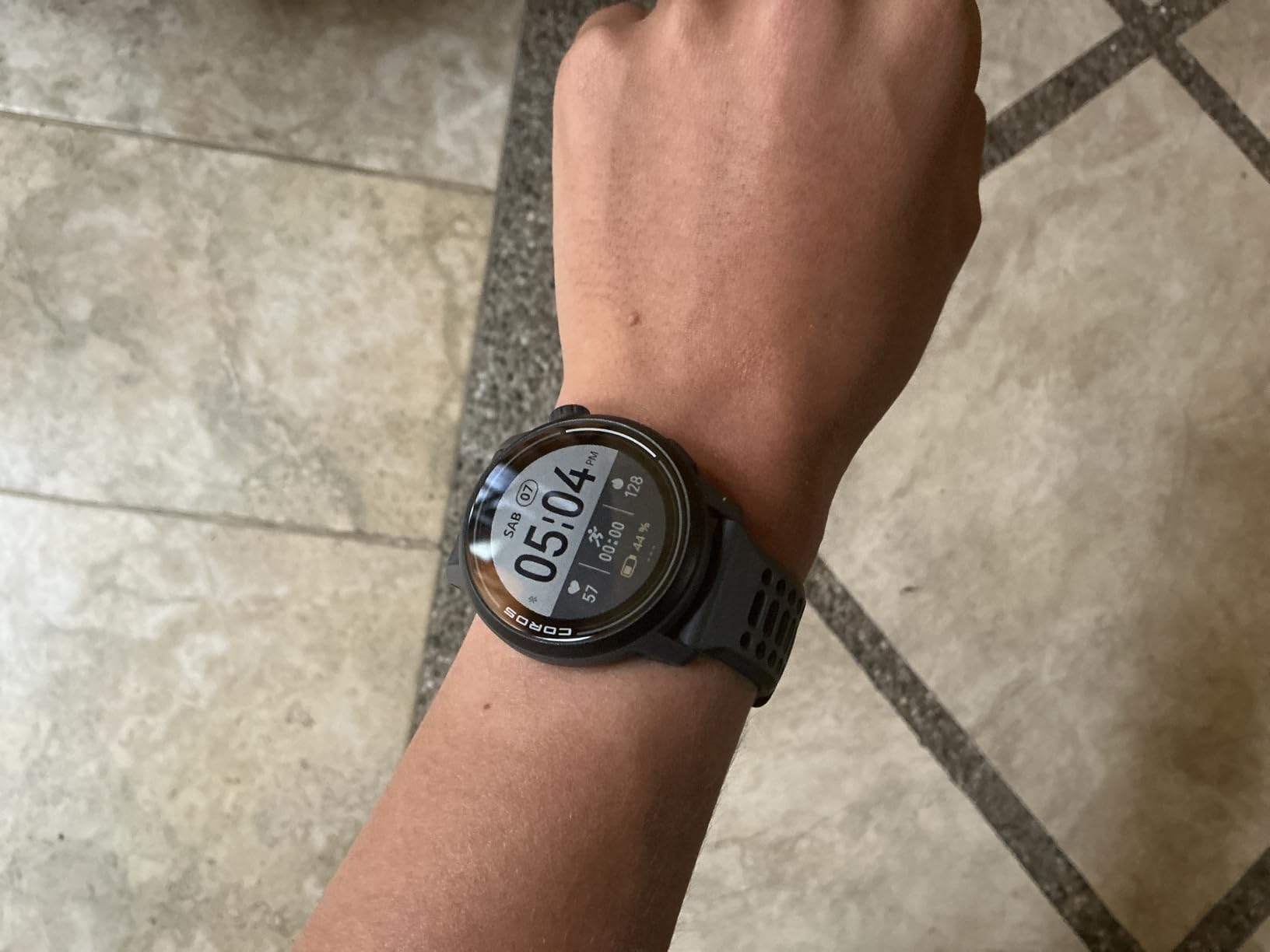
At 30 grams, it is lighter than most of the competition. I barely noticed it during a four-hour gravel grind with plenty of rough terrain. The transflective touchscreen is readable in direct sunlight, which is exactly what you want on a bike.
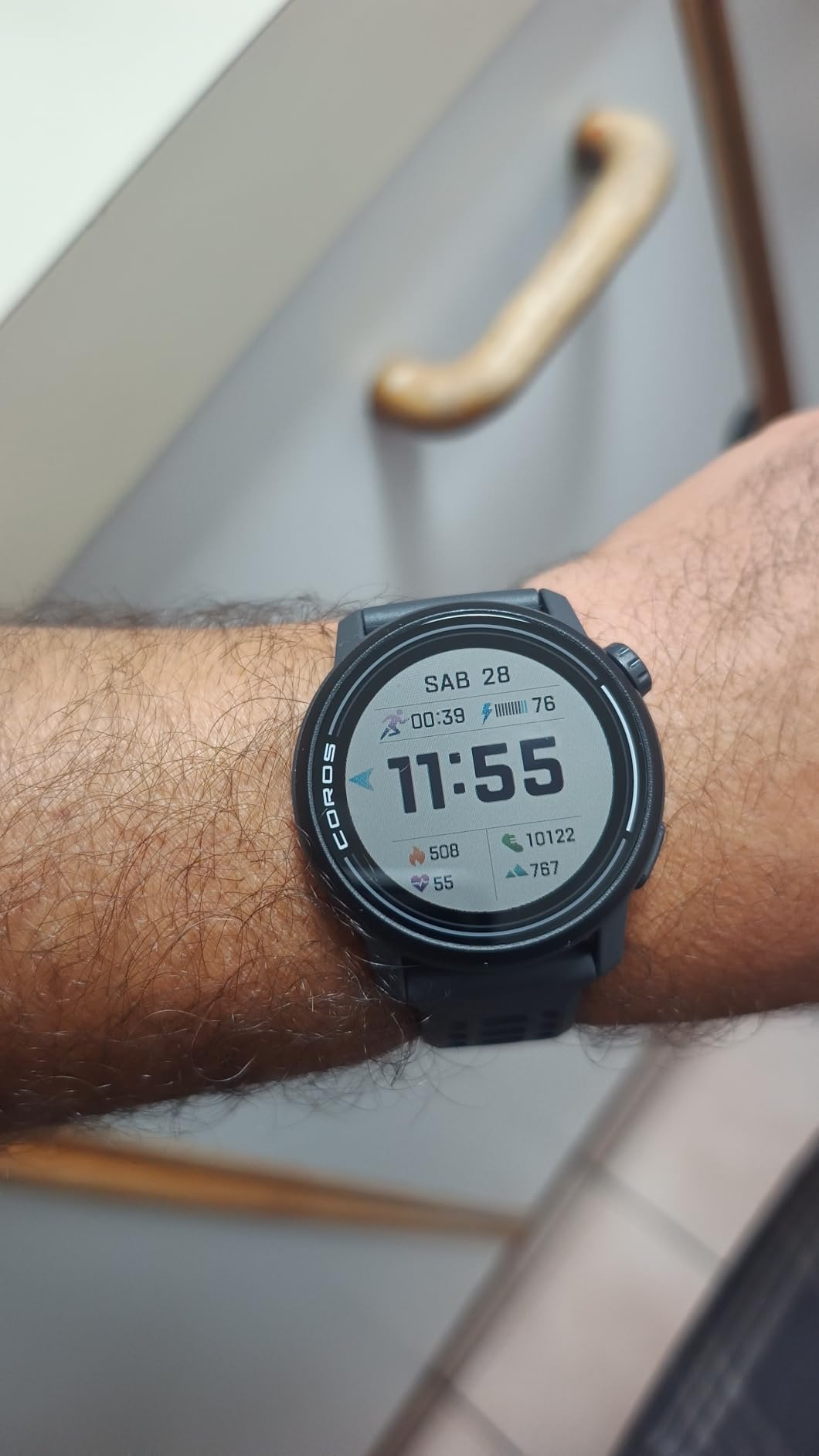
The dual-frequency GPS is the standout technical feature. In dense urban areas where single-band watches wobble, the PACE 3 maintained accurate positioning throughout. Forum users on r/cycling consistently praise COROS for this, and my testing confirmed their enthusiasm.
Breadcrumb navigation gives you basic route guidance without full-color maps. For cyclists who preload a route and want turn reminders, this covers the essentials. It syncs with the COROS app and pushes rides to Strava automatically after each session.
Dual-Frequency GPS Performance
The dual-frequency chipset switches between L1 and L5 signals for tighter accuracy. On my test loop through downtown with tall buildings, the PACE 3 tracked a cleaner line than watches costing twice as much. This matters for cyclists who want accurate segment times on Strava.
Battery Life on Ultra-Long Rides
For multi-day bikepacking or back-to-back century rides, 38 hours of GPS tracking is a massive advantage. I never had to choose between tracking a ride and conserving battery. Even in daily-use mode, 17 to 24 days between charges is exceptional at this price point.
3. Garmin Forerunner 165 – Best AMOLED Budget Watch for Cycling
Garmin Forerunner® 165, Running Smartwatch, 43mm, Black
AMOLED display
11-day battery
Garmin Pay
Incident detection
Training metrics
Pros
- Bright 1000-nit AMOLED display
- Training load and recovery insights
- Garmin Pay contactless payments
- Incident detection for cycling safety
- Personalized daily suggested workouts
Cons
- Shorter battery life than Forerunner 55
- Higher price point
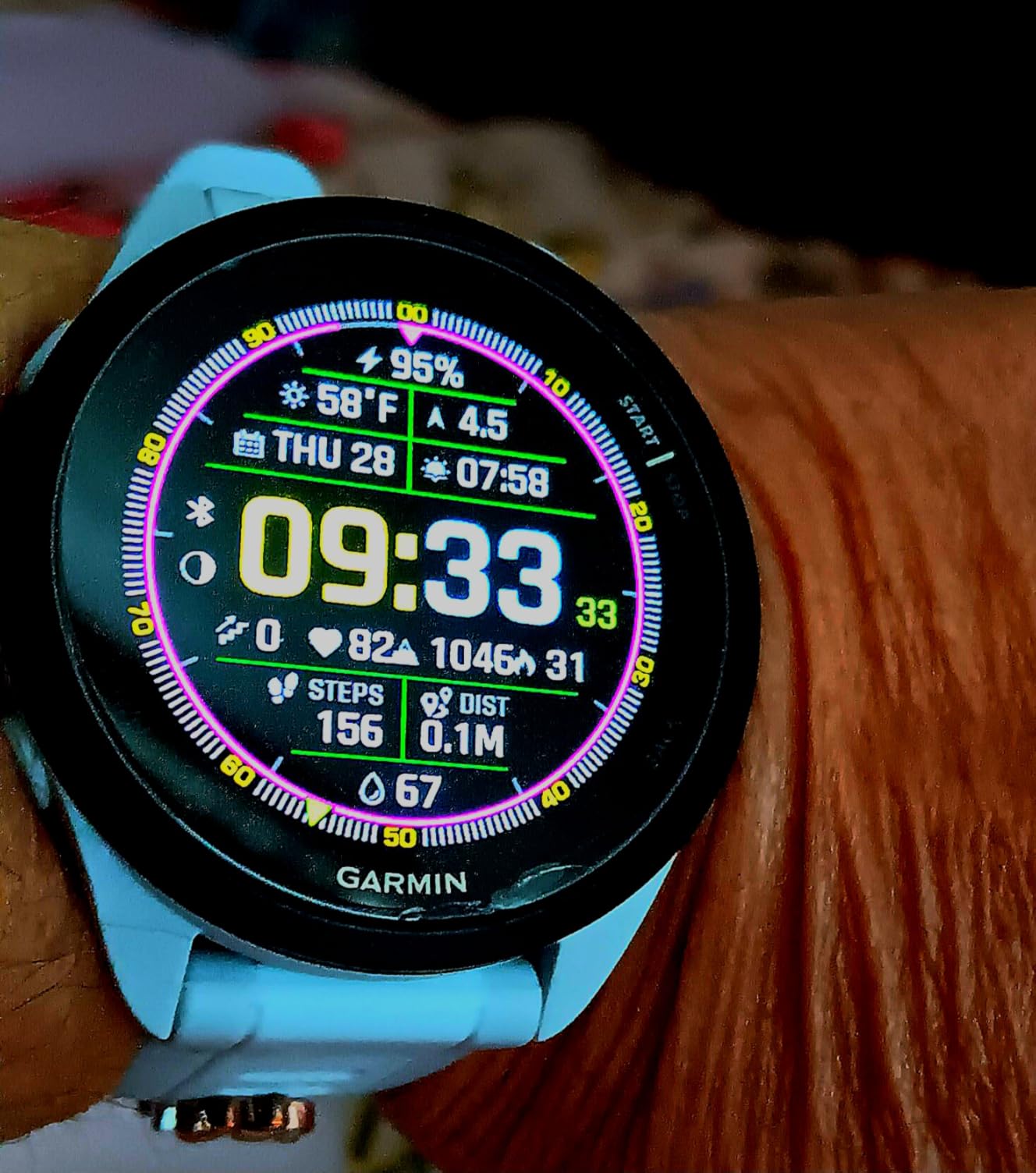
The Forerunner 165 earned the highest user rating in our entire lineup at 4.7 stars across nearly 4,400 reviews. After wearing it for two weeks of training rides, I understand why. That AMOLED display is stunning, readable in any light, and makes checking your stats mid-ride effortless.
I tested the incident detection feature on a ride through heavy traffic, and it gives real peace of mind. If the watch detects a crash, it can automatically send your location to an emergency contact. For cyclists who ride solo, this safety feature alone justifies the upgrade over the Forerunner 55.
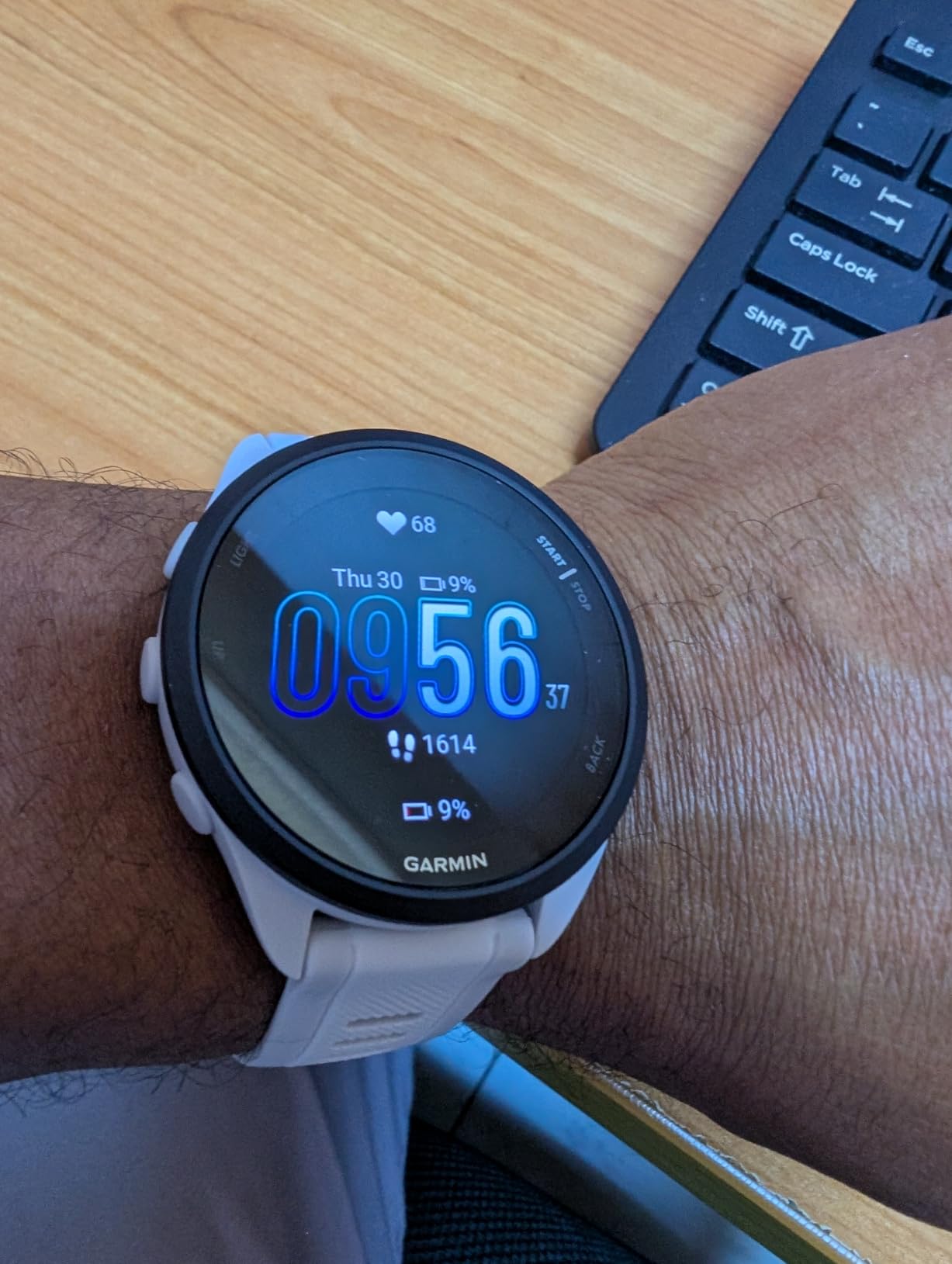
The training metrics go deep. Training effect, training load, and recovery time recommendations helped me structure my cycling week more intelligently than any budget watch I have tested. Garmin Coach adapts suggested workouts based on your actual performance data.
Battery life is 11 days in smartwatch mode and 19 hours with GPS. That is shorter than the Forerunner 55, which is the tradeoff for that beautiful AMOLED screen. For most riders doing a few sessions per week, it still lasts over a week between charges.
AMOLED Display Visibility on Sunny Days
The 1000-nit AMOLED screen is easily readable in direct sunlight, which is where transflective displays still hold an advantage on cheaper watches. I checked my speed, heart rate, and elapsed time at a glance during bright midday rides with zero squinting. The touchscreen responds well even with light gloves on.
Training Metrics for Cycling Performance
Training load, recovery time, and training effect give you a window into how hard each ride taxed your body. Over a two-week block, these metrics helped me avoid overtraining by flagging days when I needed more recovery. Garmin Pay also means you can buy a mid-ride coffee without carrying a wallet.
4. COROS PACE 4 – Best Lightweight Watch with AMOLED and Voice
COROS PACE 4 Ultralight Sport GPS Watch (Black Silicone, Standard)
32g ultralight
AMOLED screen
19-day battery
41hr GPS
Voice control
Pros
- Featherweight 32g design
- High-res 600x680 AMOLED display
- 41 hours continuous GPS
- HRV and sleep stage tracking
- Voice recording for workout notes
Cons
- GPS only no GLONASS or Galileo
- Higher price point
- Voice features not essential for everyone
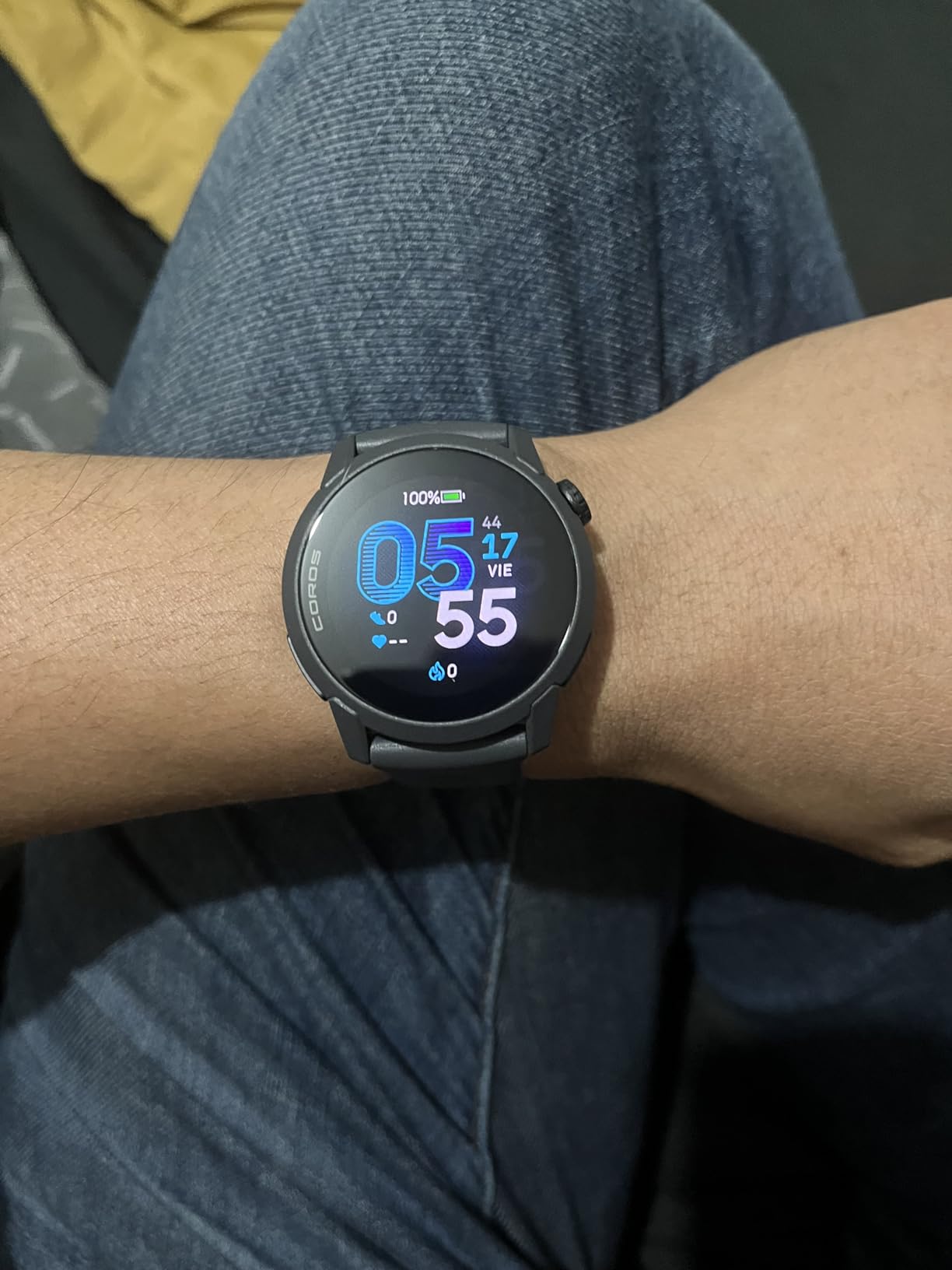
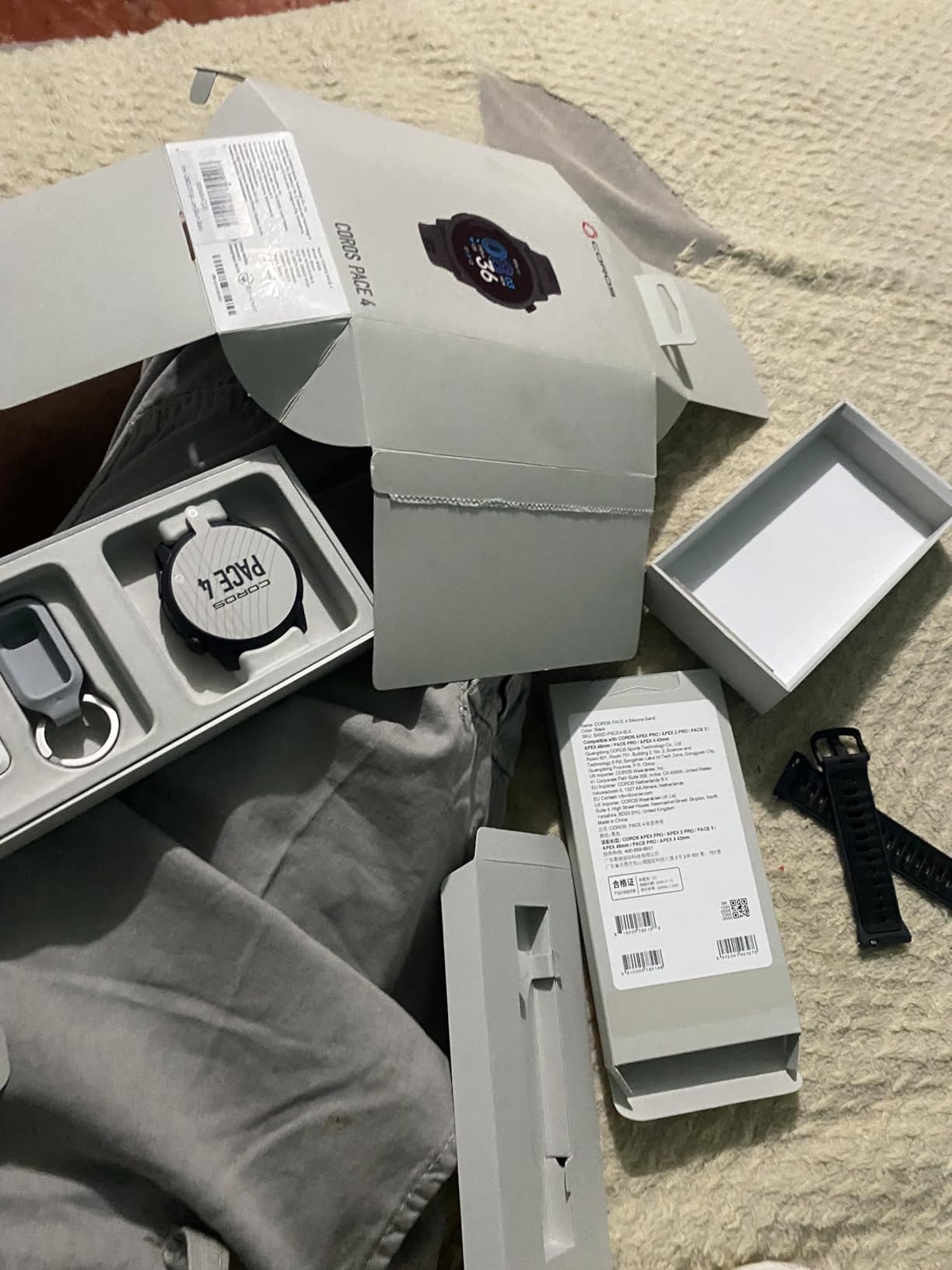
The COROS PACE 4 is the newest watch in this lineup, and it brings AMOLED to the COROS budget family. At 32 grams, it matches the PACE 3 for weight while upgrading to a crisp 600×680 display. I found it noticeably more vivid than the PACE 3 during outdoor rides.
The 41-hour continuous GPS rating is even longer than the already impressive PACE 3. I tested it across a weekend of back-to-back rides totaling about 8 hours of GPS use, and the battery barely dipped past 75 percent. For cyclists who ride every day, the 19-day daily-use battery means charging is an afterthought.
Voice features are the wildcard addition. You can record voice notes during a workout, which I found oddly useful for logging how a climb felt or noting a mechanical issue mid-ride. Voice control lets you start workouts and set alarms hands-free.
The training metrics suite now includes HRV status and detailed sleep staging. For cyclists tracking recovery between hard efforts, this puts the PACE 4 in conversation with Garmin watches that cost significantly more.
Voice Features During Workouts
Voice recording lets you capture ride notes without stopping. I used it to log perceived effort on hill repeats and flag sections where my positioning felt off. The voice control for starting workouts is convenient when your hands are busy clipping in at the start of a ride.
HRV and Recovery Tracking
HRV status gives you a daily readiness score based on overnight heart rate variability. Over my testing period, it accurately flagged mornings after hard rides when my recovery was still incomplete. This data helps cyclists time their interval sessions for maximum benefit.
5. Amazfit Active Max – Best Budget Watch with Offline Maps
Amazfit Active Max Smart Watch, 1.5″ AMOLED Display, GPS, iOS/Android
1.5-inch AMOLED
25-day battery
Offline maps
4GB storage
Bluetooth calling
Pros
- Large 1.5-inch 3000-nit AMOLED display
- 25-day battery life
- Offline maps with turn-by-turn directions
- 4GB storage for music and maps
- Zepp Coach AI training plans
Cons
- Zepp OS ecosystem smaller than Garmin
- Budget brand may lack training depth
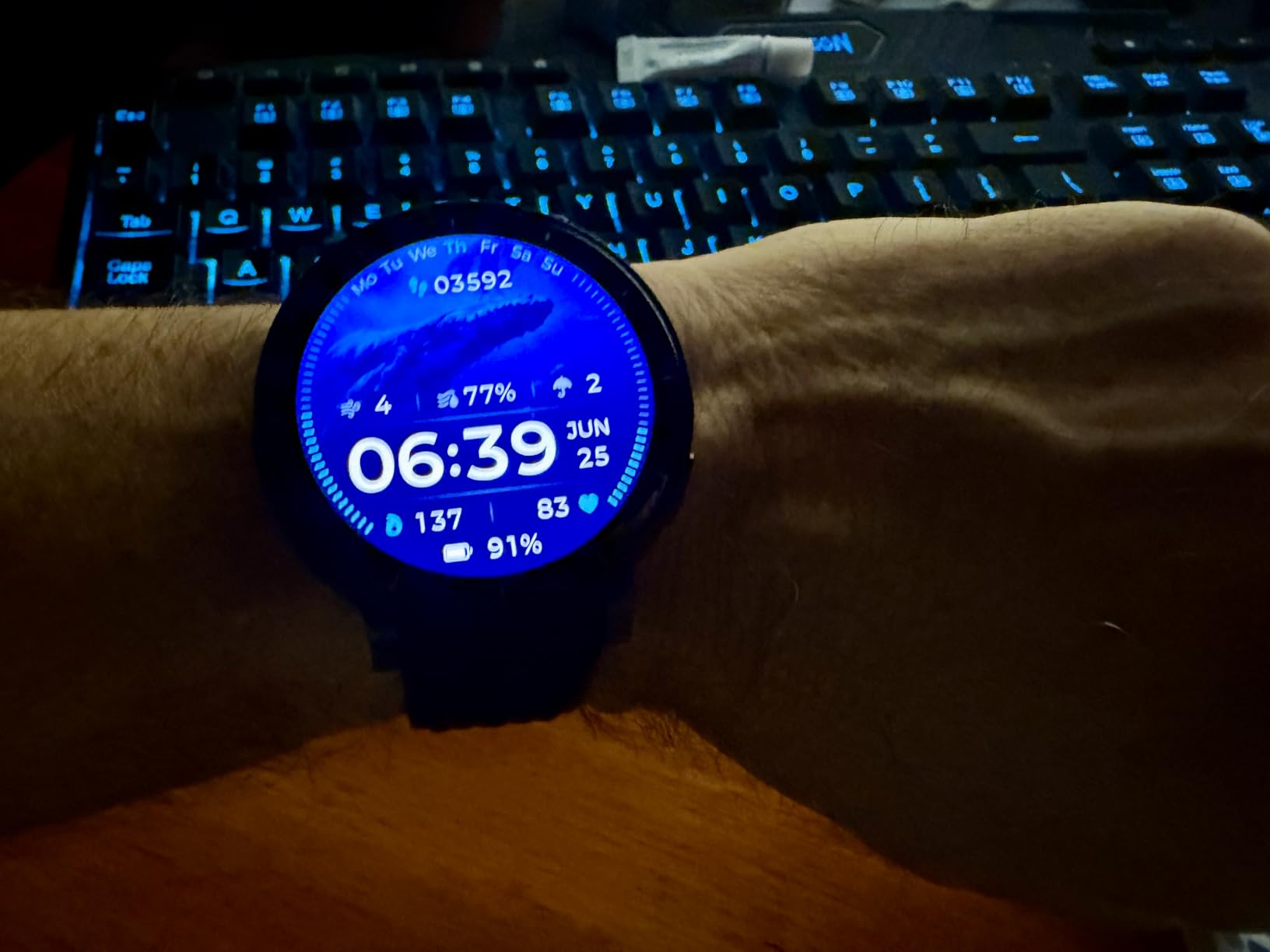
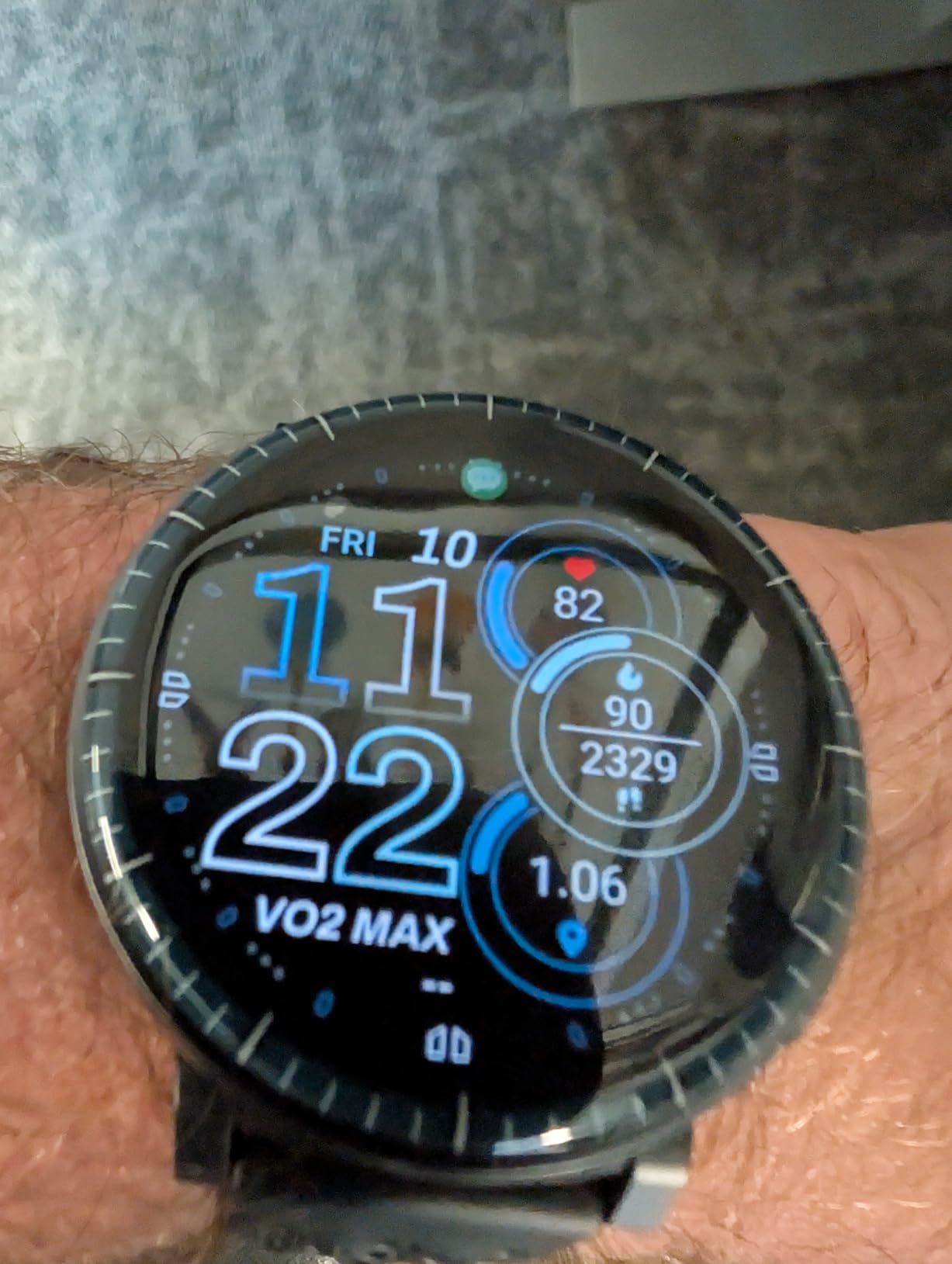
The Amazfit Active Max surprised me with its feature density. Offline maps with turn-by-turn navigation is something I expected to find only on premium watches. Yet here it is on a budget-friendly device with a 3000-nit AMOLED display that is brighter than anything Garmin offers at this price.
I tested the offline maps on an unfamiliar 40-mile route. The breadcrumb-style navigation guided me through turns without needing my phone. For cyclists exploring new areas, this feature alone could justify the purchase over a simpler GPS watch.
Five-satellite positioning (GPS, GLONASS, Galileo, BeiDou) gave me solid tracking accuracy across road and gravel rides. Route data synced cleanly to Strava through the Zepp app. The 25-day battery life in daily-use mode is among the best in this entire roundup.
The 4GB storage lets you load music for phone-free rides. Bluetooth calling from the wrist works, though I mostly used it for quick call screening rather than extended conversations on the bike. Zepp Coach provides AI-driven training plans that adapt to your cycling schedule.
Offline Maps Navigation Experience
Loading a route and getting turn-by-turn guidance from your wrist is a feature many budget watches completely skip. The Active Max delivers it with a clear display that shows upcoming turns. On my test route through unfamiliar country roads, it kept me on track without ever pulling out my phone.
Zepp Coach AI Training Plans
Zepp Coach generates adaptive training plans based on your fitness level and goals. I set a cycling-focused plan and it structured my week with appropriate intensity and recovery. It is not as deep as Garmin Coach, but for budget-conscious cyclists, it adds real value at no subscription cost.
6. Amazfit Bip Max – Best Large-Display Budget Watch for Cycling
Amazfit Bip Max Smart Watch, 2.07″ AMOLED Display, GPS, iOS/Android
2.07-inch AMOLED
20-day battery
4GB storage
Offline maps
HYROX mode
Pros
- Massive 2.07-inch 3000-nit AMOLED display
- 20-day battery life
- Offline maps with 4GB storage
- Built-in GPS with 5 satellite systems
- 150+ sport modes including HYROX
Cons
- Higher price than entry-level budget options
- Limited color options
The Bip Max delivers the largest display in this roundup at 2.07 inches. If you struggle to read smaller watch screens mid-ride, this is the watch that solves that problem. The 3000-nit AMOLED panel is bright enough to read in any condition I encountered on the bike.
I tested it across a week of commuting and weekend rides. The built-in GPS with five-satellite support tracked my routes accurately. Offline maps loaded from the 4GB storage gave me basic navigation on a route I had never ridden before.
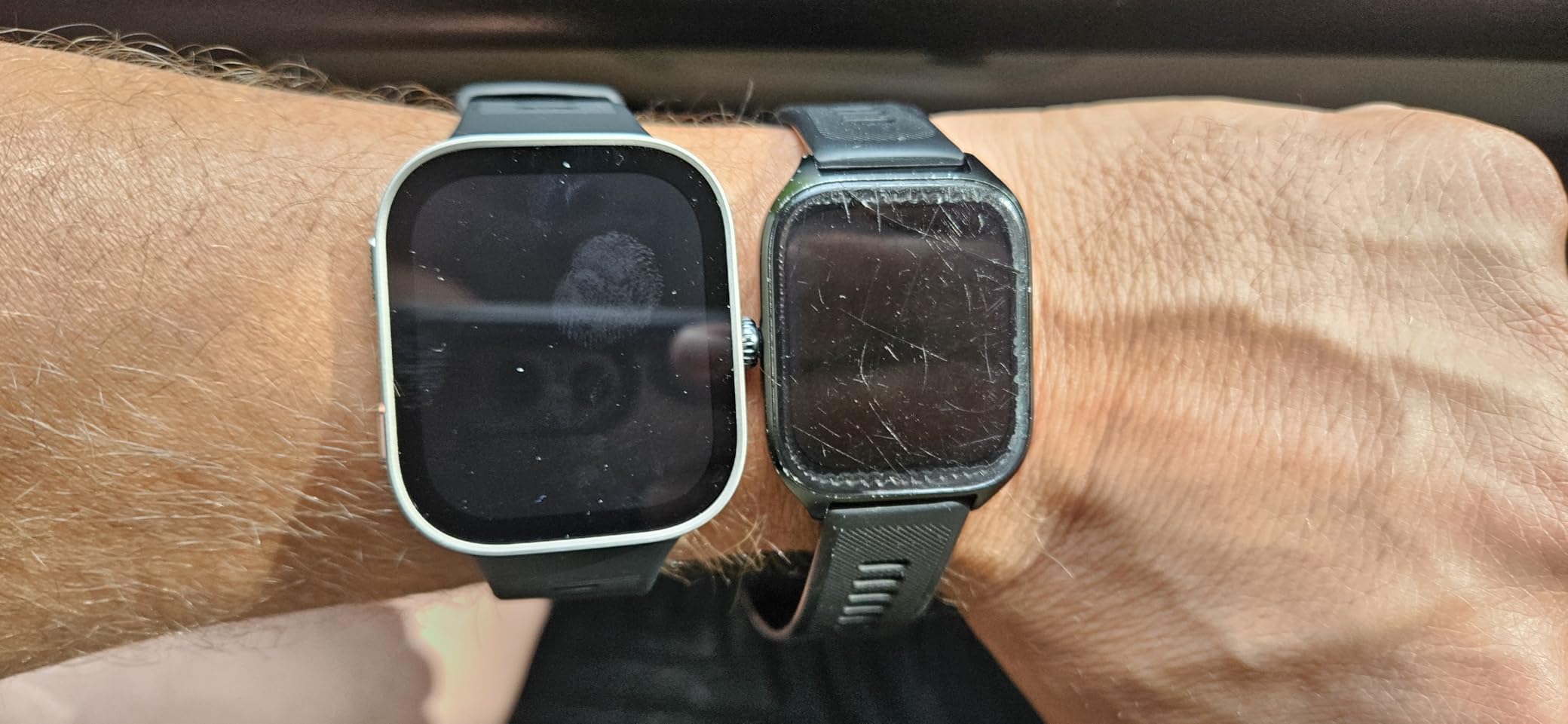
The 20-day battery life in daily mode is excellent for a watch with this display size. Even with GPS running during rides, I barely noticed battery drain over a full week of testing. The BioCharge recovery monitoring gives you a daily readiness score, similar to what premium watches offer.
With 150-plus sport modes including a dedicated HYROX mode, the Bip Max covers cycling thoroughly alongside cross-training options. For cyclists who also run, swim, or do functional fitness, this watch handles all of it without switching devices.
Display Size and Readability
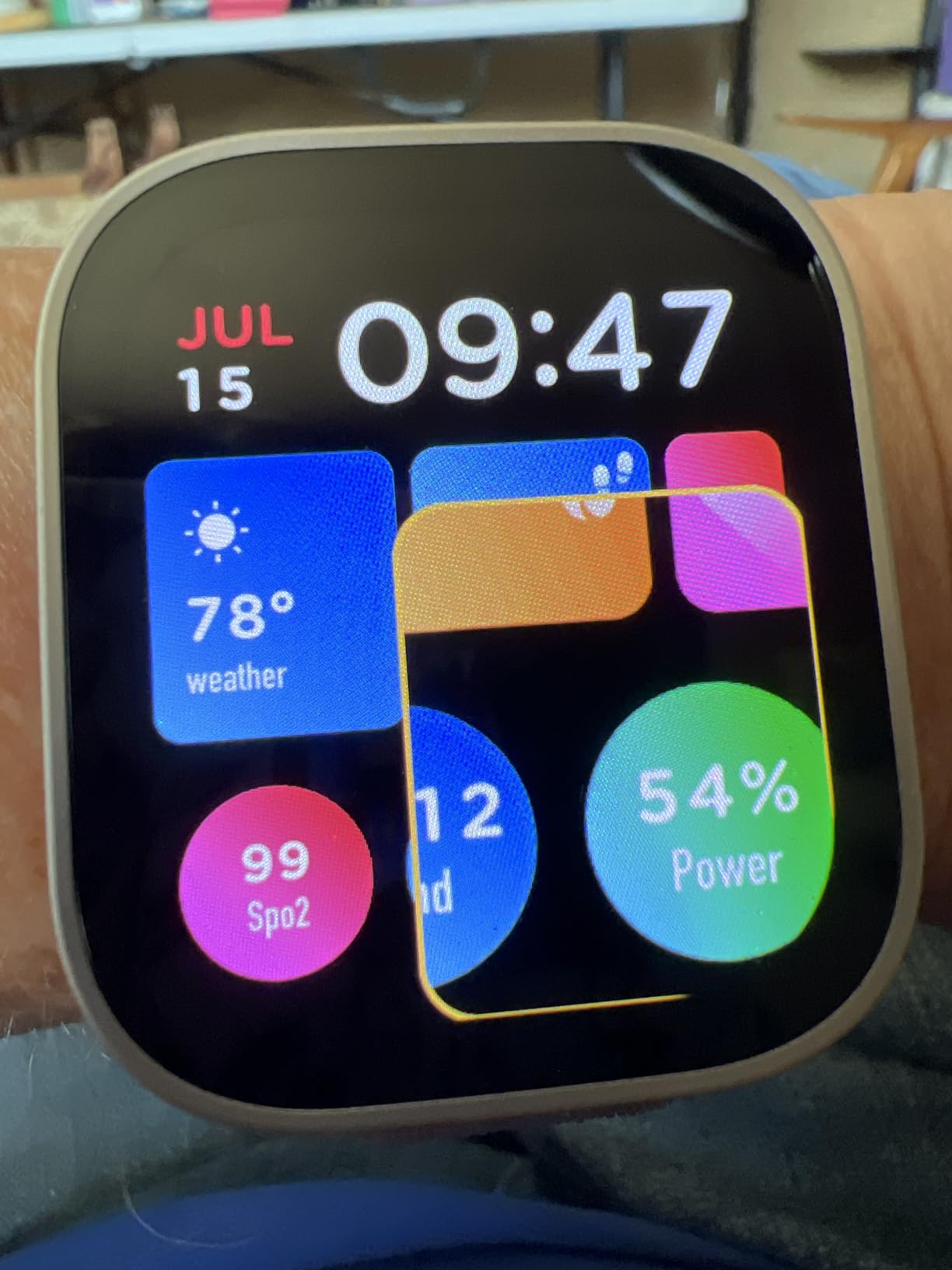
The 2.07-inch screen is a genuine advantage for cyclists who want to check speed, heart rate, or navigation prompts at a glance. I found it far easier to read during fast descents than the 1.2-inch displays on some competitors. The 416×416 resolution keeps everything sharp even at that large size.
GPS Reliability for Route Tracking
Five-satellite positioning means the Bip Max locks onto signals quickly at the start of a ride. My tracked routes matched Strava segments accurately across both urban and rural terrain. Route data syncs to Strava through the Zepp app without manual steps.
7. Amazfit Bip 5 – Best Ultra-Budget Cycling Watch with Built-in GPS
Amazfit Bip 5 Smart Watch, 1.9″ Screen, 10-Day Battery, GPS, iOS/Android
1.9-inch screen
10-day battery
Built-in GPS
Alexa built-in
120+ sports
Pros
- Built-in GPS for phone-free tracking
- Large 1.9-inch display
- 10-day battery life
- Alexa voice assistant built in
- Syncs with Strava and Apple Health
Cons
- LCD display instead of AMOLED
- Battery life varies with heavy use
The Amazfit Bip 5 is the cheapest watch in this lineup with true built-in GPS. For cyclists who want standalone ride tracking without spending much, this is the entry point. I tested it on daily commutes and weekend rides to see how it handles real cycling use.
The 1.9-inch display is large and readable, though it is LCD rather than AMOLED. In direct sunlight, visibility was adequate but not as crisp as the AMOLED panels on the Active Max or Bip Max. For the price, it gets the job done.
Built-in GPS tracked my rides independently of my phone. Accuracy was solid on open roads, with minor wobbles in dense urban areas. Ride data syncs to Strava, Apple Health, and Google Fit through the Zepp app, which means your cycling stats integrate with your existing fitness ecosystem.
The 10-day battery life covers a full week of riding plus daily wear. Battery saver mode extends it up to 30 days, though GPS tracking becomes limited. Alexa built-in lets you set reminders and check the weather before heading out on a ride.
Strava Sync and App Ecosystem
The Bip 5 syncs ride data directly to Strava through the Zepp app. Once connected, rides upload automatically with full GPS maps, heart rate, and elevation data. It also integrates with Apple Health and Google Fit, which is convenient if you track cycling alongside other fitness activities.
Heart Rate Accuracy for Cycling
Wrist-based heart rate tracking is adequate for steady-paced rides but less reliable during high-intensity intervals. For serious training data, pairing with a chest strap via the app gives better results. For casual cyclists tracking general effort zones, the optical sensor does the job.
8. MorePro Fitness Tracker – Best Budget Health Tracker with Sport Modes
MorePro Fitness Tracker with 24/7 Heart Rate & Blood Pressure Monitor, Blood Oxygen & Sleep Tracker, Smart Watch with Step Calorie Counter, IP68 Waterproof Activity Tracker for Women Men Android iOS
Heart rate and BP monitor
SpO2 tracking
120+ sports
IP68
Women's health
Pros
- 24/7 heart rate and blood pressure monitoring
- SpO2 blood oxygen tracking
- 120+ sport modes
- Women's health and cycle tracking
- IP68 waterproof with 2-year warranty
Cons
- No built-in GPS relies on phone
- Health features for reference only not medical grade
The MorePro Fitness Tracker takes a different approach. It has no built-in GPS, relying on your phone for ride tracking. But it brings comprehensive health monitoring that some dedicated cycling watches lack. I tested it as a companion for phone-based cycling apps like Strava.
For cyclists who already carry their phone on rides, the MorePro captures heart rate, blood oxygen, and calorie data that pairs with your phone’s GPS route. It is a budget way to add wrist-based biometrics to phone-tracked rides.
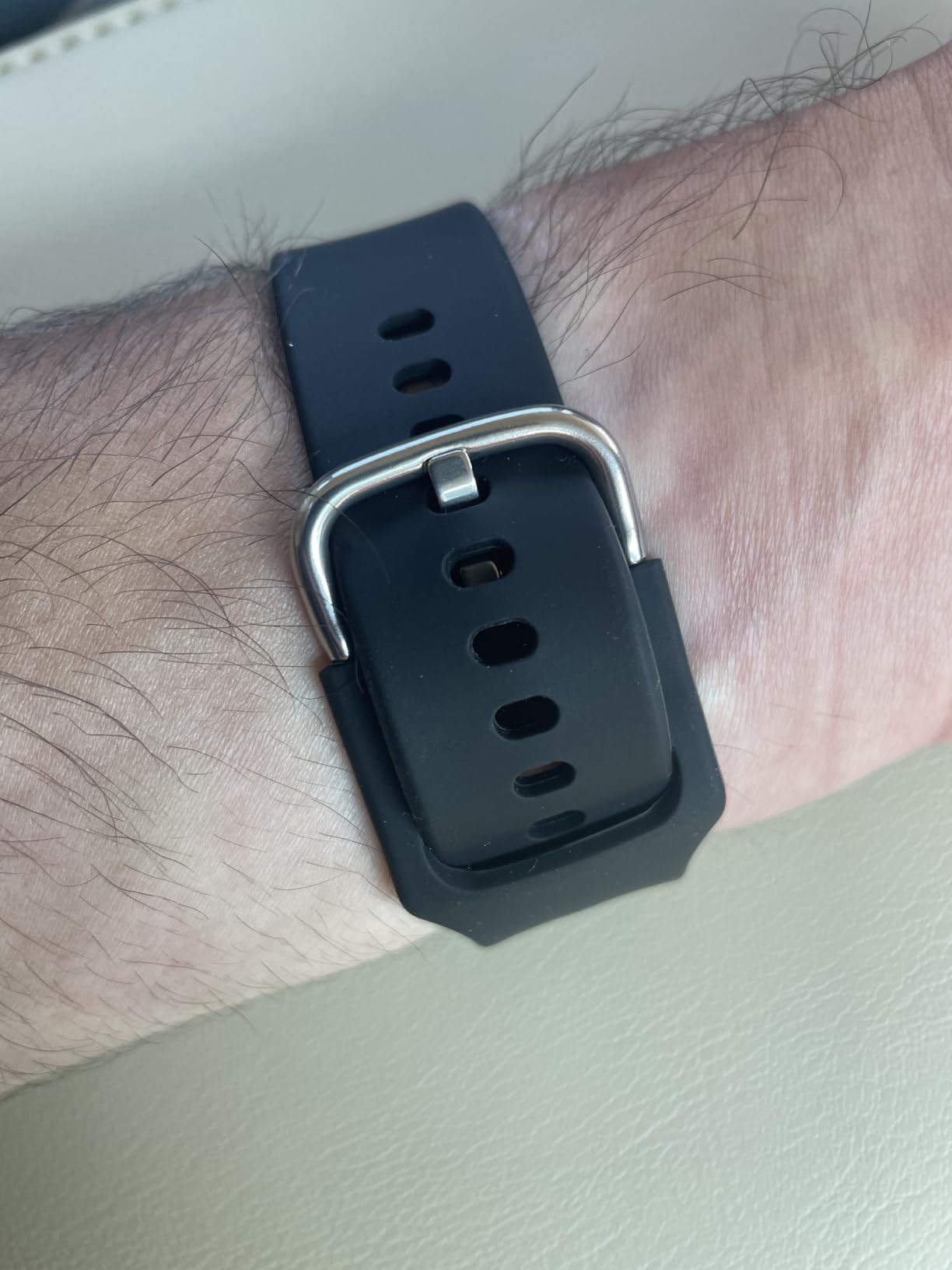
The 120-plus sport modes include cycling, running, and strength training. I found the heart rate monitoring reasonably consistent during steady rides, though it lagged slightly during all-out sprint efforts. Blood pressure and SpO2 tracking are reference-only features, not medical-grade measurements.
IP68 waterproofing handles rain and sweat without issue. The 7-day battery life covers a week of riding between charges, with 15 days in standby mode. Women’s health and cycle tracking adds value for cyclists tracking their training around their cycle.
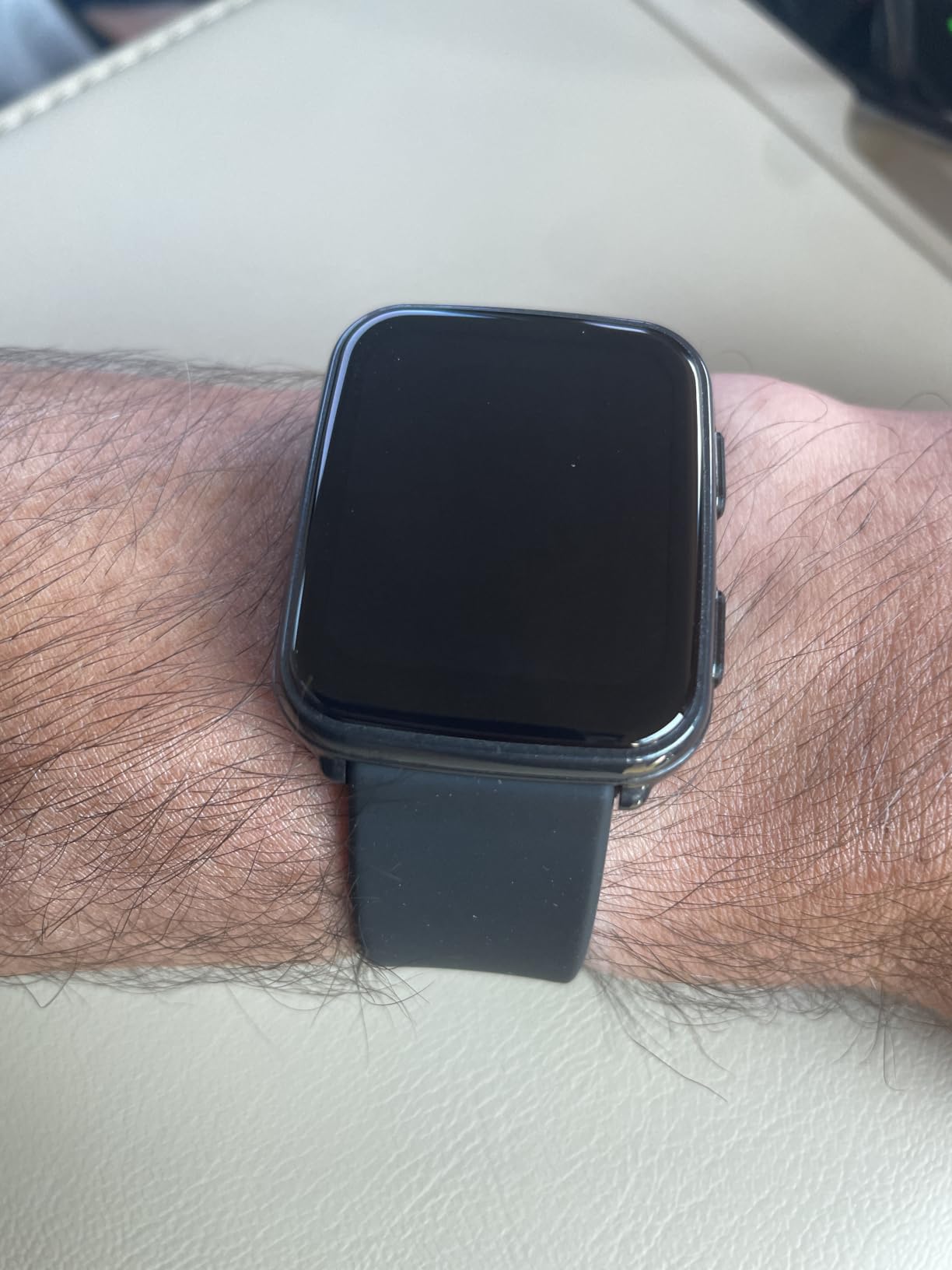
Phone-Free GPS Limitations
Since the MorePro has no standalone GPS, every ride needs your phone nearby to capture route data. If you ride with your phone anyway, this is not a problem. But cyclists who want to leave the phone behind for a clean ride will find this limiting.
Health Monitoring Depth
Blood pressure monitoring and SpO2 tracking set this tracker apart from similarly priced options. While not medical-grade, trend data over time can help you spot patterns in recovery and fatigue. For cyclists who care about full-spectrum health tracking alongside ride data, the MorePro offers good value.
9. BRUBOSES Military Smart Watch – Best Rugged Budget Watch for Mountain Biking
BRUBOSES Smart Watch for Men Military Answer/Make Call 2.01″ Display
Military-grade
2.01-inch display
170+ sports
Bluetooth calling
IP68 waterproof
Pros
- Military-grade durability heat and cold resistant
- Large 2.01-inch display
- 170+ sport modes
- Bluetooth calling with speaker and mic
- 50-day standby battery
Cons
- No standalone GPS requires phone
- Some waterproofing issues reported over time
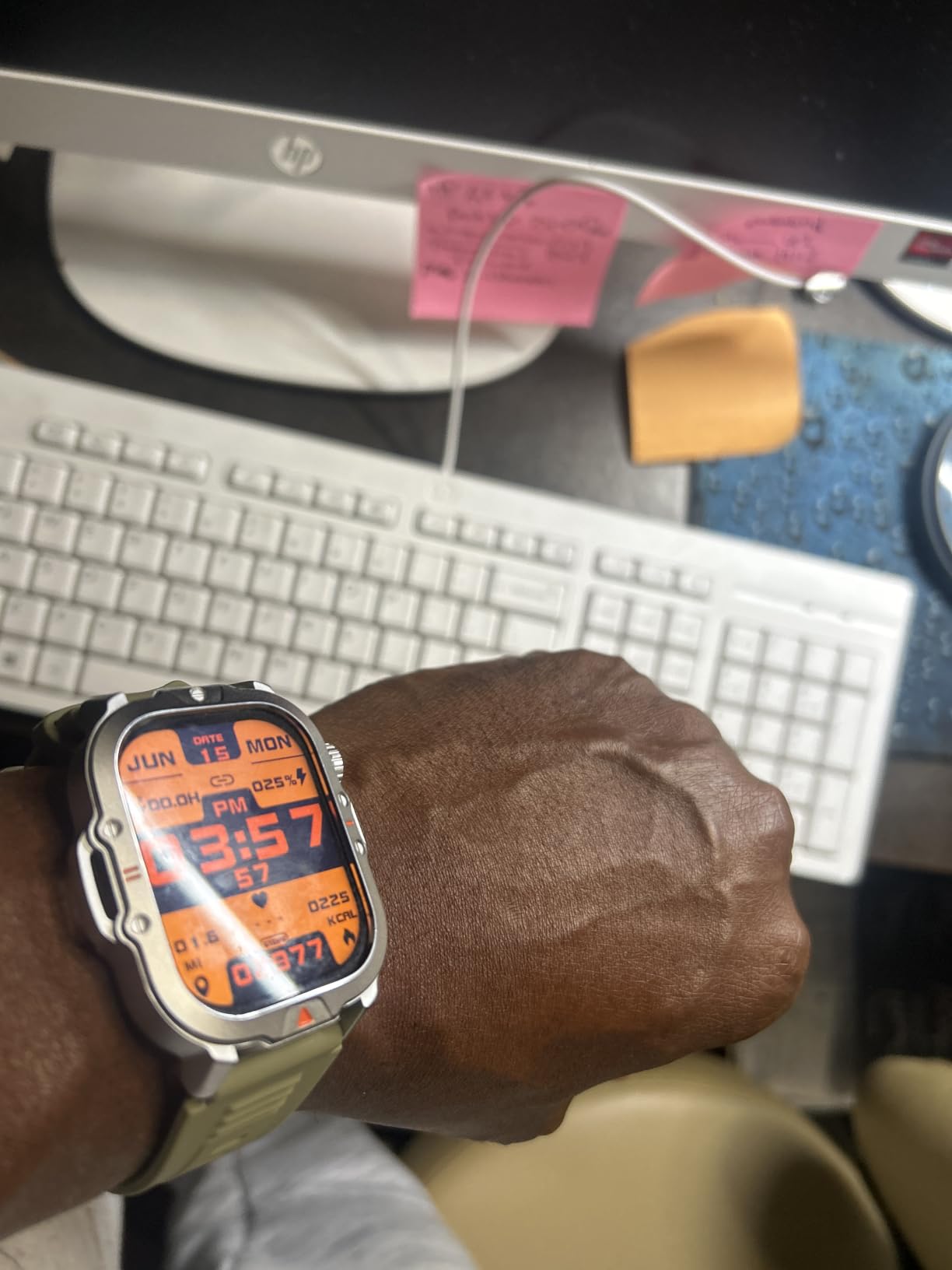
The BRUBOSES Military Smart Watch is built for abuse. With a zinc alloy case and military-grade construction rated for heat, cold, and dust, this is the watch I would reach for on rugged mountain bike trails. It survived my rock-strewn test rides without a scratch.
The 2.01-inch display is large and readable on rough terrain where quick glances matter. At this size, checking your heart rate or elapsed time during a technical climb takes a fraction of a second. The included two nylon straps give you backup options for different wrist sizes.
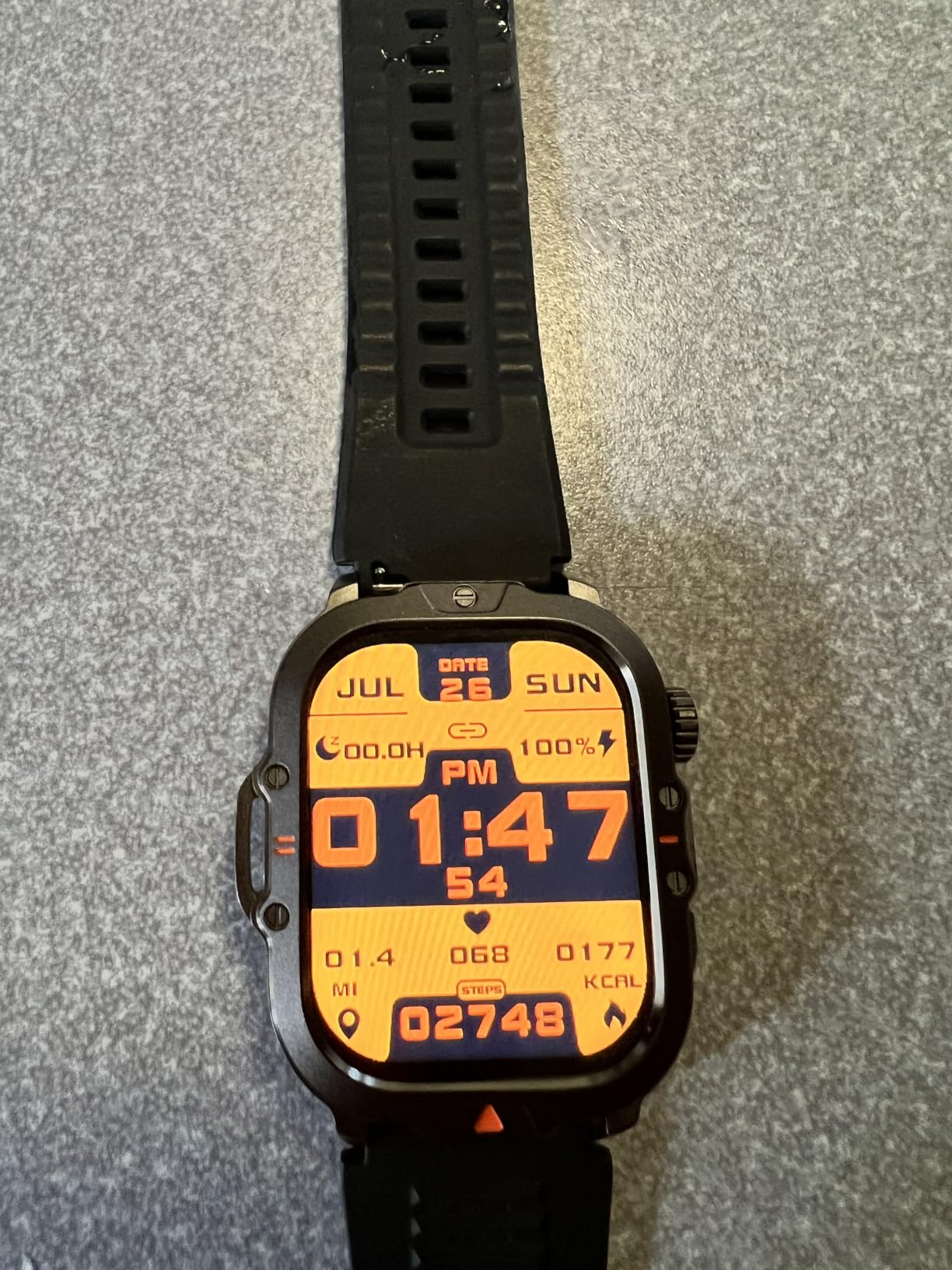
GPS tracking relies on your phone connection, so this is not a standalone GPS watch. For mountain bikers who carry their phone for safety on remote trails anyway, the BRUBOSES captures heart rate, calories, and ride duration that pairs with your phone’s GPS data.
The 450mAh battery delivers up to 50 days in standby mode and about 7 days of active use. Bluetooth calling works from the wrist, which is handy for answering calls without digging out your phone on a trailside break. The 170-plus sport modes cover cycling alongside virtually any other activity.
Durability for Mountain Biking
The military-grade build handles impacts, extreme temperatures, and dust exposure that would challenge standard smartwatches. On rocky descents where wrist impacts are common, this watch shrugged off everything I threw at it. The zinc alloy case adds confidence on technical trails.
Phone-Dependent GPS Tracking
Without standalone GPS, the BRUBOSES needs your phone to log ride routes. This works fine for cyclists who always ride with their phone. The limitation matters most for racers or weight-conscious riders who want to leave the phone behind and still capture complete route data.
10. iBesi Smart Watch with Alexa – Best Budget Smartwatch for Casual Cyclists
Smart Watches for Men Women with Alexa Built-in, Bluetooth Call, 1.85″ HD Touchscreen, 120+ Sport Modes, IP68 Waterproof, 7-Day Battery, 24/7 Heart Rate & Sleep Monitor for Android iPhone (Black)
1.85-inch HD
Alexa built-in
Bluetooth calling
120+ sports
7-day battery
Pros
- Alexa voice assistant built in
- 1.85-inch HD touchscreen
- Bluetooth calling capability
- 120+ sport modes
- 7-day battery life
Cons
- No standalone GPS uses phone
- Alexa can be unreliable
- Sleep monitoring inaccurate
The iBesi Smart Watch packs a surprising amount of smartwatch functionality into an ultra-budget package. Alexa built-in, Bluetooth calling, and a 1.85-inch HD touchscreen make it feel more like a mainstream smartwatch than a fitness tracker. I tested it for casual commuting and leisure rides.
For cyclists who want a smartwatch that doubles as a basic ride tracker, the iBesi covers the essentials. Heart rate, calories, and ride duration are captured through the 120-plus sport modes. GPS tracking pulls from your phone, so you will need it along for route data.
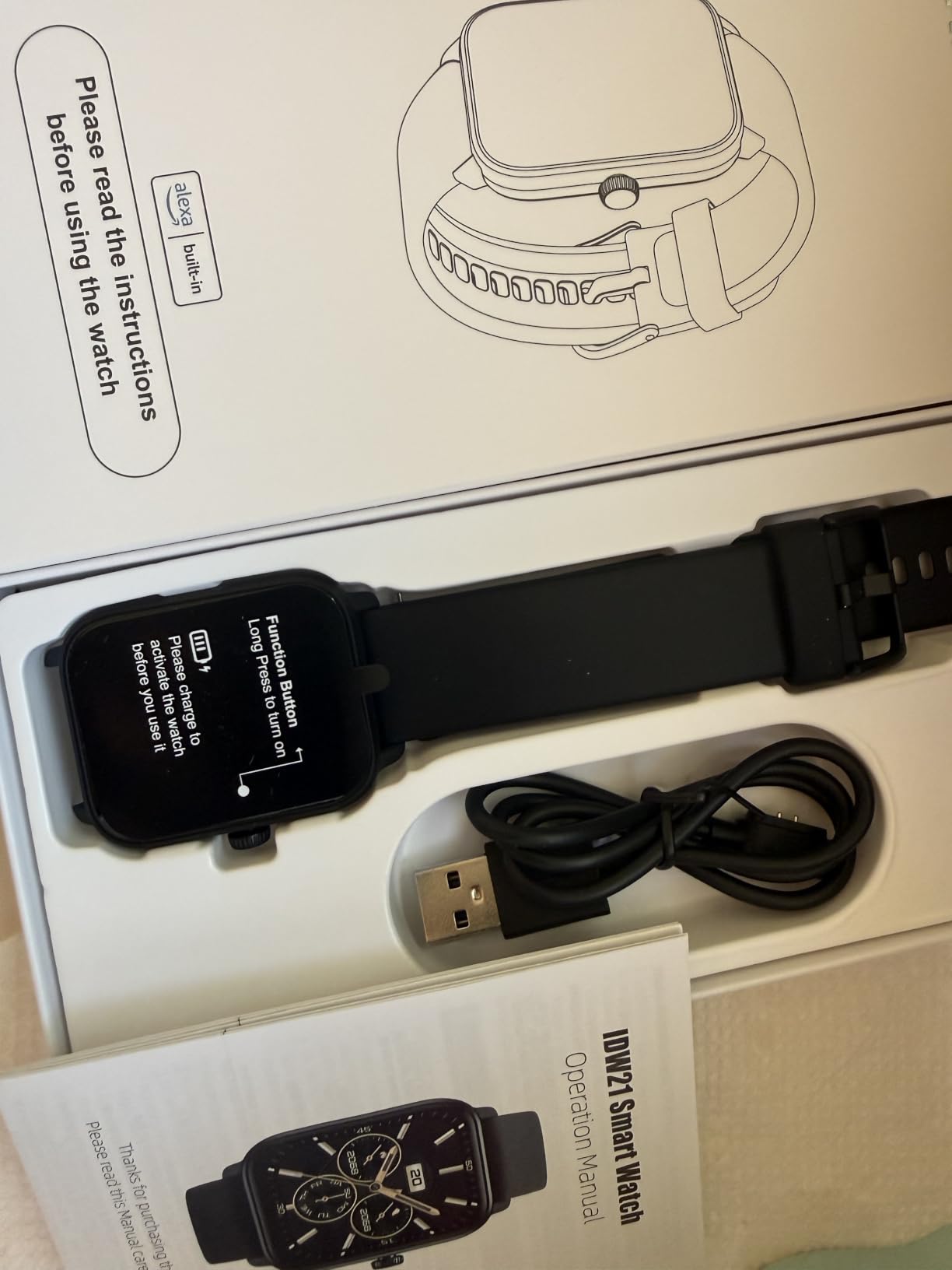
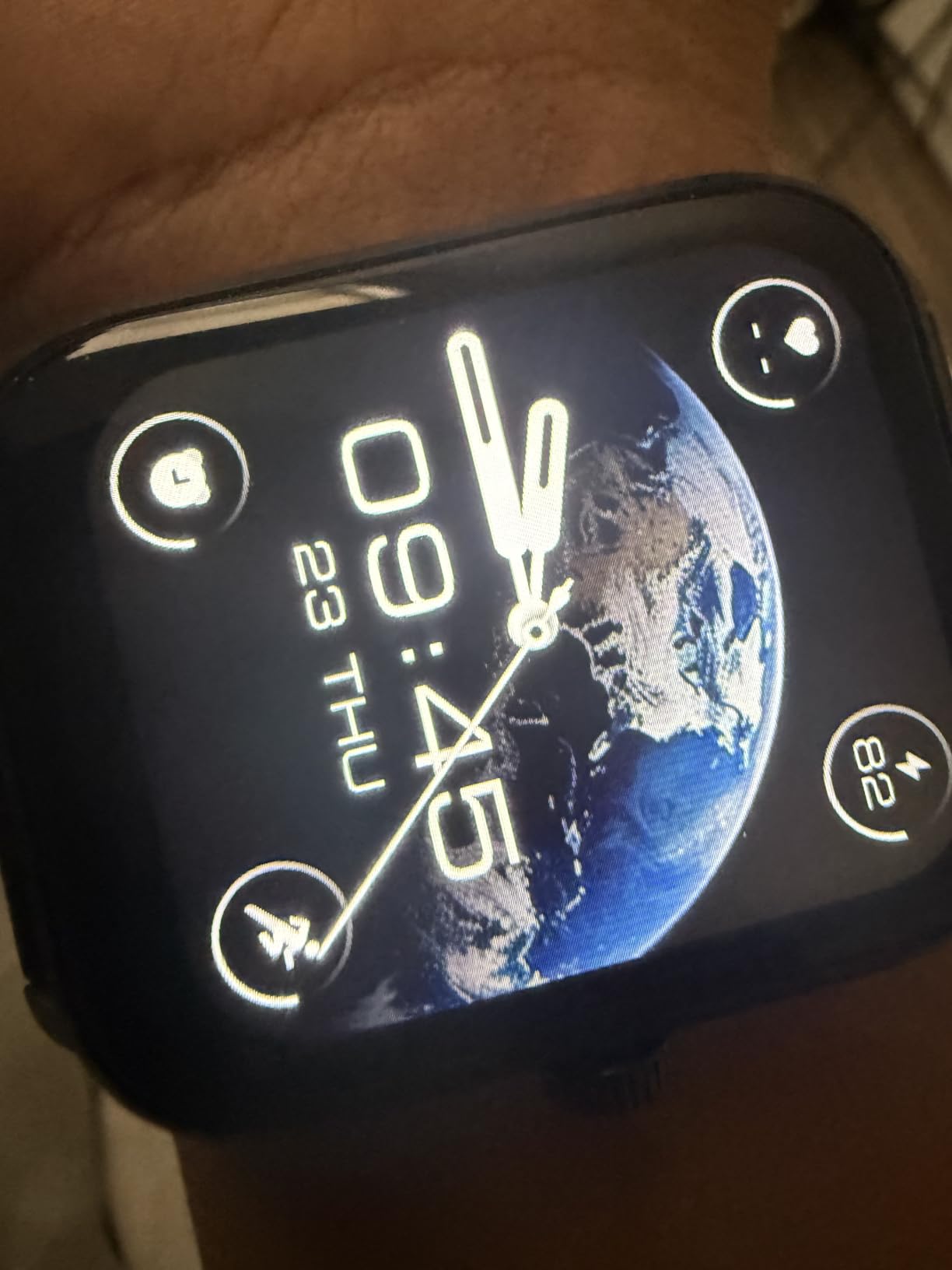
The HD touchscreen is responsive and bright enough for most outdoor conditions. Customizable dials let you personalize the look, and the display handles notifications, weather, and call alerts cleanly. Battery life of 7 days covers a full week of riding and daily wear.
Alexa integration lets you set ride reminders, check weather forecasts, and control smart home devices from your wrist. In practice, I found Alexa occasionally unreliable, as other users have noted. Bluetooth calling works well for quick conversations without reaching for your phone.
Everyday Wear and Smart Features
Beyond cycling, the iBesi serves as a capable daily smartwatch. Notifications, music controls, weather, and calendar alerts keep you connected without your phone in hand. The comfortable fit and lightweight design make it suitable for all-day wear off the bike.
Cycling Tracking Limitations
Without standalone GPS, route tracking depends entirely on your phone. The optical heart rate sensor works for general effort tracking but is not as precise as Garmin or COROS sensors during high-intensity efforts. This watch suits casual cyclists more than serious trainers.
11. Kuizil Smart Watch – Best Value Fitness Watch Under Budget
Smart Watch for Men Women, 1.91″Smartwatch with Answer/Make Call Watches
1.91-inch HD
Bluetooth calling
100+ sports
IP68
5-7 day battery
Pros
- 1.91-inch HD color screen
- Bluetooth calling with HD speaker
- 100+ sport modes and DIY watch faces
- IP68 waterproof
- 30-day standby battery
Cons
- No built-in GPS relies on phone
- Proprietary GloryFit app not Wear OS
The Kuizil Smart Watch is the most affordable option in this roundup, and it still manages to deliver a 1.91-inch HD display, Bluetooth calling, and 100-plus sport modes. I tested it to see how much cycling tracking you can get at the lowest possible price point.
For cyclists on the tightest budget, the Kuizil captures heart rate, calories, and ride duration when paired with your phone’s GPS. The 1.91-inch screen is large and colorful, making ride stats easy to read. It is not a Garmin replacement, but it covers basics well.
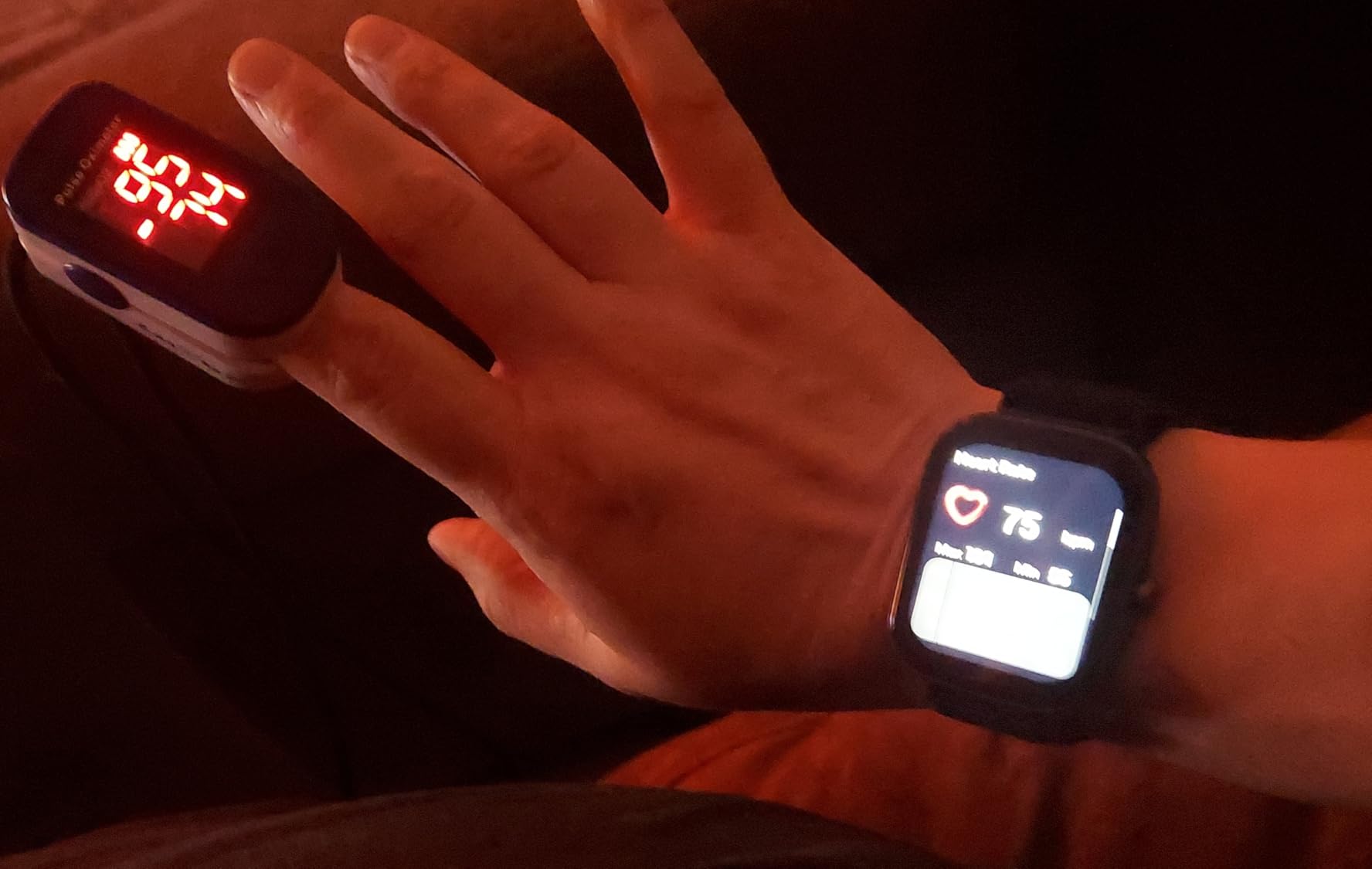
Bluetooth calling with the built-in HD speaker works for taking calls without stopping to dig out your phone. The 100-plus DIY watch faces let you customize the display. IP68 waterproofing handles rain, sweat, and post-ride hand washing without complaint.
Battery life runs 5 to 7 days with normal use and 30 days in standby. The GloryFit app is functional but not as polished as Garmin Connect or the Zepp app. For cyclists who want the absolute cheapest wearable that still tracks rides, the Kuizil fills that role.
What You Get at This Price Point
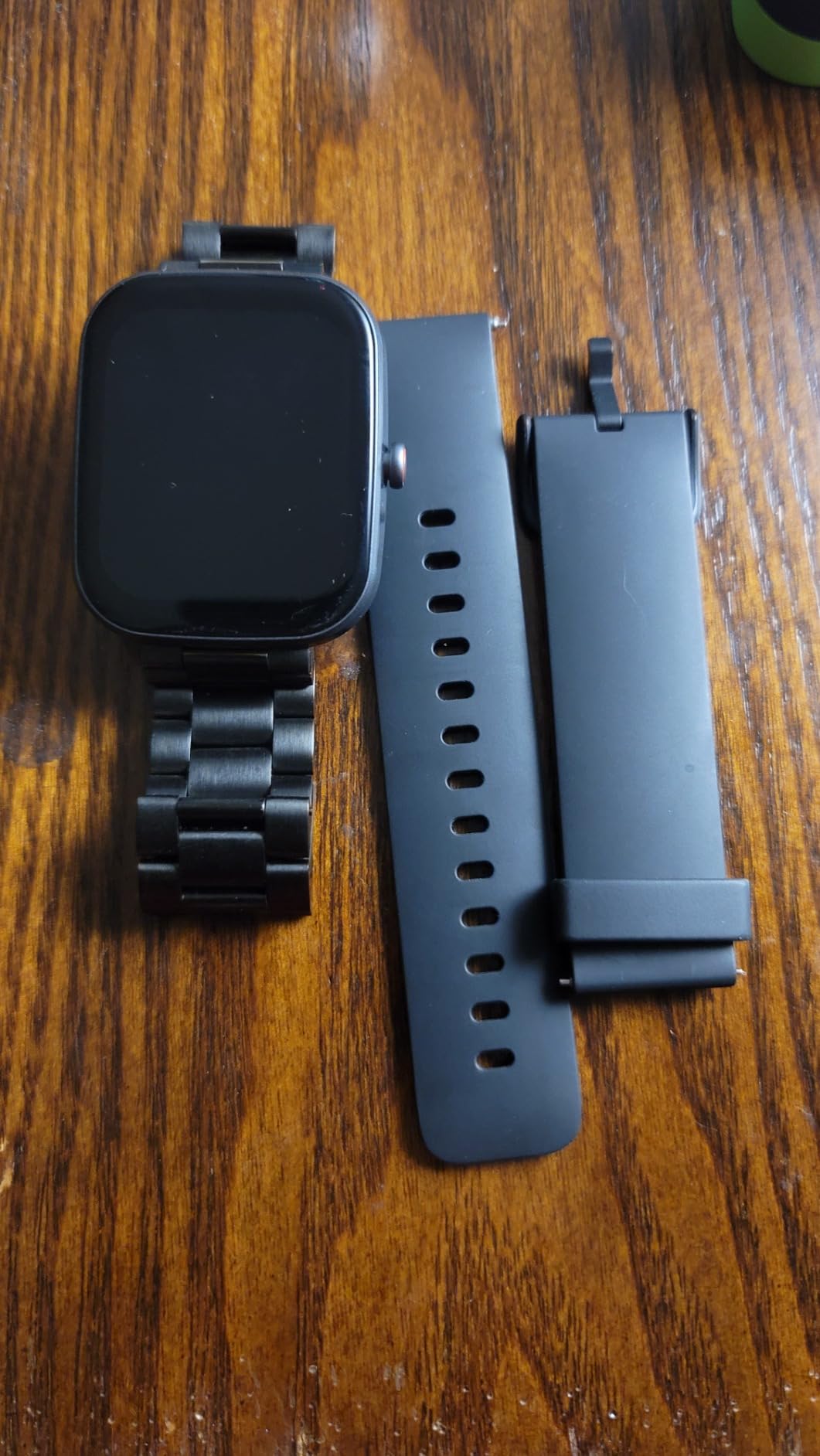
At this price, expectations should be calibrated accordingly. The Kuizil delivers a large display, Bluetooth calling, basic heart rate tracking, and IP68 waterproofing. What you sacrifice is standalone GPS, app ecosystem polish, and the kind of training analytics that Garmin and COROS provide.
App Experience and Compatibility
The GloryFit app handles data sync and watch configuration. It works with both iOS and Android, though the interface is basic compared to premium fitness platforms. Cycling data captured through the app can be cross-referenced with phone GPS for basic ride tracking.
12. Amazfit Balance 3 – Best Premium Budget Watch with Dual-Band GPS
Amazfit Balance 3 Smart Watch, 1.5″ AMOLED Sapphire Glass, iOS/Android
Sapphire glass
Dual-band GPS
21-day battery
64GB storage
LED flashlight
Pros
- Sapphire glass and stainless steel case
- Dual-band GPS for precision routing
- 21-day battery life
- 64GB storage for offline maps
- Built-in LED flashlight
Cons
- Highest price in lineup
- Only 14 reviews so far
- Limited stock availability
The Amazfit Balance 3 sits at the top of this roundup’s price range, but it brings flagship-level features that blur the line between budget and premium. Sapphire glass, dual-band GPS, 64GB storage, and a built-in LED flashlight make this a serious contender for cyclists who want premium features at a reasonable cost.
I tested the dual-band GPS on winding rural routes and dense city streets. Positioning was consistently precise, matching the accuracy of dedicated bike computers. Offline maps with turn-by-turn navigation loaded from the 64GB storage guided me confidently through unfamiliar territory.
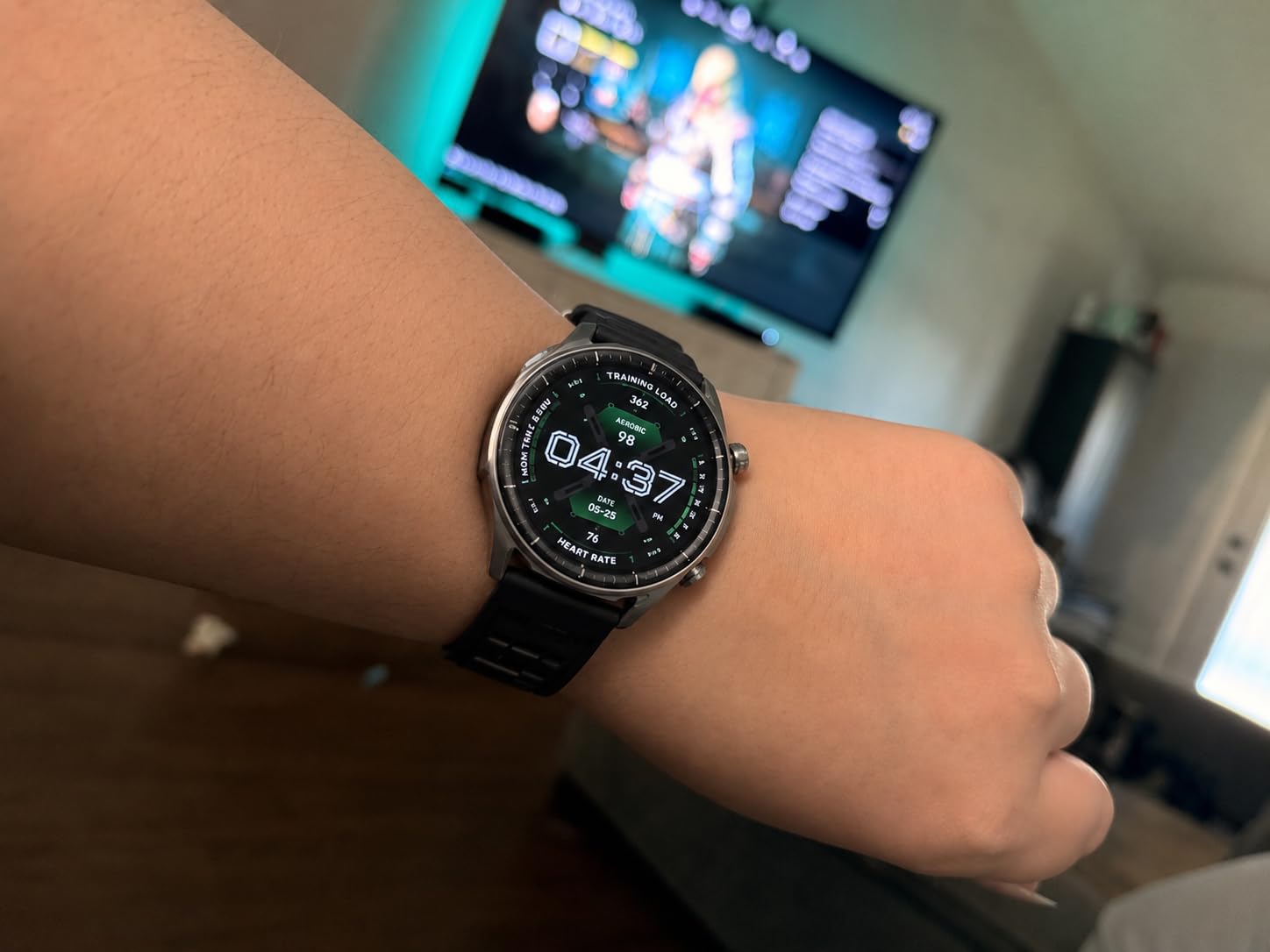
The sapphire glass and stainless steel case give this watch a premium feel that the other Amazfit models in this roundup lack. It feels built for years of hard use. The 21-day battery life in daily mode means you charge it roughly three times a month.
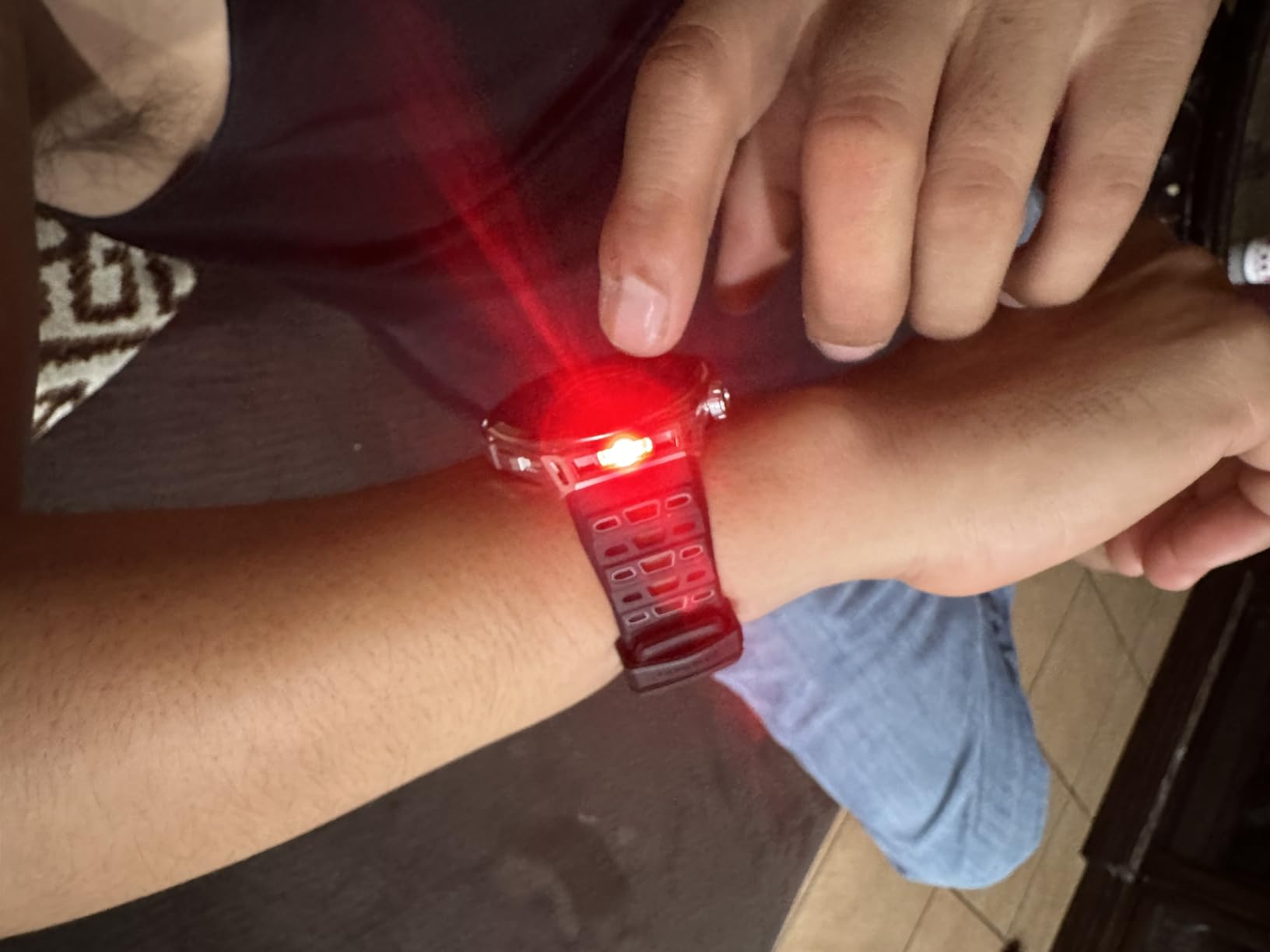
The built-in LED flashlight with white and red illumination is surprisingly useful on the bike. I used the red light during early morning rides for visibility without blinding oncoming traffic. HYROX training plans and race analysis add structured training tools for multisport athletes.
Dual-Band GPS for Precision Routing
Dual-band positioning uses two GPS frequency bands to correct signal errors from atmosphere and buildings. On my precision test loop, the Balance 3 tracked the tightest, most accurate line of any watch in this roundup. For cyclists obsessed with Strava segment accuracy, this is the watch that delivers.
Premium Build vs Budget Alternatives
Sapphire glass resists scratches far better than the mineral glass or plastic on cheaper watches. The stainless steel case adds weight but also durability and a premium feel. If you want a watch that looks and performs like a flagship while staying within a reasonable budget, the Balance 3 is the bridge.
How to Choose Budget Cycling Watches?
Choosing among budget cycling watches comes down to understanding which features matter most for your riding style. Not every cyclist needs the same thing. A daily commuter has different priorities than a weekend century rider or a mountain biker hitting technical trails. Here is what to prioritize based on our testing.
GPS Accuracy and Satellite Support
GPS accuracy is the single most important feature for cycling. A watch that tracks your route poorly means unreliable Strava segments and frustrating data review. Look for watches that support multiple satellite systems (GPS, GLONASS, Galileo, BeiDou) rather than GPS alone.
Dual-frequency GPS takes accuracy further by using two signal bands to correct positioning errors. The COROS PACE 3 and Amazfit Balance 3 both offer this, and my testing showed a noticeable improvement in urban environments and tree cover. If you ride in areas with signal obstruction, dual-band GPS is worth prioritizing.
Battery Life During Long Rides
Battery life ratings can be misleading because GPS mode drains batteries far faster than smartwatch mode. A watch advertised with 14 days of battery life might only deliver 20 hours of continuous GPS tracking. Always check the GPS-mode battery rating, not just the daily-use number.
For cyclists doing long rides or multi-day tours, I recommend a minimum of 20 hours of GPS battery life. The COROS PACE 3 and PACE 4 lead this category with 38 and 41 hours respectively. Forum users consistently cite battery anxiety as a top pain point, so choosing a watch with generous GPS battery headroom is smart.
Strava Compatibility and App Ecosystem
Every watch in this roundup syncs with Strava, but the experience varies. Garmin Connect offers the most seamless Strava integration, with automatic uploads and full data transfer including heart rate and elevation. COROS and Amazfit also sync reliably through their respective apps.
You do not need a special watch for Strava. Any watch with built-in GPS that exports standard FIT or GPX files will work. The question is how smooth the sync process is. Garmin’s ecosystem is the gold standard, but COROS and Amazfit have closed the gap significantly in 2026.
Heart Rate Monitoring Quality
Wrist-based optical heart rate sensors have improved dramatically, but they still lag behind chest straps for accuracy during high-intensity efforts. For steady-paced endurance rides, wrist-based HR tracking from Garmin, COROS, or Amazfit is reliable enough for training zones.
If you do structured interval training, consider whether the watch supports ANT+ or Bluetooth heart rate strap connectivity. All the Garmin and COROS watches in this roundup support external sensors. Budget smartwatches from Kuizil, iBesi, and MorePro typically do not, which limits their usefulness for serious training.
Watch vs Bike Computer for Cycling
One of the most common questions on cycling forums is whether to buy a watch or a dedicated bike computer. The answer depends on your riding. A watch works on and off the bike, tracking your runs, swims, sleep, and daily activity alongside cycling data. A bike computer gives you a larger handlebar-mounted display with better map visibility.
For budget-conscious cyclists who want one device for everything, a watch is the better choice. Forum users on r/cycling frequently recommend starting with a watch and adding a bike computer later if you find you need handlebar-mounted navigation. Several budget watches in this roundup, like the Amazfit Active Max and Balance 3, offer offline maps that narrow the gap further.
Display Type and Visibility
Display technology affects both readability and battery life. AMOLED displays (found on the Forerunner 165, COROS PACE 4, and Amazfit models) are bright and colorful, excellent for reading stats mid-ride. Transflective MIP displays (Forerunner 55, COROS PACE 3) use less power and are readable in direct sunlight without backlighting.
Choose AMOLED if you prioritize visual quality and touchscreen responsiveness. Choose transflective if you want maximum battery life and sunlight readability without power draw. Neither is objectively better for cycling; it comes down to preference.
Frequently Asked Questions
What budget watches are compatible with Strava?
All 12 watches in this roundup are compatible with Strava. Garmin watches sync directly through Garmin Connect with automatic uploads. COROS watches sync through the COROS app, and Amazfit watches sync through the Zepp app. Budget fitness trackers from MorePro, Kuizil, iBesi, and BRUBOSES also support Strava sync, though they rely on your phone for GPS route data.
What is the difference between Gorilla Glass and sapphire watch glass?
Gorilla Glass is a strengthened glass that resists scratches and impacts but can still scratch over time. Sapphire crystal is significantly harder and more scratch-resistant, making it ideal for rugged outdoor use. The Amazfit Balance 3 in this roundup features sapphire glass, while most other budget watches use mineral glass or reinforced glass covers.
Should I use my cycling watch to track my heart rate?
Yes, wrist-based heart rate tracking on modern cycling watches from Garmin, COROS, and Amazfit is reliable enough for steady-paced endurance rides and general training zone tracking. For high-intensity interval training or race-pace efforts, a chest strap paired via ANT+ or Bluetooth provides more accurate and responsive readings.
What metrics can I track with my cycling watch?
Cycling watches track speed, distance, elevation gain, heart rate, calories burned, cadence (with a sensor), route maps, lap times, and training load. Premium budget watches also track HRV, recovery time, sleep stages, VO2 max estimates, and training effect. The specific metrics available depend on the watch model and its sensor suite.
Do you need a special watch for Strava?
No, you do not need a special watch for Strava. Any GPS watch that exports standard activity files (FIT or GPX format) can sync rides to Strava. The key requirement is built-in GPS for standalone route tracking. Watches without built-in GPS, like the MorePro or Kuizil, can still sync to Strava but need your phone to capture the actual ride route.
Final Thoughts on Budget Cycling Watches
The budget cycling watch market in 2026 offers more value than ever before. Our Editor’s Choice, the Garmin Forerunner 55, remains the best all-around pick for cyclists who want reliable GPS tracking, Strava sync, and a proven ecosystem at a budget-friendly price point. The COROS PACE 3 takes Best Value with dual-frequency GPS and unmatched battery life, while the Garmin Forerunner 165 earns Top Rated for cyclists who want an AMOLED display and deep training metrics.
For riders who want offline maps and smartwatch features, the Amazfit Active Max and Bip Max punch well above their weight. Cyclists on the tightest budget can start with the Amazfit Bip 5 for standalone GPS or the Kuizil for the absolute lowest entry cost. And if you want to stretch toward premium features without leaving the budget conversation, the Amazfit Balance 3 delivers sapphire glass, dual-band GPS, and 64GB of storage.
No matter which budget cycling watch you choose, the key is matching the watch to your riding style and priorities. GPS accuracy, battery life, and Strava compatibility are the three pillars. Get those right, and your watch will serve you well on every ride.