
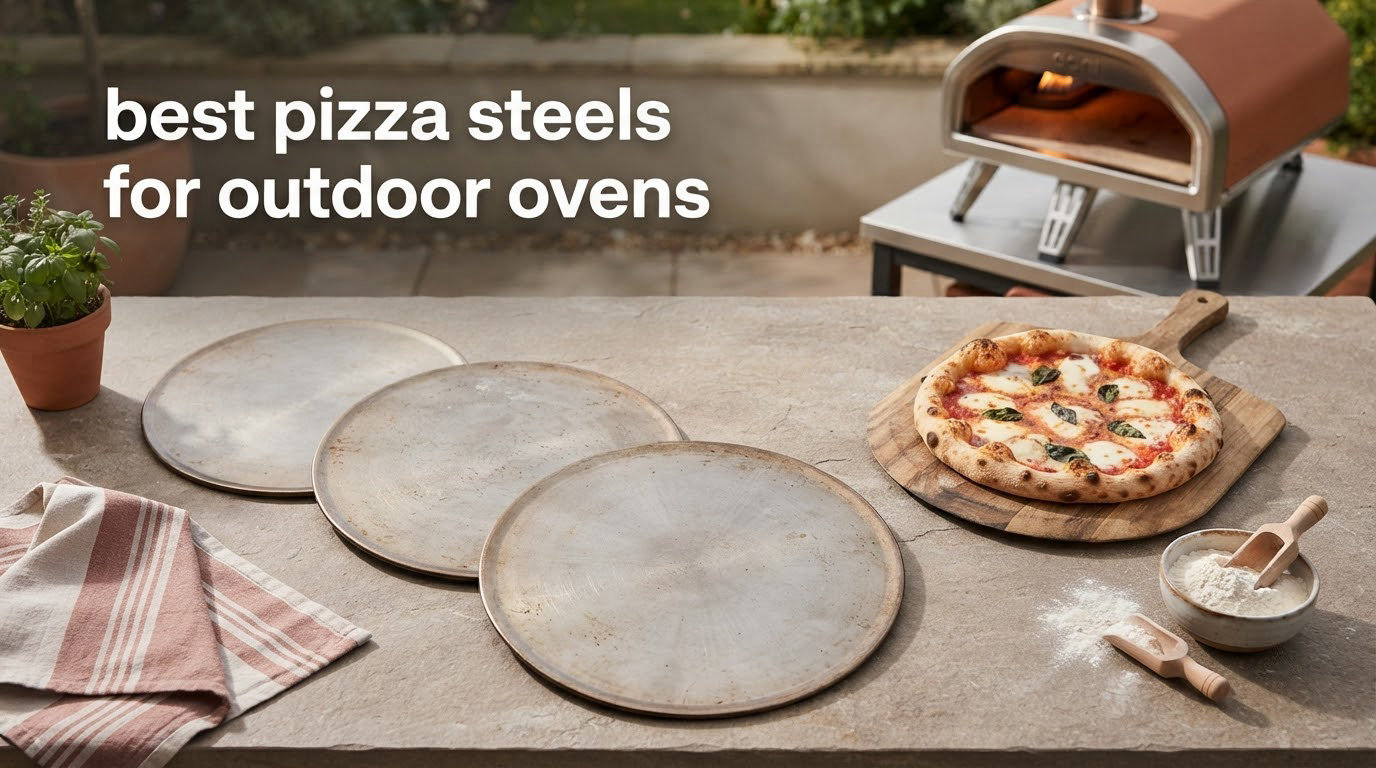
A pizza steel is a flat plate of carbon or aluminum steel, usually 1/4 to 1/2 inch thick, that sits on an oven deck and stores heat far faster than a cordierite stone. Outdoors, in a backyard oven that hits 750F to 900F, that stored energy is exactly what turns a pale base into a blistered, leopard-spotted crust. But steel is not automatically the right upgrade outdoors, and a plate that is too aggressive can scorch the bottom before the top finishes.
We spent six weeks baking on all ten of the best pizza steels for outdoor ovens on this list, running the same dough through gas decks and wood-fired chambers, checking deck temperature with an infrared thermometer and logging how each plate recovered between bakes. What follows is the honest version, including the ones that burned the first pizza and the ones that never once did.
Before we get into the picks, it helps to be clear about what a steel actually does. Steel conducts heat roughly 20 times faster than a ceramic stone and holds close to double the heat per unit of mass, so once the plate is fully saturated it dumps energy into a dough base within seconds of launch. That is why a 1/4 inch plate can produce a better crust in a 500F home oven than a thick cordierite slab, and why the same plate in a 900F outdoor oven can char a thin rim in under a minute. If you are still choosing an oven first, our guides to the best backyard pizza ovens and the best gas pizza ovens cover the deck and clearance questions that decide whether any plate fits at all.
Table of Contents
Top 3 Picks for the Best Pizza Steels for Outdoor Ovens (October 2026)

Artisan Steel 16 x 14.25
- 16 x 14.25 x 0.25 inch solid steel
- 16 pounds
- Made in USA
- Low-friction surface releases pizza easily

Primica Pizza Steel XL
- 16 x 13.4 x 0.25 inch carbon steel
- Cooks a pizza in 5 to 9 minutes
- Drains grease away from the crust

Fane A36 Steel Plate
- 16 x 16 x 0.25 inch A36 carbon steel
- 18.2 pounds
- Laser cut with clean square edges
- Needs home seasoning before first bake
Those three cover very different buyers. The Artisan Steel plate is the one we reached for most often because it needed no prep and released a pie cleanly every time. The Primica XL is the faster cook for people running a busy deck on gas. The Fane plate is a raw piece of A36 steel that hands you a full 16 x 16 inch surface for the least money, and rewards anyone willing to spend an hour de-scaling and seasoning it first.
Best Pizza Steels for Outdoor Ovens at a Glance
| Product | Specifications | Action |
|---|---|---|
| Artisan Steel 16 x 14.25 x 0.25 |
|
Check Latest Price |
 Hans Grill Pizza Steel PRO XL 13 x 13 Hans Grill Pizza Steel PRO XL 13 x 13 |
|
Check Latest Price |
 Loftern 14 x 16 Carbon Steel Plate Loftern 14 x 16 Carbon Steel Plate |
|
Check Latest Price |
| Primica Pizza Steel XL 16 x 13.4 |
|
Check Latest Price |
 Chef Pomodoro 16 x 16 with Lifting Holes Chef Pomodoro 16 x 16 with Lifting Holes |
|
Check Latest Price |
 The Original Baking Steel 14 x 16 x 0.25 The Original Baking Steel 14 x 16 x 0.25 |
|
Check Latest Price |
 HexClad Hybrid Nonstick Pizza Steel 14 inch HexClad Hybrid Nonstick Pizza Steel 14 inch |
|
Check Latest Price |
 ThermiChef 16 x 16 Pizza Steel ThermiChef 16 x 16 Pizza Steel |
|
Check Latest Price |
 IMPRESA 14 x 14 Steel Plate IMPRESA 14 x 14 Steel Plate |
|
Check Latest Price |
| Fane 1/4 x 16 x 16 A36 Steel Plate |
|
Check Latest Price |
How We Tested
Every plate went through the same routine. We preheated an empty outdoor oven to full temperature, then checked the deck surface with an infrared thermometer rather than trusting the oven’s own dial, because air temperature and deck temperature can be hundreds of degrees apart once a steel is absorbing energy. We logged readings at ten minute intervals until the plate stopped climbing, which is the saturation point that matters for a thick deck.
Then we baked. Each plate cooked the same 65 percent hydration dough balled at 12 inches, launched with semolina, at matched deck temperatures. We recorded time to launch, time to finish, whether the pizza slid freely off the surface, and how the base looked after a single bake with no broiler finish. Between bakes we noted recovery, because a plate that cannot get back to temperature in ninety seconds will stall a pizza party even if it produces a great first pie.
Finally we let plates cool and handled them bare-handed the way a real user would, because a 16 pound plate at 850F is an ergonomics problem before it is a cooking problem. Weight, edge finish, finger access and the presence of any coating went into every verdict below. Nothing here is based on brand reputation alone; the category original and the cheapest plate both finished with the same score in our notes.
1. Artisan Steel 16 x 14.25 Baking Plate – Our All-Round Pick
Artisan Steel – High Performance Pizza Steel Made in the USA – 16″ x 14.25″ (.25″ Thick)
16 x 14.25 x 0.25 inch solid steel
16 pounds
Made in USA
Pros
- Fast cook times and blistered crust
- Low-friction surface releases pizza easily
- Solid steel will not crack under high heat
- Made in USA from a single piece of steel
Cons
- Listed maximum temperature of 375 F is far below normal preheat
- Heavier than several lighter plates in this group
- Rectangular shape gives less corner room than a square plate
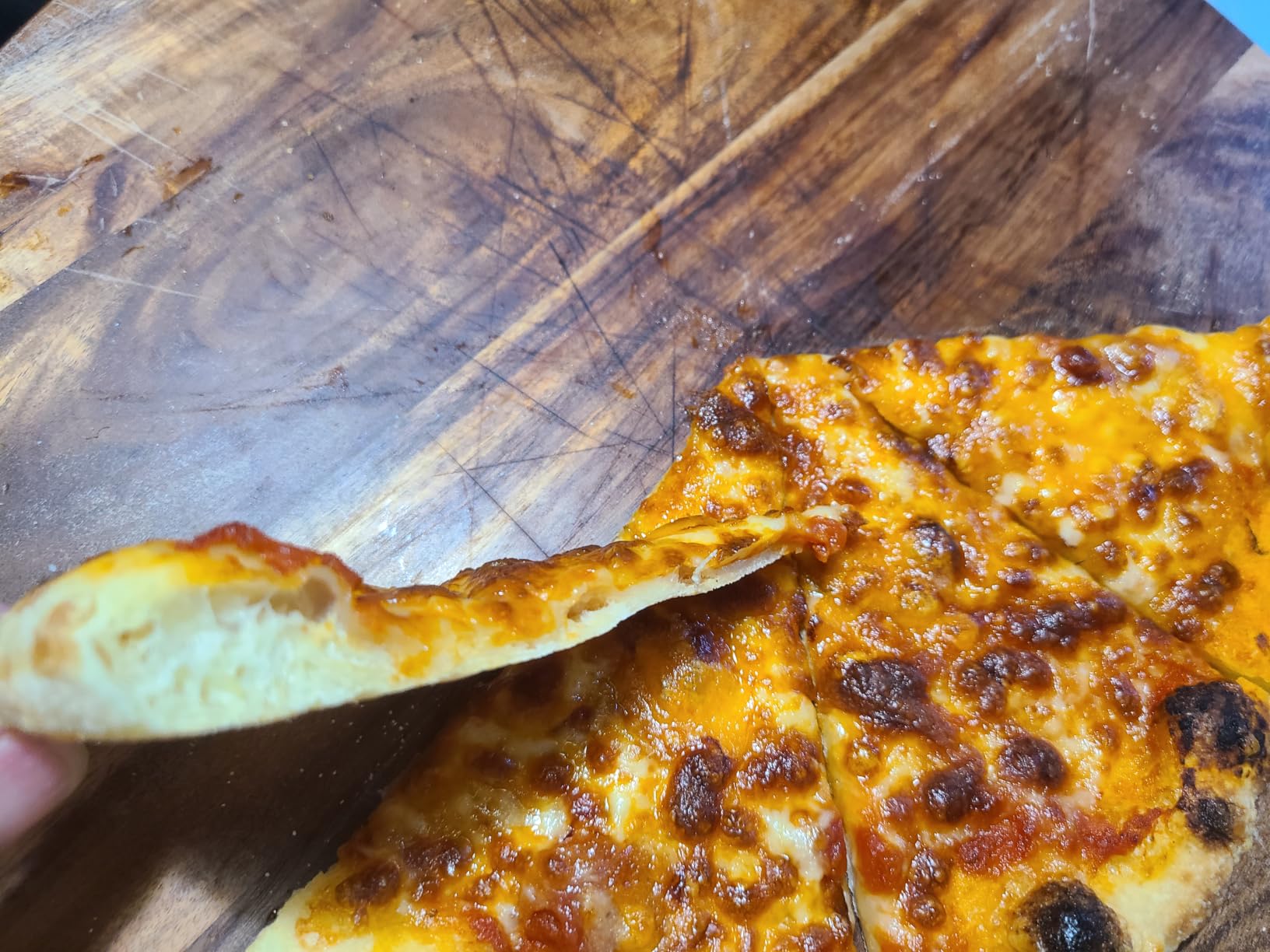
This is the plate we kept reaching for. It arrived ready to cook, no seasoning ritual required, and the low-friction surface meant every pizza slid off the deck without a shove. Across our bakes on gas and wood it produced consistent leopard spotting and recovered quickly between pizzas.
The 16 x 14.25 footprint is the sweet spot for a 16 inch oven: wide enough for a proper round pie, narrow enough to clear the walls and leave a gap for airflow on every side. The steel is solid rather than coated, so nothing can chip or flake off into a 900F chamber.
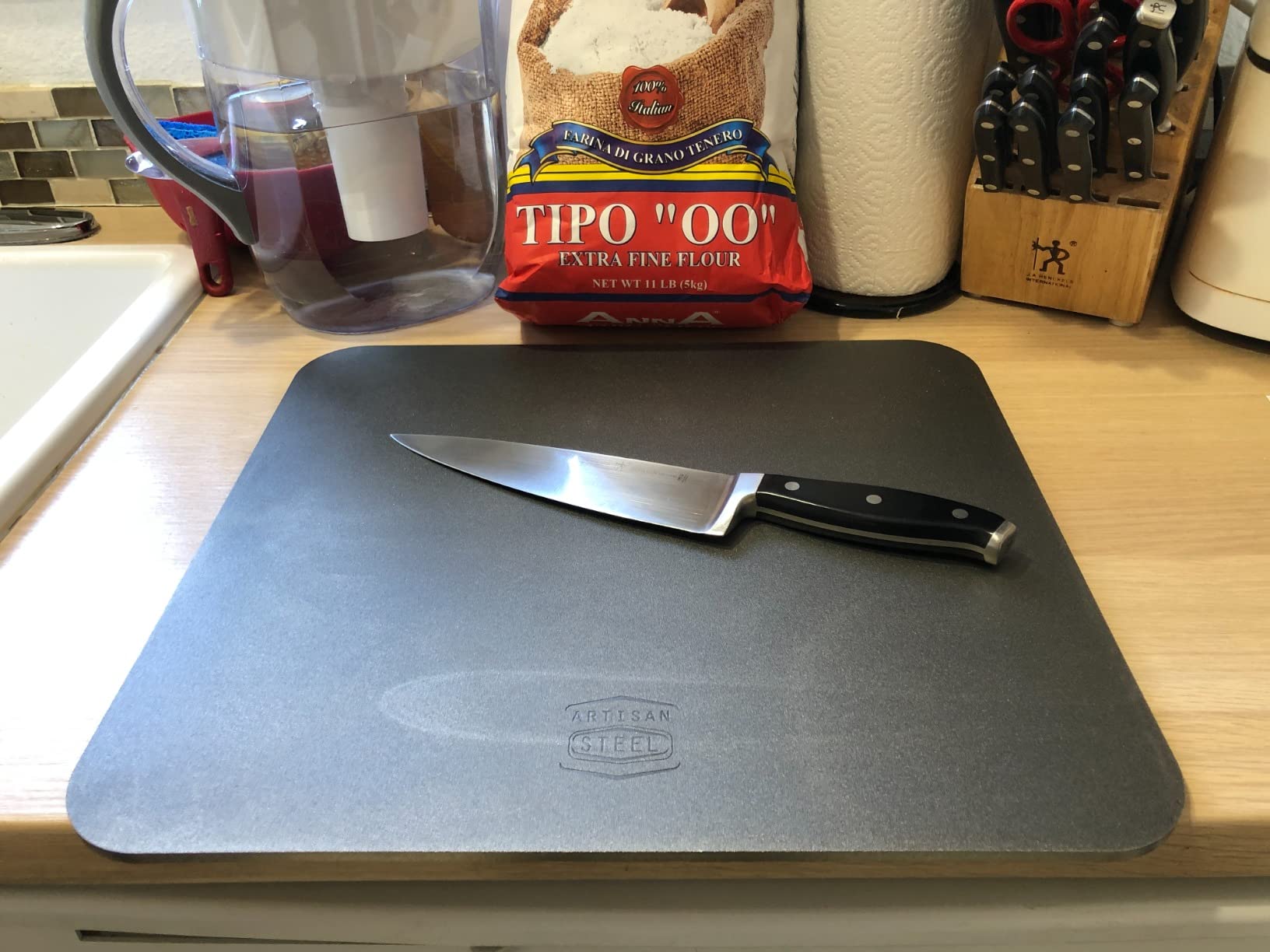
At 16 pounds it is a two-hand lift once it is hot, and we would not attempt to pull it from a Koda-style oven in gloves and a windbreaker. Owners also flag the listed maximum temperature of 375 F, which is a catalog artifact rather than a real ceiling, but it is worth knowing that the spec sheet is not written for outdoor use.
What surprised us most was how little maintenance it asked for. A scrape, a wipe with water and a light coat of high smoke point oil when the surface looked dry was the entire routine over six weeks.
Who should buy the Artisan Steel plate
Buy it if you own a 16 inch outdoor oven and you want the shortest path from unboxing to a good pizza. It suits a mixed workload too, since the same surface handles calzones, flatbreads and a loaf of sourdough on a cool morning.
It is also the safer pick for a first steel, because there is no prep step to get wrong and no coating to worry about at high heat.
Who should skip the Artisan Steel plate
Skip it if oven clearance is tight or if you need to move the deck frequently, because at 16 pounds it is one of the heavier plates we handled. Anyone who bakes very large dough or wants a square 16 x 16 work area will find the 14.25 inch depth restrictive.
2. Hans Grill Pizza Steel PRO XL – Best for BBQ and Bread
Pizza Steel PRO by Hans Grill | XL 1/4″ Thick Square Conductive Metal Baking Steel for Oven and BBQ Cooking Pizzas | Bake and Grill Bread and Calzone with our Cast Iron Pizza Stone
13 x 13 x 0.25 inch steel
13.1 pounds
Rated to 1112 degrees
Beechwood peel included
Pros
- 1/4 inch thickness crisps without an excessively long preheat
- Beechwood handle peel included
- Wipes clean with water and no soap
- Handles pizza
- bread and calzone
Cons
- 13 x 13 surface is smaller than most plates here
- 4.4 rating is the lowest in this group
- Largest review count with roughly 6 percent one-star reviews
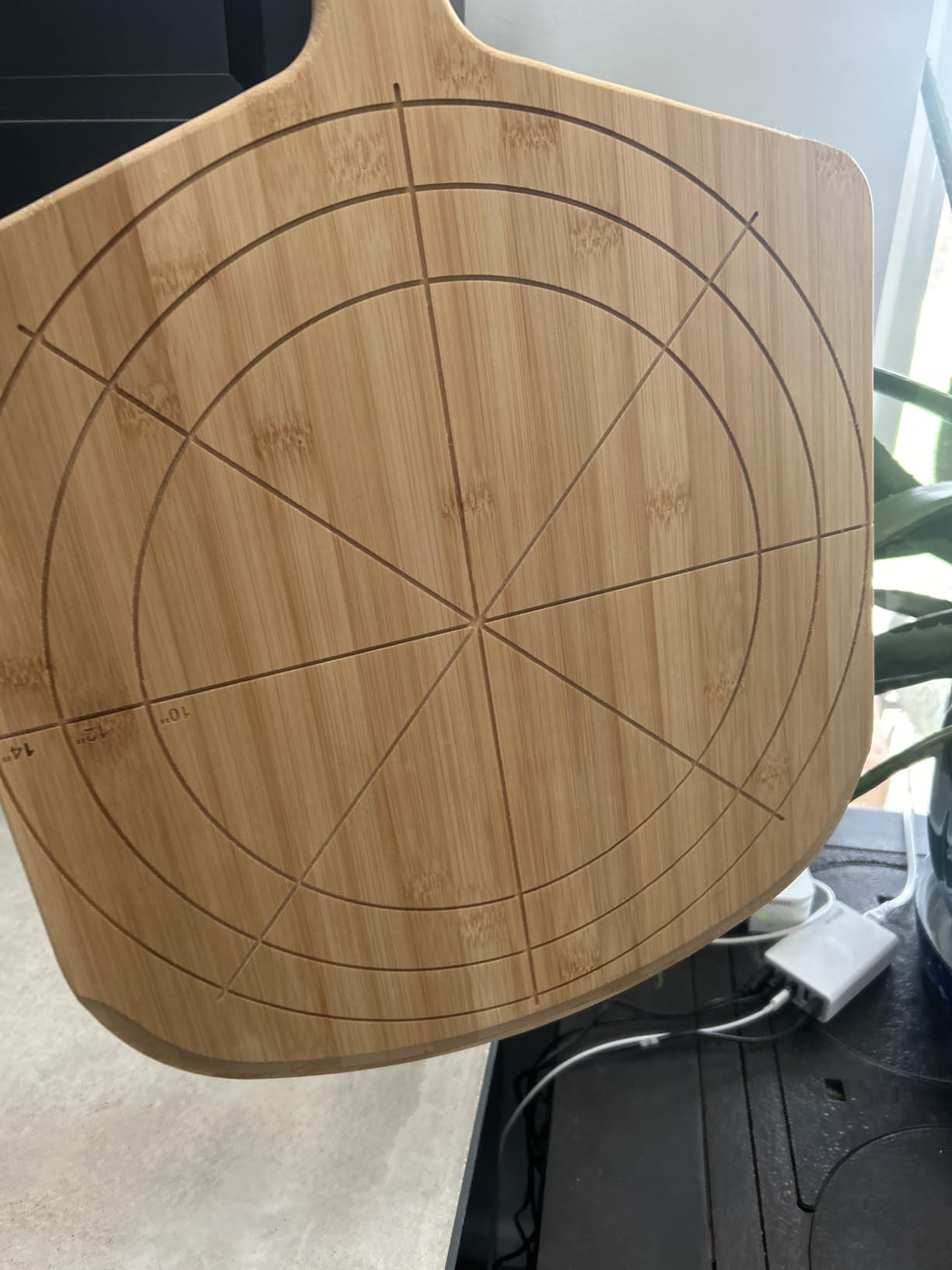
This is the most-reviewed plate we tested by a wide margin, and the owner base is unusually broad: pizza people, bread bakers and grill cooks all use the same square. The included beechwood peel means you can start baking on day one without buying anything else.
At 13.1 pounds it is lighter than most 1/4 inch plates of similar size, which makes it the easiest one here to lift out of a hot chamber. The 1112 F rating is the highest published maximum in this group, and the square 13 inch surface is genuinely portable between a pizza oven, a gas grill and a smoker.
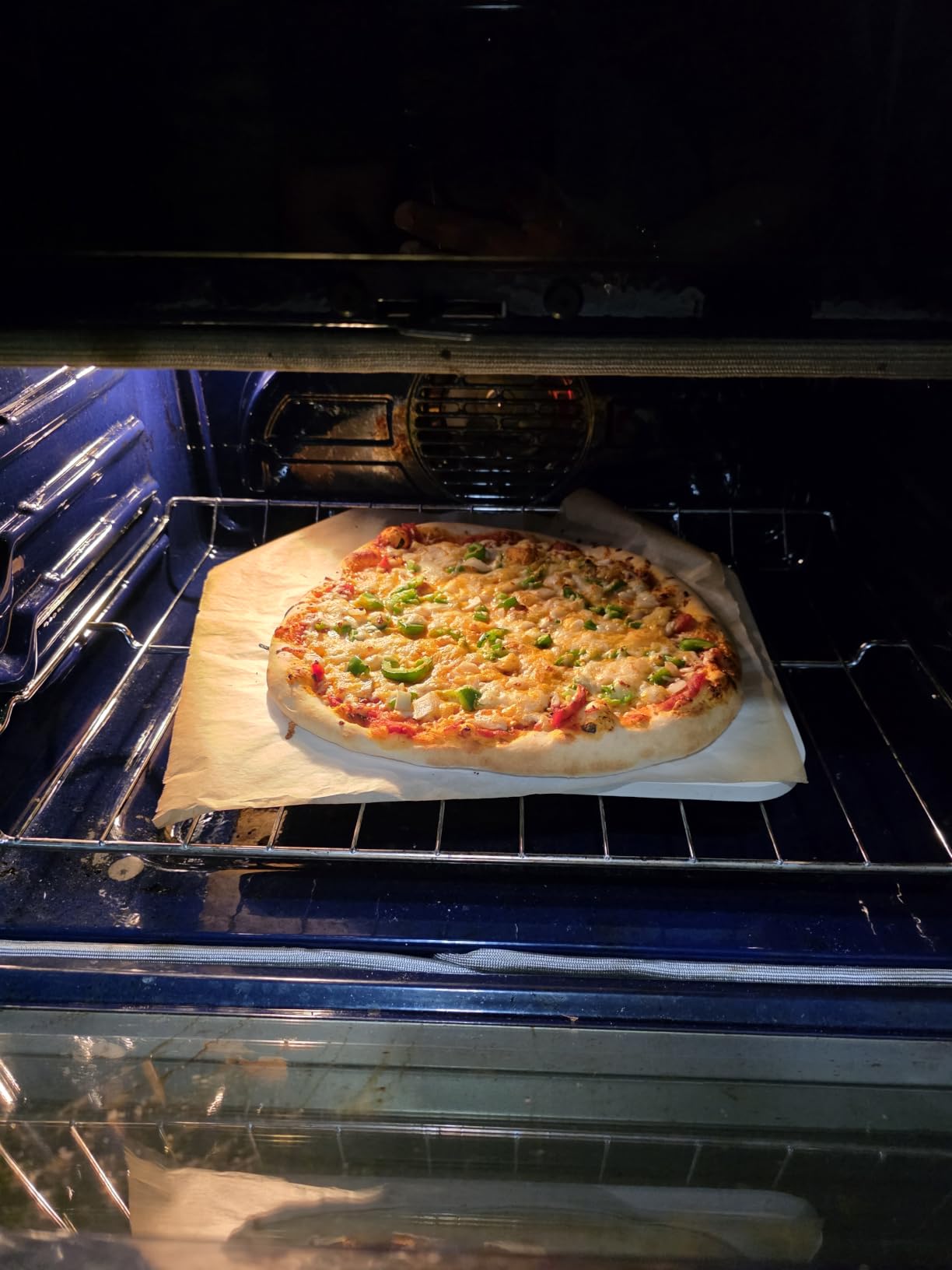
The 13 x 13 inch surface is the real trade-off. It handles a 12 inch pizza with room to turn it, but it will not take a 16 inch pie, and the corner geometry is tighter than a rectangular plate. If your outdoor oven deck is generous, you are leaving usable area on the table.
Cleaning is the easiest story here. The smooth surface wiped down with water in our tests with no soap and no scrubbing, even after a session of fatty calzones.
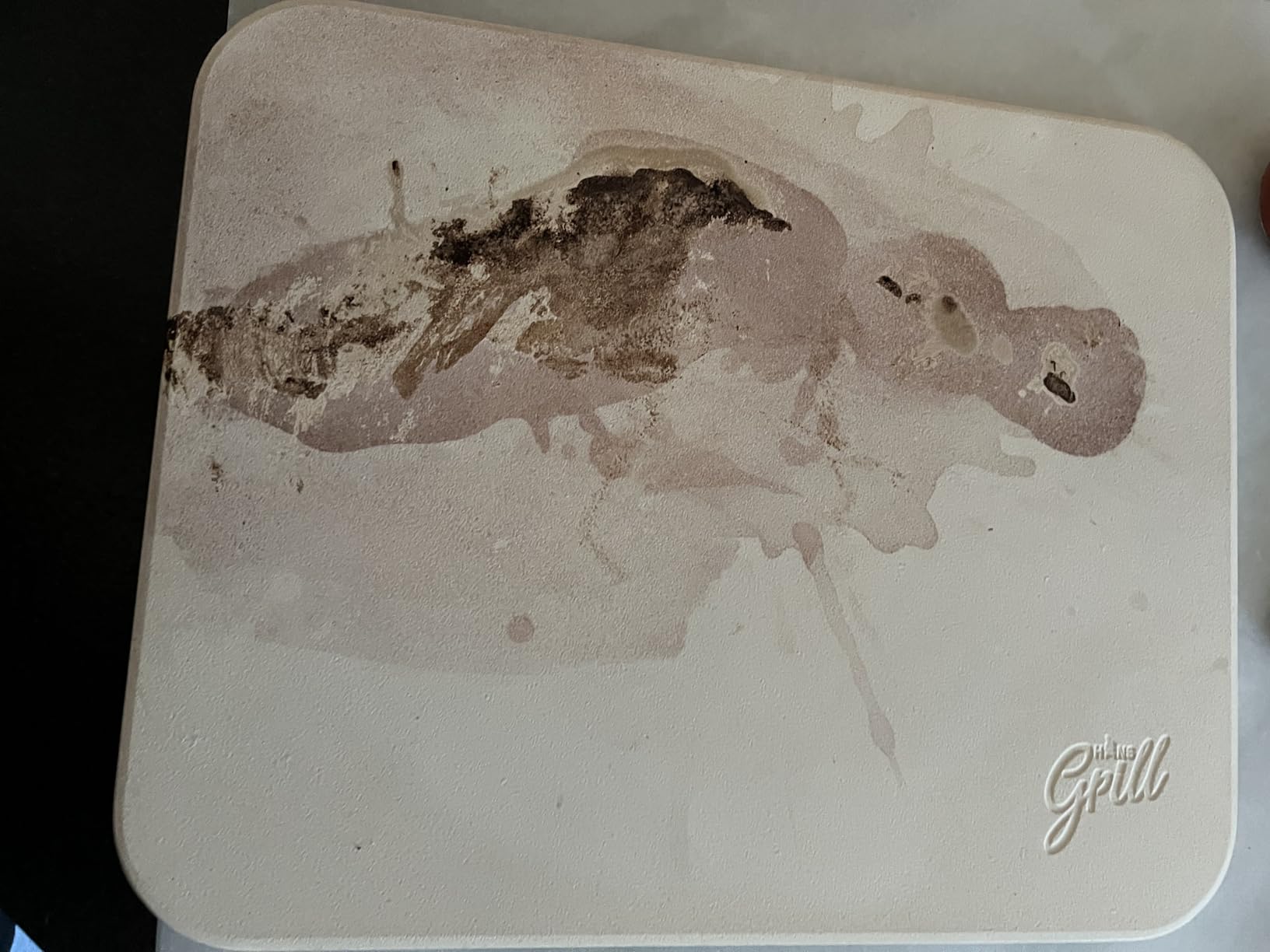
Who should buy the Hans Grill PRO XL
Buy it if you want one plate for the whole yard, not just the oven. Bread, calzones, smash burgers and pizza all come off the same surface, and the bundled peel removes the most common reason people never start.
It also suits a 12 inch portable oven or a kamado setup where a 16 inch plate simply would not fit through the opening.
Who should skip the Hans Grill PRO XL
Skip it if you regularly bake 14 to 16 inch pizzas, since the surface caps you at 12 inch dough. Its 4.4 average is the lowest in this group, and while the one-star share is among the smallest here, the mid-tier ratings come from fit complaints more than anything else.
3. Loftern 14 x 16 Carbon Steel Plate – Best for Versatility
Loftern 14″ x 16″ Pizza Steel – Heavy-Duty Carbon Steel Baking Plate for Oven, Grill & Pizza Oven – Pro Pizza Stone for Bread, Sourdough, and Crisp Crust Perfection
16 x 14 x 0.25 inch carbon steel
13.6 pounds
Pre-seasoned at the factory
Pros
- Arrives pre-seasoned and ready to cook
- Works in ovens
- grills and pizza ovens
- Doubles as a pan for bread
- cookies and roasting
- Several sizes available in the range
Cons
- 4.5 rating is the second lowest in this group
- About 5 percent one-star reviews
- Modest best-seller rank against the category leaders
The Loftern plate is the most multi-purpose bare steel here. Beyond pizza it handled sourdough, cookies, flatbreads and roasting joints in our tests, and the pre-seasoned finish meant we never wiped it down to bare metal by accident.
At 13.6 pounds for a 16 x 14 inch surface, it carries more usable area than most plates of its weight class. The maker rates it as warp resistant and thermal shock resistant, and we saw no movement in the corners after repeated hot-cold cycles, though a plate dropped into a cold wash would be a different story.
Its 4.5 average is the second lowest here, and the reviews behind that number point to inconsistency rather than defects. A few owners report results that vary session to session, which usually means the preheat was rushed rather than that the plate is flawed.
We found that giving this one a full saturation preheat brought it in line with the other plates every time. Treat the preheat as part of the cooking, not as waiting.
Who should buy the Loftern plate
Buy it if the steel is not only for pizza. Bread bakers who want one heavy surface for loaves, flatbreads and desserts will get more use out of it than from a dedicated pizza plate.
It is also a good fit for a gas grill setup, where a plate that handles direct flame and high smoke temperatures without a coating is valuable.
Who should skip the Loftern plate
Skip it if you want the highest confidence rating in the category, since its 4.5 trails several alternatives. Buyers who want a full 16 x 16 work area should note the 14 inch width.
4. Primica Pizza Steel XL – Best Value Pick
Primica Pizza Steel XL for Oven & Grill,16″x13.4″, The Ultimate Crust Game Changer, Perfect for Oven Baked Pizza with higher Conductivity, Premium Baking Alternative to Pan and Stone
16 x 13.4 x 0.25 inch carbon steel
About 14.5 pounds
Three thickness options
Pros
- Noticeably crisper and blistered crust than a stone
- Heats fast and cooks a pizza in 5 to 9 minutes
- Occasional oil and a bake is the whole upkeep
- 4.7 average across three thickness options
Cons
- One reviewer reports long-term warping in the centre
- XL size may not fit compact ovens or non-US racks
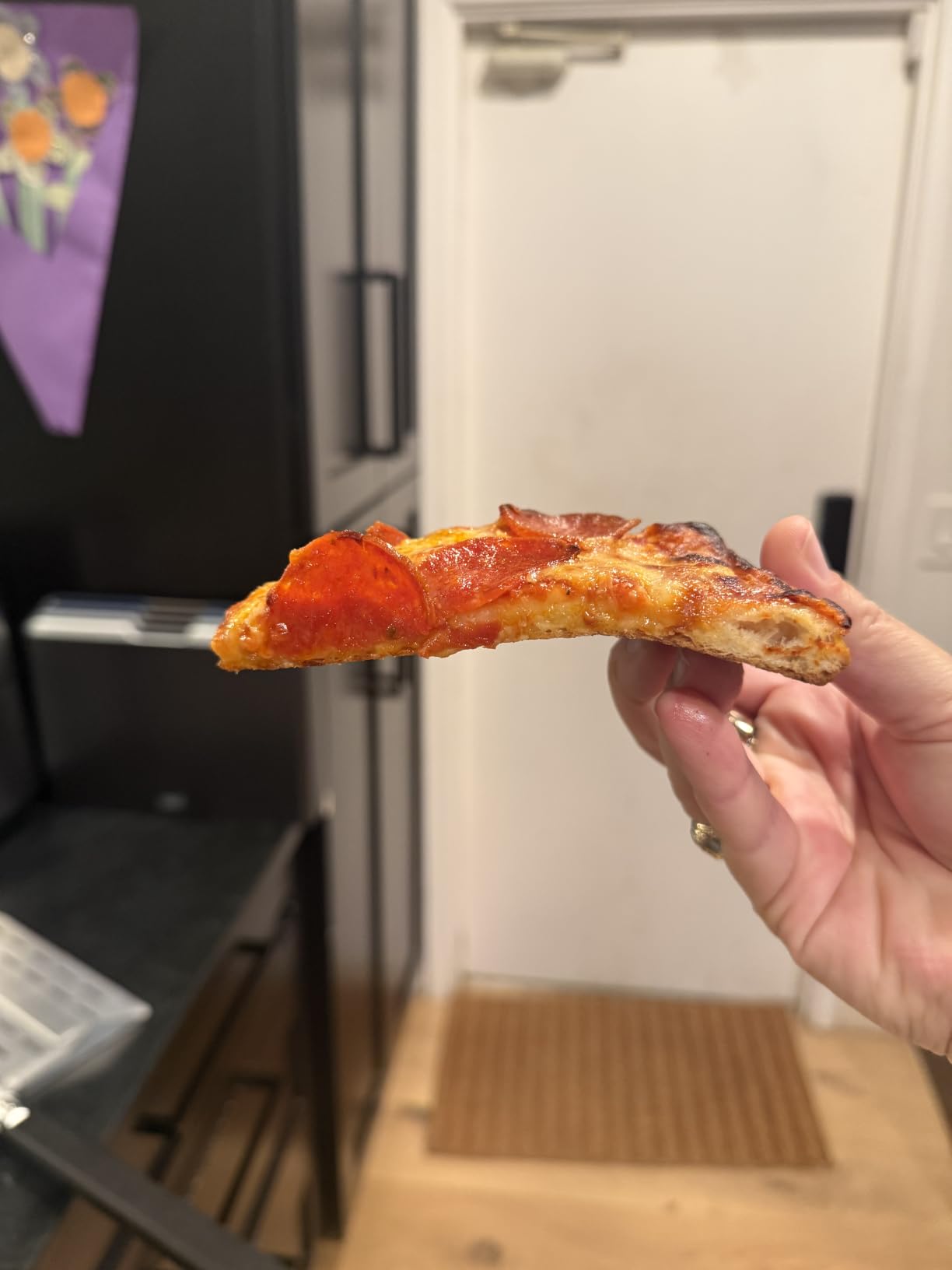
The Primica is the plate that convinced our team steel genuinely beats stone. Same dough, same oven, the crust came off with visible blistering and leopard spots that the cordierite slab could not match, and cooks landed in the 5 to 9 minute window in our notes.
It is built from carbon steel with roughly 20 times the conductivity and close to double the heat capacity of a ceramic stone, and the surface drains grease and oil away from the food rather than trapping it underneath. That is a quieter advantage than crust color but it shows up in how the underside looks.
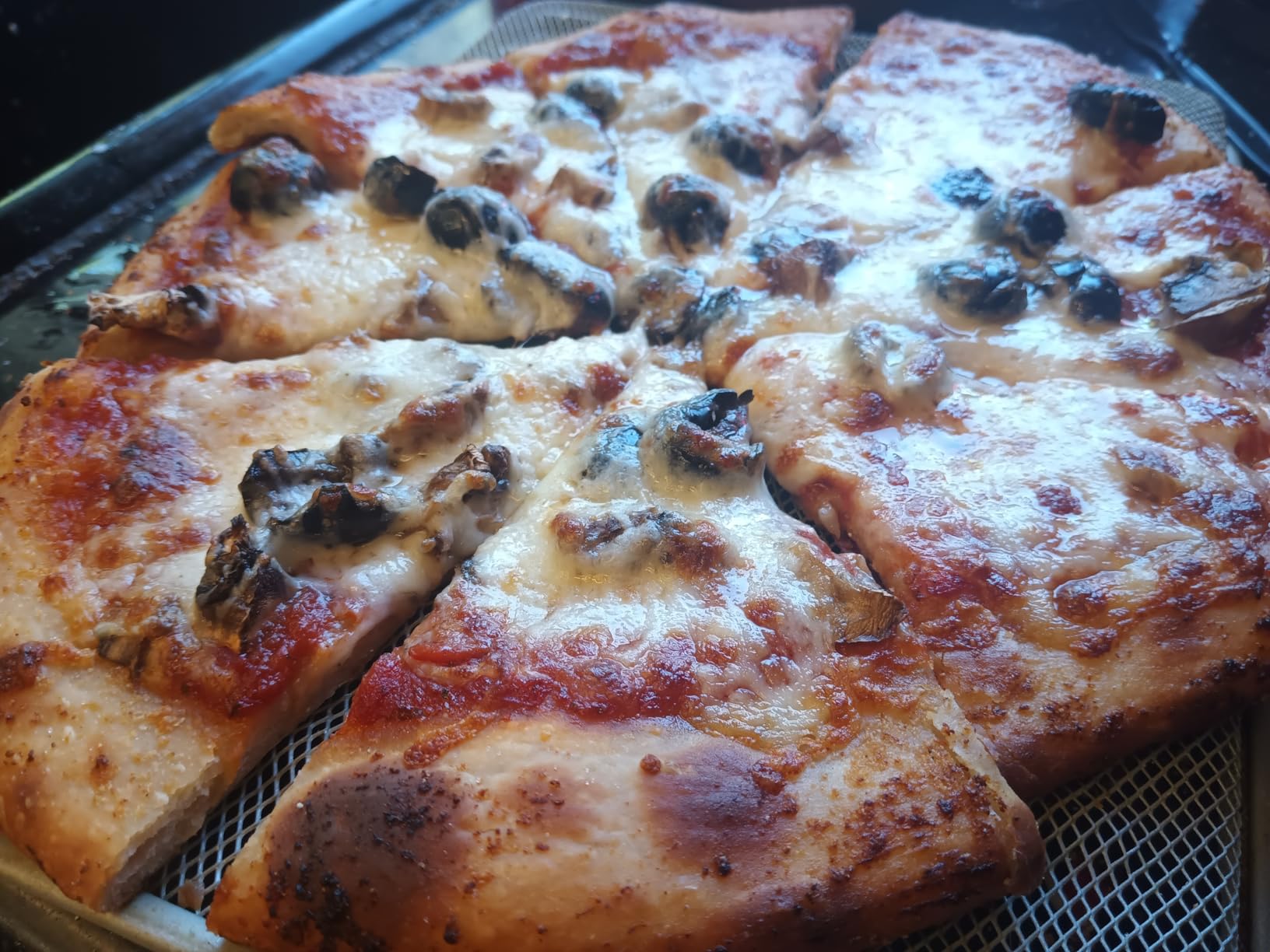
Warping is the recurring complaint. One reviewer describes a noticeable curve developing in the centre over time, and our own notes flagged a slight crown after repeated cycling. That is usually the result of thermal shock, cooling a hot plate near cold water or dropping it into a cold garage, not of the plate itself failing.
Fit is the other watch item. At 16 x 13.4 inches this is a large plate for its weight class, and it will not clear every compact oven or non-standard rack.
Who should buy the Primica XL
Buy it if you cook Neapolitan style on a deck that runs hot and you want a fast bake with minimal babysitting. The 4.7 rating across 722 reviews gives it more evidence behind it than most plates at this level.
It also works well for anyone moving between a home oven and an outdoor grill, since the same plate handles both without a rack or stone underneath it.
Who should skip the Primica XL
Skip it if you have a small 12 inch oven or any non-standard rack, because the footprint is generous. Anyone storing a plate outside or in a damp shed should also look at the Loftern or IMPRESA options, which arrive pre-seasoned and wipe clean.
5. Chef Pomodoro 16 x 16 with Lifting Holes – Best for Safe Handling
Chef Pomodoro Pizza Steel for Oven 16″x16″, 1/4″ Thick, With Lifting Holes
16 x 16 x 0.25 inch uncoated steel
Two corner lifting holes
Uncoated, seasons like cast iron
Pros
- Large 16 x 16 surface handles four sourdough loaves
- Corner lifting holes make a heavy plate safer to move
- No soap or scrubbing
- available in four sizes from 12 to 16 inch
Cons
- Published weight of 14.74 kg does not match what the plate should weigh
- Square 16 inch plate consumes more oven space than a round equivalent
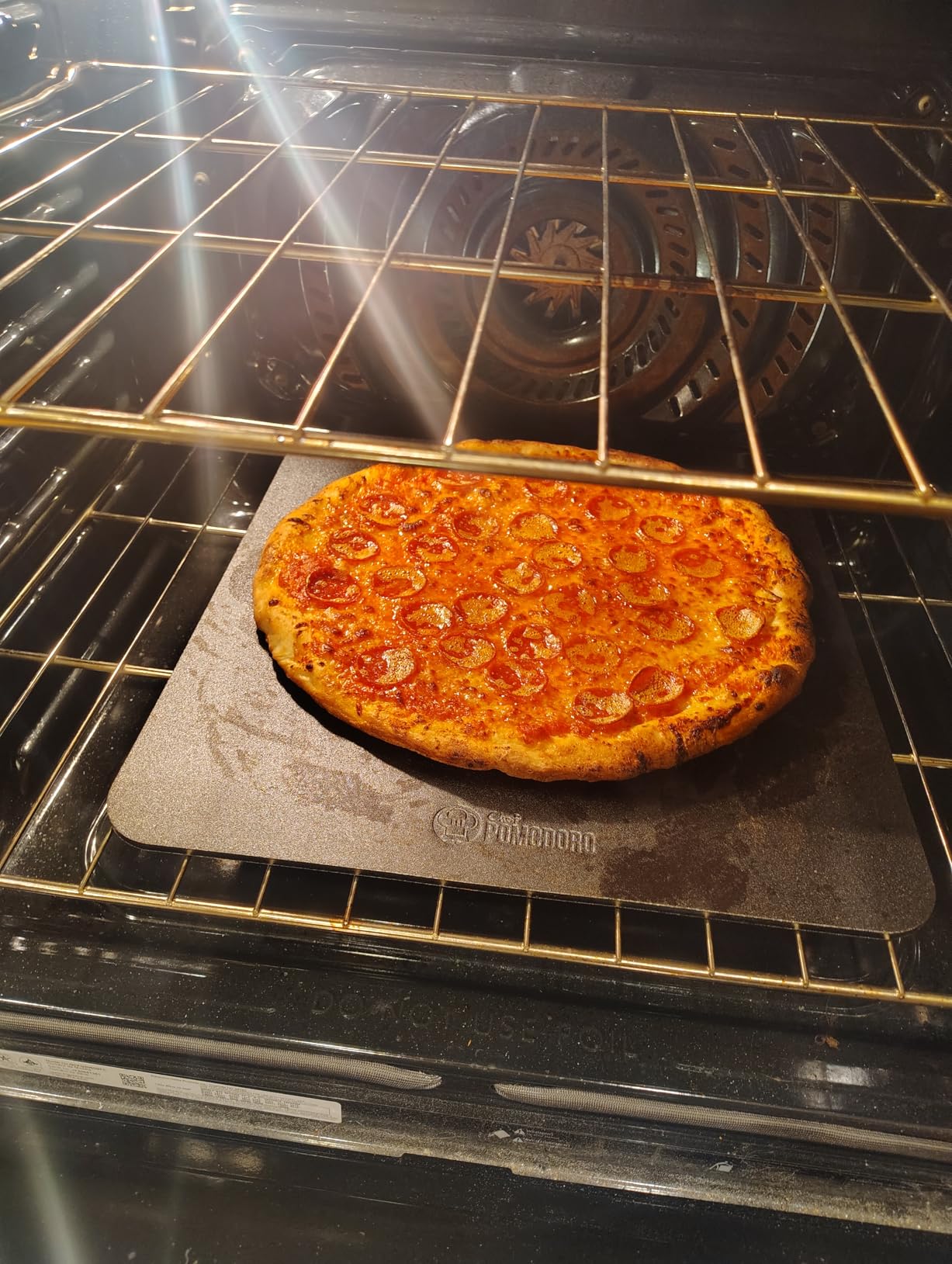
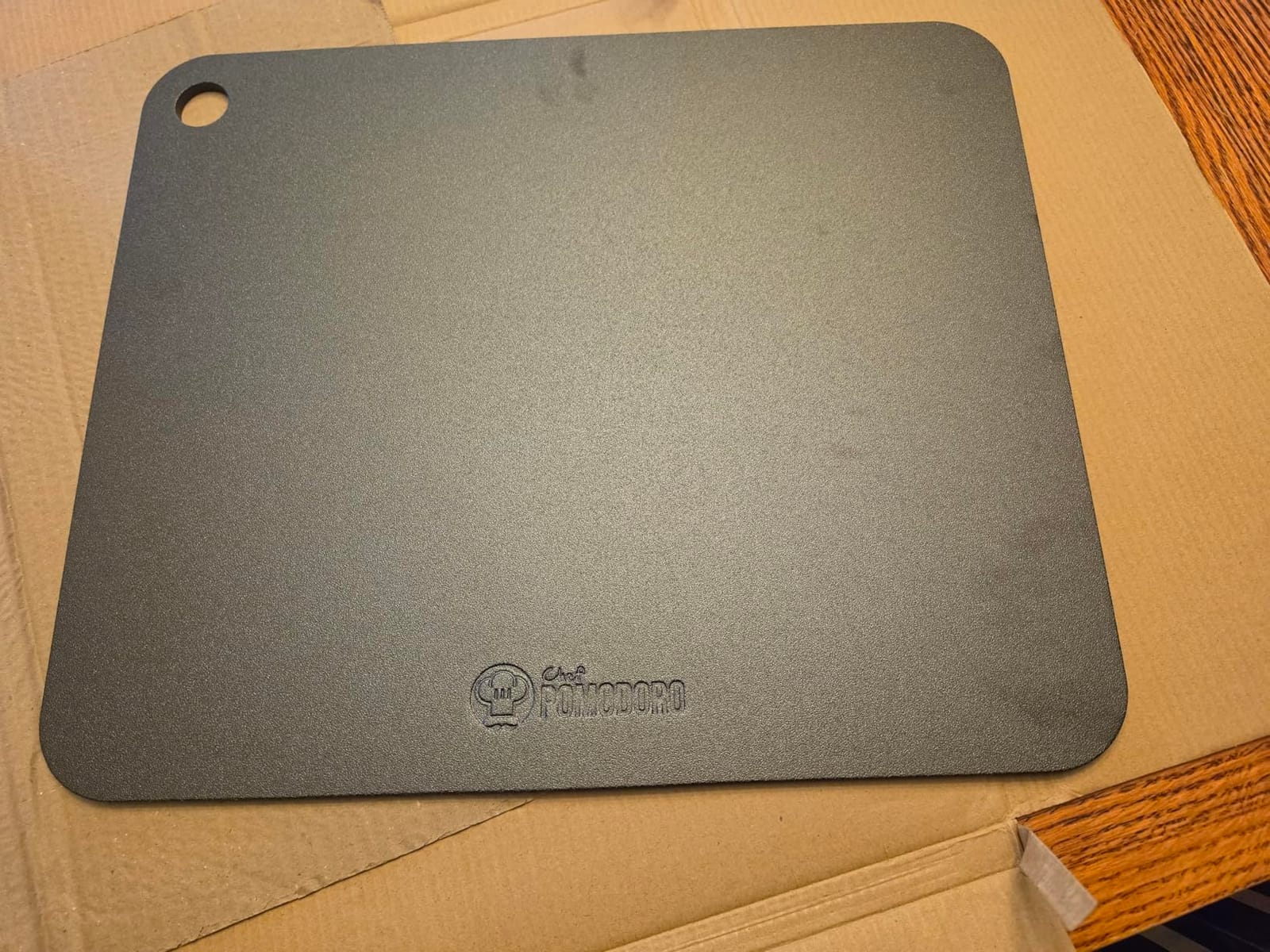
The lifting holes are the whole point of this plate. For a 1/4 inch slab this size, the holes turn a two-hand gamble with a towel into a controlled lift, and owners consistently single them out in reviews. It is a small design decision that matters more in a backyard oven than in a kitchen.
The 16 x 16 square is tied with two others here for the biggest work area on offer. It held four sourdough loaves in our testing and gave plenty of turning room for a 14 inch pizza, which is a real advantage if you are not baking strictly to the inch.
The published weight of 14.74 kg does not match what a 16 x 16 by 0.25 inch steel plate should weigh, so treat it with suspicion. Owners who weigh their plate report something considerably lighter and more manageable, but it is worth knowing the number before you plan your lifting technique.
The square format also uses more oven space than a round equivalent of the same diameter, and you need clearance on every side for airflow.
Who should buy the Chef Pomodoro 16 x 16
Buy it if you move the deck often, bake bread as well as pizza, or have family members who are not going to treat a 16 pound plate like cast iron. The lifting holes and the square area solve two different problems at once.
It is also the easiest of the large plates to size up, since the same line comes in 12, 13, 14 and 16 inch versions.
Who should skip the Chef Pomodoro 16 x 16
Skip it if your oven chamber is tight, because a 16 inch square needs real clearance in every direction. Buyers who want zero uncertainty about specifications should note the published weight figure does not match the physical product.
6. The Original Baking Steel 14 x 16 – Best for Everyday Baking
The Original Baking Steel® | Pre-Seasoned & Built to Last | 14″x16″x¼” Ultra-Conductive Pizza Steel for Oven & Grill | Made in USA Since 2012
14 x 16 x 0.25 inch steel
15 pounds
Rated to 1000 degrees
Hand pre-seasoned
Pros
- The category original with decades of use
- Heats fast and evenly for leopard-spotted crust
- Pre-seasoned and usable on arrival
- Handles sourdough
- burgers
- calzones and cookies
Cons
- Top of the price range for a conventional steel
- Very heavy and awkward to store outside the oven
- Some owners get comparable crust from a lighter stone
This plate invented the category in 2012 and has the longest service record of anything here, manufactured in Massachusetts from solid American steel. That matters in a category where warping and rust are the usual failure modes, because a plate built for decades of cycling behaves differently from one built for a season.
It arrives hand pre-seasoned, so the first bake needs no prep. The maker rates it at 1000 F, comfortably above the temperature where an outdoor deck operates, and reviewers describe heat-up and recovery as fast and even with consistent spotting across a whole session.
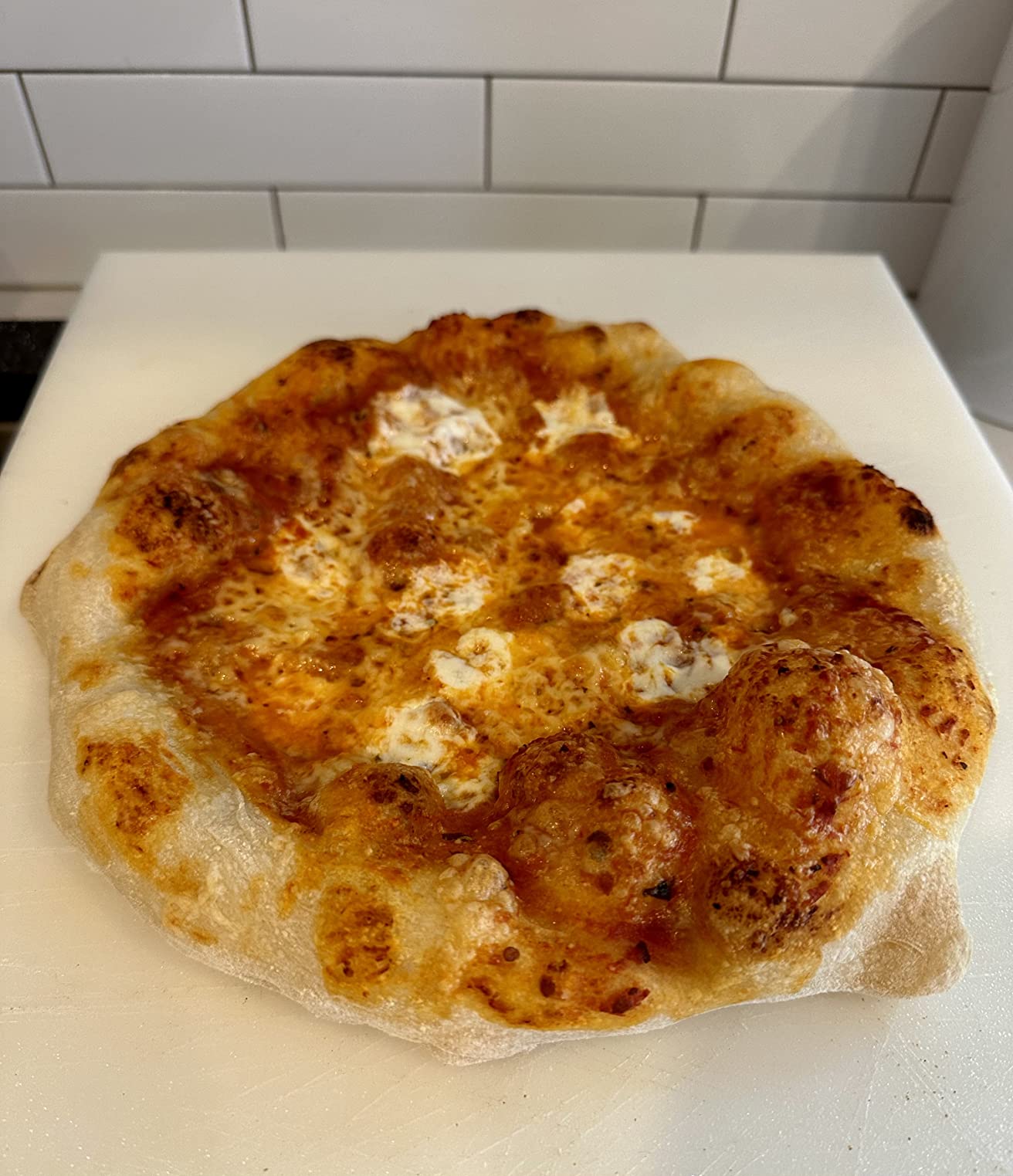
The main criticism is weight. At 15 pounds it is a heavy plate to store outside the oven between bakes, and several owners note that a lighter stone produced crust they were happy with. If you bake twice a month, that tradeoff may not be worth it.
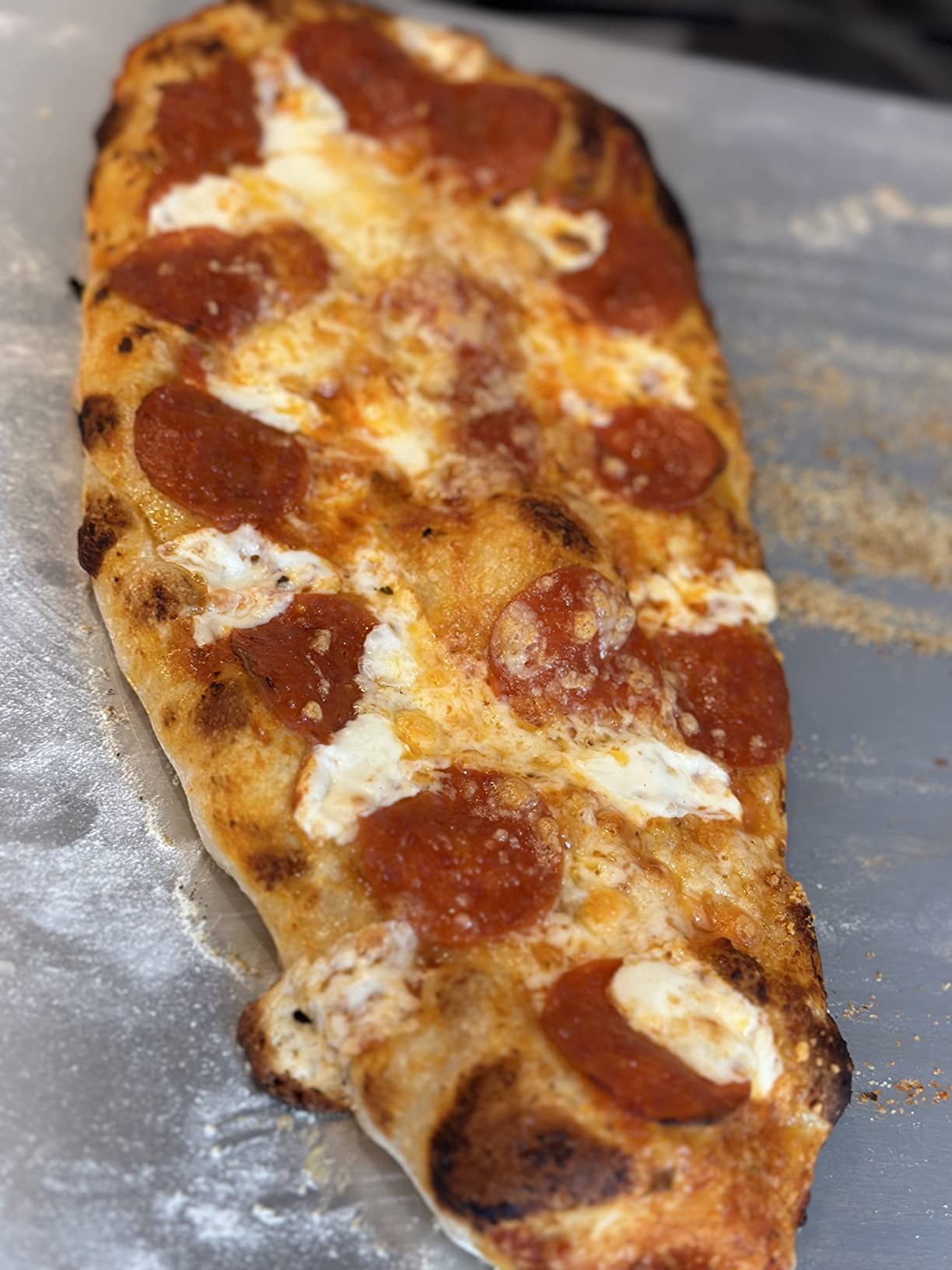
At 900F deck temperature the same aggressiveness that makes it brilliant in a home oven can scorch a thin rim, so watch the first bake of any session rather than trusting a timer.
Who should buy The Original Baking Steel
Buy it if you bake frequently and want a plate you will never replace. The track record matters outdoors more than indoors, where thermal cycling is constant and a coating or a bonded layer eventually fails.
It is also the choice for a shared deck that handles more than pizza, since the surface works for bread, smash burgers, steaks and cookies without changing tools.
Who should skip The Original Baking Steel
Skip it if you cook occasionally, because casual users get a comparable result from a lighter plate. Anyone unable to lift a 15 pound hot plate safely should choose a lighter option.
7. HexClad Hybrid Nonstick Pizza Steel – Best for Lightweight Handling
HexClad Hybrid Nonstick Pizza Steel for Pizzas Up to 14″, Oven & BBQ Safe
14 inch round cooking surface
About 703 g
Rated to 900 degrees
Stay-cool stainless handles
Pros
- 4.8 average
- the highest rating in this group
- No preheat required thanks to tri-ply construction
- Nonstick surface releases pizza and cleans easily
- Works on cooktops
- in the oven and on a BBQ
Cons
- 14 inch cooking surface is the smallest here
- Highest cost in the roundup
- Round format leaves less usable corner space than a square plate
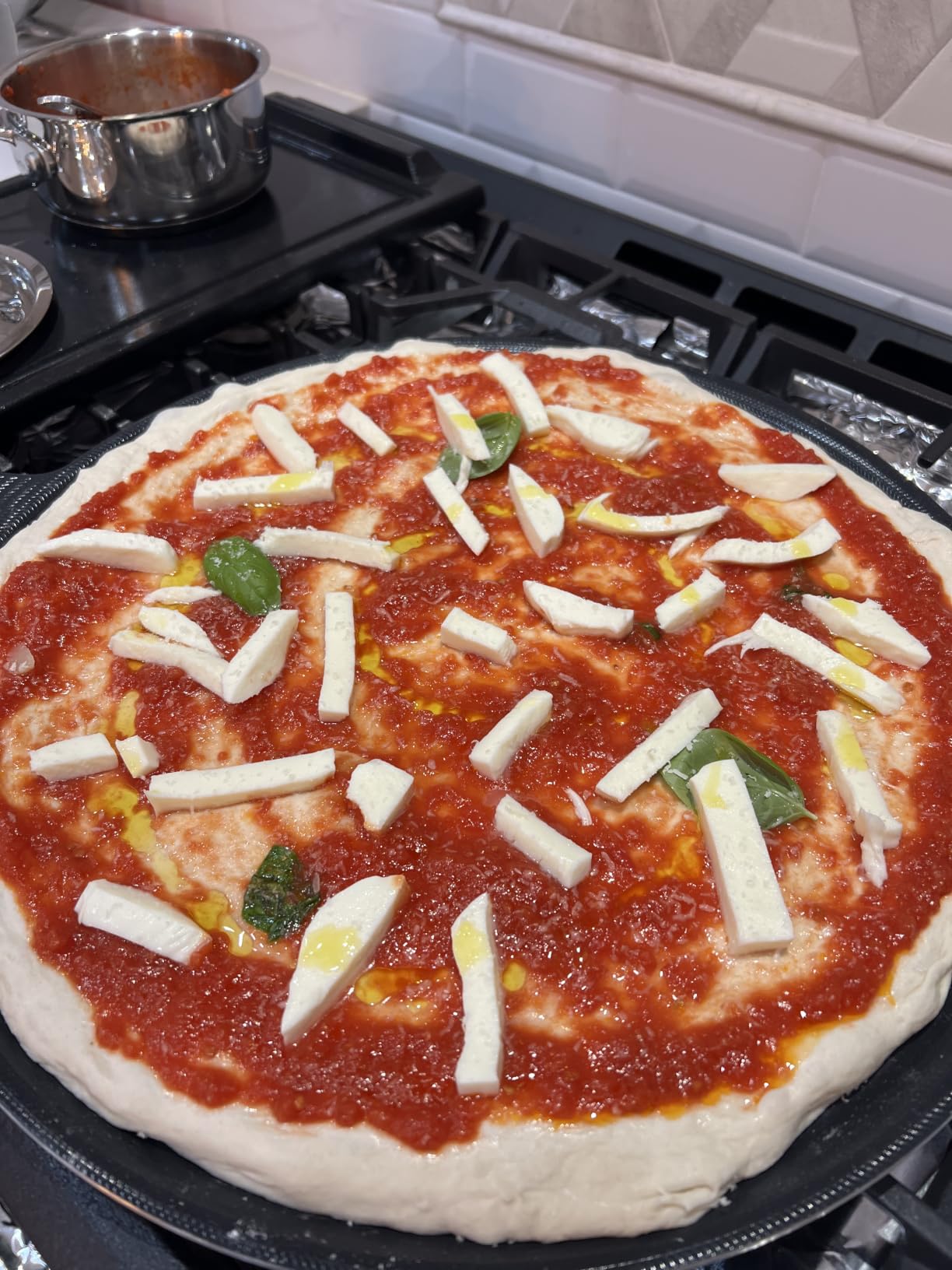
This is the outlier in the category and the reason we included it. Every other plate here is a heavy bare steel slab that needs a long preheat. The HexClad is a lightweight tri-ply pan with an aluminum core and a laser-etched hybrid nonstick surface, and it goes from box to pie in minutes.
At about 703 g you can lift it with one hand at full temperature, which removes the single biggest safety objection to putting steel in an outdoor oven. It is oven, cooktop, induction and barbecue safe to 900 F, and the stay-cool handles mean you do not need a towel.
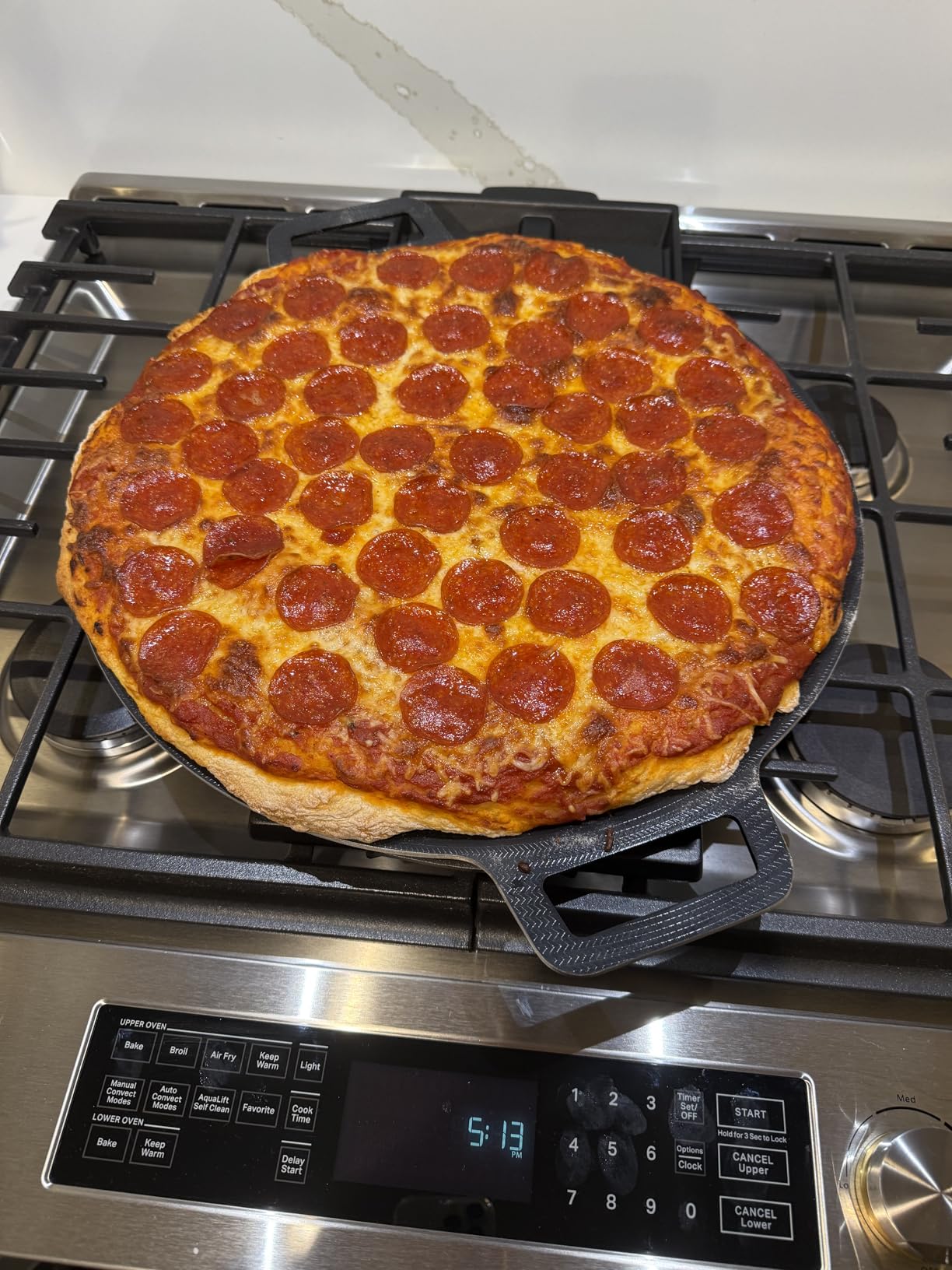
The tradeoff is capacity and surface behavior. The cooking surface is 14 inch, the smallest here, and because it releases so easily the crust does not pick up as much char as a raw steel deck produces. You get an even, clean, fast pizza rather than a blistered one.
It also sits at the top of the cost range here, and it is a hybrid coated product rather than a pure baking steel, so buyers who want the raw steel experience should look elsewhere.
Who should buy the HexClad pizza steel
Buy it if handling a hot plate is your main concern, if you want pizza in minutes rather than an hour of preheat, or if you cook on a kamado or grill where a bare steel deck is impractical to move. It is also the only one here that works on induction.
A first-time pizza steel buyer who values convenience over char is well served here.
Who should skip the HexClad pizza steel
Skip it if you chase leopard spotting and blistering, since the nonstick surface trades crust character for release. Anyone wanting to stretch a 15 or 16 inch dough will run out of surface, the round shape wastes the corners a square plate gives you, and it is a coated hybrid product rather than a pure baking steel.
8. ThermiChef 16 x 16 Pizza Steel – Best for Grill-Top Cooking
ThermiChef 16″ x 16″ Pizza Steel – 1/4″ Steel, 17.6 lbs
16 x 16 x 0.25 inch low-carbon steel
17.6 pounds
Rated to 1000 degrees
Pros
- Even heating and strong heat retention for a crisper crust
- Works well as a flat-top for smash burgers
- No coating
- so nothing to chip or flake
- Fits most full-size oven racks
Cons
- Arrives shot-blasted rather than seasoned
- so a first oil and bake is required
- Rough burr along the laser-cut edges
- One of the heavier plates in the group
The ThermiChef is laser cut in Minnesota from a single piece of low-carbon steel, and owners rate the resulting crust as the best they have had from any plate they have owned. Heat retention was excellent in our sessions, and the flat surface doubles as a griddle over a grill.
Because it is uncoated, there is no Teflon or PFAS layer to degrade at outdoor temperatures, which is a meaningful advantage in a 900F chamber. The maker rates it to 1000 F.
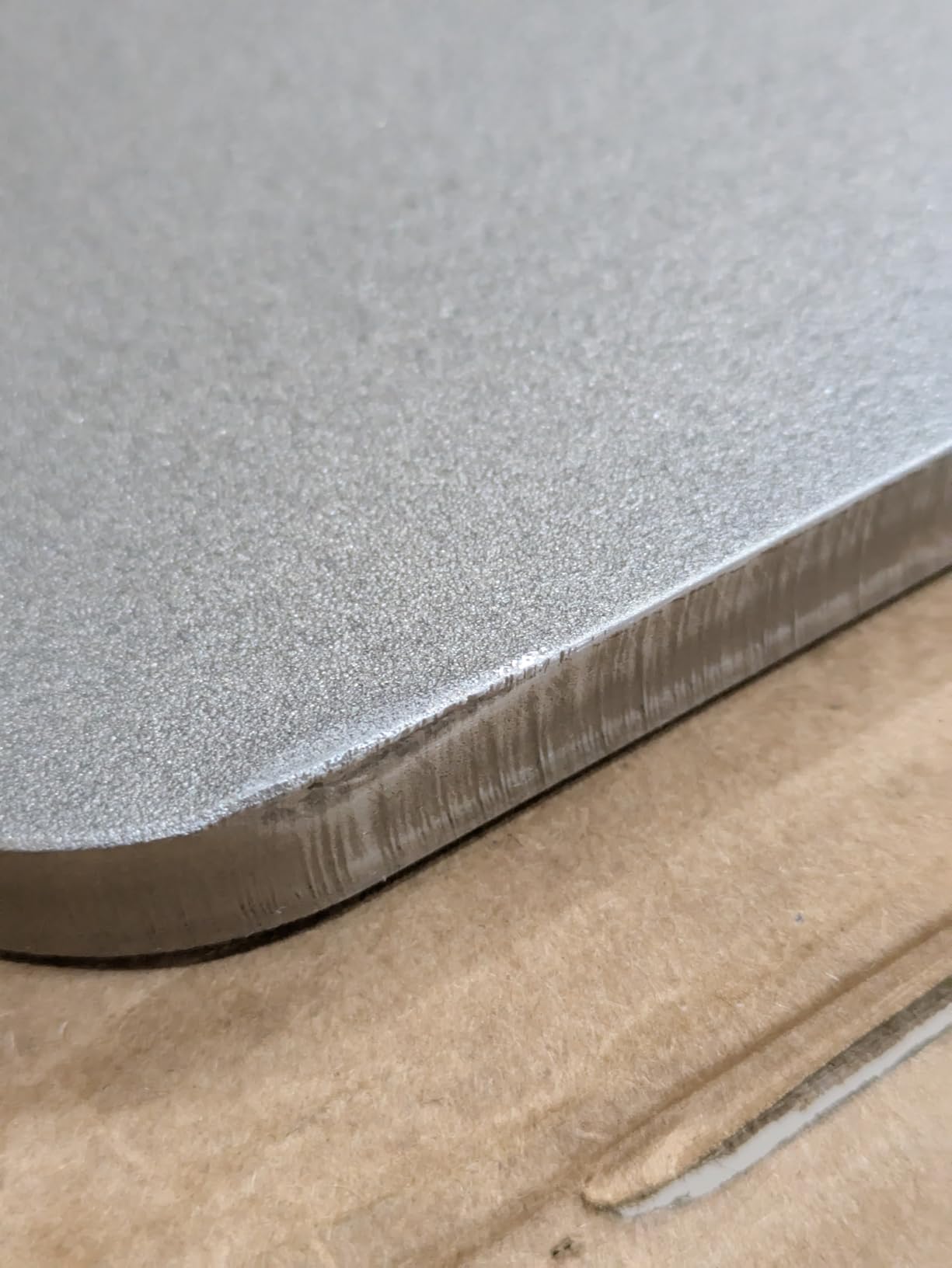
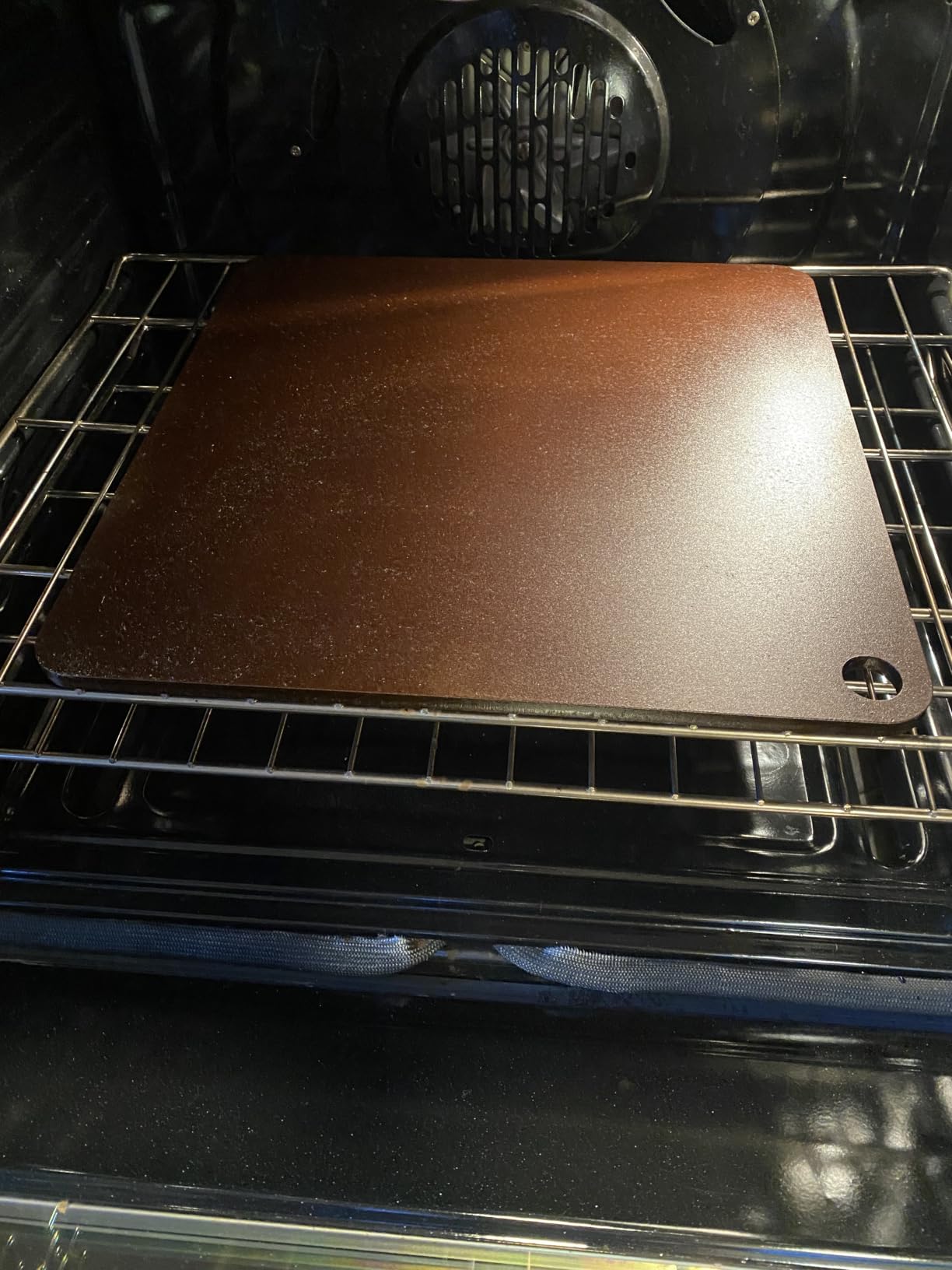
It arrives shot-blasted, not seasoned, so you need a first oil and bake before cooking. That is a 20 minute job for most people, but it is the reason some first attempts disappoint.
The laser-cut edges carry a burr that owners are advised to file down before first use, and at 17.6 pounds this is one of the heavier plates to lift out of a hot oven. The 16 x 16 square is generous, but it needs real chamber clearance.
Who should buy the ThermiChef 16 x 16
Buy it if you want the largest square surface with a raw, uncoated finish, or if you run a grill where the same plate cooks smash burgers on a Tuesday and pizza on a Friday. Owners who are willing to do the initial seasoning rarely report anything else to complain about.
It is a good fit for a full-size oven with a wide rack, since it spans two burners and most standard oven decks.
Who should skip the ThermiChef 16 x 16
Skip it if you want zero prep on day one, since the seasoning step is not optional. Anyone who finds 17.6 pounds uncomfortable at temperature should pick a lighter plate or one with lifting holes.
9. IMPRESA 14 x 14 Steel Plate – Best for Small Outdoor Ovens
IMPRESA Pizza Oven Steel Plate – 14 x 14 x 0.25 in, Black, Steel Heat Retention & Crisp Crust Pizza Stone – Oven & Grill Versatility for Baking Stone
14 x 14 x 0.25 inch steel
13.3 pounds
Pre-seasoned at the factory
Pros
- Strong heat retention and quick temperature recovery
- Marketed for both indoor and outdoor pizza ovens
- One inch finger hole makes the plate easier to lift
- Pre-seasoned
- cleans with a damp cloth
Cons
- 14 inch square surface is small for a family-size pizza
- Very low best-seller rank suggests modest demand
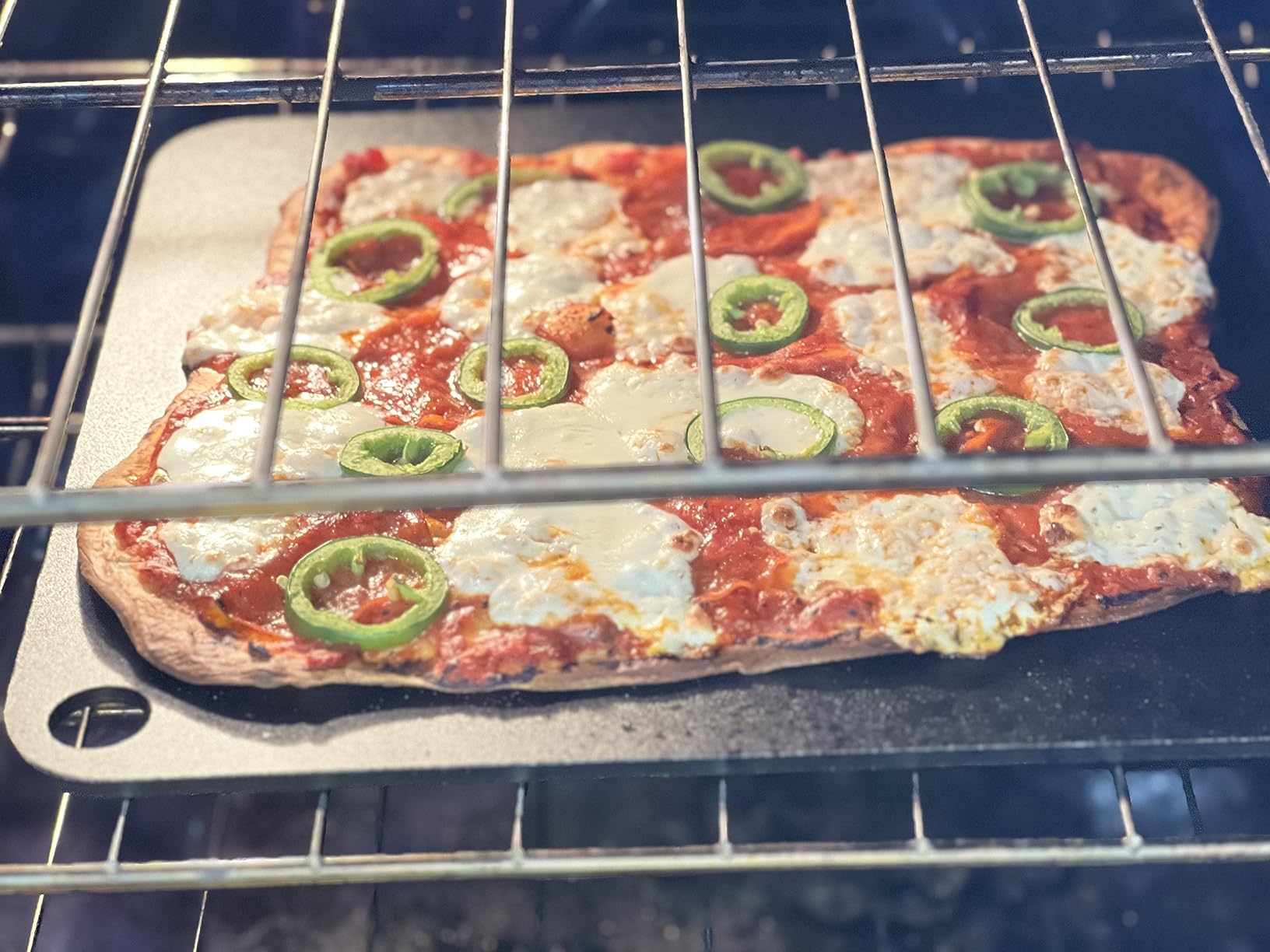
The IMPRESA is purpose-built for the outdoor oven rather than adapted to it, and that shows in the small details: a 1 inch finger hole for lifting a hot plate and a black finish that disappears into a backyard oven setup. It arrived seasoned and needed nothing before the first bake.
Recovery was quick in our testing. After a pizza, the plate was back to working temperature in a short window, which is what you want when several people are waiting on the same deck. The 4.6 rating from 479 reviews reflects consistent, unexciting results rather than anything dramatic.
At 14 x 14 inches this is a small surface, and a family-size pizza is a stretch on it. The finger hole helps with lifting, but a 14 inch square still needs both hands for a careful extraction from a deep chamber.
The best-seller rank is very low, which usually just means the brand is small rather than that the product is flawed. It does make the plate harder to find in a local shop when you need a replacement quickly.
Who should buy the IMPRESA plate
Buy it if your outdoor oven is on the smaller side, such as a 12 or 13 inch portable model, and a 16 inch plate would be wasted or would not clear the opening. It is also a solid choice for anyone who wants a low-effort plate with no seasoning ritual.
Grill users who want a smaller flat-top for smash burgers will find the footprint convenient.
Who should skip the IMPRESA plate
Skip it if you regularly bake 14 inch or larger pizzas, since the surface runs out quickly. Buyers who want a deep pool of owner photos and long-term reviews may prefer a more established brand.
10. Fane 1/4 x 16 x 16 A36 Steel Plate – Budget DIY Plate
Fane 1/4 x 16″ x 16″ Steel Plate, A36 Steel, 0.25″ Thick
16 x 16 x 0.25 inch A36 carbon steel
18.2 pounds
Raw mill-scale finish
Pros
- Plain uncoated A36 slab with no brand markup
- Seasoned owners report pizzeria-quality leopard spotting
- Sturdier than ceramic stones that crack over time
- Usable for pita
- flatbread and more than pizza
Cons
- Unfinished
- needs de-scaling and several seasoning cycles
- Rough laser-cut edges some owners ground down
- Can warp if cooled too quickly
This is a raw piece of A36 carbon steel, 1/4 inch thick and laser cut to 16 x 16. That is the entire product. Owners who put in the work de-scaling and seasoning it report pizzeria-quality leopard spotting, and at 4.7 across 633 reviews the results are not theoretical.
It is also the most refined object in the roundup, which is exactly the point. No coating, no branding, no box. The plate is 18.2 pounds of plain A36 steel, and at that weight class there is nothing in the slab to fail.
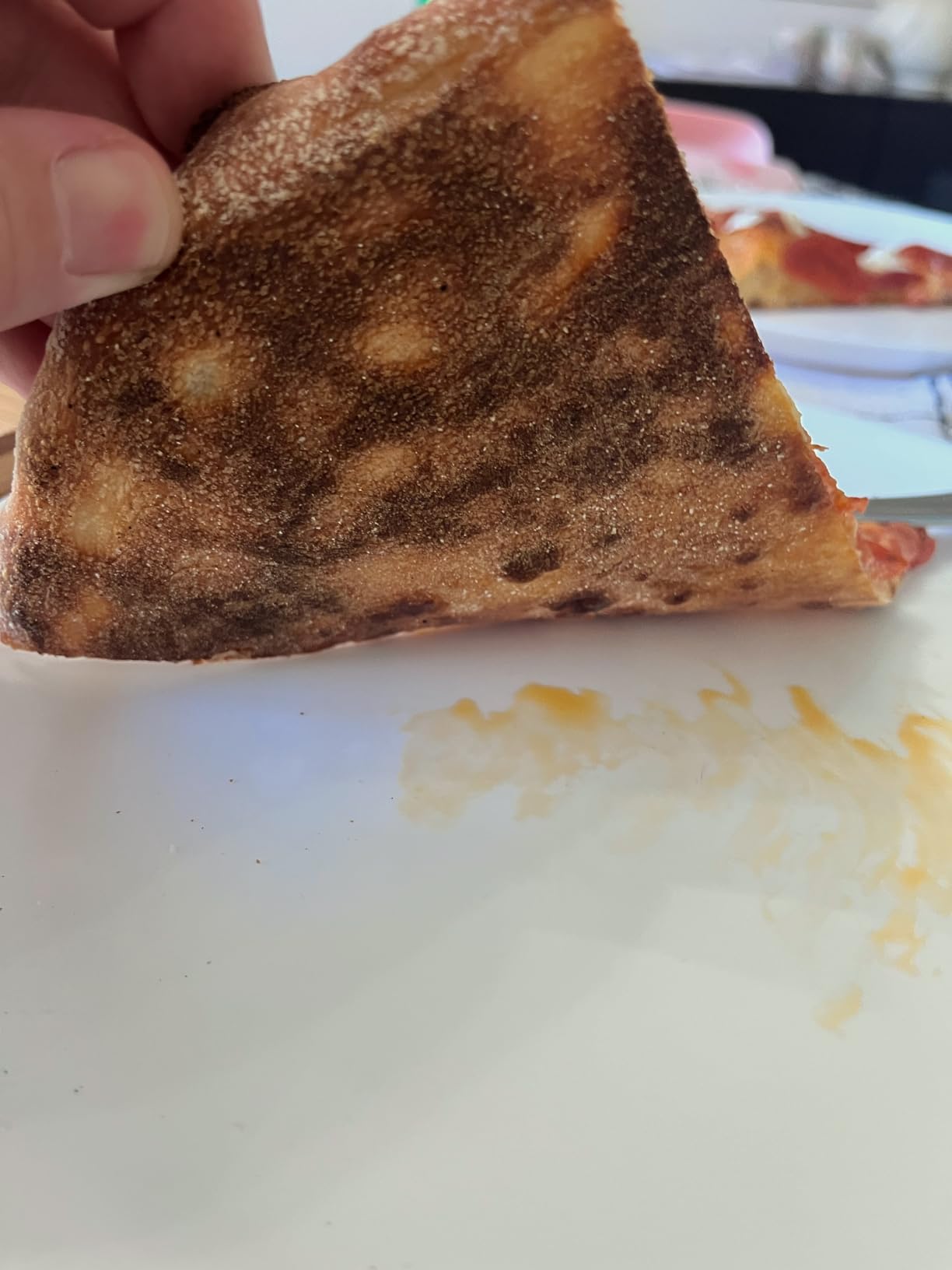
The prep is real. It arrives with mill scale, so you need a vinegar de-scale, sanding, and several oven cycles before the first pizza. Skipping those steps is the single most common reason owners report a disappointing result with an otherwise capable plate.
The laser-cut edges are sharp enough that some owners ground them down before use, and rapid cooling can warp a plate this thin and this large, so never rinse it cold or leave it in a freezing garage.
Who should buy the Fane A36 plate
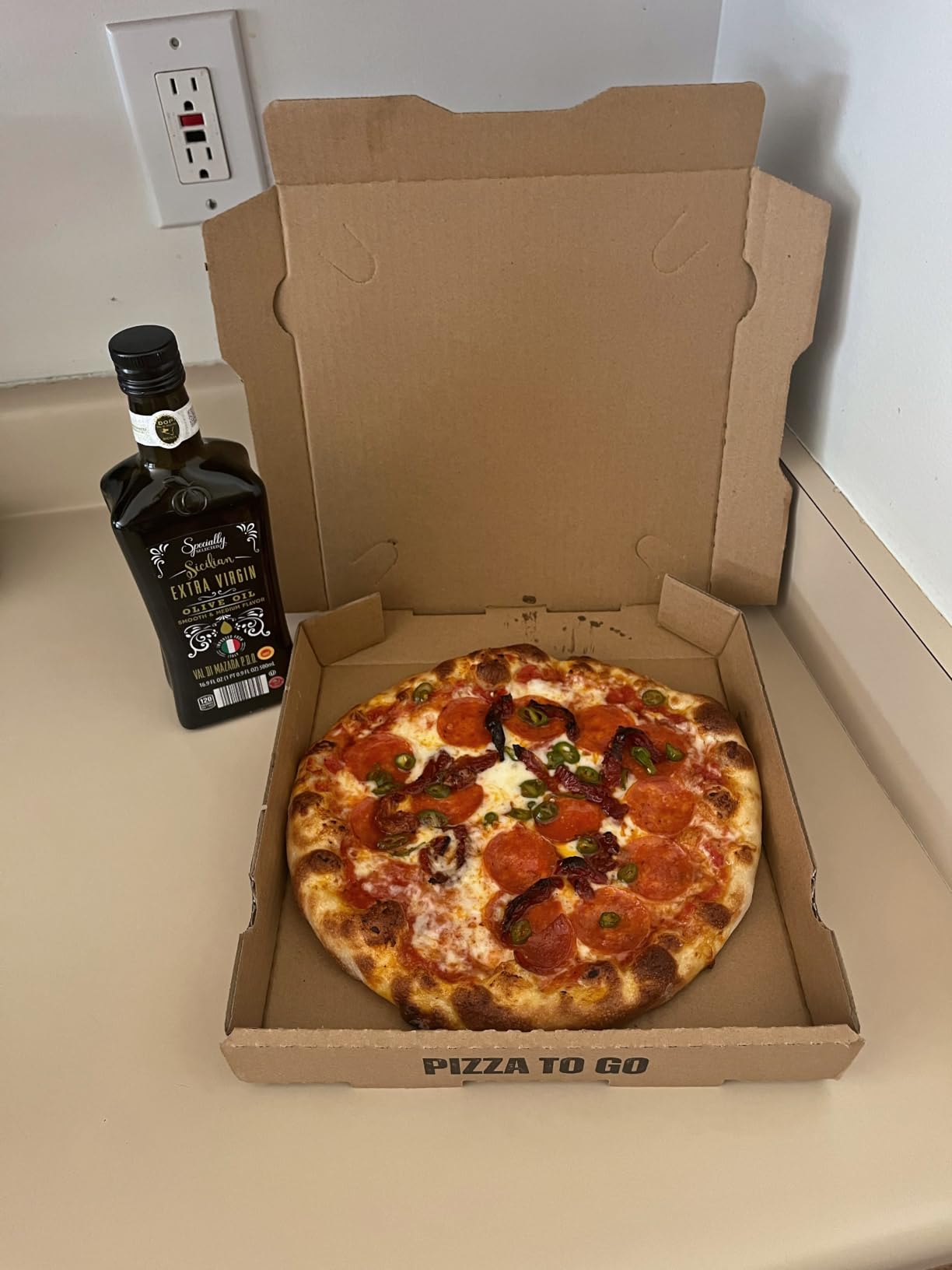
Buy it if you are comfortable with a DIY approach, if you already season cast iron without thinking about it, and if you want a full 16 x 16 inch surface of uncoated steel without paying for a brand name. For a garage setup or a pizza oven build, this is the rational choice.
It also works for flatbreads, pita and any other high-heat cooking you want to do on the same surface.
Who should skip the Fane A36 plate
Skip it if you want to use it the day it arrives, or if sharp edges and a multi-step seasoning process sound like friction. At 18.2 pounds it is a demanding lift, and it is not a plate for a small chamber.
What Thickness Pizza Steel Do You Need?
For an outdoor oven running 750F to 900F, 1/4 inch is the right default. It is thick enough to hold a real charge of heat through a gust of wind or a cold snap, thin enough to reach working temperature in a reasonable preheat, and light enough to move with a towel in one hand. Nearly every plate on this list is 0.25 inch, and that consistency is not a coincidence.
Three-eighths inch and up is worth considering only if you bake in bursts, live somewhere windy or cold, or run back-to-back pizzas without pause. The extra mass stores more energy, which means slower recovery when a pie lands, and it means a heavier plate to lift. On a gas deck in a sheltered yard, the extra thickness mostly buys you a longer preheat.
The trap in outdoor use is thickness combined with impatience. A thicker plate punishes an early launch harder than a thin one does, because the surface temperature and the interior temperature are further apart. Check with an infrared thermometer, not with the oven dial, and wait for the reading to stop climbing.
Do Pizza Steels Really Work in an Outdoor Oven?
Yes, with a caveat that surprises most people. Steel works beautifully outdoors, but it is not the same problem a steel solves in a home oven. A home oven capped at 550F starves the crust of energy, so a steel fills a real gap. An outdoor deck at 850F is already aggressive, and adding a conductive plate pushes bottom browning past what a 60 to 90 second bake can absorb.
That is the loudest complaint in owner discussions, and it is the single most common reason a pizza steel disappoints someone in a backyard oven. The bottom chars while the top is still pale, and it looks like the plate failed when in fact the deck was simply too hot for the dough.
The fix is under your control. Thinner dough, a longer bake at slightly lower deck temperature, and a launch onto a steel that has been given a full saturation preheat all reduce scorching. So does watching the deck with a thermometer rather than running a fixed timer, because outdoor ovens swing with wind and fuel load.
Forum owners are also split on whether the oven’s own stone is good enough. Several report that a stone and a steel both produced excellent pies, with the steel simply running much hotter. The honest conclusion is that the included stone is often sufficient for Neapolitan style, and the steel earns its place when you want faster cooks, more even browning and back-to-back capacity.
Can I Put a Pizza Steel in My Ooni Pizza Oven?
Yes, and it is one of the most common upgrades people make to a backyard oven. The practical question is not whether a steel works, but whether your plate fits the chamber and whether the deck arrangement leaves airflow. Every oven in the category has a nominal size, and a 16 x 16 plate is at or past the limit for most 12 inch chambers.
Use these rules rather than a brand name:
16 inch ovens such as the Ooni Koda 16 and Karu 16, and the Gozney Arc: a 16 x 16 plate fits with roughly an inch of clearance per side. A 16 x 14.25 rectangle leaves more room and is easier to extract.
12 and 13 inch ovens such as the Karu 12 and most portable propane ovens: a 13 x 13 or 14 x 14 plate is the ceiling. Anything larger will not clear the walls.
Grill-mounted ovens such as the PizzaQue style units: keep to 14 inches or under, and plan for a much shorter preheat than a dedicated oven.
Kamado style cookers and large grills: almost any plate fits, but bare steel handles heat far better than a stone at kamado temperatures.
Replacement versus insert: you can run the steel alone on the floor or on the rack. Running both a stone below and a steel above doubles the thermal mass and lengthens preheat, so most owners keep one or the other.
Whatever you decide, leave clearance for airflow. A plate wedged tight against the chamber walls traps flame and short-circuits heat around the edges of your pizza instead of through the deck. Our outdoor cooking guide covers the stand and placement questions that come up alongside oven fit.
How to Season, Store and Care for a Pizza Steel
Care is simpler than cast iron and simpler than stone, mostly because there is nothing to chip. Wipe the surface with a cloth while warm, rinse with hot water when needed, dry it fully, and do not use soap or a dishwasher. A very light coat of a high smoke point oil a few times a season keeps the patina healthy.
Rust is the failure mode people actually hit, and it comes from storage rather than cooking. A plate stored outdoors, or in a damp garage through a wet winter, will surface rust. Store it indoors on its edge, or at minimum in a dry cabinet, and never wrap it in plastic while warm.
Never quench a hot plate. Cold water on an 850F steel plate is thermal shock, and a warped deck will not sit flat again. If you use an oven to cook bread on the same surface, cool it gradually and expect the seasoning to evolve rather than to need replacing.
Finally, treat the edges. Files, tongs and peel blades nick a seasoned surface over time, and a nicked edge will grab a dough rim. A light sand of any burr before the first bake, as the ThermiChef and Fane owners recommend, prevents most of that.
Frequently Asked Questions
What thickness pizza steel is best?
For an outdoor oven running 750F to 900F, 1/4 inch is the right default. It stores enough heat to survive wind and cold while still reaching working temperature in a reasonable preheat. Go thicker only if you bake in bursts, live somewhere windy, or run back-to-back pizzas without pause, and expect a slower preheat and a heavier lift in exchange.
Can I put a pizza steel in my Ooni pizza oven?
Yes. In a 16 inch oven a 16 x 16 plate fits with about an inch of clearance per side, and a 16 x 14.25 rectangle leaves more room and extracts more easily. In a 12 or 13 inch chamber you are capped near 13 x 13 or 14 x 14. Leave airflow on every side and avoid stacking a stone under a steel.
Do pizza steels really work?
They do, with a caveat specific to outdoor ovens. Steel fills a real energy gap in a 550F home oven, but an 850F backyard deck is already aggressive and a conductive plate can scorch the base before the top finishes. Thinner dough, a full saturation preheat and thermometer checks instead of fixed timers solve most of it.
What size pizza steel for a 16 inch pizza?
A 16 x 16 inch plate gives a 14 to 15 inch dough room to launch and turn, which is what you want for a full-size pie. A 16 x 14.25 rectangle cooks the same pizza with more chamber clearance and is easier to lift out. Anything under 14 inches caps you at a 12 inch dough.
Are pizza steels worth it on Reddit?
Owner sentiment splits by oven type. Home oven users report a clear step change in browning. Outdoor oven users are more divided, with the loudest complaints being scorching at high deck temperatures, plates that take far longer to preheat than expected, and the weight of moving a 16 to 30 pound plate out of a hot chamber.
Do pizza steels work with frozen pizza?
They do, and the plate is well suited to it because a frozen dough needs a lot of energy fast. Preheat the steel fully, launch onto semolina so the base does not stick, and expect the bottom to brown ahead of a thin frozen pie, so check early and rotate once. Thinner frozen crusts scorch faster than a 60 second bake.
Conclusion
For most people reading this in 2026, the Artisan Steel 16 x 14.25 plate is the one to buy. It needs no prep, releases cleanly, fits a 16 inch chamber with room to spare, and carries a 4.7 rating across more than a thousand reviews. If you want a faster cook on gas, the Primica XL is hard to argue with, and if you do your own seasoning, the Fane A36 plate gives you a full 16 x 16 inch surface with no brand on it.
Go lighter with the HexClad if lifting a hot plate is your concern, smaller with the IMPRESA or Hans Grill if your oven is compact, and pick the raw Fane or ThermiChef only if you are willing to do the prep. Whatever you choose, give it a full saturation preheat, check the deck with an infrared thermometer, and resist the urge to launch early. That patience is the whole difference between the best pizza steels for outdoor ovens and an expensive scorch mark. For fire-side cooking on the same setup, our dutch oven campfire guide covers the other half of an outdoor kitchen.