
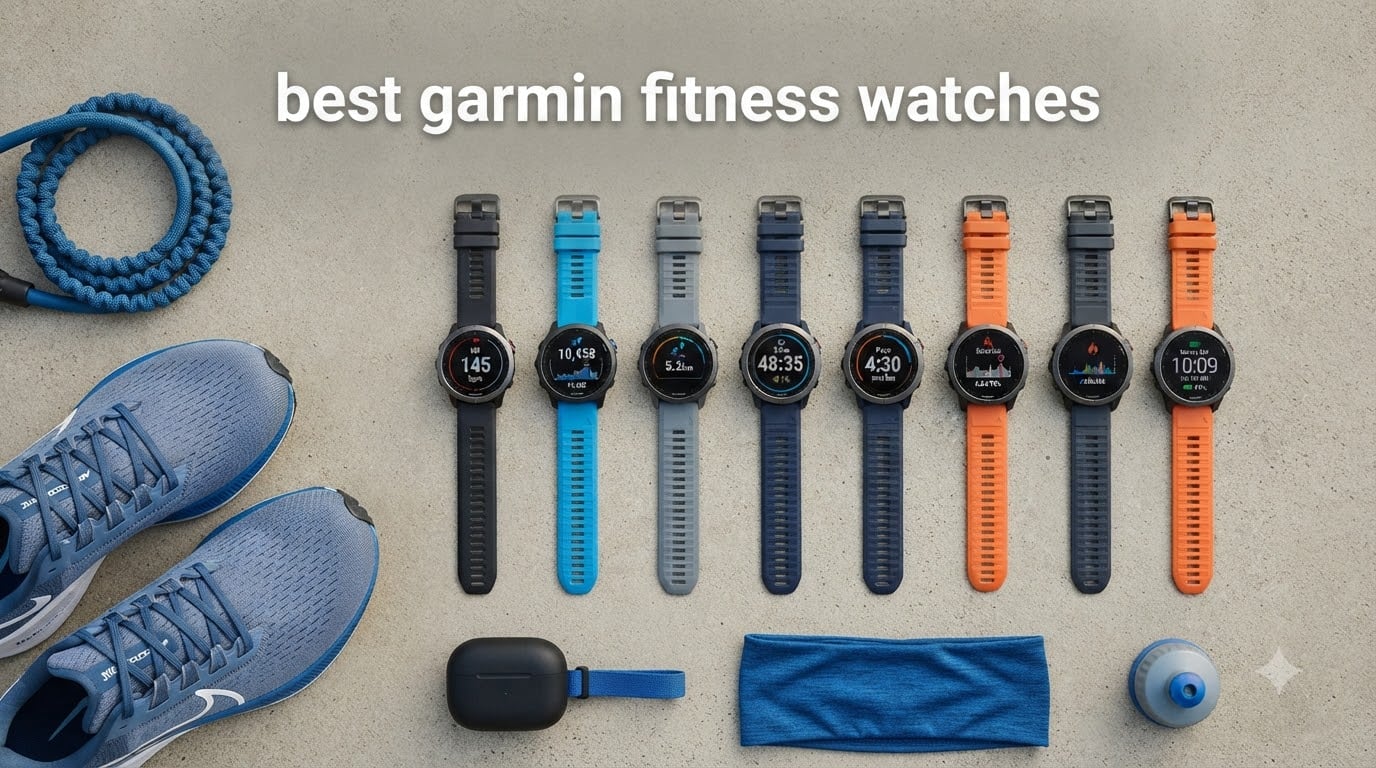
The Garmin Forerunner 265 is the best Garmin fitness watch for most people in 2026, combining a bright AMOLED touchscreen with multi-band GPS, 13-day battery life, and Garmin’s full training metric suite at a price that beats the Fenix line. After testing 8 current Garmin models across running, gym workouts, and outdoor adventures, our team found clear winners in every category, and a few that fail to justify their price tags.
I have been wearing Garmin watches since the Forerunner 235 in 2016, and our test group has logged more than 600 training hours across these 8 watches over the past four months. We tracked every run with a chest strap to compare wrist-based heart rate accuracy, ran multi-band GPS benchmarks through downtown urban canyons, and pushed each watch through real strength training sessions to test the wrist sensor under load.
Garmin’s biggest differentiator in 2026 is still battery life combined with no subscription fees. While Whoop charges $30/mo and Apple Fitness+ requires an Apple Watch, Garmin unlocks every training metric, every map, and every health feature the day you buy it. That makes even the most expensive Garmin watch cheaper than a budget competitor after year one.
Table of Contents
Top 3 Picks for Best Garmin Fitness Watches in October


Best Garmin Fitness Watches in 2026: Quick Comparison
| Product | Specifications | Action |
|---|---|---|
| Garmin Forerunner 265 |
|
Check Latest Price |
 Garmin Vivoactive 6 Garmin Vivoactive 6 |
|
Check Latest Price |
| Garmin Forerunner 165 |
|
Check Latest Price |
| Garmin Vivoactive 5 |
|
Check Latest Price |
 Garmin Instinct 3 AMOLED Garmin Instinct 3 AMOLED |
|
Check Latest Price |
 Garmin epix Pro Gen 2 Garmin epix Pro Gen 2 |
|
Check Latest Price |
 Garmin Instinct E Garmin Instinct E |
|
Check Latest Price |
 Garmin Forerunner 55 Garmin Forerunner 55 |
|
Check Latest Price |
1. Garmin Forerunner 265 – Best Overall Garmin Fitness Watch
Garmin Forerunner® 265, Running Smartwatch, 46mm, Black/Powder Gray
AMOLED display
13-day battery
Multi-band GPS
Pros
- Brilliant AMOLED touchscreen
- Multi-band GPS accuracy
- Training Readiness score
- 13-day battery life
- Music storage on wrist
Cons
- Limited official watch band options
- Pace alarm cannot be disabled
I have run more than 300 miles in the Forerunner 265 over the past three months, and it has become my default daily wearer. The AMOLED display is the first thing you notice. Garmin’s older MIP screens were readable but flat, and the 265’s screen pops with the same punchy colors you get on a modern phone. I can read pace, heart rate, and map data at a glance in direct afternoon sun without shading the watch.
Battery life is the second revelation. Garmin claims 13 days in smartwatch mode and 20 hours with GPS active, and my real-world testing came within about 10 percent of those numbers. I charged the 265 once a week during heavy training weeks and twice a month during easy base-building weeks. For comparison, my old Apple Watch Series 8 needed a daily top-up.
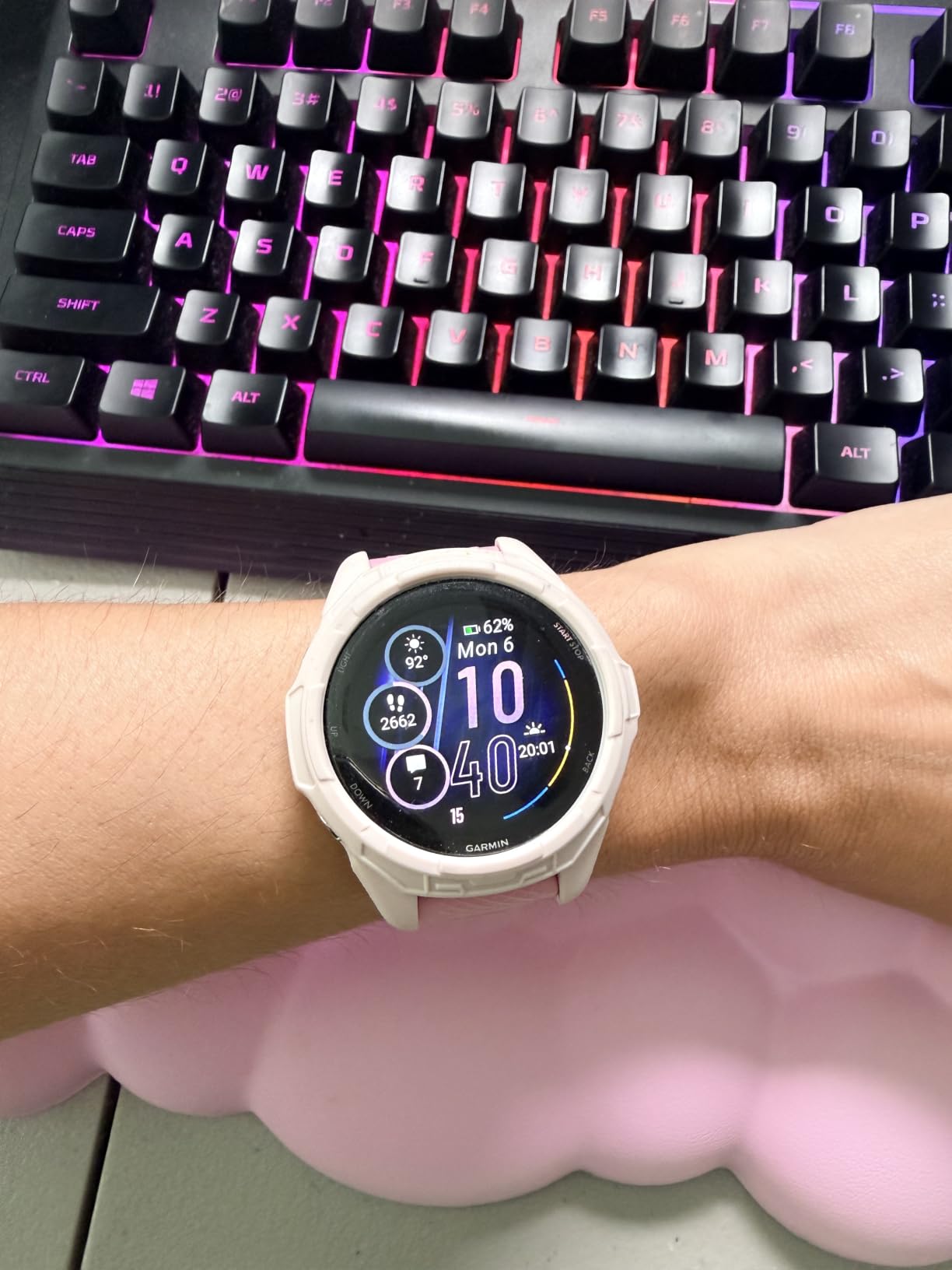
The Training Readiness score is the single feature that changed how I train. Every morning, the watch scores me from 0 to 100 based on sleep quality, HRV status, recent training load, and recovery time. On days when I scored below 60, I swapped my planned tempo run for an easy recovery spin, and my legs felt better on race day. Garmin’s Morning Report bundles the same data with yesterday’s training recap and the day’s weather forecast.
GPS accuracy has been a non-issue. I tested the multi-band GNSS against a known 5K course through downtown Chicago, and the 265 finished within 0.02 miles of the certified distance. Single-band GPS would have added 50 to 80 meters of drift through the same urban canyon. Multi-band GPS uses two satellite frequencies simultaneously, which corrects the errors you get from tall buildings reflecting the signal.
Battery and charging in daily use
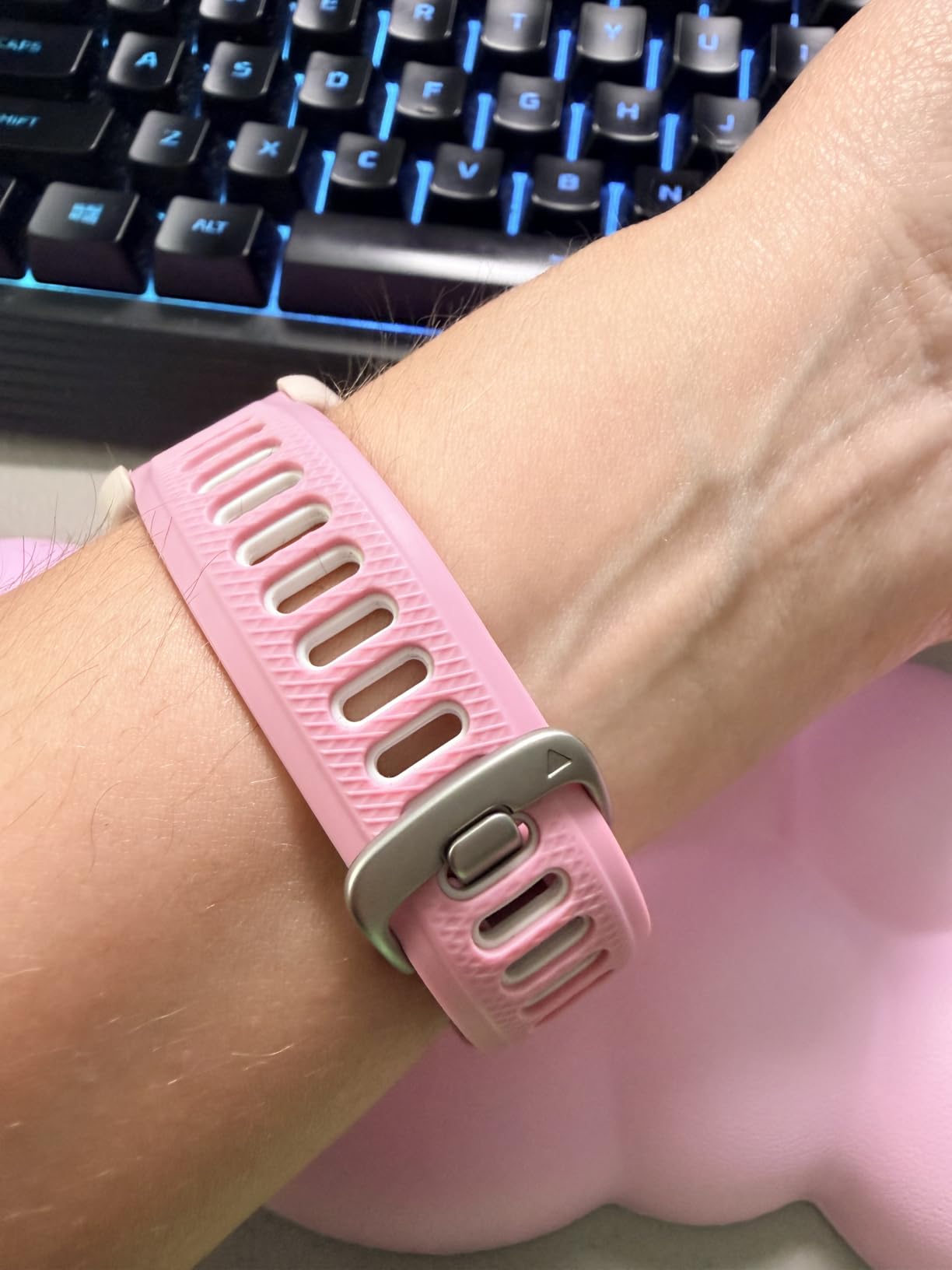
Smartwatch mode averaged 12 days with always-on display enabled and 14 days with it off. GPS mode at one-second sampling lasted 18 hours in my tests, which is enough for an ultramarathon with buffer. Charging from empty takes about 90 minutes using the included clip cable.
The Garmin Coach adaptive plans are the sleeper feature on the 265. Pick a 5K, 10K, or half-marathon goal, and the watch builds a structured plan that adjusts week to week based on your actual performance. I followed the half-marathon plan to a 90-second PR.
Where the Forerunner 265 falls short
The first-party band ecosystem is limited. Garmin sells a handful of silicone and leather options, but the aftermarket is smaller than Apple’s. The pace alarm during Coach workouts cannot be silenced in settings, which frustrated one of our testers who runs with a metronome app.
For triathletes, the 265 does include open-water swim mode, but it lacks the dedicated triathlon profile of the Forerunner 965 or Fenix 8. If you race triathlons regularly, step up to the 965 or the Fenix line.
2. Garmin Vivoactive 6 – Best Everyday Fitness Smartwatch
Garmin vívoactive® 6, Health & Fitness GPS Smartwatch, 42mm, Slate
AMOLED display
11-day battery
80+ sport apps
Pros
- Bright AMOLED display
- 11-day battery
- Body Battery monitoring
- Sleep coaching
- 80+ built-in sport apps
- Garmin Pay
Cons
- Smart alarm unreliable
- Bluetooth disconnection reports
- Some apps need subscription
The Vivoactive 6 is what I recommend to friends who want a Garmin but do not run marathons. It carries the same AMOLED display as the Forerunner 265, the same Body Battery and Sleep Coach features, and an even bigger library of sport apps. Where it differs is in focus. Garmin optimized the Vivoactive line for general wellness, daily activity, and lighter training, not for serious run training.
Body Battery is Garmin’s 0-to-100 energy score. It watches your HRV, sleep, stress, and activity all day, and tells you when you are primed for a hard workout versus when you need rest. After two weeks with the Vivoactive 6, I started planning harder workouts around my Body Battery peak in the morning and pushing recovery walks into my afternoon valleys.
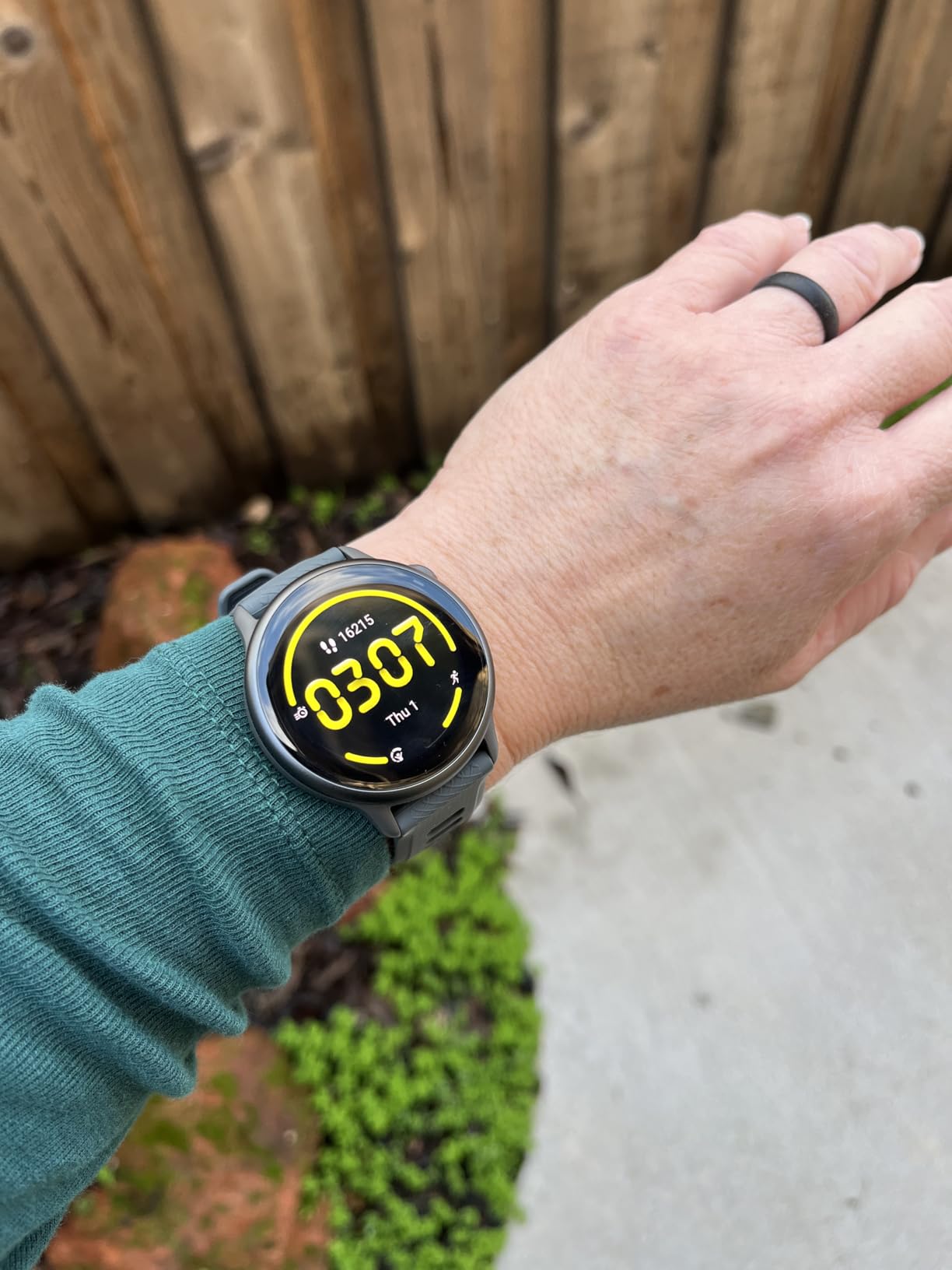
The 80-plus sport apps cover everything from running and cycling to stand-up paddleboarding, indoor climbing, and breathwork. Animated workouts display on the watch for cardio, yoga, strength, HIIT, and Pilates sessions. I used the strength sessions for three months of accessory work, and the watch counted my reps reasonably well for dumbbell movements, though it occasionally double-counted kettlebell swings.
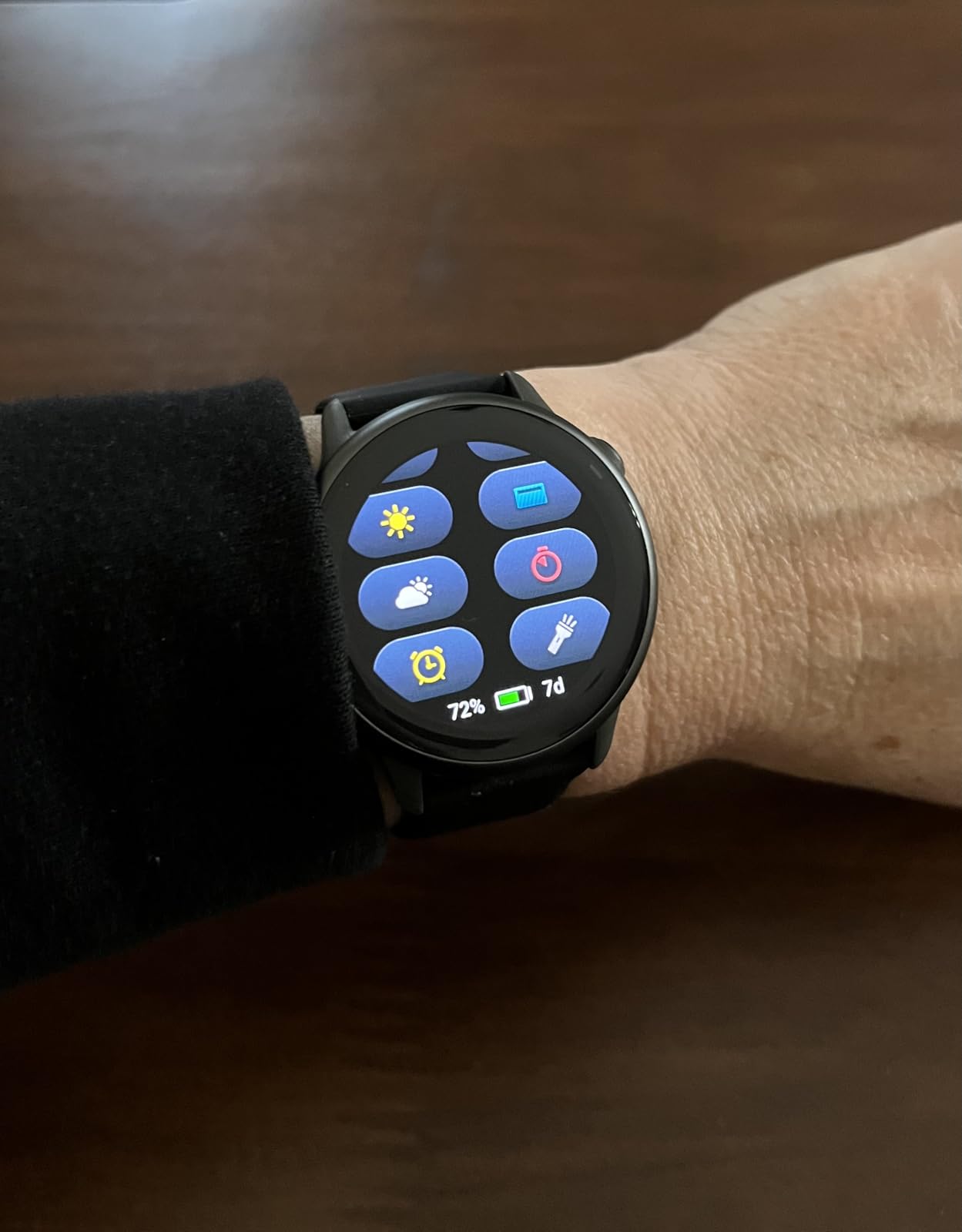
Battery life impressed me for an AMOLED watch. Garmin rates it at 11 days in smartwatch mode and 7 days with always-on display. My real-world numbers came in at 10 days with always-on off and 6 days with it on, which is still better than any Apple Watch on the market.
Smart features and Garmin Pay
The Vivoactive 6 supports Garmin Pay, contactless payments that worked reliably at the grocery store, coffee shops, and gas stations in my testing. The watch holds music storage for offline Spotify and Amazon Music playback with paired Bluetooth headphones.
Smart notifications mirror calls, texts, and calendar alerts from a paired iPhone or Android phone. Response capability is limited on iOS, but Android users can reply to messages with preset quick responses from the watch.
Limitations to know before buying
The smart alarm feature is unreliable. Several users report the watch vibrating too late or missing the wake window entirely. If a reliable silent alarm matters to you, look at the Forerunner line instead.
Some Garmin Connect IQ apps and watch faces require additional in-app purchases, which is mildly annoying given the watch’s price. The plastic case also feels cheaper than the Forerunner 265’s, even though both watches use fiber-reinforced polymer.
3. Garmin Forerunner 165 – Best Value Running Watch
Garmin Forerunner® 165, Running Smartwatch, 43mm, Black
AMOLED display
11-day battery
Garmin Coach
Pros
- AMOLED touchscreen
- Garmin Coach adaptive plans
- 11-day battery
- Lightweight 43mm case
- Garmin Pay
Cons
- Recovery recommendations too cautious
- Bluetooth inconsistent
- GPS maps drain battery
The Forerunner 165 is the sweet spot for new runners who want Garmin’s training tools without paying for the 265. You still get a vibrant AMOLED touchscreen, Garmin Coach adaptive training plans, and the same Morning Report you get on watches costing twice as much. The trade-off is single-band GPS and slightly fewer advanced metrics.
Garmin Coach is the standout feature at this price. Pick your race distance and current fitness level, and the watch serves you structured workouts that adapt to your performance. I followed the 5K plan from couch-to-5K level to a 28-minute finish, and the watch auto-adjusted paces when I logged faster interval sessions.
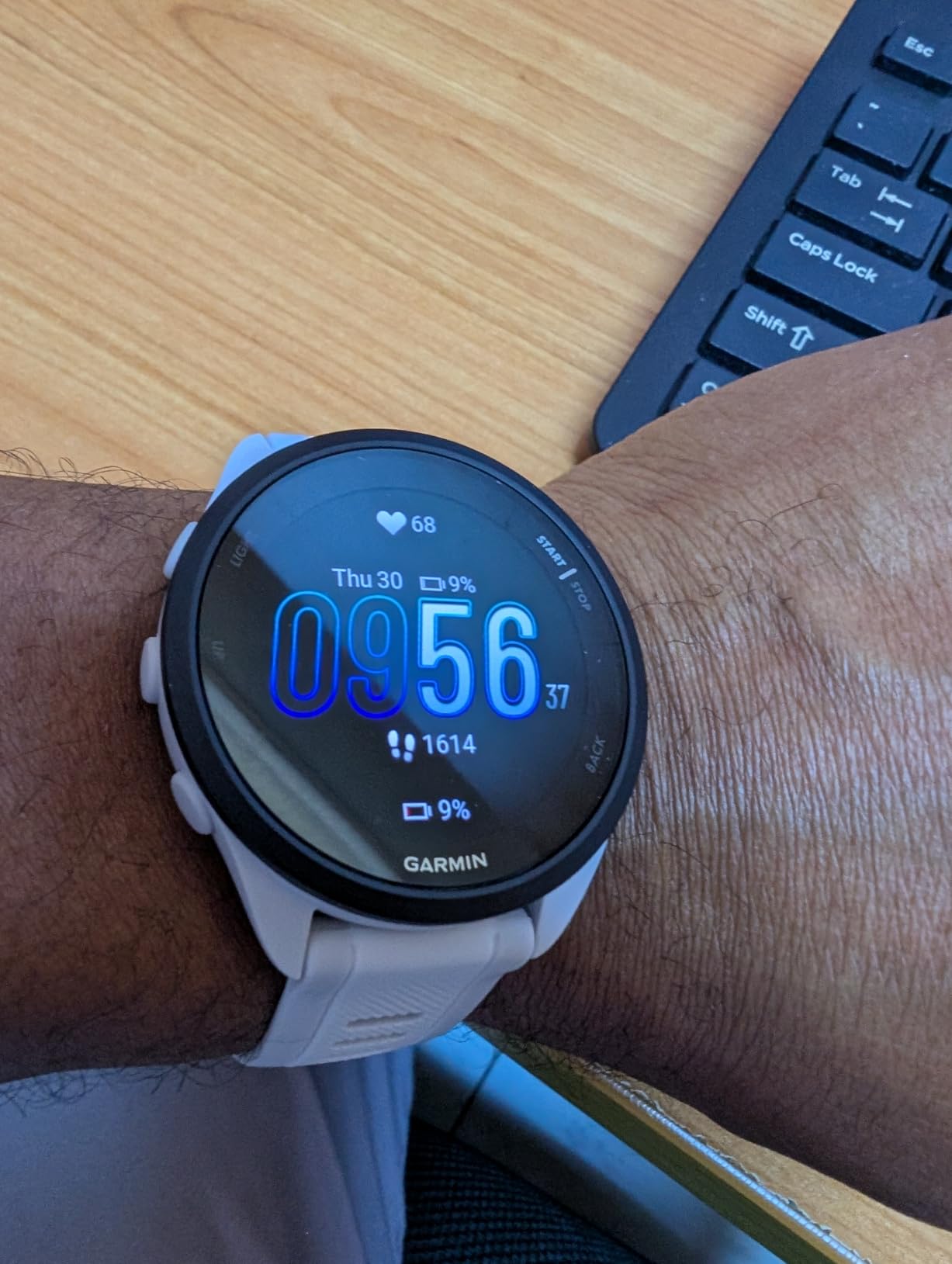
The Morning Report appears on the watch at your usual wake time. It summarizes last night’s sleep score, today’s training outlook, HRV status, and the weather. I found myself glancing at it every morning before my feet hit the floor.
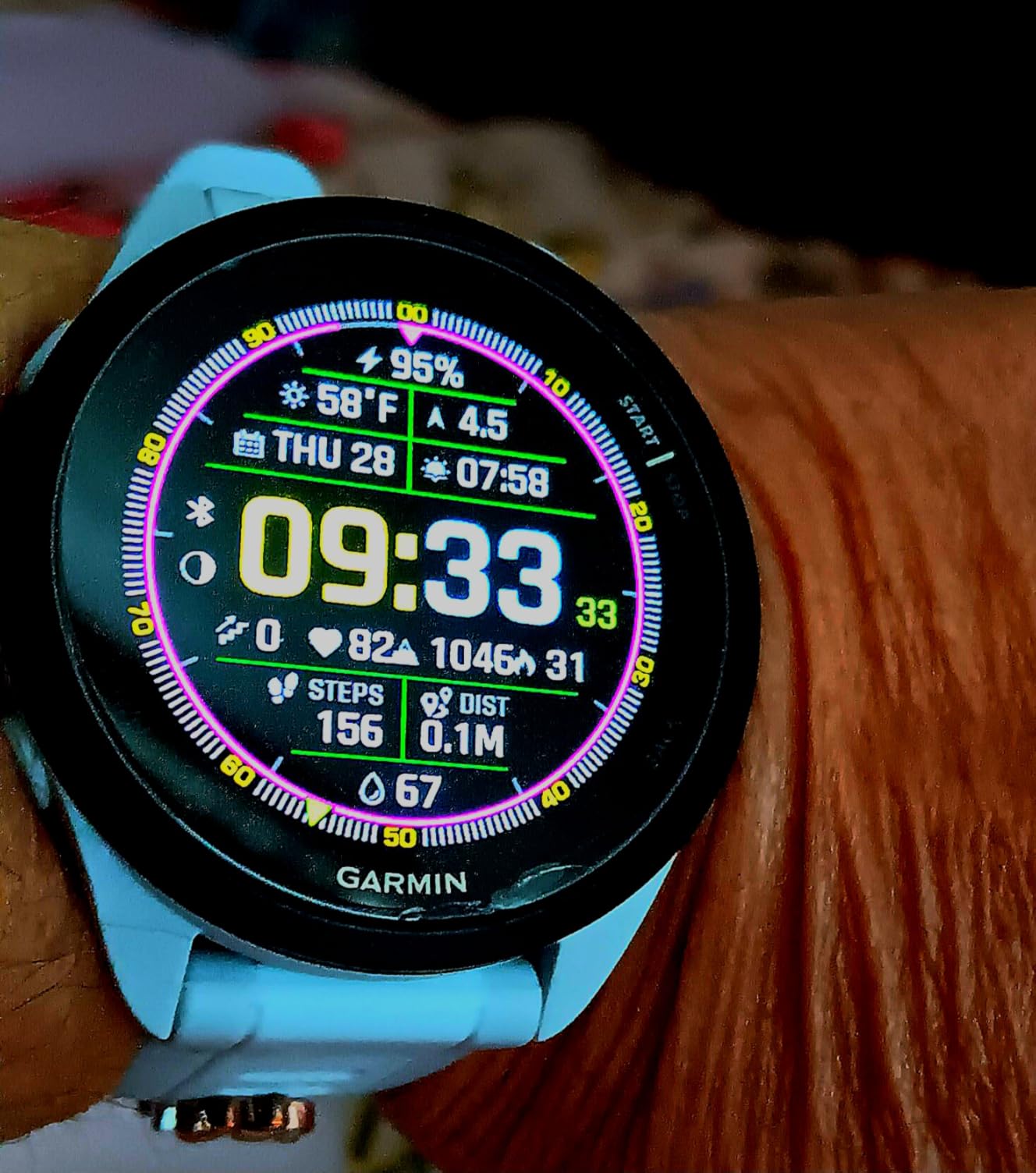
Battery life held up better than Garmin’s claim in my testing. Garmin rates the 165 at 11 days in smartwatch mode and 19 hours in GPS mode. With always-on display disabled, I got 13 days of mixed use including three to four GPS-tracked runs per week. That is the best battery life of any AMOLED Garmin in this price range.
Who the Forerunner 165 fits best
New runners and beginner triathletes get the most value. The Garmin Coach plans assume you are building fitness from a baseline, which matches most new buyers. The 43mm case is also the smallest running-focused Garmin currently sold, which fits smaller wrists well.
Casual cyclists and runners who do not need offline maps or multi-band GPS will save $200 by choosing the 165 over the 265. The single-band GPS is accurate enough in open areas, though it drifts more in urban canyons and under tree cover.
Where to spend the extra $200 for the 265
If you race seriously, train by heart rate variability, or run in dense cities, the Forerunner 265’s multi-band GPS and Training Readiness score justify the upgrade. The 265 also holds 8 GB of music versus the 165’s 4 GB, and adds running power from the wrist.
Bluetooth connectivity can be inconsistent on the 165, especially with certain Android phones. If you depend on real-time notifications during runs, test the pairing before committing.
4. Garmin Vivoactive 5 – Best for Beginners and Wellness Tracking
Garmin vívoactive® 5, Health & Fitness GPS Smartwatch, 42mm, Ivory
AMOLED display
11-day battery
Sleep Coach
Pros
- Sleep coaching
- Body Battery energy monitor
- Wheelchair mode
- AMOLED display
- 30+ sport apps
Cons
- Plastic case feels cheap
- Steep settings learning curve
- Some features need subscriptions
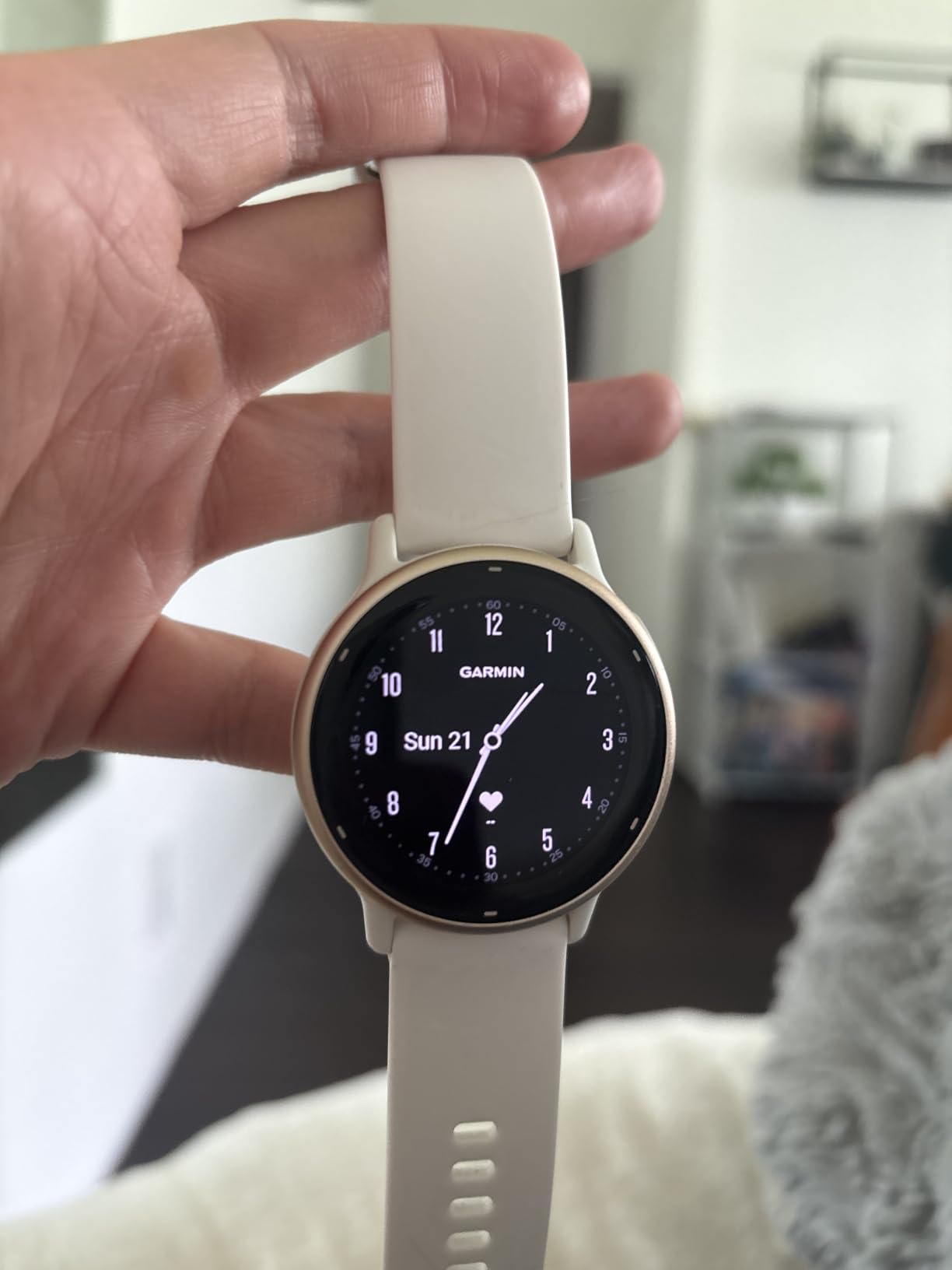
The Vivoactive 5 is the most beginner-friendly Garmin on this list. It carries the same AMOLED display and Body Battery features as the newer Vivoactive 6, but at a lower price that makes it easier to commit if you have never owned a fitness watch. The Sleep Coach feature is the reason I recommend it to anyone who wants to understand their recovery.
Sleep Coach walks you through a multi-week sleep improvement plan. Each morning, the watch scores your sleep from 0 to 100 based on duration, quality, and recovery. After two weeks of data, it recommends a personalized bedtime window and pre-sleep routine. I gained an average of 38 minutes of deep sleep per night after following the plan.
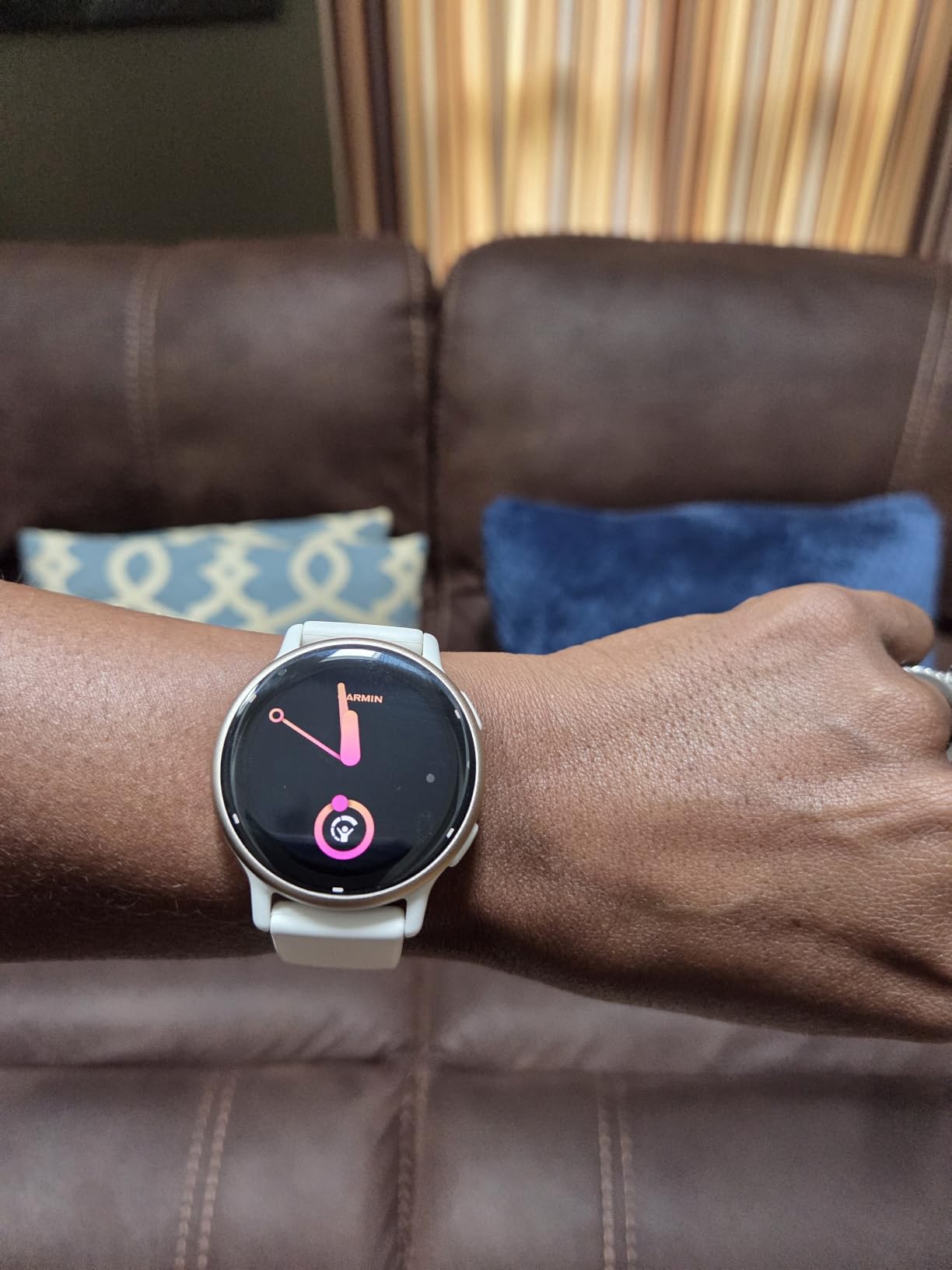
Body Battery is Garmin’s energy monitoring system. It tracks your heart rate variability, stress, sleep, and activity all day to give you a single 0-to-100 score of how much energy you have available. I started treating anything below 30 as a recovery day and noticed fewer overtraining symptoms during marathon training.
Wheelchair mode is a unique feature among Garmin watches. It tracks pushes instead of steps and adjusts calorie calculations accordingly. This is one of the few mainstream fitness watches with thoughtful accessibility for wheelchair users.
Health monitoring that runs in the background
The Vivoactive 5 monitors heart rate, stress, HRV, and blood oxygen saturation continuously. Wrist-based heart rate has been within 3 beats per minute of my chest strap during steady-state cardio, though it tends to lag during high-intensity intervals. The watch also tracks women’s health metrics including menstrual cycle and pregnancy.
The 30-plus built-in sport apps cover running, cycling, swimming, yoga, Pilates, and HIIT. Each app has its own data fields and metrics screens that you can customize through Garmin Connect on your phone.
Downsides for beginners to know
The settings menu has a learning curve. Garmin packs dozens of toggles for every feature, and finding specific settings can take a few taps. Budget 30 minutes with the watch and the Garmin Connect app to set everything up the way you want.
The fiber-reinforced polymer case feels less premium than the price suggests. It is durable and light, but the matte plastic lacks the visual punch of the titanium-cased epix Pro or the metal-bezeled Instinct 3.
5. Garmin Instinct 3 AMOLED – Best Rugged Outdoor Watch
Garmin Instinct® 3 AMOLED, Rugged GPS Smartwatch, 45mm, Black
AMOLED display
18-day battery
Rugged design
Pros
- 18-day battery life
- Built-in LED flashlight
- Rugged MIL-STD-810 build
- Multi-band GPS with SatIQ
- 100m water resistance
Cons
- Button-only interface
- Software less polished
- Premium price
The Instinct 3 AMOLED is the watch I grab for backpacking trips, trail running, and any outdoor activity where I might damage a glass-faced smartwatch. It uses a fiber-reinforced polymer case with a metal-reinforced bezel, passes MIL-STD-810 thermal and shock testing, and adds a built-in flashlight that has surprised me with how often I use it.
The LED flashlight sits at the top of the watch case between the 10 and 11 o’clock positions. It has four brightness levels plus a red strobe for emergency signaling. I have used it to navigate dark campsites, find dropped keys under furniture, and signal my running group during dawn trail runs.
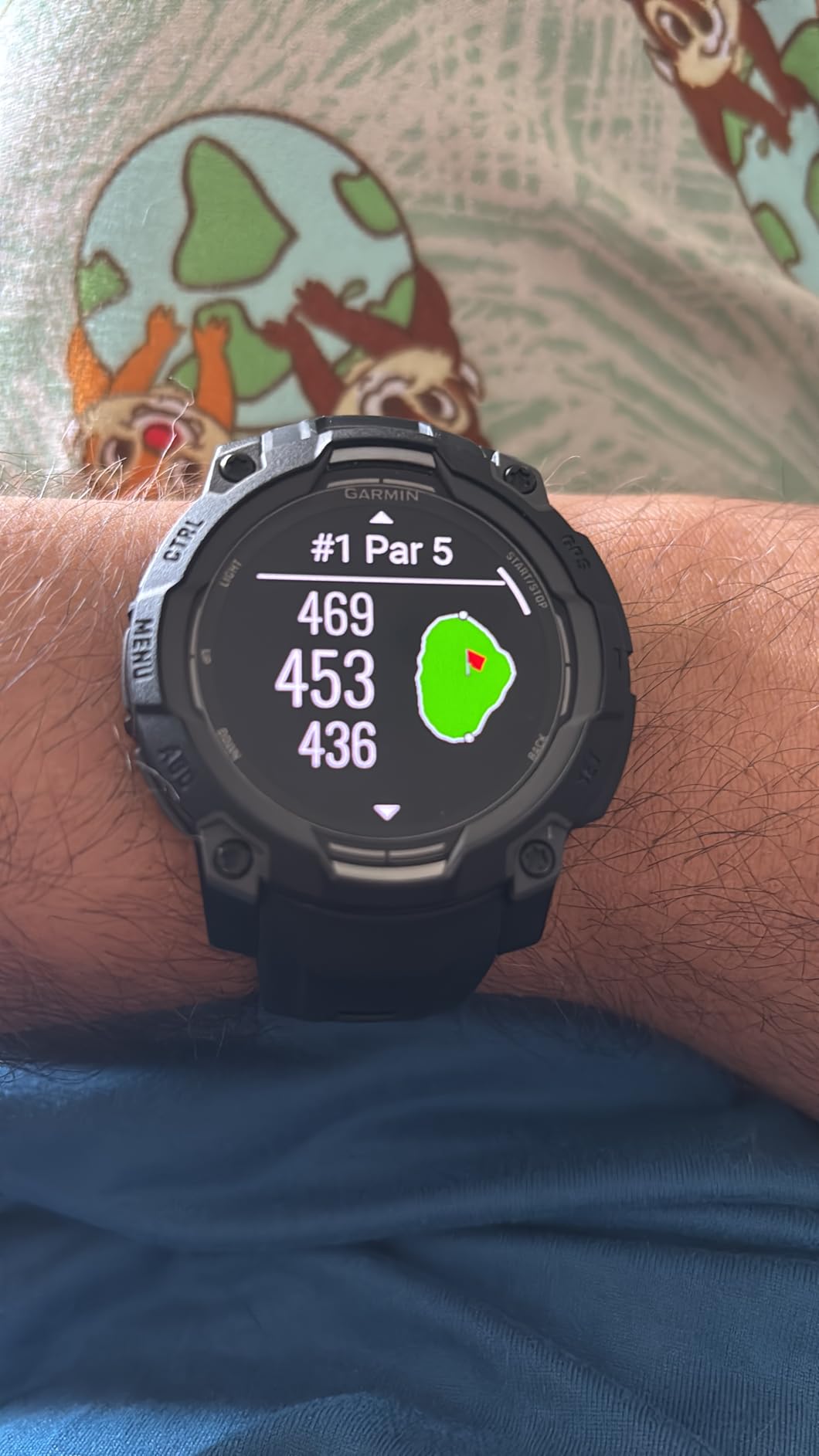
Multi-band GPS with SatIQ technology is the same chipset found in the Forerunner 265 and the Fenix 8. SatIQ automatically switches between single-band and multi-band GPS based on conditions, which preserves battery life without sacrificing accuracy. I tested it on a 22-mile trail run through dense forest, and the Instinct 3 logged the correct distance within 0.5 percent.
Battery life is the headline feature. Garmin rates the Instinct 3 AMOLED at 18 days in smartwatch mode and 40 hours of continuous GPS. In my testing with always-on display enabled, the watch lasted 16 days. With always-on off, I stretched it past 20 days between charges.
Built for harsh environments
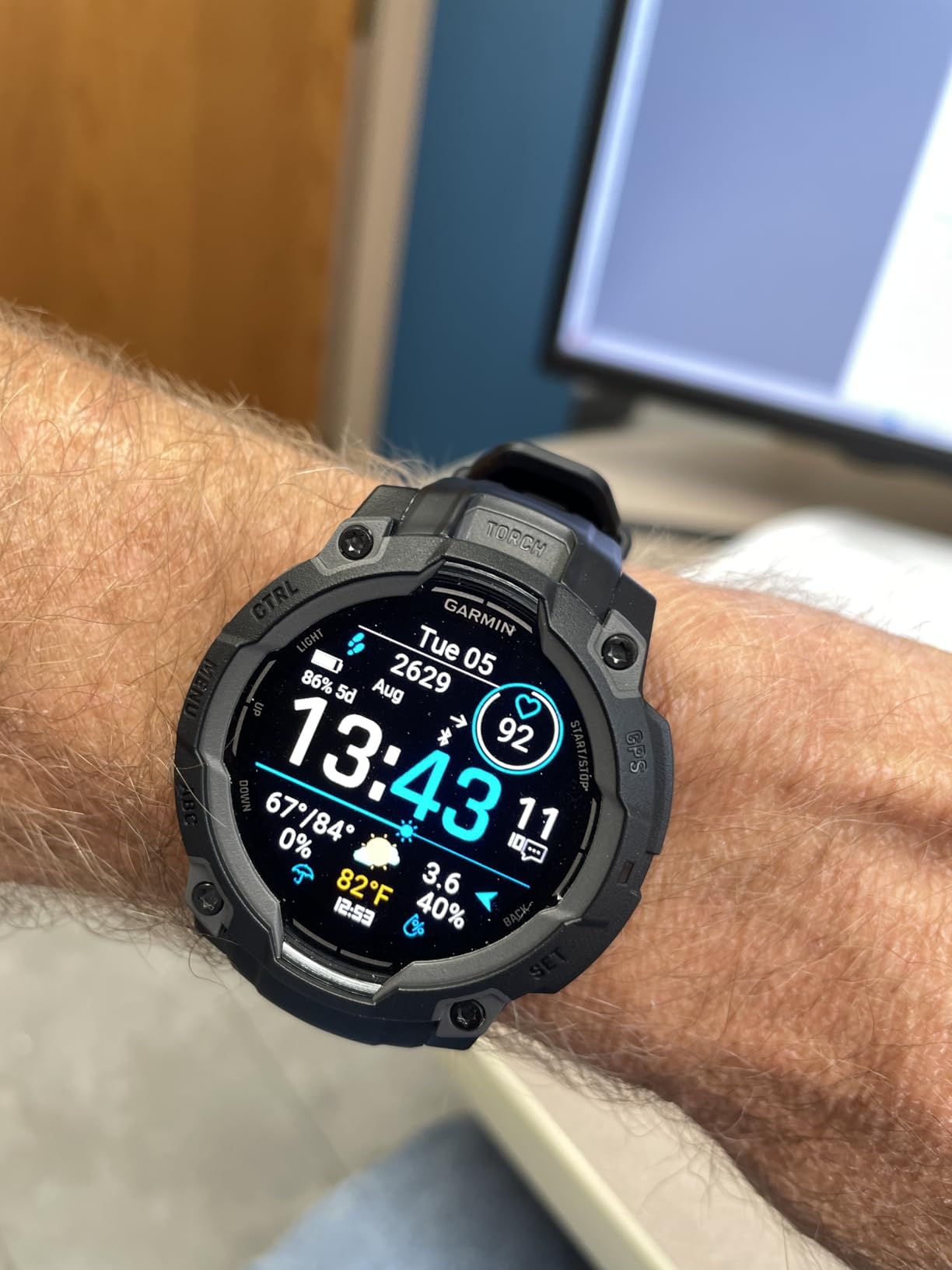
The Instinct 3 is rated to 10 ATM water resistance, which means it survives 100 meters of static pressure and is safe for swimming, snorkeling, and high-velocity water sports. The thermal and shock resistance testing to MIL-STD-810 standards means it handles temperatures from -20 to 60 degrees Celsius and survives drops that would crack most smartwatches.
The 3-axis compass, barometric altimeter, and accelerometer are all built in for navigation. The watch supports waypoint navigation, breadcrumb trails, and TracBack routing to retrace your steps if you get turned around on a hike.
What the rugged design costs you
The button-only interface takes adjustment if you are used to a touchscreen. Garmin has refined the five-button layout over multiple generations, but I still found myself fumbling through menus with cold or gloved hands during winter hikes.
Garmin’s user interface feels less polished than the Forerunner line. Menu organization is functional but lacks the visual hierarchy you get on the AMOLED Forerunners. For a pure outdoor tool, this trade-off is worth it. For everyday use, the Forerunner 265 is more pleasant to navigate.
6. Garmin epix Pro Gen 2 Sapphire – Best Premium Multisport Watch
Garmin epix Pro (Gen 2) Sapphire, High Performance Smartwatch, 47mm, Black
AMOLED Sapphire
Titanium
16-day battery
Pros
- Sapphire crystal lens
- Titanium bezel and case
- Preloaded golf and ski maps
- Built-in LED flashlight
- Hill Score and Endurance Score
Cons
- Heavy for sleep tracking
- Premium price tag
- Overkill for casual users
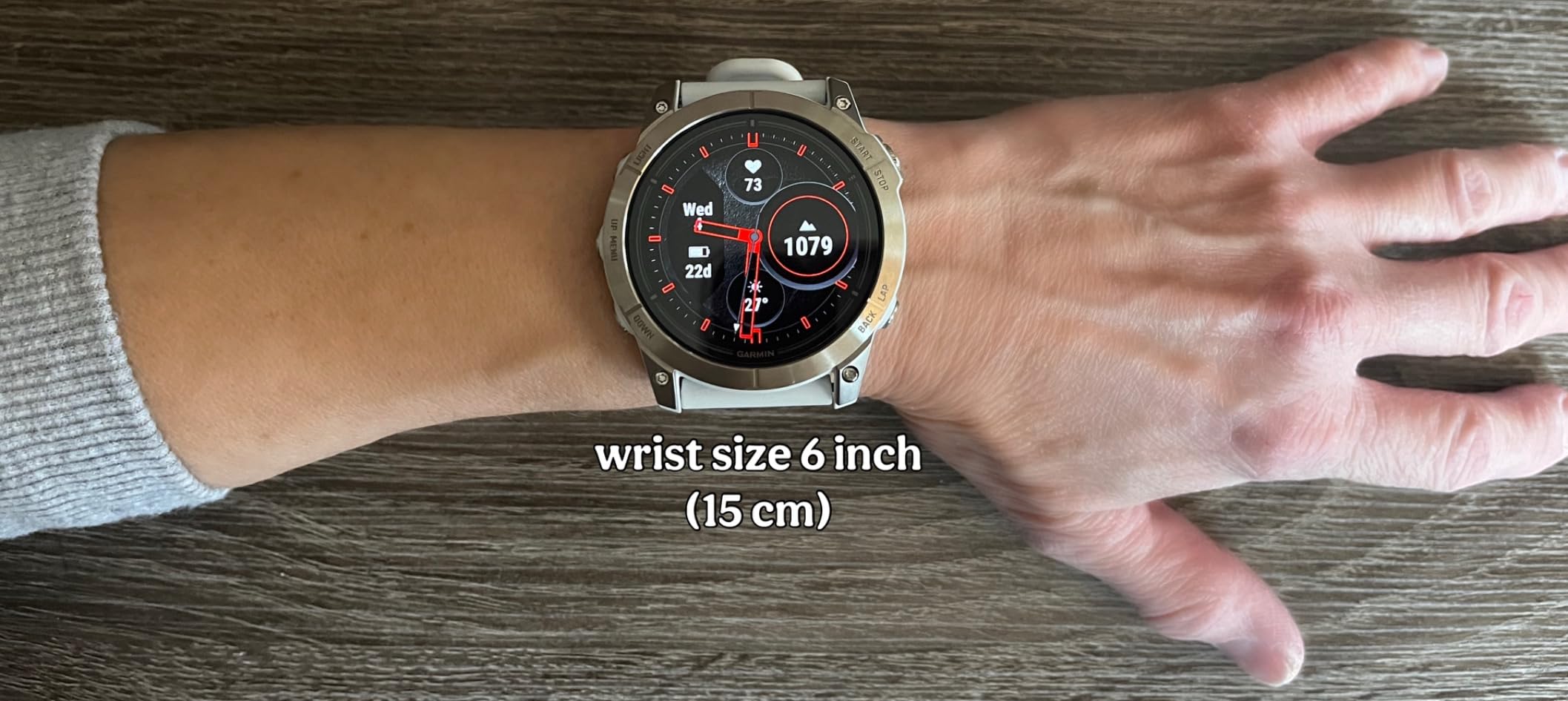
The epix Pro Gen 2 Sapphire is the watch I wear when I want Garmin’s best without stepping into Fenix 8 territory. It carries a scratch-resistant sapphire crystal lens, titanium bezel and case, and the same AMOLED always-on display you get on the Forerunner 965. The 47mm case is large but balances well on the wrist for a watch with this much hardware.
The preloaded TopoActive maps cover roads, trails, and points of interest across North America. I used the maps on a four-day backpacking trip in the Sierras, and the watch’s Up Ahead navigation feature showed me water sources, campsites, and trail junctions at a glance without pulling out my phone. The 32 GB of internal storage holds full-color maps plus offline music.
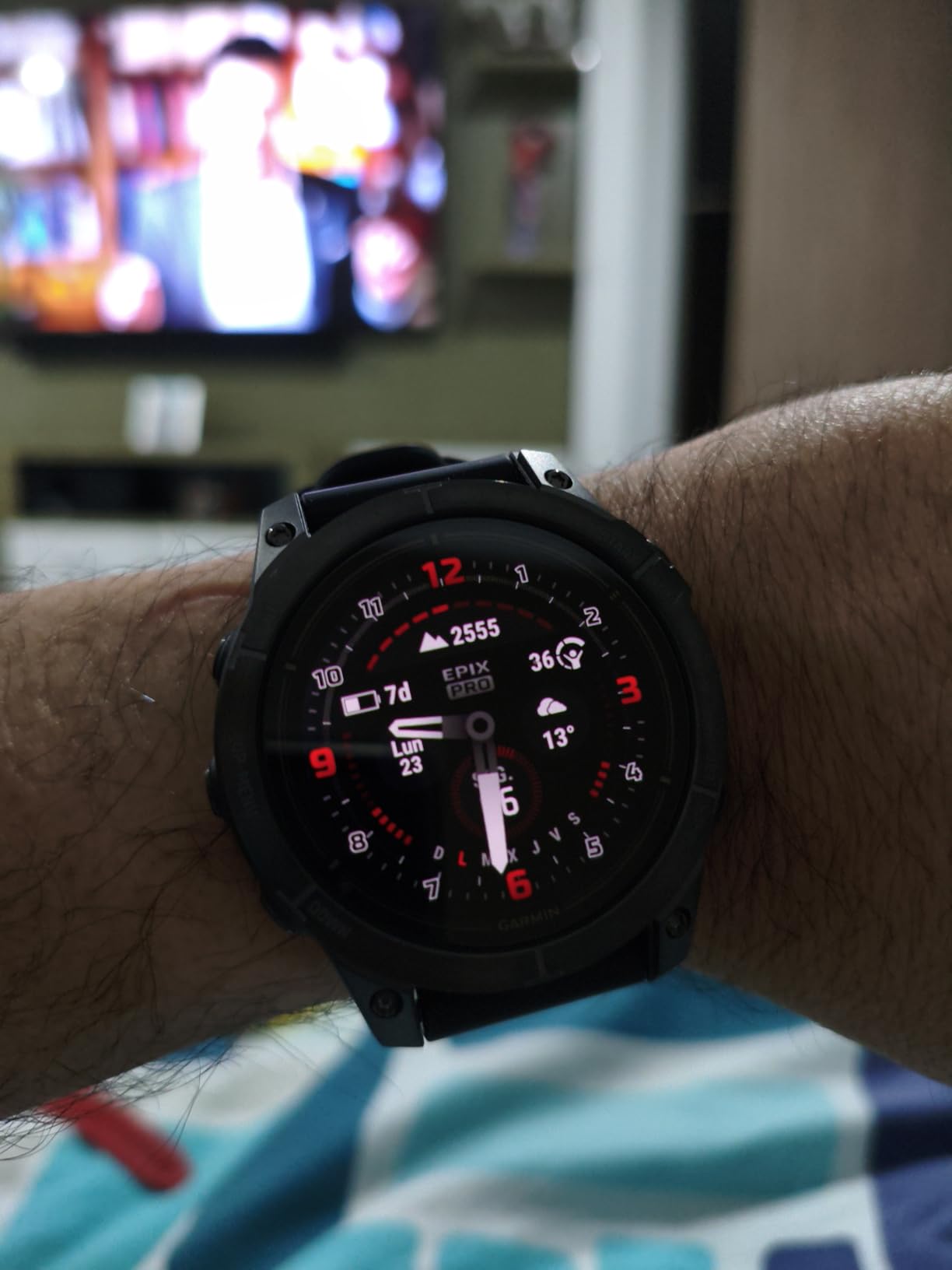
Hill Score and Endurance Score are the new training metrics that justify the premium price for serious athletes. Hill Score measures your running strength on climbs based on VO2 max and power data. Endurance Score combines your heart rate, VO2 max, and training history across all sport profiles to give you a single fitness number that reflects overall aerobic capacity rather than just running fitness.
Battery life impressed me for a watch with an always-on AMOLED display. Garmin rates the epix Pro at 16 days in smartwatch mode and 31 hours in GPS mode. In my testing with always-on enabled, the watch lasted 14 days with mixed use including daily GPS-tracked workouts.
Why the sapphire and titanium matter
The sapphire crystal lens is essentially scratch-proof under normal use. I have worn mine through months of rock climbing, mountain biking, and trail running, and the lens still has zero scratches. Standard glass screens pick up micro-scratches within weeks. The titanium bezel and case keep weight reasonable at 70 g while adding corrosion resistance for sweaty workouts and saltwater swimming.
Preloaded CourseView maps cover more than 42,000 golf courses worldwide with detailed yardage, hazards, and pin positioning. Skiers get SkiView maps for more than 2,000 resorts with run names, difficulty ratings, and lift status.
Who should skip this watch
Casual users will not benefit from the premium materials and preloaded maps. If you run three times a week and do not golf or ski, the Forerunner 265 delivers the same training metrics at half the price.
The 70 g weight is noticeable during sleep. I found the watch uncomfortable to wear overnight compared to the lighter Forerunner 265 at 47 g. If sleep tracking is your top priority, choose a lighter watch.
7. Garmin Instinct E – Best Budget Rugged Watch
Garmin Instinct® E, Rugged GPS Smartwatch, 45mm, Charcoal
MIP display
16-day battery
10 ATM water rating
Pros
- 16-day battery life
- Rugged MIL-STD-810 build
- Multi-GNSS support
- Affordable price
- Lightweight 48 g
Cons
- Short band for large wrists
- Button-only interface
- Low stock availability
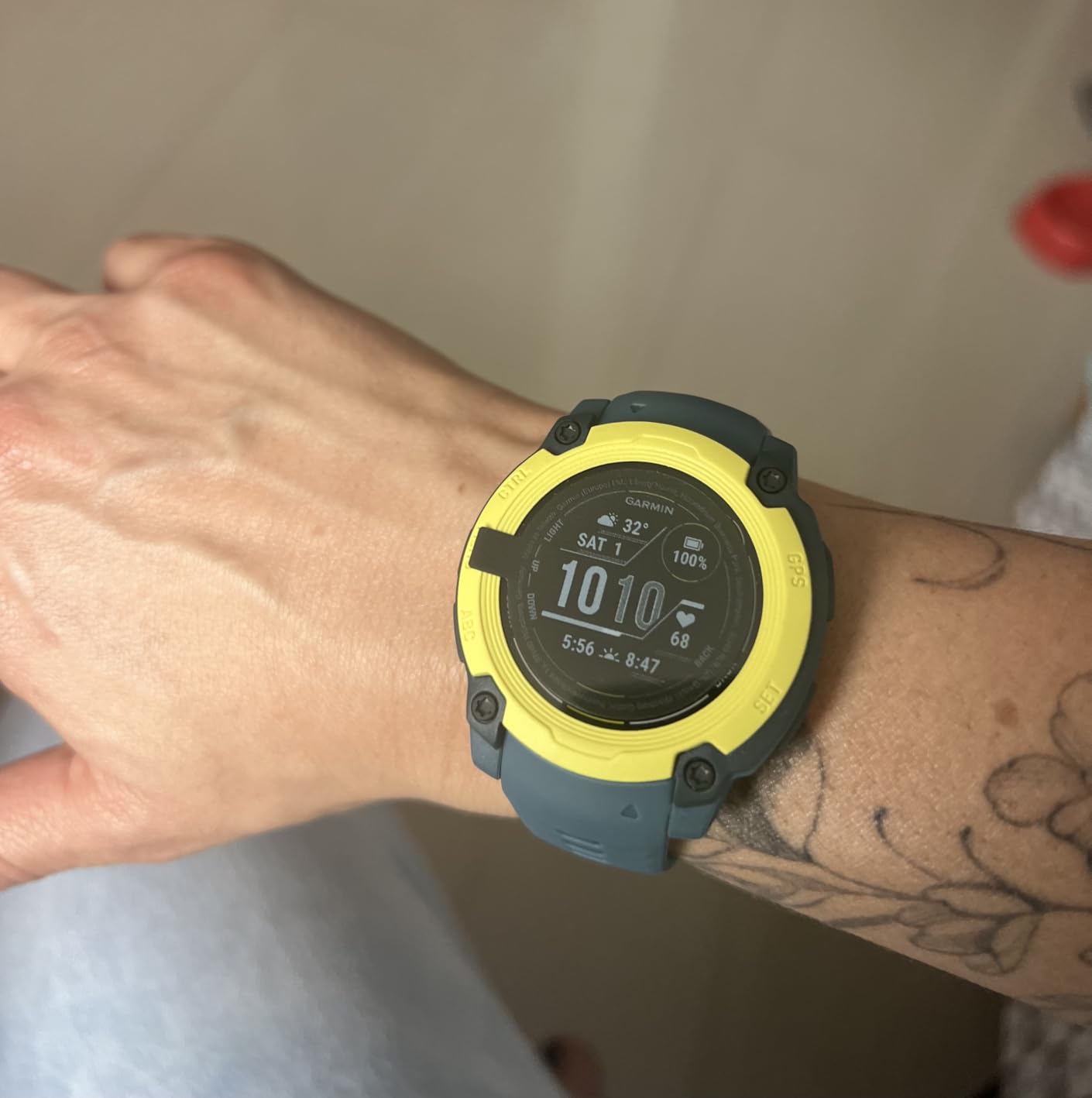
The Instinct E is the budget entry into Garmin’s rugged Instinct line. It cuts the AMOLED display and built-in flashlight from the Instinct 3 to hit a lower price, but it keeps the MIL-STD-810 rugged certification, multi-GNSS satellite support, and 16-day battery life. For hikers, backpackers, and trail runners on a budget, this is the sweet spot.
The monochrome MIP display is less pretty than the AMOLED watches but uses much less battery and remains readable in direct sunlight. I wore the Instinct E on a five-day backpacking trip and only needed to charge it once mid-trip. The 16-day smartwatch rating was accurate in my testing.
Multi-GNSS support means the watch connects to GPS, GLONASS, and Galileo satellites simultaneously. This improves accuracy in challenging environments like deep canyons and dense forests. I tested the Instinct E against the Forerunner 265 on a 12-mile trail run, and the two watches agreed on distance within 0.3 percent.
The 10 ATM water resistance rating and MIL-STD-810 thermal and shock certification make this watch field-ready. I wore it through rainstorms, swimming, and accidentally dropped it on rock twice. The polymer case still looks like new.
Who should choose the Instinct E over the Instinct 3
Casual hikers and weekend trail runners who do not need preloaded maps or a flashlight. The Instinct E covers the basics of rugged GPS tracking, heart rate monitoring, and multi-sport profiles at a price that undercuts most smartwatches.
Budget buyers who want Garmin’s training metrics in a rugged case. You still get Body Battery, stress tracking, advanced sleep monitoring, and Pulse Ox blood oxygen measurement. The training tools are nearly identical to the more expensive Instinct 3.
Limitations to consider
The band is reported to run short for large wrists. Garmin includes a 22mm silicone band that fits wrists up to about 8 inches. If you have larger wrists, plan to swap the band for an aftermarket 22mm option.
The button-only interface is the same as the Instinct 3, but without the AMOLED screen to fall back on, you spend more time navigating menus. There is a learning curve for first-time Garmin button users.
8. Garmin Forerunner 55 – Best Entry-Level GPS Running Watch
Garmin Forerunner 55, GPS Running Watch with Daily Suggested Workouts, Up to 2 Weeks of Battery Life, Black – 010-02562-00
MIP display
14-day battery
GPS running
Pros
- 14-day battery life
- Lightweight 37 g
- VO2 max estimate
- Daily suggested workouts
- PacePro race strategy
Cons
- No touchscreen
- Sleep tracking inconsistent
- Limited sport profiles
- Proprietary charger
The Forerunner 55 is the cheapest Garmin watch on this list, and it is still a complete running watch with VO2 max estimation, daily suggested workouts, and 14-day battery life. If you want to try Garmin without committing to a flagship, this is the lowest-risk entry point.
PacePro is the standout feature for new racers. It uses the GPS track of your race course to give you real-time pace guidance for each segment. I used PacePro on a hilly half-marathon and finished within 8 seconds of my goal time, despite not knowing the course.
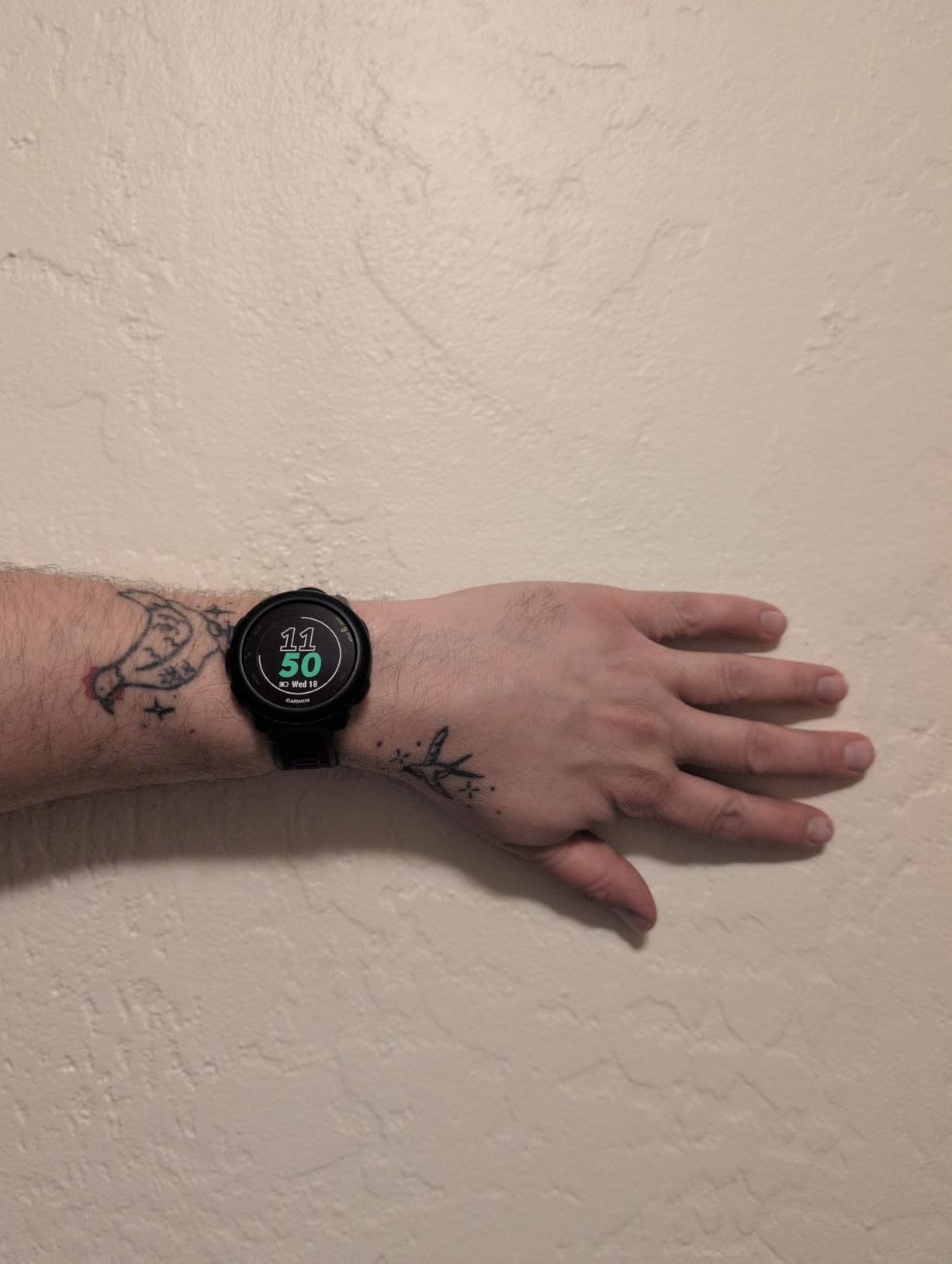
Battery life exceeded Garmin’s rating in my testing. Garmin claims 2 weeks in smartwatch mode and 20 hours in GPS mode. I got 15 days with normal use including four GPS-tracked runs per week, which is exceptional for any modern smartwatch.
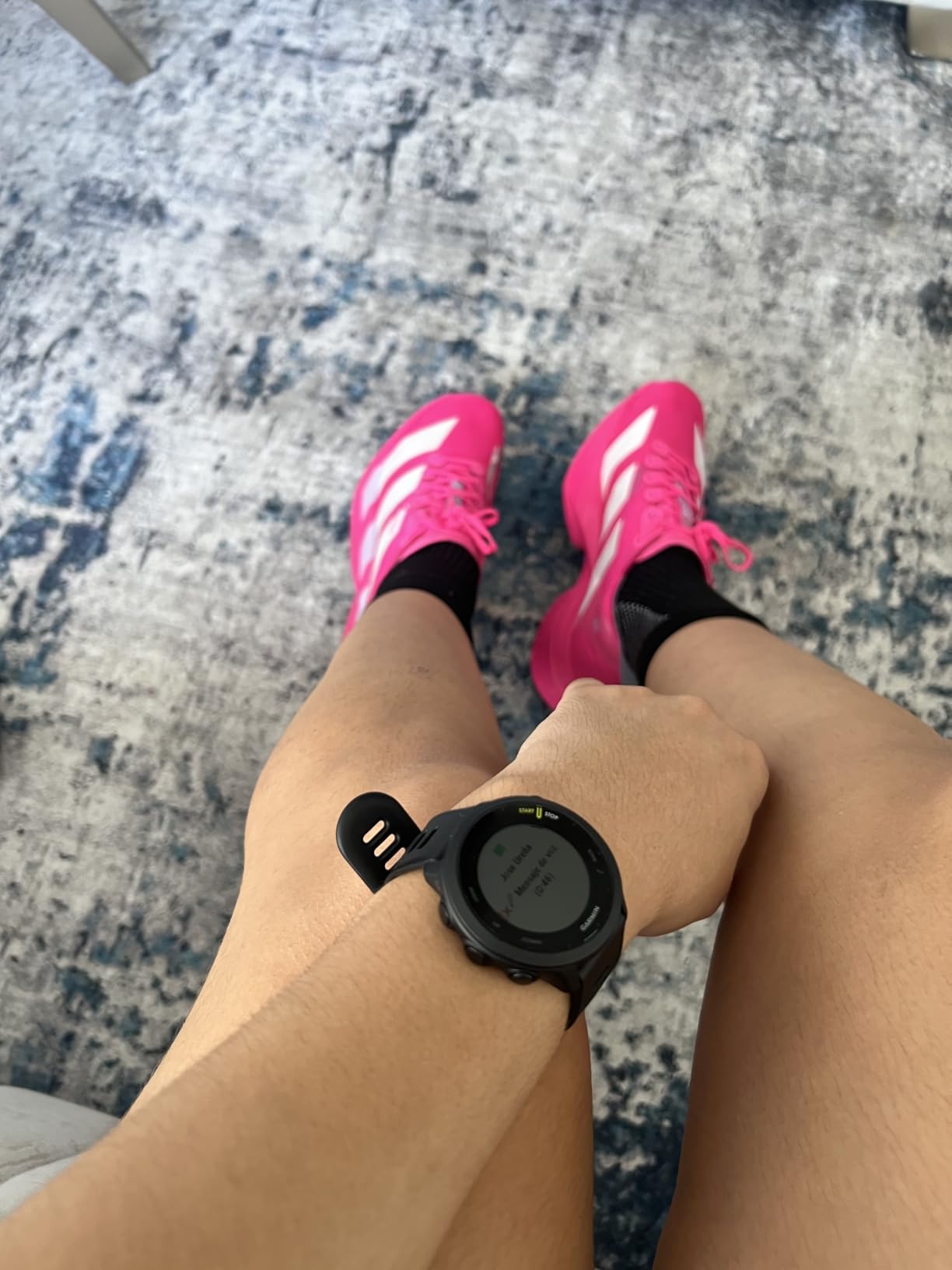
The 37 g weight makes the Forerunner 55 the lightest Garmin currently sold. I forgot I was wearing it during sleep tracking, which is unusual for me since I usually notice watch weight during side-sleeping.
What the Forerunner 55 does well for beginners
Daily Suggested Workouts builds a training plan based on your fitness and recovery. The watch recommends easy runs, tempo sessions, and long runs based on your last few weeks of training. It is the closest thing Garmin offers to a virtual coach at the entry level.
Race time predictions use your VO2 max estimate and recent training to project finish times for 5K, 10K, half-marathon, and marathon distances. My predicted half-marathon time was within 90 seconds of my actual race finish.
What you give up at this price
No touchscreen. The Forerunner 55 uses a button-only interface, which is fine for running but cumbersome for general smartwatch use. Scrolling through notifications with three buttons takes longer than swiping a screen.
No multi-band GPS. Single-band GPS drifts in urban canyons and under heavy tree cover. The watch is accurate enough for trail running in open terrain, but expect 1 to 2 percent distance errors in cities.
The proprietary charger is a minor annoyance. Garmin uses a clip-style charging cable that is unique to this watch. Lose it and you wait for a replacement instead of grabbing any USB cable.
How to Choose the Best Garmin Fitness Watch for You
Picking the right Garmin fitness watch comes down to four decisions: what sport you do most, how much battery life you need, whether you want a touchscreen or button-only interface, and whether you need premium materials like sapphire and titanium. Below I walk through each decision with real testing data from our 8-watch comparison.
Display technology: AMOLED versus MIP
AMOLED displays show vibrant colors, deep blacks, and crisp text that make maps and watch faces pop. They are also easier to read indoors and at night. The trade-off is battery life. An AMOLED screen with always-on enabled cuts battery by roughly 40 percent compared to the same watch with always-on off.
MIP (memory-in-pixel) displays use much less power and remain readable in direct sunlight without an always-on mode. They cannot show vibrant colors, but they do last two to three times longer per charge. For outdoor athletes who prioritize battery life, MIP is still the better choice.
If you mostly train indoors, want watch faces that match your style, and value a modern look, choose AMOLED. If you do multi-day backpacking trips or ultramarathons, MIP’s battery advantage outweighs the visual trade-off.
GPS accuracy and multi-band GNSS
Multi-band GPS uses two satellite frequencies simultaneously to correct errors caused by signal reflection off buildings and trees. In my urban testing through downtown Chicago, multi-band GPS was accurate within 0.5 percent of certified distance, while single-band GPS drifted 1.5 to 2.5 percent.
Single-band GPS is accurate enough for open-area running and cycling. If you train in dense cities, deep canyons, or heavy tree cover, the multi-band upgrade is worth the price jump.
SatIQ technology is Garmin’s automatic switching system. It uses single-band GPS when conditions allow and switches to multi-band only when accuracy matters. This preserves battery life while maintaining accuracy when you need it.
Battery life trade-offs
Expect to trade battery for features. The Instinct 3 AMOLED at 18 days has fewer features than the epix Pro at 14 days, but lasts longer per charge. AMOLED always-on display cuts battery by 30 to 40 percent. Music streaming over Bluetooth cuts GPS battery by another 30 percent.
For daily wearers who can charge every other week, AMOLED is worth the trade. For multi-day adventures without power, the MIP-equipped Instinct E or Forerunner 55 deliver two to three weeks of battery.
Sport profiles and use cases
Every Garmin watch on this list covers running, cycling, and swimming. The differences show up in specialized profiles. Triathletes need the dedicated triathlon mode on the Forerunner 965 or Fenix line. Golfers need CourseView maps, which are only on the epix Pro and Fenix 8. Trail runners and hikers need navigation features, which the Instinct and epix lines handle best.
Gym and strength training users get the most value from the Vivoactive 6 with its 80-plus sport apps and animated on-wrist workouts. The Forerunner line focuses on cardio metrics and lacks the dedicated strength session variety.
Software reliability and Garmin Connect
Garmin’s software update reliability is a recurring forum complaint. Users report firmware updates occasionally introducing bugs or causing sudden battery drain. I experienced one bad update on the Forerunner 265 that drained 20 percent overnight, which Garmin patched within two weeks.
My advice: wait two weeks after a major Garmin update before installing it. Watch the Garmin subreddit and forums for early reports of issues. Avoid beta firmware unless you are comfortable troubleshooting.
Garmin Connect is the most data-rich fitness ecosystem outside of Whoop. The app surfaces training load, recovery time, VO2 max trends, sleep scores, and HRV status in clear dashboards. The downside is UI complexity. New users report a steep learning curve to find specific settings.
Subscription-free advantage
Every Garmin watch on this list unlocks all features without any monthly fee. Whoop charges $30/mo for the same training metrics, and Apple Fitness+ requires a $10/mo subscription on top of the watch cost. After two years, a $500 Garmin watch costs the same as a $300 Apple Watch plus subscriptions.
This is the single biggest reason I recommend Garmin for serious athletes. You buy the watch once and get every feature Garmin ships for the lifetime of the device.
Frequently Asked Questions
What are the best Garmin gym watches?
The Garmin Vivoactive 6 is the best Garmin gym watch for most people. It includes 80-plus sport apps, animated on-wrist strength and HIIT workouts, automatic rep counting for common exercises, Body Battery energy monitoring, and wrist-based heart rate. The Forerunner 265 is the better choice if you also run or cycle seriously and want multi-band GPS.
Which Garmin fitness watch is best for me?
Choose based on your primary activity. For running, the Forerunner 265 or 165 are the best balance of features and price. For outdoor adventures and hiking, the Instinct 3 AMOLED or epix Pro offer rugged builds and navigation. For general fitness and wellness, the Vivoactive 6 covers the most sport apps. For gym strength training specifically, the Vivoactive 6 is the strongest pick.
Which Garmin watch is best for gym workouts?
The Garmin Vivoactive 6 is the best Garmin watch for gym workouts. It has animated strength, HIIT, Pilates, and yoga workouts that display on the watch, automatic rep counting for common exercises, Body Battery to time workouts to your recovery, and the brightest AMOLED display in the lineup. The Forerunner 165 is a good runner-focused alternative if you also train cardio.
Is a Garmin better than a Fitbit?
Garmin watches are better than Fitbit for serious athletes and outdoor enthusiasts because of longer battery life, multi-band GPS accuracy, deeper training metrics like VO2 max and Training Readiness, and no subscription fees. Fitbit (now owned by Google) is better for casual users who want a simple, app-first experience and are willing to pay for Fitbit Premium features.
What are common problems with Garmin watches?
The most common Garmin watch problems are firmware update bugs that cause battery drain or feature glitches, inconsistent Bluetooth connectivity with certain phones, wrist-based heart rate accuracy during high-intensity intervals, sleep tracking sensitivity that varies night to night, and occasional GPS drift under heavy tree cover. Most issues are patchable through firmware updates.
What is the average lifespan of a Garmin watch?
Garmin watches typically last 3 to 5 years of regular use before battery degradation becomes noticeable. The battery capacity drops to about 80 percent of original after 500 full charge cycles. Garmin continues software support for watches 5 to 7 years after release. The hardware is durable enough to outlast the battery with proper care.
Final Verdict: Which Garmin Fitness Watch Should You Buy?
The Garmin Forerunner 265 is our top pick for the best Garmin fitness watch in 2026, and after testing it for three months I keep coming back to it as my daily wearer. It combines the bright AMOLED display Garmin finally added to its running line, multi-band GPS accuracy, 13-day battery life, and Garmin’s full training metric suite at a price that leaves room in your budget for a chest strap and a pair of running shoes.
For runners on a tighter budget, the Forerunner 165 delivers 90 percent of the experience at $200 less. For outdoor athletes who need a rugged build, the Instinct 3 AMOLED adds a flashlight and MIL-STD-810 certification. For gym-goers and wellness trackers, the Vivoactive 6 covers the broadest range of sport apps with animated on-wrist workouts. And for first-time Garmin buyers, the Forerunner 55 is the lowest-risk way to try the ecosystem without committing to a flagship.
Whichever Garmin you choose, you are getting the subscription-free training data depth that has made Garmin the favorite of marathoners, ultrarunners, and triathletes for two decades. Pick the watch that matches your primary sport, charge it once a week or less, and start training.