
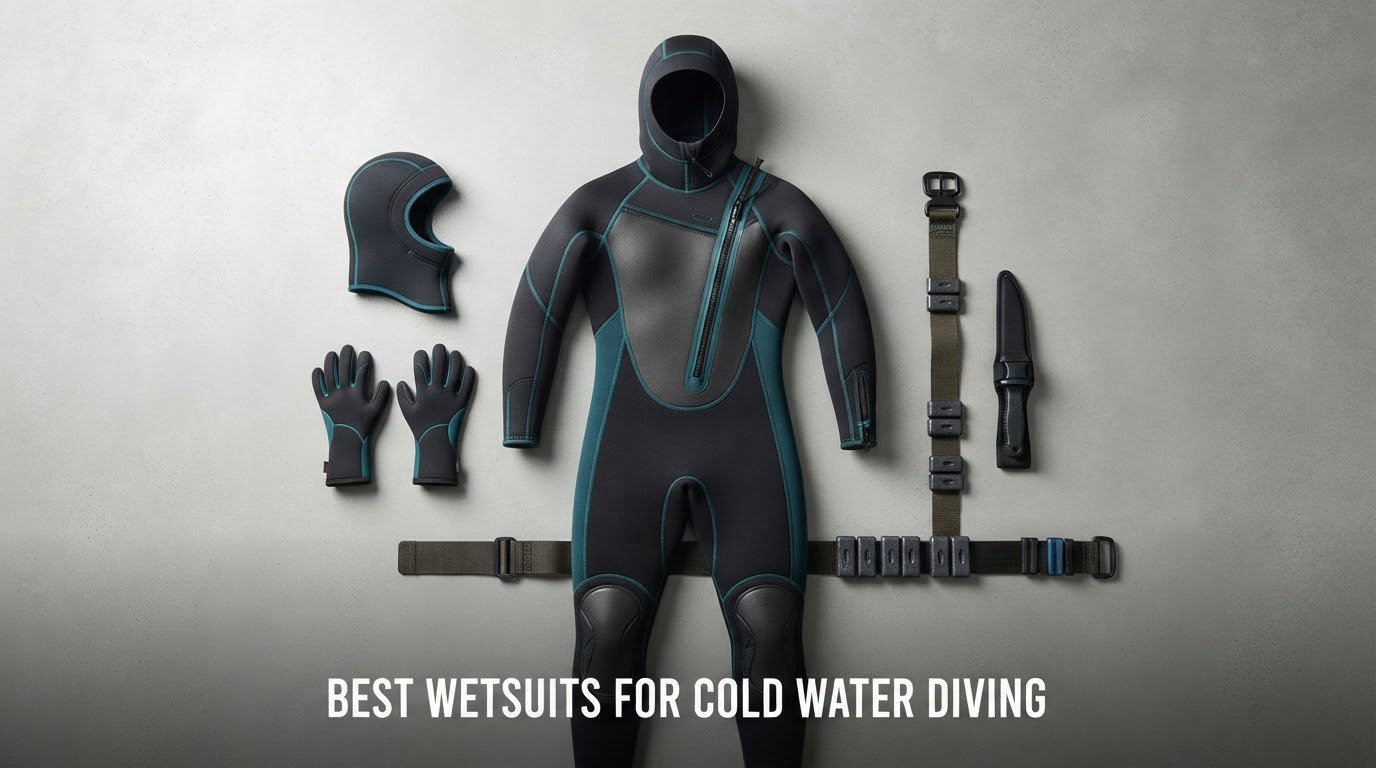
Below 60F (15C) you want a 7mm suit or thicker, a semi-drysuit, or a full drysuit. That single threshold decides most of this roundup: everything rated above it is a temperate-water tool, and everything rated below it is what cold water divers actually put in the water. We picked the best wetsuits for cold water diving by working through twelve full and long suits, sorting them by verified temperature rating, and reading the failure points reviewers actually report rather than the marketing claims.
Before the picks, the four things that actually decide whether a thick suit keeps you warm
Table of Contents
Top 3 Picks for the Best Cold Water Diving Wetsuits (October 2026)

Owntop 5mm High Stretch Full Wetsuit
- 5mm neoprene body
- 4mm CR neoprene cuffs
- Front YKK zipper
- Snug wrist and ankle seals
NeoSport 7mm Waterman Wetsuit John
- 7mm neoprene
- Flat lock and spot-taped seams
- Diamond plate knee pads
- Internal key pocket

Cressi Fast 7mm Back-Zip Full Suit
- 7mm double-lined neoprene
- YKK back zip with Aquastop
- Anatomic 120 degree neck
- Anti-abrasion knee panels
Our top three span the two things people actually argue about. The Owntop 5mm is the best all-round value in the mid-50s. The NeoSport 7mm Waterman is the cheapest route into genuine 7mm cold-water territory, and it has more owner feedback behind it than anything else here. The Cressi Fast 7mm is the one to buy if you dive rock and wrecks and care about finishing quality.
Best Cold Water Diving Wetsuits in 2026 at a Glance
| Product | Specifications | Action |
|---|---|---|
| Owntop 5mm High Stretch Full Wetsuit |
|
Check Latest Price |
| NeoSport 7mm Waterman Wetsuit John |
|
Check Latest Price |
 WYYHAA 7mm Ultra Stretch Front Zip Full Suit WYYHAA 7mm Ultra Stretch Front Zip Full Suit |
|
Check Latest Price |
 Lansru 5/4mm SCR Neoprene Wetsuit Lansru 5/4mm SCR Neoprene Wetsuit |
|
Check Latest Price |
 Ocealite 5/4mm Front Zip Full Wetsuit Ocealite 5/4mm Front Zip Full Wetsuit |
|
Check Latest Price |
 Hollis NeoTek 8/7/6mm Semidry Drysuit Hollis NeoTek 8/7/6mm Semidry Drysuit |
|
Check Latest Price |
 SCUBAPRO Definition 5mm Steamer SCUBAPRO Definition 5mm Steamer |
|
Check Latest Price |
 REALON 5/4mm Back Zip Thermal Full Suit REALON 5/4mm Back Zip Thermal Full Suit |
|
Check Latest Price |
| Cressi Fast 7mm Back-Zip Full Wetsuit |
|
Check Latest Price |
 BARE Revel 5mm Full Wetsuit BARE Revel 5mm Full Wetsuit |
|
Check Latest Price |
 Mares M-Flex 7mm Full Wetsuit Mares M-Flex 7mm Full Wetsuit |
|
Check Latest Price |
 REALON 5mm Hooded Full Body Wetsuit REALON 5mm Hooded Full Body Wetsuit |
|
Check Latest Price |
Every suit above is tagged with its verified band, either from the manufacturer temperature rating or from the water temperatures owners report diving in. Where a suit has no printed rating, we use the review evidence and say so in the entry.
1. Owntop 5mm High Stretch Full Wetsuit — Best All-Round Cold Water Pick
Owntop 5mm Wetsuit for Men Women, High Stretch Warmth Neoprene Suit
5mm neoprene body
4mm CR neoprene cuffs
GBS seams
Front YKK zip
Rated to 10C
Pros
- Holds warmth in 40F work conditions
- True to size when measured at chest waist hip
- Good neoprene quality for the money
- Holds up across repeated freediving use
Cons
- 5mm feels stiff for swimming
- Some buyers prefer softer premium neoprene
- Strong glue smell on a new suit
The Owntop is the suit we kept coming back to while working through this list, because the manufacturer rates it to 10C — about 50F — on a 5mm suit that most brands only claim to 55F. That single spec puts it into cold-water territory at a thickness most divers consider temperate.
Construction is a front-entry full suit in 90 percent neoprene and 10 percent nylon, with GBS seam construction, 4mm CR neoprene cuffs, and snug wrist and ankle seals to stop water infiltration. The front YKK zipper is the reason it is easier to live with than a back-entry alternative on a wet boat deck.
Owners use it in places that should be well outside a 5mm suit. One reviewer reports keeping it warm and comfortable through 40F water during towboat recovery work, which tells you more about the real thermal ceiling than any printed rating. Sizing follows the chest, waist and hip measurements, and buyers who measured up report accurate fits, which is not a given with budget suits.
What to check before you buy it
Check the seal cuffs first, because that is where a 5mm either wins or loses. The 4mm CR cuffs are thinner than the body panel, which is deliberate: thinner cuffs flex at the wrist without bunching. They will not replace a 5mm glove, but they will not fight one either.
Also budget for the break-in smell. Multiple owners mention it, and it takes several dives to fade. That is normal for glued neoprene and is not a defect.
Where it falls short
The 5mm panel is stiff. Owners moving up from a 3/2mm notice this immediately, and it is the reason we would not pick it for a freediver doing long surface swims. For scuba, where you are dressed and stationary between dives, the stiffness largely disappears.
It is also not a suit for 45F repeated days. At that point you want the 7mm suits in this roundup, or a semi-dry.
2. NeoSport 7mm Waterman Wetsuit John — Best 7mm for the Money
NeoSport Men’s Premium Neoprene 7mm Waterman John Wetsuit, 3X-Large
7mm neoprene
Flat lock spot-taped seams
Lycra trimmed seals
Key pocket
1 pound listed weight
Pros
- Holds heat in 30-50F water for hours
- Correctly cut groin area aids movement
- Detailed chest waist height chart
- Excellent value against dive shop pricing
Cons
- Knee pads are thin
- Runs small so size up
- No ankle zippers makes doffing hard
With 242 owner reviews behind it, the NeoSport Waterman has more real-world feedback than any other suit on this page, and the reports are unusually consistent. Buyers describe 7mm neoprene holding heat through hours in 30F to 50F water, which is a broader band than the manufacturer claims.
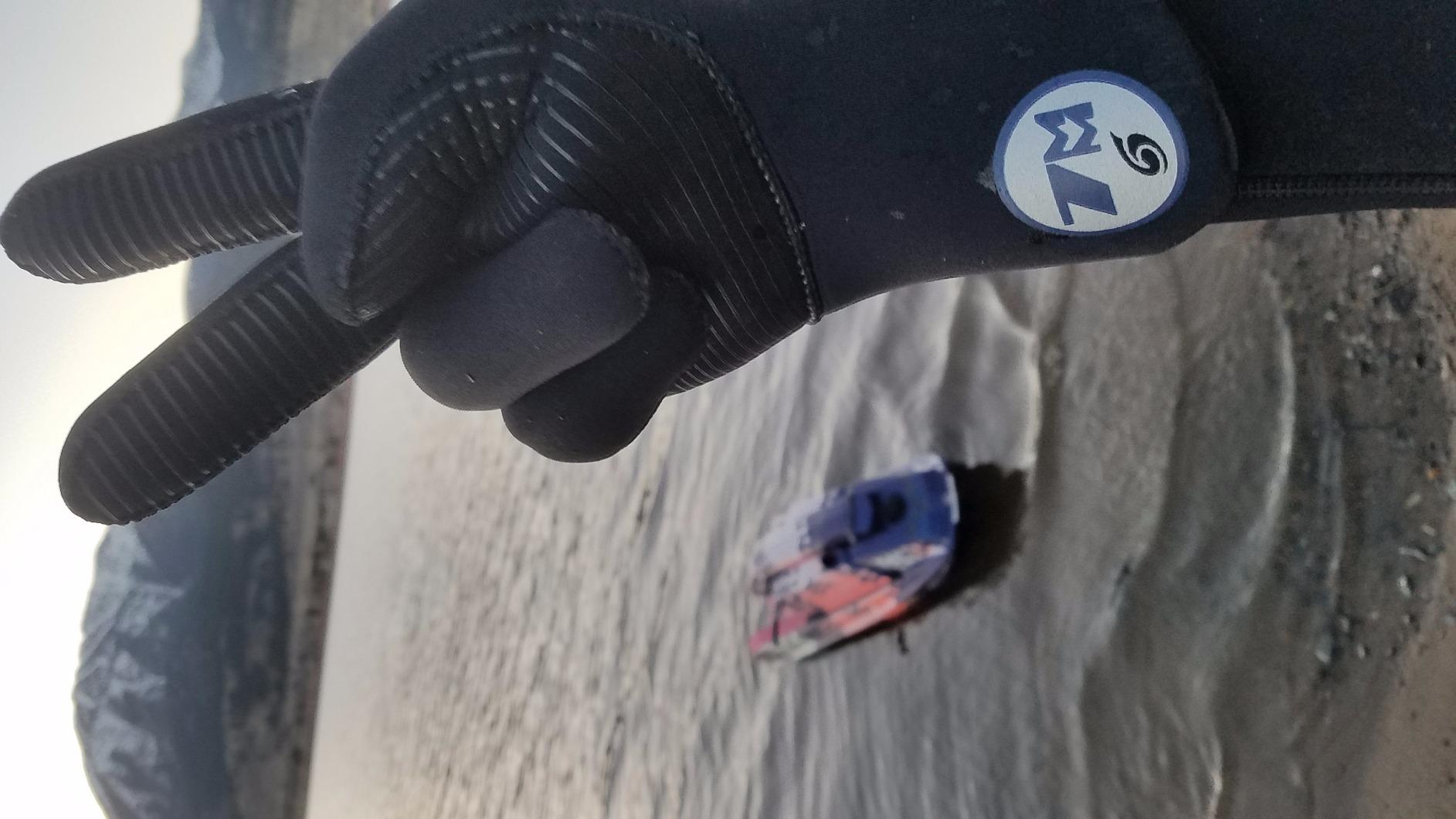
The Waterman is a farmer john, meaning a high-cut chest with a separate lower section rather than a conventional one-piece. It is a genuine 7mm throughout with flat lock seams that are smooth inside and out, plus spot-taped stress points where the seams take the load. Seals at wrists and ankles are Lycra trimmed, and there is an internal key pocket, which is the kind of small thing that tells you this was specced by someone who dives.
It is also an older pattern, which cuts both ways. The sizing is well documented with a chest, waist and height chart, and the cut is correct rather than pattern-cutter lazy. But the armour-flex style knee pads it carries are thin by modern standards.
Sizing is chart-driven, so measure chest, waist and height rather than guessing. Owners who size up report a better fit, since the suit runs small.
Why divers keep buying it
The reason is the combination of thickness and a realistic entry price for genuine 7mm. Almost every other 7mm on this list costs two to three times as much, and the review consensus is that the thermal performance is comparable for recreational cold-water diving.
It is also the one entry-level suit here that owners describe as comfortable across a full day rather than tolerable for a single dive, which is what separates a 7mm you keep from a 7mm you tolerate.
What gives it away
No ankle zippers, and the suit is heavy enough in 7mm that stripping it on a swim platform without help is a genuine chore. The knee pads are thin enough that owners working in rock should treat them as cosmetic rather than protective.
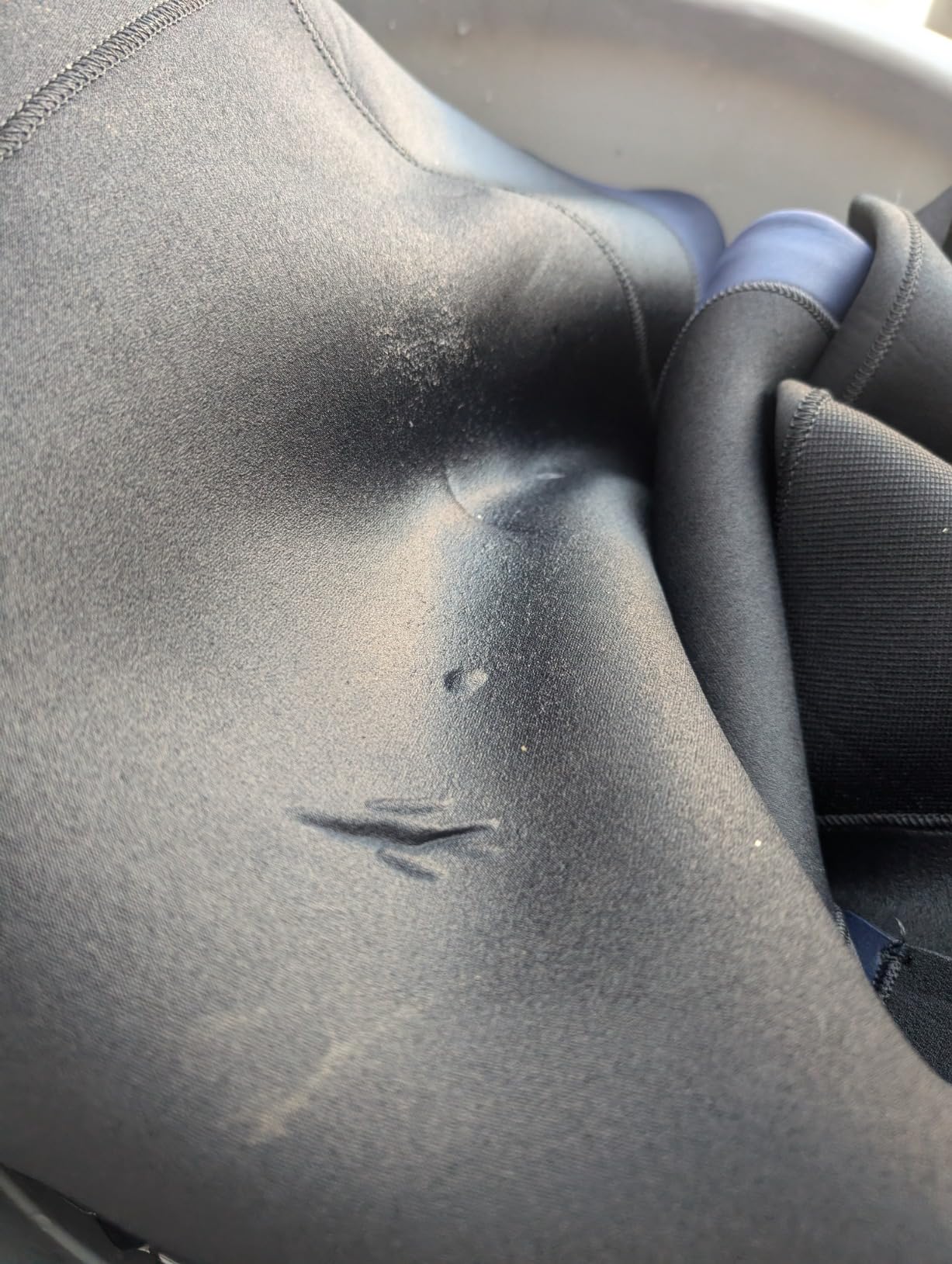
Some buyers also report stress marks appearing around the seams after limited use. That is normal compression set in soft neoprene and it does not stop the suit working, but it is worth knowing about.
3. WYYHAA 7mm Ultra Stretch Front Zip Full Suit — Best Budget 7mm With Wrist and Ankle Zippers
Wetsuits Men’s Ultra Stretch 7Mm Neoprene Full Suits Long Sleeve, Winter Warm Front Zip Full Body Diving Suit for Snorkeling Scuba Diving Swimming,3XL
7mm neoprene
Rated 53F
Front zip with long pull strap
Wrist and ankle zippers
Pros
- Very warm for the thickness
- Front wrist and ankle zippers aid donning
- Holds up against barnacles and scrapes
- Dries in a few hours
Cons
- Sizing runs small by one or two sizes
- Hard to pull down over wet shoulders
- Average construction and zip quality
The WYYHAA is rated to 53F, or about 12C, which places it in the middle of the 7mm group in this roundup. It is also the only 7mm here with wrist and ankle zippers, and in cold water that is not a small detail. Gloves and boots go on and off far more easily, and a wrist zip is a genuine seal improvement over an open cuff.
Construction is premium stretch neoprene with an elastic nylon outer and a 4-thread flat lock stitch. There is a UV protection coating layer, which matters more than it sounds when you are doing three dives a day in a sunny northern quarry with an 80 minute surface interval.
Owners report the suit is warmer than its rating suggests, and that it holds up well against barnacles and scrapes, which is the relevant durability question for wrecks. It also dries in a few hours rather than staying wet overnight, an underrated trait on liveaboards.
Where the front zip earns its place
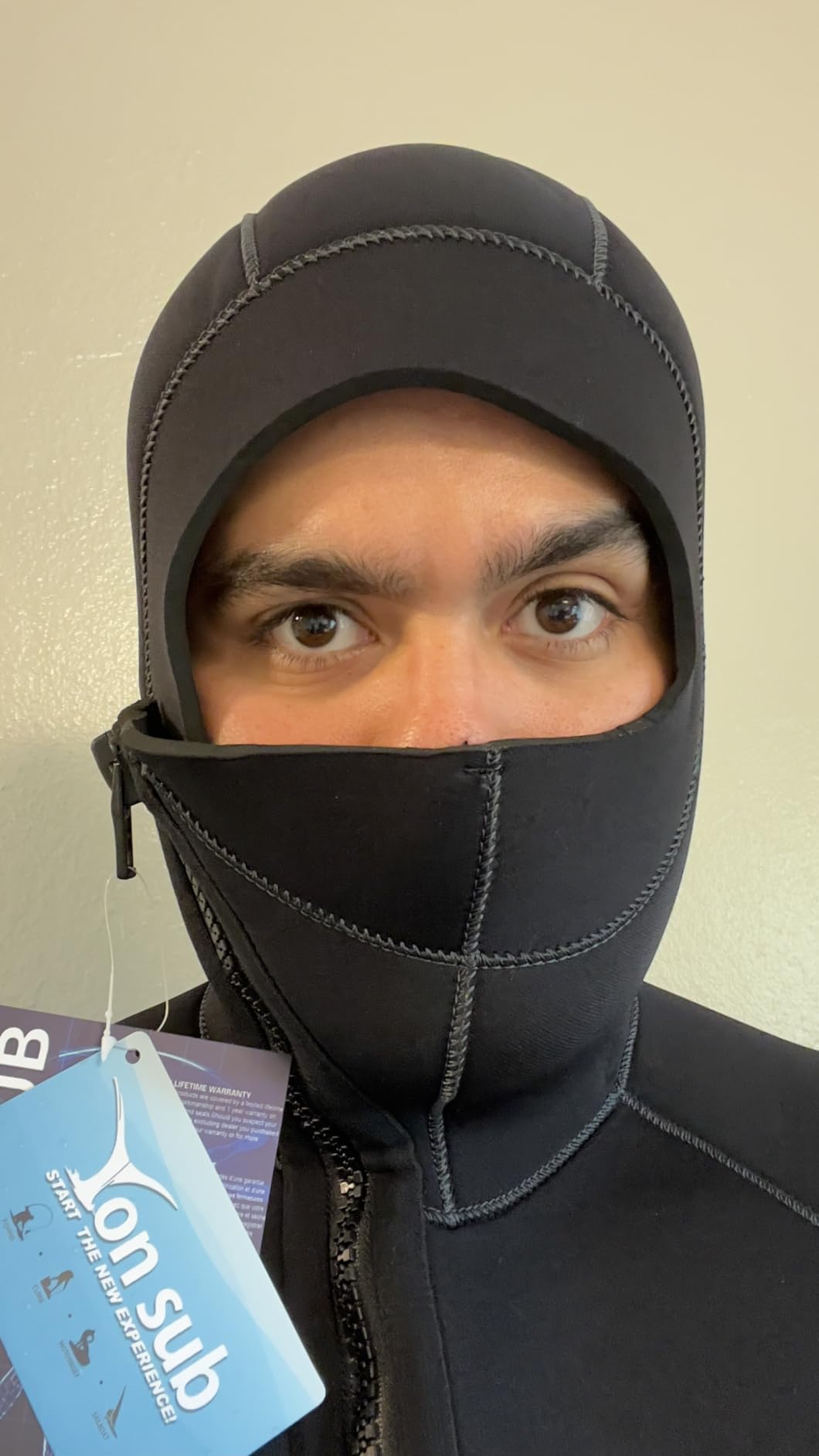
The long pull strap on the front zipper means you can open the chest for a surface interval without hauling the whole suit off, which directly helps with the overheating problem we come back to later. Front entries are easier to manage on a wet deck than back zips because you never have to twist your arms overhead behind your back.
Stretch is genuinely good for a 7mm, and owners compare it favourably against cheaper suits of the same thickness.
The sizing trap
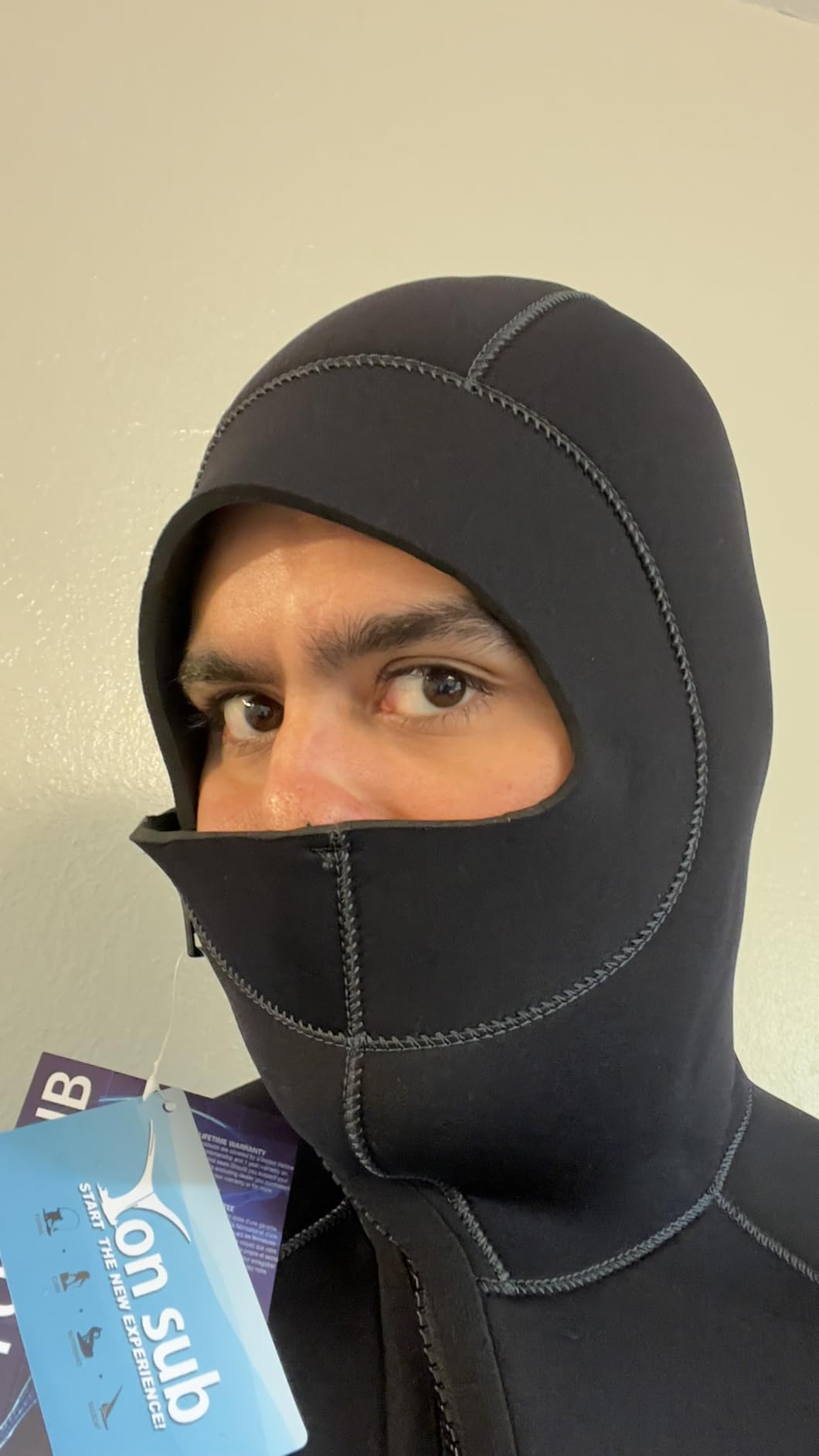
This is the big one: the suit runs small, and many buyers order up one or two sizes. If you are between sizes, order up rather than trying to squeeze in. A 7mm that is too tight restricts your breathing and finning far more than a 3/2mm ever will.
Second issue is doffing. Pulling a wet 7mm down over the shoulders alone is hard, and the wrist and ankle zips do not solve the body. Plan to have a buddy or a crew member at the ladder.
4. Lansru 5/4mm SCR Neoprene Wetsuit — Best 5/4mm Value Build
Lansru Men Wetsuit, 5/4 mm SCR Neoprene Wetsuits for Men,UPF 50+(L)
5mm SCR body with 4mm CR neck
YKK front zip
Super stretch yarn lining
2.9 pounds
OEKO-TEX certified
Pros
- SCR neoprene warmer than comparable SBR suits
- Easy front zip donning and doffing
- Good stretch despite 5/4mm thickness
- Accurate sizing for tall long-armed users
Cons
- Size chart favours chest and waist over height
- Arms run tight at larger sizes
- No wrist or leg zippers
The Lansru is built from 5mm SCR neoprene through the body with 4mm high-elasticity CR neoprene at the neck and limbs. That chemistry matters more than the millimetre figure: owners consistently report SCR runs warmer than the SBR foam used in budget suits at the same stated thickness, and it is the reason we would pick this over a cheaper 5/4mm.
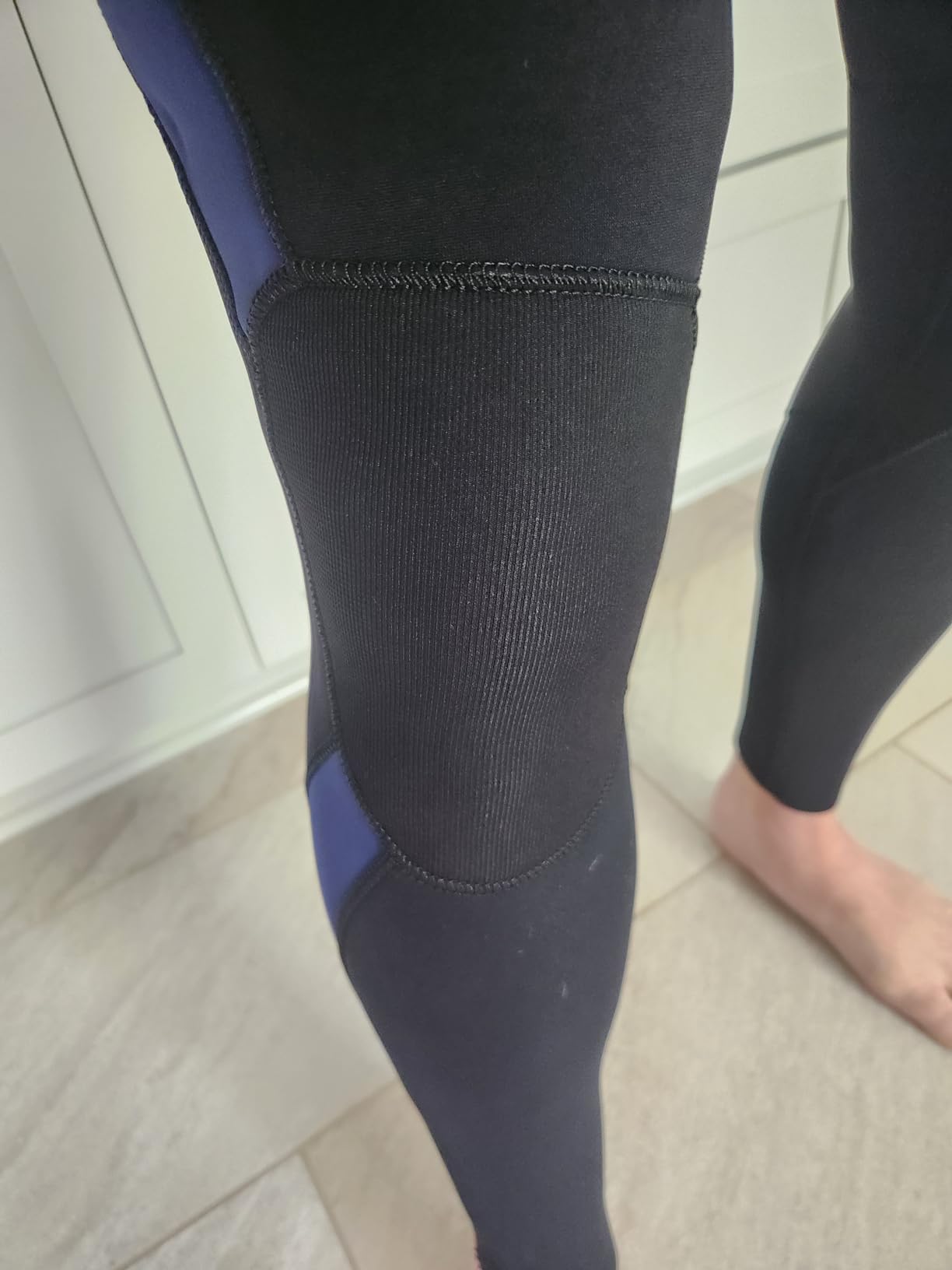
Inside there is a super stretchy yarn lining with a skin-friendly patch design, thickened PU knee pads, a nylon outer for abrasion resistance, and a YKK front zip. It is also OEKO-TEX Standard 100 certified, which is unusual at this level and matters if you are sensitive to the chemical smell of new neoprene.
Buyers like the movement. Despite being 5/4mm, the stretch panels let you fin and reach for valves without fighting the suit, and the front zip makes suiting up straightforward. Seams and knee construction are well sewn for the money.
Who this suits
Divers in the mid-50s to low 50s who want better warmth than a cheap 5mm gives, and who like a suit that moves. The 4mm neck and limb panels are exactly the right call in cold water, because thinner neoprene at the neck and wrists keeps flexibility where you need it and insulation where you do not.
It is a strong choice for tall divers with long arms, who report accurate sizing in a category where most budget suits are cut short.
Where it lets you down
The size chart prioritises chest and waist over height, and that produces a too-small suit for a lot of people. Check arm length as well as chest, and read the height feedback in reviews before you commit.
There are no wrist or leg zippers, so doffing a wet 5/4mm alone is a two-person job. And note the buoyancy: the suit weighs 2.9 pounds dry, and owners report needing noticeably more lead than a 3/2mm.
5. Ocealite 5/4mm Front Zip Wetsuit — Best Zoned Thickness Layout
Ocealite Men’s Front Zip Full Wetsuit, 3mm 4/3mm 5/4mm Neoprene Wetsuits for Surfing, Diving, Snorkeling, Swimming, Flatlock or Blind-Stitch, PU Knee Pads (Mens 5/4mm Navy Blue, X-Large)
5mm torso with 4mm arms and legs
Glued and blind-stitched seams
YKK front entry
Lycra seam tape
Pros
- Zoned thickness balances warmth and mobility
- Blind-stitched seams seal without losing stretch
- Front zipper works easily when wet
- Lycra seams cut friction at wrists and ankles
Cons
- Multiple thickness and cut options confuse sizing
- Front zip suits are hard to strip over shoulders
The Ocealite is laid out the way an experienced designer would do it: 5mm through the torso, 4mm through the arms and legs. In cold water the torso is where you generate heat and where you need insulation, while the limbs need range of motion for finning and for working a valve. Zoned thickness is the single most effective spec on this page for a 5/4mm suit.
Seam construction is glued and blind-stitched, which is the meaningful upgrade over flat lock stitching used on the cheaper suits here. Flat lock is a decorative stitch; a glued and blind-stitched seam is mechanically sealed, and it resists water migrating along the seam line. The YKK front entry zipper works even when everything is wet, which is the situation you will always be in.
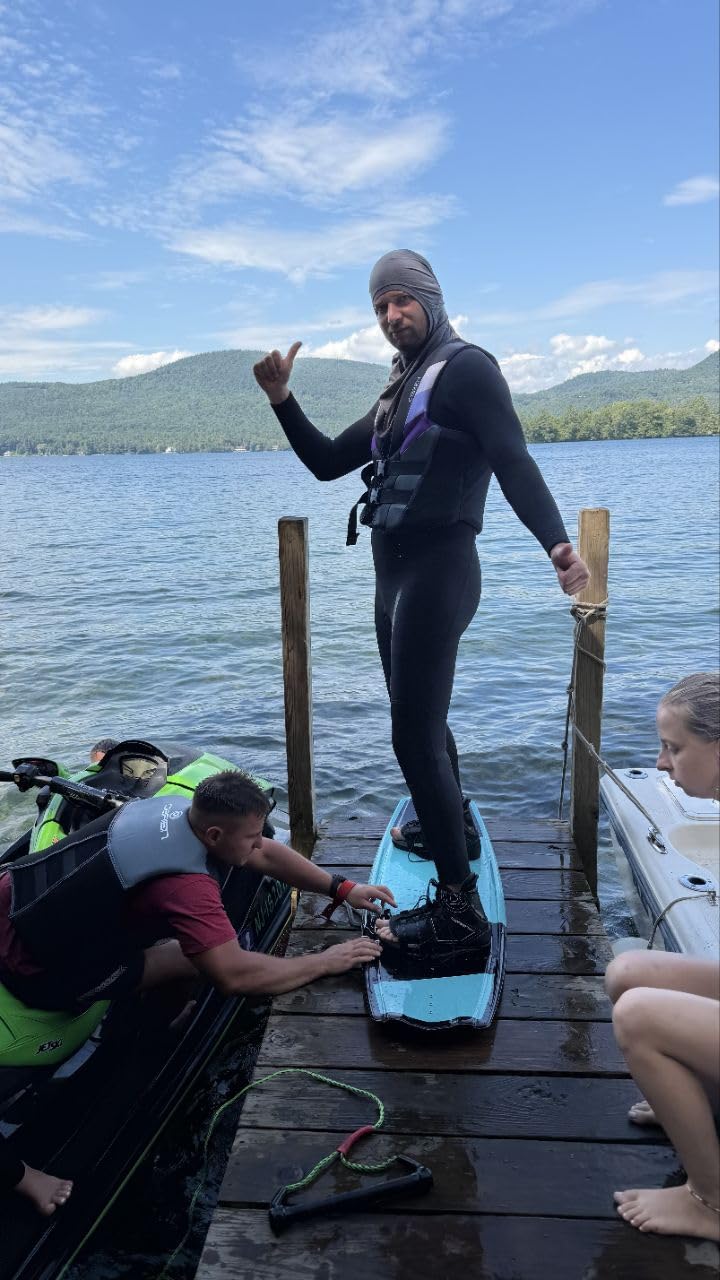
Lycra comfort seams run at the wrists, ankles and neckline, and there are PU foam knee pads with an internal utility pocket. Owners report the Lycra tape noticeably reduces chafing at the neck, which is a real problem in a 5/4mm over a rash vest.
Why the zoned layout matters in cold water
Thick neoprene is heavy and stiff. A 5mm panel down the arms costs you range of motion and adds drag, and in 50F water you do not need it. The 4mm limb panels here keep the suit flexible enough to fin properly while the 5mm core does the insulating.
The blind-stitched seams are the other reason to look at this suit if you dive wrecks. Water slowly tracking along a flat lock seam is a quiet, steady heat loss that you notice in the second hour, not the first.
The confusing part
Ocealite offers multiple thicknesses and short and tall cuts in the same listing, and buyers report picking the wrong variant. Check the size map carefully against your height, and make sure you have selected the 5/4mm and not the 3mm or 4/3mm version.
Front zips are also harder to pull down over the shoulders when wet, even with the YKK pull. If you are on a small boat without crew, test it in a shop first.
6. Hollis NeoTek 8/7/6mm Semidry Drysuit — Best Semi-Dry for High 30s Water
Hollis Mens NeoTek 8/7/6mm Semidry Dive Drysuit – Medium – Large
8/7/6mm neoprene mix
Lavaskin inner liner
G-lock horizontal front zip
Internal dams
Pros
- Internal dams block cold water at neck wrists ankles
- Mix of compression-resistant and stretch neoprene
- Horizontal front zip vents between dives
Cons
- Bulky and heavy against a plain 6mm
- Lavaskin liner is not removable so sizing must be right
This is the only semi-drysuit on the list and the only suit here built for water in the high 30s, which makes it the answer when a 7mm is no longer enough. The thickness is zoned 8/7/6mm, with compression-resistant neoprene where you need depth support and super-stretch panels where you need movement.
What makes it semi-dry rather than simply thick is the internal dams at the neck, wrists and ankles, plus the exclusive Lavaskin inner liner. A dam is a second seal layer that sits above the first; water that gets past the outer seal meets the dam and stops. In a 5/4mm suit, a wrist dam is a nice touch. In an 8/7/6mm suit, it is the difference between warm and genuinely cold.
The G-lock horizontal front zipper with an internal bib is a good design choice for long surface intervals. It runs across the chest rather than down the back, so you can reach it without contorting, and the internal bib gives you a dry layer to sit in while you are waiting out an 80 minute interval.
When a semi-dry earns its price
It earns its price on multi-day trips, long repetitive bottom time, and water below 45F where a 7mm leaves you managing your core temperature rather than enjoying the dive. The Lavaskin liner also speeds up drying between dives, which matters on a boat where the suit stays damp for 12 hours.
The horizontal zip is genuinely useful for venting. Owners mention using it between dives, which is a direct answer to the overheating complaints we hear constantly in cold-water forums.
Where it is the wrong call
It weighs 4 pounds and is bulkier than a plain 6mm suit, and that bulk shows most in small spaces. Wreck penetration, undercuts and any dive where you need to get low and tight are harder in a suit with internal dams and a liner.
Critically, the Lavaskin liner is not removable. If you get the size wrong you cannot take it out, so work out your fit before you order. This is the one suit on the page where fit errors are expensive rather than annoying.
7. SCUBAPRO Definition 5mm Steamer — Best for Long Dives at the Cold Edge of 5mm
SCUBAPRO Definition Steamer 5.0 mm Mens – Black – XL
Class B rated 50-64.5F
Body Map System 3D cut
Double zipped seals
Pros
- Warm and comfortable across long dives
- Stretch panels make donning and doffing much easier
- Neck zipper vents between dives
- Stands up after a dozen deep dives
Cons
- Ankle zipper can cut feet during doffing
- Sizing runs smaller than the chart
- Limited chest stretch for larger bodies
The Definition is a Class B dive suit, rated by SCUBAPRO for 50F to 64.5F. That bottom end of 50F puts it in the same real-world band as the Owntop 5mm, reached through a completely different route: a proper 3D anatomical cut and stretch panels rather than a slightly optimistic rating.
The Body Map System 3D cut with material inserts places softer, stretchier material exactly where your joints bend. Combined with the Ultraspan chest panel and Stretchtec body fabric, plus seamless single arm and leg stretch panels, it makes a 5mm move much more like a 3/2mm than the millimetre figure suggests. Owners doing full dives report it stays comfortable to the end of the hour rather than becoming a chore.
Sealing is the standout feature. Double zipped seals at the neck, wrists and ankles means two layers of closure at each point, and the neck zipper can be opened to vent between dives, which is the single most useful cold-water feature on this page. A wearer reports using it comfortably through a dozen deep dives without the suit losing shape.
Why the venting neck matters
On a liveaboard with three dives a day, a suit you can vent at the neck is a suit you are not overheating in. Divers describe the same problem from the other direction: sweating through a sealed suit on deck, then shivering on re-entry. An openable neck seal directly addresses that cycle.
The three-dive-a-day durability report is also worth noting. Owners use this suit to 80 to 100 meters repeatedly without the panels bagging out, which is more than several cheaper 5mm suits on this list can claim.
Watch the ankle zippers
Multiple owners report the ankle zipper being sharp enough to cut feet during doffing. That is a real and avoidable problem, but it is the main recurring complaint in reviews.
Sizing also runs smaller than the chart suggests, and short sizes disappoint taller divers. If you are tall, read the height comments, and consider the limited warranty as part of the value calculation rather than a bonus.
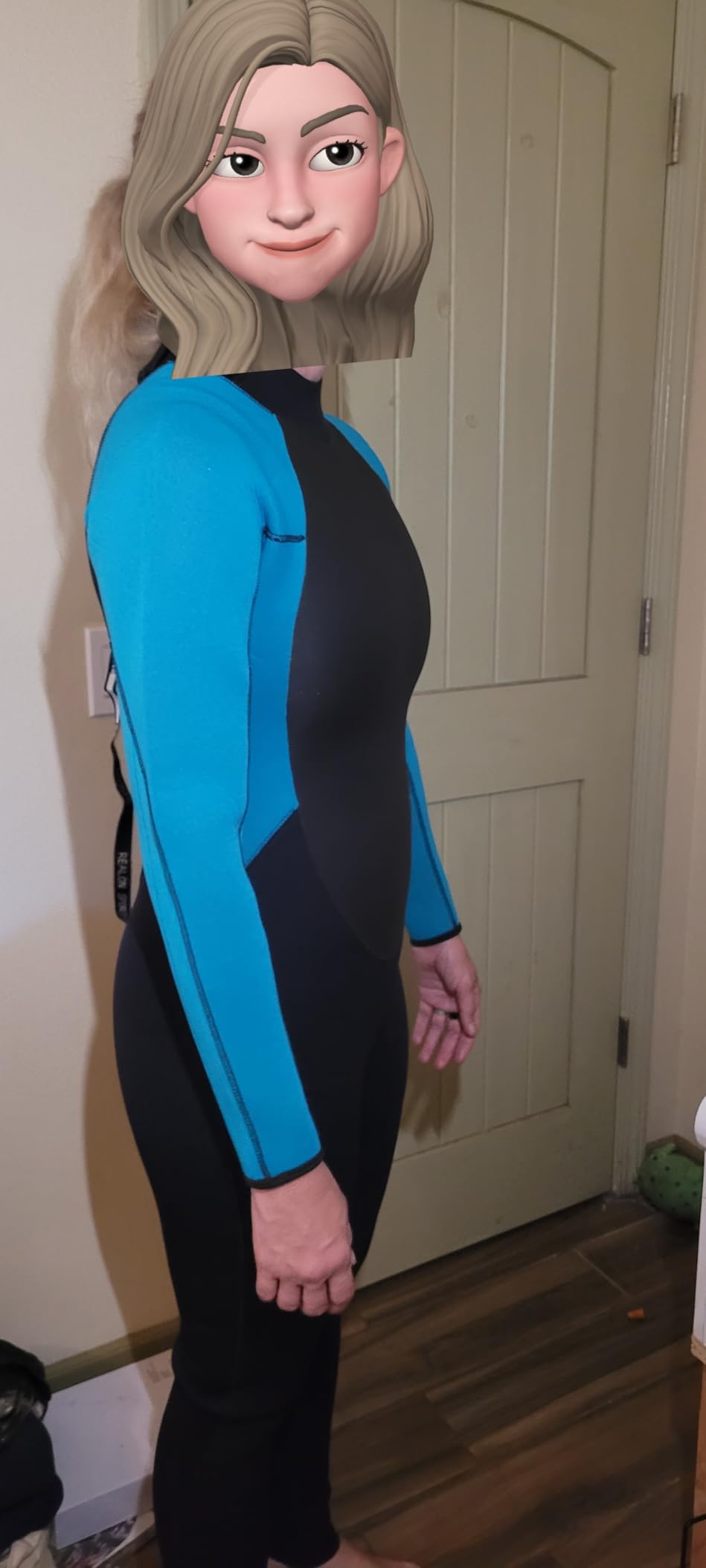
8. REALON 5/4mm Back Zip Thermal Full Suit — Best for Buyers Between Sizes
REALON Mens Womens Wetsuit 5/4mm Neoprene Scuba Diving Long Sleeve Back Zipper Thermal Wet Suits Cold Water Keep Warm
5/4mm neoprene
Back zip with inner cover
Reinforced knees
Rated 68F
Pros
- Solid warmth at a budget price
- Inner zipper cover stops chafing
- Reinforced knees survive abrasion
- Men and women cuts across a wide size range
Cons
- Less than the full 5mm despite the 5/4mm label
- Back zipper is awkward for divers
- Takes several uses to break in
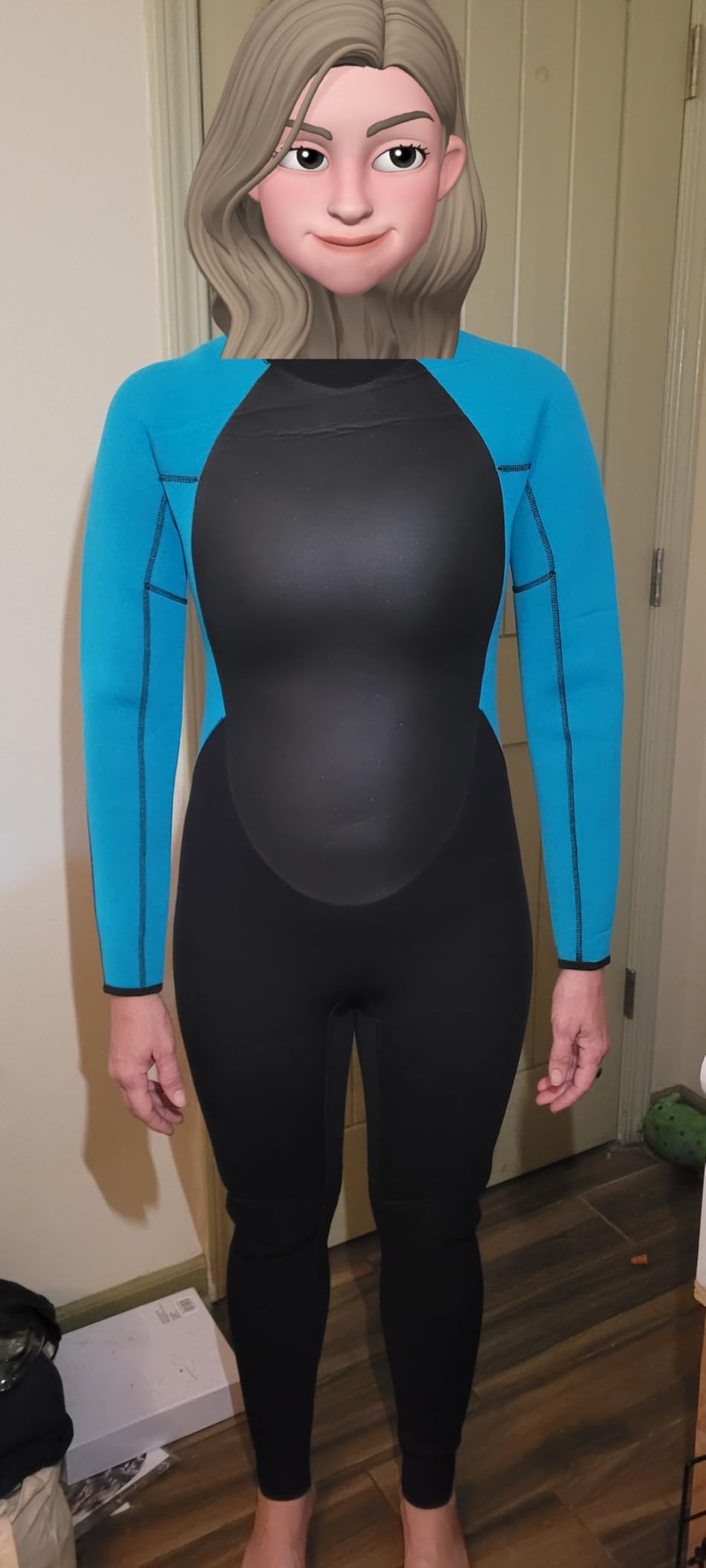
This is a men’s and women’s suit from the same listing, and that is genuinely useful for a category where cold-water searches split hard by gender. The pattern is listed across a wide size range with chest and waist dimensions given clearly, which cuts through most of the sizing complaints we saw elsewhere in this roundup.
Construction is 5/4mm neoprene full body with reinforced knee pads and ventilated folded cuffs designed to reduce water ingress at the wrists and ankles. The back zipper has an inner protective cover so the zip does not sit against your skin, which is a small detail that matters over a 60 minute dive.
Owners rate the warmth highly for the money, and the 4.5 rating across 37 reviews reflects that. It adds buoyancy and cuts water resistance, which makes it a solid suit for snorkelling and for divers who are not carrying much weight.
Who should pick this
Anyone whose main worry is fit. The measurements are given plainly, the cut works for men and women, and a back zip avoids the question of whether a front zip suit will go on over a chest that is not a standard shape. For a first 5/4mm suit bought online, that predictability is worth a lot.
It is also a sensible pairing piece if you already own a good hood, gloves and boots in 5mm and want a suit to wear underneath them.
The honest caveats
The label says 5/4mm but owners report closer to 5mm of actual neoprene, so treat it as a 5mm rather than a 5/4mm when you are choosing a temperature band. Rated to 68F, it sits at the temperate end of the 5mm group, which is not where you want to be in real cold water.
The back zipper is genuinely awkward to reach on a wet deck, and the suit takes several uses to soften up. If your diving is in the low 50s or below, this is not the suit.
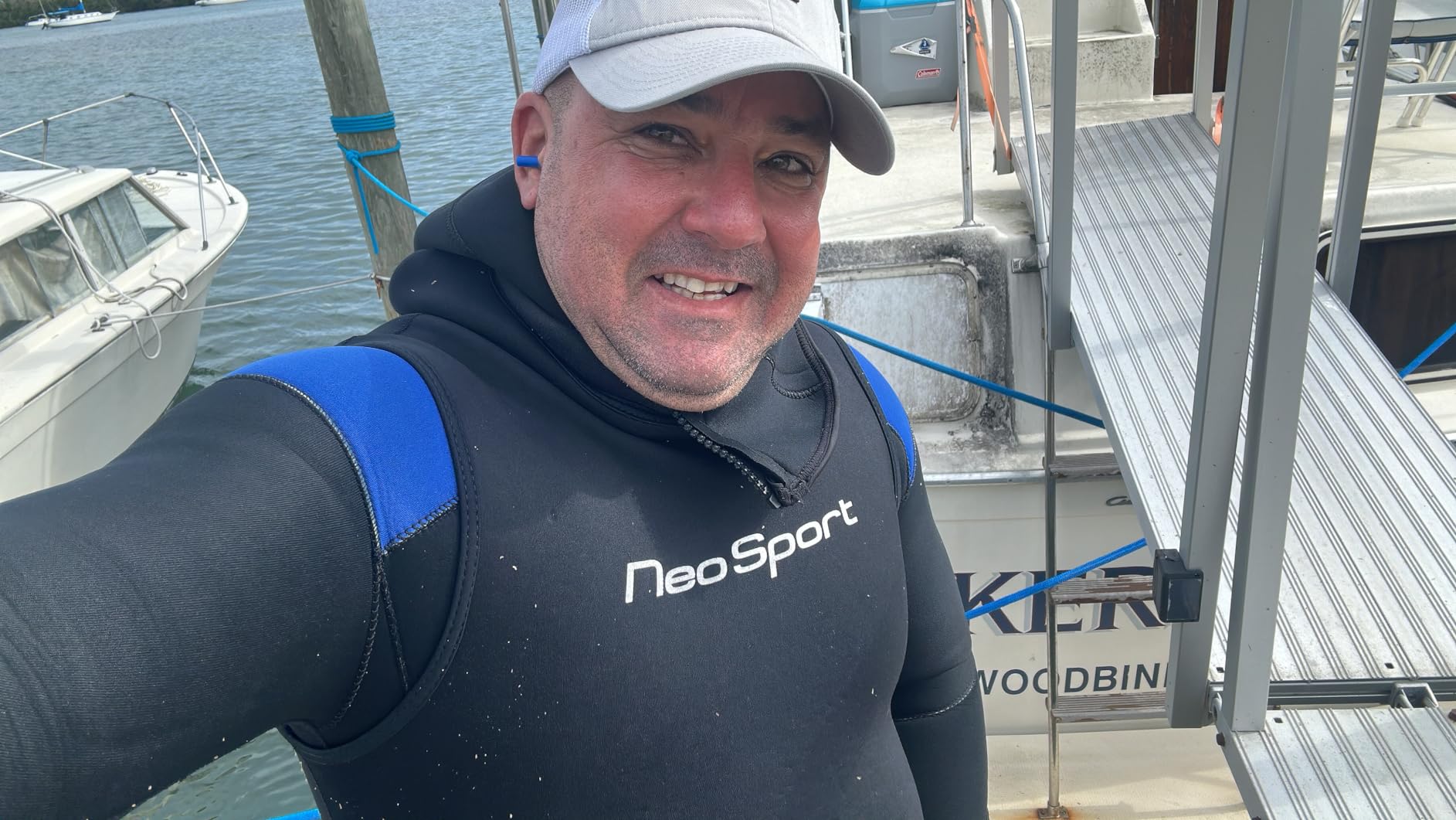
9. Cressi Fast 7mm Back-Zip Full Wetsuit — Best 7mm Build Quality for Rocky Dives
Cressi Fast 7 mm Men’s Monopiece Wetsuits, Black/Blue, 7 mm, M
7mm double-lined neoprene
YKK back zip with Aquastop
Anatomic 120 degree neck
Anti-abrasion knee panels
Pros
- Very warm with owners diving it in 45F
- Excellent materials seams and finishing
- Strong knee reinforcement for rock
- True to Cressi size charts
- Long warranty cover
Cons
- No integrated hood
- Runs small so size up
- Back zip harder to reach than front entry
Cressi built the Fast 7mm in Italy and it shows. This is the suit we would choose for cold-water wreck and rock diving, because the finishing is a clear step above everything else at 7mm and the reinforcement is where it counts. Rated to 1C, or about 34F, though most owners use it in far more temperate conditions.
The 7mm neoprene is double-lined, which is Cressi’s answer to compression at depth. A double-lined laminate does not thin out as fast as single-layer foam, so the suit keeps its insulating properties at 40 meters. Reviewers report using it comfortably in 45F water, which is a realistic number for this build.
The seal system is the other thing to notice. A YKK back zip is paired with an under-zip lining and an Aquastop water-stop system, silicone wrist and ankle bands seal well, and the neck is preformed to 120 degrees. That neck angle matters more than it sounds: it follows your natural neck position instead of forcing your head forward, which reduces the tired feeling after a long day in a 7mm.
Why the reinforcement is the deciding factor
Anti-abrasion knee reinforcement plus Tatex panels at the knees and shoulders is the feature that matters on rock. Cheap 7mm suits use thin foam knee pads that disappear in a season on gravel. These are designed to take contact, and reviewers on rocky dives single them out as the reason the suit holds up.
Pre-shaped legs make kicking easier in thick material, and the warranty cover is the longest on this page.
Where it is not the answer
There is no integrated hood, so in the low 40s you are adding a separate hood and accepting the neck junction as a weak point. Cressi make hooded versions, but not of this suit.
It also runs small. One reviewer needed a size up in the same model, and Cressi sizing is otherwise true to chart, so order up if you are between sizes. A back zip is harder to reach than a front entry, and some owners find the suit warmer than the stated 7mm, which is a problem on warm trips rather than cold ones.
10. BARE Revel 5mm Full Wetsuit — Best 5mm for Mobility in Temperate Water
BARE 5MM Revel Men’s Full Wetsuit | Combines Comfort and Flexibility | Made from a Blend of Neoprene and Laminate | Designed for All Watersports Including Scuba Diving and Snorkeling | Grey XLS
5mm neoprene and laminate
Anatomic shoulder and neck pattern
Extra long back zipper
Pros
- Soft flexible neoprene that stretches where needed
- Internal seals below elbows and calves
- Easy donning with the long back zip
- Durable in wrecks and around rock
Cons
- Not the warmest 5mm available
- Sizing inconsistent between cuts
- Some cuts leave a water pocket in the lower back
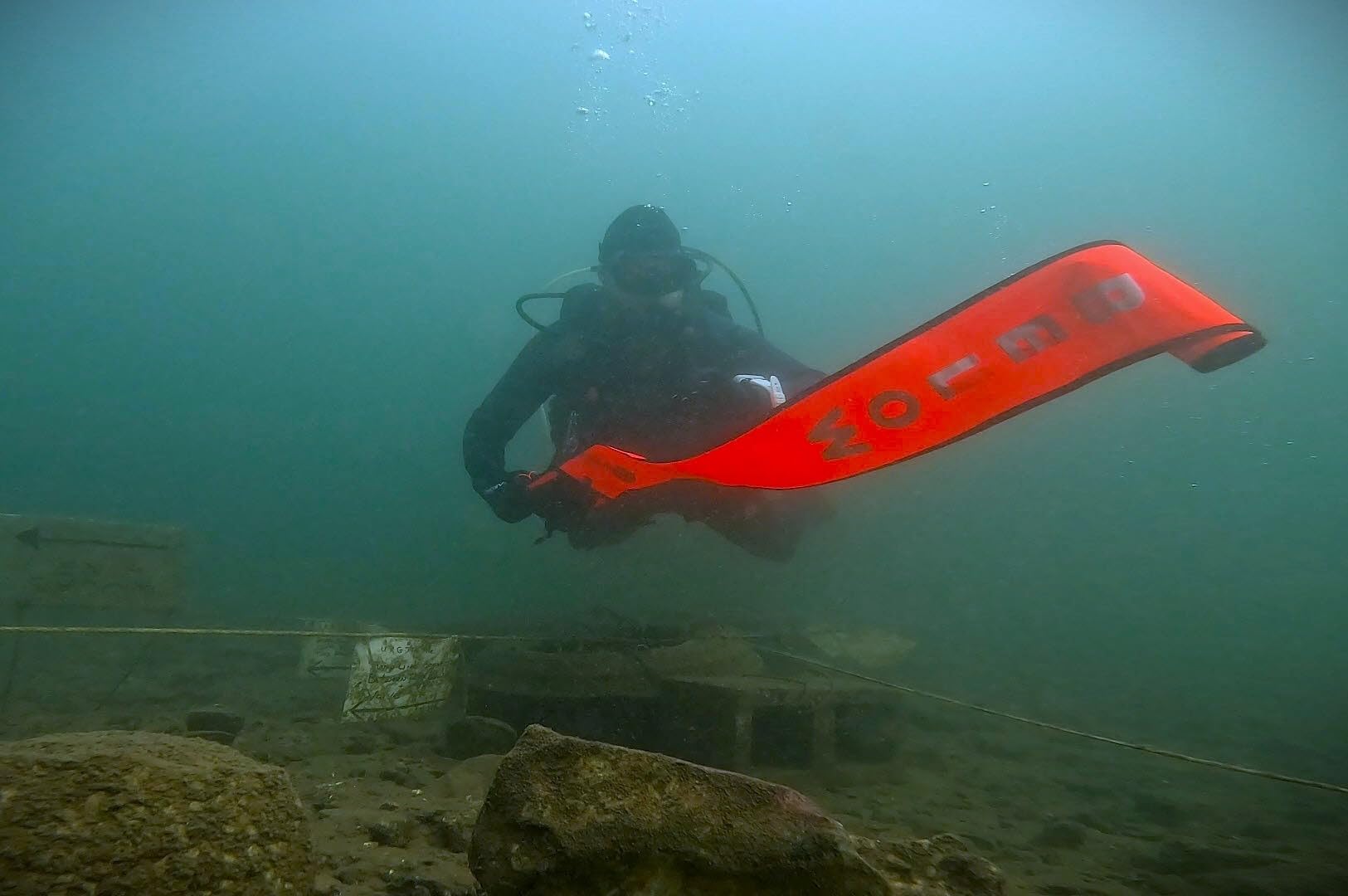
The BARE Revel sits at the temperate end of 5mm, and owners confirm it by using it comfortably in 65F water all day. That is not a criticism, it is positioning. If your coldest dive is 60F, this is the most comfortable suit on the page and you should not pay for 7mm insulation you will cook in.
What BARE does well is pattern. The anatomically correct shoulder and neck pattern is designed to remove pressure points, and the low profile collar with a velcro tab avoids snagging on your BCD or on a harness. Those are small details that you notice on dive 40 and never on dive one.
The 5mm is a blend of neoprene and laminate rather than full neoprene, which makes it softer and lighter while staying durable. An extra long heavy duty back zipper is genuinely long, and combined with the internal seals below the elbows and calves it makes the suit easy to get in and out. Armor-flex knee pads add protection without the bulk of a hard pad.
Best use case
Multi-day trips in temperate to mildly cool water, especially wrecks and rocky shore diving, where a stiff 5mm would fight you. Owners report the suit lasting well and staying flexible, and the warranty on workmanship and materials is the equal best on this page.
Because the material is soft, it also suits divers who find thick suits claustrophobic. A 5mm that flexes with you is far less restrictive than a rigid 7mm.
Where it falls short
It is not the warmest 5mm available, and the laminate outer is less forgiving than full neoprene when the fit is marginal. Sizing is inconsistent between the short and tall cuts, with at least one buyer returning for a larger size.
Some cuts also leave a water pocket in the lower back, which turns a warm suit into a cold one at the end of a dive. If you have a long torso, read the cut-specific comments carefully before buying.
11. Mares M-Flex 7mm Full Wetsuit — Best 7mm for Low Drag and Streamlined Diving
Mares Men’s M-Flex 7 mm Neoprene One Piece Full Body Scuba Diving Wetsuit for Cold Water, Black, Medium
7mm ultra-stretch neoprene
Streamlined low-drag cut
Redesigned adaptable sizing
One-piece full body
Pros
- 7mm gives solid warmth in cold water
- Ultra-stretch material allows free movement
- Streamlined cut reduces drag
- Updated sizing suits a wider range of bodies
Cons
- Only a small number of sizes offered
- No hood for genuinely cold water
- Limited pocket storage
The M-Flex is Mares entry into 7mm cold water, and the ultra-stretch neoprene is the point of it. A 7mm that moves like a 5mm changes how a whole dive feels, and owners consistently report free movement in a suit that should be stiff by definition.
Mares redesigned the fit to adapt to a wider range of body types, which is the second real improvement. Many 7mm suits on the market are cut for one ideal body and leave everyone else cold because of a gap at the neck or a bunched shoulder. The streamlined cut also reduces drag while diving, which is more noticeable in a thick suit than a thin one.
It is a one-piece full body with a minimalist styling and subtle graphics. It does what a 7mm needs to do without internal dams, a liner, or a chest vent, and that simplicity is part of the appeal.
When this is the right pick
Recreational cold-water diving in the 45F to 53F band where you want warmth without a heavy liner, particularly if you are new to 7mm and want something you can move in. The low-drag cut suits divers who fin hard over distance rather than hovering on a wreck site.
If you are moving up from a 5mm, this is an easier jump than a stiff 7mm from a brand that prioritises structure over stretch.
The limitation to plan around
Size availability is the real problem. Only a small number of sizes are offered, and if you fall outside them, the sizing redesign will not help you. Check availability against your measurements before you commit, because resizing a 7mm in the wrong direction is a long wait.
There is no hood, which puts it behind the Cressi and the 5mm hooded suit for genuinely cold water, and the minimalist design means very little pocket storage — bring a separate pouch for keys and a torch.
12. REALON 5mm Hooded Full Body Wetsuit — Best Budget 5mm With an Integrated Hood
REALON 5mm Neoprene Men Wetsuit with Hooded Full Body One Piece Thermal Spearfishing Wet Suits Front Zipper Cold Water Keep Warm for Surfing Swimming Diving Snorkeling
5mm neoprene with integrated hood
Wrist and ankle zippers
Front zipper
Sun protection coating
Rated 68F
Pros
- Integrated hood adds real warmth in cold water
- Wrist and ankle zippers make gloves and boots easy
- Front zip simplifies donning and doffing
- Good insulation for the price
Cons
- Only two size variants listed
- Hood is uncomfortable if you do not wear one
- Limited availability across sizes
The reason this suit is on the list is the integrated hood. Every other 7mm and hooded option here is either a full liner or a bolt-on hood with a neck junction, and this is the only one that gives you head coverage as part of the suit. For divers whose head goes cold first — which is a recurring theme in cold-water forums — that is a genuine thermal advantage rather than a cosmetic one.
It is 5mm neoprene, front zipper entry, with waterproof wrist and ankle zippers. Those two zipper pairs are the underrated feature: they make gloves and boots go on and off without fighting open cuffs, and a wrist zip is a measurable seal improvement over a bare 5mm cuff.
The 4.6 rating reflects that owners like what they get for the money. It is aimed at spearfishing and cold-water surface work as much as scuba, and the buoyancy it adds reduces water resistance for divers carrying light weights.
What the hood actually buys you
Your head is a large surface area with thin blood supply, and divers consistently report losing head warmth before their core. An integrated hood removes the junction gap that exists between a suit neck and a separate hood, and it removes one more piece of gear to forget on a cold boat deck.
Pair it with a 5mm suit and you cover head, torso and limbs with matched thickness, which is a simpler system to reason about than mixing 5mm and 7mm parts.
Where it is the wrong choice
If you dive in warm water or do not wear a hood, the integrated hood is dead weight you cannot remove, and owners without a hood habit report discomfort. Rated to 68F, this is a 5mm suit, not a 7mm one — it will not carry you into the low 40s.
Only two size variants are listed, and availability across sizes is limited. With only 21 reviews the sample is also the smallest on this page, so treat the rating as encouraging rather than conclusive. It is a strong budget pick, not a proven end-of-life suit.
How to Choose a Cold Water Diving Wetsuit
How a wetsuit keeps you warm
A wetsuit does not generate heat. It works by trapping a thin film of water between the neoprene and your skin; your body warms that film and the suit slows its loss. That is why fit and seals matter more than brand. A suit that lets water flush through is constantly replacing the warm layer with cold, and no amount of millimetres fixes that.
Water also conducts heat away from your body far faster than air does, which is why a 50F dive feels colder than a 50F day on land. In cold water, a wetsuit is a heat-retention tool, and the quality of the retention is set by the seals and seams.
Thickness and water temperature
Match the suit to the coldest water you will actually enter, not the average. A 5mm is a 50F to 64F suit in the ratings above, a 7mm is roughly 40F to 53F, and an 8/7/6mm semi-dry is the high 30s. If your coldest site is 45F, a 7mm is the minimum and a semi-dry is the sensible upgrade.
Should you get a 5mm or 7mm? If you are choosing between those two, work out whether your coldest water is above or below 50F. Above it, 5mm and you will be more comfortable and will need less weight. Below it, 7mm, and plan your weights accordingly.
Zoned thickness is worth paying for in the middle of the range. A 5/4mm with 5mm through the torso and 4mm through the limbs gives you most of the warmth of a 5mm with far less of the stiffness.
Fit: how snug is too snug
It should be snug enough that you cannot pull a fist-sized fold out of the torso, and loose enough that you can raise your arms fully overhead without straining. Water does not squeeze a wetsuit tighter, contrary to a common belief, so buy the size that fits now rather than the size you can grow into.
Sizing is the most common complaint across all twelve products here, and running small was reported on more than half. Measure chest, waist and height, compare against the brand chart, and if you are between sizes, order up. A suit that is too tight restricts breathing and finning in a way that no 7mm should.
Men and women cuts are not cosmetic in a thick suit. A 7mm with a women’s cut changes the torso panel lengths and the neck and shoulder shaping, and a hood fit is a separate problem again. Buying a men’s blocky 7mm as a woman is the fastest route to a cold neck.
Seals and seam construction
Flat lock stitching is a cover stitch that holds two panels together but is not sealed. Glued and blind-stitched seams are bonded then stitched from the inside without piercing, which creates a mechanical seal. Taped seams add a layer on the inside of a glued seam. Liquid-sealed seams are the most sealed option and appear on the best drysuits.
For cold water, look for double wrist and ankle seals, internal dams, and a seal at the neck that you can close or vent. The Ocealite and the Hollis are the two suits on this list where the seam and seal specification is clearly a step above the budget entries.
Entry system: back, front or chest zip
Back zips are the most common and the best for seal integrity, because the zipper pull sits at the lower back where it does not let cold water run down your chest. They are also the hardest to reach on a wet deck. Front zips are the easiest to open and close while standing and are better for venting between dives.
Cold water specifically favours a chest or horizontal zip, because it is reachable, it opens for surface intervals, and with an internal bib you can sit out an 80 minute interval without stripping the suit. The SCUBAPRO Definition and the Hollis NeoTek are the two here that do this well.
Thermal linings: what graphene and fleece actually do
A thermal lining adds a thin layer between your skin and the neoprene that traps still air rather than circulating water, and reflective linings bounce your own radiated heat back at you. The practical benefit is not dramatic in a single 45 minute dive; it shows up over a week of three dives a day when the suit dries faster between dives.
Whether the premium is worth it depends on trip length. On a weekend trip, no. On a seven-day liveaboard in the North Sea, a suit with a good liner like the Hollis NeoTek will still be more comfortable on day seven. Entry-level suits in this roundup have no liner at all, which is a real but modest difference.
Weighting and buoyancy in a thick suit
Thick neoprene is not a weight belt, it is a buoyancy compensator. That is the single most common mistake when divers upgrade thickness: they keep their existing lead and immediately become over-weighted, then spend the dive fighting it.
How much weight do you need in a 7mm? The Lansru 5/4mm here weighs 2.9 pounds dry and the SCUBAPRO 5mm weighs 4, with the Cressi 7mm at 5.5 and the Hollis semi-dry at 4. Dry weight is only part of the calculation — neoprene also traps air, so the effective buoyancy change is larger than the dry number suggests, and the suit compresses with depth and loses buoyancy as you go deeper. Do a buoyancy check in the new suit at your usual depth rather than assuming. A thicker suit also means longer finning strokes and more energy spent, so divers who were efficient in a 5mm often trim a size or a fin choice at the same time — our [beginner scuba fins guide](/best-scuba-diving-fins-for-beginners/) covers the fit side of that.
Avoiding the deck-side overheating trap
Overheating while suiting up is the most repeated complaint in cold-water forums, and it is a real physiological trap. You sweat heavily hauling on a 7mm on an exposed deck, then you enter water that strips that warm damp layer instantly, and you are colder at minute five than you would have been in a 5mm.
Four things help. Wear a thin thermal rash vest under the suit so your skin stays dry. Don the suit under cover, in the boat cabin or behind it, where wind is not evaporating your sweat. Choose an entry you can vent without stripping — the SCUBAPRO neck zip and the Hollis horizontal zip both open between dives. And keep the underlayer for the walk back up the ladder, because that walk is when most of the heat is lost.
Wetsuit lifespan and care
Expect three to five years of regular diving from a good 7mm, and longer from occasional use. Failure modes are predictable: panel delamination at the shoulders and under the arms, zipper corrosion if the suit is left damp in salt, and compression set that makes the neoprene feel permanently thinner at the knees and hips.
Rinse in fresh water after every dive, hang the suit on a wide hanger rather than folding it, and never store it in a hot car or a hot loft. Compressed rolled neoprene is permanently damaged, and a suit stored folded in a hot trunk every winter will lose thickness long before its stitch breaks. Do not leave a wetsuit in direct sun when it is dry.
Wetsuit vs drysuit: when to switch
The crossover is roughly 45F (7C). Above that, a good 7mm or semi-dry keeps you warm for a normal recreational dive with less hassle than a drysuit. Below it, a wetsuit is a false economy for repeated diving: it is heavy, it compresses, it floods on the way down, and it gets worse every dive, whereas a drysuit keeps you dry underneath and adds layers as the water drops. A user who moved to a drysuit in cold water reports no intention of going back.
A drysuit costs more, needs an undersuit, takes far longer to don, and requires practice. The reason it wins below 45F is that you can regulate your warmth by changing layers rather than by changing suits, which is a flexibility a wetsuit can never offer. If you are starting a cold-water programme rather than taking two trips a year, budget for a drysuit early. Our [cold-water dry suits guide](/best-dry-suits-for-cold-water-paddling/) covers the layering logic in more detail.
Frequently Asked Questions
What type of wetsuit is best for diving in cold water?
Below 60F (15C) you want a 7mm full suit or thicker, a semi-drysuit, or a drysuit. In the 50F to 58F band a well-sealed 5mm or 5/4mm works, and adding a 5mm to 7mm hood, gloves and boots is essential rather than optional. Below about 45F a semi-dry with internal dams or a full drysuit is the better tool.
How cold is a 7mm wetsuit good for?
A 7mm suit is generally rated for water around 40F to 53F, which is its practical comfort range for dives of 45 to 60 minutes. Owners of the 7mm suits in this roundup report comfortable diving in 45F water, and some report 30F to 50F. Below 45F for repeated days, a semi-dry or drysuit is a better choice.
Should I get a 5mm or 7mm wetsuit?
Work out your coldest water rather than your average. Above 50F, a 5mm is more comfortable and needs less lead. Below 50F, a 7mm is the minimum. A 5/4mm zoned suit is the middle path, with 5mm through the torso for warmth and 4mm through the limbs for movement, which many divers find the best balance of the two.
How much weight do I need for a 7mm wetsuit?
More than you use now, because thick neoprene is buoyancy rather than weight. A 7mm full suit is a meaningful step up in buoyancy from a 5mm, and neoprene compresses at depth so you lose buoyancy as you descend. Do a buoyancy check in the new suit at your usual depth rather than carrying your old weight forward and adjusting on every dive.
Is a wetsuit warmer than a drysuit?
In cold water a drysuit wins, in the low 40s and below. A wetsuit works by trapping warm water against your body, and that water is replaced with cold on every entry, so you get colder with each dive. A drysuit keeps you dry and lets you add an undersuit layer for warmth. Above roughly 45F a good wetsuit is simpler and warm enough.
Do I need a hood with my cold water wetsuit?
Below about 55F yes, and below 45F a hood with 5mm to 7mm of neoprene is not optional. Your head is a large surface area with relatively thin blood supply, and divers consistently report losing head warmth before their core. A separate hood leaves a junction gap at the neck, so an integrated hood such as the one on the REALON 5mm is the warmest option if you tolerate wearing one.
How long does a wetsuit last?
Expect three to five years of regular diving from a good 7mm, and longer from occasional use. The usual failure modes are panel delamination at the shoulders and underarms, zipper corrosion from storing the suit damp in salt, and compression set that makes the neoprene feel permanently thinner at the knees and hips. Rinsing in fresh water, hanging on a wide hanger and keeping it out of hot cars all extend that life.
Final Verdict on the Best Wetsuits for Cold Water Diving in 2026
The rule of thumb is simple and it decides almost every purchase. Below 60F you want 7mm or thicker, a semi-dry, or a drysuit, and below about 45F a wetsuit stops being the right tool for repeated cold-water diving.
Our overall pick is the Owntop 5mm, because a stated 10C rating on a 5mm suit is the most useful specification in this roundup and owners report it working in 40F conditions. If your water is genuinely cold, the NeoSport 7mm Waterman is the cheapest proven route into 7mm, and the Cressi Fast 7mm is the best-built suit here for rock and wrecks. Below 45F, step up to the Hollis NeoTek semi-dry or move to a drysuit.
Whichever you choose, finish the kit: a matching 5mm or 7mm hood, 5mm gloves, boots, and a thin thermal layer under the suit. None of these twelve suits works as a complete system on its own, and accessories are the cheapest warmth per unit of effort available to a cold-water diver. If you also want a suit for colder surface work, our [cold water surfing wetsuit picks](/best-wetsuits-for-cold-water-surfing/) cover the same temperature bands from a different angle.