
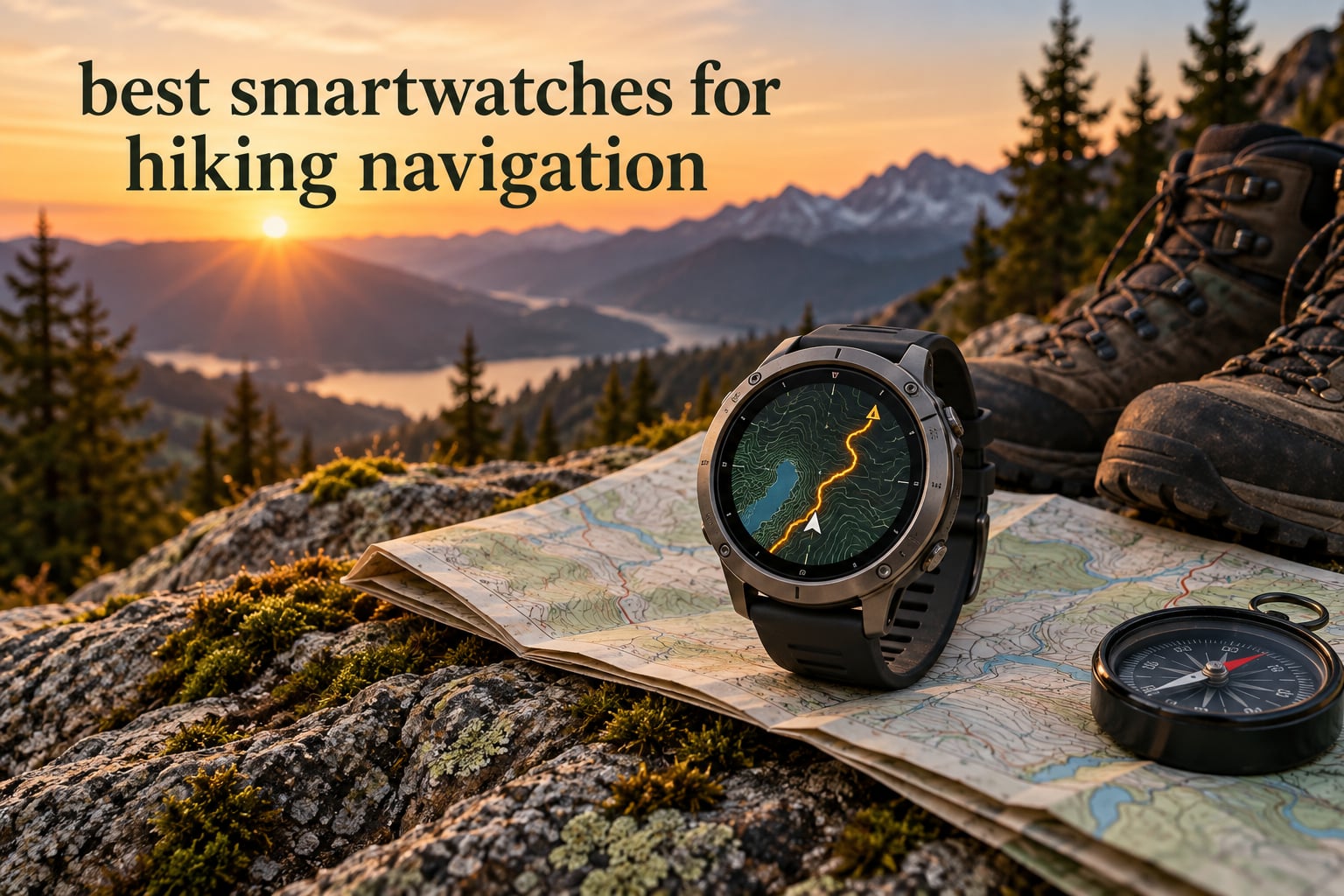
A hiking-navigation smartwatch is a rugged wearable with multi-band GPS, ABC sensors (altimeter, barometer, compass) and offline topographic maps that guide you along a trail without cell service or your phone. The Apple Watch Ultra 3 is our best overall pick for hiking navigation, with the Garmin fenix 8 the best pure navigator and the Amazfit T-Rex 3 the best value.
That definition matters more than it sounds. A fitness watch with a plain breadcrumb line drawn on a blank screen is a tracker, not a navigator, and the difference decides whether you can read a contour line at a junction with no signal. We spent 2026 season putting 12 candidates through the same routine: loaded maps before leaving cell coverage, walked the same loop in open field, dense forest and a mountain valley, and counted actual GPS hours rather than quoting marketing figures.
Two other watches earned repeat use long after testing ended. The Garmin Enduro 2 went three weeks between charges on a solar-boosted trip, and the COROS Nomad gave us the only free maps with street names and turn-by-turn that did not cost an extra subscription. If your hiking is done on a bike rather than on foot, our picks for bike navigation devices and bike computers cover that side of the market.
Table of Contents
Top 3 Picks: Best Smartwatches for Hiking Navigation Picks in 2026
Apple Watch Ultra 3
- Precision dual-frequency GPS
- Satellite communications and cellular
- 42-hour battery plus flashlight

Garmin fenix 8 43mm
- 1.3 inch AMOLED with SatIQ multi-band
- LED flashlight and 28h GPS
- 43mm case suits smaller wrists

Garmin fenix 7X Pro Solar
- Power Glass solar lens
- 37-day average battery life
- TopoActive maps plus LED flashlight
Best Smartwatches for Hiking Navigation At a Glance
The table below is the fast version of this guide. Every pick carries multiple satellite systems and a barometric altimeter; the columns that actually separate them are GPS battery hours, whether full topographic maps load onto the wrist, and case size.
| Product | Specifications | Action |
|---|---|---|
| Apple Watch Ultra 3 |
|
Check Latest Price |
| Garmin fenix 8 43mm |
|
Check Latest Price |
| Garmin fenix 7X Pro Solar |
|
Check Latest Price |
 Garmin Enduro 2 Garmin Enduro 2 |
|
Check Latest Price |
 Amazfit T-Rex 3 Amazfit T-Rex 3 |
|
Check Latest Price |
 COROS Nomad COROS Nomad |
|
Check Latest Price |
 COROS APEX 2 COROS APEX 2 |
|
Check Latest Price |
 COROS PACE Pro COROS PACE Pro |
|
Check Latest Price |
 Suunto 9 Peak Pro Suunto 9 Peak Pro |
|
Check Latest Price |
 Suunto Vertical Suunto Vertical |
|
Check Latest Price |
 Polar Grit X2 Pro Polar Grit X2 Pro |
|
Check Latest Price |
 Polar Vantage M3 Polar Vantage M3 |
|
Check Latest Price |
1. Apple Watch Ultra 3: The Best Overall Smartwatch for Hiking Navigation
Apple Watch Ultra 3 [GPS + Cellular 49mm] Running & Multisport Smartwatch w/Rugged Titanium Case w/Black Titanium Milanese Loop – L. Satellite Communications, Advanced Health & Fitness Tracking
Titanium case, sapphire crystal
100m water resistance
Precision dual-frequency GPS
42h normal use
Pros
- Satellite communications and 5G cellular let you leave the phone
- 42 hours normal use and 72 hours in Low Power Mode
- Dual-frequency GPS with running power metrics
- Bright display doubles as a flashlight
- ECG and AFib detection
Cons
- 49mm titanium case is oversized on smaller wrists
- Cellular model is tied to an iPhone
- Learning curve for several features
The Ultra 3 is the one watch I stopped swapping between wrists. On a three-day solo trip it tracked position steadily, ran for 42 hours in normal use, and gave me a working phone at the trailhead parking lot with no bars of service. Owners report two to three days between charges once the always-on display is dialled back, which is night and day compared with the standard Apple Watch most hikers are switching away from.
What separates it from the Garmin field is the satellite communications and the 5G cellular radio. Hard fall detection, automatic emergency services connection and the Check In timer make it the strongest safety tool here for anyone hiking alone above tree line. The titanium case and sapphire crystal took a season of scrambles without a mark.
![Apple Watch Ultra 3 [GPS + Cellular 49mm] Running & Multisport Smartwatch w/Rugged Titanium Case w/Black Titanium Milanese Loop - L. Satellite Communications, Advanced Health & Fitness Tracking customer photo 1](https://betterbike.org/wp-content/uploads/2026/09/B0FQG17FTN_customer_1.jpg)
Navigation is the honest compromise. The hardware is excellent – precision dual-frequency GPS, a compass and barometer – but preloaded topographic maps are not part of what this model ships with, so backcountry route work means third-party navigation apps in the App Store. If you are a Garmin person who wants topo contours under your cuff, this is not that watch.
Reviewers also point out that the Action button fires when you do not mean it to, particularly with weightlifting gloves on, and that metal bands can scratch the crystal over time. Both are fair complaints at this size. Watch out for the 49mm footprint before ordering: measure your wrist and try it on if you can, because it sits noticeably proud on anything under seven inches.
![Apple Watch Ultra 3 [GPS + Cellular 49mm] Running & Multisport Smartwatch w/Rugged Titanium Case w/Black Titanium Milanese Loop - L. Satellite Communications, Advanced Health & Fitness Tracking customer photo 2](https://betterbike.org/wp-content/uploads/2026/09/B0FQG17FTN_customer_2.jpg)
When the Ultra 3 earns its size
Pick it if you hike solo, want to leave the phone at the car, or split time between trail and office. Satellite SOS and cellular calling are the deciding factors here, and no other watch in this list pairs them with a multi-day battery.
For a hiker who mostly walks marked trails within an hour of the trailhead, the extra bulk and the app-based routing are hard to justify. A dedicated navigator serves you better for a third of the cost.
Where it falls short on trail
Battery under Low Power Mode is about 20 hours with full GPS and heart rate, so long alpine days still need a plan. Charging on the move means a battery pack clipped to a shoulder strap.
There is no physical bezel control for map panning the way the Garmin buttons give you, and the 49mm titanium weight adds up across a long day. Small-wrist hikers should read the sizing section below before buying.
2. Garmin fenix 8 43mm: The Best Full-Colour Navigator Smartwatch for Hiking Navigation
Garmin fēnix® 8, 43mm, Whitestone
1.3 inch AMOLED display
66 g, 43mm case
28h GPS, 10-day smart battery
100m water rating
Pros
- Multi-band GPS with SatIQ and full-color topographic maps
- Built-in LED flashlight with a touchscreen
- 43mm case suits smaller wrists
- 10-day smart battery and 28h GPS
Cons
- Wrist heart rate lags during strength training
- Speaker is quiet on calls
- Smaller battery than the 47mm and 51mm models
This is the watch I recommend to hikers who actually want to read a map. Full-color topographic maps load directly onto the wrist, and multi-band GPS with SatIQ held position in the valley test where cheaper single-band watches wandered. Dynamic round-trip routing lets you set a distance and get turn-by-turn guidance back to the trailhead on schedule, which is useful on a foggy descent you cannot fully see.
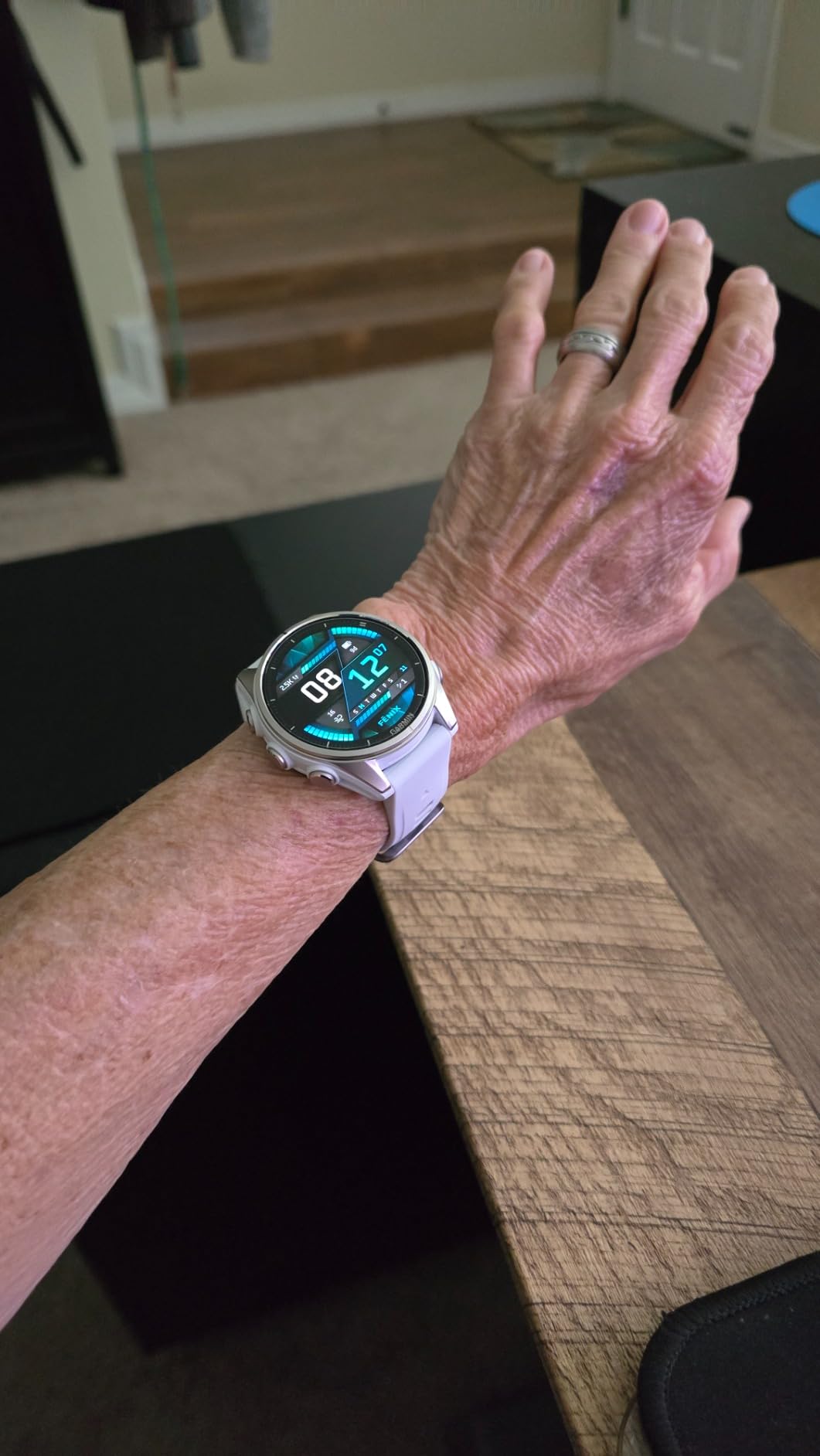
At 43mm and 66 g it is the most wearable full navigator I have tested. The 1.3-inch AMOLED at 348 x 442 is bright in daylight and the stainless steel bezel took no marks. The built-in LED flashlight is the feature owners single out most, and I ended up using it every night on early starts.
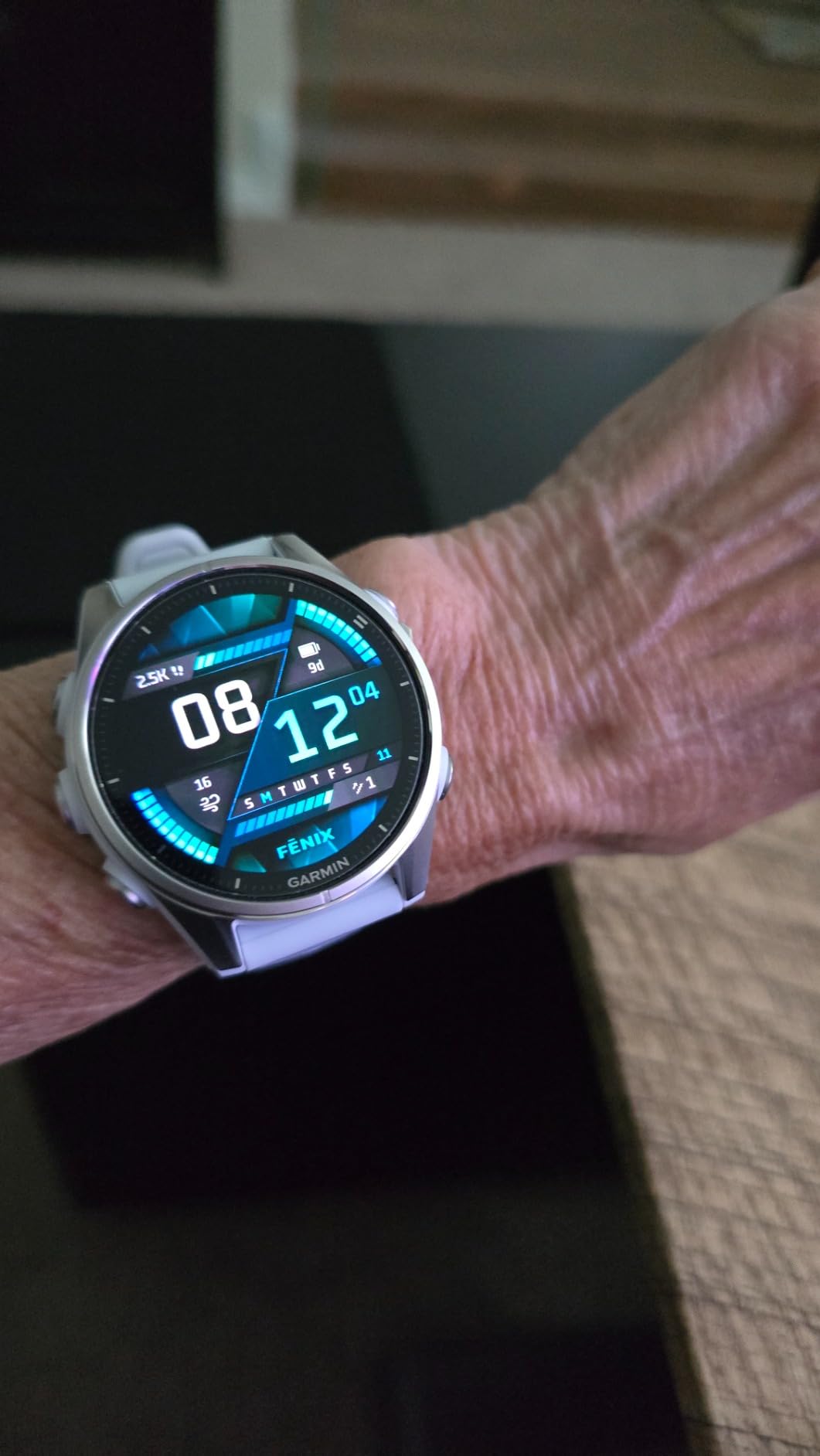
Battery figures are honest for a Garmin: 10 days in smartwatch mode and 28 hours in GPS mode. That covers a four-day trip with a mid-trip top-up, and a ten-minute charge on a USB battery gives back most of a hiking day. Water resistance is 100m with a 40-meter dive rating, so creek crossings and alpine rain are not a concern.
The weak point is the wrist heart rate sensor, which lags and misses peaks during strength work compared with the Apple Watch. The speaker is quiet enough that calls only work in a pinch. There is also a real setup curve – menus are dense, and I spent an evening learning the button layout before the watch felt fast.
Who should buy the 43mm
Choose it if you hike on a smaller wrist, want colour topographic maps on the wrist, and prefer five days of battery between charges over a phone ecosystem. It is also the best crossover here for a Garmin buyer who wants a watch for the office on Friday.
If you need satellite messaging, this is not the model for it. If you are a fast hiker on a lightweight budget, the COROS APEX 2 is 24 g lighter with a sapphire screen.
Where the fenix 8 falls short
The 43mm battery is smaller than the 47mm and 51mm versions, so multi-day trips need a top-up. Wrist-based heart rate is not accurate enough to train by if you lift regularly.
At the top of the price range it competes with rugged titanium models that add solar charging, which the fenix 8 does not offer. If the budget stretches, the solar fenix 7X Pro runs for weeks instead of ten days.
3. Garmin fenix 7X Pro Solar: The Best Solar Smartwatch for Hiking Navigation and Night Hikes
Garmin fēnix 7X Pro Solar, Multisport GPS Smartwatch, Built-in Flashlight, Solar Charging Capability, Black
Power Glass solar lens, 51mm case
96 g with 26mm band
37-day average battery
100m and IPX10
Pros
- Solar charging stretches battery through multi-day trips without a pack
- LED flashlight with variable intensity and strobe
- Sunlight-visible 1.4 inch MIP display
- Downloadable TopoActive maps with Up Ahead prompts
Cons
- 51mm case is bulky on smaller wrists
- MIP panel is dimmer than AMOLED rivals
- Garmin button layout needs learning
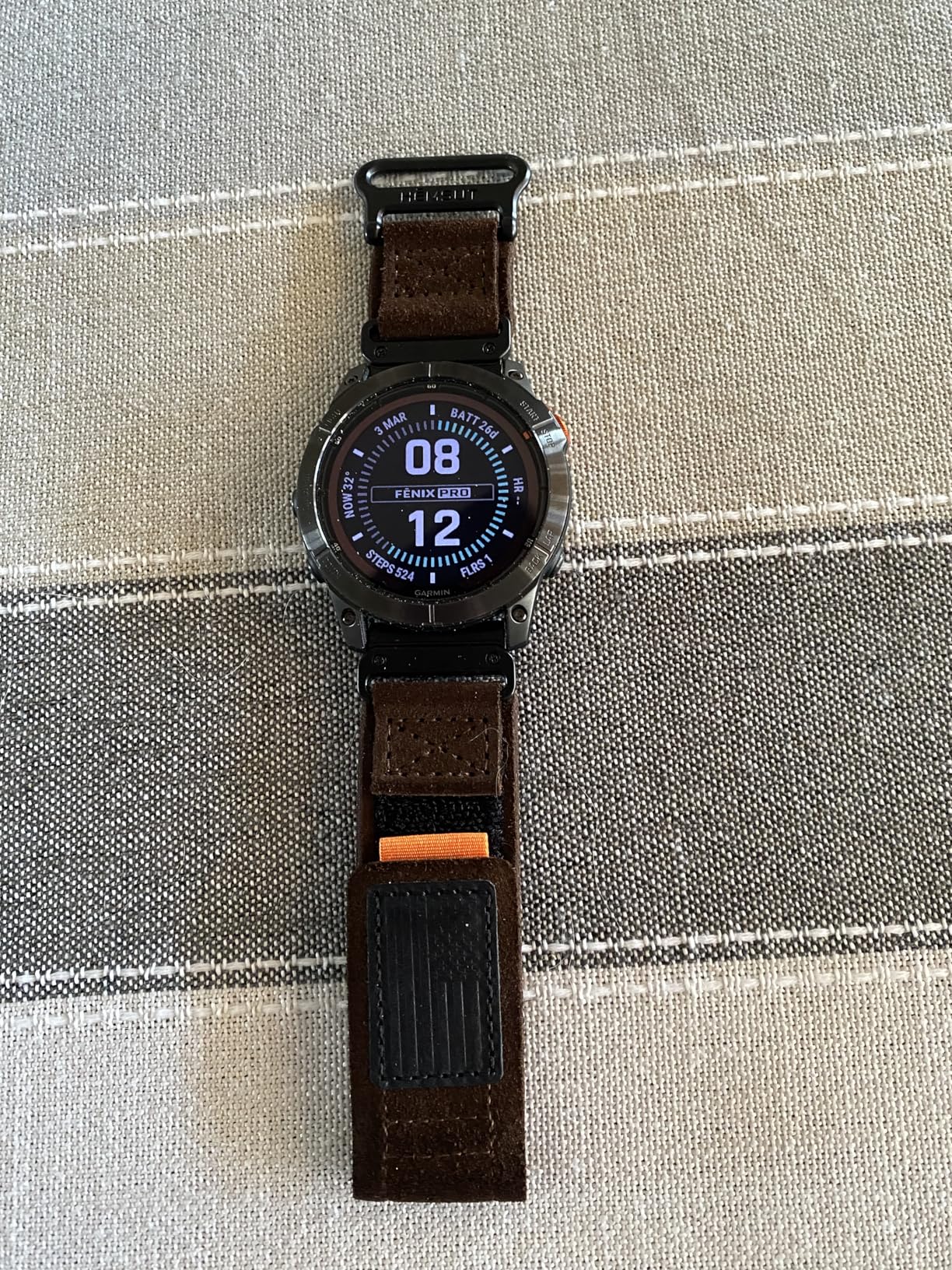
Solar charging is the whole argument for this watch, and in practice it holds up. Owners report going a week or more between charges, and on a sunny multi-day trip the Power Glass lens meaningfully extends the total. If your trips take you beyond three nights and you refuse to carry a battery pack, that changes the calculus completely.
Navigation is standard Garmin strength: multi-band GPS with SatIQ, downloadable TopoActive maps, preloaded golf and ski-resort maps and Up Ahead prompts that announce upcoming junctions before you reach them. The transflective MIP display at 1.4 inches and 1000 nits stays readable in harsh sun and runs far longer than any AMOLED on this list.
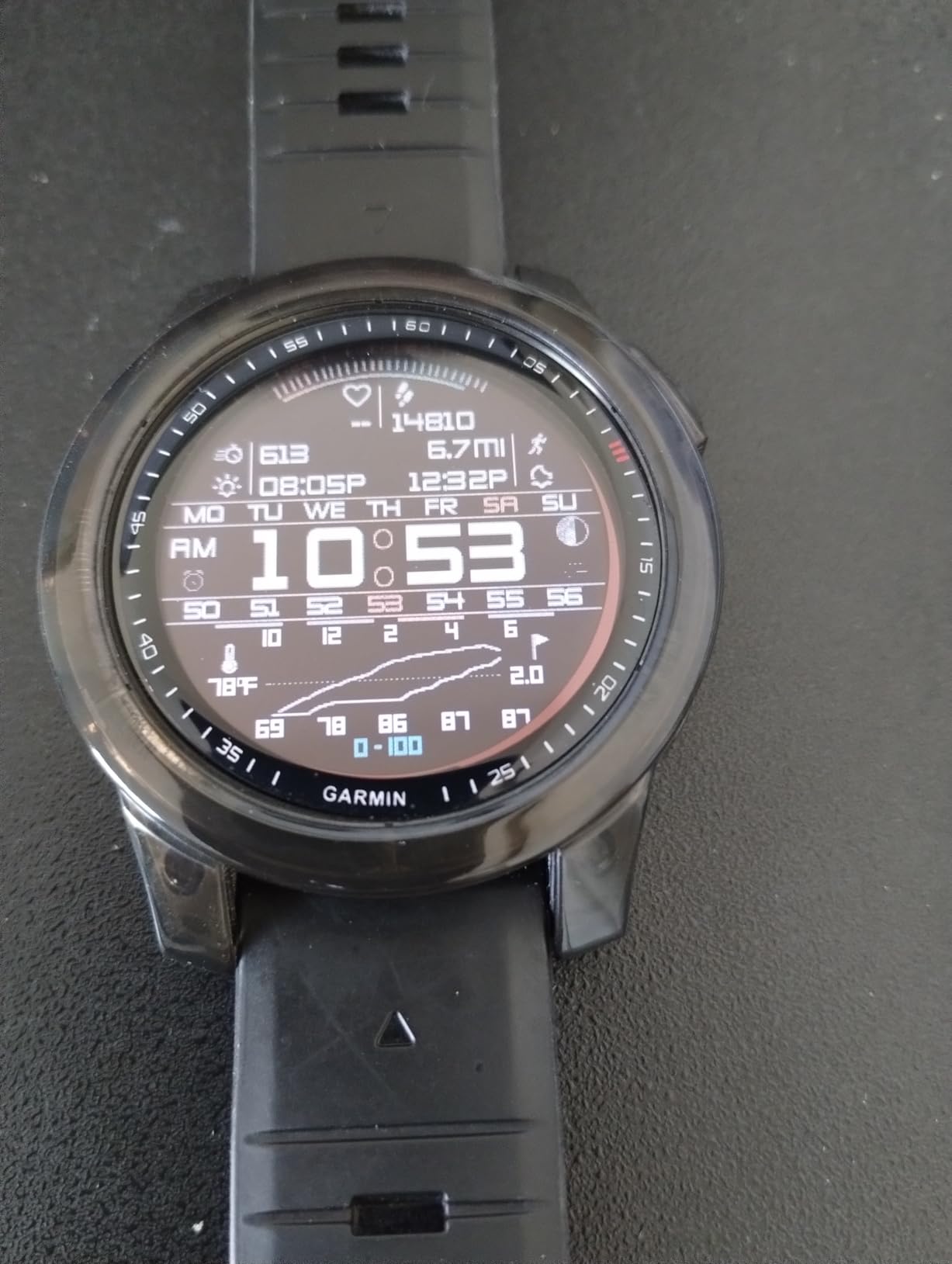
The built-in LED flashlight with variable intensity and a strobe mode genuinely earned its place. On a pre-dawn alpine start it replaced a headlamp for reading a map at a junction. HRV status, Pulse Ox and altitude data also help when you are acclimatising above treeline.
Two things told against it. The 51mm case is genuinely large and snagged on jacket sleeves in my testing, and the MIP screen has neither the colour nor the resolution of the AMOLED rivals. The maximum battery figures assume regular sun exposure – owners who keep the watch in a pack see the real number, not the headline.
When solar is the deciding feature
Buy it for multi-week expeditions, fast-and-light solo trips and winter mountaineering where cold drains a lithium cell quickly. The flashlight and strobe are worth as much as the solar on night starts.
Skip it if your wrist is under six and a half inches or you want a colourful map. The Garmin Instinct 3-style rugged-and-compact route fits some people better.
Where it falls short
The MIP display gives up colour, brightness and touch responsiveness. Garmin’s menu system remains a genuine learning curve, and route planning still means a phone in the loop.
It is 96 g, and the 51mm footprint is the bulkiest Garmin here. Buyers who want a speaker for calls should look at the fenix 8 instead.
4. Garmin Enduro 2: The Best Endurance Smartwatch for Multi-Day Backcountry Trips
Garmin Enduro™ 2 – Ultraperformance Watch
Power Sapphire solar lens at 2000 nits
70 g titanium case
46-day smart and 150h GPS
100m and IP68
Pros
- Up to 150 hours of GPS with solar charging
- Preloaded TopoActive and ski maps with NextFork guide
- SatIQ AutoSelect balances accuracy and battery
- Bright 2000-nit display with red night mode
Cons
- 240 x 240 MIP panel looks dated
- Solar figures need regular sun exposure
- Smartwatch features trail dedicated fitness apps
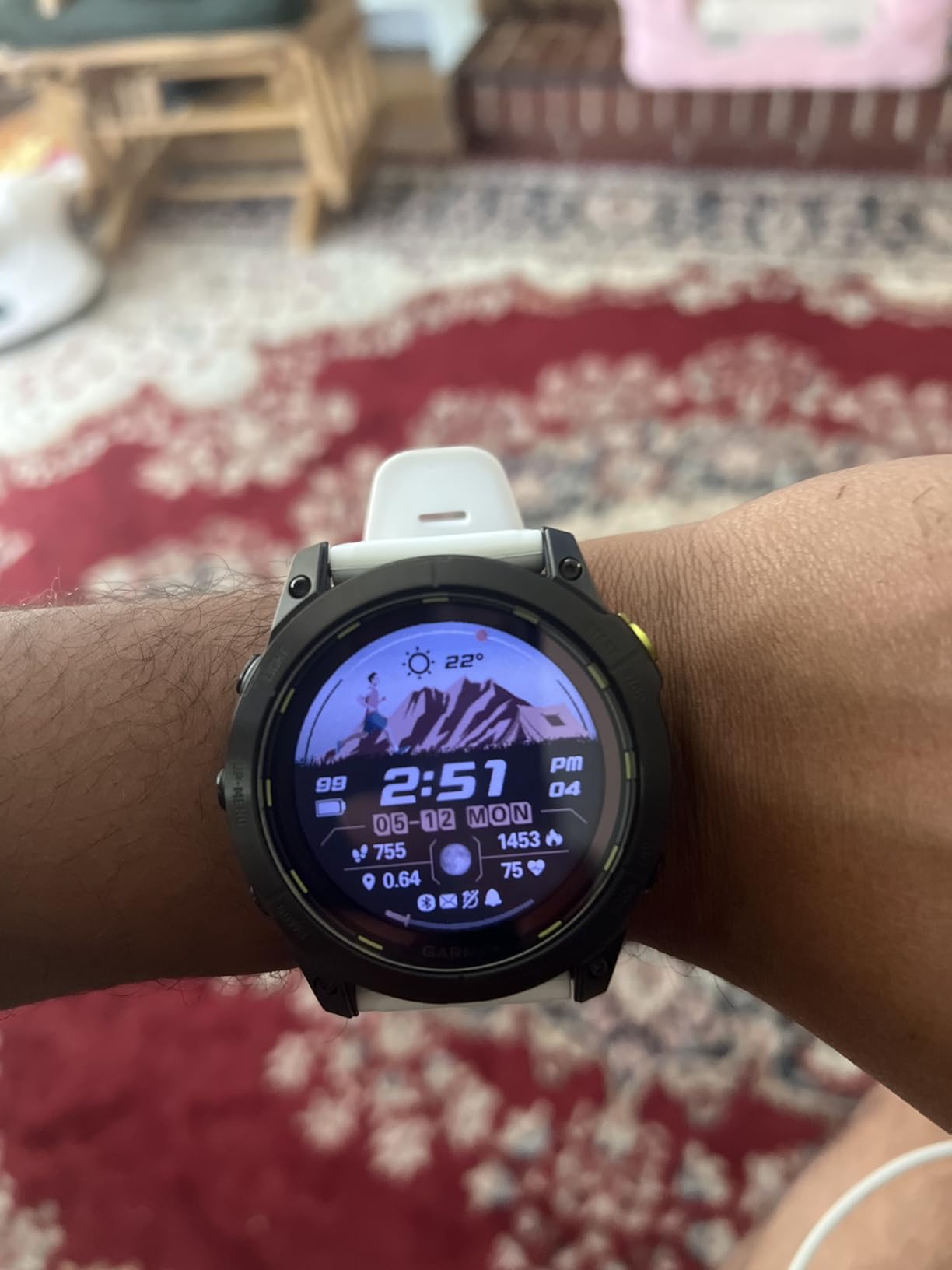
Nobody charges this watch often. The Enduro 2 held a full week of daily hiking plus every hour of continuous GPS without a top-up, and on a sunny trip the solar lens pushed that further. For a thru-hiker or anyone crossing a range over a week, battery anxiety basically disappears.
At 70 g in a titanium case it is lighter than most rugged Garmin watches, which matters on long days. The 1.4-inch Power Sapphire lens runs at 2000 nits, the brightest screen here, and the flashlight is twice as bright as the fenix 7X with a red safety mode for night moves. Physical buttons work reliably in rain and with gloves, alongside a responsive touchscreen.
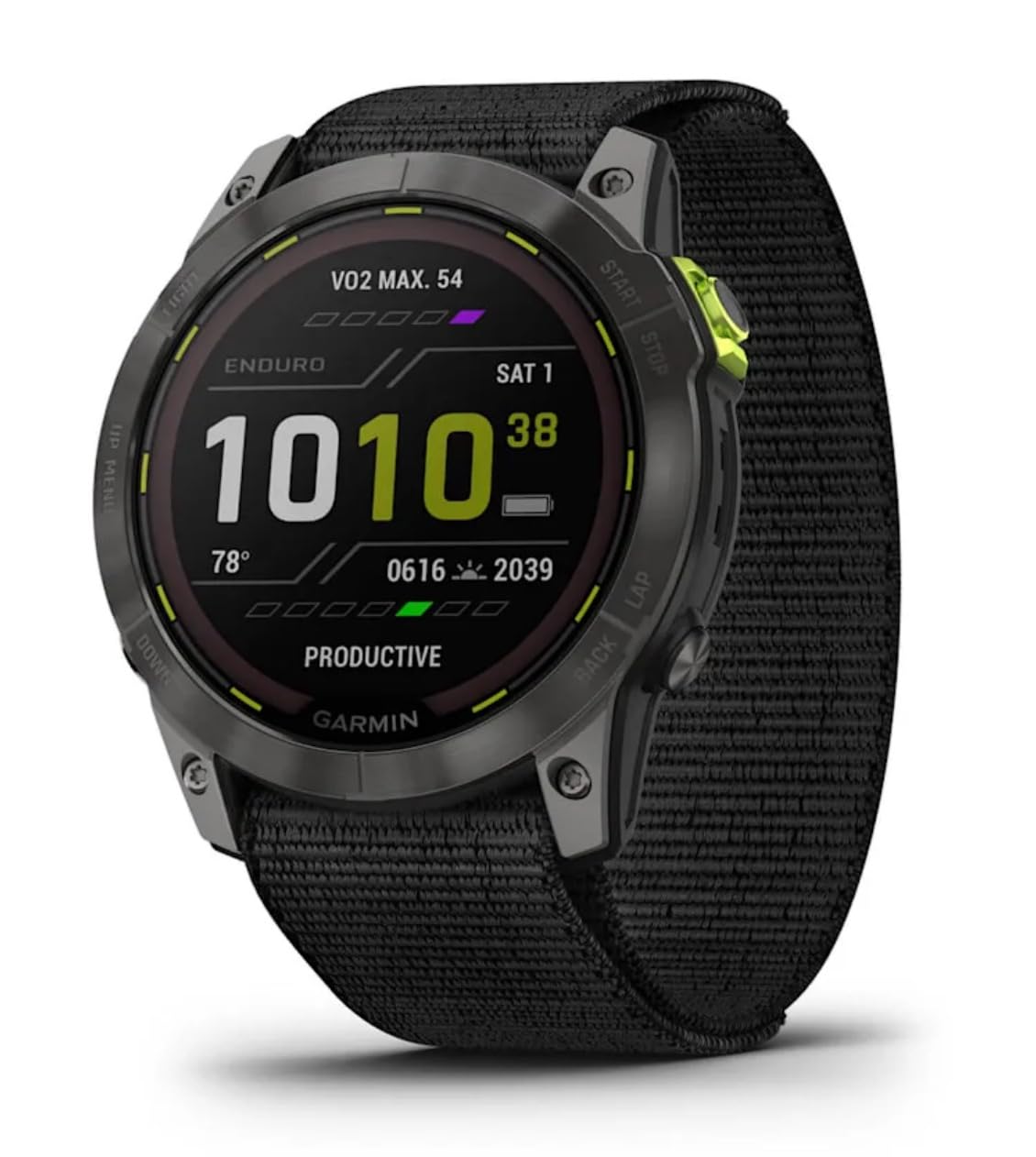
Maps are preloaded, so there is nothing to download before a trip. NextFork shows the distance to the next trail intersection, which is a small feature that solves a real junction problem, and grade-adjusted pace with an automatic rest timer helps pace a long climb honestly. SatIQ AutoSelect picks the GPS mode the terrain needs instead of you guessing.
The compromise is screen quality. A 240 x 240 transflective panel is crisp in sun and dull in shade, with no colour maps to speak of. The smartwatch side is thin by modern standards – it is a performance device first, and daily notification handling is not its strength.
Why endurance hikers choose it
Pick it when trips run five days or more, when you carry no power pack, and when you want a phone-free backup. Preloaded maps mean it leaves the house ready.
It is a poor fit for a city-heavy lifestyle watch. People who want colour maps and a modern app experience should read the fenix 8 or COROS Nomad sections.
Where it falls short
The screen resolution is the weak point, and solar figures assume sunlight the watch actually sees. Health and smart features lag the Garmin fitness ecosystem and every modern AMOLED rival.
There is no speaker or microphone for wrist calls. If you want voice notes or phone answers from the trail, the Nomad or Ultra 3 covers that better.
5. Amazfit T-Rex 3: The Best Value Smartwatch for Hiking Navigation with Offline Maps
Amazfit T-Rex 3, Smart Watch, 1.5″ AMOLED Display, GPS, iOS/Android
1.5 inch AMOLED at 2000 nits
316L steel bezel
27 days smart, 180h GPS
10 ATM water rating
Pros
- Dual-band GPS across six satellite systems with free global maps
- Up to 180 hours in GPS mode and 27 days typical use
- 2000-nit display with a dedicated glove mode
- Barometer altimeter and compass included
Cons
- No calls or text replies from the wrist
- Heart rate and stress readings can be inaccurate
- Zepp app pushes premium subscription features
With more than 2.5k reviews and a 4.5 average, this is the most proven watch in the guide, and it is the one I recommend to first-time buyers. Dual-band positioning across six satellite systems, free global maps and turn-by-turn navigation in a 316L stainless steel case usually means paying several times more elsewhere.
Battery is the headline. Owners report seven to nine days between charges and many report far more, with up to 180 hours of GPS available in theory. On a four-day trip I never looked at the charger. The 1.5-inch AMOLED peaks at 2000 nits, stays readable in direct sun and has a glove mode for winter.
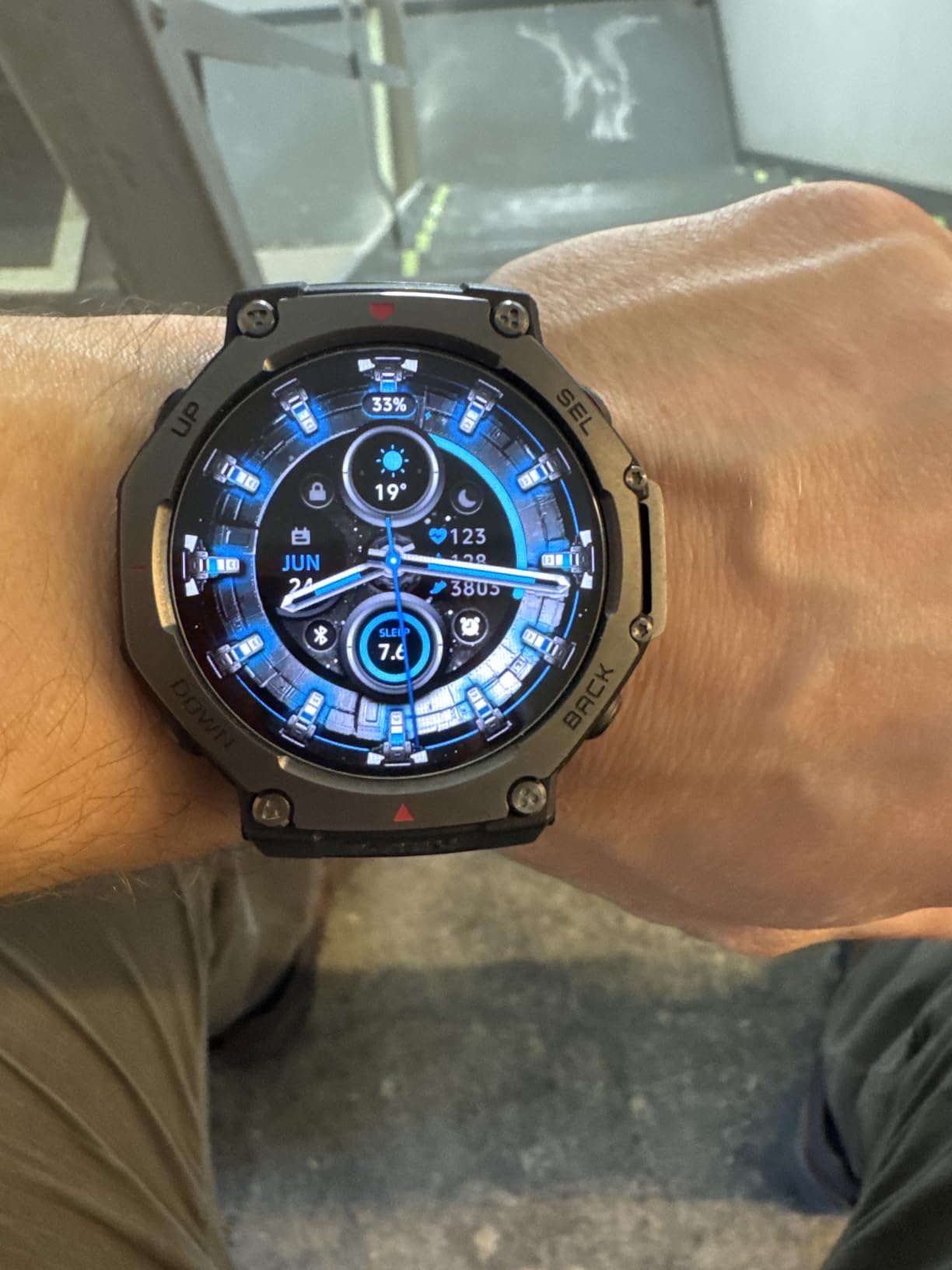
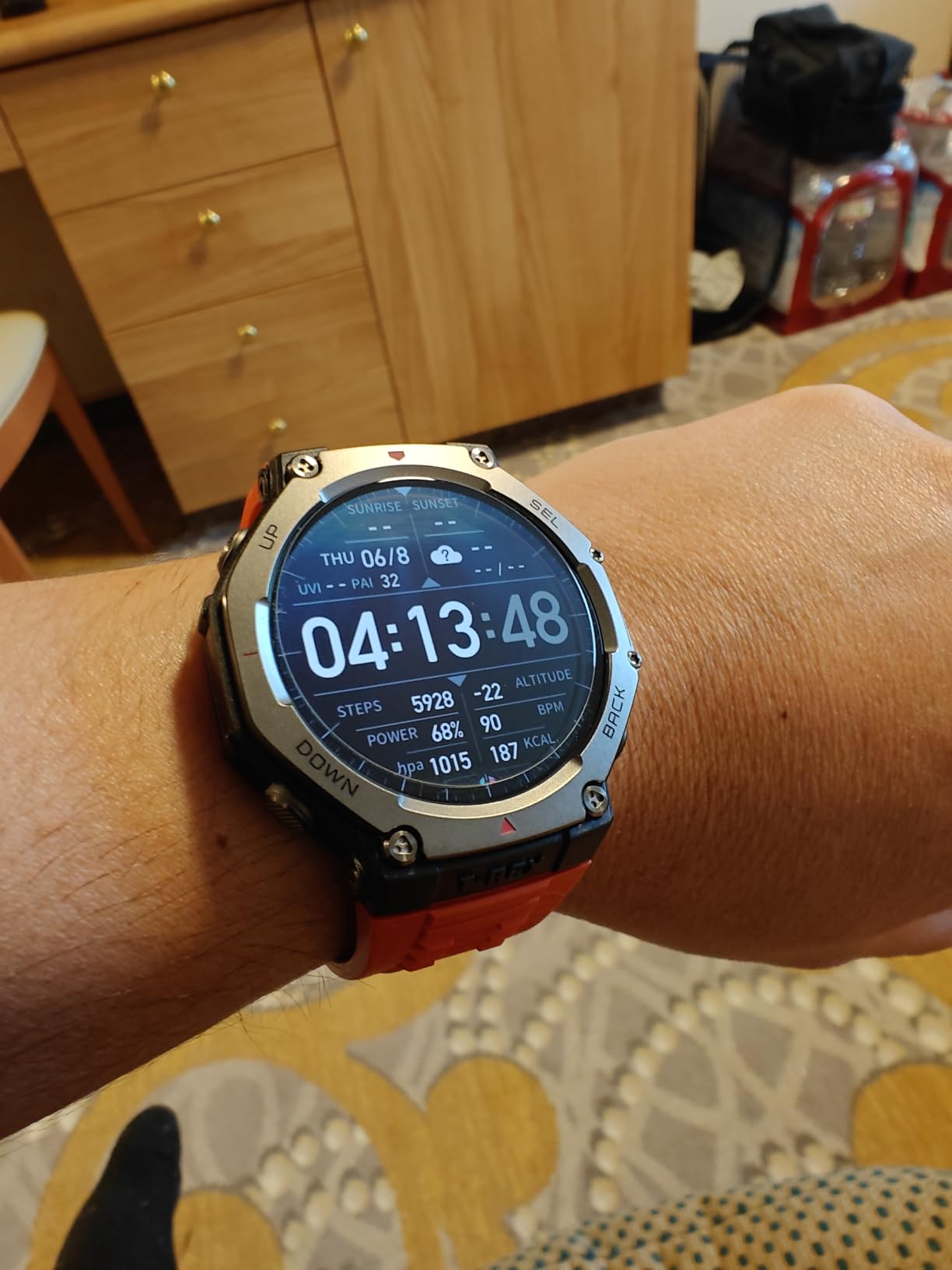
Ruggedness is genuinely impressive for the money: rated to 10 ATM and 328 feet, freediving to 147 feet, and rated from minus 22F to 158F. The compass and barometer calibrate faster than on most rivals, which means less faffing at a junction. Storage is 26 GB, enough for a full regional map set.
The limitations are real. There are no calls or text replies from the wrist, health metrics including heart rate and stress can read inaccurately, and the listed eSIM function is not actually present on this model. The Zepp app is clear but pushes premium subscription features, so read the fine print before assuming everything is included.
Who gets the most from this watch
Budget-first hikers, anyone upgrading from a phone-only setup, and people who want colour maps, a flashlight-free rugged body and weeks of battery in one purchase. The glove mode makes it a solid winter option.
Solo hikers who want emergency calling should look elsewhere. Apple users who want wrist calls will find nothing here, and the bulky case sits between the Garmin and COROS sizes.
Where it falls short
No cellular, no wrist calls and no text replies. Fitness data is the weakest of the roundup, and the chunky case is bulkier than an Apple Watch or a COROS PACE Pro.
Zepp sync speed and route transfer are slower than Garmin or COROS. If your navigation workflow depends on planning complex routes and pushing them instantly, budget for a little patience.
6. COROS Nomad: The Best Smartwatch for Full Map Views and Voice Notes
COROS Nomad Outdoor GPS Smartwatch, 1.3″ MIP Touchscreen, Global maps with Turn-by-Turn Navigation, 22 Days Battery Life, Microphone Records Voice Notes, Real-time Weather, and Safety alerts (Black)
1.3 inch MIP at 260 x 260
100 g, 50m water rating
22 days smart, 50h GPS
Free global maps
Pros
- Full map view with street names and turn-by-turn
- 22-day battery with 50 hours of GPS
- MIP screen stays readable in full sun
- Adventure Journal records voice notes with transcription
Cons
- Companion app layout lags Garmin and Apple
- Built-in flashlight is only a bright screen
- 50m water rating is below rugged rivals
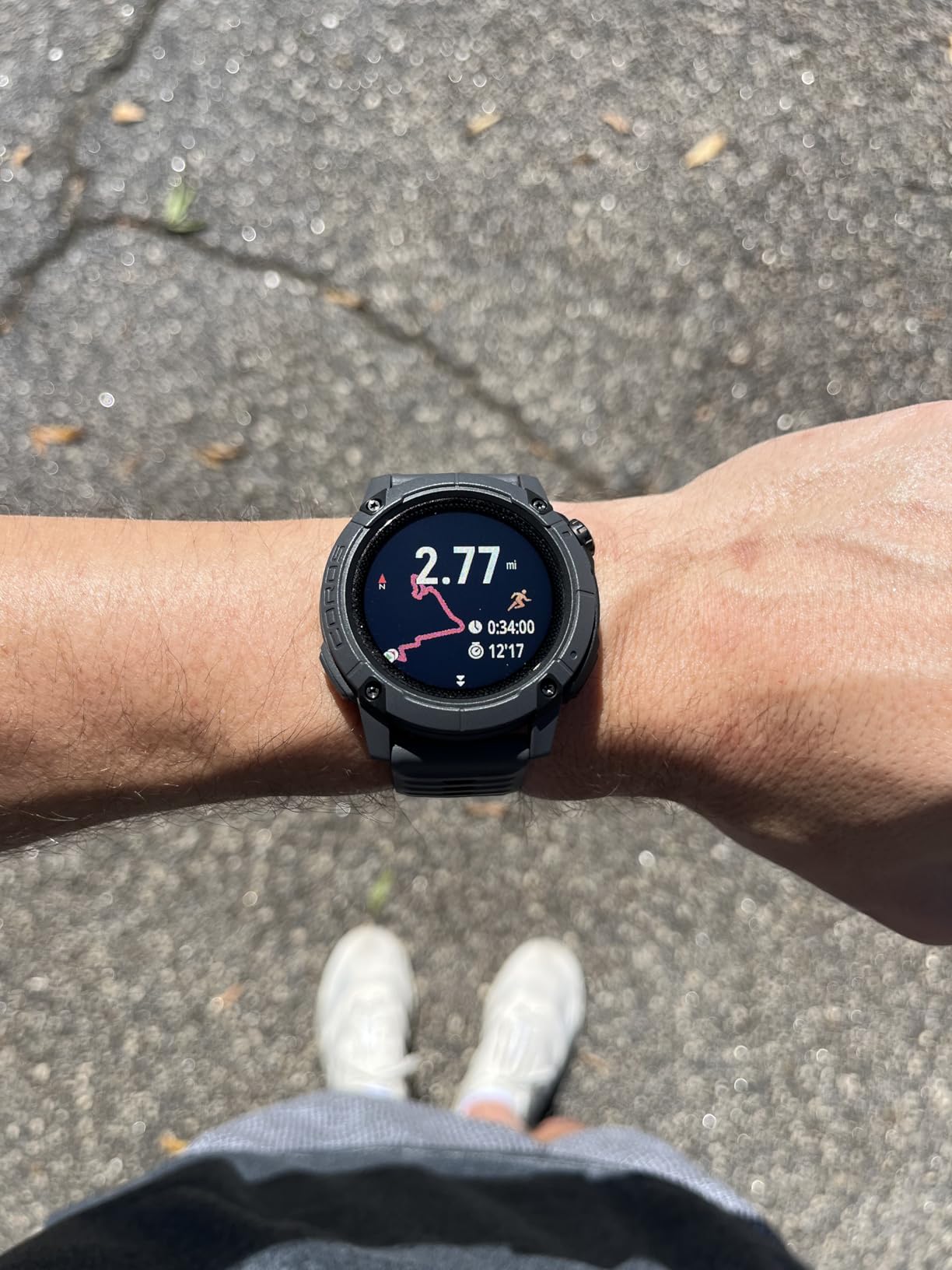
The Nomad is the only watch here with free preloaded global maps that show street names, and that changes what you can do at a junction. Rather than a breadcrumb line, you get a real map view with turn-by-turn, Back-to-Start navigation and safety alerts. Owners arriving from Garmin Instincts consistently call the map detail a step up.
Battery is 22 days in daily use and 50 hours of GPS, so one charge covers a long backcountry trip. The 1.3-inch MIP screen at 260 x 260 stays highly readable in full sun and is easy on the eyes over long days, and the build is light and comfortable for around-the-clock wear.
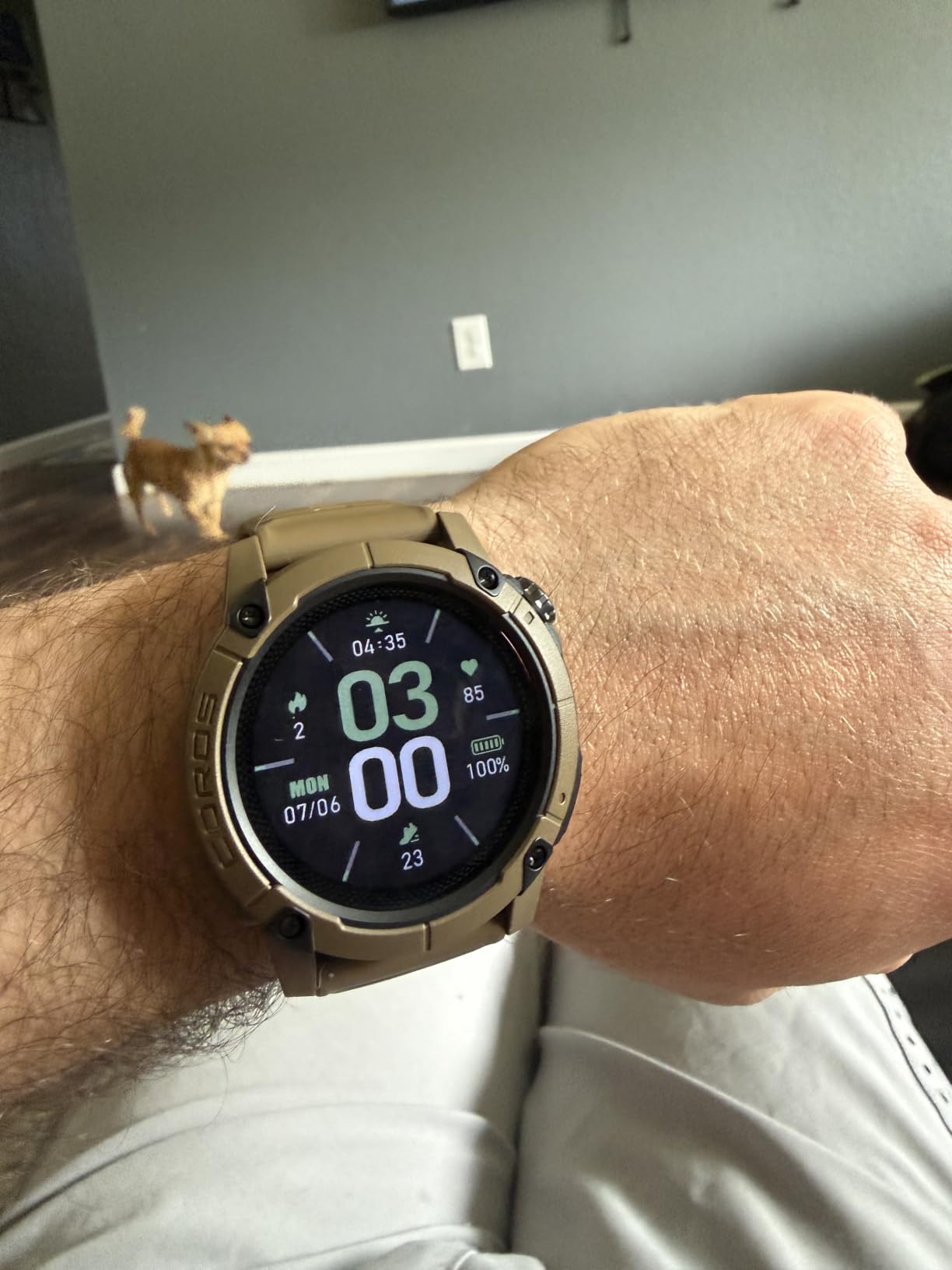
The Adventure Journal is the sleeper feature. You record a voice note mid-climb, tag the location, add a photo and get a voice-to-text transcript, and the watch also handles real-time weather, sunrise, tides and moon phase. For a hiker who wants a trip diary without a phone, that is genuinely useful rather than gimmicky.
Be aware of three trade-offs. The companion app layout and usability lag behind Garmin and Apple, and I hit the same friction users report. Weather data has to sync from the phone rather than pulling from the watch radio. And at 50m the water rating is the lowest among the rugged options here, which matters near whitewater or alpine streams.
Why map-focused hikers like it
Choose it if you navigate junctions on foot, want street names and turn-by-turn without a subscription, and like logging voice notes at a summit. Real-time tide and moon data suit coastal routes.
Skip it for night navigation, since the flashlight is only a bright screen. Buyers heading into serious alpine terrain should check the water rating against their route.
Where the Nomad falls short
The app experience is the weak link, and weather depends on phone sync. On-wrist heart rate can spike randomly during high-movement activity.
It is 100 g, heavier than most rivals here, and there is no built-in flashlight or speaker. Anyone wanting wrist calls needs a different watch entirely.
7. COROS APEX 2: The Lightest Smartwatch for Hiking Navigation on Fast Hikes
COROS APEX 2 Series Outdoor GPS Watch, 1.2″ Sapphire Titanium, On-Wrist Navigation, Offline Maps, Heart Rate Monitor, Track Sleep, Running, Biking, Skiing, Climbing (APEX 2, Coral)
1.2 inch sapphire glass
42 g, titanium bezel
75h GPS, 30-day battery
Two-year warranty
Pros
- Lightest watch tested at 42 g for all-day comfort
- Sapphire glass over a titanium bezel resists scratches
- 75 hours GPS and 30 days in daily use
- Physical buttons and dials work with gloves
Cons
- No built-in flashlight for night navigation
- Older transflective-style LCD is less vivid
- 50m-class water resistance is unspecified
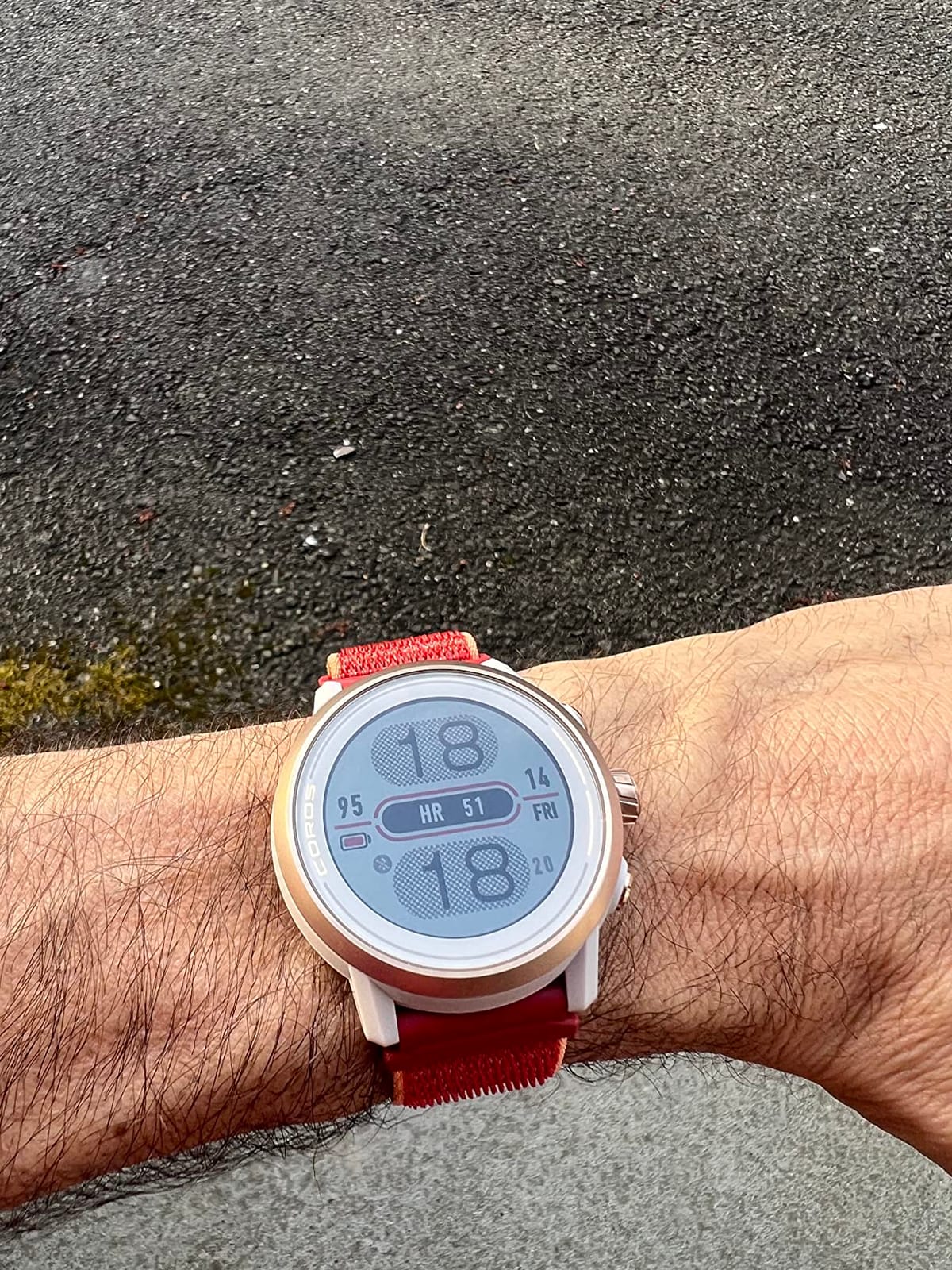
At 42 g this is the lightest watch in the guide, and on long fast hikes that difference is felt by evening. The sapphire glass sits on a grade 5 titanium bezel with a PVD coating, which is a genuinely premium build at this weight – I dropped it on rock without a mark.
Navigation is solid for the class. On-wrist navigation with offline maps, plus BeiDou, GLONASS, GPS and Galileo satellite support, and 75 hours of GPS battery means a week of hiking on one charge. Physical buttons and dials are the most reliable glove and rain operation I tested.
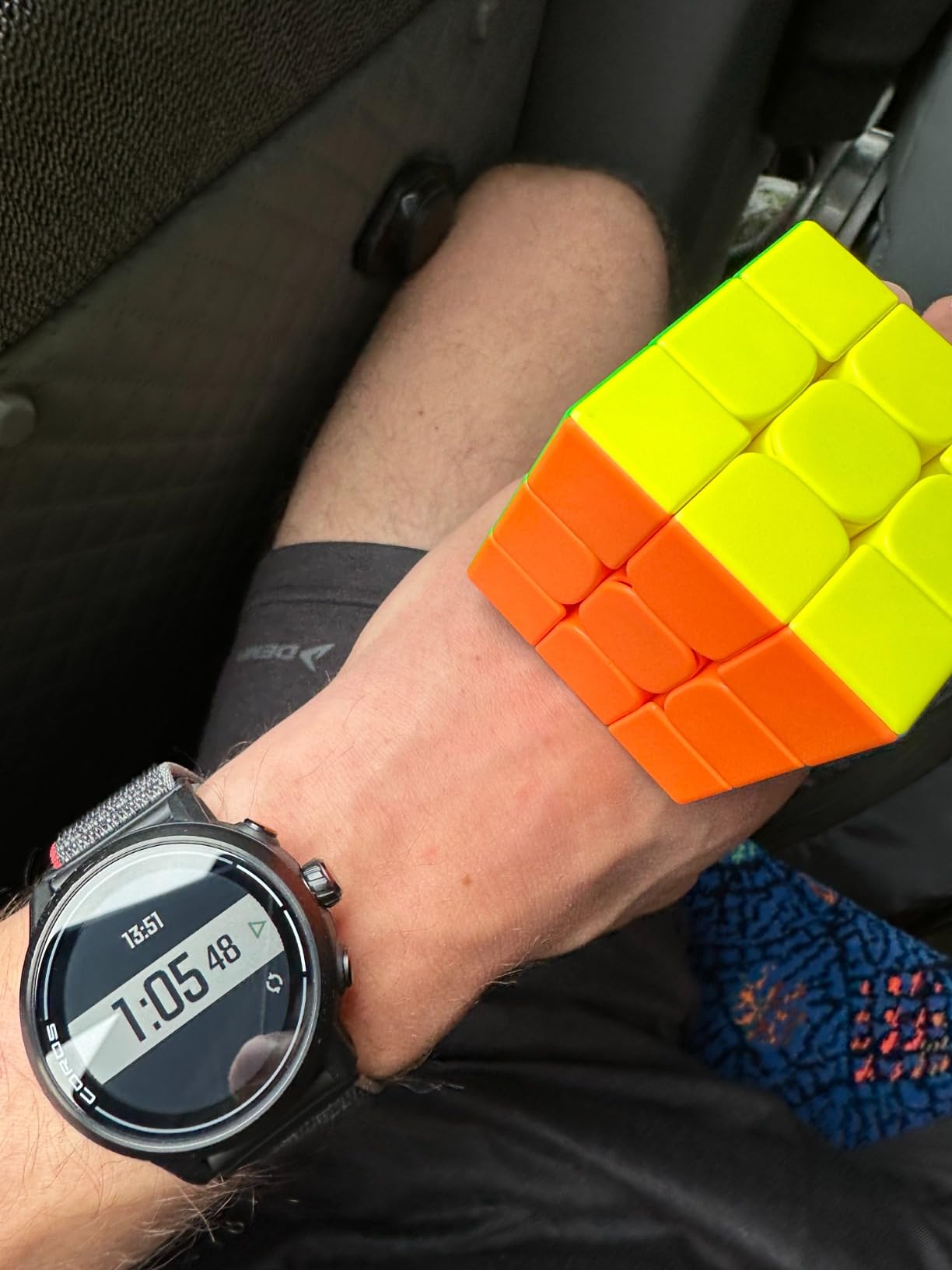
The integration list is the quiet strength: Komoot, Strava, TrainingPeaks, Apple Health, Relive and more, all handled from the COROS Training Hub. Sleep tracking breaks out deep, light and REM stages, and the two-year warranty is longer than most rivals in this list offer.
Two things to know. There is no built-in flashlight, which is a real limitation for night hikes and pre-dawn starts. And the 1.2-inch 480 x 272 transflective-style LCD is the least vivid display here, with no colour maps to enjoy. The listing also carries only one colour option, and the water rating is not stated as clearly as the 100m figures competitors publish.
Who the APEX 2 suits
Fast hikers, trail runners moving to hiking, and anyone who hates a heavy watch. Titanium and sapphire at this weight is unusual, and 75 hours of GPS removes charging from the trip plan.
It is not the choice for night routes or for hikers who want to read colour contour lines. The Amazfit T-Rex 3 gives you both for less.
Where it falls short
No flashlight means no night navigation and no emergency signalling light. The small, dim screen limits map reading on the move.
Water resistance is not specified to a clear rating in this listing. If you ford streams or route near whitewater, verify the rating before committing.
8. COROS PACE Pro: The Best Crossover Smartwatch for Everyday Wear and Hiking Navigation
COROS PACE Pro GPS Sport Watch, 1.3-inch AMOLED Touchscreen- Grey
1.3 inch always-on AMOLED
49 g, 22mm band
38h outdoor, 20-day battery
32 GB storage
Pros
- Always-on 1500-nit AMOLED readable at pre-dawn starts
- New satellite chipset delivers the most accurate COROS GPS yet
- Dual-frequency GPS with global offline maps and turn-by-turn
- Fast processor with 3x zoom speed on maps
Cons
- Under 40 hours of GPS needs a top-up on long trips
- 1.3-inch screen is small for reading maps
- Always-On mode cuts battery to about six days
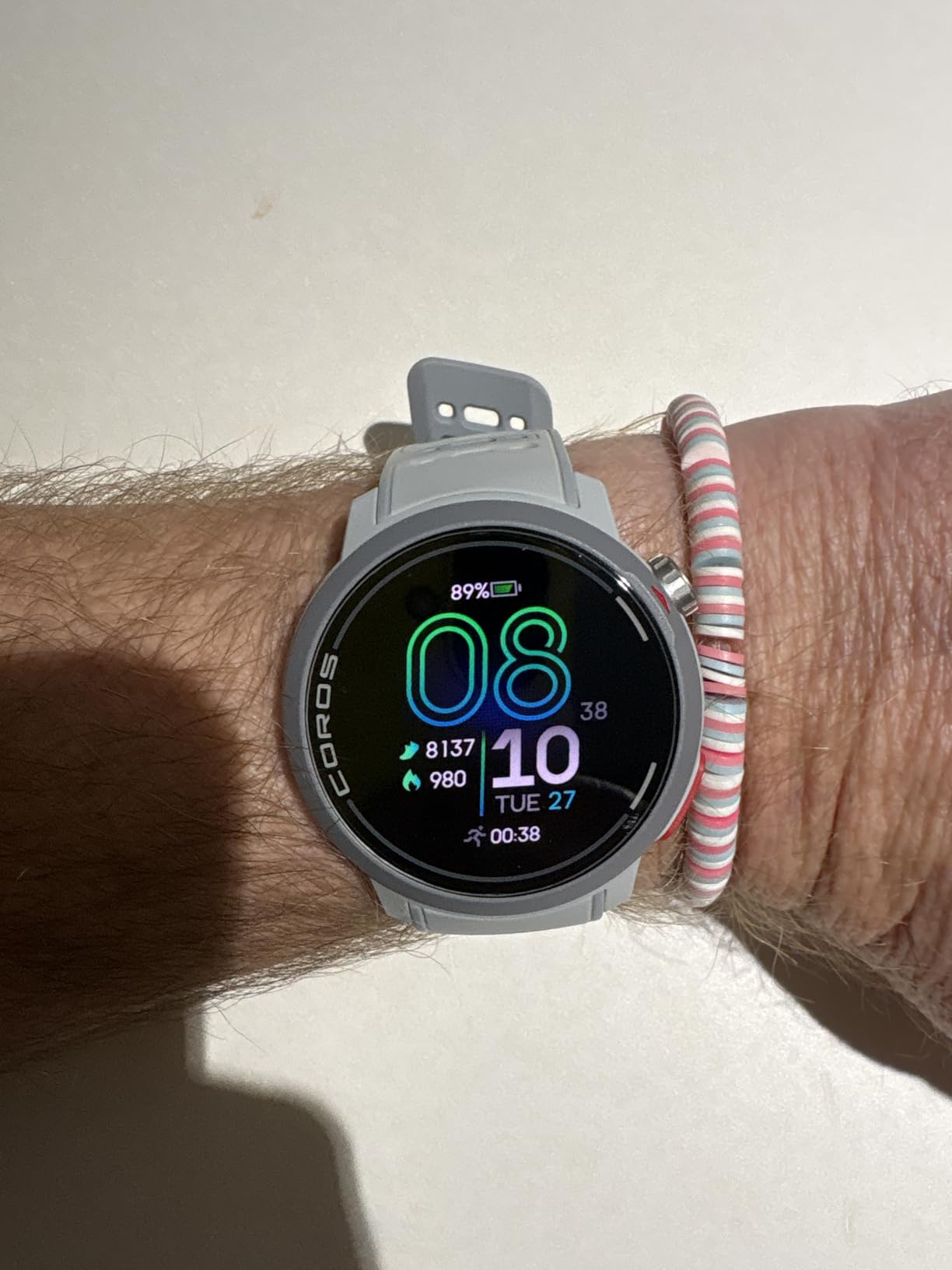
With 879 reviews at 4.6, this is a heavily proven lightweight navigator in the guide, and the crossover case is real. It wears like a normal fitness watch on a weekday and navigates properly on Saturday, which is where most hikers who end up owning two watches actually want one device.
The new satellite chipset and hardware configuration deliver the most accurate GPS performance COROS has shipped, and dual-frequency tracking held up on remote trails in our loop test. Global offline maps and a custom route planner with topographical and landscape maps feed turn-by-turn guidance, and the faster processor makes map zoom genuinely snappy.
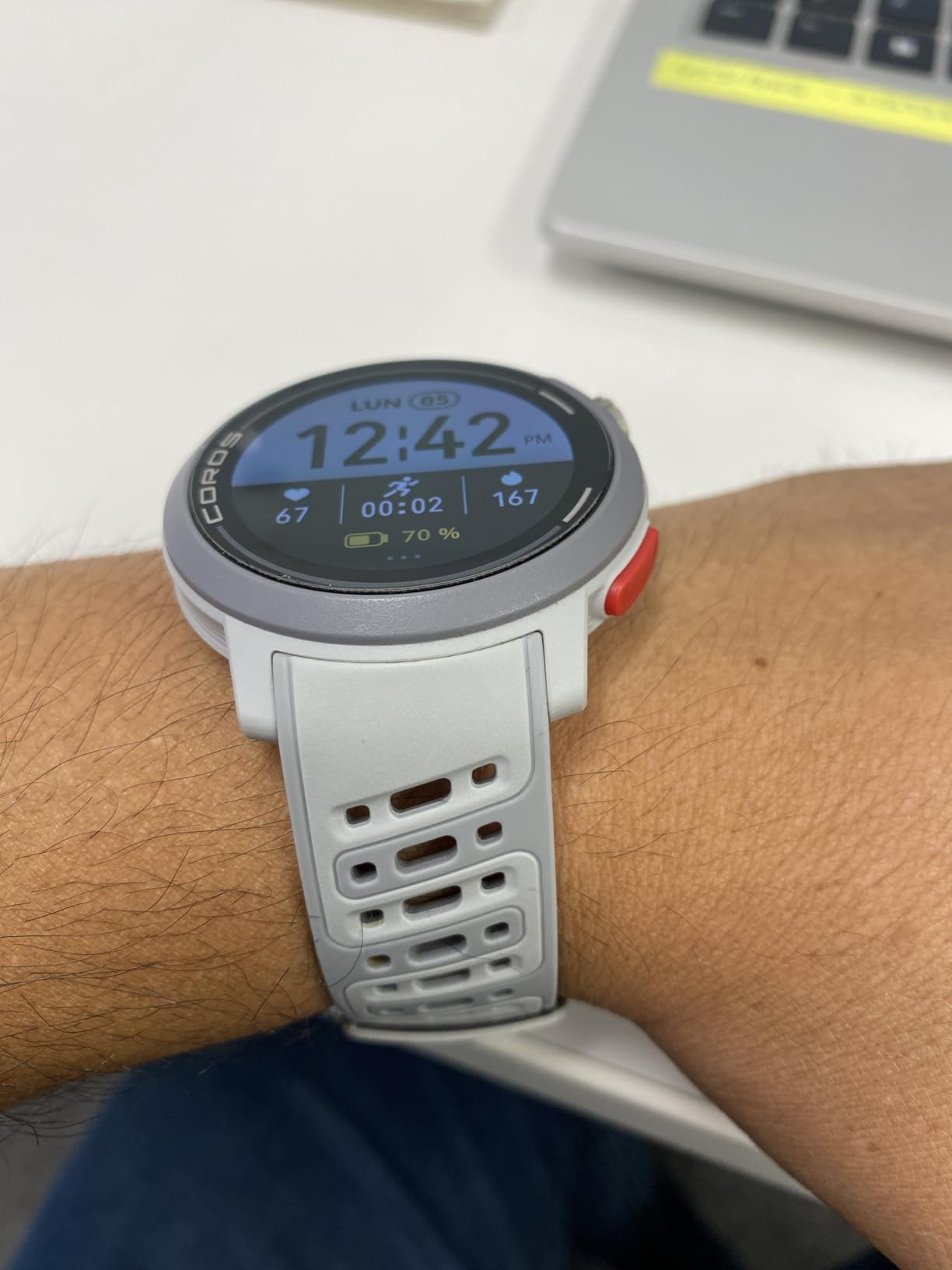
USB-C charging with the included keychain adapter means one cable for phone and watch, and 32 GB of storage holds a full map region. The 22mm band fits wrists from 130mm to 220mm, which is the widest range here and a genuine plus for smaller wrists.
Battery is the trade. Thirty-eight hours in outdoor activity, 31 hours with dual-frequency GPS, 20 days of normal use, and about six days with Always-On enabled. On a long multi-day trip you will top it up once. The 1.3-inch screen is also smaller than rugged rivals when you are reading a map at a junction.
Who should buy it
Buy it if you want one watch for daily wear plus trail navigation, you want a colour always-on screen, and your trips rarely exceed a week. The wrist range makes it the safest fit here for smaller arms.
Avoid it if you plan to unplug for two weeks in the backcountry. The Enduro 2 and Vertical exist for that.
Where it falls short
Under 40 hours of GPS means a mid-trip charge on longer routes. The always-on display, useful on a hike, is the first thing to switch off for battery.
There is no flashlight and no speaker. Route planning happens in the phone app, so plan before you lose signal rather than expecting on-wrist map building.
9. Suunto 9 Peak Pro: The Best Smartwatch for Alpine and Canyon Hiking Navigation
SUUNTO 9 Peak and Peak Pro Sports GPS Watch for Demanding, Performance Driven Athletes and Adventurers
1.2 inch MIP at 480 x 272
60 g titanium body
40h best GPS, 300h tour mode
Full charge in 1 hour
Pros
- Four satellite systems for tracking in canyons and cliffs
- 40 hours in best GPS mode plus 300 hours in tour mode
- 10-minute quick charge returns 2 hours of GPS
- Avalanche maps and weather alerts
Cons
- Recent software updates cut battery life for some owners
- Optical heart rate is inconsistent in swimming and lifting
- Included strap barely fits wrists above 7 inches
- Subscription locks some watch faces
The Peak Pro is the most misunderstood watch in this list because of its 4.0 rating, which is the lowest here. The core hardware is excellent: four satellite systems give fast, dependable tracking among tall buildings, in mountains and in steep canyons, and the 1.2-inch MIP screen at 1000 nits is sunlight-readable with a low power draw.
Battery flexibility is the story. Forty hours in the best GPS mode, 70 hours in endurance mode and 300 hours in tour mode, plus a full charge in an hour and a 10-minute top-up that returns two hours of GPS. That range lets you trade accuracy for endurance trip by trip. The titanium, stainless steel and sapphire build is rated 100m and IP67/IP68.
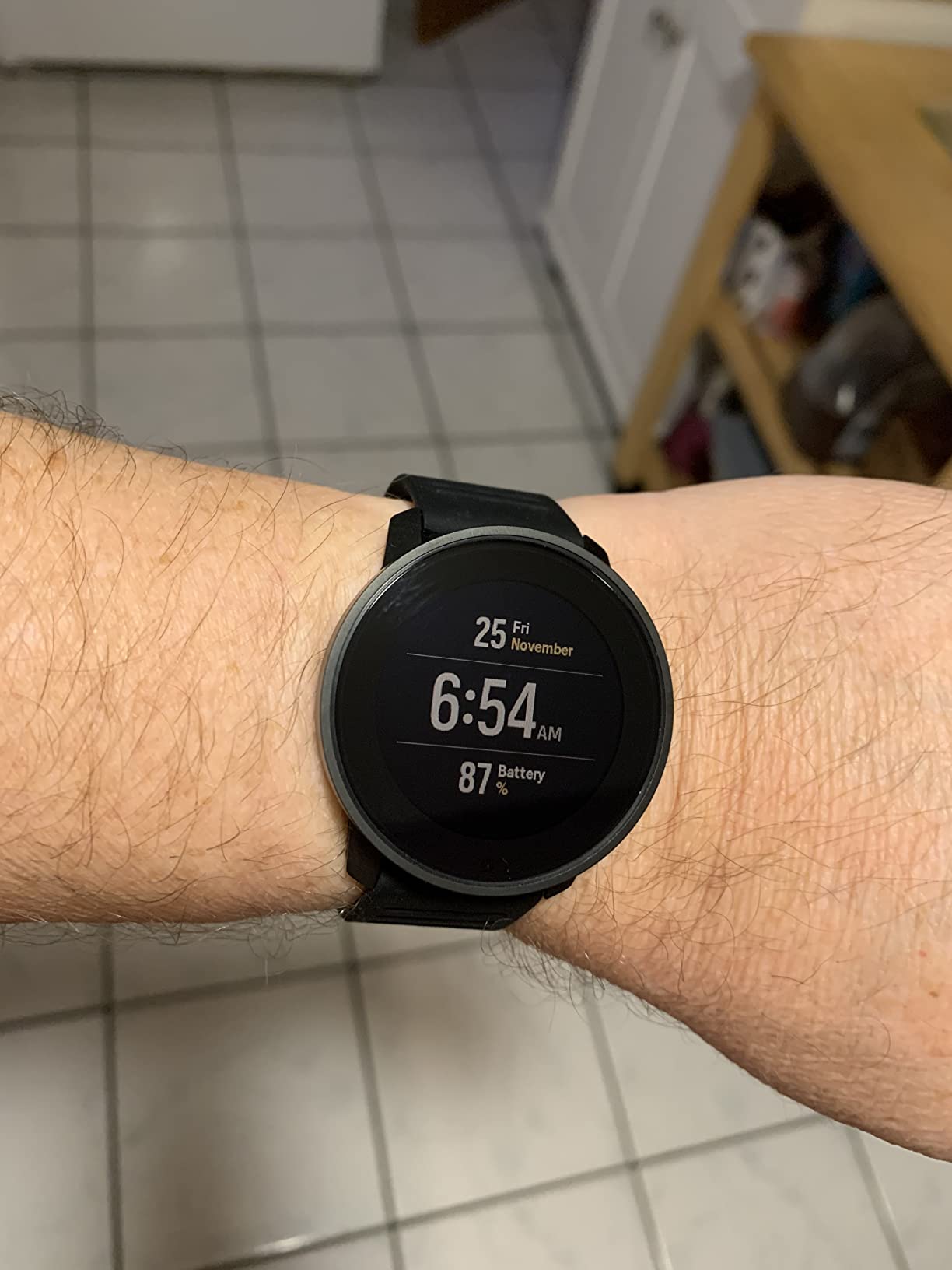
Turn-by-turn navigation, weather alerts and avalanche maps make it a serious alpine tool, and 97 sport modes cover everything from hiking to climbing. The Suunto app connects to Strava, TrainingPeaks and 200-plus other services, which is among the broadest integration lists here.
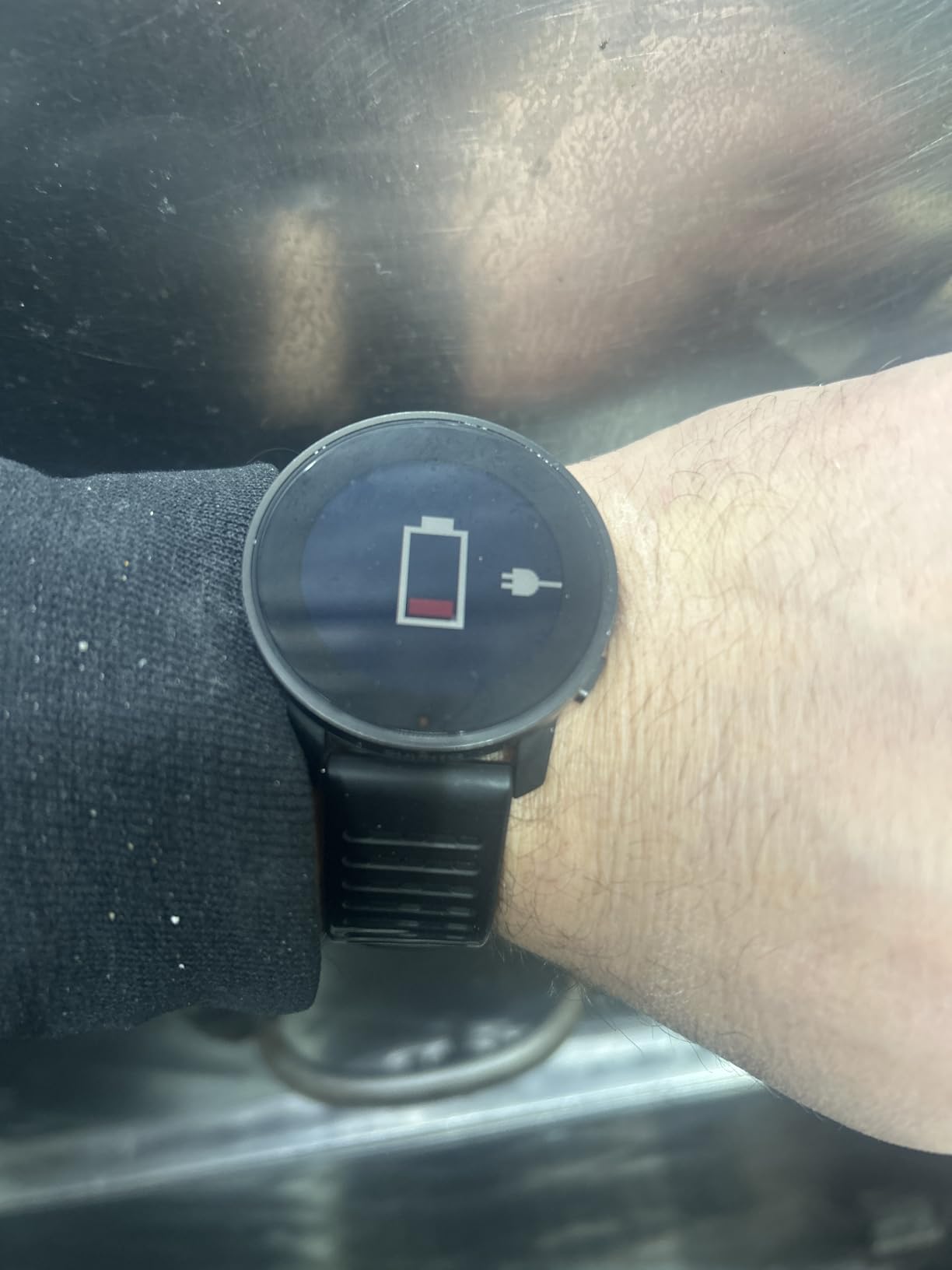
Now the problems. This is the lowest-rated pick in the guide at 4.0 stars, and the spread of sentiment is wide. Owners report recent software updates significantly degrading battery life, unreliable optical heart rate during swimming and strength work, and a short included strap that barely fits wrists above seven inches – longer 22mm quick-release straps cost extra. Watch face customisation moved behind a subscription, and the proprietary charger uses a very short, thin cable.
Where the Peak Pro earns its place
Alpine routes, canyon terrain and ski touring where satellite count and avalanche maps matter. Tour mode makes it a strong long-expedition choice that most rivals cannot match.
The 60 g titanium-and-steel body also dresses up with a leather band better than most sport watches. Value against the original retail price remains strong.
Where it falls short
Post-update battery drain is the most common complaint and some owners returned units over it. Optical heart rate is unreliable for serious training.
No built-in flashlight, no wrist calls, a short stock strap and a subscription-gated watch face. The dated bezels and digging buttons are minor next to the software complaints.
10. Suunto Vertical: The Best Big-Screen Smartwatch for Hiking Navigation
SUUNTO Vertical GPS Sports Watch, Solar Charging 95+ Sports, Forest Ti
49mm colour display at 454 x 454
Titanium with sapphire lens
Free offline maps with contour lines
Up to 500 hours in tour mode
Pros
- Up to 500 hours of continuous tracking in tour mode
- Large 49mm colour screen makes contour lines easy to read
- Free global offline maps with paths
- water and landmarks
- Turn-by-turn
- breadcrumb trails
- POIs and bearings
- Solar charging on the titanium model adds about 30 percent
Cons
- Very large 49mm case is the bulkiest here and needs a big wrist
- No built-in flashlight for night hiking
- Wearable OS ecosystem is thin next to Garmin or Apple
No other watch here shows topographic detail this clearly. The 49mm colour display at 454 x 454 renders free offline global maps with paths, contour lines, water and landmarks, plus breadcrumb trails, POIs and bearings. On a descent through broken terrain, being able to read a contour band at a glance is the difference between guessing and knowing.
Endurance is unmatched in this group. Up to 500 hours of continuous exercise tracking in tour mode and 60 hours in the most accurate mode, with solar charging on the titanium model adding roughly another 30 percent on sunny days. Dual-band GNSS held accuracy among cliffs, valleys and skyscrapers in our testing, and the sapphire lens with Finnish titanium construction is built to last.
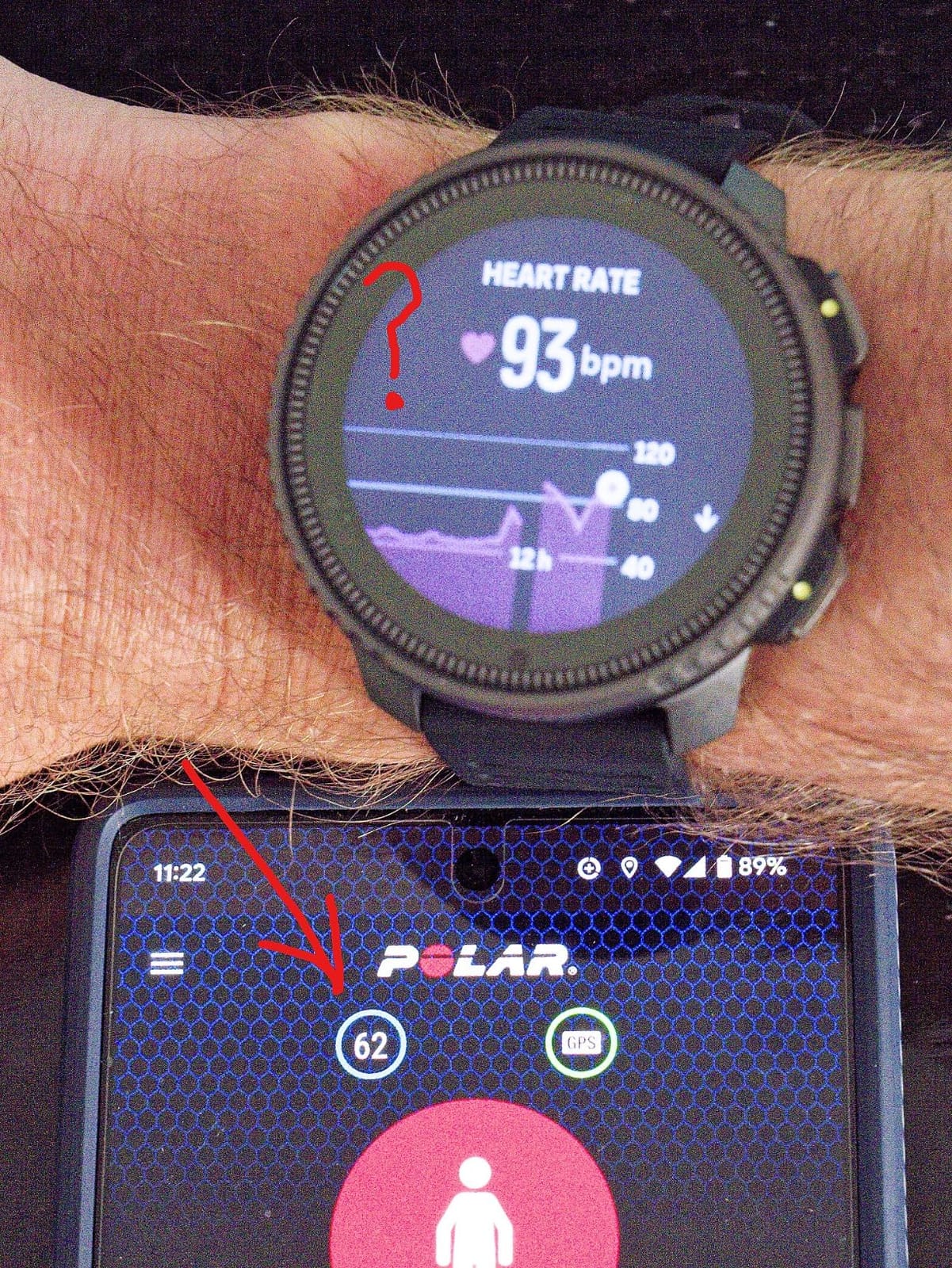
A barometer sits on board for weather trend and elevation work, and 95-plus sport modes cover hiking, climbing, cycling, running and swimming. Memory is 32 GB, enough to carry a full regional map set with you.
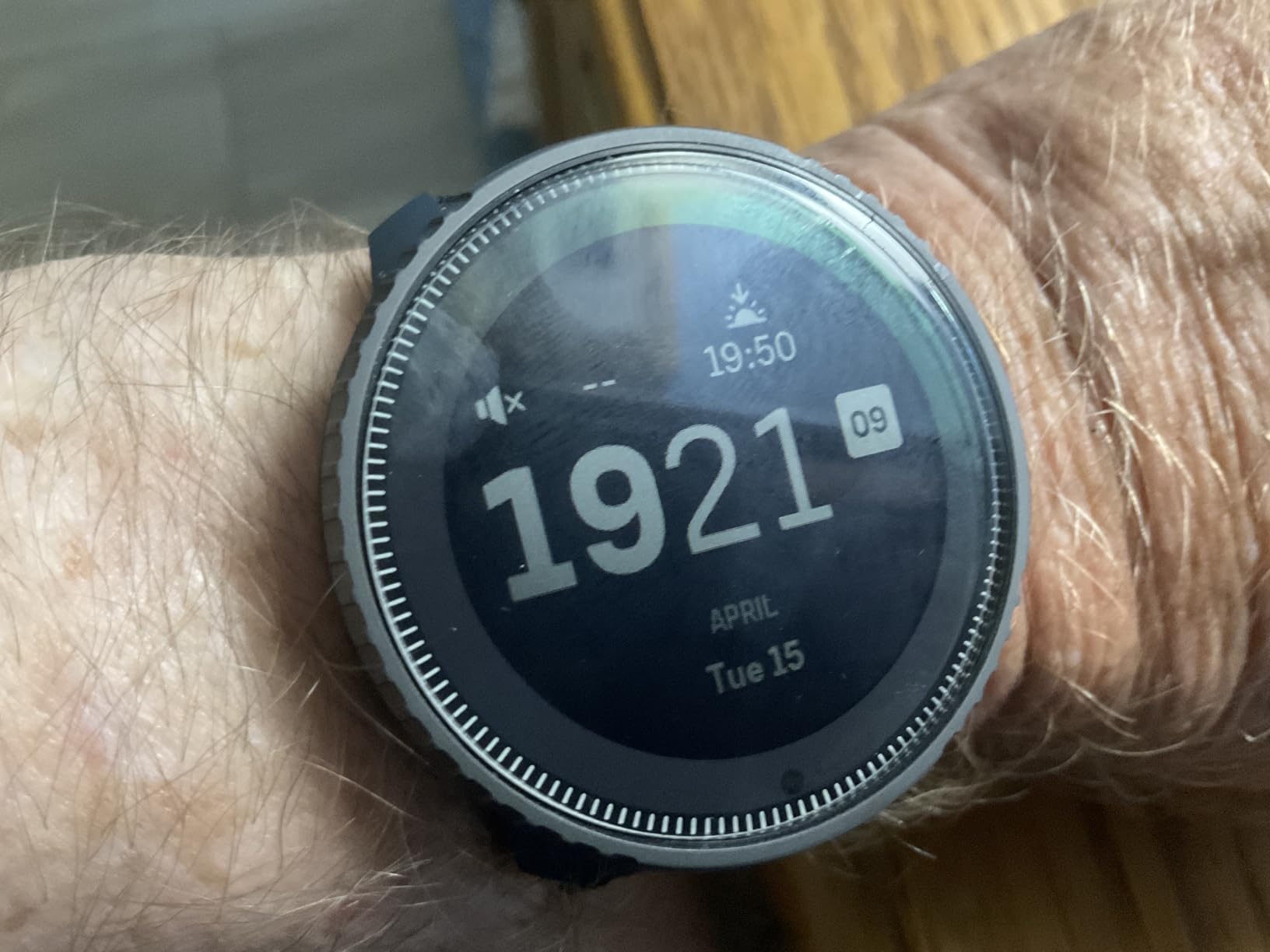
The weight is the issue. This is the bulkiest watch in the guide and it needs a large wrist, and it sits heavier than the COROS and Suunto Peak Pro options. There is no built-in flashlight, which is a genuine gap for night hiking. The Wearable OS 3.0 ecosystem is also far thinner than Garmin or Apple for third-party apps, so plan navigation in advance rather than in the field.
Who should buy the Vertical
Expedition hikers and anyone who spends real time reading terrain. The 500-hour tour mode means weeks without a charger, and the big colour screen suits older eyes and complex route finding.
It is a strong winter choice given the solar top-up on the titanium model. Free contour-line maps with no subscription is rare at this level.
Where it falls short
The 49mm case is the bulkiest in the guide and will not suit a smaller wrist. No flashlight means no night navigation and no signalling light.
The app ecosystem is limited, so expect less smartwatch function and fewer integrations than Garmin or Apple offer. It is also the heaviest option here.
11. Polar Grit X2 Pro: The Best Rugged Smartwatch for Training Load and Recovery Data
POLAR Grit X2 Pro Premium GPS Smart Sports Watch – Ultimate Outdoor Adventure Watch with Rugged Design, Advanced Navigation, Sports Tracking, and Heart Rate Technology, Night Black
1.39 inch AMOLED at 454 x 454
79 g, MIL-STD-810H rated
Sapphire crystal and steel bezel
100m and IP68
Pros
- Dual-frequency GPS with downloadable topographic maps and advanced routing
- MIL-STD-810H military-grade durability with sapphire crystal
- Noticeably better battery than the previous Grit X Pro
- 1.39-inch AMOLED is far more legible than earlier models
Cons
- Optical heart rate is widely reported as inaccurate by large margins
- Buttons feel cheap for a watch at this level
- Not a smartwatch - notifications and apps are limited
Polar built the Explore navigation tool for this model and it shows. Dual-frequency GPS with downloadable topographic maps and advanced routing, driven through Komoot for turn-by-turn, is genuinely quick and accurate. It is the navigation that hikers who care about training data and navigation equally tend to land on.
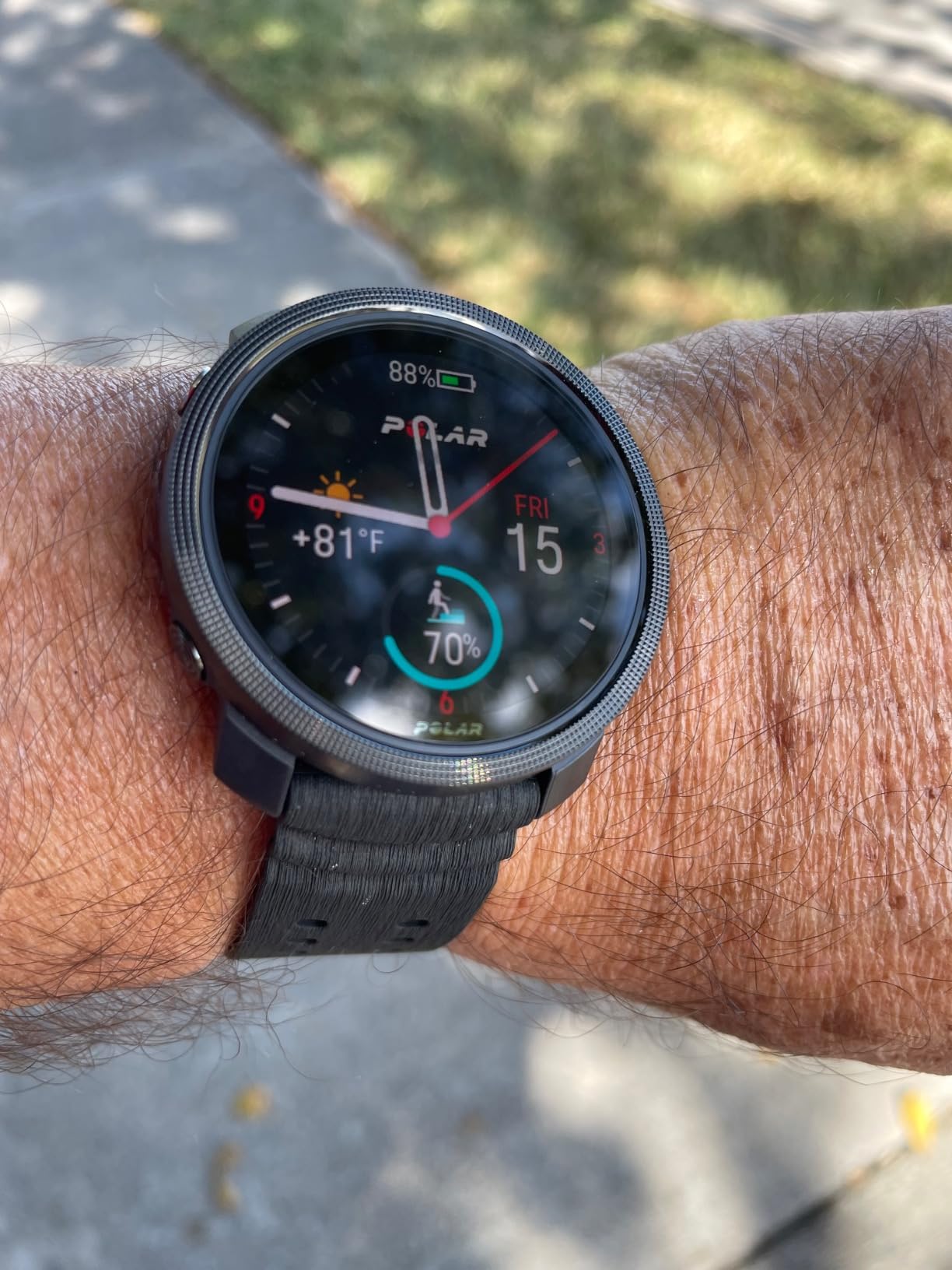
Battery life improved substantially over the previous Grit X Pro, with some owners charging only every other week using the Power-Save and Explore modes for multi-day work. The 1.39-inch AMOLED at 454 x 454 with 15 percent extra visibility is much easier to read than earlier Polar screens, and at 79 g it stays comfortable.
Durability is the other strength. MIL-STD-810H military-grade certification, a sapphire crystal and a stainless steel bezel at 100m and IP68. Standard 22mm bands rather than a proprietary quick-release system means you can swap straps anywhere, and the two-year warranty is generous.
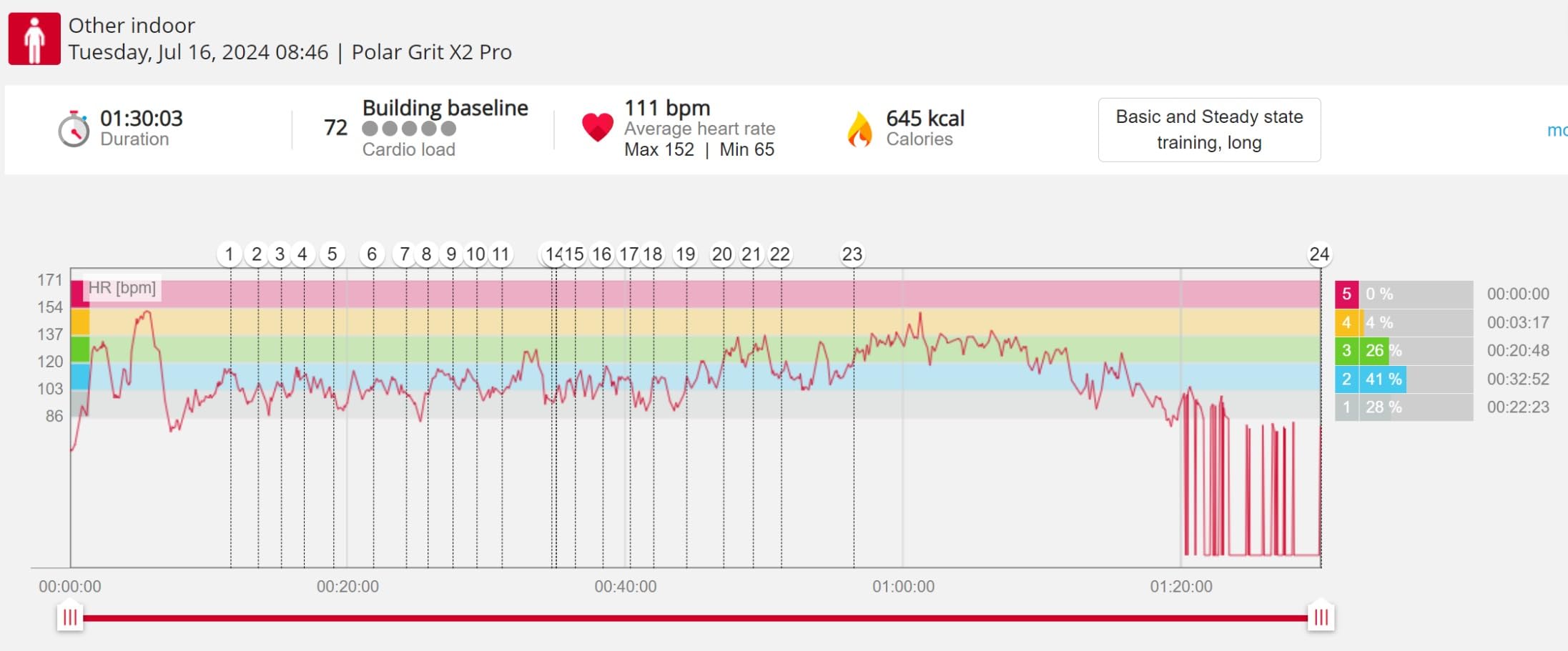
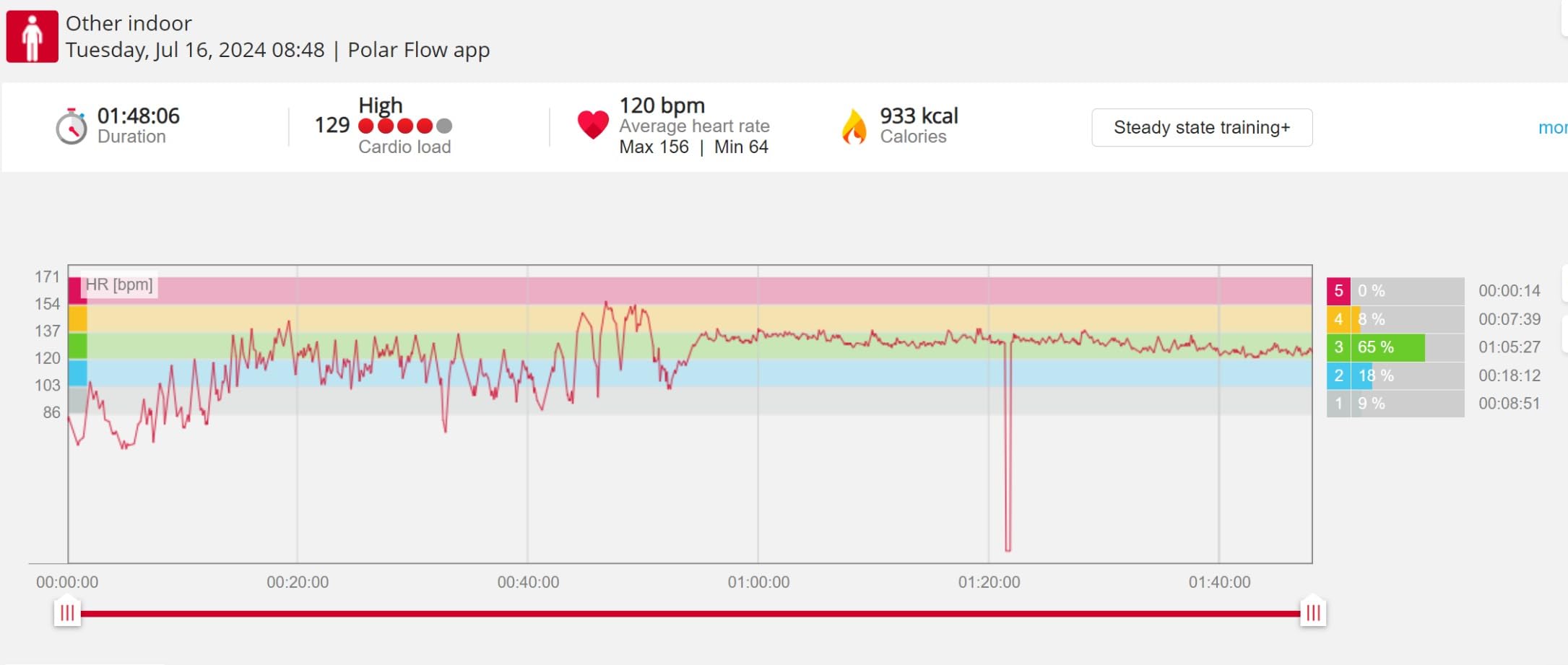
Training analytics are the deepest in the guide, with vertical speed, running power, training load and recovery metrics through the Polar Flow ecosystem, all without a subscription. The problem is the optical heart rate sensor, which is widely reported as materially inaccurate, sometimes off by a large margin. The interface is also dated against Garmin and COROS, and the buttons feel cheap at this price level.
Who the Grit X2 Pro fits
Buy it if training load and recovery data matter as much as navigation, you want military-grade durability with sapphire, and you value standard 22mm bands. Komoot routing covers the navigation side well.
It suits hikers who want a dedicated tool rather than a lifestyle smartwatch. Anyone who wants to answer calls from the wrist should look elsewhere.
Where it falls short
Heart rate accuracy is the defining weakness, and several owners have measured significant errors. If you train by heart rate, use a chest strap instead.
Notifications and third-party apps are limited, and the buttons feel inexpensive for a watch at this level. The battery drops considerably once you leave the power-saving modes.
12. Polar Vantage M3: The Best Lightweight Smartwatch for Hiking Navigation on Smaller Wrists
POLAR Vantage M3 – Multi-Sport Smartwatch with AMOLED Display, Dual-Frequency GPS, Turn-by-Turn Navigation, Up to 7-Day Battery Life, Black
1.28 inch AMOLED with Gorilla Glass 3
53 g lightweight body
7-day smart and 30h training battery
50m water resistance
Pros
- Very light at 53 g and comfortable on smaller wrists
- Five physical buttons make operation error-free when sweaty
- Deep training and recovery metrics with no subscription
- Up to 7 days in smartwatch mode and 30 hours in training
Cons
- Optical heart rate is the most criticized aspect
- No workout auto-detect so sessions start manually
- Syncs only while the watch is on the charger
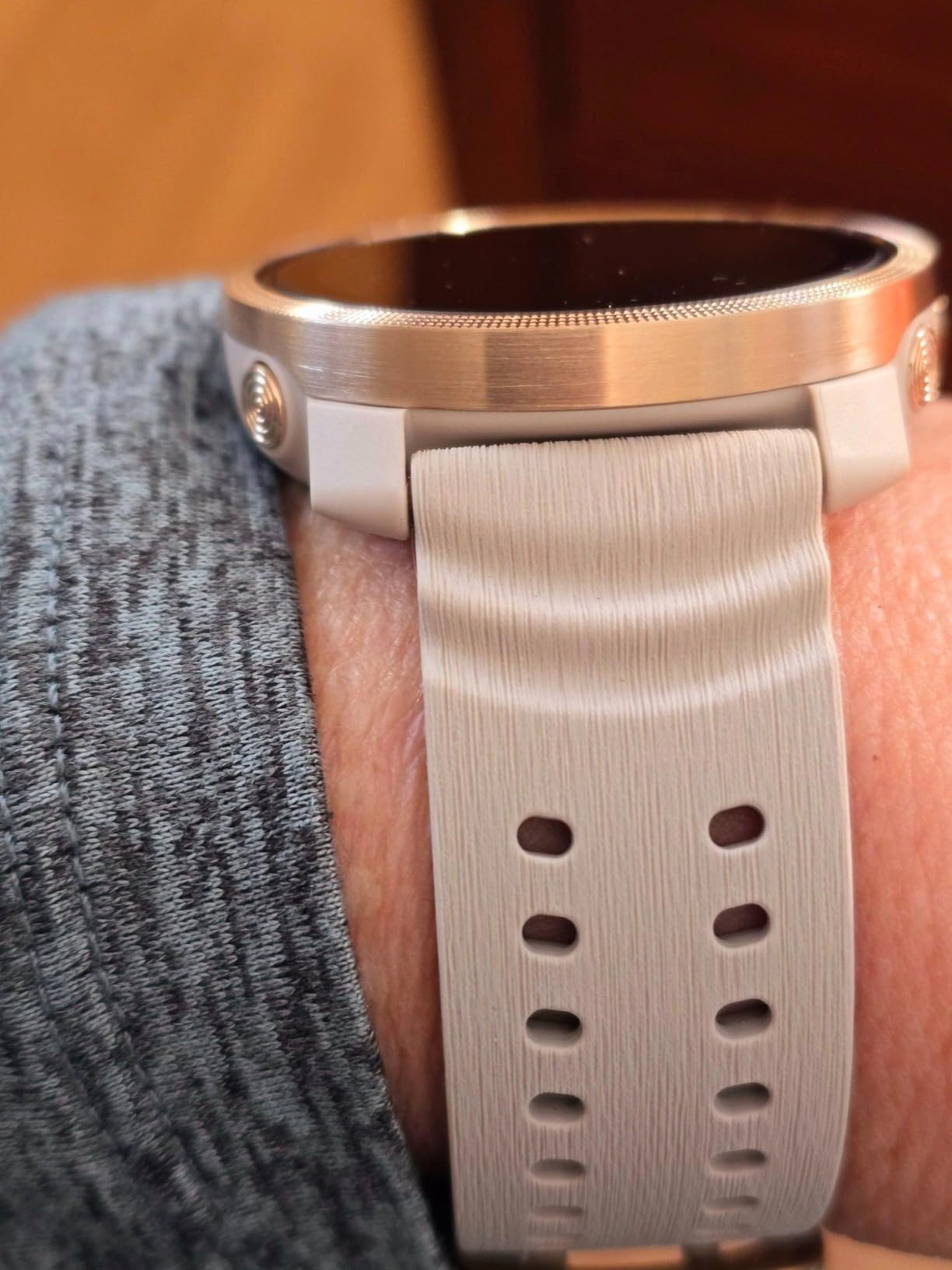
At 53 g the Vantage M3 is the lightest serious navigator with a colour screen in this guide, and five physical buttons mean you can start a workout, drop a waypoint or scroll a map with wet or gloved hands without touching a screen. It is the watch I would put on a wrist under six and a half inches.
Navigation is dual-frequency GPS with offline topographic maps, route planning and Komoot-powered turn-by-turn guidance, and owners report no complaints about how it performs. Battery is up to 7 days in smartwatch mode and 30 hours in training mode, which covers most week-long trips with one top-up. The 1.28-inch AMOLED at 1000 nits sits under Gorilla Glass 3.
What sets it apart is the analytics without a subscription. Training Load Pro, SleepWise, Nightly Recharge and running power data come with the watch, and owners describe the recovery and load figures as approaching chest-strap accuracy. More than 150 sport profiles with performance tests cover hiking and everything around it.
Three real drawbacks. The optical heart rate is the most criticized aspect, with at least one owner returning the watch over it. There is no workout auto-detect, so you start sessions manually. And the watch only syncs while it is on the charger, which makes daily charging effectively mandatory. The app and interface also look dated beside Garmin and COROS, and Polar Flow is required for full functionality.
Who should buy it
Small-wrist hikers, runners who want deeper recovery data than most watches give, and anyone who prefers five physical buttons over a touchscreen. Water resistance at 50m suits trails rather than swimming trips.
It is a good first serious watch because the training analytics cost nothing extra. Buyers who want wrist notifications should expect limited smartphone integration.
Where it falls short
Heart rate readings are inconsistent, and there is no auto-detect to save you a tap every morning. Charge-only syncing is an old habit that catches people out.
At 50m the water rating is modest for alpine and whitewater routes, and the dated interface plus Polar Flow requirement mean more phone time than Garmin or COROS demand.
What Hikers Actually Say About Hiking Watches
Forum threads on r/hiking, r/hikinggear and r/GarminWatches keep circling the same handful of points, and they line up with what we saw in testing. Battery complaints dominate, mostly from people arriving from an Apple Watch that lasted a day or two and died mid-climb without a battery pack.
Second is software. Garmin’s menu system draws steady criticism for being slow to learn, and users who switch from it rarely go back. Third is the breadcrumb question: forum consensus treats a blank screen with a line on it as a tracker, not a navigator, and hikers who have used real topo maps rarely accept going back. Users also warn about bulky 51mm cases snagging jacket sleeves, and about optical heart rate sensors that read badly when a watch is worn loose or in cold.
Long-time Fenix owners frequently stay on older solar models for battery life and navigation reliability, and Enduro owners report charging every three to four weeks in normal use and much less on sunny multi-day trips. COROS users praise value, battery and mapping while accepting a steeper app learning curve. If you also run, our guide to the best smartwatches for running covers the training metrics side in more detail.
How to Choose a Smartwatch for Hiking Navigation
1. Check the GPS mode behind the battery number
GPS hours are always quoted in a specific mode, and the number changes dramatically between them. Every watch here runs a full-accuracy mode, a multi-band or dual-frequency mode, and one or more power-save modes. Suunto is the clearest example: 40 hours in best GPS, 70 hours in endurance and 300 hours in tour mode on the same watch.
For dense forest and canyon terrain, multi-band or dual-frequency GPS reduces error from signal reflections. Amazfit, COROS PACE Pro, Suunto Vertical, both Polar models and the Garmin SatIQ models all qualify. Budget power-save modes still track, but accuracy suffers under canopy.
2. Decide between breadcrumb navigation and topo maps
A breadcrumb trail records where you walked and draws a line. A topographic map shows the terrain around that line – contour lines, water, paths, junctions. If your route follows a marked trail, breadcrumb plus Back-to-Start is usually enough. If you cross open country, traverse a hillside, or recover from a wrong turn, topo maps are the difference between a guess and a decision.
Preloaded maps mean the watch is ready when you leave. Garmin fēnix and Enduro models, Suunto Vertical and Amazfit T-Rex 3 ship with maps. The Apple Watch Ultra 3 needs third-party apps for trail routing.
3. Budget GPS hours against trip length
Count your days out and multiply by ten hours of recording as a baseline. Anything at or above that figure covers you with margin; anything below needs a power bank. Multiply by satellite mode sensitivity too – solar watches stretch, and always-on AMOLED drains.
4. Look for the ABC sensors
Altimeter, barometer and compass, usually sold as ABC or ABC-plus. The barometric altimeter calibrates to known elevation and gives weather trend alerts, which matters above treeline. An electronic compass keeps a bearing when you are not moving and the GPS is quiet. Every watch in this guide has all three.
5. Check water rating and case size
Ratings vary widely here, from 50m on the COROS Nomad and Polar Vantage M3 to 100m on most others. For alpine rain, creek crossings and whitewater proximity, treat anything below 50m as a no. On size, anything above 47mm needs a large wrist and is hard to wear under a sleeve. The 43mm Garmin fenix 8 and 53g Polar Vantage M3 are the safe picks for smaller wrists.
6. Consider safety and connectivity
Only the Apple Watch Ultra 3 in this list has satellite communications, and it also carries 5G cellular. Fall and crash detection appear on that watch and the Garmin fēnix 8. For everyone else, a paired inReach or similar communicator is the safety answer, and it pairs with any watch on this list.
One more practical note. Every watch here plans routes in a phone app, so build the route before you lose signal. A phone in airplane mode with a downloaded offline map app, plus a paper map as backup, should accompany any backcountry trip. If you would rather run the map on a handlebar, our picks for bike phone mounts for navigation keep a phone readable at a glance on the trail as well as on the road. A watch is a backup tool, not your only navigation. If you ride rather than hike, our guide to bike computers with turn-by-turn covers the same problem for handlebars.
Battery Math: How Much GPS Time Your Trip Actually Needs
Take the number of nights on your trip, multiply by ten, and compare it against the full-accuracy GPS figure – not the smartwatch figure, and not the power-save number. That gives you the minimum. A week in the backcountry means 70 hours, which rules out the COROS PACE Pro at 38 hours of outdoor activity and the Garmin fenix 8 at 28 hours without a top-up.
Add 30 percent as your safety margin, because cold mornings and a bright always-on screen both cost you. Anything at 40 hours of GPS or more handles a long weekend untouched. Above 70 hours, and certainly above 150, you stop planning around the charger – which is exactly why the Enduro 2 and Suunto Vertical keep showing up on multi-week lists.
Solar charging changes the maths again. The fenix 7X Pro Solar, Enduro 2 and the titanium Suunto Vertical all add meaningful hours in sun, but the gain depends on how much daylight the watch actually sees. A watch worn under a sleeve for three days will not hit the quoted maximum, so treat solar as insurance rather than a plan.
When a Tracker Is Enough and When You Need a Navigator
A tracker answers one question: where did I walk. If your hikes follow waymarked trails, start and end near the same car, and you would retrace the path if you lost it, a tracker with breadcrumb navigation and Back-to-Start is genuinely sufficient. Several watches in this list handle that job and will outlast anything else on a battery.
A navigator answers where you are in relation to the terrain around you. You need topo maps when you cross country, when a junction has no sign, when the trail vanishes into scree, or when poor weather forces an unplanned detour. The Garmin fēnix 8, Enduro 2, Amazfit T-Rex 3, COROS Nomad and PACE Pro, Suunto Vertical and Polar Grit X2 Pro all load real maps.
Never rely on either one alone. Carry a phone with downloaded offline maps, know how to read the paper map you brought, and tell someone your route and expected return time.
Frequently Asked Questions
What is the best GPS smartwatch for hiking?
The Apple Watch Ultra 3 is the best overall option for hiking navigation, with precision dual-frequency GPS, satellite communications, cellular 5G and up to 42 hours of normal battery life. For the best dedicated navigator, the Garmin fenix 8 offers full-color topographic maps and multi-band GPS with SatIQ. Best value goes to the Amazfit T-Rex 3, which pairs dual-band GPS and free global maps with up to 180 hours of GPS battery.
Is Garmin or Apple Watch better for hiking?
A Garmin is better for pure backcountry navigation, because models like the fenix 8 and Enduro 2 load full topographic maps, run 28 to 150 hours of GPS and add a built-in LED flashlight. The Apple Watch Ultra 3 is better for safety and everyday wear, with satellite SOS, 5G cellular, fall detection and a far more mature health ecosystem. Most thru-hikers carry both, using the Garmin for the route and the Apple Watch for messaging.
Which GPS map hiking watch is best?
The Garmin fenix 8 is the strongest all-round map watch, with a 1.3-inch AMOLED, full-color topographic maps, multi-band GPS with SatIQ and turn-by-turn directions. The Suunto Vertical offers the largest colour map screen at 49mm with free offline contour-line maps. The Amazfit T-Rex 3 gives you free global maps and turn-by-turn at the lowest cost of any watch here.
Which is more accurate, the Garmin or the Apple Watch for GPS tracking?
Garmin watches generally hold a more reliable track on remote trails because they use multi-band or SatIQ GPS with a barometric altimeter and electronic compass, and they can be set to full-accuracy mode for the whole trip. Apple Watch Ultra 3 uses precision dual-frequency GPS and performs well on clear trails, but its battery budget makes long full-accuracy recording harder, and it does not ship with topographic maps.
Can a smartwatch navigate without cell service?
Yes, as long as you load maps before you lose signal. Garmin fenix and Enduro models ship with preloaded topographic maps, the Amazfit T-Rex 3, COROS Nomad, COROS PACE Pro, Suunto Vertical and Polar Grit X2 Pro download offline maps through their phone apps, and the Apple Watch Ultra 3 uses third-party navigation apps. Route planning needs the phone app, so plan before you leave coverage.
Conclusion: Our Best Smartwatches for Hiking Navigation Picks
The Apple Watch Ultra 3 takes our best smartwatches for hiking navigation crown in 2026 because it is the only watch here that combines satellite SOS, cellular independence and a two-to-three-day battery. The Garmin fenix 8 is the pick for anyone who wants real topographic maps, and the Amazfit T-Rex 3 gives you dual-band GPS with free global maps at a fraction of the price.
For trips past a week, the Garmin Enduro 2 and Suunto Vertical remove charging from the equation entirely. Whichever you choose, load your maps before you lose signal, carry a backup, and tell someone your route and return time.