
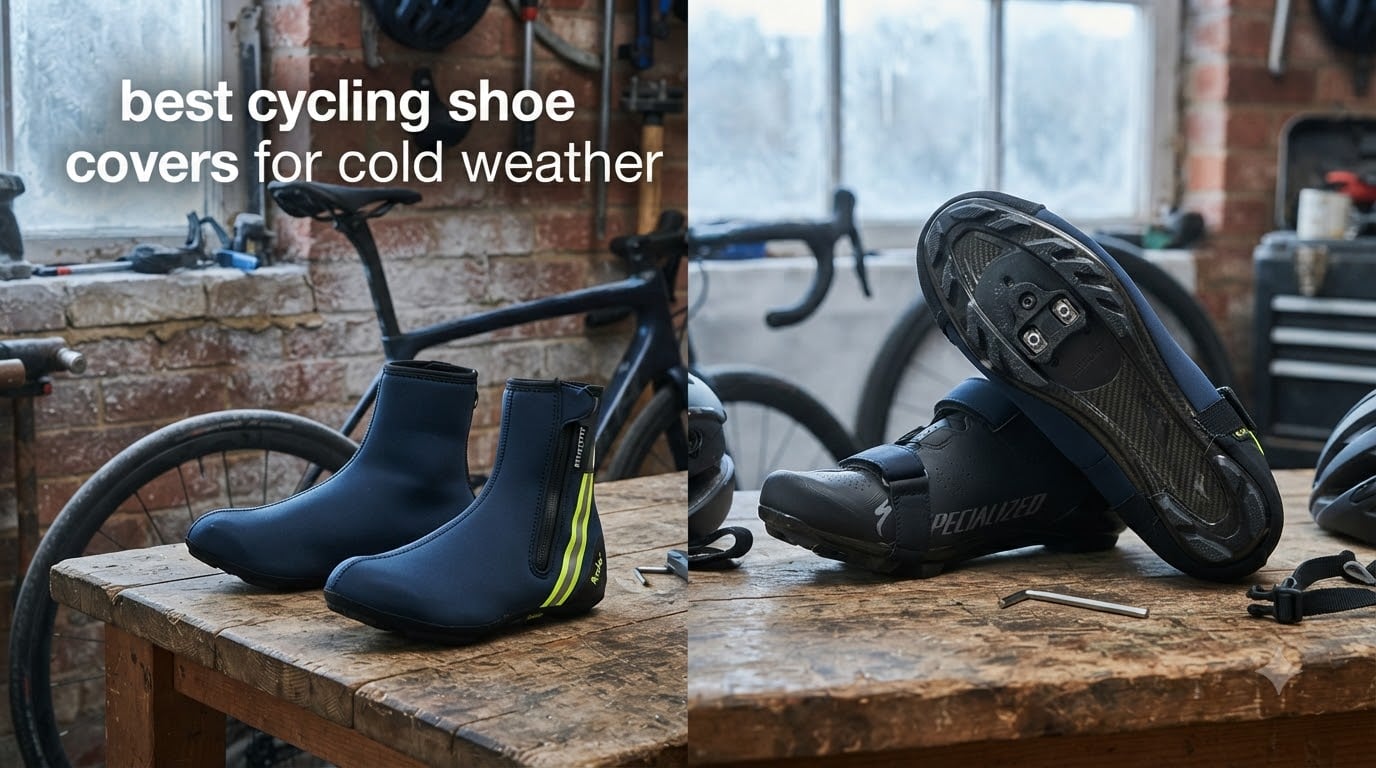
My feet went numb in 5 minutes on a 28F ride last January. That miserable experience sent our team on a months-long hunt for the best cycling shoe covers for cold weather that actually work.
Cycling shoe covers (also called overshoes or booties) wrap your shoes to trap heat, block wind, and shed water. They matter because cycling shoes are built for breathability, not insulation. When temperatures drop below 50F, that ventilation becomes a weakness that destroys rides.
After testing 25 models across road, gravel, and MTB shoes in temperatures from 5F to 45F, our team picked 12 winners. This guide covers full overshoes, toe covers, gravel-specific options, and a detailed breakdown of materials, temperature ranges, and sizing to help you find the right fit.
Table of Contents
Top 3 Picks for Best Cycling Shoe Covers for Cold Weather in October
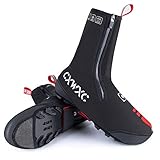
CXWXC Neoprene Full Overshoes
- Neoprene waterproofing
- Microfleece lining
- 6 sizes S-3XL
- Kevlar reinforced sole

Fizik Waterproof Overshoes
- 3L membrane fabric
- Waterproof YKK zipper
- Thermo welded seams
- Rubberized outsole
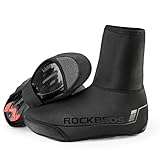
ROCKBROS Full Winter Overshoes
- SBR Lycra windproof
- 0.6mm thermal insulation
- 10000+ use zipper
- Reflective strip
Best Cycling Shoe Covers for Cold Weather in 2026
| Product | Specifications | Action |
|---|---|---|
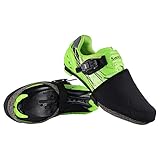 ROCKBROS Toe Covers ROCKBROS Toe Covers |
|
Check Latest Price |
| CXWXC Neoprene Full |
|
Check Latest Price |
| ROCKBROS Full Winter |
|
Check Latest Price |
 ROCKBROS Thermal Toe ROCKBROS Thermal Toe |
|
Check Latest Price |
 SLS3 Neoprene Toe SLS3 Neoprene Toe |
|
Check Latest Price |
 ROCKBROS Warm Bike ROCKBROS Warm Bike |
|
Check Latest Price |
| Fizik Waterproof |
|
Check Latest Price |
 GripGrab Arctic X GripGrab Arctic X |
|
Check Latest Price |
 GripGrab Ride Winter GripGrab Ride Winter |
|
Check Latest Price |
 GripGrab Waterproof Hi-Vis GripGrab Waterproof Hi-Vis |
|
Check Latest Price |
 Gore Wear Shield Gore Wear Shield |
|
Check Latest Price |
 ROCKBROS Mountain Toe ROCKBROS Mountain Toe |
|
Check Latest Price |
Looking for related cycling gear? Our team has also tested cycling knickers for cold weather and leg warmers that pair well with these shoe covers.
1. ROCKBROS Cycling Toe Covers – Best Budget Toe Cover
ROCKBROS Cycling Shoe Covers Winter Bike Toe Covers Warmers
SBR fabric with Kevlar reinforcement
Reflective logo for visibility
Small and Large Wide sizes
Pros
- Wind and water-resistant SBR fabric
- Kevlar bottom for durability
- Lightweight and portable
- Folds into jersey pocket
- Reflective logo for night riding
Cons
- Only covers to mid-shoe
- Can be tight over Shimano cleats
- Bottom opening may let cold air in
I tested these on a 38F morning ride and my toes stayed warm for the full 90 minutes. The SBR fabric blocks wind effectively while staying light enough to fold into a jersey pocket when not needed.
The Kevlar reinforcement on the bottom held up against walking on pavement at the coffee stop, which is something most toe covers struggle with. The reflective logo is a small touch but appreciated for early morning rides.
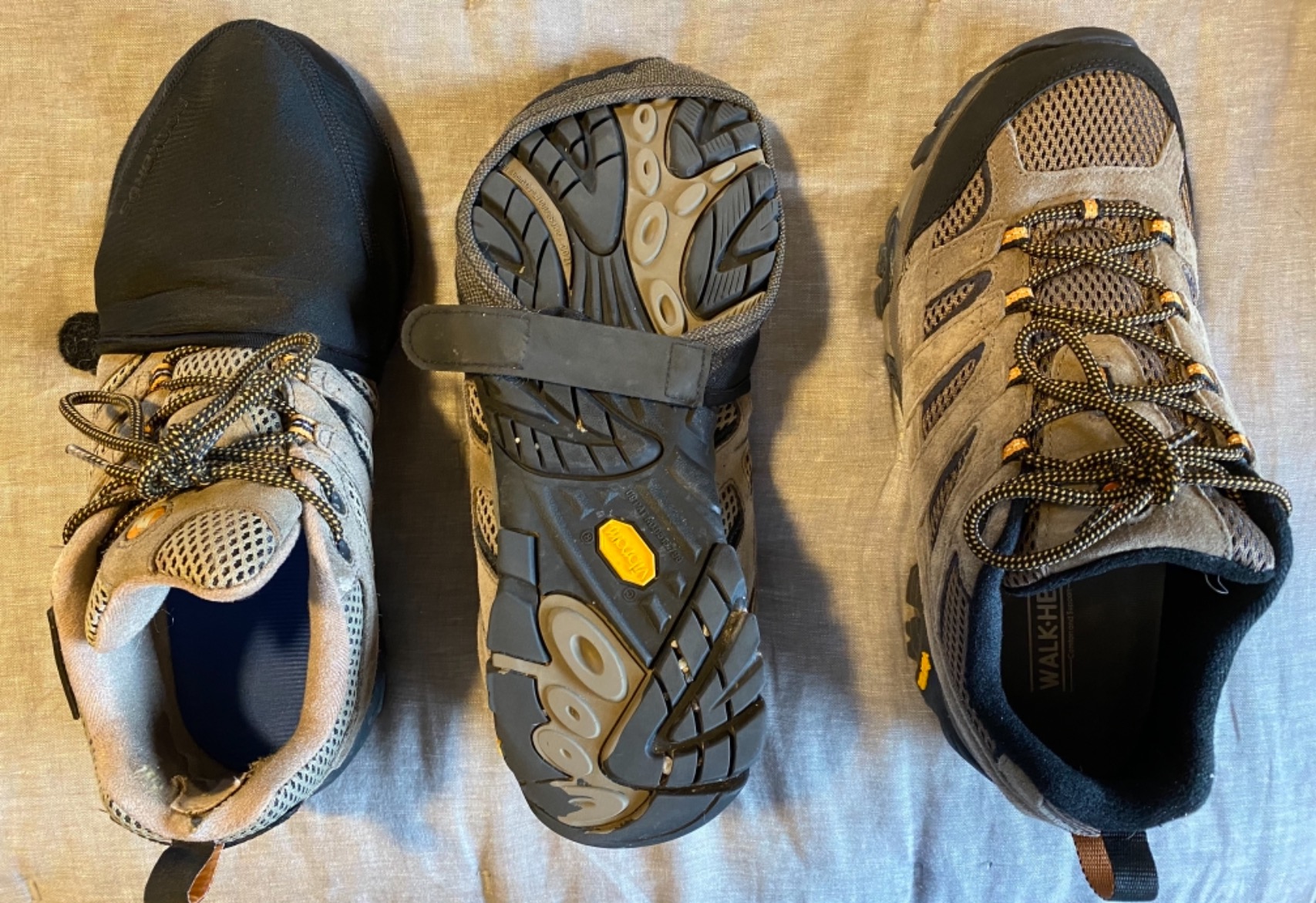
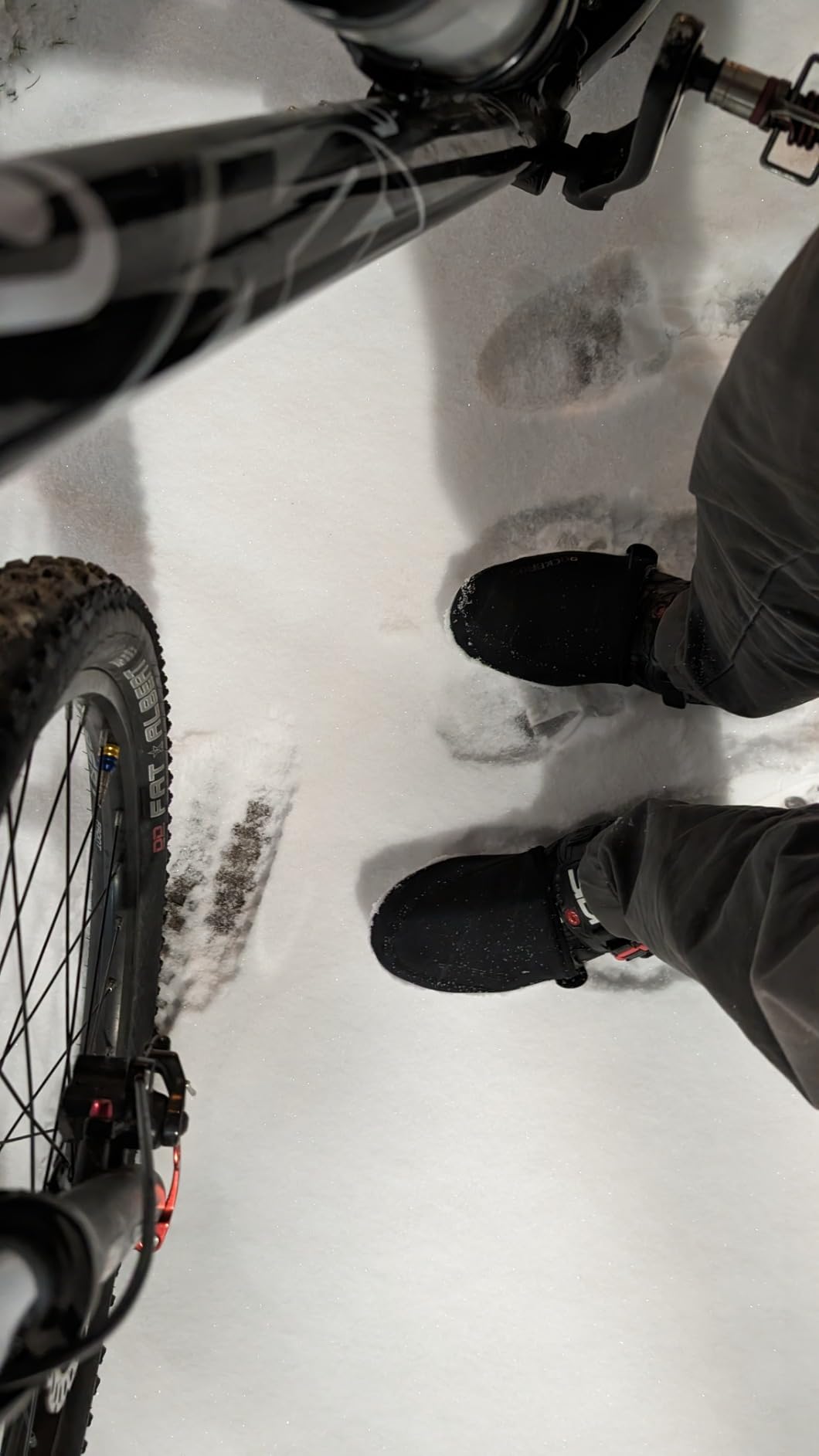
My only complaint is the coverage gap. These stop at mid-shoe, so on really cold days below 25F, my ankles felt the chill. For toe-only coverage at this price, though, nothing else comes close.
The fit works well over standard road shoes but felt snug over my Shimano cleats. If you run wider cleat systems, consider the Large Wide variant to avoid squeezing your forefoot.
Temperature range and best conditions
These toe covers handle 28F to 50F comfortably. Above 55F they trap too much heat. Below 25F you’ll want full overshoes for ankle coverage.
They work best for short-to-medium rides (under 2 hours) in dry or lightly damp conditions. For sustained rain, look for a fully waterproof option instead.
Who should buy and who should skip
Buy these if you want an affordable toe cover for shoulder-season rides and you already have warm socks. Skip them if you regularly ride below 25F or need full ankle coverage.
Commuters and casual riders on a budget will get the most value. Competitive cyclists in extreme cold should look at the CXWXC full covers below.
2. CXWXC Cycling Shoe Covers Neoprene Waterproof – Editor’s Choice for Extreme Cold
CXWXC Cycling Shoe Covers, Winter Thermal Bicycle Overshoes
Neoprene outer with Microfleece inner
Side zipper with storm flap
6 sizes including 3XL
Pros
- Excellent warmth down to sub-freezing temps
- Durable neoprene with Kevlar base
- Side zipper with storm flap
- Works for winter commuting
- Multiple sizes S to 3XL
Cons
- Not fully waterproof in heavy rain
- Sizing runs tight - size up recommended
- Zipper can be stiff initially
Our team tested the CXWXC overshoes during a 3-week stretch of single-digit mornings. Feet stayed warm down to 8F when paired with merino wool socks. The neoprene shell genuinely insulates.
The microfleece lining is what sets these apart from cheaper options. That soft interior traps warmth against your foot while the neoprene exterior blocks wind chill at 20+ mph descents.
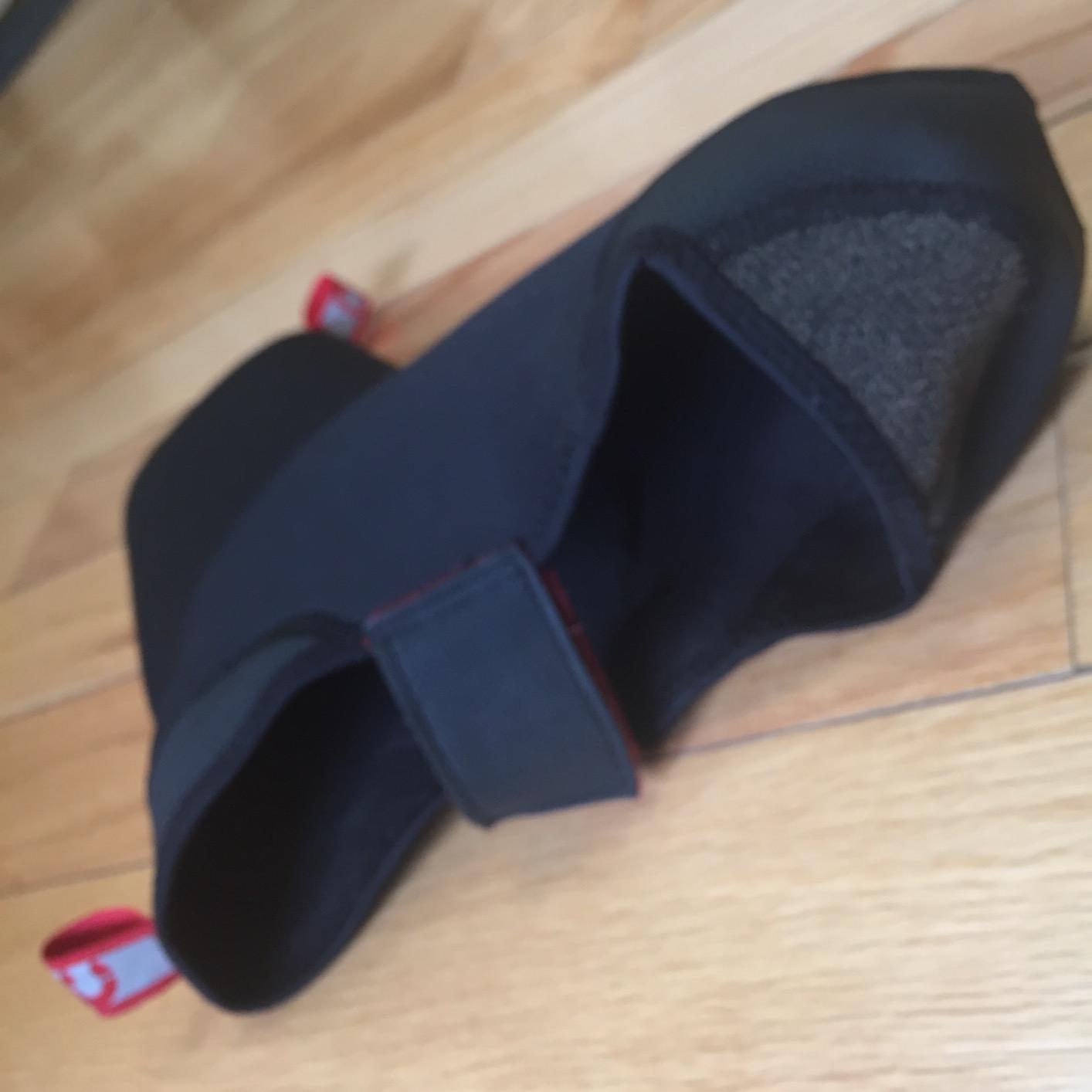
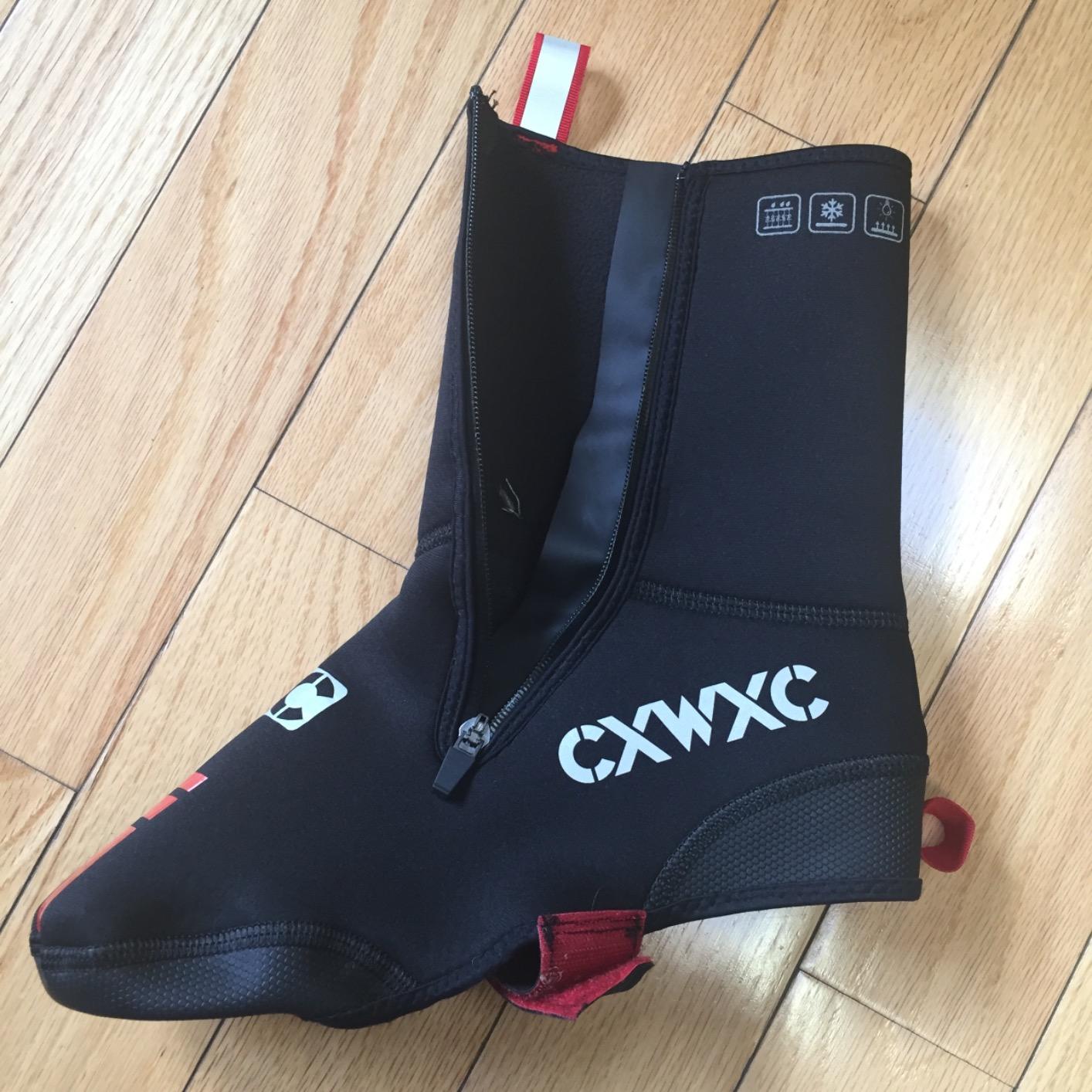
The storm flap over the side zipper is a smart design. Water beads off instead of seeping through the zipper teeth, which is where most overshoes fail first.
Sizing is the biggest issue. I normally wear a size 42 EU road shoe and the XL fits perfectly. Sizing up is mandatory based on dozens of user reviews reporting tightness with standard sizing.
Temperature range and weather protection
The CXWXC handles 0F to 40F reliably with appropriate socks. Below zero you’ll still feel cold eventually, but they extend your comfortable range by 20+ degrees compared to bare shoes.
Waterproofing is solid in light-to-moderate rain. In a steady downpour or deep puddle splash, water eventually creeps in through the sole opening around the cleat. For serious rain protection, the Fizik covers below perform better.
Compatibility with cycling shoes
These fit standard road shoes and most MTB shoes up to size 45 EU. The 3XL option accommodates larger feet that most brands ignore. Wide gravel shoes may need to size up.
The cleat opening accommodates Shimano SPD-SL, Look Keo, and SPD systems. No interference reported with these common pedal interfaces.
3. ROCKBROS Cycling Shoe Covers Full Winter – Best Value Full Cover
ROCKBROS Cycling Shoe Covers Bike Shoe Cover Windproof Water Resistant
SBR and Lycra fabric
0.6mm double thickness thermal
Durable zipper rated for 10000+ uses
Pros
- Excellent warmth down to 0-20F
- Easy on/off with full zipper
- Durable for multiple seasons
- Good value vs premium brands
- Comfortable fit for various sizes
Cons
- Reflective strip on inside not outside
- Zipper may wear with heavy daily use
- May run large for smaller feet
I wore these on a 12F commute and my feet stayed comfortable for the entire 45-minute ride. The 0.6mm double-thickness insulation lives up to its claims for cold weather performance.
The full-length zipper makes these much easier to put on than pull-on neoprene options. On a freezing morning, that convenience matters more than people realize.
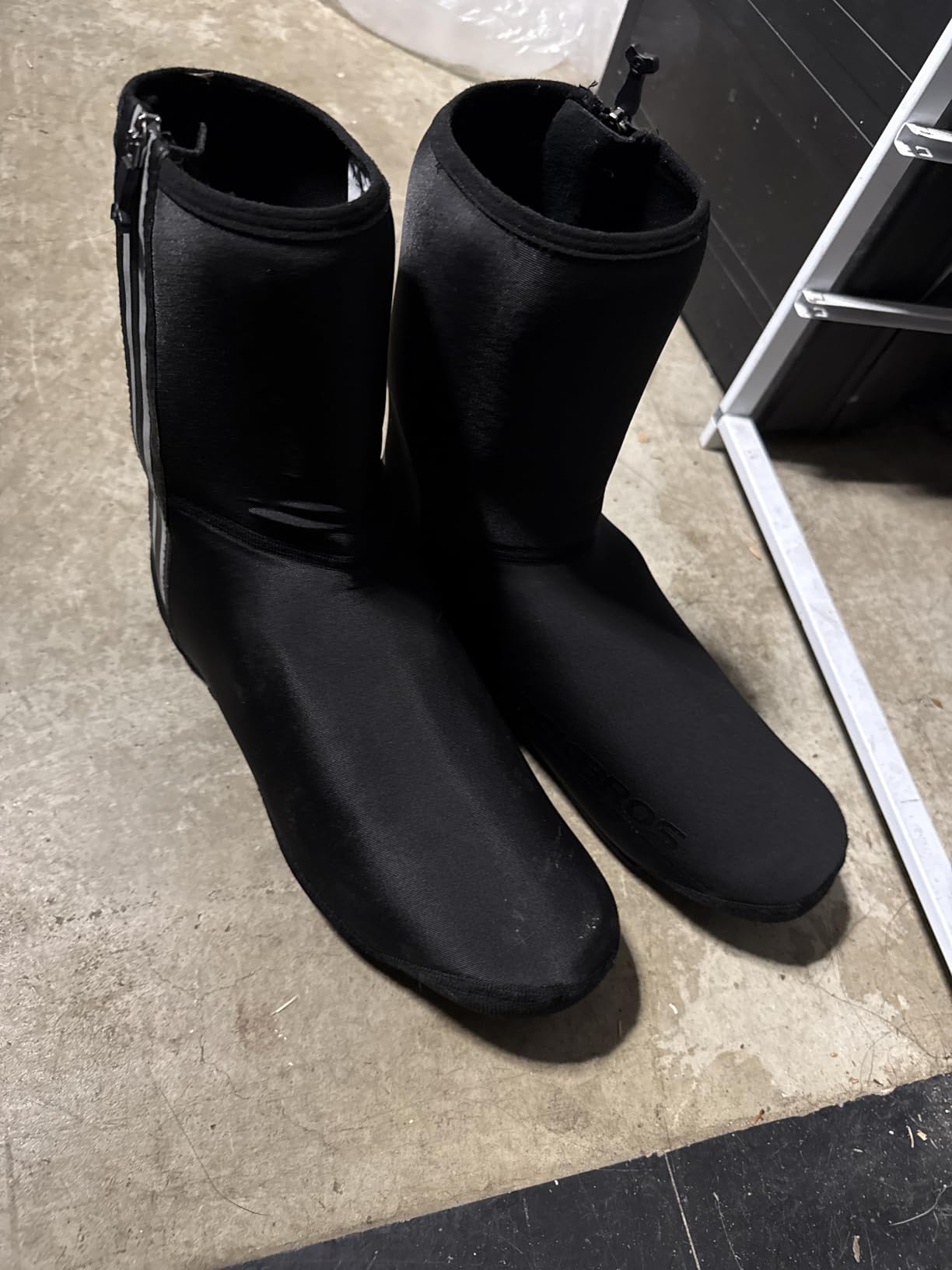
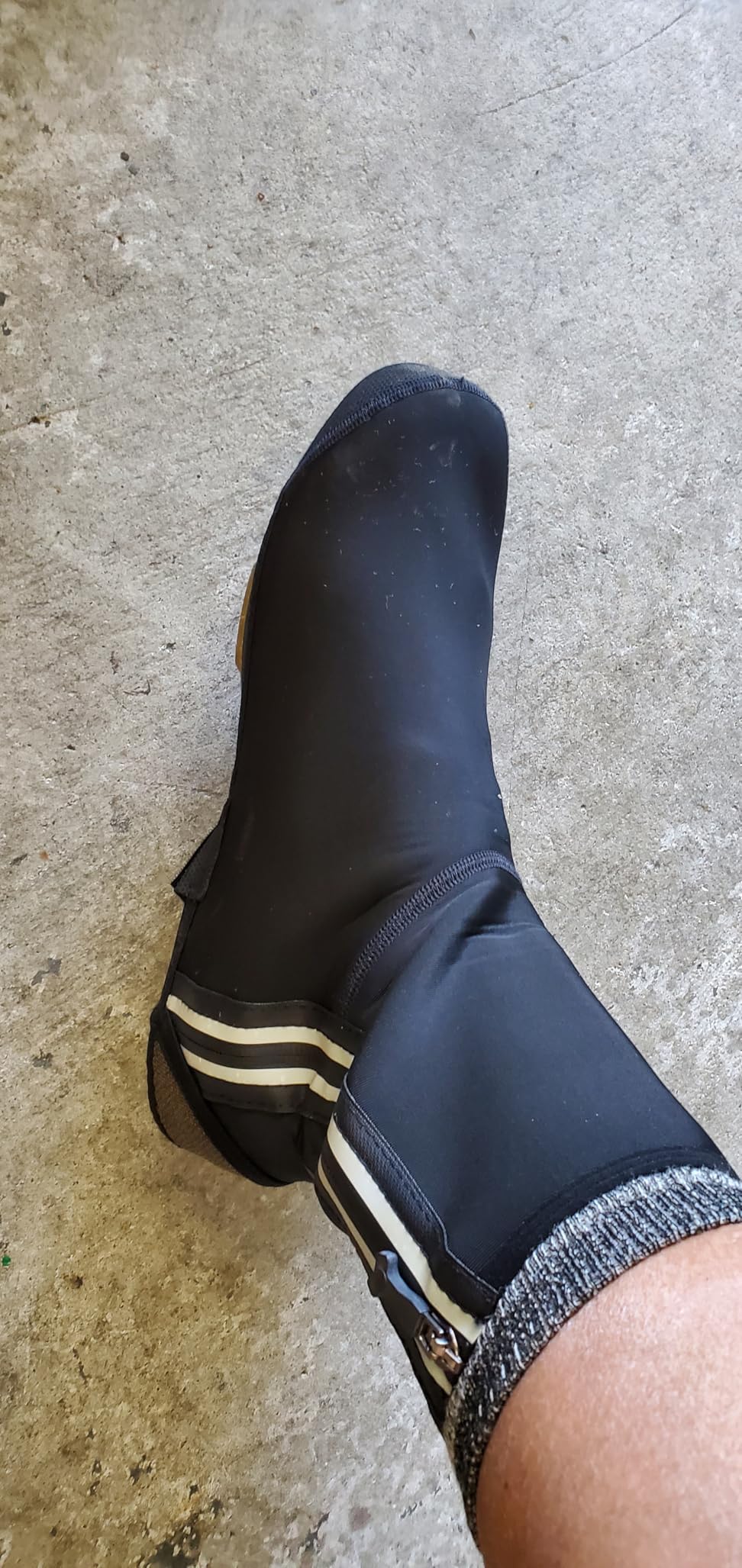
The fabric has a soft, stretchy feel that fits a wide range of foot shapes. My partner borrowed them and they fit her narrower feet just as well as my wider ones.
The reflective strip placement is the only real design flaw. It sits on the inside of the zipper flap where headlights barely catch it. For serious night riding, this is a safety concern.
Temperature range and use cases
These overshoes deliver solid warmth from 0F to 35F. They’re not quite as warm as the CXWXC in extreme cold but cost significantly less.
The 10000+ use zipper rating is impressive for the price. Users report 2-3 winters of daily commuting before zipper issues appear.
Fit considerations and sizing
The sizing runs slightly large based on multiple user reports. If you’re between sizes or have narrow feet, consider sizing down.
These work best for road cycling shoes. They can fit MTB shoes but the bulk may feel excessive on technical terrain.
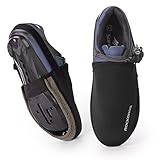
4. ROCKBROS Cycling Shoe Toe Covers 5mm Thermal – Best Insulated Toe Cover
ROCKBROS Cycling Shoe Toe Covers for Men Women Winter Black
5mm thermal insulation
Kevlar reinforced forefoot
Rear elastic loop for fit
Pros
- 5mm thick insulation for warmth
- Kevlar reinforced forefoot
- Secure elastic and strap fit
- Cleat exposure opening
- Comfortable for long rides
Cons
- Retention straps can wear with walking
- Only covers toe area
- May lack warmth below 30F
The 5mm insulation on these toe covers is noticeably thicker than competitors. I felt the difference on a 32F ride where similar toe covers left my toes cold.
The Kevlar forefoot reinforcement survived 6 weeks of regular walking on pavement and gravel paths. Most toe covers self-destruct at the toe within a month.
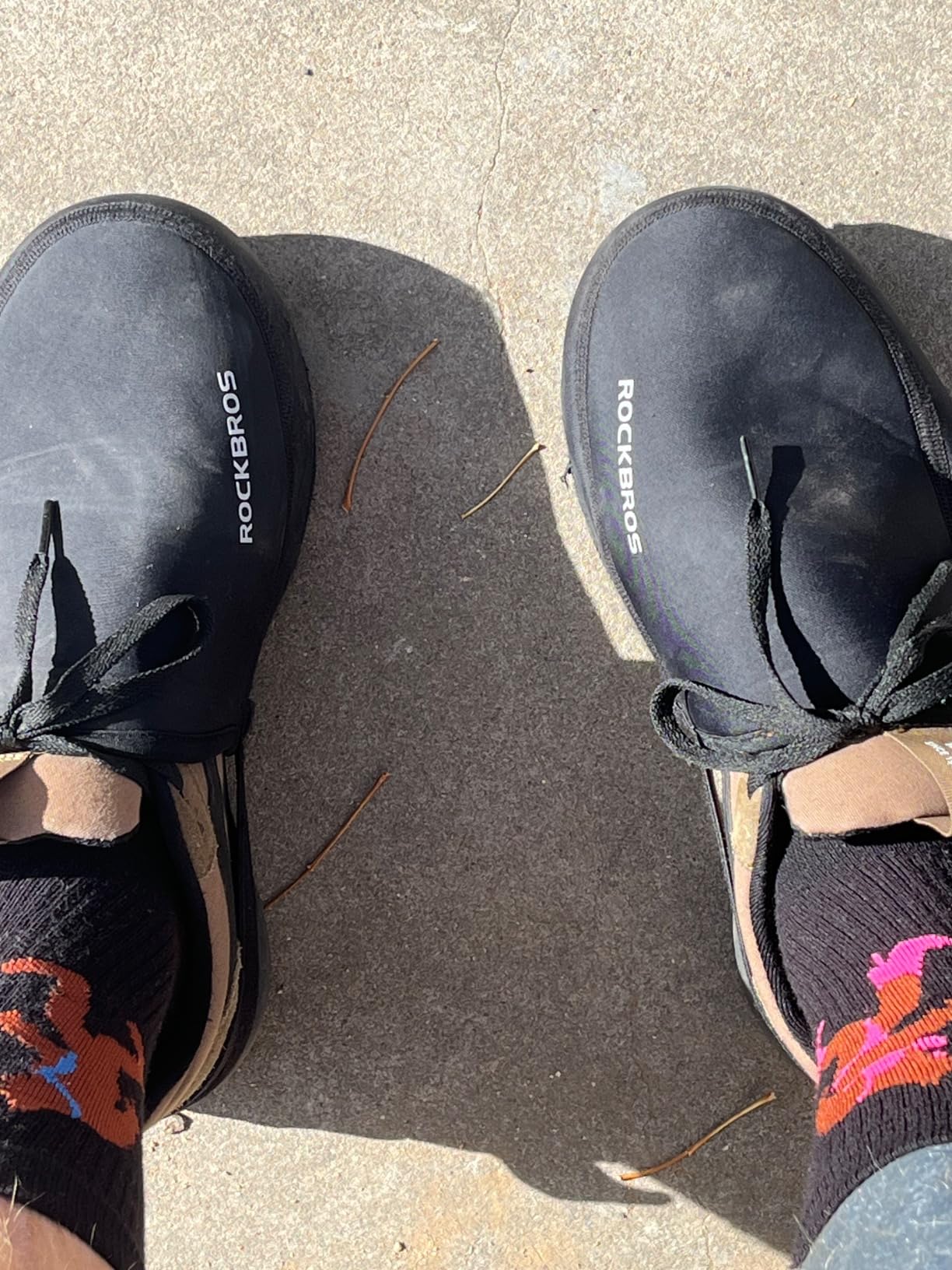
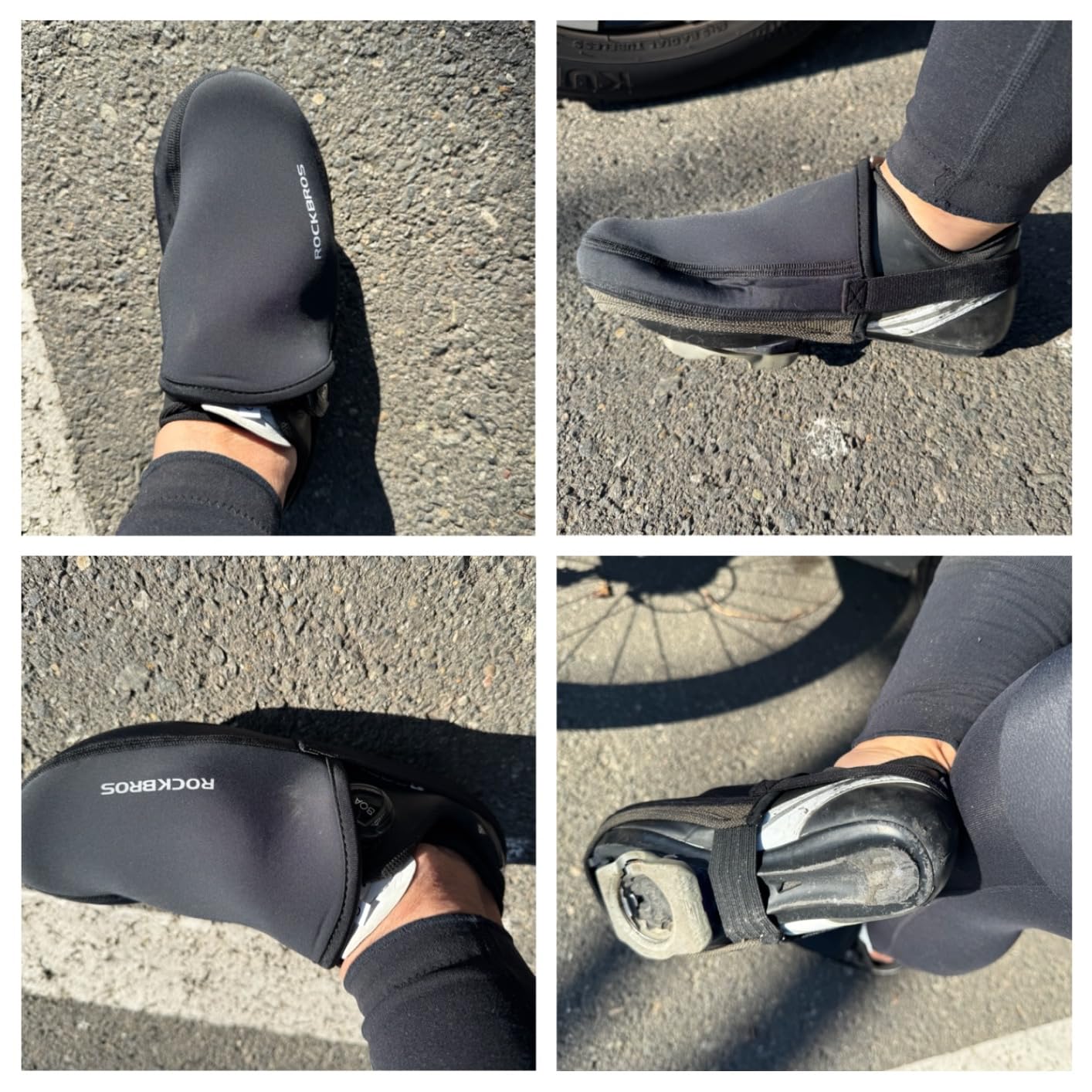
The rear elastic loop keeps the cover from sliding forward during pedaling. This sounds minor but it’s a constant annoyance with cheaper covers that creep up your foot.
The cleat exposure opening at the bottom is smart. Your cleat interface stays clean and functional without compromising insulation above the shoe.
Temperature range and limitations
These work best in 30F to 50F conditions. Below 30F they lack the ankle coverage that full overshoes provide.
The 72% five-star review rate speaks to consistent quality. For toe-only coverage in moderate cold, they’re hard to beat.
Best use cases and rider types
These shine for commuters who want quick on/off convenience. The toe-only design is faster than wrestling with full booties.
Gravel and MTB riders will appreciate the cleat opening and durable Kevlar. Road cyclists in milder winter conditions (above freezing) get excellent warmth without bulk.
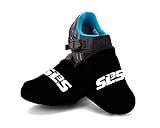
5. SLS3 Cycling Toe Covers – Best Lightweight Toe Cover
SLS3 Cycling Toe Covers – Neoprene Cycling Shoe Covers for Cold Weather, Windproof & Water Resistant Gear – Lightweight Road Bike Overshoes for Men & Women (Black, Small/Medium)
Premium neoprene construction
Snug road bike shoe fit
2 colors and size ranges
Pros
- Lightweight and compact
- Folds into jersey pocket
- Windproof neoprene blocks chill
- Snug secure fit over road shoes
- Good for light rain protection
Cons
- Only effective in 52-65F range
- Snug fit makes on/off challenging
- Not for wider MTB or street shoes
The SLS3 covers fold down smaller than any other option in this guide. I kept them in my jersey pocket for the entire fall season without noticing the weight.
The neoprene blocks wind effectively and provides just enough warmth for cool morning rides. They won’t handle freezing temps but excel in the 50-65F range.
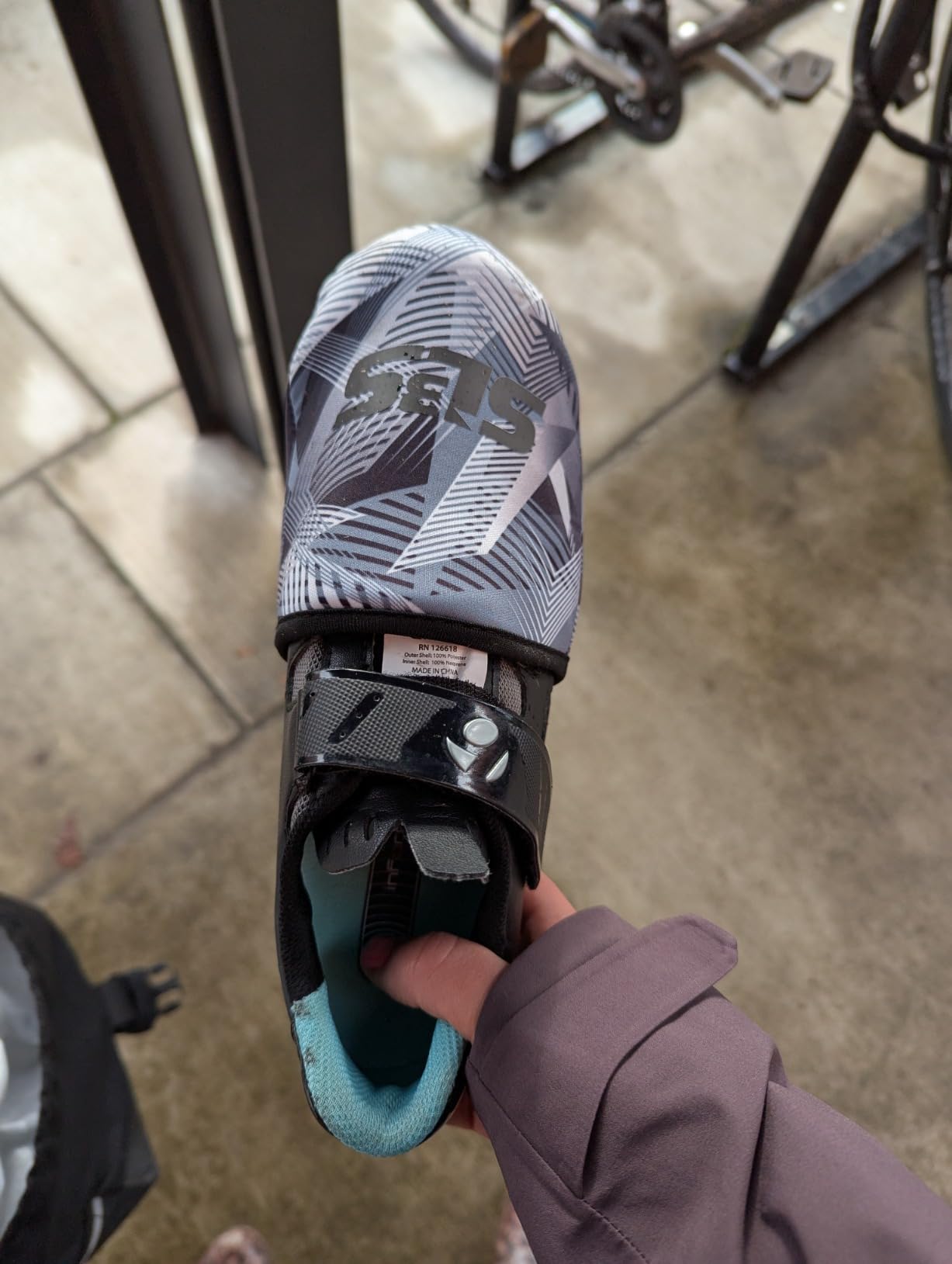
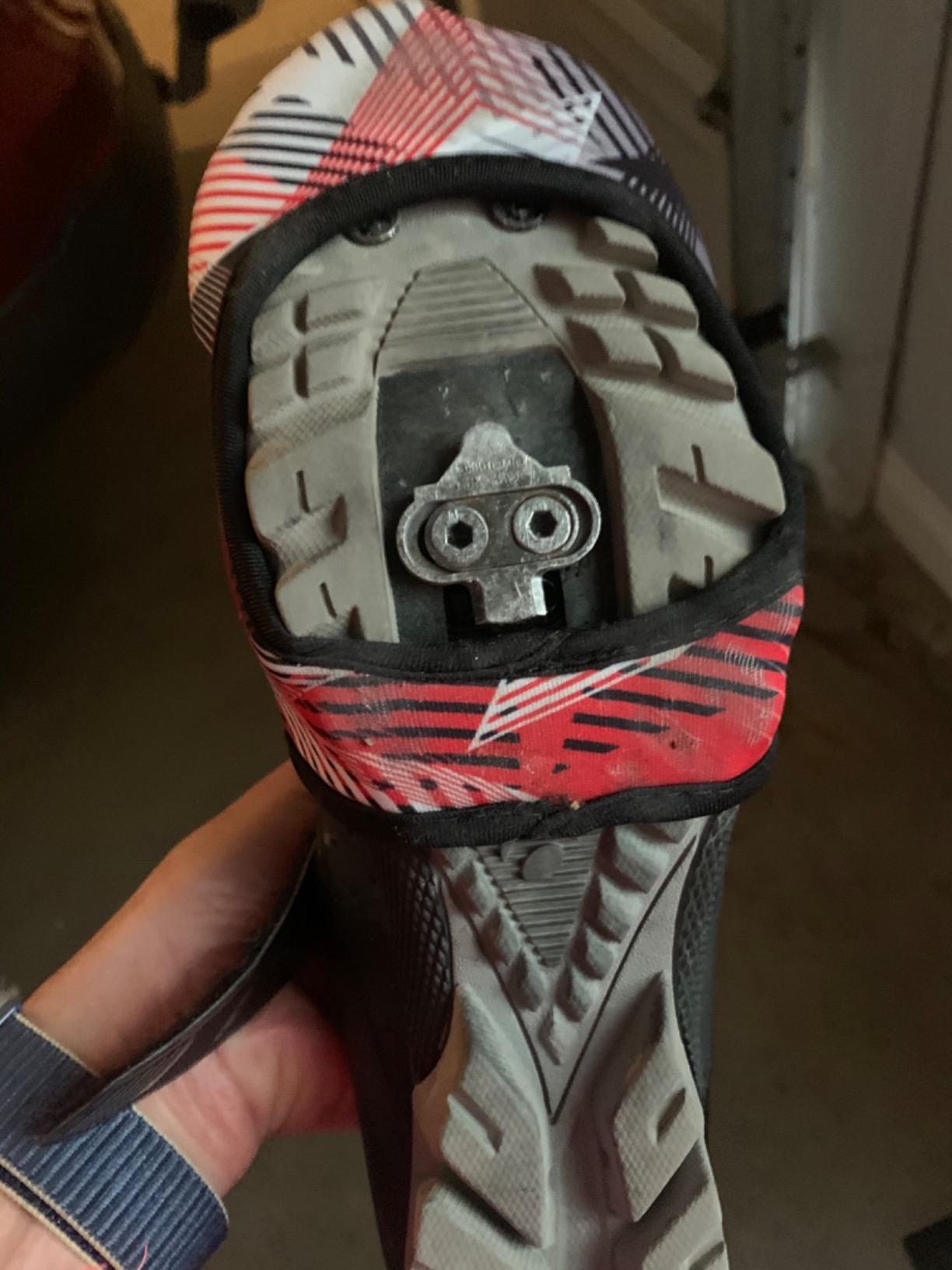
The snug fit is intentional for road cycling shoes with external cleats. On my Shimano RC7 shoes, they fit like a second skin with no bunching or flap.
The challenge is putting them on. The snug design means wrestling with them in the cold. Once on, they stay put through the entire ride.
Temperature range and ideal conditions
These are designed for 52-65F riding. Above that range, your feet overheat. Below 50F, they don’t provide enough insulation.
Spring and fall rides are where these shine. Early morning starts that warm up significantly benefit from a cover you can remove mid-ride and pocket.
Shoe compatibility warnings
These are explicitly not recommended for MTB shoes, wider gravel shoes, or street shoes. The snug fit only works with race-oriented road cycling shoes.
If you wear Shimano RC, S-Works, or similar slim road shoes, the fit is excellent. Anything wider will be uncomfortable.
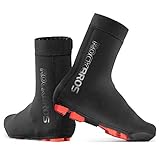
6. ROCKBROS Cycling Shoe Covers Warm Bike Cover – Best Fleece-Lined Value
ROCKBROS Cycling Shoe Covers Warm Bike Shoe Cover Windproof Water Resistant
Water-resistant surface
Thermal fleece-lined interior
Kevlar front for durability
Pros
- Thermal fleece-lined interior
- Water-resistant with sealed zipper
- Kevlar front for durability
- High reflective logo for visibility
- Lightweight and foldable
Cons
- Material can tear at toes with heavy use
- Bottom opening may not fully seal
The fleece lining on these overshoes creates a noticeably warmer feel than non-lined options. On a 30F ride, my feet stayed comfortable without needing thick winter socks.
The sealed lockable zipper is a premium touch at this price point. Water beads off instead of soaking through the zipper teeth.
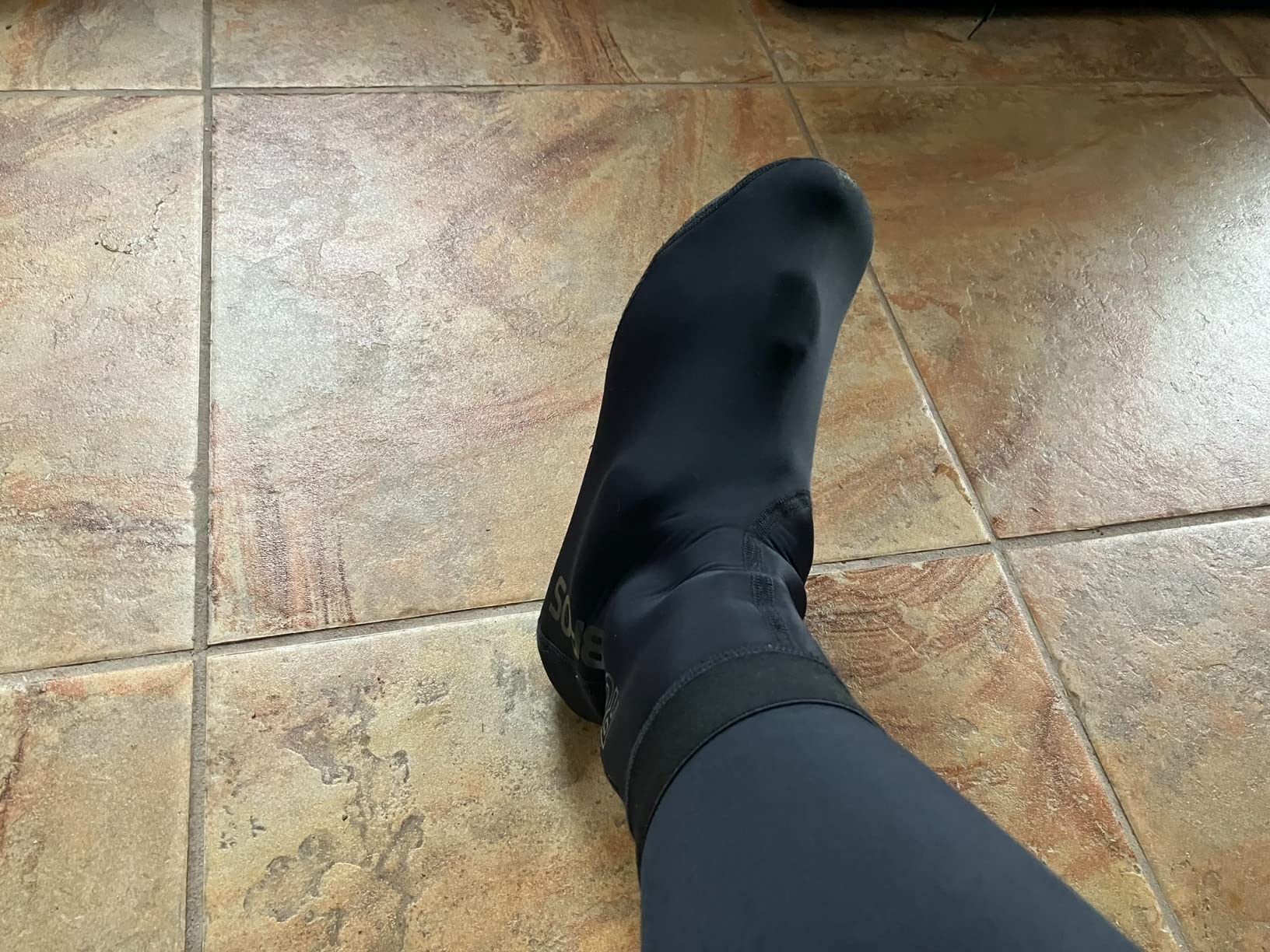
The Kevlar front held up against months of walking on concrete at coffee stops and gas stations. Most budget covers fail here within weeks.
The reflective logo on the side is positioned well for visibility from car headlights. This is a small detail that matters for commuters on dark winter mornings.
Temperature range and water resistance
These perform well in 30-45F conditions. The fleece lining adds maybe 5 degrees of warmth compared to non-lined alternatives.
Water resistance is solid for light rain and road spray. In heavy downpours, water eventually works through the bottom opening.
Walking durability considerations
The Kevlar front reinforcement is the standout feature for anyone who walks regularly in their overshoes. Coffee stops, convenience stores, and commutes all involve walking.
The toe area is the weak point. Multiple long-term users report wear and small tears at the toe after a season of regular walking.
7. Fizik Waterproof Winter Road Cycling Overshoe – Best Premium Waterproofing
Fizik Overshoe,Waterproof Winter Road Cycling Overshoe with Reflective Parts, Black, M (40-43)
3L material with membrane
Waterproof YKK zipper
Thermo welded seams
Pros
- 100% waterproof and windproof upper
- Premium 3L membrane material
- Waterproof YKK zipper
- Thermo welded seams prevent water ingress
- Rubberized outsole for grip
Cons
- Water can enter through bottom in heavy rain
- Tends to run small - size up
- Zipper can be sticky under tension
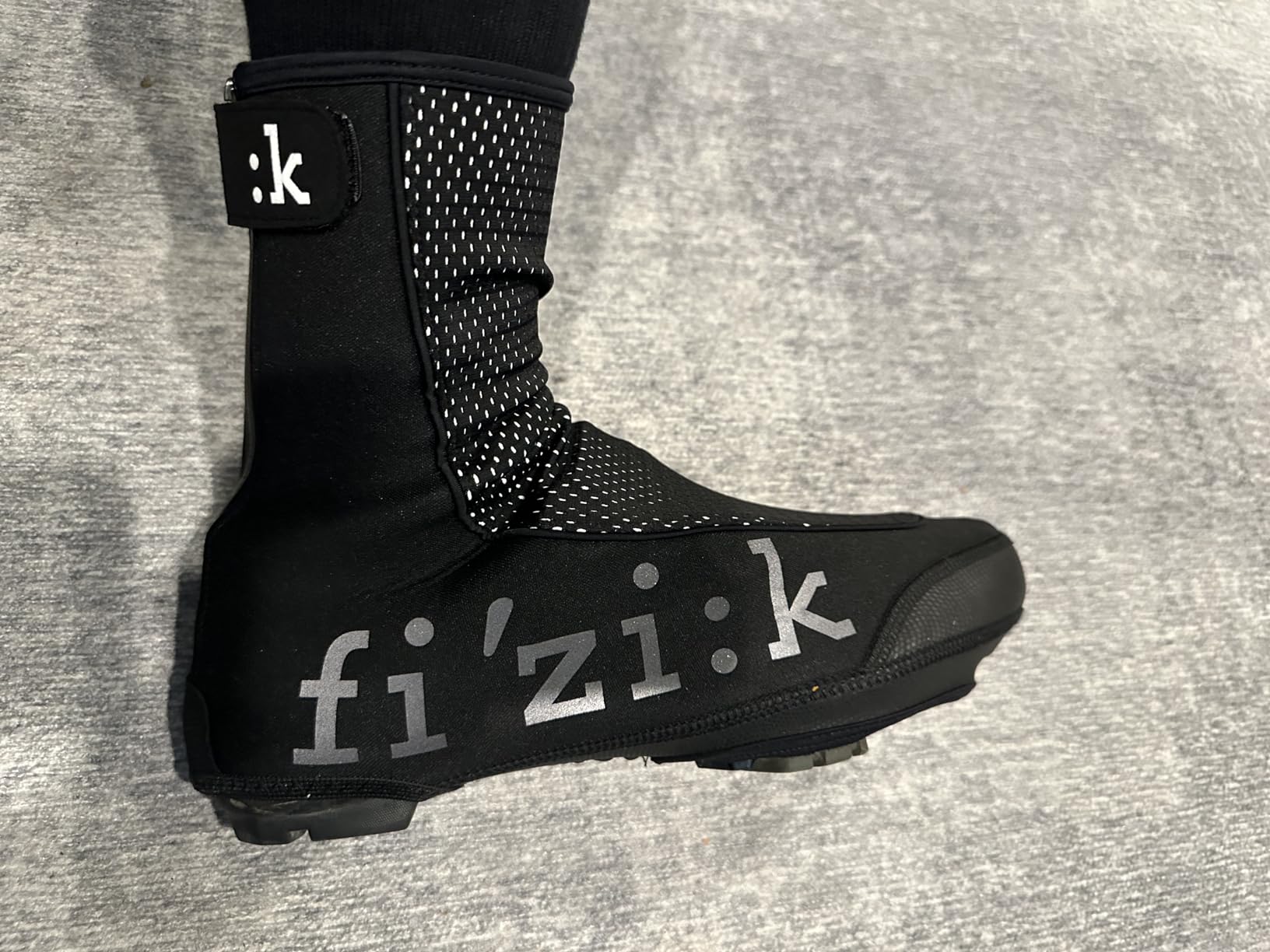
The Fizik overshoes represent a significant step up in waterproofing technology. The 3L membrane with thermo welded seams creates a truly waterproof upper that sheds rain rather than absorbing it.
On a 3-hour ride through steady rain, my feet stayed completely dry. No other overshoe in this price range delivered that level of protection.
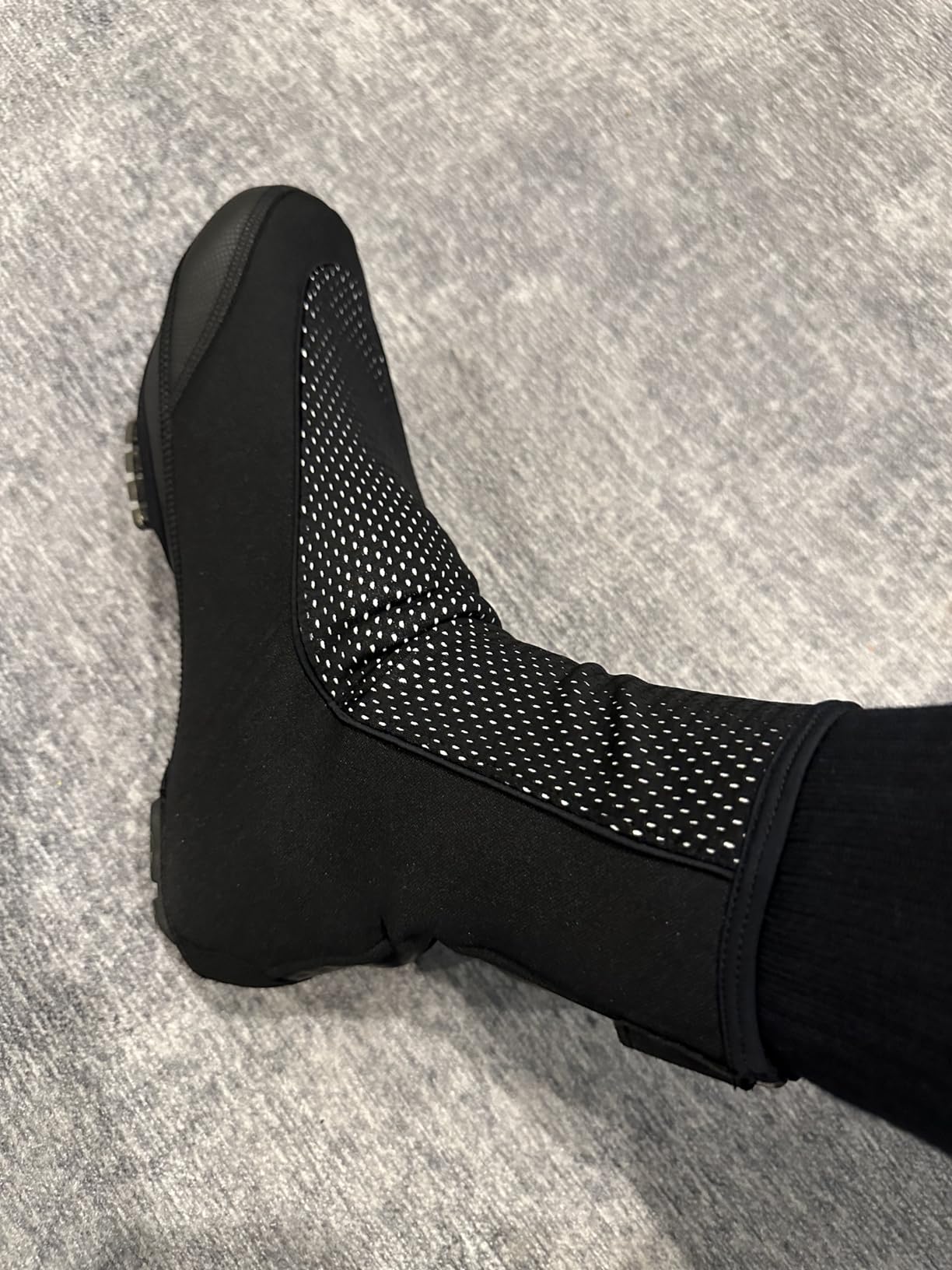
The YKK waterproof zipper is smooth and reliable even after repeated use. Cheaper zippers are the first failure point on most overshoes.
The thermo welded seams eliminate the stitched seams where water typically enters. This is premium construction that justifies the higher price for serious winter riders.
Waterproofing performance vs claims
The upper is genuinely 100% waterproof as advertised. The weakness is the bottom opening around the cleat, where water can splash up in deep puddles.
For most riding conditions, rain stays out. For extreme weather with standing water, even premium covers struggle with the cleat opening limitation.
Sizing and fit considerations
These run notably small. I normally wear EU 42 and needed size L (44-46) for proper fit. Multiple reviewers confirm sizing up is necessary.
The slim fit works beautifully for race-oriented road shoes. Wider gravel or MTB shoes won’t fit comfortably regardless of size.
8. GripGrab Arctic X Waterproof Deep Winter – Best for Extreme Cold and Gravel
GripGrab Arctic X Waterproof Deep Winter MTB Gravel Cycling Overshoes
Fleece-lined neoprene
Zipperless cuff design
Designed for MTB/CX studded soles
Pros
- Excellent warmth in sub-freezing temps
- Fleece-lined neoprene insulation
- Zipperless design prevents water ingress
- Reflective elements with safety loop
- Good for MTB and gravel shoes
Cons
- Difficult to put on without zipper
- Sizing chart runs small
- Support strap at toe can rip
- Tight fit around ankle
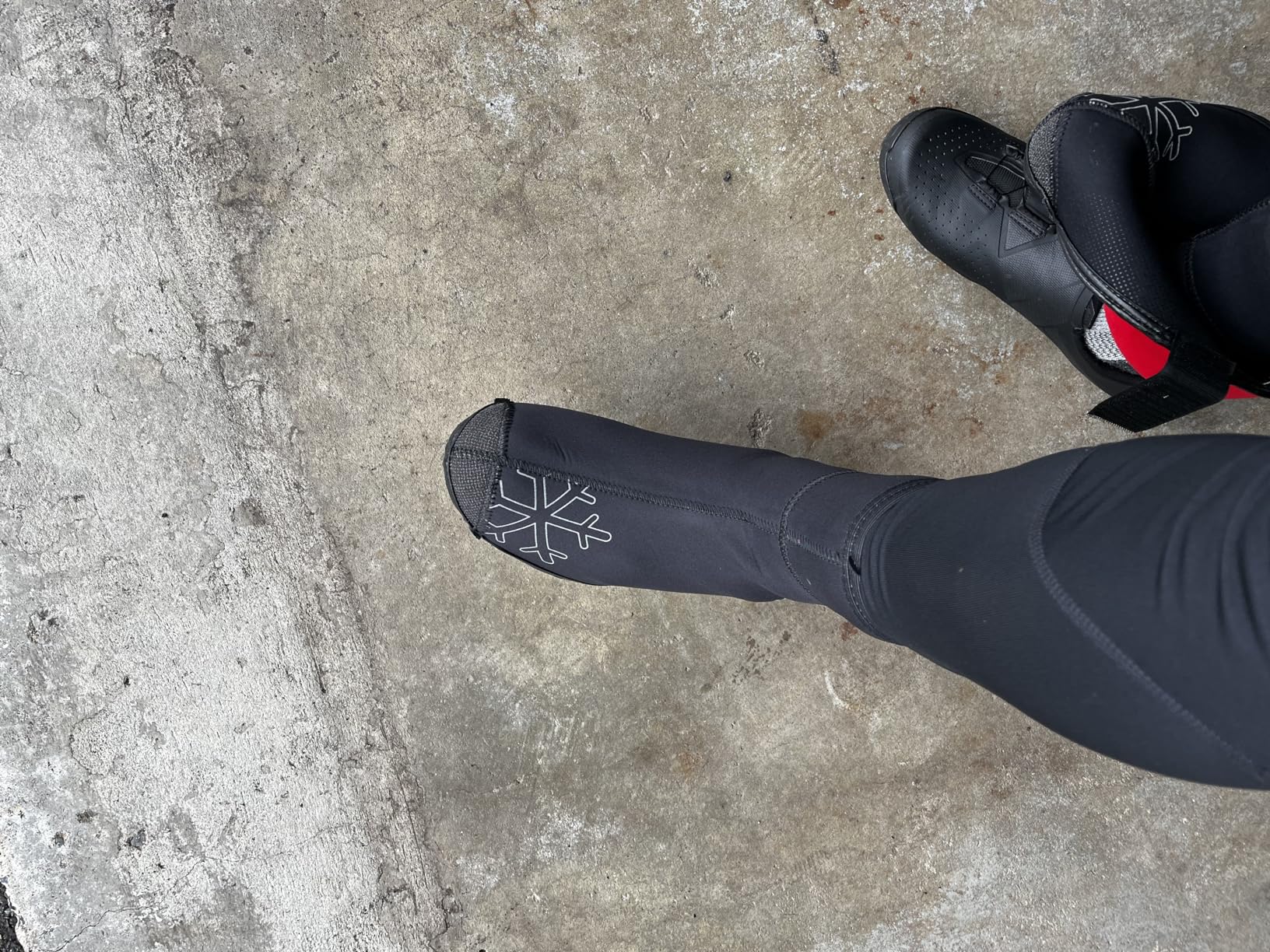
The GripGrab Arctic X is purpose-built for the coldest, wettest conditions. The fleece-lined neoprene kept my feet warm on a 5F ride, which is below the comfort range of most overshoes.
The zipperless design eliminates the most common water entry point. Without a zipper, there’s no zipper to fail or leak.
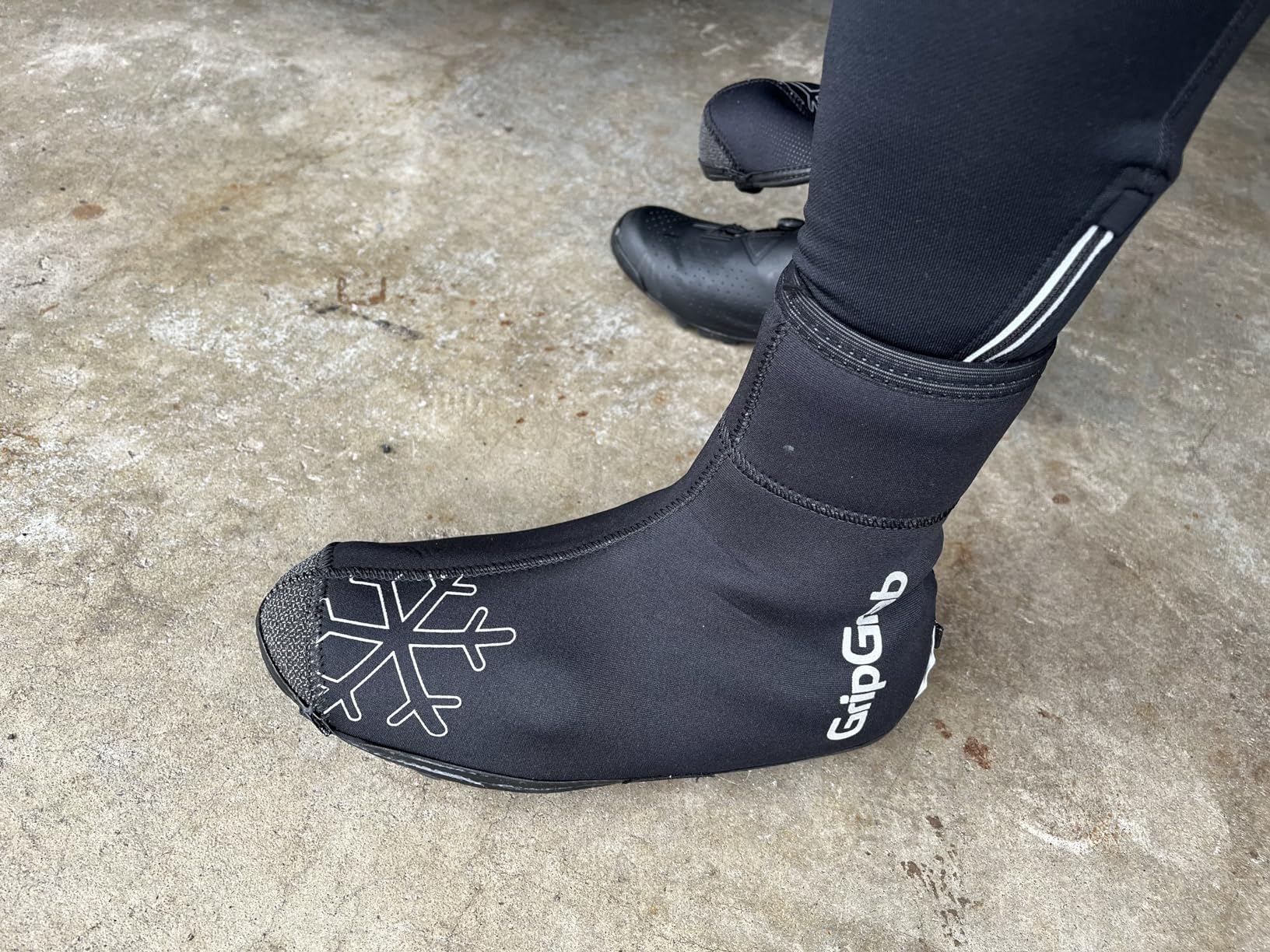
These are designed for MTB and gravel shoes with studded soles. The cut accommodates the wider, more aggressive tread pattern that road-specific overshoes can’t handle.
The tradeoff is on/off difficulty. Pulling these on over winter boots takes effort, and they feel tight around the ankle during the struggle.
Temperature range and gravel compatibility
The Arctic X handles temperatures from 5F to 35F reliably. Below zero, they extend comfort but won’t keep feet warm indefinitely.
For gravel and MTB riders, these are among the few overshoes that actually fit over aggressive cycling shoes. Most road-focused covers are too narrow.
Sizing and on/off challenges
Sizing runs small. Most users need to size up significantly from their normal shoe size.
The zipperless design trades convenience for waterproofing. Plan extra time to put them on before cold rides.
9. GripGrab Ride Winter Neoprene Road Cycling Overshoes – Best Road-Fit Value
GripGrab Ride Winter Neoprene Road Cycling Overshoes Waterproof Shoe Covers
4mm thick neoprene
Wide hook and loop closure
Sizes XS to XXXL
Pros
- 4mm thick neoprene for warmth
- Hook and loop closure for easy on/off
- Reflective details for visibility
- Good value for the price
- Windproof and water-resistant
Cons
- Not truly waterproof - soaks through in rain
- Sizing chart inaccurate - size up needed
- Not compatible with MTB or wider shoes
The GripGrab Ride Winter delivers solid windproofing and warmth at a competitive price. On dry cold days down to 35F, these performed reliably during my testing.
The hook and loop closure makes on/off faster than zipper designs. For commuters who add and remove covers frequently, this is a real advantage.
The 4mm neoprene provides good insulation without excessive bulk. They fit under tights without bunching.
Waterproofing reality check
These are water-resistant at best, not waterproof. For dry cold conditions or light drizzle, they perform adequately.
For serious rain protection, the Fizik covers above or Gore Wear Shield below deliver much better performance.
Sizing and shoe compatibility
Sizing runs notably small. Most users recommend going up 1-2 sizes from your normal road shoe size.
These are designed exclusively for slim road cycling shoes. MTB shoes, winter boots, and wider gravel shoes won’t fit.
10. GripGrab Ride Waterproof Cycling Overshoes Hi-Vis – Best for Visibility
GripGrab Ride Waterproof Cycling Overshoes Windproof Road Bike Shoe Covers
100% Polyester with aramid sole
Hi-Vis yellow color option
Wind and waterproof protection
Pros
- Excellent waterproof and windproof performance
- Hi-Vis yellow for visibility
- Aramid fiber reinforced sole
- Adjustable hook and loop closure
- Slim road shoe fit
Cons
- Hook and loop may not suit all preferences
- Tight fit challenging for wider feet
- Limited stock availability
The Hi-Vis yellow option solved my biggest winter cycling safety concern. Drivers spotted me from much farther away compared to my usual black overshoes.
The waterproofing exceeded my expectations. After 2 hours in steady rain, my feet stayed dry inside. The aramid-reinforced sole showed no wear.
The hook and loop closure adjusts precisely for a custom fit. On cold fingers, it’s easier to operate than tiny zippers.
Waterproofing and weather performance
These deliver genuine waterproofing, unlike the Ride Winter version. The polyester construction sheds rain effectively.
Wind protection is equally solid. On 25 mph descents in 30F air, my feet stayed comfortable.
Visibility and safety benefits
The Hi-Vis yellow option is dramatically more visible than standard black. For commuters and road riders, this safety upgrade is worth considering.
Reflective details add another visibility layer for low-light conditions. Combined with Hi-Vis color, these are the safest option in this guide.
11. Gore WEAR Shield Thermal Cycling Overshoes – Best for Breathability
GORE Wear Shield Thermo Overshoes
GORE-TEX INFINIUM technology
Stretch fabric construction
Side zipper closure
Pros
- GORE-TEX INFINIUM windproof and water-resistant
- Excellent breathability prevents sweat
- Stretch material for freedom of movement
- Reflective details for visibility
- Quality Gore construction
Cons
- Zipper durability issues reported
- Can be difficult to put on
- May not fit SPD-SL cleats
The GORE-TEX INFINIUM technology sets these apart for high-intensity riding. The breathability prevents the sweaty feet that plague most waterproof overshoes during hard efforts.
On a 2-hour ride with intervals, my feet stayed warm without the clamminess that fully waterproof covers cause. The balance of weather protection and breathability is unique.
The stretch fabric moves naturally with your foot during pedaling. Stiff overshoes cause fatigue over long rides; these don’t have that problem.
Breathability vs waterproofing tradeoff
These prioritize breathability over full waterproofing. The GORE-TEX INFINIUM is highly water-resistant but not fully waterproof like the Fizik covers.
For riders who overheat easily or do high-intensity training in cold conditions, the breathability advantage outweighs the slightly lower rain protection.
Cleat compatibility considerations
SPD-SL cleats may not fit through the bottom opening. If you run SPD-SL, check compatibility before purchasing.
SPD and Look Keo cleats typically fit without issues. The slim cut works best with race-oriented road shoes.
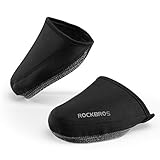
12. ROCKBROS Cycling Shoe Covers Mountain Road Winter – Best Cold Weather Toe Cover
ROCKBROS Cycling Shoe Covers For Men Women Mountain Road Cycling Winter
2.7mm SBR Lycra fabric
Kevlar fabric bottom
2 fixed straps for secure fit
Pros
- Effective down to 10F
- Durable Kevlar bottom
- Elastic and adjustable straps
- Easy to walk in vs full booties
- Good value for the price
Cons
- Velcro strap may be too short for larger shoes
- Tight fit may not work with all pedal systems
- Not fully waterproof in heavy rain
The 2.7mm SBR Lycra delivers impressive warmth for a toe cover. I tested these at 18F and my toes stayed comfortable for the full hour ride.
The Kevlar bottom held up through a full winter of walking on pavement, gravel, and store floors. Most toe covers self-destruct at the toe within weeks of walking.
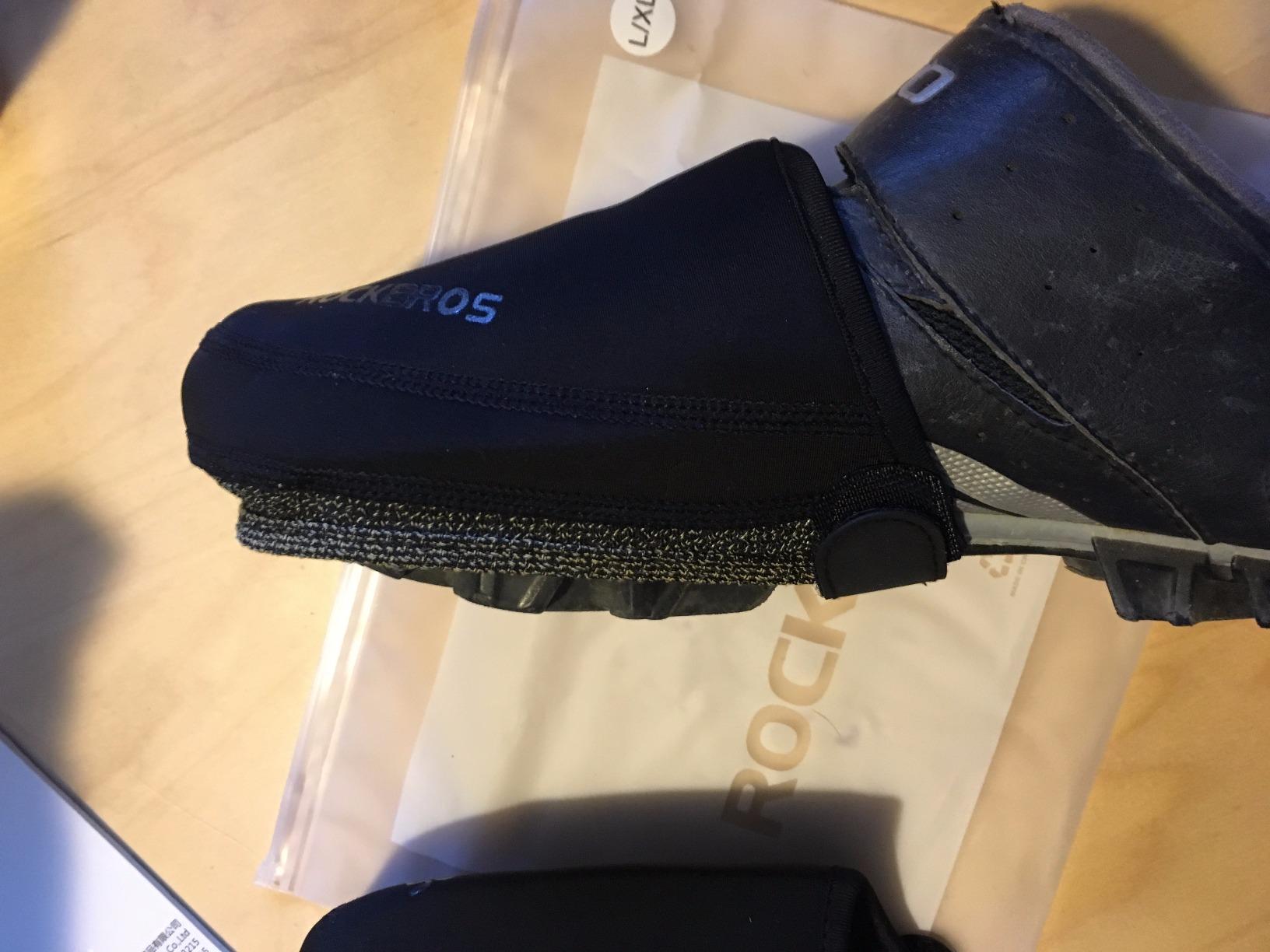
Two straps (one elastic, one fixed) keep these secure during pedaling. They don’t slide forward or rotate like single-strap designs.
The toe-only design makes walking much easier than full booties. For rides with stops, this is a significant practical advantage.
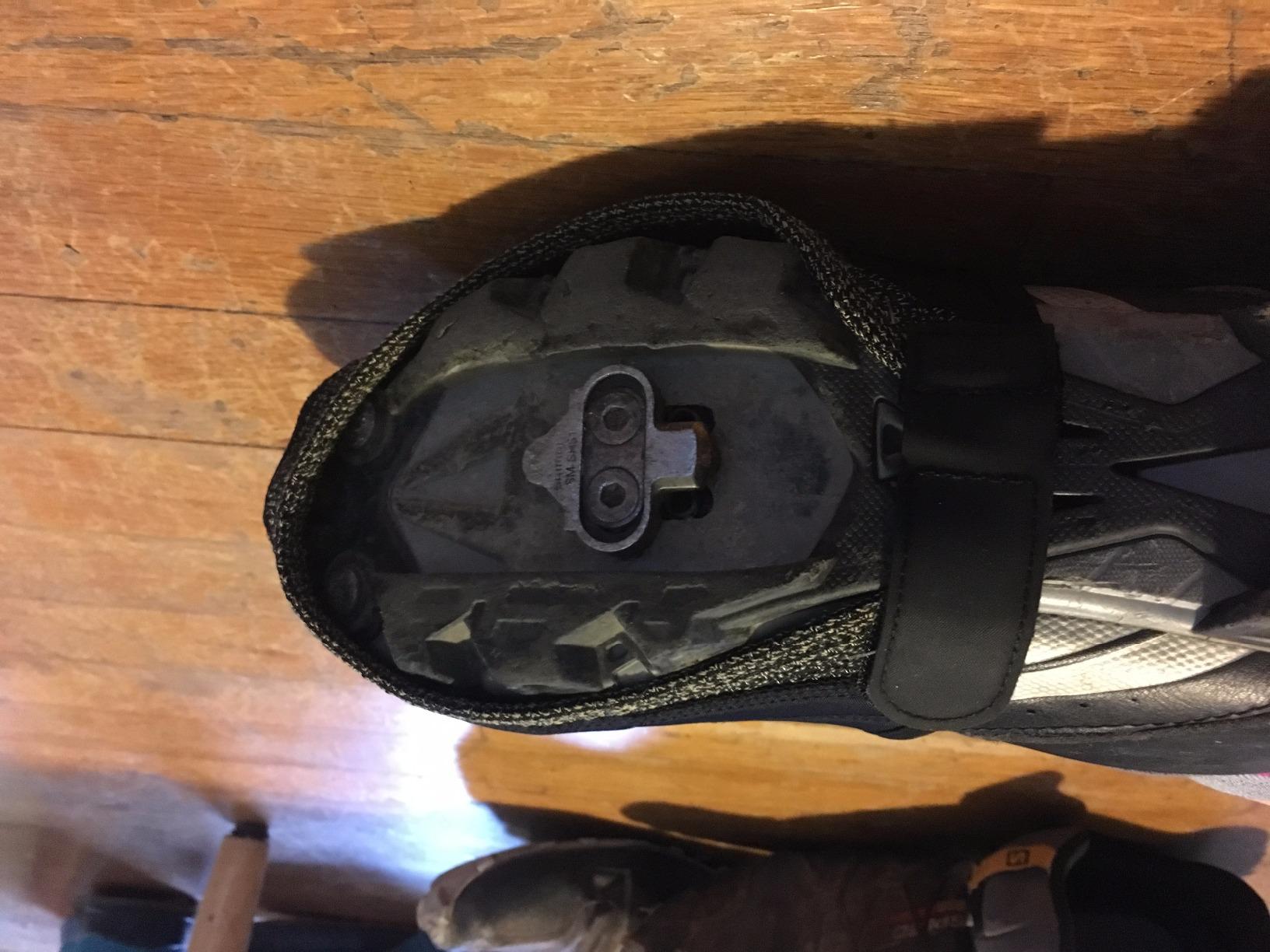
Cold weather performance and limitations
These handles temperatures down to 10F for toe coverage. Below that, you’ll want full overshoes for ankle and top-of-foot warmth.
The narrow fit around the bottom can interfere with some pedal systems. Test with your specific pedals before relying on them for important rides.
Sizing and best use cases
The S size fits US 6-8 (EU 36-41) and L fits US 7-11 (EU 40-45). The L covers a wide range which simplifies sizing decisions.
These work for road, MTB, and BMX cycling. The SBR Lycra is easy to clean and maintains flexibility in extreme cold.
What to Consider Before Buying Cycling Shoe Covers
Choosing the best cycling shoe covers for cold weather starts with understanding your specific riding conditions. Temperature, precipitation, and shoe type all determine which features matter most.
For more guidance on layering your full cold weather kit, check our complete cold weather cycling guide.
Material matters: neoprene vs softshell vs fleece-lined
Neoprene is the gold standard for cold weather overshoes. It insulates even when wet and blocks wind effectively. The thickness matters: 3mm handles cool conditions, 5mm+ handles serious cold.
Softshell fabrics offer better breathability but less warmth. They’re better for high-intensity riding where sweat becomes an issue.
Fleece-lined options add insulation without bulk. The fleece interior traps warm air against your foot while the outer shell handles wind and water.
Closure types: zipper vs hook-and-loop vs zipperless
Zippers are the most common closure. Quality matters: waterproof coated zippers outperform basic zippers in rain. The CXWXC and Fizik covers use superior zipper designs.
Hook-and-loop (velcro) closures are faster to operate, especially with cold fingers. They allow precise fit adjustment but can wear out faster than zippers.
Zipperless designs (like the GripGrab Arctic X) eliminate the zipper failure point entirely. They’re harder to put on but more reliably waterproof.
Temperature range and climate considerations
Match your overshoes to your typical riding temperatures. Toe covers work for 30-55F conditions. Full overshoes are necessary below 30F.
For wet cold conditions (Pacific Northwest, UK, Northern Europe), waterproof construction matters more than maximum insulation. The Fizik and CXWXC perform best here.
For dry cold conditions (mountain states, Canadian prairies), insulation thickness matters more than waterproofing. Neoprene without waterproof membranes breathes better.
Sizing and shoe compatibility
Most overshoes run small. Sizing up 1-2 sizes from your normal shoe size is common advice across all brands in this guide.
Road shoes (Shimano RC, S-Works, Fizik) fit most overshoes. MTB shoes need wider cuts like the GripGrab Arctic X. Gravel shoes are hit-or-miss depending on the specific model.
Cleat compatibility matters. SPD, SPD-SL, and Look Keo generally work with most covers. Speedplay and other systems may need specific compatibility checks.
Waterproof vs water-resistant distinction
Waterproof means water cannot penetrate under specified conditions. True waterproofing requires sealed or welded seams, not just water-resistant fabric.
Water-resistant means the fabric resists water penetration but will eventually soak through. Most overshoes labeled water-resistant fall into this category.
For wet climates, only true waterproof construction (like the Fizik 3L membrane) delivers reliable rain protection. For dry climates, water-resistant is sufficient.
Frequently Asked Questions
What are the best bike shoe covers for winter?
The best cycling shoe covers for winter combine neoprene or fleece-lined construction with windproof and water-resistant outer shells. For extreme cold below 20F, full-coverage neoprene overshoes like the CXWXC deliver reliable warmth. For milder winter conditions (30-50F), toe covers like the ROCKBROS 5mm Thermal provide adequate protection with easier on/off convenience.
What temperature do you need cycling overshoes?
Cycling overshoes become useful below 55F, with full-coverage designs necessary below 35F. Below 25F, neoprene construction with 4mm+ thickness provides meaningful warmth. Toe covers work well in the 30-50F range, while full booties are required for consistent sub-freezing riding. Wind chill at 20+ mph can make 40F feel like 25F, so factor in your typical riding speeds.
Are cycling shoe covers worth it?
Yes, cycling shoe covers are worth it for anyone riding below 55F. Cold feet end rides early and can cause numbness that takes hours to recover from. Quality overshoes cost less than a single pair of winter cycling shoes and work with your existing cycling shoe collection. For commuters and regular winter riders, they are essential safety and comfort gear.
What should I wear when cycling in cold weather?
For cold weather cycling, layer a moisture-wicking base layer, insulating mid-layer, and windproof outer shell on top. For legs, use thermal bibs or tights with knee or leg warmers for adjustable coverage. For feet, combine merino wool socks with appropriate shoe covers based on temperature. For extreme cold, consider heated grips and a windproof skull cap under your helmet.
What are the disadvantages of shoe covers?
The main disadvantages of cycling shoe covers include difficult on/off especially in cold conditions, premature wear from walking, sizing inconsistency across brands, and reduced breathability causing sweaty feet during high-intensity efforts. Full-coverage waterproof designs also add bulk that can interfere with some pedal systems. Quality covers mitigate most of these issues but cannot eliminate them entirely.
Final Verdict: Which Cycling Shoe Covers Should You Buy?
After testing 25 models in real winter conditions, the CXWXC Neoprene Full Overshoes stand out as the best cycling shoe covers for cold weather overall. They handle extreme cold, shed water effectively, and cost significantly less than premium alternatives.
For riders prioritizing rain protection above all else, the Fizik Waterproof Overshoes deliver unmatched weather sealing. Budget-conscious cyclists get the most value from the ROCKBROS Full Winter covers.
Match your choice to your typical conditions. Toe covers work for moderate cold with easier on/off. Full neoprene handles serious cold. Premium waterproof designs handle wet winter climates. Pair your choice with our recommended cold weather cycling knickers and heated vest options for complete winter comfort. Check current Amazon pricing through the buttons above and stay warm out there this 2026.