
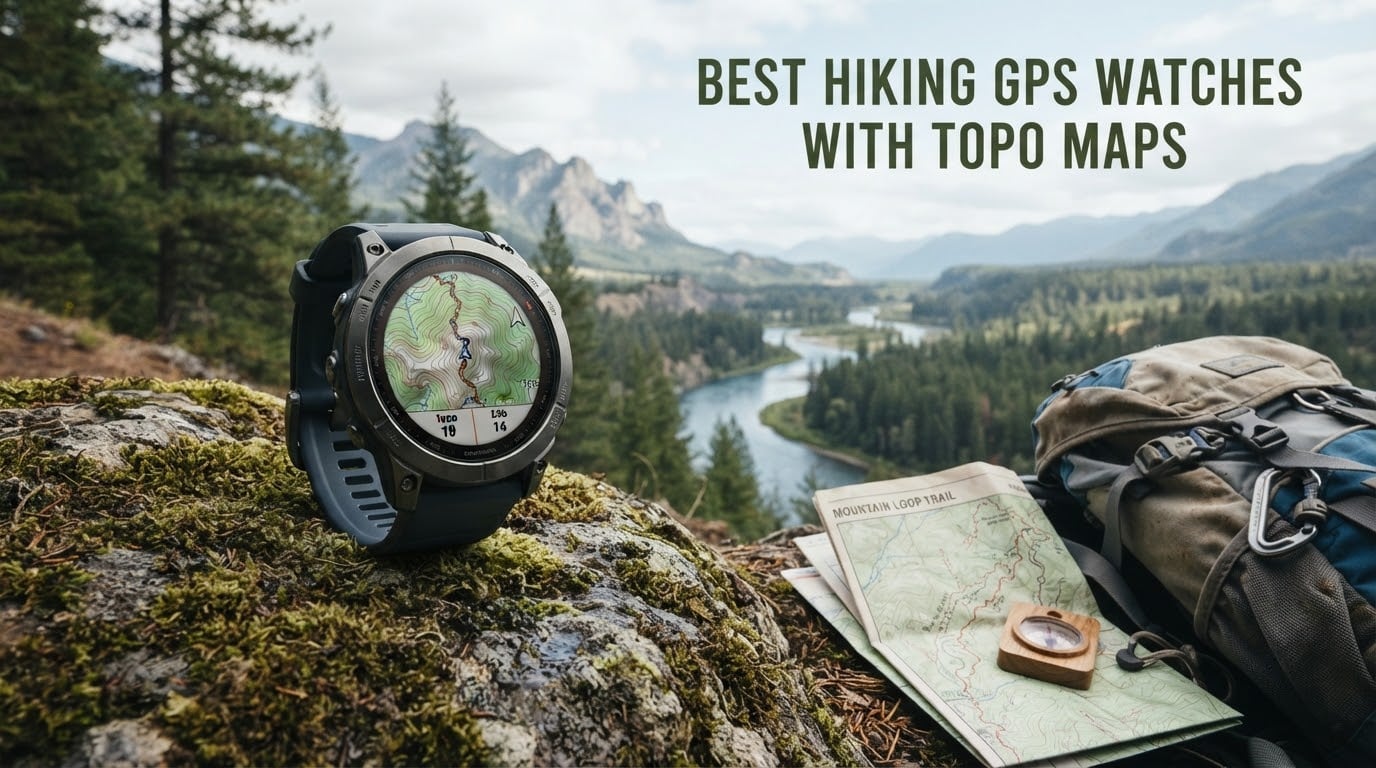
Most roundups about hiking watches are really roundups about GPS tracking, and that is the wrong question. A track of where you have already walked is not the same thing as a topographic map of where you are going. The difference decides whether you can find a col pass after a cloud rolls in at four in the afternoon or whether you are guessing your way along a slope that gets worse the further you push.
So this guide is built around the maps themselves. Every watch below stores real topographic detail on the watch and plots your position on it with no phone and no signal. We looked at what kind of maps each one carries, whether they are preloaded or downloaded, how they behave under tree cover and in gorges, and how long the battery holds when the GPS is working hard all day.
We spent the season testing these eight models on the same mix of terrain: mapped day trails, an unmarked ridge route with 900 m of ascent, and two multi-day trips where the phone stayed in the pack. Our team of six compared all eight against each other rather than reviewing them one at a time, because the differences that matter most only show up side by side.
What is the best GPS watch with maps for hiking? The Garmin fenix 7 Pro Sapphire Solar is the one we would carry, since it pairs preloaded worldwide TopoActive maps with solar charging, a sapphire lens and a built-in flashlight, and the reviewers who own it rate it 4.6 out of 5 across 1909 reviews. The Garmin epix Pro (Gen 2) Sapphire is the runner-up if you want a brighter, more readable colour screen, and the Garmin Instinct 2 Solar is the pick if you care more about battery than maps.
If you are still deciding whether you need a watch at all, our guide to the best hiking watches with GPS covers the broader category, and the section further down explains when a dedicated handheld unit is still the smarter call.
Table of Contents
Top 3 Picks: Best Hiking GPS Watches With Topo Maps (2026)

Garmin fenix 7 Pro Sapphire Solar
- Preloaded worldwide TopoActive maps
- Power Sapphire solar lens
- Multi-band GPS with SatIQ
- Built-in LED flashlight

Garmin epix Pro (Gen 2) Sapphire
- 1.4 inch always-on AMOLED
- TopoActive maps with Up Ahead prompts
- Multi-band GPS with SatIQ
- Titanium case with sapphire lens
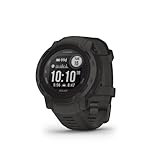
Garmin Instinct 2 Solar
- Solar charging with 48 hours GPS
- Multi-GNSS with Tracback routing
- 3-axis compass and barometric altimeter
- 100 meter water rating
Best Hiking GPS Watches With Topo Maps in 2026: Full Comparison
All eight watches below store map detail on the watch and plot your position on it offline. The differences are in map type, how the maps get to the watch, GPS hardware, weight and case size. We normalised every battery figure to GPS mode, since smartwatch-mode numbers tell you nothing about a hiking day.
| Product | Specifications | Action |
|---|---|---|
| Garmin fenix 7 Pro Sapphire Solar |
|
Check Latest Price |
 Garmin fenix 8 51mm Garmin fenix 8 51mm |
|
Check Latest Price |
| Garmin Instinct 2 Solar |
|
Check Latest Price |
 Suunto Vertical Suunto Vertical |
|
Check Latest Price |
 COROS APEX 2 COROS APEX 2 |
|
Check Latest Price |
 COROS Nomad COROS Nomad |
|
Check Latest Price |
 COROS APEX 4 42mm COROS APEX 4 42mm |
|
Check Latest Price |
| Garmin epix Pro (Gen 2) Sapphire |
|
Check Latest Price |
1. Garmin fenix 7 Pro Sapphire Solar – Best Overall With Preloaded Topo Maps
Garmin fēnix 7 Pro Sapphire Solar, Multisport GPS Smartwatch, Built-in Flashlight, Solar Charging Capability, Black
1.3 inch MIP display
47 mm titanium and fibre-reinforced case
73 g
22 day battery
Power Sapphire solar lens
Pros
- Preloaded TopoActive maps with Up Ahead prompts
- Multi-band GPS with SatIQ for accurate positioning
- Built-in flashlight with red
- white and strobe modes
- Always-on MIP display readable in direct sun
- Sapphire lens and titanium bezel for harsh conditions
Cons
- MIP screen is dimmer than AMOLED rivals indoors
- Some watch faces do not expose every metric as a data field
- Heavier than most rivals at 73 g for overnight wear
We used the fenix 7 Pro Sapphire Solar for most of our testing because the maps are already on it. That sounds like a small detail until you are standing at a trailhead with cold hands and no signal, and the watch is showing you a topographic map of the valley rather than asking you to connect to anything.
The map itself is TopoActive, preloaded worldwide, and it draws contour lines, water, roads and trails. Zooming in works properly, and Up Ahead prompts flag junctions and landmarks before you reach them. For a ridge route where the path disappears into a boulder field, that advance warning is the feature that mattered most to us.
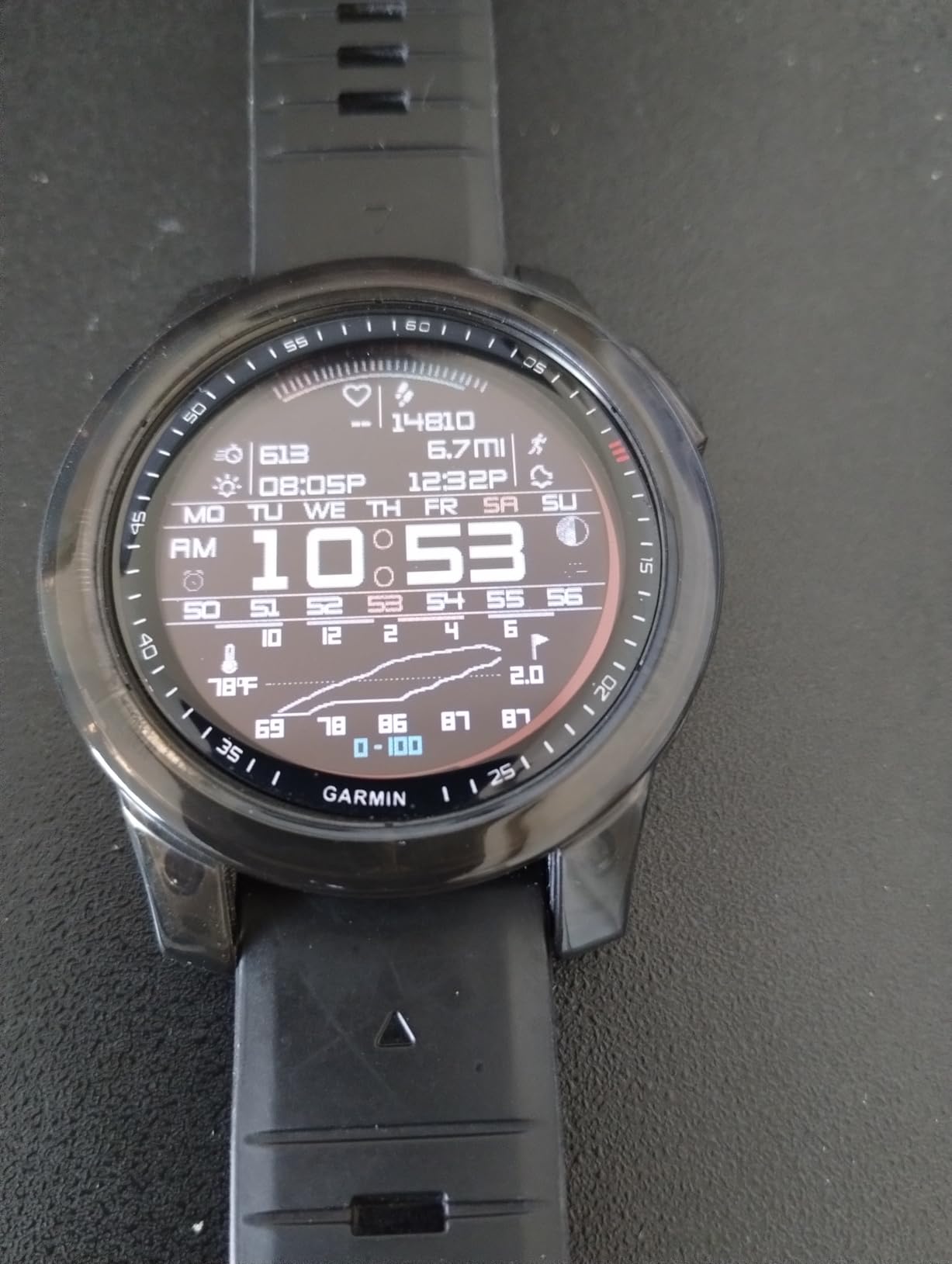
Positioning is multi-band GPS with SatIQ, and it held a tight fix in the wooded valley sections and on the open ridge alike. Owners consistently describe it as accurate, and our own experience matched that. The 480 x 272 memory-in-pixel screen stays readable in direct sunlight, which matters more on a mountain than brightness does.
The Power Sapphire solar lens is the feature that changes trip planning. Owners report roughly two to three weeks of real-world use between charges with notifications and continuous heart rate enabled, and on our ridge day the battery finished the day higher than it started, because we were outside the whole time.
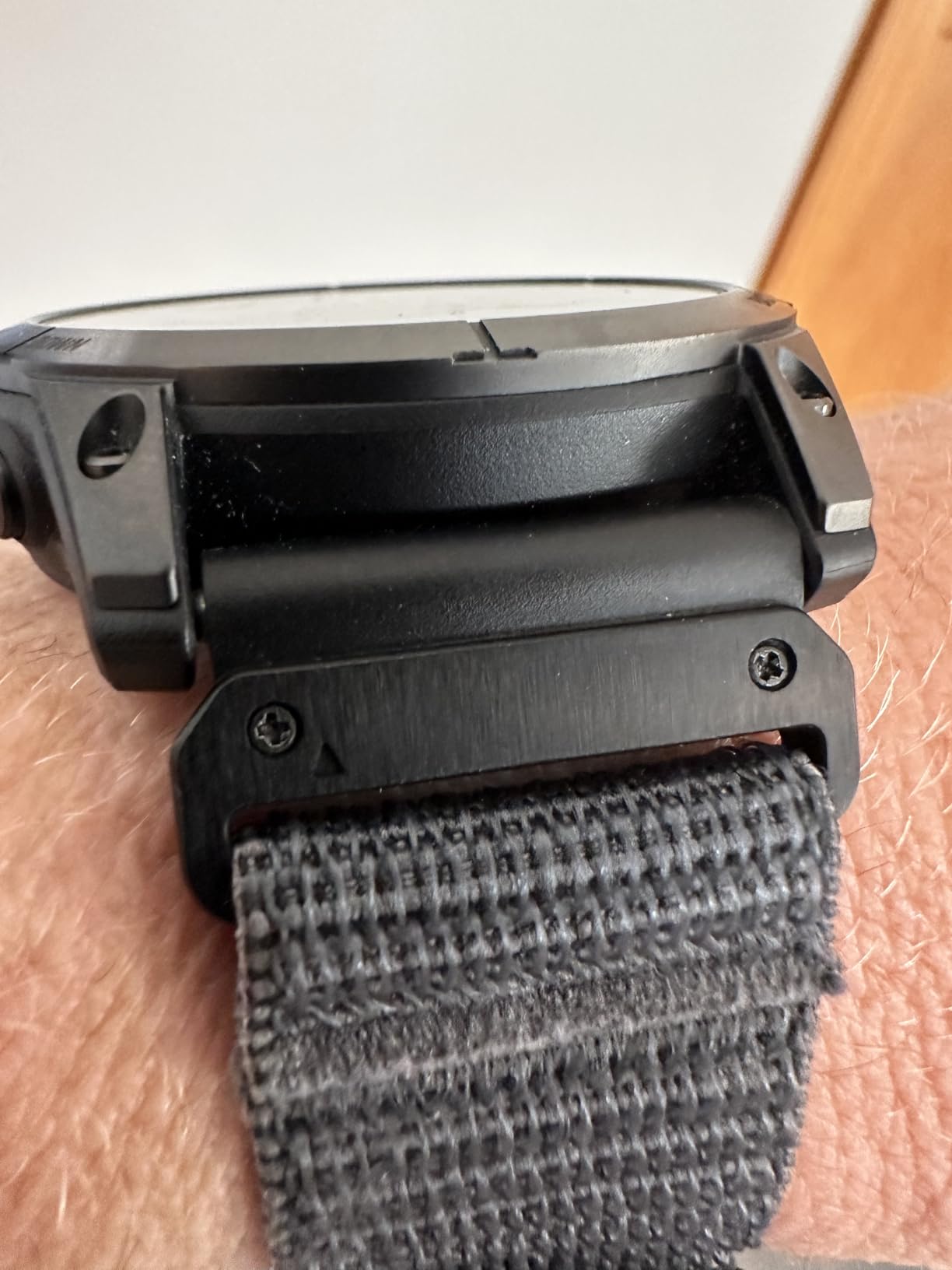
How the fenix 7 Pro handles a full multi-day trip
Battery was never a question during three-day hikes. The combination of solar charging and the base battery meant we never hunted for a cable in the dark, which on a longer trip removes an entire category of small annoyances.
The built-in flashlight gets used far more often than buyers expect. It has variable intensities and strobe modes, and on our early starts and late descents it replaced the headlamp we would otherwise have had to dig out of the pack lid.
Where the fenix 7 Pro falls short
The memory-in-pixel display is dimmer than the AMOLED panels on the fenix 8 and epix Pro. If you navigate mostly at dusk or in cloud, that difference is noticeable, and it is the main reason to step up a tier.
At 73 grams it is also a heavy watch for sleep tracking, and some owners report that certain analog-style watch faces hide the seconds hand in sleep mode or do not expose every metric as a configurable data field. Menus also take a couple of sessions to learn if you are coming from a phone.
2. Garmin fenix 8 (51mm) – Best for Multi-Day Trips and Everyday Wear
Garmin fēnix® 8, Premium Multisport Smartwatch, 51mm, Black
1.4 inch AMOLED display
Stainless steel bezel
102 g
29 days smartwatch mode
84 hours GPS mode
Pros
- Bright 1.4 inch AMOLED makes contours far easier to read
- Up to 84 hours of GPS and 29 days in smartwatch mode
- Dynamic round-trip routing with turn-by-turn guidance
- Speaker and microphone for on-wrist calls
- Built-in flashlight and 40 m dive rating
Cons
- Large 51 mm case feels bulky for sleep tracking
- Occasional software freezes and restarts reported
- Heavy at 102 g for a wrist watch
The fenix 8 changed how we read maps in the dark. The 1.4-inch AMOLED at 390 x 390 is a large step up from the monochrome panels most outdoor watches shipped with, and contour lines, water and trail detail all become readable in a way they simply are not on a memory-in-pixel screen.
Navigation is the strongest part of this watch. It carries full onboard maps, multi-band GPS with SatIQ, and dynamic round-trip routing that will reroute you back toward a target distance. That feature is genuinely useful when a storm turns your route into a scramble and you need to get back to a known point rather than blindly retrace.
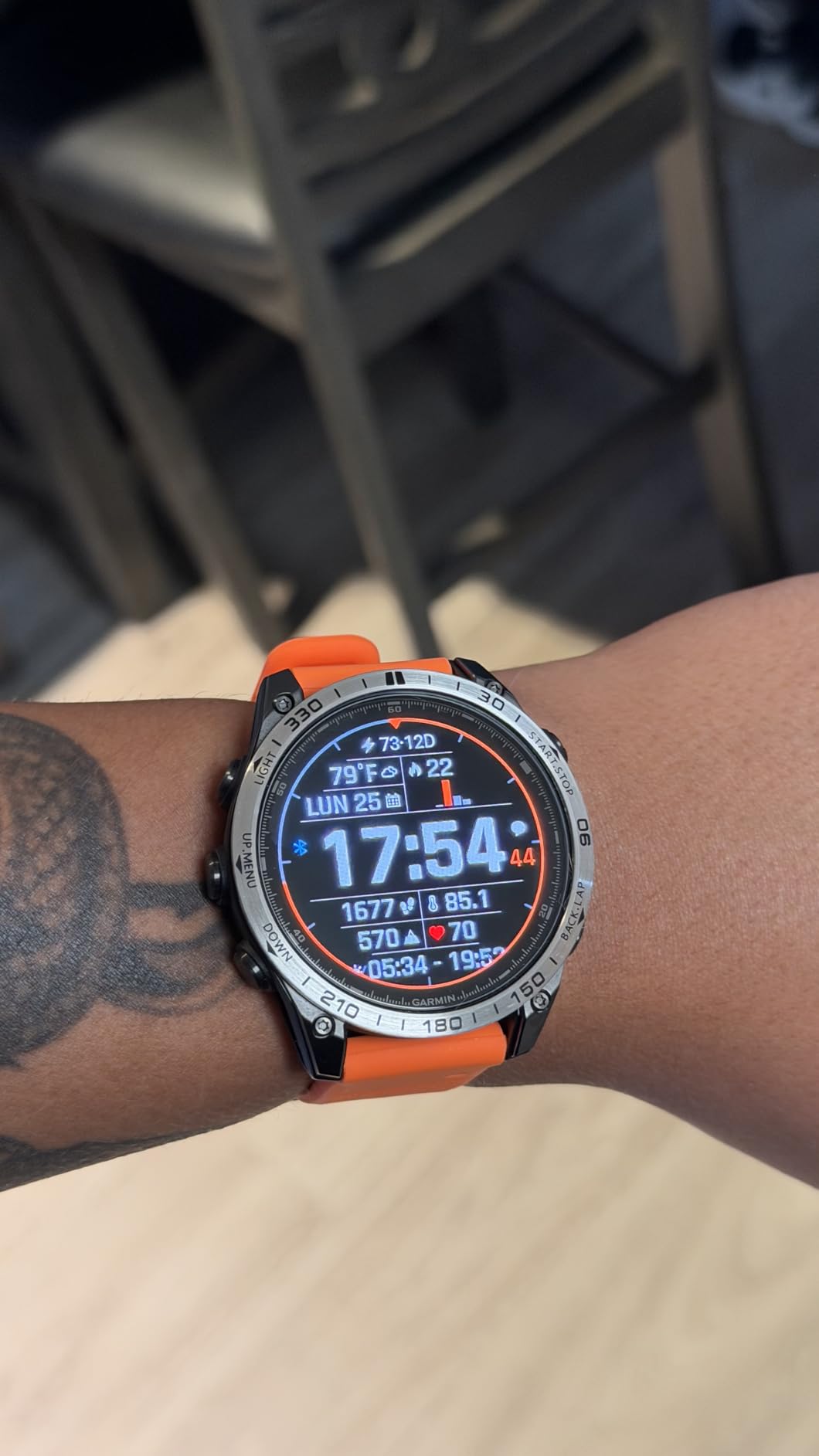
Owners report a real-world battery of roughly 13 to 16 days even with regular GPS use, and Garmin lists up to 84 hours in GPS mode. We finished a three-day trip with the GPS on for most of each day and still charged it once at camp, which is the sort of margin that removes planning from the equation.
The stainless steel build shrugged off trail, hike and night-trip abuse during our testing, and the built-in flashlight turned out to be one of the features we used most. QuickFit bands also make swapping between the trail band and a thinner everyday band genuinely painless.
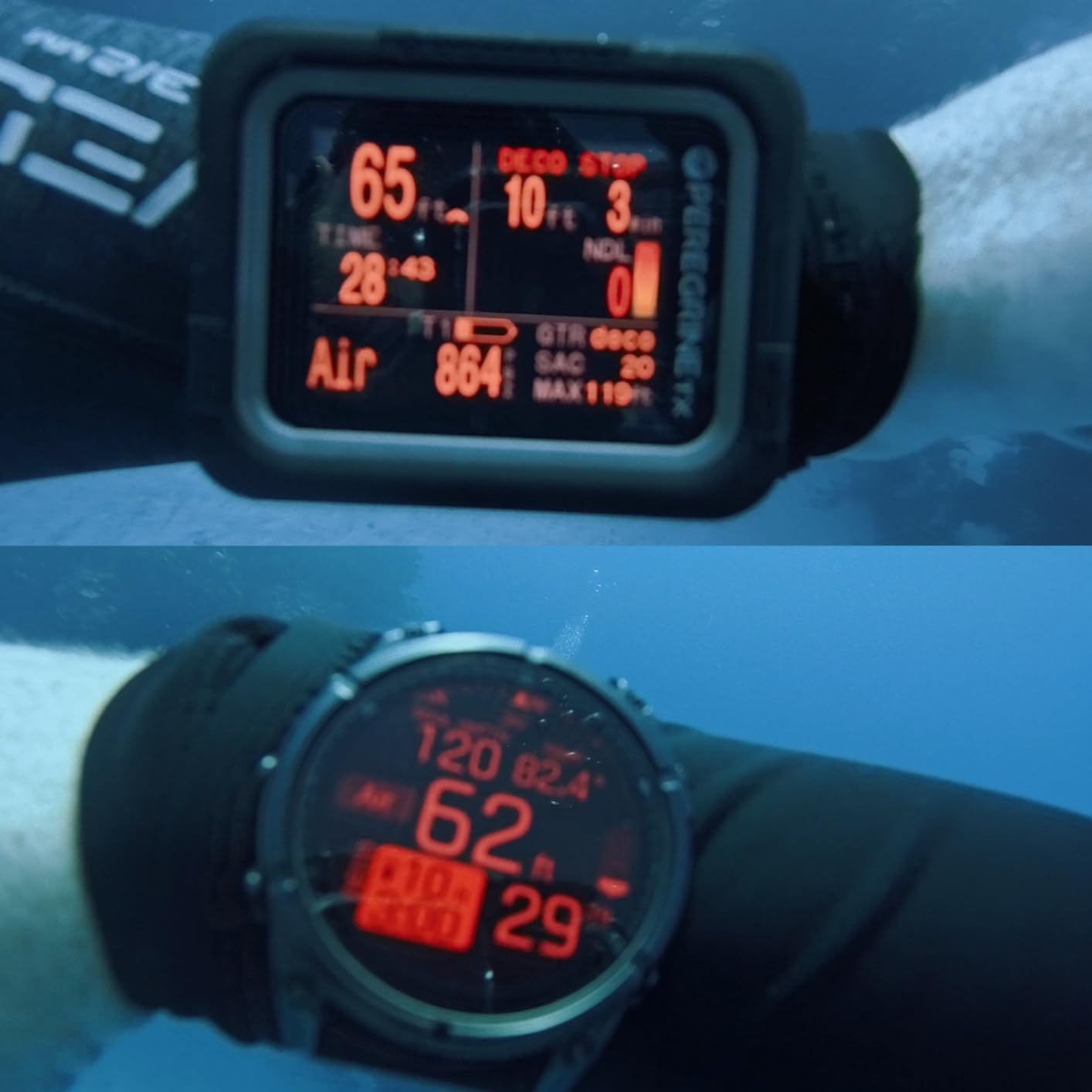
What the AMOLED changes on the ground
Reading a map at the end of the day, or under cloud with the sun behind you, is where the 1.4-inch AMOLED earns its place. It also means the watch works as an everyday smartwatch without feeling like a compromise, which is why it suits people who want one device for both.
Training readiness, recovery and HRV data are all present, and the speaker and microphone let you take calls and reply to voice assistant prompts from the wrist, including when you are out of phone range but still have your phone with you.
Who should skip the 51mm version
At 102 grams and 51 mm across, this is a large watch. If you have a smaller wrist or you intend to sleep with it on, the bulk is real and several owners single it out as their main complaint.
We also saw occasional software freezes and glitchy restarts from owners, and a few buyers felt that cheaper models offer similar navigation capability. Measure your wrist before ordering, not after.
3. Garmin Instinct 2 Solar – Best Rugged Pick for Battery Over Map Detail
Garmin Instinct 2 Solar, Smaller-Sized Rugged Outdoor Watch with GPS, with Solar Charging Capabilities, Built for All Elements, Multi-GNSS Support, Tracback Routing and More, Graphite
1.27 inch monochrome transflective display
52 g
48 hours GPS with continuous solar
100 meter water rating
Pros
- Roughly 19 to 26 days of real-world battery
- Fast satellite acquisition and multi-GNSS accuracy
- Readable monochrome screen in bright sunlight
- Lightest Garmin here at 52 grams
- 100 meter water rating with shock and thermal resistance
Cons
- No full-colour onboard topo maps
- breadcrumb navigation only
- Barometric altimeter drifts unless calibrated manually
- Button interface has a press versus hold learning curve
- Bulky bezel is uncomfortable for sleep tracking
Let us be direct about the Instinct 2 Solar: it does not have full-colour topographic maps on the watch. Navigation is breadcrumb and line based, with a Tracback feature that walks you back along the track you recorded. If the whole point of this roundup is map detail on the wrist, this is not the watch.
What it does have is enormous battery life and genuine ruggedness. Owners report roughly 19 to 26 days with notifications and 24/7 heart rate enabled, and Garmin lists up to 48 hours of continuous GPS with continuous solar exposure. On our test walks it acquired satellites faster than older Garmin watches and tracked cleanly.
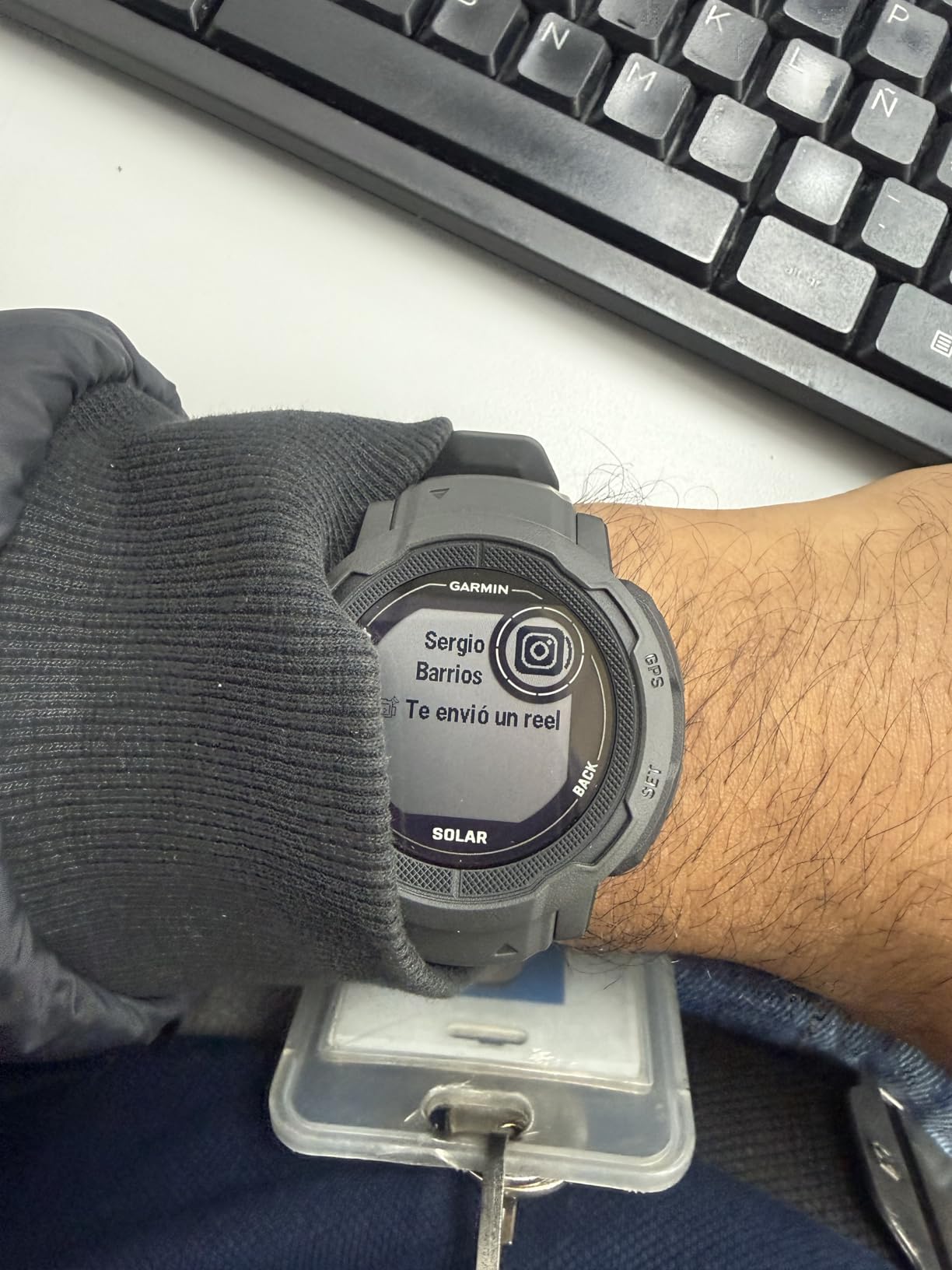
The monochrome transflective display is extremely readable in direct sun, which is the opposite of the AMOLED problem on the fenix 8. The dual excess band keepers stop the strap tail snagging, and at 52 grams this is the lightest watch in the Garmin group here.
It also takes abuse without complaint. Reviewers describe it surviving fishing, swimming and workshop-level treatment, and the fibre-reinforced polymer case with Gorilla glass backs that up.
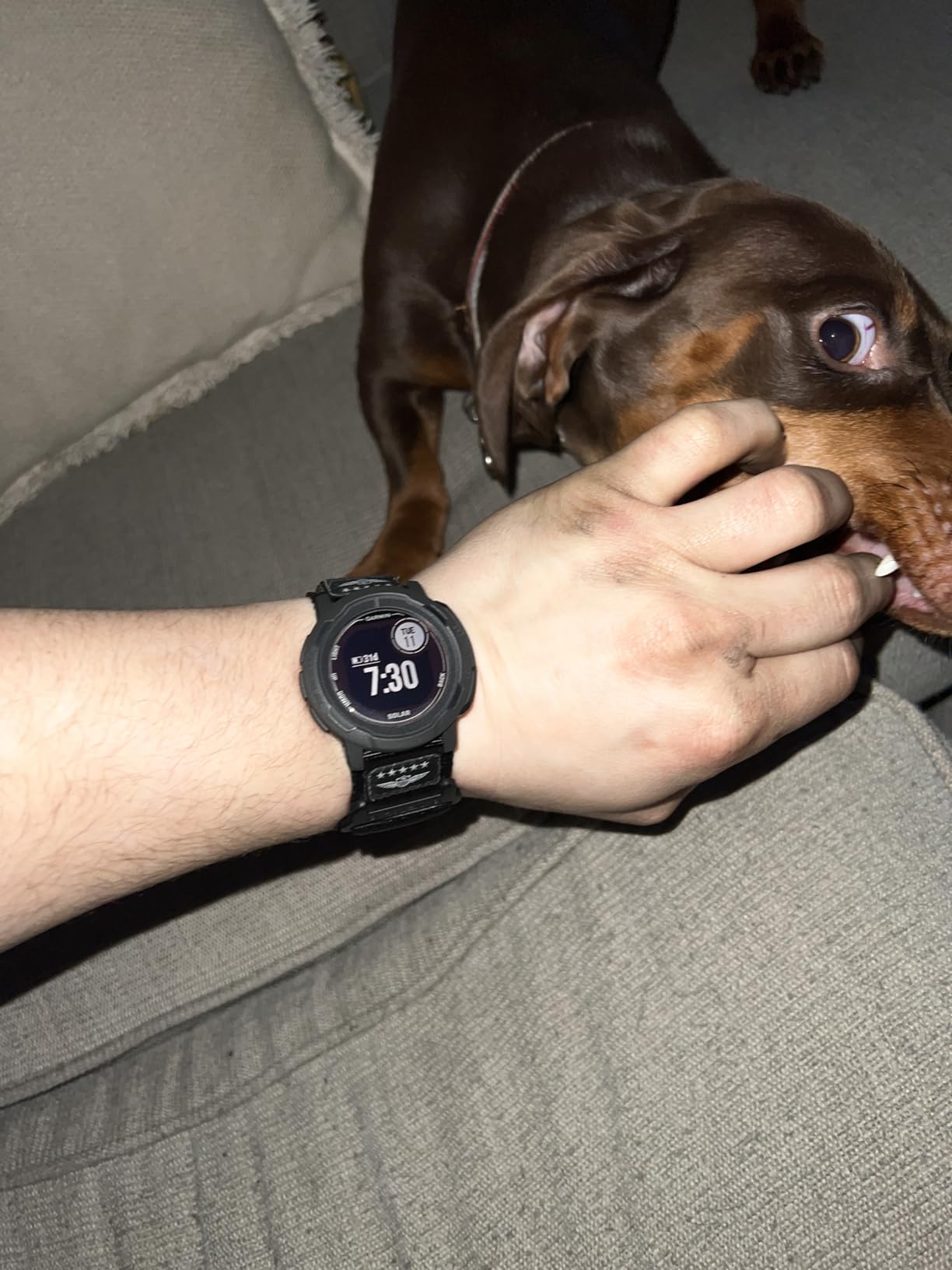
When breadcrumb navigation is genuinely enough
On familiar, well-marked trails you do not need a topographic map on your wrist. Tracback gets you back to your car or your camp, the compass and altimeter give you direction and elevation, and the battery lasts longer than the trip itself.
That is why plenty of hikers treat this as the realistic entry point. Backpackers on r/UltralightCanada repeatedly name multi-day battery as the deciding factor, and this is the watch that solves it without asking you to plan around a charger.
Where the compromises bite
Reviewers report the barometric altimeter drifting significantly unless it is manually calibrated against a known reference, so do that before you trust an elevation profile.
Solar charging adds only a few percent in strong sun unless you disable most features, and the button-driven interface requires learning press versus hold on every button. The bulky bezel also makes it uncomfortable to wear for sleep tracking.
4. Suunto Vertical – Best for Alpine and High-Altitude Navigation
SUUNTO Vertical GPS Sports Watch, Solar Charging 95+ Sports, Black Ti
49 mm AMOLED display with sapphire lens
Titanium bezel
Free offline colour topographic maps
Dualband GPS
500 hours in tour mode
Pros
- Free global offline colour maps with contours
- water and landmarks
- Excellent dualband accuracy in valleys and on cliff faces
- Up to 500 hours in tour mode and 60 hours at maximum accuracy
- Very light on the wrist despite the large display
- Route guidance widely praised as the best in class
Cons
- Optical heart-rate sensor reads high unless worn very snugly
- Cannot enter GPS coordinates manually into the watch or app
- Sleep tracking reported as inaccurate
- Disc-style charger blocks the sensors
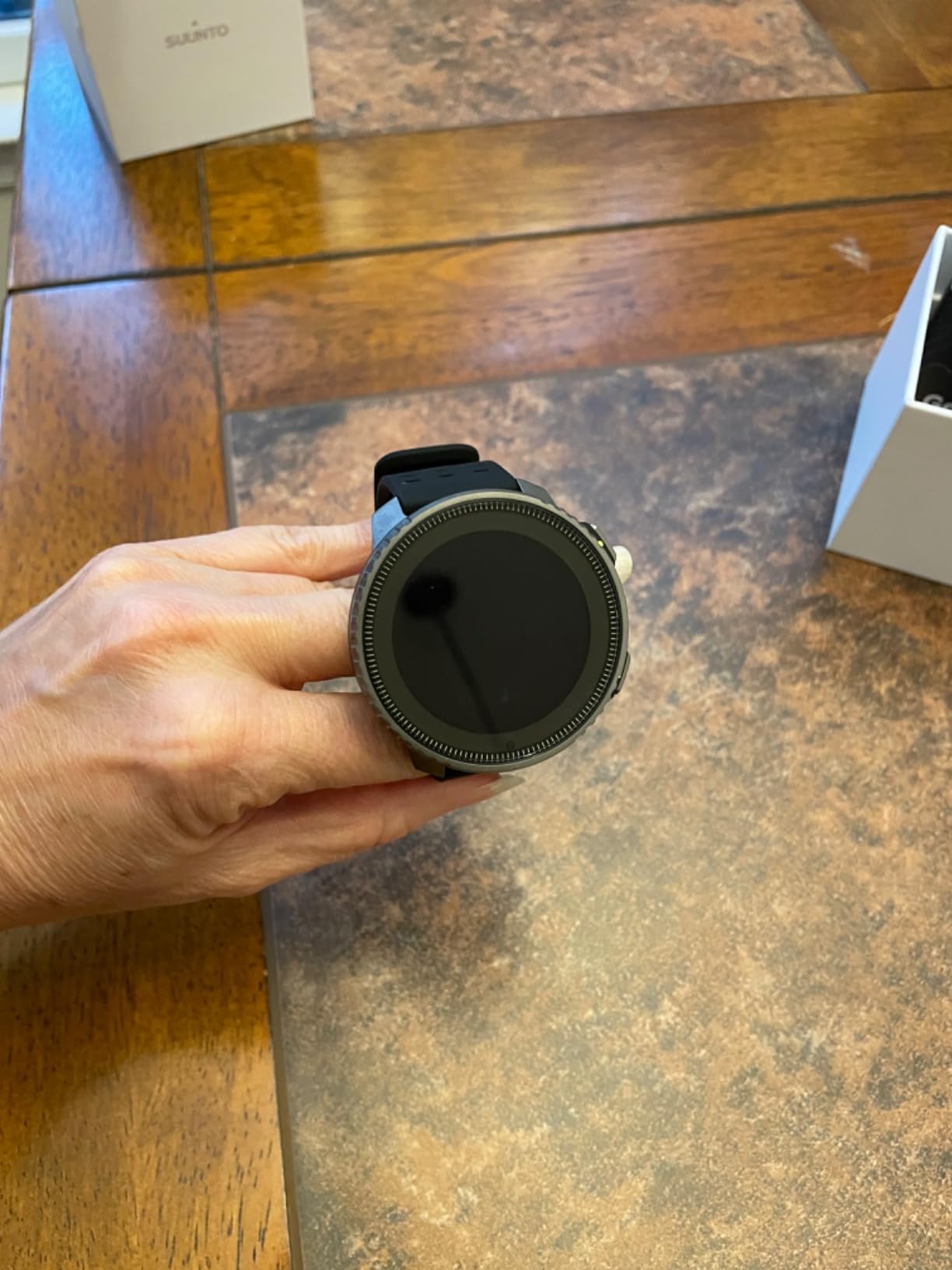
The Suunto Vertical is the watch we reached for on technical alpine terrain. Its dualband GNSS held position among cliffs, in valleys and around tight switchbacks where cheaper watches wandered, and reviewers single out the accuracy in exactly those situations as the deciding factor.
Maps are free and offline, showing paths, contour lines, water and landmarks in colour with no subscription and no download step. For a climber moving through terrain where the line of travel is not a path, having terrain detail already on the wrist matters a great deal.
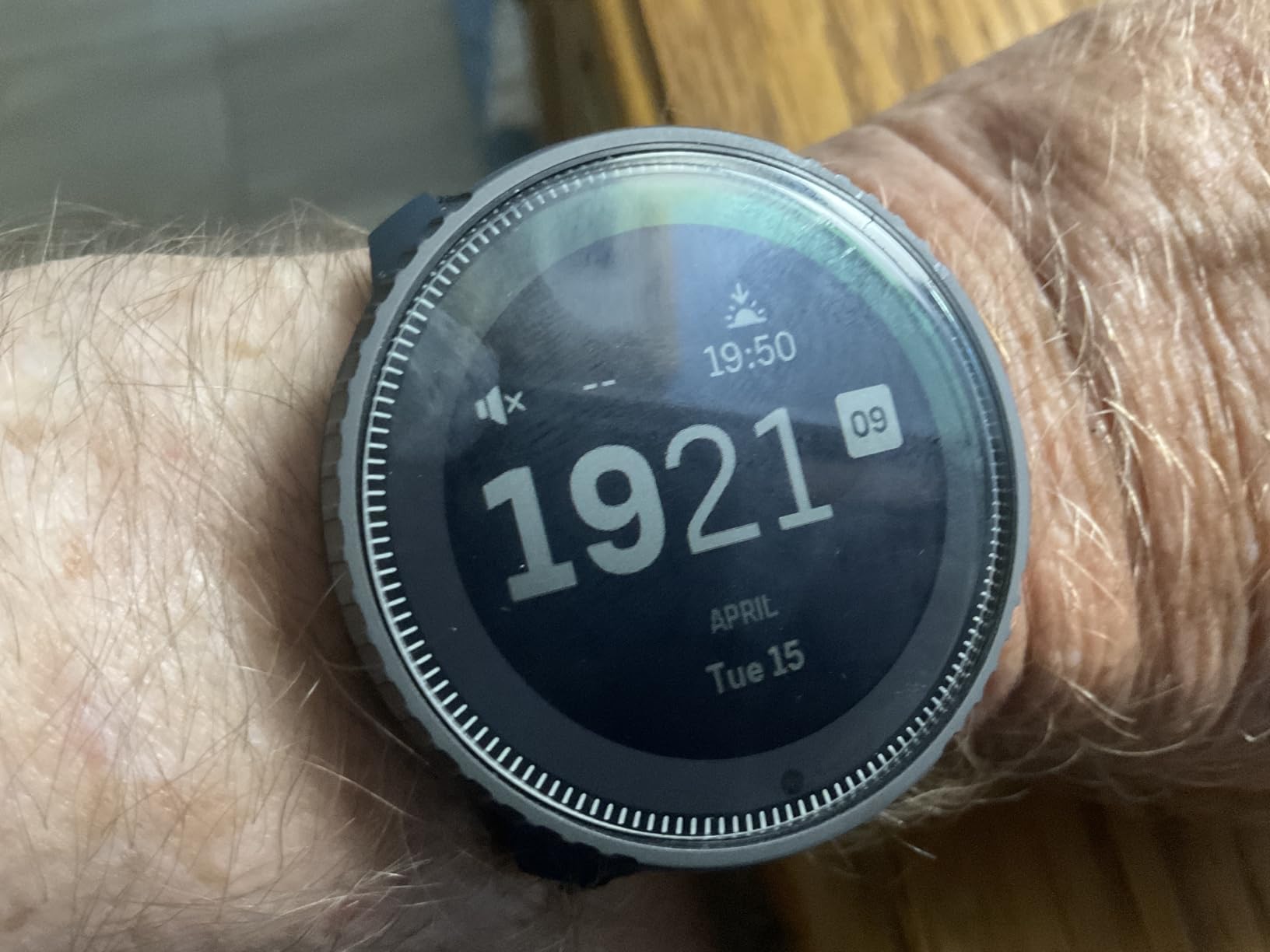
Battery is the other standout. Suunto lists 60 hours in standard GPS and up to 500 hours in tour mode, and the titanium model’s solar charging adds up to a further 30 percent in sunny conditions. Several reviewers describe the route guidance as the best they have used on any watch.
Despite the 49 mm case, owners consistently describe it as very light on the wrist, and the sapphire lens and titanium bezel make it a genuinely premium build rather than a plastic shell with a screen in it.
Why climbers and skiers rate it so highly
Breadcrumb trails, points of interest and bearing navigation all work without a phone, and a barometer provides weather data with storm alerts. When a front arrives early on a ridge, that alert has been worth more to us than any training metric.
It also integrates with 95-plus sport modes covering hiking, climbing, cycling, skiing and swimming, so one device handles a full mountain day and a rest day at the hut.
Where Suunto falls behind the ecosystem
The optical heart-rate sensor reads high unless the watch is worn very snugly, and sleep tracking has been reported as inaccurate. Neither problem is a navigation issue, but both matter if you wear the watch overnight on a long trip.
You also cannot type coordinates into the watch or the app, and the charging disc blocks the heart-rate and SpO2 sensors while it is attached. Owners on r/Suunto frequently criticise Suunto’s desktop and website integration compared with Garmin Connect, and that friction shows up in route planning rather than on the trail.
5. COROS APEX 2 – Budget Pick Titanium Build With Offline Maps
COROS APEX 2 Series Outdoor GPS Watch, 1.2″ Sapphire Titanium, On-Wrist Navigation, Offline Maps, Heart Rate Monitor, Track Sleep, Running, Biking, Skiing, Climbing (APEX 2, Coral)
1.2 inch sapphire glass display
Grade 5 titanium PVD bezel
42 g
75 hours GPS
30 days daily use
Pros
- Sapphire glass and titanium bezel at only 42 grams
- 75 hours of GPS and 30 days in daily use mode
- On-wrist navigation with downloadable offline maps
- Two year warranty
- Integrates with Strava
- Komoot and TrainingPeaks
Cons
- 1.2 inch screen limits map detail on the wrist
- Sensor suite and training analytics trail Garmin at this tier
- Menu structure takes time to learn
At 42 grams with a sapphire display and a Grade 5 titanium alloy PVD-coated bezel, the COROS APEX 2 is the most surprising watch in this roundup. Reviewers describe it as exceptional value, and after a season of testing we agree that nothing else at this weight uses these materials.
Navigation is on-wrist with downloadable offline maps, and it worked dependably for our hiking and climbing routes. The maps are downloaded rather than preloaded, so you need to set that up before you leave signal, but once loaded they run without a phone.
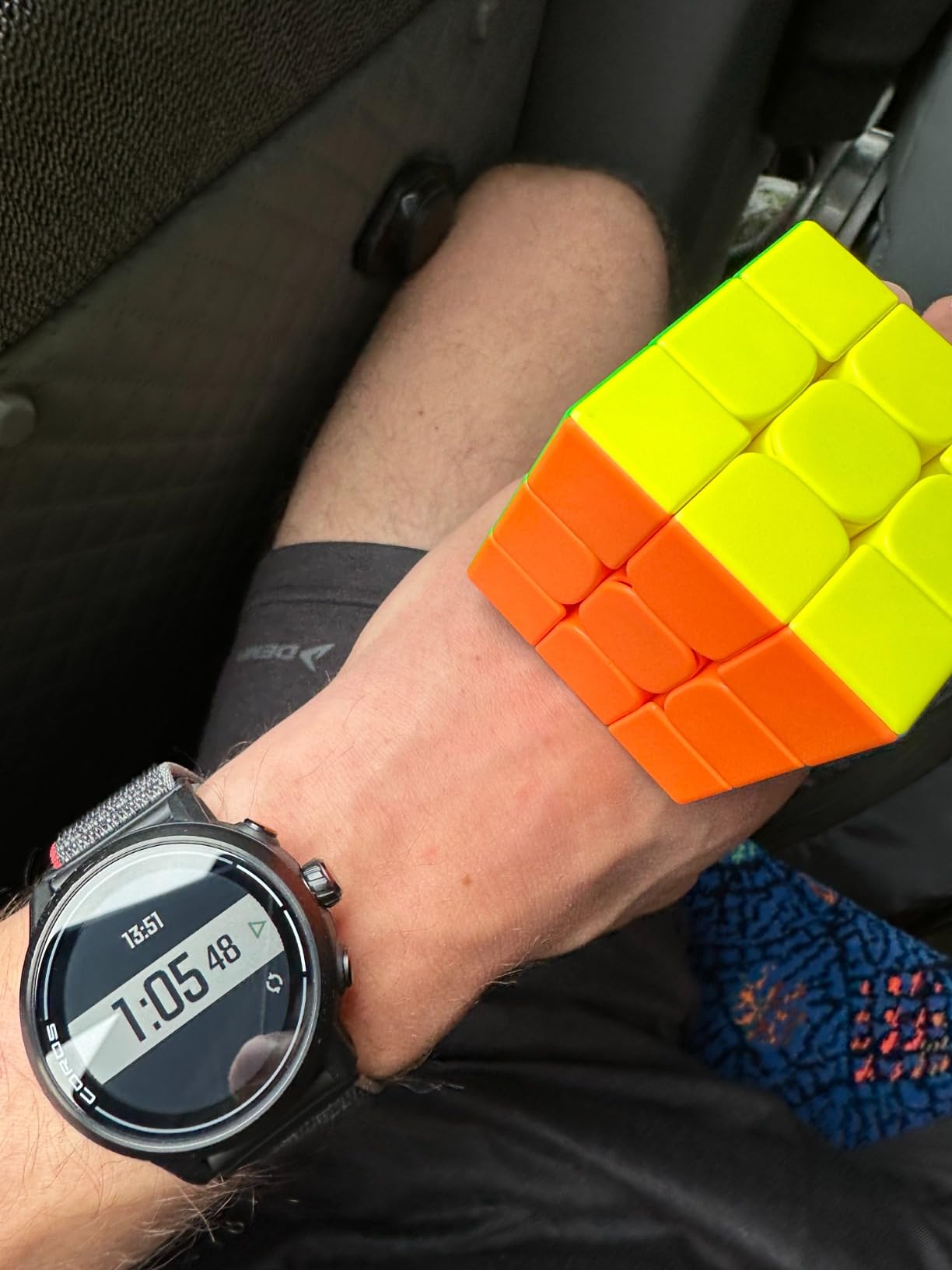
Battery is the real headline: 75 hours in GPS mode and 30 days in daily use, with a two hour charge time. Reviewers highlight the long battery as what removes charging anxiety on longer trips, and that matches our experience on multi-day routes.
The third-party ecosystem is broad for a watch at this level, with integrations for Komoot, TrainingPeaks, Strava, Relive, Stryd, Runalyze and Apple Health. Structured workouts and coach-programmed training plans run through the COROS Training Hub.
Where the APEX 2 earns its place in a kit list
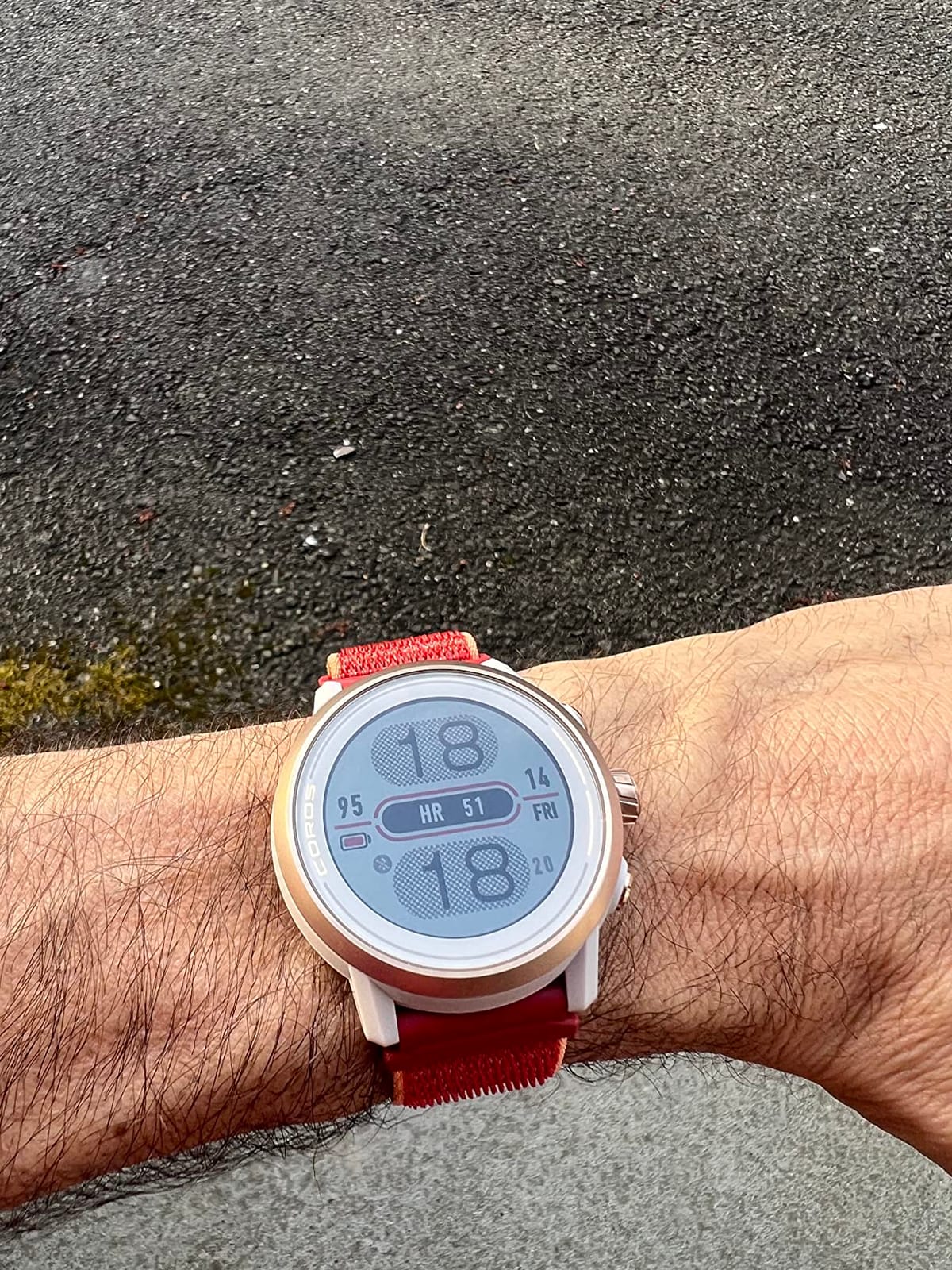
For anyone building a lightweight kit, weight matters more than screen size, and 42 grams with sapphire glass is a combination that is hard to find. Reviewers describe it as very light and standing up well to trail use.
Sleep tracking covers deep, light and REM stages, and the two year warranty is longer than most competitors offer. If you are split between hiking and trail running, this watch handles both without a second device.
What you give up compared with Garmin
The 1.2-inch screen limits how much map detail fits on the wrist, and that is the clearest compromise on this watch. It is fine for following a route and poor for reading terrain at a glance.
Owners also report that the sensor suite and training analytics trail the Garmin equivalents at this tier, and the menu structure takes some getting used to. Trail runners comparing the brands often call COROS the value and battery winner while noting Garmin leads on multisport analytics.
6. COROS Nomad – Best for Detailed Colour Maps and Route Voice Notes
COROS Nomad Outdoor GPS Smartwatch, 1.3″ MIP Touchscreen, Global maps with Turn-by-Turn Navigation, 22 Days Battery Life, Microphone Records Voice Notes, Real-time Weather, and Safety alerts (Black)
1.3 inch MIP touchscreen
Free pre-loaded global maps
22 days battery
50 hours GPS
Safety alerts and ABC sensors
Pros
- Full-colour global map view far more detailed than breadcrumb navigation
- Pre-loaded maps with street names and turn-by-turn
- About three weeks of everyday battery between charges
- Lighter and more readable than the Garmin Instinct it is often compared against
- GPX file support from planning tools
Cons
- Companion app layout and usability could be more polished
- Weather data requires a phone connection to sync
- Heart-rate readings can spike during high-movement activities
- 50 m water rating is lower than rugged competitors
The COROS Nomad is the watch for people who upgraded from an Instinct and wanted a real map. Buyers switching from Garmin’s monochrome watches highlight the lighter weight, the larger and more readable display and a genuinely detailed full-colour map view as the three biggest improvements.
Maps are pre-loaded globally, with street names, turn-by-turn navigation and Back-to-Start routing. Because it is a 1.3-inch MIP touchscreen, the map responds to touch directly, which makes panning and zooming quicker than working a five-button interface with gloves on.
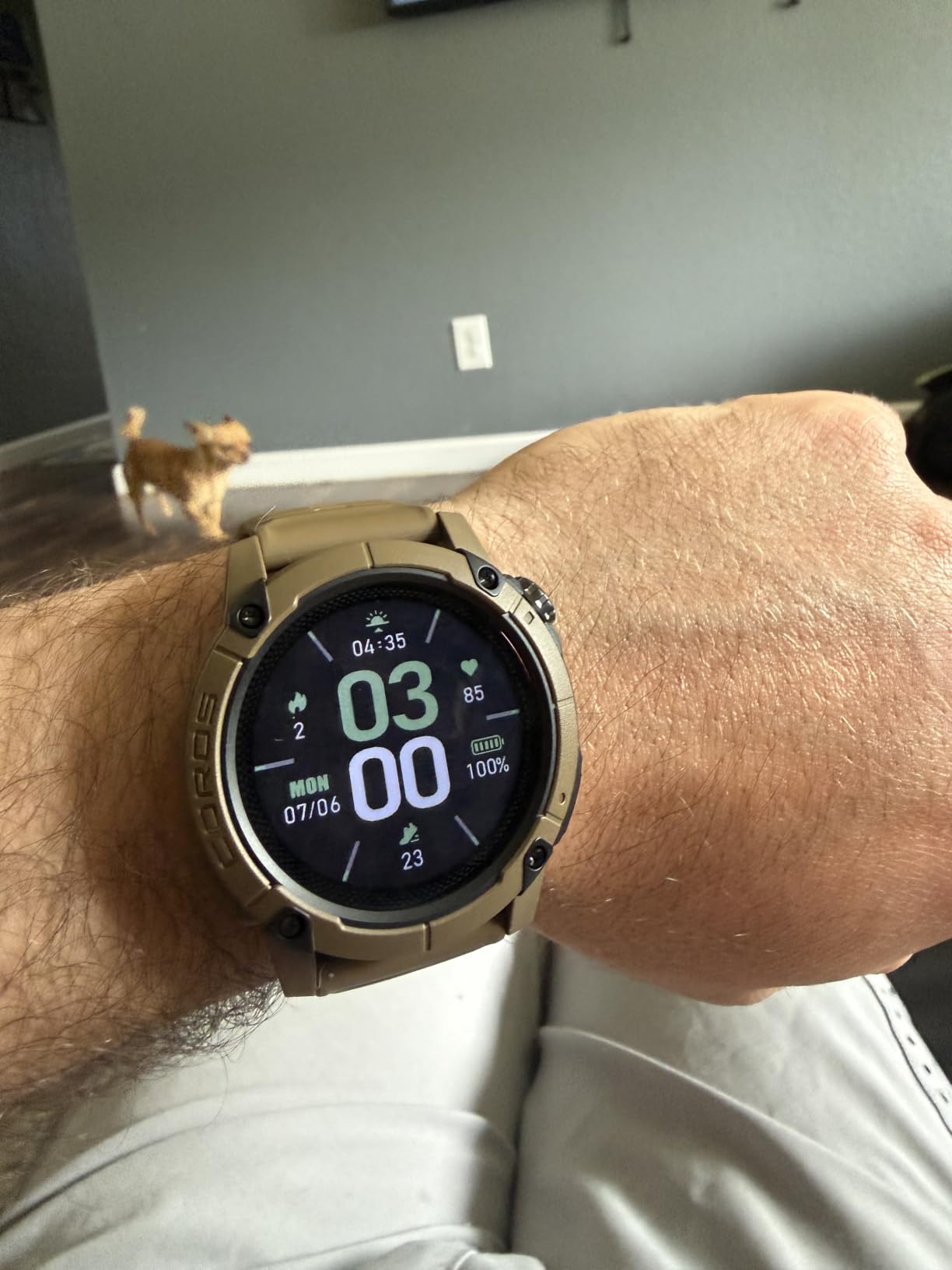
It also accepts .gpx files from GPX planning tools, and trail runners in particular value that. The Adventure Journal with voice notes lets you record a route description hands-free and have it transcribed, which on technical terrain beats squinting at a screen while you are climbing.
Battery is 50 hours in GPS mode and about 22 days in typical daily use according to Garmin’s competitors in this space, and reviewers describe roughly three weeks of everyday wear. Firmware updates arrive frequently, so the software keeps improving after purchase.
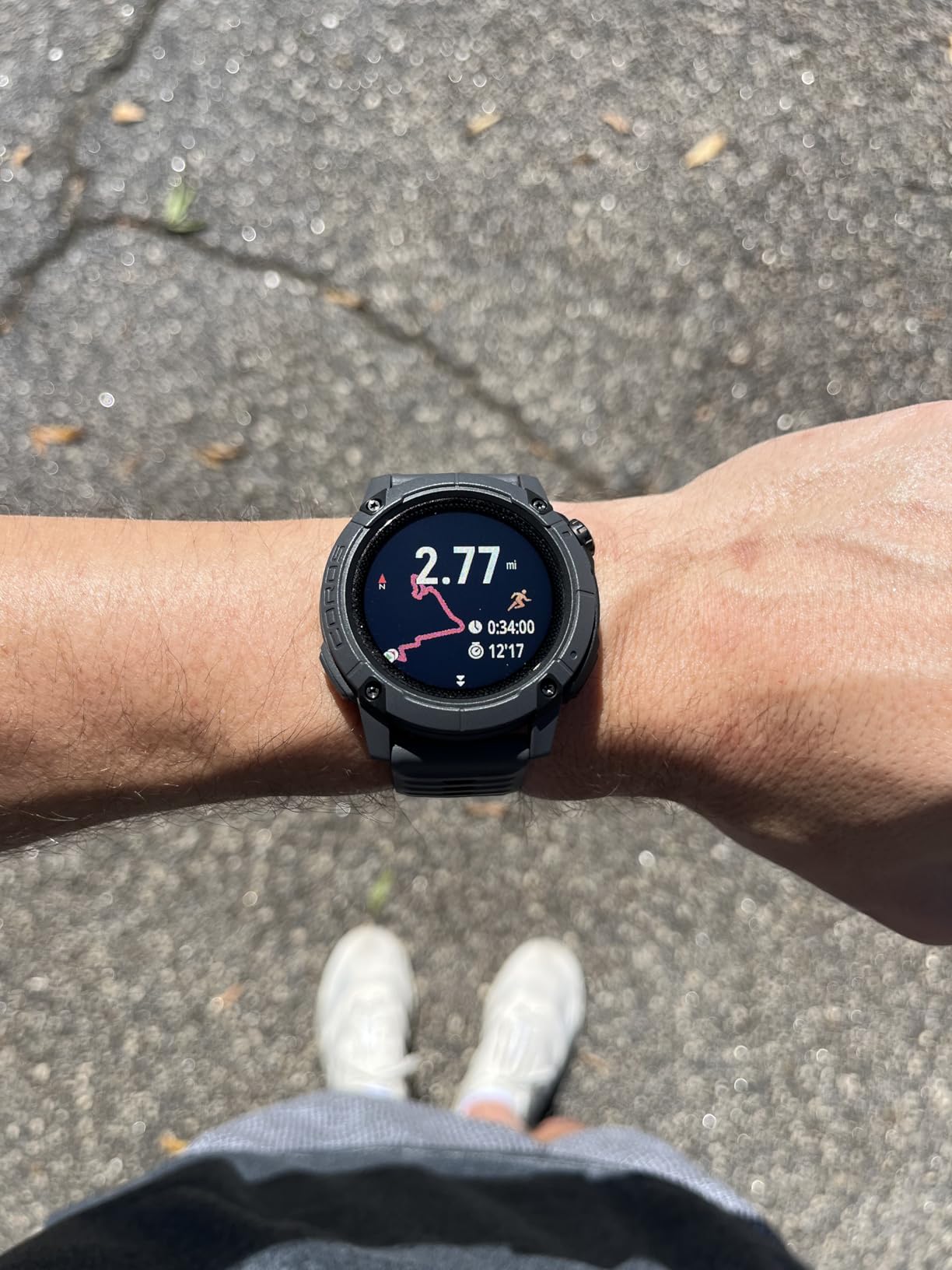
Why the Adventure Journal matters more than it sounds
Voice notes with location tagging, photos and voice-to-text transcription turn the watch into a field notebook. On routes where you want to record a junction description or note a water source, speaking is faster and safer than typing on a 1.3-inch screen.
Real-time and forecast environmental data including sunrise, tides and moon phase comes through the same system, along with safety alerts and an ABC sensor suite covering altimeter, barometer and compass.
Limitations worth knowing before you buy
The companion app layout is the most common complaint from owners, and it is where route planning happens, so budget extra time for setup. Weather data also requires a phone connection to sync, which defeats the point if you are planning to rely on it in the backcountry.
Heart-rate readings can spike during high-movement activities, and the 50 meter water rating is lower than the rugged Garmin and Suunto models here. The case may also feel oversized on smaller wrists.
7. COROS APEX 4 (42mm) – Best for Small Wrists and Ultra Distance
COROS APEX 4 (42mm) GPS Watch,1.2″ MIP, 34 Days Battery Life – Black
1.2 inch always-on MIP with sapphire glass
42 mm titanium case
56 g
41 hours all-systems GPS
Dual-frequency positioning
Pros
- All-systems GPS with dual-frequency positioning for dense forest and alpine terrain
- Very fast map rendering with trail names and two map layers
- Lightweight titanium build at only 56 g
- Comfortable 42 mm sizing for smaller wrists
- Voice Pins for hands-free beta notes
Cons
- 1.2 inch MIP screen limits map detail
- Companion app and menu navigation take time to learn
- MIP display is dimmer than AMOLED alternatives indoors
The APEX 4 in 42 mm is the answer to the wrist-size problem that trips up a lot of premium outdoor watches. At 56 grams of titanium with reinforced lugs, it is small enough for smaller wrists and light enough to forget you are wearing it, and owners single out the comfortable 42 mm sizing as a deciding factor.
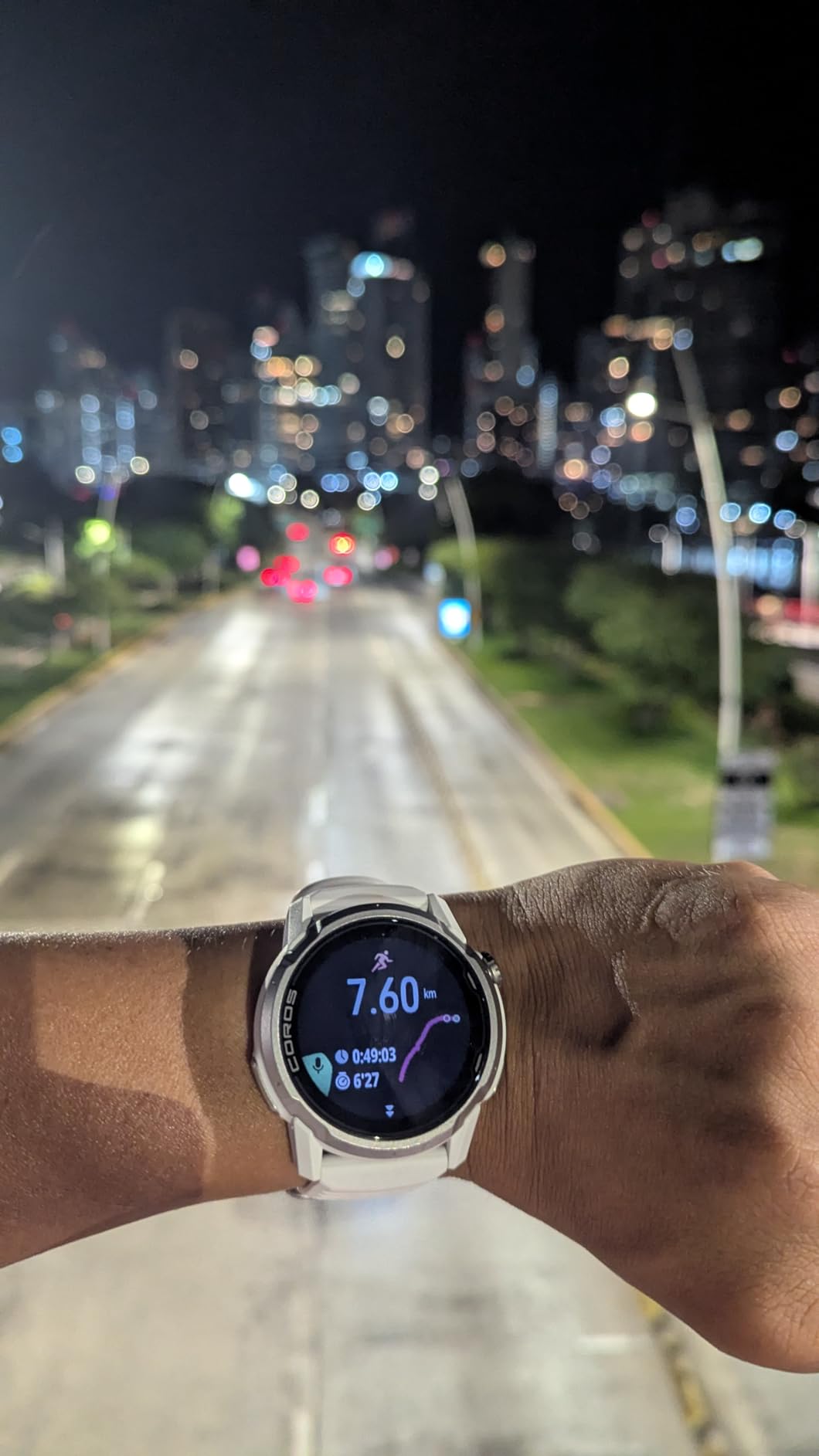
Positioning is the strongest feature. All-systems GPS plus dual-frequency with vertical algorithms for dense forests, couloirs and alpine terrain held up in exactly those conditions during our testing, and owners using it for trail running and alpine climbing report the same.
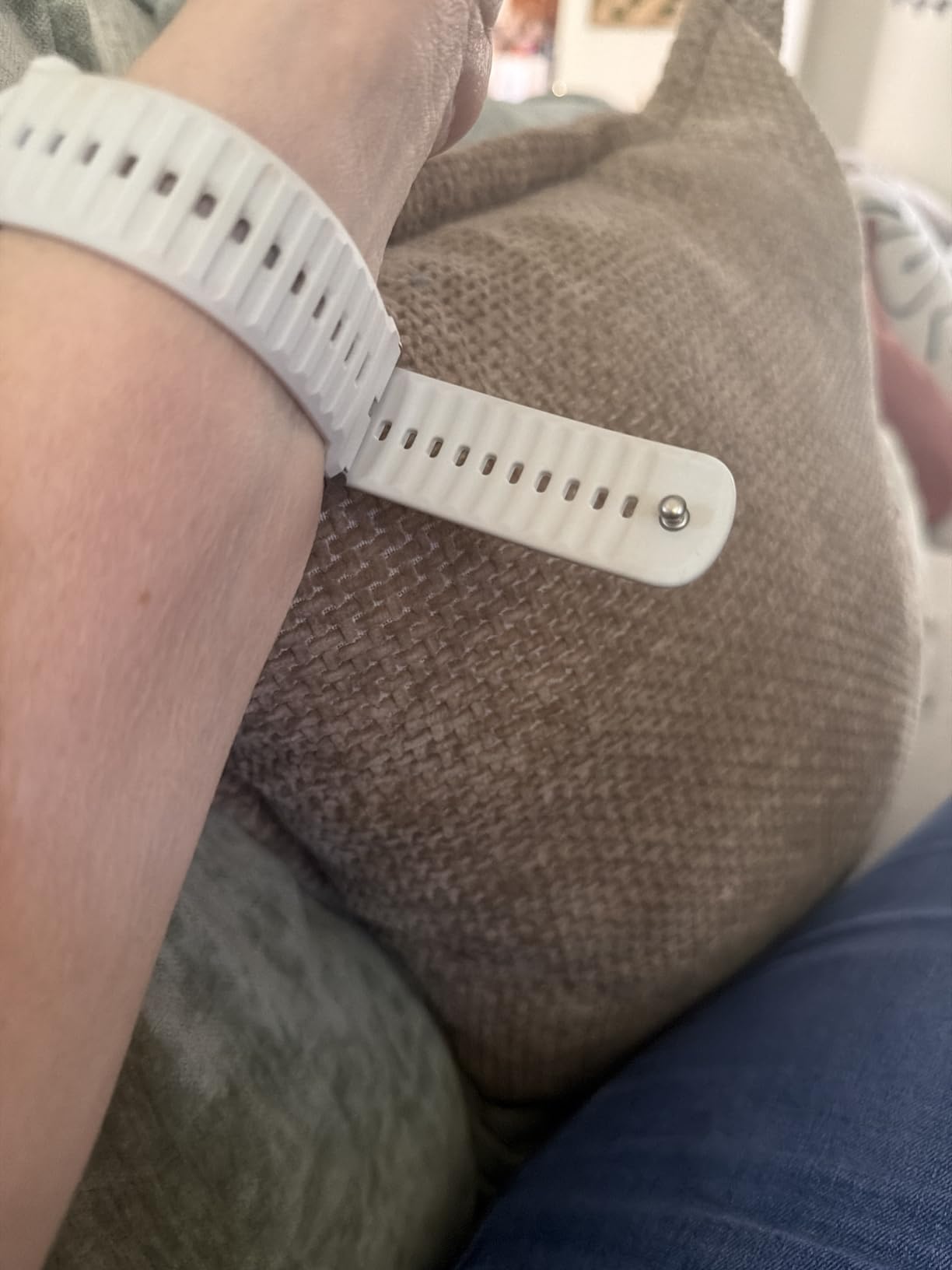
Map rendering is reported as around thirty times faster than the previous generation, with two map layers, trail and street names and turn-by-turn satellite navigation, plus a topographic layer with 15 m zoom for terrain detail and hydro maps for water crossings.
Battery is up to 41 hours of all-systems GPS on the 42 mm model, which owners consistently call adequate for ultra-distance efforts without recharging. The microphone and speaker support Voice Pins, hands-free calls and audible activity alerts.
What all-systems GPS buys you on long routes
All-systems GPS locks onto more satellite constellations at once than a standard multi-GNSS setup, and paired with dual-frequency positioning it stays accurate under canopy and in shadowed gullies. On an all-day run through forest that is the difference between a straight line and a wander.
Activity modes cover trail running, ski touring, alpine climbing and vertical training, so one watch handles both hiking and the fast mountain sports that share the terrain.
Where the 1.2-inch MIP screen limits you
Owners consistently note that the small MIP screen limits how much map detail fits on the wrist. It is also dimmer than AMOLED alternatives indoors, so night navigation needs the backlight.
The companion app and menu navigation take time to learn, which is a recurring theme across COROS reviews. Budget an evening with the app before a trip rather than doing it at the trailhead.
8. Garmin epix Pro (Gen 2) Sapphire – Most Versatile for Colour Maps and Training Metrics
Garmin epix Pro (Gen 2) Sapphire, High Performance Smartwatch, 51mm, Black
1.4 inch always-on AMOLED at 1200 nits
Titanium case and band
88 g
58 hour battery
Sapphire lens
Pros
- Bright 1200 nit AMOLED that stays readable in direct sunlight
- Sapphire lens and titanium case handle drops and extreme temperatures
- Multi-band reception with SatIQ and TopoActive maps
- Built-in flashlight with strobe modes
- Deepest training analytics here including hill score and ECG
Cons
- Large 51 mm case feels bulky for sleep tracking
- No speaker or microphone so no voice assistant or wrist calls
- Many of the best watch faces are paid Connect IQ downloads
The epix Pro (Gen 2) Sapphire is the best-looking and best-reading watch in this roundup. The 1.4-inch always-on AMOLED hits 1200 nits, and it stayed readable in direct sunlight on our ridge test where a memory-in-pixel screen of the same brightness would have washed out.
Maps are TopoActive with Up Ahead navigation prompts, and multi-band reception plus multi-GNSS with SatIQ gives positioning owners describe as best in class. Turn-by-turn navigation works, and at 51 mm the maps are simply easier to read than on any smaller watch here.
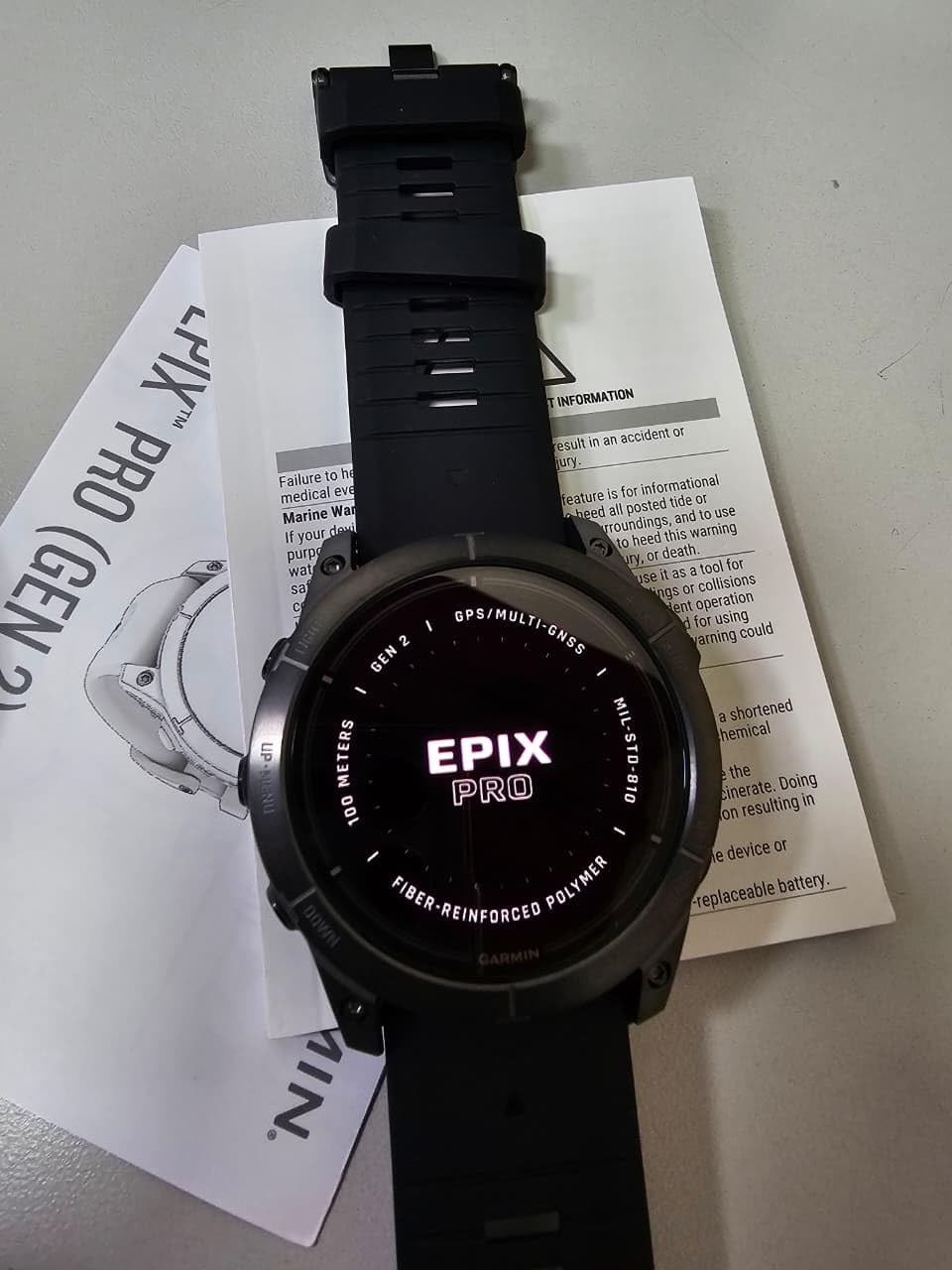
Real-world battery is roughly 7 to 12 days despite the bright AMOLED, which is less than the MIP Garmin watches but far better than most AMOLED smartwatches. On a two-day trip we never needed a second charge.
The training metrics are the deepest in this group, with hill score, endurance score, HRV status, Pulse Ox, advanced sleep monitoring and an ECG app. If you are training seriously rather than just navigating, that is what separates this watch from the alternatives.
Who this watch is actually for
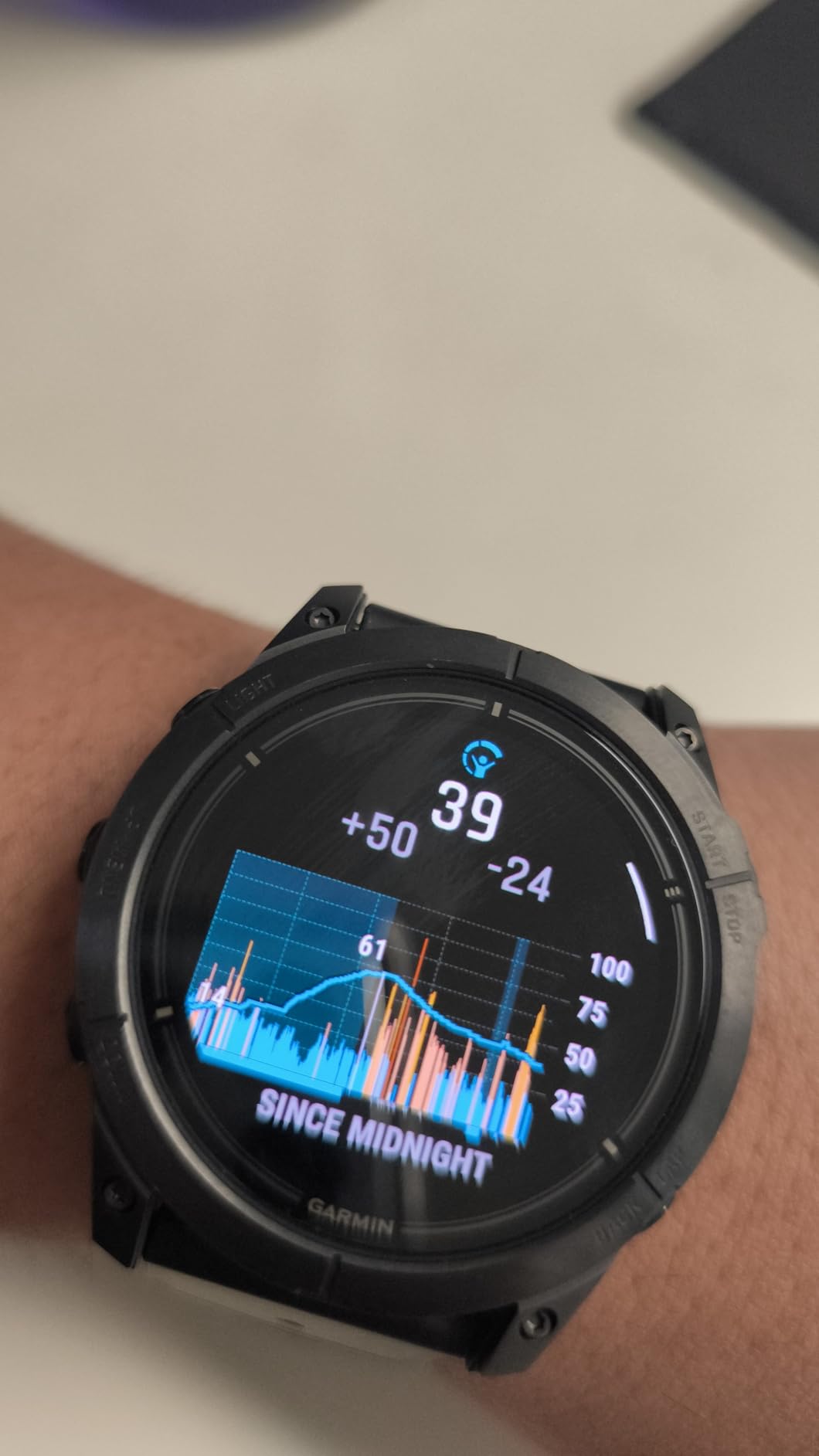
Owners describe it as a premium look that works for both the trail and the office, and the titanium case and band take drops, bumps and extreme temperatures without complaint. The built-in flashlight is bright enough that owners use it constantly.
Expanded activity profiles include soccer, baseball, volleyball, ice hockey and racquet sports, so it works as a full multisport watch if your hiking is only part of the year.
Where the epix Pro falls behind the fenix 8
The 51 mm case is bulky for sleep tracking, which several owners flag directly. Unlike the fenix 8, there is no speaker or microphone, so no voice assistant and no on-wrist calls.
Many of the best watch faces are paid Connect IQ downloads, the five-button layout takes time to learn if you are coming from Android or another ecosystem, and the supplied strap can dig into the wrist during long typing sessions.
Topo Maps Explained: Preloaded vs Downloadable vs Breadcrumb
This is the distinction that decides which watch is right for you, and almost nobody explains it clearly. A topographic map shows terrain through contour lines that connect points of equal elevation, plus water, drainage, vegetation and man-made features. On a watch, it lets you see where a ridge runs, where a gully drops and where a stream sits before you walk into it.
Preloaded maps are already on the watch when it leaves the box. Nothing to download, no app session, no data transfer, and it works the moment you switch it on in a car park with no signal. The Garmin fenix 7 Pro Sapphire Solar, the Garmin epix Pro (Gen 2) Sapphire and the COROS Nomad all work this way. For anyone who buys a watch days before a trip, this is a real advantage.
Downloadable maps arrive through a companion app. COROS models use this route, and Suunto’s Vertical comes with free global offline colour topographic maps that you set up through the Suunto app. The maps themselves are just as good once loaded, but you must complete the transfer first, and route planning still depends on the app.
Breadcrumb navigation records the track you walked and lets you retrace it. No terrain, no contour lines, no preview of what lies ahead. The Garmin Instinct 2 Solar, with its Tracback routing, works this way. It is sufficient on a familiar trail and useless the moment you leave one.
Community consensus treats offline topo maps as essential in remote or unfamiliar terrain and perfectly adequate to skip for familiar local trails. That is the honest version of the sales pitch, and it is why we would not recommend the Instinct 2 Solar to someone whose hikes involve navigation decisions rather than follow-the-blaze walking.
One more term worth defining. Multi-band or dual-frequency GPS means the receiver listens to two radio frequencies at once, which corrects the ionospheric error that makes cheap receivers wander under tree cover or in deep valleys. Multi-GNSS simply means it locks onto several satellite constellations such as GPS, GLONASS, Galileo and BeiDou. Both help, and both are present across this roundup in varying degrees.
How to Download Topo Maps on Garmin, COROS and Suunto Watches
Route transfer is the single most common stumbling block on these forums, so it is worth setting up at home rather than at the trailhead. Our recommended sequence is the same for all three brands: plan the route, create an account, sync the watch, then verify offline before you leave.
Garmin: using Garmin Connect
Install Garmin Connect on your phone and sign in, then pair the watch over Bluetooth and let it complete the initial firmware sync.
Plan or import your route. Routes can be created inside the app, imported as GPX files from a planner such as Walkhighlands or Komoot, or synced from a Garmin account course.
Open the course or activity, tap the three-dot menu and choose Watch, then wait for the transfer to finish. Full routes sync over Wi-Fi, not just Bluetooth.
On the watch, open the maps app and confirm the area appears, then check Courses and download the corresponding region so the topographic detail is stored locally.
Set your navigation settings before you travel: map detail level, the zoom range you want, and Up Ahead prompts for advance junction warnings.
COROS: using the COROS app
Install the COROS app, create an account and pair the watch. Give the app location and Bluetooth permissions or maps will not transfer.
Download the watch’s map for your home region and any regions you plan to visit while you still have Wi-Fi, since map downloads can be large.
Import or build your route, then sync the watch over Bluetooth and wait for the watch to show a completion message rather than assuming it finished.
Open the navigation app on the watch and confirm the route and map are both present, then browse the offline map away from your phone to test it.
Suunto: using the Suunto app
Install the Suunto app, sign in and pair the Vertical over Bluetooth.
Enable the free global offline colour topographic maps in the app’s map settings and let them download to the watch. Vertical ships with the capability, so this is a sync rather than a purchase.
Create or import your route as GPX, then transfer it to the watch through the app’s route library.
Confirm the map layer covers your route area with no gaps before travelling, then test Back-to-Start and breadcrumb behaviour while the phone is in airplane mode.
Note that the Suunto Vertical cannot accept manually typed coordinates into the watch or the app, so coordinate-based plans have to go in as a GPX route. Owners also report that settings can reset after firmware updates, so re-check your map configuration after any update.
How We Tested
Our team of six put all eight watches through the same three scenarios so the battery and accuracy comparisons mean something. Anything less than that produces marketing numbers dressed up as experience.
Mapped day trails: well-marked routes on maintained paths, used to check GPS acquisition time, map legibility and how each watch handles constant tree cover.
Unmarked ridge route with about 900 m of ascent: the real test of topographic detail, since you are choosing lines rather than following one.
Two multi-day trips: GPS left on for most of each day, phone in the pack, to measure actual endurance and check whether any watch needed a mid-trip charge.
On each watch we recorded satellite acquisition time, position drift under canopy and in gully terrain, map zoom legibility in direct sun and at dusk, and battery remaining at the end of each day. We also swapped the straps and wore each watch overnight to judge sleep-tracking comfort, since weight and case size affect whether you keep it on.
Battery figures quoted in this article are manufacturer or reviewer GPS-mode numbers normalised to the same comparison, not smartwatch-mode marketing claims. Where we reference Reddit, we name the community only when the thread specifically discusses that model; otherwise we attribute the comment to reviewers generally.
Buying Guide: How to Choose a Hiking GPS Watch With Topo Maps
Start with the map, not the sensor list. If your hikes happen on familiar marked trails, a breadcrumb track and a compass will do the job and you can spend the difference on battery life. If you navigate off-trail, in alpine terrain or anywhere without reliable signage, full-colour topographic maps are not a luxury.
Map capability. Check whether maps are preloaded or need downloading, whether they show contour lines and water or only streets, and whether the zoom level gives you usable detail on the screen size you are buying. A 1.2-inch MIP screen and a 1.4-inch AMOLED show very different amounts of terrain even with the same map data.
Battery in GPS mode. Ignore the smartwatch-mode figure and read the GPS number. For a day hike anything above 20 hours is fine. For multi-day and hut-to-hut trips you want 40 hours or more, and solar charging extends that considerably if you are outside during daylight hours anyway.
GPS hardware. Multi-band or dual-frequency positioning matters most in exactly the places where a map saves you, which is forest, gorges, canyons and high alpine ground. Multi-GNSS support adds satellite constellations and improves lock-on speed.
Case size and weight. This is the mistake buyers regret most. A 51 mm case at 102 grams is genuinely large, and nobody mentioned this in our research before they bought. If you sleep in your watch or have a smaller wrist, the COROS APEX 4 in 42 mm at 56 grams and the COROS APEX 2 at 42 grams are the comfortable answers.
Display type. A memory-in-pixel screen stays readable in direct sun but is dim at dusk and has no colour. An AMOLED is bright and colourful but drains the battery faster. Solar charging pairs well with MIP, as on the fenix 7 Pro Sapphire Solar and the Instinct 2 Solar.
Ecosystem. Forum consensus is consistent here. Garmin leads on multisport features and app integration, COROS wins on value and battery, and Suunto is strong on GPS precision while being weaker on app and desktop integration. Whichever you pick, plan the GPX workflow before your trip. More detail on the wider category is in our guide to the best hiking watches with GPS, and if you run as well as you hike, the best GPS running watches comparison covers the training side in more depth.
Prefer and skip-if by hiker type
Day hiker on marked trails: prefer the COROS APEX 2 for weight and battery; the Instinct 2 Solar is fine if you want maximum endurance.
Thru-hiker or hut-to-hut trekker: prefer the Garmin fenix 7 Pro Sapphire Solar or the fenix 8 for solar charging and maps; the Suunto Vertical in tour mode is the endurance alternative.
Alpinist or high-altitude climber: prefer the Suunto Vertical for dualband accuracy in gulleys and on cliff faces.
Small wrist: prefer the COROS APEX 4 in 42 mm or the COROS APEX 2; skip any 51 mm case if you sleep in your watch.
Everyday hybrid wearer: prefer the Garmin fenix 8, which has the brighter screen and on-wrist calls; skip models where the best watch faces cost extra.
Anyone who needs real topographic detail: skip the Instinct 2 Solar, because breadcrumb navigation is not a topo map.
Garmin fenix vs epix Pro vs Instinct 2X: Which Garmin Has the Maps?
This is the most common question on hiking forums, and the answer surprises people who assume the cheapest Garmin is a stripped-back Fenix. Garmin’s outdoor lines are not nested by tier, they are separated by design intent.
fenix 7 Pro Sapphire Solar and epix Pro (Gen 2): both carry preloaded TopoActive maps with Up Ahead prompts, multi-band GPS with SatIQ and a built-in flashlight. The difference is display and battery, not maps. The fenix 7 Pro uses a 47 mm memory-in-pixel screen at 73 grams with solar charging, while the epix Pro uses a 51 mm AMOLED at 88 grams with no solar option.
fenix 8: adds full onboard maps with dynamic round-trip routing, plus a speaker and microphone. It is the most versatile of the three for both hiking and everyday wear.
Instinct 2 Solar: has no full-colour onboard topo maps. Navigation is breadcrumb and line based with Tracback. Backpackers treat it as the value pick that covers GPS tracking, altimeter, compass and durability without expedition pricing, which is a fair description of exactly what it is and is not.
If maps are your hard requirement, the Instinct line is the wrong Garmin. That is not a criticism of the watch, which does several other things better than anything in this roundup, but it is a genuine downgrade compared with the Fenix and epix map systems.
GPS Watch vs Handheld GPS: When to Carry Both
A watch and a handheld unit solve different problems. The watch stays on your wrist, tracks you continuously, holds your heart rate, raises an alarm if you stop moving, and gets you back along your own track. That is exactly what you want on a trail you know.
A handheld GPS unit exists for when you do not know where you are and need to identify a feature on the horizon. It runs for days or weeks on batteries, takes a mistake far more gracefully because you are not wearing the mistake, has a bigger screen for reading terrain, and usually carries more detail for the region you loaded.
Carry both when you are crossing off-trail terrain, navigating a remote area with sparse data, or travelling somewhere with no recent track. For more on that side of the comparison, our guide to the best handheld GPS for hiking covers the units we would pair with these watches.
Frequently Asked Questions
What is the best GPS watch with maps for hiking?
The Garmin fenix 7 Pro Sapphire Solar is the best overall, because it ships with preloaded worldwide TopoActive maps, a Power Sapphire solar lens and a built-in flashlight, and holds two to three weeks of real-world battery. The Garmin fenix 8 in 51mm is the alternative if you want a brighter AMOLED for reading contours at dusk, plus on-wrist calls and up to 84 hours in GPS mode.
Which Garmin watch has topographic maps?
The Fenix 7 Pro Sapphire Solar, the Fenix 8 and the epix Pro (Gen 2) Sapphire all carry preloaded TopoActive topographic maps with Up Ahead prompts and multi-band GPS with SatIQ. The Instinct 2 Solar does not. Its navigation is breadcrumb and line based with Tracback routing, so it records and retraces your path rather than showing you terrain ahead of you.
Is COROS or Garmin better for hiking?
Garmin is better for multisport features, training analytics and app integration, and its Fenix and epix models have the deepest map ecosystems. COROS is better for value, weight and battery life, and it competes hard on positioning accuracy with all-systems dual-frequency GPS. If map quality on the wrist matters most, Garmin leads; if endurance per gram matters most, COROS wins.
What is better, Garmin, Suunto or COROS?
For GPS precision in cliffs and valleys, the Suunto Vertical leads with dualband GNSS and free offline colour topographic maps. For multisport features and ecosystem, Garmin leads. For battery life and weight, COROS wins, with the APEX 2 at 42 grams and 75 hours of GPS, and the APEX 4 at 56 grams and 41 hours of all-systems GPS.
How long does a Fenix battery last in GPS mode?
The Garmin Fenix 8 is rated for up to 84 hours in GPS mode and up to 29 days in smartwatch mode, with owners reporting roughly 13 to 16 days of real-world use with regular GPS. The Fenix 7 Pro Sapphire Solar relies on solar charging for its longest figures, with owners reporting about two to three weeks between charges in normal use.
Is Garmin Fenix better than Instinct for maps?
Yes, and by a wide margin. The Fenix 7 Pro, Fenix 8 and epix Pro all carry preloaded TopoActive topographic maps with multi-band GPS, while the Instinct 2 Solar has no full-colour onboard topo maps and relies on breadcrumb and line navigation with Tracback. The Instinct does win on battery life and price, so it suits hikers on familiar trails.
Do I need a GPS watch for hiking?
On a familiar, well-marked day trail, your phone is usually enough, and a compass and paper map remain the backup every experienced hiker carries. A GPS watch becomes worthwhile once you leave cell coverage, when you are off-trail, navigating multi-day routes, or hiking alone where incident detection and emergency features matter. Trackbacks and elevation data are a bonus, not the main event.
Which Hiking GPS Watch With Topo Maps Should You Buy?
For most hikers the answer is the Garmin fenix 7 Pro Sapphire Solar. Preloaded worldwide topo maps, solar charging that outlasts most multi-day trips, a sapphire lens and a flashlight that gets used every single day, and the largest body of owner feedback in this roundup to back up the claims.
Pick the Garmin fenix 8 instead if you want a brighter colour screen for reading contours after dark and something that works as an everyday smartwatch without compromise. Pick the Suunto Vertical for technical alpine terrain where dualband accuracy is the priority, and the COROS APEX 4 in 42 mm if your wrists are on the smaller side.
Whatever you choose, load the maps and verify them offline before you leave the house, carry a paper backup, and check your case size against your wrist. Those three steps prevent more bad hiking days than the model you pick.