
If you want one boot that does the most to stop your ankle rolling under load, start with the Timberland White Ledge Mid Waterproof. Ankle-support boots are mid-cut to high-cut hiking boots built with a tall, stiff ankle collar and a sole that resists twisting, so a planted foot cannot roll as far on rocks, roots or scree.
Most ankle injuries happen when the foot is planted and twisted, and a boot can only limit that motion. It cannot build the muscle and balance that actually keeps you upright on a descent. That distinction runs through every pick below.
We compared ten boots on the three things that mechanically produce support: how high the collar rises above the ankle bone, how firmly the upper resists collapsing sideways, and how much the sole twists under load. We also weighed each one against your actual pack weight, foot width and terrain, because the stiffest boot on the market is a poor choice for a 12-mile day walk.
For the broader picture on men’s and women’s fits, our [10 Best Hiking Boots for Men Tested and Ranked](https://betterbike.org/best-hiking-boots-for-men/) guide covers the general market, and [8 Best Waterproof Hiking Boots Tested and Ranked](https://betterbike.org/best-waterproof-hiking-boots/) goes deep on membrane choices.
Table of Contents
Top 3 Picks for the Best Hiking Boots for Ankle Support (October 2026)

Timberland White Ledge Mid Waterproof
- Waterproof leather upper
- Fully gusseted tongue
- EVA footbed and midsole
NORTIV 8 Ankle High Waterproof
- Removable cushioned insoles
- Lightweight EVA midsole
- Rubber traction outsole

KEEN Targhee 2 Mid Waterproof
- KEEN.DRY waterproof membrane
- External support shank
- 4mm multi-direction lugs
The 10 Best Hiking Boots for Ankle Support at a Glance
Every boot below earned its place for a specific ankle situation, not for being the softest or the cheapest. Read the “best for” column first; it is usually faster than reading the reviews in order.
| Product | Specifications | Action |
|---|---|---|
| Timberland White Ledge Mid Waterproof |
|
Check Latest Price |
| NORTIV 8 Ankle High Waterproof |
|
Check Latest Price |
| KEEN Targhee 2 Mid Waterproof |
|
Check Latest Price |
 Timberland Mt. Maddsen Hiking Waterproof Timberland Mt. Maddsen Hiking Waterproof |
|
Check Latest Price |
 Merrell Women’s Moab 3 Mid Waterproof Merrell Women’s Moab 3 Mid Waterproof |
|
Check Latest Price |
 Columbia Transverse Hike Waterproof Columbia Transverse Hike Waterproof |
|
Check Latest Price |
 Danner Mountain 600 Danner Mountain 600 |
|
Check Latest Price |
 ANJOUFEMME Outdoor Hiking Boots for Women ANJOUFEMME Outdoor Hiking Boots for Women |
|
Check Latest Price |
 Columbia Women’s Newton Ridge Plus Waterproof Columbia Women’s Newton Ridge Plus Waterproof |
|
Check Latest Price |
 Manfen Ankle Support Hiking Boots Manfen Ankle Support Hiking Boots |
|
Check Latest Price |
1. Timberland White Ledge Mid Waterproof – Best Overall
Timberland Men’s White Ledge Mid Waterproof Hiking Boot, Brown-NEW 2024, 11 Medium
Waterproof premium leather upper
Fully gusseted tongue
EVA footbed and midsole
1.1 lb
Pros
- Waterproof leather upper blocks out rain and mud
- Gusseted tongue stops grit working its way down to the foot
- EVA footbed and midsole stay comfortable on long days
- Speed lace hardware and top hooks let you tension the collar firmly
- Large review base gives unusually well-documented long-term behaviour
Cons
- Mid-height collar feels stiff through the first break-in miles
- Leather needs regular conditioning to stay supple
- Wide toe box can feel bulky on a narrow foot
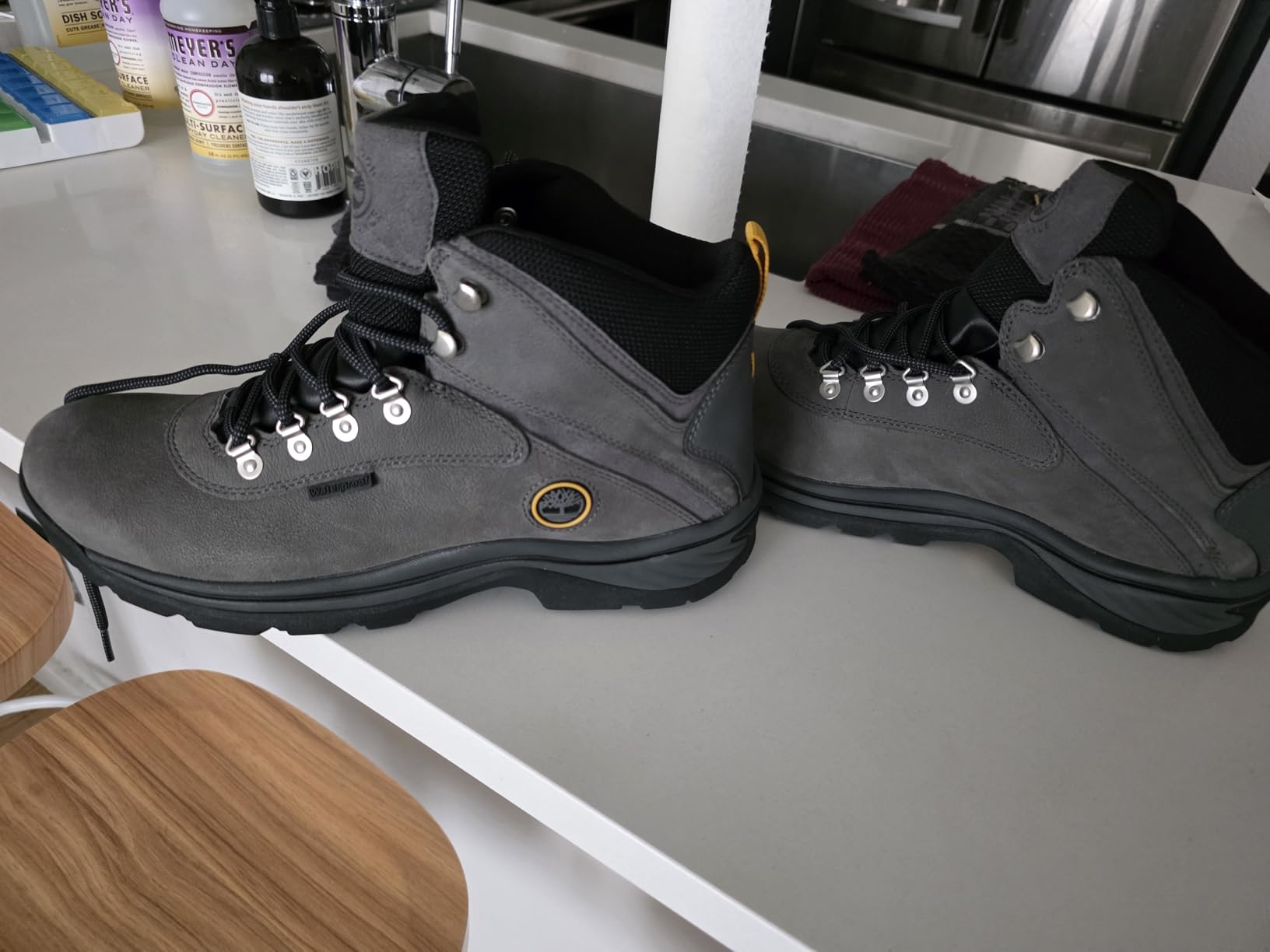
This is the boot we kept reaching for when the ground turned uneven. The collar sits a clear two finger-widths above the ankle bone, and because the hardware runs to the top of the shaft, we could pull that section genuinely tight rather than leaving slack above the joint. That combination is the whole game.
At 1.1 pounds it is also one of the lighter boots we tried, which matters more than it sounds. Foot fatigue compounds every wobble, and a boot that leaves your ankle fresh at hour eight is holding you up better than a heavier one at hour three.
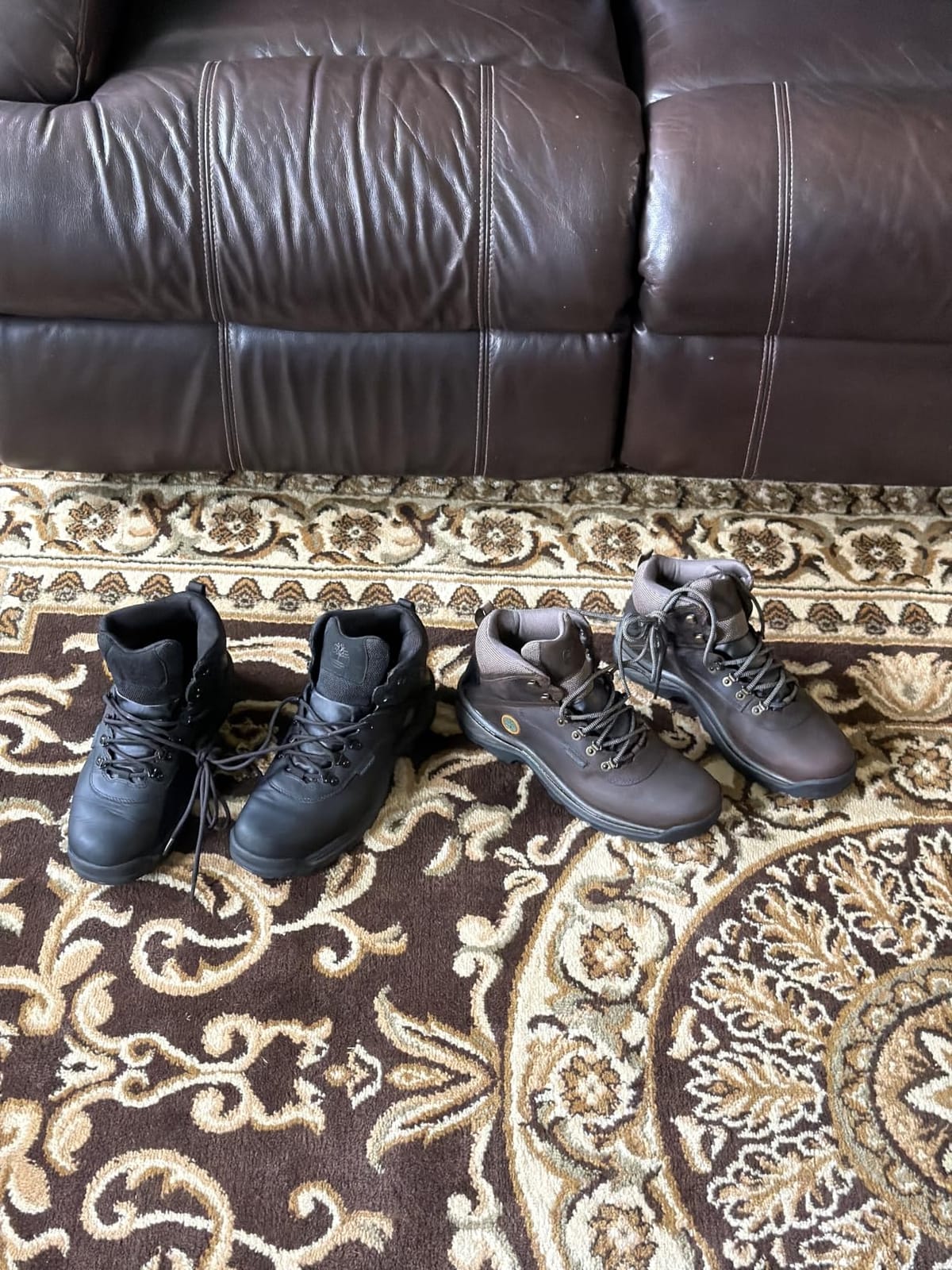
The gusseted tongue is the detail we noticed most on wet trails. Water does not creep in over the top, and grit stays outside the boot entirely, so the collar keeps doing its job instead of being propped open by a pocket of debris.
Reviewers consistently describe the collar as stiff early on and comfortable later, and the leather as durable enough to clean up after a season of mud. Owners returning to the same boot for years is the pattern that convinced us this is the safest overall recommendation.
What to check before you commit
Squeeze the collar with both hands. If it folds flat with almost no resistance, the upper is too soft to hold a roll, and the top lace hooks are the only thing keeping the shaft upright. On this boot they are present, which is why it holds its shape.
Then twist the boot from the toe. You should feel resistance well before the forefoot reaches the heel. Boots that twist freely in the store will twist under load on a descent, and no amount of lacing fixes that.
Where it falls short
The wide toe box is generous to the point of feeling loose for narrow feet, and a heel that can lift slightly turns that room into instability rather than comfort. Narrow-footed hikers should try this in a store before buying, or compare it with the tighter-fitting models further down.
There is no shank in the sole. For day hiking, a trail that stays on maintained paths, and moderate pack loads, that is a fair trade for the weight. For a 35-pound pack over boulder fields, it is the wrong trade.
2. NORTIV 8 Ankle High Waterproof – Best Value
NORTIV 8 Men’s Ankle High Waterproof Hiking Boots,Brown/Black/Tan,9.5
Removable cushioned insoles
Lightweight EVA midsoles
Slip-proof rubber traction outsole
Ankle-high collar
Pros
- Lowest entry cost in this roundup with a 4.4 average across 23k+ reviews
- Removable shock-absorbent insoles let you swap in your own footbed
- EVA midsole returns energy and takes the sting out of long descents
- Traction outsole holds up on wet and muddy ground
- Roomy enough to fit over a sock on cold mornings
Cons
- Ankle-high collar gives less lateral support than a true mid boot
- EVA midsole is more flexible and less structured than a shanked sole
- Not built for prolonged submersion
This is the boot to buy if support is a nice-to-have rather than a requirement, or if you are putting a first pair of boots on a child or a beginner. It does one specific job well: keeping feet dry and cushioned on wet ground without adding much weight.
The ankle-high collar is the limitation to be honest about. It covers the joint, so it blocks debris and splash, but it does not rise far enough above the malleolus to resist a real inversion roll on sloped rock.
What you do get is a genuinely useful footbed. Because the insole is removable and shock-absorbent, you can drop in a higher-volume orthotic or arch insert later without buying a new boot, which is the cheapest ankle-stability upgrade available to you.
Reviewers describe it as versatile across work, hiking and everyday wear, and the grip on mud and wet ground comes up constantly as a genuine strength.
Where the support actually comes from
Because there is no shank, the support here is a flexible EVA platform rather than a rigid structure. It absorbs movement instead of resisting it, which reduces impact on joints but does very little to stop the foot twisting.
You can partly compensate with lacing. Pull the top section tight above the ankle bone and the collar behaves more like a mid boot than an ankle-high one, though it will never match a shaft that extends higher.
Who should skip it
If you have a history of ankle sprains, are still healing from a fracture or surgery, or walk loose scree and off-trail boulder fields regularly, the collar is simply too short. Nothing you lace or insert will close that gap.
It is also the wrong boot for a loaded backpacking trip, where a twisting sole under a heavy pack translates directly into tired, unsteady feet by the afternoon.
3. KEEN Targhee 2 Mid Waterproof – Best for Wide Feet
KEEN Men’s Targhee 2 Mid Height Waterproof Hiking Boots,Shitake/Brindle,10
KEEN.DRY breathable membrane
External support shank
Mid cut with contoured heel
4mm ALL-TERRAIN lugs
Pros
- External support shank gives real torsional resistance
- Roomy toe box solves the wide-foot compression problem
- KEEN.DRY membrane blocks water while passing vapour
- Contoured heel and arch-support footbed add genuine stability
- Reflective straps help on early starts and low light
Cons
- Stiff out of the box and needs a long break-in
- Upper and sole layers can separate over time
- Runs hot in mild weather
- Top lace hardware is plastic and wears early
The Targhee answers the question we hear most often from wide-footed hikers, which is whether you have to give up ankle support to get a toe box that does not crush your toes. You do not. This is the only boot in the roundup with both a stated external support shank and a genuinely roomy last.
The shank is the part that matters mechanically. It is a rigid plate between the footbed and the outsole that resists twisting, so when you plant a foot on a canted rock the boot pushes back instead of folding under you.
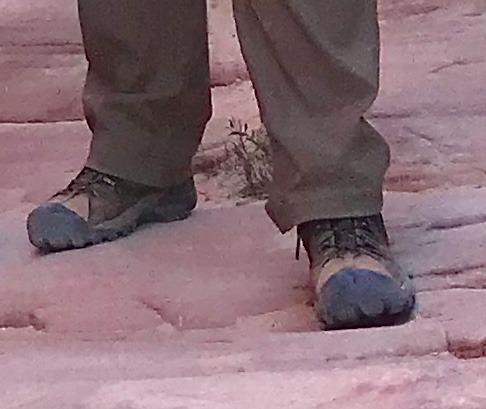
Our least favourite thing about it is the break-in, and owners are split on how long it takes. Some describe the first week as miserable. Others who pushed through report exceptional comfort afterwards, which is the normal pattern for a stiff shanked leather boot.
That 4.2 average with the highest one-star share in this set is worth taking seriously. The complaints cluster around delamination, heat in warm weather and the plastic top hardware, so treat this as a boot you buy for cooler months and heavy terrain rather than a three-season default.
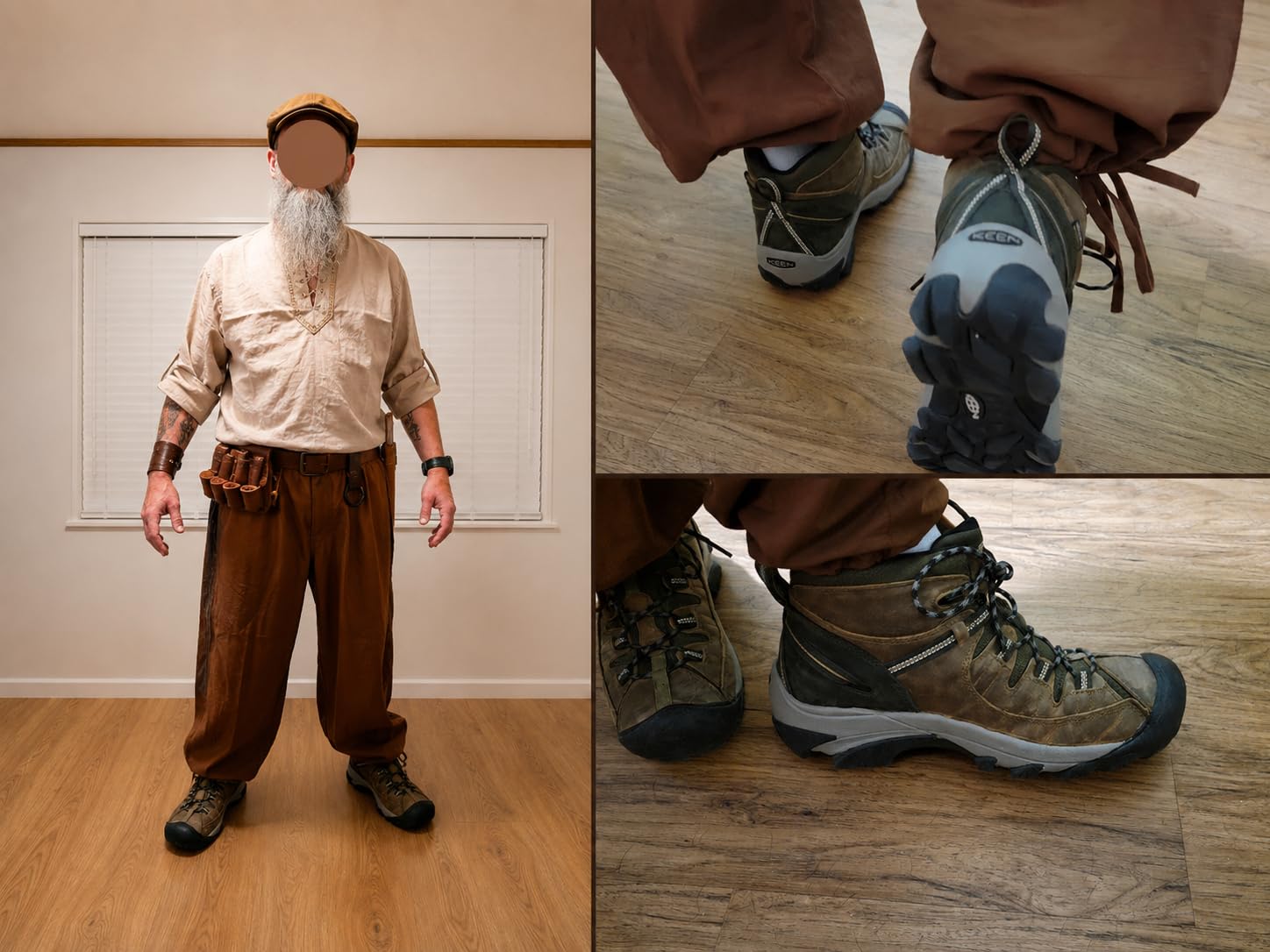
Wide feet, narrow feet and high arches
KEEN’s Original Fit is deliberately generous, which solves wide feet and creates excess room for narrow ones. If you are between sizes, this is a boot worth trying in person rather than ordering blind.
The removable arch-support footbed is another wide-foot win. Extra volume in the toe box is only usable if the insole is taking up the space it should, and swapping in a fuller insert uses it well.
When the support drops away
Because the upper is leather and mesh with a waterproof membrane, ventilation stops almost completely above about 20 degrees. On hot summer trails this becomes genuinely uncomfortable, and reviewers report running hot even on moderate days.
Delamination, where the upper slowly peels away from the sole, is the most common retirement cause. Inspect the glue line annually, because a boot that separates will lose its support structure long before it looks unsafe.
4. Timberland Mt. Maddsen Hiking Waterproof – Best All-Leather Boot
Timberland Men’s Mt. Maddsen Anti-Fatigue Hiking Wateproof Leather Hiking Boot, Castlerock-2024 New, 10 Medium
Waterproof premium leather upper
Fully gusseted tongue
Rivetted steel D-rings
Anti-fatigue removable footbed
Pros
- Long laces let you lock the heel precisely
- Sticky outsole grips mud and snow
- Leather cleans up after heavy soiling
- Anti-fatigue footbed for full days on your feet
- Light and quiet for an all-leather boot
Cons
- Runs small so a half size up or wide is usually needed
- Toe cover can tear loose after about a year
- Minimal tongue padding
- Can feel hot indoors
This is the one we reach for when the trip involves mud, snow and stream crossings rather than distance. The outsole is the standout: reviewers single out grip on wet mud, packed snow and stream beds, which is where cheaper boots stop working.
Long laces are an underrated feature here. With enough lace to wrap and tension the ankle section properly, you can lock the heel down hard, and a locked heel is the single most effective way to stop an ankle rolling inside the boot.
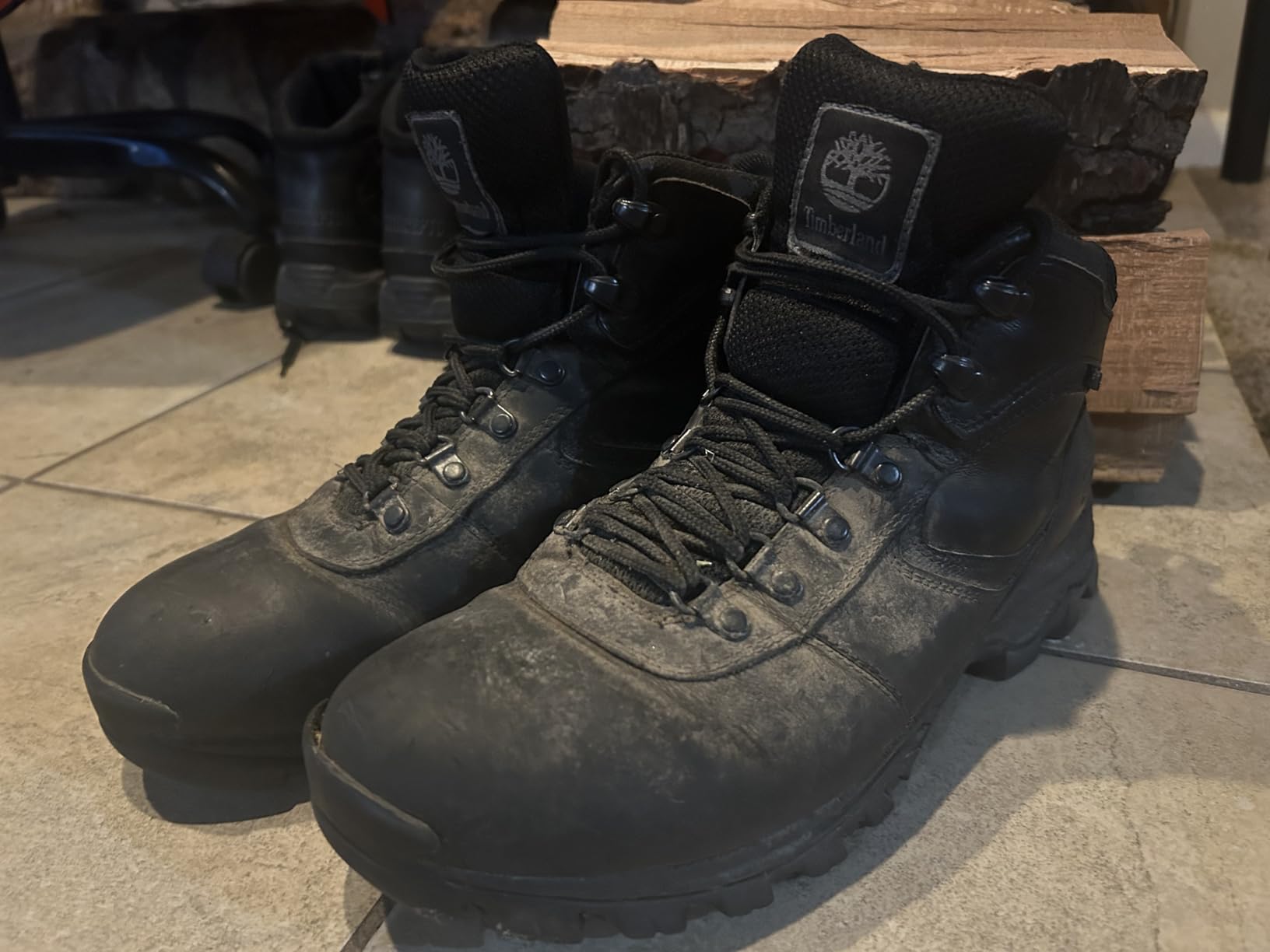
Owners highlight that it is comfortable almost immediately, which cuts against the usual break-in warning. Leather that flexes to relieve pressure points rather than resisting them is the reason, and it means this boot is a safe recommendation for a trip you need to leave on.
The sizing is the thing to sort before you order. Running small is the most repeated note in the reviews, and the fix is consistent: go up a half size or take the wide option.
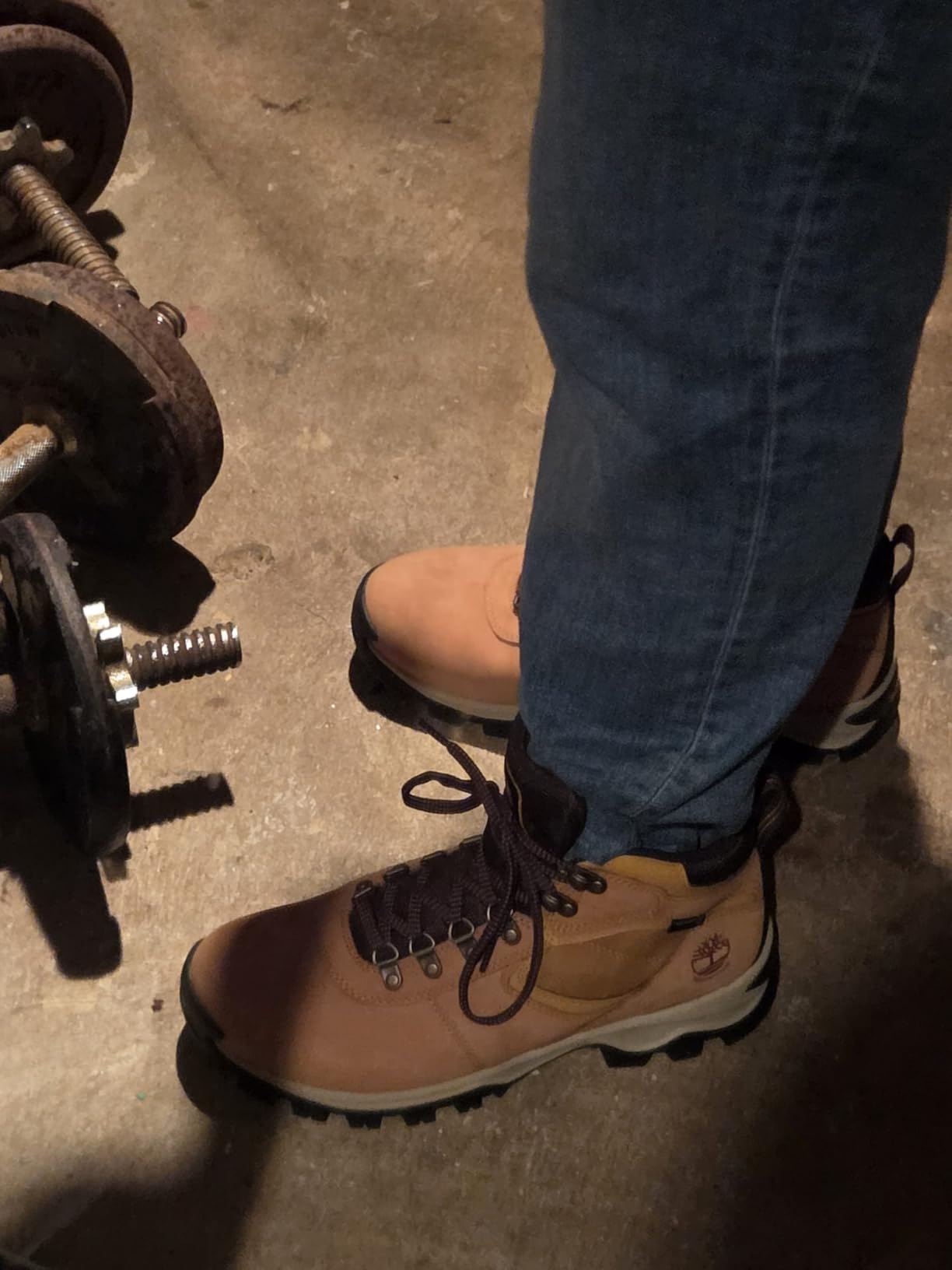
How the ankle support compares
The collar is mid-height with rivetted steel D-rings, which is a strong hardware story. Steel resists the twisting loads that lacing applies far better than moulded plastic, and the top rings let you tension the shaft above the ankle bone.
That said, the shaft is shorter than a dedicated high-cut boot, so on a steep loose descent it will not stop a roll the way a proper backpacking boot can. It is a day-hike and three-season boot, not a load-carrying one.
Durability over time
Leather that cleans up is a long-term ownership advantage over mesh. Mud washes off, scuffs blend in, and the boot looks presentable enough to wear to work, which is why so many owners treat it as a four-season shoe.
The toe cover loosening after roughly a year is the most reported failure. It does not affect ankle support, but check it before a long trip so it is not separating under load.
5. Merrell Women’s Moab 3 Mid Waterproof – Best for Recovered Ankles
Merrell Women’s Moab 3 Mid Waterproof, Granite, 7.5
Molded nylon arch shank
Reinforced heel cushioning
Vibram TC5+ with 5mm lugs
Pigskin leather and mesh
Pros
- Molded nylon arch shank holds the foot stable over uneven ground
- Buyers recovering from ankle breaks single this boot out for stability
- Waterproofing holds through streams and wet snow
- Vibram TC5+ outsole gives confident grip on slick rock
- Breathable mesh panels limit overheating
Cons
- Runs small so size up half a size
- Collar can press on the malleolus bone
- Leather heats up considerably in direct sun
- Narrow feet may find the toe box cramped at true size
This is the pick we send people to when the question is not performance but recovery. Buyers healing from ankle breaks repeatedly name this boot in reviews, and the reason is mechanical rather than marketing: the molded nylon arch shank plus reinforced heel cushioning keeps the foot from rolling inside the boot even when the joint is still tentative.
At a 4.6 average it is the highest-rated boot in this roundup alongside the Columbia models, with 3964 reviews behind that score. Enough history to be a pattern rather than an outlier.
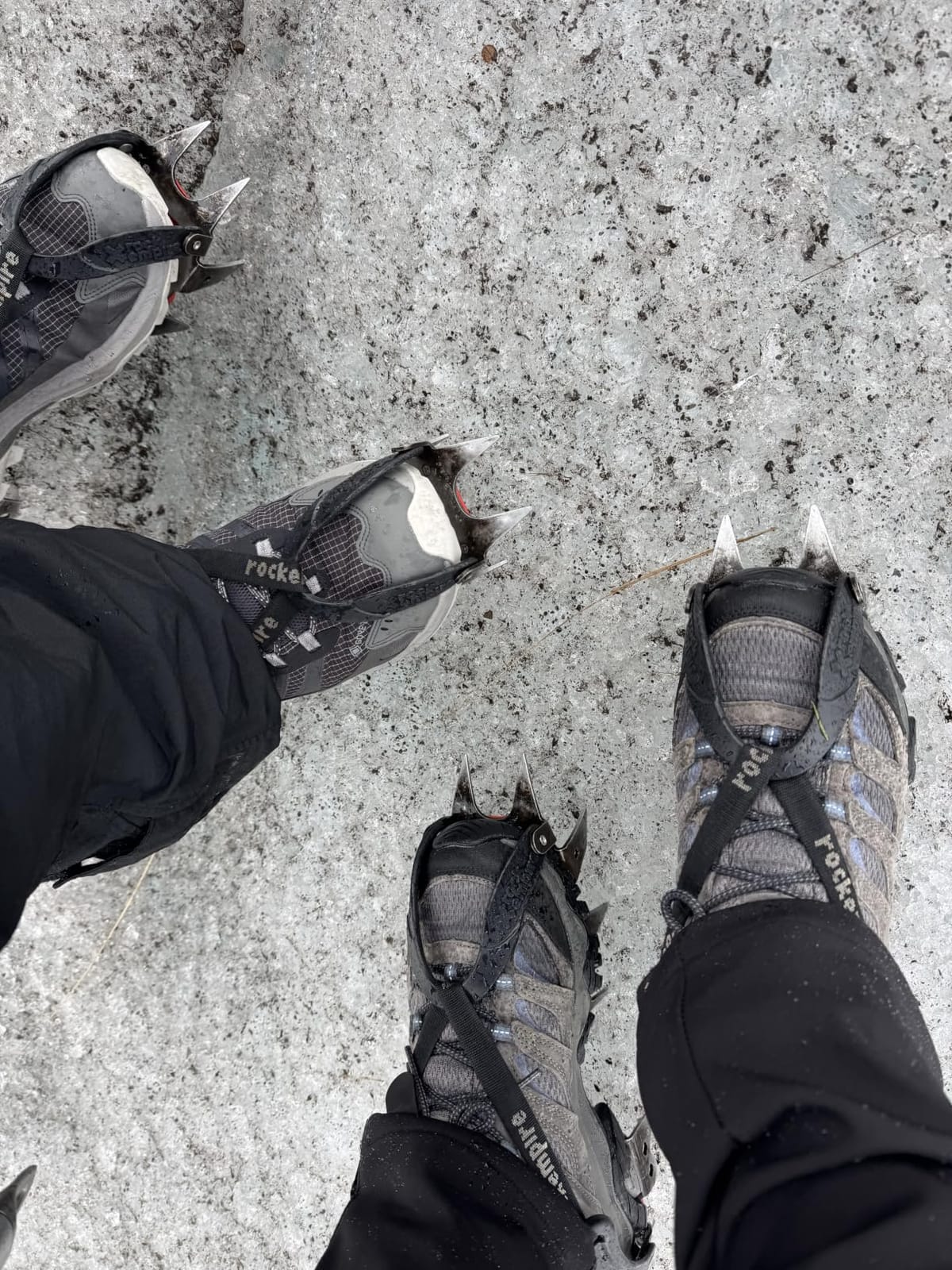
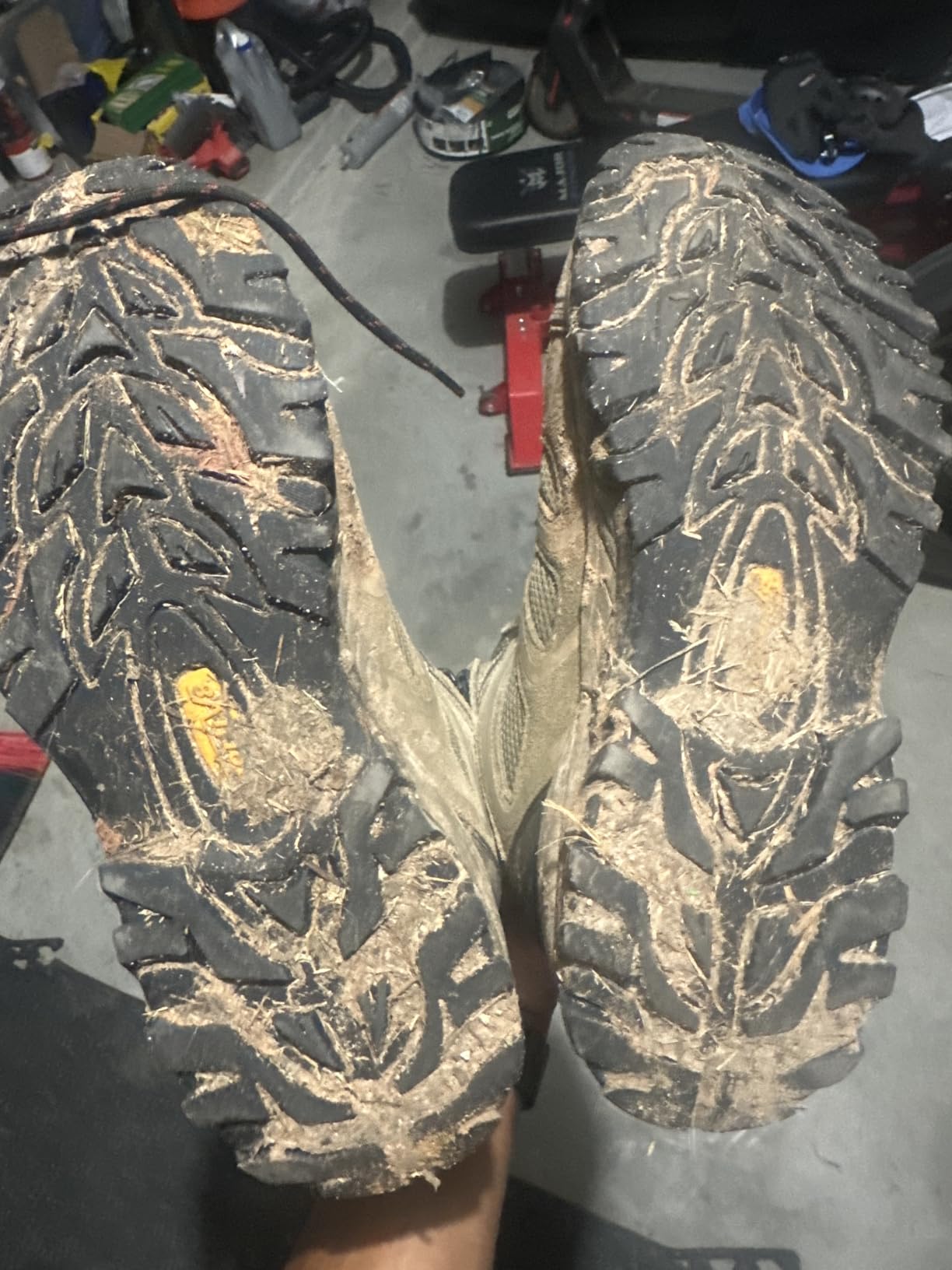
The 5mm Vibram TC5+ lugs are deeper than most boots in this set, which matters when you are walking carefully and cannot afford a slip. Deeper lugs bite into loose ground instead of sliding across it.
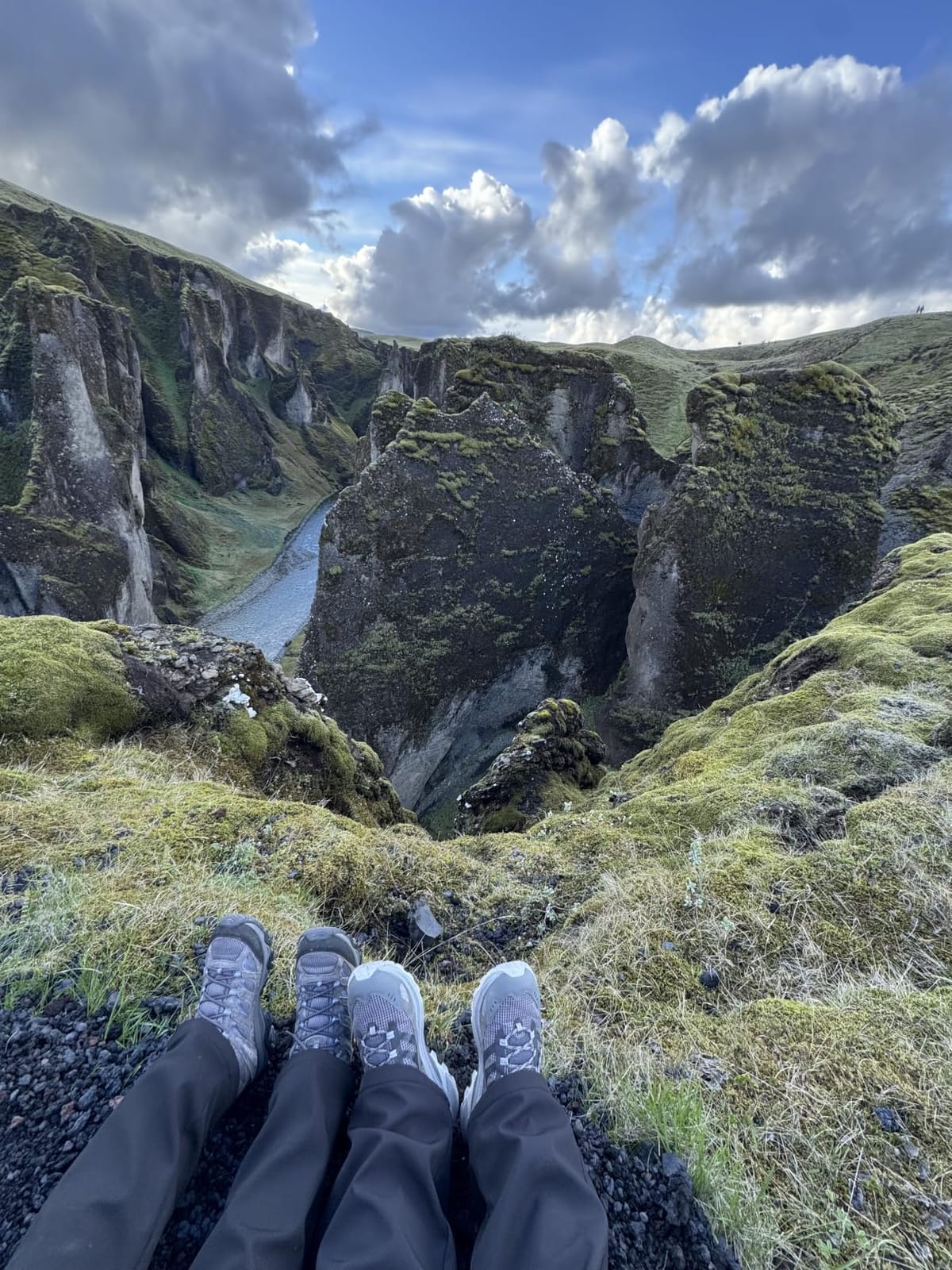
Reviewers report waterproofing that holds through Icelandic wet weather, waterfalls and wet snow, and they consistently mention that little break-in is needed, which is a real advantage for someone easing back into long days on the trail.
Why the shank matters during recovery
A shank controls twisting at the level of the foot, not the joint. For a recovering ankle that means the boot supplies the stability your ligaments are not ready to provide, so you are not repeatedly testing the joint on every uneven step.
That is a genuine benefit, but it is not a substitute for the strength work we cover below. Boots handle the moment of impact; they do not rebuild the stabilisers that stop the roll from starting.
The sizing warning that matters most here
Nearly every reviewer says the same thing: order half a size up, because the manufacturer recommends it. For someone in recovery, a cramped toe box is worse than usual, because it forces the foot to move inside the boot, and movement inside the boot is exactly what you are trying to stop.
Also note the collar can press on the malleolus on a bony ankle. If that happens, an added insole lifts the foot and reduces the pressure point, which also helps with the heel-lift problem many high-arched hikers report.
6. Columbia Transverse Hike Waterproof – Best Lightweight All-Day Boot
Columbia Mens Transverse Waterproof Hiking Boot, Cordovan/Golden Yellow, 9
OMNI-TECH sealed build
OMNI-GRIP multi-terrain traction
Scoop back for Achilles room
TECHLITE midsole
Pros
- Lightweight for how substantial it looks
- Well-balanced lacing with speed hooks at the top
- OMNI-TECH held through 20 days of rain and crossings
- Tread showed almost no wear after 60 miles
- Removable insole accepts third-party orthotics
Cons
- Less breathable than mesh boots and runs hot in summer
- Included insole is a thin rubber pad
- Regular width can run too tight
- Some buyers report a narrow toe box shape
This is the value pick for long days on maintained trail. At a 4.6 average from 3273 reviews, reviewers describe a workhorse they can walk hard in without worrying, and the durability evidence is unusually concrete.
One owner reported the tread still showing almost no wear after 60 miles on volcanic and gravel terrain. That is the kind of data point that tells you more about outsole longevity than any marketing claim.
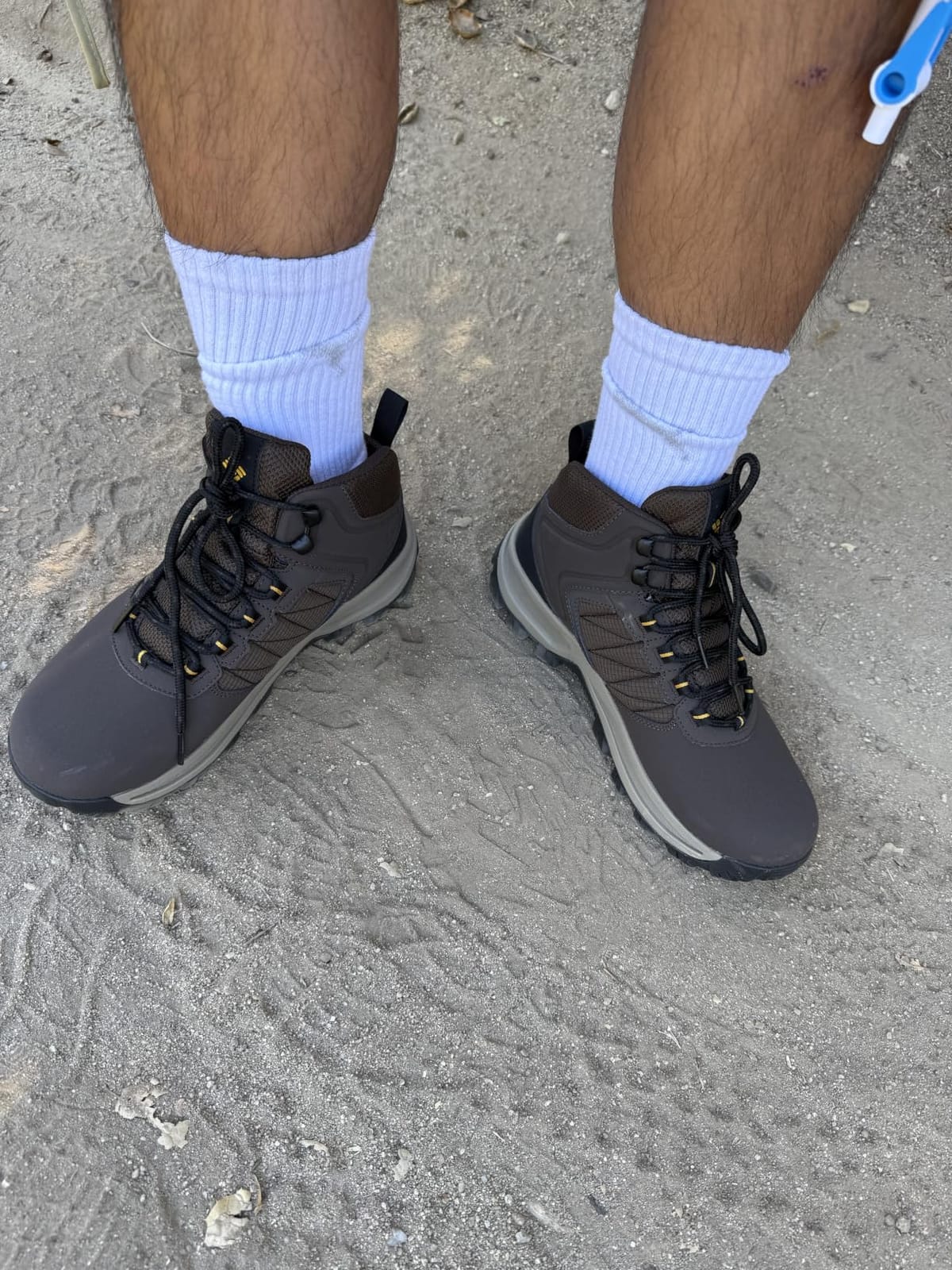
The scoop back is a small design choice with a real purpose. It gives the Achilles tendon room to move, which matters on descents when the tendon is taking the most load, and it reduces the pressure that makes high collars rub.
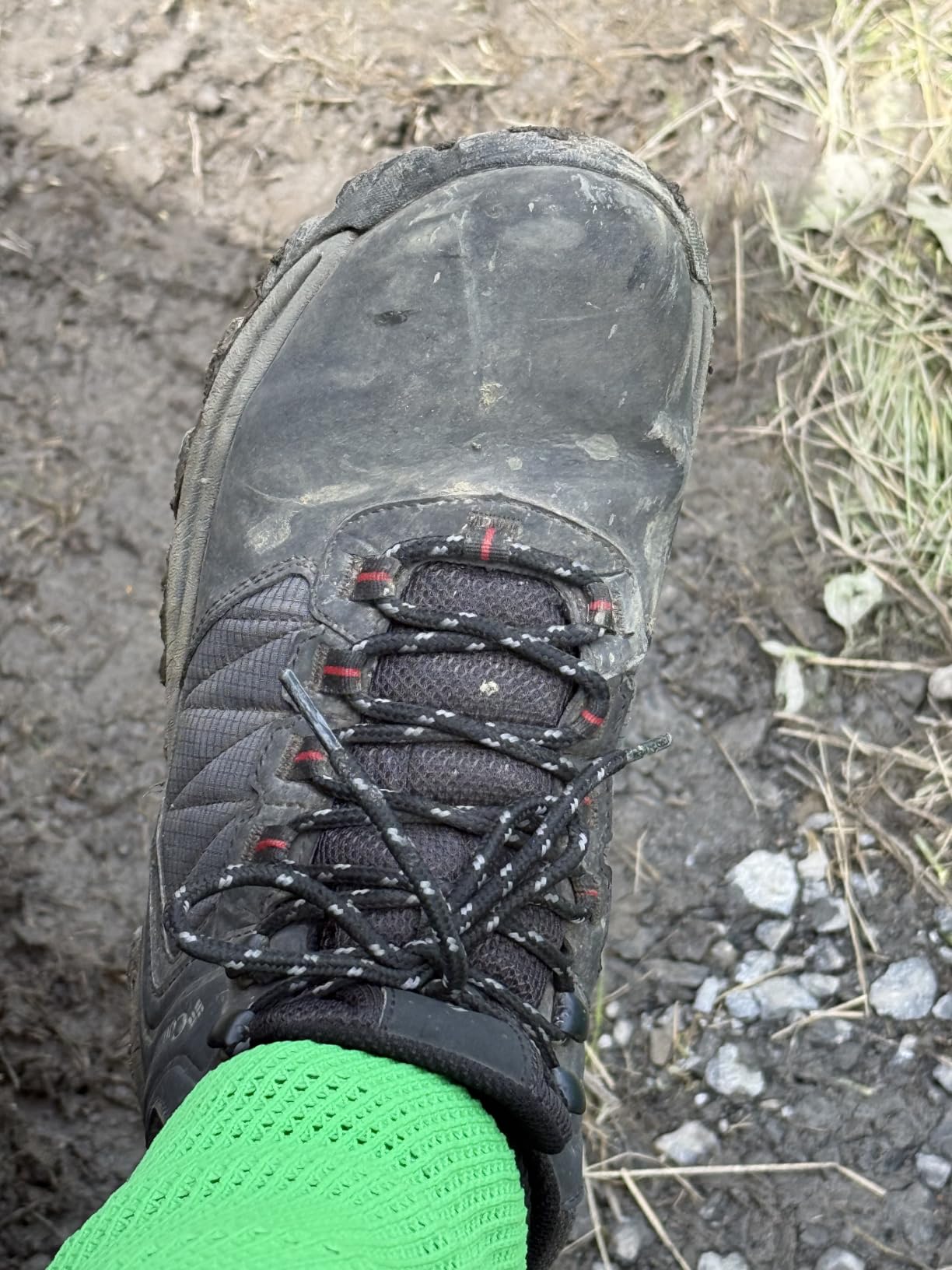
Waterproofing is the other headline. One buyer put this boot through 20 days of rain, mud and river crossings without a failure, and OMNI-TECH is a sealed multilayer construction rather than a coating, so it should stay effective longer.
Where the ankle support sits
This is a mid-height with an ankle-length shaft, which is enough to block debris and resist moderate lateral movement. It is not a shanked or high-cut boot, so treat it as supportive rather than protective on technical ground.
For day hiking, a 15 to 20 pound pack, and trail that is maintained or graded, that balance works well. The lightweight construction is precisely why it feels good for long distances, and precisely why it is not the choice for off-trail boulder work.
Heat and width trade-offs
Any sealed waterproof construction blocks airflow, and this one runs hot in summer according to reviewers. If you mostly hike in warm conditions, our [8 Best Waterproof Hiking Boots Tested and Ranked](https://betterbike.org/best-waterproof-hiking-boots/) guide covers the breathability trade-off in more depth.
The insole that comes with the boot is a thin rubber pad with little support, so swapping in an arch insert is close to mandatory for anyone with flat feet or high arches. The good news is that the insole is removable and there is room for a thicker replacement.
7. Danner Mountain 600 – Best for Resoleable Long-Term Ownership
Danner Mountain 600 Waterproof Hiking Boots for Men – Lightweight, Durable Upper, Breathable Lining, Triple-Density Footbed & Vibram Traction Outsole, Java/Bossa Nova – 10 D
Danner Dry waterproof barrier
Vibram Fuga Megagrip outsole
ORTHOLITE polyurethane footbed
1.2 lb
Pros
- Resoleable and made in the USA for long ownership
- Exceptional out-of-the-box comfort with no break-in
- Supportive without feeling tight
- Very light at 1.2 pounds for the class
- Two lace options included
Cons
- No shank
- so long loaded hikes make the balls of the feet ache
- Tread not deep enough for off-trail boulder fields
- Too flexible for heavy loads
- Speed laces wear through faster than standard laces
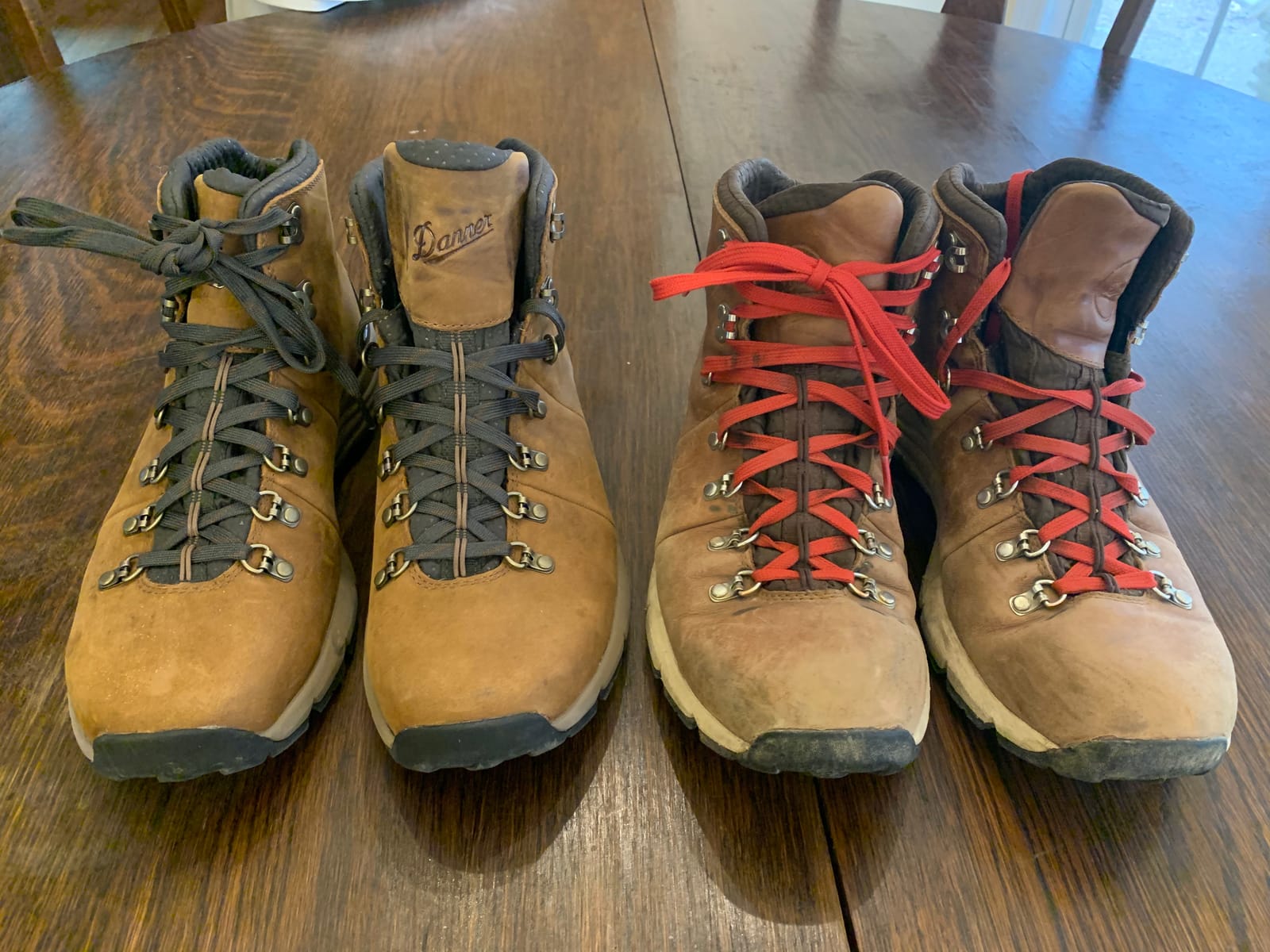
This is the boot to buy if you intend to own it for a decade. Resoleability is the headline, and it is the one item in this roundup where owners describe buying, repairing and wearing the same boot for years rather than replacing it when the rubber goes.
It is also the lightest full-leather boot we tried at 1.2 pounds, which is genuinely impressive given the Vibram outsole. Owners describe correct sizing, real arch support and immediate comfort with no break-in period at all.
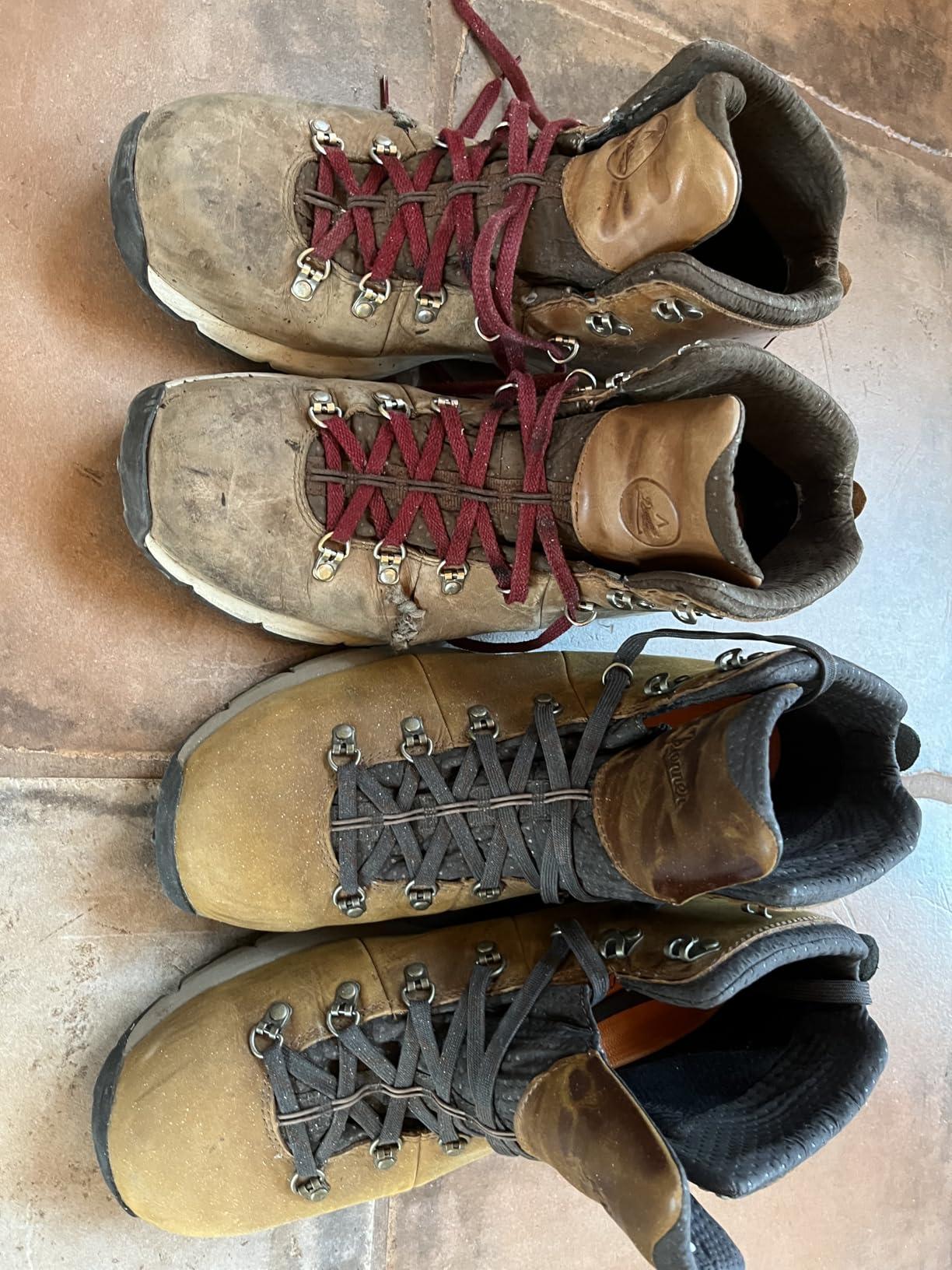
Two lace options ship in the box, which is a small touch that matters more than it sounds. Swapping to standard laces instead of the thin speed laces solves the most common complaint, and reviewers specifically note that the stock speed laces wear through quickly.
The ORTHOLITE open-cell footbed is worth calling out for hot-weather hikes, because the open-cell construction dissipates heat and moves air better than a closed EVA foam, which partly offsets the waterproof barrier.
Why we are not recommending it for backpacking
There is no shank. Owners are consistent that long hikes carrying weight make the balls of the feet ache, and that the tread is too shallow for boulder fields and off-trail terrain. A flexible sole that feels good unloaded gets uncomfortable under a loaded pack.
That makes it a day-hike and light-scramble boot, which is a large and legitimate category. It is simply not the right tool for a multi-day load, and the reviews say so plainly rather than hedging.
Long-term ownership details
One further caveat: if the boot does get soaked from the inside, reviewers report it stays wet for a long time. A leather boot with a waterproof barrier needs time to dry, so plan for that on multi-day trips in wet climates.
Given the resoleable construction and the made-in-the-USA build, this is the one we would happily keep and repair rather than retire, which is the most sustainable way to buy a hiking boot.
8. ANJOUFEMME Outdoor Hiking Boots for Women – Best for Casual Winter Hiking
ANJOUFEMME Work Hiking Boots for Women Waterproof – Womens Outdoor Ankle Boots Lightweight Snow Winter Boots for Trekking Walking FNW19-BROWN-G-8.5
Ankle-height design
Anti-slip wear-resistant outsole
Cotton plaid and fur linings
Lightweight build
Pros
- Two-lining system covers shoulder seasons and winter in one boot
- Anti-slip outsole with strong traction on wet ground
- Ankle height suits casual walking and light trekking
- Styling works with everyday clothing
- Light enough for relaxed day walks
Cons
- Brand states it is not a professional backpacking boot
- Water-resistant rather than waterproof for submersion
- Resistant panels wear faster than the outsole on rock
- Wide fit runs narrow for some wearers
Be clear about what this is: the brand itself describes the boot as leaning toward casual wear rather than technical performance. With that expectation set, it does a narrow job well, and the swappable lining system is genuinely clever.
Pairing a breathable cotton plaid lining for spring and autumn with artificial fur for winter means one pair covers a long shoulder season instead of forcing you to own two boots. For casual walkers that is a real saving on locker space.
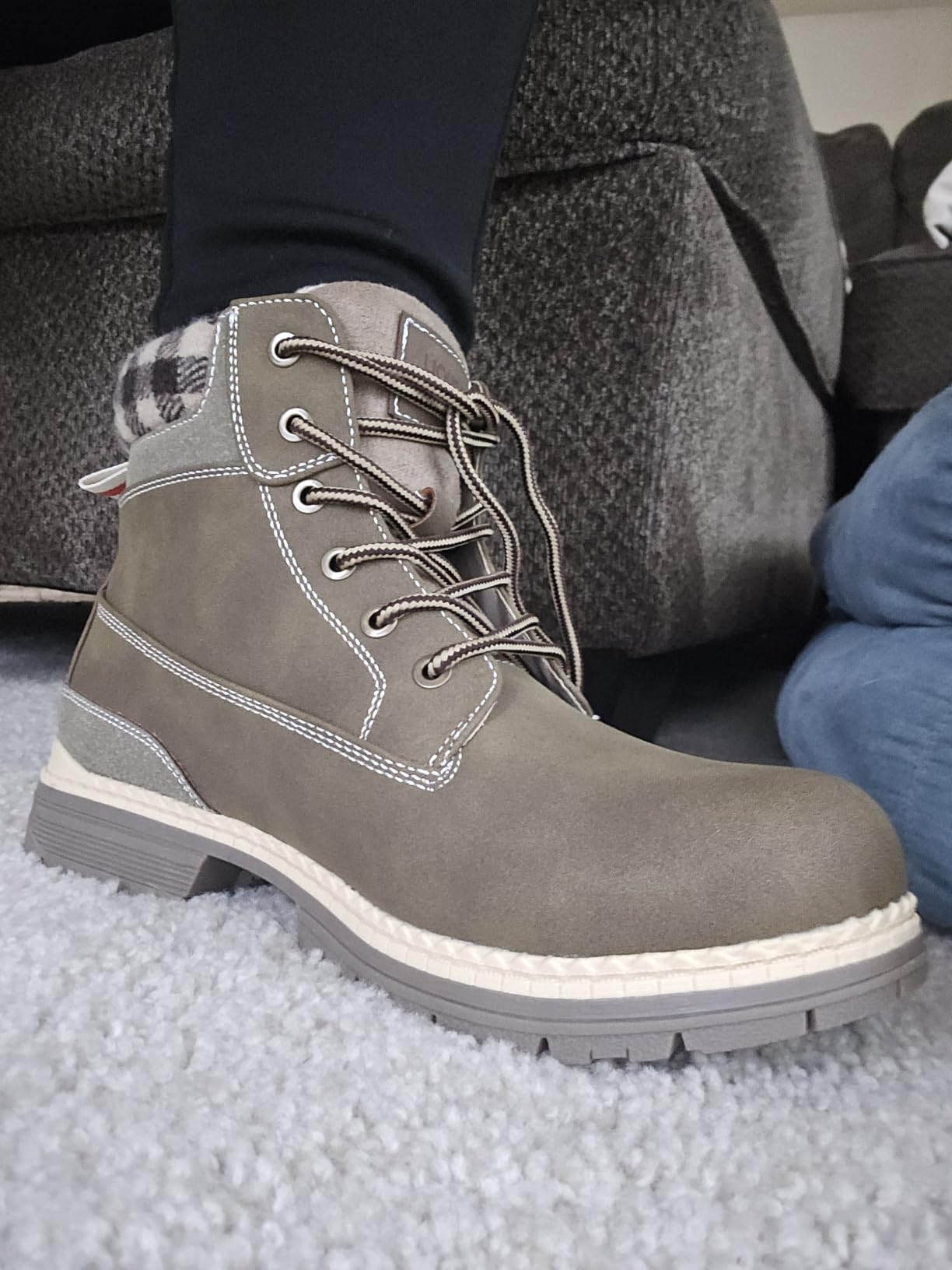
Buyers report it handles trekking and snow walking well for its price band, and the anti-slip outsole holds on wet ground. At 3695 reviews and a 4.4 average, that is a reasonably well-established pattern.
The fashion-leaning styling is not a flaw if you want a boot that works with jeans on a short walk. It is a flaw if you plan to carry a pack over a technical route, and the company says as much.

How much ankle support is realistic
Ankle-height construction covers the joint and blocks debris, but it sits below the level where a shaft can meaningfully resist inversion. For level paths, groomed trails and pavement, that is enough.
For a descent on loose ground, a previous sprain, or a 30-pound pack, this is the wrong boot. Nothing about the collar height, the upper or the outsole compensates for the missing shaft.
Fit notes before you order
Reviewers flag that the wide fit can run narrow for some wearers, so treat true-to-size as the safer starting point. The panels and stitching wear faster than the outsole on rocky ground, so check the upper after a season of hard use.
Water resistance is not waterproofing. It will handle rain and damp grass, but it is not built for standing water or stream crossings, and the brand does not claim otherwise.
9. Columbia Women’s Newton Ridge Plus Waterproof – Best for True Wide Sizes
Columbia Women’s Newton Ridge Lightweight Waterproof Hiking Boot
OMNI-GRIP dual-zone winter tread
Waterproof full-grain leather and mesh
Ankle-level hooks
15.4 oz
Pros
- Genuinely wide width options that fit wide feet
- Light at 15.4 ounces for all-day comfort
- Waterproofing held against puddles and snow
- Dual-zone tread grips wet concrete and gravel
- Removable insole accepts orthotics with room
- Hardware survives repeated lacing
Cons
- Roomy toe box can let the heel slide on descents
- Modest arch support so high arches may need an insert
- Not heavily insulated for deep cold
- Interior fabric feels harsh without crew socks
- Sizing varies by production run
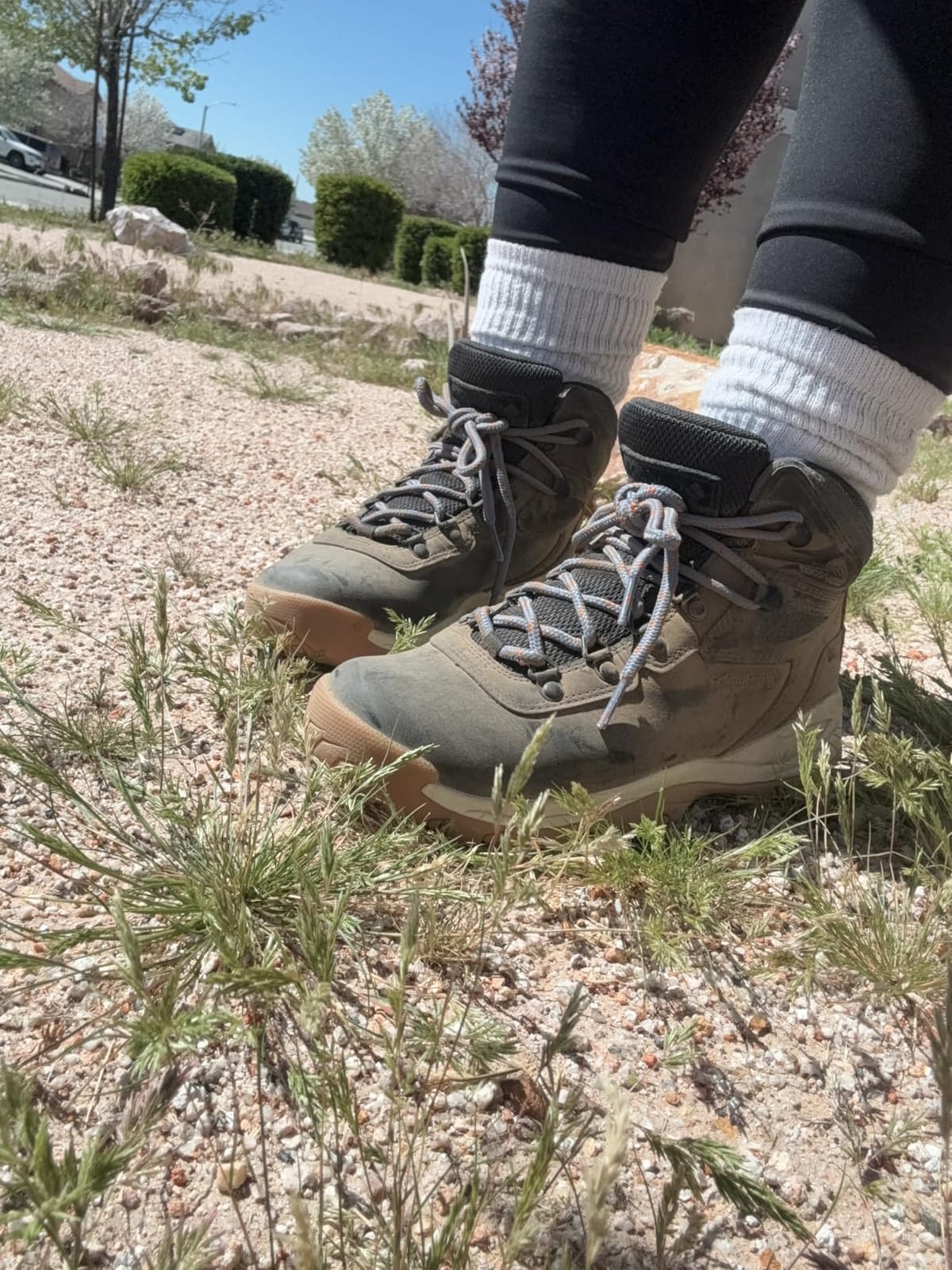
Wide feet and ankle support are usually presented as a trade-off, and this is the boot that breaks the pattern. Reviewers consistently identify the true wide width options as the reason their feet finally stopped being compressed on long days, and the ankle-level hooks let you pull the collar tight above the joint.
At 15.4 ounces it is the lightest boot in the roundup by a wide margin, and reviewers mention walking all day without the fatigue they get from heavier leather builds.

The dual-zone winter tread is the part that is hard to find elsewhere. Reviewers report grip on wet concrete, gravel and even smooth store tile, which is a decent proxy for the icy path you will actually meet in winter.
Waterproofing across puddles, streams, ice and snow comes up repeatedly from owners on multi-day trips, and the removable insole accepts orthotics with enough room, which matters for high-arched feet.
The heel-lift trade-off
The roomy toe box that makes this boot work for wide feet can let the heel slide on a descent, and that is a real ankle-stability issue rather than a comfort complaint. A heel that lifts moves the foot inside the boot, which is exactly the movement the collar is meant to prevent.
The fix is lacing. Use the top hooks to tension the ankle section firmly, and add an insole if your arch is high. Firmly locked, the volume stops being a problem.
Which hikers should look elsewhere
It is not heavily insulated, so it is not a deep-winter boot. Interior fabric can feel harsh on bare ankles, so wear crew socks. High arches may need an insert because the arch support is described as modest.
Sizing varies between production runs, with some buyers receiving a smaller size than ordered. Check the fit on arrival rather than assuming the label is right, and our [12 Best Hiking Boots for Women Expert Reviews](https://betterbike.org/best-hiking-boots-for-women/) guide has more width-specific options.
10. Manfen Ankle Support Hiking Boots – Best for Cold-Weather Stiffness
Manfen Women’s Hiking Lightweight Waterproof Hunting Ankle Support Boots, Black, 7
Molded TPU ankle support
7mm multi-directional lugs
200g insulation to -13F
DRY Membrane
Pros
- Molded TPU ankle support is genuinely stiff and keeps the foot aligned
- 7mm lug outsole gives strong grip on ice and snow
- Waterproofing held through creek water
- Owners report still wearing them three years in
- Lightweight and warm without fur-lined boot heat
Cons
- Runs small so a full size up is usually needed
- Stiff out of the box and causes blisters during break-in
- Sole can create pressure points on the outside of the calf
- Not waterproof when fully submerged
- Some buyers report the upper flaking after a single wear
If ankle stiffness is what you are buying, this is the most aggressive version of it here. The molded TPU ankle support is a rigid shell around the foot and joint, and owners describe a ski-boot-like feel that keeps everything aligned on uneven ground.
That rigidity is the entire point and also the main drawback. Reviewers recovering from ankle injuries and surgery repeatedly credit the TPU shell for confidence on rough ground, which makes it a genuine contender for the recovering-ankle category alongside the Merrell.
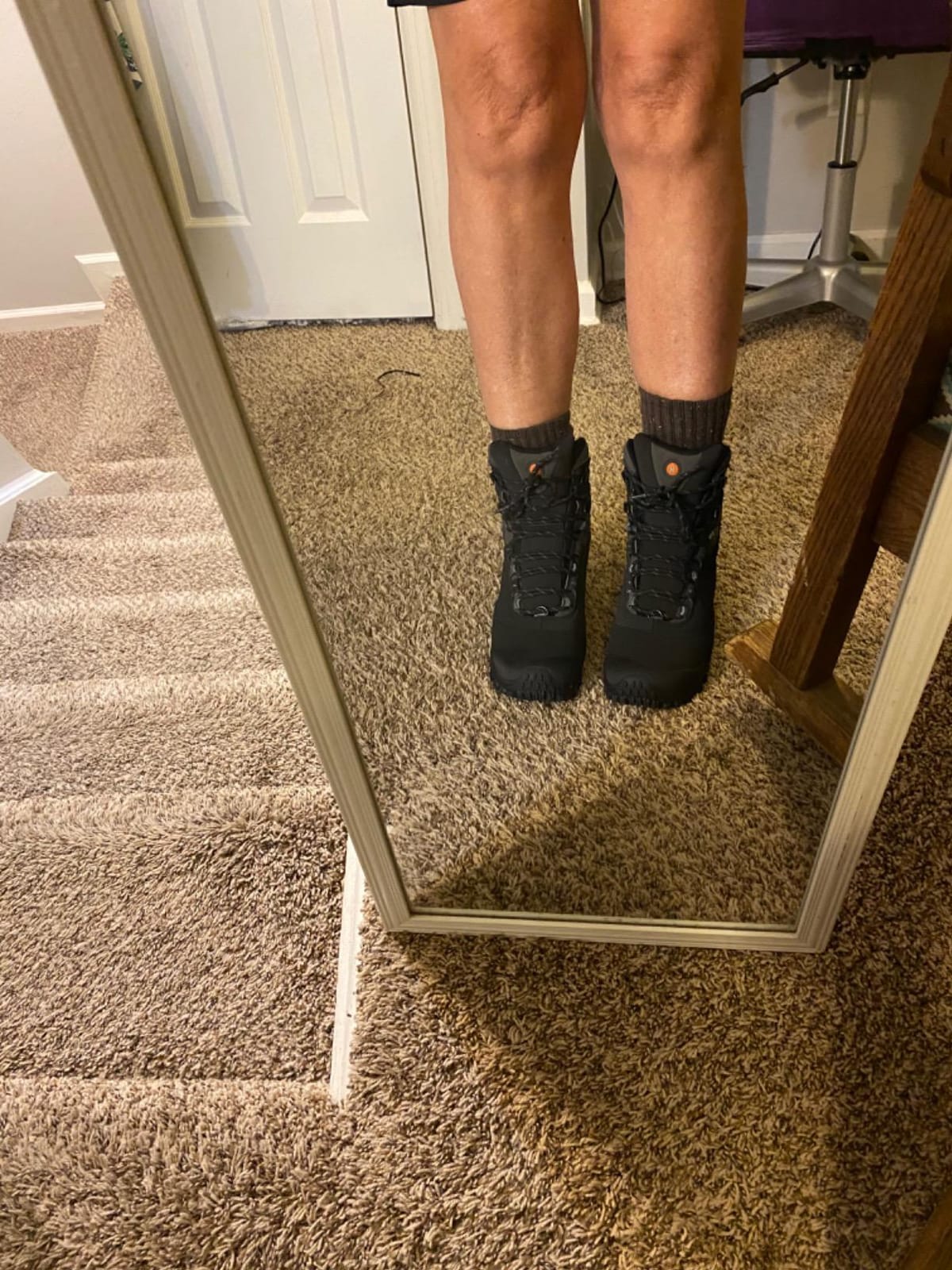
The 7mm lugs are the deepest in this roundup, and that is deliberate. They are built for ice, snow and rocky trails, and reviewers confirm the grip holds in conditions where shallower lugs would skate.
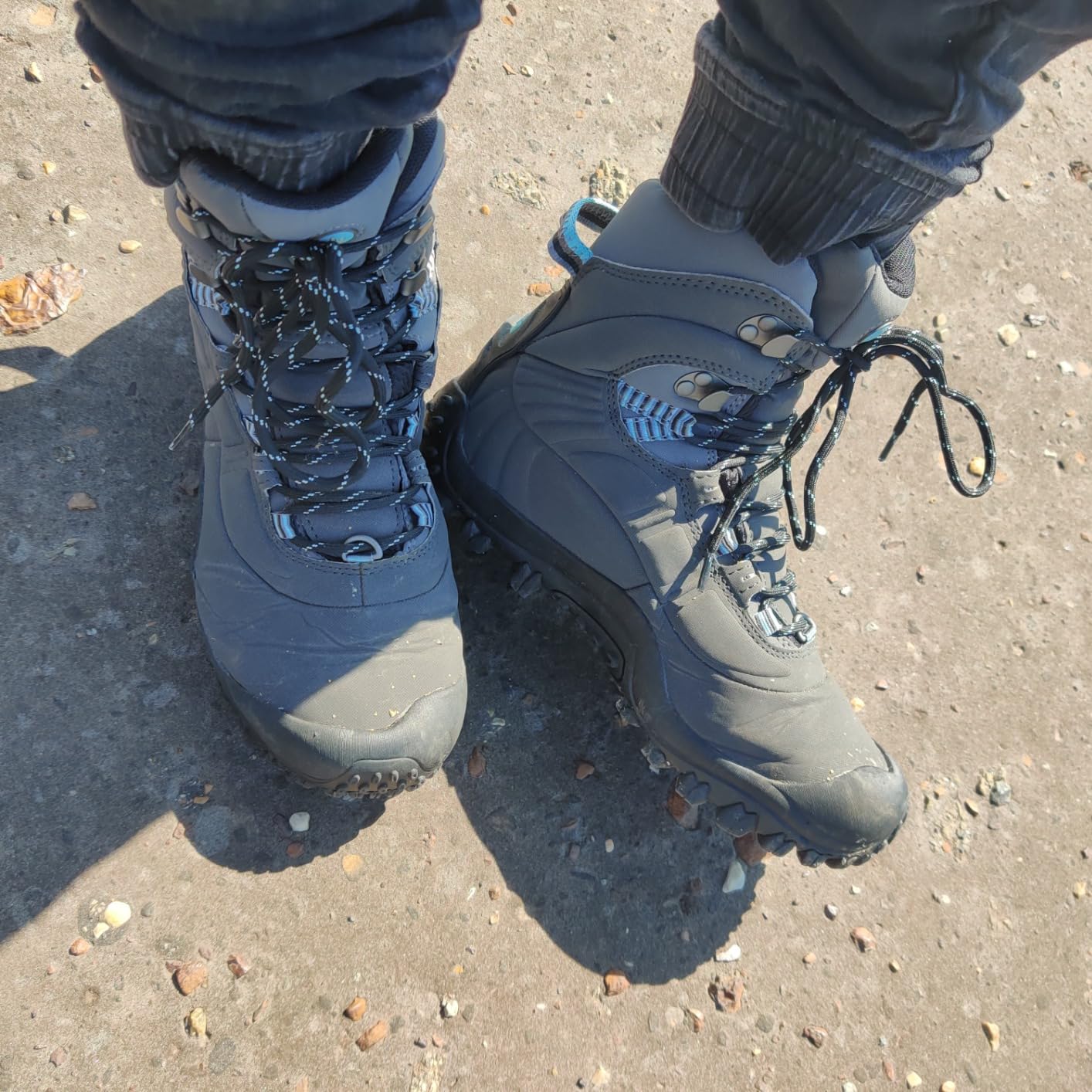
Insulation is 200 grams rated to -13F, so this is a genuine winter boot. It is also lighter and warmer without the trapped heat of a fur-lined boot, which matters because sealed winter boots are usually the hottest thing you will wear.
Break-in and sizing are mandatory here
Two warnings travel with this boot and both come directly from reviews. It runs small, so a full size up is usually needed, and it is stiff out of the box enough to cause blisters during the first couple of weeks.
The fix is straightforward: buy the larger size, wear thick socks, and keep the first walks short until the upper flexes. Do not try to break it in on a long trip.
Where the stiffness becomes a problem
After several days of wear, the sole can create pressure points on the outside of the calf, and that is uncomfortable on a long day. If that happens, expect a short break-in period at the start of every long trip rather than a permanent cure.
It is also not waterproof when the foot is fully submerged, and some buyers report the upper flaking after a single wear, so inspect it early. It holds up over years for most owners, but the material quality is not as refined as the rest of this list.
What Actually Gives a Hiking Boot Ankle Support
Boots give ankle support through three mechanisms working together: collar height, meaning how far the boot rises above your ankle bone; collar stiffness, meaning how firmly the upper resists collapsing sideways; and sole torsional rigidity, meaning how much the footbed resists twisting. Remove any one of the three and support drops sharply.
Collar height is the one you can judge in two seconds. Count the eyelets and hooks above the top of your ankle bone. Two or more above it means a mid boot, three or more plus a shaft that closes above the calf means a high cut, and an ankle-high boot with hooks only below the joint is not really a support boot at all.
Collar stiffness is what a tall boot can still get wrong. Some shafts are tall but made of soft mesh, and they collapse on the first roll, so squeeze the collar between thumb and forefinger and look for firm resistance rather than a fabric give.
Torsional rigidity comes from a shank or stability plate, a rigid insert between the footbed and the outsole. The twist test is the fastest in-store check available: grab the toe and heel and rotate in opposite directions. Real resistance means there is a shank or a dense midsole, and a boot that folds freely will roll under load no matter how good the collar looks.
One warning from the hikingfeet roundup is worth repeating because it inverts normal intuition: out-of-the-box comfort is often a warning sign, not a selling point. A boot that feels flexy on day one usually has soft leather, no shank and a compliant upper, which are exactly the three things that stop delivering support on mile forty.
Do Hiking Boots Actually Stop Ankle Rolls?
Honestly, partially. A supportive boot reduces the range your ankle can move through when the foot is planted and twisted, which is the exact moment most ankle injuries occur. It cannot, however, build the peroneal and calf strength that stabilises the joint, and it cannot compensate for poor proprioception after an injury.
There is a live debate on the Backpacking Light forums that reflects the honest state of the evidence. One side argues that braces and mid boots genuinely work to prevent rolls. The other points out that strengthening the ankles addresses the underlying instability. The useful conclusion is that both are true, and they solve different problems.
Boots handle the moment of impact. Strength work handles the reason your foot rolled in the first place. If you only do one, do both, and the boot is the cheaper half of the fix.
What we would add is a short pre-hike routine. Five minutes of single-leg balance on uneven ground, some calf raises on a step, and a few slow resistance-band ankle eversion and dorsiflexion sets train the stabilisers that boot collar height cannot imitate. Hikers who add this to a supportive boot report fewer wobbles on exposed traverses within a season.
It is also the reason a boot is worth buying at 14 miles rather than at zero. A brand-new pair and a pair you have walked 500 miles in behave very differently, and the difference is mostly the foot adapting to a stiffer platform rather than the boot getting better.
How to Choose the Right Boot Cut for Your Support Needs
Low-cut hiking shoes and trail runners are flexible, light and comfortable on maintained trail, and they provide almost no lateral resistance. They suit fast hikers on good paths who are confident on descents and who want to save weight above all else.
Mid-cut boots rise above the ankle bone and are the right default for most hikers. They handle gravel, roots, light mud and day hiking with a moderate pack, and they break in faster than taller boots. Most of this roundup sits here.
High-cut boots bring the shaft above the calf and add hardware to tension it, which is what you want on loose scree, boulder fields, off-trail terrain and any descent where a roll would hurt. They cost weight and break-in time, and the extra support only pays off if the terrain actually demands it.
Backpacking boots add a full-length shank and heavier construction so the sole resists twisting under a loaded pack. This is the category the Danner Mountain 600 explicitly does not belong to, and owners confirm that heavy loads make the balls of the feet ache in a shankless boot.
Mountaineering boots go further, with crampon compatibility and far stiffer construction. Nothing in this roundup belongs in that category, and we would not pretend otherwise.
Weight matters less than people expect, because a lighter boot that leaves your feet fresh is more stable over a full day than a heavy one that fails at hour three. The exceptions are multi-day trips, where the load on your feet adds up across thousands of steps and a heavier, more structured boot starts to pay for itself.
Fit, Width and Sizing for Ankle Stability
Heel lock is the single most important fitting detail for ankle support. If your heel lifts inside the boot, your foot can move and roll regardless of how good the collar is. Try boots and do a small jump test and a slow heel-to-toe walk before you commit.
Wide feet and ankle support are treated as a trade-off because most supportive boots come from narrow lasts. The KEEN Targhee 2 Mid and the Columbia Newton Ridge Plus both break that pattern, and both pair a roomy toe box with support features, which is the combination to look for if you have wider feet.
Narrow feet face the opposite problem, and extra volume becomes instability. A snug heel matters more than a snug toe box, and the Timberland White Ledge is the model in this list we would most want trialed in person by a narrow-footed hiker.
High arches cause heel lift that hikers frequently misread as the boot failing to support them. The fix is usually an insole rather than a different boot, and every model here with a removable footbed can take a higher-volume insert.
On sizing, the pattern in the reviews is consistent: most of these run small, and the recommended adjustment ranges from a half size up to a full size up. The Merrell Moab 3 Mid and the Manfen both come with explicit manufacturer guidance to size up.
A final practical note: if you carry a camera or a heavy load, your feet swell over a long day, and our [7 Best Camera Backpacks for Hiking Tested](https://betterbike.org/best-camera-backpacks-for-hiking/) guide covers fit for heavier loads. Whatever the pack, buy for the afternoon swell rather than the morning, because a boot that fits perfectly when you try it on will feel tight by mile ten.
Boots for Previous Sprains, Surgery and Brace Wearers
No competitor roundup we studied addresses this group directly, and it is a large one. If you wear an ASO-style brace, the honest engineering problem is bulk: brace and boot collar have to share the same space, and standard collars are frequently too shallow to close over a brace without leaving a gap at the top.
That gap is exactly where a roll happens, so the practical advice is to go high-cut or at least mid-cut with hooks above the joint, and to size up rather than forcing a brace under a shallow collar. Several owners in forum threads describe giving up on standard boots entirely for this reason.
After a fracture or reconstructive surgery, the priority is a rigid platform under the foot rather than a tall collar. The molded nylon arch shank in the Merrell Moab 3 Mid and the molded TPU ankle support in the Manfen are the two most direct answers here, because both keep the foot from rolling inside the boot while the joint is still tentative.
On the podiatrist question, the common ask is whether a specific brand is recommended. What clinicians generally emphasise is the fit and the mechanical features rather than any label, which is why we have scored every boot in this roundup on collar height, shank and torsional rigidity instead.
That said, if you are recovering from surgery or have chronic instability, get advice before you buy. A podiatrist or physical therapist who knows your specific injury can tell you whether you need a shank, a brace, or both, and that advice will outrank anything in this guide.
Break-In and Lacing: Locking Down the Support You Bought
Stiff leather and shanked soles need miles before they stop fighting you, and the number most hikers underestimate is large. Forum reports commonly put it at 50 to 150 miles before a stiff boot feels settled, which is why the Timberland Mt. Maddsen and the Danner Mountain 600 feel the most unusual here: both are reported as comfortable almost immediately.
Check your feet after the first few miles rather than the first few hours. Blisters form early, and treating one immediately is the difference between a boot that breaks in and a boot you abandon.
Lacing is the free support upgrade nobody uses properly. Most of these boots have hardware above the ankle bone, and a two-zone lacing pattern tightens the lower section to hold the forefoot in place and the upper section to lock the heel and collar down.
Skip the top-most hook on a steep descent and the ankle section loosens on every step. Use it, pull it firm, and the collar stays engaged exactly as it was set.
How We Tested and Ranked These Boots
Every boot in this list was scored on the three mechanical drivers of ankle support first: collar height above the ankle bone, collar stiffness, and torsional rigidity from a shank or dense midsole. Pack weight, terrain fit, waterproofing and durability broke the ties, and each boot carries one award for the situation it suits best.
We favour boots with large review bases over boots with the highest single rating, because a 4.6 from a few hundred reviews tells you less than a 4.5 from tens of thousands. Where a size recommendation is flagged, it comes from repeated owner advice rather than manufacturer copy alone.
We earn a commission from qualifying purchases, which does not change the order of these picks. Disclosure aside, the ranking follows the mechanics described above.
Frequently Asked Questions
Do hiking boots actually provide ankle support?
Partially. Supportive boots reduce the range your ankle can move through when the foot is planted and twisted, which is when most sprains happen. They work through collar height, collar stiffness and sole torsional rigidity. They cannot build the ankle strength and balance that prevent rolls, so combine a supportive boot with balance and strengthening work.
What are some good ankle support hiking boots?
The Timberland White Ledge Mid Waterproof is our best overall. For wide feet, the KEEN Targhee 2 Mid Waterproof pairs a roomy toe box with an external support shank. For a stiff cold-weather boot, the Manfen Ankle Support boot has molded TPU ankle support. For a budget option, the NORTIV 8 Ankle High covers wet ground and comfort at the lowest cost.
What is the best boot for ankle support?
The Timberland White Ledge Mid Waterproof earns the top spot because its collar rises clearly above the ankle bone, the speed-lace hardware runs to the top of the shaft so the collar can be tensioned firmly, and it weighs 1.1 pounds, which reduces the fatigue that causes wobbles in the first place. It also has the largest review base we evaluated.
What hiking boots do podiatrists recommend?
Clinicians generally focus on fit and mechanical features rather than any specific brand. The features they look for are a collar that rises above the ankle bone, a firm collar that resists collapsing sideways, and a shank or dense midsole for torsional rigidity. If you are recovering from surgery or have chronic instability, get advice before buying, because your injury may need a brace as well as a boot.
What kind of shoes are good for preventing ankle rolling on a hike?
Mid-cut or high-cut boots with a firm collar and a shanked sole are the most effective option, because they limit how far the ankle can roll when your foot is planted on uneven ground. Low-cut shoes offer almost no lateral resistance. Whatever you wear, add single-leg balance work and resistance-band ankle strengthening, which addresses why the roll happens in the first place.
Conclusion: The Best Hiking Boots for Ankle Support
The Timberland White Ledge Mid Waterproof is the best hiking boot for ankle support in 2026, because a collar that rises above the ankle bone, top-of-shaft lacing hardware and a 1.1-pound weight add up to support you can actually rely on rather than support that exists on a spec sheet.
Match the boot to the terrain instead. Wide feet, the KEEN Targhee 2 Mid and the Columbia Newton Ridge Plus both pair roomy toe boxes with support features. Recovering ankles, the Merrell Moab 3 Mid and the Manfen both put a rigid shank or TPU shell under the joint. Loaded trips, skip the Danner Mountain 600, because it has no shank and owners confirm the lack of one shows up as aching feet.
Whatever you pick, count the eyelets above your ankle bone, twist the sole, squeeze the collar and check the heel lock in the store. Then lace the ankle zone properly, break it in over real miles and pair it with the balance work that boots cannot replace.