
I rode through three winters in Scotland before I understood the real difference between wet lube and dry lube. My chain kept squeaking by January. Switching lubes mid-season would have saved me a cassette. After 2026, that lesson matters more than ever as riders face wetter falls and dustier summers.
This guide breaks down wet lube vs dry lube so you stop guessing and start riding. I cover what each formula actually is, where it shines, and where it falls short. You will also get a seasonal switch plan I built from real forum experiences across Reddit and Cycling UK.
Table of Contents
Wet Lube vs Dry Lube: Quick Answer
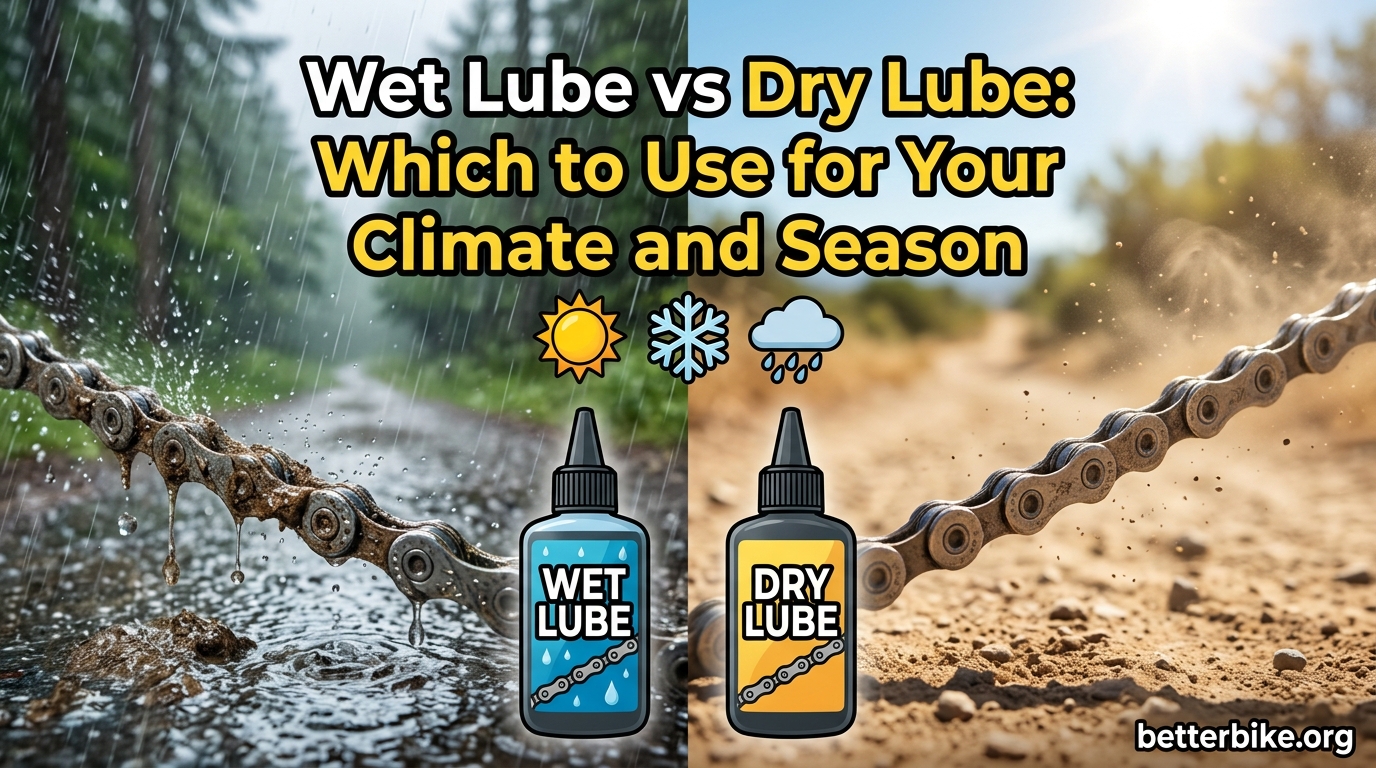
Wet lube is an oil-based chain lubricant designed for rain, mud, and winter riding. It resists water wash-off and protects against rust. Dry lube is a lighter formula (often PTFE or wax-based) that dries to a clean film. It works best in dry, dusty conditions where wet lube would attract too much grime.
If you ride mostly in wet weather, choose wet lube. If you ride mostly in dry weather, choose dry lube. If you ride year-round in mixed conditions, you need both.
What is Wet Bike Chain Lube?
Wet bike chain lube is a thicker, oil-based lubricant engineered to stay on the chain in wet conditions. Most formulas start with a petroleum or synthetic base oil. Manufacturers add tackifiers and friction modifiers to help the lube cling to metal surfaces even when rain hits them.
The defining feature of wet lube is film strength. It creates a durable layer between chain pins, plates, and rollers. This layer keeps working through puddles, mud, and snow. Water beads off instead of stripping the lube away.
Wet lubes also tend to include corrosion inhibitors. These additives help wet lube prevent rust and corrosion on stored bikes during long, damp winters. Most wet lubes last 100 to 200 miles per application, depending on conditions.
What is Dry Bike Chain Lube?
Dry bike chain lube starts as a liquid but dries to a waxy or PTFE-based film on the chain. The carrier solvent evaporates after application. What stays behind is a thin, non-sticky coating that reduces friction without grabbing dust.
Most dry lubes use either PTFE powder (Teflon) or a wax suspension. The film they leave is much thinner than wet lube. It does not repel water the same way. Instead, dry lube keeps the chain clean in dry conditions by not offering a sticky surface for grit to bind to.
The trade-off is durability. A typical dry lube application lasts 50 to 100 miles before reapplication. Some premium wax formulas go longer, but they require stricter cleaning routines.
Wet Lube: Pros and Cons
Wet lube has clear strengths in wet weather. It also has drawbacks that frustrate riders in dry climates.
Wet Lube Advantages
- Water resistance: Stays on the chain through rain, puddles, and stream crossings.
- Long reapplication intervals: One application can last several long rides.
- Rust protection: Acts as a barrier against moisture on metal components.
- Smooth shifting in winter: Keeps the drivetrain quiet and efficient when cold sets in.
- Better for off-road: Handles mud, grit, and wet trail conditions.
Wet Lube Disadvantages
- Attracts dirt and dust: The sticky formula grabs grit on dry roads.
- Buildup on chain: Creates a black paste over time without regular cleaning.
- Messy application: Can fling onto rims or frame if over-applied.
- Heavier feel: Some riders notice a slight drag increase in dry conditions.
Dry Lube: Pros and Cons
Dry lube shines in dry, dusty conditions. It also has limits that catch riders out in wet weather.
Dry Lube Advantages
- Keeps chain clean: Dry film does not attract airborne dust the way wet lube does.
- No fling-off: Stays where you put it, even on rough terrain.
- Quieter drivetrain in summer: Reduces the grinding feel of dry, dirty chains.
- Better for road cycling: Matches the demands of fast, dry rides.
- Easy to apply: No sticky mess on hands or frame.
Dry Lube Disadvantages
- Washes off in rain: A single wet ride can strip dry lube completely.
- Frequent reapplication: Needs topping up every 50 to 100 miles in normal use.
- No rust protection: Cannot shield the chain during long wet storage.
- Drivetrain wear risk: If reapplied inconsistently, dry lube can wear chains fast. Some Reddit users report chains wearing out in under 1000 miles.
When to Use Wet Lube (Wet Weather, Winter, Muddy Conditions)
Wet lube is the right choice when water is part of your ride. That includes rain, snow, sleet, puddles, mud, and wet leaves.
I switch to wet lube every October and stay with it through April. The cold and damp months in northern regions kill dry lube within one ride. Wet lube holds up across week-long stretches of drizzle.
Best Conditions for Wet Lube
- Rainy season riding: Wet lube resists wash-off in heavy rain.
- Winter commuting: Salt, slush, and road spray need a tough film.
- Mountain biking in mud: Trails through wet dirt demand lasting protection.
- Gravel and adventure rides: Mixed terrain with water crossings benefits from wet lube.
- Coastal or humid climates: Year-round moisture favors wet lube in places like the UK Pacific Northwest, or coastal Australia.
For commuters in wet regions (UK, Denmark, the Pacific Northwest), wet lube is the practical default. Forums on Cycling UK show most year-round riders there lean wet for daily reliability.
When to Use Dry Lube (Dry Weather, Summer, Dusty Conditions)
Dry lube is built for sun, dust, and dry trails. It is the right pick when water is rare and grit is the bigger enemy.
I switch back to dry lube every May. The dry California summers punish wet lube by turning the chain into a black paste within weeks. Dry lube stays clean and quiet.
Best Conditions for Dry Lube
- Hot, dry summers: Dry lube does not attract dust on arid roads.
- Road cycling: Long paved rides in dry weather reward the clean film.
- Dry climate cycling: Riders in desert regions or Mediterranean summers benefit most.
- Race day prep: Mechanics often choose dry lube for events in dry conditions.
- Clean workshop environments: Indoor trainers and clean roads favor dry lube.
Riders in places like inland Australia, the US Southwest, or southern Spain tend to prefer dry lube year-round. Humidity stays low, and rain is rare.
How to Apply Chain Lube Correctly
Applying lube the right way matters as much as picking the right type. The wrong technique wastes product and shortens chain life. Here is the method I use and recommend to friends.
Step-by-Step Chain Lube Application
- Clean the chain first: Wipe off old lube and grime with a rag. Use a degreaser for heavy buildup. You should always clean your chain properly before applying lube to avoid trapping grit under the new film.
- Position the bottle: Hold the lube bottle above the lower run of chain, near where it meets the rear derailleur.
- Apply one drop per link: Pedal backward slowly while squeezing the bottle. One full drop per link is enough.
- Let it sit: Wait 3 to 5 minutes so the lube can penetrate pins and rollers. Dry lubes need longer to let the carrier solvent evaporate.
- Wipe off excess: Hold a clean rag around the chain and backpedal 10 revolutions. This step is critical. Excess lube attracts dirt and grime.
- Reapply frequency: Add more lube every 100 to 150 miles for wet lube, every 50 to 100 miles for dry lube.
Common Application Mistakes
- Too much lube: Flooding the chain leads to mess and dirt buildup.
- Skipping the wipe-off: Leaves a sticky film that traps road grit.
- Applying over dirty chain: Old grime mixes with new lube and forms grinding paste.
- Using the wrong lube for the season: Switching too late in fall or too early in spring causes premature wear.
Seasonal Transition Guide: Switching Between Wet and Dry Lube
Most cyclists ride across multiple seasons. The trick is timing your switch and cleaning the chain between lubes. Here is a simple plan based on what works for me and other riders in cycling forums.
Spring Transition (Dry to Wet)
Switch to wet lube when forecasts show more than 2 to 3 rain days per week. Clean the chain fully with degreaser before the switch. Any leftover dry lube mixed with new wet lube creates a gummy film.
For most UK and northern US riders, this transition lands in mid to late September or early October. Southern hemisphere riders (Australia, New Zealand) flip the calendar and switch in March or April.
Fall Transition (Wet to Dry)
Switch back to dry lube when rain becomes rare and dust returns. Degrease the chain again before applying dry lube. Trapped wet lube under dry lube causes early failure.
For most northern hemisphere riders, the switch happens in late April or May. Australian and New Zealand riders typically switch in September or October.
Year-Round Riding in Mixed Climates
If you ride in a place where one week is dry and the next is wet, you need both lubes. Many experienced cyclists recommend having both on hand and switching based on the week ahead.
A Reddit user in England described applying dry lube more often in wet weather instead of running wet lube year-round. The trick is short reapplication cycles. Apply dry lube the night before a wet ride and again right after. That pattern works if you clean and lube weekly.
For long trips, always carry the right chain lube for bikepacking conditions in your bag. Weather can shift fast on multi-day rides.
Wet Lube vs Dry Lube Comparison
This table gives you the side-by-side view at a glance. Use it to pick the right lube for your next ride.
- Best for weather: Wet lube wins rain and mud. Dry lube wins dry and dusty.
- Reapplication frequency: Wet lube lasts 100 to 200 miles. Dry lube lasts 50 to 100 miles.
- Dirt attraction: Wet lube attracts more. Dry lube attracts less.
- Rust protection: Wet lube protects. Dry lube offers none.
- Noise level: Both run quiet when fresh. Wet lube stays quieter in rain.
- Cleanup difficulty: Wet lube needs degreaser. Dry lube wipes off easily.
- Cost over time: Dry lube uses more product per mile. Wet lube uses less but attracts dirt that wears drivetrains faster.
Common Mistakes to Avoid
Avoid these errors to keep your chain and wallet healthy. Most chain damage I see comes from skipping basics, not bad luck.
- Mixing lubes without cleaning: Always degrease between lube types.
- Waiting too long to reapply: A dry, unlubricated chain wears in days.
- Ignoring weather changes: Riding dry lube in winter ruins chains fast.
- Skipping the wipe-off step: Excess lube is the main cause of black chain paste.
- Using motor oil or WD-40 as chain lube: Both wash off too fast and damage seals.
FAQ About Wet Lube vs Dry Lube
Can I use dry lube in winter?
Dry lube is not recommended for winter or wet conditions because it washes off easily and leaves your chain unprotected. The carrier solvent evaporates within minutes, and any rain, slush, or road spray strips the remaining film. Use wet lube instead for winter riding. If you must use dry lube in winter, expect to reapply after every ride.
Which chain lube is best for rainy season?
Wet lube is the best chain lube for rainy season riding. Look for a thick, water-resistant formula with strong film strength and corrosion inhibitors. Wet lube clings to chain links through heavy rain, puddles, and muddy roads. Most wet lubes last 100 to 200 miles per application, even in constant wet conditions.
What is the best bike chain lubricant for dry climate?
Dry lube or wax-based lubricants are the best chain lubricants for dry climates because they attract less dirt and dust. A dry film does not grab airborne grit the way oil-based wet lubes do. This keeps your chain cleaner between rides and reduces premature wear from grinding paste forming on the links.
Can I use wet chain lube in dry conditions?
Yes, wet lube works in dry conditions but may attract excess dirt and dust. The sticky oil film grabs airborne grit on dry roads, which can form a black paste on the chain. If you use wet lube in dry weather, clean your chain more frequently to prevent buildup. Most riders switch to dry lube for summer to avoid the extra cleaning.
Final Thoughts on Wet Lube vs Dry Lube
Choosing between wet lube vs dry lube comes down to your climate, season, and how often you ride. Wet lube wins in rain, mud, and winter. Dry lube wins in dry, dusty, hot conditions. Most year-round cyclists end up using both, switching as the seasons change.
The right lube extends chain life, keeps shifting smooth, and saves you money on cassettes and chainrings. The wrong lube does the opposite. Match your lube to your conditions, clean your chain before every application, and wipe off the excess.
For 2026, take a fresh look at your chain care routine. If you have not switched lubes in a while, your drivetrain might be telling you it is time.