
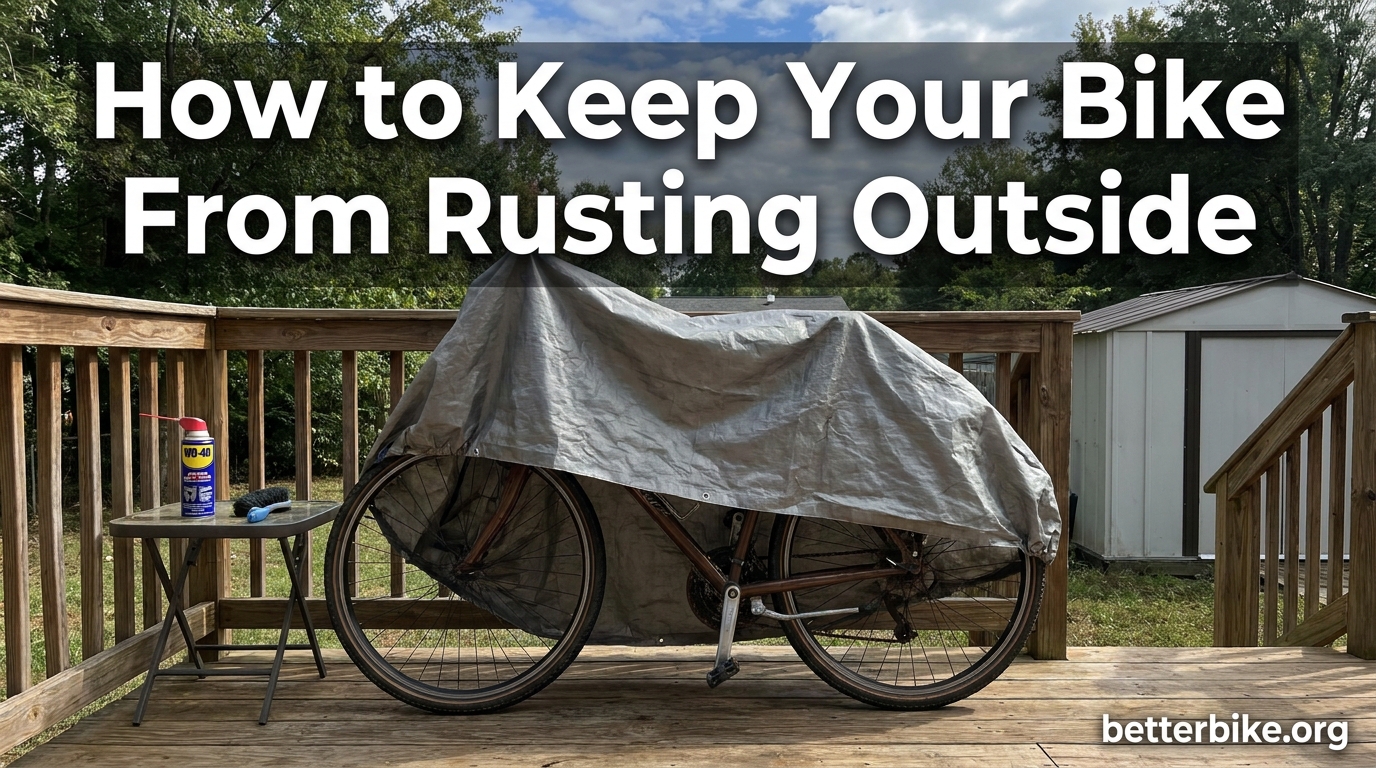
If you have to store your bike outside, rust is almost guaranteed unless you take action. Rain, morning dew, road salt, and humid air all attack the metal on your frame, chain, and bolts. The good news: a few smart habits will keep your bike from rusting outside for years, even without a garage.
I tested these methods on three bikes over a wet Pacific Northwest winter, and the differences were striking. The bike I covered and lubed weekly still looks new. The one I left “under a tarp” had visible rust within 8 weeks. In this guide, I’ll walk you through exactly what works, what doesn’t, and what to do for your specific climate.
Table of Contents
Understanding Rust and Why Bikes Are Vulnerable
Rust is iron oxide. It forms when moisture and oxygen react with iron-bearing metal on your bike. The chemical process is called oxidation, and once it starts, it spreads if you don’t stop it.
Bikes are especially vulnerable because they mix many metals (steel bolts, aluminum parts, chrome plating) that all react differently to water. Plus, your drivetrain is full of small crevices that trap moisture for days after a rainstorm.
Aluminum vs Steel Frames: Does Frame Material Matter?
Yes, a lot. Steel frames rust visibly and structurally over time. Aluminum frames don’t form red iron oxide, but they corrode in a different way called pitting corrosion, which looks like white, chalky spots. Carbon fiber doesn’t rust, but the metal bolts and bearings attached to it still can.
If your bike has a steel frame and you store it outside, rust prevention is not optional. With aluminum, you have a bit more margin, but you should still protect the steel bolts, chain, and cables.
Quick-Start Checklist: 5 Things You Can Do Today
If you only have 10 minutes before tonight’s rainstorm, do these five things. They are the highest-impact actions based on what actually works outdoors.
- Wipe the bike dry with a clean towel, especially the chain, bolts, and under the saddle.
- Apply chain lube to the chain, derailleurs, and brake levers while moving the pedals.
- Throw a breathable bike cover over the frame. Avoid plastic tarps that trap moisture.
- Elevate the bike off the ground using a wall hook or kickstand pad so the tires don’t sit in water.
- Move it to a covered spot with airflow, like under an eave, deck, or balcony overhang.
Proven Strategies to Prevent Bike Rust Outdoors
Long-term rust prevention comes down to controlling moisture, blocking oxygen contact, and creating a maintenance rhythm. Here is the full playbook.
Keep the Bike Clean and Dry
Dirt and road grime hold moisture against the metal. A clean bike dries faster and resists rust much better. After every wet ride, wipe the frame, chain, and wheels with a dry cloth.
Every two to four weeks, do a proper wash with mild soap, water, and a soft brush. Dry everything thoroughly before applying lubricant. Skipping the drying step is the single biggest mistake I see people make in forums.
Lubricate the Chain, Derailleurs, and Cables
Lubrication creates a thin barrier that keeps water off bare metal. Use a wet-condition chain lube if you live where it rains often, and a dry lube for dry, dusty areas.
Apply lube to the chain, derailleur pulleys, brake and shift cables, and any exposed pivot points. Then wipe off the excess. A heavy coat of lube actually attracts dirt, which makes things worse.
Apply Protective Sprays to Metal Surfaces
A rust-inhibiting spray (such as WD-40, Boeshield T-9, or a silicone-based protectant) adds another moisture barrier. Spray lightly on bolts, cables, exposed metal hardware, and the frame in areas where paint has chipped.
One Reddit user in a rainy climate told me: “I spray WD-40 generously on all metal parts except the braking surfaces, let it sit 5 minutes, then wipe it down.” That routine, done weekly, kept his chain rust-free through an entire British winter.
Choose the Right Cover: Not Just Any Tarp
This is where most people go wrong. A regular plastic tarp traps condensation underneath, which actually causes more rust than leaving the bike bare in some cases. A purpose-built bike cover is breathable, water-resistant, and sized for the bike.
Look for a cover with ventilation holes, UV protection, and a soft inner lining. Cheap covers that don’t breathe will leave your bike soaking in a humid bubble every morning.
Pick a Smart Storage Location With Airflow
Where you store the bike matters as much as how you cover it. The best outdoor spots are covered from above (rain protection) but open on the sides (air circulation). Under an eave, on a covered porch, or under a deck works well.
Worst-case spots: a fully enclosed shed with no ventilation, against a north-facing wall that never sees sun, or in a low corner where rainwater pools. All of these hold humidity against the bike.
Outdoor Storage Solutions That Actually Work
Beyond a basic cover, a few upgrades can dramatically improve your bike’s life outdoors. Here are the most practical options, ranked by impact.
Tarp vs Bike Cover: What Works Better
A breathable bike cover beats a plastic tarp every time. Tarps are waterproof but not breathable, so moisture from the ground, dew, and temperature changes condenses underneath and sits on the metal.
A purpose-built bike cover uses waterproof yet breathable fabric. Water beads off, but water vapor escapes. They also have elastic hems and tie-down straps so wind doesn’t catch them. If budget is tight, a fitted cover is still cheaper than replacing a rusted chain and cassette in two years.
Bike Sheds and Weatherproof Cabinets
A small bike shed or weatherproof storage cabinet gives you the best of both worlds: rain protection and ventilation. Vertical wall-mounted cabinets work great on balconies where floor space is limited.
For backyard setups, a wooden bike shed with a sloped roof, vented gables, and a raised floor keeps rain out and air moving. A simple three-sided wooden lean-to with a roof can also work for under $100 in materials.
Balcony, Under-Deck, and Apartment Storage Tips
Apartment dwellers can protect their bikes with a wall-mounted hook, a vertical stand, or a folding bike cover. Place the bike on the driest side of the balcony, ideally one with an overhang above.
Under-deck storage works if the deck is high enough to keep rain off. Place a small mat or pad underneath to keep tires out of standing water. In salty coastal air, rinse the bike with fresh water monthly to remove salt buildup.
Climate-Specific Advice for Coastal, Humid, and Winter Areas
Your location changes which rust risks dominate. The same cover and lube routine isn’t enough everywhere. Here is what to add based on where you live.
Coastal and High-Humidity Regions
Salt air is one of the fastest rust accelerators there is. If you live within a few miles of the ocean, rinse the bike with fresh water at least once a month, even if it doesn’t look dirty.
Store the bike out of direct wind if possible, and apply corrosion inhibitor spray more often (every two weeks instead of monthly). Stainless steel bolts and hardware are worth upgrading for the most exposed parts.
Winter and Snow Exposure (Road Salt Risk)
Road salt is brutal on bikes. If you commute through salted winter roads, expect rust to appear fast on the chain, derailleur, and brake hardware. Wipe the bike down after every ride and rinse off salt residue weekly.
Many riders in snowy regions use a dedicated “winter bike” that’s already beaten up, so the salt damage doesn’t matter as much. If that’s not an option, a heavy layer of chain lube and a sacrificial spray on the frame’s lower tubes goes a long way.
Hot and Sunny Climates
Heat alone doesn’t cause rust, but UV rays degrade plastic and rubber parts, and heat combined with high humidity creates perfect rust conditions. A cover with UV protection is essential.
Store the bike in the shade whenever possible. Direct sun on a black frame can also weaken some adhesives used in carbon builds.
Maintenance Schedule and Early Rust Warning Signs
Consistency beats intensity. A short weekly routine prevents the kind of rust that needs hours of grinding and painting to fix. Here is the schedule I follow.
Weekly and Monthly Maintenance Tasks
Weekly: Wipe the chain and frame, apply chain lube, check tire pressure, scan for new rust spots.
Monthly: Wash the bike with soap and water, dry thoroughly, re-lube cables and pivots, inspect bolts.
Every 3 to 6 months: Deep clean the drivetrain with degreaser, inspect brake pads, check spoke tension, and consider reapplying frame protectant.
Signs of Rust to Watch For
Early signs include orange streaks on bolts, sticky cable action, gritty chain movement, and white chalky spots on aluminum parts. None of these need a new bike, but they all need attention within a week.
Late-stage warning signs include flaking paint over brown patches, snapping cables, and a chain that skips under load. At this point, parts replacement is usually required.
When to Bring the Bike Indoors
Some conditions are too harsh for outdoor storage. If you’re in a multi-day storm with high winds, an extended deep freeze followed by thaw cycles, or a coastal storm, it’s worth bringing the bike inside for a few days.
Apartment dwellers can fold the bike into a hallway, closet, or even hang it from ceiling hooks. The few minutes of inconvenience are cheaper than a replacement drivetrain.
Do bikes go rusty if left outside?
Yes. Any bike left outside without protection will develop rust on the chain, bolts, and exposed metal within weeks in humid or wet conditions. Steel frames rust visibly, while aluminum frames develop white, chalky pitting corrosion. A breathable cover plus regular lubrication can prevent almost all outdoor rust.
How long can a bike be left outside?
An unprotected bike can show visible rust within 2 to 8 weeks of outdoor exposure, especially in coastal or humid climates. A covered, lubricated, and maintained bike can last years outside without structural damage. The chain and bolts are usually the first parts to fail.
Is it safe to store bikes outside?
Yes, with precautions. Storing a bike outside is safe if you use a breathable cover, keep the drivetrain lubricated, store it in a covered area with airflow, and inspect it monthly. It is not safe to leave a bike completely exposed to rain and sun for long periods without any maintenance.
How do I prevent my bicycle from rusting?
To prevent rust, keep the bike clean and dry after rides, apply chain lube weekly, spray bolts and cables with a rust inhibitor, use a breathable bike cover, store it in a covered spot with airflow, and rinse off road salt or sea salt monthly. A consistent short routine is more effective than occasional deep cleaning.
Final Thoughts on How to Keep Your Bike From Rusting Outside
Learning how to keep bike from rusting outside comes down to three habits: keep it dry, keep it lubed, and keep it covered with a breathable material. Add a quick weekly wipe-down and a monthly wash, and your bike will outlast years of outdoor exposure.
Pick one change from this guide and start tonight. Wipe the chain and throw a cover over it. Once you see how much cleaner it looks the next morning, the rest of the routine will stick on its own.