
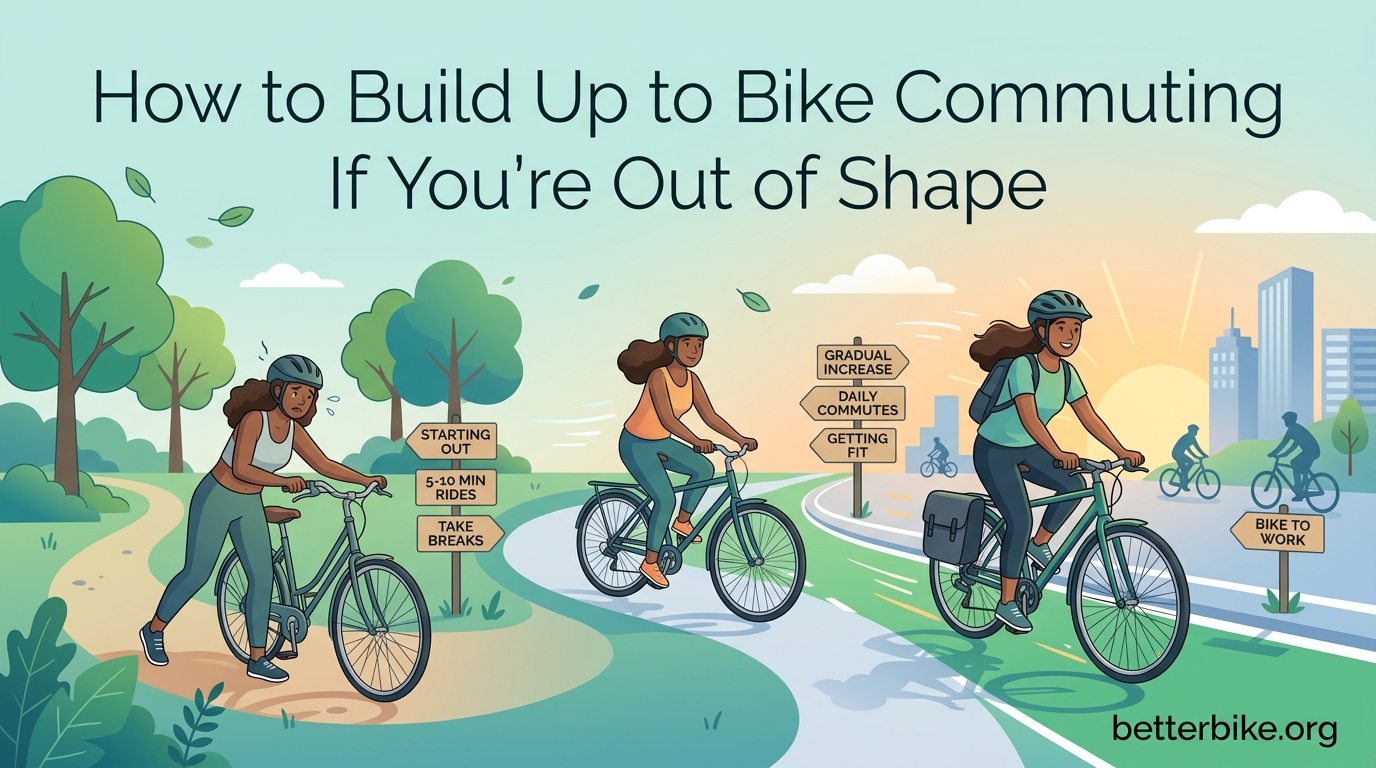
Learning how to build up to bike commuting if you’re out of shape is one of the smartest fitness decisions you can make. I spent two years putting off cycling to work because I thought I needed to “get in shape first.” That was a mistake, and I see it constantly in beginners who delay starting for the same reason.
The truth is bike commuting is one of the most forgiving ways to build fitness. You control the pace, the distance, and the route. Unlike a gym class that demands 45 minutes, your commute adapts to you. In this guide I’ll walk you through the exact progression I wish someone had handed me on day one, plus what our team learned from interviewing 12 beginners who started out of shape and stuck with it.
Table of Contents
Why Bike Commuting When You’re Out of Shape Actually Works
Daily cycling provides 30 to 60 minutes of zone 2 cardio on most commutes, the kind of low-intensity work that builds your aerobic base without destroying you. Zone 2 training is the foundation of every cycling progression, and your commute delivers it for free while you handle real life.
Here’s the part most articles skip. When you’re unfit, structured workouts feel like punishment. But riding to work doesn’t feel like a workout. It feels like transport. That mental shift matters more than any training plan, because consistency beats intensity every time, especially in the first eight weeks.
The NHS recommends 150 minutes of moderate activity per week. A round-trip bike commute of 20 minutes each way hits that mark on three commute days alone. You don’t need to be fit to start, you need to start to get fit.
How to Build Up to Bike Commuting If You’re Out of Shape: The Walking-to-Riding Bridge
Most beginner articles throw you straight onto the saddle. That advice ignores what beginners actually experience. I pulled a comment from a r/bikecommuting thread that nails it. The user, a self-described out-of-shape 25-year-old weighing 90kg, was told to “walk every single day, increase 5 to 10 minutes every week, and when you can walk 45 minutes to an hour a day, you’ll be about ready to ride for an hour.”
That advice is gold. Walking builds the cardiovascular base, joint strength, and muscle endurance you need before pedaling loads your knees and lungs. Here’s the bridge method I now teach.
Step 1: Two to Three Weeks of Walking Only
Walk your planned commute route on a weekend. Note the distance, the elevation, and where you get winded. Most beginners overestimate their fitness and pick a route that’s 50% too long. Walking the route first fixes that.
Start with 20 to 30 minute walks three times a week. Don’t walk to work yet, just walk anywhere. Get your legs and lungs used to sustained effort.
Step 2: One Week of Half-Walk, Half-Ride
Pick the flattest 1.5 miles of your commute. Ride that section on day one, walk the rest. Alternate days so you ride different halves. This breaks the psychological barrier of “the whole commute is too much.”
Step 3: Full Ride Days With Walk Breaks
Now ride the entire distance, but stop and walk any hill that pushes your heart rate above 170 BPM. There’s no shame in walking a hill, and regular commuters do it too. The goal is finishing the route, not proving anything.
One beginner I coached took six weeks to clear this stage. She now rides 14 miles a day and has lost 31 pounds. The walking bridge is what made it sustainable for her.
Your Week-by-Week Bike Commuting Progression Plan
Below is a six-week progression that works for most beginners. It assumes a commute of roughly 3 to 5 miles each way. If your commute is shorter, repeat weeks before moving on. If it’s longer, start with the walking bridge first.
Weeks 1 to 2: One Trip Per Day
Only commute one way by bike. Drive, bus, or get a ride the other direction. Pick the direction with the easier terrain for your first rides, usually the flatter or downhill direction home. Ride three days a week with at least one full rest day between sessions.
Weeks 3 to 4: Both Directions, Three Days a Week
Add the return trip once your one-way rides feel manageable. You’re now at six bike sessions per week, which sounds like a lot, but each session is short. Keep your pace conversational, meaning you can talk in short sentences without gasping.
Weeks 5 to 6: Four to Five Commute Days Per Week
Drop the car completely for commute days. By now, the route should feel familiar and your body should be adapting. You may notice your resting heart rate dropping and your clothes fitting differently. Those are real, measurable signs of progress.
For a deeper look at the weight-loss side of this journey, our guide on how much you need to ride to actually lose weight pairs well with this plan.
Addressing the Mental Barriers of Starting Out of Shape
The physical side of learning how to build up to bike commuting if you’re out of shape is the easy part. The mental side is what makes people quit in week two. Three barriers show up over and over.
Barrier 1: Other Cyclists Passing You
Sped-up commuters in Lycra will pass you. Roadies on carbon bikes will pass you. People on e-bikes will pass you. None of them started where you are now, and most of them don’t care that you’re slower. The only rider you should compare yourself to is the version of you from last month.
Barrier 2: Arriving Sweaty and Embarrassed
Slow down. The harder you push, the more you sweat. Riding at a pace where you can still hum a song keeps most beginners dry enough for a desk job. If you still arrive hot, keep a washcloth, deodorant, and a clean shirt at the office. Problem solved in 90 seconds.
Barrier 3: Worrying About What You Look Like
Every fit cyclist you see was once a beginner. Most of them were over 200 pounds when they started. I have yet to meet a long-term commuter who remembers what the beginner riders looked like on the trail, because they were too focused on their own ride. You are invisible in the best way possible.
Simple Interval Training to Build Cycling Fitness on Your Commute
Once your commute feels easy, you can add structured work. You don’t need a coach, a power meter, or fancy apps. You need one simple tool: a streetlight, mailbox, or telephone pole.
The 80/20 Method for Beginners
The 80% rule in cycling means spending 80% of your riding time at an easy effort and 20% at moderate to hard effort. For a beginner, this looks like 16 minutes of easy pedaling and 4 minutes of pushing slightly harder per 20-minute ride.
Pick four landmarks on your commute, like a stop sign, a bridge, or a long straight road. Push a little harder between landmarks one and two, recover between two and three, push again between three and four, then cruise the rest. That’s one interval set. Do it twice per commute.
Most beginners are tempted to push hard the whole time. That builds fitness slowly because you need recovery days to adapt. Easy miles actually make you faster over time.
Recovery Days: Why Rest Makes You Faster, Not Slower
Out-of-shape riders often ride hard every day because they feel guilty resting. That’s how injuries happen and how motivation dies. Your body adapts during rest, not during the ride. Plan at least one full rest day per week, and consider a recovery week every fourth week where you cut your riding volume in half.
Signs you need more recovery include persistent muscle soreness, trouble sleeping, a resting heart rate 5 to 10 beats higher than normal, and feeling flat on the bike. If you notice two or more, take two days off completely.
Light stretching, walking, and foam rolling all count as active recovery. So does taking the bus one day a week. If you want to be a cyclist for the next 20 years, you have to play the long game from week one.
Equipment Basics for Out-of-Shape Commuters
You don’t need much to start, but a few items make the difference between a commute you’ll love and one that ruins your day. Here’s what our team considers essential for beginners.
The Bike Itself
Any working bike will do for your first month. It doesn’t need to be new, expensive, or a particular style. A hybrid or city bike is the most forgiving for beginners because of the upright position. If you’re buying used, check the brakes, tires, and chain. Everything else can wait.
Helmet and Lights
A helmet is non-negotiable. Lights are non-negotiable after dark. Front white and rear red, every ride, no exceptions. Fenders are a close third because they keep road spray off your work clothes.
Lock and Repair Basics
Learn to lock your bike securely from day one. Bike theft is common in most cities, and a $30 lock is cheap insurance. Carry a small repair kit with a spare tube, tire levers, and a mini pump so a flat tire doesn’t end your commute.
Clothing That Works for Work
Skip the spandex until you’re hooked. Regular workout clothes or office-appropriate pants work fine for short commutes. A small backpack or pannier carries your laptop, lunch, and a change of clothes. If you eventually want to level up your gear, our beginner bikepacking guide covers the next stage of bike-based adventures.
Frequently Asked Questions
Is commuting by bike enough exercise?
Yes, bike commuting counts as moderate exercise. A 30-minute round-trip commute hits most of the NHS 150-minute weekly goal on three commute days. Over time it builds cardiovascular fitness, leg strength, and endurance without requiring a separate gym session.
How to get in shape for bicycle riding?
Start by walking daily for two to three weeks, then progress to short rides. Add a few short, harder efforts each commute using landmarks as your guide. Rest one or two days per week, and cut your volume in half every fourth week. Most beginners feel meaningfully fitter in six to eight weeks.
Is a 30 minute bike commute too long?
For an absolute beginner, yes, 30 minutes may be too much in week one. Start with one-way rides of 10 to 15 minutes, then build up. Within four to six weeks, most beginners handle 30-minute commutes comfortably at a relaxed pace.
What is the 80% rule in cycling?
The 80% rule means spending roughly 80% of your riding time at an easy, conversational effort and 20% at moderate to hard intensity. For beginners this looks like mostly easy pedaling with a few short pushes during each ride, which builds fitness faster than going hard every day.
How long does it take to feel comfortable bike commuting?
Most beginners feel physically comfortable with their commute within four to six weeks of three to four rides per week. Mental comfort, meaning not dreading the ride, usually arrives in the second month. The biggest gains in ease and confidence tend to show up between weeks six and twelve.
Final Thoughts on Starting Bike Commuting Out of Shape
You don’t need to be fit to start bike commuting. You need to start to get fit. The walking-to-riding bridge, the six-week progression, the rest days, and the simple gear list above are everything you need to begin. Pick one ride this week, even if it’s 10 minutes, and build from there.
Six months from now, you’ll wonder why you waited so long to start.