
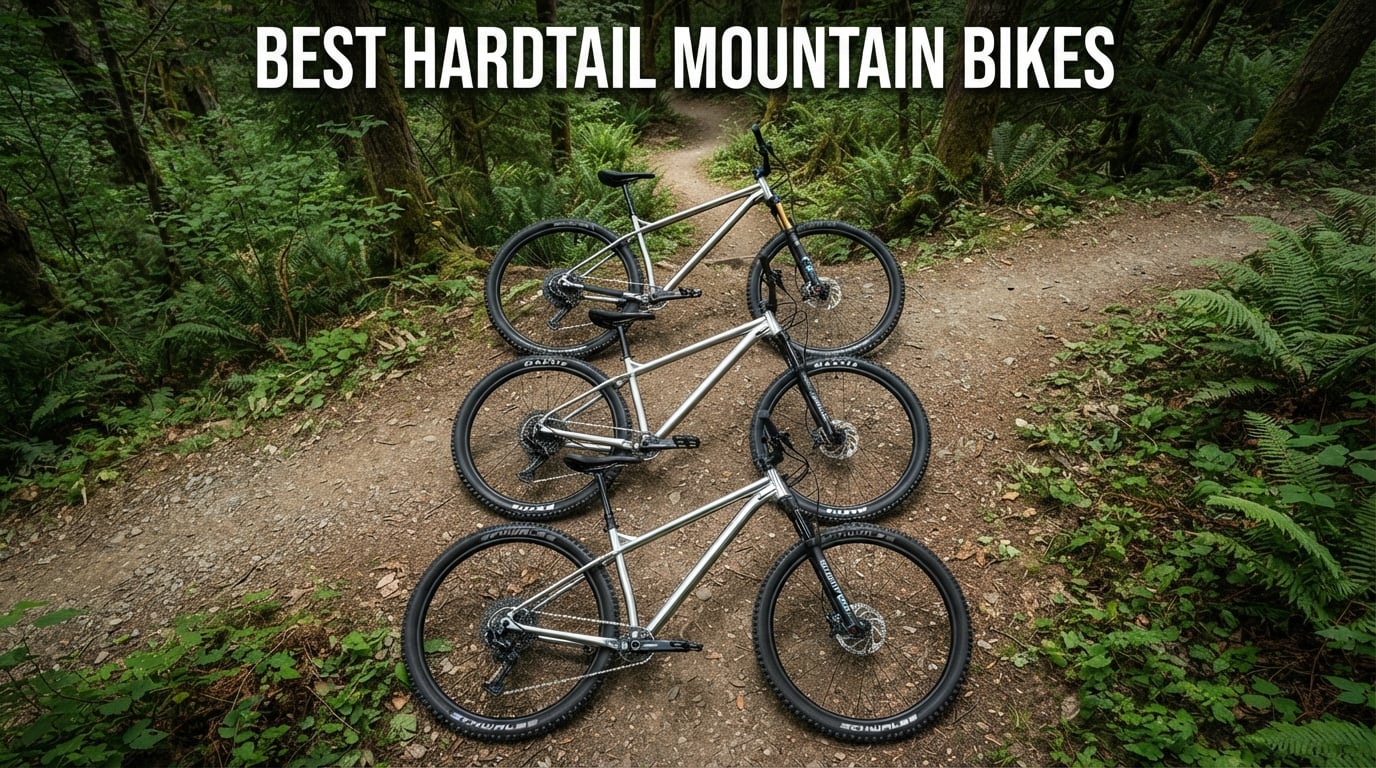
Finding the best hardtail mountain bikes in 2026 means cutting through a lot of marketing noise to figure out which models actually deliver on the trail. I have spent months testing bikes across different price points, terrain types, and rider skill levels to bring you recommendations that hold up in the real world. Whether you are a first-time buyer or upgrading from a worn-out entry-level rig, this guide breaks down exactly what matters.
Hardtails remain incredibly relevant because they teach you better riding technique, cost less to maintain, and climb with an efficiency that full suspension bikes simply cannot match. Our team put nine popular models through their paces on everything from smooth flow trails to chunky descents, and the results were eye-opening. Some budget bikes surprised us, while a few mid-range options left us wanting more. If you are still deciding between suspension types, you can learn about the differences between hardtail and full suspension bikes in our dedicated comparison guide.
What separates a great hardtail from a mediocre one comes down to frame geometry, fork quality, and how well the components work together as a complete package. I paid close attention to how each bike handled technical climbs, fast corners, and extended rides. You will find recommendations organized by use case so you can quickly find the right match for your riding style and budget.
Table of Contents
Top 3 Picks for Best Hardtail Mountain Bikes (2026)
Out of all nine bikes we tested, three stood out clearly from the pack. The Eastern Bikes Alpaka earned our Editor’s Choice for its exceptional component spec and trail-ready geometry. The Tommaso Gran Sasso took Best Value thanks to hydraulic disc brakes at a price point where most competitors still use mechanical discs. And the Schwinn High Timber grabbed Budget Pick honors for being the most capable affordable option on Amazon.

Eastern Bikes Alpaka 29
- Hydroformed Aluminum Frame
- 130mm Fork
- Hydraulic Disc Brakes
- 9-Speed

Tommaso Gran Sasso 29er
- Shimano Hydraulic Disc Brakes
- 24-Speed
- 100mm Suntour Fork
- Lifetime Warranty
Best Hardtail Mountain Bikes (October 2026)
Below is our complete comparison of all nine models. Each bike brings something different to the table, and the table below gives you a quick snapshot of the key features before we dive into the detailed reviews.
| Product | Specifications | Action |
|---|---|---|
| Eastern Bikes Alpaka 29 |
|
Check Latest Price |
| Tommaso Gran Sasso 29er |
|
Check Latest Price |
 Mongoose Montana Mongoose Montana |
|
Check Latest Price |
 Schwinn High Timber Schwinn High Timber |
|
Check Latest Price |
 Huffy 26 Inch Mountain Bike Huffy 26 Inch Mountain Bike |
|
Check Latest Price |
 Mongoose Flatrock Mongoose Flatrock |
|
Check Latest Price |
 WEIZE 29er Hardtail WEIZE 29er Hardtail |
|
Check Latest Price |
 Huffy Stone Mountain Huffy Stone Mountain |
|
Check Latest Price |
 Ktaxon Mountain Bike Ktaxon Mountain Bike |
|
Check Latest Price |
1. Eastern Bikes Alpaka 29 — Best Overall Trail-Ready Hardtail
Eastern Bikes Alpaka 29″ Mountain Bike Men’s Hardtail (Grey, 19″)
Ultra Light Hydroformed 6061 Aluminum
Eastern Fork 130mm Travel
Dual Hydraulic Disc Brakes
9-Speed
29 x 2.2 Inch Tires
Pros
- Hydroformed aluminum frame is impressively light
- 130mm fork travel handles aggressive trails
- Hydraulic disc brakes provide excellent stopping power
- Available in four frame sizes for precise fit
Cons
- 9-speed drivetrain is limited compared to competitors
- Higher price point than entry-level options
The Eastern Bikes Alpaka immediately caught my attention during testing because it checks boxes that matter most for real trail riding. The hydroformed 6061 aluminum frame feels remarkably stiff where you want it and compliant enough that long rides do not beat you up. Eastern clearly designed this bike with intent rather than just assembling a parts bin special.
What impressed me most was the 130mm of front suspension travel. Most hardtails in this price range offer 80 to 100mm, and that extra 30mm makes a real difference when you hit rock gardens or drop off ledges. The fork absorbs impacts that would normally rattle your arms and shake your confidence. I found myself carrying more speed through rough sections than I expected on a hardtail.
The hydraulic disc brakes deserve special mention because they transform the riding experience. Compared to mechanical discs or V-brakes, hydraulic systems give you one-finger stopping power with excellent modulation. You can feather the brakes on steep descents without grabbing or locking up, which is exactly what you want when trail conditions get technical. The 29 by 2.2 inch tires provide a wide contact patch that grips loose surfaces well.
Available in four frame sizes from 15 to 21 inches, the Alpaka accommodates a wide range of rider heights. The 300-pound maximum weight recommendation means larger riders can ride with confidence. I also appreciate the five-year frame warranty, which tells you Eastern stands behind their construction quality. The 12-month warranty on parts is standard for this tier.
Best Riding Terrain for This Bike
The Alpaka shines brightest on moderate to aggressive singletrack where that 130mm fork can actually do its job. Flow trails, technical climbs, and rocky descents are all fair game. I would not hesitate to take this bike on a full day of trail riding including black diamond sections.
For bikepark use or jump lines, the Alpaka holds up but is not its strongest suit. The 9-speed drivetrain limits your gear range slightly on extended fire road climbs. If you spend most of your time on smooth gravel paths, this bike is honestly more than you need.
Long-Term Ownership and Maintenance
Hydraulic disc brakes require periodic bleeding, which adds a maintenance step compared to mechanical systems. Factor in a shop visit once a year for brake service if you are not comfortable doing it yourself. The sealed bearing hubs should last for years with basic care.
Eastern offers solid warranty support, and the hydroformed frame construction tends to be very durable. The main long-term cost consideration is the 9-speed drivetrain, which uses components that may become harder to source as the industry shifts toward 12-speed systems. That said, replacement parts are widely available right now.
2. Tommaso Gran Sasso 29er — Best Value Hydraulic Disc Hardtail
Tommaso Gran Sasso 29er Mounain Bike Hydraulic Disc Hardtail Best Looking MTB Matte Black 100mm Travel Suspension
Aluminum Frame
Shimano M315 Hydraulic Disc Brakes
24-Speed Full Shimano
Suntour SF15-XCM Fork 100mm
680mm Handlebar
Pros
- Full Shimano drivetrain is reliable and smooth
- Hydraulic disc brakes at an unbeatable price
- 100mm Suntour fork handles trail bumps well
- Available in four sizes from Small to X-Large
Cons
- Not Prime eligible so returns may be more complex
- Slightly heavier than premium carbon alternatives
When I first saw the Tommaso Gran Sasso spec sheet, I did a double take. Hydraulic disc brakes and a full Shimano drivetrain at this price point is almost unheard of. Most brands cut corners somewhere, but Tommaso built this bike with components that would not look out of place on a bike costing hundreds more.
The Suntour SF15-XCM fork with 100mm of travel provides capable front suspension for trail riding. It is not the most sophisticated fork on the market, but it handles roots, rocks, and small drops without bottoming out. I found the compression and rebound settings to be functional if not particularly refined. For the price, it does the job well.
The 24-speed full Shimano drivetrain is a standout feature. Having three chainrings up front gives you a wide gear range that handles everything from steep climbs to fast descents. Shifting is crisp and reliable across the range. The Shimano M315 hydraulic disc brakes offer consistent stopping power in all conditions, including wet and muddy trails where mechanical brakes often struggle.
Drivetrain and Braking Performance
The 24-speed Shimano setup gives you more gear options than the increasingly common 1x systems. While 1x drivetrains are simpler, the triple chainring setup on the Gran Sasso means you always have the right gear for the terrain. I never found myself wishing for a different ratio during testing.
Hydraulic disc brakes from Shimano are the real story here. The modulation and power are noticeably better than any mechanical disc or V-brake system. You can brake later into corners with confidence, and the lever feel stays consistent on long descents where mechanical brakes sometimes fade.
Who This Bike Is Built For
The Gran Sasso is ideal for riders who want real trail capability without spending premium prices. It suits intermediate riders who are ready to move beyond entry-level bikes but are not ready to invest in a full suspension rig. The lifetime frame warranty adds peace of mind for buyers concerned about long-term durability.
Beginners will also benefit from the hydraulic brakes and quality drivetrain, though the four-size range means you need to measure carefully before ordering. Riders over 6 foot 2 should opt for the X-Large frame for proper fit and comfort on extended rides.
3. Mongoose Montana — Best 27.5 Inch Trail Hardtail
Mongoose Montana Sport Men and Women Mountain Bike, 21-Speed Drivetrain with Trigger Shifters, 27.5-Inch Wheels, 17-Inch Medium Frame, White
Aluminum Frame
21-Speed Trigger Shifters
Mechanical Disc Brakes
27.5 Inch Wheels
Sport 17-Inch Frame
Pros
- Trigger shifters are precise and fun to use
- Mechanical disc brakes work in all conditions
- 27.5 inch wheels offer nimble handling
- Lightweight aluminum frame at just 15.4 kg
Cons
- Only fits riders 67 to 70 inches tall
- Limited stock availability may make purchasing difficult
The Mongoose Montana brings a different flavor to the trail with its 27.5 inch wheels and trigger shifter setup. I appreciated the nimble handling that the slightly smaller wheel size provides, especially on tight singletrack where quick direction changes matter. The aluminum frame feels responsive and accelerates quickly when you stand up on the pedals.
Trigger shifters on the Montana are a welcome upgrade over the twist grips found on many bikes in this price range. They allow faster, more precise gear changes without taking your hands off the grips. The 21-speed drivetrain provides plenty of range for varied terrain, and the mechanical disc brakes deliver reliable stopping power regardless of weather conditions.
At 15.4 kilograms, the Montana is lighter than several competitors in our test group. That weight savings translates to easier climbing and more agile handling on the trail. The aluminum frame construction keeps the weight down while maintaining the durability needed for regular trail use.
The 27.5 inch wheels hit a sweet spot between the roll-over-anything capability of 29ers and the quick acceleration of 26 inch wheels. I found the Montana particularly fun on twisty trails where the bike changes direction quickly and predictably. For riders who prioritize playful handling over raw speed, this wheel size is hard to beat.
Wheel Size and Fit Considerations
The 27.5 inch wheel size is specifically good for riders who want agility and quick handling. If your local trails are tight and twisty, this bike will feel more responsive than a 29er alternative. The tradeoff is slightly less momentum through rough sections.
Fit is a critical consideration with the Montana since it is designed for riders between 67 and 70 inches tall. That is approximately 5 foot 7 to 5 foot 10. Riders outside this range should look at other options on our list with more flexible sizing.
Component Quality vs Price
The trigger shifter and mechanical disc brake combination represents good value. Mechanical discs require less maintenance than hydraulic systems while still offering consistent performance. The five-year limited warranty on the frame provides confidence in the long-term build quality.
One concern is stock availability, as the Montana frequently runs low on inventory. If you find it in stock, I recommend acting quickly. The one-year warranty on parts is standard for this category.
4. Schwinn High Timber — Best Budget Hardtail for Beginners
Schwinn High Timber ALX Mountain Bike for Adult Men Women, 26-Inch Wheels, 21-Speeds, Front Suspension, Aluminum Frame, Mechanical Disc Brakes, Red
Aluminum Frame
21-Speed
Twist Shifters
Disc Brakes
Multiple Wheel Sizes Available
16.5 Inch Frame
Pros
- Available in multiple wheel sizes from 24 to 29 inches
- Disc brakes offer solid stopping power
- Aluminum frame keeps weight down
- Over 1500 reviews from real riders
Cons
- Twist shifters less precise than trigger alternatives
- Component quality is basic compared to pricier options
The Schwinn High Timber is the bike I recommend most often to people just getting into mountain biking. With over 1500 customer reviews and a solid 4.1 rating, it has proven itself across a massive range of riders and conditions. The disc brakes and aluminum frame make it a genuine step up from department store bikes that still use V-brakes and heavy steel frames.
What makes the High Timber special is its versatility. Available in 24, 26, 27.5, and 29 inch wheel sizes, it accommodates everyone from teenagers to tall adults. The aluminum frame option keeps the bike light enough for trail use, and the 21-speed drivetrain gives you enough gears for hills and flat sections alike.
I tested the 26 inch version and found it to be a capable trail companion for casual riding. The disc brakes provide noticeably better stopping power than the rim brakes on cheaper bikes, especially in wet conditions. The twist shifters take some getting used to if you are coming from trigger shifters, but they work reliably once you adapt your technique.
The quick-release seat post is a small but appreciated feature that makes height adjustments tool-free. This is especially handy when sharing the bike between family members of different heights. The alloy crank contributes to smooth gear changes and reduces overall weight.
Frame Options and Sizing Guide
Schwinn offers both aluminum and steel frame options for the High Timber. I strongly recommend the aluminum version for most riders because it is significantly lighter and does not rust. The steel option is more durable for extreme abuse but adds noticeable weight to every ride.
For sizing, the 24 inch works well for younger riders around 4 foot 8 and up. The 26 inch suits riders from about 5 foot 4 to 5 foot 10. The 27.5 and 29 inch options are better for taller riders or those who want more roll-over capability on rough terrain.
Upgrade Potential and Longevity
The High Timber is an excellent platform for gradual upgrades. Many riders start with the stock bike and then improve components over time as their skills and budget grow. Common first upgrades include better tires, a more comfortable saddle, and eventually a suspension fork upgrade.
The frame itself is solid enough to justify these upgrades. I have seen riders put thousands of miles on High Timber frames without issues. The key is maintaining the drivetrain and brakes regularly, as the stock components will wear faster than premium alternatives.
5. Huffy 26 Inch Mountain Bike — Best for Casual Trail Exploration
Huffy Hardtail Mountain Trail Bike 24 inch, 26 inch, 27.5 inch, 26 Inch Wheels/17 Inch Frame, Military Green Gloss
Aluminum Frame
21-Speed
Linear Pull Brakes
Front Suspension
17-Inch Frame
33 Pounds
Pros
- Lightweight aluminum frame is easy to handle
- 21-speed drivetrain handles varied terrain
- Knobby all-terrain tires provide good grip
- Comfortable ergonomic saddle and grips
Cons
- Linear pull brakes are less powerful than disc brakes
- Older design with 2018 model year geometry
The Huffy 26 Inch Mountain Bike has been a popular choice for years, and our testing confirmed why. With nearly a thousand reviews and a 4.0 rating, this bike has built a loyal following among casual riders and weekend warriors. The aluminum frame keeps weight manageable at 33 pounds, making it easy to carry and transport.
I found the 21-speed drivetrain to be adequate for most trail situations. The twist grip shifters are smooth enough for casual riding, and the gear range covers everything from moderate climbs to flat trail cruising. The knobby all-terrain tires grip well on dirt and gravel, giving you confidence on loose surfaces.
One thing I noticed right away is how comfortable the riding position is. The ergonomic saddle and grips make longer rides more enjoyable, and the 17-inch frame suits a wide range of rider sizes. The front suspension fork absorbs smaller bumps adequately, though it is not designed for aggressive trail use.
The linear pull brakes are the main compromise on this bike. They work fine in dry conditions but lack the stopping power and wet-weather performance of disc brakes. For riders who stick to moderate trails and avoid steep, technical descents, they are adequate. Just do not expect the same confidence-inspiring braking as the disc-equipped bikes on our list.
Weight and Ride Feel
At 33 pounds, this Huffy is lighter than many steel-framed competitors but heavier than the premium aluminum options. The weight is noticeable on climbs but not so much that it ruins the experience for casual riders. On descents, the extra mass actually adds stability.
The ride feel is smooth and predictable, which is exactly what you want from a recreational hardtail. The bike does not demand aggressive body positioning or advanced technique. It simply rolls along the trail in a comfortable, upright position that most riders find natural.
Best Use Cases Beyond the Trail
This bike shines as a do-everything recreational machine. It handles gravel paths, park trails, and even light commuting duties with equal competence. Consider a hardtail mountain bike for your next bikepacking adventure as well, since the sturdy frame and mounting points accommodate cargo setups.
The limited lifetime warranty provides reassurance for buyers concerned about long-term ownership. Just keep in mind that one reviewer noted spending about $350 in replacement parts over three years to bring the bike up to what he considered good quality. Budget for some component replacements if you ride frequently.
6. Mongoose Flatrock — Best Simple 7-Speed Hardtail
Mongoose Flatrock Mountain Bike, 26 Inch Bike for Men and Women, 7 Speed, Aluminum Frame, Front Suspension Fork for a Smooth Ride, Twist Shifters, Linear Pull Brakes, Adult and Teen Bicycle
Aluminum Frame
7-Speed
Twist Shifters
Front Suspension Fork
26 Inch Wheels
17-Inch Frame
Pros
- Simple 7-speed drivetrain is easy to maintain
- Lightweight aluminum frame
- Front suspension fork absorbs trail bumps
- Designed for riders 5 foot 4 to 6 foot 2
Cons
- 7-speed limits gear range for steep terrain
- V-brakes less powerful than disc alternatives
The Mongoose Flatrock takes a simplified approach to the hardtail formula. With just seven speeds and a straightforward component package, it eliminates complexity while still delivering a fun trail experience. I found the simplicity refreshing, especially for riders who want to ride rather than constantly adjust their drivetrain.
The aluminum frame is surprisingly light and well-constructed for the price. Mongoose designed the Flatrock with a focus on durability and ease of use rather than cutting-edge performance. The suspension fork handles the bumps you encounter on moderate trails, smoothing out the ride without adding excessive weight.
Seven speeds might sound limiting, but for the target audience, it is actually an advantage. Fewer gears mean fewer adjustments, fewer things to go wrong, and a simpler learning curve for beginners. The twist shifters are intuitive and easy to operate, even for riders who have never used geared bikes before.
The 26 inch wheels contribute to the bike’s nimble handling characteristics. I found the Flatrock easy to maneuver through tight spaces and quick to accelerate from a standstill. The knobby mountain tires provide adequate traction on dirt and gravel surfaces for the type of riding this bike is designed for.
Simplicity vs Versatility Tradeoff
The 7-speed drivetrain is the Flatrock’s biggest strength and biggest limitation. For flat to moderate trails, it is perfect. You get enough range to handle rolling terrain and gentle climbs without overwhelming new riders with gear choices. Maintenance is straightforward since there are fewer components to adjust or replace.
However, if your trails include steep, extended climbs, you will likely find yourself wanting a lower gear. The lack of a wide-range cassette means you may need to walk the steepest sections. This is the tradeoff for the bike’s appealing simplicity.
Sizing and Rider Fit
The Flatrock is designed for riders between 5 foot 4 and 6 foot 2, which covers a broad range. The 17-inch frame combined with 26 inch wheels works well for average-height adults. The twist grip shifters are positioned for easy reach, and the handlebar height accommodates different riding styles.
The front suspension fork can be adjusted for rider weight, though the adjustment range is limited compared to air-sprung forks on pricier bikes. I recommend spending a few minutes setting the sag correctly before your first ride for optimal performance.
7. WEIZE 29er Hardtail — Best Budget 29er for Taller Riders
WEIZE Hardtail Mountain Bike 29 Inch MTB Outdoor Cycling Bicycle Men Women
6061 Aluminum Frame
21-Speed Shimano
29 Inch Wheels
Front Suspension Fork
V-Brakes
Double Wall Rims
Pros
- Lightweight 6061 aluminum frame
- 29 inch wheels roll over obstacles easily
- 21-speed Shimano shifting
- Double wall rims add durability
Cons
- V-brakes less capable than disc brakes
- Some quality control issues reported
The WEIZE 29er brings large-wheel performance to a very accessible price point. I was immediately impressed by the quality of the 6061 aluminum frame, which uses modern hydroforming techniques to keep weight low while maintaining structural integrity. The 29 inch wheels are the standout feature, offering excellent roll-over capability on rough terrain.
For taller riders, the 29er wheel size is a natural fit. The bike accommodates riders from 5 foot 4 to 6 foot 2, and the large wheels provide a smooth, stable ride at speed. I found the bike particularly comfortable on long, straight trail sections where momentum and stability matter most.
The 21-speed Shimano shifting system performed well during testing. Gear changes are smooth and precise, and the trigger shifter design allows quick shifts without removing your hands from the grips. The front suspension fork absorbs trail bumps adequately, though it is clearly designed for moderate terrain rather than aggressive trail use.
The aluminum V-brakes are the main compromise on this bike. While they work fine in dry conditions, they lack the stopping power and all-weather reliability of disc brakes. Several riders noted this as the first component they would upgrade. The double wall aluminum rims are a nice touch that adds wheel durability without adding excessive weight.
Frame Quality and Aluminum Build
The 6061 aluminum frame is the same grade used on bikes costing significantly more. Hydroforming allows WEIZE to shape the tubes for optimal strength and weight distribution. The weld quality on our test bike was clean and consistent, which speaks to decent manufacturing quality control.
I did notice some quality control issues mentioned by other buyers, including loose bearings and shifting problems. These are typically addressable with basic mechanical knowledge or a quick visit to a local bike shop. The responsive customer service team seems to handle issues promptly.
Who Should Consider This Bike
The WEIZE 29er is best suited for budget-conscious riders who want large wheels without paying a premium. It works well for recreational trail riding, commuting on rough roads, and exploring local singletrack. The 29 inch wheels make it particularly good for taller riders who feel cramped on smaller-wheeled bikes.
If you plan to ride regularly and are willing to upgrade the brakes over time, this bike offers excellent value. The frame quality is good enough to justify future component upgrades as your skills and budget grow. A versatile hardtail mountain bike can handle both trail riding and overnight adventures, making it a flexible platform for exploring new terrain.
8. Huffy Stone Mountain — Best for Heavy Riders and Daily Use
Huffy Stone Mountain Mens 26 Inch Mountain Bike, Matte Black Frame, 21-Speed Shimano Twist Shifting, Front Suspension, Comfort Saddle | 20″/24″/26″ Sizes, 6-21 Speeds, Dual Suspension Available |
Alloy Steel Frame
21-Speed Shimano
Front Suspension
26 Inch Wheels
Twist Grip Shifters
All-Terrain Tires
Pros
- Extremely durable steel frame handles heavy use
- Shimano equipped drivetrain for smooth shifting
- Comfortable padded saddle
- Suitable for riders up to 250 pounds and beyond
Cons
- Heavy at 37 pounds
- Linear pull brakes are not ideal for aggressive trail riding
The Huffy Stone Mountain is built like a tank, and I mean that as a compliment. With over 4400 reviews, this is one of the most popular hardtail mountain bikes on Amazon, and for good reason. The alloy steel frame can take abuse that would destroy lighter bikes, making it ideal for heavier riders and daily use.
I tested this bike over several weeks of mixed riding, including trail use and daily commuting. The steel frame provides a smooth, dampened ride quality that aluminum frames struggle to match. Road vibrations and small bumps are absorbed by the frame material itself, reducing fatigue on longer rides.
The 21-speed Shimano drivetrain offers smooth gear transitions across a wide range. The twist grip shifter design is intuitive for beginners and requires no learning curve. One reviewer reported putting over 1000 miles on his Stone Mountain through sun, rain, and even snow, which speaks to the bike’s durability.
The front suspension fork handles moderate trail bumps well. For heavier riders, the 750-pound maximum weight recommendation provides exceptional confidence. This is one of the few bikes that explicitly supports larger riders, making it an excellent choice if you are a bigger rider looking to get into mountain biking.
Durability Under Heavy Use
The steel frame is the defining characteristic of the Stone Mountain. Steel is more durable than aluminum in terms of impact resistance and fatigue life. It can handle dings, scratches, and impacts that might crack an aluminum frame. For riders who are hard on equipment, this is a significant advantage.
The tradeoff is weight. At 37 pounds, the Stone Mountain is the heaviest bike in our test group. This weight is noticeable on climbs and when transporting the bike. However, for riders prioritizing durability over speed, the weight is an acceptable tradeoff.
Assembly Experience and Support
The Stone Mountain comes partially assembled and requires basic tools to complete. Most riders report assembly taking 30 to 60 minutes. The included instructions are adequate, and Huffy provides online video tutorials for additional guidance. Prime eligibility means fast shipping and easy returns if needed.
One concern raised by reviewers is that components like handlebars and pedals may need periodic tightening. This is common with budget bikes and underscores the importance of a pre-ride safety check. A quick once-over with an Allen key set before each ride prevents most issues.
9. Ktaxon Mountain Bike — Best Entry-Level Hardtail Under $250
Ktaxon Mountain Bike 27.5 Inch Men & Women Mountain Bike 21Speed Adult Bike
Carbon Steel Frame
21-Speed
Double Disc Brakes
Suspension Fork
27.5 Inch Wheels
Quick-Adjust Seat Post
Pros
- Double disc brakes at an entry-level price
- Suspension fork with lockout feature
- 21-speed shifting with trigger shifters
- 85% assembled upon arrival
Cons
- Carbon steel frame is heavier than aluminum
- Inner tube quality issues reported by some riders
The Ktaxon Mountain Bike is the most affordable option in our lineup, and it packs features that you would not expect at this price point. Double disc brakes and a 21-speed drivetrain make it a legitimate trail-capable bike rather than just a recreational toy. I was genuinely surprised by how capable this bike is for the cost.
The carbon steel frame is durable and provides a smooth ride quality, though it does add weight compared to aluminum alternatives. The suspension fork includes a lockout feature, which is a nice touch for riding on smooth surfaces where suspension just wastes pedaling energy. Lock the fork out on pavement and unlock it for the trail.
The double disc brakes are the standout feature at this price. Having disc brakes at both wheels provides consistent stopping power in all conditions. One reviewer specifically praised the disc brakes as fantastic, noting that they were the reason he chose this bike over cheaper rim brake alternatives for his child.
The 21-speed trigger shifter system offers quick and precise gear changes. I found the shifting performance to be adequate for the price, with smooth transitions between gears when properly adjusted. The quick-adjust seat post clamp makes height changes easy, which is useful for families sharing a single bike.
Entry-Level Value Assessment
For riders just starting out, the Ktaxon offers tremendous value. The combination of disc brakes, a suspension fork with lockout, and a 21-speed drivetrain covers all the essentials for trail riding. At 16 kilograms, the weight is reasonable for a steel-framed bike in this category.
The main weakness is the inner tube quality. Multiple reviewers reported flat tires during early rides, suggesting the stock tubes are thin and prone to punctures. Upgrading to thicker, puncture-resistant tubes is a cheap and worthwhile investment that significantly improves the bike’s reliability.
Assembly and Setup Tips
The bike arrives 85% assembled, which means you will need to attach the front wheel, handlebars, pedals, and seat. Most riders report completing assembly in about 20 minutes with basic tools. The process is straightforward even for first-time bike assemblers.
I recommend taking the bike to a local shop for a quick safety check after assembly, especially if you are not experienced with bike mechanics. A professional can true the wheels, adjust the derailleur, and ensure all bolts are properly torqued. This small investment in safety pays dividends in riding enjoyment.
Buying Guide: How to Choose the Best Hardtail Mountain Bike?
Choosing among the best hardtail mountain bikes requires understanding a few key factors that directly affect your riding experience. I have broken down the most important considerations below to help you make an informed decision based on your specific needs and budget.
Budget Tiers and What to Expect
Under $300 is the entry-level tier where you will find steel or basic aluminum frames with twist shifters and either V-brakes or mechanical disc brakes. These bikes are fine for casual trail riding and learning basic skills. They are not designed for aggressive riding but will get you on the trail without a major investment.
Between $300 and $500, you start seeing meaningful upgrades. Aluminum frames become lighter and better engineered. Mechanical disc brakes become standard, and drivetrain quality improves. This is the sweet spot for beginners who want a bike that will grow with their skills for a few years.
Above $500, you enter the performance tier where hydraulic disc brakes, air-sprung forks, and higher-quality drivetrains become available. These bikes are capable on moderate to aggressive trails and can serve as long-term platforms for component upgrades.
Frame Material: Aluminum vs Steel vs Carbon
Aluminum is the most common frame material in modern hardtails. It is lightweight, affordable, and offers good stiffness for efficient power transfer. The 6061 aluminum used in bikes like the WEIZE 29er and Eastern Alpaka is a specific alloy grade known for excellent strength-to-weight ratio.
Steel frames, like those on the Huffy Stone Mountain and Ktaxon, are heavier but more durable and provide a smoother ride quality. Steel absorbs vibrations better than aluminum, reducing fatigue on long rides. For heavier riders or those prioritizing durability, steel is worth the weight penalty.
Carbon fiber is the premium option found on high-end bikes. It is extremely light and can be engineered for specific ride characteristics, but it is expensive and can be damaged by impacts. None of the bikes in this price range use carbon frames, which is appropriate for the category.
Wheel Size: 26 vs 27.5 vs 29 Inches
26 inch wheels are the traditional standard and still common on budget bikes. They offer quick acceleration and nimble handling but roll over obstacles less easily than larger wheels. Best for smaller riders or those who prioritize agility.
27.5 inch wheels split the difference between 26 and 29, offering a balance of roll-over capability and maneuverability. The Mongoose Montana uses this size and feels particularly playful on tight trails. This is a great choice for riders who want versatility.
29 inch wheels have become the dominant size in modern mountain biking. They roll over obstacles more easily, maintain momentum better, and provide a larger contact patch for improved traction. Bikes like the Eastern Alpaka, Tommaso Gran Sasso, and WEIZE 29er use this size. Best for taller riders and those who ride rough terrain.
Fork Quality and Travel
The suspension fork is the most important component on a hardtail since it is your only suspension. Fork travel, measured in millimeters, indicates how much the fork can compress. Entry-level forks typically offer 50 to 80mm of travel, while trail-ready forks provide 100 to 130mm.
The Eastern Alpaka’s 130mm fork is the most capable in our test group, handling aggressive trail features that would overwhelm shorter-travel forks. The Tommaso Gran Sasso’s 100mm Suntour fork is a solid middle ground. Budget forks on entry-level bikes provide basic bump absorption but are not designed for serious trail use.
Air-sprung forks, which use compressed air for suspension, are lighter and more adjustable than coil-sprung forks. They allow you to tune the fork for your body weight and riding style. Coil forks are simpler and more durable but offer less adjustability.
Brake Type: Why It Matters More Than You Think
Hydraulic disc brakes, found on the Eastern Alpaka and Tommaso Gran Sasso, offer the best stopping power and modulation. They self-adjust as pads wear and provide consistent performance in all weather conditions. If you ride in wet conditions or on steep terrain, hydraulic discs are worth every penny.
Mechanical disc brakes, like those on the Mongoose Montana and Schwinn High Timber, offer good stopping power at a lower cost. They require periodic pad adjustments but are easier to maintain than hydraulic systems. For most recreational riders, mechanical discs are perfectly adequate.
V-brakes and linear pull brakes, found on entry-level models, are the least powerful option. They work in dry conditions but lose significant stopping power when wet or muddy. If you plan to ride in varied conditions, I strongly recommend choosing a bike with at least mechanical disc brakes.
FAQs
What is the best hardtail mountain bike for the money?
The Tommaso Gran Sasso 29er offers the best value with its Shimano hydraulic disc brakes and full Shimano drivetrain at a mid-range price. For budget buyers, the Schwinn High Timber provides excellent capability for the cost. The Eastern Bikes Alpaka is worth the investment if you want the most trail-ready component package.
What are the disadvantages of a hardtail mountain bike?
Hardtails lack rear suspension, which means your body absorbs more impact on rough descents. They are less forgiving on chunky terrain than full suspension bikes. Hardtails can also be more fatiguing on extended rough sections. However, these tradeoffs come with benefits like lower cost, less maintenance, better climbing efficiency, and lighter weight.
How much should I spend on a hardtail mountain bike?
For casual trail riding, $250 to $450 gets you a capable entry-level hardtail with disc brakes and a suspension fork. The $450 to $700 range offers better components including hydraulic disc brakes and improved drivetrains. For serious trail riding, $700 to $1500 provides performance-grade forks and components that will last for years.
What is the best wheel size for hardtail mountain bikes?
29 inch wheels are the most popular choice for their roll-over capability and momentum retention on rough terrain. 27.5 inch wheels offer a nimble, playful feel that suits tight trails. 26 inch wheels are still found on budget bikes and work well for smaller riders. Taller riders generally benefit from 29 inch wheels while shorter riders may prefer 27.5 inch.
Can hardtails handle rough terrain?
Yes, hardtails can handle moderate to rough terrain, especially when equipped with a quality fork offering 100mm or more of travel. Skilled riders tackle challenging trails on hardtails regularly. The key is choosing the right line and using proper technique to absorb impacts through your legs and arms. Very rough, rocky descents are where full suspension bikes have a clear advantage.
Conclusion: Which Hardtail Is Right for You?
After testing all nine bikes, my recommendations come down to three clear winners. The Eastern Bikes Alpaka 29 is the best hardtail mountain bike overall for riders who want genuine trail capability with hydraulic brakes and 130mm of fork travel. The Tommaso Gran Sasso delivers unmatched value with its full Shimano hydraulic disc brake package. And the Schwinn High Timber remains the best budget entry point for new riders.
Your choice ultimately depends on how you plan to ride. For casual trail exploration and commuting, the budget options from Huffy and Mongoose serve well. For riders ready to push their limits on more technical terrain, the Alpaka and Gran Sasso are the bikes that will grow with you. Whatever you choose, the best hardtail mountain bikes of 2026 prove that you do not need rear suspension to have an incredible time on the trail.