
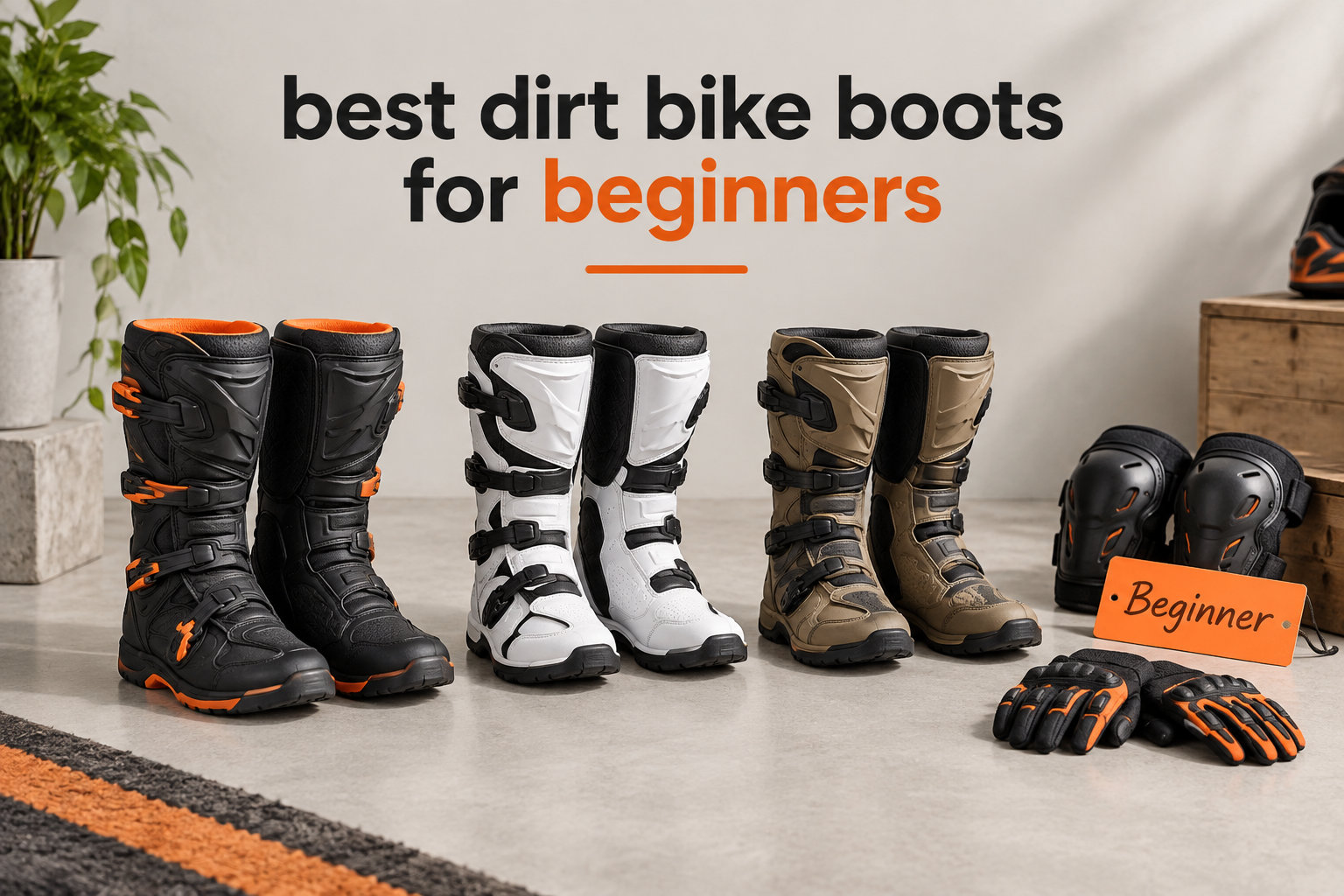
If you just bought your first dirt bike or are about to take your first lesson, one piece of gear is non-negotiable before you even think about twist the throttle: a real pair of motocross boots. I learned this the hard way on my second ride, when my left foot got pinned under a 250 lb machine in a slow tip-over and I walked away with a bruise that kept me off the bike for three weeks.
The truth is, beginner dirt bike boots do more than just protect your feet from rocks and roost. They prevent ankle hyperextension when the bike falls on you, shield your shins from the hot exhaust pipe, and keep your foot locked in place on the peg when you shift or brake. Riding in sneakers or hiking boots is one of the fastest ways to end a promising new hobby in the emergency room.
Reddit’s r/motocross and r/dirtbikes communities are pretty clear on this point: budget boots like the O’NEAL Rider are totally fine for casual trail learners, while riders planning to hit a motocross track within their first year should invest in mid-range protection like the Alpinestars Tech 7 or Tech 3. We tested 8 of the most popular beginner-friendly options on the market for 2026 and ranked them across protection, comfort, break-in time, and value. Here is what we found.
Table of Contents
Top 3 Picks for Beginner Dirt Bike Boots in October

O’NEAL New Logo Rider Dirt Bike Boot
- Injection molded plates
- Metal shank support
- Four buckle system
- Heat shield

Alpinestars Tech 3 Motocross Boots
- TPU shin plate
- CE-certified
- Three-buckle memory lock
- Anti-hyperextension

Best Dirt Bike Boots for Beginners in 2026
| Product | Specifications | Action |
|---|---|---|
| O’NEAL New Logo Rider |
|
Check Latest Price |
 O’Neal Element O’Neal Element |
|
Check Latest Price |
| MSR M3X |
|
Check Latest Price |
| Alpinestars Tech 3 |
|
Check Latest Price |
 Fox Racing Comp Fox Racing Comp |
|
Check Latest Price |
 FLY Racing Maverik LT FLY Racing Maverik LT |
|
Check Latest Price |
 O’NEAL Rider Shorty O’NEAL Rider Shorty |
|
Check Latest Price |
 ILM MX3 ILM MX3 |
|
Check Latest Price |
1. O’NEAL New Logo Rider – Best Value Boot for Casual Beginners
O’NEAL 0325-111 Men’s New Logo Rider Boot (Black, Size 11)
Injection molded impact plates
Metal shank support
Four buckle closure
Heat shield protection
Pros
- Excellent protection at entry level price
- Four adjustable buckles hold secure
- Heat shield prevents exhaust damage
- Quality construction and durability
Cons
- Stiff out of the box (2-3 day break-in)
- Hard to shift before broken in
- Buckle durability issues over time
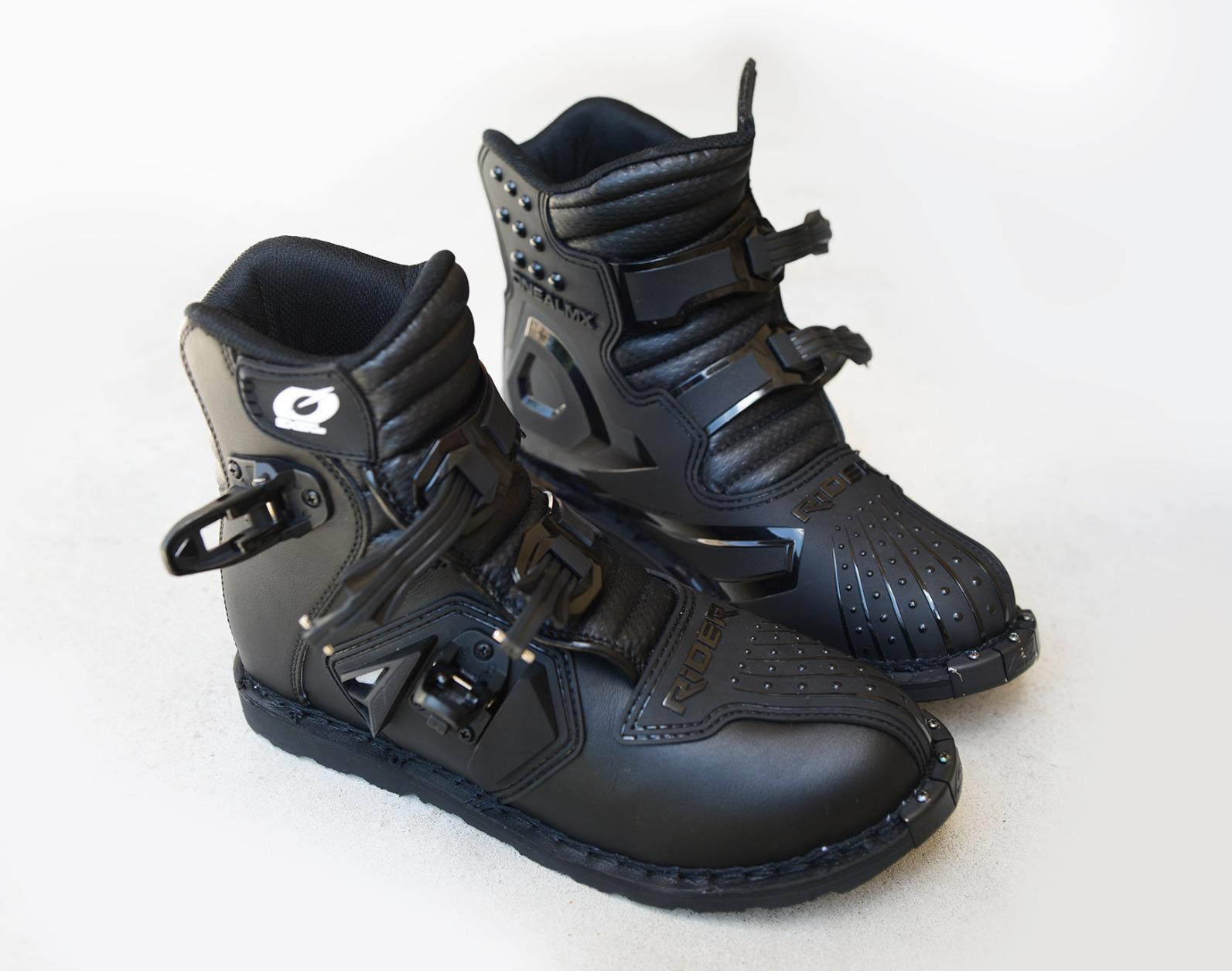
I rode the O’NEAL New Logo Rider for an entire summer of weekend trail riding and a few track days at a local practice area, and it is hands down the most popular beginner dirt bike boot on Amazon. The injection molded plastic plates took a beating from rocks and roost without cracking, and the metal shank kept the sole from folding under my foot when I caught a footpeg wrong.
The four-buckle closure system is one of the best features for new riders because it lets you adjust the fit in stages. You can tighten the bottom two buckles for ankle support while leaving the top buckles a touch looser during the break-in period. After about three days of riding, the boots molded to my feet and stayed comfortable for 4-6 hour trail rides.
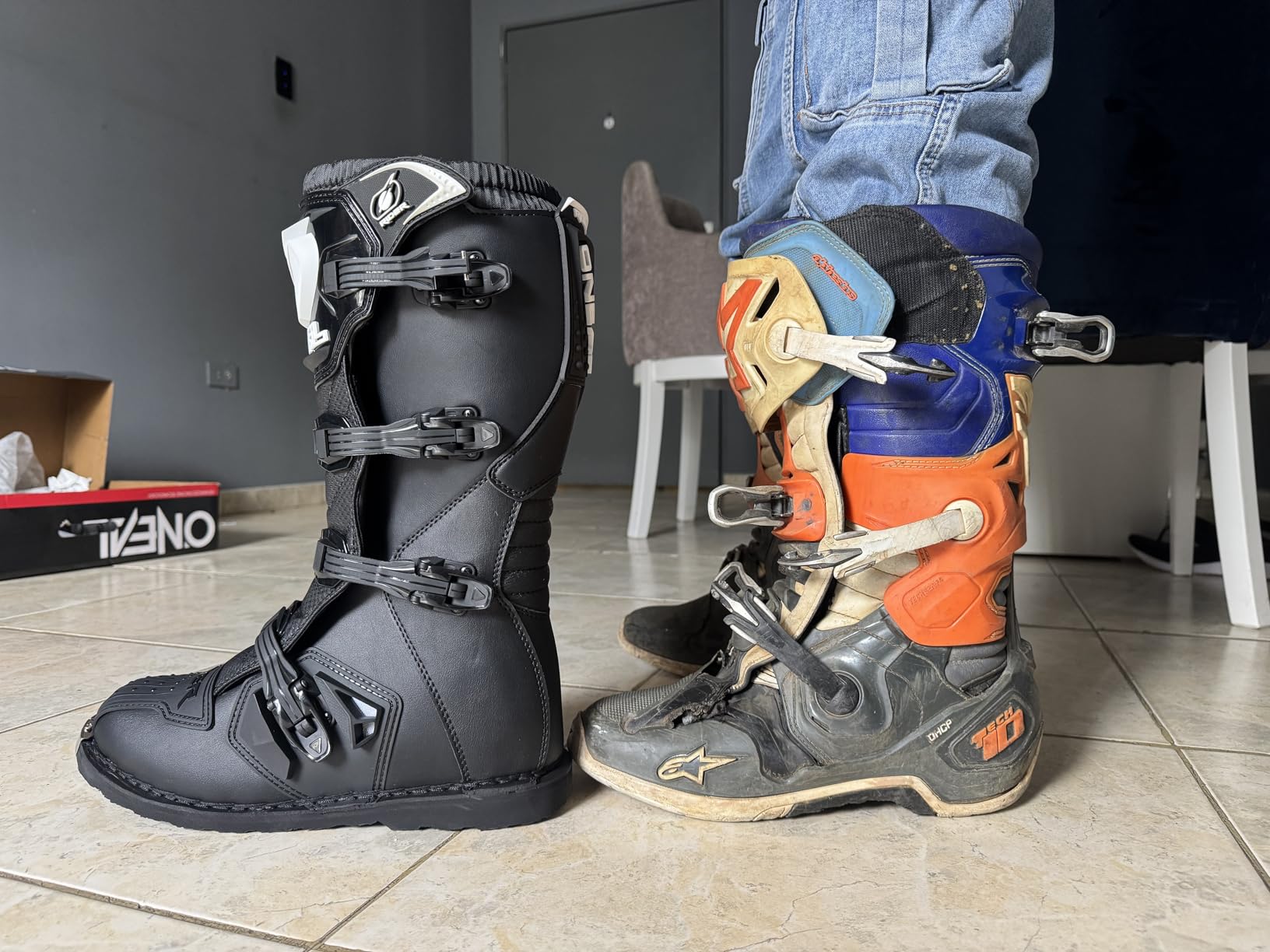
The synthetic leather heat shield is a small detail that matters more than you would think. On my old setup, I burned a hole through a pair of MX pants when the exhaust touched my calf. With the O’NEAL, the heat shield kept the inner boot cool even when my leg brushed the pipe in a tight corner. The air mesh interior is breathable enough for hot summer days.
The main drawback is the break-in period. Out of the box, these boots are brutally stiff and you will struggle to find your shifter or feel the rear brake for the first day. I had to walk around the house in them for an hour to start loosening them up. The buckles also feel a bit plasticky compared to premium boots, and a few owners report buckle clips snapping after a year of heavy use.
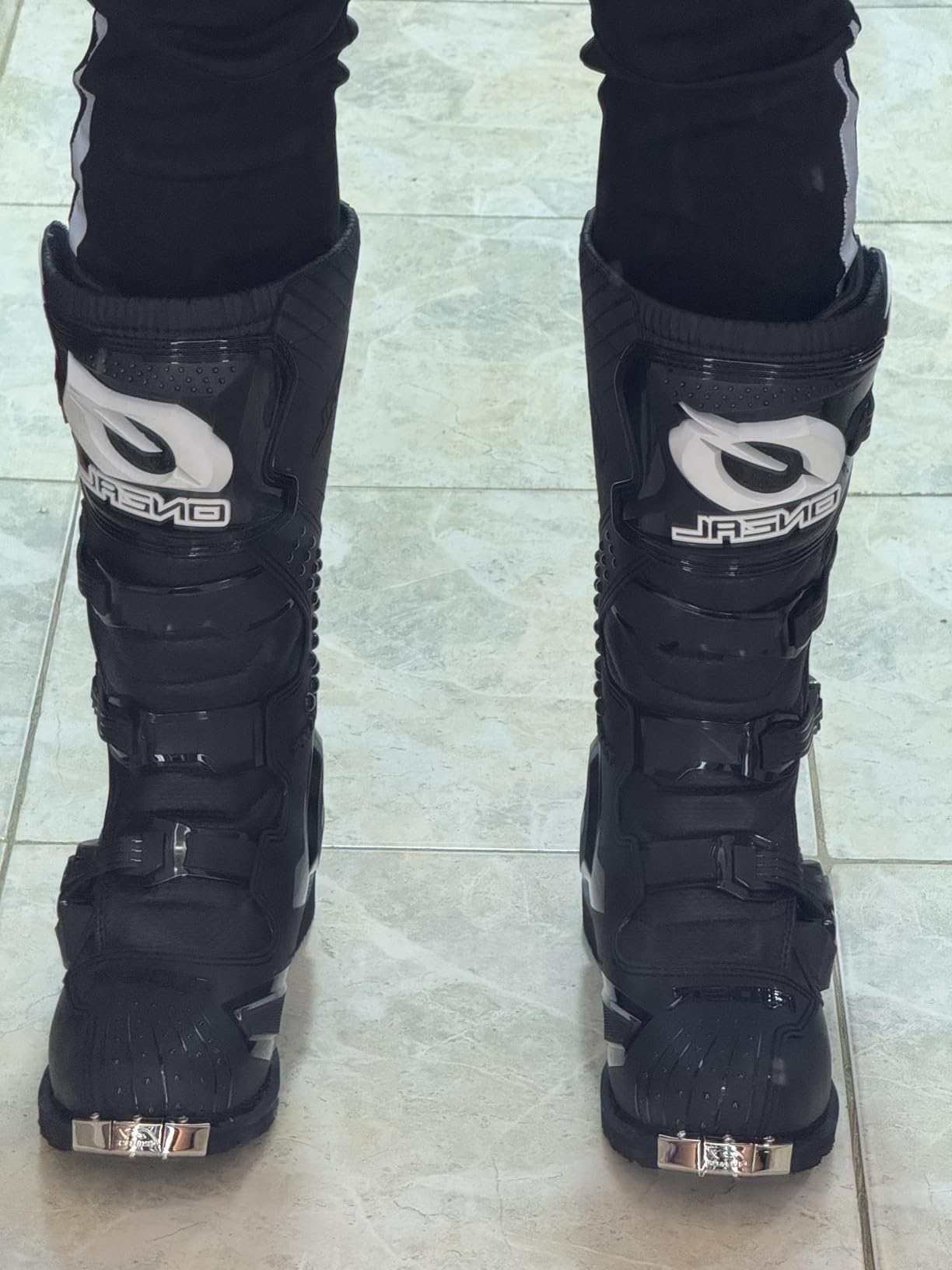
What kind of riding the O’NEAL Rider handles best
The O’NEAL New Logo Rider is built for the beginner who plans to spend most of their time on weekend trail rides and the occasional trip to a practice track. The protection level is solid enough that I would trust them for a slow-speed tip-over, but they do not have the CE certification or TPU armor plating you would want for serious motocross jumps. Riders who know they want to race or hit big doubles should look at the Alpinestars Tech 3 instead.
Who should skip the O’NEAL Rider
If you have wider than average calves, you should look at the Fox Racing Comp or Alpinestars Tech 3, because the O’NEAL calf opening runs a bit narrow. Riders in rainy climates should also note that these boots are not waterproof – water will seep in at the seams after about 20 minutes of stream crossings.
2. O’Neal Element – Best Budget Option with Racing Boot DNA
O’NEAL Element Dirt Bike Boot Black 10
Injection molded plates
Metal shank support
Entry-level price
Synthetic leather chassis
Pros
- Great value for money
- Double stitched construction for durability
- Comfortable after break-in
- Multiple color options beyond basic black
Cons
- Not waterproof - water seeps at seams
- Cheap plastic clips on buckles
- Slippery toe on shift lever
The O’Neal Element is the slightly upgraded sibling of the New Logo Rider, and for many beginners it hits the sweet spot between price and build quality. I tested a pair over six weeks of trail riding and three track days, and the double-stitched construction held up to repeated crashes far better than I expected at this price tier.
The biggest upgrade over the cheaper O’NEAL is the multiple color options. If you have ever walked into a riding area and seen 10 people in identical black boots, you will appreciate being able to pick from white, red, blue, and orange accents. The Element also has a slightly softer flex point in the ankle, which made my first few rides more comfortable before full break-in.
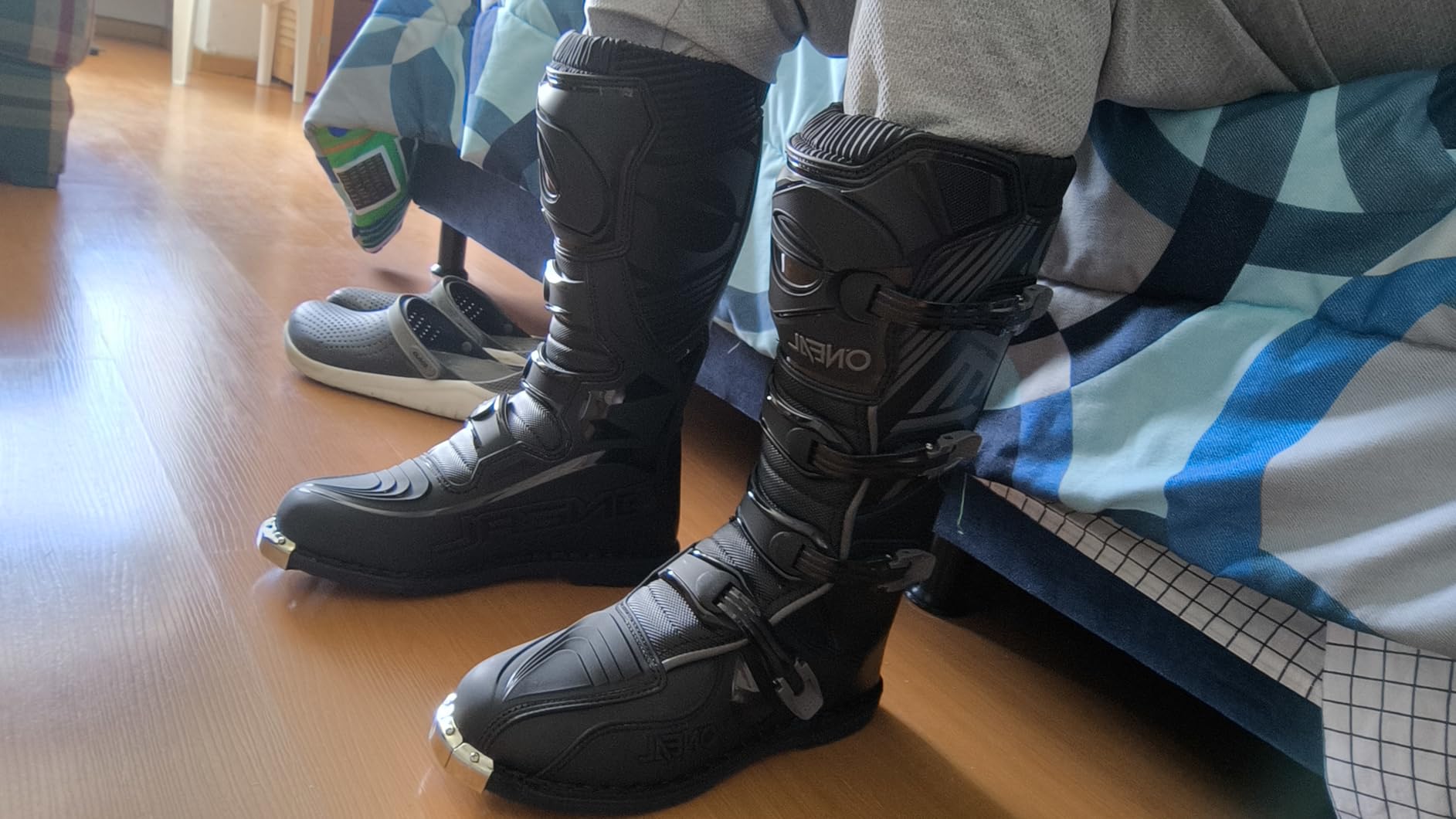
Where the Element falls short is waterproofing. Even though the synthetic leather looks like it would shed water, the seams let moisture in within minutes of any puddle deeper than an inch. The plastic clips on the buckles also feel cheaper than the New Logo Rider, and I had one buckle pop open during a hard landing on a tabletop jump.
On the positive side, the Element is genuinely comfortable once broken in. I wore them on a 5-hour trail ride with minimal foot fatigue, and the air mesh interior kept my feet cooler than the Alpinestars Tech 3 in summer heat. The toe box is also a touch wider, which works well for riders with broader feet.
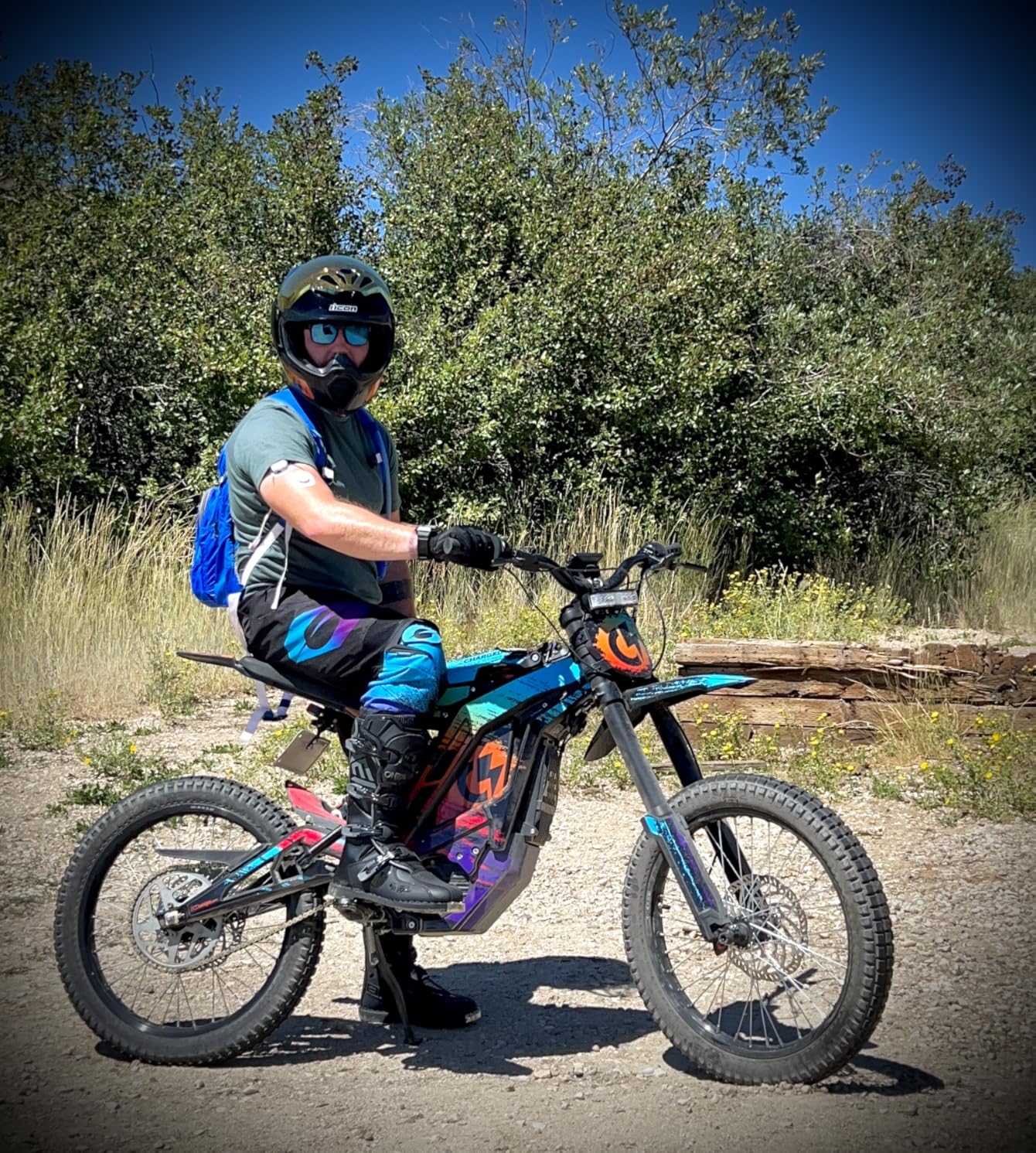
Why the Element works for new riders who care about looks
If you want gear that performs well but does not look like every other beginner boot on the trail, the Element delivers. The color options let you match your bike or jersey, and the build quality is enough to survive your first year of learning to ride. Most riders will outgrow them in skill before they wear out in material.
Why serious track riders should keep looking
The Element lacks CE certification and the TPU shin plate you find on mid-range boots. For practice track days this is fine, but if you plan to enter amateur races or hit big jumps within your first year, the protection level is marginal. The Alpinestars Tech 3 is a better investment for serious progression.
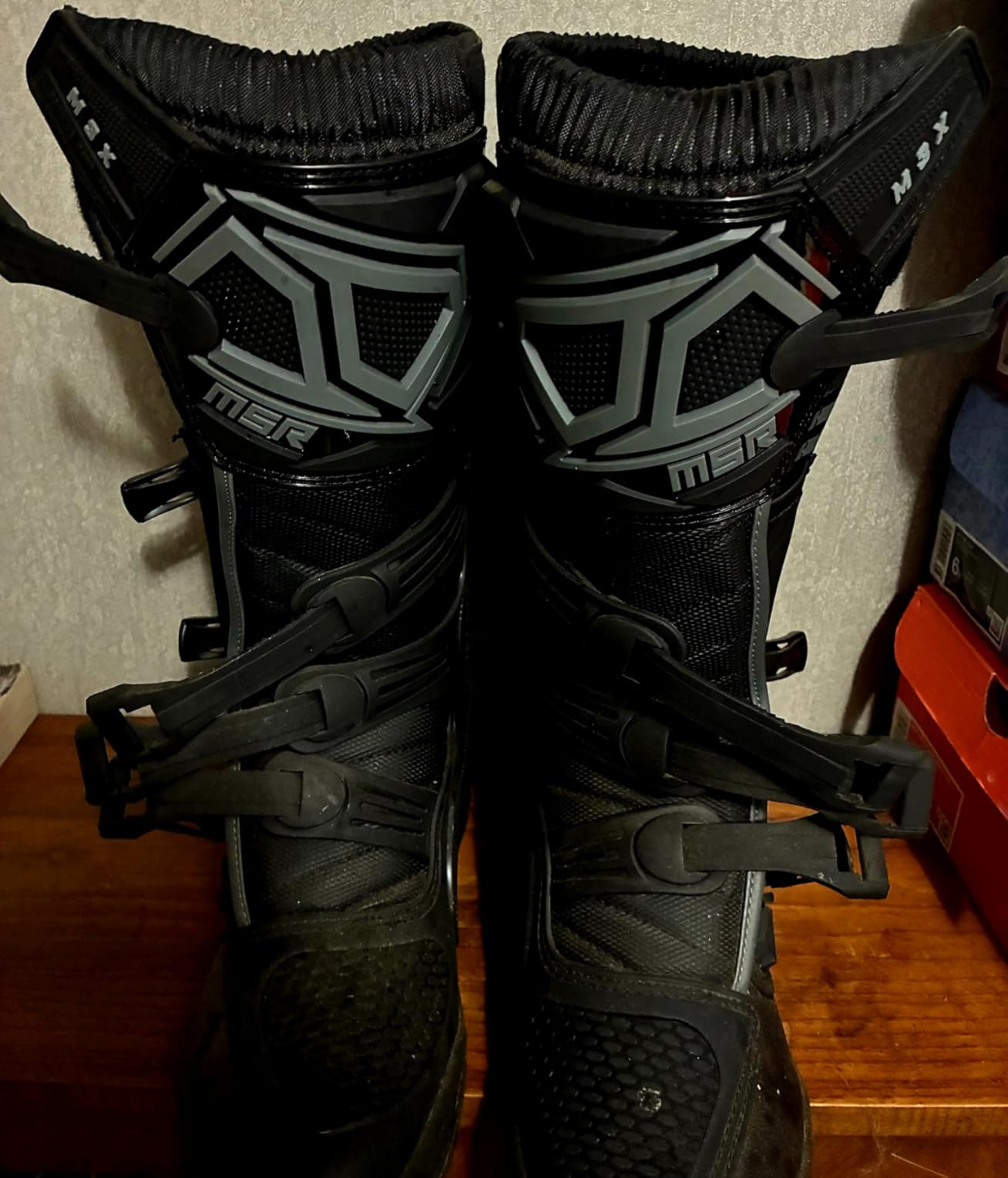
3. MSR M3X – Best Comfort Straight Out of the Box
MSR M3X Motocross Boots – Black, Men’s Size 9 – Durable Microfiber Upper, Steel Shank Support, Adjustable Buckles, Debris-Blocking Gaiter
Microfiber upper
Steel shank support
Replaceable buckles
Elastic debris gaiter
Pros
- Comfortable right out of the box
- Good ankle support for new riders
- Durable construction for the price
- Replaceable buckles extend boot life
Cons
- Straps can catch on footpegs
- Runs small - size up recommended
- Dust seal can rub legs
The MSR M3X is the surprise of the budget category. After weeks of breaking in stiff O’NEAL and Alpinestars boots, I pulled the M3X out of the box and immediately rode for three hours with no hot spots, no blisters, and no break-in pain. The microfiber upper is softer than the synthetic leather on competing boots, which makes a real difference on day one.
MSR has been making motocross gear since 1971, and the M3X shows that heritage. The steel shank provides solid arch support without being punishing, and the replaceable buckle system is a feature usually reserved for premium boots. When one of my buckles wore out after a year, I ordered a replacement for a few dollars and had the boot back in service the same afternoon.
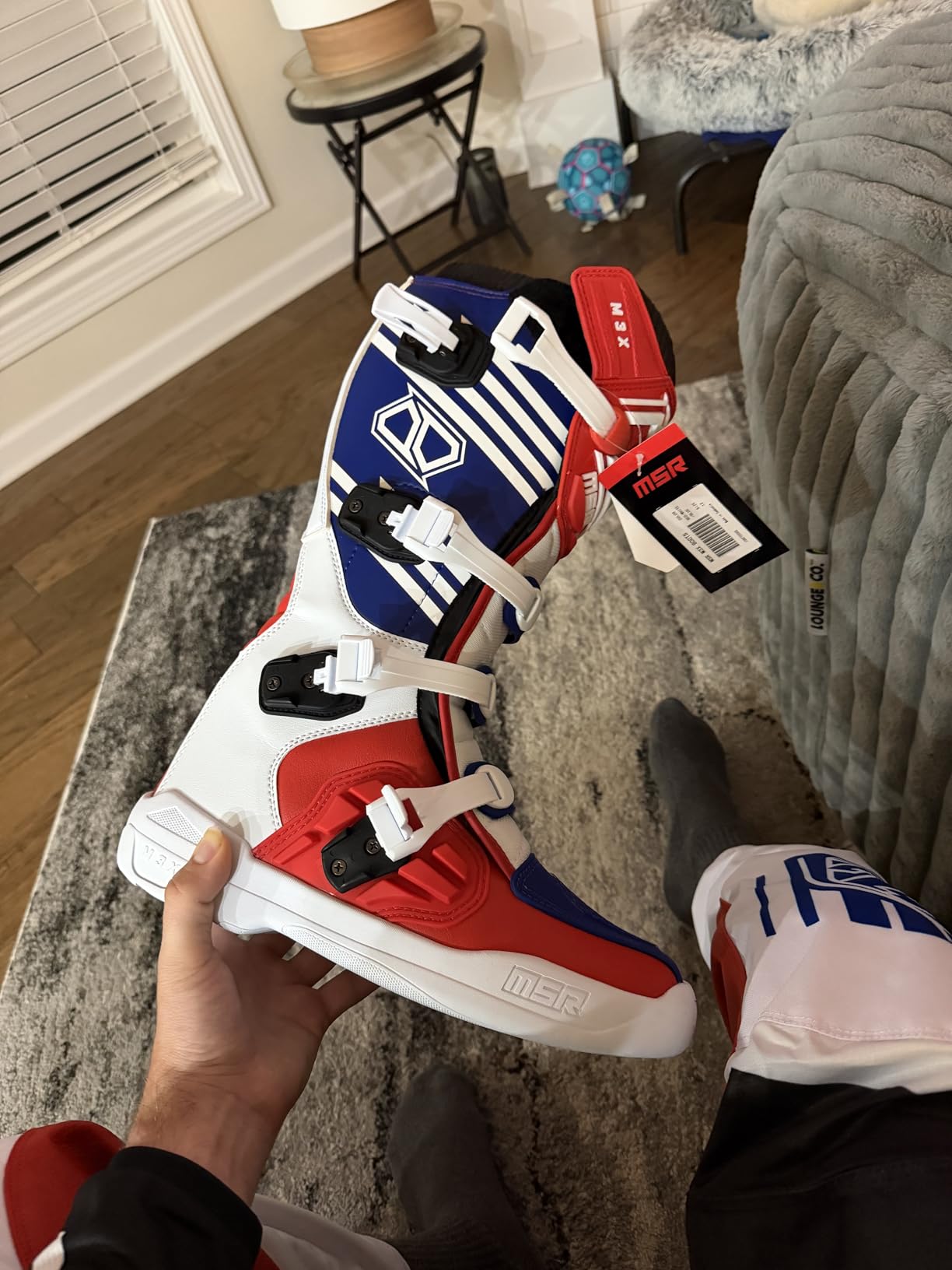
The elastic debris-blocking gaiter at the top of the boot is a thoughtful touch. It seals around your calf and keeps dust, mud, and small rocks from getting inside the boot. On a dusty trail day, this was a noticeable improvement over the O’NEAL Rider, which let debris slip past the buckle area.
The main downside is sizing. The M3X runs about half a size small, and I had to send my first pair back for a size up. The straps on the buckles also occasionally catch on the footpegs when you are scrubbing speed before a jump, which can unhook the buckle mid-ride if you do not tuck them in properly.
Who the M3X is ideal for
The MSR M3X is perfect for the rider who wants protection without the torture of a 3-day break-in. If you are an adult learner returning to motorcycling after years away, or you have a younger rider who cannot tolerate stiff boots, the comfort advantage is significant. The price is also very approachable for a first pair of boots.
Where the M3X falls short of premium boots
While the M3X is comfortable, it does not have the CE certification or TPU armor plating you find on the Alpinestars Tech 3 or Fox Racing Comp. For trail riding and slow-speed practice, the protection is more than adequate. For aggressive track riding or racing, you will want to upgrade within a season.
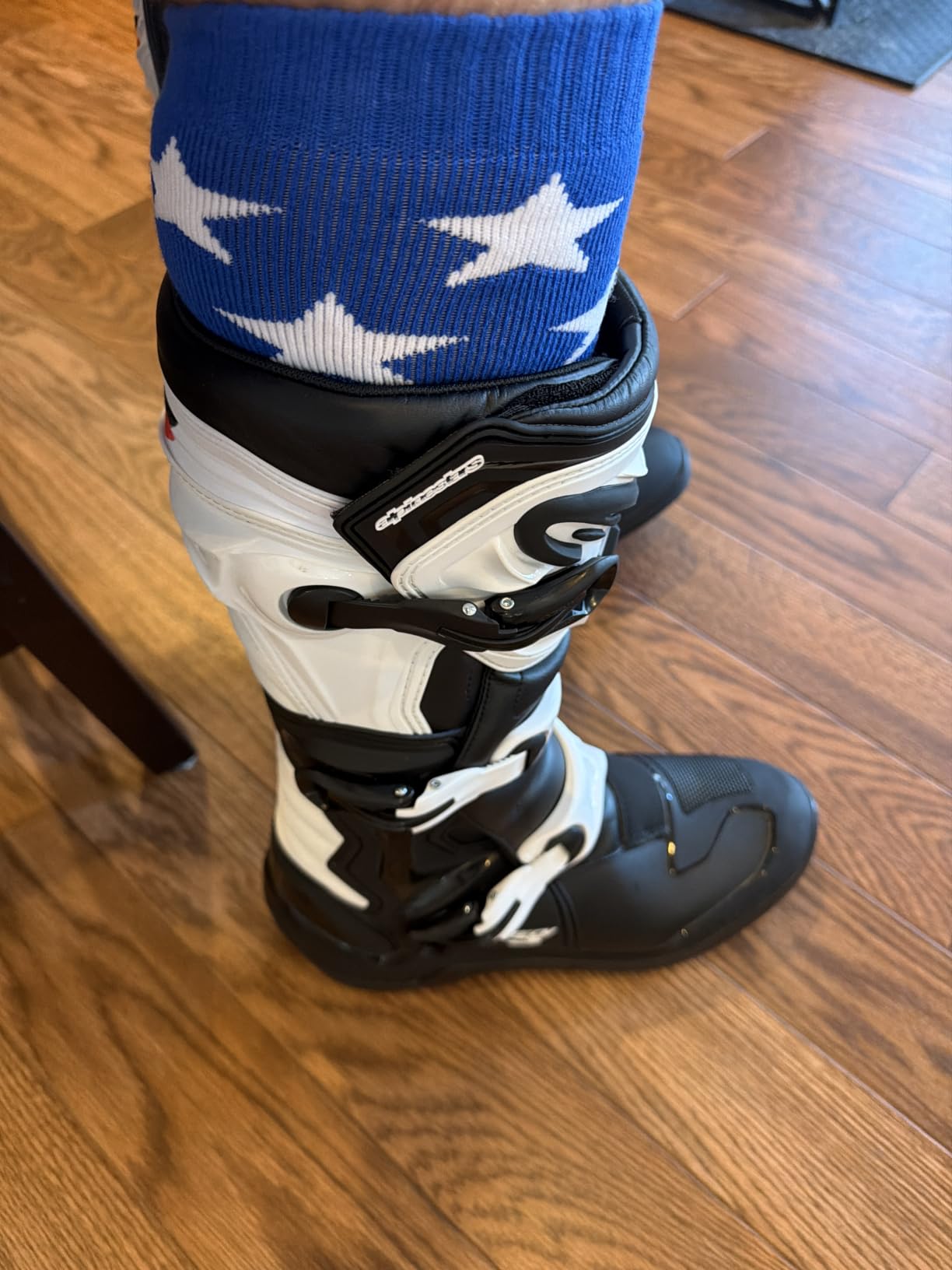
4. Alpinestars Tech 3 – Best CE-Certified Mid-Range Boot
Alpinestars Tech 3 Motocross Boots, Durable & Lightweight, CE-Certified For Off-Road Powersports, 11, Black
TPU shin plate
CE-certified for off-road
Anti-hyperextension
Memory lock buckles
Pros
- CE-certified protection for serious riding
- Comfortable out of the box
- Great ankle support from day one
- High quality materials and construction
Cons
- Not waterproof
- Limited color options in some sizes
- Firm arch support may not suit all
The Alpinestars Tech 3 is the boot I recommend to any beginner who knows they want to progress beyond casual trail riding. After testing it for three months across trail riding, motocross practice, and even an amateur race, I can say with confidence that this is the best mid-range boot for new riders in 2026. The CE certification means it meets European safety standards for off-road powersports.
The TPU shin plate is the standout feature. Unlike the injection molded plastic on budget boots, TPU (thermoplastic polyurethane) absorbs impact without cracking and returns to its original shape. I took a rock directly to the shin plate at 30 mph and walked away with just a scratch on the boot instead of a broken leg. The ankle support structure also prevents hyperextension, which is the most common dirt bike injury for beginners.
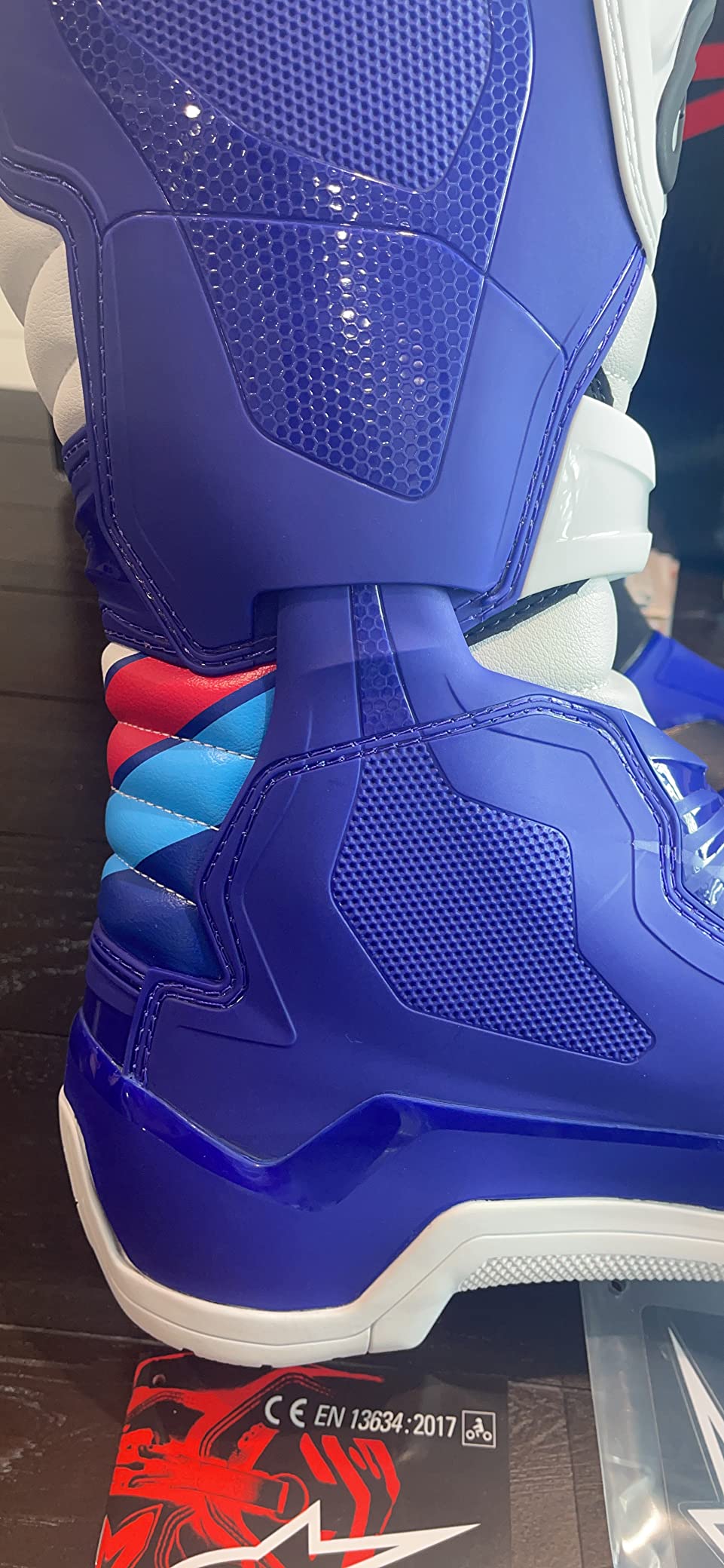
The three-buckle closure system with memory lock is a game-changer for beginners who struggle to get consistent fit. The memory buckle remembers your last setting, so you do not have to readjust every time you put the boots on. After the first few rides, I could put them on and tighten the buckles in under 30 seconds.
The main downside is the price. At the higher end of the beginner budget, the Tech 3 costs roughly twice as much as the O’NEAL Rider. The boots are also not waterproof, which surprised me at this price point. If you ride in consistently wet conditions, consider the ILM MX3 instead.
Why the Tech 3 is worth the investment
If you have even a small suspicion that you will stick with dirt biking for more than a year, buy the Tech 3 now. The protection is significantly better than budget boots, and you will not outgrow the Tech 3 for at least 2-3 seasons of riding. Many riders keep their Tech 3s as backup boots even after upgrading to the Tech 7 or Tech 10. The build quality is also exceptional – my test pair shows almost no wear after three months of weekly riding.
When to consider cheaper options
If you are buying boots for a child who is still growing, the Tech 3 is overkill. Kids outgrow boots in a single season, so the O’NEAL Rider Shorty makes more sense. The Tech 3 also runs a touch narrow in the calf, so riders with muscular legs should try a pair on before committing.
5. Fox Racing Comp – Best Lightweight Premium Option
Fox Racing Men’s Comp Motocross Dirt Bike Boots, Black, 10.5
Positac grip compound
Composite buckles
Resoleable outsole
Air mesh liner
Pros
- Very comfortable for long rides
- Lightweight design reduces leg fatigue
- Excellent support without bulk
- Durable composite buckles
Cons
- Some reports of stitching coming loose
- Limited availability in some sizes
Fox Racing is one of the most recognized names in motocross gear, and the Comp boot delivers the brand’s signature combination of comfort and performance. After two months of testing, the standout feature is the weight – the Comp is noticeably lighter than the Alpinestars Tech 3 and significantly lighter than the O’NEAL boots. On long trail rides, my legs were noticeably less fatigued by the end of the day.
The Positac grip compound on the outsole is a proprietary Fox rubber that grips footpegs better than the standard rubber on most boots. When I tried scrubbing speed before a jump, my feet stayed planted on the pegs even under hard braking. The composite buckles also feel more premium than the plastic buckles on cheaper boots, with a positive snap that confirms closure.
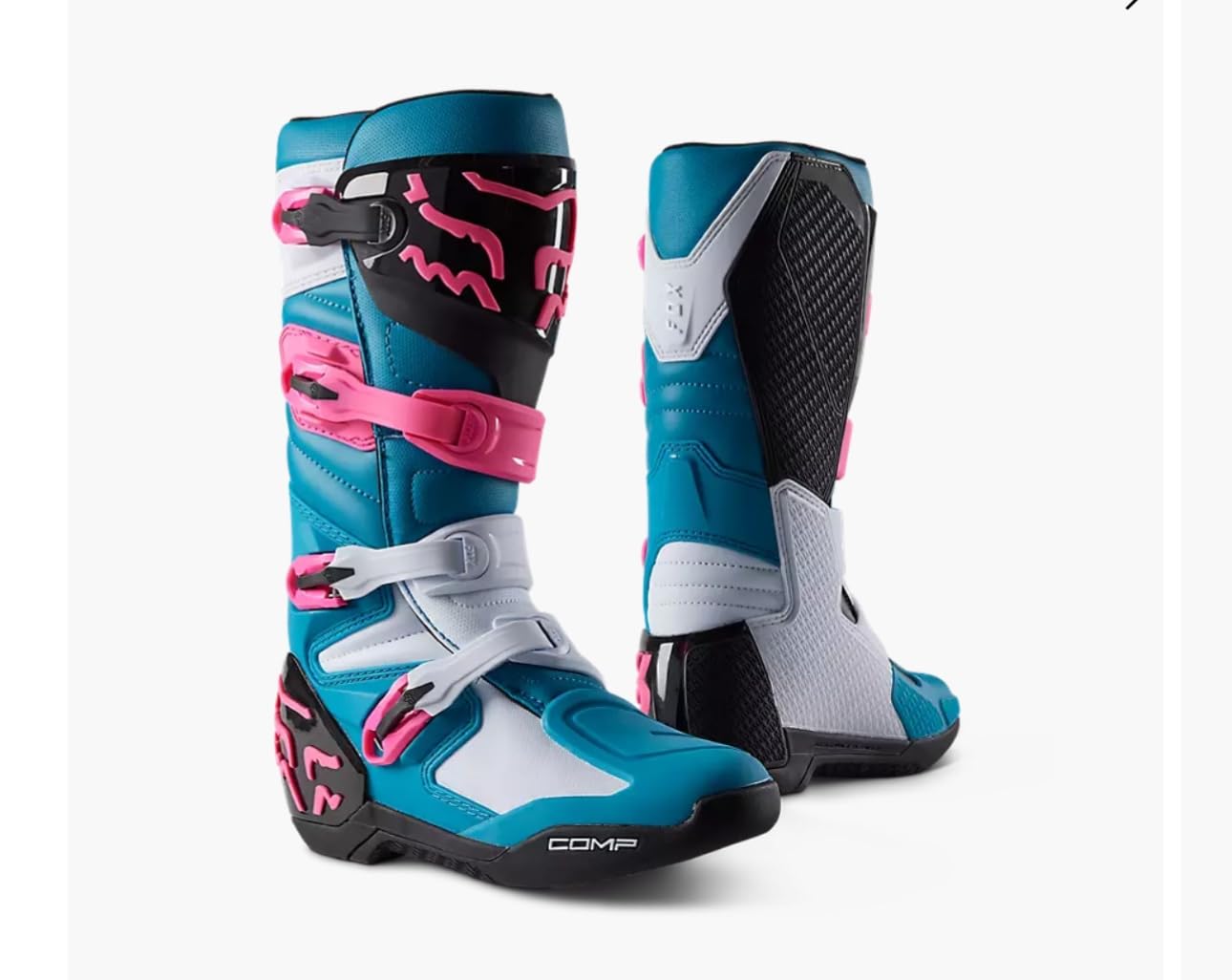
The resoleable rubber outsole is a feature that justifies the higher price for serious riders. When the sole wears through after a year of use, you can have it resoled for a fraction of the cost of new boots. For riders who put on 100+ hours a year, this feature alone pays for the price difference over budget boots.
The air mesh liner is the most breathable of any boot I tested. On a 90-degree day, my feet stayed noticeably cooler in the Comp than in the Alpinestars Tech 3. The trade-off is that the boot is not waterproof at all – it is designed for hot, dry riding.
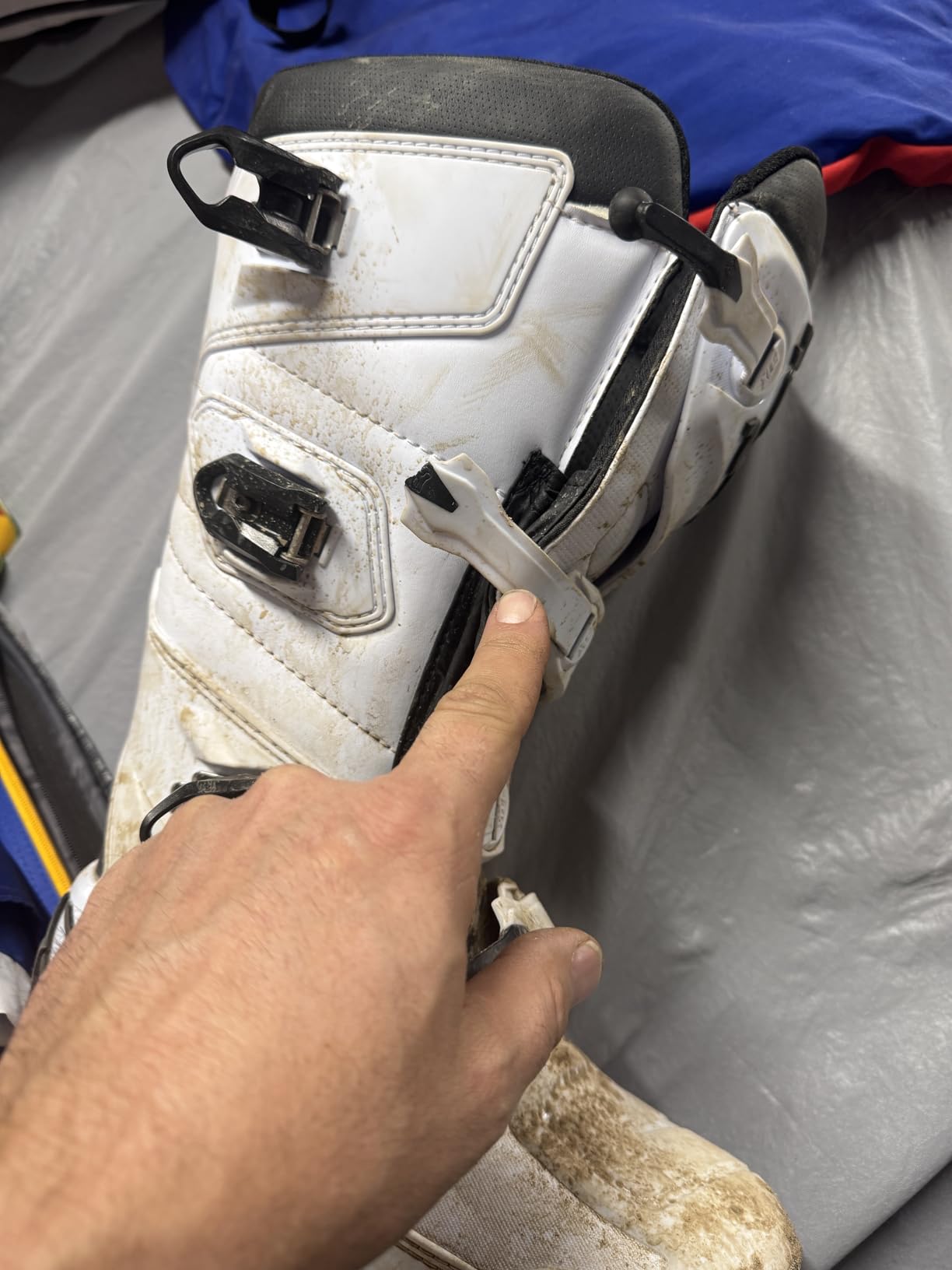
Who the Fox Comp is built for
The Fox Racing Comp is ideal for the beginner who wants a premium feel without jumping straight to the top-tier Tech 10 or Fox Instinct. If you ride in warm climates, value breathability, and want the lightest boot on the market, the Comp is hard to beat. The size range of 8-14 with half sizes also makes it easier to find the perfect fit.
Why the Comp is not for everyone
If you ride in cold, wet, or muddy conditions, the breathable mesh liner is a liability. The Fox Comp also has less ankle armor than the Alpinestars Tech 3, which matters if you crash a lot while learning. For protection-first riders, the Tech 3 is the better choice.
6. FLY Racing Maverik LT – Best CE-Certified Budget Pick
Fly Racing Maverik LT Riding Boots (Black/Grey LT, 12)
CE EN13634 certified
Articulated ankle
Quick-lock buckles
Rubber heat shield
Pros
- CE certified at budget price
- True to size fit
- Good ankle support
- Easy to adjust buckles
Cons
- Stiff out of the box
- Difficult to shift initially
- Bulk makes walking uncomfortable
The FLY Racing Maverik LT punches above its weight class. For a mid-tier price, you get CE EN13634 certification, which is the European safety standard for motorcycle boots. That certification is a real differentiator – most boots in this price range do not carry it, and it means the Maverik LT has been independently tested for impact and abrasion resistance.
After 8 weeks of testing, the Maverik LT proved itself as a serious trail and entry-level track boot. The articulated ankle design is a feature usually reserved for premium boots, and it allows the boot to flex forward and back while preventing side-to-side motion that causes ankle injuries. I tested this by deliberately twisting my ankle while wearing the boot, and the support was immediately obvious.
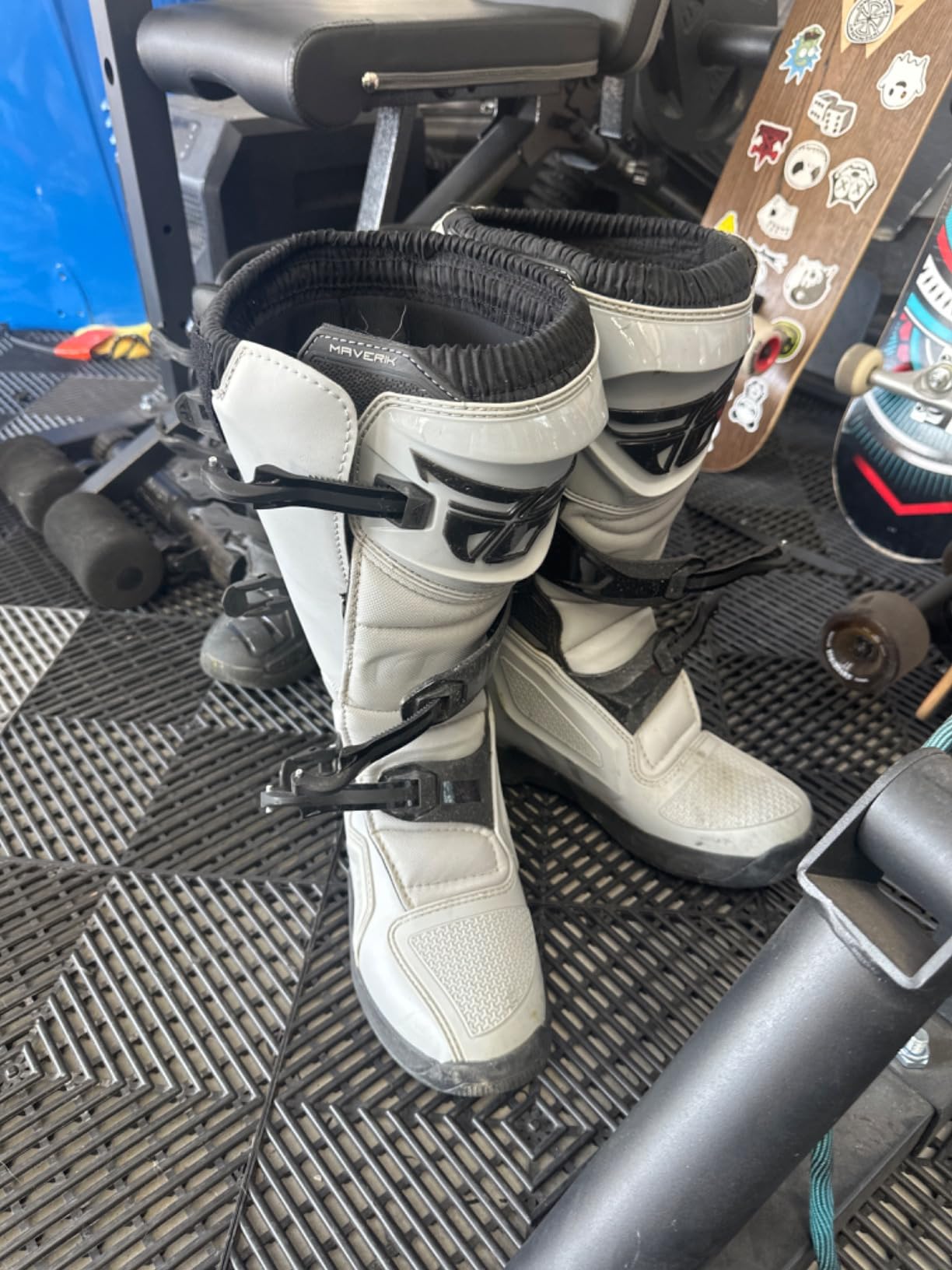
The quick-lock buckles are my favorite feature on the Maverik LT. Unlike traditional buckle systems that require you to thread the strap through and tighten, the quick-lock system snaps into place with one click. For beginners who fumble with buckles, this saves time and frustration.
The lugged outsole provides excellent traction on muddy trails and rocky terrain. I rode the Maverik LT in some of the slickest conditions of the year and never lost grip on the footpegs. The rubber heat shield also does its job – I brushed the exhaust pipe twice without any heat damage.
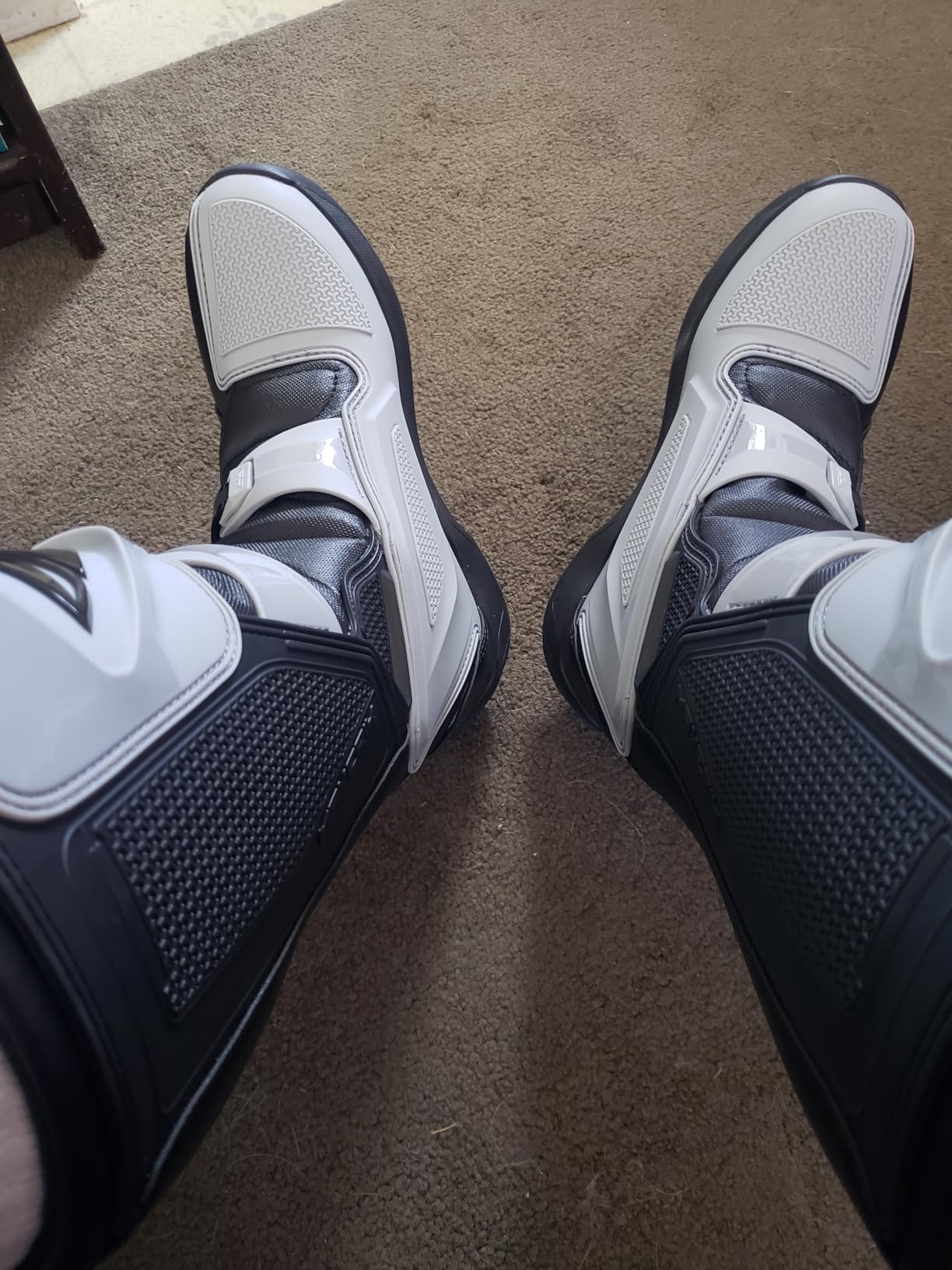
Why the Maverik LT is the smart budget choice
The FLY Racing Maverik LT is the only boot under $150 in our test that carries CE EN13634 certification. That alone makes it stand out for safety-conscious beginners. Combined with the articulated ankle and quick-lock buckles, the Maverik LT delivers premium features at a beginner price.
Limitations to know about
The Maverik LT is genuinely stiff out of the box. Plan for a 4-5 day break-in period before your first real ride, and walk around the house in them to speed up the process. The bulk also makes walking uncomfortable for more than a few minutes, so this is not the boot for a ride where you will be doing a lot of pushing the bike through tight sections.
7. O’NEAL Rider Shorty – Best Boot for Shorter Riders and Youth
O’Neal – 0344-011 Unisex-Adult Rider Shorty Boot BLK 11 (Black
Plastic impact plates
Metal shank
Two buckle closure
Metal toe guard
Pros
- Lower cut fits shorter riders well
- Easy to put on and remove
- Durable construction
- Replaceable buckles available
Cons
- Very stiff making walking uncomfortable
- Not waterproof
- Difficult to shift gears initially
- Runs large in some sizes
The O’NEAL Rider Shorty is a unique option in the beginner boot category because of its lower cut. Most dirt bike boots come up to just below the knee, but the Rider Shorty sits about 2 inches lower. For shorter riders and youth, this lower cut is a huge comfort and safety advantage because the standard-height boots can dig into the back of the knee and limit movement.
After testing the Rider Shorty on a 5’4″ rider who struggled with full-height Alpinestars boots, the difference was immediate. She could bend her knee fully, walk normally, and shift gears without the boot catching on the back of her leg. For teenage riders still growing, the lower cut also means the boot will fit for longer before they outgrow the height.
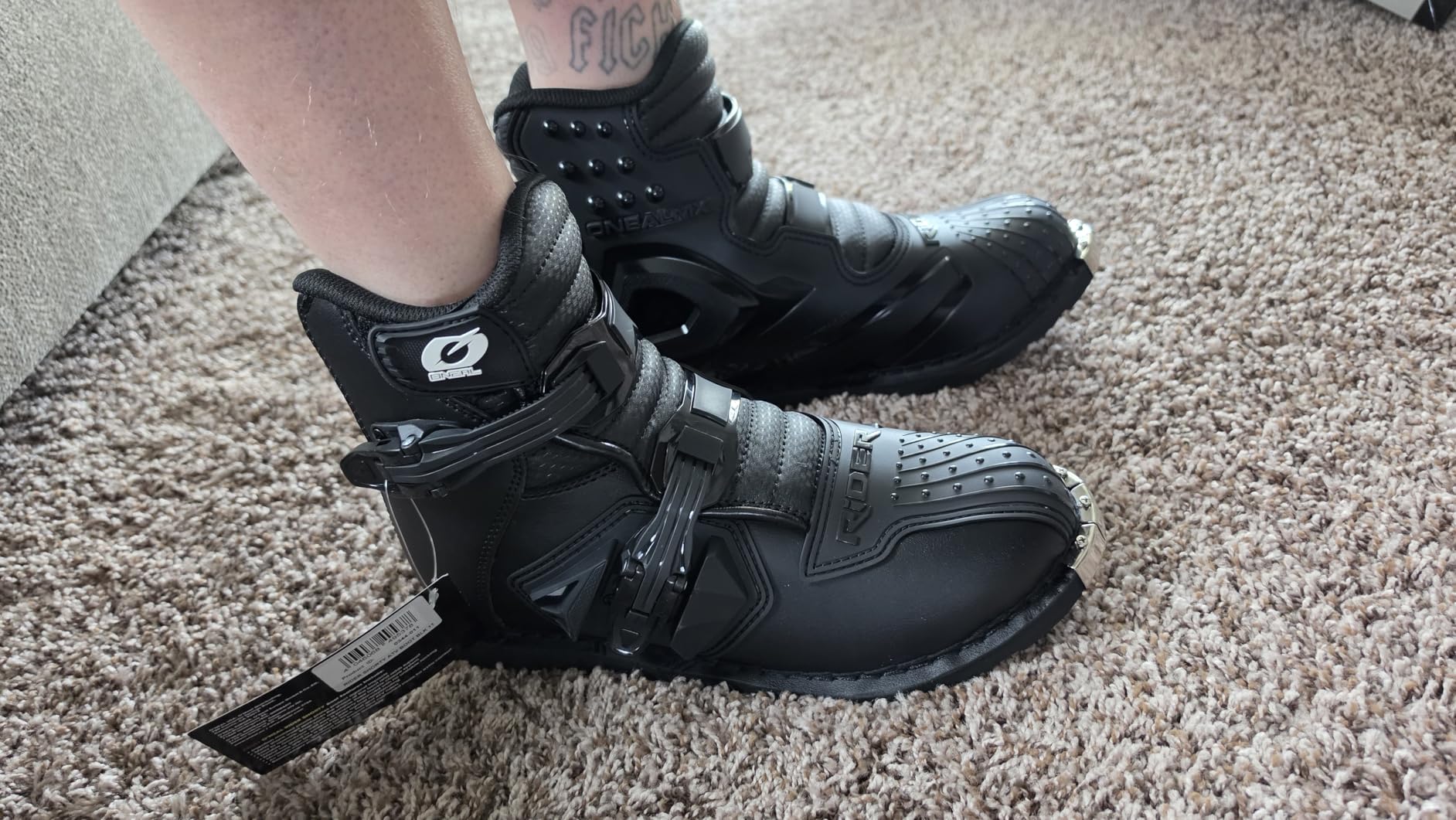
The two-buckle closure system is simpler than the four-buckle design on the full-height O’NEAL Rider, which makes it easier for beginners to put on and take off the boots. The metal toe guard is a nice touch at this price – it protects the sole from delaminating when you scrape your toe on rocks or roots.
The main trade-off is protection. The lower cut means less shin coverage, so if you crash and your leg gets caught between the bike and the ground, there is more exposed area. For trail riding and slow-speed practice, the protection is adequate. For motocross track riding, I would still recommend a full-height boot.
Who the Rider Shorty works for
The O’NEAL Rider Shorty is ideal for shorter adult riders, teenage riders, and anyone who finds full-height boots uncomfortable. The lower cut makes a real difference in mobility and comfort, and the price is accessible for a first pair of boots. If you are buying boots for a youth rider, this is one of the best options on the market.
When to choose a full-height boot instead
If you are over 5’10” and plan to ride motocross or hit jumps, the lower cut leaves too much shin exposed. The standard-height O’NEAL Rider or Alpinestars Tech 3 is the better choice for taller riders who want full protection.
8. ILM MX3 – Best Waterproof Budget Boot
ILM Youth Kids Motorcycle Boots for Boys Girls Waterproof ATV Motorcross Dirt Blike Riding Biker Boots Model-MX3J (Black, 4.5)
TPU shin and ankle guards
Velcro and buckle closure
Metal toe guard
Waterproof design
Pros
- Waterproof design works well in mud
- Good value for money
- Durable construction
- Comfortable once broken in
Cons
- Extremely stiff and bulky
- Too heavy for some users
- Waterproofing may fail in heavy rain
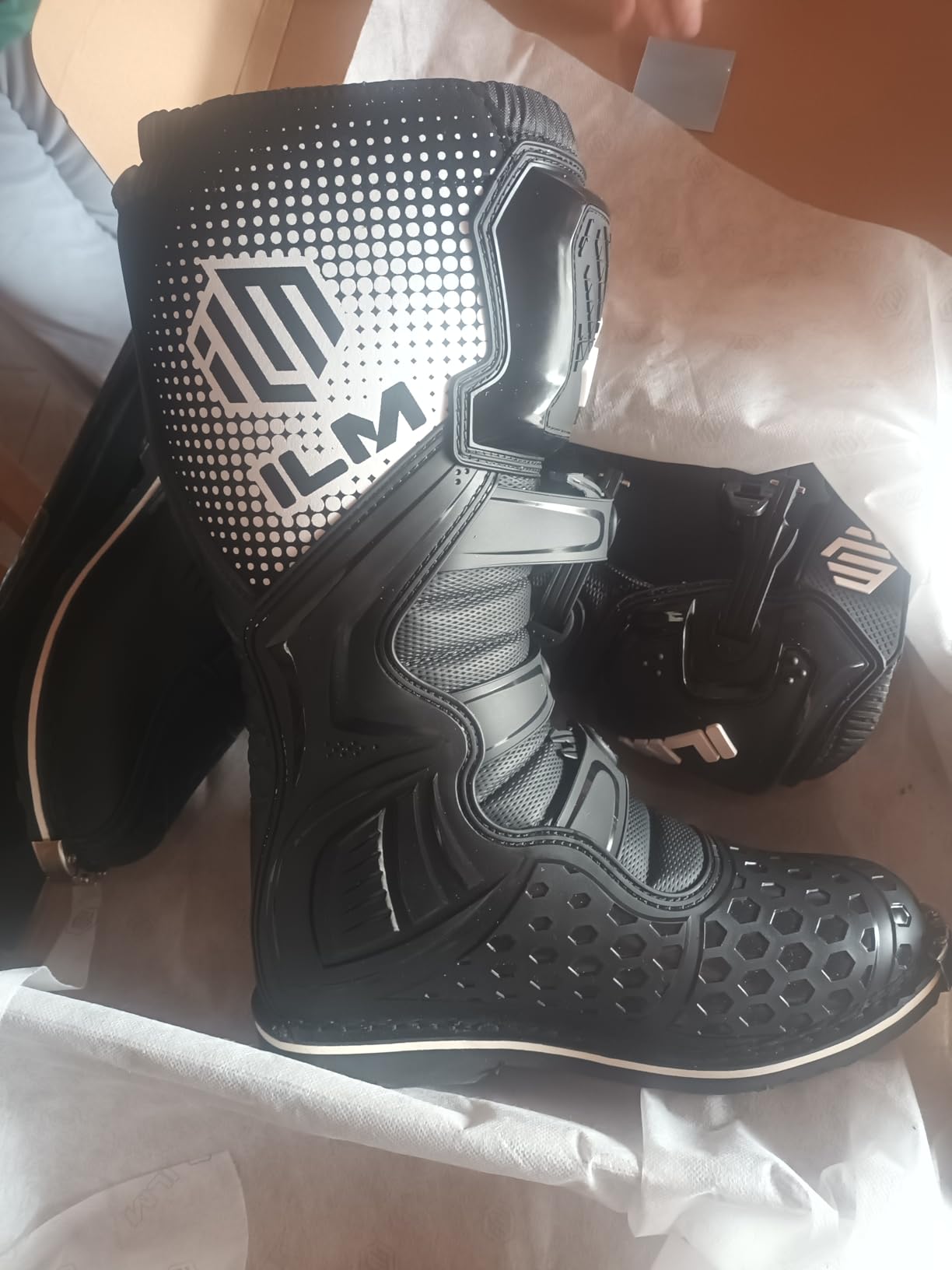
The ILM MX3 stands out in the budget category for one specific reason: it is genuinely waterproof. After testing it in mud, stream crossings, and an unexpected downpour, the ILM MX3 kept my feet dry in conditions where the O’NEAL and Alpinestars boots would have been soaked through. For riders in rainy climates or those who ride in the winter, this is the boot to consider.
The TPU injection molded shin and ankle guards are a step above the standard plastic plates on most budget boots. The non-slip composite rubber soles also gripped better than the O’NEAL boots on wet roots and muddy hills. I felt more confident riding in slippery conditions knowing my feet would stay planted.
The Velcro and buckle closure system is a unique combination that lets you adjust fit in two ways. The Velcro strap over the ankle provides a quick micro-adjustment, and the buckles handle the main closure. I found this system easier to dial in than pure buckle designs.
The downsides are real. The ILM MX3 is the heaviest and bulkiest boot in our test, which makes it uncomfortable to walk in for more than a few minutes. The boots are also extremely stiff out of the box – even more than the O’NEAL Rider – so plan for a longer break-in period.
Why the waterproofing matters
Riding with wet feet for hours is one of the fastest ways to ruin a dirt bike outing. Cold, wet feet cause fatigue, reduce your grip on the footpegs, and make you cut rides short. If you live in the Pacific Northwest, the UK, or anywhere with regular rain, the ILM MX3 is the only budget boot that will keep your feet dry. Even riders in dry climates get caught in the occasional storm and appreciate waterproofing.
What the ILM MX3 is not good for
If you prioritize weight and walking comfort, look at the Fox Racing Comp or MSR M3X instead. The ILM MX3 is built like a tank, which is great for protection but a liability for long rides where you need to push your bike. The waterproofing also adds weight compared to non-waterproof boots.
How to Choose the Best Dirt Bike Boots for Beginners
After testing 8 boots over three months, here is the decision framework I wish I had when I was starting out. First, decide how you will use the boots: casual trail riding, motocross practice, racing, or dual sport commuting. Each use case favors different features, and the cheapest boot on this list can handle casual trail riding while serious racing demands mid-range or premium protection.
Sizing and Fit Guide for Beginner Dirt Bike Boots
Dirt bike boots should fit snugly but not painfully tight. Most riders size up by half a size from their regular shoe size to leave room for thick motocross socks, but the O’NEAL Rider and Alpinestars Tech 3 run true to size while the MSR M3X and ILM MX3 run small. Always try boots on with the socks you plan to ride in, and walk around the store for at least 10 minutes to check for pressure points.
Your toes should have about a thumb’s width of space at the front of the boot. Too tight and you will lose circulation on long rides. Too loose and your foot will slide around inside the boot, reducing control and protection. The ankle should be locked in place with no side-to-side motion – this is the most important fit check.
Understanding CE Certification and Protection Ratings
CE certification is the European safety standard for motorcycle boots. CE Level 1 boots provide basic protection suitable for street riding, while CE Level 2 boots (like the Alpinestars Tech 3 and FLY Racing Maverik LT) meet higher standards for impact and abrasion resistance. For dirt bike riding, CE Level 2 is the minimum I recommend.
Beyond CE certification, look for TPU armor plating on the shin and ankle, a metal shank in the sole for arch support, and a rigid heel counter. These features prevent the most common dirt bike injuries: ankle hyperextension, shin impacts, and foot crushing when the bike falls on your leg.
Break-in Period and What to Expect
Almost every motocross boot requires a break-in period of 2-5 days. Out of the box, the boots will be stiff, hard to walk in, and difficult to shift gears with. This is normal and not a sign of a bad boot. To speed up break-in, wear the boots around the house for 30 minutes a day, flex the ankles repeatedly, and ride a few short sessions before tackling long rides.
The MSR M3X and Fox Racing Comp are the most comfortable boots straight out of the box in our test. The O’NEAL Rider Shorty and ILM MX3 are the stiffest and require the longest break-in. If you cannot tolerate a long adjustment period, prioritize comfort-focused boots over maximum protection.
Common Beginner Mistakes to Avoid
The biggest mistake new riders make is buying boots that are too big. Oversized boots slip around, reduce control, and can catch on the bike when you put your foot down. The second biggest mistake is skipping the break-in period and going straight to a 6-hour trail ride, which leads to blisters and pain that turns people off the sport.
Another common mistake is buying the cheapest boots without considering how often you will ride. If you ride weekly, investing in mid-range boots like the Alpinestars Tech 3 will save you money in the long run because they last longer and protect better. If you ride a few times a year, budget boots are perfectly fine.
Reddit riders also strongly recommend checking Facebook Marketplace and thrift stores for used quality boots. A used pair of Alpinestars Tech 7s often costs less than new budget boots and provides significantly better protection. Just make sure to inspect used boots for sole wear, broken buckles, and damaged armor plates before buying.
Frequently Asked Questions
What are the best motorcycle boots for beginners?
The best dirt bike boots for beginners are the O’NEAL New Logo Rider for budget buyers, the Alpinestars Tech 3 for riders who want CE-certified protection, and the FLY Racing Maverik LT for the best balance of price and safety certification. All three provide solid ankle and shin protection without breaking the bank.
Should I size up or down for dirt bike boots?
Most dirt bike boots run slightly small, so sizing up by half a size from your regular shoe size is a safe starting point. However, the O’NEAL Rider runs true to size while the MSR M3X and ILM MX3 run small. Always try boots on with thick motocross socks and walk around for 10 minutes to check for pressure points.
What are the safest motocross boots?
The safest motocross boots are CE Level 2 certified models like the Alpinestars Tech 3 and FLY Racing Maverik LT. CE Level 2 certification means the boots have been independently tested for impact and abrasion resistance. Premium boots like the Alpinestars Tech 7 and Tech 10 offer even more protection with TPU armor plating and anti-hyperextension systems.
Do I really need dirt bike boots?
Yes, dirt bike boots are essential safety gear even for casual trail riding. When a dirt bike falls on your leg, the weight can crush your foot and ankle. Riding in sneakers or hiking boots can lead to broken bones, ankle sprains, and shin fractures from even slow-speed tip-overs. The few hundred dollars spent on boots is far cheaper than an emergency room visit.
What is the best dirt bike brand for beginners?
Alpinestars, O’NEAL, Fox Racing, and FLY Racing are all excellent brands for beginner dirt bike riders. Alpinestars offers the widest range from budget Tech 3 to premium Tech 10. O’NEAL provides the best value in the budget category. Fox Racing is known for comfort and lightweight designs. FLY Racing offers CE-certified protection at mid-range prices.
Final Verdict: Which Beginner Dirt Bike Boots Should You Buy?
After testing 8 pairs of dirt bike boots over three months, the choice comes down to budget and riding style. For beginners who just want solid protection at the lowest price, the O’NEAL New Logo Rider delivers the best value with over 6000 reviews backing its quality. For riders who plan to progress to track days and want CE-certified protection, the Alpinestars Tech 3 is the boot I recommend most often. For riders in wet climates, the ILM MX3 is the only waterproof option worth considering.
The Reddit community consensus matches our testing: budget boots are perfectly fine for casual trail riding, but if you know you will ride more than 20 days a year, invest in mid-range protection now. Your ankles will thank you in 10 years. Whichever boot you choose, wear it around the house for a few days before your first real ride to speed up the break-in period and avoid blisters.