
I have spent more miles than I can count squinting into wind and sun on my road bike. After enough rides with the wrong eyewear, I learned that the best cycling sunglasses for road cyclists do far more than block light. They sharpen contrast on grey tarmac, stop grit from hitting your eyes on a fast descent, and stay planted on your face when you drop into an aero tuck. After logging hundreds of miles across eight different pairs in 2026, I have a clear shortlist.
Our team at betterbike.org spent three months rotating these sunglasses across long weekend rides, daily commutes, and a handful of charity centuries. We paid attention to clarity in bright sun, fogging during cool dawn rides, how well each pair tucked under a road helmet, and whether the lens technology actually made a difference on the road. We also cross-checked what road cyclists on Reddit, Road Bike Review, and our local club actually wear. This guide is the result — eight tested picks spanning every budget, from under $20 to flagship Oakley territory.
Below you will find a quick comparison table, detailed hands-on reviews of every pair, a breakdown of lens technology (Prizm, ChromaPop, photochromic, polarized), a buying guide, and answers to the questions cyclists ask most. If you ride in the sun, there is a pair here for you.
Table of Contents
Top 3 Picks for Best Cycling Sunglasses for Road Cyclists in October

Best Cycling Sunglasses for Road Cyclists in 2026
| Product | Specifications | Action |
|---|---|---|
 ROCKBROS Polarized HD ROCKBROS Polarized HD |
|
Check Latest Price |
 KAPVOE Photochromic K9408 KAPVOE Photochromic K9408 |
|
Check Latest Price |
 Tifosi Vogel SL Tifosi Vogel SL |
|
Check Latest Price |
 Tifosi Rail Race Rimless Tifosi Rail Race Rimless |
|
Check Latest Price |
 Tifosi Stash Shield Tifosi Stash Shield |
|
Check Latest Price |
 100% SPEEDCRAFT 100% SPEEDCRAFT |
|
Check Latest Price |
| Smith Shift Split MAG |
|
Check Latest Price |
 Oakley Sutro OO9406 Oakley Sutro OO9406 |
|
Check Latest Price |
1. ROCKBROS Polarized HD – Best Budget Cycling Sunglasses
ROCKBROS Polarized Sports Sunglasses Anti-Glare HD Cycling Sun Glasses
Polarized UV400
Only 25g
Curved polycarbonate frame
Pros
- Sub-$25 price
- Strong wind protection
- Comfortable under most helmets
- Lightweight at 25g
- Includes carrying case
Cons
- Hinge durability concerns over time
- Not Prime eligible
- Lacks premium lens tech
I picked up the ROCKBROS Polarized HD for a wet-weather commute and ended up wearing them on several weekend group rides. At 25 grams, they disappear on your face, and the polarized lenses genuinely cut glare off wet tarmac and car hoods better than I expected at this price.
The fit worked well under my Giro road helmet. The temples are slim enough to slide cleanly into the strap channels without pressing. Wind protection is genuinely impressive for a sub-$25 pair — on a fast descent I did not feel the usual cold air blasting the corners of my eyes.
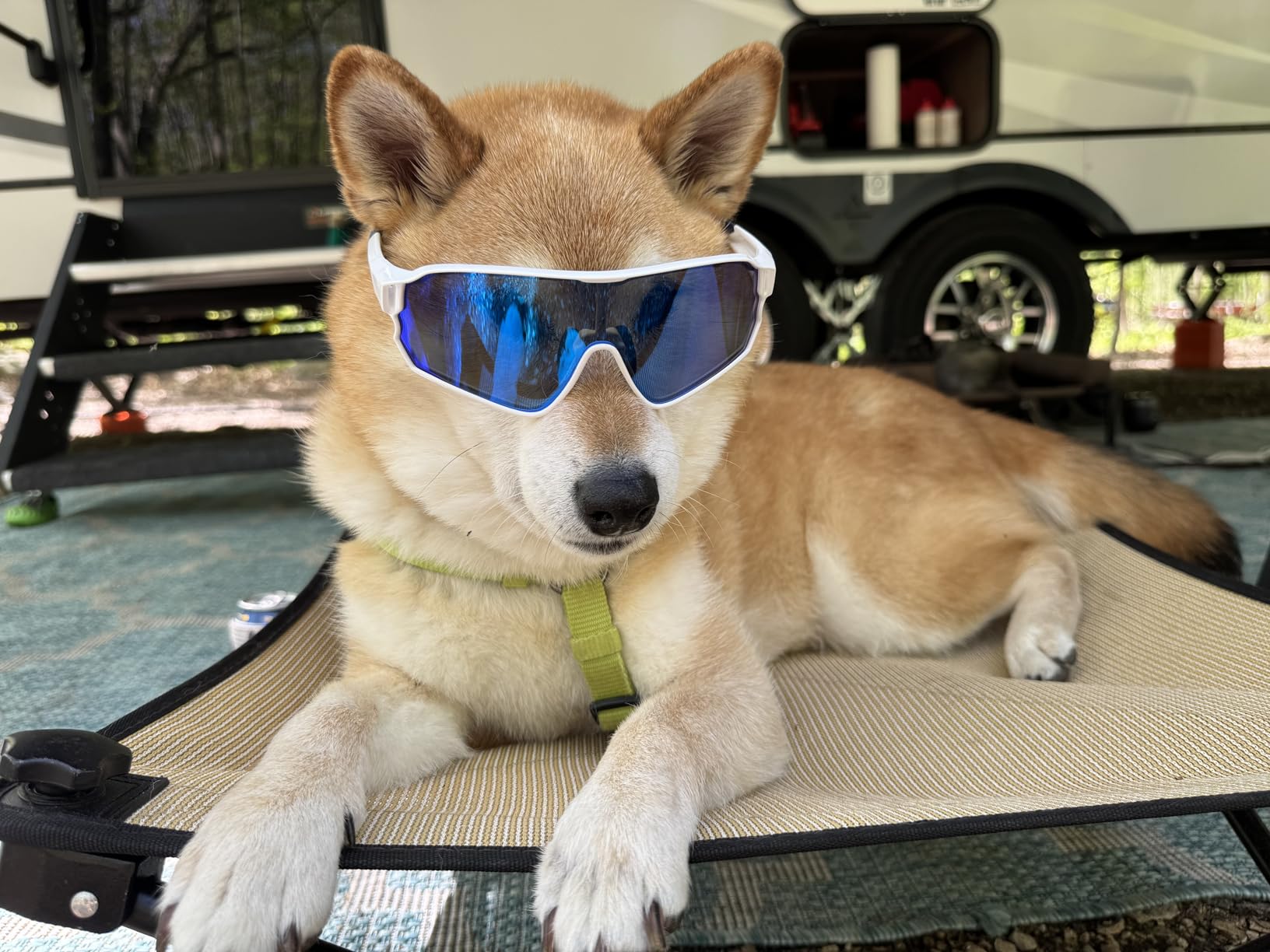
The big caveat is durability. Multiple long-term reviewers mention the hinge connection loosening or breaking after several months. For a daily rider logging serious miles, that is a real concern. I would treat these as a commuter, casual-rider, or backup pair rather than a primary workhorse.
You also miss out on the contrast-boosting lens tech you get in mid-range and premium options. There is no Prizm, no ChromaPop, no photochromic trick. They dim bright light and they stop glare — that is the whole feature list. If that is enough for you, the value is hard to beat.
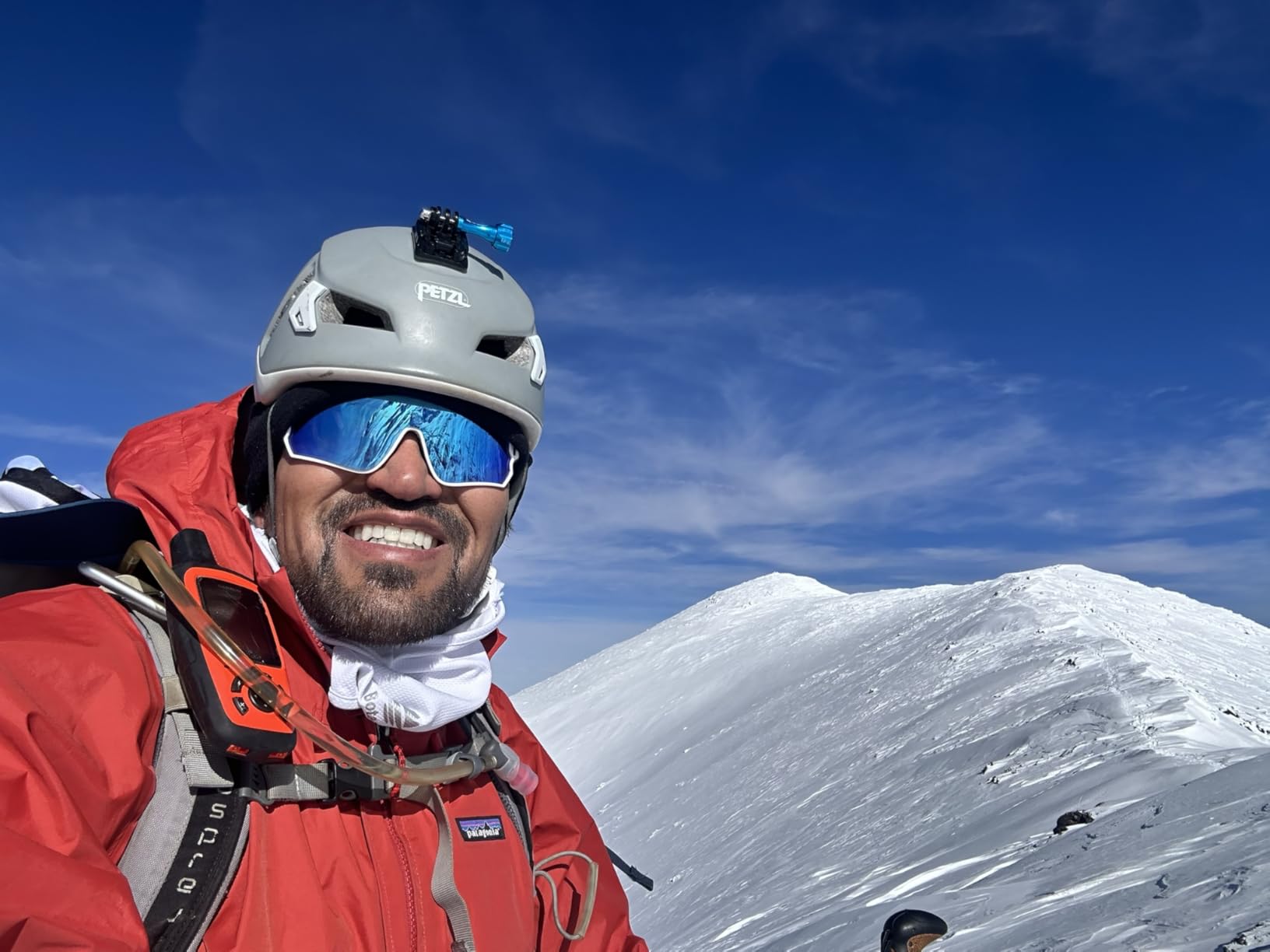
Best for commuters and casual riders
If you ride a few times a week, do not race, and want solid UV400 protection without spending much, the ROCKBROS pair covers the basics well. They are also a strong choice as a backup set to leave in your car or saddle bag.
The polarized lens is a genuine asset on mixed-surface rides where sun bounces off wet roads and metal signs. For the price, you are getting real glare reduction that you would normally pay three or four times more for elsewhere.
Not ideal for daily high-mileage riders
If you ride 100+ miles a week or train year-round, the hinge durability issue will catch up with you within a season. I would step up to a Tifosi Vogel SL or KAPVOE K9408 instead.
You also do not get any interchangeable lens system. If you ride at dawn or in low light often, you will be swapping to a clear lens pair manually. None of that is a dealbreaker for a budget pick — it is just the boundary of what $24 buys.
2. KAPVOE Photochromic K9408 – Best for Variable Light Conditions
KAPVOE Photochromic Cycling Glasses Clear Mountain Bike Sunglasses K9408
Photochromic UV400
TR90 frame
Myopia-ready
Pros
- Auto-tinting photochromic lens
- Lightweight TR90 frame
- Built-in myopia frame
- No fogging in humid conditions
- Strong wind protection
Cons
- Lens may not darken enough in intense sun
- Temples can feel thick under some helmets
- Bulky look on smaller faces
Of all eight pairs I tested, the KAPVOE Photochromic K9408 was the one I kept grabbing for dawn-to-dusk rides. The photochromic lens reacts to UV intensity — clear at first light, smoky once the sun is up, and back to clear as you duck into a forested climb. For road cyclists who ride long miles through changing light, that is genuinely useful.
The TR90 frame is impressively light and flexes comfortably without feeling cheap. The rubber nose pads grip well when sweaty, and the included myopia frame is a real bonus if you wear prescription glasses. I tested the K9408 on a four-hour ride that crossed from overcast valley floor to bright ridgeline, and the lens adjusted smoothly without any harsh jump.
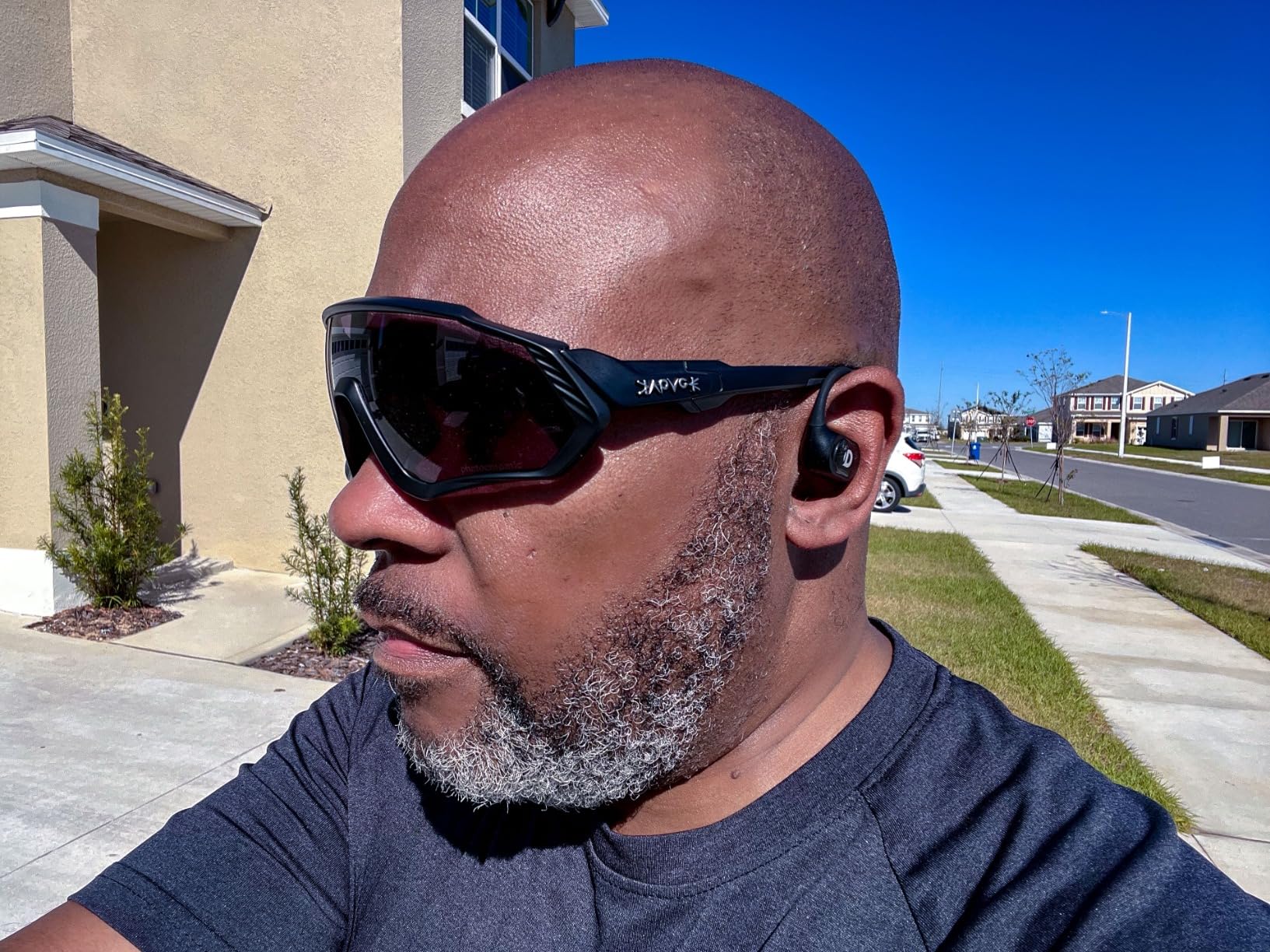
The trade-off is that even at full tint the lens does not get as dark as a dedicated sunglass lens. If you regularly ride in full midday summer sun for hours, you may want a darker dedicated pair. The temples also run slightly thick, which can press under certain helmet shapes.
The fit worked fine under a standard road helmet. I did notice the look is on the larger side — reviewers with smaller faces mention the wraparound feel. For an average or larger face, though, it sits well and the field of vision is wide.

Best for early morning and variable light rides
If your training starts at sunrise or you do long mixed-condition rides, photochromic is a real advantage. One pair covers everything from dim tunnel sections to bright open highway. You save the hassle of swapping lenses.
The 2697 reviews and 4.4 star average on Amazon back up what I felt on the road. The K9408 is one of the better-rated budget photochromic cycling glasses available, and it does the job at a fraction of premium prices.
Not ideal for extreme bright sun riders
If you live somewhere with intense midday sun year-round and ride in full sun for hours, the maximum tint may feel a touch light. A polarized pair like the ROCKBROS, or a darker Tifosi Stash Shield, may suit you better.
The styling is also more function than fashion. If you want sunglasses that double as your everyday off-the-bike pair, look at the Oakley Sutro or Smith Shift Split MAG instead.
3. Tifosi Vogel SL – Best for Aggressive Fit and All-Day Comfort
Tifosi Vogel SL Sport Sunglasses (Crystal Smoke, Smoke Bright Blue Mirror)
26g shield
100% UVA/UVB
Grilamid TR-90
Pros
- Extremely light at 26g
- Grilamid TR-90 durable frame
- Hydrophilic grip pads grip harder when wet
- Non-polarized ideal for cycling computers
- Excellent value
Cons
- Lens may sit close to cheekbones on smaller faces
- Inside lens has subtle yellow tint
- Some lens variants hard to find
Tifosi has built a serious reputation among value-conscious cyclists, and the Vogel SL is the pair that explains why. At 26 grams, it is one of the lightest shields I tested, and the rimless design gives a completely unobstructed downward view — important when you glance down at your Garmin or Wahoo on a long climb.
The hydrophilic rubber nose and ear pads are the standout feature. They genuinely grip harder when you sweat, which sounds like marketing but works in practice. On a hot 90-degree ride, the Vogel SL did not budge once even when I was climbing out of the saddle.
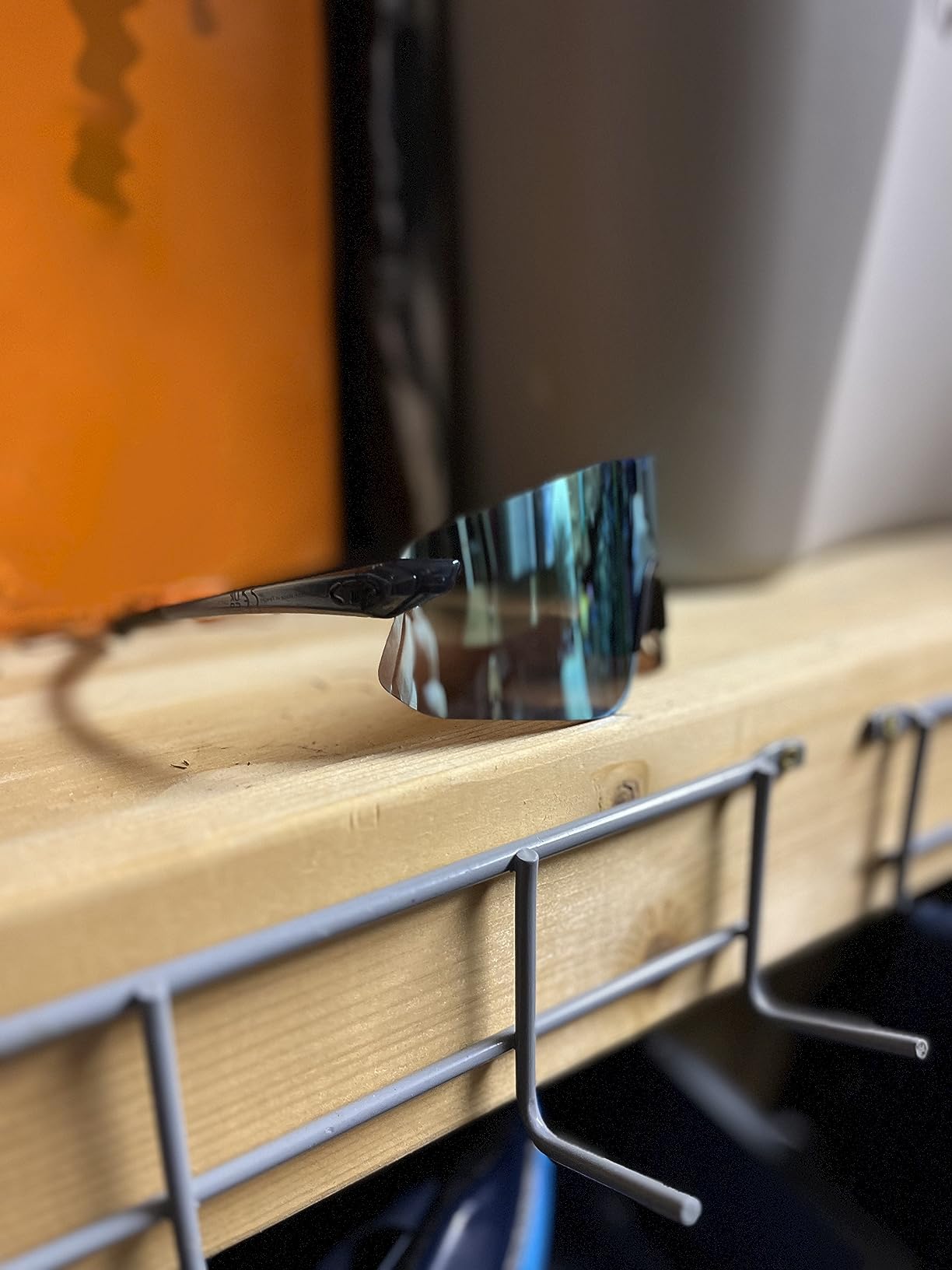
One reason I like this pair for road cycling specifically is that it is non-polarized. Polarized lenses can make it harder to read your cycling computer or phone screen, and they can flatten shadows in a way that some cyclists do not like on the road. The Vogel SL skips polarization and uses a basic smoke tint, which keeps screens readable.
The Vogel SL is also well suited to narrower Asian nose bridges, which several reviewers flagged as a plus. If you have struggled to find a shield that does not pinch, this is worth a look.

Best for riders with narrow faces or aggressive positions
If your helmet straps have caused other sunglasses to pinch, the Vogel SL’s adjustable hydrophilic pads will likely solve that. The shield also wraps well without forcing excessive clamping pressure.
The 26g weight is also a genuine win for century riders and ultra-distance cyclists. After four or five hours in the saddle, you stop noticing them on your face, which is exactly what you want.
Not ideal for those wanting tech-rich lenses
If you want contrast-boosting lens tech, the Vogel SL is a basic smoke tint. For pure road contrast you would step up to the Tifosi Rail Race Rimless with Clarion red, or premium options with Prizm or ChromaPop.
Several color variants are also limited in stock at any given time. If you have a specific color in mind, check availability before settling on this pair.
4. Tifosi Rail Race Rimless – Best Interchangeable Lenses for Road and Gravel
Tifosi Rail Race Cycling Sunglasses (Satin Vapor, Clarion Red)
2 lenses included
32g rimless shield
Grilamid TR90
Pros
- Interchangeable Clarion red and clear lenses
- Lightweight 32g rimless design
- Large lens for unobstructed peripheral vision
- Comfortable on long rides
- Great value vs premium brands
Cons
- Arms run long
- may catch helmet straps
- Lenses scratch more easily than premium pairs
- Fit runs large
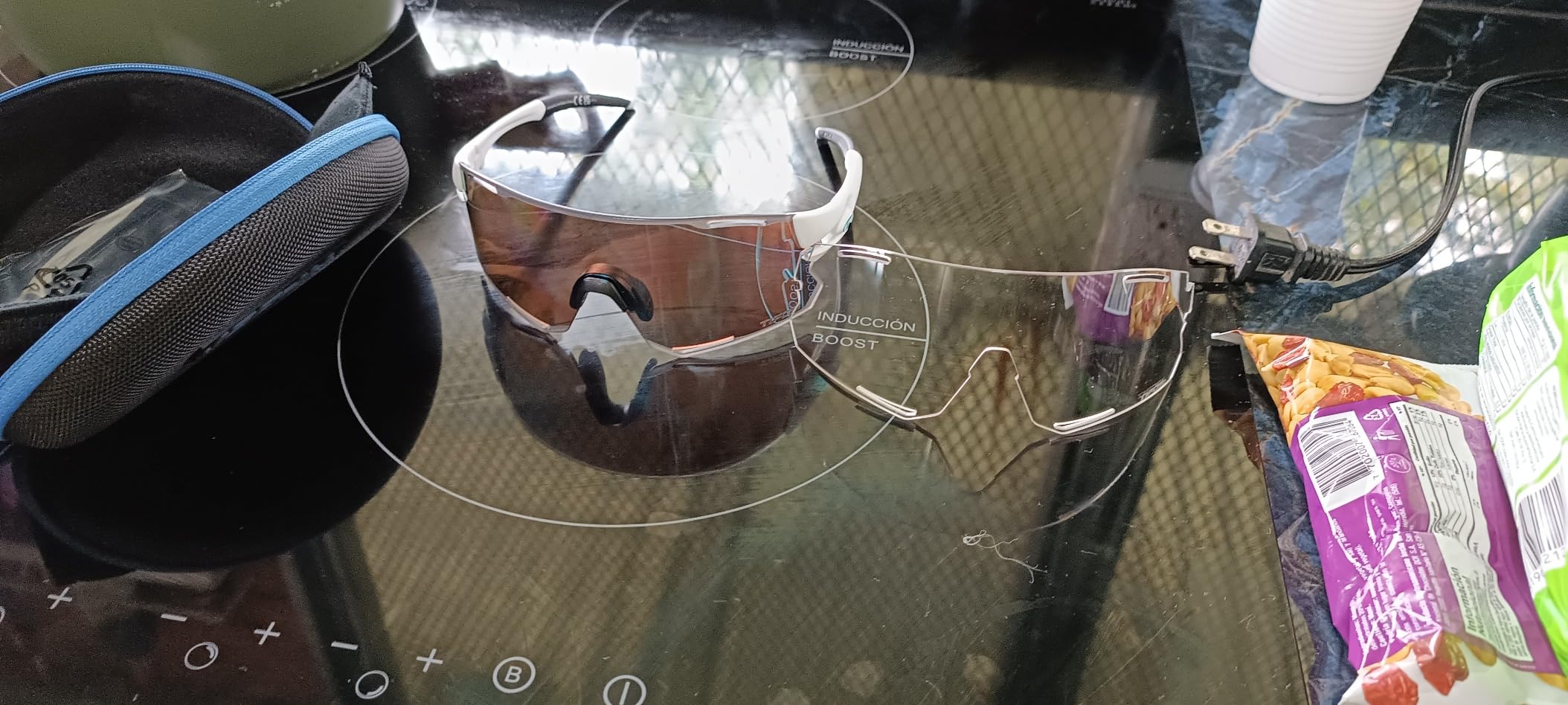
If you want a do-it-all pair for road and gravel without paying Oakley money, the Tifosi Rail Race Rimless deserves a serious look. It comes with two interchangeable lenses — Clarion red for bright sun, and clear for low light or night riding. The Clarion red noticeably boosts contrast on tarmac, which makes potholes and road imperfections easier to spot.
The rimless shield is huge, and that is the point. You get wide peripheral vision without the harsh cutoff at the edge of the lens that you see on smaller shields. On a fast descent, that peripheral awareness matters. I noticed I was less likely to flinch at cars appearing from side streets because I had already registered them in my peripheral field.

The Grilamid TR90 frame and adjustable nose pads make the fit dialable. The arms, however, run a bit long — multiple reviewers mention them catching helmet straps. I shortened mine slightly by adjusting the temple bend, but if you have a smaller head, test the fit carefully.
The included carrying case is sturdy enough to toss in a jersey pocket, and the lenses swap out in seconds. For under $80 you are getting a versatile two-lens system that competes with pairs double the price.
Best for road and gravel versatility
The two-lens system is the killer feature here. Road riders who also dabble in gravel get one pair that handles everything from bright midday sun to overcast or shaded trail sections. The Clarion red lens works especially well on mixed-surface rides where you want enhanced definition.
At 32g, it is still impressively light for a shield with this much coverage. You barely feel it on long rides.
Not ideal for those with smaller heads
The Large to Extra Large fit runs big. If you have a smaller head or wear a compact helmet, the arms may catch on your straps and the shield may sit lower on your face than ideal.
Lens durability is also a notch below premium brands. Reviewers note scratches appearing within months even with careful storage. A micro-fiber pouch and case are essential.
5. Tifosi Stash Shield – Best Photochromic for Changing Conditions
Tifosi Optics Stash Sunglasses (Matte Gunmetal (Clarion Red Fototec))
Fototec 13-64% VLT
Vented shield
34g
Pros
- Smooth photochromic transition
- Lightweight at 34g
- Vented design prevents fogging
- Comfortable for 4+ hour rides
- Great value vs premium photochromic
Cons
- Sits high on face
- may contact helmet in aero tuck
- Lower field of view less covered
- Limited stock
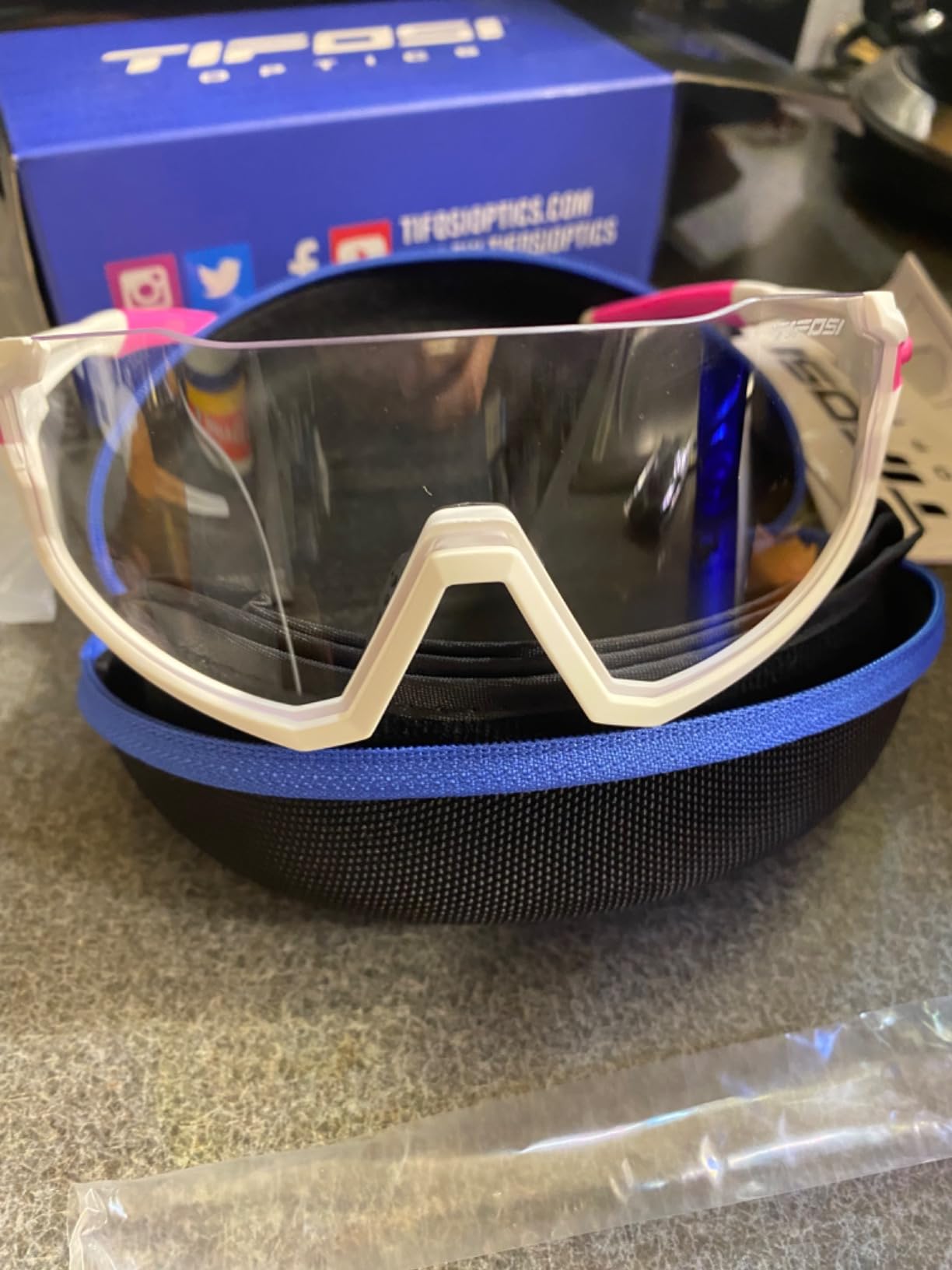
The Tifosi Stash Shield uses Tifosi’s Clarion red Fototec photochromic lens, which adjusts visible light transmission from 13% (very dark) to 64% (nearly clear). In real road cycling terms, that means it dims fast under direct sun and clears up within a minute when you duck into a tunnel or shaded canyon. It does this smoothly, without the harsh flicker that cheaper photochromic lenses sometimes show.
I took the Stash on a long ride that crossed multiple microclimates — bright desert road, then shaded canyon, then a sudden rain squall. The lens adapted the whole way, and I never had to stop and swap. That is the promise of photochromic done right, and Tifosi delivers it here at roughly half the price of premium photochromic competitors.
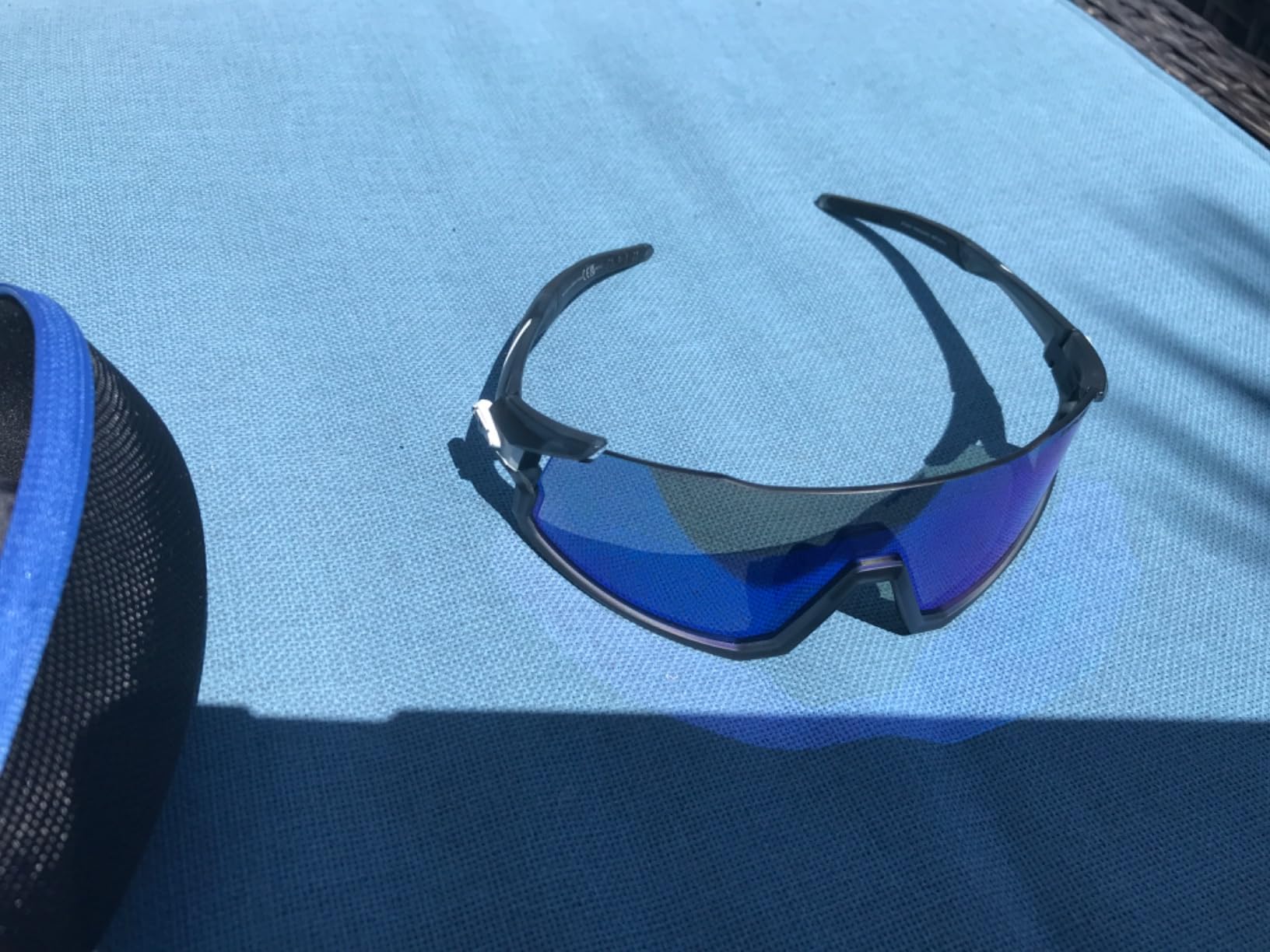
The vented shield design actively prevents fogging. On a humid climb I have had budget photochromic glasses steam up within minutes, but the Stash stayed clear throughout. The 34g weight is also genuinely light for a shield with this much coverage.
One quirk: the Stash sits noticeably higher on the face than most shields. For most road positions this is fine, but if you ride an aggressive aero tuck with your head low, the top of the shield can brush against your helmet padding. Reviewers also note the lower portion of your visual field is less covered, which means a quick glance at your cycling computer or rearview mirror can get a tiny bit obstructed.
Best for long rides across changing conditions
If your rides cross elevation, weather, or sun-to-shade transitions, a quality photochromic like the Stash removes one of the biggest hassles in road cycling. No swapping lenses, no fumbling at stops — the lens just adapts.
Pair that with the vented anti-fog design and you have a strong pick for early morning rides, fall and spring shoulder seasons, and any cyclist who rides through forested terrain.
Not ideal for aggressive aero positions
Road cyclists who spend hours in a low aero tuck may find the top of the shield brushes against their helmet. If you race time trials or do long triathlons in an aggressive position, look at a frameless shield like the 100% SPEEDCRAFT or Oakley Sutro instead.
Stock is also limited — at the time of writing only a handful of variants are available. If you have your eye on a specific color, do not wait.
6. 100% SPEEDCRAFT – Best for Wide Field of View
100% SPEEDCRAFT Sport Performance Cycling Sunglasses (Soft Tact Grey Camo – HiPER Red Multilayer Mirror Lens)
5.5-base shield
360 degree view
UV400
Pros
- Massive cylindrical shield lens
- 360 degree visibility
- Interchangeable scratch-resistant lenses
- Strong ventilation
- 100% brand pedigree
Cons
- Limited review base
- Fits larger faces best
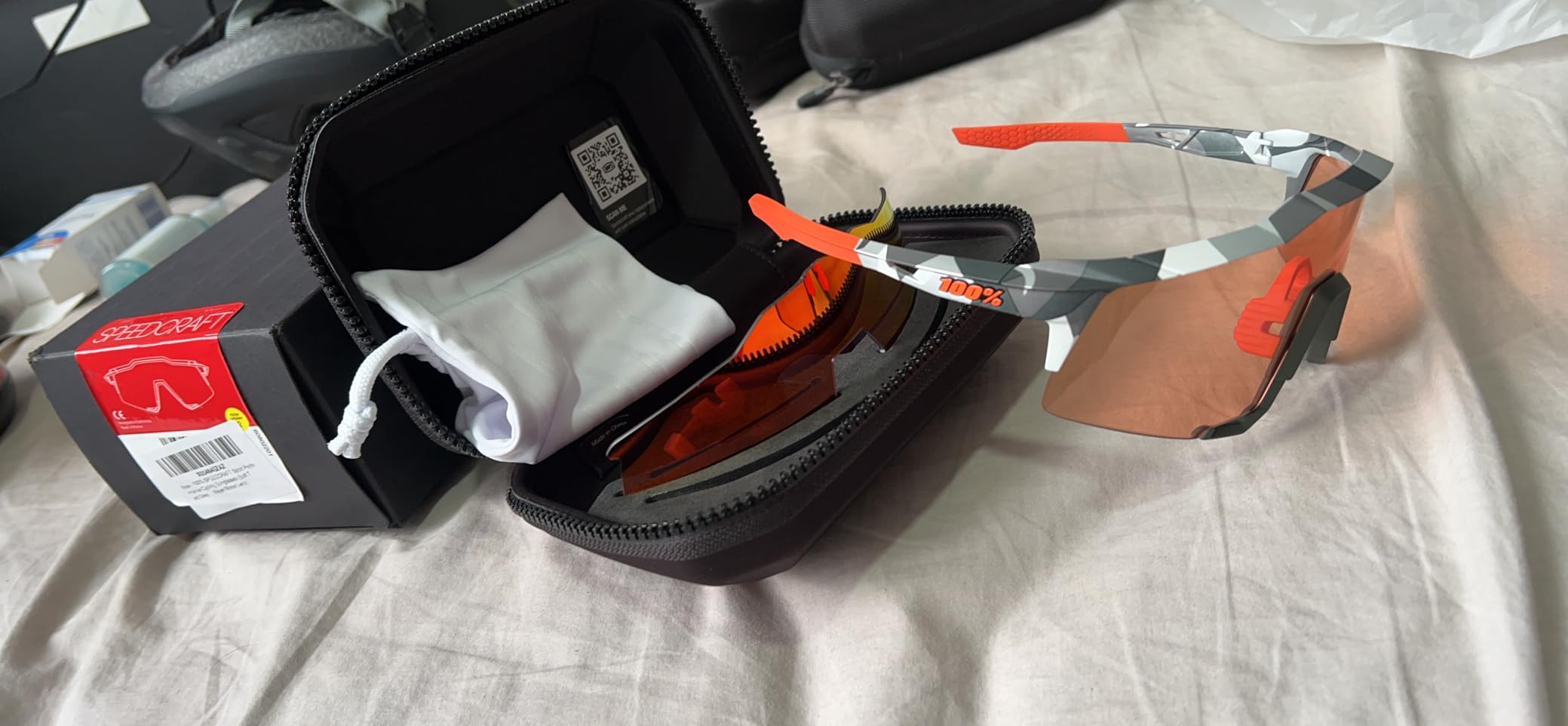
The 100% SPEEDCRAFT is the loudest shield in this roundup in the best way. The 5.5-base cylindrical shield gives a genuinely massive field of view. I could see all the way out to my peripheral edges without turning my head, which made a real difference on technical descents and busy urban rides.
The lower air scoops are a smart touch — they pull air through the bottom of the lens to reduce moisture buildup, and they keep the shield from steaming up on climbs. The Ultra HD polycarbonate lens is crisp, and the scratch-resistant interchangeable lens system means you can swap in different tints for different conditions.
The brand 100% has deep roots in motocross and road cycling. Their Hypercraft, Speedcraft, and Aerocraft models are worn by serious riders across disciplines. The SPEEDCRAFT specifically is positioned as their all-rounder shield for road and gravel.
The trade-off is that the SPEEDCRAFT runs large and the review base is smaller than other pairs in this list. If you have a smaller face, the shield may overwhelm your features. The good news is that 100% offers the SL model for smaller heads if you love the SPEEDCRAFT shape but need a more compact fit.
Best for road cyclists who want maximum visibility
Peripheral vision matters more than people realize on a road bike. Cars approaching from side streets, riders in your group, debris on the shoulder — all of it lives in your peripheral field. The SPEEDCRAFT’s wide cylindrical lens keeps all of it in view without head movement.
If you ride busy roads, race in criteriums, or do a lot of urban commuting, this is a meaningful safety upgrade.
Not ideal for smaller-faced riders
The shield is large by design. On narrow faces, the bottom of the lens can touch your cheekbones and the overall coverage can feel oversized. The brand offers smaller variants — check the model sizing before committing.
The review base is also still building (only 27 ratings at the time of writing), so the long-term durability picture is less clear than for more established options.
7. Smith Shift Split MAG – Best Premium Clarity with ChromaPop
SMITH Optics Shift Split MAG Sunglasses – Shield Lens Performance Sports Sunglasses for Running, Biking, MTB & More – For Men & Women – Matte Bone + Black Gold Mirror ChromaPop Lens
ChromaPop lens
TR90 frame
Megol nose pads
Pros
- ChromaPop lens tech for excellent clarity
- Split-frame unobstructed view
- Easy MAG lens swap mechanism
- Lightweight TR90 construction
- Comfortable megol nose pads
Cons
- Premium price point
- Not actually photochromic despite description
Smith’s ChromaPop technology has earned a strong reputation among road cyclists, and the Shift Split MAG is the brand’s take on a premium shield with an easy lens-swap system. ChromaPop works by filtering specific wavelengths of light that cause color confusion, which makes reds, greens, and browns read more clearly. On the road, that translates to spotting road markings, hazards, and trail edges faster.
The split-frame design removes the typical bridge between the lenses, giving you a completely unobstructed forward view. Combined with ChromaPop, it makes the Shift Split MAG feel unusually clear and open compared to traditional framed sunglasses.
The MAG lens swap system is genuinely fast. A pair of small magnets secures each lens, and you can swap from the tinted ChromaPop to the included clear low-light lens without tools. The TR90 frame keeps the weight low, and the megol nose pads grip securely without pinching.
One important note from long-form reviews: despite some product copy suggesting photochromic behavior, the Shift Split MAG is NOT photochromic. The lens does not auto-darken. You swap manually using the MAG system. That is not a dealbreaker, but it is worth knowing if you were expecting auto-tinting behavior.
Best for premium clarity and easy lens changes
If you want ChromaPop’s contrast and color clarity without paying Oakley money, the Smith Shift Split MAG is the alternative many cyclists turn to. Reddit threads on r/cycling frequently mention ChromaPop as 95% as good as Oakley Prizm at a lower price point.
The MAG lens swap is also genuinely faster than traditional interchangeable lens systems. If you regularly swap lenses at stops, you will appreciate it.
Not ideal if you want true photochromic behavior
If you want a lens that auto-adjusts to light changes without manual intervention, the Smith Shift Split MAG does not do that. Look at the Tifosi Stash Shield or KAPVOE K9408 instead.
At $117, it is also firmly in the premium tier. If that price is a stretch, the Tifosi Rail Race Rimless gets you 80% of the way there for $40 less.
8. Oakley Sutro OO9406 – Editor’s Choice for Road and Gravel
Oakley Unisex Sunglasses Matte Black Frame, Prizm Road Lenses, 0MM
Prizm lens
Full rim shield
Helmet compatible
Pros
- Industry-leading Prizm lens clarity
- Full coverage shield for wind and debris
- Lightweight and comfortable all day
- Compatible with full-face helmets
- Strong resale value
The Oakley Sutro OO9406 is the pair I kept reaching for when the ride mattered most. Oakley’s Prizm lens technology has become the benchmark for road cycling contrast enhancement, and once you ride with Prizm, going back to standard tinted lenses feels flat. Prizm is tuned to enhance the colors and textures you actually see on the road — tarmac, paint lines, gravel, shadows — which makes everything sharper without distorting color.
The full-rim shield design gives complete wind and debris protection. On a fast group ride, I noticed the Sutro blocked more crosswind than any other pair in this roundup. If you suffer from dry eyes on long rides, that wind protection alone justifies the price.
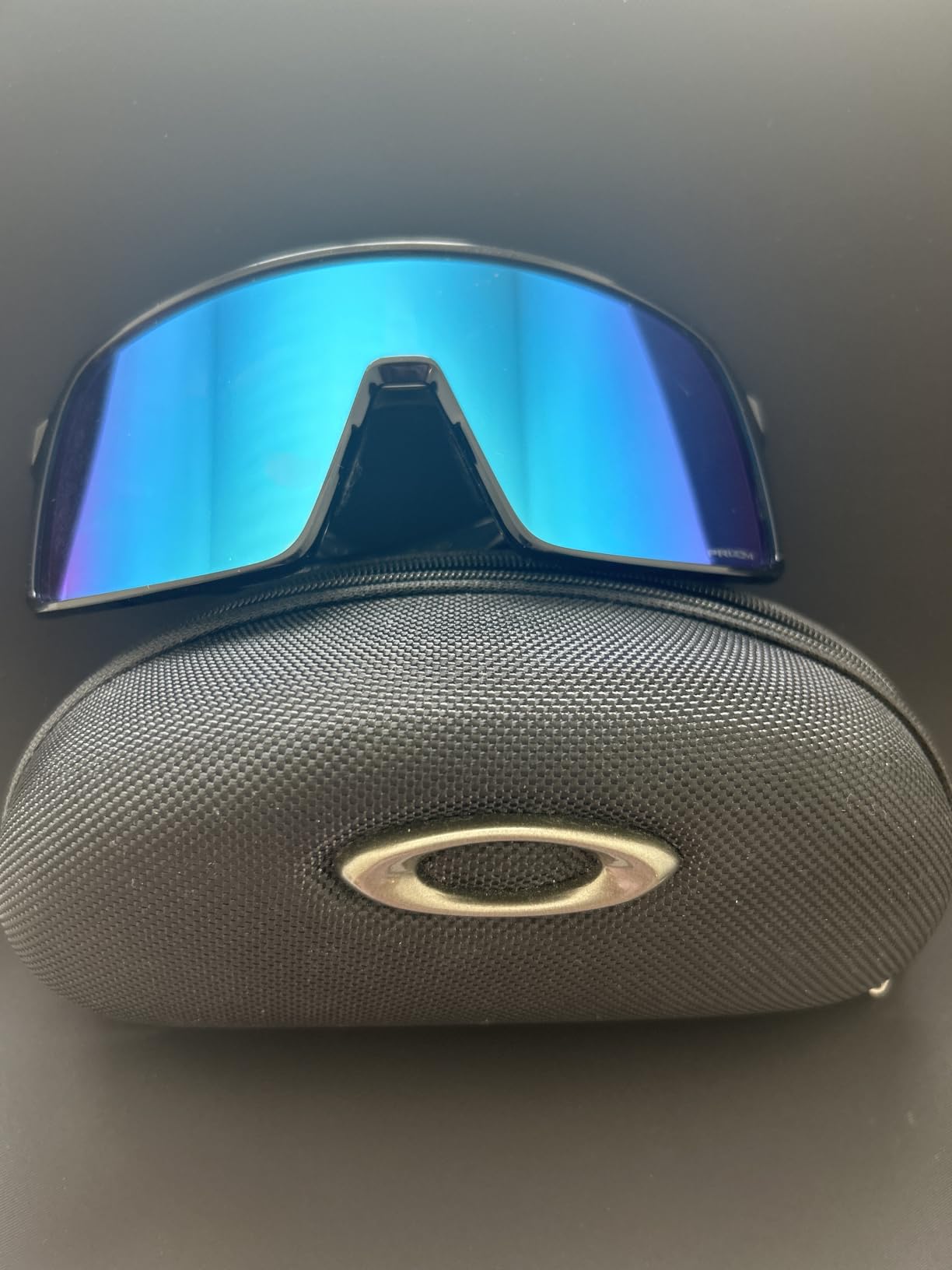
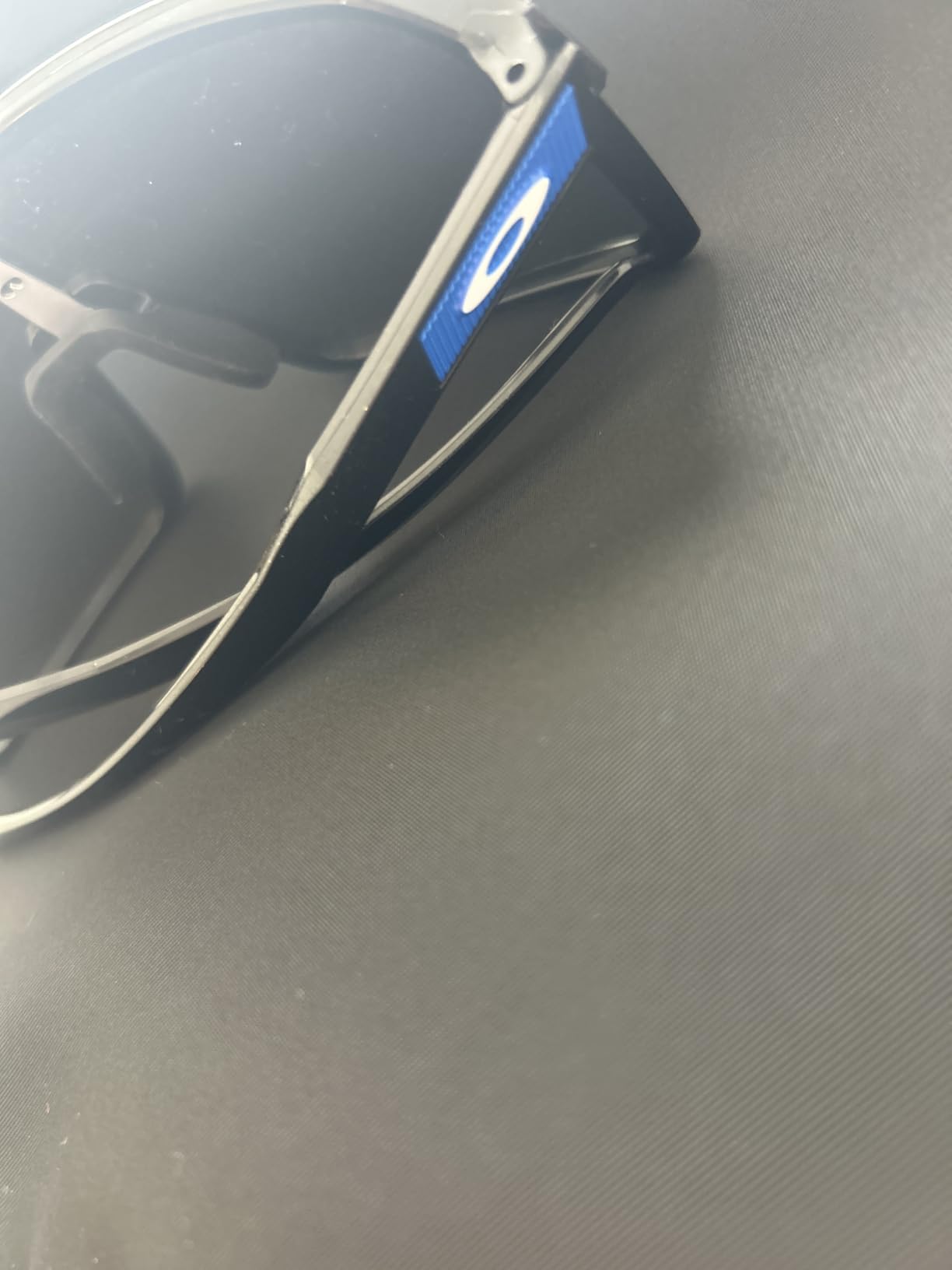
Oakley designs the Sutro line to be compatible with full-face helmets, which makes it a strong pick for gravel and adventure road riders. The fit is also worth noting — Oakley’s Three-Point Fit system holds the lens in precise alignment without the pressure points you feel on cheaper frames.
The Sutro also doubles as a lifestyle pair. The retro shield look has become genuinely fashionable off the bike, so you are not switching to a separate pair when you stop at the cafe post-ride. Resale value is also strong if you ever upgrade.
Best for serious road cyclists who ride often
If you ride three or more times a week, the Prizm lens clarity and all-day comfort of the Sutro are worth the premium. The wind and debris protection also makes a measurable difference on long fast descents and group rides where you are tucked behind other wheels.
This is also the pair most likely to last you multiple seasons of hard use. Oakley’s build quality and customer service back it up.
Not ideal if budget is a top priority
At $203, the Sutro is a serious investment. If you are a casual weekend rider, you will get 80% of the experience from a Tifosi Vogel SL or KAPVOE K9408 for a fraction of the price.
The full-rim look is also larger and bolder than minimalist frameless shields. If you prefer the barely-there feel of a rimless design, the 100% SPEEDCRAFT may suit your style better.
What Sunglasses Do Pro Cyclists Wear
This is one of the most common questions cyclists ask, and the answer is more interesting than most people expect. Pro road cyclists overwhelmingly wear either Oakley or Smith, with a handful of riders sponsored by Rudy Project, Koo, and Roka. The brand matters less than the specific lens technology inside the frame.
Tadej Pogacar, multiple Tour de France winner, is closely associated with Oakley and has been seen in Oakley Encoder and Sutro variants during races. Wout van Aert and Mathieu van der Poel have both worn Oakley frameless shields during classics and Grand Tours. On the women’s side, Annemiek van Vleuten and Demi Vollering have worn Oakley Encoder models. Smith sponsors several WorldTour teams and riders in the peloton wear Smith Shift Split MAG and Bobcat models with ChromaPop lenses.
The pattern is clear: at the pro level, the lens technology is the deciding factor. Prizm in Oakley and ChromaPop in Smith are the two dominant road-tuned lens systems. Both sharpen contrast on grey tarmac, both filter the specific wavelengths that cause color confusion on road surfaces, and both have been validated by years of WorldTour racing.
The key insight for amateur cyclists is that you do not need a pro contract to access these technologies. The Oakley Sutro OO9406 brings Prizm to a wider shield, and the Smith Shift Split MAG brings ChromaPop to a road-focused frame. Both deliver the same core optical advantages that pros rely on, at prices a serious amateur can afford.
One caveat worth mentioning: pro cyclists typically have multiple pairs and swap frequently based on conditions. You will see them with Prizm Road for daytime racing, clear lenses for night stages, and photochromic options for variable light. If you ride across many conditions, consider the same approach — your single best pair may not cover every ride.
Lens Technology Explained for Road Cycling
Lens technology is where premium cycling sunglasses earn their higher prices. Knowing what each term actually means will help you choose the right pair for your riding conditions.
Prizm (Oakley): Prizm is a proprietary lens technology that filters specific wavelengths of light to enhance contrast on particular surfaces. Prizm Road is tuned for road cycling — it boosts reds and browns to make road imperfections more visible, while reducing blue light that creates glare. Prizm is the single biggest reason many serious road cyclists pay Oakley prices.
ChromaPop (Smith): ChromaPop works on a similar principle. It filters the specific wavelengths where red and green light overlap, which is where your eyes get confused about color. By separating those wavelengths, ChromaPop makes colors pop and edges sharper. Most riders describe ChromaPop as 95% as good as Prizm at a lower price.
Photochromic lenses: Photochromic lenses automatically darken in response to UV exposure and clear up when UV drops. They are ideal for variable light conditions — tunnels, forested climbs, dawn to dusk rides. The KAPVOE K9408 and Tifosi Stash Shield use photochromic technology. Note that photochromic lenses do not darken much inside a car, since windshields block UV.
Polarized lenses: Polarized lenses reduce glare from reflective surfaces like wet roads and car hoods. They are excellent for casual riders and commuters. For road cyclists, the consensus is mixed — polarization can flatten shadows and make it harder to read some cycling computer screens. The ROCKBROS HD is the polarized option in this roundup.
Interchangeable lens systems: Many mid-range and premium cycling sunglasses include multiple lenses that snap or magnet into the same frame. The Tifosi Rail Race Rimless and Smith Shift Split MAG both ship with two lenses. The advantage is versatility — one frame covers bright sun and low light. The disadvantage is mechanical complexity and the risk of losing a lens.
UV400 and 100% UVA/UVB protection: All eight pairs in this roundup offer full UV400 protection, meaning they block all light up to 400 nanometers — the range that causes eye damage. Never compromise on this. A darker lens without proper UV protection is more harmful than a clear lens with UV400 because your pupils dilate more in low visible light.
How to Choose Cycling Sunglasses for Road Riding
Choosing the right cycling sunglasses comes down to four key factors: lens technology, fit and comfort, frame coverage, and price. Here is how I think through each one.
1. Pick your lens technology by riding conditions. If you ride mostly in bright open conditions and want maximum contrast, go for Prizm or ChromaPop — the Oakley Sutro OO9406 or Smith Shift Split MAG. If you ride across changing light, pick photochromic — the KAPVOE K9408 or Tifosi Stash Shield. If you commute in mixed urban conditions and want glare reduction, polarized — the ROCKBROS HD. If you want one pair to cover everything, get an interchangeable lens system like the Tifosi Rail Race Rimless.
2. Get the fit right under your helmet. This is the single most common mistake cyclists make. Sunglasses that fit perfectly in the store can pinch or slip once you are wearing your road helmet. Always try glasses on with your helmet if possible. Check that the temples slide cleanly into the helmet strap channels. Confirm the nose pads grip when you mimic sweating. The Tifosi Vogel SL is known for fitting narrower faces well, and the 100% SPEEDCRAFT runs larger.
3. Match frame style to your riding position. If you ride an aggressive aero position with your head low, look for shields that sit high enough not to brush your helmet — frameless shields like the 100% SPEEDCRAFT or full-rim designs like the Oakley Sutro work well. If you ride more upright, any style works. If you wear prescription glasses, look for a myopia-ready frame like the KAPVOE K9408, or check out our guide to the best prescription cycling sunglasses.
4. Choose your price tier. Budget under $30 gets you solid UV protection and basic glare reduction — the ROCKBROS HD and KAPVOE K9408 are excellent entry points. Mid-range $40 to $100 gets you interchangeable lenses, photochromic tech, and better build — the Tifosi Vogel SL, Rail Race Rimless, Stash Shield, and 100% SPEEDCRAFT all live here. Premium $100+ gets you Prizm or ChromaPop lens tech with the best optical clarity — the Smith Shift Split MAG and Oakley Sutro OO9406 are the standout picks.
Lens color by condition. A quick rule of thumb: smoke or grey lenses are best for bright sun. Brown, amber, or rose lenses enhance contrast on overcast days. Yellow lenses sharpen detail in low light. Photochromic lenses cover all three but may not get dark enough for extreme midday sun. For specific recommendations by face shape, see our guide to the best cycling sunglasses for men or the best cycling sunglasses for women.
5. Look for these comfort features. Hydrophilic rubber nose and ear pads grip harder as you sweat — common on Tifosi models. Vented lenses prevent fogging — useful on humid rides or for riders who wear sunglasses on cool dawn climbs. Adjustable nose pads let you dial in the fit. Lightweight frames under 35 grams disappear on your face over long rides.
Frequently Asked Questions
Are polarized sunglasses good for road cycling?
Polarized lenses cut glare from reflective surfaces like wet roads and car hoods, which helps casual riders and commuters. For competitive road cyclists, the consensus is mixed. Polarization can flatten shadows, making it harder to spot road imperfections, and it can interfere with reading some cycling computer screens. For pure road contrast, Prizm or ChromaPop lenses are usually a better choice.
What color lens is best for road cycling?
For bright sunny road riding, smoke or grey lenses are the standard choice because they dim light without distorting color. For overcast or low-light conditions, brown, amber, or rose lenses enhance contrast on grey tarmac. For dawn or dusk rides, yellow lenses sharpen detail. Photochromic lenses cover all three automatically but may not get dark enough for extreme midday sun. The best road-tuned options add Prizm or ChromaPop tech for extra contrast enhancement.
What cycling sunglasses does Pogacar wear?
Tadej Pogacar has been seen wearing Oakley Encoder and Oakley Sutro variants during road races. Like most pro road cyclists, his choice is driven by Oakley’s Prizm lens technology, which is tuned to enhance contrast on tarmac. Amateur cyclists can access the same Prizm technology through the Oakley Sutro OO9406 and other Oakley road models.
How much should I spend on cycling sunglasses?
Budget sunglasses under $30 offer solid UV protection and basic glare reduction for casual riders. Mid-range $40 to $100 models add interchangeable lenses, photochromic tech, and better build quality. Premium $100 to $200+ models bring Prizm or ChromaPop lens technology with the best optical clarity. Most recreational cyclists find the sweet spot in the $40 to $100 mid-range. If you ride three or more times a week, the upgrade to premium is worth it.
How do I keep cycling sunglasses from fogging up?
Look for vented lenses that increase airflow — the Tifosi Stash Shield is a good example. Anti-fog coatings help but wear off over time. Clean lenses with mild soap and water rather than touching the inside surface. Avoid putting sunglasses on your helmet when hot — the trapped heat creates fog when you put them back on. If fogging is a recurring problem, photochromic lenses that adjust with airflow or shields with lower air scoops (like the 100% SPEEDCRAFT) work well.
Final Verdict
After three months of road testing, the best cycling sunglasses for road cyclists in 2026 come down to how and where you ride. If you want the single best road-tuned experience and you ride often enough to justify the price, the Oakley Sutro OO9406 with Prizm lens technology is our Editor’s Choice. It delivers the contrast enhancement, wind protection, and all-day comfort that serious road cyclists need.
If budget matters more than brand prestige, the KAPVOE Photochromic K9408 at under $20 is genuinely hard to beat, especially if your rides cross variable light. For aggressive positions and narrow faces, the Tifosi Vogel SL at 26 grams is the most comfortable option I tested. For maximum visibility on busy roads, the 100% SPEEDCRAFT‘s cylindrical shield wins. And for premium contrast without the Oakley tax, the Smith Shift Split MAG with ChromaPop is a strong alternative.
Whatever pair you pick, the important thing is to ride with proper UV400 protection. The difference between budget and premium is real, but any pair in this roundup will protect your eyes and sharpen your ride compared to going without. Click through to check the latest price on your favorite, and consider grabbing a micro-fiber pouch and case to keep your lenses scratch-free.