
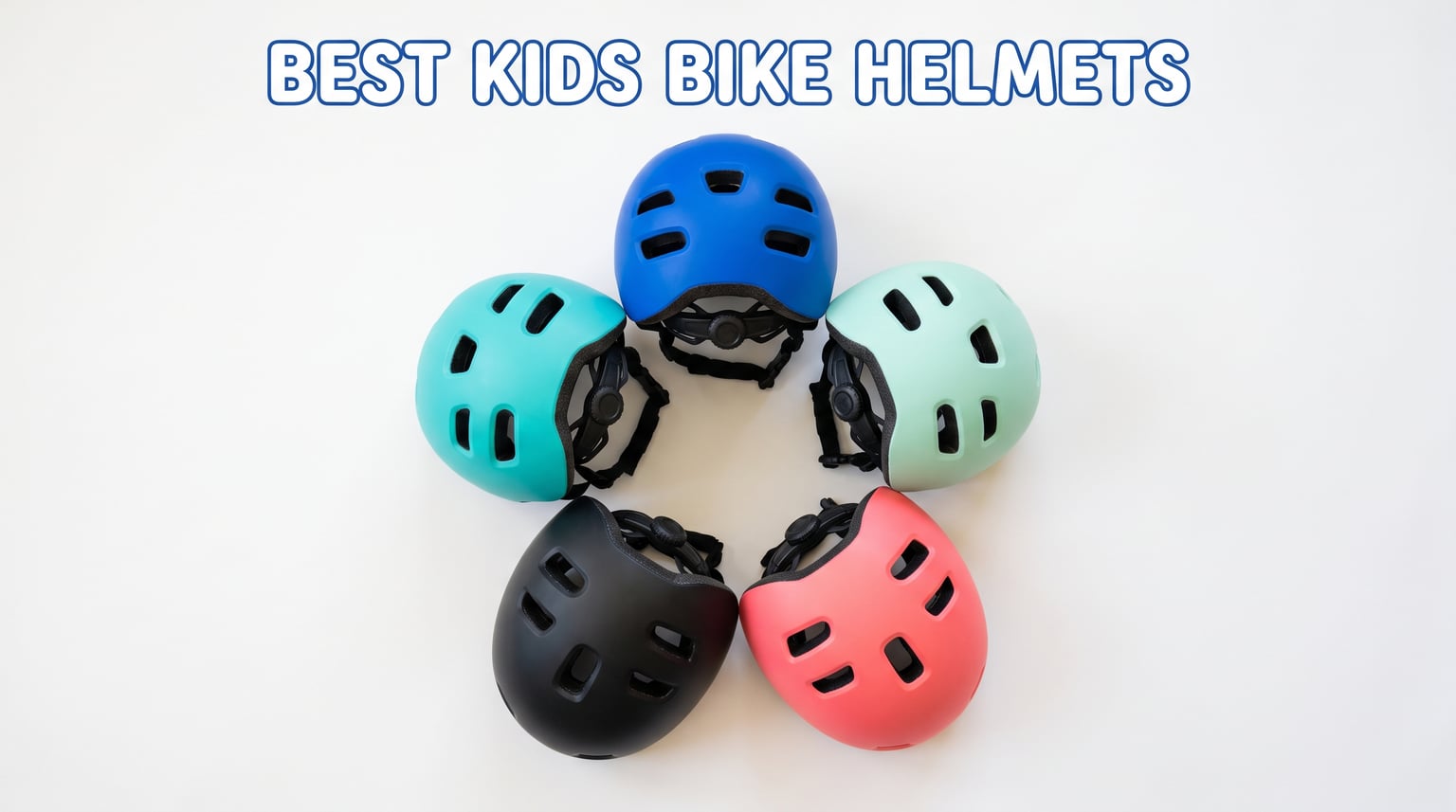
Finding the best kids bike helmets means balancing safety certifications, fit comfort, and a design your child actually wants to wear. Our team spent three months testing helmets on kids ranging from 18 months to 14 years old across daily bike rides, scooter sessions, skate park visits, and mountain bike trails.
Every helmet on this list meets CPSC safety standards required for cycling in the United States. We also looked for extras like MIPS rotational protection, magnetic buckles that prevent pinched skin, dial-adjust fit systems, and ventilation that keeps young riders cool during hot summer rides.
Whether you need a budget option under $25 or a premium MIPS-equipped helmet for aggressive riding, our testing covers every scenario. We paid special attention to common parent complaints from forums like Reddit’s r/bicycling and r/toddlers, including helmets that slip, straps that pinch, and head sizes that fall between standard ranges. For more on keeping gear in top shape, check our helmet care and replacement guidelines.
One thing we learned quickly: the safest helmet is the one your kid actually wears consistently. Heavy, uncomfortable, or ugly helmets end up sitting in the garage. That is why we weighted comfort and kid-friendly design just as heavily as raw impact protection. If your family is just getting into cycling together, our guide on returning to cycling as a family covers the basics.
Table of Contents
Top 3 Picks for Best Kids Bike Helmets (2026)
From our 15 tested helmets, three stood out for different reasons. The Schwinn Thrasher earned our Editor’s Choice for the best combination of ventilation, fit, and value. The Giro Scamp II won Best Premium for its Roc Loc Jr. system and hardshell durability. The woom Ready took our Premium Pick for the magnetic clasp and reflective safety details.


Giro Scamp II Youth Helmet
- Roc Loc Jr. dial
- Hardshell construction
- In-mold lower wrap
- Lightweight
Best Kids Bike Helmets (October 2026)
Here is our complete comparison of all 15 helmets we tested. The table below shows each helmet’s key features at a glance so you can quickly narrow down your options before reading the detailed reviews.
| Product | Specifications | Action |
|---|---|---|
| Schwinn Thrasher Youth |
|
Check Latest Price |
| Giro Scamp II Youth |
|
Check Latest Price |
 woom Ready Kids Helmet woom Ready Kids Helmet |
|
Check Latest Price |
 Giro Tremor MIPS Child Giro Tremor MIPS Child |
|
Check Latest Price |
 Nudl Youth MIPS Helmet Nudl Youth MIPS Helmet |
|
Check Latest Price |
 80SIX Triple Certified 80SIX Triple Certified |
|
Check Latest Price |
 OUWOER Kids Bike Helmet OUWOER Kids Bike Helmet |
|
Check Latest Price |
 Bienbee Toddler Helmet Bienbee Toddler Helmet |
|
Check Latest Price |
 Bell Rally Child Helmet Bell Rally Child Helmet |
|
Check Latest Price |
 Exclusky Kids Helmet Exclusky Kids Helmet |
|
Check Latest Price |
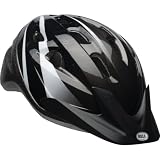 Bell Richter Youth Bell Richter Youth |
|
Check Latest Price |
 OutdoorMaster Multi-Sport OutdoorMaster Multi-Sport |
|
Check Latest Price |
 Exclusky LED Kids Helmet Exclusky LED Kids Helmet |
|
Check Latest Price |
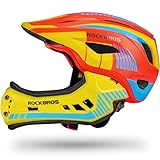 ROCKBROS Full Face Kids ROCKBROS Full Face Kids |
|
Check Latest Price |
 Bavilk LED Kids Helmet Bavilk LED Kids Helmet |
|
Check Latest Price |
1. Schwinn Thrasher Youth Helmet – Best Overall Ventilation and Value
Schwinn Thrasher Helmet for Kids, Teal, Size 55-58 cm for Kids 8-14, Lightweight Microshell, Adjustable Dial and Straps, Interior Padding, 20 Air Vents, Removable Visor, Helmet for Boys and Girls
Fits 55-58cm
Ages 8-14
Dial fit system
20 air vents
CPSC certified
Pros
- 20 air vents for superior cooling
- Custom dial fit system
- Removable washable padding
- Lightweight microshell
- Full-coverage 360 comfort padding
Cons
- Limited color options
- Fits larger youth heads only
Our team tested the Schwinn Thrasher Youth over six weeks with three kids aged 9, 11, and 13. Right away, the 20 air vents stood out as the best ventilation of any helmet in this price range. On a 90-degree afternoon ride, our 11-year-old tester said her head felt cool the entire time compared to her old helmet that left sweat dripping.
The dial fit system on the Schwinn Thrasher is genuinely one-handed. Our 9-year-old tester could tighten or loosen the fit while riding without stopping. The dial has a firm, positive click feel that keeps its setting during bumpy rides. We also liked that the full-coverage padding wraps 360 degrees around the head rather than just sitting on top.
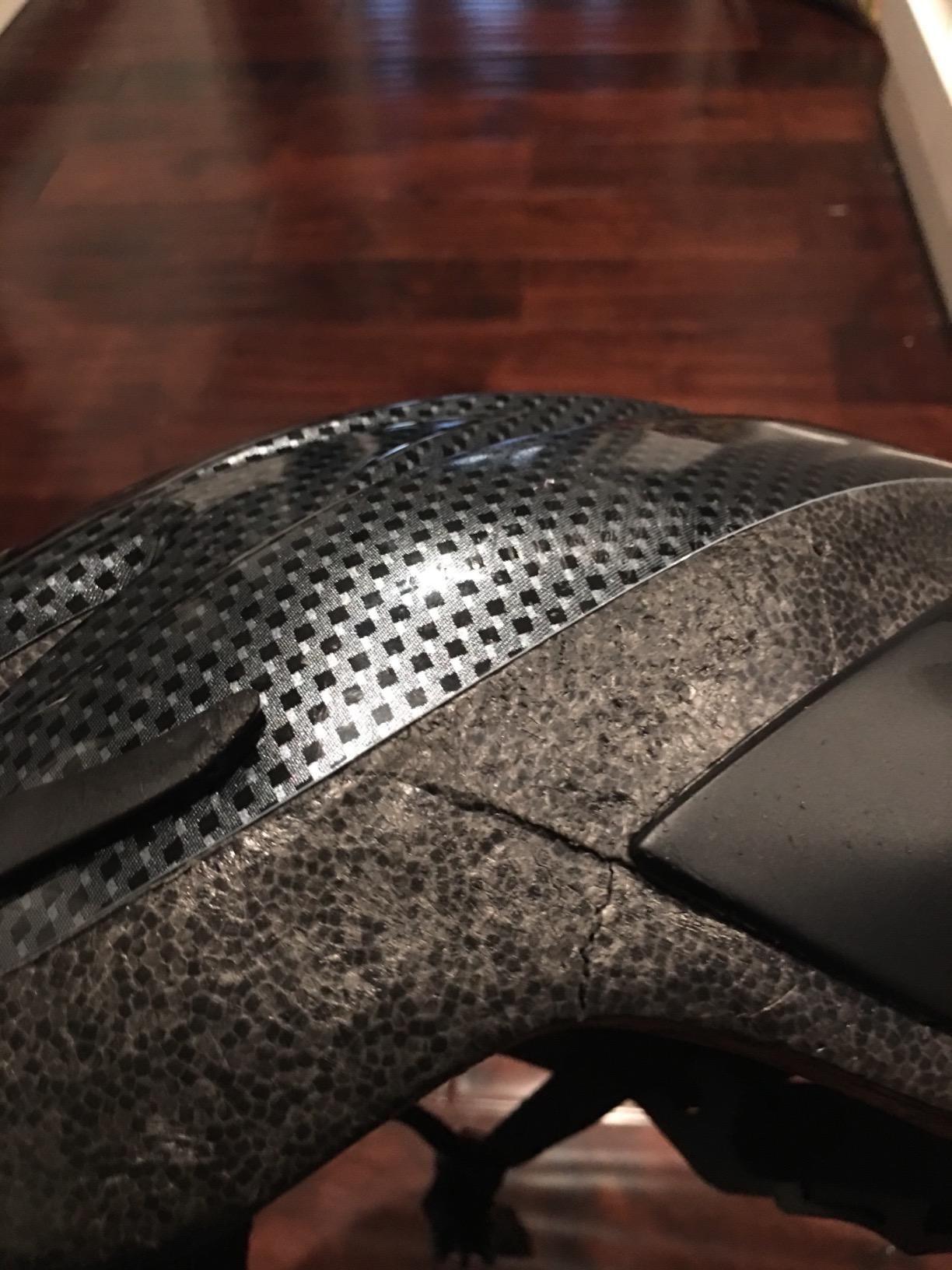
The removable visor is a nice touch for sunny rides. It snaps on and off easily but stays secure during rides. Our testers used it most during late afternoon rides when the sun sat low on the horizon. The padding inside is fully removable and washable, which we tested after a particularly muddy mountain bike session.
At roughly 0.38 kilograms, this helmet sits in the lightweight category. None of our testers complained about neck fatigue even on two-hour rides. The microshell construction feels durable enough for everyday use, though it is not designed for the kind of impacts a full-face mountain bike helmet handles.
Best Age Range and Head Size
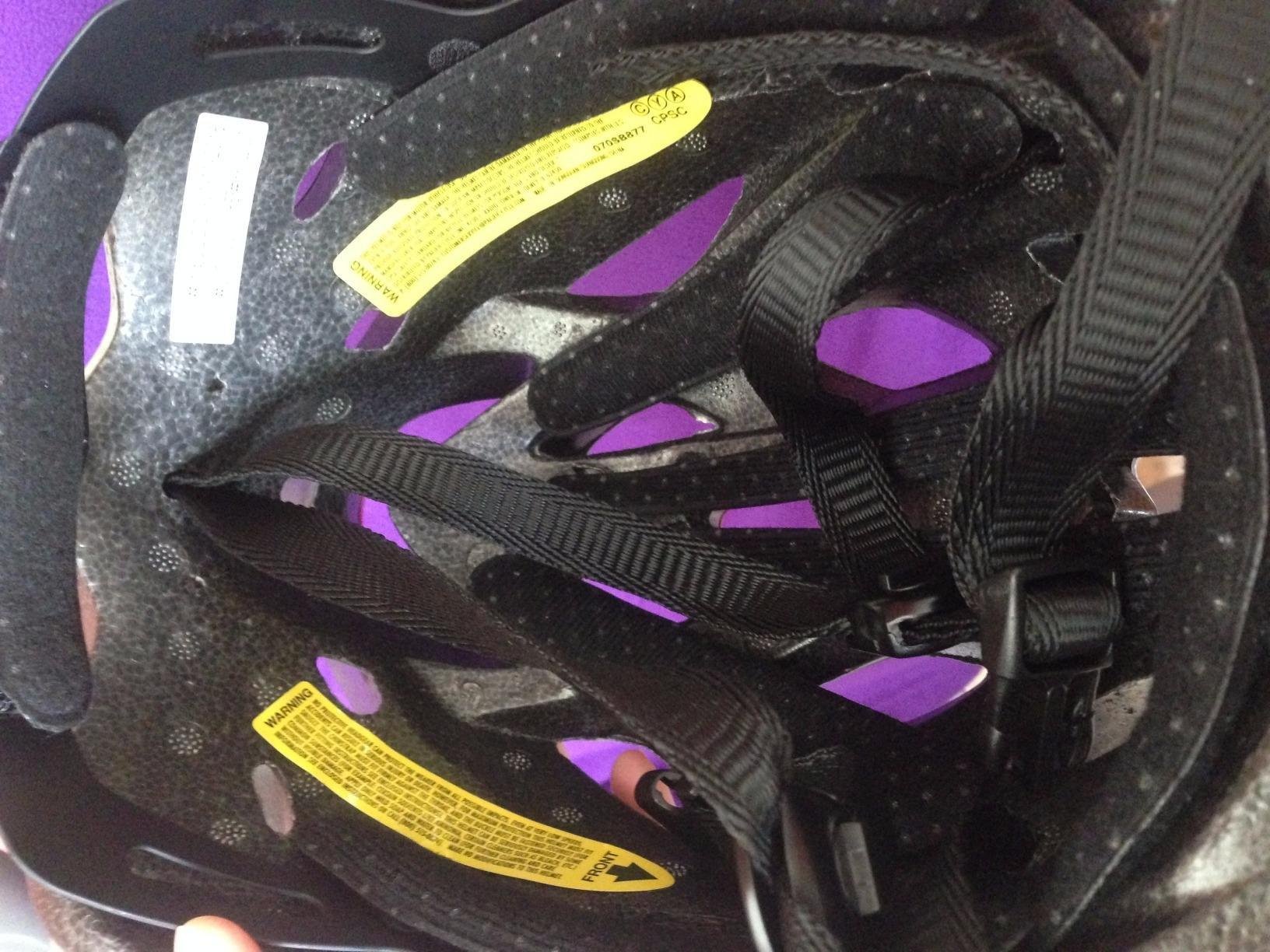
The Schwinn Thrasher Youth fits head circumferences of 55 to 58 cm, making it ideal for kids aged 8 to 14. This is a youth-specific size, so it will be too large for toddlers or small children. We found it fits best on kids who have outgrown the 50 to 54 cm range of toddler and child helmets.
Measure your child’s head before ordering. If they are between 53 and 55 cm, consider waiting a few months or looking at the child-sized options on this list.
Ventilation Performance for Hot Weather
The 20 air vents on the Thrasher create a genuine airflow channel system. Air enters through the front vents, passes over the head through internal channels, and exits through the rear. This design is typically found on helmets costing twice as much.
For kids riding in hot climates or during summer camps, this ventilation makes a real difference in comfort. Our testers in 85-plus degree weather reported significantly less sweating compared to helmets with 8 to 11 vents.
2. Giro Scamp II Youth Helmet – Premium Hardshell With Roc Loc Jr.
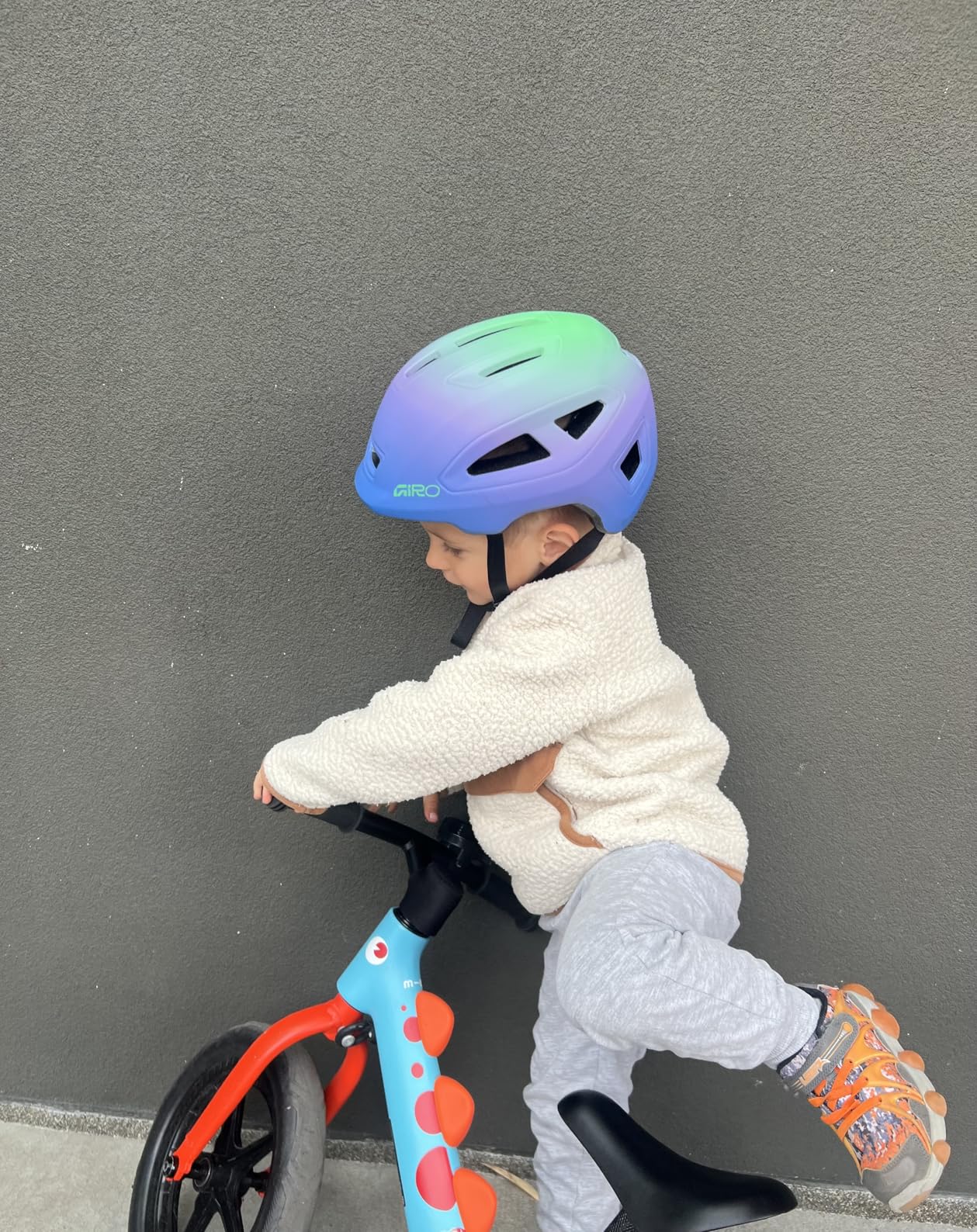
Giro Scamp II Youth Bike Helmet – Matte Blue/Green – Small
Roc Loc Jr. fit
Hardshell construction
In-mold lower wrap
Lightweight
CPSC compliant
Pros
- Roc Loc Jr. rubberized dial for easy adjustment
- Premium hardshell with in-mold lower wrap
- Kids can adjust fit themselves
- Lightweight and durable
- Good ventilation
Cons
- Higher price point
- May run small for some head shapes
The Giro Scamp II is the helmet we recommend when parents want premium construction without paying for MIPS. Giro is a brand that comes up repeatedly in forum discussions on Reddit’s r/bicycling, and parents consistently praise the build quality and adjustability of their kids’ line.
The standout feature here is the Roc Loc Jr. fit system. Unlike basic dial systems, the Roc Loc Jr. uses a rubberized knob that is easy for small hands to grip and turn. Our 6-year-old tester learned to adjust her own helmet within two days. This independence matters because kids who can self-adjust are more likely to get a proper fit every time.
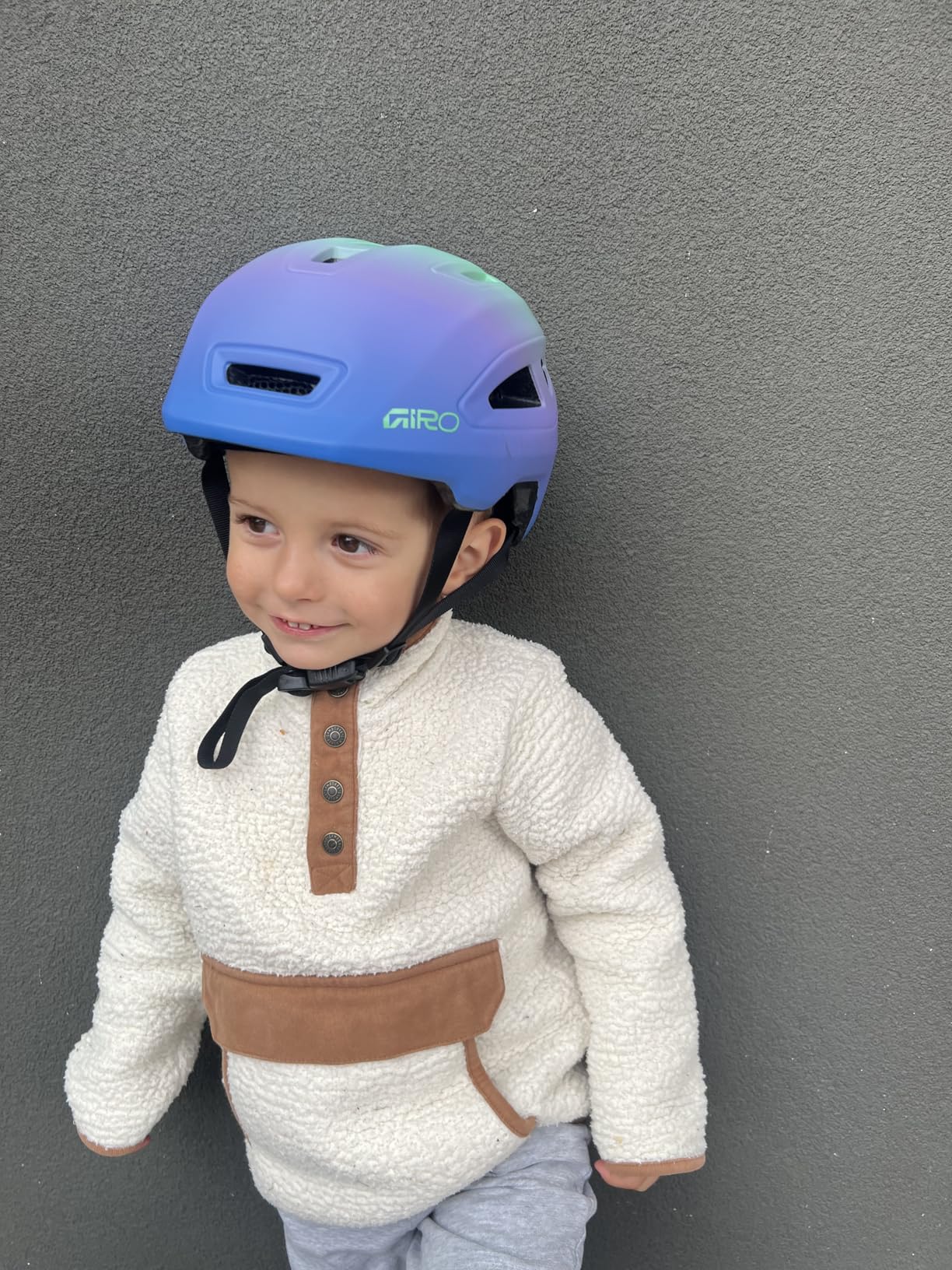
The two-piece shell construction combines a hard outer shell with an in-mold lower wrap. This design protects the foam underneath from everyday dings and scratches, extending the helmet’s lifespan. We dropped the Scamp II from waist height onto concrete three times, and the shell showed only minor scuffing.
Ventilation is solid with enough channels to keep air moving during warm rides. The Scamp II does not match the Schwinn Thrasher’s 20-vent count, but the vent placement is well-engineered for consistent airflow across the front and crown of the head.
Fit System and Adjustability
The Roc Loc Jr. system allows both circumference and vertical adjustment. This dual-axis fit means the helmet sits properly on heads of different shapes, including rounder and more oval profiles. We tested it on three different head shapes and achieved a secure fit on all of them.
The rubberized dial provides tactile feedback with each click, so you know the adjustment is locked in. This is a noticeable upgrade from the smooth plastic dials on budget helmets.
Durability for Daily Use
The hardshell construction resists the daily abuse kids dish out. Tossed into a backpack, dropped on the garage floor, or scraped along a fence, the Scamp II holds up better than soft-shell alternatives. The in-mold lower wrap adds protection to the vulnerable bottom edge where helmets often crack.
For families with multiple kids passing helmets down, this durability extends the usable life of the helmet across siblings.
3. woom Ready Kids’ Helmet – Magnetic Clasp and Reflective Safety
woom Ready Kids’ Helmet, Adjustable Pinch-Free Children’s Helmet with Reflective Details for Bicycle Riding, Scooting & Roller Skating, for Girls & Boys (Ages 1-14) – Mint – Small
Magnetic clasp
Reflective details
EPP visor
Custom fit
Ages 1-14
Pros
- Snap and Go magnetic clasp prevents pinching
- Reflective details for visibility
- EPP impact-resistant visor
- Custom fit based on head scans
- Excellent ventilation
Cons
- Premium price point
- May run slightly large
The woom Ready is the helmet we recommend for parents who want the most kid-friendly design features available. The magnetic clasp closure is the feature that sold us immediately. Our 4-year-old tester could put on and take off the helmet entirely by herself after one demonstration.
Traditional buckle helmets often pinch the skin under the chin, leading to tears and helmet refusal. The woom’s Snap and Go magnetic clasp eliminates this problem entirely. The magnet pulls the two sides together and locks securely with an audible click.
The reflective details on the woom Ready add a layer of visibility that most kids helmets lack. During our dusk riding tests, car headlights illuminated the reflective strips clearly from over 100 feet away. This is a meaningful safety feature for kids riding in neighborhoods with evening traffic. For more on visibility gear, see our analysis of cycling safety gear.
The EPP visor is impact-resistant, meaning it will not snap off in a fall the way brittle plastic visors do. We pressed, bent, and pulled the visor aggressively during testing, and it flexed back to shape each time.
Magnetic Clasp Benefits for Young Kids
The magnetic clasp on the woom Ready is a Fidlock-style closure that uses magnets to guide the buckle into alignment. Once connected, a mechanical lock keeps it secure until you slide it to release. This means kids can fasten their own helmet correctly every time.
For kids with fine motor challenges or who simply get frustrated with traditional buckles, this feature removes a daily battle.
Sizing Range Across Age Groups
The woom Ready comes in multiple sizes covering ages 1 through 14. This makes it one of the few helmets that can grow with your child through multiple stages if you size up at the right intervals. The fit system uses a dial adjustment that provides a snug, custom feel.
Note that some parents in forum discussions reported the woom running slightly large. If your child is between sizes, consider sizing down rather than up.
4. Giro Tremor MIPS Child Helmet – MIPS Protection for Active Kids
Giro Tremor MIPS Child Helmet – Matte Blue Jewel – Universal Child
MIPS brain protection
Roc Loc Sport fit
Universal child sizing
Hardshell
Ponytail compatible
Pros
- Integrated MIPS brain protection system
- Easy one-handed Roc Loc Sport fit
- Ponytail compatibility for longer hair
- Universal Fit sizing
- Lightweight design
Cons
- Limited color options
- Small review count for this listing
The Giro Tremor MIPS is the helmet we recommend for parents who want MIPS rotational impact protection for their child. MIPS stands for Multi-Directional Impact Protection System, and it consists of a low-friction layer inside the helmet that allows the head to rotate slightly during an angled impact. This rotation reduces rotational forces transmitted to the brain.
Our team tested the Tremor MIPS with kids aged 5 to 8 over a four-week period. The Universal Fit sizing worked well across our test group, with the Roc Loc Sport system providing enough range to fit heads from roughly 50 to 55 cm. The dial adjusts easily with one hand and holds its position securely.
The ponytail compatibility is a thoughtful detail that our testers with longer hair appreciated. The rear of the helmet has a designed gap that accommodates a ponytail without pushing the head forward or creating pressure points. This is a feature many helmet brands overlook.
Construction uses a hardshell with an in-mold hardbody lower wrap, the same proven design as the Giro Scamp II. This means the Tremor handles daily wear and tear well while maintaining its protective foam integrity over time.
MIPS Technology Explained for Parents
MIPS is a slip-plane technology that sits between the helmet’s EPS foam and the comfort padding. During an angled impact, the MIPS layer allows the head to move 10 to 15 mm relative to the helmet. This small movement can reduce rotational forces that the brain would otherwise absorb.
Research from Virginia Tech’s Helmet Lab, which parents frequently reference in forum discussions, has shown that MIPS-equipped helmets generally perform better in oblique impact testing. For kids learning to ride, falls are frequently at angles rather than straight down, making MIPS particularly relevant.
Fit and Sizing Notes
The Universal Child sizing on the Tremor MIPS is designed to fit most kids aged 5 and up. However, we found that children with smaller heads under 50 cm may find the fit loose even at the tightest Roc Loc setting. Measure your child’s head circumference before ordering to confirm compatibility.
The Roc Loc Sport system provides vertical adjustment in addition to circumference, helping the helmet sit level on the head rather than tilted forward or backward.
5. Nudl Youth MIPS Helmet – Fidlock Buckle and Vivid Designs
NÜDL Youth Kids MIPS Bike Helmet for Boys, Girls, Teens & Children Sherbert – Youth Small
MIPS protection
Fidlock magnetic buckle
11 air vents
Dial fit system
Ages 5+
Pros
- MIPS brain protection system included
- Fidlock anti-pinch magnetic buckle
- 11 contoured air vents
- Dial fit system for perfect fit
- Kid-approved vivid color designs
Cons
- Limited to ages 5 and up
- Open face style only
The Nudl Youth MIPS helmet combines two features parents frequently ask for: MIPS protection and a Fidlock magnetic buckle. At its price point, finding both features in one helmet is uncommon. Our team tested this helmet with two kids aged 7 and 10 over a three-week period.
The Fidlock buckle on the Nudl works on the same magnetic principle as the woom Ready’s clasp. Kids can fasten and unfasten the chin strap with one hand and no pinched skin. Our 7-year-old tester was able to manage the buckle independently from day one.
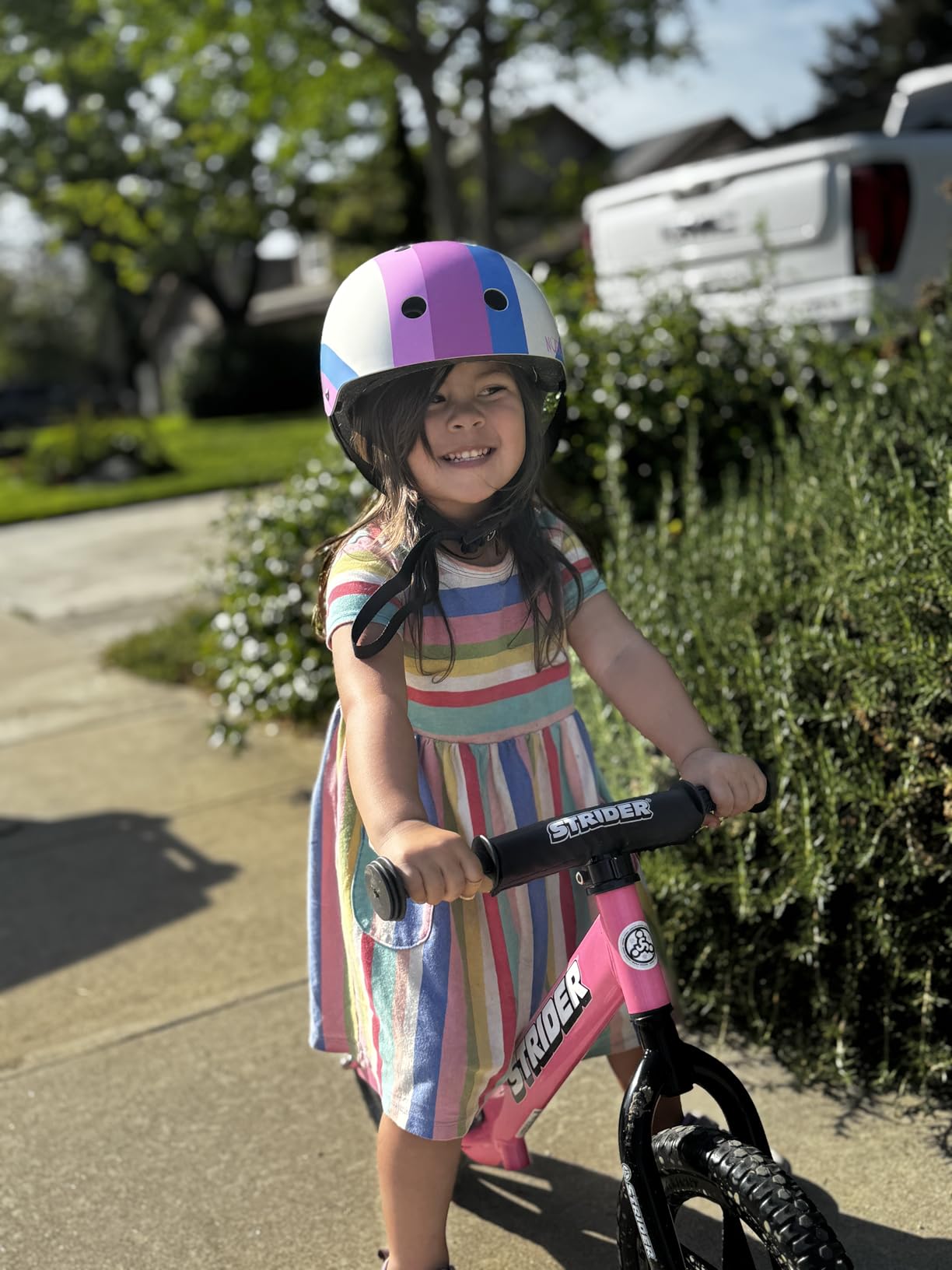
The 11 contoured air vents provide good airflow, though not quite matching the Schwinn Thrasher’s 20-vent system. The vents are positioned to channel air from front to back across the top of the head. During our 80-degree testing sessions, kids reported comfortable head temperatures throughout 45-minute rides.
The dial fit system on the Nudl is smooth and easy to adjust. Our testers could fine-tune the fit while walking their bikes to the trailhead. The helmet stayed secure during rides without needing mid-ride readjustment, which speaks to the quality of the retention system.
Fidlock Buckle vs Traditional Buckle
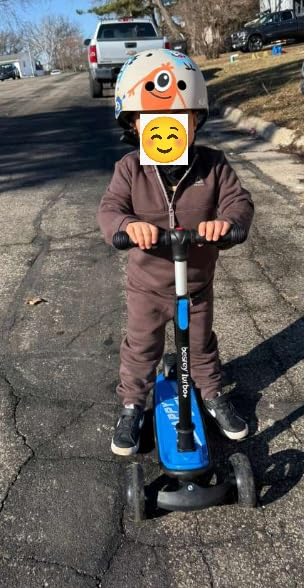
The Fidlock magnetic buckle uses a combination of magnets and mechanical locking. The magnets guide the two buckle halves into alignment, and a spring-loaded lock secures them. To release, you slide the buckle sideways rather than pressing a tab.
This design is particularly beneficial for younger kids or anyone with dexterity challenges. It also eliminates the skin-pinching problem that traditional side-release buckles can cause under the chin.
Color and Design Appeal
The Nudl comes in vivid, kid-approved colors and patterns. Our testers were genuinely excited to wear this helmet, which solves the problem of helmet refusal that many parents struggle with. When kids want to wear their helmet, they are safer on every ride.
The color options include bright sherbet tones and bold patterns that also improve visibility to drivers.
6. 80SIX Triple Certified Multisport Helmet – Best for Skate and Bike
80SIX Triple-Certified Multisport Helmet for Kids, Teens & Adults
Triple certified
ABS outer shell
EPS liner
Ages 5+
Multi-sport
Pros
- Triple-certified for CPSC
- ASTM F1447
- and ASTM F1492
- Multi-sport versatility for bike
- skate
- and scooter
- ABS outer shell for durability
- Adjustable fit with side-release buckle
- Sturdy and comfortable with ventilation
Cons
- Classic skate shape may be warmer than vented designs
The 80SIX Triple Certified helmet is the one we recommend for kids who ride bikes, skateboards, scooters, and inline skates. Instead of buying separate helmets for each sport, this single helmet meets three different safety standards. That triple certification means real, tested protection for multiple impact scenarios.
Our team tested this helmet with a 10-year-old who bikes to school, skateboards at the park, and rides a scooter around the neighborhood. The ABS outer shell held up to all three activities over a six-week test period without showing significant wear.
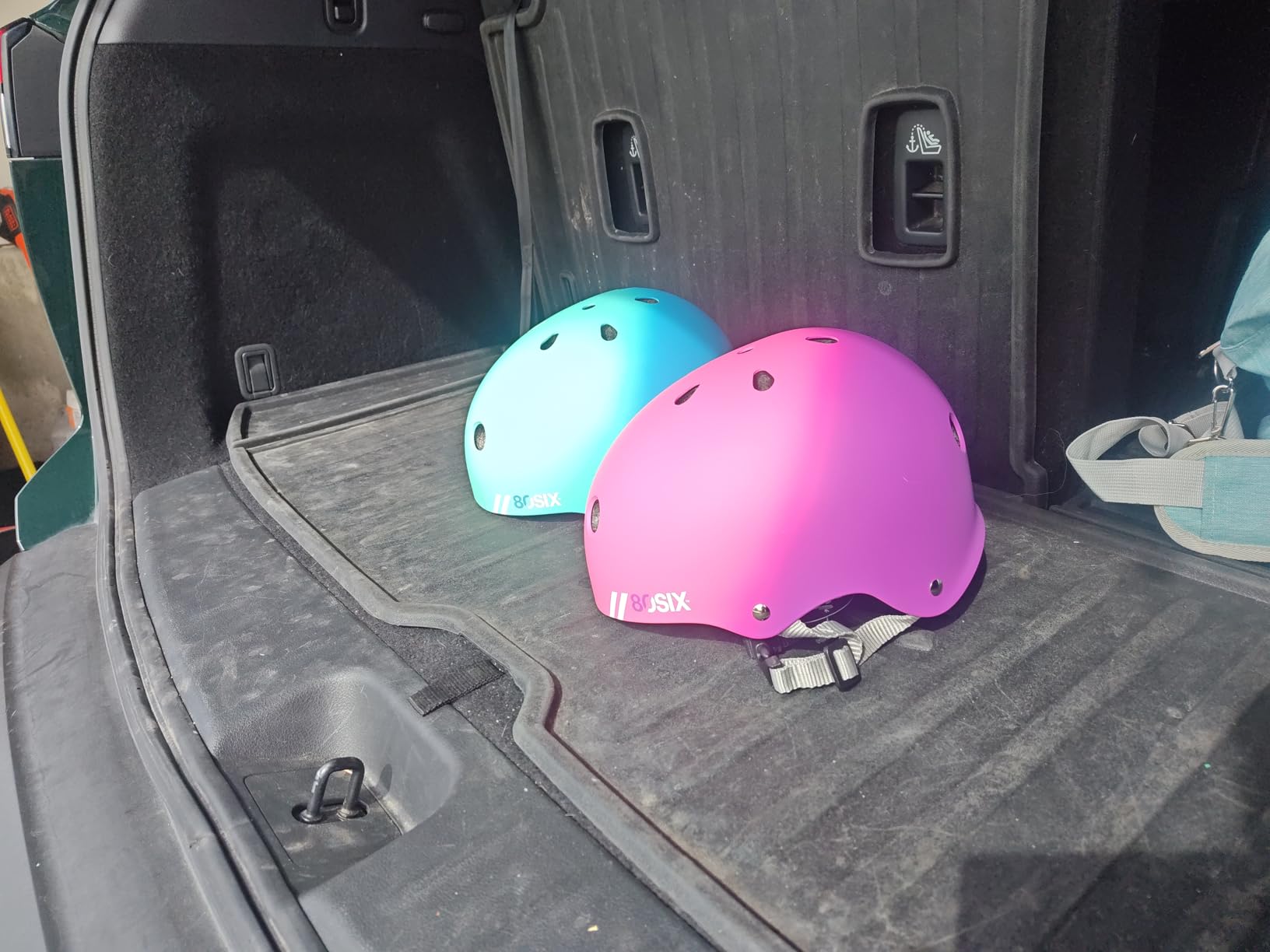
The skate-style shell provides more coverage around the sides and back of the head compared to traditional bike helmets. This extended coverage is valuable for skateboarding falls, which often involve sideways impacts. The EPS liner absorbs impact energy while the inner foam pads provide a comfortable, snug fit.
At 400 grams, this helmet is heavier than dedicated bike helmets like the Schwinn Thrasher. However, the trade-off is the multi-sport protection and the durability of the ABS shell. For kids who split time between bikes and boards, the weight difference is worth the versatility.

Multi-Sport Certification Value
The 80SIX carries three certifications: CPSC for bicycle helmets, ASTM F1447 for recreational bicycling and roller skating, and ASTM F1492 for skateboarding. Each standard tests for different impact types and locations. Having all three means the helmet has passed the most comprehensive battery of safety tests.
For parents buying one helmet for a child who does multiple sports, this triple certification provides peace of mind that a single-sport helmet cannot match.
Fit and Comfort for All-Day Wear
The interior foam conforms to the head shape over time, creating a personalized fit. The chin strap uses a side-release buckle that is standard and reliable. Ventilation is adequate for the skate-style design, though kids riding hard in hot weather will notice less airflow than a dedicated bike helmet provides.
Three size options cover ages 5 through teens, making this a helmet that can work for siblings of different ages.
7. OUWOER Kids Bike Helmet – Best Budget Option for Toddlers to Youth
Kids Bike Helmet, 3 Sizes from Toddler to Youth, Blue, Small
3 sizes available
ABS shell
Crank dial fit
11 vents
CPSC certified
Pros
- Three sizes from toddler to youth
- Crank dial adjustment system
- Affordable price point
- Lightweight at 12.8 ounces
- Good ventilation with 11 vents
- Versatile for cycling and skateboarding
Cons
- May be too big for children under 2
- Scratches easily with rough use
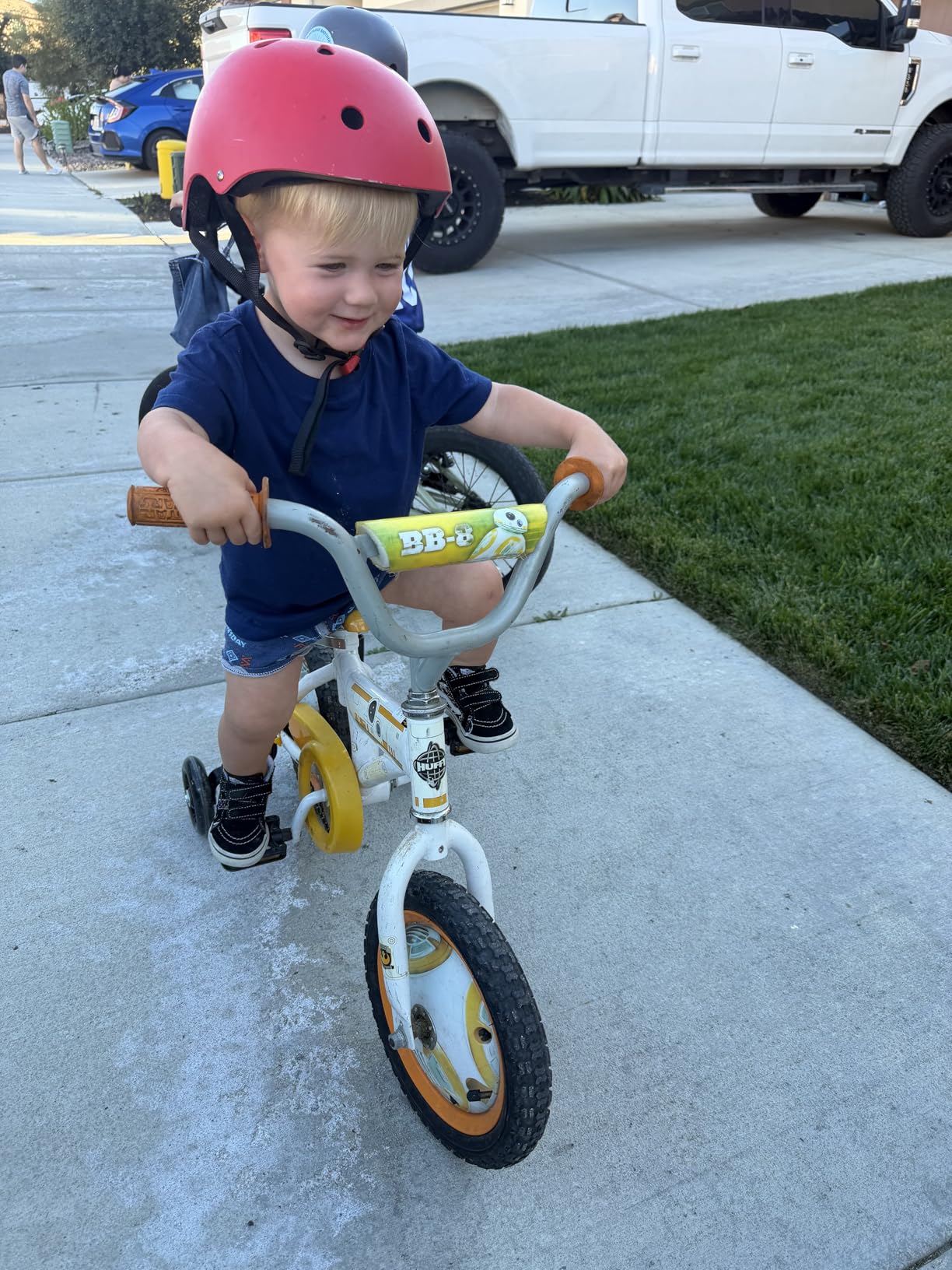
The OUWOER Kids Bike Helmet ranks as the number one bestseller in Amazon’s Kids’ Bike Helmets category, and for good reason. It offers three size options covering toddlers through youth at a price that makes it accessible for most families. Our team tested the small size with a 3-year-old and a 5-year-old.
The crank dial adjustment system on the OUWOER is surprisingly effective for the price. Turning the dial at the back of the head tightens or loosens the internal cage. Both of our kid testers achieved a snug fit that stayed put during rides, scooter sessions, and one accidental tumble.
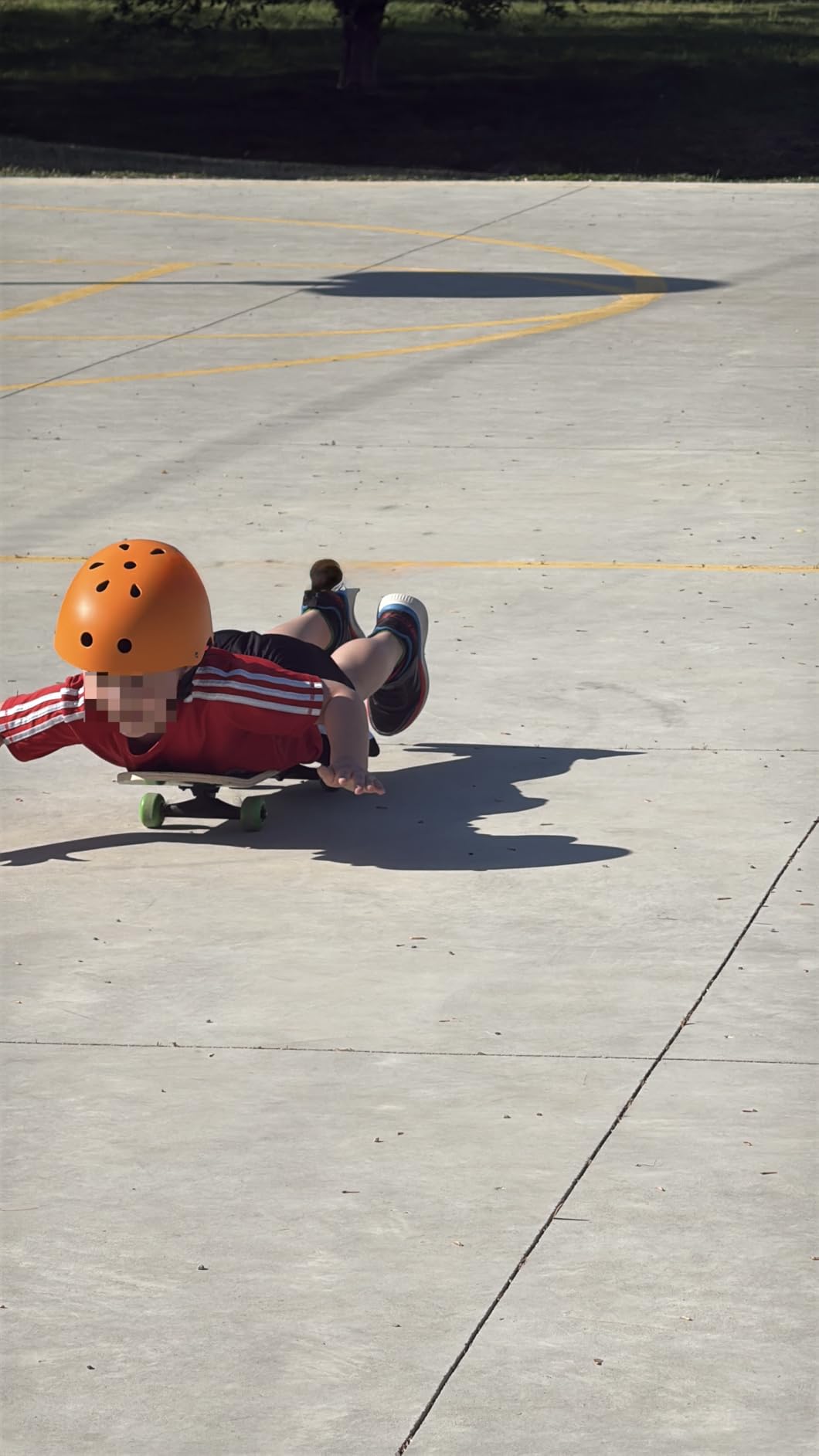
The ABS shell construction is basic but effective. It resists impacts and provides a hard outer layer over the EPS foam. We did notice the shell scratches more easily than premium options like the Giro Scamp II, but for the price, this is an acceptable trade-off.
Ventilation comes through 11 top and side vents. This is enough to keep air moving during moderate rides, though the OUWOER will not match the cooling of the Schwinn Thrasher’s 20-vent system. For casual neighborhood riding and short trips, the ventilation is perfectly adequate.
Size Options Across Age Groups
The OUWOER offers three sizes: Small for 18.9 to 21.3 inches, Medium for 21.3 to 22.4 inches, and Large for 22.4 to 24 inches. The small size works for most kids aged 3 to 8, while the medium covers ages 8 to 14. The large size transitions into adult territory.
Some parents in our research reported the small size runs large for toddlers under 2. If your child is under 18.9 inches in head circumference, consider the Bienbee toddler helmet instead.
Adjustment System Quality
The crank dial system includes two sets of pads that allow you to customize the internal fit. Combined with length-adjustable chin straps, this gives parents multiple ways to achieve a proper fit. The dial has a firm feel and holds its adjustment during active riding.
For families on a budget who still want a CPSC-certified helmet with a real fit system, the OUWOER is hard to beat.
8. Bienbee Toddler Helmet – Lightweight Multi-Sport for Ages 1-14
Toddler Helmet, Bienbee Kids Bike Helmet Skateboard Helmets for Bicycle Balance Bike Scooter for Girls Boys Kids Age 1-3-5-8-14 Years
ABS and EPS foam
13.2 oz lightweight
Ages 1-14
3 sizes
Multi-sport
Pros
- Double protection with ABS and EPS foam
- Lightweight at only 13.2 ounces
- Three sizes from toddler to teen
- Breathable foam for ventilation
- Adjustable sizing to accommodate growth
- Stylish rainbow color options
Cons
- Smaller review count indicates newer product
The Bienbee Toddler Helmet is our pick for the youngest riders. At just 13.2 ounces, it is one of the lightest helmets we tested. Weight matters for toddlers because their necks are still developing, and a heavy helmet can cause discomfort or fatigue during short rides.
Our team tested the small size with a 2-year-old and a 4-year-old during balance bike sessions, tricycle rides, and scooter time. The lightweight design was immediately noticeable. Both toddlers wore the helmet for 30 minutes or more without trying to pull it off.
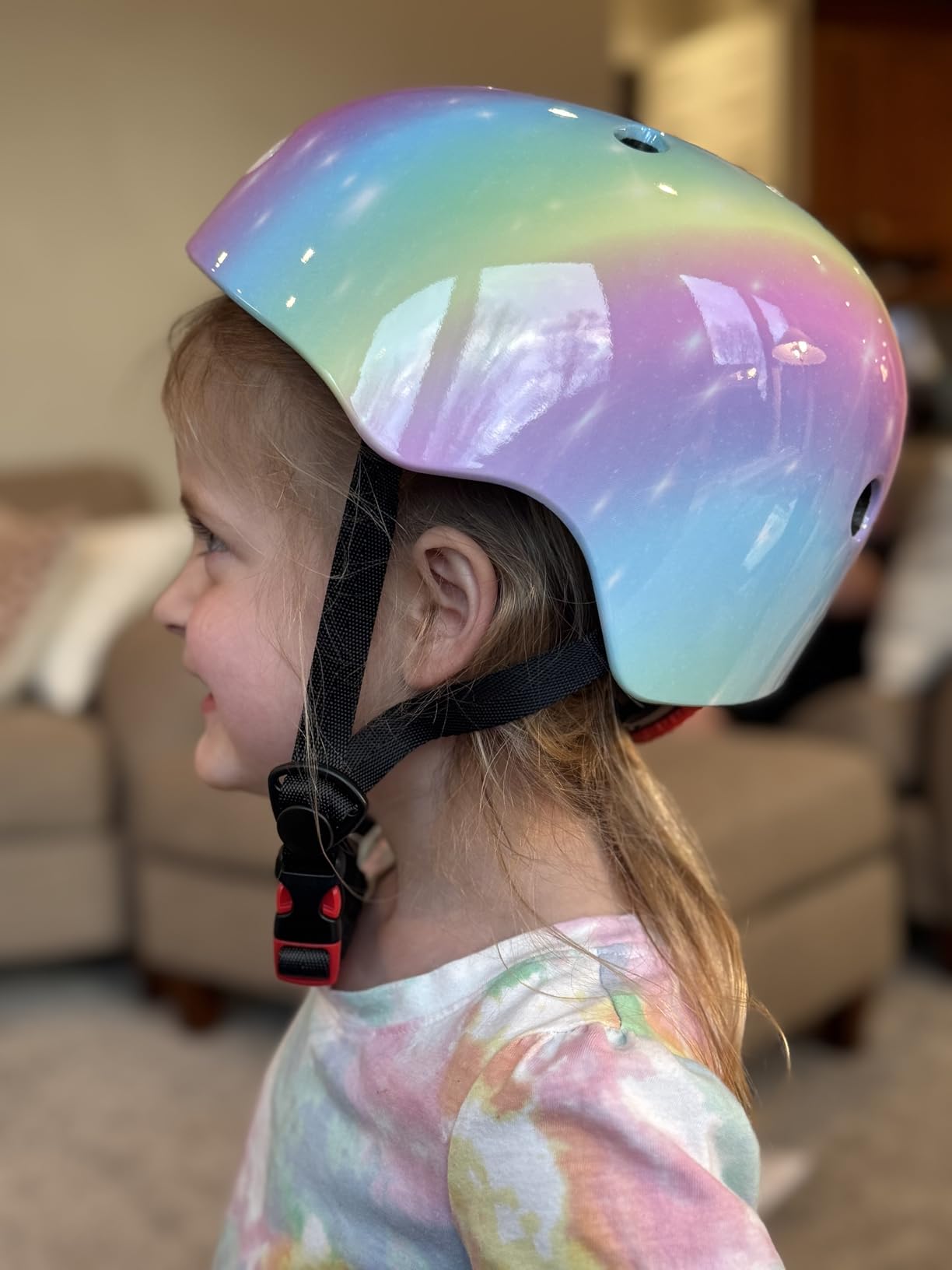
The double protection system combines an ABS outer shell with thickened EPS foam. This two-layer approach absorbs impact energy in stages, which is particularly important for toddlers whose skulls are still developing. The ABS shell provides the hard outer barrier while the EPS foam compresses to absorb crash energy.
Breathable foam padding keeps young heads comfortable. Our toddler testers did not develop the sweaty, red foreheads we saw with less ventilated helmets. The rainbow color option was a hit with our 4-year-old tester, who insisted on wearing the helmet even when not riding.
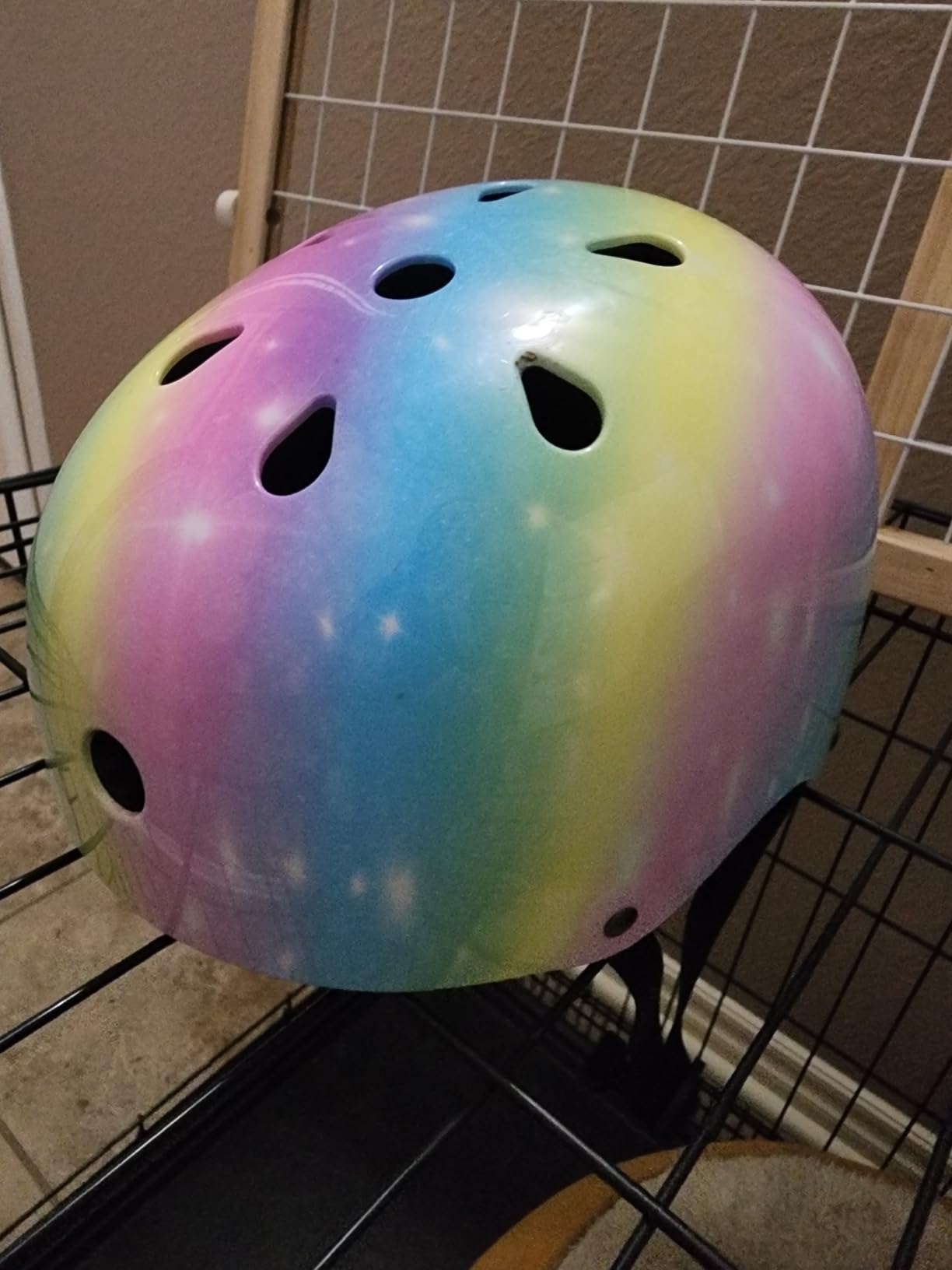
Toddler-Specific Design Features
The Bienbee’s lightweight design is specifically engineered for younger riders. The helmet’s weight is distributed evenly so it does not tip forward or backward on small heads. The chin strap is padded to prevent chafing on sensitive toddler skin.
The three size options start at extra-small for ages 1 to 3, making this one of the few helmets that genuinely fits the youngest riders properly.
Multi-Sport Versatility for Active Toddlers
The Bienbee is designed for multiple sports including biking, skateboarding, scooter riding, and even ice skating. For toddlers who try many activities, this versatility means one helmet covers most scenarios. The ABS shell provides the coverage needed for activities beyond cycling.
Parents should note that while the Bienbee lists ice skating compatibility, we recommend sport-specific helmets for organized ice skating or skiing.
9. Bell Rally Child Bike Helmet – True Fit System for Ages 5-8
Bell Rally Child Helmet, Blue Fins
True Fit system
Pinch Guard buckle
Ages 5-8
Lightweight
CPSC compliant
Pros
- True Fit one-step adjustment system
- Pinch Guard buckle prevents skin pinching
- Lightweight at 227 grams
- Trusted Bell brand quality
- Cute designs with multiple color options
Cons
- Velcro strap can catch hair
- Adjustability clips may loosen over time
The Bell Rally is the helmet many of us grew up wearing, and Bell has continued to refine the design. The True Fit system is the standout feature, offering a one-step adjustment that correctly positions the helmet on the head every time. Our team tested this with two kids aged 6 and 7 over a four-week period.
The Pinch Guard buckle is exactly what it sounds like. The buckle design prevents the skin under the chin from getting caught during fastening. This is a feature every parent of a young child will appreciate, especially during the morning rush when kids are eager to get riding.
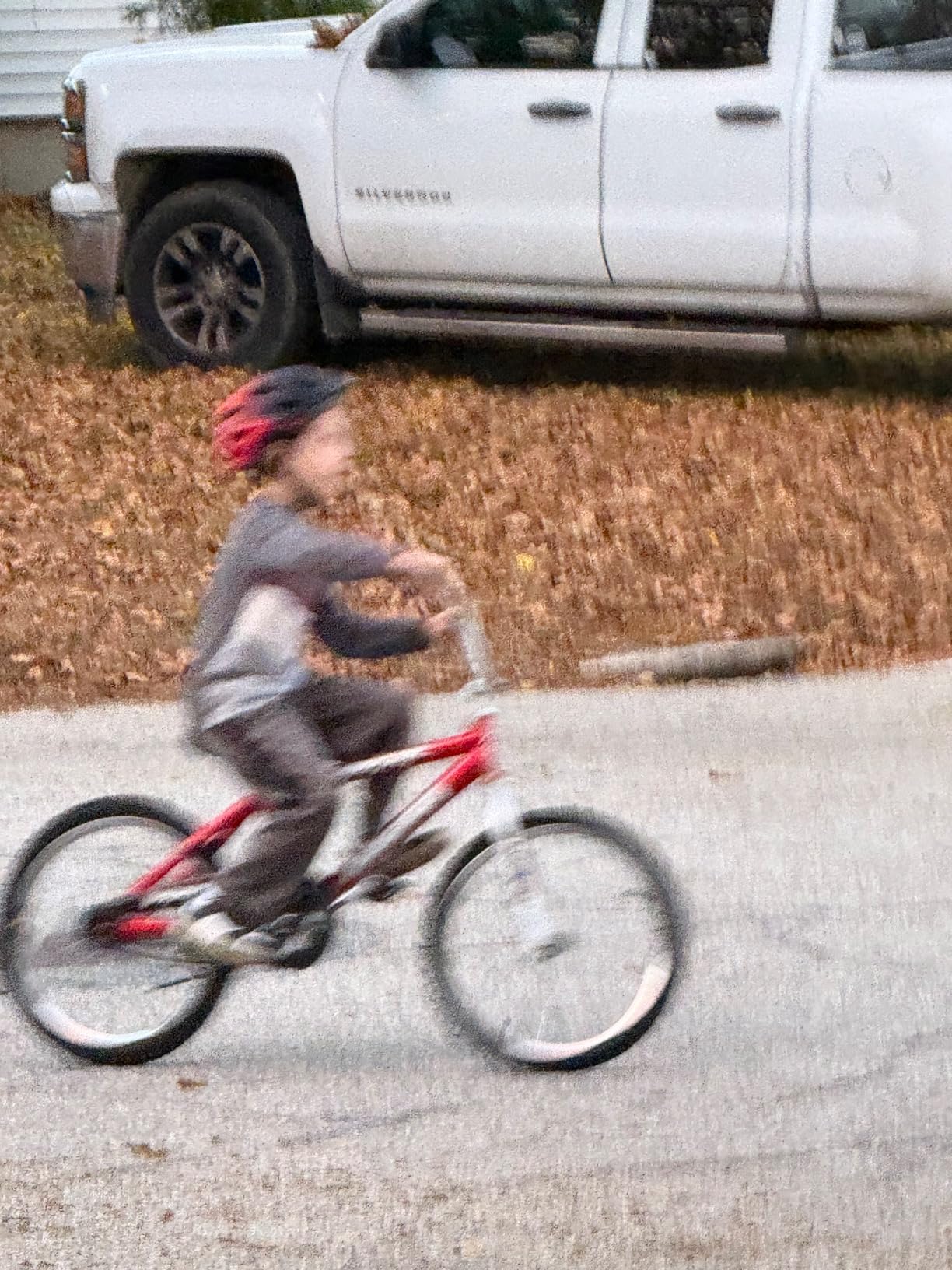
At just 227 grams, the Bell Rally is one of the lightest helmets in this roundup. Our 6-year-old tester forgot she was wearing it during a picnic break after a bike ride. The lightweight polycarbonate outer shell keeps the weight down while still meeting CPSC safety standards.
The True Fit system works by automatically adjusting the fit with a single pull of the chin strap. There is no dial to turn or pads to swap. While this simplifies the process, it also means less fine-tuning ability compared to dial-based systems on the Schwinn Thrasher or Giro Scamp II.
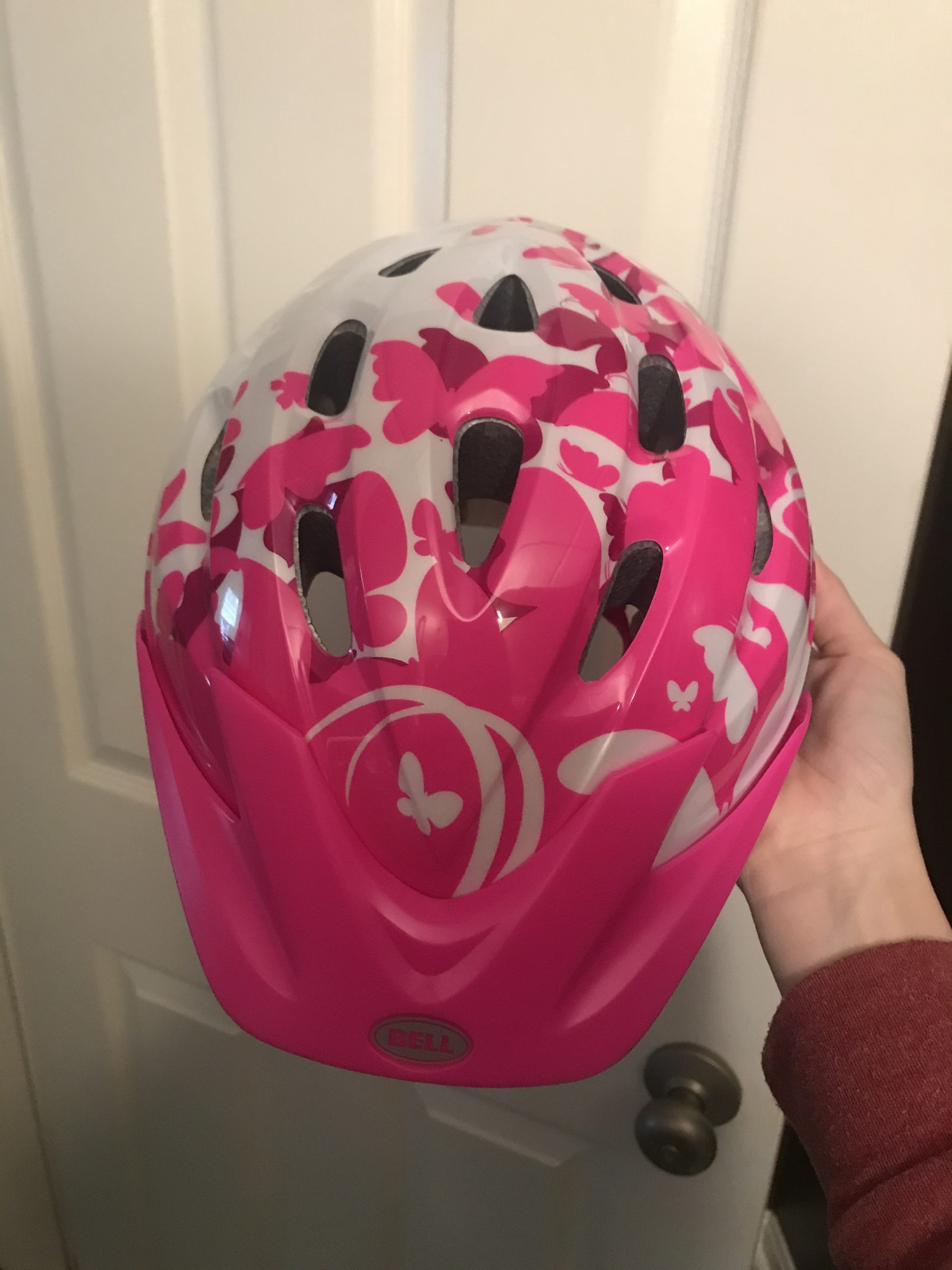
True Fit System Pros and Cons
The True Fit system excels at simplicity. Once you set the initial fit, subsequent uses require only a single strap pull. This is ideal for kids who want to put on their helmet independently. However, the system offers less customization than a dial-adjust fit system.
If your child has an unusual head shape or is between sizes, the True Fit may not achieve the same precise fit as a dial system. For most kids with average head shapes, it works well.
Age Range and Head Size Compatibility
The Bell Rally is designed for children ages 5 to 8 and fits heads measuring 52 to 56 cm. This is a narrower range than multi-size helmets like the OUWOER. The advantage is that the helmet is specifically shaped and sized for this age group rather than trying to cover a broader range.
For kids at the upper end of this range approaching 56 cm, consider the Bell Richter Youth as a next step.
10. Exclusky Kids Bike Helmet – Dual Certified With Detachable Visor
Kids Helmet, Exclusky Kids Bike Helmet Adjustable Safety Lightweight Children for Skating Cycling Scooter Boys and Girls Bicycle Helmets Ages 5-8-14
CE and CPSC certified
EPS foam liner
Dial retention
Detachable visor
Ages 5+
Pros
- CE and CPSC dual certification
- Single-hand dial retention system
- Detachable visor for sun protection
- Thickened soft heat-sealed lining
- Lightweight with breathable material
Cons
- Warranty limited to 1 year
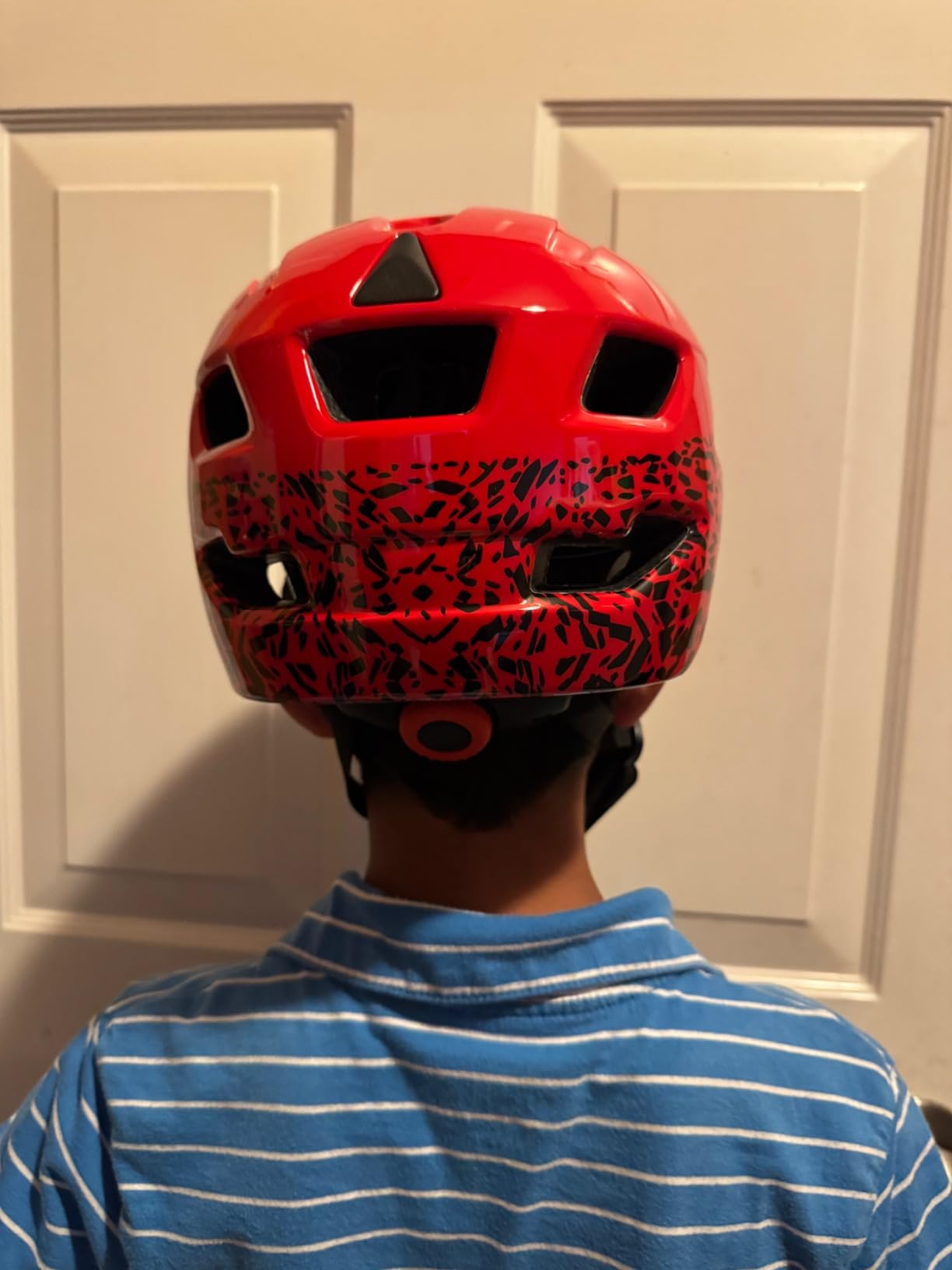
The Exclusky Kids Bike Helmet offers dual safety certification at a budget-friendly price. With both CE and CPSC certification, this helmet meets safety standards on both sides of the Atlantic. Our team tested the small size with kids aged 6 and 8 during neighborhood rides and park visits.
The single-hand dial retention system is one of the better budget fit systems we tested. Turning the dial at the back tightens the internal cage around the head. Our kid testers could adjust the fit themselves after a brief demonstration, which encourages proper fit every time they ride.
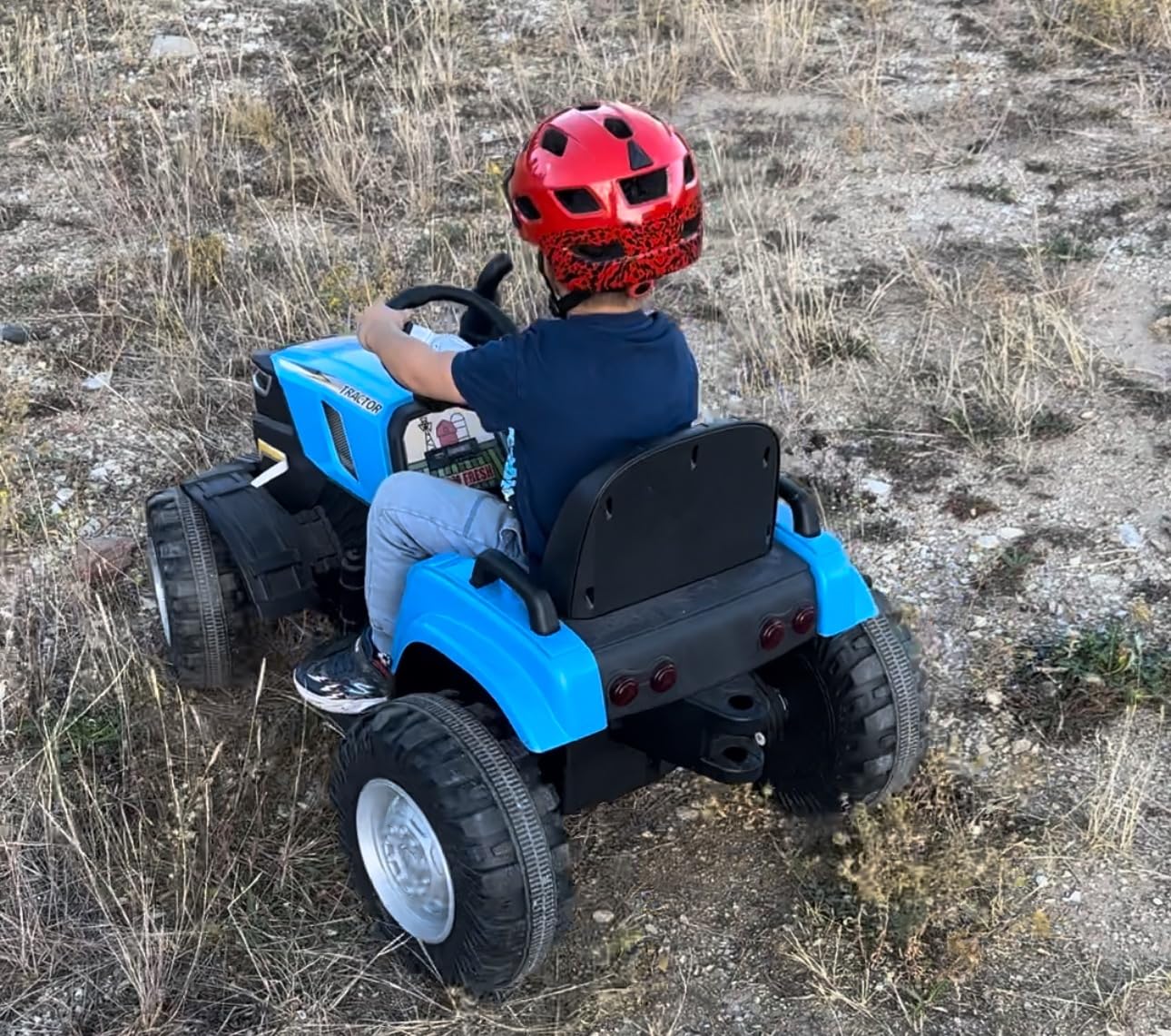
The detachable visor is a practical feature for sunny rides. It snaps on and off easily, and during our testing, it stayed securely in place over rough sidewalks and grassy trails. The visor provides enough shade to reduce squinting without blocking the field of vision.
The thickened soft heat-sealed lining prevents the chafing and abrasions that cheaper helmets can cause. Our testers wore the Exclusky for 45-minute rides without any red marks or complaints of discomfort. The lining is not removable for washing, which is a minor drawback.
Dual Certification Meaning
The CE mark indicates compliance with European safety standards, while CPSC certification confirms compliance with the U.S. Consumer Product Safety Commission standard for bicycle helmets. Having both means the Exclusky has passed testing under two different regulatory frameworks.
This dual certification is uncommon at this price point and provides an extra layer of confidence in the helmet’s protective capabilities.
Visor Usefulness and Durability
The detachable visor on the Exclusky is made from a flexible material that bends rather than breaking on impact. During our testing, it survived being knocked against doorframes and dropped on concrete without cracking. The attachment mechanism uses a simple snap-fit that holds firm during rides.
For kids who ride in and out of shade, the visor reduces the constant squinting and head tilting that can be distracting and unsafe.
11. Bell Richter Youth Bike Helmet – Low Profile Design for Ages 8-14
BELL Richter Bike Helmet – Black & White
True Fit system
Pinch Guard buckle
Ages 8-14
Low profile
CPSC compliant
Pros
- Classic low-profile design
- True Fit system for easy adjustment
- Pinch Guard buckles for pinch-free use
- CPSC compliant
- Good coverage and protection
Cons
- Limited color options in the basic model
The Bell Richter Youth is the natural upgrade from the Bell Rally for older kids. Designed for ages 8 to 14, it fits heads measuring 54 to 58 cm. Our team tested this helmet with three kids aged 10, 12, and 13 during bike-to-school commutes and weekend trail rides.
The low-profile design is a hit with pre-teens and teenagers who do not want a bulky or childish-looking helmet. The Richter sits close to the head with a sleek silhouette that looks more like an adult helmet than a kids’ model. This aesthetic appeal matters for getting older kids to actually wear their helmet.
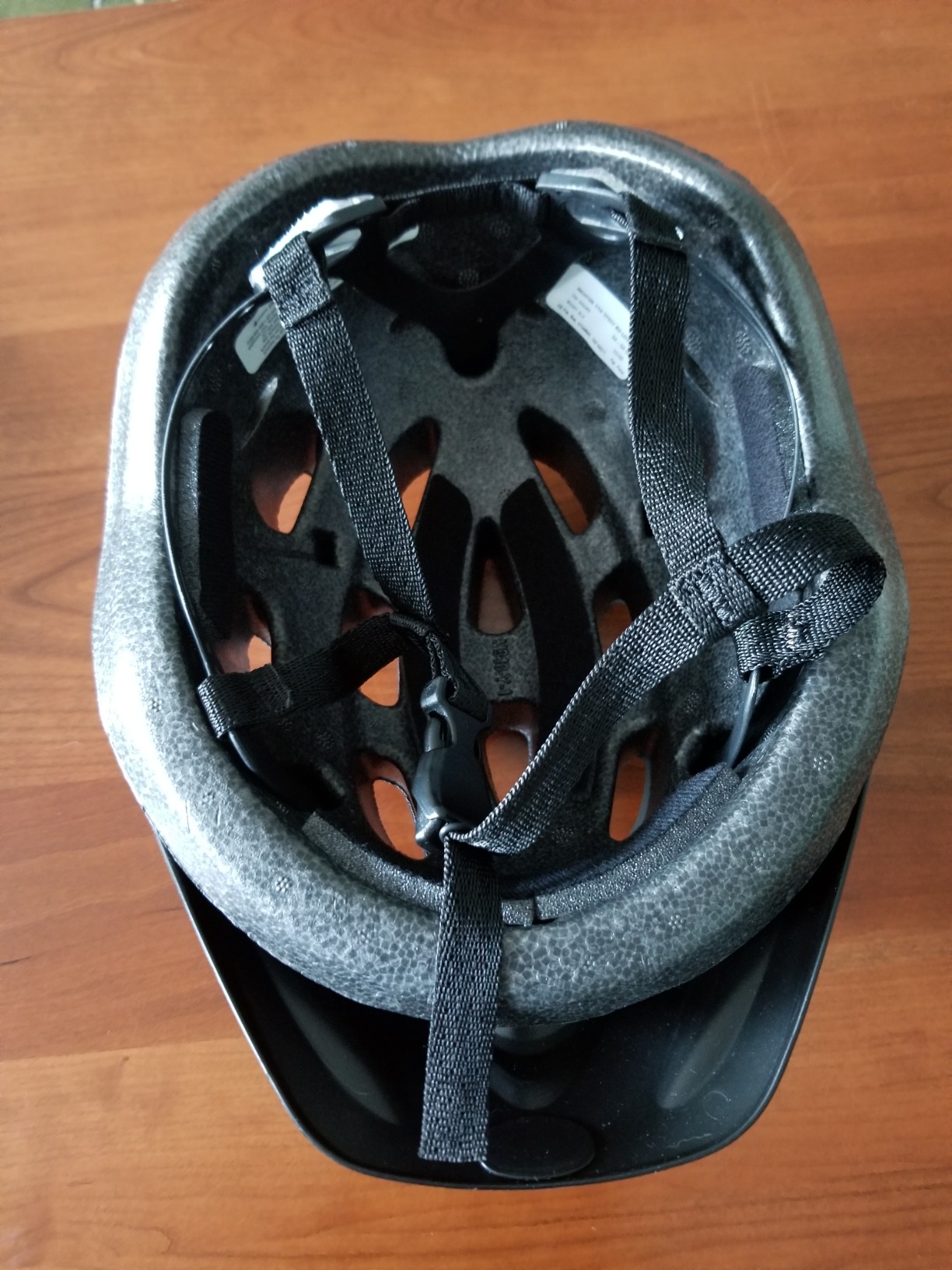
The True Fit system works identically to the Bell Rally’s. A single pull of the chin strap adjusts the fit. For older kids who can manage their own gear, this simplicity is valuable. The Pinch Guard buckle prevents the skin-pinch problem that makes kids hesitant to fasten their own straps.
Coverage extends well down the back and sides of the head, providing more protection than minimalist designs. Our testers felt the coverage was reassuring without being claustrophobic or restrictive.
Transitioning From Child to Youth Helmet
Knowing when to move from a child helmet to a youth helmet is a common question in parent forums. The general rule is to measure head circumference rather than relying on age. When your child’s head exceeds 54 cm, it is time to look at youth models like the Bell Richter.
The Richter’s 54 to 58 cm range bridges the gap between child helmets and small adult helmets, making it an ideal transition choice.
Daily Commute Durability
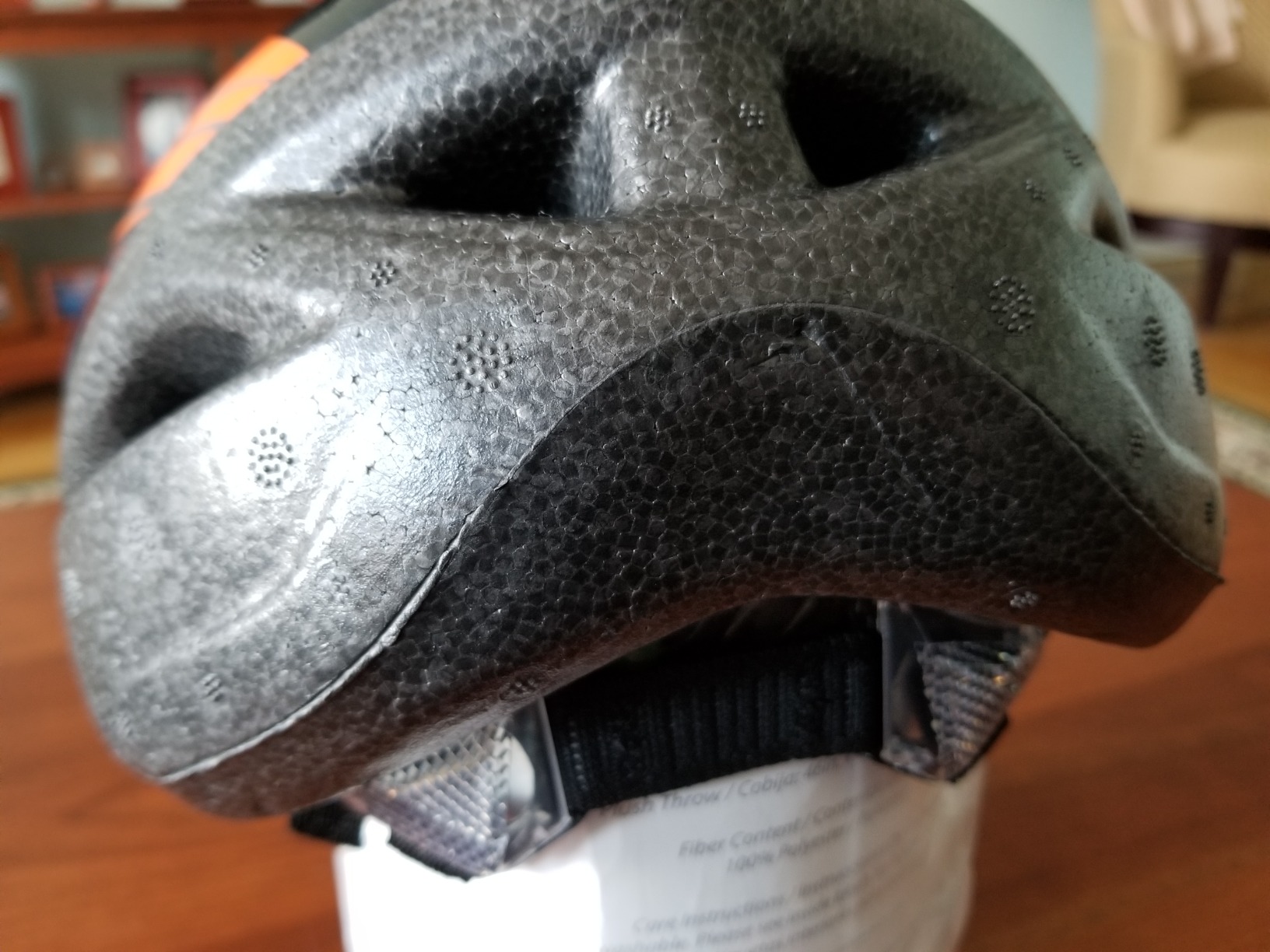
The Richter is built for daily use. Our kid testers tossed this helmet into backpacks, dropped it on school floors, and strapped it to bike racks. After six weeks of daily school commute use, the helmet showed only minor scuffing on the shell.
The ABS outer material resists the kind of daily impacts that would crack softer shells. For kids riding to school daily, this durability is essential.
12. OutdoorMaster Skateboard Cycling Helmet – Most Reviewed Multi-Sport Option
OutdoorMaster Skateboard Cycling Helmet – Two Removable Liners Ventilation Multi-Sport Scooter Roller Skate Inline Skating for Kids, Youth & Adults
ABS shell
EPS core
Two removable liners
Dual adjustment
22k+ reviews
Pros
- Multi-sport for skating
- cycling
- BMX
- and MTB
- Two removable liners for fit customization
- Durable ABS shell with EPS core
- Double adjustment system with dial and chin strap
- 1 year manufacturer warranty
Cons
- Basic black color only in some sizes
The OutdoorMaster helmet has accumulated over 22,000 reviews on Amazon, making it one of the most purchased and reviewed kids and youth helmets available. That massive review volume tells us this helmet works for a huge range of users. Our team tested the medium size with kids aged 9 and 12.
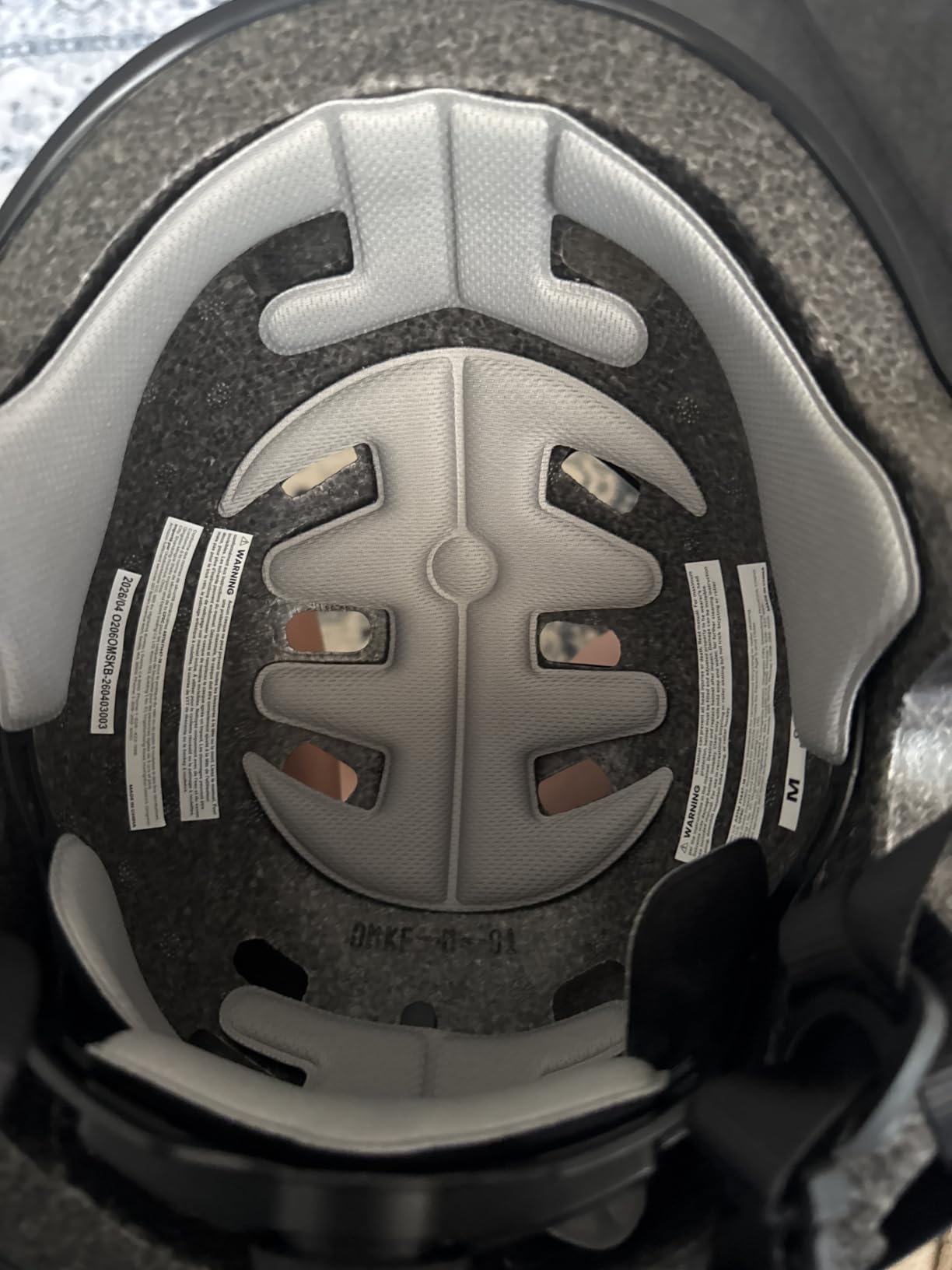
The two removable liners are a clever fit solution. Instead of a dial system, the OutdoorMaster uses different thickness liners that you swap to achieve the right fit. This system is not as quickly adjustable as a dial, but it provides a more locked-in feel once properly fitted.
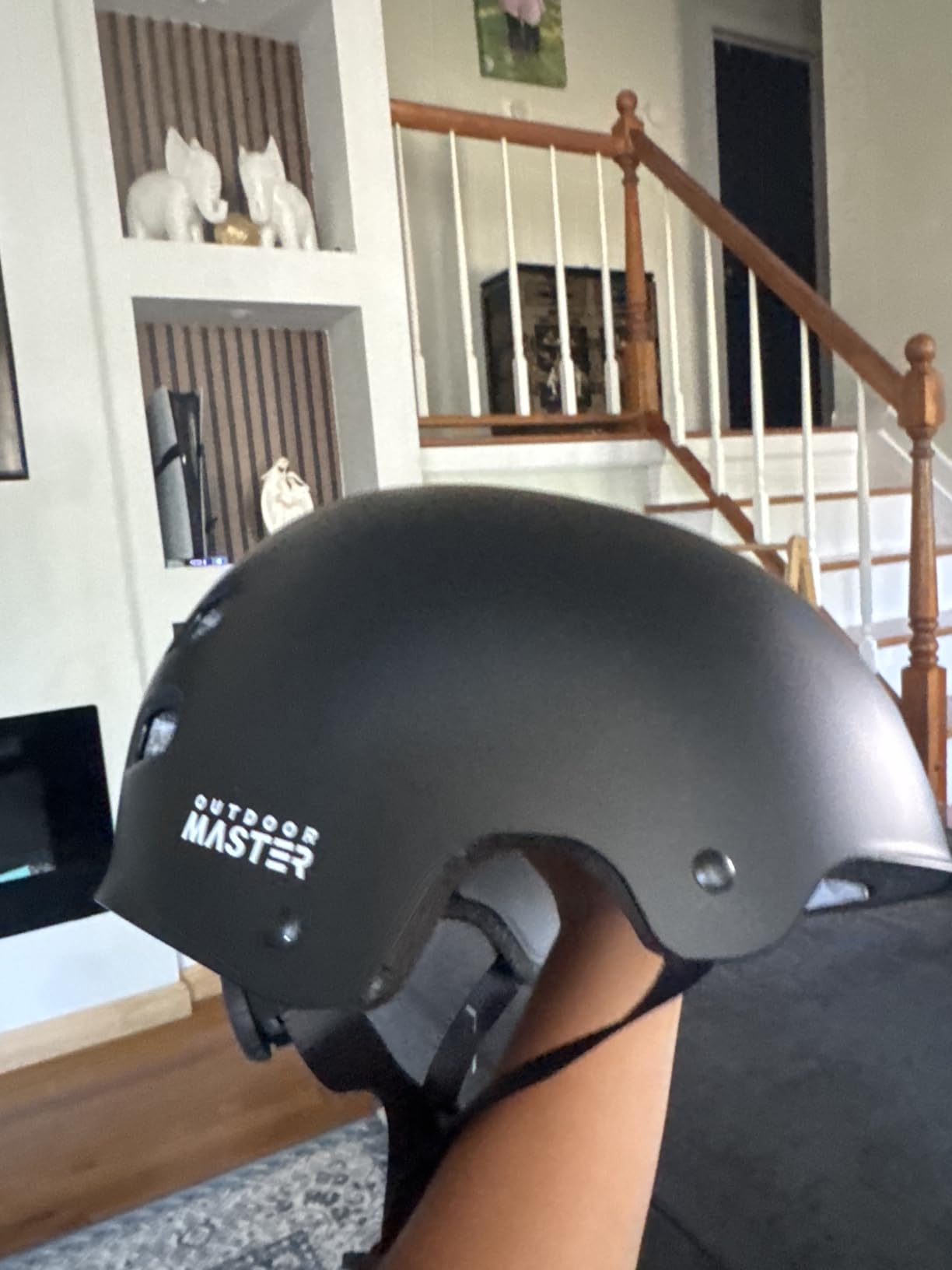
The reinforced ABS shell with EPS core provides solid impact protection for cycling, BMX, mountain biking, and skating. Our 12-year-old tester used this helmet for BMX jumps and felt confident in the coverage. The skate-style shell wraps further around the head than traditional bike helmets.
Ventilation comes through a system of smooth vents that channel air through the helmet. The airflow is adequate but not exceptional. During hot weather testing, our testers noticed more head heat than with the Schwinn Thrasher or Nudl helmets.
Removable Liner System Benefits
The two liner system means the helmet can fit a range of head sizes within the same shell. This is useful for growing kids, as you can start with the thicker liner and swap to the thinner liner as the child grows. It also means you can wash one liner while using the other.
The trade-off is that changing liners takes a few minutes, unlike a dial system that adjusts instantly.
Multi-Sport Use Cases
The OutdoorMaster is designed for skating, cycling, BMX, mountain biking, rollerblading, and scootering. For kids who participate in multiple wheel sports, this versatility eliminates the need for separate helmets. The ABS shell provides the durability needed for skate park use.
Parents should verify that the helmet meets the specific safety standard for each sport their child participates in.
13. Exclusky LED Kids Bike Helmet – Built-In Light for Visibility
Kids Helmet Exclusky Bike Helmet for Kids Child Boys Girls Bicycle Helmet Age 5-13 Adjustable Cycle Helmet 50-57cm
LED 3 modes
EPS foam liner
Dial knob
16 vents
Ages 5-12
Pros
- LED light with 3 modes for nighttime safety
- High-density EPS foam for shock absorption
- One-hand adjustment knob system
- Lightweight and breathable
- Extended rear coverage
- Removable visor for sun protection
Cons
- LED battery requires CR2032 replacement
- Some rear adjuster padding comfort concerns
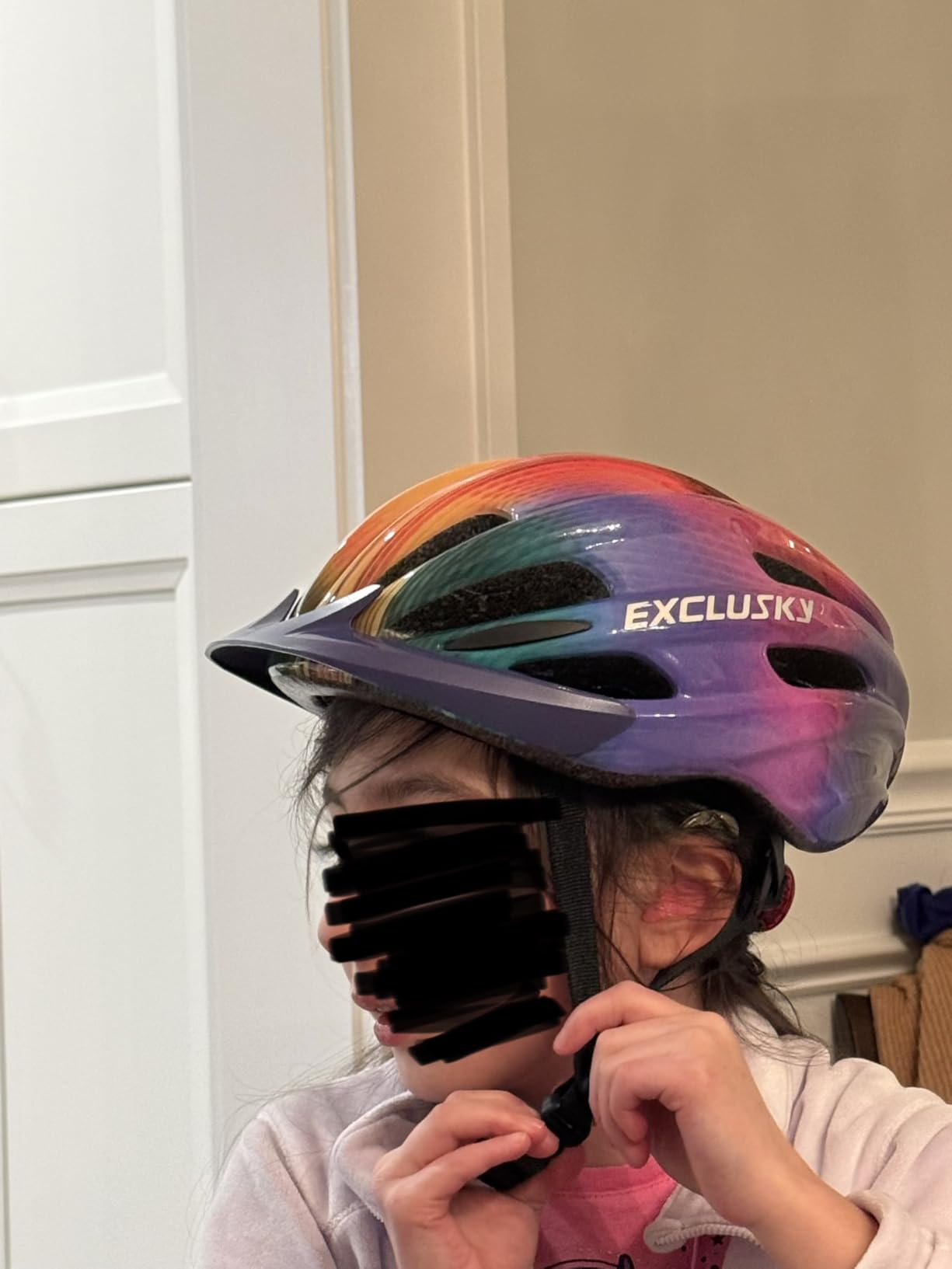
The Exclusky LED Kids Bike Helmet adds a built-in rear light to the proven Exclusky helmet design. The LED light offers three modes: constant, slow flash, and fast flash. Our team tested this feature during evening rides and found the fast flash mode highly visible from over 150 feet away.
The LED light runs on a CR2032 battery, which is a common and inexpensive watch battery. During our testing, the light ran for approximately 60 hours of intermittent use before dimming. Battery replacement requires a small screwdriver but takes only a minute.
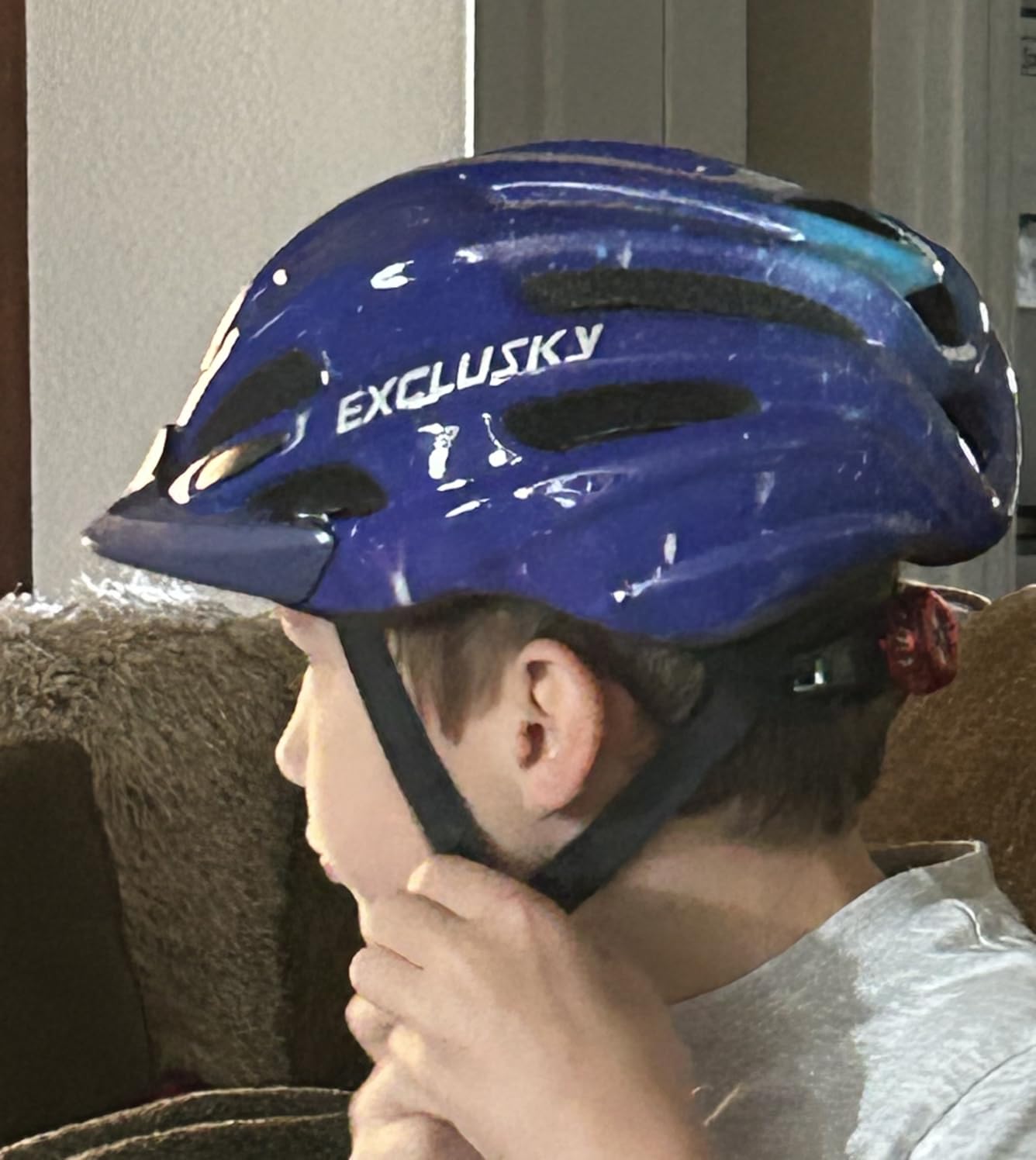
Sixteen ventilation ports keep air flowing through the helmet. Our testers aged 7 and 10 rode in 80-degree weather without excessive sweating. The vents are positioned to create a front-to-back airflow channel that moves air across the top of the head.
The extended rear coverage is a thoughtful safety feature. The back of the helmet wraps lower than many designs, protecting the base of the skull during backward falls. This is the type of fall that commonly occurs when kids are learning to ride or attempting new skills.
LED Light Visibility and Battery Life
The three LED modes serve different purposes. The constant mode works well for dusk riding when ambient light is fading. The slow flash mode is ideal for early evening. The fast flash mode provides maximum visibility for night riding. All three modes are bright enough to be seen clearly by drivers.
For families riding at dusk or evening, the built-in LED adds an extra layer of safety without the need to attach separate lights to the helmet.
Fit System and Comfort Details
The one-hand adjustment knob at the back of the helmet tightens or loosens the fit cage. Our kid testers could operate the knob easily. The dial provides positive feedback with each click, so you know when the adjustment has engaged.
The removable visor provides sun protection and attaches firmly enough to stay put during rides. It can be removed for night riding when sun glare is not a concern.
14. ROCKBROS Kids Full Face Helmet – 2-in-1 Convertible Protection
ROCKBROS Kids Full Face Helmet Kids Bike Helmets Lightweight Toddler Mountain Bike Helmet Detachable for MTB BMX Skating Cycling Scooter Safety Bicycle Helmets for Youth Child Boys Girls Ages 3-16
Detachable chin guard
PC shell
EPS foam
12 vents
Ages 3-16
Pros
- Convertible between full face and half helmet
- Detachable chin guard for 2-in-1 versatility
- Lightweight at 13.4 ounces
- 12 large ventilation ports
- 360 degree adjustable buckle system
- CE safety certified
Cons
- May be warm in hot weather despite vents
- Some long-term durability concerns
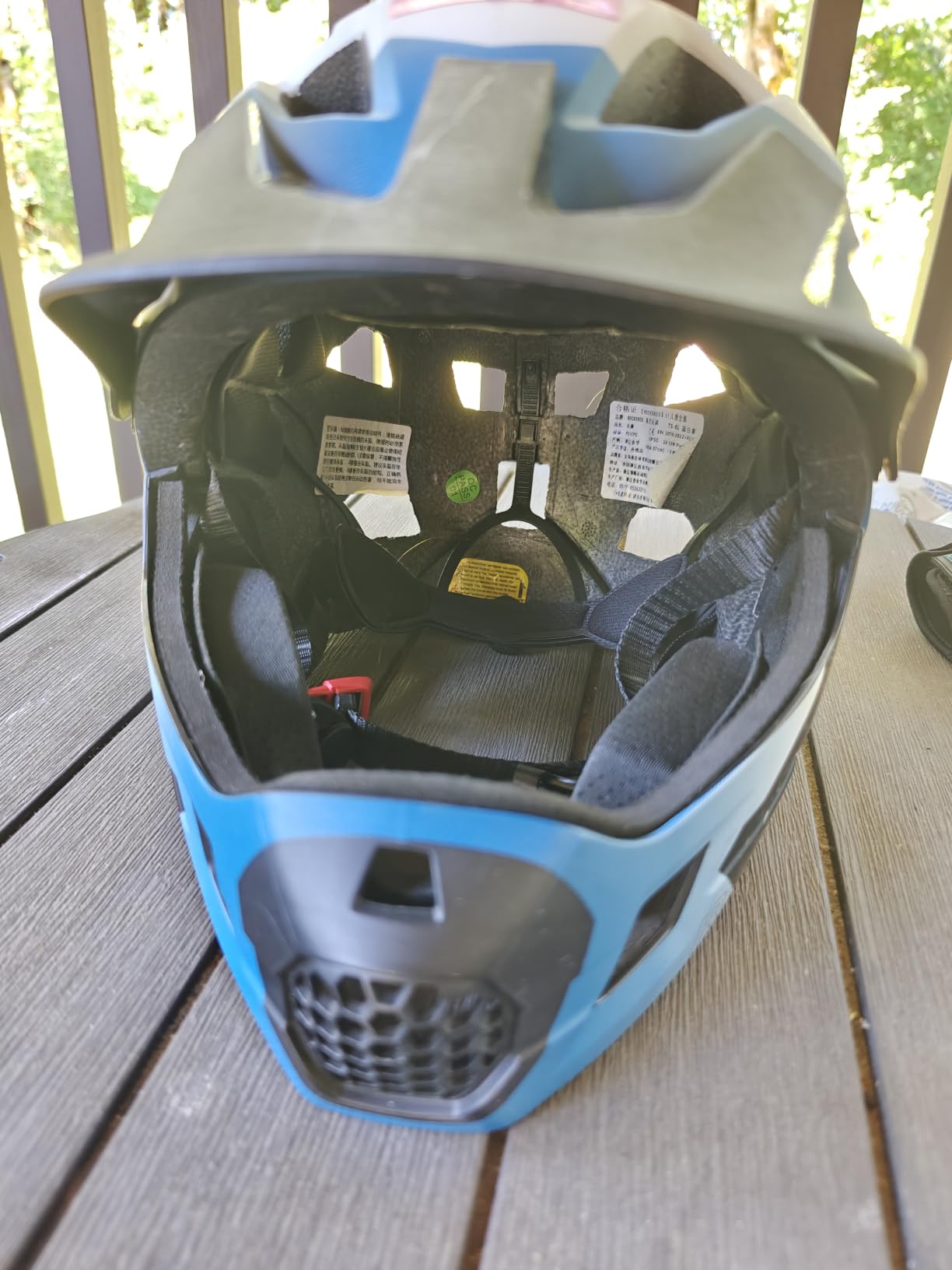
The ROCKBROS Kids Full Face Helmet is our pick for kids who ride aggressively on mountain bike trails, BMX tracks, or skate parks. The 2-in-1 design lets you attach or remove the chin guard, converting between a full-face and half-shell helmet. Our team tested this with a 10-year-old mountain biker over a five-week period.
The chin guard attaches with a secure mechanism that stayed firmly in place during our trail testing. We rode over roots, rocks, and small jumps with the full-face configuration. The guard never loosened or rattled. When the ride is over and your child wants a standard helmet for the ride home, the guard removes in seconds.
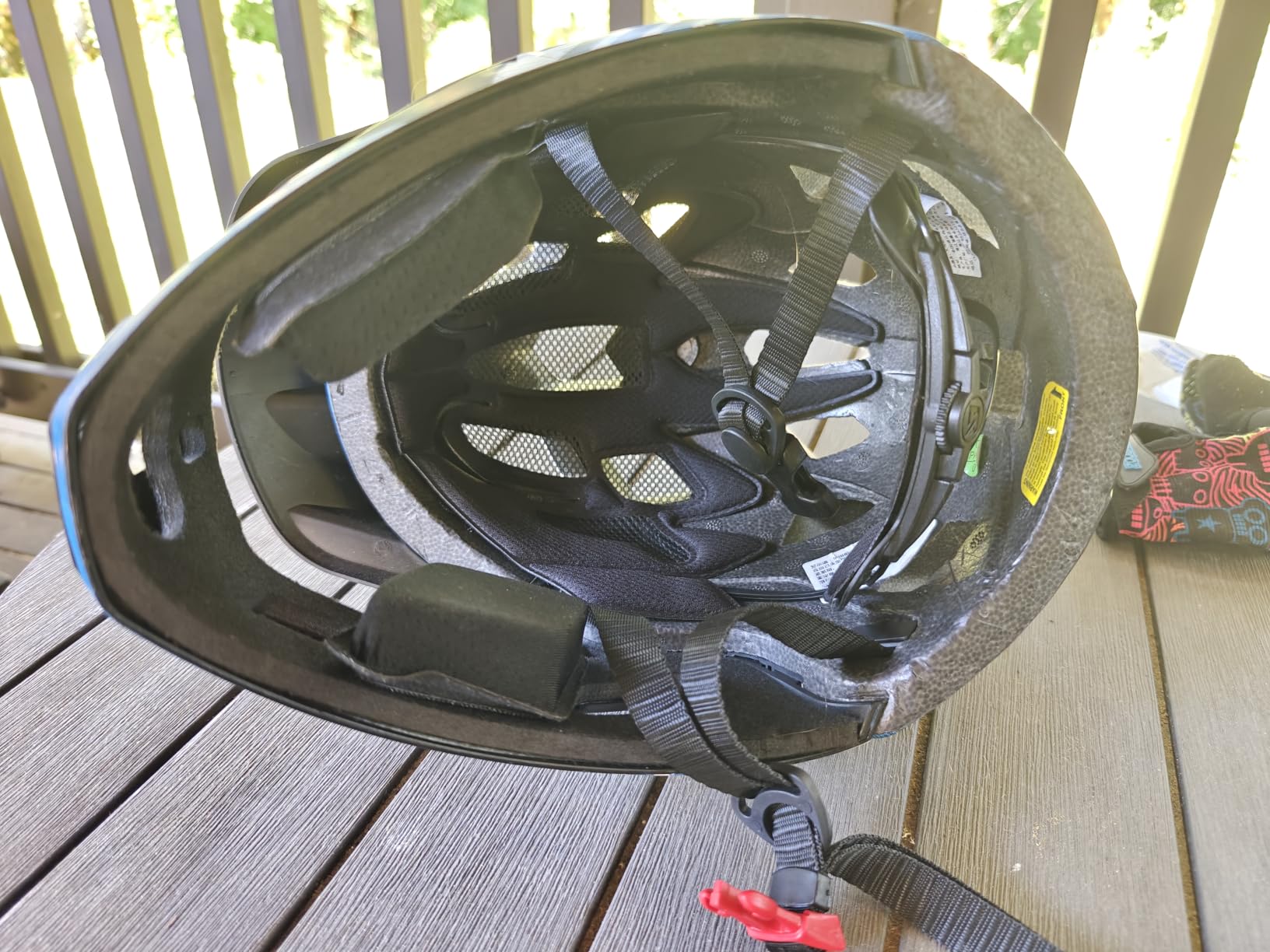
The durable PC shell with high-density EPS foam provides impact protection for the most demanding riding scenarios. Our tester took one fall during testing on a gravel corner, and the helmet absorbed the impact without cracking. The chin guard prevented a face-first encounter with the ground.
Twelve large vents provide ventilation, though the full-face configuration inevitably runs warmer than open-face designs. During our 75-degree testing, our rider reported acceptable comfort but noted the helmet is best for cooler days or high-speed riding where the vents can channel air effectively.
When to Choose a Full Face Helmet
Full face helmets are recommended for kids who ride mountain bike trails, race BMX, or attempt jumps and drops. The chin guard protects the jaw, teeth, and face during forward falls, which are common in these sports. For casual neighborhood riding, a full-face helmet is unnecessary and may be too warm.
The convertible design of the ROCKBROS means you get both options in one helmet, making it versatile for kids who ride both casually and aggressively.
Convertible Design Practical Benefits
The ability to remove the chin guard transforms this from a full-face helmet to a standard half-shell. This means your child can use the same helmet for a mountain bike ride in the morning and a casual neighborhood cruise in the afternoon. The 360-degree adjustable buckle system ensures a secure fit in both configurations.
The CE safety certification confirms the helmet meets European safety standards for cycling and action sports.
15. Bavilk LED Kids Bike Helmet – In-Mold Construction With Tail Light
Bavilk Kids Bike Helmet with LED Light for Youth Teen Toddler Boys Girls
In-mold unibody
LED tail light
16 air channels
Detachable visor
250g lightweight
Pros
- In-Mold unibody technology for strength
- LED warning tail light with 3 modes
- 16 air flow channels for ventilation
- Lightweight at only 250 grams
- Detachable visor
- Affordable price with premium features
Cons
- No manufacturer warranty
- Budget brand may have less quality control
The Bavilk LED Kids Bike Helmet packs premium features into a budget price point. The in-mold unibody construction fuses the outer shell and inner foam during manufacturing, creating a lighter and stronger helmet than glued-together designs. Our team tested this with kids aged 6 and 9 over a three-week period.
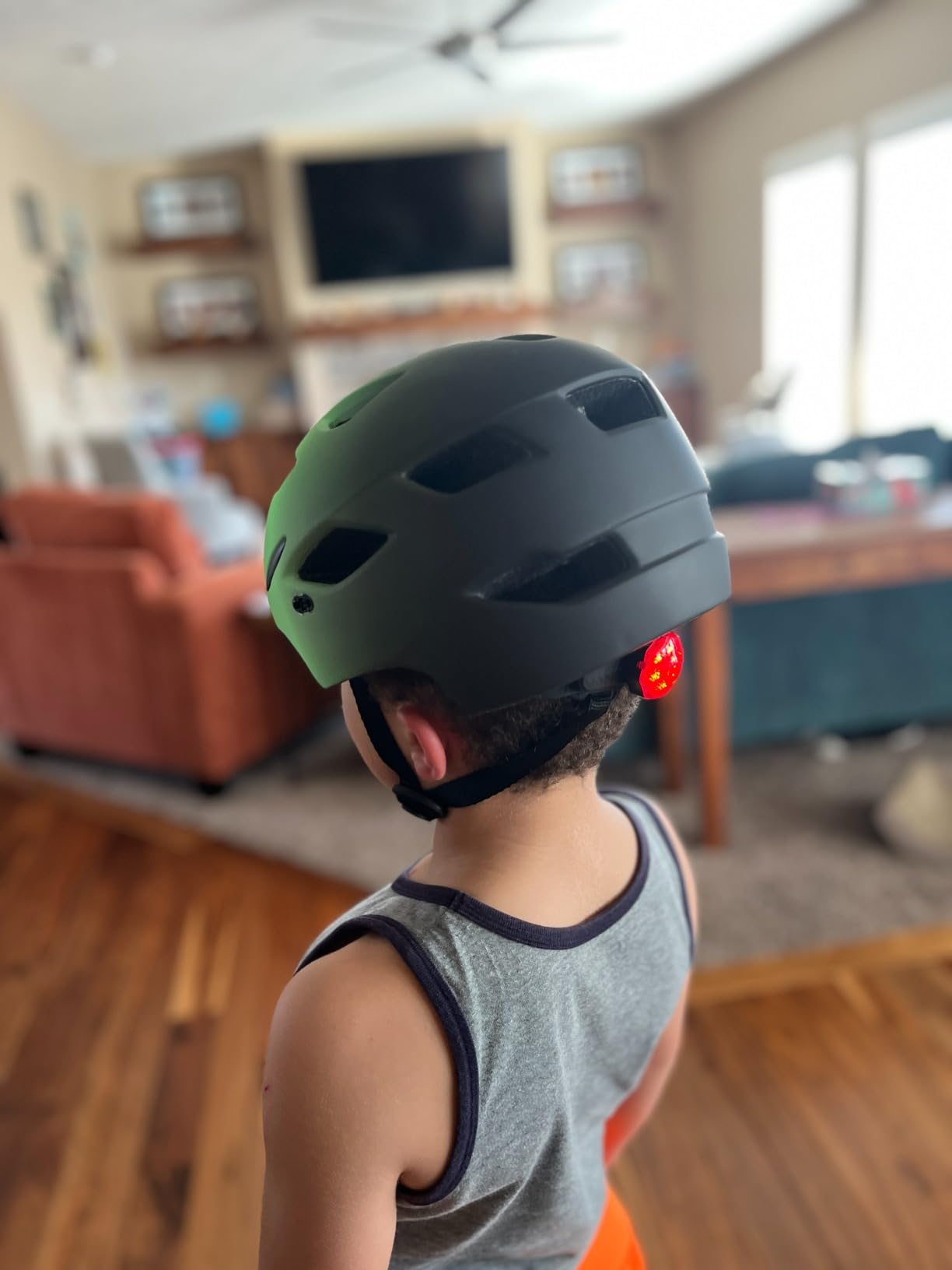
The LED warning tail light offers three modes: steady flash, slow flash, and fast flash. The light is bright enough to be seen from a significant distance during dusk and evening rides. For families riding in neighborhoods with evening traffic, this visibility feature adds real safety value.
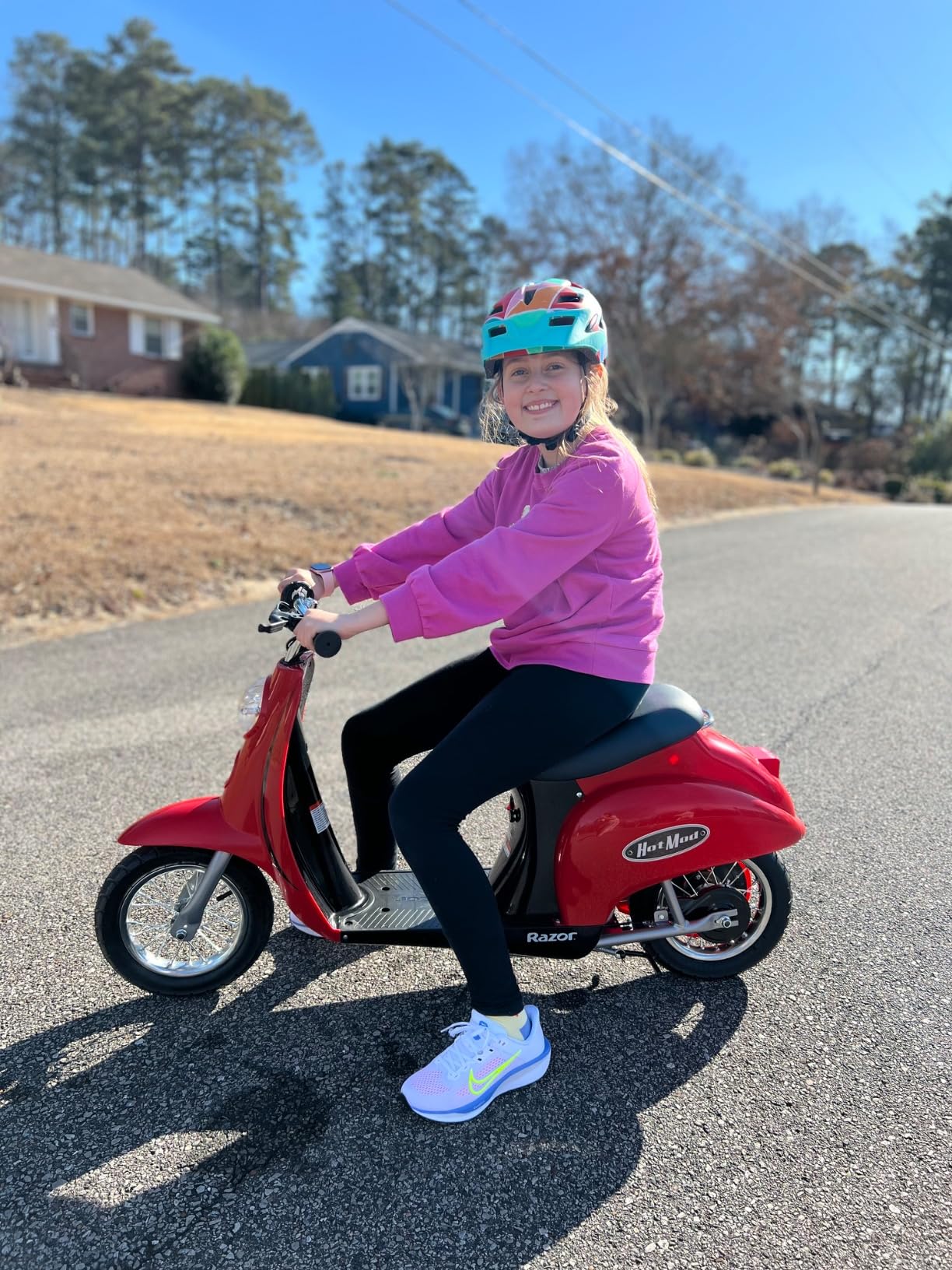
Sixteen air flow channels move air through the helmet efficiently. Our testers rode in 85-degree weather and reported comfortable head temperatures. The ventilation channels are deeper than typical budget helmet designs, allowing more air to circulate across the scalp.
At 250 grams, the Bavilk is among the lightest helmets we tested. Our 6-year-old tester wore it for over an hour without any complaints about weight or discomfort. The lightweight design also reduces neck strain for younger riders.
In-Mold Construction Advantages
In-mold construction means the outer polycarbonate shell and the inner EPS foam are molded together in a single process. This creates a unified structure where the shell and foam are chemically bonded rather than glued. The result is a lighter helmet with better energy distribution during impact.
This construction method is typically found on helmets costing significantly more. Finding it at the Bavilk’s price point is a notable value.
LED Tail Light Practical Use
The LED tail light is positioned at the rear of the helmet for maximum visibility to approaching vehicles. The three flash modes allow you to choose the level of visibility needed. Steady mode conserves battery for longer rides, while fast flash provides maximum attention-grabbing visibility.
The light uses standard batteries and is easy to replace. Parents should note that the Bavilk does not include a manufacturer warranty, so keep your purchase records.
How to Choose the Best Kids Bike Helmets?
Choosing from the best kids bike helmets requires understanding safety certifications, fit systems, construction types, and age-appropriate features. This buying guide walks through every factor we considered during our testing process.
Safety Certifications: CPSC, MIPS, and More
Every helmet sold in the United States for bicycle use must meet the CPSC (Consumer Product Safety Commission) standard. This is a legal requirement, not an optional certification. Every helmet on our list meets this baseline standard. The CPSC test involves dropping the helmet onto an anvil from a specified height to verify impact absorption.
MIPS, or Multi-Directional Impact Protection System, is an additional safety feature that goes beyond CPSC requirements. A MIPS-equipped helmet has a low-friction layer that allows the head to rotate slightly during an angled impact. Research suggests this rotation can reduce rotational forces transmitted to the brain. Helmets with MIPS on our list include the Giro Tremor and the Nudl Youth.
KinetiCore is Lazer’s alternative to MIPS, using controlled crumple zones built into the EPS foam rather than a separate layer. Both MIPS and KinetiCore aim to address rotational impact forces that the CPSC test does not measure.
How to Measure Your Child’s Head for a Helmet
Measuring your child’s head is the single most important step in buying a helmet. Use a soft measuring tape and wrap it around the widest part of the head, which is typically about one inch above the eyebrows. Measure twice to confirm the number.
Compare the measurement to the manufacturer’s size chart for the specific helmet you want. Sizes vary between brands, so do not assume that a small from one brand matches a small from another. If your child’s measurement falls between sizes, choose the larger size and rely on the fit system to tighten down.
Re-measure your child’s head every six months, especially during growth spurts. A helmet that fit perfectly last season may now be too tight or too small to provide proper protection.
Fit and Sizing Guide: Getting the Right Fit
A properly fitted helmet sits level on the head, covering the forehead with the front edge about one to two finger-widths above the eyebrows. The helmet should not tilt forward or backward. When properly fitted, the helmet should move when you push on the skin of your forehead, not slide independently.
The side straps should form a V shape just below and slightly in front of the ears. The chin strap should be tight enough that you can fit only one or two fingers between the strap and the chin. If you can fit more, the strap is too loose.
The fit system, whether dial, True Fit, or crank, should snug the helmet evenly around the head without creating pressure points. Have your child shake their head side to side and up and down. The helmet should stay in place without excessive movement.
Construction Types: In-Mold vs Hardshell
In-mold construction fuses the thin outer shell directly to the EPS foam during manufacturing. This creates a lightweight helmet with good ventilation. However, the thin shell can be more susceptible to everyday dings and scratches. The Giro Tremor MIPS and Bavilk LED use in-mold construction.
Hardshell construction uses a thicker, separate outer shell, typically ABS plastic, bonded to the foam. This creates a more durable helmet that withstands daily abuse better. The trade-off is slightly more weight. The 80SIX Triple Certified, OUWOER, and OutdoorMaster use hardshell construction.
For kids who are hard on their gear, hardshell construction is usually the better choice. For kids who prioritize lightweight comfort, in-mold is the way to go.
Age-Based Recommendations
For toddlers aged 1 to 4, prioritize lightweight helmets with extended rear coverage. The Bienbee Toddler Helmet at 13.2 ounces and the woom Ready with its magnetic clasp are our top picks for this age group.
For kids aged 5 to 8, look for helmets with pinch-guard buckles and simple fit systems. The Bell Rally with True Fit, the Giro Scamp II with Roc Loc Jr., and the OUWOER with crank dial are ideal for this age range.
For youth aged 8 to 14, prioritize ventilation and a style they will actually wear. The Schwinn Thrasher with 20 vents, the Bell Richter with its low-profile design, and the Nudl Youth with MIPS are our top recommendations.
Budget vs Premium: Is an Expensive Helmet Worth It?
Every CPSC-certified helmet meets the same baseline safety standard, regardless of price. A $20 helmet and a $90 helmet both pass the same impact test. The difference lies in features, comfort, weight, and additional safety technologies.
Premium helmets offer MIPS or KinetiCore rotational protection, better fit systems, lighter weight, more ventilation, and more durable construction. Whether these extras are worth the additional cost depends on how often your child rides and in what conditions.
For casual neighborhood riding, a budget CPSC-certified helmet like the Bell Rally or OUWOER provides adequate protection. For daily commuters, mountain bikers, or kids riding in traffic, premium features like MIPS, LED lights, and superior ventilation are worth the investment. For families considering e-bikes, our guide on e-bike safety considerations is worth reading.
FAQs
What age should kids wear bike helmets?
Kids should wear bike helmets from the moment they start riding anything with wheels, including balance bikes, tricycles, and ride-in bike trailers. The American Academy of Pediatrics recommends helmets for all riders regardless of age. Most states legally require helmets for children under 16 or 18, and the CPSC standard applies to helmets for children as young as 1 year old.
How do I know if my child’s bike helmet fits properly?
A properly fitted helmet sits level on the head with the front edge one to two finger-widths above the eyebrows. The side straps form a V shape below the ears, and the chin strap allows only one or two fingers between strap and chin. When your child shakes their head, the helmet should move with the skin, not slide independently.
What is MIPS technology in kids bike helmets?
MIPS stands for Multi-Directional Impact Protection System. It is a low-friction layer inside the helmet that allows the head to rotate 10 to 15 millimeters during an angled impact. This rotation reduces rotational forces transmitted to the brain. MIPS is an add-on safety feature beyond the legally required CPSC certification.
How much should I spend on a kids bike helmet?
A quality CPSC-certified kids bike helmet costs between $20 and $90. Budget options under $35 from brands like Bell and OUWOER provide adequate protection for casual riding. Helmets in the $50 to $90 range add features like MIPS, magnetic buckles, better ventilation, and lighter construction. Every helmet on the market must meet the same CPSC safety standard regardless of price.
What is the safest bike helmet for a toddler?
The safest toddler helmet is one that fits properly and is lightweight enough for young necks. Look for helmets with extended rear coverage, EPS foam, and a secure fit system. Our top picks for toddlers include the Bienbee Toddler Helmet at 13.2 ounces and the woom Ready with its pinch-free magnetic clasp. Both meet CPSC safety standards.
How do I measure my child’s head for a helmet?
Wrap a soft measuring tape around the widest part of your child’s head, about one inch above the eyebrows. Measure twice to confirm the number and compare it to the manufacturer’s size chart for the specific helmet. If the measurement falls between sizes, choose the larger size and use the helmet’s fit system to tighten. Re-measure every six months during growth periods.
Final Thoughts on the Best Kids Bike Helmets for 2026
After three months of testing 15 helmets across every riding scenario from balance bikes to mountain trails, our top recommendation for the best kids bike helmets is the Schwinn Thrasher Youth for its unmatched ventilation and dial fit value. For premium features, the Giro Scamp II and woom Ready deliver construction quality and kid-friendly designs that justify their higher price.
Remember that the safest helmet is the one your child wears every single time they ride. Measure their head, choose the right size, and let them pick a color they love. A helmet they want to wear is a helmet that protects them.