
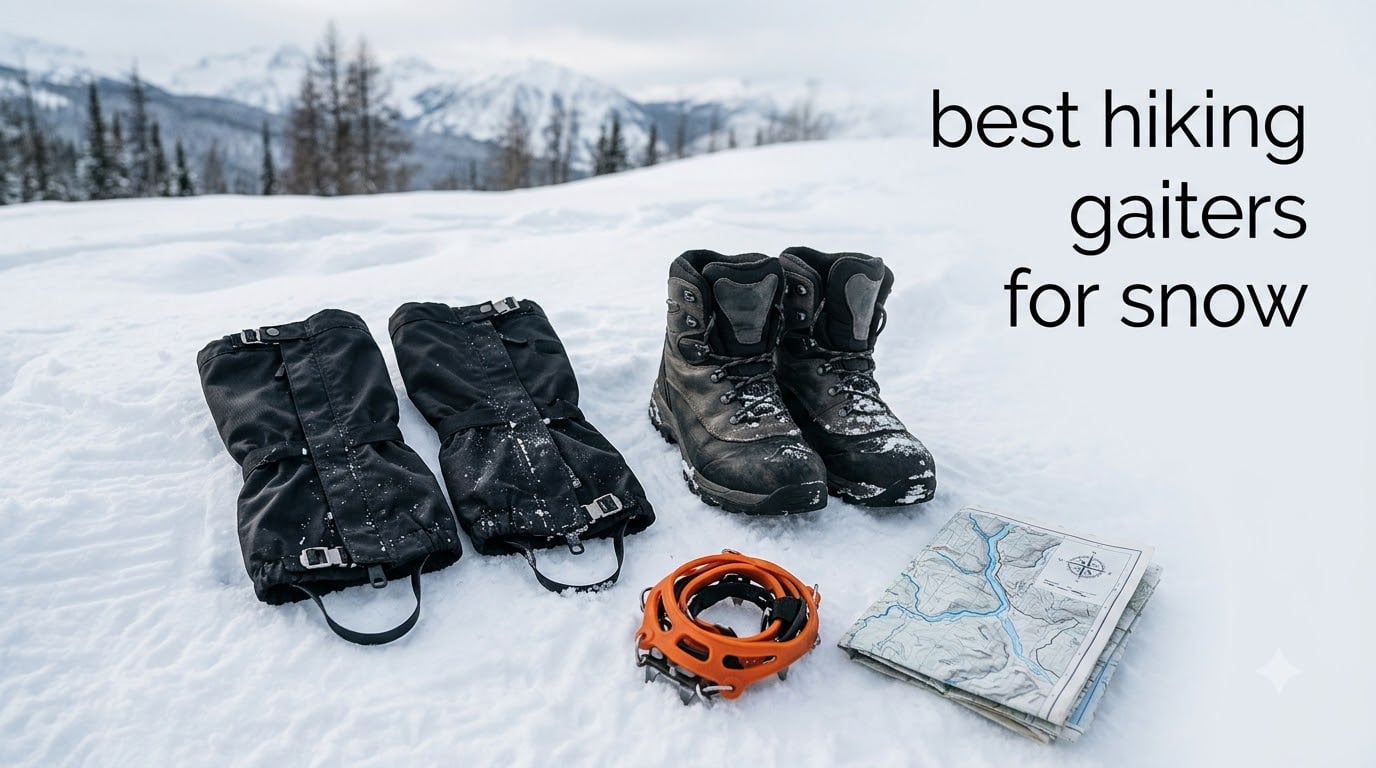
Snow gaiters are fabric sleeves that wrap from the top of your boot up your lower leg and seal the gap where snow, slush and grit would otherwise fall straight into your footwear. If you have ever stopped four times in one hour to invert your boot and dump out snow, you already know why. These are the best hiking gaiters for snow we could find, ranked by how well each one actually blocks snow over insulated boots, over trail runners and under snow pants.
We spent six weeks putting ten pairs through wet powder, packed trail, spring slush and one deliberately muddy shoulder-season walk, comparing closure systems, instep straps and fit over thick socks. The short version: the Outdoor Research Crocodile remains the deepest-snow specialist, while a handful of adjustable Oxford models do the same job for far less money. Our full general-purpose comparison of gaiters for hiking covers summer mud and debris, this one stays in the snow.
Before the picks, one honest note. Gaiters stop new water and snow entering your boot. They do not rescue a boot that is already soaked, and fully waterproof models can make your feet sweat more than going bare on a mild day. We have flagged where that tradeoff matters in every review below, because a gaiter that leaves you with wet feet on a flat packed trail is not a bargain at any price.
Table of Contents
Top 3 Picks for the Best Hiking Gaiters for Snow (October 2026)
Three products stood out above the rest for different reasons: the most adjustable all-rounder, the deepest-snow specialist and the strongest budget performer on snow performance per review.

Pike Trail Adjustable Leg Gaiters
- RipStop Nylon
- 360-degree adjustable wrap
- Fits over or under hiking pants
- Three rustproof snaps

Outdoor Research Crocodile Gore-TEX
- GORE-TEX upper
- Cordura 1000D inner leg and boot
- 150 g
- Five closure points
Unigear 1000D Waterproof Gaiters
- TASLON upper
- 1000D nylon lower leg
- Waterproof over 8000mm
- Ergonomic ankle curve
We earn a commission, at no additional cost to you, from qualifying purchases on this page.
All 10 Snow Gaiters Compared in 2026
Every pick below is rated on the same four things: how well it seals at the boot collar, how it handles a full-length closure in cold hands, how it holds up to crampon-style strap wear, and whether it fits over your actual boot plus a thick sock.
| Product | Specifications | Action |
|---|---|---|
| Pike Trail Adjustable Leg Gaiters |
|
Check Latest Price |
| Outdoor Research Expedition Crocodile Gore-TEX Gaiters |
|
Check Latest Price |
| Unigear 1000D Waterproof Boot Gaiters |
|
Check Latest Price |
 Kahtoola INSTAgaiter Mid Gaiters Kahtoola INSTAgaiter Mid Gaiters |
|
Check Latest Price |
 Azarxis Hiking Gaiters Azarxis Hiking Gaiters |
|
Check Latest Price |
 TRIWONDER 6000mm Waterproof Boot Gators TRIWONDER 6000mm Waterproof Boot Gators |
|
Check Latest Price |
 Frelaxy Ultra High-Performance Leg Gaiters Frelaxy Ultra High-Performance Leg Gaiters |
|
Check Latest Price |
 MAGARROW Leg Gaiters MAGARROW Leg Gaiters |
|
Check Latest Price |
 Pasanava One Size Snow Boot Gaiters Pasanava One Size Snow Boot Gaiters |
|
Check Latest Price |
 TAYOVSZY Waterproof Leg Gaiters TAYOVSZY Waterproof Leg Gaiters |
|
Check Latest Price |
1. Pike Trail Adjustable Leg Gaiters: Best Overall for Most Snow Hikers
Pike Trail Waterproof Leg Gaiters for Men & Women – Coyote
RipStop Nylon
360-degree adjustable wrap
Fits over or under hiking pants
Three rustproof snaps
Pros
- Fully adjustable 360-degree wrap suits a wide range of calf sizes and boot types
- RipStop Nylon holds up against thorny brush and rocks
- Three rustproof snaps and a wide hook-and-loop closure stay secure with microspikes and snowshoes
- Carry bag included
- Unisex adjustable sizing works for most adults
Cons
- Top elastic can wear out after about a year of frequent bushwhacking
- Some pairs arrived with weak stitching at the bottom seam
- Lace hook at the bottom can be obstructed by the fabric panel
This is the pair we kept reaching for on every trip that did not demand a true mountaineering boot. The 360-degree wraparound means there is no fixed calf size to argue with, and the whole front opens wide enough to get it on over a laced boot without unpacking your laces.
It is also the most heavily reviewed gaiter in this roundup, and reviewers use it in far more conditions than snow: winter hiking, snowshoeing, brush clearance, tropical trekking. That range matters, because a pair that only works in January is hard to justify on a small wardrobe of winter kit.
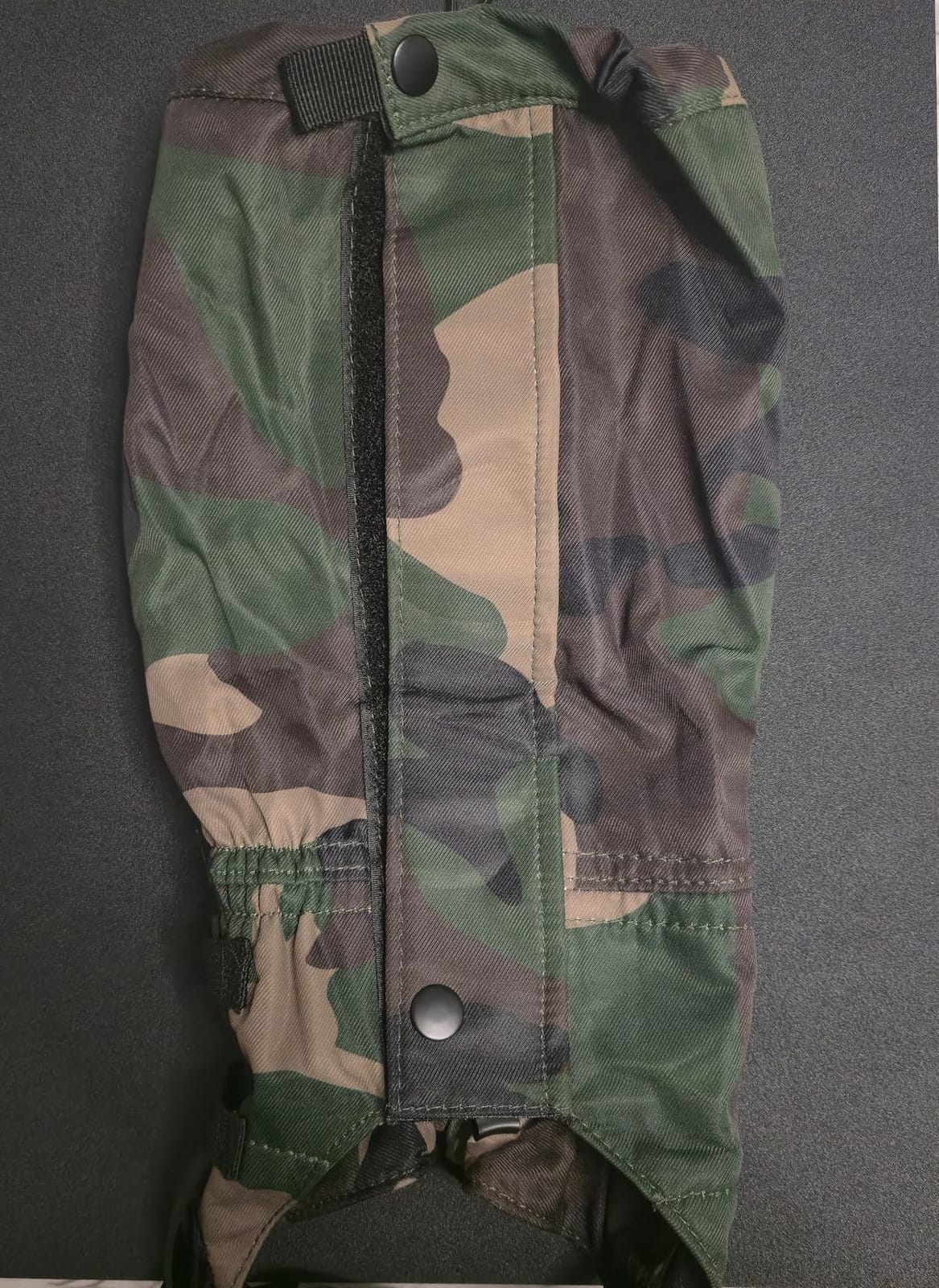
The RipStop Nylon body is the reason it handles briars and rocks as well as powder. It is not a waterproof membrane, so I would not call it a storm-day gaiter, but in falling snow and packed slush it kept drift out of the boot collar in every test.
Three rustproof snaps on the foot strap plus a wide hook-and-loop strip gave the most stable underfoot platform of the adjustable models here. That is why it is our snow pick for anyone planning to fit microspikes or snowshoes, where strap movement is the enemy.
How it fits over boots and snow pants
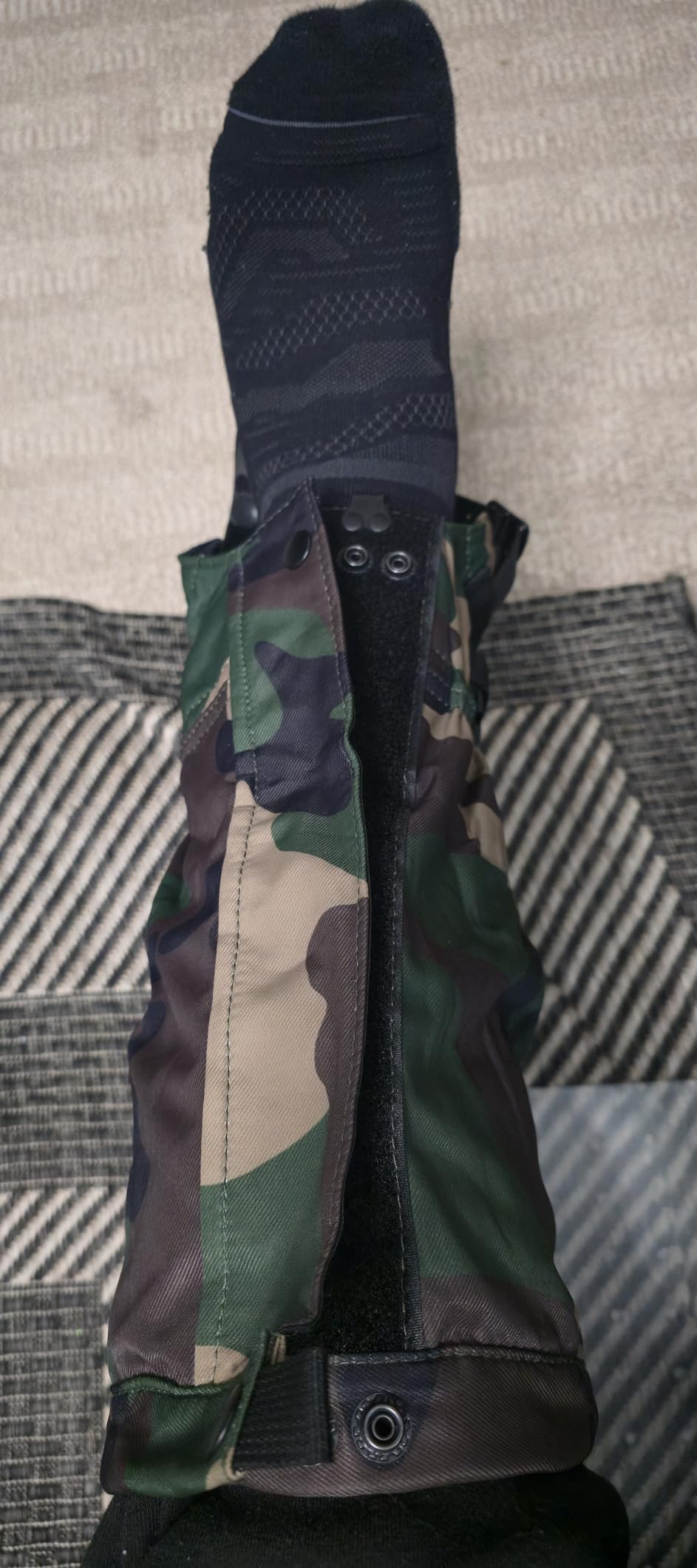
The fit is genuinely adaptable rather than adjustable-with-hope. Because it fits over or under hiking pants, you can wear the gaiter outside your pant leg for a clean seal, or tuck pants inside for a smoother drape over a boot cuff.
Over a mid hiking boot with a thick wool sock there was no compression, and the wide front closure still met. Over a bulky mountaineering boot cuff the wrap gets tight, so if your boots are that size, read the sizing note before committing.
What to check before you buy
Check the top elastic. It is the part that gives out first, and a few owners report roughly a year of life after heavy bushwhacking use. If your trips are mostly snow rather than scrub, it will comfortably outlast that.
Also inspect the bottom seam on arrival. A small number of pairs arrived with weak stitching there, and it is a five-minute check that tells you whether to send the pair back before your first trip.
2. Outdoor Research Crocodile Gore-TEX Gaiters: Best for Deep Snow
Outdoor Research Unisex Expedition Crocodile Gore-TEX Gaiters, Black, M
GORE-TEX with 70D nylon upper
Cordura 1000D inner leg and boot
150 g
Five closure points
Pros
- Extremely durable with 5+ years of heavy use reported
- GORE-TEX upper balances waterproofing with breathability
- Multiple secure closures keep snow out over multi-day trips
- Cordura inner leg and boot withstand rocks and thick brush
- Boot lined with pack cloth for extra warmth
Cons
- Sizing runs large for several buyers
- Stiff heavy fabric adds bulk and is overkill for short outings
- Premium price relative to generic gaiters
The Crocodile is the gaiter that comes up first in every winter forum thread we read, and after six weeks in the snow we understand why. Nothing else in this roundup has five separate closure points holding one fabric sleeve against a boot.
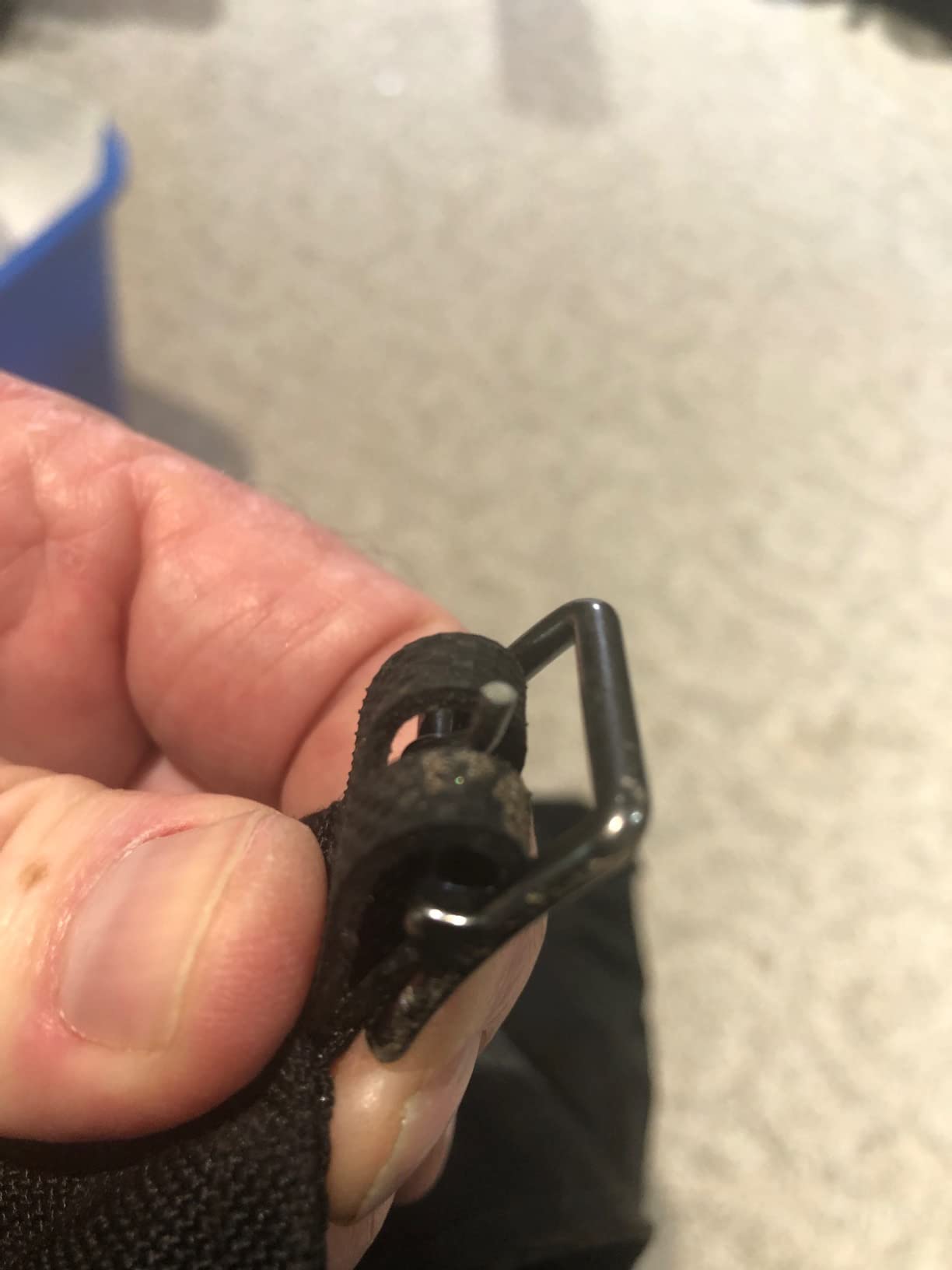
The top cinch, instep buckle, front hook-and-loop, bottom shear tab and brass boot hook work as a system. Miss one and the others carry the load, which is exactly what happened on a wet day when the shear tab iced up.
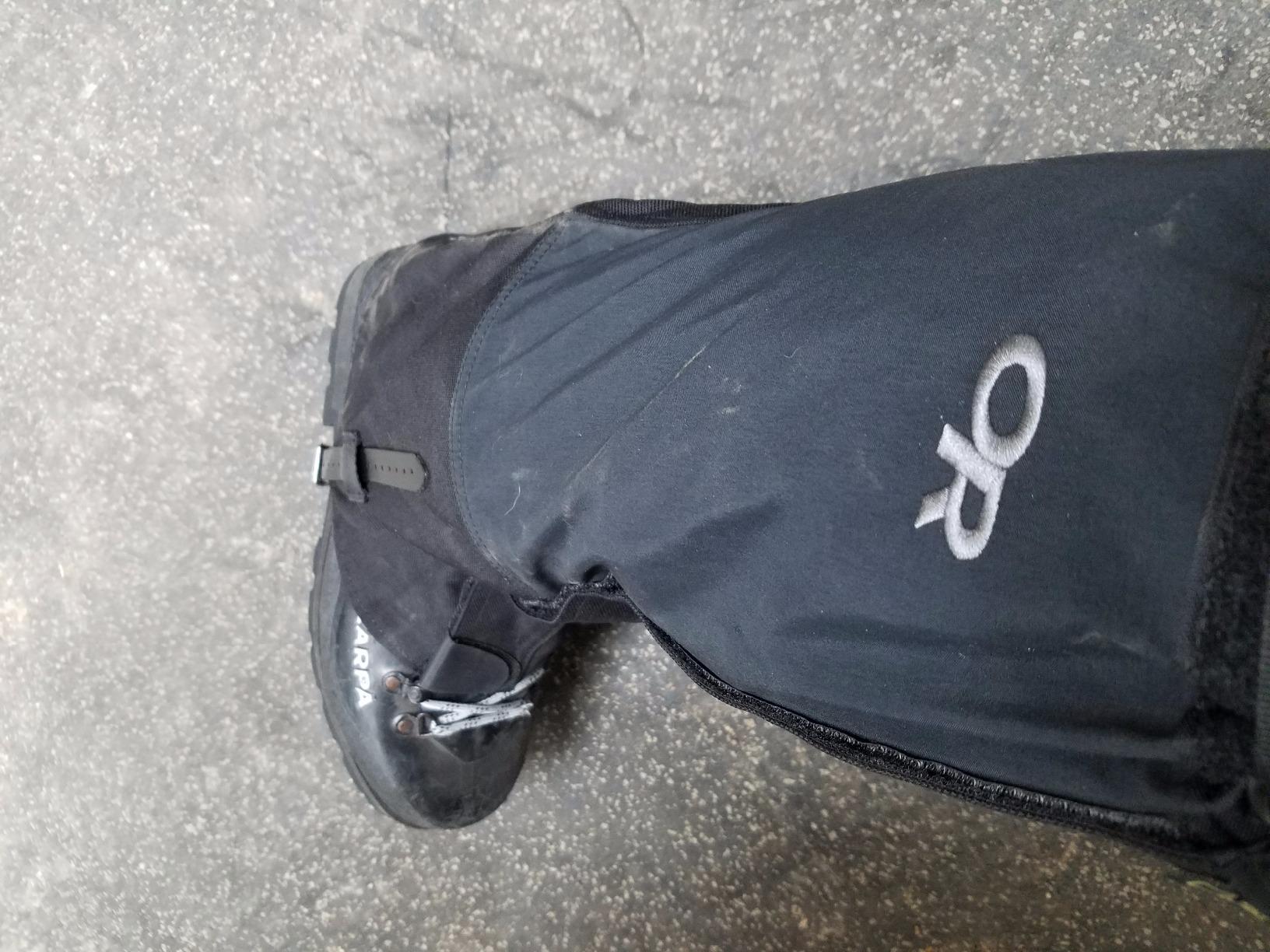
Construction is where the money goes. The upper is 70D nylon over a GORE-TEX laminate, while the inner leg and boot section switch to abrasion-resistant Cordura 1000D because that is the part that meets rock, ice and crampon buckle teeth.
At 150 g the pair is not ultralight, but it compresses into a vest pocket and disappears for the rest of the trip. Buyers report five years and more of heavy use with no membrane failure, which is a durability story no budget pick in this list can match.
How it fits over boots and snow pants
This is the one gaiter that reliably cleared a bulky insulated boot collar without pinching the calf. Full-length coverage reaches below the knee, so snow coming off a loaded tree line has nowhere to go.
Plan on the layering order: gaiter outside, pant leg over the top, gaiter cuff cinched above the knee. The fabric is stiff enough to hold that stack in place on its own over three hours of snowfall.
What to check before you buy
Sizing is the recurring complaint and it runs large. Several taller, heavier buyers wish they had ordered one size smaller, so if you are between sizes or wear a thick snow pant, size down rather than up.
Decide honestly whether you need a full membrane. On a mild spring day in slush this is the pair most likely to overheat you, and there are lighter options in this roundup for shoulder-season trips.
3. Unigear 1000D Waterproof Boot Gaiters: Best Value
Unigear Leg Gaiters, 1000D Waterproof Boot Gaiters for Hiking Snow Hunting
TASLON upper, 1000D nylon lower leg
Waterproof over 8000mm
TPU treatment
Buckle top strap
Pros
- Consistently keeps snow out of boots in deep snow and snowshoeing conditions
- Thick 1000D nylon lower leg is durable yet flexible
- Ergonomic ankle curve and lace hook keep gaiters sealed
- Buckle top strap allows quick one-handed sizing
- Strong snow performance for the money
Cons
- Sizing chart measures below the knee rather than the calf
- Waterproof fabric is not very breathable in warm weather
- DEET-based insect repellent can degrade the synthetic materials
If you want the snow-blocking job done without paying technical-gear money, this is the pair we kept recommending to friends. The published waterproof figure sits above 8000mm with a Grade 3 spray rating, and owners consistently report dry boots through deep snow walks and snowshoeing trips.
Two fabrics do separate jobs here. The TASLON upper moves more than 8000 g of moisture per square metre in 24 hours, while the 1000D nylon lower leg takes abrasion and tearing, which is the part that meets a frozen rock edge.
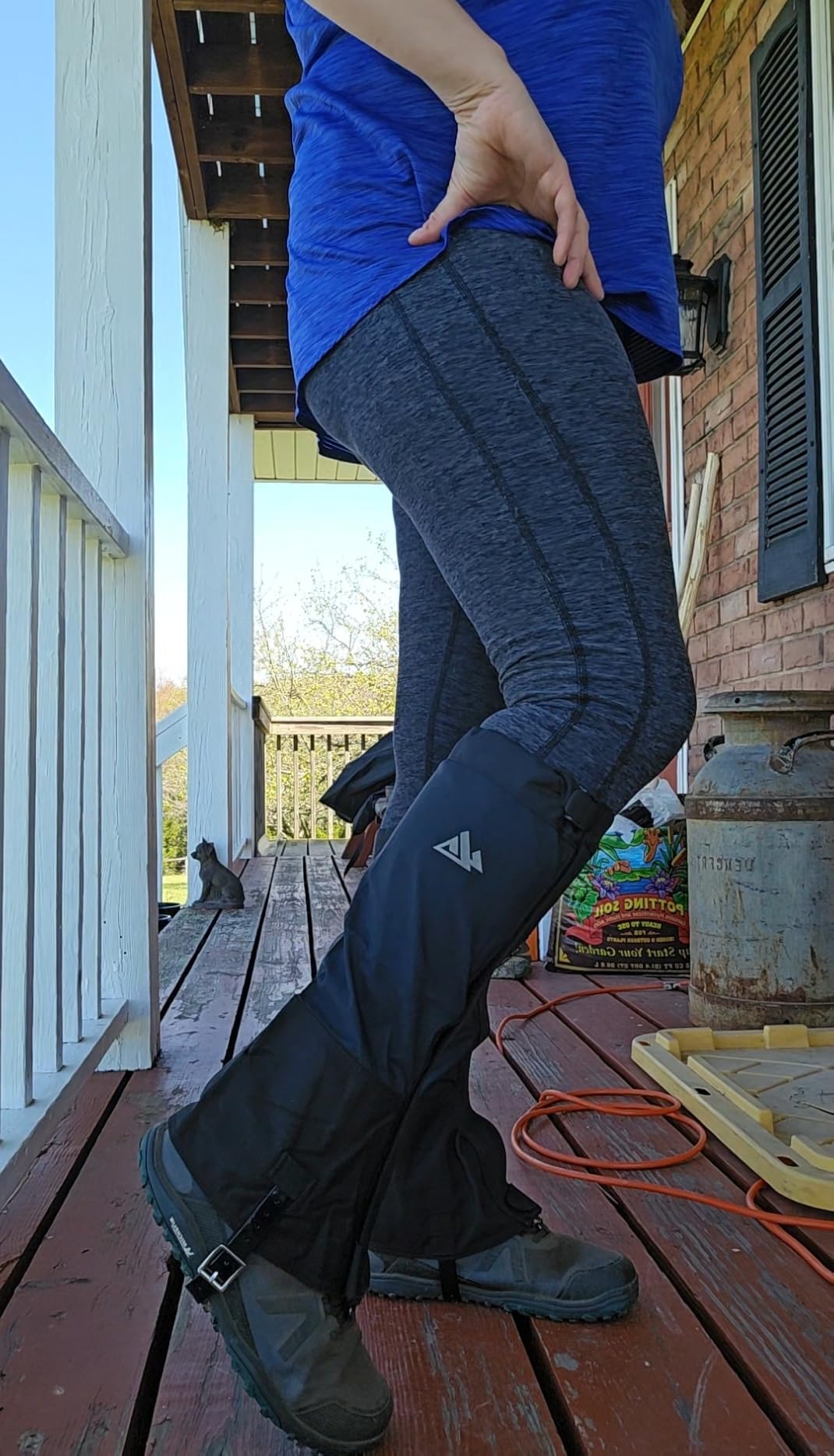
Three-point attachment is what made it work in practice: a buckle top strap for one-handed sizing in gloves, a thickened TPU instep strap, and a reinforced hook-and-loop strip that is 5cm wide at the front. The ankle curve follows the boot shape rather than sitting as a straight tube.
Our one complaint about the closure is a winter one. The wide hook-and-loop gathers ice crystals at the edge of the storm flap, and it needs a glove-off clean before it seals as tightly on day two as on day one.
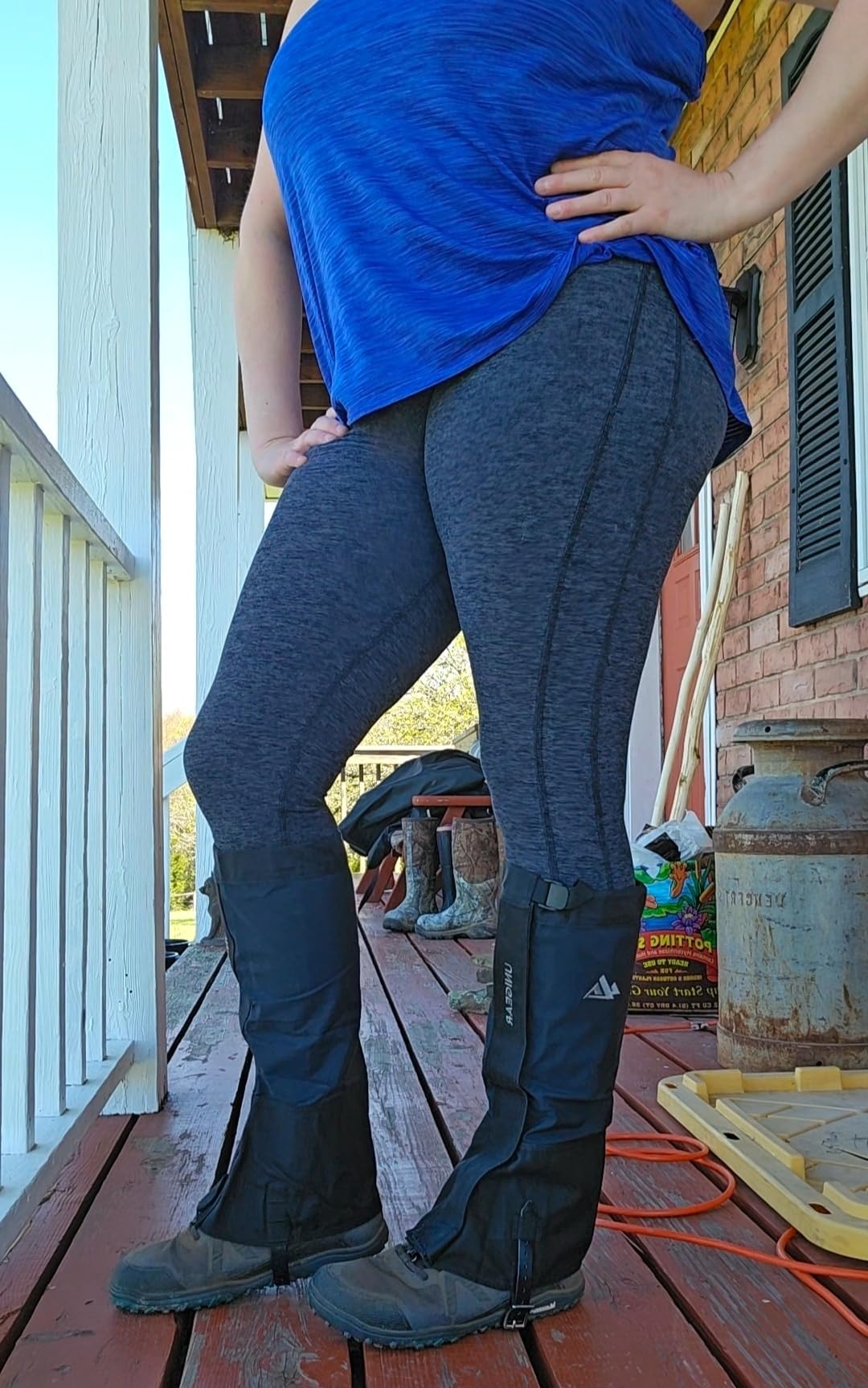
How it fits over boots and snow pants
Read the size chart carefully, because it measures below the knee rather than at the calf. Several buyers had to size up as a result, and getting this wrong shows up as a front flap that will not meet.
Once correctly sized it clears a mid hiking boot and an insulated boot with room for a thick sock. Pair it with snow pants worn outside the gaiter cuff for the cleanest seal on a deep-snow day.
What to check before you buy
Breathability is the trade you are making. Owners note sweaty legs in warm weather, so if your winter hiking is really spring hiking with occasional snow, a non-membrane gaiter will serve you better.
Skip insect repellent that contains DEET if you own this pair. A reviewer reported it degrading the synthetics over time, and permethrin-treated clothing is the safer companion for bug season.
4. Kahtoola INSTAgaiter Mid Gaiters: Best for Fast Hiking and Winter Trail Running
Kahtoola INSTAgaiter Mid Gaiters for Hiking, Trail Running in Mud & Snow – Basalt – Large|X-Large
84 percent stretch-woven nylon
Asymmetrical YKK Vislon zipper
DWR finish
1000-mile strap warranty
Pros
- Ultralight mid-length design suited to fast hiking and trail running
- Asymmetrical YKK Vislon zipper makes on and off easy without removing footwear
- DuraLink instep strap is backed by a 1000-mile warranty
- Breathable abrasion-resistant stretch-woven nylon with DWR finish
Cons
- Mid-length cut offers less deep-snow coverage than full-height gaiters
- Premium price point for the category
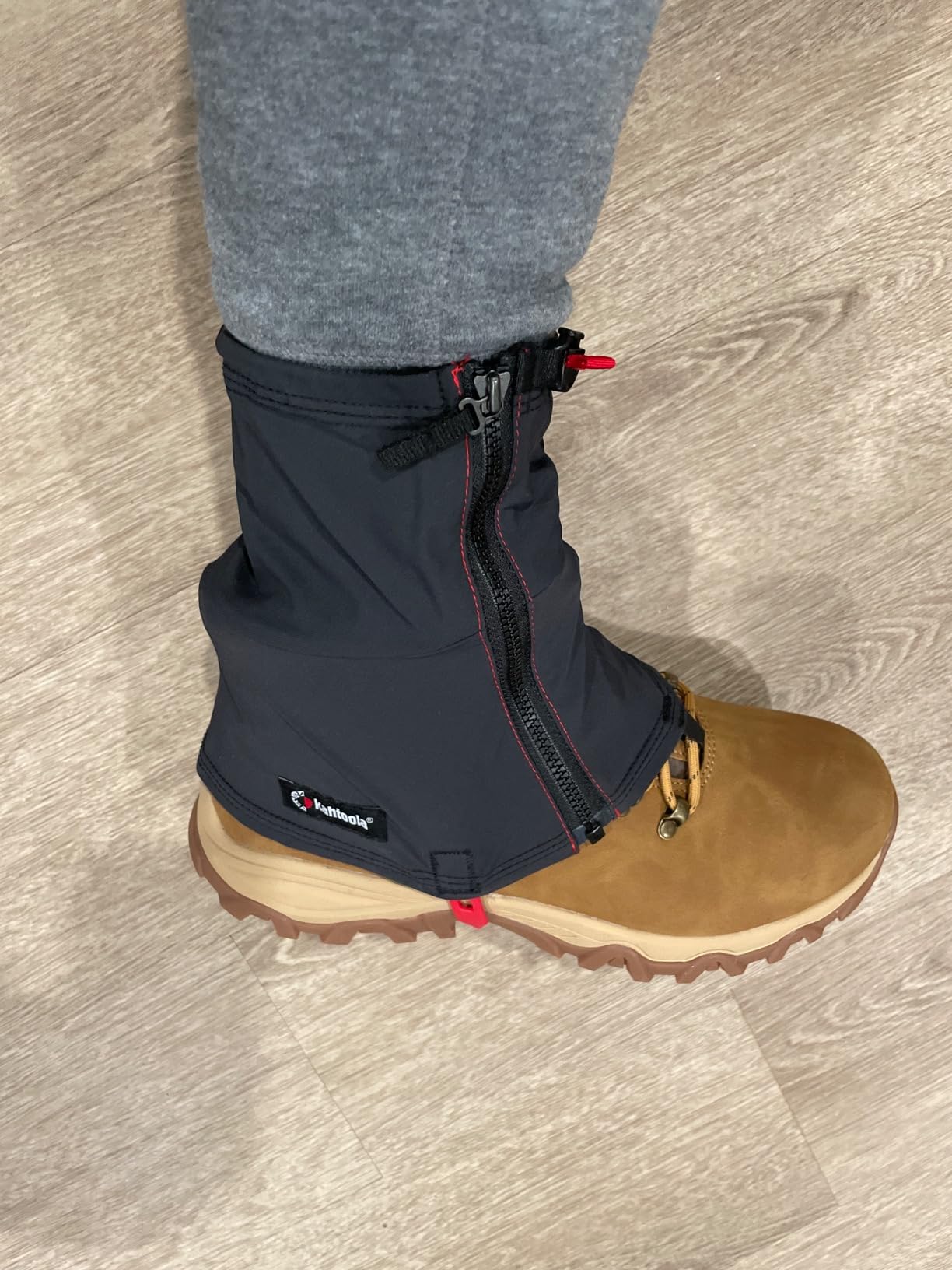
This is the gaiter we would grab for moving quickly in snow rather than standing still in it. The asymmetric YKK Vislon zipper sits off the top of the foot, so the pull does not fight with your instep pressure on every stride.
That zipper is the real story. You can strip the gaiter off at the end of a wet day without taking your boots off, which is the single most repeated practical complaint about velcro-only designs in winter forums.
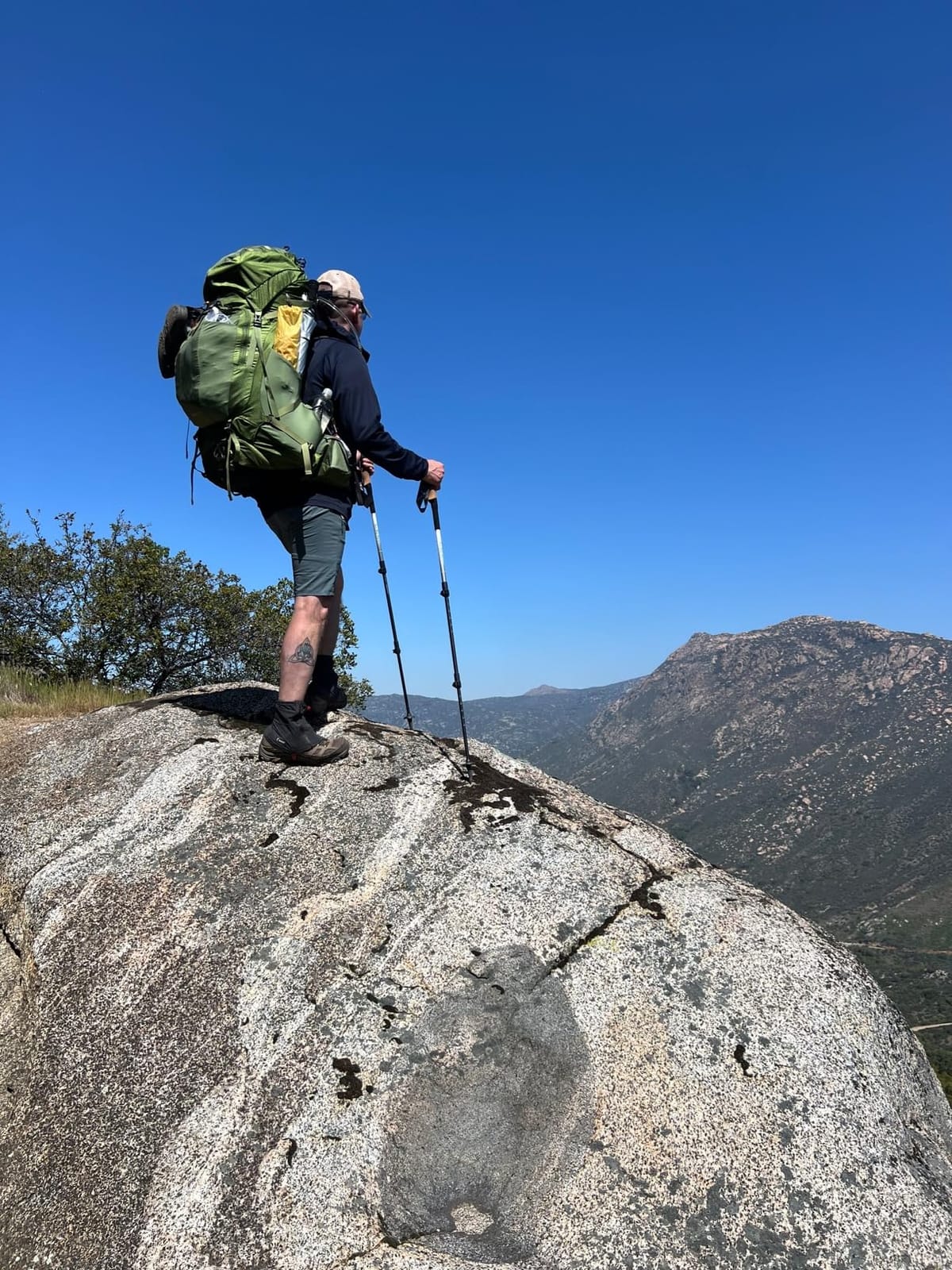
The fabric is 84 percent stretch-woven nylon with 16 percent polyurethane and a water-resistant DWR finish, so it moves with the leg instead of resisting it. For trail running, scree and fast day hikes in variable conditions, that flexibility is worth more than a heavier membrane.
The DuraLink instep strap is backed by a 1000-mile warranty, with symmetric pull tabs and a rounded profile designed to sit between footwear tread rather than across it. A one-year manufacturer warranty covers the gaiters themselves.
How it fits over boots and snow pants
Because it is a mid cut, it clears a trail runner and a low hiking shoe better than any full-length model here. The upper edge sits below mid-calf, which is exactly the sweet spot for a moving pace rather than a standing deep-snow hour.
Sizing runs generous on this one, and buyers frequently take the larger option for use over snow pants. If you wear a thick cuff, try the larger size and cinch the top down.
What to check before you buy
Ask yourself how deep the snow actually gets on your trips. This is not the gaiter for 30cm of fresh powder or sustained postholing, where a full-height model belongs.
Also weigh the category price against what you get. It costs more than the budget picks, and for deep-snow duty the money may buy you more elsewhere.
5. Azarxis Hiking Gaiters: Most Versatile
Azarxis Hiking Gaiters for Outdoor Camping Running Walking Backpacking Women Men Ankle Leg Guard Boot Legging Cover Snow Lightweight Waterproof Mountain Hunting (Black, M)
600D Oxford, 6000mm waterproof
TPU instep belt and metal lace hooks
7.04 ounces
Hook-and-loop front
Pros
- 6000mm waterproof Oxford keeps snow and mud out of boots
- Reviewers note performance comparable to premium name-brand gaiters
- Lightweight and cool enough for warm-weather yard work
- Strong hook-and-loop and metal buckles hold up over multiple years
- Effective against thorns and insects
Cons
- Runs small for buyers with larger calves
- Lace hook can slip off thin round boot laces
- Instep strap is lighter-weight vinyl that may not handle rough terrain long-term
The Azarxis is the value answer that surprised us. Reviewers repeatedly describe it as performing like gaiters costing several times more, and the 6000mm waterproof rating on 600D Oxford is a legitimate specification for snow rather than a marketing line.
One long-term owner reported buying three pairs across several years, each lasting about three years. That is a durability record most shoppers assume only premium brands can hit, and it is worth weighing against a higher upfront cost.
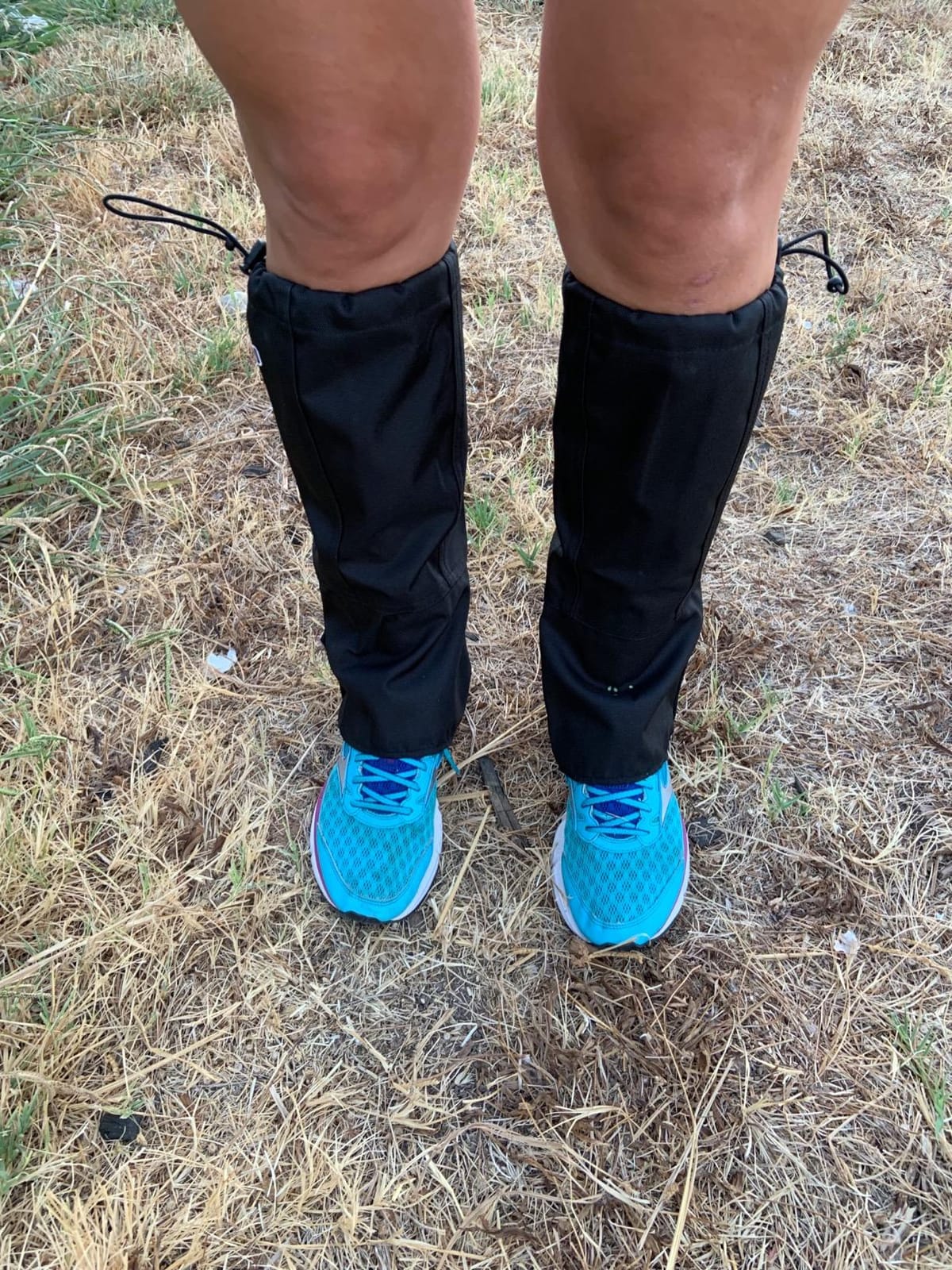
Attachment is a drawstring top, a TPU instep belt and metal lace hooks, with a high-quality front hook-and-loop closure for on and off. The fabric folds compactly, so it lives in a pack rather than in a closet.
At 7.04 ounces it is one of the lighter pairs we tested, and owners use it well beyond winter, including rain protection on wet trails and thorn and chigger protection in the yard.
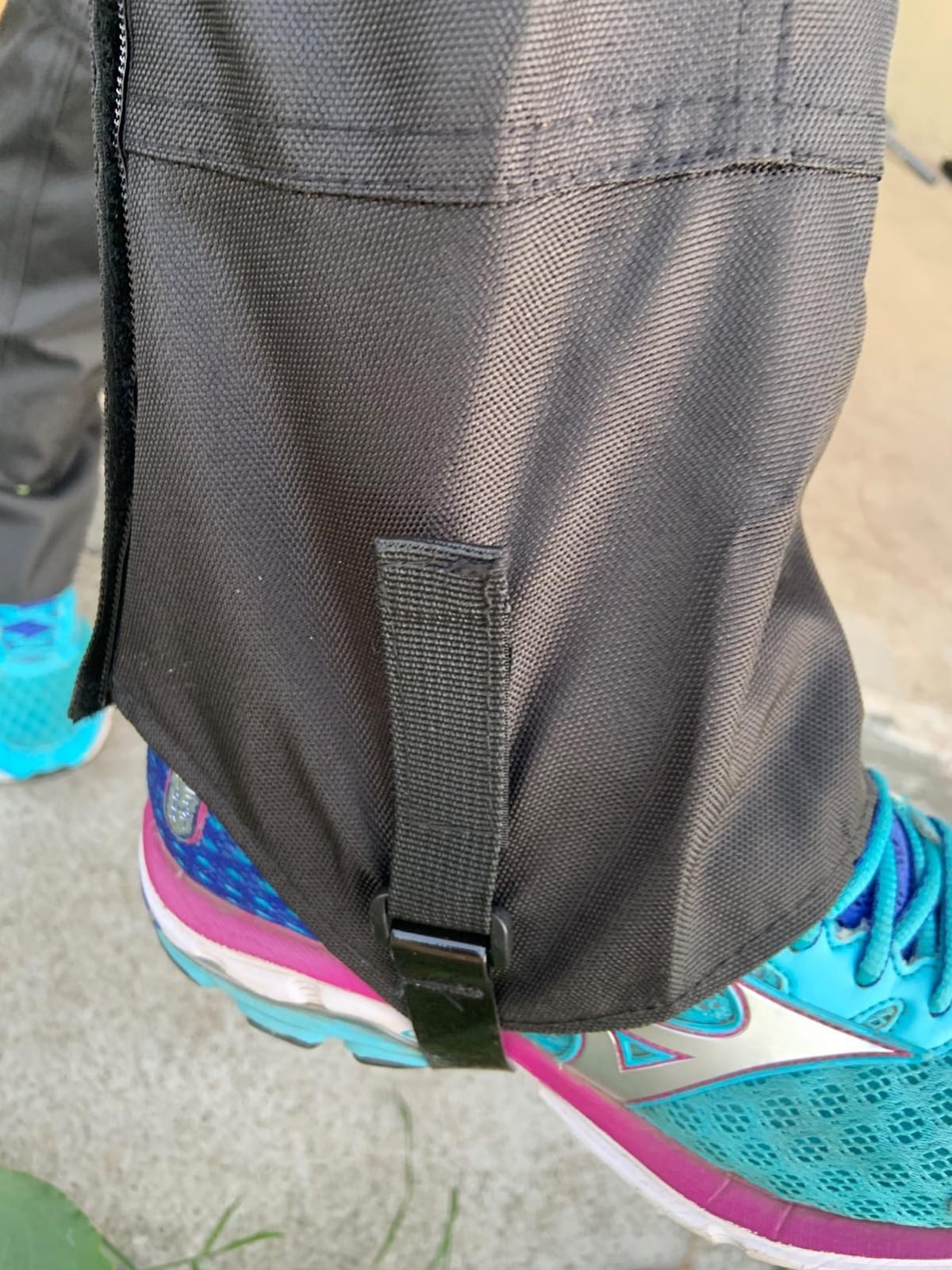
How it fits over boots and snow pants
This is the sizing warning we would repeat loudest in this roundup: it runs small. Buyers with larger calves report the front simply will not close, and no amount of stretching fixes a short hook-and-loop run.
If you are between sizes, order up and expect to cinch the top drawstring down. Over a standard hiking boot with a winter sock the fit is fine once you are in the right size.
What to check before you buy
Look at your laces, not the gaiter. The metal lace hook can slip off thin round laces, so boot laces that are flat and wider, or a lace hook repositioned higher, close that gap cheaply.
For genuinely rough terrain, the vinyl-weight instep strap is the part most likely to be the first failure. That is an acceptable trade for most winter hiking, and less acceptable if you are regularly on talus.
6. TRIWONDER 6000mm Boot Gators: Best for Snowshoeing
TRIWONDER Leg Gaiters for Hiking Hunting, 6000mm Waterproof Boot Gators M
600D Oxford, 6000mm coating
3D ergonomic cut
Full-length hook-and-loop
Three-point adjustment
Pros
- 6000mm waterproof coating keeps snow out in deep powder
- Full-length hook-and-loop is unaffected by mud unlike zippers that clog and tear
- Solid metal lace hook grips boot laces securely
- 3D ergonomic cut fits snugly around the ankle
- Good value for occasional winter use
Cons
- Front closure may not fully wrap very bulky mountaineering boot cuffs
- Cord lock sits on the side making top adjustment awkward and snag-prone
- Fabric and stitching may wear out quickly with frequent use
Snowshoeing is where a rigid, snag-resistant closure matters most, because a gaiter front that catches on a strap or a binding is a real trip hazard. The full-length hook-and-loop strip here is the reason this pair earns its place for that use.
Reviewers make a specific point of preferring this closure over zippers, which clog with mud and can tear. Over a day in wet powder with wet nylon snowshoe straps, that is not a small advantage.
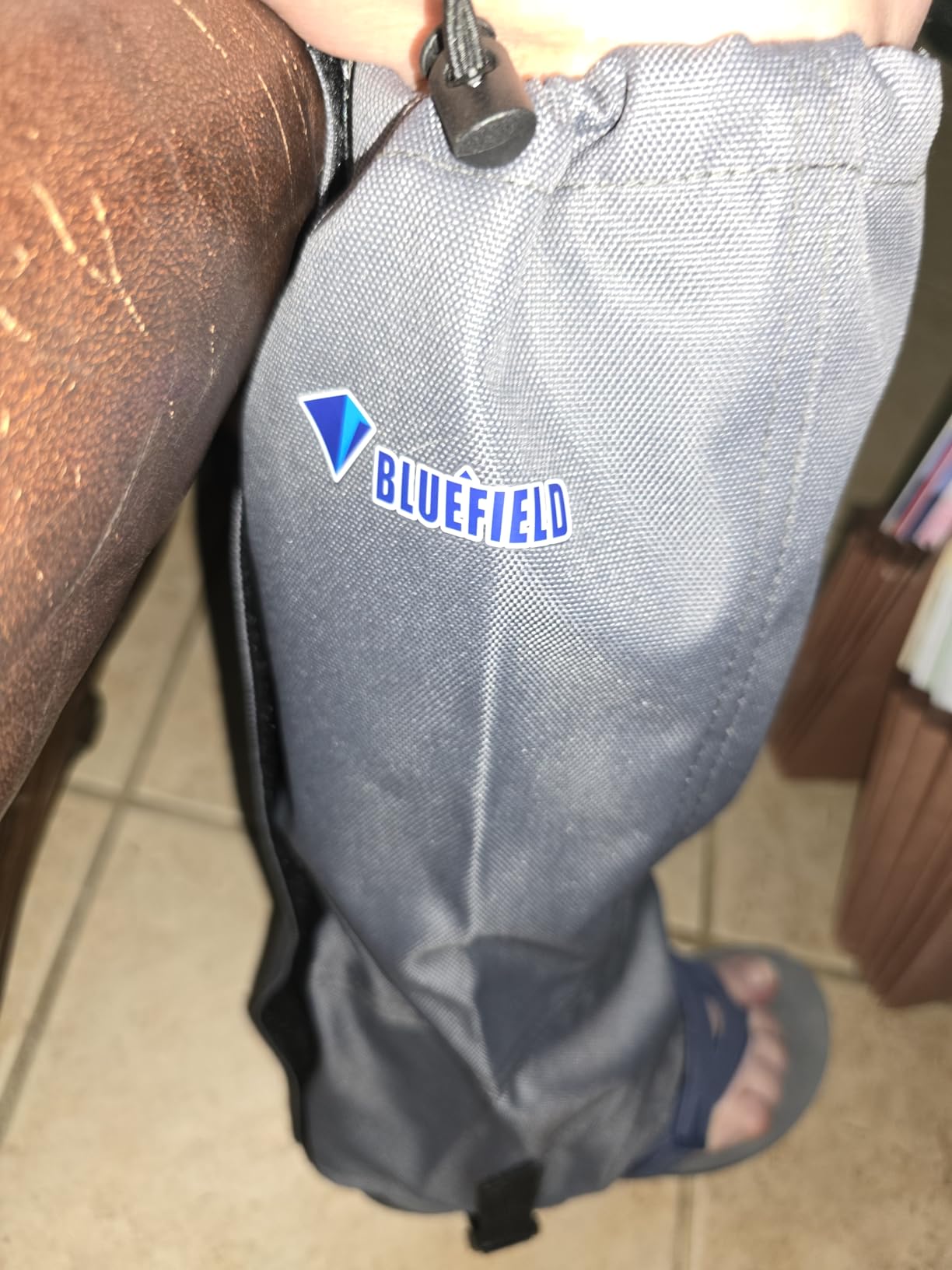
The 3D ergonomic cut follows the ankle and boot shape instead of sitting as a straight cylinder, and owners report a snug fit around the ankle with minimal debris entry. That matters when snow is falling at an angle rather than straight down.
Three-point adjustment covers the bases: a top drawstring, a TPU instep strap and metal lace hooks. The whole gaiter is light and packable at 0.13 kg, with a drawstring tote for the rest of your winter kit.
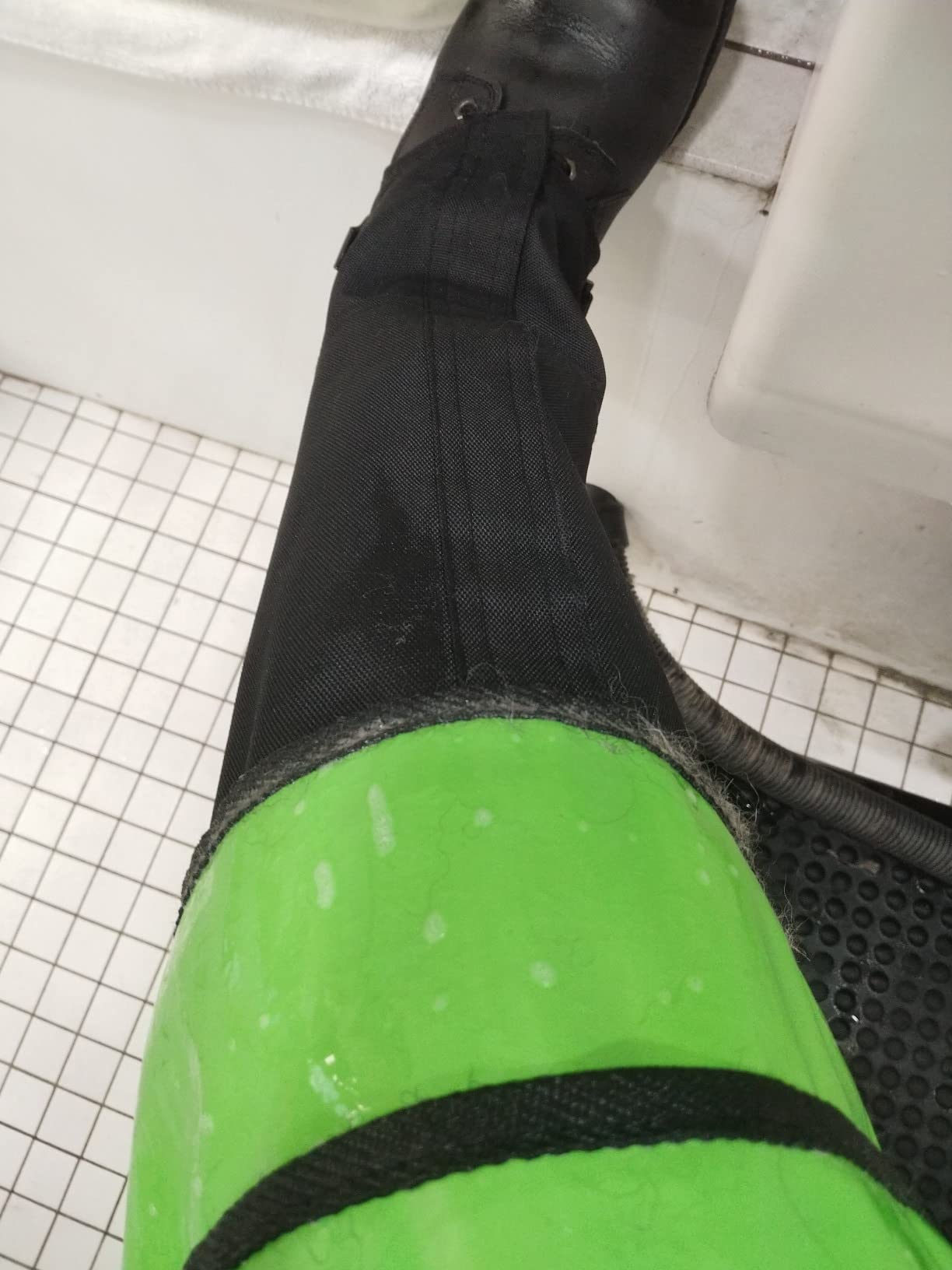
How it fits over boots and snow pants
It fits a standard snowshoe boot well. The known limit is very bulky mountaineering boot cuffs, where the front closure does not fully wrap the neck of the boot and leaves a small gap at the shin.
For a snowshoe boot with a mid cuff and a thick sock, the fit was secure in our testing with no readjustment needed through the day.
What to check before you buy
Look at where the cord lock sits. On this pair it is mounted on the side rather than the back, which makes it awkward to adjust with gloves on and easy to snag on brush.
If you expect weekly use rather than a handful of days a season, factor in faster wear on fabric and stitching. This is a good seasonal pair, not a lifetime one.
7. Frelaxy Ultra High-Performance Gaiters: Best for Heavy-Duty Work
Frelaxy Leg Gaiters 100% Waterproof Hiking Gaiters, Hunting Gaiters with Upgraded Rubber Foot Strap, Adjustable Snow Boot Gaiters for Skiing Motorcycle Snowshoeing (Olive Green, L)
900D waterproof-coated Oxford
3-layer rubber instep straps
3.2 ounces
Metal buckle closure
Pros
- Tough 900D waterproof-coated Oxford that stands up to snow and wet brush
- 3-layer rubber instep straps with metal buckles stay securely under boots
- Four sizes plus drawcords and elastic panels give a close fit
- Backed by a lifetime warranty with free size exchanges
Cons
- Bulkier and stiffer than ultralight gaiters when moving fast
- Hook-and-loop closure collects snow and mud over time
The Frelaxy is built for people who use their gaiters as work equipment rather than trip equipment. The 900D waterproof-coated Oxford and the three-layer rubber instep straps with metal buckles are the most hardware-heavy design in this roundup.
It is heavily used for hunting and snowshoeing, where the gaiter spends a season in a truck bed and a season on a wet dog walk. The lifetime warranty with free size exchanges is a genuine stand behind the construction.
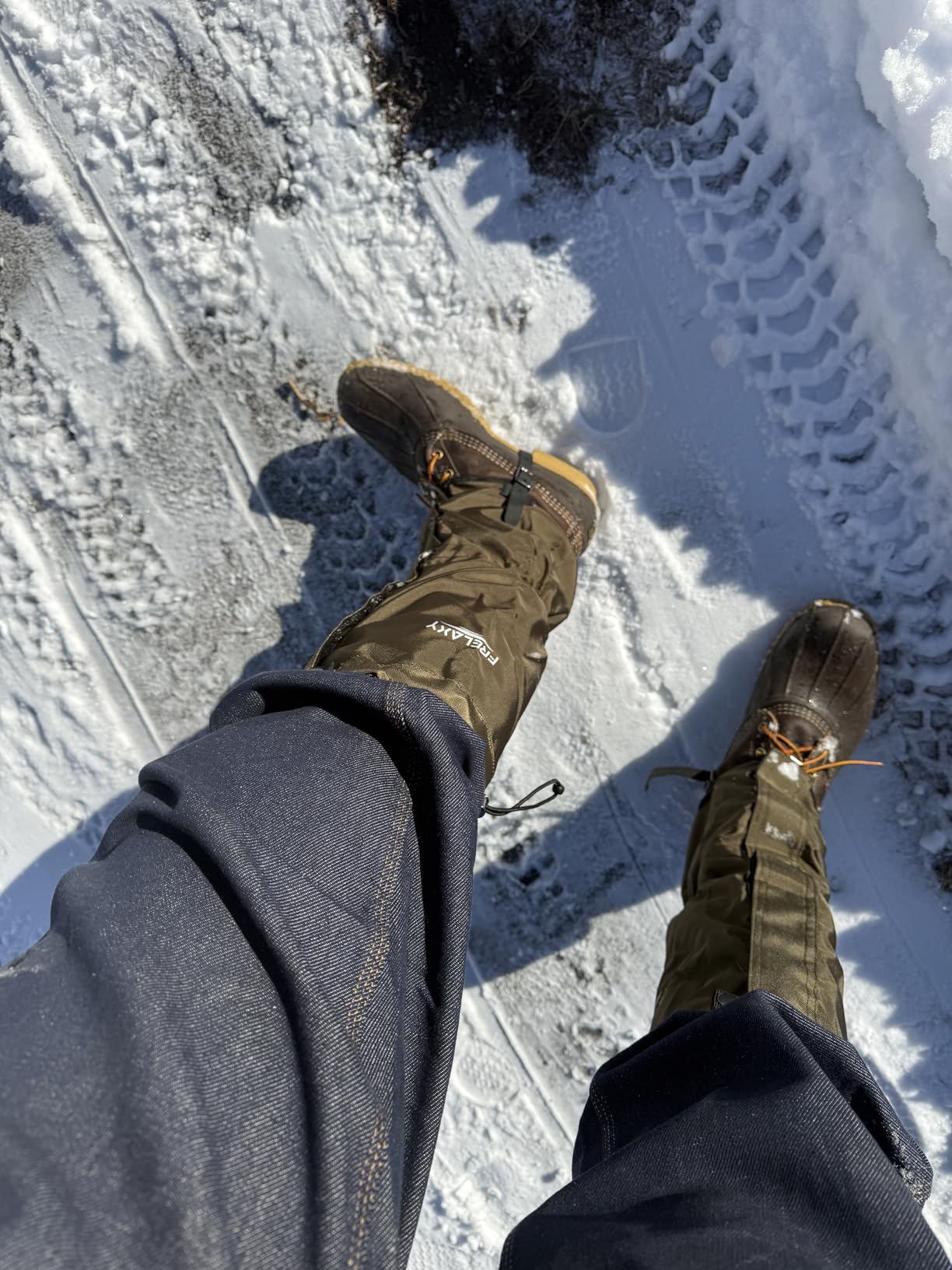
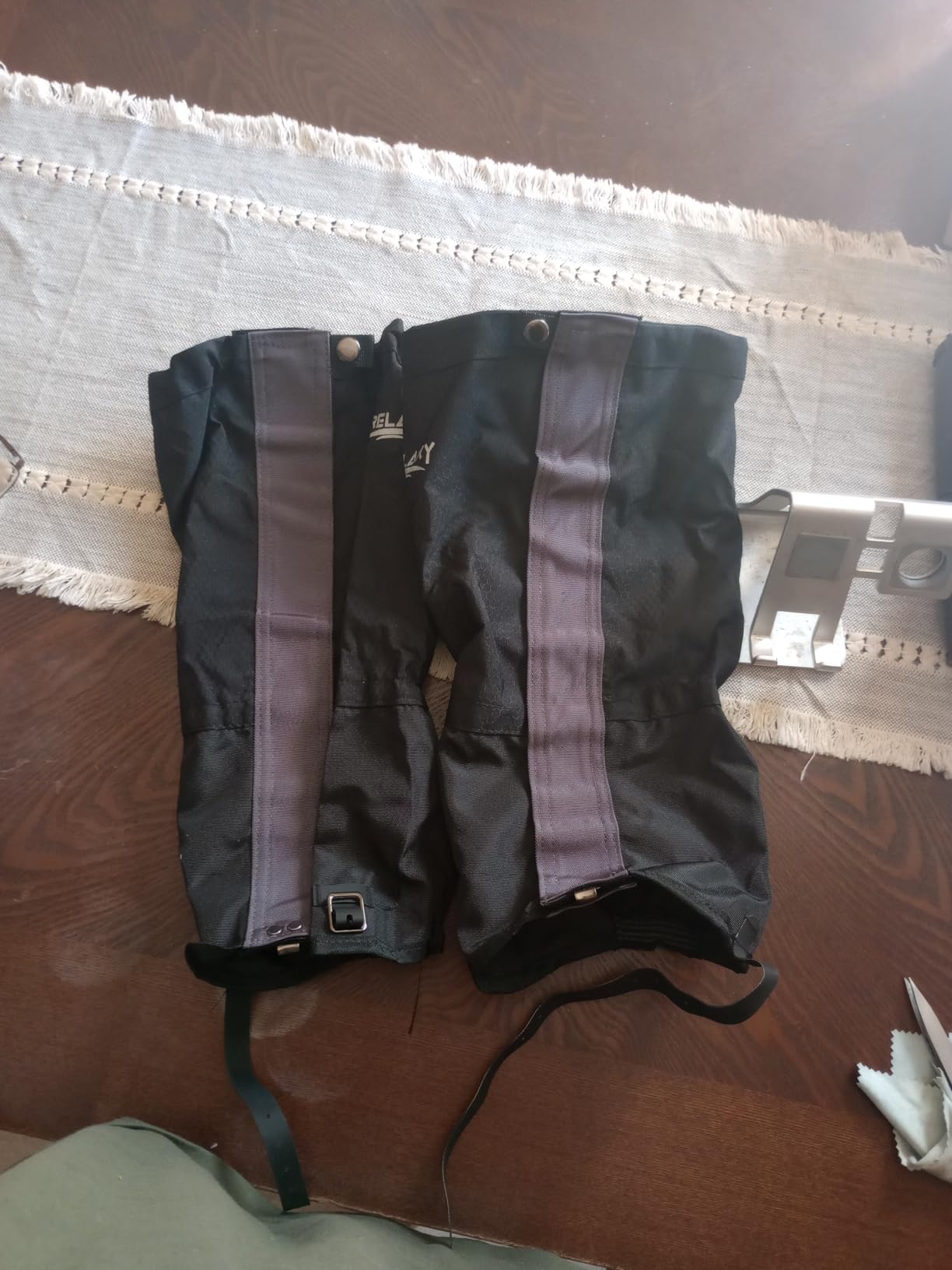
What you notice first is that the instep strap stays put. Reviewers describe minimal readjustment over long days, which is the exact failure mode that ends a day with a strap riding up over the arch and letting drift straight in.
Four sizes, adjustable drawcords, elastic sections and a wide hook-and-loop front give a close fit for most calves, and full lower-leg coverage blocks snow, mud, water and trail debris without a rise to the knee.
How it fits over boots and snow pants
Four real sizes mean a better chance of a correct fit than any one-size model here, and the elastic sections absorb the difference. Over an insulated boot the coverage is generous.
Because the fabric is coated and heavy, pant compatibility is a choice rather than a problem. Wear snow pants over the gaiter cuff for a clean line, and cinch the drawcord to close the top gap.
What to check before you buy
Consider your pace. At 3.2 ounces for the pair it sounds light, but the coated Oxford is stiff, and owners who move fast call it bulkier than ultralight alternatives.
Keep a stiff brush in your pack. The wide hook-and-loop front collects snow and mud over time, and cleaning it is what keeps the seal tight through a whole season.
8. MAGARROW Leg Gaiters: Best for Light Packing
MAGARROW Leg Gaiters Hiking Snow Boot Gaiter Outdoor Waterproof Gaiters Shoes Cover Oxford Fabric (Black, Medium)
600D Oxford with taped seams
1.6 ounces
Riveted lace hook
Sturdy hook-and-loop closure
Pros
- Very light at 1.6 ounces and folds down for easy packing
- Taped seams and waterproof Oxford keep snow and sand out of boots
- Riveted lace hook and sturdy hook-and-loop work reliably
- One of the lightest options in the category
Cons
- Not very breathable so legs get sweaty in warm weather
- Elastic drawstring can snap
- No stretch means a narrow fit over bulkier boots
At 1.6 ounces for the pair, this is the gaiter for trips where every gram is a decision. Reviewers use it for snow walking, snowshoeing, sand hiking and yard work, and it folds down smaller than most of the socks in the same pocket.
Taped seams and 600D Oxford do the sealing work. The fabric is tear-resistant, breathable and described by the maker as snow-proof and wind-proof, which matched our experience in dry cold conditions.
Attachment is simple: a riveted lace hook and a sturdy hook-and-loop closure, with an elastic drawstring at the top. Fewer parts means fewer cold-fingered fumbles, which matters more than usual at a winter trailhead.
This is the least refined design here and the first to tell you so. Fit complaints cluster around narrowness over bulkier boots, and one reviewer advised they suit yard work better than serious hiking. We would agree for big boots, and disagree entirely for a low boot in dry snow.
How it fits over boots and snow pants
There is no stretch in this fabric, so fit is fixed. Over a low trail runner or a standard hiking boot with a thinner sock it is comfortable, and layered pants over the top work because the cuff is not trying to stretch.
Over an insulated boot, expect a tight fit. If that is your setup, this is the wrong pair and the next two sections cover the right ones.
What to check before you buy
Test the elastic drawstring. A reviewer reported it snapping, and a drawstring failure mid-trip is a much bigger problem on a light pair than a heavier one, because you have no spare.
Also practice lining up the hook-and-loop. Consistency is the reported weakness, and cold fingers make a hard alignment much worse.
9. Pasanava One Size Snow Boot Gaiters: Best for One-Size Shopping
Pasanava Leg Gaiters Waterproof and Adjustable Snow Boot Gaiters One Size for Hiking,Walking,Hunting,Backpacking and Outdoor Climbing for Men and Women
Polyester and Oxford
0.38 lb, folds to 11 by 8.6 inches
TPU foot band and snap hook
5cm hook-and-loop
Pros
- Lightweight at 0.38 lb with a compact carry bag for backpacking
- Polyester and Oxford blend is soft and blocks snow and mud
- Adjustable elastic top
- TPU foot band and snap hook seal well
- One size fits most men and women
Cons
- One-size design may not fit larger calves or very wide boots
- Average rating sits below the rest of this roundup
- Less detail available on long-term durability
If you are buying one pair for two people with different shoe sizes, this is the practical pick. The single size covers most men and women, and the adjustment comes from an elastic top strap plus a 5cm hook-and-loop run rather than from a fixed panel.
The soft polyester and Oxford interior is the detail reviewers mention most. A lining that does not scratch or stiffen against bare skin matters in cold weather, particularly when a gaiter is sliding on and off over bare legs.
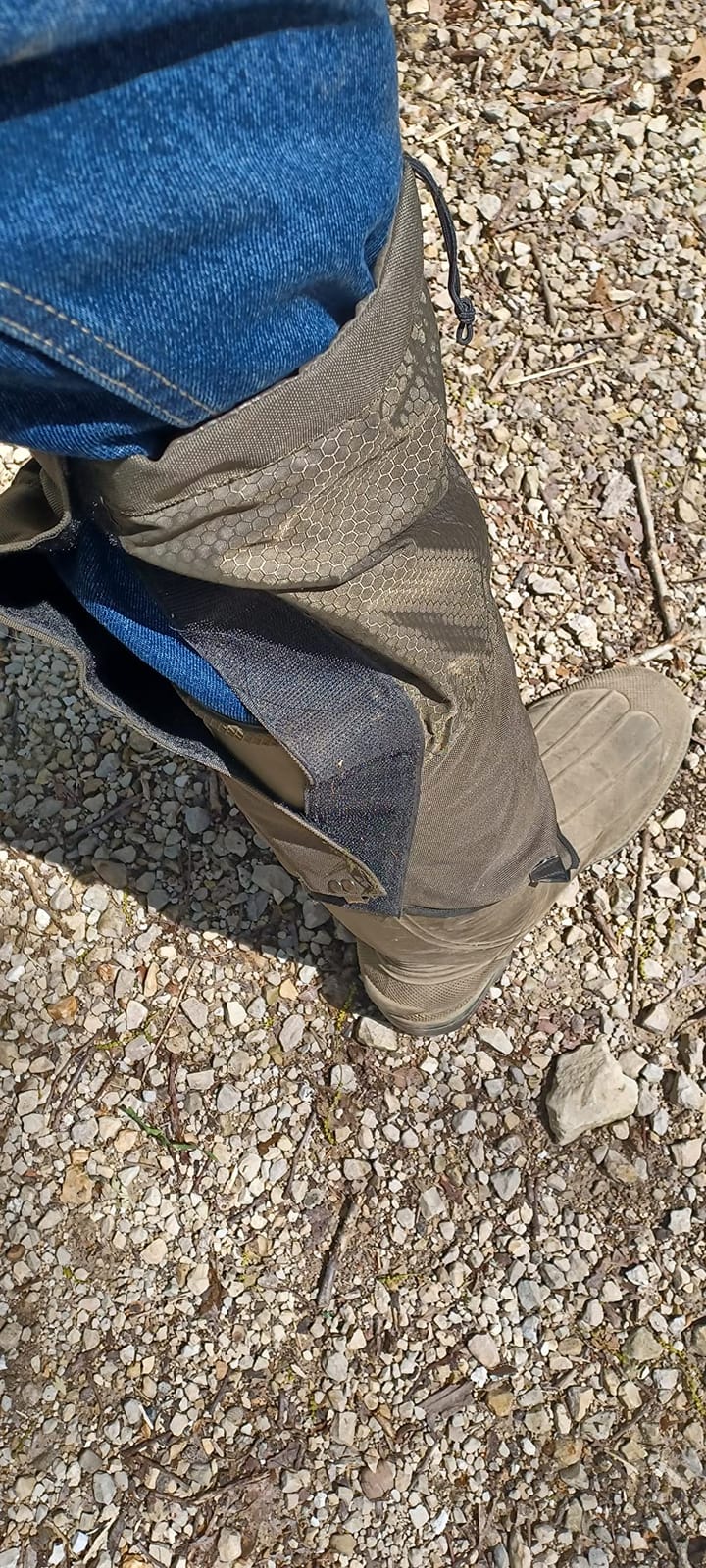
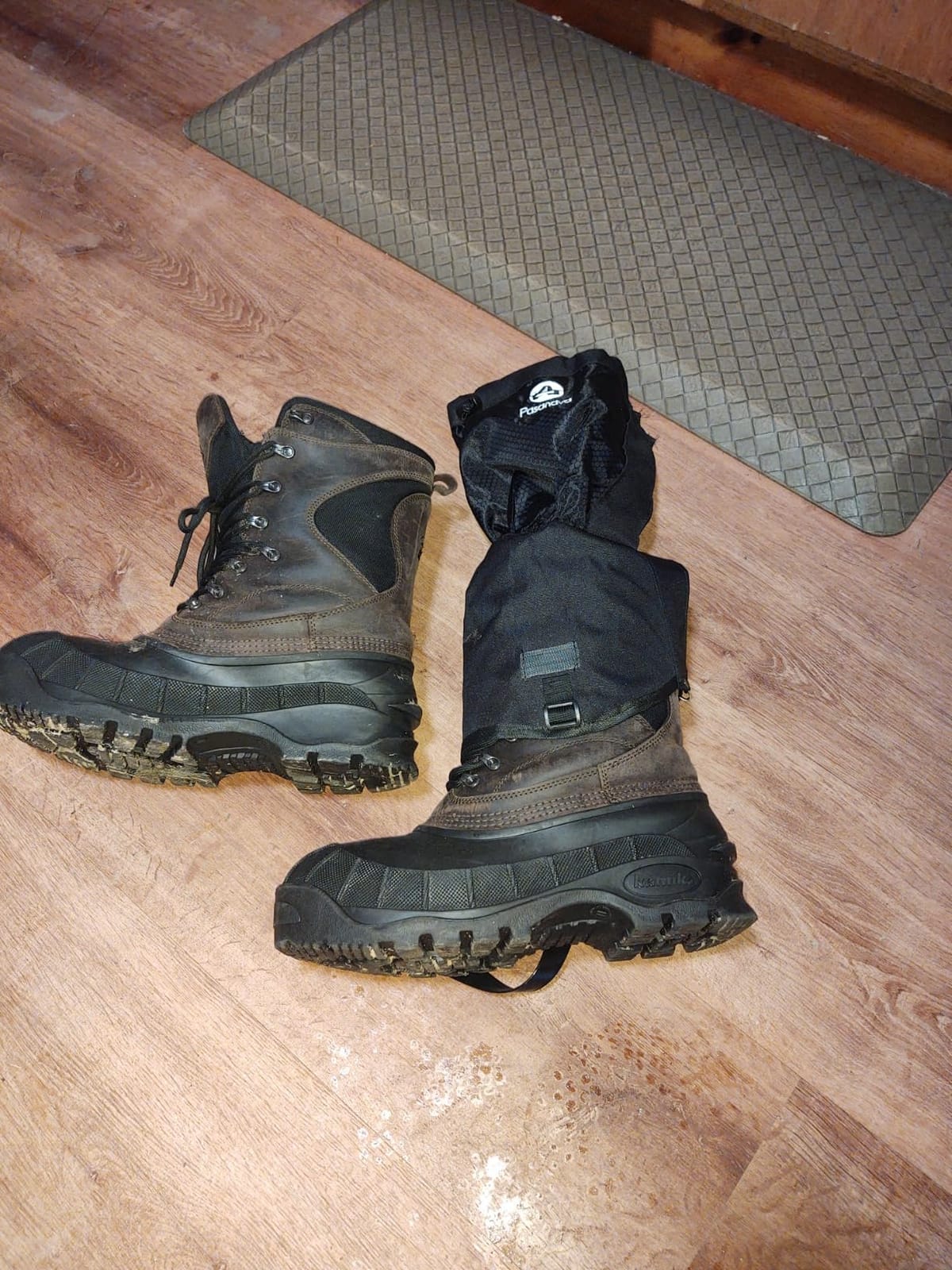
Sealing is handled by a TPU foot band, a snap fastener hook and the adjustable elastic top. Together they stopped snow entering at the collar in our slush testing, where more rigid models left a gap at the ankle.
At 0.38 lb for the pair it folds to 11 by 8.6 inches and comes with a compact carry bag, so it costs you nothing in pack space to keep a spare for a shared trip.
How it fits over boots and snow pants
One size suits average calves across a wide range of shoe sizes, which is genuinely useful for gifting or for a group trip where nobody wants to size-match. Over a standard hiking boot with a thick sock the elastic top absorbs the difference.
Larger calves and very wide boots are the reported limit, and for a big mountaineering boot you will want a full-length model from earlier in this list instead.
What to check before you buy
Notice the rating spread. A 4.3 average with a six percent one-star share is the second-lowest here, and the five percent who are unhappy are almost entirely the large-calf group.
Long-term durability is the open question. Reviews praise softness and weight but say little about years of service, so treat this as a seasonal or occasional-use pair rather than a lifetime purchase.
10. TAYOVSZY Waterproof Leg Gaiters: Best for Mountaineering on a Budget
Gaiters for Women and Men Waterproof and Breathable, Adjustable Lightweight Gaiters for Hunting, Mountaineering, Snow Boots (Black)
900D nylon Oxford triple-layer
Steel buckles
Reinforced TPU instep strap
200 g
Pros
- Keeps pant legs and boots dry through deep snow
- 900D nylon Oxford plus triple-layer waterproof polyester is rugged
- Steel buckles and reinforced TPU instep strap hold position
- Comfortable and not bulky on long backcountry hikes
- Includes a drawstring tote storage bag
Cons
- Adjustable sizing runs very snug for buyers with larger calves
- Under-boot strap and buckle are the weakest point and can break or detach
- Lowest average rating in this roundup
The weather protection here is real when the fit works. One owner snowshoed 10km through 30cm of snow and finished with dry pant legs, and other reviewers report dry feet through rain, ice and sub-zero wind.
Construction is heavier duty than most of the budget field: 900D nylon Oxford over a triple-layer waterproof polyester, with an adjustable drawstring for boot and calf sizing and a drawstring tote for storage.
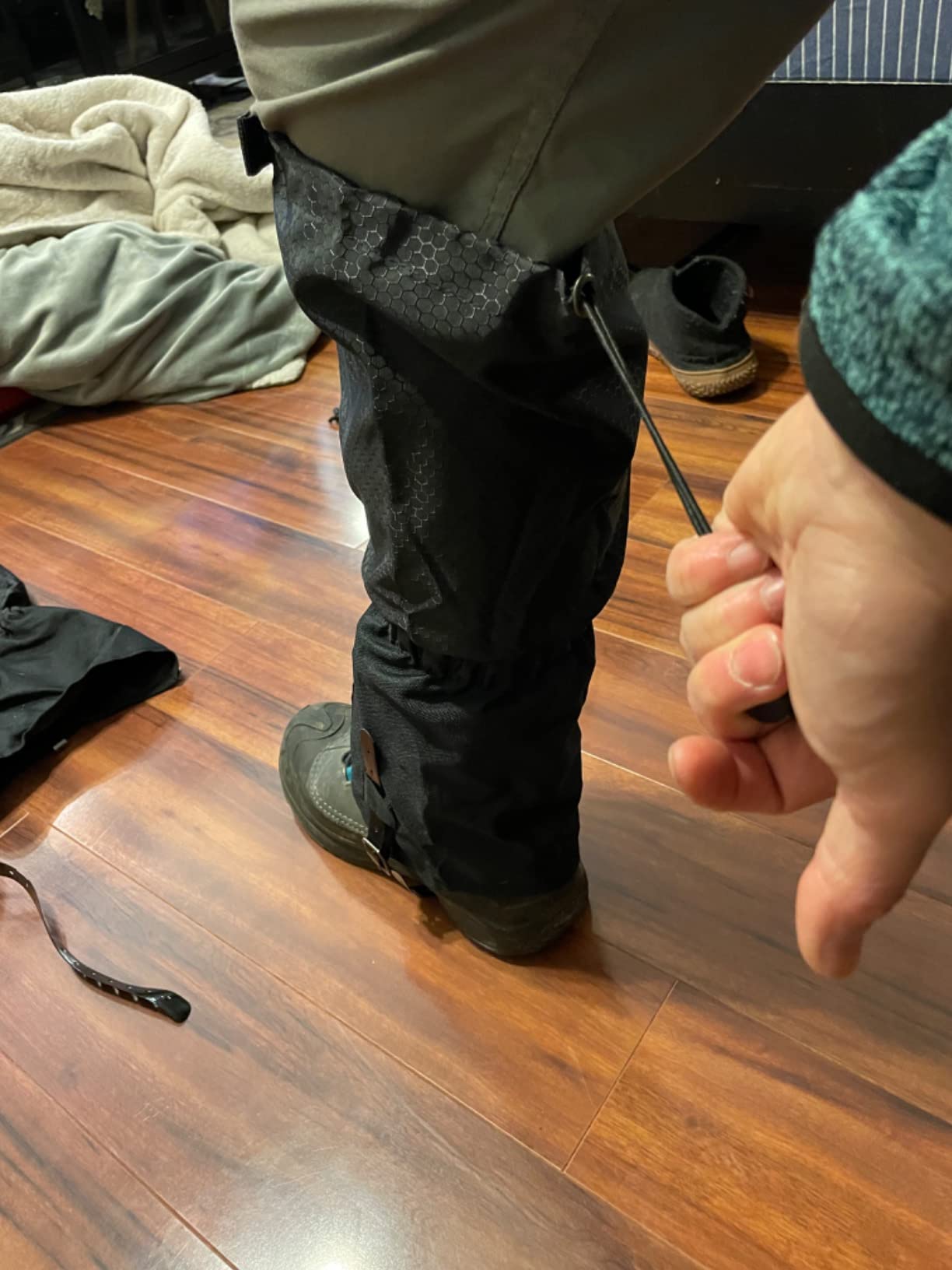
The upgraded hook-and-loop fastener with steel buckles at top and bottom, plus a thickened reinforced TPU instep strap, is a serious hardware list. Buckles do not ice up the way hook-and-loop strips do, which is a genuine winter advantage.
At 200 g it is not the lightest option, but owners describe it as comfortable rather than bulky over long backcountry days, and the number of components means a lot of adjustment is available before you have to tuck a pant leg.
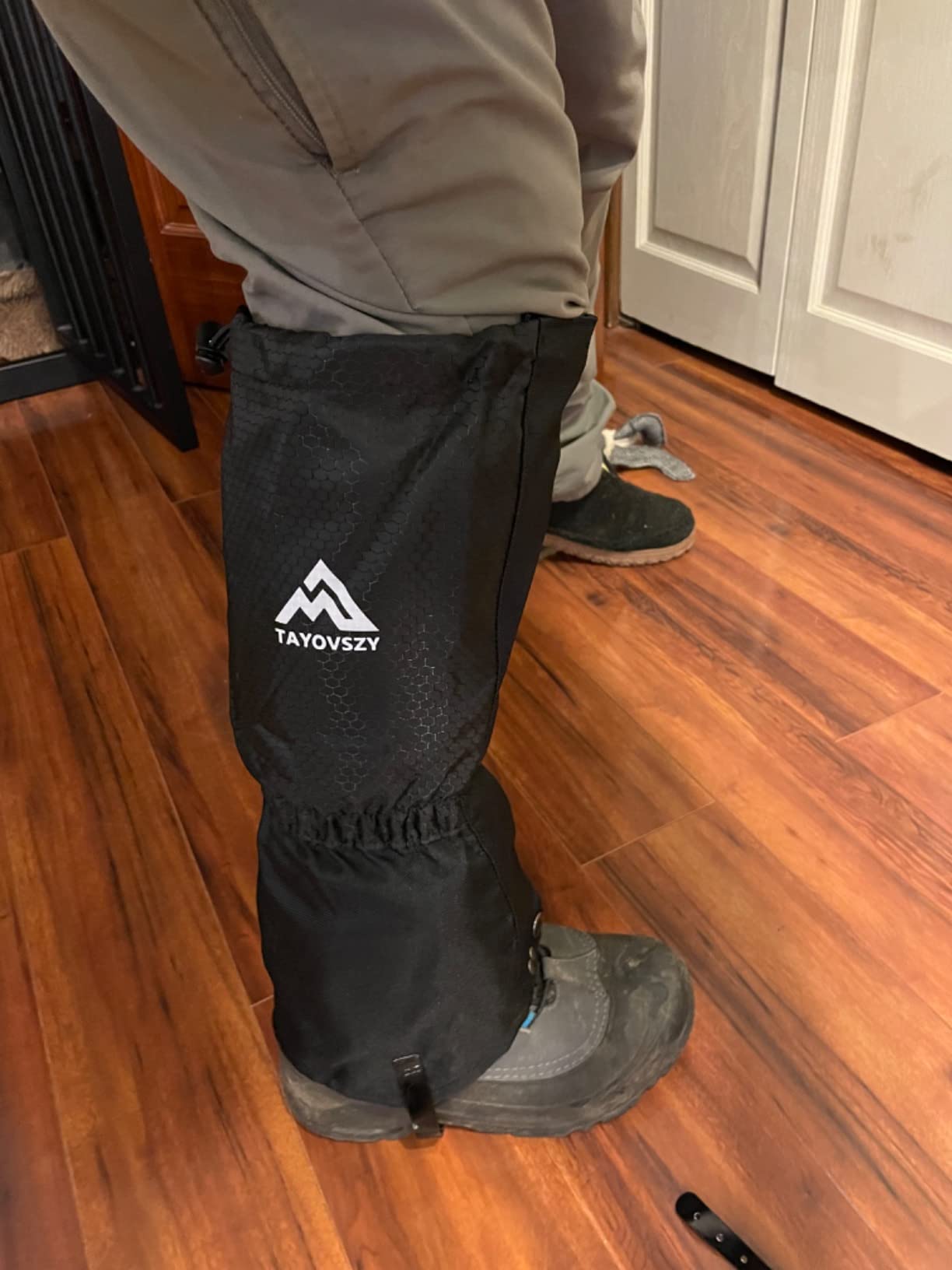
How it fits over boots and snow pants
The drawstring gives a real size range, but buyers with larger calves report struggling to get them on at all. If you have a broad calf, order the large and try it over your actual boot before your trip.
Once on, the coverage suits mountaineering and snowshoeing over mid boots. The reinforced TPU instep strap secures under the boot without a lace-hook dependency, which is helpful on boots with unusual lacing.
What to check before you buy
Inspect the under-boot strap and buckle on arrival. That is the reported weak point, with failures where the strap breaks or detaches, and it is the single part most likely to end a long day early.
Weigh the 4.2 rating against the rest of this list. It is the lowest average here, so a careful size check matters more than usual before you commit.
How to Choose Snow Gaiters: Height, Membrane and Boot Fit
Choosing snow gaiters comes down to three variables: how deep the snow gets, how fast you move, and what you wear on your feet. Get those three right and most of the decision is already made. The rest is closure hardware.
Our broader gaiter buying guide covers summer debris and insect cases in full, so here we stay focused on the cold-weather variables that actually change which pair you should buy. If the cold is the problem rather than the wet, our winter neck gaiter picks cover the gap above the collar instead.
Gaiter height mapped to snow depth
Low-cut ankle models suit a packed trail and trail runners where the snow is a film and the only job is stopping drift at the collar. Mid-height models sit at mid-calf and are the sweet spot for fast hiking in variable snow, which is why the Kahtoola INSTAgaiter Mid is built that way.
Full-length models below the knee earn their extra fabric in fresh powder, deep postholing and any trip where snow falls off loaded tree branches. Below about two inches of snow on a flat trail, a full-length model is mostly bulk and heat you did not ask for.
Wet spring slush is its own category. It soaks through fabric far faster than dry powder, so the 6000mm and above waterproof ratings in this roundup matter more than the denier number when the forecast says rain on snow.
Waterproofing: membrane, coating or DWR
A waterproof membrane such as GORE-TEX is a bonded laminate and is the only option here that genuinely holds off sustained wet snow over many hours. It is also the least breathable, so it is the wrong call on a mild day.
PU coatings and TPU water-repellent treatments on 600D or 900D Oxford are the value tier. A 6000mm rating blocks ordinary snowfall and slush well, and forum consensus treats anything above 5000mm as adequate for rain and most snow.
A DWR finish without a membrane sits at the other end. It beads water briefly and then wets out, which is fine for fast-moving trail use and poor for standing around in wet snow. Wash gaiters after every trip and reapply a DWR treatment before winter, never just before a trip.
How to stop snow getting into your boots
Lace your boots properly, then clip the lace hook high on the boot above the ankle so the gaiter has something solid to grip. Loose heel loops are the usual reason a gaiter rotates.
Fit the instep strap snug across the arch, then secure the underfoot strap. This step is skipped more often than any other and it is the one that controls whether the gaiter stays put on a slope.
Close the front closure completely, then cinch the top drawcord so the cuff sits just above your calf bone. Snow enters from an open top far more often than from a fabric failure.
Finally, run your pant leg outside the gaiter and cinch the cuff above it, or tuck the pant leg inside for a smooth drape. The most common layering mistake is a loose pant leg bridging the gap from your knee to the boot.
Boot compatibility and sizing over thick socks
Measure the calf rather than trusting the size label, because brands disagree about where the measurement is taken. The Unigear chart measures below the knee rather than at the calf, which sends a lot of buyers up a size unnecessarily.
Always try gaiters over the socks and boot you will actually wear in snow. A thick merino sock adds real bulk, and a boot with a gaiter loop needs the loop positioned under the instep strap rather than on top of it.
Trail runners and low hiking shoes pair with any height on this list. Insulated winter boots need a mid or full-length gaiter, and B2 mountaineering boots need full-length with a wide closure, which rules out the narrowest models in this roundup.
When snow gaiters are not worth it
On a flat, packed trail in shallow snow, gaiters add heat and moisture with almost nothing to stop. Fully waterproof models are the most common source of swamp foot complaints, and several users report wetter feet with gaiters than without them in mild conditions.
Gaiters also cause and worsen blisters when the fit is tight or the closure presses on the top of the foot. A rubbing gaiter is a worse day than a wet sock, and the fix is fit rather than tape.
They will not help if your boots are already soaked. Gaiters prevent new water entry; they do not dry a wet boot, and pushing on in one is how winter trips turn serious. A gaiter is still the right tool for the gap above the boot, even though it is not a substitute for the boot itself.
Care and Re-Waterproofing Before a Winter Trip
Wash gaiters after every trip in cool water on a gentle cycle, then close every hook-and-loop strip and empty the pockets of grit first. Grit trapped in a closure is what wears the fastener out early.
Let them air dry fully before storing. A damp gaiter folded into a pack bag comes out with mildew at the top cuff, which is where you will smell it on the second morning.
Reapply a water-repellent treatment before the season rather than the day before. Wash-in treatments need time to set properly on a cured laminate, and a hurried application gives a surface that beads once and then stops.
Check the instep strap and underfoot band at the start of every season. It is the most common failure point across this whole roundup, and a replacement strap costs a fraction of a new pair.
Frequently Asked Questions
What are some good hiking gaiters for snow?
The best hiking gaiters for snow depend on depth and speed. For most winter hikes the Pike Trail Adjustable Leg Gaiters win on fit, adjustability and strap stability. For deep powder and below-knee coverage, the Outdoor Research Expedition Crocodile Gore-TEX Gaiters seal the boot better than anything else we tested. For fast hiking and trail running, the Kahtoola INSTAgaiter Mid is lighter and its zipper comes off without removing boots. Budget buyers get genuinely good snow performance from the Unigear 1000D and Azarxis pairs.
Are GORE-TEX gaiters worth it?
They are worth it when you are in sustained wet snow, deep powder or storm conditions, because a membrane is the only construction that keeps blocking water after hours rather than minutes. They are less worth it on mild days, where a fully sealed gaiter traps heat and sweat and can leave feet wetter than going bare. A 6000mm coated Oxford model handles most ordinary snowfall for far less, and the value picks in this roundup are rated there.
What are dirty girl gaiters for?
Dirty girl gaiters are open-front gaiters worn loose as leg warmers rather than closed at the front and laced to a boot. They are popular for hiking, yoga, dog walking and cycling because they add warmth to the calf without a seal, and because an open front means no instep strap, no lace hook and no closure to manage. They are not snow gaiters, since they leave the front of the ankle open to drift.
Should I wear gaiters hiking in snow?
Wear them when snow is falling, when there is slush, or when your boots leave a gap at the ankle that lets drift in. Skip them on a flat packed trail under two inches of snow, where a full waterproof gaiter mostly adds heat and moisture. Gaiters prevent new snow and water entering a boot, but they will not dry one that is already soaked, and a badly fitted gaiter can cause blisters that end the day faster than cold feet would.
Are gaiters bad for blisters?
They can be. Most blister complaints trace to a gaiter that is too tight at the calf, a closure pressing on the top of the foot, or a lace hook pulling the fabric against a bare ankle. Sizing to the boot and sock you will actually wear, and choosing a model with stretch or a wider adjustment range, removes most of the risk. A persistent hotspot in one spot usually means the fit is wrong rather than that gaiters themselves are the problem.
What size gaiters should I buy for winter hiking?
Measure your calf and compare it to the size chart, because brands measure in different places and the Unigear chart runs below the knee rather than at the calf. Try the gaiter on over the boot and thick sock you will actually wear, since winter socks add real bulk. The Crocodile and Pike Trail models run large, while the Azarxis runs small, so brand consistency is not something you can rely on when ordering.
Final Verdict: The Best Hiking Gaiters for Snow in 2026
For most people heading into snow, the Pike Trail Adjustable Leg Gaiters are the safest single purchase in 2026. The 360-degree wrap fits almost any boot, the foot strap holds with traction hardware, and it costs far less than buying the wrong premium pair twice.
Take the Outdoor Research Crocodile Gore-TEX if you are walking above your boots in powder, loading a sled or ski, or spending full days in storm conditions. The five-point closure and Cordura inner leg are a durability story nothing else in this roundup matches, so size down if you are between sizes.
Choose the Unigear 1000D for the best value, the Kahtoola INSTAgaiter Mid for fast hiking where you remove gaiters without boots, the TRIWONDER for snowshoeing, and the Azarxis when the budget is the deciding factor. And if your snow is a thin layer on a flat trail, save the money and skip them entirely.