
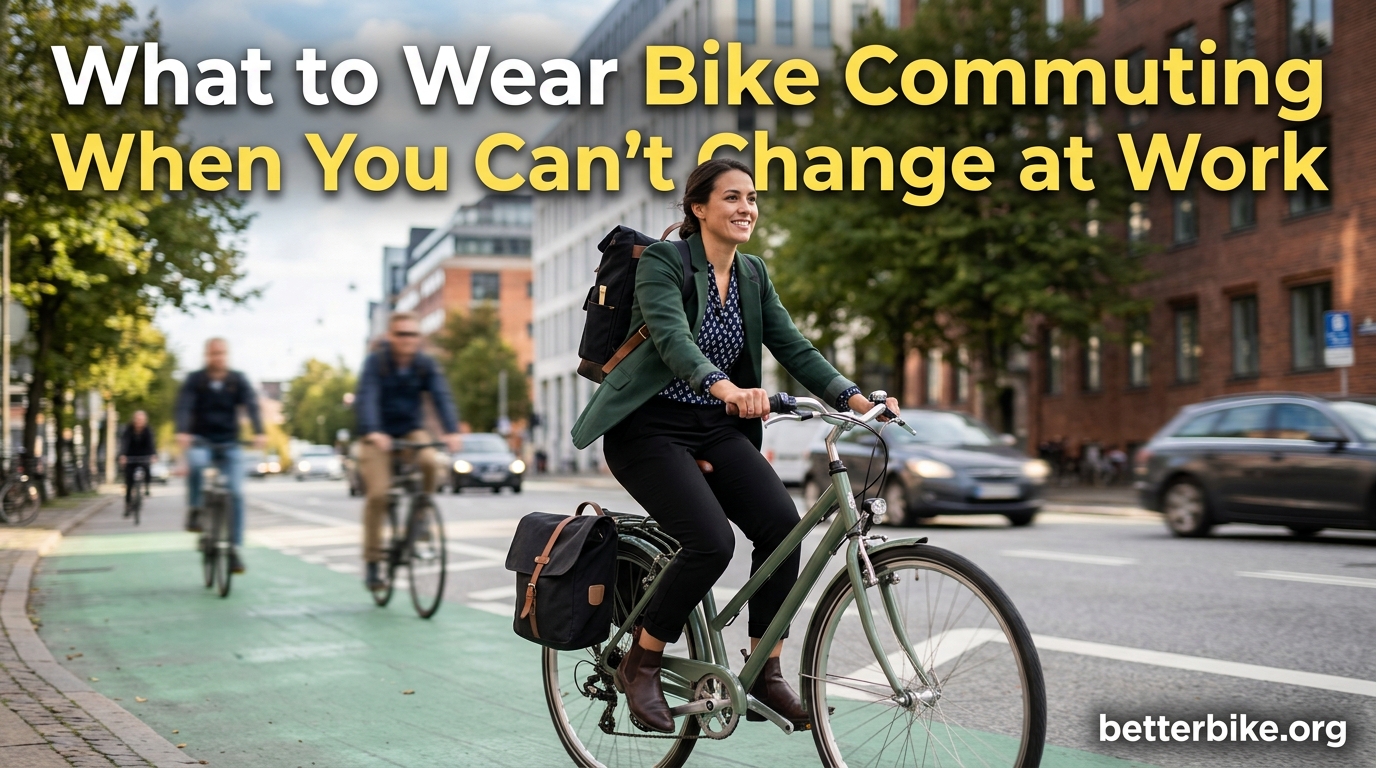
I rolled up to my first office job on a bike in a dress shirt soaked through at the back. By 9 AM, the meeting room smelled like a locker room and I was looking for the nearest excuse to leave early. That was the day I stopped guessing about what to wear bike commuting when you can’t change at work, and started figuring it out properly.
After seven years of commuting to offices, warehouses, and client sites by bike, I’ve learned that the right clothing strategy removes about 80% of the awkwardness. The other 20% comes from the routine you run when you arrive. In this guide, I’ll walk you through both, based on what actually works for real commuters with no changing room, no shower, and a manager who expects you to look put together.
You don’t need a wardrobe of expensive kit to pull this off. You need the right fabrics, a sensible pace, and a five-minute freshen-up routine. Here’s how I do it, and how the cycling community has refined the approach over thousands of commutes.
Table of Contents
Why Dressing Right Matters When You Can’t Change at Work
The single biggest reason people give up on bike commuting isn’t the weather, the distance, or the traffic. It’s the fear of arriving at work looking and feeling like they just worked out. I get it. Nobody wants to start a Monday morning presentation with a sweat patch down their spine.
Here’s the thing, though. Cycling to work in work clothes is one of the most practical ways to fit exercise into a busy week. A 20-minute commute each way adds up to 160 minutes of moderate activity every week. That’s almost three hours of cardio without setting foot in a gym. The clothing choices you make determine whether this is sustainable or whether you’ll be back in your car by the end of week two.
The good news is that modern fabrics and a few simple habits solve almost every problem. You can show up to a corporate office, a school, a hospital, or a retail floor looking professional and feeling fresh. You just need a system.
The Core Principle: Dress for the Ride, Not the Destination
This is the mindset shift that changes everything. Most beginners either overdress for the ride and arrive drenched, or underdress and arrive freezing. The trick is to think about what you need ten minutes into the ride, not when you’re standing in front of the mirror at home.
When you cycle, your body generates heat roughly equivalent to a light jog. That means you want to dress for a temperature about 10 to 15 degrees Fahrenheit cooler than the actual reading. If it’s 65F outside, dress as if it’s 50F. You might feel a touch cold for the first two minutes. By minute five, you’ll be comfortable.
The other half of this principle is that your clothing should breathe. Cotton absorbs sweat and holds it against your skin. Synthetic moisture-wicking fabrics pull sweat away from your body and let it evaporate. That single difference is the reason some commuters arrive bone dry and others look like they swam to work.
For a deeper look at keeping those technical fabrics performing well, our cycling clothes care tips cover washing, drying, and fabric maintenance.
Two Main Strategies: Ride in Work Clothes vs. Carry and Change
There are really only two approaches to bike commuting clothing when you can’t change at work, and each has its place.
Riding in Your Work Clothes
For commutes under 20 minutes, in mild weather, this is the easiest option. You wear your normal work clothes and ride gently to the office. The key word is gently. If you’re working hard enough to sweat on a 10-minute ride, you’re going too hard. Slow down, spin easier, and use lower gears.
This works best when your workplace has a relaxed dress code. Button-down shirts, chinos, blazers, even light suits can handle a short, low-intensity ride without showing major damage. The trick is to avoid the temptation to push the pace, especially uphill or at the lights.
Carrying Your Work Clothes
For longer commutes, hot days, or stricter dress codes, carrying your work clothes in a pannier is the cleaner option. You ride in athletic clothes, freshen up at work, and change into your professional outfit. The clothes travel wrinkle-free if you roll them, and you arrive at your desk looking like you drove in.
The downside is that you need somewhere to store the athletic clothes you rode in, and you need a pannier or backpack large enough to fit everything. For most office workers, a 20 to 25 liter pannier handles a full day of clothes plus laptop and lunch without breaking a sweat.
My personal approach is a hybrid. In summer, I ride in a moisture-wicking polo and shorts, change into office clothes in the bathroom, and store the cycling kit in my pannier under my desk. In winter, I often just ride in my work clothes because the cold makes sweat less of a problem. You can mix and match based on the conditions.
Best Fabrics for Bike Commuting Without Changing
Fabric choice is the most important decision you’ll make. Get this right and the rest of the system works. Get it wrong and you’ll be fighting sweat stains all day.
Merino Wool
Merino wool is the gold standard for bike commuting clothing when you can’t change at work. It’s naturally moisture-wicking, temperature-regulating, and odor-resistant. A merino base layer can be worn on a ride, then worn under a blazer for the rest of the day without smelling. The downside is cost. Quality merino isn’t cheap, but it lasts for years if you care for it properly.
Look for merino blend fabrics (mixing merino with a small percentage of synthetic fibers) if you want something more durable for daily use. Pure merino can pill with constant wear, but a 70/30 merino-synthetic blend holds up much better.
Moisture-Wicking Synthetics
Polyester and nylon blends designed for athletic use are the workhorses of bike commuting. They dry fast, breathe well, and cost less than merino. The trade-off is odor retention. Synthetic fabrics can start to smell after a few hours of wear, especially in hot weather. Solution: wash them after every ride, and consider applying an anti-odor spray to the underarm areas.
For work-appropriate tops, look for polo shirts and button-downs made from technical fabrics. Several brands now make shirts that look like office wear but perform like gym clothes. These are the secret weapon of experienced commuters.
What to Avoid
Cotton is the enemy of bike commuting clothing. It absorbs sweat, holds it against your skin, and stays wet for hours. A cotton t-shirt on a ride is a guaranteed sweat stain by the time you reach the office. If you love the feel of cotton, save it for low-effort rides on cool days. Otherwise, switch to a technical fabric.
Heavy fabrics like thick denim, wool suits, and dense knits trap heat and don’t breathe. They’re fine for very short rides in cold weather, but avoid them for any commute longer than 10 minutes or in temperatures above 60F.
How to Not Be Sweaty After a Bike Commute
This is the question that comes up most often in commuting forums. The answer is a combination of pace, clothing, and the routine you run when you arrive. Let’s break it down.
Ride Slower Than You Think You Need To
The single most effective way to avoid arriving sweaty is to slow down. Most beginner commuters ride their commute like a training ride, hammering the hills and sprinting the lights. That’s a recipe for arriving drenched. Instead, ride at a conversational pace. You should be able to talk in full sentences without gasping. If you can’t, you’re going too hard.
I aim for a pace that’s about 60% of my maximum effort. It feels embarrassingly slow at first, especially if you’re used to riding for fitness. But it gets you to work fresh, and the time difference is usually less than five minutes over a typical commute.
Use a Base Layer You Can Remove
A good base layer is the most underrated item in bike commuting clothing. It’s a thin, moisture-wicking shirt you wear under your work clothes. On the ride, it pulls sweat away from your body. When you arrive, you pull it off and your work shirt is mostly dry underneath. This works surprisingly well for short to medium commutes.
Look for base layers made from merino wool or technical synthetics. Avoid anything too thick. The point is to add a sweat-management layer, not insulation. For cold weather, you can use a heavier base layer that doubles as warmth, but in summer, go thin and breathable.
Strip Off Layers Immediately
Whatever you do, don’t sit at your desk in your cycling clothes. The moment you stop moving, sweat that was evaporating starts to pool. Stand up, walk briskly to the bathroom, and remove your base layer or cycling jersey. Just that simple change in air circulation can make a huge difference.
Use Your Pannier Instead of a Backpack
Backpacks are the hidden cause of the dreaded sweaty back. A backpack sits against your spine, blocks ventilation, and creates a hot zone that soaks through your shirt. Panniers mount to your rear rack and keep all that weight off your back. If you can’t install a rack, consider a messenger bag worn across the body. It transfers some sweat to your hip rather than your back, and it’s a noticeable improvement.
For a deeper look at the gear you might need for a smooth commute, our bike gear and layering guide has additional tips on weight distribution and load management.
What to Wear Bike Commuting in Summer
Summer commuting is where the right clothing makes the biggest difference. Temperatures above 75F turn any hard effort into a sweat factory, but a few smart choices keep you cool and presentable.
Start with a moisture-wicking short-sleeve shirt or polo. Light colors reflect heat and look more professional than dark ones. Pair it with lightweight trousers or chinos made from breathable cotton-linen blends. Avoid jeans. They’re heavy, hot, and slow to dry if you do sweat through them.
For footwear, normal office shoes work for short commutes on flat ground. Anything over 20 minutes or with hills, and you’ll want cycling shoes with cleats or flat pedals. Clip your trousers up with cycle clips or roll the right leg cuff to keep fabric out of the chain. Road grease on a suit pant is a tough way to start the day.
Don’t forget sun protection. A lightweight cycling cap worn under your helmet shields your eyes and face, and sunscreen on exposed skin prevents burns on long rides. UV-rated arm sleeves are another option for riders who need to keep their arms covered for work but want to stay cool.
What to Wear Bike Commuting in Winter
Winter is actually the easier season for bike commuting clothing when you can’t change at work. Cold air means you sweat less, and the layered look is already office-appropriate. The challenges are staying warm without overheating, and keeping your extremities comfortable.
Layering is the key principle. Start with a merino or synthetic base layer, add an insulating mid-layer like a fleece or down vest, and finish with a windproof outer shell. This system lets you adjust as conditions change. If you warm up on a climb, you can unzip the shell. If you cool down on a descent, you can zip back up.
For the lower body, technical tights under your work trousers work for very cold days, but most commuters find that regular trousers with a base layer underneath handle temperatures down to about 35F. Below that, you’ll want insulated tights, and you’ll need to change at work because they look like athletic wear.
Hands and feet get cold first. Winter cycling gloves with windproof backs and grippy palms keep your hands functional on the bars. For your feet, wool socks and slightly loose-fitting shoes make a huge difference. Tight shoes cut off circulation and feel freezing within minutes.
A good waterproof jacket is essential. Look for one with taped seams, a high collar, and ventilation zips under the arms. Cheap rain jackets leak at the seams and trap sweat. A proper cycling-specific shell costs more but lasts for years and handles everything from drizzle to downpour.
Carrying Your Work Clothes Without Wrinkles
If you choose the carry-and-change approach, the next question is how to transport your work clothes without turning them into a wrinkled mess. The cycling community has figured out a few techniques that work.
Roll, Don’t Fold
Rolling clothes along their seams reduces creases dramatically. The technique is to lay the item flat, fold the sleeves or legs inward, and roll from the bottom up. It also saves space in your pannier. For dress shirts, button the top button first, fold the sleeves across the back, and roll from the collar down.
Use a Garment Pouch
Lightweight garment bags made specifically for commuting work well. They’re typically made of thin nylon, fold down to almost nothing when empty, and can be packed with a day’s worth of clothes. Some versions even have a small loop for hanging in a bathroom stall.
Choose Wrinkle-Resistant Fabrics
If you know you’ll be commuting regularly, invest in work clothes made from wrinkle-resistant materials. Modern synthetic blends, treated cottons, and knit fabrics all hold their shape far better than traditional dress shirts. They’re worth the small premium for daily commuters.
Whatever you do, make sure you secure your bike with a proper bike locking guide while you work. There’s no point arriving with perfect clothes only to find your bike has walked off the rack.
Cycling in a Suit or Business Attire
Cycling in a full suit sounds impossible, but commuters do it every day in cities like London, Amsterdam, and New York. The trick is to keep the ride short, slow, and smooth. Anything over 15 minutes or with serious hills will leave your suit looking rough no matter what you do.
For suit commuters, the strategy is to minimize movement in the fabric. Choose a wool or wool-blend suit. Wool resists wrinkles and recovers shape better than synthetic materials. Avoid linen, which creases instantly. A navy or charcoal suit hides minor marks better than light colors.
Use trouser clips to keep your pants out of the chain, and consider a tie clip to keep your tie from flapping. Some commuters swap regular ties for bow ties because they don’t move in the wind. After the ride, hang the suit in the bathroom and run the shower hot for a few minutes. The steam relaxes minor wrinkles and refreshes the fabric.
If you wear a suit daily and your commute is over 20 minutes, I’d strongly recommend switching to the carry-and-change approach. It’s worth the extra pannier space and the five-minute bathroom routine to arrive looking sharp.
No-Shower Freshening Routine: A 10-Minute Refresh
This is the part most guides skip, and it’s the part commuters actually need. When you can’t change at work and there’s no shower, here’s the routine that works for me and dozens of commuters I’ve talked to.
Step 1: Strip the Cycling Layers (1 minute)
Get to the bathroom as soon as you arrive. Remove your helmet, base layer, and any cycling-specific clothing. The faster you get those sweaty items off, the faster you start feeling human again.
Step 2: Targeted Freshening (3 minutes)
Use a pack of unscented wet wipes to clean your face, neck, underarms, and any other sweaty areas. Don’t try to do a full body wipe-down. Focus on the spots that matter. Apply deodorant after the skin dries. Skip antiperspirant right after sweating because it doesn’t bind well to wet skin.
Step 3: Hair Refresh (2 minutes)
Helmet hair is real. A small tube of dry shampoo absorbs oil and adds volume. Work it into the roots, brush through, and your hair looks like you didn’t just wear a helmet for 20 minutes. If you have a comb, run it through after applying the dry shampoo for a polished look.
Step 4: Clothing Touch-Up (2 minutes)
Hang your shirt in the bathroom for a few minutes. The residual moisture from sweat evaporates faster in a small, warm space. While you wait, splash cold water on your face to bring your skin temperature down. This also reduces visible redness.
Step 5: Final Check (2 minutes)
Check your back in a full-length mirror. This is where sweat patches and belt-line marks show up. A quick once-over with a lint roller picks up any dust or pet hair from the ride. Adjust your collar, check your teeth, and you’re ready to walk into the office like you drove in.
Total time: about 10 minutes. Total cost: a few dollars for wet wipes and dry shampoo, both of which last for months.
Quick Checklist: Bike Commuting Without Changing at Work
Print this out or save it on your phone for the first few weeks. Once these habits become automatic, you won’t need it anymore.
- Check the weather and dress for a temperature 10-15F cooler than forecast
- Choose moisture-wicking fabrics, avoid cotton on ride days
- Plan your route to avoid major hills when possible
- Ride at a conversational pace, 60% of max effort
- Use a pannier or messenger bag, not a backpack
- Keep a freshening kit at work: wet wipes, deodorant, dry shampoo, lint roller
- Strip cycling layers within five minutes of arrival
- Run the no-shower freshening routine before sitting at your desk
- Carry a small towel for unexpected rain or puddles
- Keep a spare pair of socks at the office for wet weather days
Frequently Asked Questions
What should I wear when bike commuting if I can’t change at work?
Wear moisture-wicking, breathable fabrics instead of cotton. Choose a technical polo or button-down for the ride, and add a thin base layer you can remove on arrival. Avoid heavy fabrics like thick denim or wool suits unless your commute is under 10 minutes. Ride at an easy pace and use a pannier instead of a backpack to keep your back dry.
How do I not get sweaty on my bike commute?
Slow down to about 60% of your maximum effort, dress for a temperature 10-15 degrees cooler than the actual reading, and wear moisture-wicking fabrics that pull sweat away from your skin. Use a pannier instead of a backpack, and strip off your base layer within five minutes of arriving. These three changes solve the problem for the vast majority of commuters.
How long is too long for a bicycle commute?
For most riders, 30 minutes is the practical limit for commuting in work clothes without changing. Beyond that, sweat becomes harder to manage and wrinkles become more pronounced. Commutes between 30 and 60 minutes usually require the carry-and-change approach. Anything over an hour typically means you need a shower at work or a more involved routine at the office.
Can you wear normal clothes while cycling to work?
Yes, for short commutes under 20 minutes in mild weather, normal work clothes work fine. Choose stretchy, breathable fabrics and avoid anything that can catch in the chain. Roll your right trouser leg or use a trouser clip to keep fabric out of the drivetrain. Slow your pace significantly compared to a regular ride to avoid showing up sweaty.
What fabrics are best for bike commuting without changing?
Merino wool is the best for odor resistance and temperature regulation. Moisture-wicking synthetics like polyester and nylon are more affordable and dry faster. Avoid cotton, which absorbs sweat and stays wet for hours. For work-appropriate looks, several brands now make button-downs and polos that look like office wear but perform like athletic clothing.
Should I use a backpack or pannier for commuting to work?
A pannier is strongly preferred for bike commuting. Backpacks sit against your back, block ventilation, and create a hot zone that soaks through your shirt. Panniers mount to a rear rack and keep weight off your back entirely. If you can’t install a rack, a messenger bag worn across the body is a reasonable alternative because it transfers sweat to your hip rather than your spine.
How do I carry work clothes on a bike without wrinkling them?
Roll your clothes along their seams instead of folding them. This reduces creases dramatically and saves pannier space. Lightweight garment bags made of thin nylon work well for shirts and trousers. Choose wrinkle-resistant fabrics for daily commuting wear. Modern synthetic blends and treated cottons hold their shape far better than traditional dress shirts and are worth the small extra cost.
What do I do if my office has no shower?
Run a 10-minute no-shower freshening routine. Strip cycling layers immediately, use unscented wet wipes on face, neck, and underarms, apply deodorant, refresh hair with dry shampoo, and check for sweat patches in a mirror. Keep a freshening kit at work so you don’t have to remember to bring it daily. This routine handles 90% of no-shower situations without anyone at the office knowing you biked in.
The Bottom Line
Figuring out what to wear bike commuting when you can’t change at work comes down to three decisions: pick the right fabrics, control your effort level, and run a fast freshening routine when you arrive. Get those right, and you’ll stop worrying about how you look and start enjoying the ride. Most of us who commute daily have a system that works. Yours will develop too, once you give it a few weeks of practice.
Start with one change at a time. Switch from cotton to a moisture-wicking shirt on your next ride. Slow your pace by about 20%. Keep a small freshening kit in your desk drawer. After a week or two, you’ll wonder why you ever thought bike commuting was hard.