
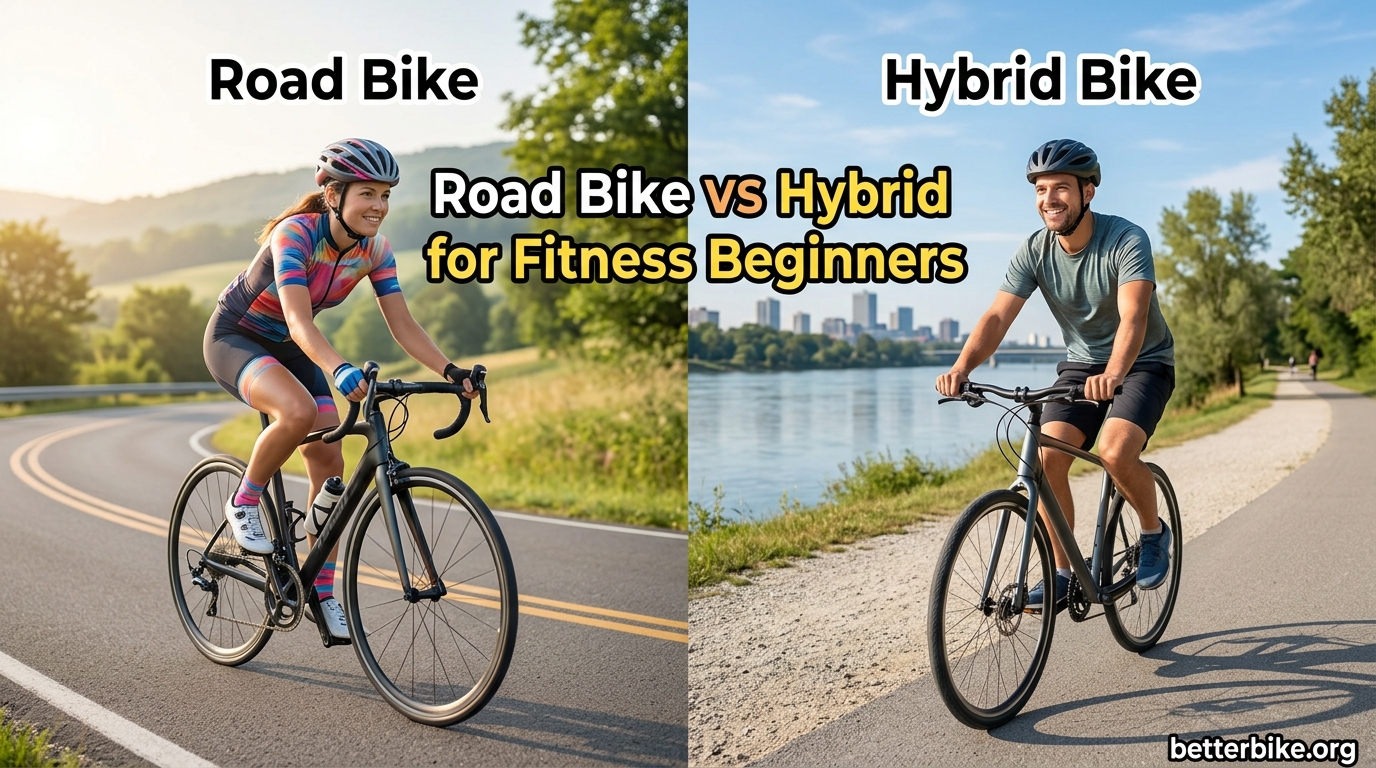
Walking into a bike shop for the first time as an adult can feel overwhelming. You see rows of sleek machines with curved bars next to sturdy-looking bikes with flat bars, and the staff starts throwing around terms like “groupset” and “stack height.” If you are standing there wondering which direction to go, you are in good company. The road bike vs hybrid bike for beginners question is one of the most debated topics in cycling forums, and for good reason.
Here is the short answer: for most beginners who want fitness, a hybrid bike is the smarter starting point. It offers comfort, confidence, and versatility while you build your fitness base. Once you know cycling is going to stick, you can always move to a road bike. But if you already know you want to ride fast on paved roads with a group, a road bike might be worth the steeper learning curve.
In this guide, I will break down exactly how road bikes and hybrid bikes differ, what those differences mean for your fitness goals, and which type fits your situation. I have spent years talking to beginners, reading hundreds of forum threads, and testing both bike types to give you a practical, no-nonsense comparison. If you are also thinking about choosing the right bike type for longer adventures, this guide will set the foundation.
Table of Contents
What Is a Road Bike?
A road bike is a lightweight, aerodynamic bicycle designed specifically for speed and efficiency on paved roads. It features drop handlebars that curl downward, narrow tires (typically 25mm to 32mm wide), and a frame geometry that puts you in a forward-leaning, aerodynamic position.
The whole design philosophy of a road bike is about reducing drag and transferring your pedaling power efficiently to the rear wheel. Every component, from the curled bars to the skinny tires, exists to help you go faster with less effort once you are up to speed.
For fitness, road bikes excel at sustained, higher-intensity efforts. The aerodynamic position means you can maintain 18 to 22 mph on flat roads with moderate effort once you develop the fitness and handling skills. That speed translates to covering more distance in less time, which means more calories burned per hour and a more intense cardiovascular workout.
Road bikes typically use 700c wheels with narrow, high-pressure tires that roll fast on smooth pavement. Most modern road bikes come with disc brakes, though some budget models still use rim brakes. The gearing is tuned for speed, with tighter spacing between gears so you can find the perfect cadence at higher velocities.
What Is a Hybrid Bike?
A hybrid bike combines design elements from road bikes and mountain bikes to create a versatile, comfortable do-it-all bicycle. It features flat handlebars similar to a mountain bike, wider tires (typically 35mm to 45mm), and an upright riding position that keeps your back straight and your head up.
Think of a hybrid as the Swiss Army knife of the cycling world. It is not the fastest bike on the road, and it is not the most capable on dirt trails, but it handles both reasonably well. That versatility makes it the most popular choice among beginners and casual riders.
For fitness, hybrid bikes offer a more accessible entry point. The upright position means you can breathe more easily and ride longer without back or neck pain. You will go a bit slower than on a road bike, but for someone just starting out, the comfort factor often matters more than raw speed.
Hybrid bikes also use 700c wheels on most models, but with wider tires that absorb bumps and provide better stability. The flat handlebars give you confident steering control, which is especially helpful when you are learning to navigate traffic, bike paths, and road hazards. If you want to learn more about hybrid bikes and commuter bikes in the context of different riding styles, that versatility is worth exploring.
Road Bike vs Hybrid: Quick Comparison
Here is a side-by-side breakdown of the key differences between these two bike types for beginners focused on fitness.
| Feature | Road Bike | Hybrid Bike |
|---|---|---|
| Handlebars | Drop bars (curved) | Flat bars (straight) |
| Riding Position | Forward-leaning, aero | Upright, relaxed |
| Tire Width | 25-32mm (narrow) | 35-45mm (wide) |
| Average Speed | 18-22 mph (experienced) | 14-17 mph (experienced) |
| Terrain | Paved roads only | Roads, light gravel, paths |
| Weight | Lighter (17-20 lbs) | Heavier (24-30 lbs) |
| Comfort Level | Takes getting used to | Comfortable from day one |
| Learning Curve | Steeper | Gentle |
| Hand Positions | Multiple (hoods, drops, tops) | Limited (one main grip) |
| Best For | Speed, distance, group rides | Comfort, versatility, commuting |
Key Differences That Matter for Beginners
Understanding the road bike vs hybrid bike for beginners comparison comes down to a few major design differences. Let me walk through each one and explain what it means for someone who is just starting to ride for fitness.
Handlebars and Riding Position
This is the single biggest difference you will notice between the two bike types, and it affects everything from comfort to control.
Road bikes use drop handlebars, which curl forward and downward. These bars give you three main hand positions: the tops (closest to the stem), the hoods (on the brake lever mounts), and the drops (the lowest curved section). Having multiple positions lets you shift your grip on long rides to prevent numbness and fatigue. The drops also let you get low and aerodynamic for sprinting or riding into headwinds.
However, drop bars come with a learning curve. The riding position is forward-leaning, which puts more weight on your hands and engages your core muscles. Many beginners experience hand numbness, wrist soreness, and neck pain during the first few weeks. It typically takes 4 to 8 weeks for your body to adapt to the position.
Hybrid bikes use flat handlebars, which are straight across. You grip them in one position, similar to how you would hold a mountain bike or a cruiser. The advantage is intuitive control. You can see ahead clearly, steer with confidence, and brake without thinking about hand position. The upright posture keeps your weight off your hands and wrists.
The downside is that you have limited hand positions on flat bars, which can lead to discomfort on rides longer than an hour. Many hybrid riders add bar ends or ergonomic grips to solve this problem. The upright position is also less aerodynamic, meaning you work harder against wind resistance at higher speeds.
Tires and Wheels
Both road bikes and hybrid bikes typically use 700c wheels, but the tires mounted on those wheels tell very different stories.
Road bike tires are narrow, usually between 25mm and 32mm wide. They run at high pressure (80 to 100+ psi), which makes them roll very fast on smooth pavement. The trade-off is that they transmit every crack, pebble, and imperfection directly to your body. Beginners often describe narrow road tires as feeling “twitchy” or “dangerous” on rough pavement, even though the actual risk is low with proper technique.
Hybrid bike tires are wider, usually between 35mm and 45mm. They run at lower pressure (50 to 70 psi), which allows them to absorb bumps and provide a smoother ride. The wider contact patch also gives you better stability and grip, especially on wet roads or light gravel. For a beginner, this translates to more confidence and less fatigue from constant vibration.
The tire difference directly affects your fitness riding. On a road bike, you can maintain higher speeds with less effort, but you need smooth roads. On a hybrid, you will ride a bit slower, but you can explore bike paths, crushed gravel trails, and rougher pavement without worrying about pinch flats or losing control.
Frame Geometry and Weight
Frame geometry refers to the angles and dimensions of the bike frame, and it determines how the bike feels when you ride it.
Road bikes have aggressive geometry with a lower front end (shorter stack height) and a longer reach. This positions your upper body low and stretched out for aerodynamics. The frame itself is typically lighter, with road bikes in the beginner-to-intermediate range weighing 17 to 20 pounds. Less weight means faster acceleration and easier climbing.
Hybrid bikes have relaxed geometry with a higher front end (taller stack) and shorter reach. Your upper body sits more upright, which is easier on your back, neck, and shoulders. Hybrid frames tend to be heavier, weighing 24 to 30 pounds, because they are built for durability and often include mounts for racks, fenders, and accessories.
For fitness purposes, the weight difference matters less than you might think. Yes, a lighter bike climbs faster, but if you are riding for exercise, the extra weight of a hybrid means you work a bit harder and burn more calories per mile. Some trainers actually prefer heavier bikes for base fitness building.
Gearing and Brakes
Road bikes typically have tighter gear ratios with more gears clustered in the speed range you use most often. This lets you fine-tune your cadence at higher speeds. Most road bikes have two chainrings in the front (a double crankset) with 10 to 12 gears in the back.
Hybrid bikes usually have wider-range gearing with fewer total gears but a broader spread. This gives you very easy gears for climbing hills and moderate gears for cruising, without the tight high-speed spacing of a road bike. Many hybrids use a triple crankset (three front chainrings) or a single chainring setup (1x drivetrain) for simplicity.
For brakes, both bike types now commonly feature disc brakes, which provide strong, consistent stopping power in all weather conditions. Budget road bikes may still use rim brakes, which are lighter but less effective in wet conditions. Disc brakes are especially valuable for beginners because they require less finger force and are more forgiving.
Road Bike vs Hybrid Bike for Fitness: Which Burns More Calories?
Both road bikes and hybrid bikes provide excellent cardiovascular exercise, but they deliver fitness benefits in slightly different ways.
A road bike encourages higher-intensity riding because the aerodynamic position and efficient design make higher speeds feel more attainable. You are more likely to push harder when you can sustain 20 mph versus 15 mph. The average cyclist burns between 400 and 600 calories per hour on a road bike at moderate intensity, with that number climbing to 700-plus calories during vigorous group rides.
A hybrid bike delivers a solid workout at slightly lower intensities. The upright position is less aerodynamic, so you naturally ride a few miles per hour slower. However, the heavier bike and wider tires mean you work harder to maintain any given speed. Most hybrid riders burn between 350 and 550 calories per hour at moderate intensity.
Here is the practical reality from forum data: real-world speed comparisons show experienced riders averaging around 26 km/h (16 mph) on a hybrid versus 30 km/h (18.5 mph) on a road bike over the same route. That speed difference means road bike riders cover more distance per hour, but the calorie burn per hour is surprisingly similar because the hybrid rider works harder against rolling resistance and wind.
The fitness question really comes down to consistency. A bike you are comfortable riding three to four times per week will deliver better fitness results than a faster bike that sits in the garage because it hurts your back. Multiple Reddit users who switched from road bikes to fitness hybrids reported riding more frequently and enjoying it more, which led to better long-term fitness outcomes.
If your fitness goal is weight loss, cardiovascular health, or general conditioning, either bike will get you there. The best bike for fitness is the one you will actually ride regularly.
Pros and Cons: Road Bike
Pros of a road bike:
- Faster on paved roads, letting you cover more distance in less time
- Multiple hand positions on drop bars reduce fatigue on long rides
- Lighter weight makes climbing hills easier and more efficient
- Aerodynamic position is ideal if you eventually want to do group rides or events
- Higher resale value and a larger market if you decide to upgrade or sell
Cons of a road bike:
- Aggressive riding position causes neck, back, and hand pain for many beginners
- Drop bars feel intimidating and take weeks to get comfortable with
- Narrow tires are unforgiving on rough or potholed roads
- Limited to paved surfaces; cannot handle gravel or dirt paths well
- Typically more expensive than comparable hybrid models
- Fewer mounting points for racks, fenders, or accessories
Pros and Cons: Hybrid Bike
Pros of a hybrid bike:
- Upright riding position is comfortable from your very first ride
- Flat handlebars provide intuitive, confident steering control
- Wider tires absorb bumps and handle varied terrain including light gravel
- More affordable entry point for quality models
- Mounting points for racks, fenders, and bottles add practical versatility
- Easy to commute on, run errands, and ride with family in addition to fitness
Cons of a hybrid bike:
- Noticeably slower than road bikes, which can be frustrating on group rides
- Limited hand positions on flat bars can cause hand numbness on longer rides
- Heavier weight makes climbing more effort-intensive
- Upright position catches more wind, increasing effort at higher speeds
- May need to upgrade if you get serious about road cycling or racing
Common Beginner Pain Points (and How to Solve Them)
Reading through hundreds of forum posts from r/cycling and r/bikecommuting, several recurring pain points emerge for beginners choosing between road and hybrid bikes. Here are the most common issues and practical solutions.
Hand numbness and wrist pain. This is the number one complaint from new road bike riders. The forward-leaning position puts significant weight on your hands. Solution: start with shorter rides of 20 to 30 minutes, gradually increase duration, and make sure your bike fit puts adequate weight on your saddle. Padded gloves and grip tape also help. If the problem persists after several weeks, a professional bike fit can adjust your reach.
Neck and lower back soreness. Road bike geometry requires you to hold your head up at an angle that can strain neck muscles. Multiple users report this fading after 4 to 6 weeks as core strength improves. Core exercises off the bike, such as planks and bridges, speed up the adaptation process significantly.
Fear of drop bars feeling unstable. Many beginners worry that the curved bars will be hard to control. In reality, drop bars offer precise steering once you are used to them. Start by riding on the hoods (the brake lever position) rather than in the drops. The hoods give you easy access to brakes and shifters while providing a secure, stable grip.
Narrow tires feeling sketchy on rough roads. If your local roads are poorly maintained, road bike tires can feel nerve-wracking. Modern road bikes now accept wider tires than older models, with many fitting 28mm or even 32mm tires. If road conditions are a concern, look for an endurance road bike with generous tire clearance.
Keeping up with road cycling groups on a hybrid. Forum users consistently report a 3 to 5 mph speed gap between hybrids and road bikes at similar fitness levels. If your friends all ride road bikes and you want to join group rides, this speed difference can be frustrating. However, many cycling groups offer no-drop rides at conversational pace where a hybrid rider can keep up comfortably. Look for beginner-friendly group rides in your area.
Which Should a Beginner Choose for Fitness?
After comparing both options, here is my breakdown of when each bike type makes the most sense for a fitness-focused beginner.
Choose a hybrid bike if:
- You are completely new to cycling or returning after years away
- You are significantly out of shape and want a comfortable entry point
- You plan to ride on bike paths, mixed surfaces, or rough pavement
- You want a bike that can also handle commuting or errands
- You have any back, neck, or wrist issues that make aggressive positions painful
- You are unsure whether cycling will become a long-term hobby
- Your budget is under $800 for a quality bike
Choose a road bike if:
- You are committed to cycling as your primary fitness activity
- You want to ride fast and eventually join group rides or events
- You live in an area with good paved roads and bike lanes
- You have no significant joint or back issues
- You are willing to invest time in adapting to the riding position
- You already know you want to progress to longer distances and higher speeds
- Your budget allows for $1000 or more for a quality entry-level road bike
My general recommendation for fitness beginners: Start with a hybrid bike. The comfort, confidence, and versatility it provides will help you build a consistent riding habit. Consistency is the single most important factor in achieving fitness results. Once you have been riding regularly for 3 to 6 months and feel ready for more speed and distance, upgrading to a road bike is a natural progression that you will appreciate much more with a fitness base already established.
Many experienced cyclists recommend this path. One Reddit user who transitioned from road to hybrid after chronic pain issues described their fitness hybrid as the “best of both worlds.” Another user noted that most of their riding happens on the hoods or tops of drop bars anyway, making the speed advantage smaller than expected for casual fitness riding.
When to Upgrade From a Hybrid to a Road Bike
One question that comes up frequently in forums is when it makes sense to move from a hybrid to a road bike. Here are the signs that you are ready for the upgrade.
You consistently ride three or more times per week and look forward to every session. You have built up to rides of 20 miles or more and want to go further. You find yourself wanting to go faster and feeling limited by the hybrid’s upright position and wider tires. You have started researching group rides, sportives, or organized cycling events.
If those describe you, a road bike will reignite your progress. The fitness base you built on the hybrid will transfer directly, and the speed increase will feel rewarding rather than intimidating. Budget 4 to 8 weeks for your body to adapt to the new position, and consider getting a professional bike fit to ensure the transition is smooth.
Conversely, if you are happy with your hybrid after a year of riding, there is no rule that says you must upgrade. Many cyclists ride hybrids for their entire cycling lives and achieve excellent fitness. The right bike is the one that keeps you pedaling.
FAQ’s
Is a road bike better for fitness than a hybrid?
A road bike is better for fitness if your goal is maximizing speed, distance, and intensity. The aerodynamic position and efficient design let you sustain higher speeds, which can lead to a more intense cardiovascular workout. However, a hybrid bike provides equally effective fitness benefits at slightly lower intensities, and many beginners ride more consistently on a comfortable hybrid than on a road bike. Consistency matters more than speed for long-term fitness results.
Are hybrid bikes good for beginners?
Yes, hybrid bikes are widely considered the best choice for beginners. The upright riding position is comfortable from day one, flat handlebars provide intuitive steering control, and wider tires offer stability on varied surfaces. Hybrids are also versatile enough for commuting, fitness rides, and casual weekend cycling, making them an excellent all-around first bike.
How much faster is a road bike than a hybrid?
On average, a road bike is 3 to 5 mph faster than a hybrid bike for riders of similar fitness levels. Real-world data from cycling forums shows experienced riders averaging around 18.5 mph on a road bike versus 16 mph on a hybrid over the same route. The speed difference comes from the aerodynamic position, lighter weight, and narrower tires of the road bike.
Can I do long-distance rides on a hybrid bike?
Yes, you can absolutely do long-distance rides on a hybrid bike. Many riders complete 30, 50, and even 100-mile rides on hybrids. The key is adding ergonomic grips or bar ends for additional hand positions, ensuring your bike fit is dialed in, and building up your distance gradually. A hybrid may be slightly slower on long rides, but it will get you there comfortably.
What are the disadvantages of a hybrid bike?
The main disadvantages of a hybrid bike are slower speeds due to the upright position and wider tires, heavier weight that makes climbing more difficult, limited hand positions on flat bars that can cause numbness on long rides, and the potential need to upgrade if you get serious about road cycling. Hybrids are also less aerodynamic, meaning you work harder against wind at higher speeds.
Final Verdict: Road Bike vs Hybrid Bike for Beginners
The road bike vs hybrid bike for beginners decision ultimately comes down to your personality, your goals, and your local riding conditions. Both bikes deliver excellent fitness benefits, and neither is objectively better than the other for every person.
For the majority of fitness beginners, I recommend a hybrid bike. It removes the barriers of discomfort and intimidation that cause many new cyclists to quit within the first month. You can ride it on bike paths, rough roads, light trails, and city streets. You can commute on it, run errands, and build a fitness habit that actually sticks.
If you already know you want to chase speed, join group rides, and ride exclusively on paved roads, a road bike rewards that commitment. Just be prepared for an adjustment period and invest in a proper bike fit.
The most important step is getting on a bike and riding. Pick the option that makes you excited to get out there, and the fitness will follow. If you found this comparison helpful and want to explore how different bikes work for multi-day adventures, check out our guide on what to know before your first overnight bikepacking trip for more beginner-friendly cycling guidance.