
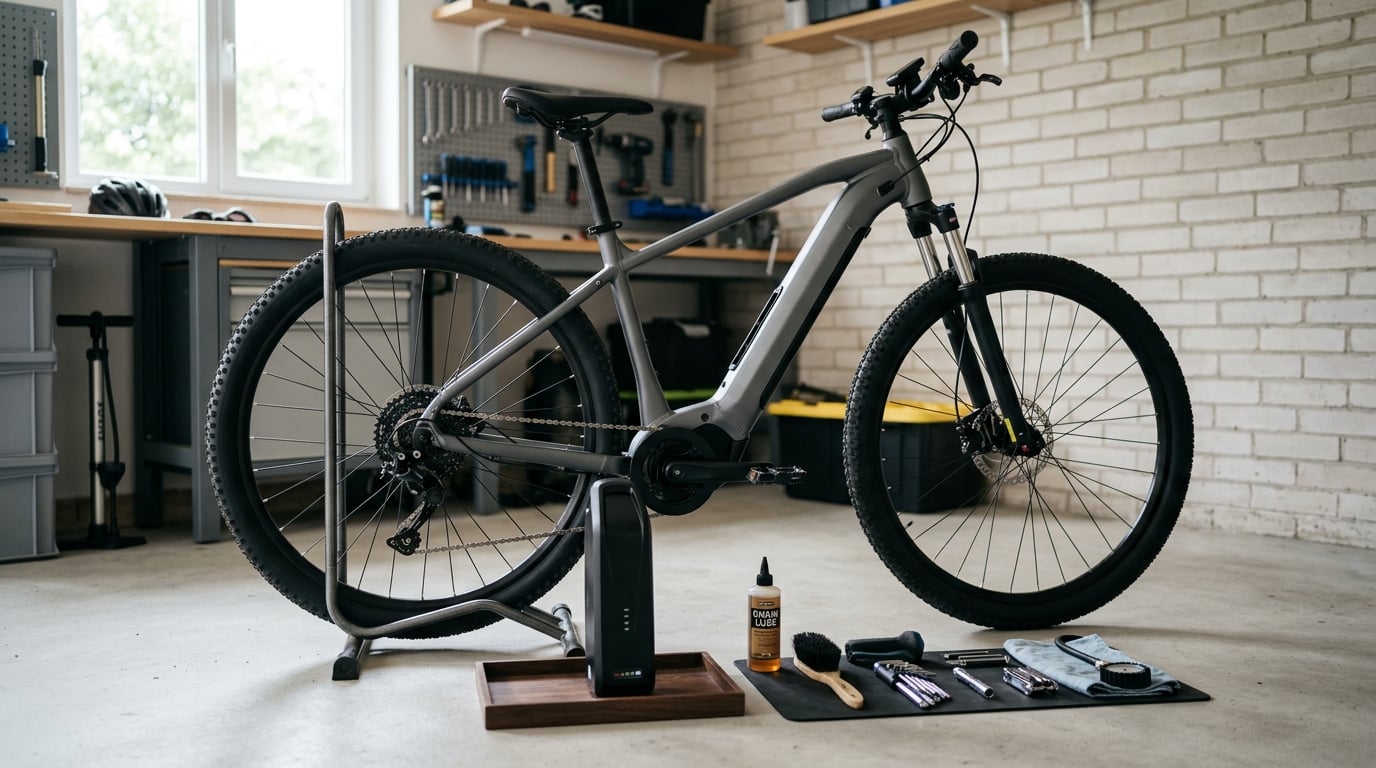
If you recently switched from a standard bicycle to an electric one, you might be wondering how to maintain an e-bike differently than a regular bike. The short answer is that most maintenance tasks are the same, but the electrical system, battery, and faster component wear change the equation significantly. Our team has spent years riding, repairing, and writing about e-bikes, and we have compiled everything you need to know into this guide.
E-bikes share the same bones as traditional bicycles. They have chains, cassettes, brake pads, tires, and bearings that all need regular attention. What changes is the frequency and the addition of a few entirely new systems you never had to think about before.
The motor adds torque that accelerates chain wear. The battery adds weight that eats brake pads faster. The electronics introduce water sensitivity you never worried about on a pedal-only bike. And the battery itself, often the most expensive single component, demands its own care routine to protect your investment.
In this guide, we walk through every maintenance difference in practical detail. Whether you commute daily, ride trails on weekends, or just picked up your first e-bike, you will know exactly what to do differently and why it matters.
Table of Contents
Why E-Bike Maintenance Is Different From Regular Bike Maintenance
E-bikes generate significantly more torque than regular bikes, and that single fact explains almost every maintenance difference. A mid-drive motor can dump 250 to 750 watts of power straight through your chain and cassette on every pedal stroke. A regular bike only sees the torque your legs produce.
The result is faster wear across the entire drivetrain. Chains stretch quicker, cassettes wear unevenly, and chainrings develop hooked teeth sooner. Riders on the ElectricBike.com forum consistently report replacing chains twice as often on mid-drive e-bikes compared to their pedal-only bikes.
Weight is the second factor. A typical e-bike weighs 50 to 70 pounds, while a regular commuter bike sits around 25 to 30 pounds. That extra mass puts more load on brake pads, tires, and bearings every time you ride.
Speed compounds both issues. E-bikes travel faster on average, which means more braking force needed at every stop. The kinetic energy your brake pads must dissipate scales with the square of your speed, so a bike going 20 mph requires four times the braking energy of one going 10 mph.
None of this means e-bikes are fragile. It just means the same maintenance tasks happen more often, and a few new ones enter the picture entirely.
E-Bike Battery Care: The Biggest Difference
Battery care is the single biggest maintenance difference between e-bikes and regular bikes, and it is also the area where mistakes get expensive fastest. A quality e-bike battery costs hundreds to replace, so protecting its lifespan pays for itself.
Charging Best Practices
Lithium-ion e-bike batteries thrive on partial charges rather than full discharge cycles. Follow these habits to maximize lifespan:
- Charge to 80 to 90 percent for daily use rather than always aiming for 100 percent.
- Avoid letting the battery drop below 20 percent before recharging.
- Never leave the battery on the charger overnight or for extended periods after it reaches full charge.
- Charge at room temperature. Avoid charging in freezing conditions or in direct summer heat.
- Use only the charger that came with your e-bike or a manufacturer-approved replacement.
Most e-bike batteries are rated for 500 to 1,000 full charge cycles before capacity drops to about 80 percent of original. Keeping the battery between 20 and 80 percent charge can extend that lifespan significantly, sometimes doubling the useful cycles.
Battery Storage Tips
If you store your e-bike for more than a few days, remove the battery and store it separately at roughly 50 to 60 percent charge. Store it indoors at temperatures between 50 and 70 degrees Fahrenheit.
Never store a battery fully discharged. A battery left empty for weeks can fall into a deep discharge state that permanently damages the cells. Similarly, a battery stored at 100 percent for long periods experiences more chemical stress and degrades faster.
How Long Do E-Bike Batteries Last?
With proper care, an e-bike battery typically lasts three to five years of regular use. Riders who follow partial-charge habits and store batteries correctly often see 700 to 1,000 cycles. Riders who routinely drain to zero and charge to full might see half that.
The battery does not suddenly die at the end of its life. It gradually loses range, dropping about 10 to 20 percent capacity each year of heavy use. When your full-charge range drops below what you need for your typical ride, it is time to consider a replacement.
Drivetrain Maintenance: Chains and Cassettes Wear Faster
The drivetrain is where e-bike maintenance diverges most visibly from regular bike care. That motor torque we mentioned earlier does not just help you climb hills. It also grinds through chains and cassettes at an accelerated rate.
On a regular bike, a chain might last 2,000 to 3,000 miles. On a mid-drive e-bike, expect 1,000 to 1,500 miles. Hub motor e-bikes are gentler on chains since the motor drives the wheel directly rather than through the chain, but they still see slightly accelerated wear from the extra bike weight.
How Often to Lube an E-Bike Chain
Lubricate your e-bike chain every 100 to 150 miles, or roughly once a week if you commute daily. In wet conditions, lube more often. Use a quality bike-specific chain lube, apply a drop to each roller, let it sit for a few minutes, then wipe off the excess.
A dry chain on an e-bike wears faster than on a regular bike because the motor torque amplifies friction damage. Check your chain for stretch every 500 miles using a chain checker tool. Replace it before it stretches past 0.5 percent on an e-bike, compared to 0.75 percent on a regular bike, to protect your cassette.
Cassettes typically last through two to three chain replacements. If you let a chain stretch too far, it will wear the cassette teeth to match, and you will need to replace both at once. Replacing chains proactively saves money over time.
Brake Maintenance: Stopping a Heavier Bike
Brake pads are the second component that wears noticeably faster on an e-bike. The combination of extra weight and higher average speed means your brakes work harder on every ride.
Most modern e-bikes use hydraulic disc brakes, which provide strong stopping power but require their own maintenance routine. Expect to replace brake pads every 500 to 1,000 miles on an e-bike, compared to 1,500 to 3,000 miles on a regular bike.
Signs Your Brake Pads Need Replacement
Watch for these warning signs:
- Squealing or grinding noises during braking.
- Increased lever travel before the brakes engage.
- Reduced stopping power or a spongy lever feel.
- Visible pad material thinner than 1 millimeter when inspected.
Hydraulic disc brakes also need occasional bleeds to remove air bubbles from the fluid lines. If your lever feels soft or pulls all the way to the grip, the system likely needs bleeding. Most riders need a brake bleed once per year, though heavy riders or frequent descenders might need it sooner.
Inspect your rotor surfaces too. Glazed or grooved rotors reduce braking performance and accelerate pad wear. Rotors typically last longer than pads but should be replaced when they develop deep grooves or fall below minimum thickness.
Cleaning Your E-Bike Safely (Electrical Precautions)
Cleaning an e-bike follows the same basic process as cleaning a regular bike, with one critical addition. You must protect the electrical components from water intrusion.
Step-by-Step E-Bike Cleaning Procedure
Follow these steps every one to two weeks depending on riding conditions:
- Remove the battery from the frame before cleaning if your design allows it.
- Cover the display, controls, and any exposed ports with a dry cloth or plastic wrap.
- Use a bucket of soapy water and a soft brush. Never use a pressure washer on an e-bike.
- Keep water away from the motor housing, battery contacts, and cable connectors.
- Scrub the drivetrain with a degreaser and a dedicated brush.
- Rinse gently with a low-pressure hose or clean bucket of water.
- Dry the bike thoroughly with a clean rag, paying attention to electrical connections.
- Re-lube the chain after the drivetrain is clean and dry.
Pressure washers are the number one cause of water damage to e-bike electronics. Even bikes with high water resistance ratings can suffer when high-pressure water is forced past seals. Stick to bucket-and-brush cleaning and you will avoid expensive repair bills.
What About Water Resistance?
Most quality e-bikes carry an IP rating, typically IP54 to IP65, which indicates resistance to dust and water spray. IP54 means protected against splashing water from any direction. IP65 means protected against low-pressure water jets.
However, none of these ratings mean the bike is waterproof. They mean the bike can handle rain and splashes under normal conditions. Submerging the motor, spraying directly at connectors, or leaving the bike in a downpour with the display exposed can still cause damage.
Forum riders on Reddit consistently report that control switches and displays are the weakest points. Many riders add silicone covers or use handlebar bags to shield displays during rainy commutes.
Tire Maintenance for Heavier E-Bikes
E-bike tires carry more weight than regular bike tires and they transmit motor torque to the ground, so they wear faster and need more attention. Check tire pressure weekly with a quality gauge.
Most e-bike tires call for higher pressure than standard bike tires, typically 50 to 65 psi depending on tire width and rider weight. Underinflated tires on a heavy e-bike increase the risk of pinch flats and reduce battery range due to rolling resistance.
Inspect tires for wear every few weeks. Look for squared-off tread, exposed casing threads, or visible cuts. E-bike-specific tires are built with reinforced sidewalls and harder rubber compounds to handle the extra torque and weight. When replacing tires, look for models marked as e-bike rated, often with an E-Bike Ready label.
Replace tires when the tread is visibly worn smooth or when you see casing threads. A blowout at 20 mph on a 60-pound bike is far more dangerous than the same failure on a lighter bike at lower speed.
Motor Care: Mid Drive vs Hub Drive Maintenance
The type of motor on your e-bike affects your maintenance routine more than most riders realize. Mid-drive and hub motors have different wear patterns and service requirements.
Mid-Drive Motor Maintenance
Mid-drive motors sit at the bottom bracket and drive power through the bike chain. This design offers better weight distribution and torque sensing, but it puts the chain, cassette, and chainrings under heavy load.
If you ride a mid-drive e-bike, expect to replace chains and cassettes roughly twice as often as on a hub-drive bike. The motor torque passes through every drivetrain component on every assisted pedal stroke. Check chain stretch frequently and replace chains early to protect your cassette.
Mid-drive motors themselves are generally sealed units that require professional service. Most manufacturers recommend a motor inspection every 5,000 to 10,000 miles. If you hear grinding, clicking, or feel rough pedaling when the motor is off, have a professional inspect the bottom bracket and motor interface.
Hub Motor Maintenance
Hub motors live in the front or rear wheel hub and drive the wheel directly. Because they bypass the chain, they are much gentler on drivetrain components. Chains on hub-drive bikes last closer to regular bike intervals.
The tradeoff is that hub motors add unsprung weight to the wheel, which can affect handling and accelerate spoke wear on the motor side. Check spoke tension periodically, especially on rear hub motors. Loose spokes lead to wheel wobble and eventual failure.
Hub motors are also sealed units. They rarely need internal service, but the external wiring connections should be inspected for wear, corrosion, or loosening at every cleaning.
Firmware Updates and Electronic Component Care
Firmware updates are a maintenance task unique to e-bikes, and most riders overlook them entirely. Major motor systems from Bosch, Shimano, Bafang, and Brose regularly release updates that improve motor efficiency, fix throttle response issues, and patch safety-related bugs.
Check for firmware updates every three to six months. Bosch offers a free eBike Connect app that handles updates over Bluetooth. Shimano uses the E-Tube app for STEPS system updates. Some smaller brands require a visit to an authorized dealer for updates.
Sensor Calibration
Speed sensors, torque sensors, and cadence sensors all need occasional attention. If your motor feels jerky, cuts out unexpectedly, or delivers power inconsistently, a sensor issue is likely the cause.
Check the wheel magnet position on your speed sensor every few months. Vibration can shift the magnet away from the sensor, causing erratic readings. Torque sensors on mid-drive systems occasionally need recalibration by a dealer if power delivery becomes unpredictable.
Display and Control Care
The display unit is the most exposed electronic component on your e-bike. Clean it with a soft, dry cloth. Avoid glass cleaners or solvents that can damage the screen coating. If your display is removable, take it off when parking in public or during rain storage.
Can You Ride an E-Bike in the Rain? (Water Resistance Facts)
Yes, you can ride most e-bikes in the rain, but with some caveats. The motor and battery systems on quality e-bikes are designed to handle wet weather. It is the controls, display, and connectors that need extra protection.
Here is what every rider should know about wet-weather e-bike use:
- Most e-bikes are rated IP54 or higher, meaning they handle rain and splashing water fine.
- Avoid riding through deep puddles or standing water that could submerge the motor or battery.
- Dry off electrical connectors after wet rides to prevent corrosion.
- Consider a display cover or handlebar bag for heavy rain commuting.
- Braking distances increase significantly in the wet. Ride slower and brake earlier.
The biggest rain-related complaint on e-bike forums involves water intrusion through switches and display buttons. These components have rubber seals that degrade over time. If you ride frequently in rain, inspect the seals annually and replace them if they show cracking.
After riding in heavy rain, wipe down the bike and let it dry completely before charging the battery. Connecting a charger to a wet battery port can cause short circuits or corrosion at the contact points.
Professional vs DIY E-Bike Maintenance
One question we hear constantly is where to draw the line between DIY maintenance and professional service. The answer depends on your mechanical experience and the specific task.
Safe DIY E-Bike Maintenance Tasks
These tasks are well within reach for most riders with basic tools:
- Chain cleaning, lubrication, and replacement.
- Brake pad inspection and replacement (mechanical disc brakes).
- Tire pressure checks, tire replacement, and flat repair.
- Battery removal, charging, and storage.
- Basic cleaning and bolt tension checks.
- Firmware updates via manufacturer apps.
When to Visit a Professional
Leave these tasks to a qualified e-bike mechanic:
- Hydraulic brake bleeds and line replacement.
- Motor internal service or replacement.
- Wiring harness repair or replacement.
- Battery cell diagnostics and replacement.
- Wheel truing and spoke replacement on motor wheels.
- Suspension service on e-MTB models.
Finding a shop that actually services e-bikes can be challenging depending on where you live. Call ahead and ask specifically about e-bike experience. Standard bike shops may refuse electrical work due to liability concerns or lack of diagnostic tools.
E-Bike Service Intervals by Mileage
Use this mileage-based schedule as a baseline for e-bike maintenance. Adjust frequency based on riding conditions, rider weight, and terrain.
Every 100 to 150 miles (weekly for commuters):
- Check and adjust tire pressure.
- Clean and lubricate the chain.
- Wipe down the frame and inspect for loose bolts.
- Check brake pad thickness visually.
Every 500 miles (monthly for commuters):
- Check chain stretch with a chain checker tool.
- Inspect tires for wear and embedded debris.
- Clean the drivetrain with degreaser.
- Test all lights and electronics.
- Inspect brake rotors for glazing or grooving.
Every 1,000 to 1,500 miles (quarterly):
- Replace chain if stretched past 0.5 percent.
- Replace brake pads if worn below 1 millimeter.
- Check and adjust derailleur indexing.
- Inspect spoke tension on motor wheels.
- Deep clean including electrical connection inspection.
Every 5,000 miles or annually:
- Full professional tune-up at an e-bike shop.
- Hydraulic brake fluid bleed if applicable.
- Cassette and chainring inspection and replacement as needed.
- Motor diagnostic check via dealer software.
- Battery health diagnostic.
- Firmware update check.
Seasonal Storage Guide for E-Bikes
If you live somewhere with a true winter or ride seasonally, proper storage protects your battery and extends component life. The battery is the priority, followed by protecting the frame and drivetrain from corrosion.
For winter or off-season storage lasting more than a month:
- Remove the battery and store it indoors at 50 to 60 percent charge.
- Store the battery at room temperature, ideally between 50 and 70 degrees Fahrenheit.
- Clean and fully dry the bike before storage.
- Apply fresh chain lube to prevent corrosion.
- Store the bike in a dry location away from extreme temperatures.
- Inflate tires to recommended pressure to prevent flat spots.
- Check on the battery every two months and top it off if it drops below 30 percent.
Avoid storing e-bikes in unheated garages or sheds where temperatures drop below freezing. Cold storage degrades battery cells and can cause condensation inside electronic housings when temperatures fluctuate.
FAQ’s
What is the downside of e-bikes?
The main downsides of e-bikes are higher upfront cost, heavier weight making them harder to transport, faster component wear on chains and brake pads, battery replacement cost after 3 to 5 years, and the need to find shops experienced with electrical systems. They also require charging discipline to protect the battery investment.
Should I charge my e-bike after every ride?
No. For best battery lifespan, charge when the battery drops to around 20 to 30 percent remaining, and unplug before it reaches 100 percent for daily use. Charging after every short ride keeps the battery at maximum voltage constantly, which degrades lithium-ion cells faster than partial cycling.
What is the average lifespan of an e-bike?
An e-bike frame and motor typically last 5 to 10 years with proper care. The battery usually lasts 3 to 5 years or 500 to 1,000 charge cycles before significant capacity loss. Drivetrain components like chains and cassettes need replacement every 1,000 to 3,000 miles depending on motor type and riding habits.
Do electric bikes raise the electric bill?
Very little. A typical e-bike battery holds 400 to 700 watt-hours. A full charge costs roughly 5 to 15 cents depending on local electricity rates. Even charging daily, an e-bike adds only a few dollars per month to your electric bill, making it one of the most cost-effective transportation options available.
How often should I lube my e-bike chain?
Lube your e-bike chain every 100 to 150 miles, or about once a week for daily commuters. In wet or dusty conditions, lubricate more frequently. E-bike chains wear faster than regular bike chains due to motor torque, so consistent lubrication is more important to protect the cassette and chainrings.
Can I ride my e-bike in the rain?
Yes, most quality e-bikes are rated IP54 or higher and handle rain and splashing water without issue. Avoid deep puddles that could submerge the motor or battery, dry electrical connectors after wet rides, and consider a display cover for heavy rain. Never connect a charger to a wet battery port.
Conclusion
Learning how to maintain an e-bike differently than a regular bike comes down to three core differences. You must care for the battery as a separate system, you must service the drivetrain and brakes more frequently due to motor torque and added weight, and you must protect electrical components during cleaning and wet-weather riding.
The good news is that none of these tasks are difficult. Most take only a few minutes per week. Stay on top of chain lubrication, charge your battery thoughtfully, clean with care around electronics, and get a professional tune-up once a year. Do those things and your e-bike will deliver reliable, efficient performance for years.
If you are new to e-bike ownership, start with the weekly checklist in our service intervals section. Build the habit early and maintenance becomes second nature rather than a chore. Your battery, drivetrain, and wallet will all thank you.