
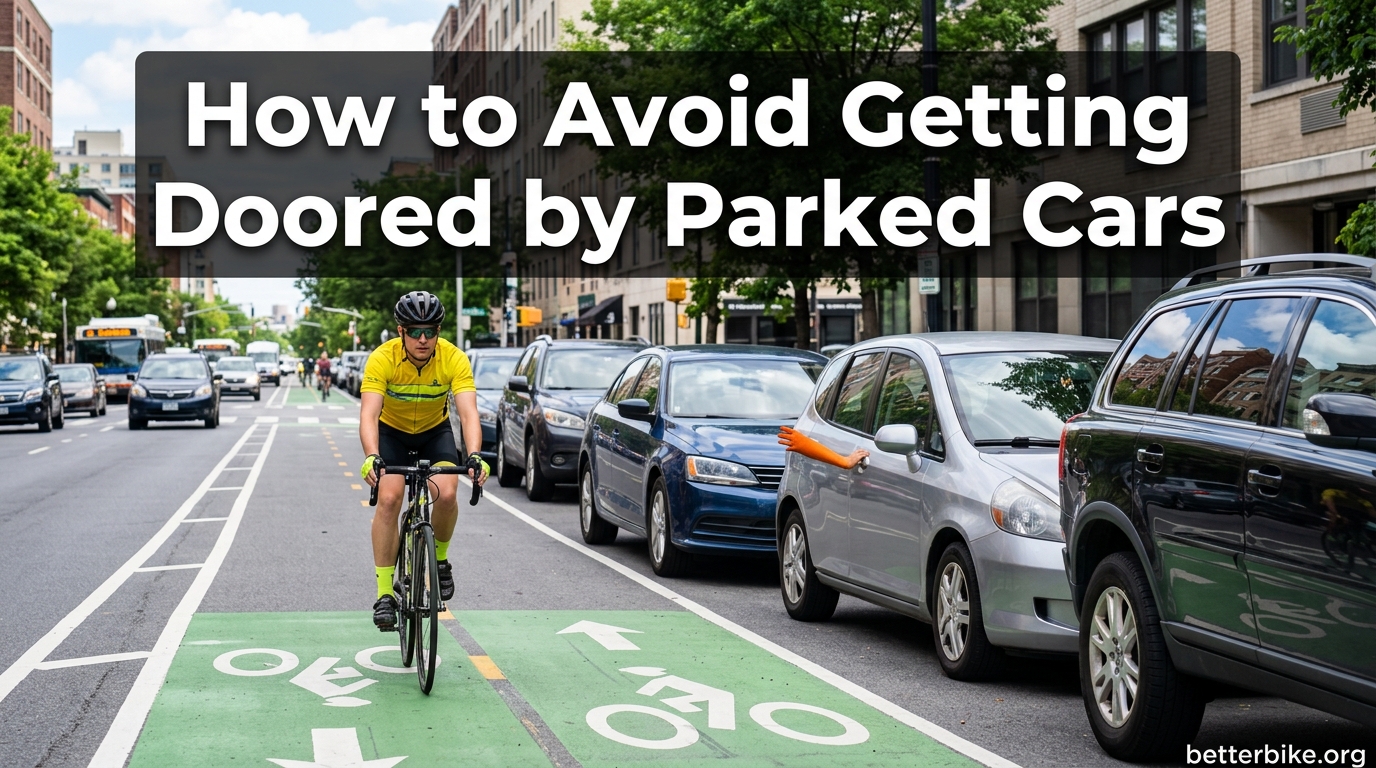
Getting doored is one of the most common and frightening hazards urban cyclists face. Learning how to avoid getting doored by parked cars can mean the difference between a safe commute and a trip to the emergency room. In cities like Chicago, dooring accounts for roughly 1 in 5 reported bicycle crashes, and even experienced riders are not immune to the danger.
Dooring happens when a driver or passenger opens a car door directly into the path of an approaching cyclist. The cyclist either collides with the door at speed or swerves into moving traffic to avoid it. Both scenarios can cause serious injuries, including concussions, broken bones, and being thrown over the handlebars.
The good news is that dooring is almost entirely preventable. In this guide, our team breaks down exactly what the door zone is, the specific riding techniques that keep you safe, and what to do if the worst happens. Whether you commute daily or ride occasionally, these cycling safety tips will help you stay out of harm’s way.
Table of Contents
What Is the Door Zone?
The door zone is the area extending approximately 4 feet outward from the side of a parallel-parked car. This is the space that a fully opened car door occupies, and it is where the vast majority of dooring accidents occur. If you are riding within that 4-foot strip, you are in the danger zone.
Many cyclists assume that staying in a bike lane automatically keeps them safe. Unfortunately, unprotected bike lanes are frequently painted right through the door zone, placing riders within inches of parked car doors. In these situations, the bike lane itself becomes the hazard.
To stay safe, you need to ride far enough from parked cars that even a fully extended door cannot reach you. That typically means riding at least 4 feet away from the side mirrors of parked vehicles, even if that puts you outside a painted bike lane.
How to Avoid Getting Doored by Parked Cars: Key Strategies
These are the most effective techniques cyclists can use to prevent dooring accidents. Each one addresses a different part of the risk, and together they form a comprehensive defense.
- Ride outside the door zone. Always position yourself at least 4 feet from parked cars. If a parked car door fully opens, it should not come close to reaching you. This is the single most important habit you can develop for bike crash prevention.
- Look inside parked cars before passing. Scan through the rear and side windows of each car as you approach. Watch for brake lights, movement, heads turning, or anyone sitting in the driver’s seat. If you see someone inside, assume they may open a door.
- Use mirrors and perform shoulder checks. A handlebar or helmet mirror helps you monitor traffic behind you, which tells you whether it is safe to move left. Always perform a shoulder check before shifting your position in the road.
- Take the lane when necessary. If a row of parked cars makes the door zone unavoidable, claim the travel lane. Riding in the center of the lane forces overtaking traffic to slow and pass safely rather than squeezing you into a parked car.
- Watch both sides. Dooring is not limited to the driver’s side. Passengers on the right side of parked cars can open doors into your path as well, especially near ride-share drop-off zones and parking lots.
- Control your speed. Ride at a speed that gives you time to react. Slower speeds mean shorter stopping distances and more time to spot hazards inside parked vehicles before you reach them.
- Ride predictably. Maintain a straight, consistent line rather than weaving in and out of the door zone. Other road users cannot anticipate sudden swerves, and erratic movement increases your risk of being struck from behind.
Practicing these habits consistently is what separates cyclists who ride for years without incident from those who learn about dooring the hard way.
The Dutch Reach: A Technique Every Driver Should Know
The Dutch Reach is a simple but powerful door-opening technique developed in the Netherlands. Instead of opening a car door with the hand closest to the door, the driver reaches across with their far hand. This forces the upper body to rotate, naturally turning the head and shoulders to look backward through the side mirror and window.
Here is how the Dutch Reach works step by step:
- Reach with your far hand. If you are the driver, use your right hand to open the left door. This is the core of the technique.
- Let your body rotate. The across-body reach naturally turns your shoulders and head toward the window.
- Check the mirror and look back. You will now see any approaching cyclists or vehicles before the door begins to open.
- Open slowly and exit facing traffic. Keep one hand on the door and open it gradually. Step out while still facing oncoming traffic.
If every driver used the Dutch Reach, a significant percentage of dooring accidents would disappear overnight. Cyclists can help by sharing this technique with friends and family who drive. The Dutch Reach costs nothing to learn and takes only seconds to perform, but it can save a cyclist’s life.
Bike Lane Positioning and Sharrows
Not all bike infrastructure is created equal when it comes to dooring risk. Unprotected bike lanes that run directly adjacent to parked cars place cyclists squarely in the door zone. In these situations, riding safely often means riding outside the painted line.
Sharrows, or shared-lane markings, are another tool cities use. These are bicycle symbols painted in the travel lane that indicate cyclists may use the full lane. Sharrows are often placed outside the door zone, guiding cyclists to a safe lateral position in the road. When you see a sharrow, use it as a positioning guide and ride centered on the marking.
Protected bike lanes, which use physical barriers like planters or parked cars to separate cyclists from moving traffic, are the safest option. However, even protected lanes can be problematic if the parked-car buffer is not wide enough. Always evaluate the lane width relative to the parked cars and ride at the outer edge of any bike lane that puts you within reach of doors.
What to Do If You Get Doored
Despite your best efforts, you may still find yourself involved in a dooring incident. Knowing what to do immediately afterward can protect your health and your legal rights.
Follow these steps after a dooring accident:
- Get out of the roadway safely. Move yourself and your bike off the road to avoid being hit by passing traffic. Do this only if you are physically able to move.
- Call the police. File a police report at the scene. An official report documents what happened and creates a record that may be necessary for insurance or legal claims.
- Seek medical attention. Even if you feel fine, get checked by a medical professional. Concussions and internal injuries from dooring can take hours to present symptoms.
- Document everything. Take photos of your injuries, your bike, the car, the license plate, and the scene. Collect contact information from the driver and any witnesses.
- Do not let the driver leave. Drivers are legally required to stay at the scene of a collision. If they leave, note their license plate and report it to the police immediately.
- File an insurance claim. Contact the driver’s auto insurance company to file a claim for property damage and medical costs. Keep all receipts and documentation.
Cyclists on forums like r/cycling and r/bikecommuting frequently report that drivers try to leave the scene after dooring someone. Having a police report and witness statements makes a tremendous difference if liability is disputed later.
Who Is at Fault in a Dooring Accident?
In most jurisdictions, the person who opens the door into traffic bears responsibility for a dooring accident. California Vehicle Code 22517, for example, explicitly states that no person shall open the door of a motor vehicle on the side available to moving traffic unless and until it is reasonably safe to do so. Similar laws exist in states across the country.
However, fault can sometimes be shared. If a cyclist was riding recklessly, at excessive speed, or weaving unpredictably, a portion of the liability may be attributed to them. This is why riding predictably and at safe speeds near parked cars matters not just for physical safety but for legal protection as well.
If you have been doored, consulting with a bicycle accident attorney can help you understand your rights. Laws vary by state, and an attorney who specializes in cycling incidents can evaluate the specifics of your case.
FAQ’s
How to avoid door dings in a parking lot?
To avoid door dings in a parking lot, park away from other vehicles when possible, choose end spots or corners, and avoid parking next to cars parked at an angle. If you are a cyclist passing through a parking lot, slow down, watch for people inside parked vehicles, and give parked cars at least 4 feet of space whenever possible.
Who is at fault when a cyclist gets doored?
In most cases, the person who opens the car door into traffic is at fault. Laws like California Vehicle Code 22517 make it illegal to open a door unless it is reasonably safe to do so. Fault can be shared if the cyclist was riding recklessly or at excessive speed, but the door-opener bears primary responsibility in the majority of dooring incidents.
What is the safest position to ride in to avoid being doored by a parked car?
The safest position is at least 4 feet away from the side of any parked car, which places you completely outside the door zone. If the travel lane is too narrow to maintain that distance safely, take the lane and ride in the center. Always perform a shoulder check before moving left, and ride predictably in a straight line.
Are door dings unavoidable?
No, door dings and dooring accidents are highly preventable. Cyclists can avoid them by riding outside the door zone, scanning inside parked cars, and maintaining safe speeds. Drivers can prevent them by using the Dutch Reach technique and checking mirrors before opening doors. When both sides practice awareness, dooring incidents become rare.
Conclusion: Ride Smart, Stay Safe
Knowing how to avoid getting doored by parked cars comes down to a few core principles: stay outside the 4-foot door zone, scan inside parked cars, use mirrors and shoulder checks, take the lane when you need to, and ride at a speed that lets you react. These habits are simple, but they require consistent practice to become second nature.
Remember that dooring prevention is a shared responsibility. Cyclists can protect themselves with smart positioning and awareness, but drivers play an equally important role. Sharing the Dutch Reach technique with the drivers in your life is one of the most impactful things you can do to make the roads safer for everyone.
Start by auditing your regular commute route. Identify the streets with heavy curbside parking and plan your lane position in advance. The more you practice riding outside the door zone, the more natural it will feel, and the safer every ride will become.