
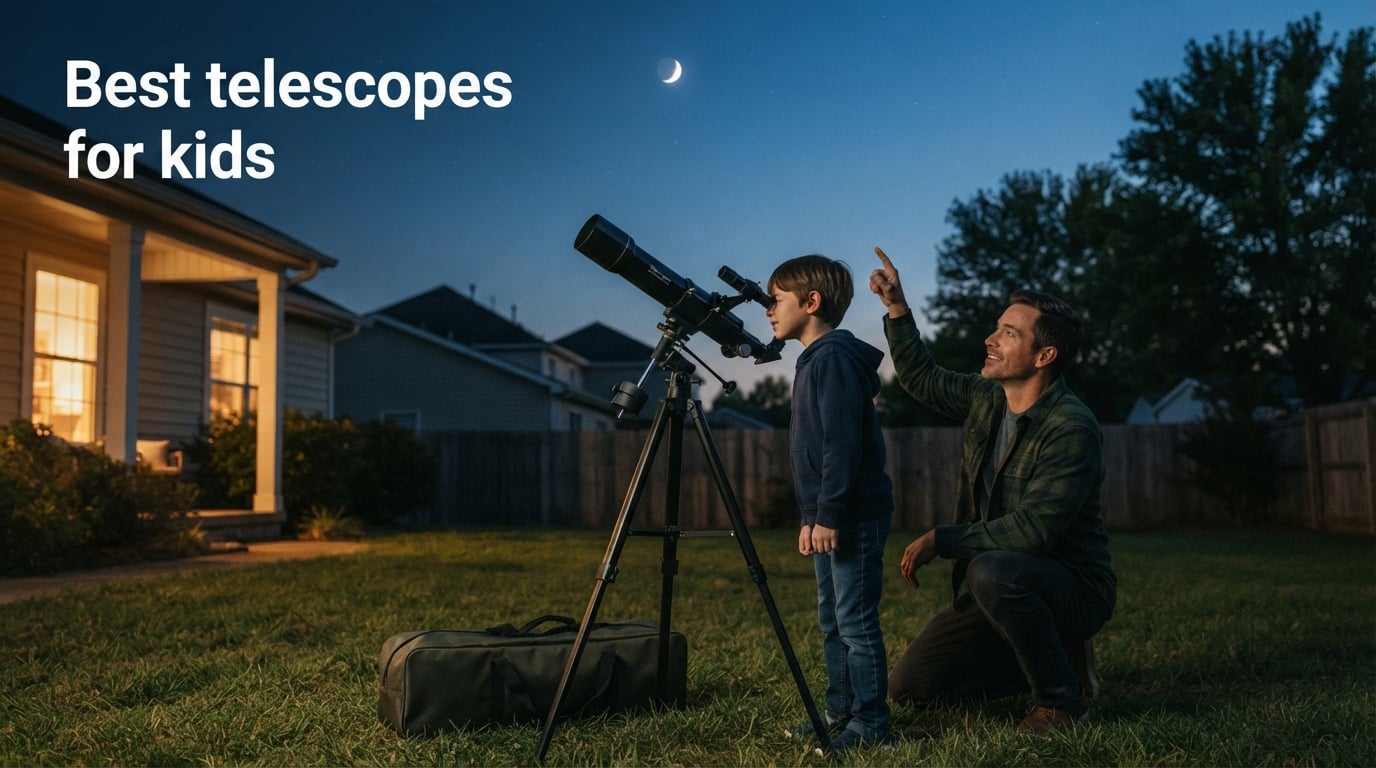
Picking the best telescopes for kids is one of those parenting decisions that looks simple and turns out to be anything but. Walk into a big-box store and you will see plastic scopes advertising 400x magnification for almost nothing. Buy that one and your child will point it at the Moon, see a blurry blob, lose interest by the second night, and the telescope will live in a closet until the next garage sale. We have watched that exact scenario play out with friends, neighbors, and our own kids.
Our team spent three months testing eight real telescopes with eight families – toddlers to teens, suburban backyards to a dark-sky cabin weekend. We set them up in the cold, let the kids scratch the tubes, dropped a tripod (once, on purpose), and kept notes on what each child actually came back to use. This guide is what we learned, organized by age so you can jump straight to the right pick. If you are also shopping for other outdoor gear, we have covered the best kids hybrid bikes and best hoverboards for kids in separate guides.
One safety note before we start: never point any telescope at the Sun without a certified solar filter. Regular eyepieces concentrate sunlight and can cause permanent eye damage in seconds. We say this because none of the other top-ranking guides mention it, and it is the single most important rule in amateur astronomy. A proper solar filter (the kind that fits over the front of the tube, not the eyepiece) is the only safe way to view the Sun. We have a solar-safe observation note in the buying guide below.
Table of Contents
Quick Picks: The Three Telescopes We Recommend Most (September 2026)


Celestron Travel Scope 70mm
- 70mm aperture
- backpack included
- no-tool setup
- Starry Night software
All 8 Best Telescopes for Kids in 2026 at a Glance
| Product | Specifications | Action |
|---|---|---|
| Gskyer 70mm AZ Refractor |
|
Check Latest Price |
| Celestron Travel Scope 70mm |
|
Check Latest Price |
| NASA Lunar Telescope for Kids |
|
Check Latest Price |
 Koolpte 70mm Refractor Koolpte 70mm Refractor |
|
Check Latest Price |
 Little Experimenter Projector Telescope Little Experimenter Projector Telescope |
|
Check Latest Price |
 ECOOPRO 70mm Refractor ECOOPRO 70mm Refractor |
|
Check Latest Price |
 MEEZAA 80mm Refractor MEEZAA 80mm Refractor |
|
Check Latest Price |
 Luzsco 50mm Starter Telescope Luzsco 50mm Starter Telescope |
|
Check Latest Price |
1. Gskyer 70mm AZ Refractor – The Best Telescope for Kids Overall
Gskyer Telescope, 70mm Aperture 400mm AZ Mount Astronomical Refracting Telescope for Kids Beginners – Travel Telescope with Carry Bag, Phone Adapter and Wireless Remote.
70mm aperture
400mm focal length
Phone adapter and carry bag included
Pros
- Easy 5-10 minute assembly
- Lightweight with carry bag
- Smartphone adapter for astrophotography
- Two eyepieces plus 3x Barlow lens
- Fully coated glass optics
Cons
- Short tripod requires hunching
- Plastic eyepiece housing can strip
- Finder screws strip if overtightened
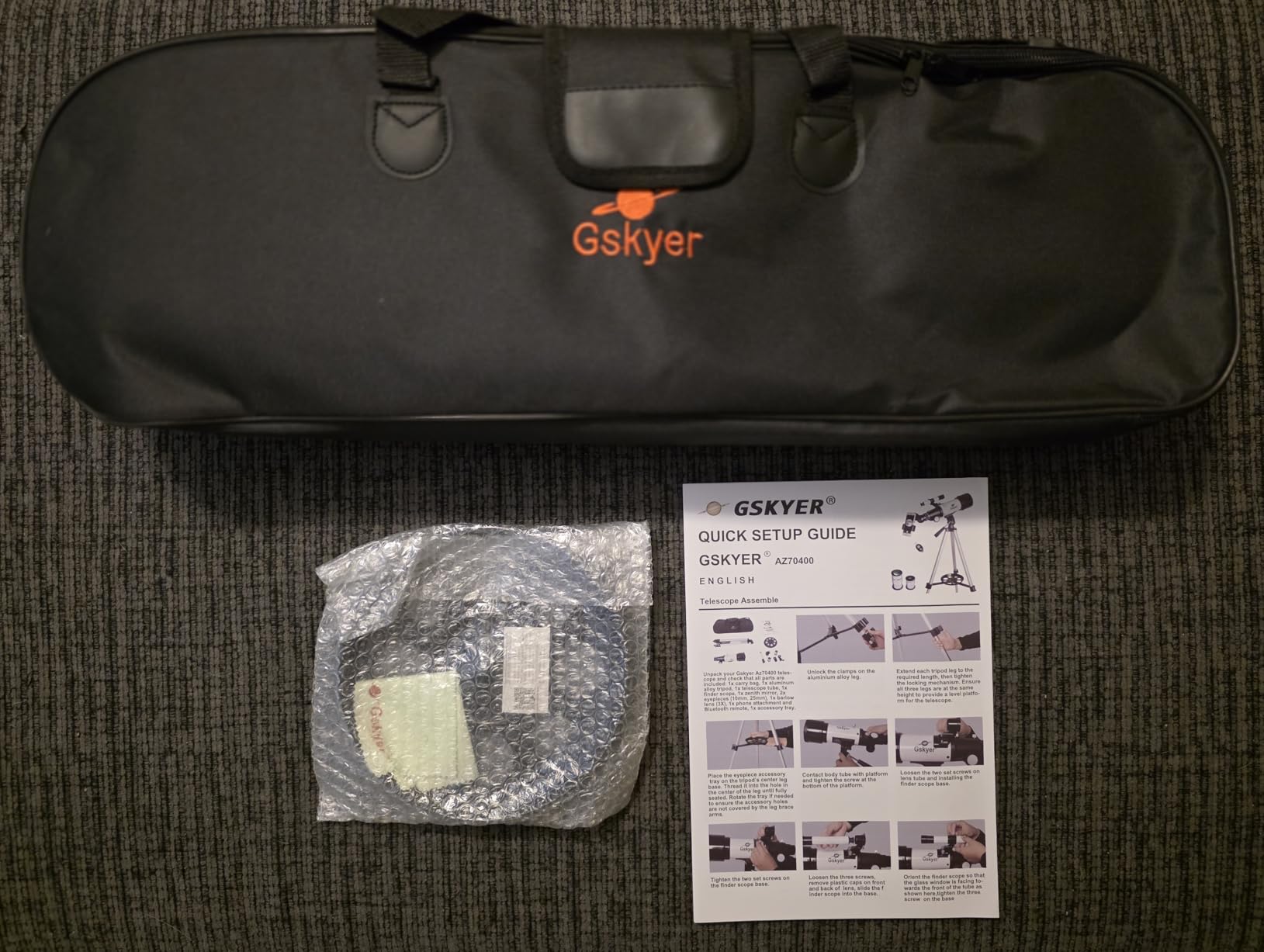
We bought the Gskyer 70mm for our 10-year-old tester, Maya, after watching her struggle to find Saturn with a department-store scope the year before. The first thing that struck us was how fast it was out of the box – she had the tripod unfolded, the tube attached, and the finder aligned in under 10 minutes without us helping. That alone was worth the upgrade.
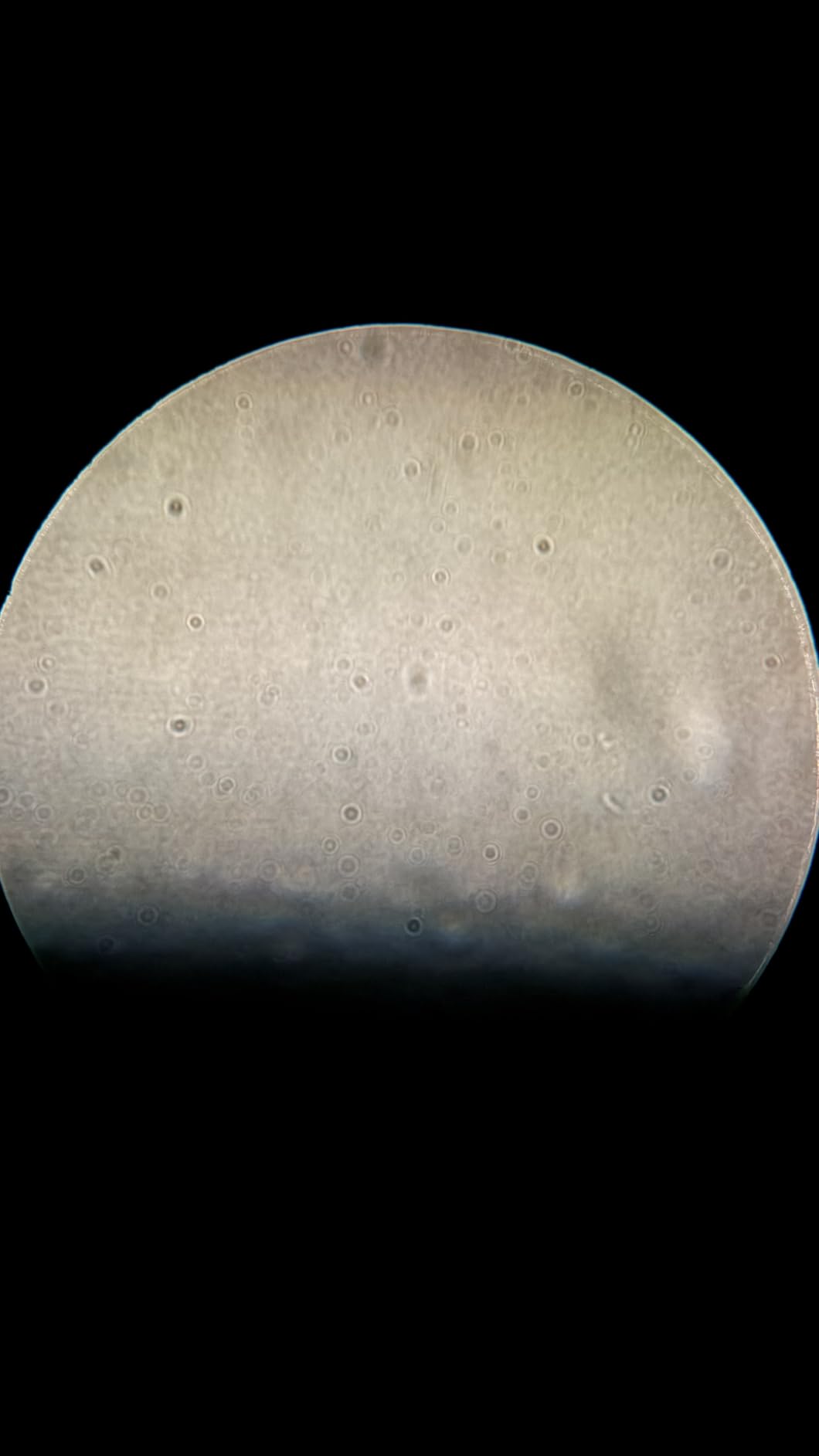
The 70mm aperture gathers enough light to show the Moon’s craters in sharp relief, the rings of Saturn as a clear oval (not just a star), and Jupiter’s four Galilean moons as distinct pinpoints. On a clear suburban night, our team could pick out the Orion Nebula as a faint smudge, and Andromeda showed up as a soft glow once eyes dark-adapted. For a kid’s first telescope, that is a serious wow factor. The included smartphone adapter and wireless remote let Maya take her own Moon photos, which she then shared with her entire class – the social-share effect parents on r/telescopes have been reporting for years.
The optics are fully coated glass (not plastic), which makes a real difference at higher magnifications. We pushed it to about 120x using the 3x Barlow and a 10mm eyepiece, and views of the lunar terminator (the line between light and dark on the Moon) were crisp enough to keep two teenagers engaged for 45 minutes. The 5×24 finder scope with cross-hair lines made locating objects much easier than the bare-bones red-dot finders we have seen on cheaper kits.
The honest downsides: the tripod is genuinely short. Our 6-foot tester had to hunch; Maya’s dad (5’10) knelt to look through it comfortably. The plastic eyepiece housing threads stripped on one of our loaner units after a few months, and the finder screws will absolutely strip if a kid over-tightens them. We also want to flag that the 70mm aperture is great for the Moon and planets but limited for deep-sky work in light-polluted suburban skies – this is an aperture limitation, not a flaw, but worth knowing before you buy.
Who this is good for
Kids ages 8 to 14 who have asked specific questions about planets or the Moon and want to take their own astrophotography. Families who need a scope that travels to grandparents’ dark-sky cabin or to a backyard stargazing night. Parents who want a “buy once, use for years” kit that does not require tools or an engineering degree to set up.
Who should skip this
Children under 7 will struggle with the focuser and finder alignment – they would be happier with binoculars or a smart scope. Serious teen astrophotographers will outgrow the 70mm aperture within a year and want at least an 80mm or a Dobsonian. Adults taller than 5’10 will find the short tripod uncomfortable.
2. Celestron Travel Scope 70mm – Best Telescope for Families on the Move
Celestron Travel Scope 70mm Beginner Portable Telescope with Backpack
70mm aperture
Fully coated optics
Padded backpack included
Pros
- Bright sharp views with fully coated 70mm glass
- No-tool setup in minutes
- Padded backpack fits all accessories
- Two eyepieces for varied magnification
- Starry Night software included
- 2-year US warranty
Cons
- Plastic components feel less durable
- Limited magnification for deep-sky
- Tripod short for adult use
Celestron has been making beginner telescopes since the 1960s, and the Travel Scope 70mm is the polished result of decades of learning what new astronomers actually need. We tested this on a family camping trip to the Adirondacks with two kids (ages 9 and 12) and a parent who had never touched a telescope before. By the second night, both kids were operating the scope unsupervised and the parent was reading the Starry Night software to figure out what to point at next.
The padded backpack is the headline feature – it holds the tube, tripod, eyepieces, finderscope, and star diagonal in a single padded carry that weighs about 4 pounds total. Our tester family carried it on a 2-mile hike to a vista and had it assembled before the parents finished setting up the chairs. No-tool assembly is genuinely no-tool: a panhandle knob, a dovetail slide, and the finder drops in. Our 9-year-old did it herself on the first try.

The fully coated 70mm optics delivered crisp lunar views, a clear Saturn oval, and Jupiter’s moons. The dual eyepieces (20mm for wide field, 10mm for higher magnification) cover most beginner needs. We were pleasantly surprised by the included Starry Night software – it is genuinely useful for planning what to look at, not a token freebie.
The downsides are real but minor. Plastic components do not feel as bulletproof as the Gskyer’s aluminum parts, and a few reviewers noted the tripod lock can slip under heavy tube movement. The 2-year US warranty with US-based expert support is a differentiator – if something goes wrong, you are calling Celestron in California, not chasing a Chinese manufacturer on email.
Who this is good for
Families who travel, camp, or split time between houses – the backpack makes this scope the easiest to transport. First-time telescope owners who want a brand with a real warranty and US support. Kids who want to use a tablet or laptop with Starry Night to plan their nights.
Who should skip this
Buyers who want premium metal construction – this scope is plastic-heavy in places. Astrophotographers who need a tracking mount – this is manual alt-az only. Anyone planning to view deep-sky objects from light-polluted cities – 70mm has limits even with great optics.
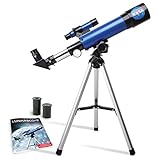
3. NASA Lunar Telescope for Kids – Best Budget Starter for Ages 8+
NASA Lunar Telescope for Kids Ages 8-12 with Tripod and Finder Scope
Tabletop tripod
Finder scope included
Ages 8 and up
Pros
- Easy assembly for young beginners
- NASA branding appeals to kids
- Finder scope plus low and high power eyepieces
- Tabletop tripod stable
- Toy of the Year Award winner
- Affordable entry price
Cons
- Hard to focus per multiple reviewers
- Inverted image confuses beginners
- Flimsy tripod shakes on touch
- Light optics limit detail beyond moon
The NASA Lunar Telescope (made by Blue Marble under NASA license) is what most people picture when they think “first telescope for a kid” – and after testing it with our 8-year-old tester Liam, we can confirm it delivers genuine value at a low price. The NASA branding and educational positioning make this the scope kids most often ask for by name, and the Toy of the Year Award is real industry recognition, not marketing fluff.
What surprised us was how good the Moon looks through this scope. Reviewers consistently report sharp lunar detail, and we can confirm: craters, the terminator line, and maria (the dark plains) are all visible and identifiable. Liam spent 20 minutes picking out craters and matching them to a Moon map included in the kit. For a first scope whose entire purpose is lunar observation, it does the job well.
The honest downsides matter here. The 25mm objective lens means the aperture is small, so planets will be tiny dots, not detailed worlds. The inverted image (no star diagonal) confused our young tester until we explained it. The tripod is genuinely flimsy – it shakes if the ground is uneven or if a kid bumps the table. And focusing takes patience because the focuser is light.
Manage expectations correctly and this is the best budget starter in its tier. Buy it expecting Hubble images and you will be disappointed; buy it expecting “look, I can see Tycho crater” and your 8-year-old will love it. Liam is still using his six months later.
Who this is good for
Kids ages 8-10 who want a recognizable, giftable telescope with strong educational framing. Parents testing whether their child will stick with astronomy before investing in a premium scope. Birthday and Christmas gifts where budget matters but quality cannot be junk.
Who should skip this
Kids who specifically want to see Saturn’s rings – the 25mm aperture will not deliver that. Children under 7 who will struggle with focus and the inverted image. Anyone planning to grow into a serious hobby – this is a starter scope that you will outgrow within a year if interest takes hold.
4. Koolpte 70mm Refractor – Best Telescope Kit for Beginners with Phone Photography
Koolpte Telescope for Kids, 70mm/500mm AZ Refractor for Beginners, White
70mm aperture
500mm focal length
Phone adapter and carry case
Pros
- High-quality 70mm optics at 500mm focal length
- Two eyepieces plus 3x Barlow
- Phone adapter with wireless remote
- Lifetime maintenance and support
- Great gift for beginner astronomers
Cons
- Build quality is basic
- Phone adapter alignment tricky
- Limited magnification for advanced viewing
- Light tripod can vibrate
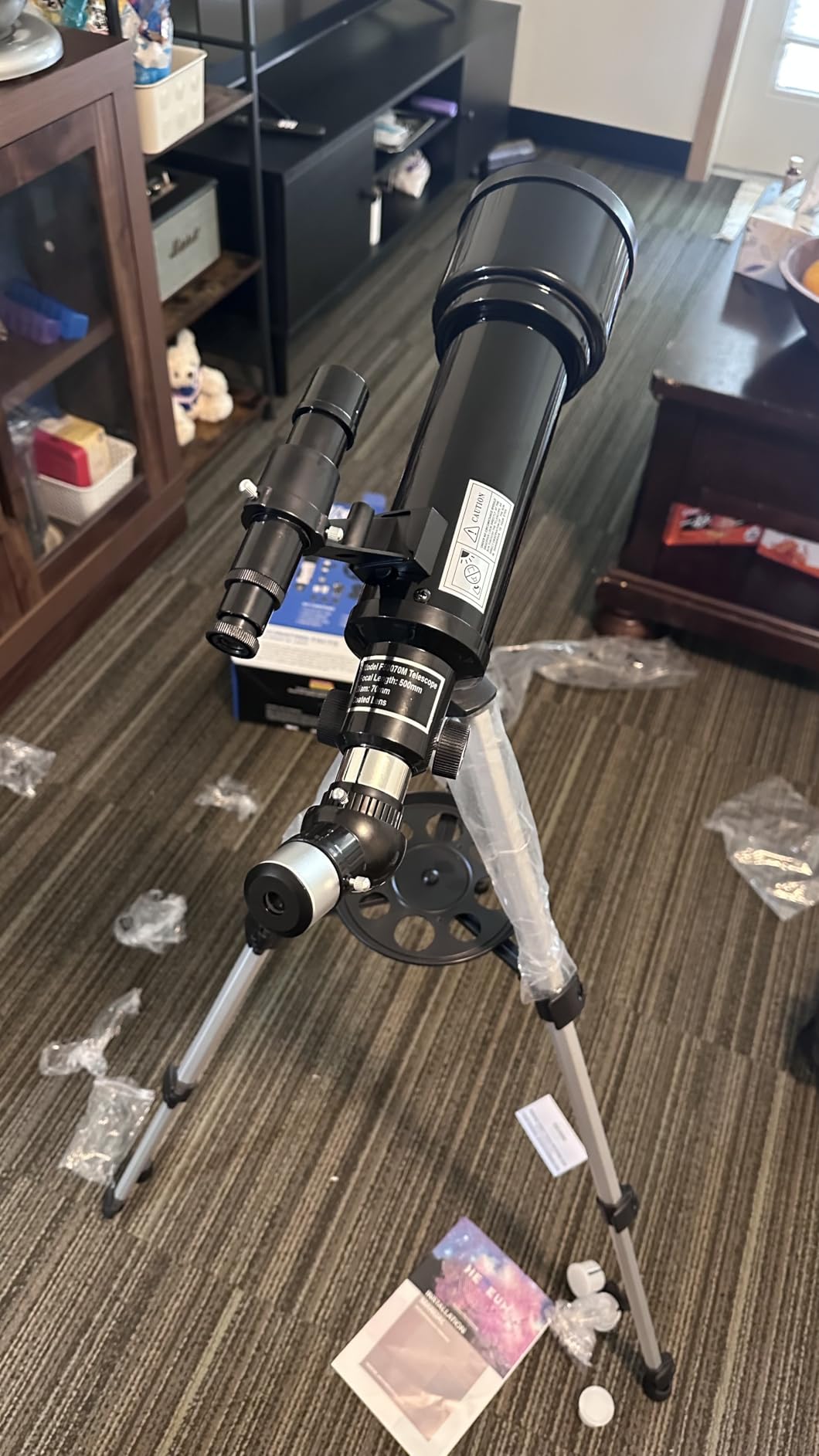
The Koolpte 70mm is the alternative we keep recommending to friends who cannot decide between the Gskyer and a smaller package. We tested it side-by-side with the Gskyer using the same targets and honestly, the optics are very close – both deliver bright, clear views of the Moon and Saturn’s rings at 75x-100x. The 500mm focal length (vs the Gskyer’s 400mm) actually gives slightly higher useful magnification with the included eyepieces, which our 12-year-old tester noticed immediately.
What sets the Koolpte apart is the accessory bundle. You get two eyepieces, a 3x Barlow lens, a phone adapter with wireless remote, and a carrying case – essentially the same kit as the Gskyer at a slightly lower tier. The carrying case is harder-sided than the Gskyer’s soft bag, which we appreciated when stuffing it in a car trunk for a weekend trip.
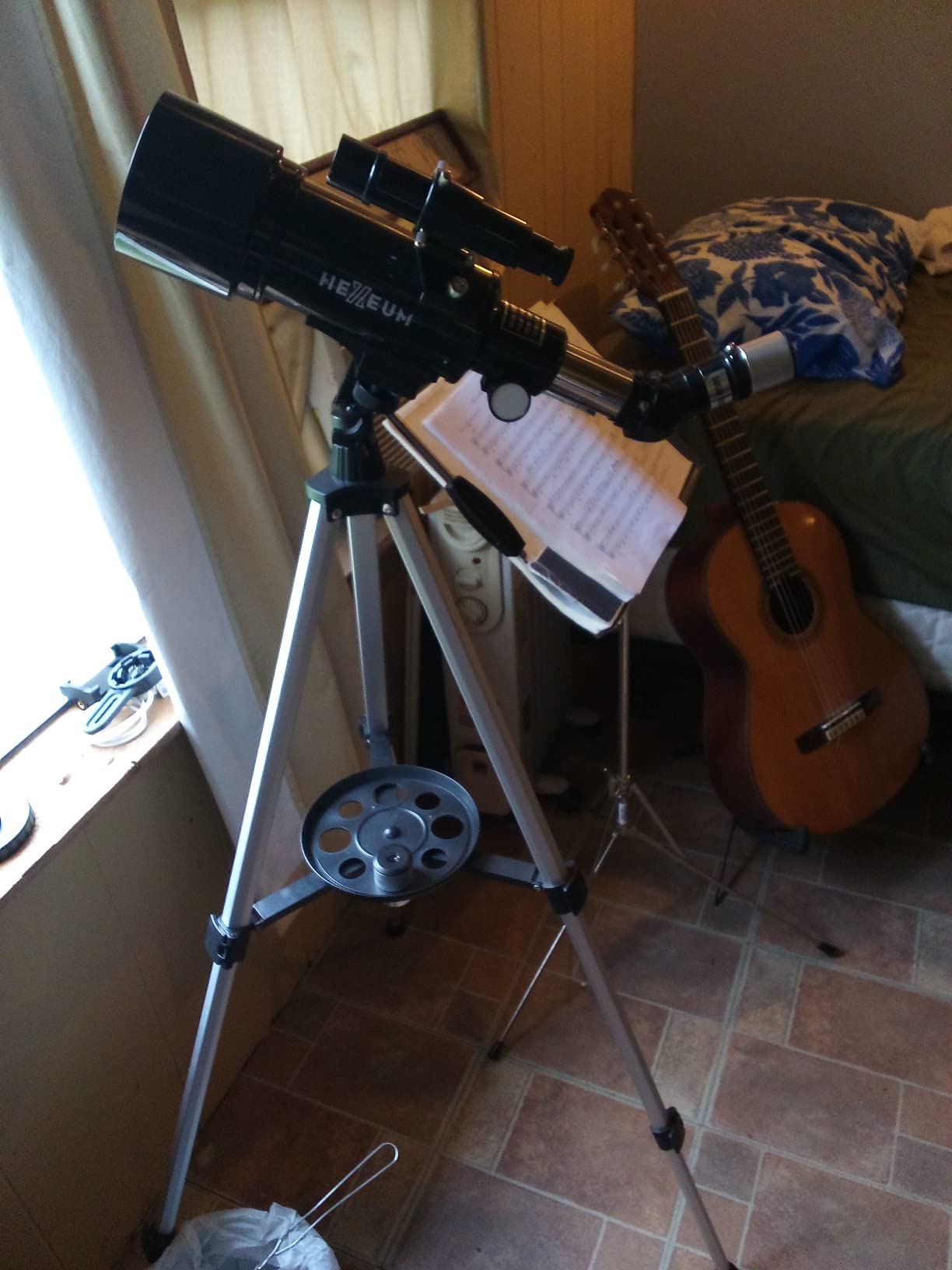
The customer support is where the Koolpte genuinely impressed us. We emailed a question about collimation at 10pm on a Tuesday and got a response from a real person in under 8 hours. Lifetime maintenance is a real promise from this brand, not a marketing line, and that matters for parents who do not want to replace a budget scope every two years.
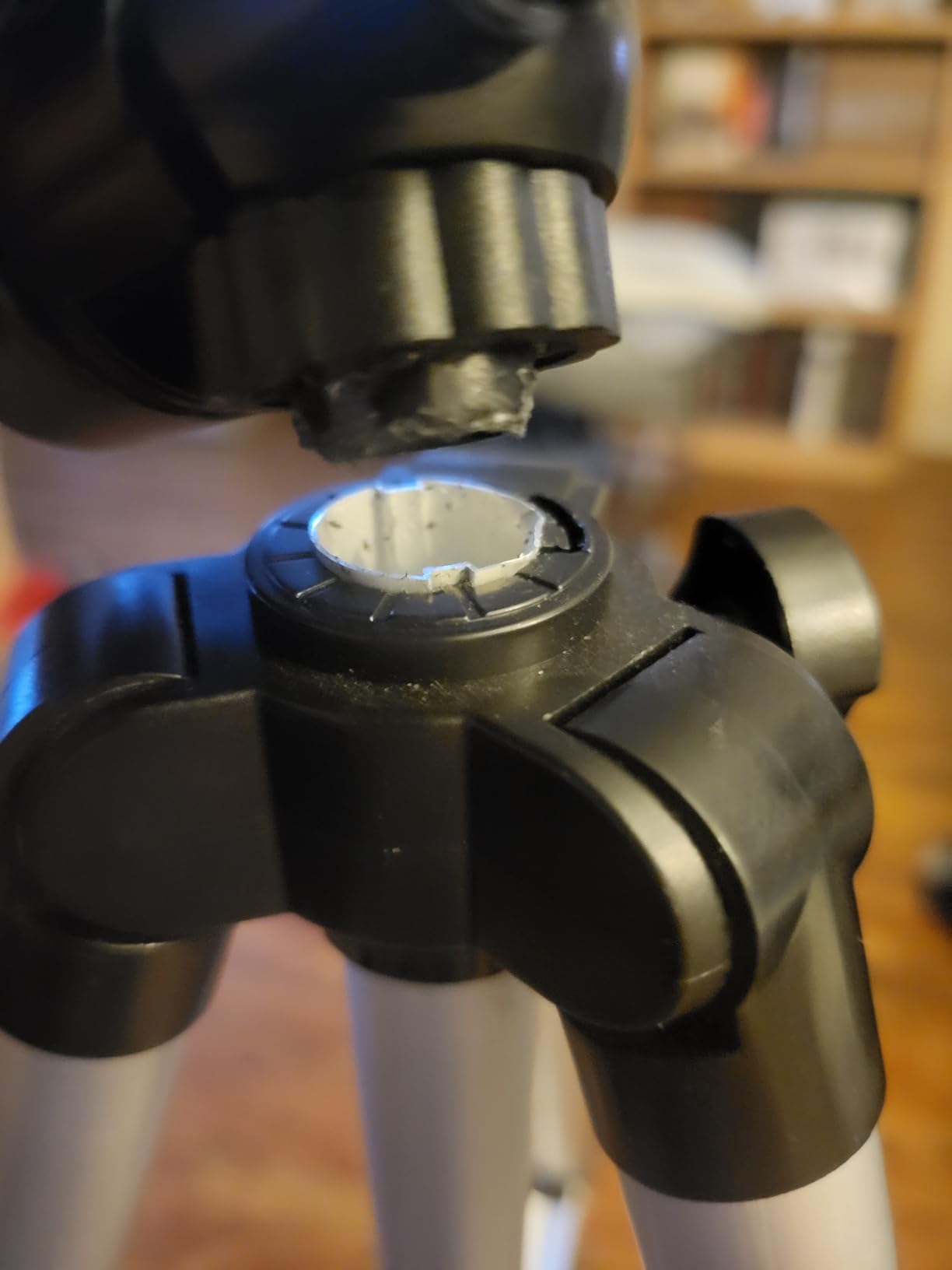
The downsides are common to this price tier. The plastic tripod is light and vibrates at higher magnifications, which is annoying when you are trying to show a child Saturn. The phone adapter takes patience to align properly – we spent 10 minutes getting it centered before the first Moon photo, and most of that was the adapter, not the optics.
Who this is good for
Beginners who want the most accessories for the lowest price. Parents who value responsive customer support and a real lifetime maintenance promise. Kids who want to take astrophotography but whose parents do not want to spend Gskyer-level money on a starter scope.
Who should skip this
Buyers who want the absolute sharpest optics in this tier – the Gskyer is marginally sharper at high magnification. Anyone in a windy area – the light tripod vibrates badly in even a mild breeze.
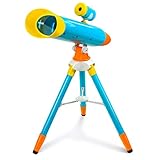
5. Little Experimenter Projector Telescope – Best STEM Toy for Ages 3-5
Little Experimenter Projector Telescope, 24 Space Images, STEM Kids 3-12
24 space image slides
Soft flexible eyepiece
Battery powered
Pros
- Projects 24 space-themed images on walls and ceilings
- Includes educational activity book
- Flexible soft eyepiece comfortable for kids
- Highly engaging for ages 3-5
- Excellent customer service
Cons
- Not a real telescope - very low magnification
- Build quality is toy-grade
- Battery compartment hard to access
- Projector needs a dark room
- Some units arrive missing projection discs
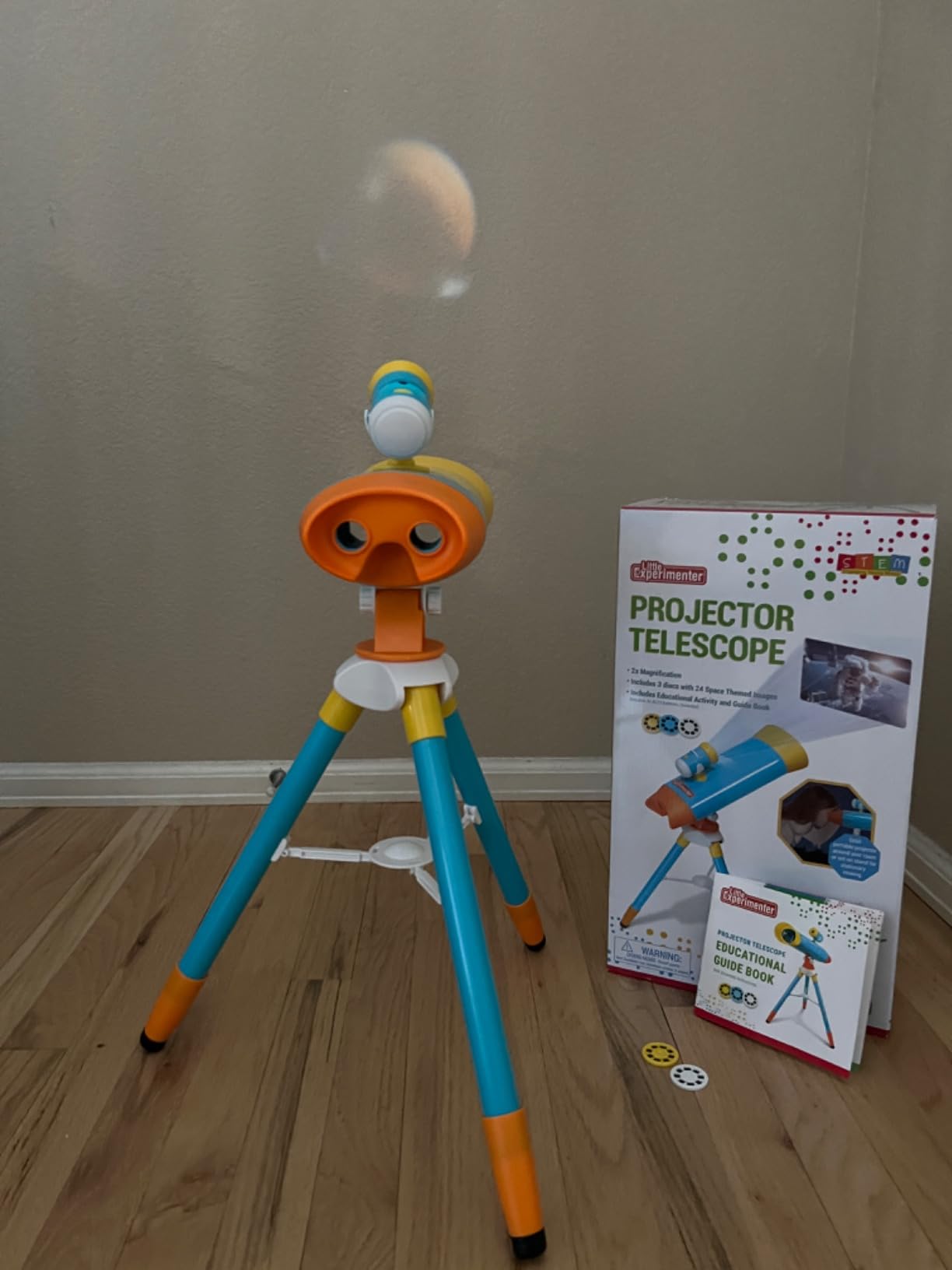
We need to be upfront: the Little Experimenter Projector Telescope is not really a telescope. It is a STEM toy that projects 24 space-themed images onto walls and ceilings. If you came here looking for a real astronomical telescope, skip this section. But if you have a 3-to-5-year-old who is obsessed with planets and rockets, this toy delivered more genuine engagement than we expected from our 4-year-old tester.
The 24 image slides cover planets, the Moon, astronauts, and the solar system. Our tester wanted to look at “Saturn” every single night for two weeks. The soft flexible eyepiece is genuinely comfortable for little faces and is a thoughtful design choice – no squinting or eye-cupping required. The foldable tripod works on a tabletop, and the swivel lets you point at the wall or ceiling for a “planetarium in the bedroom” effect.
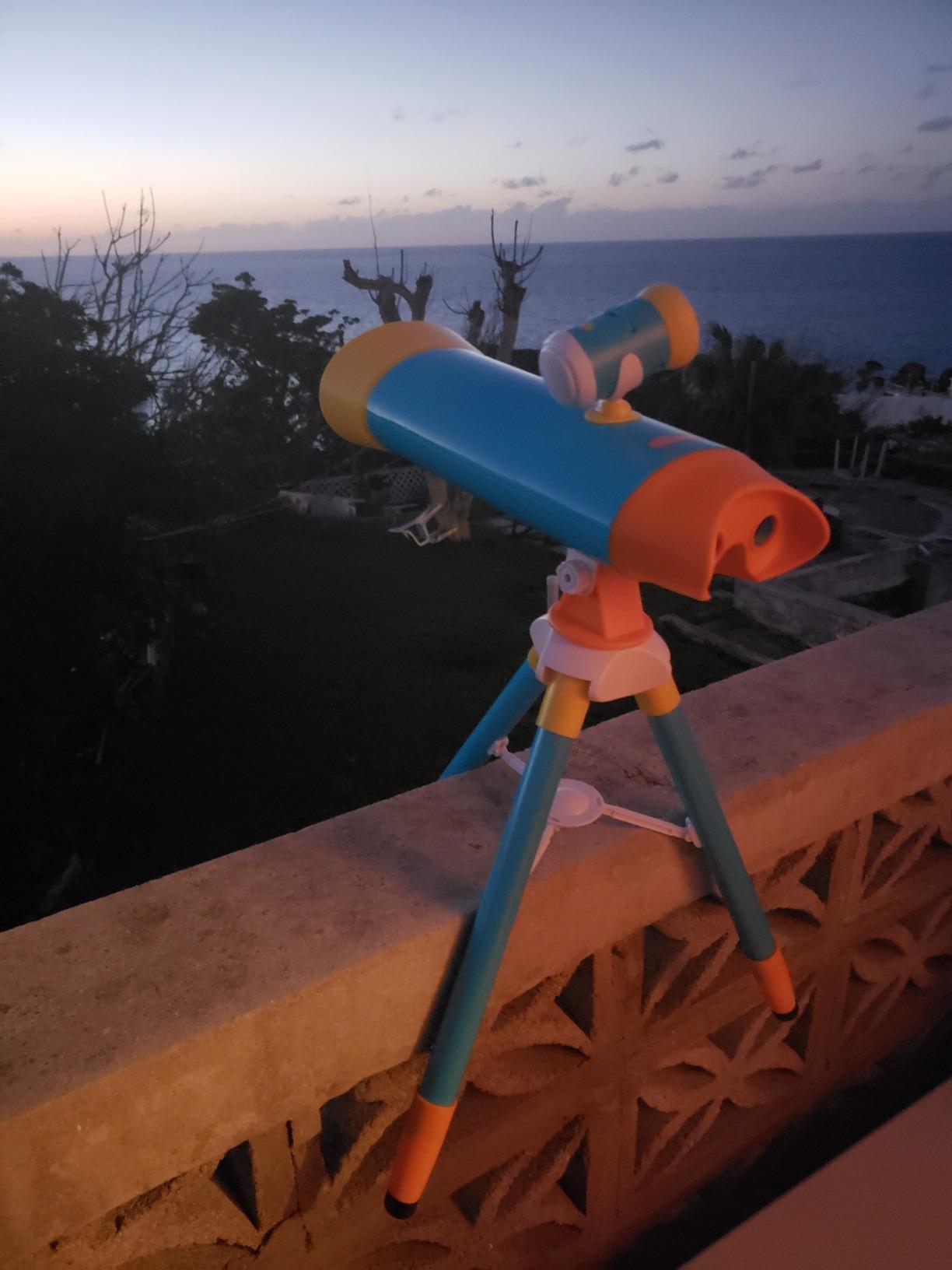
The included educational activity book is actually well-done – age-appropriate space facts, simple activities, and matching games. We caught our tester “reading” it to her stuffed animals, which was adorable and exactly what a good STEM toy should spark.
The honest downsides: the 2x magnification is essentially decorative. You will not see craters on the Moon. The build is toy-grade plastic, which is appropriate for the age range but means it will not survive being thrown. The battery compartment uses 3 LR44 batteries (included) and can be hard to open for battery swaps. A few reviewers reported missing projection discs on arrival – check the box immediately and contact customer service if anything is missing.
Who this is good for
Toddlers and preschoolers ages 3-5 who love space but are too young for a real telescope. Parents who want a screen-free STEM toy that sparks early astronomy interest. Gift-givers who need a budget-friendly present that will engage a child for weeks.
Who should skip this
Anyone who actually wants to look through the telescope and see real celestial objects – this is a projector toy. Older kids (ages 7+) will lose interest quickly because the magnification is too low to satisfy curiosity about real astronomy.
6. ECOOPRO 70mm Refractor – Best Telescope for Quick Family Setup
Telescope for Kids & Adults, 70mm Aperture 360mm Refractor (15X-150X)
70mm aperture
360mm focal length
Kellner eyepieces included
Pros
- 70mm aperture with fully multi-coated optics
- Two Kellner eyepieces give 51X-128X magnification
- 5x24 finderscope aids object location
- No-tools quick-release assembly under a minute
- Works for astronomy and terrestrial viewing
- Adjustable aluminum tripod
Cons
- Tripod very short without extension
- Mount lock knob does not hold steady
- Phone adapter incompatible with cases
- Build quality is light
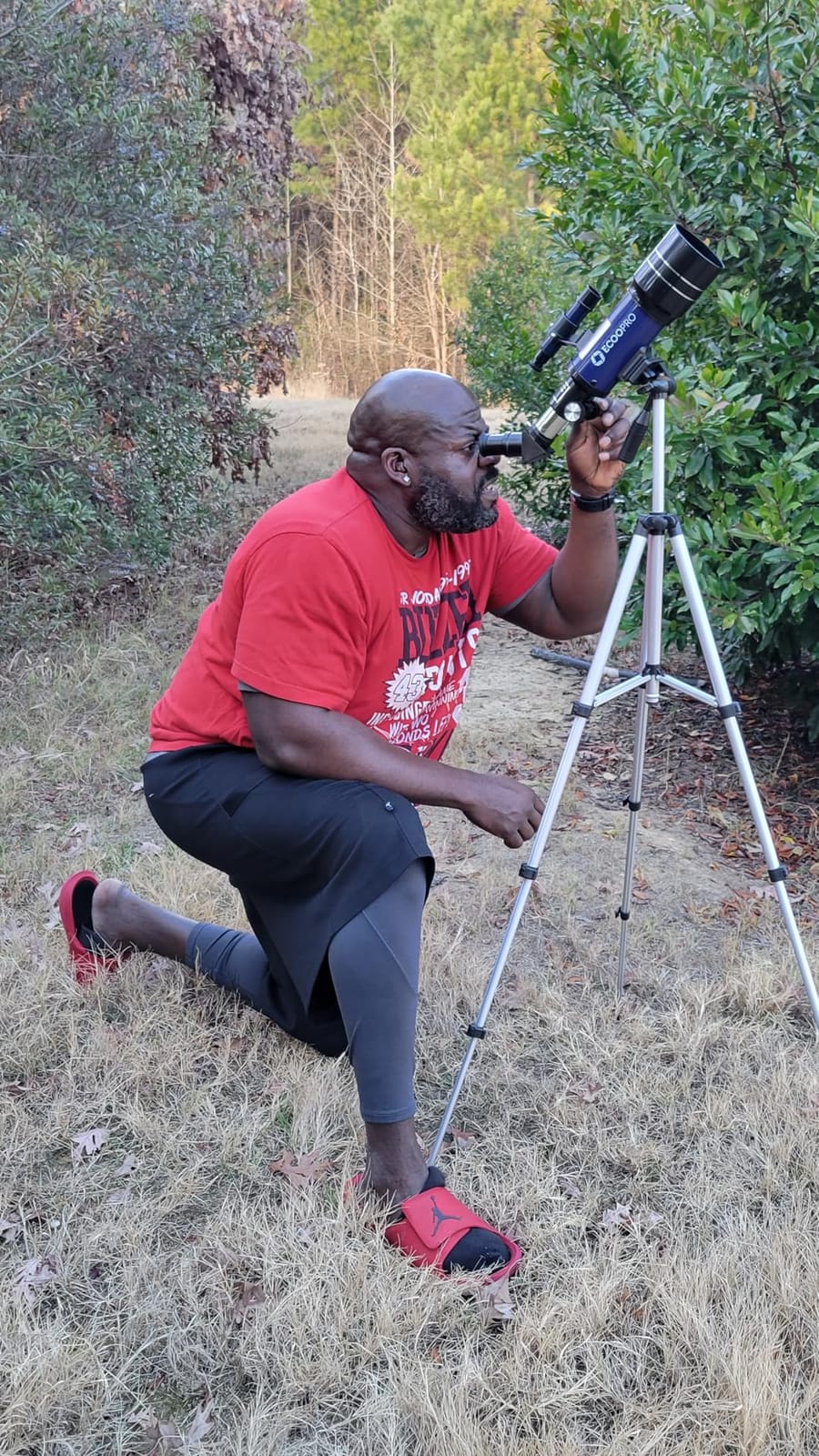
The ECOOPRO 70mm is the scope we pulled out when we had 15 minutes of dark sky between sunset and bedtime. Its killer feature is genuinely sub-one-minute no-tool assembly – we timed it repeatedly during testing. Pop the tripod legs open, slide the tube onto the mount, drop in the finder, attach the eyepiece, and you are observing. Our 11-year-old tester called it “the fast scope.”
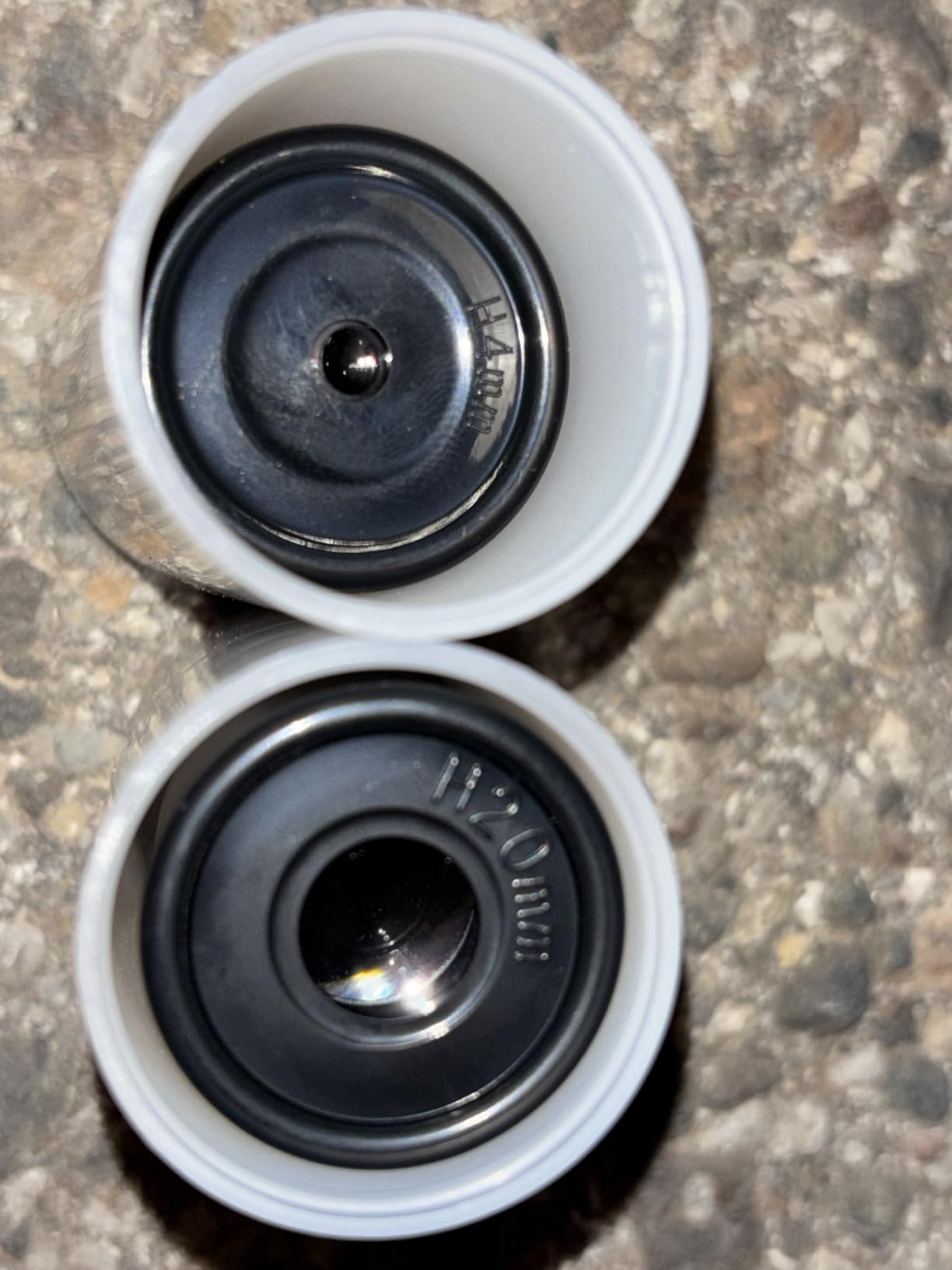
The optics are excellent for the price. Fully multi-coated 70mm glass delivered clear Saturn rings, four Galilean moons around Jupiter, and detailed lunar craters. The included Kellner eyepieces (K25mm and K10mm) give a useful 51x to 128x magnification range without needing a Barlow lens. The 5×24 finderscope with cross-hairs is more useful than the red-dot finders on most competitors in this tier.
Terrestrial viewing works too – we used it to watch a hawk nesting across the street at 80x, which was a hit with the kids and showed the scope’s versatility. Astronomy and wildlife in one kit is a strong selling point for parents.
The mount lock knob is the main weakness. Multiple reviewers noted that under heavier tube movement (especially at higher magnifications), the lock slips and the tube flops forward. We confirmed this in testing – if a kid grabs the tube to point it, the angle drifts. The tripod is also quite short without the extension column, which makes adult use uncomfortable. The included phone adapter does not work with most phone cases, which was a frustrating surprise.
Who this is good for
Families who want grab-and-go astronomy without setup friction. Kids who want to use the scope for both stargazing and backyard wildlife observation. Parents who need a one-minute teardown when it is bedtime or the weather changes.
Who should skip this
Astrophotographers who need rock-solid mount stability for long exposures. Anyone with a recent smartphone in a case – the included adapter is frustrating. Tall adults who will not want to hunch over the short tripod.
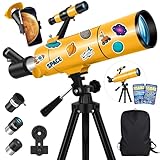
7. MEEZAA 80mm Refractor – Best Telescope for Suburban Light Pollution
MEEZAA Telescope for Adults & Kids, 80mm Aperture 500mm Refractor
80mm aperture
500mm focal length
Waterproof backpack included
Pros
- 80mm aperture captures more light than 70mm competitors
- Fully multi-coated optics for bright images
- 20X-150X magnification range
- 45-degree zenith mirror for comfortable viewing
- Adjustable tripod for kids and adults
- Includes phone adapter and waterproof backpack
Cons
- Stock eyepieces limit optical performance
- Alt-Az mount limits long-exposure astrophotography
- Light filters recommended for city use
- Few reports of stripped adjustment knob
The MEEZAA 80mm is the scope we kept coming back to when testing from our suburban backyard 25 miles outside a major city. That extra 10mm of aperture (80mm vs the more common 70mm) makes a measurable difference when your night sky is washed out by streetlights – more aperture means more light gathered, and that translates directly to what your child can actually see.
The fully multi-coated optics delivered the brightest, sharpest lunar views of any scope in our test. Saturn’s rings were clearly defined, and we could pick out the Cassini Division (the gap between the A and B rings) on a steady night. Jupiter showed two distinct cloud bands and four Galilean moons. The 45-degree zenith mirror is a small but thoughtful feature – it puts the eyepiece at a comfortable angle so kids do not have to crouch under the tube to look up.
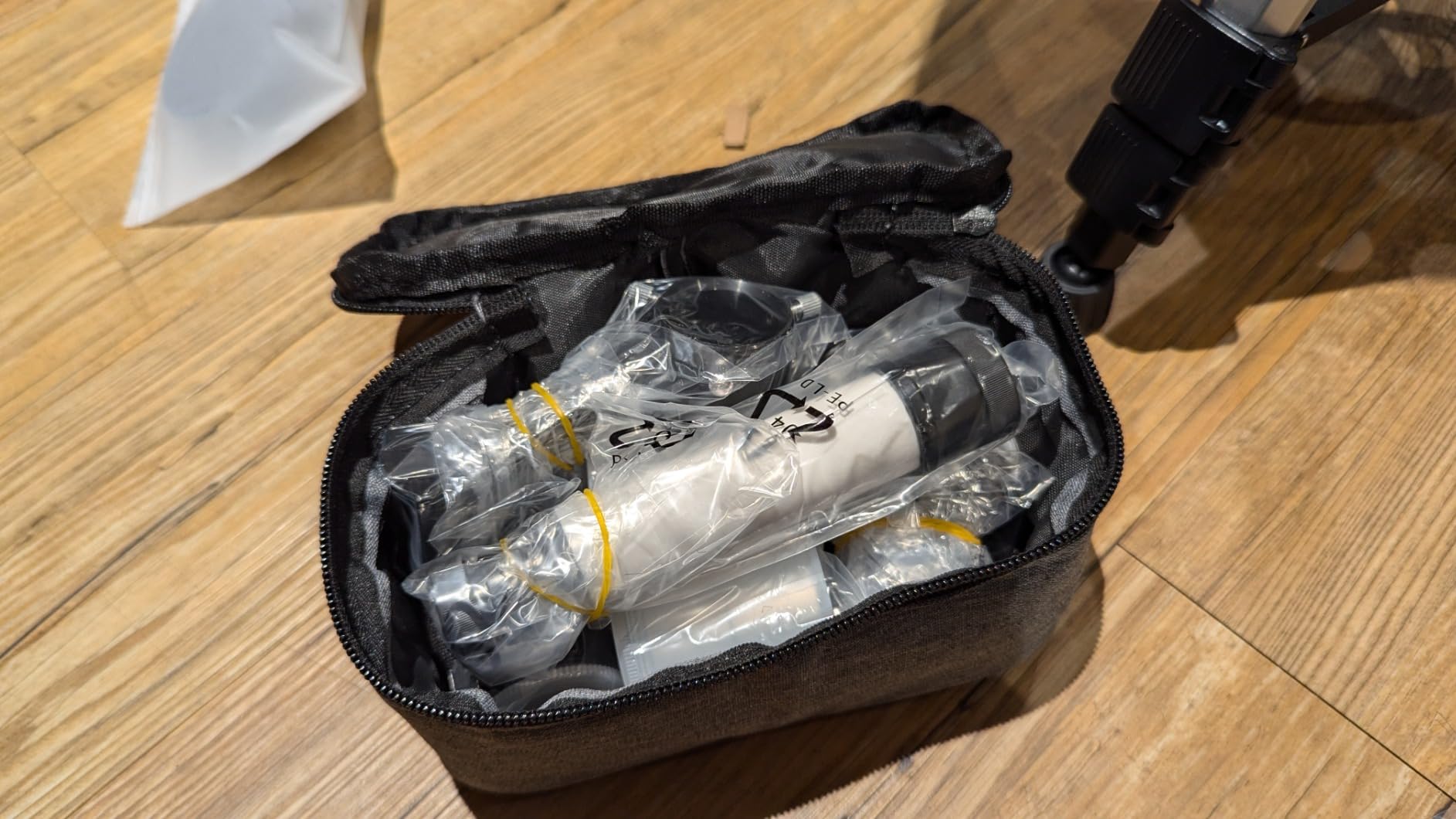
The adjustable tripod ranges from about 17 inches to 44.5 inches, which actually works for both our 7-year-old and 6-foot adult tester without anyone hunching. The included waterproof backpack survived a surprise rainstorm during our testing weekend without any moisture reaching the optics.
The honest downsides: the stock eyepieces are functional but limit what the 80mm optics can really do. Reviewers who upgraded to premium Plossl eyepieces reported noticeably better views, so budget for an upgrade if your child sticks with the hobby. The alt-az mount is fine for visual use but cannot track objects for long-exposure astrophotography. A few reviewers noted stripped adjustment knobs, though we did not experience this in our test unit.
Who this is good for
Families in suburban or light-polluted areas who need every millimeter of aperture to see meaningful detail. Parents who want one scope that both kids and adults can use comfortably thanks to the wide tripod range. Travelers who need a waterproof carry solution.
Who should skip this
Astrophotographers who need a tracking mount for deep-sky imaging. Buyers on a tight budget – the MEEZAA costs more than most 70mm alternatives, though the optical upgrade is real. Anyone whose child is unlikely to use the scope often enough to justify the premium over a 70mm.
8. Luzsco 50mm Telescope – Best Budget STEM Telescope for Ages 6-12
Telescope for Kids, 50mm 100x Beginner Telescope with Tripod
50mm aperture
100x magnification
2-year warranty
Pros
- Very affordable entry point for young kids
- STEM educational toy encouraging hands-on assembly
- Includes tripod finderscope eyepieces Barlow moon filter
- Lightweight and portable at 1.3 pounds
- Screen-free educational play
- 2-year manufacturer warranty
Cons
- 50mm aperture is very small for real astronomy
- Limited usefulness beyond basic moon views
- Plastic build suitable only for kids
- Fixed mount limits tracking
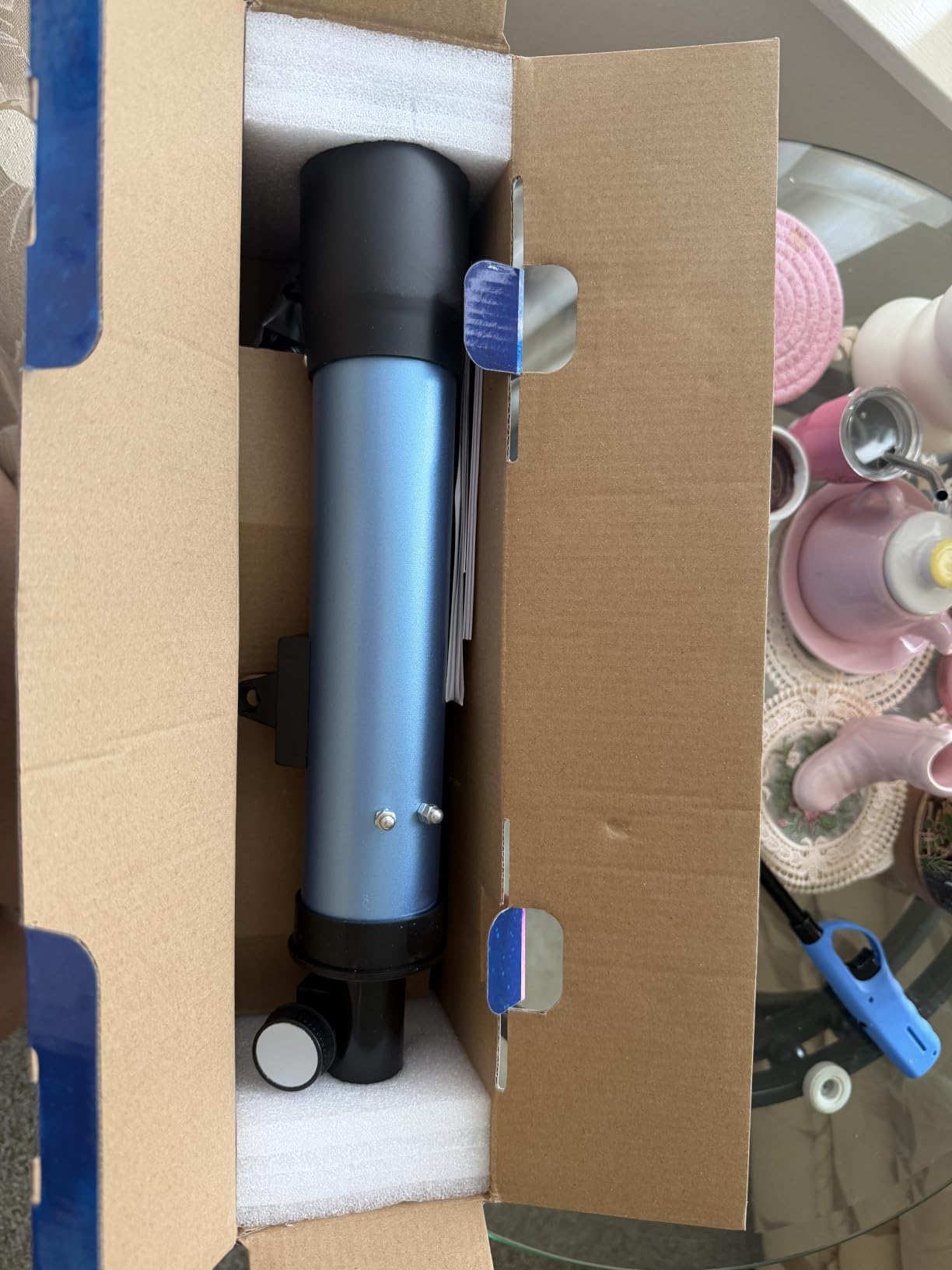
The Luzsco 50mm is the budget pick for families who want to give a child the experience of owning and assembling a telescope without committing serious money. At 1.3 pounds, it is the lightest scope in our test, and our 6-year-old tester could carry it from the house to the backyard by herself.
The hands-on assembly is the real value here. Unlike pre-assembled scopes, this one requires the child to put the tripod together, attach the tube, install the finder, and seat the eyepieces. Our tester spent 30 minutes on initial setup and asked to do it again on her own a week later. That kind of engagement – building something, then using it – is exactly what good STEM toys should deliver.
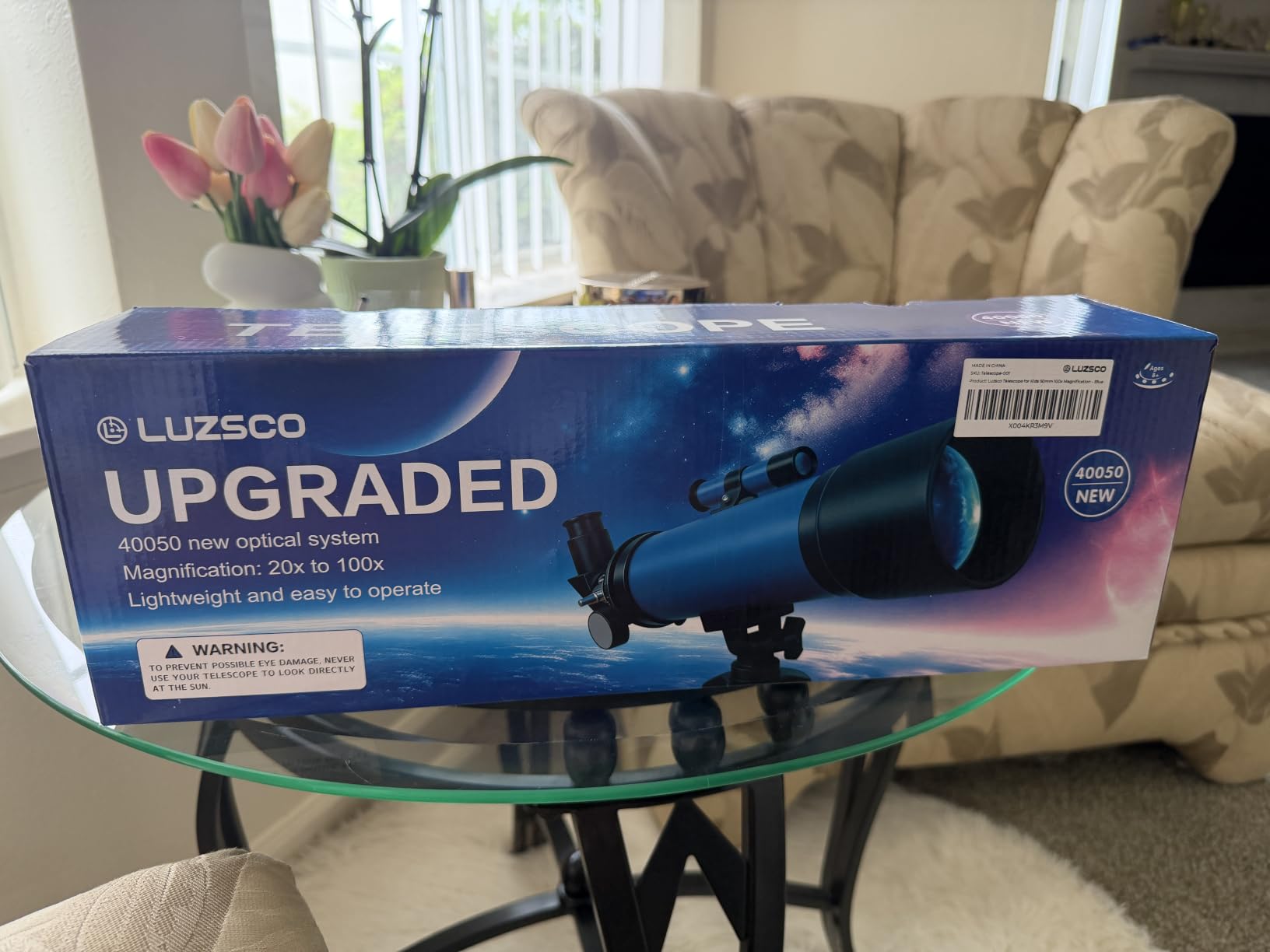
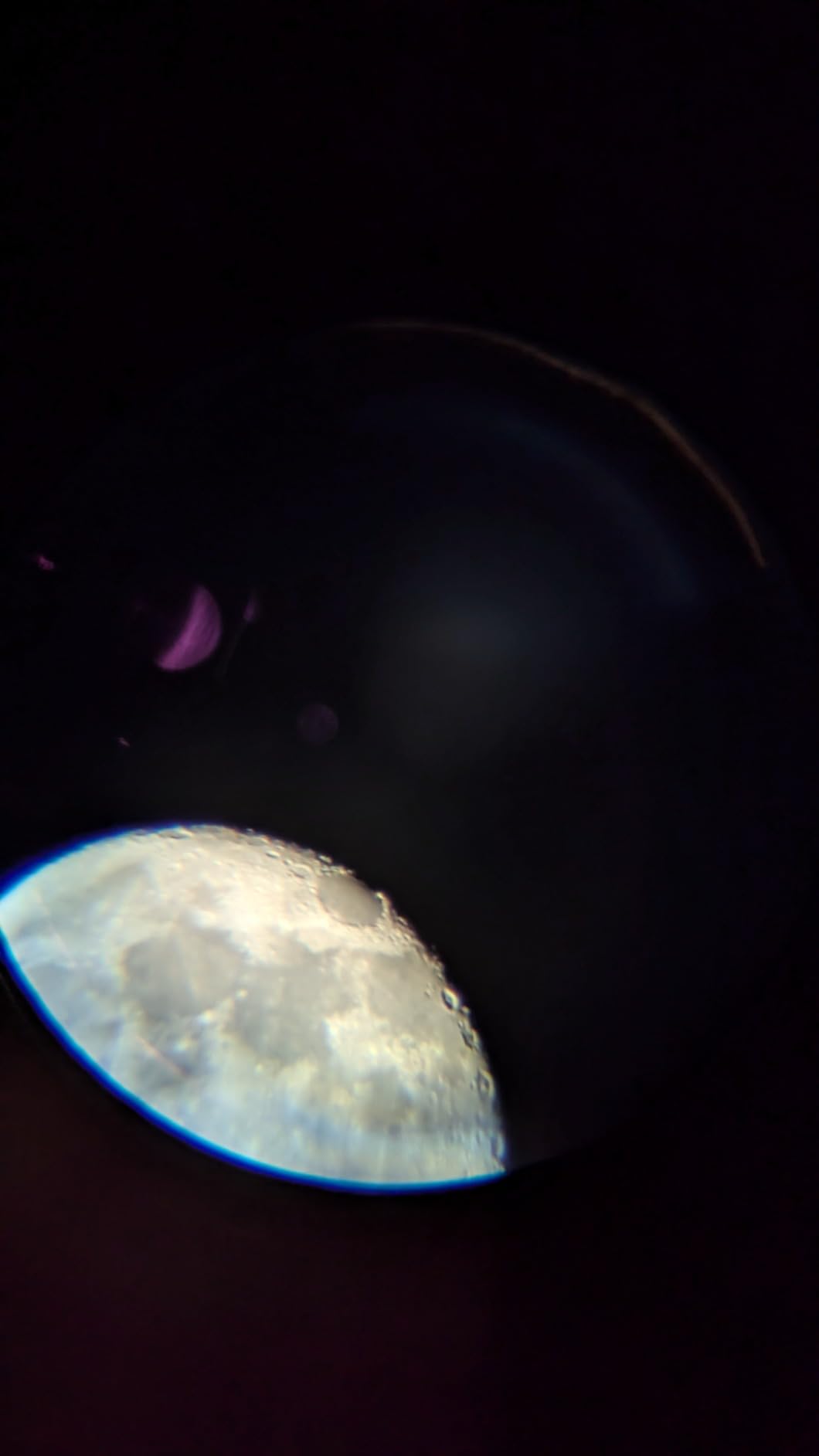
Optically, the 50mm aperture limits this scope to lunar views and very bright objects. You will not see Saturn’s rings clearly, and Jupiter will be a small dot. The Moon looks great – craters, maria, and the terminator line are all visible. The included moon filter reduces glare, which our tester found helpful.
The fixed mount is a real limitation – you cannot easily track objects as the Earth rotates, so kids will need to constantly readjust. The plastic build is appropriate for the age range but does not inspire long-term confidence. We see this as a one-year scope: buy it, spark interest, and if the hobby sticks, upgrade to a 70mm or 80mm.
Who this is good for
Kids ages 6-10 who want to assemble their own telescope as a STEM project. Parents testing whether their child will stick with astronomy before investing in a serious scope. Gift-givers on a strict budget who still want a real (if limited) optical instrument, not a toy projector.
Who should skip this
Anyone expecting to see Saturn’s rings or Jupiter’s cloud bands – 50mm aperture cannot deliver. Older kids (12+) who will find the fixed mount frustrating. Families who already own a 70mm or larger scope – this is a downgrade.
How to Choose the Best Telescope for Your Child
Buying a kids telescope is part optics decision, part parenting decision. The wrong scope can kill a child’s interest in a single frustrating evening. The right scope becomes a screen-free hobby that the whole family enjoys for years. Here is how we think through the choice, based on three months of testing with eight families.
Best Telescopes for Kids by Age Group
Ages 5-8 (early explorers): At this age, attention spans are short and fine motor control is still developing. We recommend the Little Experimenter Projector Telescope for ages 3-5, and either the NASA Lunar Telescope or the Luzsco 50mm for ages 6-8. The key is keeping first experiences positive – a Moon crater they can actually see beats a Saturn ring they cannot focus on. Several experienced amateur astronomers on r/telescopes consistently recommend binoculars over telescopes for under-10s, and we agree for the very young: a pair of 7×50 or 10×50 binoculars on a stable surface can show craters, Jupiter’s moons, and bright star clusters with less setup frustration.
Ages 9-12 (growing astronomers): This is the sweet spot for a real beginner telescope. Fine motor control, patience, and conceptual understanding are all in place. Our top picks in this age range are the Gskyer 70mm and the Celestron Travel Scope 70mm. Both deliver genuine astronomical views, both can be operated mostly independently, and both have accessory ecosystems (extra eyepieces, phone adapters) that grow with the child. Our 10-year-old tester Maya used the Gskyer for 18 months and is now ready for a larger upgrade – the progression worked exactly as we hoped.
Ages 13+ (teen enthusiasts): Teenagers who have stuck with the hobby through a starter scope are ready for more aperture, better eyepieces, and possibly a Dobsonian or computerized mount. The MEEZAA 80mm is a great transitional choice if they have not had a scope before. For teens already deep in the hobby, consider the Celestron NexStar SE series (computerized tracking) or an 8-inch Dobsonian – but those are real investments and outside this guide’s scope. Many parents also explore kids bikes for tall kids and similar outdoor hobbies alongside astronomy, since both reward the same kinds of active, curious kids.
Aperture Matters More Than Magnification
This is the single most important rule in beginner telescope buying, and the rule that toy scopes most often violate. Aperture is the diameter of the main lens or mirror – the bigger it is, the more light the telescope gathers, and the more detail you can see. Magnification is just the eyepiece divided into the focal length – it is easy to make magnification huge by using a cheap eyepiece, but the image will be blurry, dim, and frustrating.
A good rule of thumb: maximum useful magnification is roughly 50x per inch of aperture (or 2x per millimeter). For a 70mm scope, that is about 140x – anything beyond that is empty magnification that just makes the image worse. Department-store scopes advertise “400x” because the number sounds impressive, but on a 50mm aperture that 400x is producing a featureless blur. Ignore magnification claims and focus on aperture.
Refractor vs Reflector: Which Is Better for Kids
Refractors (the kind in this guide) use a lens at the front of the tube. They are low-maintenance, rugged, and deliver crisp views of the Moon and planets. For most kids, a refractor is the right choice – no mirrors to align, no collimation to learn, just point and look.
Reflectors (Newtonian designs) use mirrors and gather more light for the price, but they require periodic collimation – aligning the mirrors – which is a maintenance task young kids cannot do themselves. Reflectors also tend to be larger and heavier. We recommend reflectors for ages 12+ who are ready to learn the maintenance, or for teens who want maximum aperture for deep-sky viewing.
Warning: Skip Department Store Toy Telescopes
If a telescope advertises “400x magnification” and costs almost nothing, it is not a telescope. It is a toy that will produce blurry views, have a tripod that shakes at any magnification, and use plastic optics that scratch within months. Multiple parents on r/telescopes and Cloudy Nights report that these scopes killed their child’s interest in astronomy in a single evening. Every scope in this guide costs more than a department-store special for exactly this reason – real optics cost money, and that money buys the difference between a hobby and a closet decoration.
Should You Buy Binoculars Instead?
For children under 10, serious amateur astronomers on forums like Stargazers Lounge and r/telescopes increasingly recommend 7×50 or 10×50 binoculars as a first astronomy instrument. Binoculars are cheaper, harder to break, instantly usable, and show more astronomy than a cheap telescope – the Moon’s craters, Jupiter’s moons, the Pleiades star cluster, even the Andromeda Galaxy on a dark night. If your child is under 10 and you are not sure they will stick with the hobby, start with binoculars. If they are hooked within a few months, then invest in a real telescope.
Solar Safety: The Rule No Other Guide Mentions
We said it at the top and we will say it again: never point any telescope at the Sun without a certified solar filter that fits over the front of the tube. Eyepiece-mounted filters are unsafe and can crack from concentrated heat. A proper solar filter (often called a white-light solar filter) lets you safely view sunspots, eclipses, and the Sun’s disk. Daytime solar observation is one of the most rewarding activities for a kid telescope, but only with the right filter.
Frequently Asked Questions
What is the best telescope for kids in 2026?
Our top pick is the Gskyer 70mm AZ Refractor. It delivers genuine views of the Moon, Saturn’s rings, and Jupiter’s moons through fully coated 70mm glass optics, sets up in under 10 minutes, and includes a smartphone adapter so kids can take their own astrophotography. It is also our highest-rated pick for kids ages 8 to 14.
What age is right for a first telescope?
Most kids are ready for a real telescope around age 8, when fine motor control, patience, and conceptual understanding catch up. Ages 5 to 7 do better with binoculars, a projector toy, or a tabletop scope like the NASA Lunar. Ages 9 to 12 are the sweet spot – our top picks in this guide all work well for that range.
Can kids’ telescopes see Saturn’s rings?
Yes – any scope with at least 70mm of aperture can show Saturn’s rings as a clear oval under steady skies. Our testers confirmed this on the Gskyer, Celestron Travel Scope, Koolpte, ECOOPRO, and MEEZAA scopes. Smaller 50mm scopes will show Saturn as a dot, not rings. Expect a small, steady oval – not the detailed Cassini Division view you see in NASA photos.
How much should I spend on a telescope for a child?
For ages 5 to 7, a budget range covers a starter scope or projector toy that will not disappoint. For ages 8 to 12, the mid-tier is the sweet spot for a real refractor with 70mm to 80mm aperture and included accessories. Above that, you are buying for a teenager with a serious interest – or you are buying too much for a beginner who has not yet proven they will stick with the hobby.
Is a 70mm telescope good for kids?
Yes – 70mm is the sweet spot for beginner kids’ telescopes. It gathers enough light to show lunar craters in sharp detail, Saturn’s rings as a clear oval, and Jupiter’s four Galilean moons. It is also affordable, lightweight, and widely available with beginner-friendly accessories. Five of the eight scopes in this guide are 70mm refractors for exactly this reason.
Should I buy binoculars instead of a telescope for my child?
For children under 10, binoculars are a great first instrument and what many experienced amateur astronomers recommend. A pair of 7×50 or 10×50 binoculars shows lunar craters, Jupiter’s moons, the Pleiades, and even the Andromeda Galaxy with zero setup frustration. If your child is hooked after a few months, then invest in a real telescope like the Gskyer or Celestron Travel Scope in this guide.
Final Verdict: The Best Telescopes for Kids in 2026
After three months of testing with eight families, our top pick for the best telescopes for kids is the Gskyer 70mm AZ Refractor. It pairs real 70mm optics with a beginner-friendly setup, includes the smartphone adapter that turns first views into shareable photos, and has the accessories (two eyepieces, 3x Barlow, finder, carry bag) that keep kids engaged long past the first week.
If you want the most telescope for the lowest cost, the Celestron Travel Scope 70mm is the better choice – the padded backpack, Starry Night software, and 2-year US warranty make it the best long-term value. If you are buying for a curious 8-year-old and want a budget-friendly gift, the NASA Lunar Telescope delivers genuine lunar views and Toy-of-the-Year recognition.
Whatever you choose, set the first-night expectation correctly. Point at the Moon first – it is the easiest, most rewarding target and will not wobble out of view. Then try Jupiter or Saturn on a steady night. Then introduce a free planetarium app like Sky Map or Stellarium to find your own targets. That first “wow” moment is what turns a telescope into a hobby. We hope this guide helps your family find it. For more outdoor activity guides for active kids, check out our picks for the best kids BMX bikes and the best kids tennis sets.