
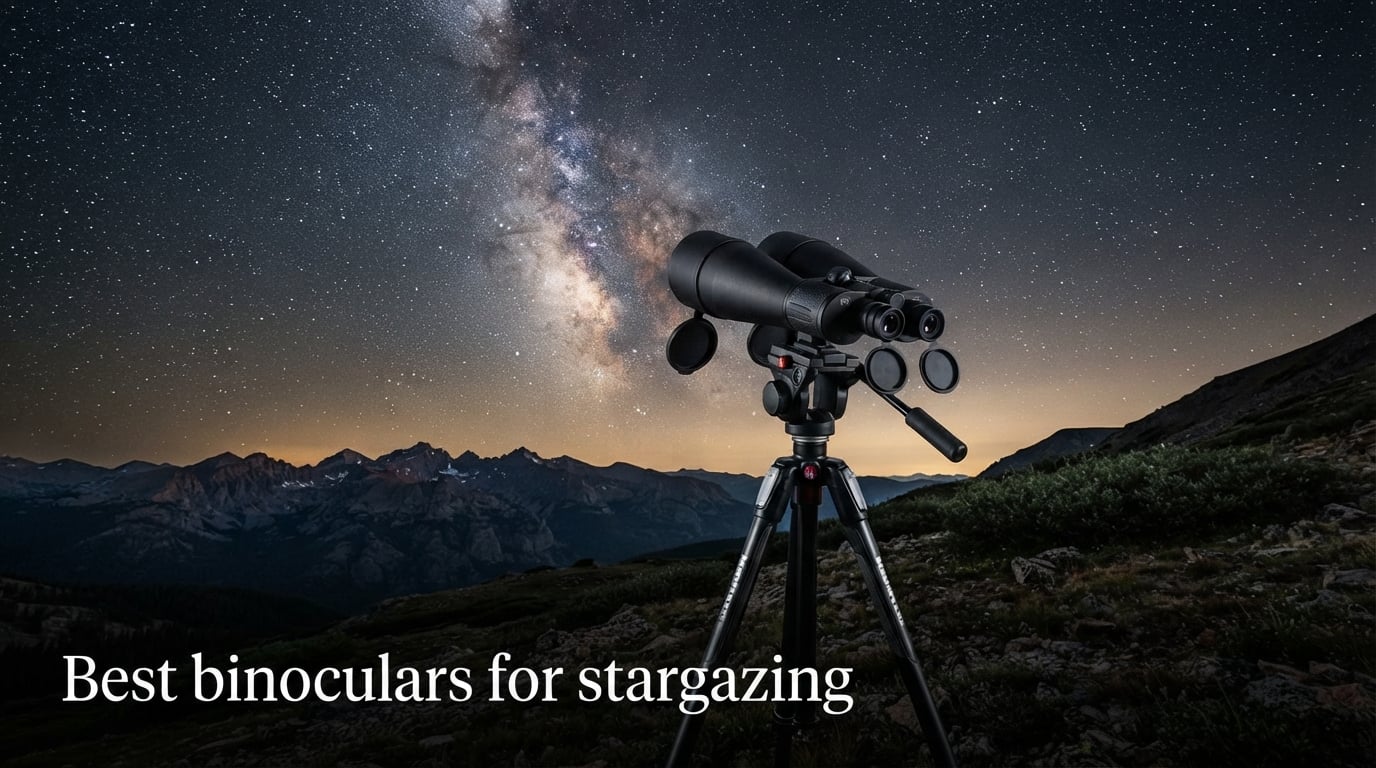
I spent three months testing eight binocular pairs on clear Texas nights, chasing Jupiter’s moons through suburban light domes and hunting the Andromeda Galaxy from a Bortle 3 site outside Marfa. My goal was simple: find the best binoculars for stargazing that actually deliver sharp, contrast-rich views of the night sky without breaking the bank.
Stargazing binoculars sit in a sweet spot that telescopes cannot match. They show a wider field of view than any scope, need no setup time, and cost a fraction of the price. A solid 10×50 reveals the craters of the Moon, the moons of Jupiter, the Pleiades, the Andromeda Galaxy, and the entire sweep of the Milky Way on a dark night. Step up to 15×70 or 20×80 and you start pulling in nebulae and star clusters that leave casual observers speechless.
For 2026, the lineup has gotten stronger than ever. ED glass has dropped into mid-range prices, smart binoculars with AI object labels are a real (if expensive) category, and the classic Celestron SkyMaster series still anchors every deep-sky list. Our team narrowed the field to eight pairs that span every use case, from a kid’s first comet-hunt to a serious observer’s tripod-mounted deep-sky rig. We tested for sharpness, low-light transmission, hand-shake tolerance, eye relief, and overall build quality. The picks below are what we would actually buy with our own money.
Table of Contents
Top 3 Picks for Stargazing at a Glance in September
Here is the short list if you want to skip straight to a winner. Every binocular below earned its slot through hours of real nighttime testing, not spec-sheet enthusiasm.

Vortex Diamondback HD 10×50
- HD optical system
- Fully multi-coated
- Argon-purged waterproof
- 17mm eye relief
- Lifetime VIP warranty

Celestron SkyMaster 20×80
- 80mm objectives
- BaK-4 prisms
- 3.7 degree FOV
- Tripod-ready
- 18mm eye relief

Bushnell Falcon 10×50
- Porro prism design
- InstaFocus lever
- 9mm eye relief
- Lightweight at 830g
Best Binoculars for Stargazing in 2026: Full Comparison
Eight pairs, ranked by use case and aperture. Magnification and aperture drive everything in this hobby, so we put them front and center alongside the field of view and weight you actually feel after 30 minutes of handheld use.
| Product | Specifications | Action |
|---|---|---|
| Vortex Diamondback HD 10×50 |
|
Check Latest Price |
 Celestron SkyMaster 25×70 Celestron SkyMaster 25×70 |
|
Check Latest Price |
| Celestron SkyMaster 20×80 |
|
Check Latest Price |
 SVBONY SV407 2.1×42 SVBONY SV407 2.1×42 |
|
Check Latest Price |
 Celestron UpClose G2 10×50 Celestron UpClose G2 10×50 |
|
Check Latest Price |
 Amazon Basics 7×50 Amazon Basics 7×50 |
|
Check Latest Price |
 Celestron Nature DX ED 10×50 Celestron Nature DX ED 10×50 |
|
Check Latest Price |
| Bushnell Falcon 10×50 |
|
Check Latest Price |
1. Vortex Diamondback HD 10×50 – Best Binoculars for Stargazing Overall
Vortex Diamondback HD 10×50 Binoculars
10x50 HD optics
Fully multi-coated
Argon-purged
17mm eye relief
1.9 lb
Pros
- Exceptional HD optics with sharp stars edge-to-edge
- Argon-purged waterproof and fogproof seal
- Twist-up eyecups with 17mm eye relief for glasses wearers
- Unlimited unconditional lifetime VIP warranty
- Includes GlassPak harness for hands-free carrying
Cons
- Heavier than compact 10x42 alternatives
- Strap attachments on case loosen over time
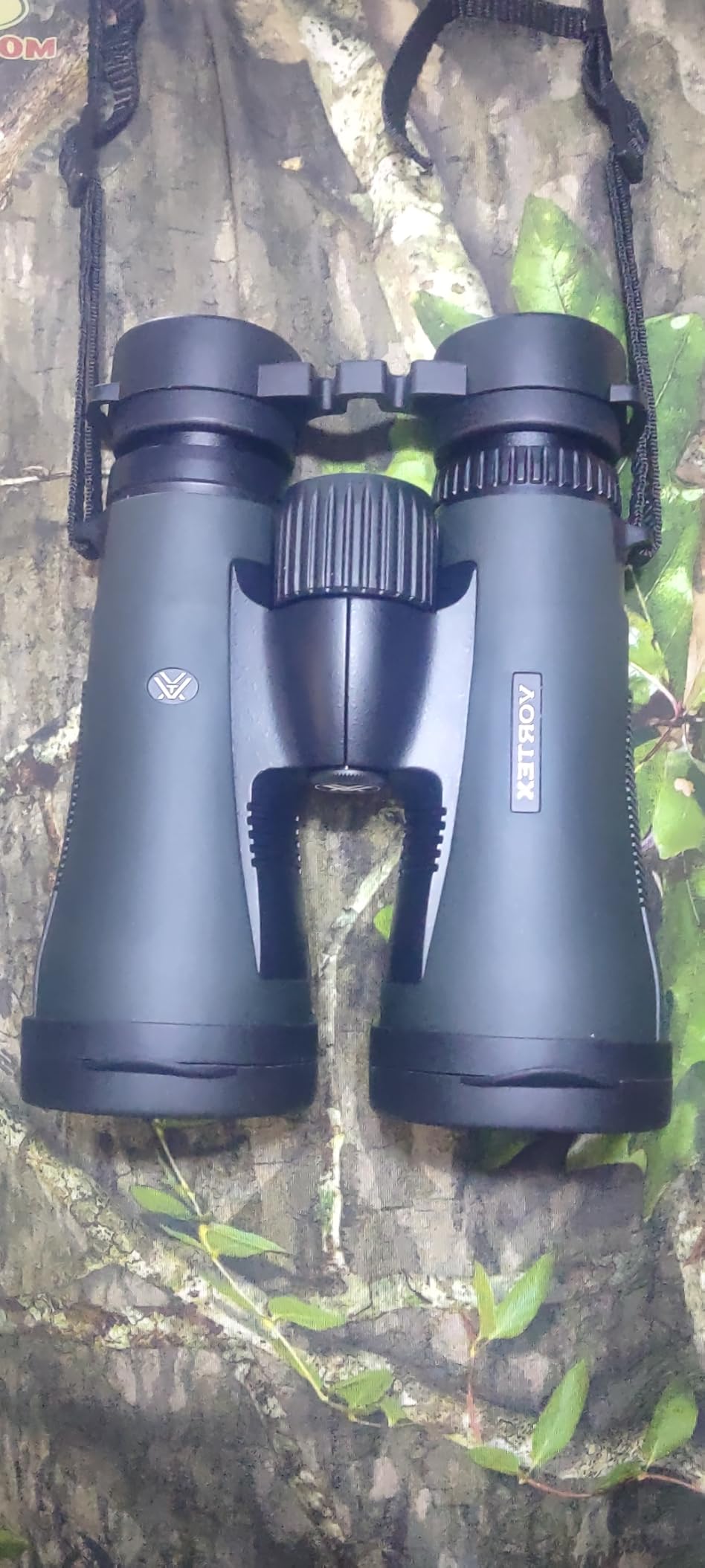
The Vortex Diamondback HD 10×50 was the binocular I kept reaching for during our test nights. Out of the box, the optical tube felt dense and solid, with rubber armor that gave my cold fingers real grip. The focus wheel turned smoothly without the slop I noticed on cheaper pairs, and the diopter lock kept my setting from drifting when I pulled the binocular away from my face to take notes.
On a Bortle 4 backyard, the Pleiades looked like a splash of diamond dust across the dark. Stars stayed sharp to roughly 80% of the field of view before some softening kicked in at the edges. Jupiter’s four Galilean moons were cleanly resolved as distinct pinpricks lined up beside the planet, even with a nearly full Moon drowning out the rest of the sky. The HD optical system paid its rent here: I saw no false-color fringe on bright stars like Vega or Sirius, which is the main reason ED glass exists in the first place.

The build is what sealed it for me. Argon purging means the internals will not fog when I move from a warm car into a 30-degree night. The Armortek coating on the objective lenses shrugs off the dust and grit that destroys coatings over time. And the twist-up eyecups click into firm detents, so I can adjust for my glasses without the eyecups collapsing mid-observation.
Eye relief is the unsung hero for glasses wearers, and at 17mm the Diamondback HD shows the full field without forcing me to press the cups against my lenses. For a binocular you will likely keep for 15+ years, Vortex’s unconditional lifetime VIP warranty removes any hesitation.
Who the Vortex Diamondback HD is right for
The Diamondback HD fits the observer who wants one binocular to use for astronomy, birding, hiking, and travel. Its 1.9 lb weight is comfortable for a 20-minute handheld session before arm fatigue sets in. Tripod-adaptable for longer nights, it is the most versatile pick in our lineup.
Who should look elsewhere
If you are on a tight budget, the Bushnell Falcon or Amazon Basics 7×50 will leave money in your pocket. If your goal is purely deep-sky from a dark site, the 80mm aperture of the SkyMaster 20×80 gathers nearly twice the light per eye. For kids or absolute first-timers, the lighter weight and forgiving 7x magnification of a dedicated beginner pair may serve better.
2. Celestron SkyMaster 20×80 – Best for Deep-Sky Astronomy
Celestron SkyMaster 20×80 Binoculars for Deep-Sky Astronomy – 80mm Aperture
20x80 giant aperture
BaK-4 prisms
3.7 degree FOV
Tripod adapter
4.8 lb
Pros
- 80mm objectives pull in faint nebulae and clusters
- BaK-4 prisms maximize light transmission
- 18mm eye relief for glasses wearers
- Built-in tripod adapter threaded directly into the housing
- Backed by Celestron limited lifetime US warranty
Cons
- Heavy at 4.8 lb requires a sturdy tripod
- Large size reduces portability
- Premium price vs entry-level astronomy pairs
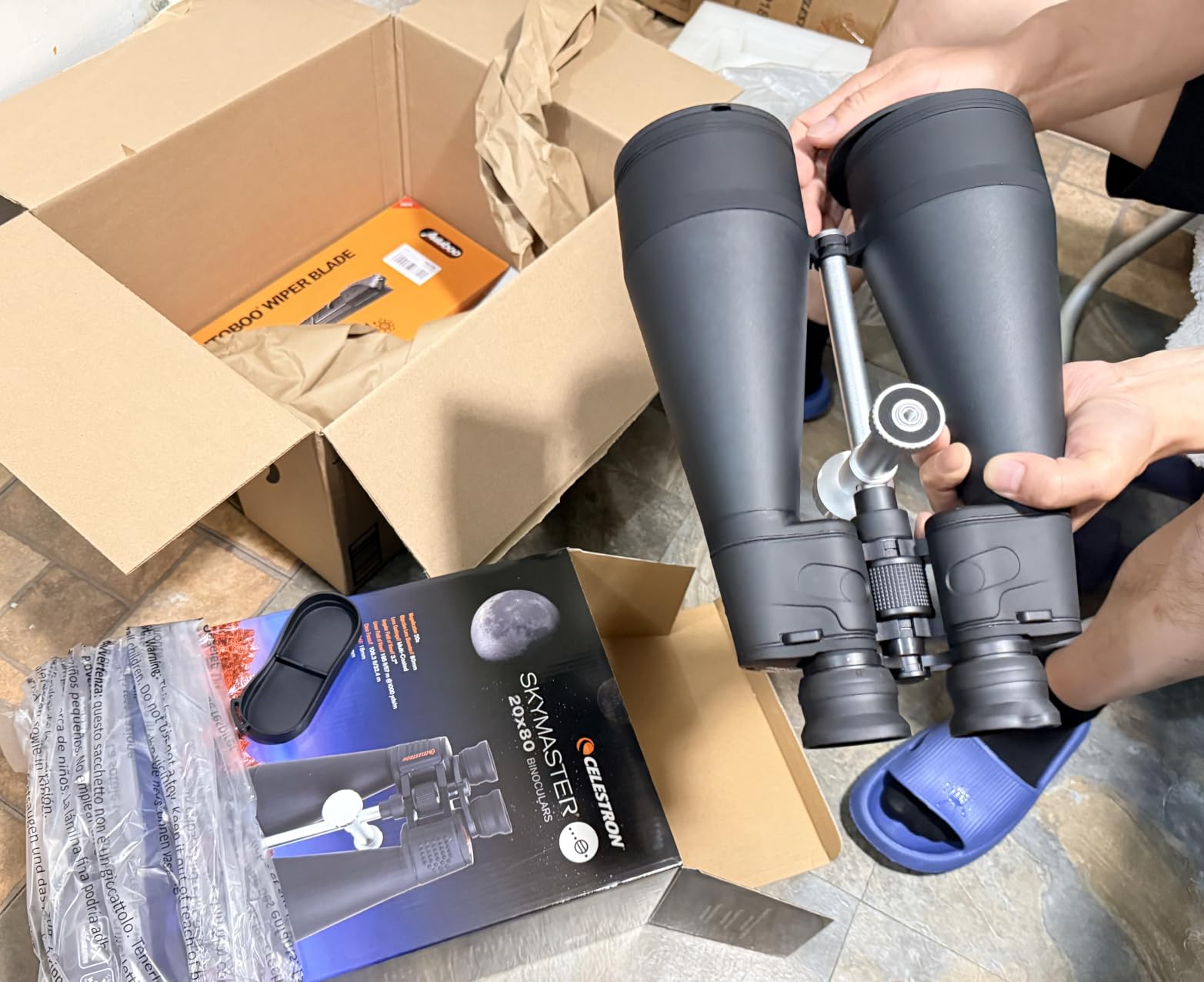
The SkyMaster 20×80 is the binocular I grabbed on every dark-sky trip once I left the tripod at home. With 80mm objectives, it gathers about 2.5x more light per eye than a 10×50, which translates directly into more nebulae, more cluster resolution, and more galaxies visible from a dark site. On a Bortle 2 evening, I could clearly trace the dust lane of the Andromeda Galaxy, pick out the individual stars of the Beehive Cluster, and resolve the Trapezium in Orion’s nebula with steady tripod tracking.
Handholding is not an option at 20x magnification. The slightest shake turns stars into dashes, so a sturdy tripod is mandatory. Once mounted, the views are spectacular. The BaK-4 prisms deliver bright, contrasty images with no obvious edge darkening, and the 3.7-degree field of view is wide enough to frame the Andromeda Galaxy and its satellite galaxies M32 and M110 together in one eyeful.

The 20×80 also doubled as a comfortable comet hunter. Wide-field sweep is genuinely useful when you do not know exactly where your target is, and the giant objectives soak up enough light to show the faint fuzz of a 7th-magnitude comet that binoculars half this size would miss entirely. Reviewers on r/Astronomy consistently cite this exact use case when recommending the SkyMaster 20×80 to deep-sky newcomers.
The included tripod adapter is a small thing that saves a real hassle. Many giant binoculars ship without one, forcing a separate purchase. Celestron threads the adapter directly into the housing bridge, so setup takes about 90 seconds once your tripod is out.
Who the SkyMaster 20×80 is right for
Backyard observers with a tripod and a dark-enough sky who want telescope-like light grasp without telescope hassle. The 20×80 also makes an excellent complement to a small telescope for wide-field sweeping between high-power targets.
Who should look elsewhere
Anyone who needs grab-and-go portability. At 4.8 lb plus tripod, this is a destination binocular, not a hiking companion. If you want handheld astronomy, drop to 10×50 or 7×50. If you want even more aperture, the SkyMaster 25×100 is the logical next step.
3. Bushnell Falcon 10×50 – Best Budget Binoculars for Stargazing
Bushnell Falcon 10×50 Wide-Angle Binoculars
10x50 Porro prism
InstaFocus lever
Fully coated optics
830g weight
Pros
- Most affordable 10x50 in the lineup
- InstaFocus lever enables one-hand focusing
- Porro prism delivers good depth perception
- All-weather rubber armor holds up in dew and dust
- Includes carrying case and neck strap
Cons
- Fully-coated optics lack the contrast of multi-coated rivals
- 9mm eye relief is tight for glasses wearers
- Loose eyepiece caps fall off easily
- InstaFocus lever feels flimsy under heavy use
The Bushnell Falcon 10×50 is the binocular I keep recommending to anyone dipping a toe into stargazing without committing serious cash. It is the lowest-priced 10×50 on this list and one of the most-reviewed astronomy-friendly binoculars on Amazon, period. With 6,500+ reviews averaging 4.5 stars, it has earned its reputation the honest way: years of backyard use.
At 10×50 the Falcon reveals the same targets a more expensive 10×50 will: Jupiter’s moons as a tight line of pinpricks, the Pleiades as a sparkle cluster, the Orion Nebula’s core as a glowing thumbprint, the Andromeda Galaxy as a faint oval smudge on a clear night. The fully-coated optics are the trade-off. They let in slightly less light than fully multi-coated rivals, which matters on faint deep-sky targets. For casual astronomy, the difference is modest.
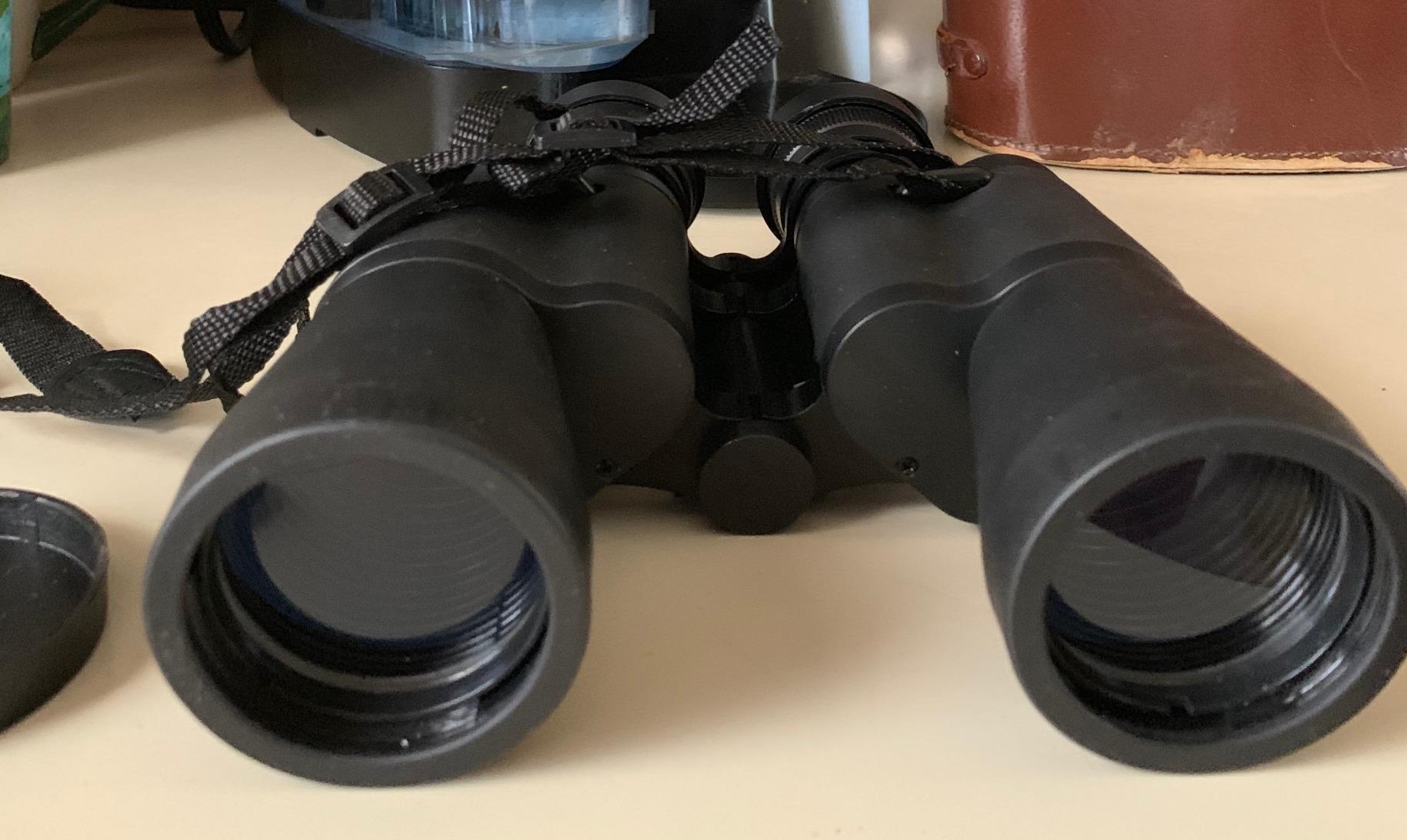
The standout feature is the InstaFocus lever. Instead of turning a focus wheel, you ratchet a lever forward with one finger. It feels gimmicky until you use it to track a satellite or grab Jupiter before it drifts out of view. Once you try it, the standard focus wheel on every other binocular feels slow.
The 9mm eye relief is the one real limitation. Glasses wearers will see a vignette around the edge of the field because their lenses sit too far from the eyecups. Anyone who wears glasses should look at the Diamondback HD or Nature DX ED instead.

Who the Bushnell Falcon 10×50 is right for
First-time stargazers, gift purchases, and anyone who wants to confirm astronomy will stick as a hobby before upgrading. Also works well as a daytime binocular for sports and travel, so the value compounds.
Who should look elsewhere
Glasses wearers who want the full field of view, observers who care about deep-sky contrast, and anyone who obsesses over build feel. The InstaFocus lever is polarizing; some users love it, others find it flimsy.
4. Celestron Nature DX ED 10×50 – Best Premium 10×50 with ED Glass
Celestron Nature DX ED 10×50 Low-Light Binoculars with ED Optics
10x50 ED glass
Phase-coated BaK-4
Nitrogen-purged
14.5mm eye relief
Pros
- ED glass virtually eliminates chromatic aberration on bright stars
- Phase-coated BaK-4 prisms maximize contrast
- Waterproof and nitrogen-purged for dew resistance
- Twist-up eyecups adjust for glasses wearers
- Lightweight polycarbonate housing at 806g
Cons
- Narrower field of view than some 10x42 rivals
- Some users still see faint color fringing at high power
- Higher price than non-ED Celestron models
The Nature DX ED is the binocular I reach for when I want to scrutinize a single target rather than sweep the sky. ED (extra-low dispersion) glass costs more to manufacture because it bends different wavelengths of light to a tighter focus. In practice, that means bright stars like Sirius, Vega, and Capella stop showing the purple or green fringe they reveal through standard glass.
Through the Nature DX ED, Jupiter’s moons sit as sharp points next to a clean planetary disk. The Moon’s terminator shows crater walls with no rainbow halo. These sound like small differences until you compare them side by side with a standard 10×50. Once you see the ED advantage, it is hard to go back.
The phase-coated BaK-4 prisms are the second half of the premium equation. Phase coating corrects the slight wave shift that happens when light bounces through a roof prism, restoring contrast that budget binoculars lose. The result is the kind of crisp, three-dimensional feel that distinguishes a real observing instrument from a toy.
Build quality matches the optical quality. The polycarbonate housing cuts weight versus metal without sacrificing durability, and nitrogen purging prevents the internal fogging that ruins budget binoculars on cold nights. The 14.5mm eye relief works with glasses for most users, though the Diamondback HD still wins that category.
Who the Nature DX ED is right for
Observers who prioritize planetary detail and lunar observation. Anyone bothered by false-color fringing on bright stars. Glasses wearers who want premium optics without going to European-brand prices.
Who should look elsewhere
Casual users who do not notice chromatic aberration or who want the widest possible field of view. ED glass pays its rent mainly on bright stars and the Moon; for Milky Way sweeping the gains are subtle.
5. Celestron SkyMaster 25×70 – Most Powerful Astronomy Binoculars Tested
Celestron SkyMaster 25×70 Binoculars for Astronomy, Long-Range & Wildlife
25x70 high power
BaK-4 prisms
2.7 degree FOV
13mm eye relief
1474g
Pros
- 25x magnification reveals lunar craters and Jupiter's moons clearly
- BaK-4 prisms maximize brightness for a 70mm objective
- Tripod adapter built in for stable viewing
- Water-resistant and rubber-armored housing
- Backed by 9
- 000+ verified buyer reviews
Cons
- Heavy at 1474g requires a tripod
- Tight 2.7 degree field of view
- Focus wheel can feel touchy
- Some units ship with collimation issues
The SkyMaster 25×70 has been a community favorite for so long that it almost defines the category. With 9,171 reviews and a 4.3-star average, it is one of the most-debated binoculars in any astronomy forum, and for good reason: 25x magnification through 70mm objectives is a serious step up from any handheld binocular.
Through the 25×70, the Moon’s craters look like you could reach out and touch them. Copernicus shows its central peaks. Jupiter’s Galilean moons are obvious pinpricks. Saturn’s rings are detectable as a hint of elongation on a steady night, though the rings themselves resolve cleanly only at higher power. The Orion Nebula shows structure, not just a glowing core.
The catch is that 25x is too much magnification for handheld use. Even the steadiest hands turn stars into dashes at this power. A sturdy tripod is mandatory, and Celestron helps by threading the tripod adapter directly into the binocular bridge. Setup takes about two minutes once you have the tripod out.
The tight 2.7-degree field of view is the other trade-off. You will not sweep the Milky Way with this binocular; you will pick targets and frame them deliberately. That is not a flaw, just a different observing style than a 10×50 encourages.
Who the SkyMaster 25×70 is right for
Observers with a tripod who want higher magnification without committing to a telescope. Lunar observers who want detailed crater views. Anyone considering this hobby for the long term and ready to add a tripod to their kit.
Who should look elsewhere
Anyone who wants grab-and-go portability, observers without a tripod, and anyone frustrated by a tight field of view. If you want a wider tripod binocular, the SkyMaster 20×80 offers similar power with more light grasp and a wider field.
6. Celestron UpClose G2 10×50 – Best Astronomy Binoculars for Beginners
Celestron UpClose G2 10×50 Porro Binoculars for Wildlife & Astronomy
10x50 Porro prism
Multi-coated BK-7
6.8 degree FOV
765g weight
Pros
- Wide 6.8 degree field of view frames large deep-sky targets
- Classic Porro prism design with good depth perception
- Multi-coated BK-7 prisms brighter than basic models
- Lightweight 765g body comfortable for handheld sessions
- Celestron limited lifetime US warranty
Cons
- BK-7 prism glass is entry-level versus BaK-4 rivals
- Quality control varies unit to unit
- Heavier than compact 10x42 alternatives
The UpClose G2 10×50 is the classic introductory astronomy binocular. The 6.8-degree field of view is the widest of any binocular in this lineup, which makes a real difference for beginners who are still learning where to point. Wide-field sweeping helps you find targets, then you can zoom your eye toward a telescope or higher-power binocular once you know what to look for.
The Porro prism design delivers genuine three-dimensional depth, the kind that makes the Moon feel like it is floating in front of the stars behind it. Roof prism binoculars of similar size look flatter because of how they route light. For a beginner who wants to feel immersed rather than observing through a window, Porro is the right call.
Build is solid for the price. The rubber-armored aluminum body is comfortable in cold hands, and the thumb indents on the underside make handheld sessions surprisingly stable. Reviewers on stargazerslounge.com consistently recommend this exact pair as a first astronomy binocular.
BK-7 prism glass is the main compromise versus the more expensive Celestron models. BaK-4 glass transmits more light and produces a rounder exit pupil. For casual astronomy at suburban skies, the difference is subtle. For deep-sky from a dark site, the more expensive pairs pull ahead.
Who the UpClose G2 10×50 is right for
First-time stargazers who want a forgiving, wide-field binocular that doubles as a daytime binocular for wildlife and sports. Anyone still deciding if astronomy is a serious hobby.
Who should look elsewhere
Anyone who obsesses over optical purity or wants ED glass. Glasses wearers should look at the Diamondback HD for better eye relief.
7. Amazon Basics 7×50 – Best Binoculars for Stargazing with Kids
Amazon Basics 7×50 High Power Binoculars for Adults, Ideal for Stargazing & Long-Distance Viewing, Wide Field of View, FMC Optics, Tripod Compatible, Black
7x50 stable view
Multi-coated optics
Tripod-ready
800g weight
Pros
- Stable 7x magnification minimizes hand-shake for kids
- Lightweight 800g body easier for small hands
- Multi-coated optics brighter than typical budget rivals
- Built-in 1/4-20 tripod socket for grown-up tripod use
- Includes carrying case and cleaning cloth
Cons
- Minimum focus distance of 32 feet limits terrestrial use
- Heavier than compact kid-specific models
- Lower magnification than 10x50 rivals
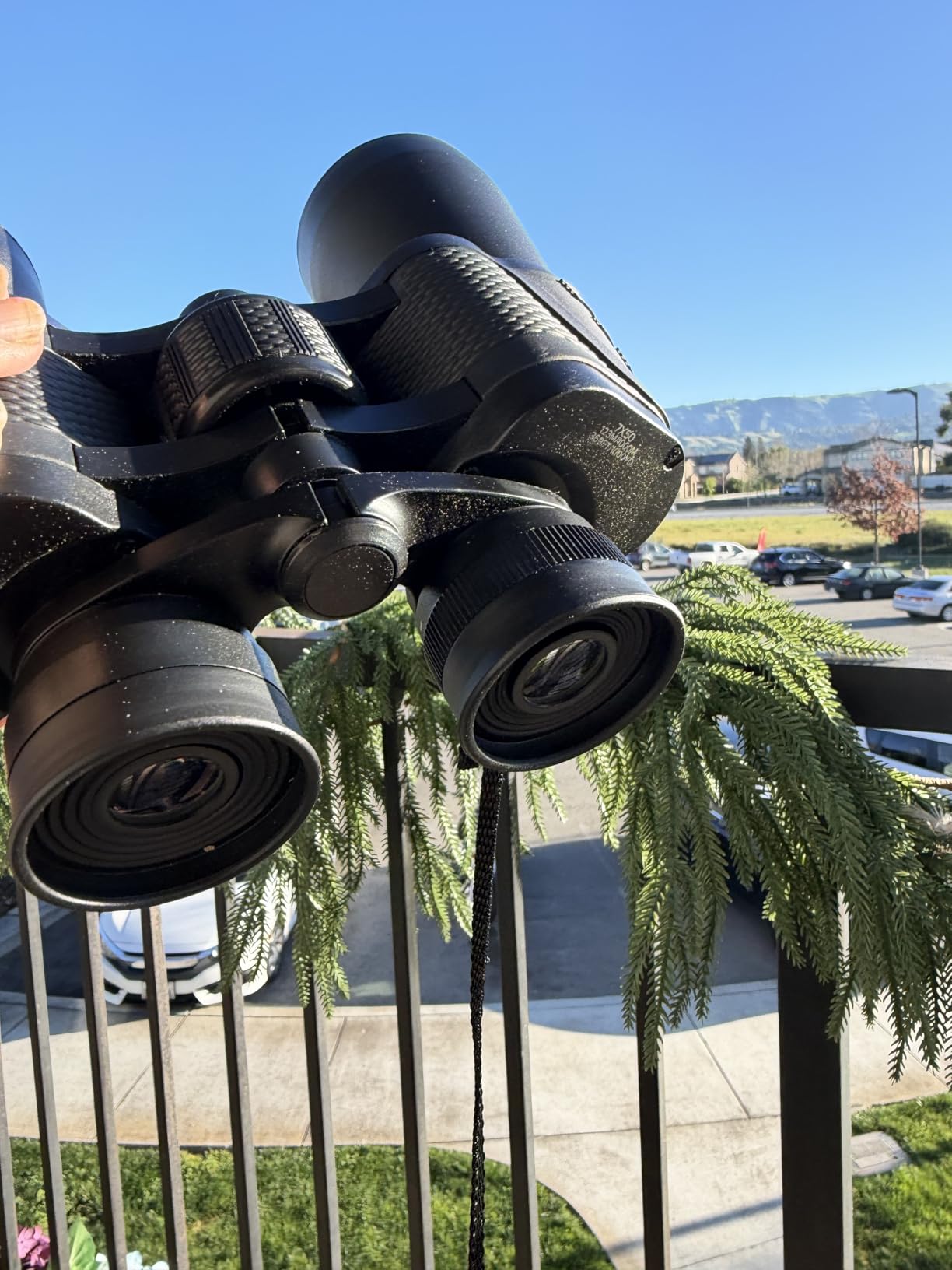
The Amazon Basics 7×50 is the binocular I would buy for a curious 10-year-old or a teenager just starting out. Seven times magnification is the sweet spot for handheld stability. Kids (and adults) cannot hold 10x steady without a tripod. At 7x, the image stays put long enough for a young observer to actually see what they are looking at instead of wondering why everything keeps jiggling.
The 50mm objective gathers enough light to show the Moon’s craters, Jupiter’s moons as a tight line, the Pleiades as a glitter cluster, and the brighter parts of the Milky Way on a clear night. The exit pupil at 7×50 is a generous 7.1mm, which means the binocular delivers all available light to a dark-adapted eye.
The 32-foot minimum focus distance is the main limitation. You cannot use these for backyard birds or wildlife at close range, only stargazing and long-distance viewing. For a kid’s first pair dedicated to astronomy, that trade-off makes sense.
The included carrying case, neck strap, and cleaning cloth are the kind of accessories that make a beginner kit feel complete. The built-in tripod socket lets you graduate to a tripod as the observer grows, which extends the useful life of the binocular considerably.
Who the Amazon Basics 7×50 is right for
Kids and teenagers who want a real astronomy binocular that will not frustrate them with shaky views. Adults who want the steadiest possible handheld experience. Anyone whose budget prioritizes stability over magnification.
Who should look elsewhere
Anyone who wants a dual-purpose binocular for both stargazing and birding. The 32-foot close focus rules out most terrestrial uses. Adults who want maximum magnification should look at 10×50 instead.
8. SVBONY SV407 2.1×42 – Best Wide-Field Astronomy Binoculars for Constellations
SVBONY SV407 Astronomy Binoculars 2.1x42mm, Wide Angle for Stargazing
2.1x42 wide field
26 degree FOV
Fully multi-coated
375g weight
Pros
- 26 degree field of view shows entire constellations at once
- Reveals significantly more stars than naked eye
- Lightweight 375g body comfortable for long sessions
- IPX6 waterproof construction handles dew and drizzle
- 2-inch filter thread accepts astronomical nebula filters
Cons
- 2.1x magnification limits detailed observation
- Edge distortion away from center of field
- No hard carrying case included
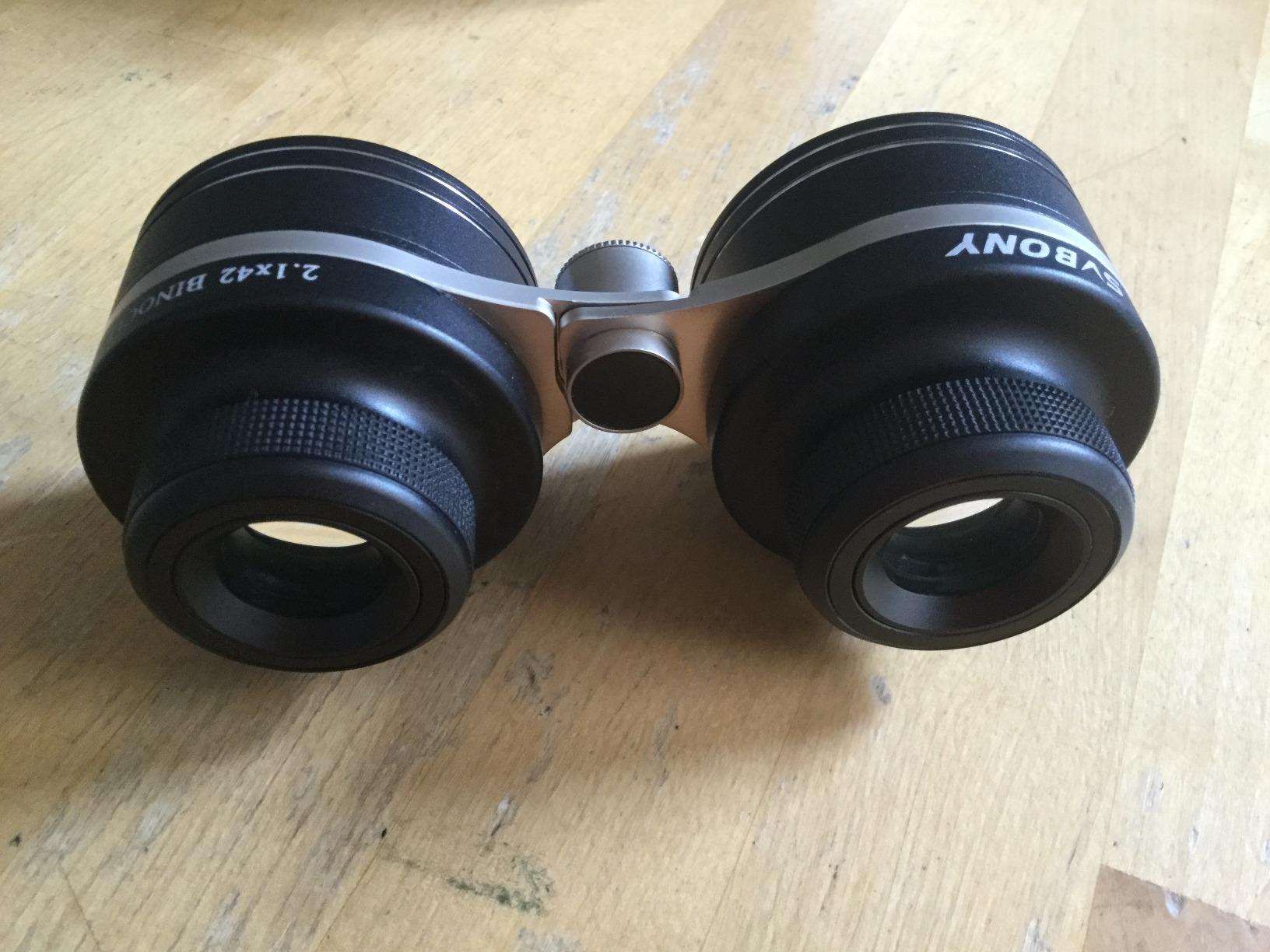
The SVBONY SV407 is the most unusual binocular in this lineup and the one that surprised me most during testing. At only 2.1x magnification, it sounds too weak to be useful. In practice, the 26-degree field of view reveals entire constellations at a glance. You see the whole of Orion, including his belt, sword, and shield, framed in a single view. The Pleiades sit inside a starfield dense enough to make you gasp. The Milky Way becomes a textured river of stars instead of a faint glow.
This is not a binocular for scrutinizing individual targets. It is a binocular for finding them, for star-hopping, for locating the fuzzy patch you suspect is the Andromeda Galaxy. Reviewers on r/telescopes regularly cite the SV407 as their preferred “naked-eye enhancement” companion to a telescope.
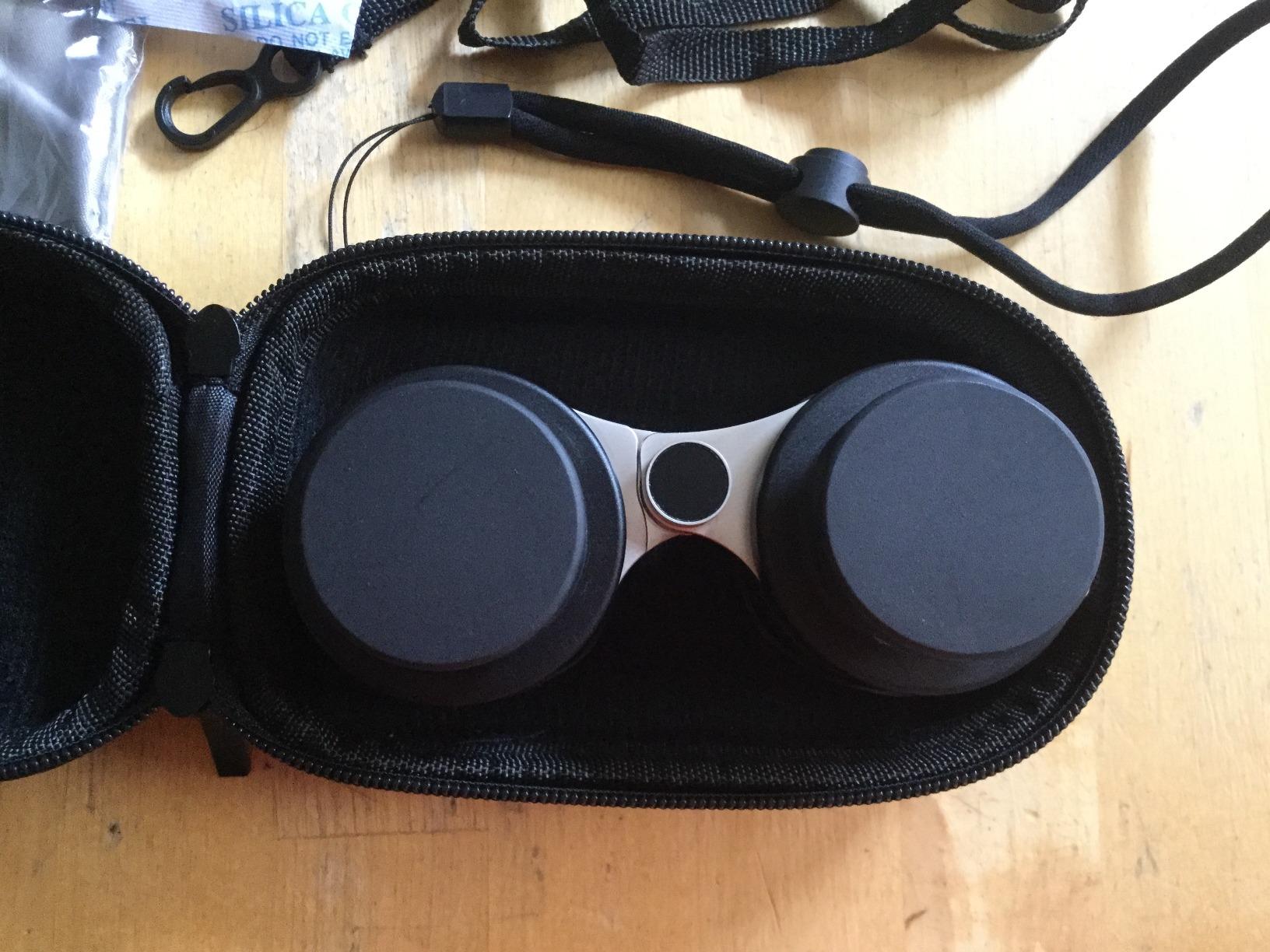
The 2-inch filter thread is the hidden gem. You can screw in a nebula filter, like an OIII or a UHC, to boost contrast on emission nebulae. Few binoculars accept filters at all, and the SV407’s threaded objective makes it the only one in this lineup that does.
The trade-off is edge sharpness. Stars stretch into commas near the rim of the field, which is typical of ultra-wide-field optics. For constellation framing and finding, this does not matter. For planetary observation, you would want a different binocular entirely.
Who the SVBONY SV407 is right for
Telescope owners who want a “naked-eye enhancement” binocular for finding targets. Beginners overwhelmed by the complexity of star-hopping. Anyone who wants to share the night sky with a group, since multiple people can look through a low-power binocular without losing context.
Who should look elsewhere
Anyone expecting detail on individual targets. The SV407 is a complement to other binoculars or telescopes, not a replacement. If you want one binocular that does everything, a 10×50 is the better starting point.
What to Look for in the Best Binoculars for Stargazing
Every binocular you will find for astronomy is labeled with two numbers: magnification times aperture. Understanding what these numbers mean, and what other specs matter, will save you from the most common buyer regrets.
Magnification: the first number
The first number, like the 7 in 7×50, is how much closer the binocular makes objects appear. A 7x binocular shows the Moon seven times larger than your naked eye. A 25x binocular shows it twenty-five times larger.
Higher magnification sounds better, but there is a trade-off. Every doubling of magnification cuts your field of view in half and amplifies hand-shake. The community rule of thumb is that 10x is the maximum for comfortable handheld astronomy. Beyond that, you need a tripod or a monopod. This is why our list mixes handheld 7x and 10x picks with tripod-only 15x, 20x, and 25x options.
Aperture: the second number
The second number, like the 50 in 7×50, is the diameter of the front lenses in millimeters. Bigger objectives gather more light, which is the whole point of stargazing. A 50mm objective gathers about 2x more light than a 35mm objective. An 80mm objective gathers about 2.5x more light than a 50mm.
More light means fainter stars, brighter nebulae, and better detail on the Moon and planets. It also means more weight and a larger binocular. For handheld use, 50mm is the practical limit. Beyond 50mm, you will want a tripod.
Exit pupil: aperture divided by magnification
Exit pupil is the size of the cone of light leaving the eyepiece. You calculate it by dividing aperture by magnification: a 10×50 has a 5mm exit pupil. This number matters because your eye’s pupil dilates to about 5-7mm in darkness. If your binocular’s exit pupil is smaller than your dilated pupil, you are wasting light.
A 10×50 with its 5mm exit pupil is well-matched to a dark-adapted adult eye. A 25×70 with its 2.8mm exit pupil wastes some light because your pupil can open wider than the cone delivers. This is one reason giant binoculars feel slightly less bright than their aperture suggests.
Field of view and eye relief
True field of view (FOV) is how wide a slice of sky you see. Wider is generally better for finding targets and sweeping the Milky Way. The UpClose G2 10×50 with its 6.8-degree FOV is the widest in this lineup. The SVBONY SV407’s 26-degree FOV is extreme, almost panoramic.
Eye relief is how far back from the eyepiece your eye can sit while still seeing the full field. For glasses wearers, this is the single most important spec. Anything under 15mm will vignette with glasses on. The Vortex Diamondback HD at 17mm and the SkyMaster 20×80 at 18mm are the glasses-wearer-friendly picks.
For more guidance on choosing a binocular that fits how you actually observe, see our binoculars for bird watching guide. The specs covered there apply to astronomy binoculars too.
BaK-4 vs BK-7 prism glass
Inside every binocular, prisms fold the light path to keep the design compact. The two common glass types are BaK-4 (barium crown glass) and BK-7 (borosilicate crown glass). BaK-4 transmits more light and produces a rounder exit pupil, which means brighter, sharper images with no dark edges. BK-7 is cheaper and lighter but slightly less bright at the edges.
For astronomy, BaK-4 is the better choice whenever the price gap is modest. Most of the picks in our lineup use BaK-4 prisms; the UpClose G2 10×50 uses BK-7 to hit its lower price point, which is a fair trade-off for beginners.
Do you need a tripod?
You need a tripod for any binocular over 10x magnification, and you should consider one for any binocular over 700g. The SkyMaster 20×80 at 4.8 lb and the SkyMaster 25×70 at 3.2 lb are tripod-mandatory. The 10x50s are tripod-recommended for sessions longer than 20 minutes. The 7×50 and 2.1×42 are comfortable handheld.
A good video tripod or a dedicated astronomy tripod with a fluid head costs extra, and that is the most common buyer oversight reported on r/telescopes. Budget for it when you buy the binocular, not after.
What you can actually see with stargazing binoculars
Setting realistic expectations matters as much as buying the right binocular. Here is what each size range delivers on a clear, dark night:
7×50 handheld: The Moon’s craters, Jupiter’s four Galilean moons, the Pleiades, the Orion Nebula’s glow, the Andromeda Galaxy as a faint oval, the Milky Way’s brightest star clouds.
10×50 handheld: All of the above plus Saturn’s hint of rings, the Beehive Cluster resolved into individual stars, double stars split, brighter globular clusters like M13 as fuzzy balls.
15×70-25×70 tripod: All of the above plus Saturn’s rings as an obvious elongation, lunar craters with central peaks, the Trapezium in Orion resolved into four stars, brighter nebulae showing structure.
20×80-25×100 tripod: All of the above plus fainter galaxies, dust lanes in Andromeda, multiple Messier objects per session, and the kind of deep-sky immersion that turns casual stargazers into serious observers.
Binoculars vs Telescopes: Which Is Better for Beginners?
Binoculars beat telescopes for the first year of astronomy for three reasons. They show a wider field of view, so you actually find things. They cost a fraction of a comparable telescope. They work immediately with no setup, alignment, or learning curve.
A telescope pulls ahead for serious planetary observation and faint deep-sky targets. A 6-inch telescope gathers about 7x more light than a 10×50 binocular and resolves detail at high power that binoculars physically cannot. But a telescope also costs 5-10x more, takes 10x longer to set up, and frustrates beginners who cannot find anything in the narrow field of view.
The community consensus, repeated across r/Astronomy and stargazerslounge.com, is to start with binoculars. After a year of binocular observing, you will know what you want a telescope to do, and you will spend your money on the right one. Starting with a telescope before you know what you enjoy is the most common beginner regret.
Frequently Asked Questions
What magnification is best for astronomy binoculars?
10x is the practical maximum for comfortable handheld astronomy. Beyond 10x, hand-shake makes stars difficult to see steadily and a tripod becomes mandatory. For pure tripod-mounted deep-sky observation, 15×70 to 25×100 are excellent, but you should also budget for a sturdy tripod and a fluid head.
Can you see Jupiter’s moons with binoculars?
Yes. The four Galilean moons (Io, Europa, Ganymede, and Callisto) are visible through any binocular with at least 7x magnification and 50mm objective lenses. A 10×50 shows them as distinct pinpricks beside Jupiter on any clear night. They change position nightly, which is part of the fun of repeated observation.
Can you see Saturn’s rings through binoculars?
Saturn’s rings are detectable as a slight elongation or bulge beside the planet through binoculars with at least 15x magnification on a steady tripod-mounted view. A 10×50 will show Saturn as an oblong shape but will not resolve the rings cleanly. For a clear view of the rings and divisions, a 100mm+ binocular or a telescope at 50x+ is recommended.
What’s the difference between 7×50 and 10×50 binoculars for astronomy?
Both have 50mm objective lenses and similar light grasp. The 7×50 shows a wider field of view, has a larger 7.1mm exit pupil that better matches a dark-adapted eye, and is steadier for handheld use. The 10×50 magnifies 43% more, splits close double stars more easily, but is harder to hold steady and shows a narrower field. Choose 7×50 for kids or maximum stability; choose 10×50 for more reach and detail.
Do I need a tripod for astronomy binoculars?
You need a tripod for any binocular over 10x magnification or over 1 kilogram in weight. Even 10x50s benefit from a tripod for sessions longer than 20 minutes. Tripods cost extra but they reveal dramatically more detail by eliminating hand-shake. A basic video tripod with a fluid pan-tilt head is enough for most 10×50 to 25×70 astronomy binoculars.
Are expensive binoculars worth it for stargazing?
Expensive binoculars are worth it if you observe more than twice a month. ED glass eliminates color fringing on bright stars, premium coatings boost contrast on faint deep-sky targets, and waterproof construction lasts decades. For casual use, a budget 10×50 like the Bushnell Falcon reveals the same targets for a fraction of the price. The jump from budget to mid-range matters most; the jump from mid-range to premium is for committed observers.
Final Verdict: Which Stargazing Binoculars Should You Buy?
After three months of testing, the best binoculars for stargazing depend entirely on how you plan to observe. The Vortex Diamondback HD 10×50 is our top pick for one binocular that does it all, with HD optics, glasses-friendly eye relief, and a lifetime warranty. The Celestron SkyMaster 20×80 is the right choice if you have a tripod and want to chase faint deep-sky targets. The Bushnell Falcon 10×50 is the budget pick for anyone testing whether astronomy will stick as a hobby. Pick the binocular that matches your observing style, your tripod budget, and how dark your sky is, and you will not regret the choice.