
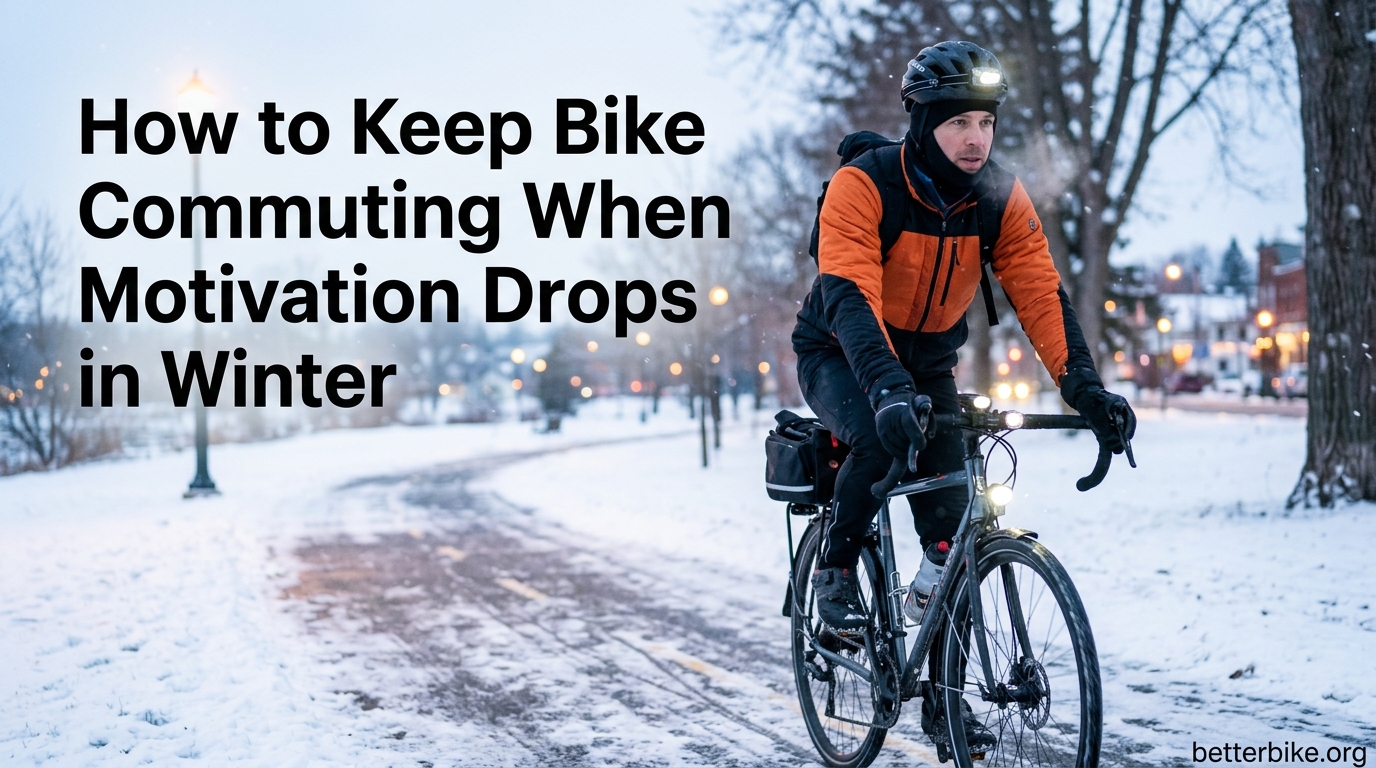
Every November, I watch my Strava feed fill with last rides of the season. Friends in the bike commuting subreddit post the same question: “How do you keep motivated to ride when it’s dark, cold, and wet outside?” I have been there. Three winters ago, I skipped my Tuesday commute, then Wednesday, then suddenly it was March and I had not touched the bike since November.
Losing bike commuting motivation in winter is one of the most common struggles our team hears about at BetterBike. The good news: it is solvable. This guide explains why your motivation dips, the real benefits of pushing through, eight practical strategies that actually work, and exactly how to restart if you have already fallen off the wagon.
Table of Contents
Why Bike Commuting Motivation Drops in Winter
Winter motivation loss is not laziness. It is a predictable psychological and physiological response to your environment. When the days get shorter, your body produces more melatonin and less serotonin, the neurotransmitter linked to mood and drive. Cold mornings trigger a strong preference for warm blankets over cold handlebars.
Add reduced daylight, icy roads, wet gear, and a longer mental load to even get out the door, and your brain starts calculating the cost-to-benefit ratio of cycling. The perceived effort climbs. The perceived reward drops. You start bargaining: “I will ride tomorrow.”
One Reddit commuter described the cycle perfectly: “I had a total meltdown the winter before Covid. I stopped riding in November, and by February I could not restart.” That post resonates because so many of us have lived the same story.
The fix is not willpower. It is removing the friction that makes winter cycling feel harder than it actually is.
Reframe the Cold: Why Winter Cycling Is Worth It
Before we get into the how, let us talk about the why. Once you understand what you actually gain from winter bike commuting, the early alarm feels less like punishment and more like an investment.
The Mental Health Payoff Is Real
Physical activity in cold weather is one of the most reliable ways to fight seasonal mood dips. A brisk 20-minute bike commute raises your heart rate, floods your brain with endorphins, and exposes you to natural light, all three things that directly counter winter depression. Our team has found that cyclists who commute through winter consistently report lower stress and better sleep than those who switch to driving or transit.
Your Fitness Does Not Have to Reset
Every cyclist knows the agony of losing summer fitness over winter. When you keep commuting, you maintain your base. You burn roughly 400 to 600 calories on a 30-minute commute, and you keep your legs turning over. When spring arrives, you are not starting from zero. You are starting from “ready.”
You Will Actually Like It (Once You Get the Setup Right)
One regular commuter told us: “I am more comfortable on my bike dressed decently than freezing in my still-cold car.” That quote captures the shift. Once you invest in the right layers, lights, and fenders, winter cycling stops being a punishment and starts being a choice. A peaceful, quiet, snow-muffled morning ride is something drivers never experience.
8 Practical Strategies to Stay Motivated This Winter
Here is what actually works, drawn from cycling coaches, club leaders, and our own BetterBike community. Pick three to try this week.
1. Make Tomorrow’s Ride Easy Tonight
The single biggest reason commuters skip a ride is friction in the morning. Lay out your kit, prep your bag, charge your lights, and check the forecast before bed. When everything is ready, the decision is already made. You just ride.
2. Set a Minimum Viable Commute
On the days you do not want to ride, commit to just 10 minutes. Tell yourself you can turn around at any point. Most of the time, once you are pedalling, you finish the full ride. British Cycling puts it well: “Something is always better than nothing.”
3. Find a Commuting Buddy
Accountability is the strongest motivator humans have. Find a colleague who also cycles, or join a local commuter group on Strava or Reddit. When someone is expecting you at the coffee stop, skipping feels like letting them down.
4. Reward Yourself at the Destination
Give yourself a small, repeatable reward that only happens on ride days. A specific coffee order, a podcast episode you only listen to while cycling, a hot shower waiting at the gym. The brain learns to associate the cold with pleasure, not pain.
5. Try One New Route Per Month
Boredom kills motivation faster than cold. Pick a different route every few weeks. Explore a greenway you have not tried, or add a 10-minute detour through a park. New scenery tricks your brain into paying attention again.
6. Layer Smart, Not Heavy
The most common reason people quit cycling in winter is being cold. The second most common is being too hot and sweaty. Solve both with a proper layering system: a merino base, an insulating mid-layer, and a windproof shell. Cold hands and feet get dedicated protection: pogies, neoprene overshoes, and merino socks.
7. Have a Backup Plan for the Worst Days
Some days are genuinely unsafe. Black ice, freezing rain, or a forecast of -15C with windchill are all good reasons to skip. The trick is having a plan B that still moves your fitness forward: a 20-minute indoor trainer session, a spin class, or even a brisk walk. The goal is to break zero days, not to be a hero.
8. Track Streaks, Not Just Rides
Switch your mental model from “rides per week” to “days moved per week.” A short commute, a yoga session, and a long ride all count. Winter motivation is about keeping the habit alive, not about hitting specific mileage.
How to Restart After You Have Already Lost Momentum
This is the section I wish I had three winters ago. If you have already stopped commuting for two, three, or six weeks, the hardest part is not the first ride. It is forgiving yourself for the gap and reframing the restart.
Start with one ride. Do not commit to riding every day. Do not commit to next week. Just pick one day, prep your gear the night before, and ride to work. That is it. One ride, one day, one success.
Then add a second ride a few days later. After two successful rides in one week, you have evidence that the habit is alive. The fear of “I have lost it” starts to fade. Within two weeks, you are usually back in rhythm.
Give yourself explicit permission to take rest days and even rest weeks. The most reliable way to lose winter motivation is to make commuting feel like an obligation you resent. The cyclists who ride through January are the ones who treat it as a gift to themselves, not a chore.
Finally, lower the bar. A 15-minute ride in office clothes still counts. Riding only on Tuesdays and Thursdays still counts. Consistency at a low intensity beats intensity with no consistency, every single time.
Why do I have no motivation to workout in the winter?
Why don t people ride bikes in the winter?
Is 40 degrees too cold to ride a bike?
How to maintain cycling fitness during winter?
Keep Pedalling Through Winter
Losing bike commuting motivation in winter is normal, common, and completely reversible. The cyclists who ride through January are not tougher than you. They have just built systems that make winter cycling feel easy: prepped gear, minimum viable commutes, accountability partners, and a generous attitude toward rest days.
Pick one strategy from this guide and try it this week. Then try another next week. By the time the snow melts, you will be the rider whose Strava feed never went quiet, and you will roll into spring fitter, happier, and ahead of everyone who waited it out.