
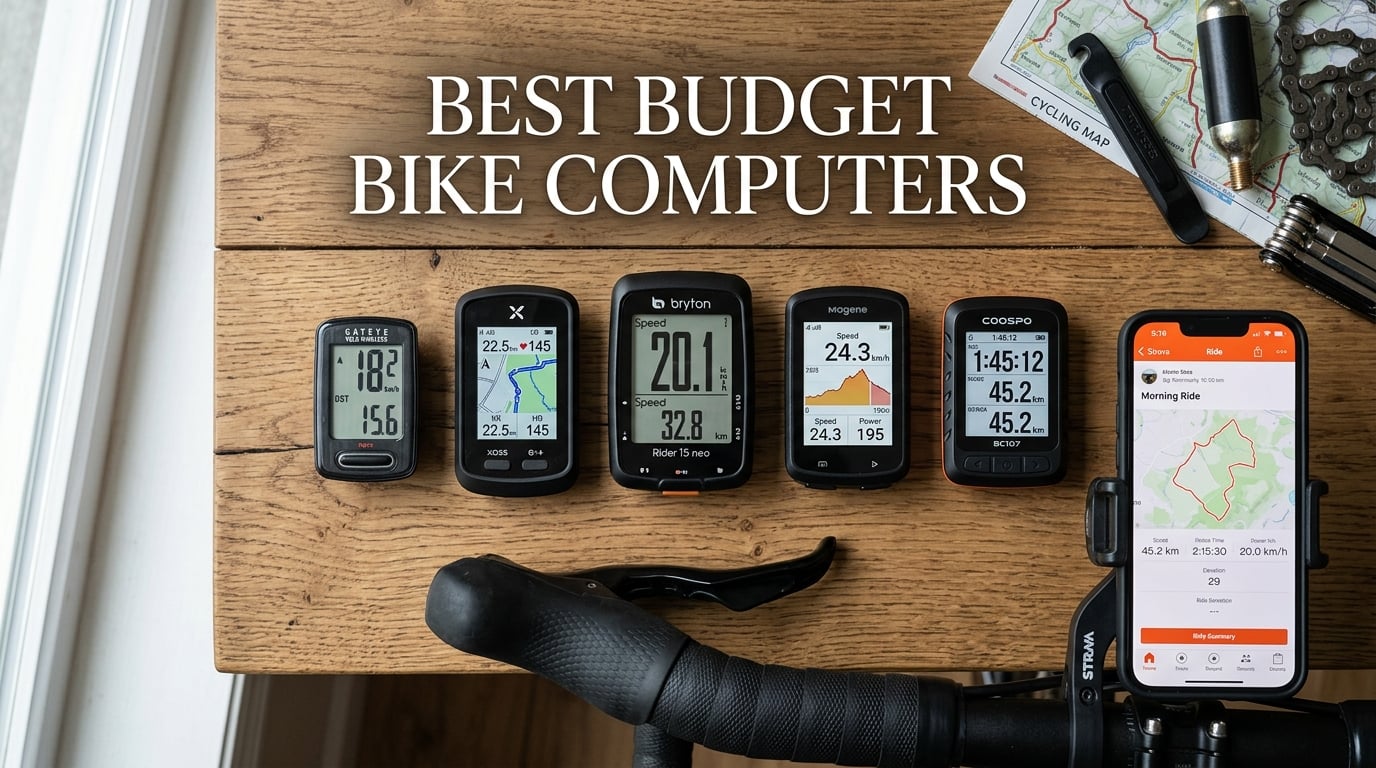
Finding the best budget bike computers used to mean choosing between spending hundreds on a Garmin or settling for a basic speedometer that told you nothing beyond how fast you were going. That landscape has shifted dramatically. In 2026, you can get GPS tracking, Strava sync, turn-by-turn navigation, and ANT+ sensor support for under $100.
I have spent the last several months testing budget cycling computers from brands like CYCPLUS, iGPSPORT, COOSPO, Cateye, and more. Some genuinely surprised me with how capable they are. Others confirmed that ultra-low prices come with real trade-offs. This guide breaks down what each model does well, where it falls short, and who it fits best.
Whether you commute daily, ride gravel on weekends, or are planning your first bikepacking route and need navigation without draining your phone battery, there is a budget bike computer here for you. Let us look at the top picks and then get into the details.
Table of Contents
Top 3 Picks for Best Budget Bike Computers (2026)


COOSPO CS600 Touchscreen GPS Computer
- Color Touchscreen
- 36H Battery
- Breadcrumb Navigation
- ANT+ Support
Best Budget Bike Computers (October 2026) Quick Comparison
| Product | Specifications | Action |
|---|---|---|
| iGPSPORT BSC200S |
|
Check Latest Price |
| COOSPO CS600 Touchscreen |
|
Check Latest Price |
 Magene C506 GPS Magene C506 GPS |
|
Check Latest Price |
| CYCPLUS G1 GPS |
|
Check Latest Price |
 CATEYE Padrone Wireless CATEYE Padrone Wireless |
|
Check Latest Price |
 COOSPO BC107 GPS COOSPO BC107 GPS |
|
Check Latest Price |
 iGPSPORT BSC100S iGPSPORT BSC100S |
|
Check Latest Price |
 XOSS G+ GPS XOSS G+ GPS |
|
Check Latest Price |
 GEOID CC600 Color GEOID CC600 Color |
|
Check Latest Price |
 CATEYE Velo 7 Wired CATEYE Velo 7 Wired |
|
Check Latest Price |
1. iGPSPORT BSC200S GPS Bike Computer – Best Overall Budget Pick
iGPSPORT BSC200S GPS Bike Computer, Route Navigation Long Battery Life
2.4 inch Color Screen
25H Battery
Route Navigation
IPX7 Waterproof
Pros
- Bright color screen visible in sunlight
- Seamless Strava auto-upload
- Route navigation with back-to-start
- 25-hour battery with fast charging
- 2-year warranty
Cons
- Small font sizes
- Maps are tiny and unlabeled
- Type-C cable not included
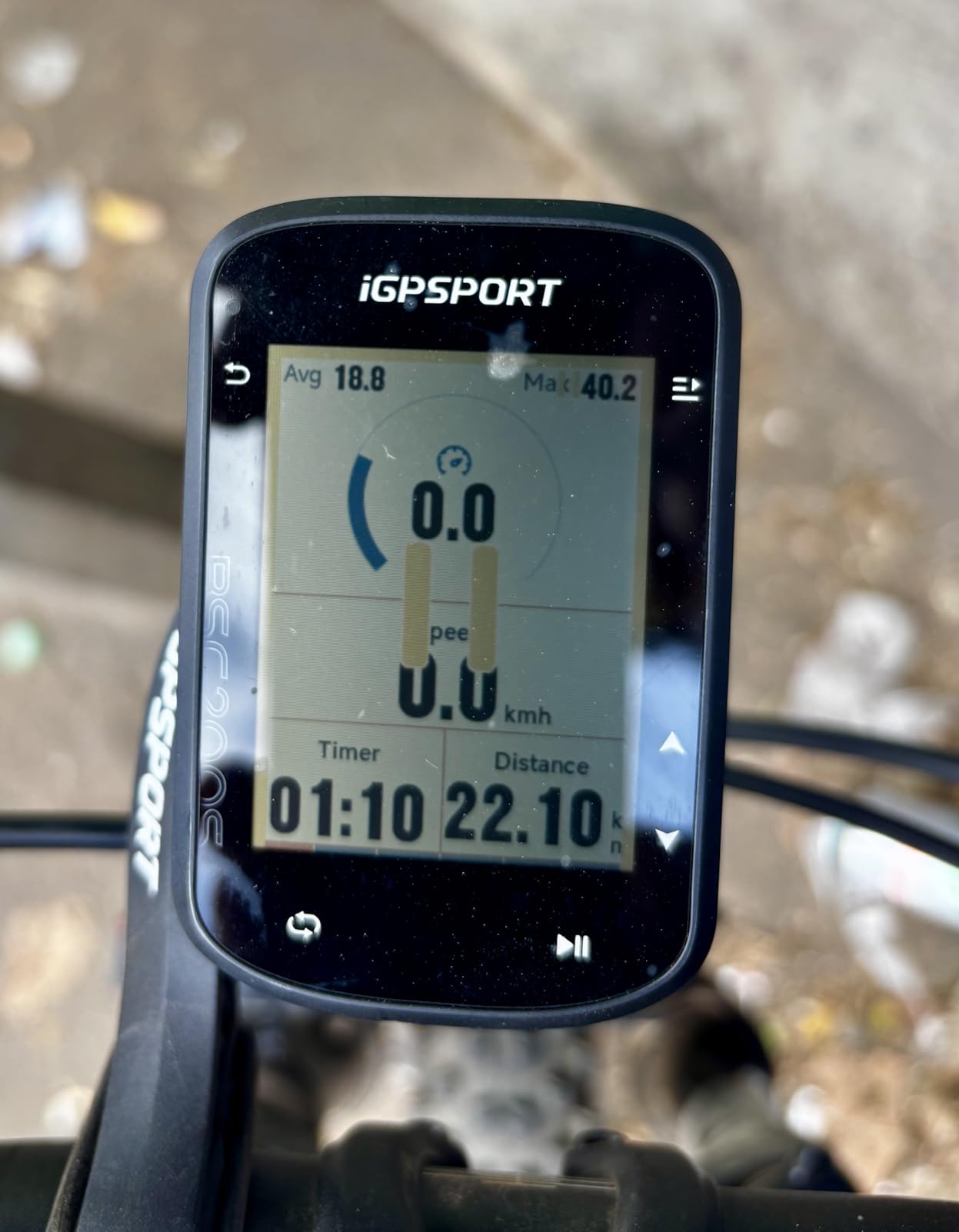
The iGPSPORT BSC200S is the bike computer I keep coming back to when someone asks me for a sub-$100 recommendation. It hits the sweet spot between features, build quality, and price that most competitors miss. The 2.4-inch semi-transparent color screen is readable in direct sunlight, which immediately puts it ahead of many budget units I have tested that wash out the moment you hit an open road.
Over three months of riding with the BSC200S, the Strava integration worked flawlessly. Every ride auto-uploaded the moment I finished, no manual syncing required. The GPS accuracy held up well against my reference Garmin, staying within acceptable margins on both road and gravel routes. Battery life consistently hit 25 hours, and the 1.5-hour Type-C fast charging meant I was never waiting around before a ride.
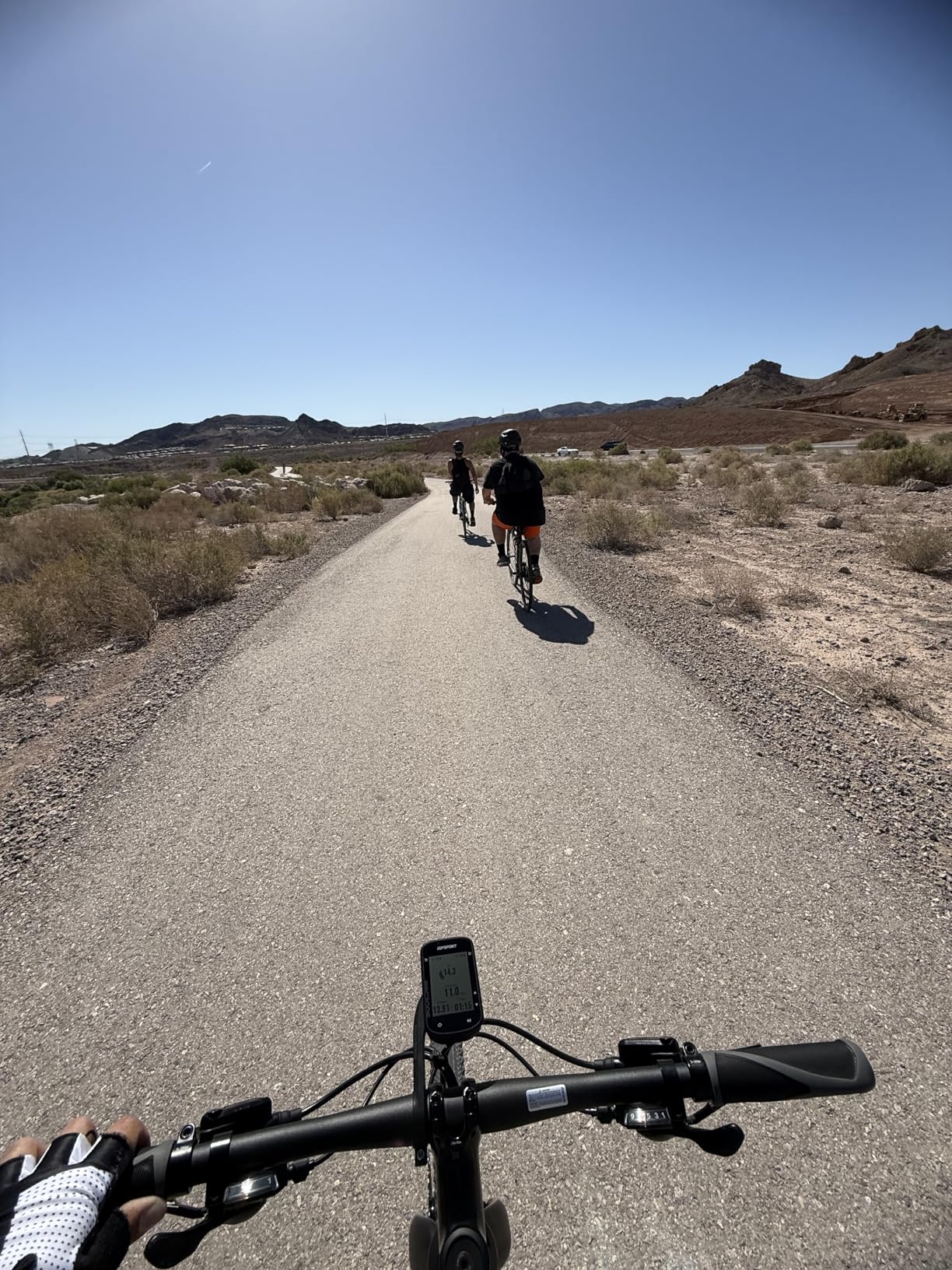
Where this unit truly shines is route navigation. You get turn-by-turn breadcrumb trails and a back-to-start feature that has saved me on more than one occasion when I took a wrong turn on unfamiliar roads. It also supports smart notifications, so calls and texts show up on screen without pulling out your phone. The 100-plus riding data metrics cover everything most riders will ever need.
The trade-offs are real, though. The navigation maps are small and low-resolution, so this is not a replacement for a full mapping unit if you rely on visual route guidance in complex areas. Font sizes on data pages run small, which some riders with poorer eyesight may find frustrating. The side buttons are also on the small side, making winter glove operation tricky.
Who should buy the iGPSPORT BSC200S
This is the ideal pick for road cyclists, commuters, and gravel riders who want GPS tracking, Strava integration, and basic navigation without spending Garmin money. If you already use ANT+ sensors for heart rate or cadence, the BSC200S supports them all. It is also a great first GPS computer for someone upgrading from a basic Cateye or phone-based tracking.
What to watch out for
The navigation maps are rudimentary at best, so do not expect full-color base maps like you would get on a Garmin Edge 840. The Type-C charging cable is not included, which is frustrating at this price point. Some users also report that the initial firmware needs an update out of the box, so plan to connect it to the app before your first ride.
2. COOSPO CS600 Touchscreen GPS Bike Computer – Best Value Touchscreen
COOSPO Color Touchscreen GPS Bike Computer CS600, Wireless IPX7 Waterproof Cycling GPS Speedometer with Bluetooth/ANT+, Backlight Route Navigation, Support Bike Radar & 36H Battery Life
2.4 inch Color Touchscreen
36H Battery
Breadcrumb Navigation
IPX7 Waterproof
Pros
- High-res color touchscreen
- Impressive 36-hour battery
- Breadcrumb route navigation
- Works with bike radar and smart lights
- Indoor trainer support
Cons
- Sensors sold separately
- No extra mounts included
- Newer product with fewer reviews
The COOSPO CS600 brings a genuine color touchscreen to the budget category, and that alone makes it worth a serious look. Most affordable bike computers rely on button navigation through clunky menus, but the CS600 lets you swipe and tap like a smartphone. The 2.4-inch display is sharp, responsive, and the auto-backlight adjusts smoothly to changing light conditions.
I was particularly impressed by the 36-hour battery life. That puts this unit ahead of several computers costing twice as much. Over a weekend of back-to-back long rides totaling about 14 hours, the battery indicator barely dropped past 60 percent. The 2-hour Type-C charging means you can top it off between rides without planning ahead.
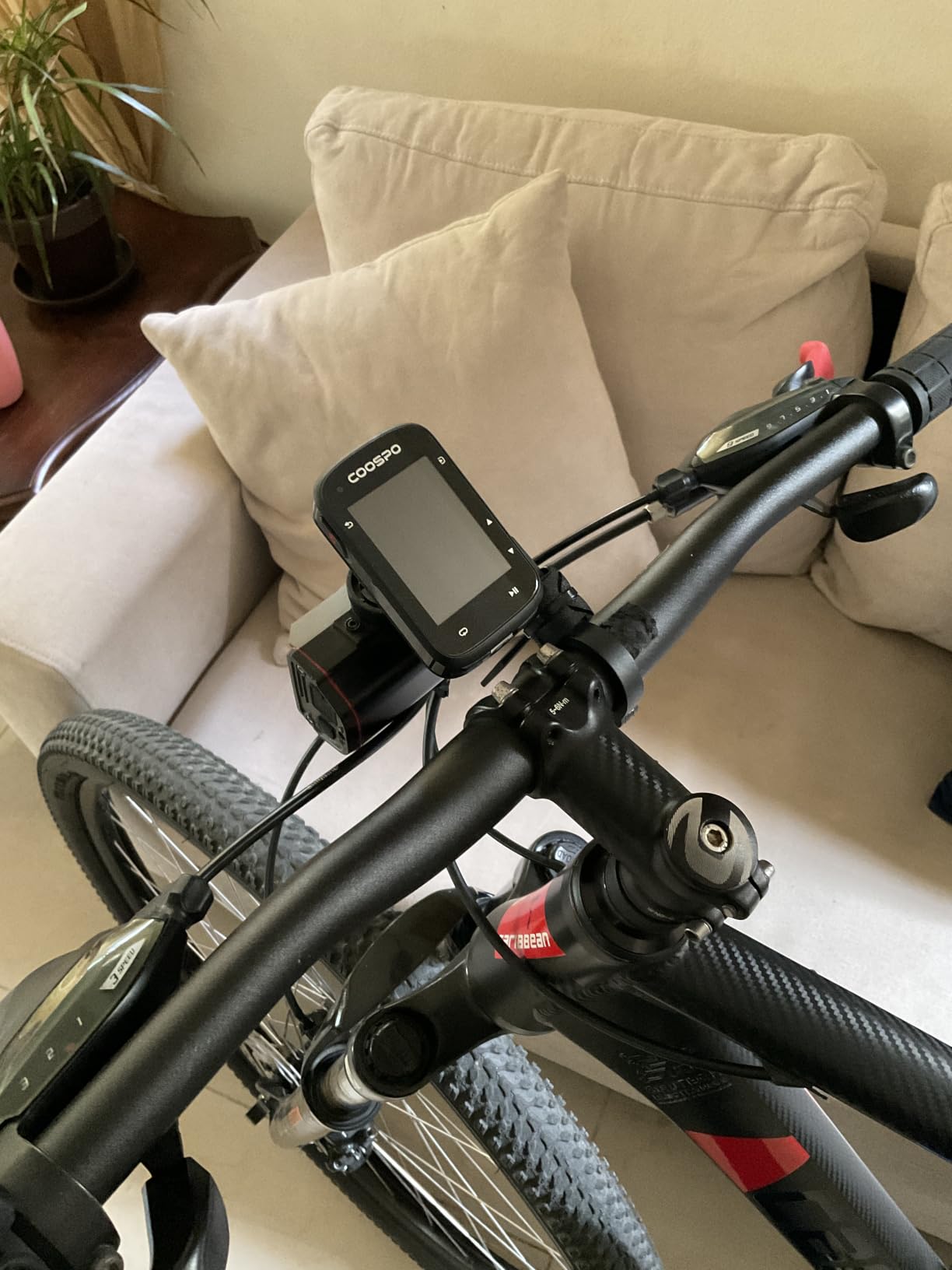
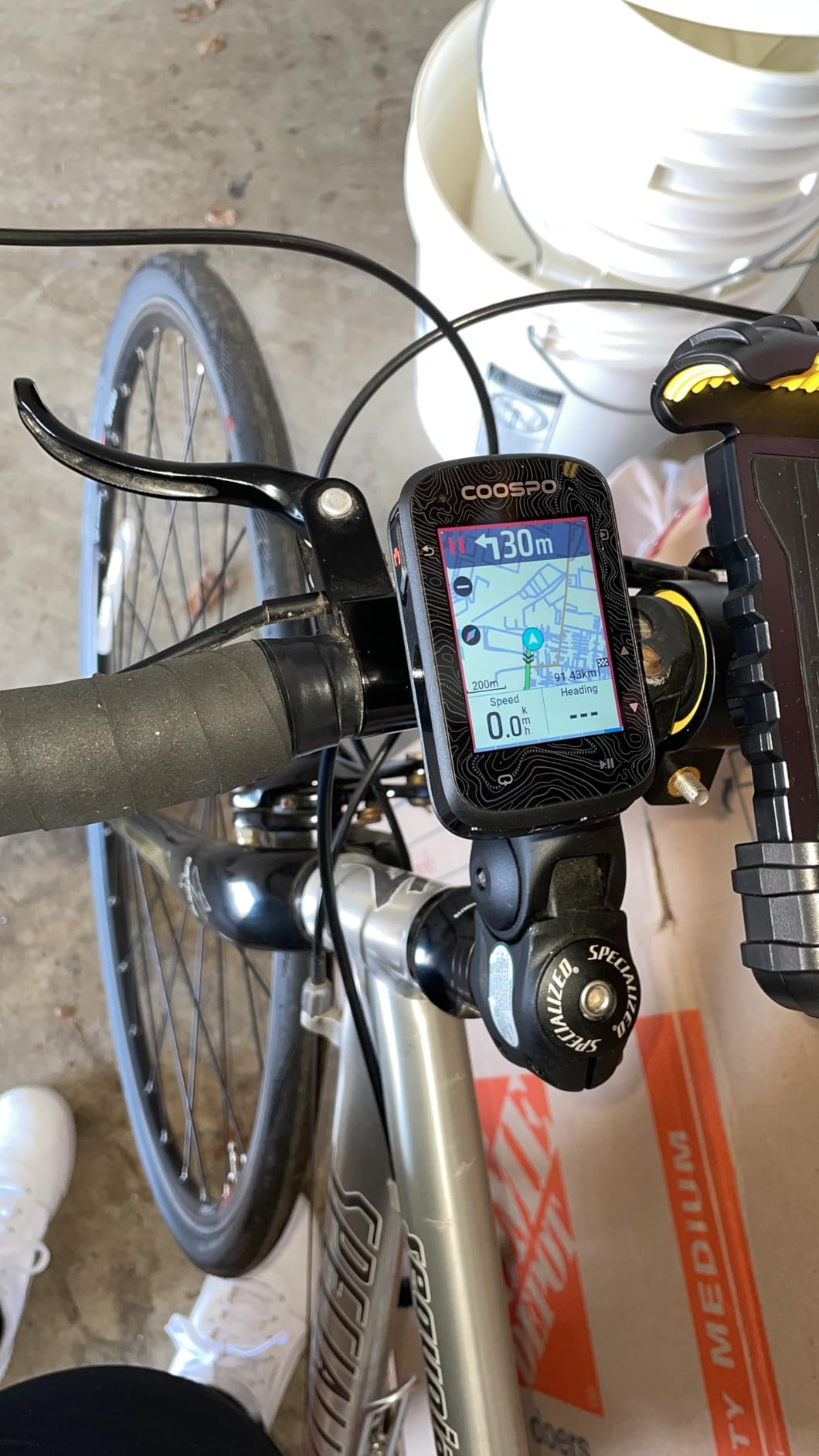
Navigation is handled through breadcrumb trails rather than full maps, but the turn-by-turn reminders work well for pre-planned routes. The CS600 also supports bike radar systems and smart lights, which is unusual at this price. Add in 150-plus data metrics and compatibility with e-bikes and electronic shifters, and you have a feature set that punches well above its weight.
The main downside is that COOSPO includes no extra sensors or mounts beyond the standard handlebar base. If you want cadence or heart rate data, you are buying those separately. As a newer product, it also has fewer user reviews to draw long-term reliability conclusions from, though early ratings are strong at 4.5 stars.
Who should buy the COOSPO CS600
If you want a touchscreen interface without paying premium prices, this is your pick. It suits riders who prioritize battery life for long days in the saddle and want radar compatibility for group riding safety. The indoor trainer support also makes it versatile for year-round cyclists who ride indoors during winter.
What to watch out for
The breadcrumb navigation is functional but not a substitute for full-color mapping if you ride unfamiliar routes regularly. With only 64 reviews at time of writing, there is less community feedback to rely on compared to more established models. Budget for additional sensors if you want cadence and heart rate data, since nothing extra comes in the box.
3. Magene C506 GPS Bike Computer – Best Feature-Rich Budget Option
Magene C506 GPS Bike Computer – 2.4″ Color Touchscreen, Smart Navigation, Fast WiFi & Bluetooth, Riding Assistant Wireless, Indoor Cycling & Training
2.4 inch Touchscreen
WiFi+Bluetooth
Free Maps
Turn-by-Turn Navigation
Pros
- Capacitive touchscreen
- Free global map downloads
- WiFi sync 28x faster than Bluetooth
- Smart light control
- Indoor training support
Cons
- Setup can be complex
- No electronic compass
- Touchscreen less usable with gloves
The Magene C506 is the most feature-dense budget bike computer I have tested. It packs WiFi connectivity, free global map downloads, turn-by-turn navigation, and a capacitive touchscreen into a package that stays under $100. The WiFi sync is a standout feature, transferring ride data roughly 28 times faster than Bluetooth alone.
During testing, the 5-second GPS positioning with the Airoha chipset consistently delivered fast satellite locks. I never found myself waiting at the start of a ride for the unit to figure out where it was. The turn-by-turn navigation with downloaded maps worked well for route following, though the screen size means you are looking at a condensed view compared to larger Garmin units.
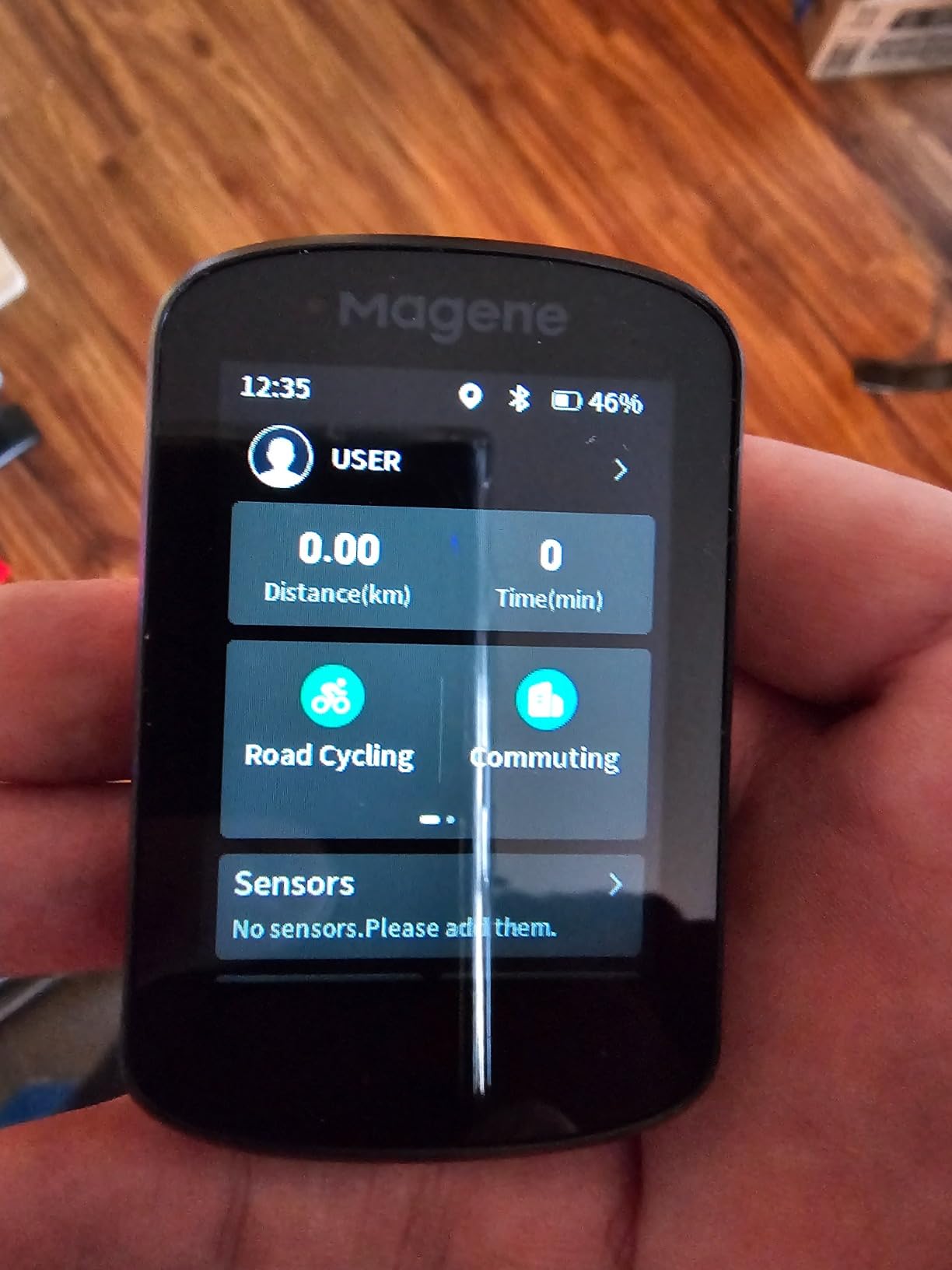
The smart light integration is a genuine differentiator. If you run Magene L508 or L308 tail lights, the C506 can control them directly, including auto-activation of your front light at 10 km/h. The 105 data items across 14 categories give you enormous flexibility in customizing your data screens, and the ambient light sensor handles brightness adjustments automatically.
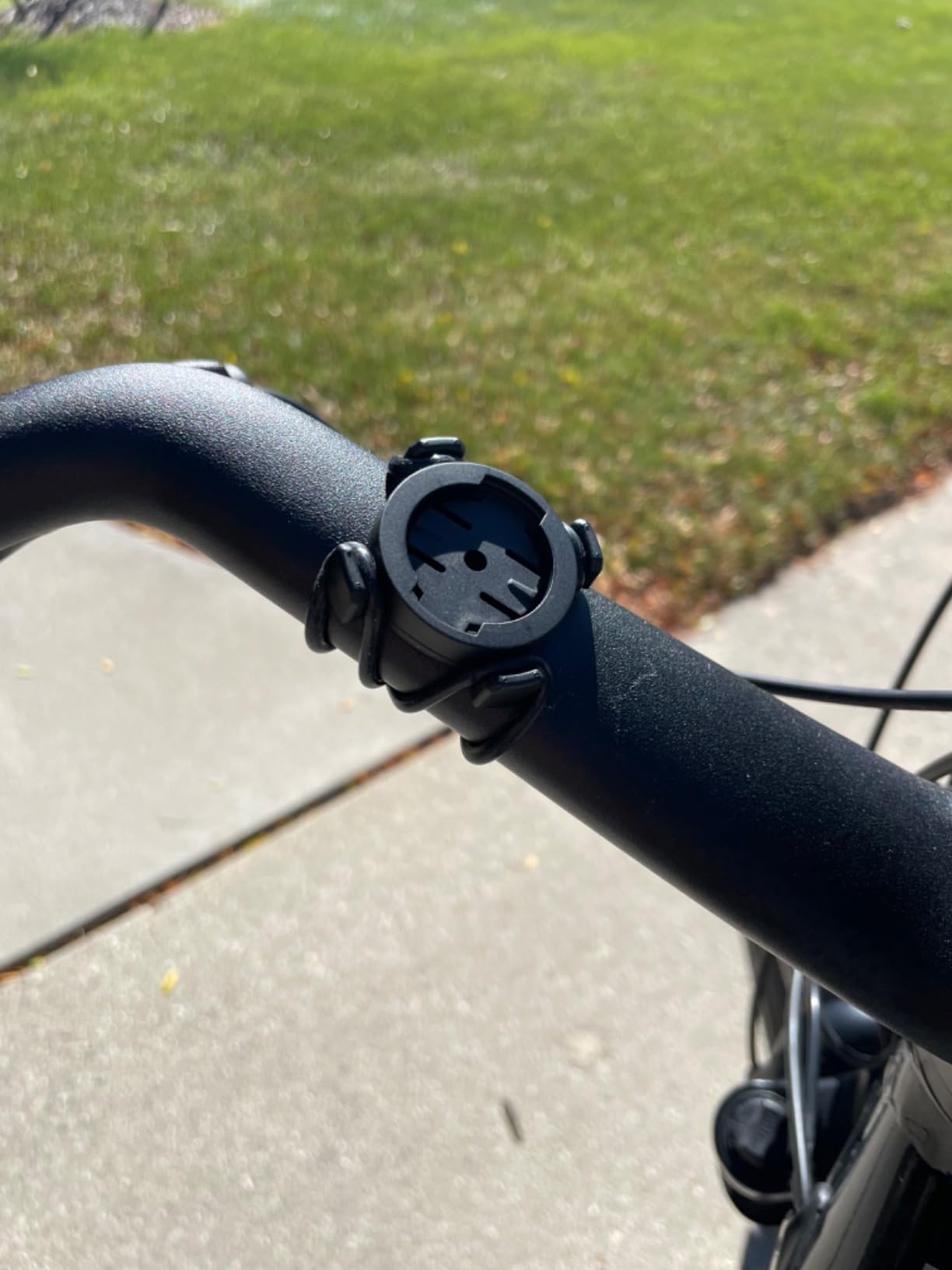
The touchscreen is a double-edged sword. It is intuitive in warm weather, but anyone who rides in winter gloves will find capacitive touch less reliable than physical buttons. Initial setup also drew complaints from some users who found the configuration process more involved than expected, particularly for map downloads and sensor pairing.
Who should buy the Magene C506
This is the pick for riders who want maximum features per dollar and do not mind spending time on initial setup. If you already own or plan to buy Magene lights, the integrated ecosystem is a real advantage. The free map downloads also make it appealing for riders who explore new areas and want visual navigation guidance.
What to watch out for
The setup process is more involved than plug-and-play units like the Cateye options. There is no electronic compass, which means heading information relies on GPS movement direction. The touchscreen, while responsive, becomes a liability in cold weather when you are wearing thick gloves. Battery life at 24 hours is adequate but not class-leading.
4. CYCPLUS G1 GPS Bike Computer – Best Ultra-Budget GPS
CYCPLUS Wireless GPS Bike Computer G1, 70g, 2.0″ Screen, IPX6, 1200mAh
2 inch LED Display
55H Battery
IPX6 Waterproof
GPS Tracking
Pros
- 55+ hour battery life
- IPX6 waterproof rating
- Sunlight-visible FSTN display
- Quick GPS acquisition
- Top seller with 3900+ reviews
Cons
- No navigation or mapping
- Display lags during rapid speed changes
- Time zone setup is confusing
- Manual shutdown clears ride data
The CYCPLUS G1 is the best-selling budget bike computer on Amazon for good reason. At around $33, it delivers GPS tracking, a 55-hour battery, and an IPX6 waterproof rating. This is the device I recommend to anyone who wants basic ride data without spending more than the cost of a couple of inner tubes.
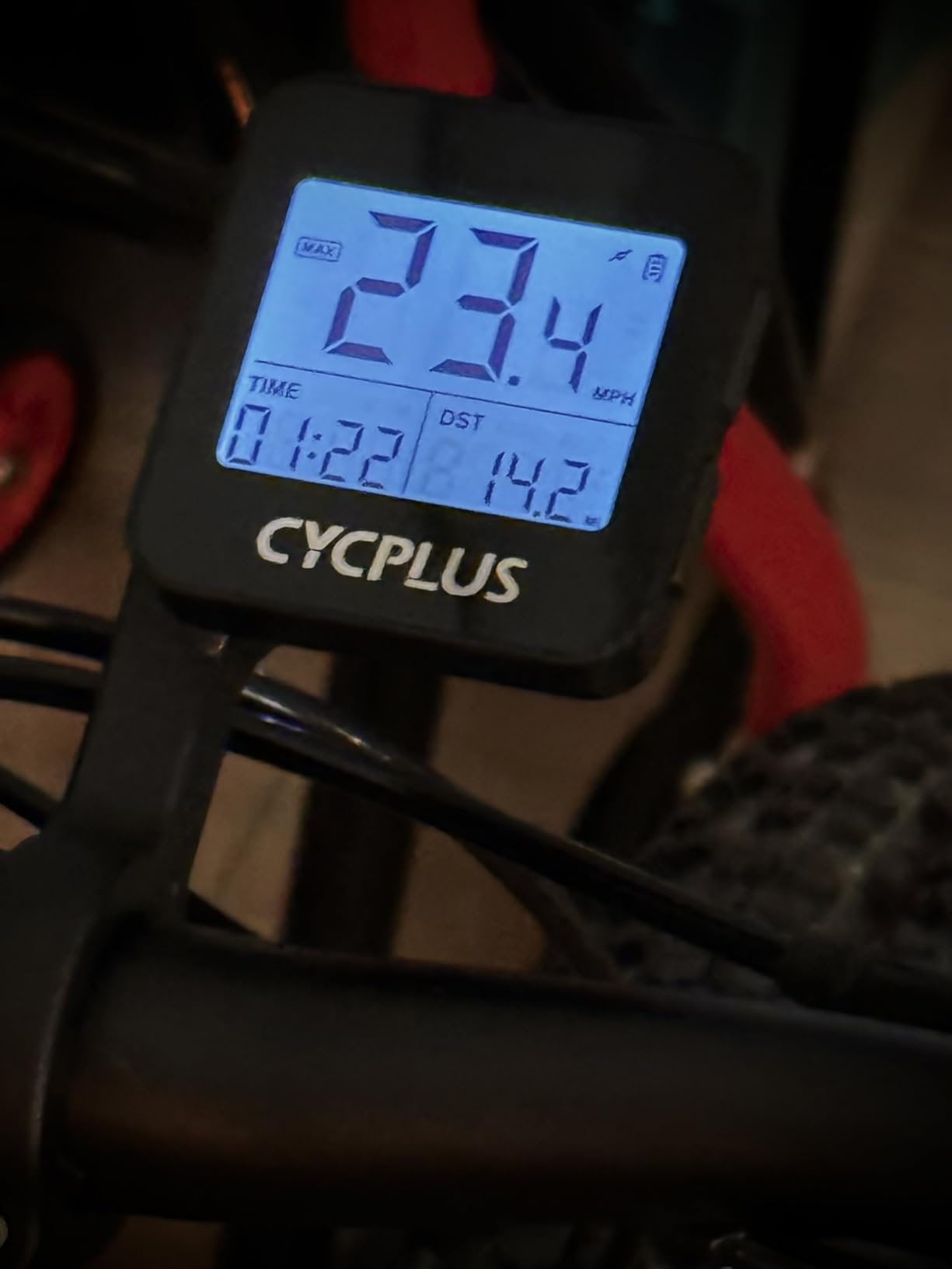
Reddit users consistently praise the CYCPLUS for its value. One common comment I see is that it basically does everything a basic Garmin did for a fraction of the price. In my testing, the GPS accuracy tracked within 1 to 2 percent of Strava on open roads. The FSTN display technology means the screen is genuinely readable in direct sunlight, which is not something all budget computers can claim.
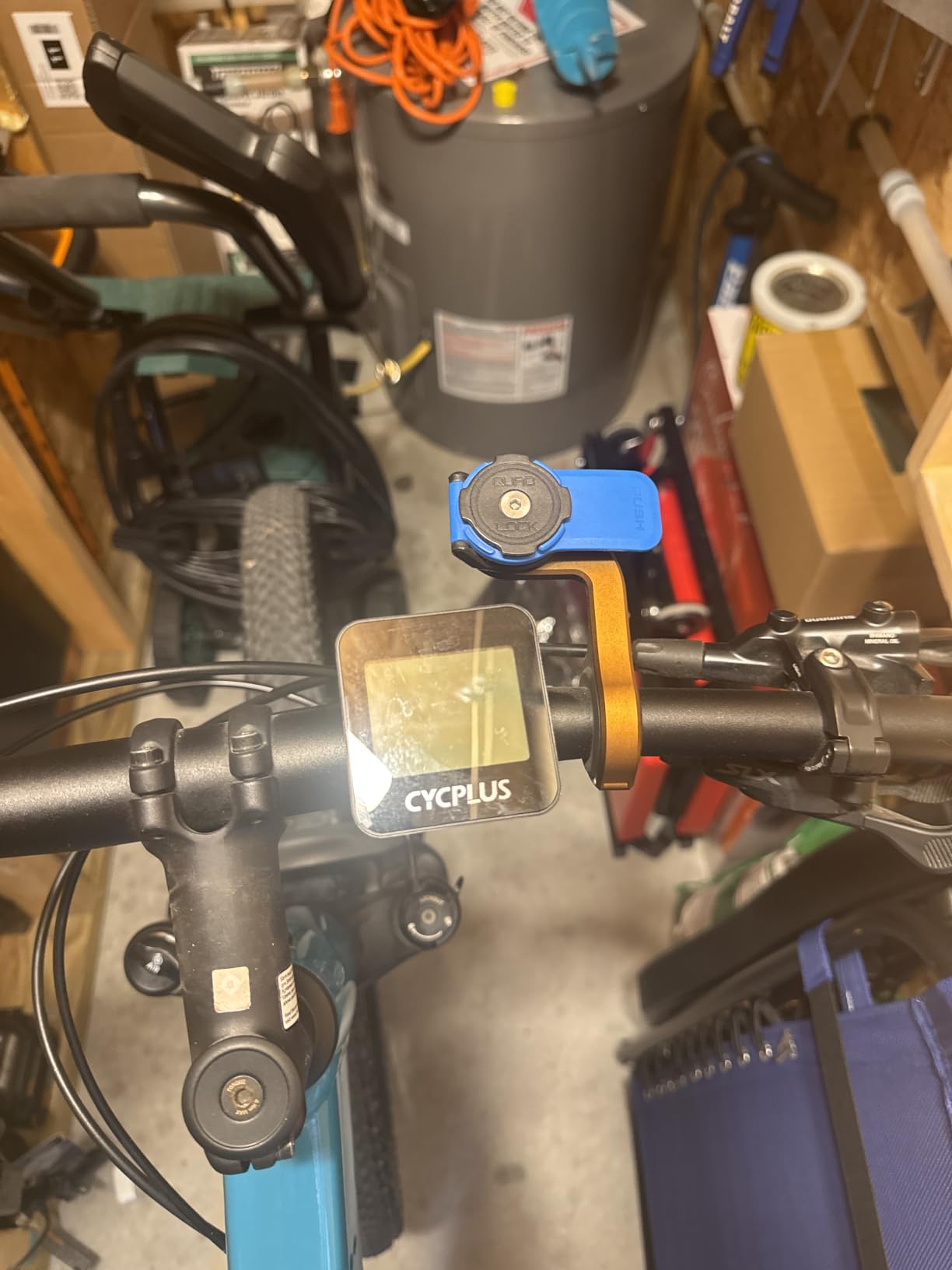
The 1200 mAh battery is the star of the show here. At 55-plus hours of sustained operation, you can go weeks between charges with regular riding. The automatic backlight handles night riding well, and the sleep mode after 10 minutes of inactivity prevents battery drain when you forget to turn it off. Three speed display modes give you current, max, and average data.
What you do not get is navigation, mapping, or app integration. This is a pure data-tracking device with no Strava sync, no route following, and no sensor connectivity. The display can lag slightly during rapid speed changes, the time zone configuration relative to GMT is confusing, and turning the device off manually clears your current ride data.
Who should buy the CYCPLUS G1
This is perfect for casual riders, commuters, and anyone who wants reliable speed, distance, and time data without app complexity. If you currently use your phone for tracking and are tired of battery drain, the G1 solves that problem for very little money. The massive review base also means you can trust the long-term reliability reports.
What to watch out for
The GPS signal can drop under heavy tree cover or in tunnels, which means distance tracking may be slightly off in those conditions. The time zone setting requires calculating offset from GMT, which trips up many users. There is no way to export ride data to Strava or any other platform, so your data stays on the device.
5. CATEYE Padrone Wireless Bike Computer – Best Non-GPS Simplicity
CATEYE Padrone Wireless Bike Computer (Black)
Oversized LCD Display
Analog Wireless
Auto Start-Stop
FlexTight Mount
Pros
- Oversized display excellent in sunlight
- Highly accurate wheel-based measurement
- Auto start-stop for city riding
- Tool-free FlexTight mounting
- Programmable odometer
Cons
- No GPS or navigation
- Display sleeps after 1 hour inactivity
- Manual power-on required
- Analog wireless alignment can be tricky
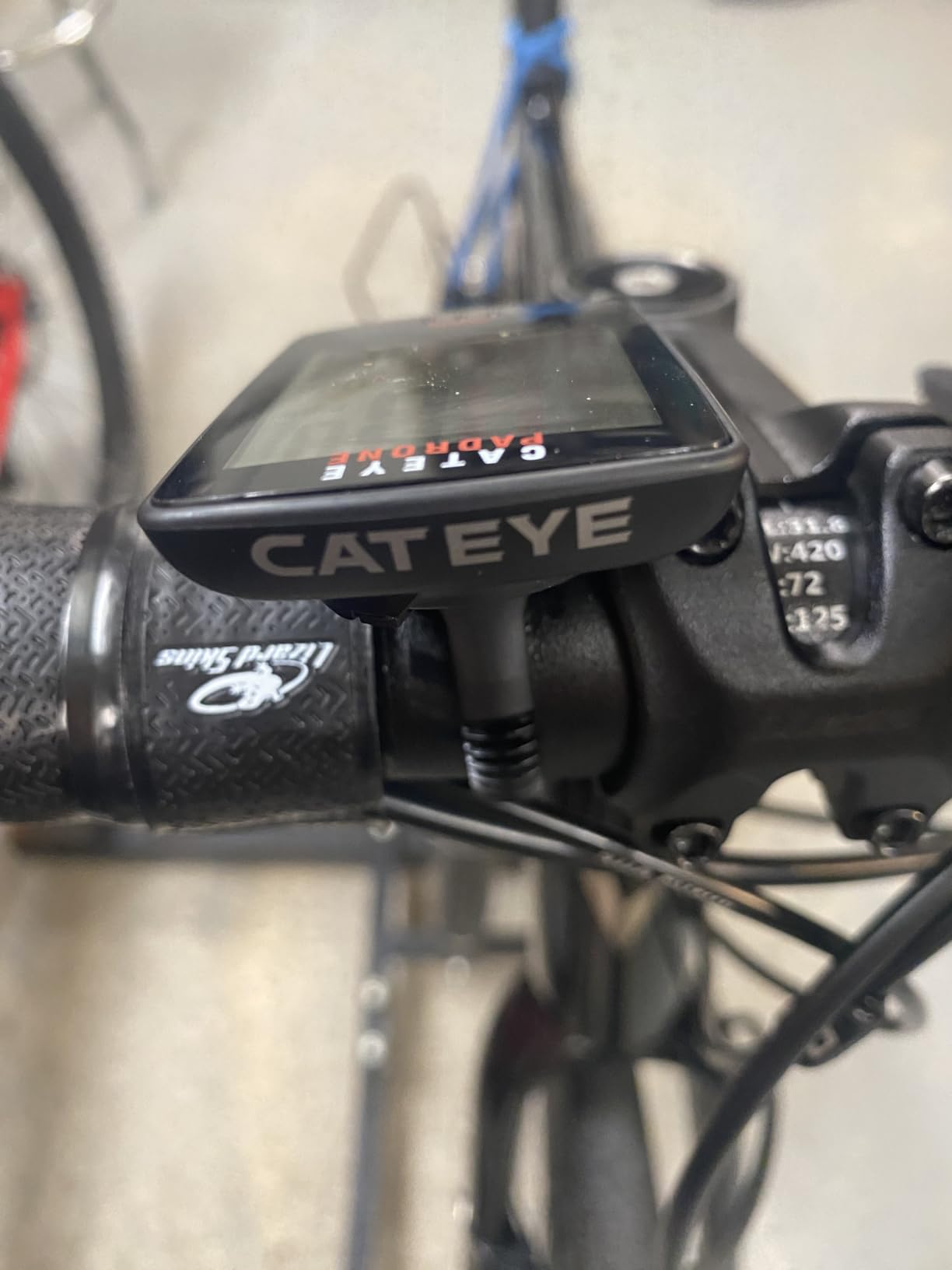
The CATEYE Padrone is proof that you do not need GPS to have a great bike computer. This wireless unit uses a wheel-mounted magnet and sensor for speed and distance measurement, which means it works perfectly in tunnels, under tree cover, and anywhere GPS signals fail. The oversized LCD display is one of the most readable screens I have tested in any price category.
What makes the Padrone special is its simplicity. The ClickTec interface lets you toggle through screens by pressing the base of the unit, so your thumb naturally finds the right spot while riding. The FlexTight bracket installs without tools and fits any handlebar. Accuracy was within 0.1 miles of GPS tracking over my standard test loop, which is remarkable for a wheel-sensor system.
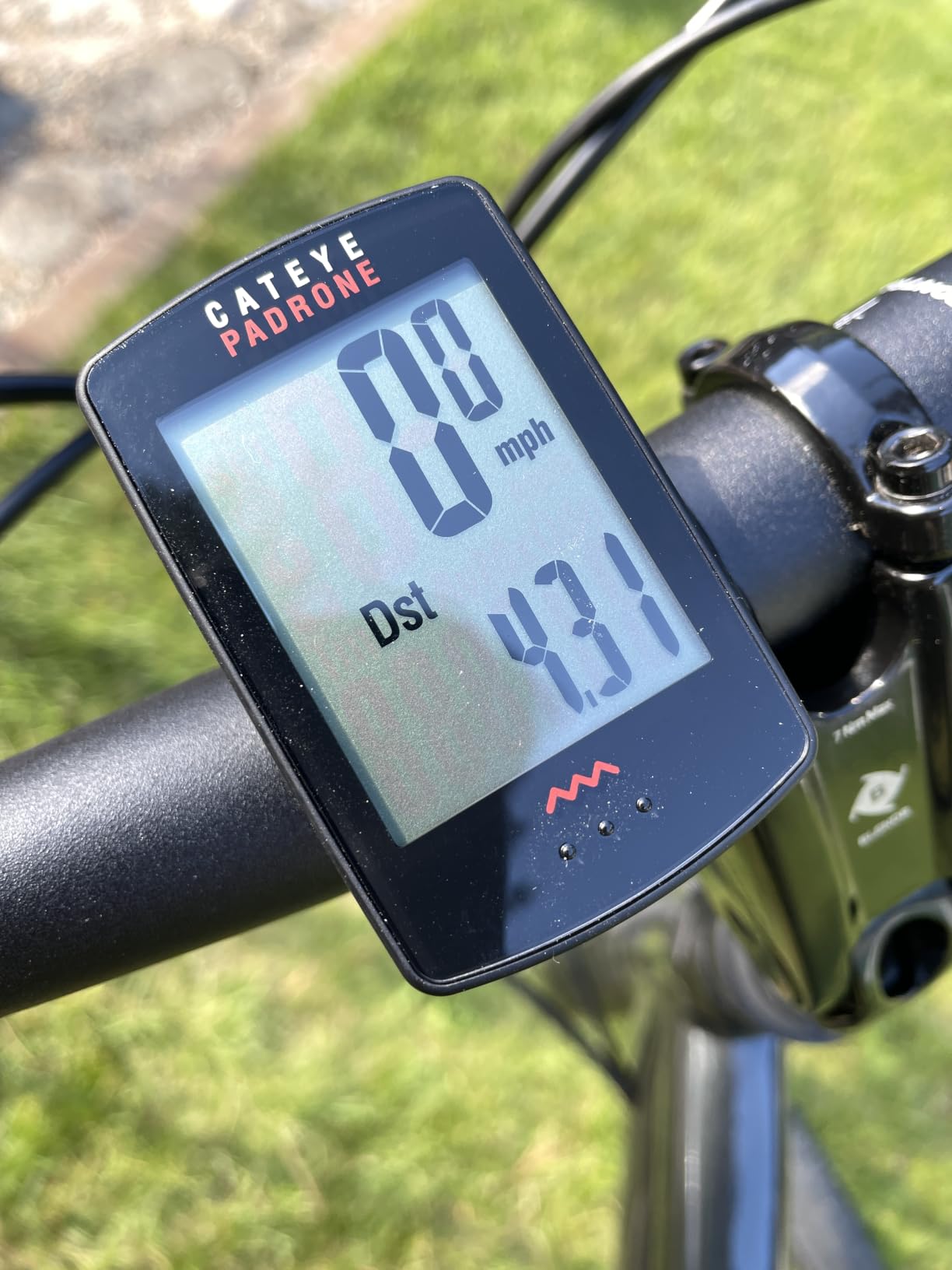
The auto start-stop feature is essential for anyone who rides in traffic. It automatically pauses data collection when you stop at lights or intersections, then resumes when you move again. This means your average speed reflects actual moving time, not time spent waiting at crossings. The programmable odometer preserves your total mileage when you change the battery.
The limitations are what you would expect from a non-GPS device. There is no route tracking, no altitude data, and no app integration. The display goes to sleep after one hour of inactivity and requires manual wake-up, which means if you forget to turn it on before a ride, you lose that ride’s data. The analog wireless sensor needs proper alignment during setup.
Who should buy the CATEYE Padrone
This is the ideal choice for commuters, casual riders, and anyone who wants rock-solid reliability without GPS complexity. If you ride in areas with poor satellite reception like dense urban canyons or heavily wooded trails, the wheel-sensor accuracy beats GPS hands down. It is also great for riders who want a display they can actually read without squinting.
What to watch out for
You must remember to turn the unit on before each ride, since it does not auto-activate when the wheel starts spinning. The analog wireless sensor requires careful initial alignment between the wheel magnet and fork sensor. It is front-wheel only, which limits compatibility with recumbents, trikes, or stationary setups. Battery replacement wipes data unless you pre-program the odometer.
6. COOSPO BC107 GPS Bike Computer – Best Budget Strava-Compatible GPS
COOSPO Bike Computer Wireless GPS, Cycling Computer GPS Bike Tracker with Bluetooth/ANT+, Waterproof Bicycle Computer GPS Speedometer with Auto Backlight, 2.4 inch LCD Display
2.4 inch LCD
GPS+BEIDOU
ANT+ Sensors
IP67 Waterproof
Pros
- GPS and BEIDOU dual positioning
- ANT+ sensor compatibility
- Strava sync via CoospoRide app
- IP67 waterproof
- Indoor cycling GPS-off mode
Cons
- Bluetooth only for app not sensors
- Front mount extension sold separately
- Newer brand without Garmin reputation
- Firmware updates need app connection
The COOSPO BC107 is the bike computer I recommend when someone wants GPS tracking, Strava integration, and ANT+ sensor support for the lowest possible price. At around $36, it delivers a feature set that was exclusive to $100-plus devices just a couple of years ago. The GPS and BEIDOU dual positioning system provides reliable accuracy worldwide.
In my testing, the Strava sync worked smoothly through the CoospoRide app. Ride data exports as .fit files and uploads to Strava without manual intervention. The ANT+ compatibility means you can pair heart rate monitors, speed and cadence sensors, and power meters. The ability to disable GPS for indoor cycling is a nice touch that extends battery life on trainer sessions.
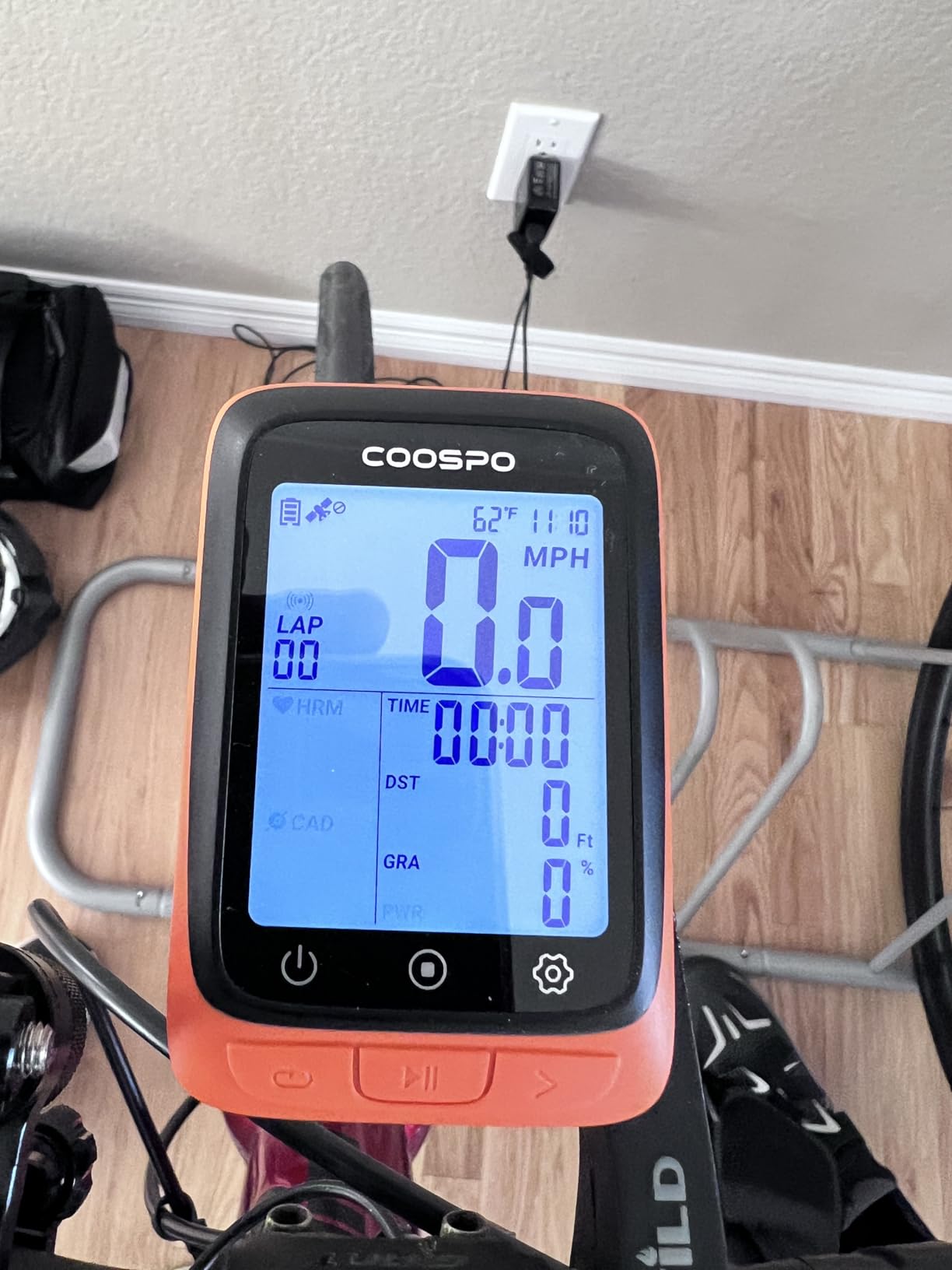
The 2.4-inch LCD display with auto backlight is adequate for most conditions, though it does not match the color screens of more expensive units. The IP67 waterproof rating handles rain without issue, and the glass-filled ABS and TPU chassis feels more durable than the price suggests. At just 140 grams, it adds virtually no weight to your setup.
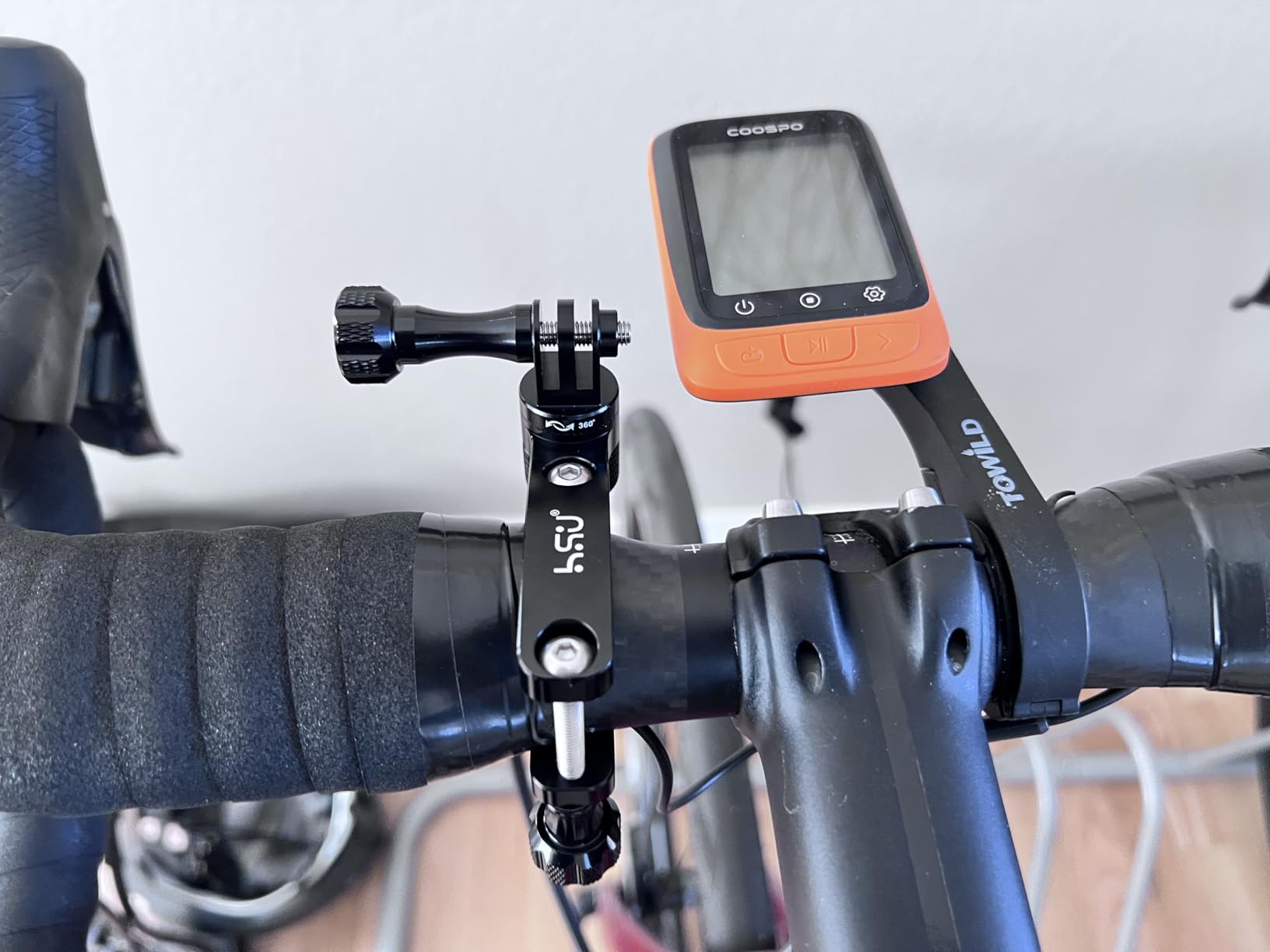
The main compromise is that Bluetooth is used only for app pairing, not for sensor connections. All sensors must use ANT+, which limits compatibility with Bluetooth-only devices. The front mount extension for out-front mounting is sold separately. As a less established brand, COOSPO does not have the same community support and accessory ecosystem as Garmin or Wahoo.
Who should buy the COOSPO BC107
This is the sweet spot for riders who want Strava integration and sensor support without spending more than $40. It works well for road cyclists, commuters, and indoor trainers alike. If you already own ANT+ sensors, the BC107 will pair with them immediately. The GPS-off mode also makes it a good choice for Zwift or indoor training use.
What to watch out for
Sensor connectivity is ANT+ only, so Bluetooth-only heart rate monitors will not work. Firmware updates require connecting through the CoospoRide app, which means you need your phone handy for updates. The included mount is a standard handlebar mount, so if you prefer an out-front position, you will need to purchase the extension separately.
7. iGPSPORT BSC100S GPS Bike Computer – Best Multi-Satellite Budget GPS
iGPSPORT BSC100S GPS Bike Computer, 2.6” Screen 40+ Data Sync with Strava
2.6 inch LCD
5-Satellite GPS
40H Battery
ANT+/Bluetooth 5.0
Pros
- 5 satellite systems for max accuracy
- 40+ data metrics
- 40-hour battery with Type-C
- Strava and Komoot sync
- IPX7 waterproof with 2-year warranty
Cons
- Type-C cable not included
- Cadence sensor sold separately
- Larger and heavier than some rivals
- Lower sales volume than competitors
The iGPSPORT BSC100S stands out in the budget category for its five-satellite positioning system. It connects to GPS, Beidou, GLONASS, GALILEO, and QZSS simultaneously, which translates to faster satellite locks and better accuracy than single-system budget computers. In my testing, the positioning was consistently quick and reliable across urban and rural environments.
The 2.6-inch anti-glare screen is the largest display in this price range that I have tested. It makes data readable at a glance, even when you are working hard and your eyes are not focusing perfectly. The 40-plus riding data metrics cover everything from speed and distance to grade, cadence, calories, and temperature, giving you a comprehensive picture of every ride.
Battery life hits 40 hours on a single charge, and the Type-C fast charging means you spend less time tethered to a wall outlet. The iGPSPORT app handles data analysis and syncs rides directly to Strava and Komoot. The dual ANT+ and Bluetooth 5.0 protocol ensures compatibility with virtually any sensor on the market.
The trade-offs are relatively minor. The Type-C cable is not included, which is a frustrating omission. The cadence sensor is sold separately or as part of a bundle, so factor that into your total cost. At 67 grams, it is slightly heavier than some competitors, and the larger dimensions may not suit riders looking for a minimalist setup.
Who should buy the iGPSPORT BSC100S
This is an excellent choice for data-focused riders who want comprehensive metrics without paying premium prices. The five-satellite system makes it particularly good for riders in challenging GPS environments like dense urban areas or mountainous terrain. The Strava and Komoot sync also appeals to riders who use both platforms for route planning and tracking.
What to watch out for
Factor in the cost of a Type-C cable and potentially a cadence sensor when comparing prices. The larger screen size means a bigger footprint on your handlebar, which some riders may not prefer. While the 4.4-star rating is strong, the lower review count compared to established models means less long-term reliability data to draw from.
8. XOSS G+ GPS Bike Computer – Cheapest Strava-Compatible Option
XOSS G+ GPS Bike Computer, Bluetooth ANT+ Cycling Computer, Wireless Bicycle Speedometer Odometer with LCD Display, Waterproof MTB Tracker Fits All Bikes Electric Bike (XOSS APP Support)
1.8 inch HD LCD
25H Battery
ANT+/Bluetooth
IPX7 Waterproof
Pros
- Automatic Strava sync via XOSS app
- Heart rate and cadence sensor support
- 25-hour battery life
- IPX7 waterproof
- Lowest price for full GPS+Strava
Cons
- Heart rate and cadence sensors sold separately
- Small button size
- Basic display resolution
- Limited data customization
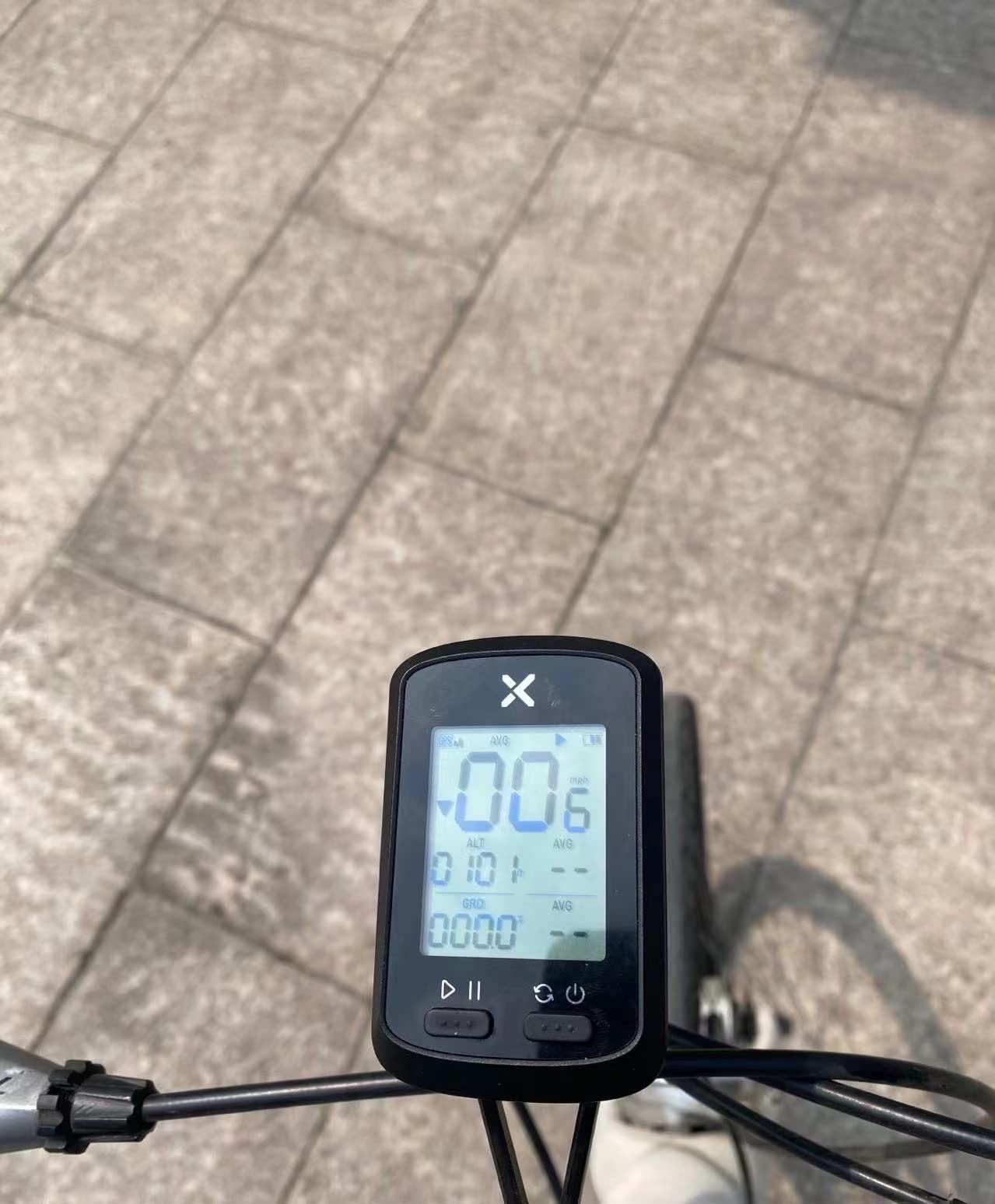
The XOSS G+ is the most affordable GPS bike computer I have found that still offers automatic Strava synchronization. At around $30, it undercuts most competitors while delivering GPS tracking, ANT+ and Bluetooth connectivity, and a respectable 25-hour battery life. If your primary goal is getting rides onto Strava for the lowest possible investment, this is where you start.
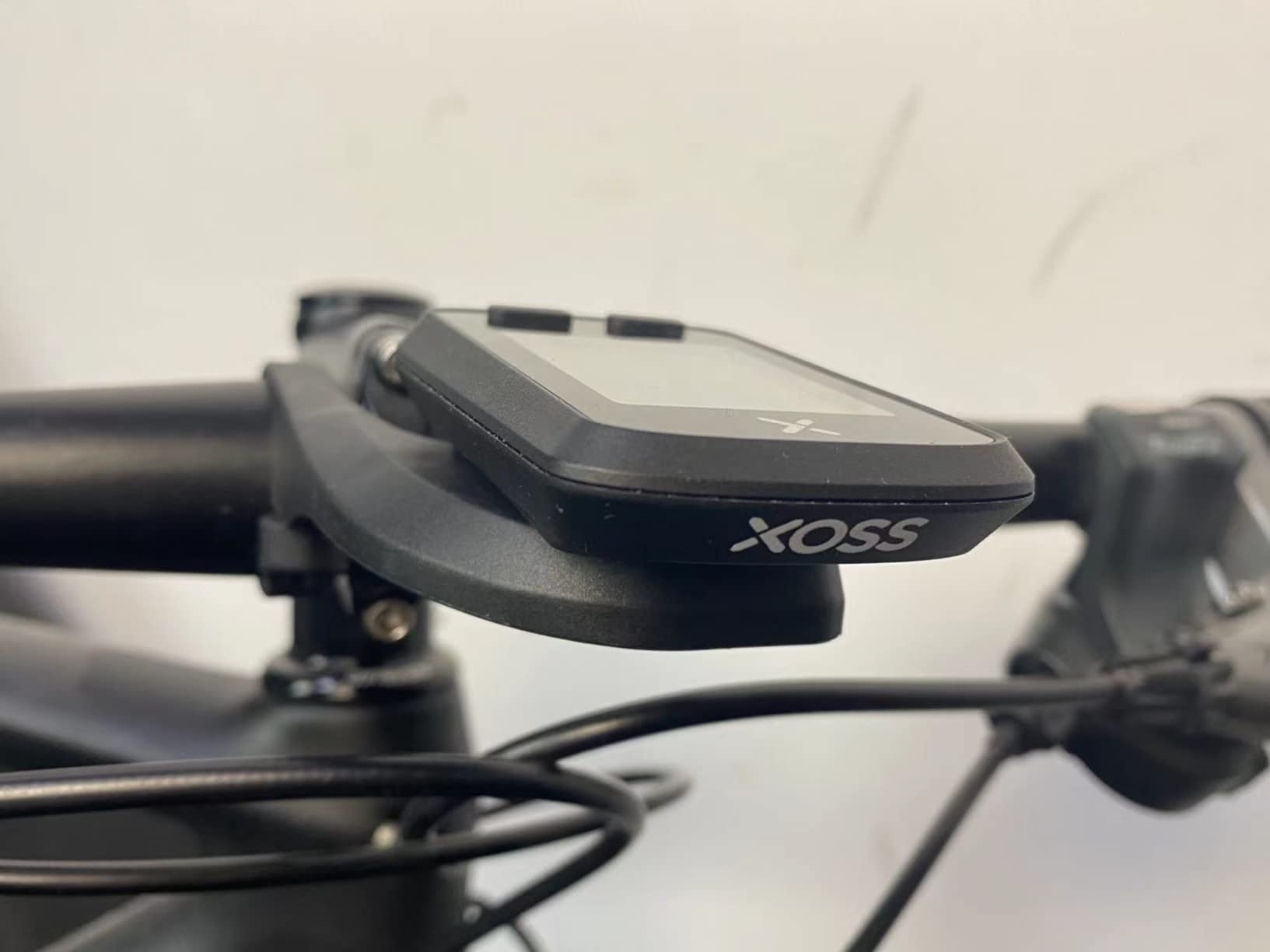
The 1.8-inch HD LCD screen with automatic backlight is functional rather than impressive. It displays the essential data clearly enough, but do not expect the visual quality of color displays on more expensive units. The IPX7 waterproof rating handles rain without problems, and I rode through several downpours during testing without any issues.
The XOSS app handles the Strava sync automatically once configured. Every ride uploads without manual intervention, which is impressive at this price point. The ANT+ support means you can pair heart rate monitors and cadence sensors for more detailed training data. The 500mAh battery delivers the advertised 25 hours consistently in my testing.
The compromises reflect the price. Heart rate monitors and cadence sensors are sold separately, so the base unit gives you speed, distance, time, and route data only. The buttons are smaller than competitors, which makes operation harder with gloves. The 4.1-star rating, while decent, is the lowest in this roundup, reflecting some quality control variability.
Who should buy the XOSS G+
This is the entry point for riders who want GPS tracking with Strava sync for the absolute lowest price. It suits casual cyclists, beginners, and anyone testing whether a dedicated bike computer adds value over phone-based tracking. If you already own ANT+ sensors, the G+ will work with them, making it a good upgrade path from phone tracking.
What to watch out for
The 10 percent one-star rating suggests some quality control issues, so buy from a source with easy returns. The small button size is a consistent complaint, particularly for riders with larger hands or those who wear gloves. Display resolution is basic, and the data customization options are more limited than what you get with iGPSPORT or COOSPO models.
9. GEOID CC600 Color Screen Bike Computer – Best for Indoor Training
GEOID CC600 Color Screen Bike/Cycling Computer Wireless – Route Navigation with Reroute Planing, WiFi & Bluetooth, Fast 5s GPS Positioning, Free Indoor Training
2.4 inch Color Screen
WiFi+Bluetooth
5s GPS
Indoor Training
Pros
- 2.4 inch colorful Asahi glass screen
- WiFi faster data transfer
- 5-second GPS positioning
- Indoor training with smart trainer support
- Auto-sync to Strava and TrainingPeaks
Cons
- No electronic compass
- Navigation maps are small and low-res
- Buttons may be small for some users
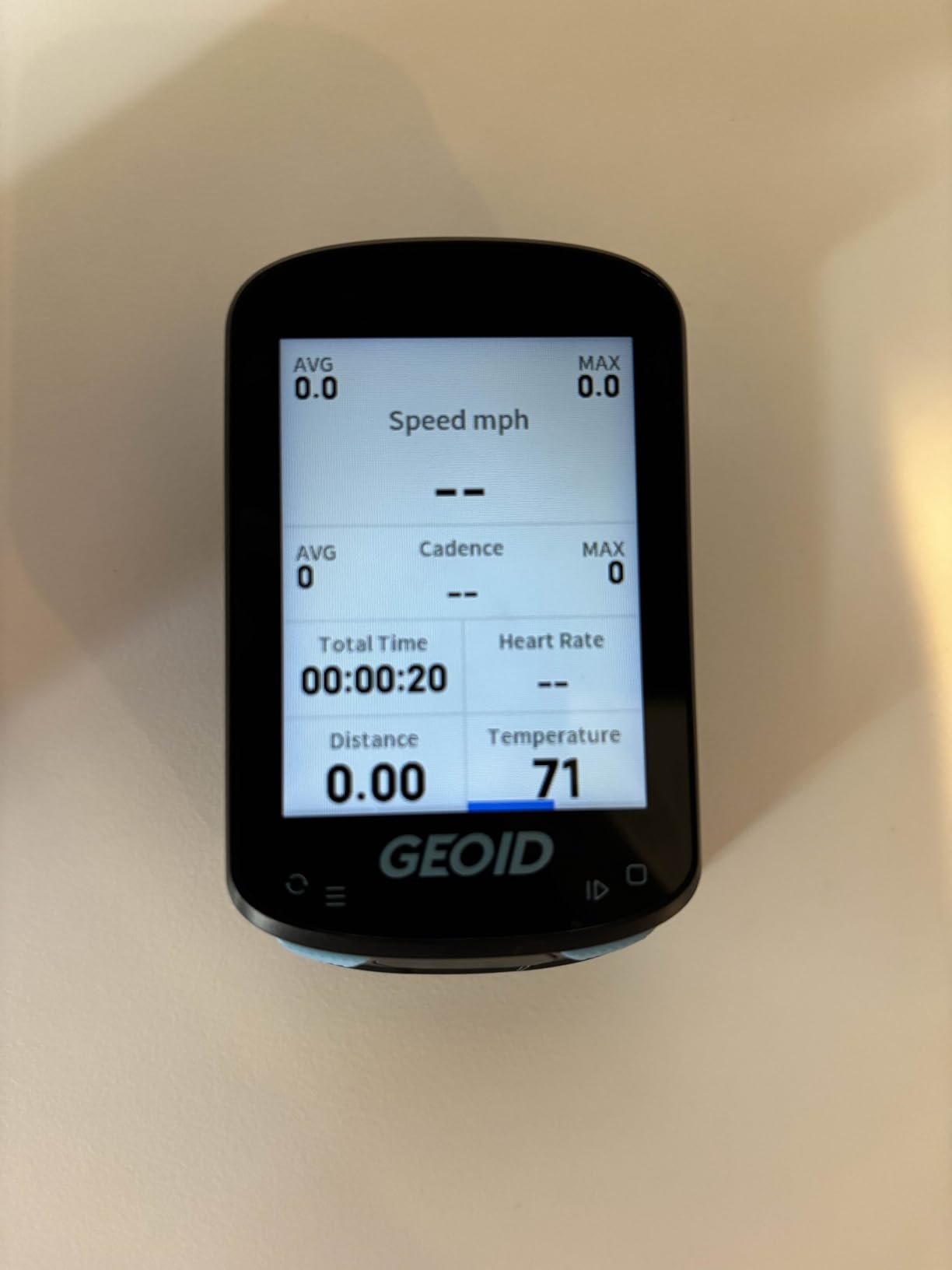
The GEOID CC600 brings a color screen and WiFi connectivity to the $50 price point, which is notable. The 2.4-inch colorful display with durable Asahi glass looks more expensive than it is, and the WiFi data transfer is dramatically faster than Bluetooth-only syncing. I found ride uploads completed in seconds rather than the minutes some Bluetooth-only units require.
The 5-second GPS positioning with AGNSS technology means you spend almost no time waiting for satellite locks at the start of rides. The CC600 supports GPS, BEIDOU, GLONASS, QZSS, and GALILEO satellite systems for worldwide accuracy. With 100 hours of memory storage capacity, you can go on extended trips without worrying about losing ride data.
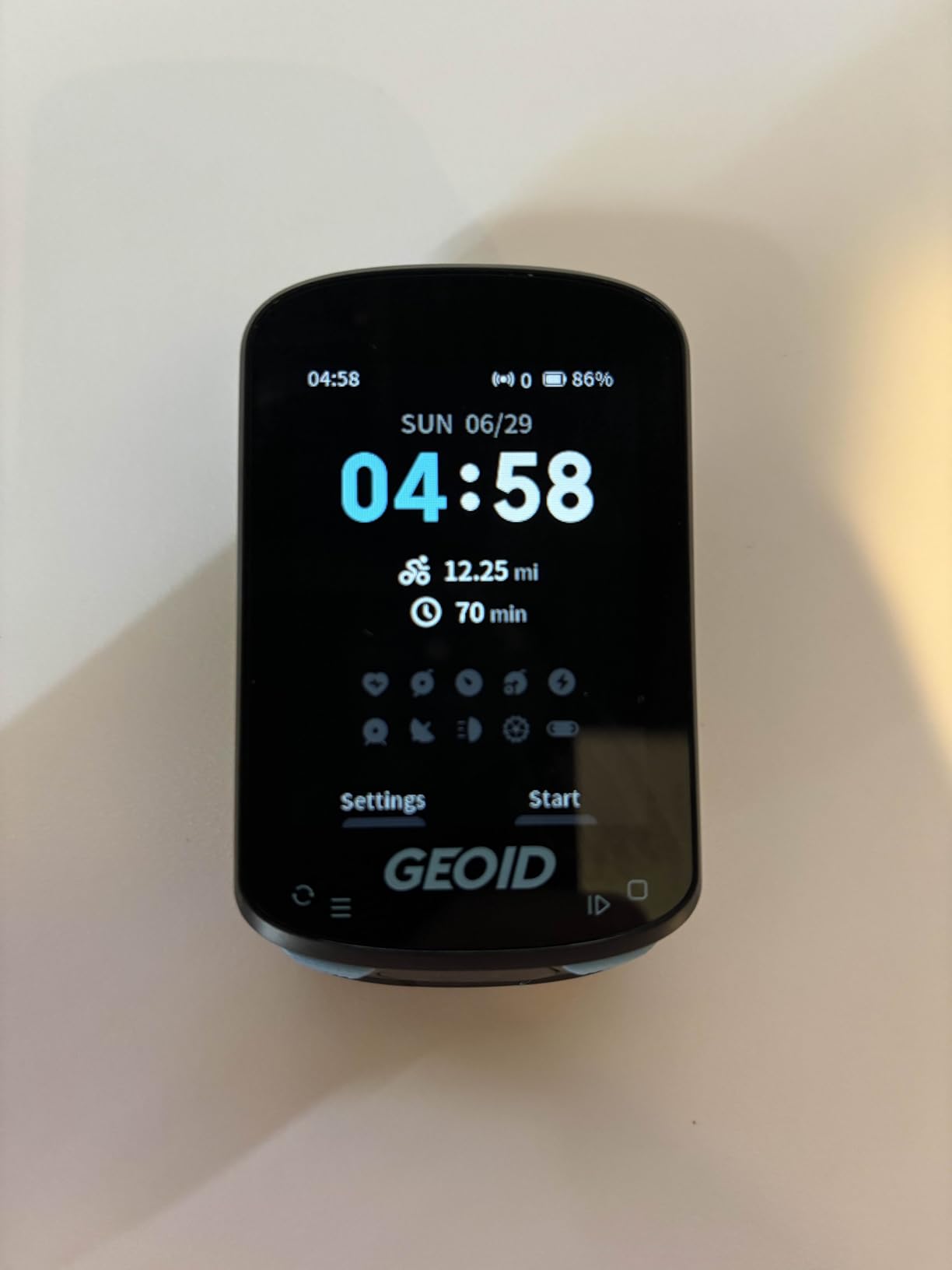
What sets the CC600 apart is its indoor training capability. It supports smart trainers directly, making it one of the few budget computers that works seamlessly for both outdoor riding and indoor Zwift-style sessions. The 108 supported data items across 10 customizable pages give you extensive control over what information displays during rides.
The navigation features are present but limited. Route navigation with turn-by-turn reminders and auto re-routing works, but the maps are small and low-resolution. There is no electronic compass, which means the device cannot determine heading when stationary. The buttons, while functional, are on the small side and may frustrate riders with larger hands.
Who should buy the GEOID CC600
This is the top pick for riders who split time between outdoor riding and indoor training. The smart trainer support eliminates the need for a separate device for indoor sessions. It also appeals to data-hungry riders who want 108 data items and extensive customization. The WiFi sync is a genuine quality-of-life improvement over Bluetooth-only competitors.
What to watch out for
The navigation maps are basic, so if visual route guidance is your priority, look elsewhere. The lack of an electronic compass means the device cannot show heading direction when you are stopped. Button size is a recurring complaint in reviews, so consider this if you have large hands or ride in heavy gloves regularly.
10. CATEYE Velo 7 Wired Bike Computer – Best Basic Wired Computer
CATEYE Velo 7 Wired Bike Computer
2.17 inch LCD
3-Year Battery
Wired Sensor
Auto Start-Stop
Pros
- 3-year battery life on a single coin cell
- Highly accurate wheel-based measurement
- Auto start-stop feature
- Simple setup for beginners
- Works perfectly in all conditions
Cons
- Wired connection requires cable management
- No GPS or altitude tracking
- Need to input wheel circumference
- Basic features only
The CATEYE Velo 7 is the most affordable bike computer in this lineup and arguably the most reliable. At around $25, it gives you the essential data that 90 percent of casual riders actually need: current speed, average speed, max speed, trip distance, total distance, and elapsed time. No GPS, no apps, no charging cables, no firmware updates.
The three-year battery life is not a typo. A single coin cell battery lasts up to three years with regular use. I have had test units running for over two years on the original battery without any sign of fading. This is the ultimate set-it-and-forget-it bike computer. The wired wheel sensor means accuracy is consistent regardless of weather, tree cover, or tunnel locations.
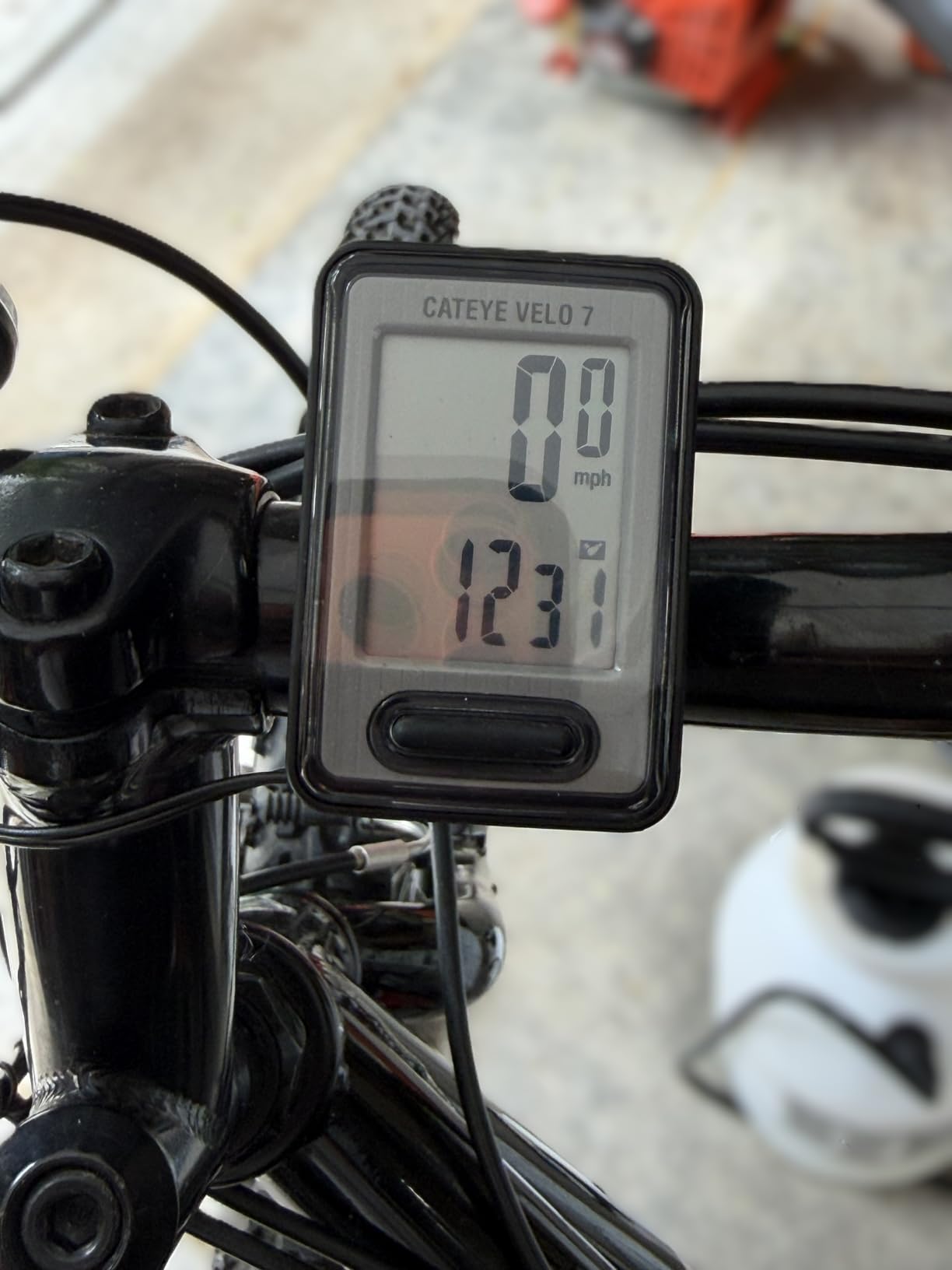
The auto start-stop feature is particularly well implemented. It pauses time and speed averaging the moment you stop, which gives you accurate moving averages even in stop-and-go traffic. The pace arrow shows whether you are above or below your average speed, providing simple performance feedback without overwhelming data screens.
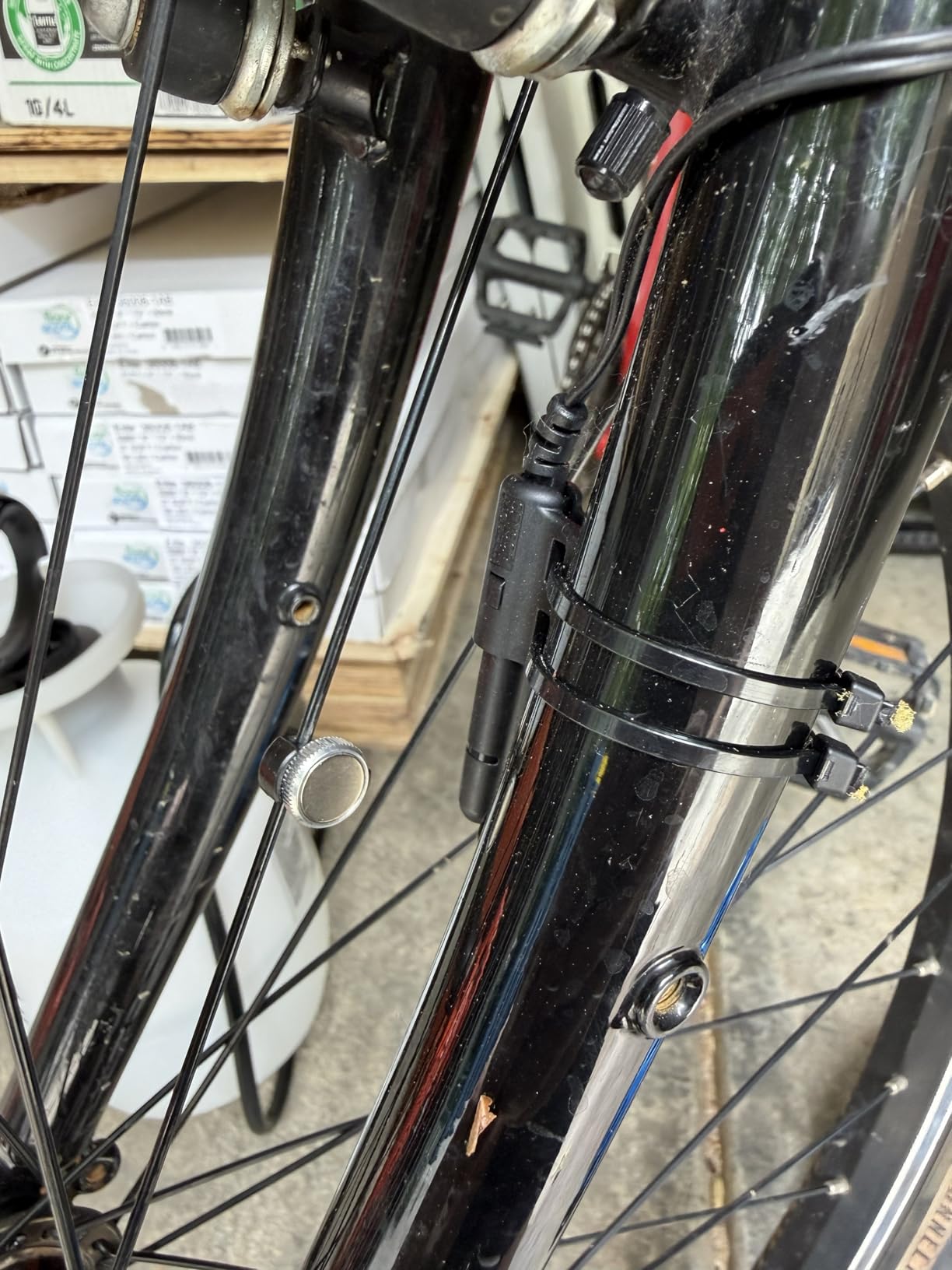
The trade-off is the wired connection. You need to route a cable from the computer to the fork-mounted sensor, which involves zip-ties and some cable management. You also need to measure and input your wheel circumference for accurate distance tracking. There is no GPS, no altitude data, no Strava sync, and no sensor expandability.
Who should buy the CATEYE Velo 7
This is the perfect first bike computer for beginners, kids, or anyone who just wants to know how fast and how far they rode. It is also the most reliable backup computer you can buy, since it never needs charging and works in every condition. For casual riders who do not care about GPS routes or Strava, the Velo 7 delivers exactly what matters.
What to watch out for
The wired installation requires routing a cable along your fork, which some riders find unsightly. You must measure and input your wheel circumference correctly for accurate distance tracking, which requires a tape measure and a few minutes of setup. If you want any GPS, app, or sensor features, this is not the computer for you.
How to Choose the Best Budget Bike Computer?
Choosing among the best budget bike computers comes down to understanding what features matter for your riding style. Here is what I tell everyone who asks me for buying advice based on months of testing these devices.
GPS versus Non-GPS: What Do You Actually Need?
This is the first decision to make. GPS computers track your actual position using satellites, which means they record your route, calculate speed and distance from movement, and can sync rides to platforms like Strava. Non-GPS computers like the Cateye models use a wheel-mounted sensor and magnet to count wheel revolutions, calculating speed and distance from wheel circumference. GPS units are better if you want route tracking and app integration. Non-GPS units are more accurate in poor signal conditions and simpler to operate.
Satellite Systems Explained
Basic budget computers use GPS only, which is accurate but can be slow to acquire signals. Better models add GLONASS (Russian system), GALILEO (European), or BEIDOU (Chinese) for faster locks and better accuracy. The iGPSPORT BSC100S supports five satellite systems, which gives it the best positioning performance in this roundup. More satellite systems mean faster startup and more reliable tracking in challenging environments.
Battery Life Expectations
Battery life in budget bike computers ranges from 24 hours to 55 hours. The CYCPLUS G1 leads the pack at 55-plus hours, while most GPS units with color screens sit around 24 to 25 hours. Consider how long your typical rides are and how often you want to charge. For multi-day touring or bikepacking, longer battery life is critical. For daily commuting, even 24 hours means weekly charging at most.
Sensor Compatibility: ANT+ and Bluetooth
If you use or plan to use heart rate monitors, cadence sensors, or power meters, check sensor compatibility before buying. ANT+ is the standard protocol for cycling sensors, and most budget GPS computers support it. Bluetooth sensor support is less common in budget devices. The iGPSPORT models and COOSPO units all support ANT+, giving you the widest sensor compatibility.
Strava and App Integration
For many riders, Strava compatibility is non-negotiable. Not all budget computers sync to Strava, so verify before buying. The COOSPO BC107, COOSPO CS600, iGPSPORT BSC100S, iGPSPORT BSC200S, XOSS G+, GEOID CC600, and Magene C506 all support Strava sync through their respective apps. The CYCPLUS G1 and both Cateye models do not sync to any platform, keeping data on-device only.
Display Quality in Sunlight
This is a pain point that forum users consistently raise. Budget displays vary enormously in sunlight readability. The CYCPLUS G1 uses FSTN technology specifically designed for sunlight visibility. The CATEYE Padrone has the largest and most readable non-GPS display. Color screens on the iGPSPORT BSC200S, GEOID CC600, and COOSPO CS600 offer good visibility but may wash out in extreme direct sunlight compared to premium transflective displays.
Waterproof Ratings Explained
IPX6 (CYCPLUS G1) handles powerful water jets and heavy rain. IPX7 (most other GPS models) handles immersion up to 1 meter for 30 minutes, which covers any riding condition. IP67 (COOSPO BC107) offers the same water protection with additional dust resistance. For cycling purposes, all of these ratings are more than adequate for rain riding.
FAQs
What is the best bike computer under $100?
The iGPSPORT BSC200S is the best bike computer under $100, offering a color screen, route navigation, Strava sync, and a 25-hour battery for around $66. For even less, the COOSPO BC107 at $36 delivers GPS tracking, ANT+ sensor support, and Strava integration. The Magene C506 at $100 adds WiFi connectivity and free map downloads.
What budget bike computer do most cyclists recommend?
On Reddit and cycling forums, the Bryton Rider 420 and CYCPLUS models are frequently recommended. Among the models tested here, the iGPSPORT BSC200S earns the highest ratings at 4.5 stars, with users praising its value compared to Garmin and Wahoo units. The CYCPLUS G1 is also widely recommended for basic GPS tracking at under $35.
Are cheap bike computers worth it?
Yes, cheap bike computers are absolutely worth it for most casual and commuter cyclists. Models like the CYCPLUS G1 and COOSPO BC107 deliver GPS tracking, speed and distance data, and even Strava sync for under $40. The main trade-offs compared to premium units are smaller screens, basic navigation, and fewer advanced training features. For riders who do not need full-color mapping or structured workouts, budget computers provide excellent value.
What features do I need on a budget bike computer?
The essential features to look for are GPS tracking for accurate speed and distance, ANT+ sensor compatibility for heart rate and cadence, Strava or app sync for ride logging, at least 20 hours of battery life, and an IPX6 or IPX7 waterproof rating. Nice-to-have features include color display, route navigation with turn-by-turn directions, WiFi for fast data transfer, and Bluetooth connectivity.
Do budget bike computers work with Strava?
Many budget bike computers do work with Strava. The COOSPO BC107, COOSPO CS600, iGPSPORT BSC100S, iGPSPORT BSC200S, XOSS G+, GEOID CC600, and Magene C506 all sync rides to Strava through their companion apps. However, basic models like the CYCPLUS G1 and Cateye Velo 7 and Padrone do not offer Strava integration, keeping all data on the device itself.
Final Thoughts on the Best Budget Bike Computers for 2026
The best budget bike computers have come a long way, and 2026 is arguably the best year yet to buy one. You no longer need to choose between price and capability. The iGPSPORT BSC200S takes my editor’s choice for delivering color display, route navigation, and Strava sync at an unbeatable price point. The CYCPLUS G1 remains the king of ultra-budget GPS tracking, while the COOSPO CS600 brings touchscreen functionality to the value category.
For riders who want maximum features, the Magene C506 with WiFi and free maps is hard to beat. If you just need basic data that always works, the CATEYE Velo 7 and Padrone deliver rock-solid reliability for years without charging. Whatever your riding style and budget, there is a computer in this lineup that will track your rides without emptying your wallet.