
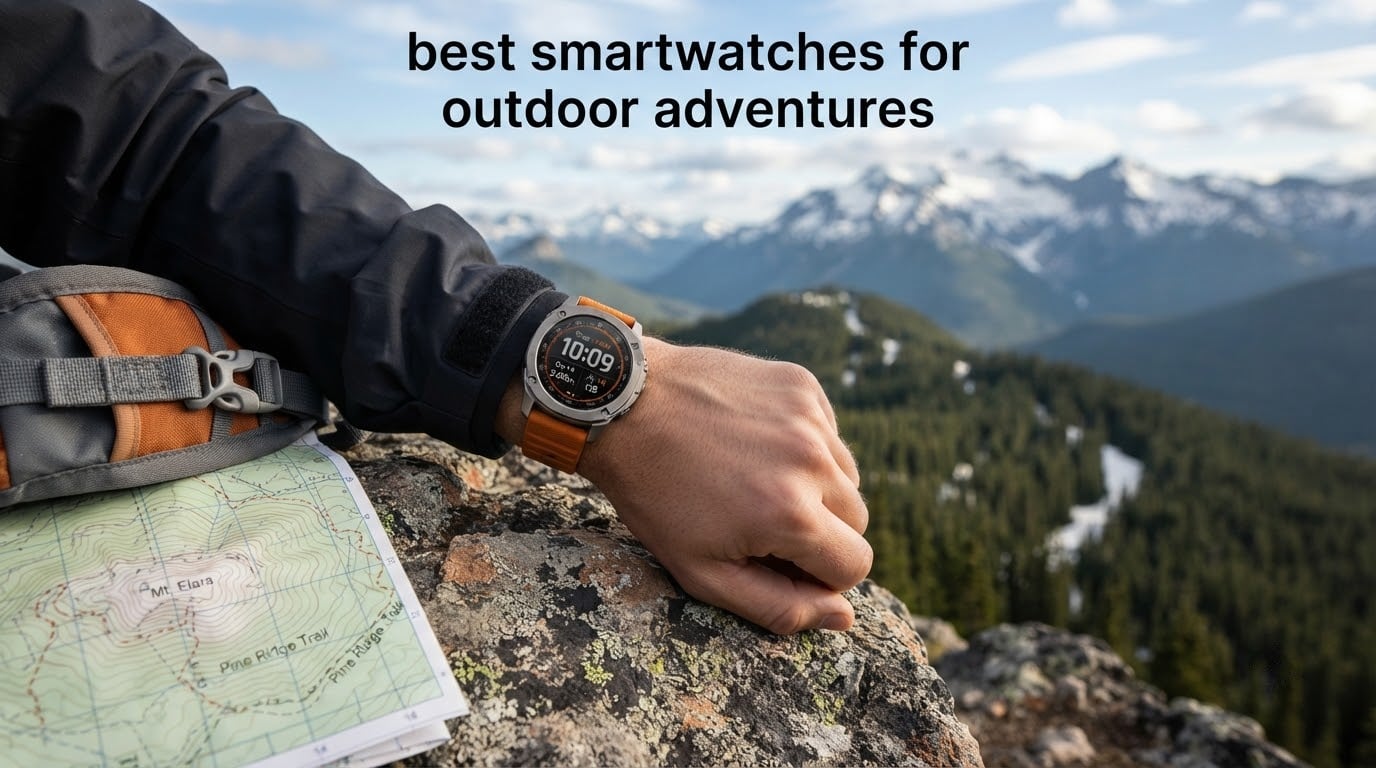
A watch earns its place on a trail in a way that almost no other gadget does. It is the one screen you can check without stopping, the one device that still records your route when the phone is in a dead zone or buried in a pack, and the one thing that tells you at a turnaround whether you have burned more time than you think.
That is the bar we used for this roundup of the best smartwatches for outdoor adventures. We looked at 12 models across hiking, backpacking, trail running, climbing, skiing, paddling and adventure travel, and we ranked them on the things that actually break in the field: GPS accuracy under tree cover and in canyons, battery life measured in GPS hours rather than marketing hours, build quality, mapping, and whether the watch still works with wet fingers or gloves on.
We also drew on owner reports across r/Garmin, r/GarminWatches, r/smartwatch and r/Ultralight, where the same debate repeats endlessly: Garmin versus Coros versus Suunto, maps versus battery life, and whether a smartwatch is even the right tool. Our take, after wading through thousands of owner reviews, is that both camps are half right. Dedicated GPS watches win on endurance and navigation. Smartwatches win on notifications, payments, apps and phone-free calling. The picks below cover both ends of that line.
If you are still deciding, start with our smartwatch picks for running for pace-based users, or our fitness smartwatch guide if training metrics matter more than navigation. Everything here is filtered for outdoor use first.
Table of Contents
Top 3 Picks: Best Smartwatches for Outdoor Adventures (October 2026)
These are the three stands that survived the most scrutiny. Each one solves a different version of the outdoor problem, and the ordering below tells you which to buy first if you are unsure.

Garmin fenix 7 Pro Solar
- Multi-band GPS with SatIQ
- Power Sapphire solar lens
- Built-in LED flashlight
- 10 ATM and 100 m water resistance

Garmin Instinct 3 AMOLED 45mm
- 18-day battery in smartwatch mode
- Button-only operation that works wet
- 53 g case
- No maps on this model

COROS PACE Pro
- 38 hours GPS and 31 hours dual-frequency
- Free offline topo maps with turn-by-turn
- 49 g and USB-C charging
- 20 days in smart mode
Buy the Garmin fenix 7 Pro Sapphire Solar if you want one watch that handles a two-week expedition, full topographic mapping, a sapphire lens and a torch, and you want it to survive five years of hard use. Multi-band GPS with SatIQ holds a track under canopy and between cliffs, the solar charging lens stretches the gap between charges, and the built-in flashlight removes the need to carry a headlamp for pre-dawn starts.
Buy the Garmin Instinct 3 AMOLED 45mm if your trips are multi-day and your priorities are battery, simplicity and physical buttons. Two-plus weeks between charges removes charging from your packing list entirely, and button-only operation never fails because of a wet screen or a gloved thumb.
Buy the COROS PACE Pro if you want the Garmin-style feature set at roughly half the flagship money. It pairs a 1500-nit always-on AMOLED with free offline topographic maps, turn-by-turn routing and 31 hours of dual-frequency GPS at 49 g.
Best Smartwatches for Outdoor Adventures at a Glance: Battery, Mapping and Water Resistance
This table is the fastest way to narrow a shortlist. GPS hours come from the manufacturers’ published figures in their most power-hungry positioning mode, which is the number that matters when you are off-grid and away from a socket.
| Product | Specifications | Action |
|---|---|---|
| Garmin fenix 7 Pro Sapphire Solar |
|
Check Latest Price |
 Samsung Galaxy Watch Ultra 47mm Samsung Galaxy Watch Ultra 47mm |
|
Check Latest Price |
| Garmin Instinct 3 AMOLED 45mm |
|
Check Latest Price |
| COROS PACE Pro |
|
Check Latest Price |
 Apple Watch Ultra 2 49mm Apple Watch Ultra 2 49mm |
|
Check Latest Price |
 Amazfit T-Rex 3 Amazfit T-Rex 3 |
|
Check Latest Price |
 Suunto Vertical Canyon Ti Suunto Vertical Canyon Ti |
|
Check Latest Price |
 COROS Nomad COROS Nomad |
|
Check Latest Price |
 COROS APEX 2 Pro COROS APEX 2 Pro |
|
Check Latest Price |
 CARBINOX Edge CARBINOX Edge |
|
Check Latest Price |
 Suunto 9 Peak Pro Suunto 9 Peak Pro |
|
Check Latest Price |
 Tiwain ZK67 Military Smartwatch Tiwain ZK67 Military Smartwatch |
|
Check Latest Price |
Claimed versus real-world battery. Manufacturers quote the best case, and the gap matters. The Suunto Vertical’s 500-hour figure is tour mode with positioning throttled back, not a normal hiking day. The Amazfit T-Rex 3’s 180-hour GPS claim is generous compared with what most owners report on a multi-day trip. Owner reviews consistently show shorter real-world figures than the headline number, so plan with the lower number: roughly 40 to 60 percent of the published claim for anything used at full GPS frequency in cold conditions. Cold weather and heavy screen-on time are the two fastest drains.
What the table cannot show. Water resistance ratings of 100 m or 10 ATM cover open-water swimming, not every activity. None of these watches should be taken hot-sauna style or into a steam room unless the manufacturer says so, and seals degrade with age.
How We Picked the Best Smartwatches for Outdoor Adventures
We scored each watch across six weighted categories rather than ranking on specification sheets. Here is how the weights break down and why.
GPS accuracy, 30 percent. This is the heaviest weight because every other outdoor feature depends on it. A watch with a beautiful map and a drifting track is worse than useless, so multi-band or dual-frequency receivers scored highest, then multi-constellation support, then single-band devices in open terrain.
Battery life in GPS mode, 25 percent. We looked at published GPS hours first, then at owner reports of real-world endurance on multi-day trips. Nightly charging was treated as a genuine failure for anyone on a trip longer than two days.
Durability, 15 percent. Case material, lens material, water resistance rating, military standards and the presence of physical buttons that work with gloves or water.
Mapping and offline navigation, 10 percent. Whether the watch holds routable maps without a phone, and whether it can follow a route rather than only draw a breadcrumb line.
Wearability, 10 percent. Case size, weight on the wrist, and whether it stays comfortable overnight for sleep tracking.
Smartwatch features, 10 percent. Notifications, contactless payment, offline music storage, apps and phone-free calling. This is where the ecosystem split shows up most clearly.
Anything with a known tracking defect or an unreliable sensor got flagged in the review notes rather than quietly dropped. Where owner reports conflict with the specification sheet, we said so, and we flagged which watch we would pair with a chest strap instead.
1. Garmin fenix 7 Pro Sapphire Solar: Our Expedition Pick Among the Best Smartwatches for Outdoor Adventures
Garmin fēnix 7 Pro Sapphire Solar, Multisport GPS Smartwatch, Built-in Flashlight, Solar Charging Capability, Black
73 g
1.3 inch transflective MIP at 1000 nit
Power Sapphire solar lens
100 m water resistance
Pros
- Multi-week battery life with solar charging
- Built-in flashlight with white and red modes
- Multi-band GPS with SatIQ holds a track under canopy
- Sapphire lens and titanium bezel
- Always-on display readable in direct sun
Cons
- MIP display is dimmer than AMOLED rivals
- 73 g is heavy for sleep wear and small wrists
- Cannot reply to messages only receives them
The fenix 7 Pro Solar is the watch we kept reaching for on longer trips, and the reason is simply that it stopped being a chore. Owner reviews describe multi-week gaps between charges when solar charging is doing its part, which changes how you pack. On a two-week trip, battery stops being a decision and becomes a background detail.
The build is where the money went. A fibre-reinforced polymer case with a titanium rear cover, a 47 mm footprint and a Power Sapphire solar charging lens that resists the kind of scratch you get from a granite edge or a rappel against rock. It is rated to 100 m, so swimming, kayaking and rain are all non-events.
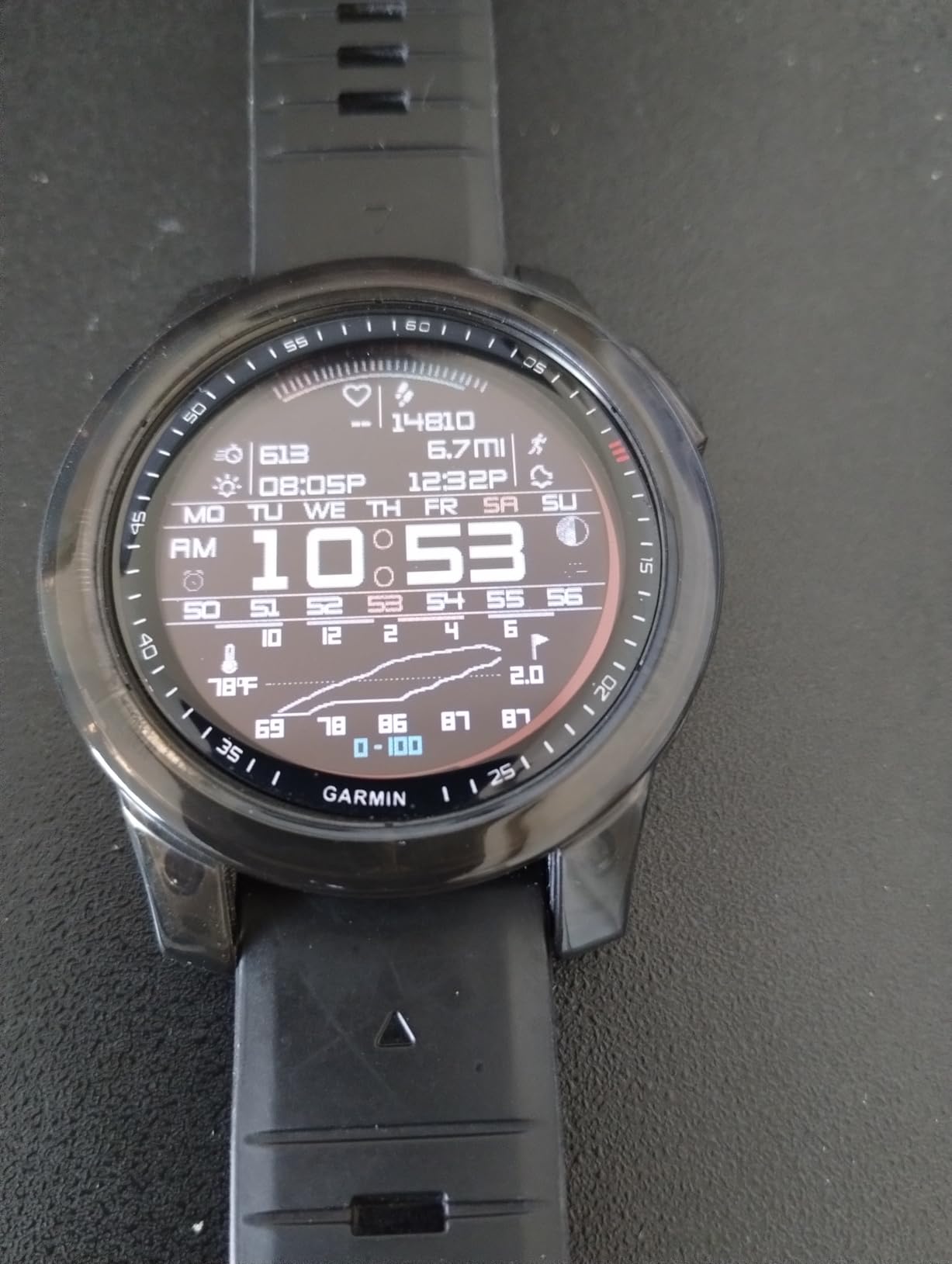
The navigation stack is the reason it tops our list. Multi-band GPS with SatIQ is the current accuracy standard, and it holds a line through tree cover, canyon walls and bad weather far better than the single-band devices most people carry. TopoActive maps, Up Ahead navigation prompts and preloaded ski resort maps mean the watch is useful even with no phone in sight.
The built-in LED flashlight with variable intensities and strobe modes is more useful than it sounds. At a 4 a.m. start or an unlit campsite, it saves you from carrying a headlamp on short trips, and the red light mode preserves night vision.
The transflective MIP display is the honest trade-off here. It is dimmer than an AMOLED panel and it can take a week of adjusting, but it stays readable in direct sunlight with the backlight off, and it is a big part of why the battery lasts so long. At 1000 nit maximum brightness it is perfectly usable in shade and at dusk.
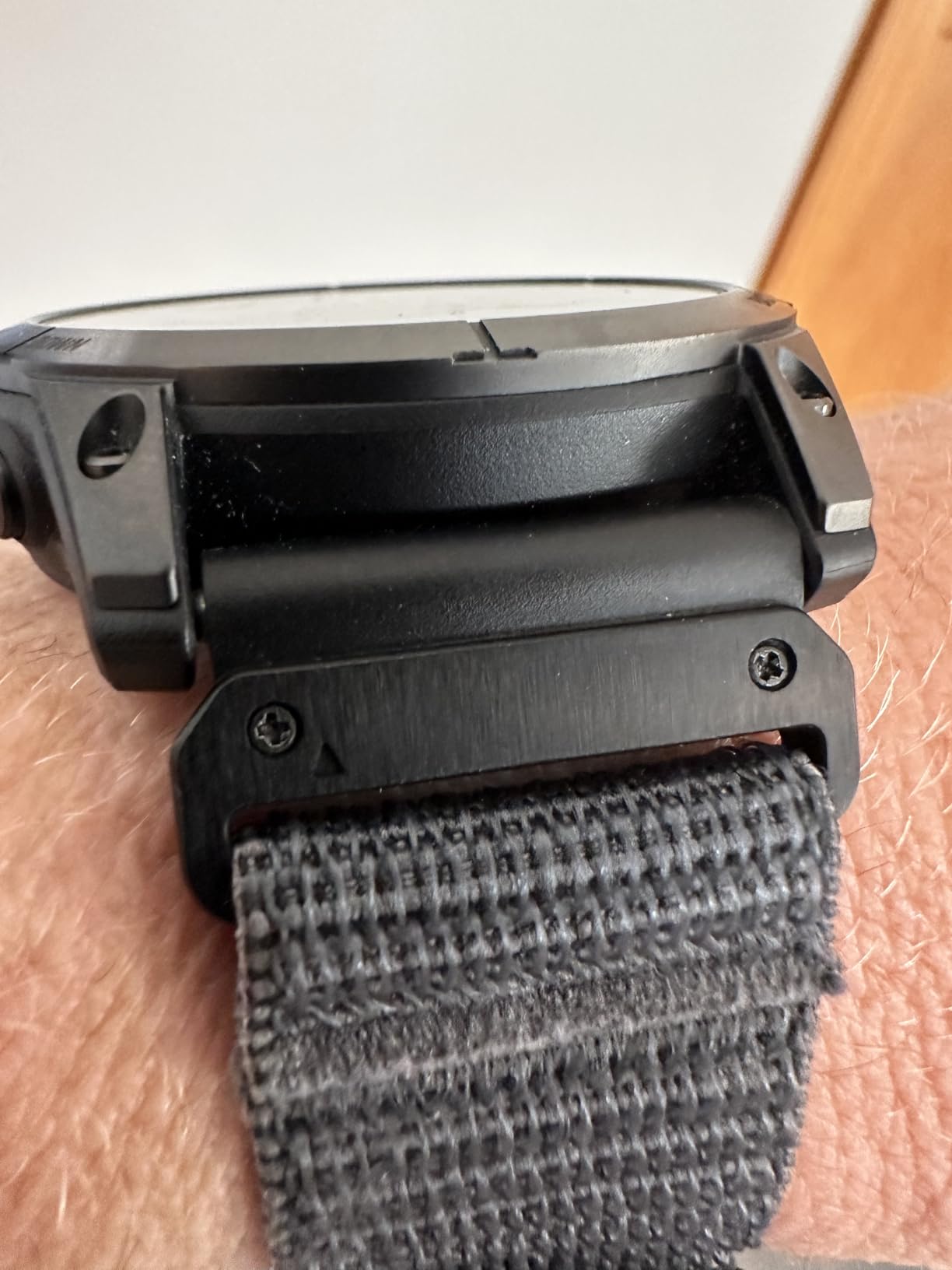
What the fenix 7 Pro handles better than anything else in test
The solar lens is the quiet hero. It stretches battery life in smartwatch mode, and combined with an Expedition-style GPS setting it comfortably carries a long traverse. Owners on multi-day backcountry trips report topping up in daylight while moving, which is a different experience from finding a cable at dusk.
Training and health data are the other strength. HRV status, Pulse Ox, morning report, training readiness, hill score and endurance score give a much more complete picture of a loaded week than a basic step count. Reviewers consistently rate the analytics as class-leading for climbing and trail work.
Where the fenix 7 Pro will disappoint you
At 73 g it is heavy. If you sleep in your watch for recovery scoring, that weight is noticeable, and it is the first thing small-wrist owners mention. The 47 mm case also sits high on smaller wrists.
The smartwatch side is thin. You receive notifications but cannot reply to messages from the watch, there is no cellular calling, and there is no third-party app marketplace in the way Wear OS has one. If you want your wrist to handle calls and payments on a hike, this is the wrong tool. Strength training rep logging is also basic compared with dedicated gym watches.
2. Samsung Galaxy Watch Ultra: The Android Pick Among the Best Smartwatches for Outdoor Adventures
Samsung Galaxy Watch Ultra (2024) 47mm LTE AI Smartwatch w/Energy Score, Wellness Tips, Heart Rate Tracking, Sleep Monitor, Fitness Tracker, GPS,Titanium Silver [US Version, 1Yr Manufacturer Warranty]
94 g
47 mm titanium case
3000 nit display
100 m water resistance
Pros
- Extremely bright 3000 nit screen readable in any light
- Calls and messages away from the phone over LTE
- Rugged titanium body rated for rain dust and ocean swimming
- Quick-release band system
- Voice control through Alexa and Google Assistant
Cons
- Bulky 47 mm case suits large wrists only
- Health and training metrics trail Garmin
- Carrier fees for advanced connectivity
- Some owners report missed sleep sessions
If your phone runs Android and you want a watch that behaves like a phone on a long trip, the Galaxy Watch Ultra is the answer. LTE lets you take calls, send messages and stream music with the phone in a pack or at base camp, which is exactly the gap that makes people nervous on remote trails.
The 3000-nit display is the standout. It is genuinely readable in harsh midday sun on a south-facing slope, which is where most AMOLED watches in this class start to look washed out. Reviewers also praise the rugged titanium body and the quick-release band system for swapping straps in seconds.
![Samsung Galaxy Watch Ultra (2024) 47mm LTE AI Smartwatch w/Energy Score, Wellness Tips, Heart Rate Tracking, Sleep Monitor, Fitness Tracker, GPS,Titanium Silver [US Version, 1Yr Manufacturer Warranty] customer photo 1](https://betterbike.org/wp-content/uploads/2026/07/B0D1YLBBMB_customer_1.jpg)
Built-in GPS, compass, barometer and altimeter cover the basics of orientation, and hard fall detection with emergency SOS covers the safety side. Galaxy AI Energy Score gives you a morning readiness read built from sleep, heart rate and steps, and Wellness Tips offers daily coaching that people find less intrusive than Garmin’s.
Owners report battery life settling around three and a half days after software updates, which is a genuine improvement on the first generation. For a weekend trip that is fine. For a week-long traverse you would be carrying a cable, and that is the honest limit of a watch this bright and this connected.
![Samsung Galaxy Watch Ultra (2024) 47mm LTE AI Smartwatch w/Energy Score, Wellness Tips, Heart Rate Tracking, Sleep Monitor, Fitness Tracker, GPS,Titanium Silver [US Version, 1Yr Manufacturer Warranty] customer photo 2](https://betterbike.org/wp-content/uploads/2026/07/B0D1YLBBMB_customer_2.jpg)
Why Android hikers rate this so highly
Phone-free operation is the headline. Built-in GPS means your track records without the phone, and LTE means you can still call for help or check a message when your phone is off or dead. No other watch at this level of mainstream polish does both.
It is also a proper smartwatch. Alexa and Google Assistant respond from the wrist, notifications are readable and quick, and the health features cover heart rate, sleep and stress in a package that syncs cleanly with Samsung phones.
Where it falls short for serious distance
Training analytics are the weak point. Anyone focused on pace, load, recovery time or trail-specific metrics gets more and better data from a dedicated GPS watch. Sleep tracking can also skip entire sleep periods for some owners.
The 47 mm case at 94 g is big, and small-wrist buyers will feel it constantly. There is no blood pressure monitoring on this model, and features beyond core use can trigger extra carrier fees. Cold-weather battery derating is another factor on winter trips.
3. Garmin Instinct 3 AMOLED 45mm: The Multi-Day Pick Among the Best Smartwatches for Outdoor Adventures
Garmin Instinct® 3 AMOLED, Rugged GPS Smartwatch, 45mm, Black
53 g
45 mm fibre-reinforced polymer case
1.2 inch AMOLED at 1000 nit
MIL-STD-810H rated
Pros
- Two-plus weeks of real-world battery
- Bright AMOLED screen that reads on the mountain
- Built-in flashlight used daily by many owners
- 53 g yet jobsite tough
- Buttons work reliably when wet or sweaty
Cons
- Button-only interface needs an adjustment period
- Firmware menus still feel clunky to some
- No maps or turn-by-turn navigation on this model
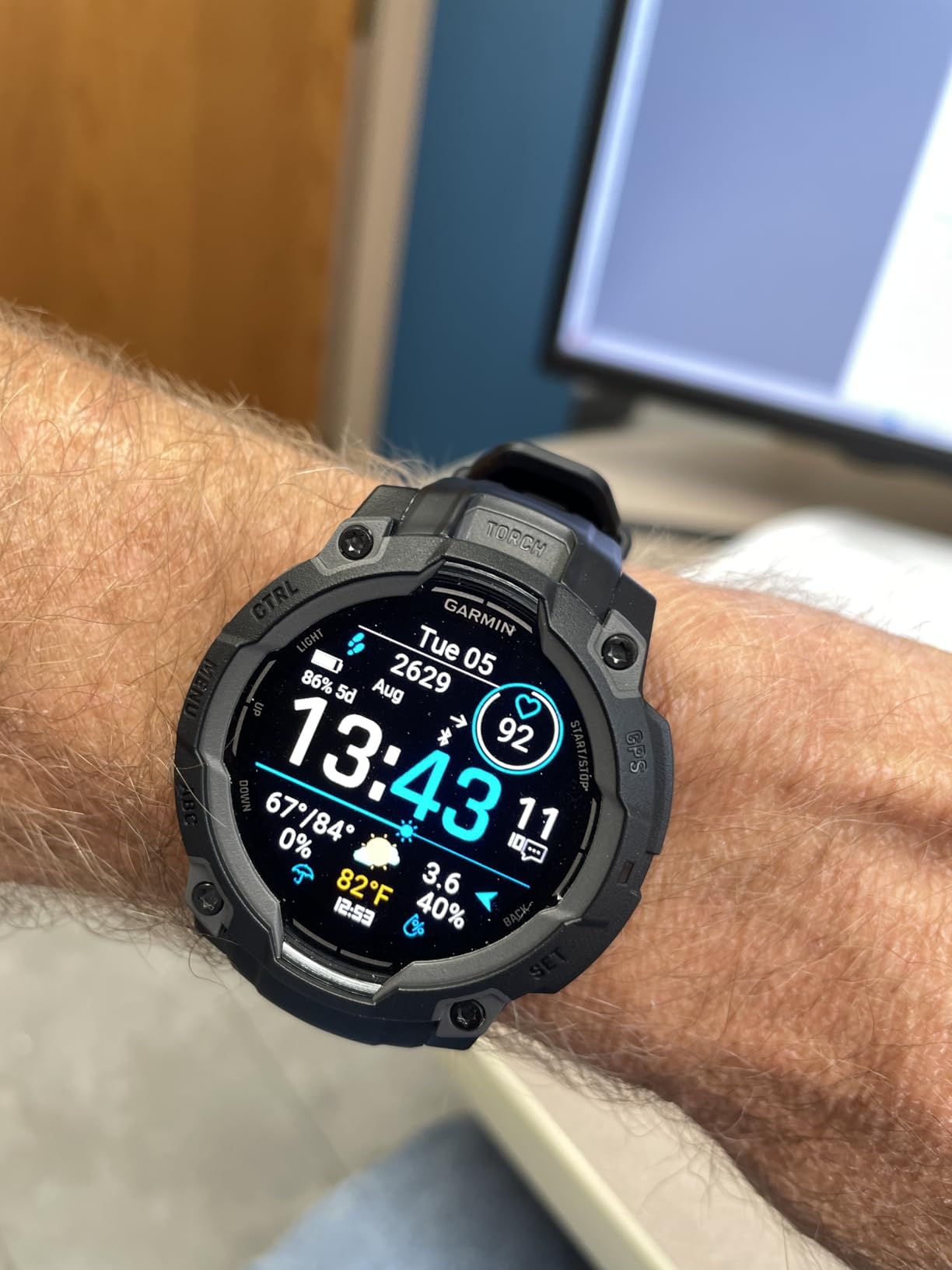
The Instinct 3 AMOLED is the watch we recommend to anyone who hates charging on trail. Two-plus weeks of real-world battery in smartwatch mode changes the trip entirely, and at 53 g it is one of the lighter rugged watches here without feeling fragile.
The 45 mm case is smaller than most of the fēnix line and the metal-reinforced bezel is MIL-STD-810H rated with a 10 ATM water rating. The switch from an older transflective panel to a 1.2-inch AMOLED at 1000 nit brightness gives you a crisper screen in daylight while the efficient display still protects the battery figure.
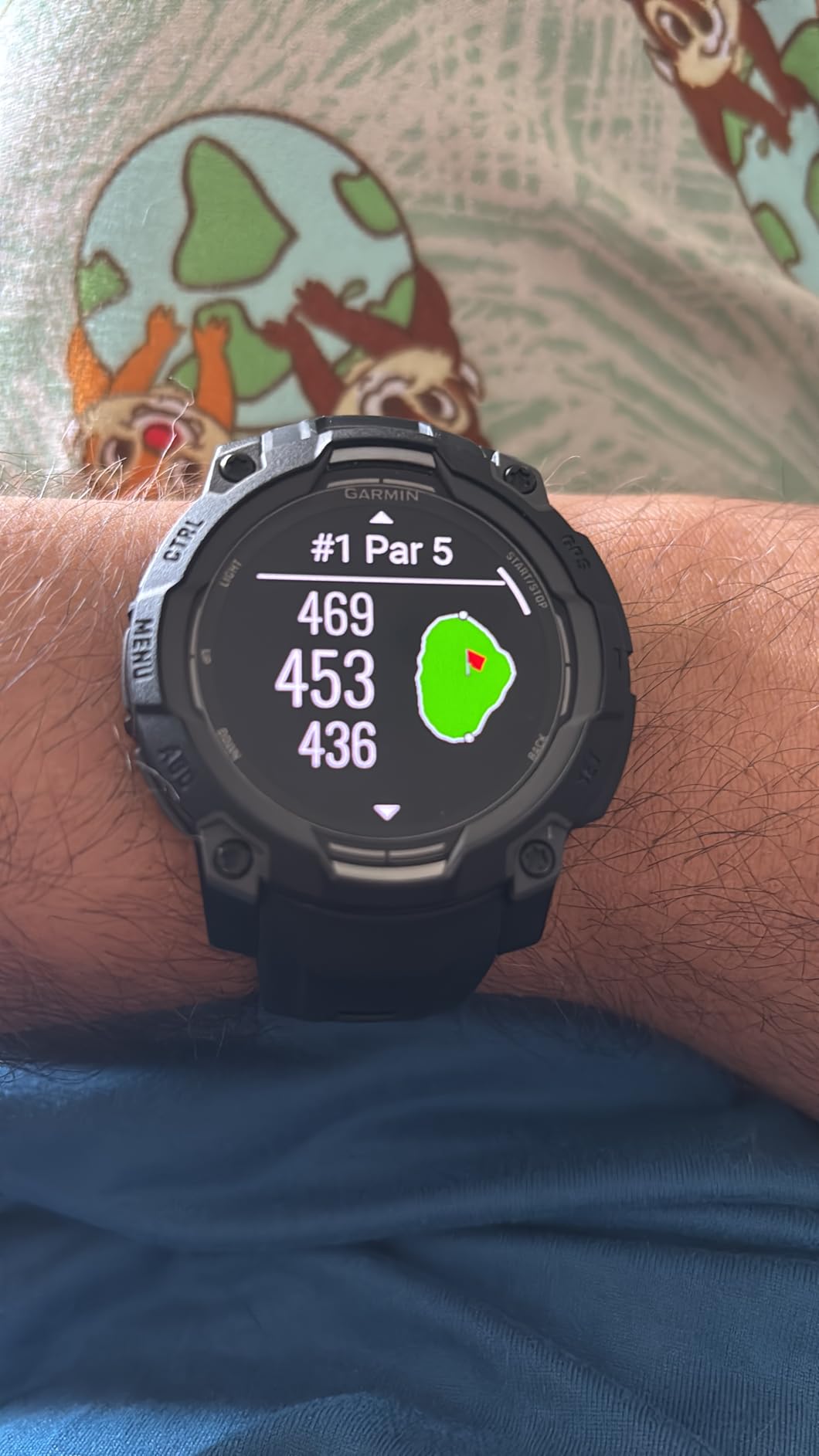
Multi-band GPS with SatIQ, a three-axis compass and a barometric altimeter handle positioning and orientation. Health tracking includes wrist-based heart rate, advanced sleep monitoring and Pulse Ox, and reviewers report no paywall on any of it.
The button-only operation is the feature that converts most converts. Owners who moved from Samsung, Pixel or Apple watches consistently cite button reliability in wet conditions and while sweating as the decisive upgrade. A wet touchscreen that ignores you mid-storm is a genuine safety problem, and this watch does not have that problem.
It also has a built-in LED flashlight with variable intensities and strobe modes, which many owners say they use every single day. It is a small thing that adds up on early starts and on camp tasks after dark.
What makes the Instinct 3 the best multi-day choice
Battery first, always. Reviewers coming off daily-charging smartwatches describe two-plus weeks as transformative for the planning stage of a trip, because you stop budgeting charge time and start packing lighter.
Buttons and build second. Physically operated controls, a tough case and 100 m water resistance mean rain, sweat, gloves and drops are all non-events. For tradespeople and field workers who wear one watch for everything, that combination is hard to beat.
Why some hikers skip it
There are no maps and no turn-by-turn navigation on this model. It is a tracker and a sensor platform, not a navigator. If your route crosses junctions where a breadcrumb line is not enough, this is the wrong watch, and you should step up to the fēnix 7 Pro or a full-map alternative.
The button interface needs a couple of weeks before it feels natural if you are coming from a touchscreen. Menu software still feels clunky to some owners, there is no detailed manual in the box, and a few people eventually moved to a touchscreen model for scrolling through menus.
4. COROS PACE Pro: The Value Pick Among the Best Smartwatches for Outdoor Adventures
COROS PACE Pro GPS Sport Watch, 1.3-inch AMOLED Touchscreen- Grey
49 g
1.3 inch always-on AMOLED at 1500 nit
38 hours GPS
USB-C charging
Pros
- 20-day battery in smart mode with always-on AMOLED
- Precise dual-frequency GPS with free offline maps
- Fastest processor in its class
- 49 g for long hikes and runs
- USB-C charging avoids proprietary cables
- Training metrics without a subscription
Cons
- Companion app less polished than Garmin
- Offline maps must be synced before a trip
- Limited smartwatch features versus Wear OS
- No cellular for phone-free calls
The PACE Pro is the watch that made us reconsider our assumptions about the price tier above budget. You get a new satellite chipset delivering COROS’s most accurate positioning yet, a 1500-nit always-on AMOLED, a route planner with topographic maps and turn-by-turn guidance, and 38 hours of GPS, all at 49 g.
Battery figures are the headline. Up to 20 days in smart mode, 38 hours in outdoor GPS and 31 hours on dual-frequency, plus roughly 6 days with the always-on display active. For weekend trips that means you can leave the charger at home with confidence.
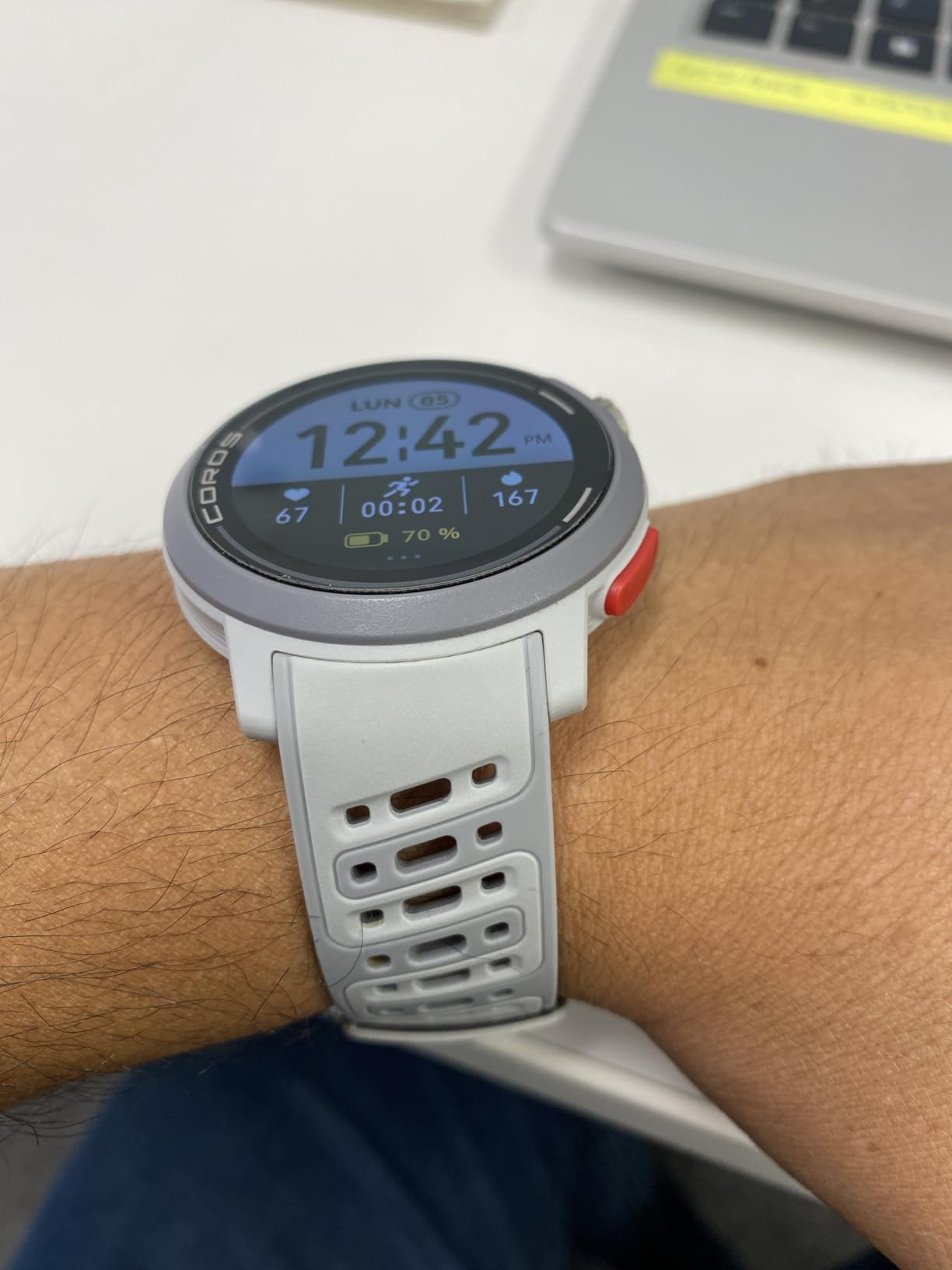
Performance is snappy. Reviewers describe the processor as the fastest in this class, with roughly twice the performance and three times the zoom speed of earlier COROS models, and that responsiveness shows up in menu navigation during a cold start when you have gloves half on.
The new satellite chipset is the real story for navigation. Dual-frequency positioning held a clean track on the trails owners describe, and free offline topographic maps with turn-by-turn routing mean you are not paying a subscription to see where you are going.
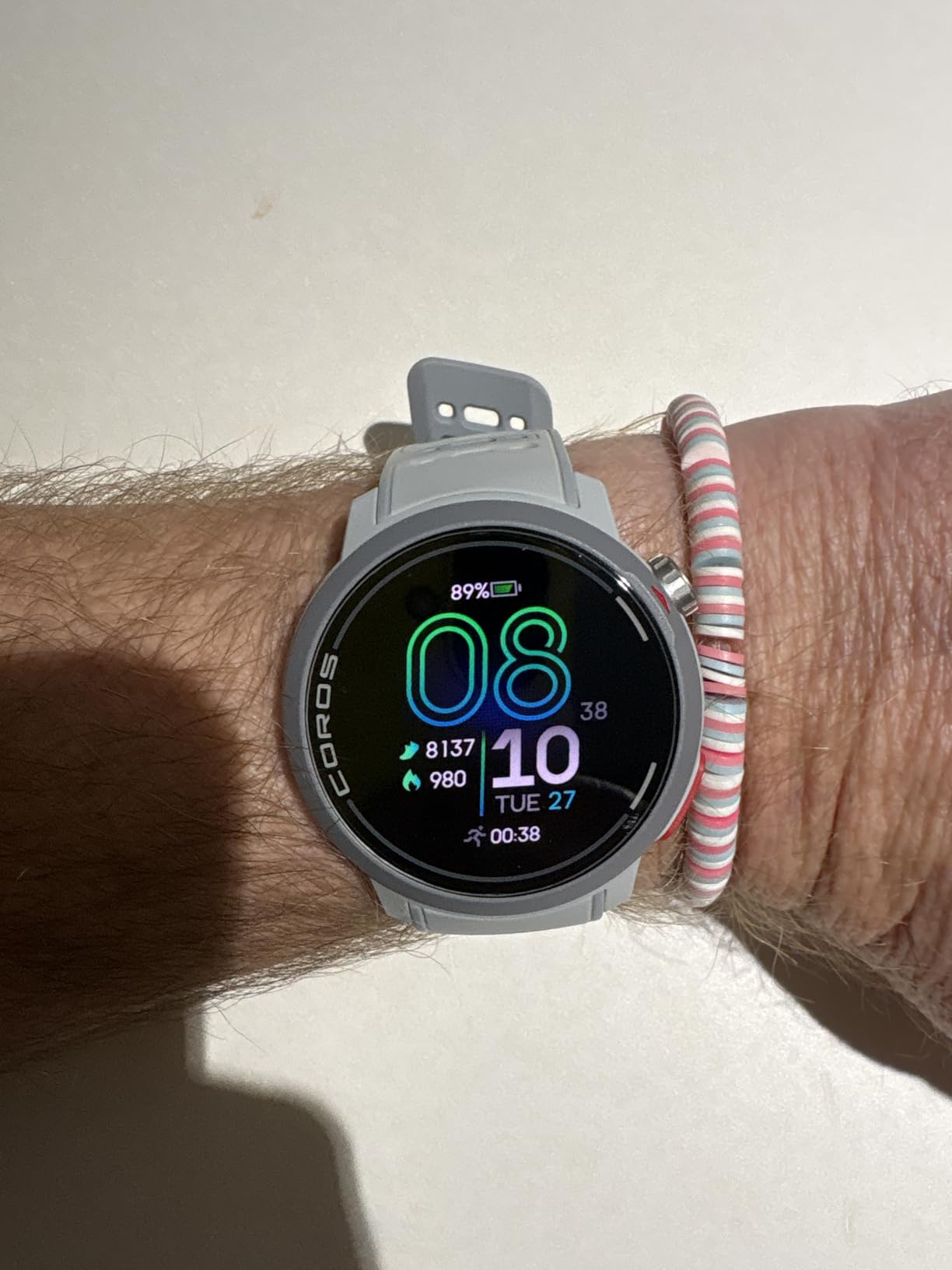
The gesture-activated backlight is a nice touch on a bright screen, waking the display when you raise your wrist rather than burning the panel all day. USB-C charging with the included keychain adapter also removes one of the most annoying category problems, and the 22 mm band fits 130 to 220 mm wrists.
Why the PACE Pro wins the value slot
You are paying flagship money for the parts that matter outdoors: multi-band-class GPS accuracy, real topographic mapping, proper battery endurance and a bright screen. The Training Status metrics, custom workouts and sleep analysis sit in the COROS app at no extra cost, which is not true of every watch on this list.
At 49 g it is one of the lightest picks here, which matters on a long climb when the watch is under a sleeve and your wrist is already carrying a pack strap.
Where COROS still has ground to cover
The companion app is the most common complaint. It works, but it is less polished than Garmin’s and owner feedback on layout and updates is lukewarm.
Offline maps have to be synced through the app before you leave, so plan ahead rather than at the trailhead. Smartwatch features are thin next to Wear OS rivals, and there is no cellular option for phone-free calls, which means your phone still needs to be within Bluetooth range for notifications.
5. Apple Watch Ultra 2: The Apple Pick Among the Best Smartwatches for Outdoor Adventures
Apple Watch Ultra 2 [GPS + Cellular 49mm] Smartwatch with Rugged Titanium Case & Indigo Alpine Loop Medium. Fitness Tracker, Precision GPS, Action Button, Extra-Long Battery Life
49 mm titanium case
Sapphire front crystal
36 hours or 72 in low power
100 m MIL-STD-810H tested
Pros
- Most capable single device for adventure sports
- Precision dual-frequency GPS with automatic track detection
- Sapphire crystal and titanium for harsh terrain
- Cellular calls texts and music without iPhone
- Full dive computer with depth sensing to 40 m
- Action button and Digital Crown work with gloves
Cons
- 49 mm case is bulky on smaller wrists
- Battery still trails multi-week GPS watches
- Works best paired with an iPhone
- Third-party fitness app support weaker than Garmin
The Ultra 2 is the most capable single device on this list and we are not exaggerating. It is a phone-free communicator with cellular connectivity, a full dive computer rated to 40 m, an offline maps stack with Backtrack and Compass Waypoints, and rugged titanium and sapphire construction. For adventure travel where you are ferrying between countries and watching battery gauges, that combination is hard to argue with.
Precision dual-frequency GPS with automatic track detection handles the positioning work well, and the offline maps plus Compass app cover the navigation basics without a phone. Backtrack retraces your exact path, which is the feature that rescues more hikers than any other single watch function.
![Apple Watch Ultra 2 [GPS + Cellular 49mm] Smartwatch with Rugged Titanium Case & Indigo Alpine Loop Medium. Fitness Tracker, Precision GPS, Action Button, Extra-Long Battery Life customer photo 1](https://betterbike.org/wp-content/uploads/2026/10/B0CSVG2GM8_customer_1.jpg)
The large Digital Crown and the orange Action button are genuinely glove-friendly, and the superbright always-on Retina display stays readable in direct sun. Safety features include hard fall and crash detection, emergency SOS and a siren you can trigger to attract attention, plus ECG and irregular rhythm notifications.
Battery life is the headline number to know before you buy: up to 36 hours in normal use and 72 hours in Low Power Mode. Low Power Mode strips back some sensors and turns the display off, which on a hiking watch is a meaningful loss of data even though it doubles endurance.
Owners position it as the best all-in-one for adventure sports and accept the trade-off between size, price and multi-week battery. That trade-off is real, and it is the single biggest reason dedicated GPS watches still outsell it among thru-hikers.
![Apple Watch Ultra 2 [GPS + Cellular 49mm] Smartwatch with Rugged Titanium Case & Indigo Alpine Loop Medium. Fitness Tracker, Precision GPS, Action Button, Extra-Long Battery Life customer photo 2](https://betterbike.org/wp-content/uploads/2026/10/B0CSVG2GM8_customer_2.jpg)
Why iPhone owners pick this one
Cellular calling, texting, music and Maps work away from your iPhone, so on a climbing route or a boat you are not dependent on a phone in a pocket. The dive computer with the Oceanic+ app and depth sensing to 40 m, certified to EN13319, adds a whole second sport that no other smartwatch here covers.
Advanced running form metrics, cycling power meter pairing, ECG and sleep apnea notifications make it a genuine health device as well as an adventure watch. If you already run the Apple ecosystem, the fit is seamless.
Why the Apple Watch Ultra 2 is not for everyone
The 49 mm titanium case is genuinely large, and the weight sits at the heavy end of this list. Small-wrist buyers will find it uncomfortable over long days and difficult to wear under a cuff or a glove liner.
Two and a half days of normal battery means you are charging on a three-day trip and carrying a cable on a week-long one. Third-party fitness app support is weaker than Garmin’s, and if you want to run training plans built around TrainingPeaks or a wide ecosystem, that is not the strength here.
6. Amazfit T-Rex 3: The Battery Pick Among the Best Smartwatches for Outdoor Adventures
Amazfit T-Rex 3, Smart Watch, 1.5″ AMOLED Display, GPS, iOS/Android
68 g
1.5 inch AMOLED at 2000 nit
Dual-band GPS
100 m and IPX7
Pros
- Two to three weeks between charges
- 2000 nit AMOLED with Night and Glove Modes
- Free global offline maps with dual-band GPS
- Stainless steel bezel looks far more expensive
- Works down to -22F and up to 158F
Cons
- No cellular despite some spec sheets
- Cannot take calls or reply to texts
- Health readings less accurate than Garmin or Polar
- Zepp app pushes premium subscription features
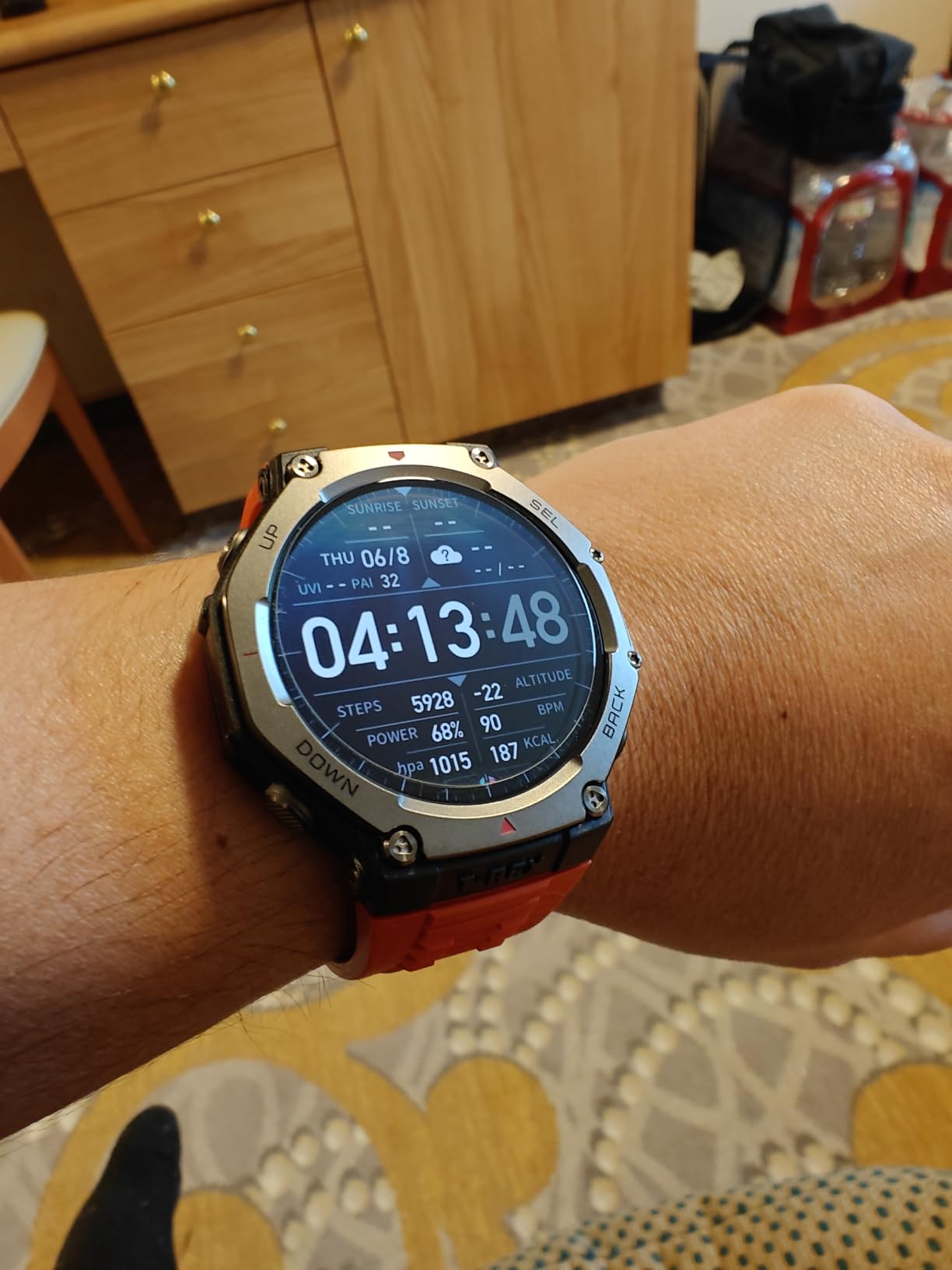
The T-Rex 3 is the most reviewed watch on this list by a wide margin, and the reason is a simple equation: you get Garmin-style ruggedness and free global mapping at a price that does not require a second mortgage. Battery life leads that equation, with two to three weeks of typical use on a 700 mAh cell.
Dual-band GPS across six satellite systems locks quickly and tracks precisely, and the free global offline maps mean turn-by-turn navigation works with no subscription and no map purchase. That combination is the dividing line between a real hiking watch and a fitness tracker, and this one clears it.
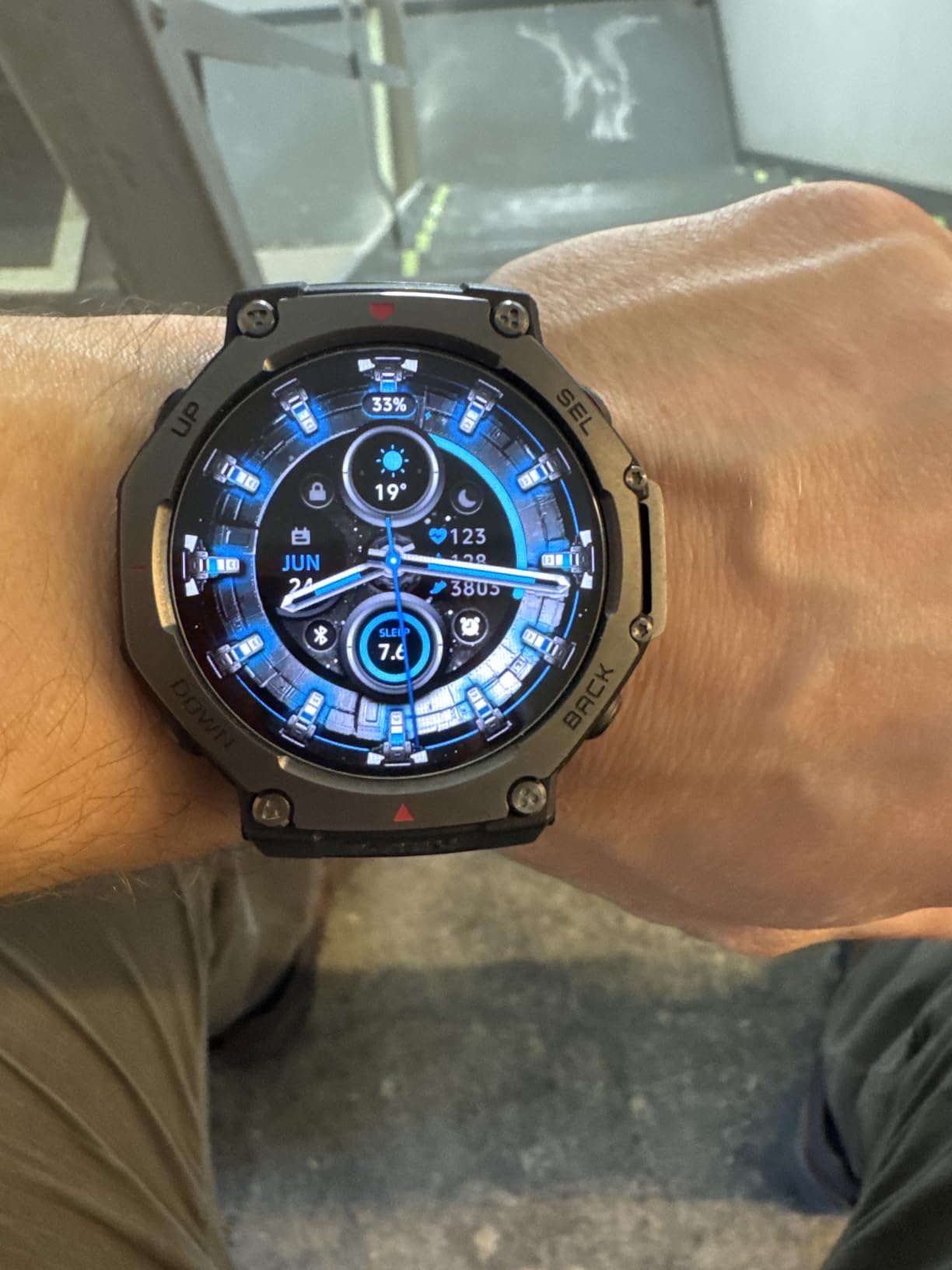
The 1.5-inch AMOLED at 2000 nits is bright, with dedicated Night Mode and Glove Mode visibility settings so you can tune it for pre-dawn starts or for a gloved hand on a cold ridge. The 316L stainless steel bezel is a genuine step up in perceived quality from the plastic most rugged budget watches use.
The temperature range of -22F to 158F matters more than it sounds. Winter hiking drains battery faster than any other activity, and a watch rated to work in deep cold is not just about the screen, it is about whether the electronics keep behaving when your phone is cold too.
Freediving to 147 feet, 170-plus workout modes with AI-generated training plans, and heart rate, blood oxygen, stress and sleep stage tracking round out a spec sheet that punches well above its tier.
Why the T-Rex 3 appeals to first-time outdoor watch buyers
It is the rare watch that is easy to live with. The Zepp app gives clear health and training insights without a paywall, notifications are straightforward, and the wide range of watch faces runs from tactical layouts to something more business casual when you leave the trail.
At 68 g with a soft liquid silicone band it is comfortable for long days, and the soft strap plus 26 GB of storage means music controls and offline content are within reach.
Where the T-Rex 3 falls down
There is no cellular capability. Despite listings that suggest otherwise on some spec sheets, this is a Bluetooth watch, so you cannot take calls from the wrist or reply to messages. Music controls also take several steps to change tracks.
Health sensor accuracy is the most common reservation. A minority of users find readings run high or low compared with Garmin or Polar, which matters if you are training to numbers rather than for feel. The Zepp app also pushes premium subscription features for some users, so check what you lose without paying before you rely on a metric.
7. Suunto Vertical: The Navigation Pick Among the Best Smartwatches for Outdoor Adventures
SUUNTO Vertical GPS Sports Watch, Solar Charging 95+ Sports, Canyon Ti
49 mm titanium case with sapphire lens
Up to 500 hours tour mode and 60 hours best GPS
Dual-band GPS
100 m
Pros
- Outstanding battery with 500 hours in tour mode
- Best-in-class route guidance and breadcrumb navigation
- Free colour offline maps
- Lightweight titanium build for a 49 mm case
- Dual-band GPS holds accuracy in canyons
- Barometer with storm alert
Cons
- Optical heart rate sensor inaccurate for some wearers
- Blood oxygen reads several points low
- Included wristband can snag or disconnect
- Sensor sleep and step tracking unreliable for some
The Suunto Vertical exists because navigation quality got its own category, and for that specific job it is the best tool here. Free global offline maps with paths, contour lines, water and landmarks, plus breadcrumb trails, points of interest and bearings, give you a proper map in the hand at the top of a valley with no signal.
Dual-band GPS is specified for reliability among cliffs, valleys and skyscrapers, which is precisely the terrain that defeats single-band receivers. The barometer with a storm alert function adds a genuine safety layer, warning of a pressure drop before the weather turns.
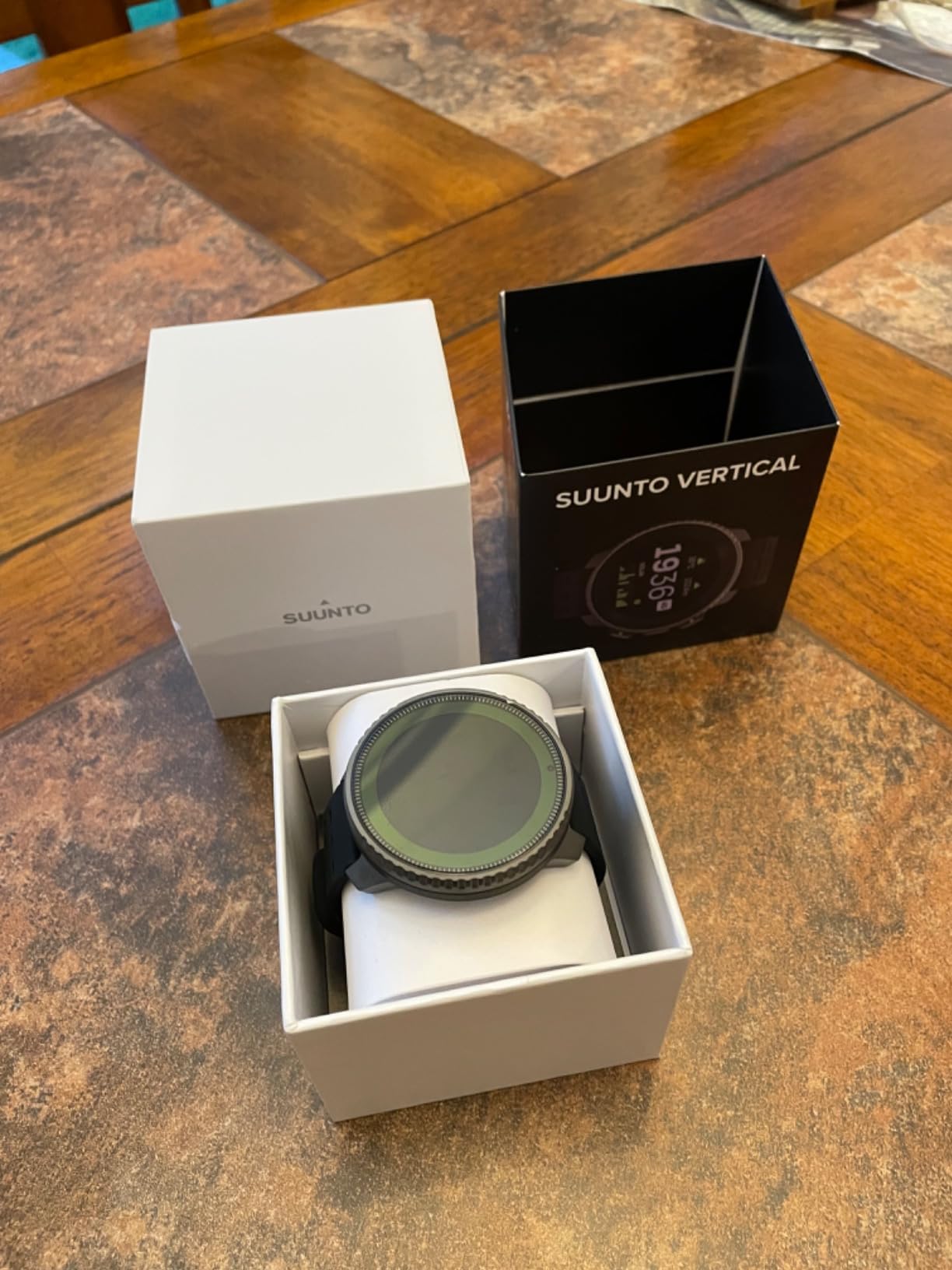
Battery is the headline figure and it needs context. Up to 500 hours in tour mode is the throttled, low-power mode. In best GPS mode the figure is 60 hours, which is roughly two and a half full days of navigation and is plenty for most hikers. Solar charging on the titanium model adds roughly 30 percent on genuinely sunny days.
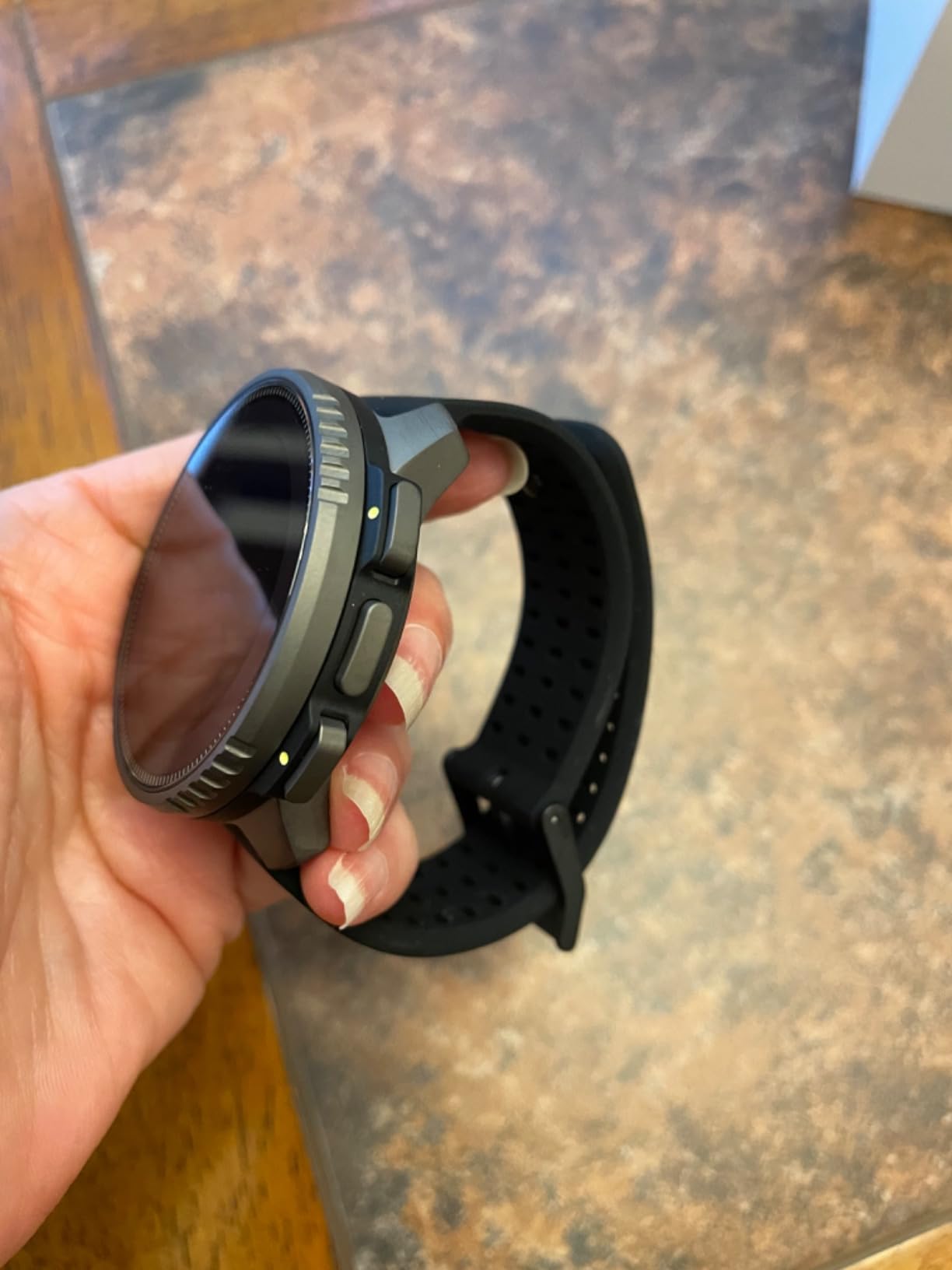
The 49 mm case carries a sapphire lens and titanium construction and still feels light on the wrist for its size, which is a pleasant surprise given the number. The large, clean display has a responsive compass that owners single out repeatedly.
With 95-plus sport modes covering hiking, climbing, cycling and swimming, this is a watch that handles mixed-sport trips where you switch between paddling, walking and alpine work in the same week.
Why serious navigators rate the Suunto Vertical highly
Route guidance is the best in this group in owner accounts. The colour maps are detailed rather than symbolic, and the breadcrumb navigation is dependable on retrace routes and in poor visibility. For navigation as the primary purpose, nothing else here is as confident.
The multi-week endurance in normal daily use means you can plan a week around the watch without charging. That is the pattern owners on long trips describe, and it is why the watch keeps coming up in thru-hiking conversations.
Why we would pair it with a chest strap
The optical heart rate sensor reads inaccurately for some wearers, and the blood oxygen sensor reads several points low against medical oximeters. If you are chasing precise heart rate data on a climb or in cold conditions, a chest strap is the fix and most owners in this camp recommend one.
Sleep and step tracking are unreliable for some users, the included wristband can snag or disconnect during vigorous activity, and you cannot type GPS coordinates directly into the watch, which matters when you are following a coordinate list from a rescue plan.
8. COROS Nomad: The Full-Colour Map Pick Among the Best Smartwatches for Outdoor Adventures
COROS Nomad Outdoor GPS Smartwatch, 1.3″ MIP Touchscreen, Global maps with Turn-by-Turn Navigation, 22 Days Battery Life, Microphone Records Voice Notes, Real-time Weather, and Safety alerts (Black)
100 g
1.3 inch MIP touchscreen
22 days daily use and 50 hours GPS
50 m water resistance
Pros
- 22 day battery with 50 hours of GPS
- Full colour map view far more detailed than breadcrumb lines
- MIP screen readable in bright sun without backlight
- Adventure Journal voice notes and photos
- Real-time weather tide and moon phase data
Cons
- Heart rate sensor spikes with heavy arm movement
- Weather data needs a phone connection to sync
- Companion app layout could be more polished
- Large case intimidates smaller wrists
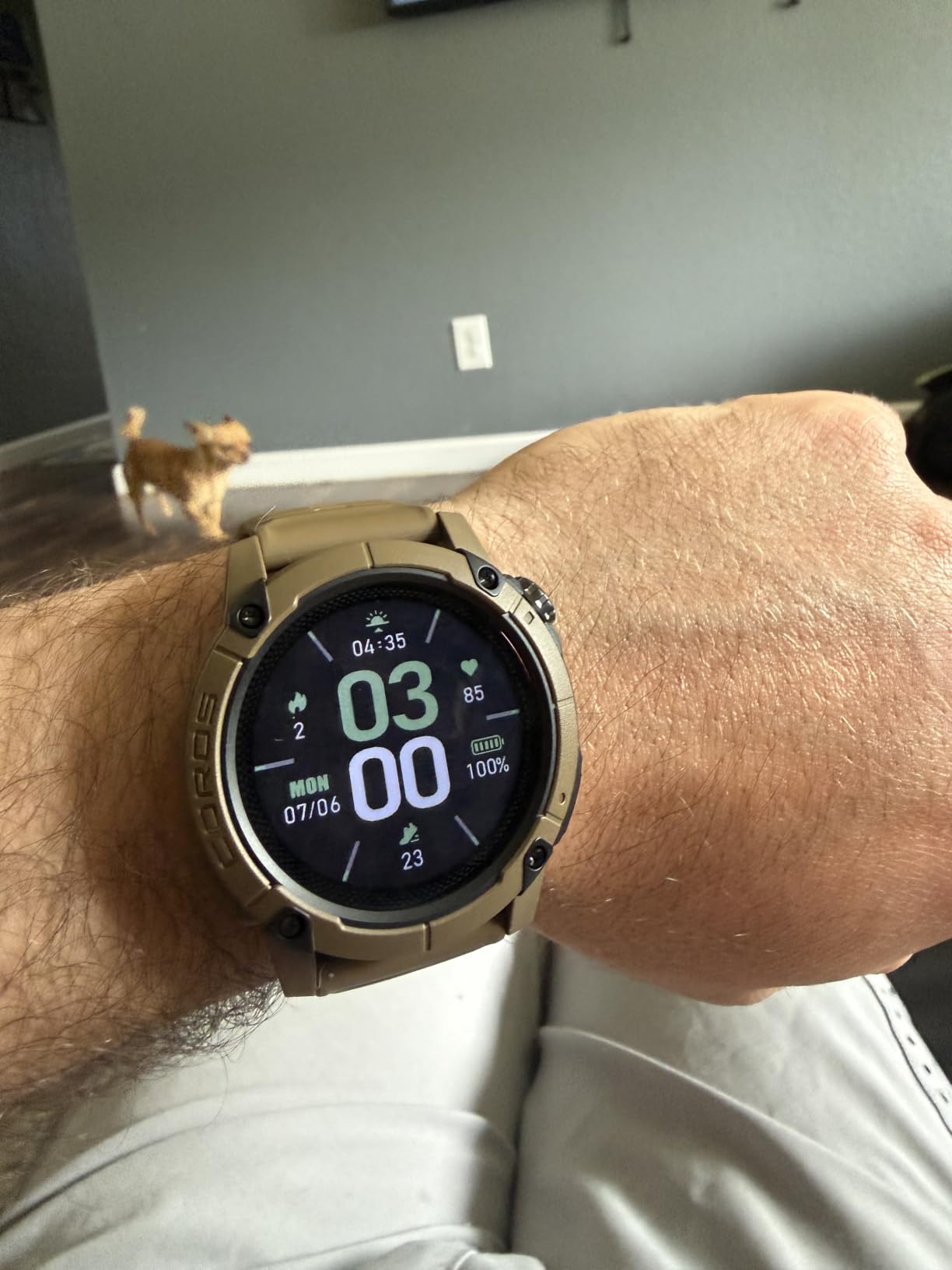
The Nomad is the watch for people who come from a Garmin Instinct and discover they want real navigation. The full colour map view is more detailed than breadcrumb navigation, with street names and turn-by-turn guidance, and it is pre-loaded globally so there is nothing to download before you leave the trailhead.
The 1.3-inch MIP touchscreen is the choice that makes the battery work. Owners report the screen stays readable in bright sun without needing a backlight, which is the classic MIP advantage, and the display still lights up with colour in low light. That combination is why the Nomad reaches 22 days of daily use alongside 50 hours of GPS.
The Adventure Journal is a feature we did not expect to care about and now cannot do without. Voice notes tagged with your location, photos and voice-to-text let you record a route description, a water source or a campsite condition while you are standing in front of it, which is far more useful than a note you write from memory at lunch.
Real-time and forecast data for sunrise, tides and moon phase is genuinely useful on coastal paddling and multi-day trips. Back-to-Start navigation and safety alerts add the basics you want when you have walked further than you planned.
Owners coming from Garmin Instinct models describe it as lighter and more readable with far better full-map navigation and multi-week endurance. Trail runners and hikers specifically call out GPX support and turn-by-turn maps as the deciding factor.
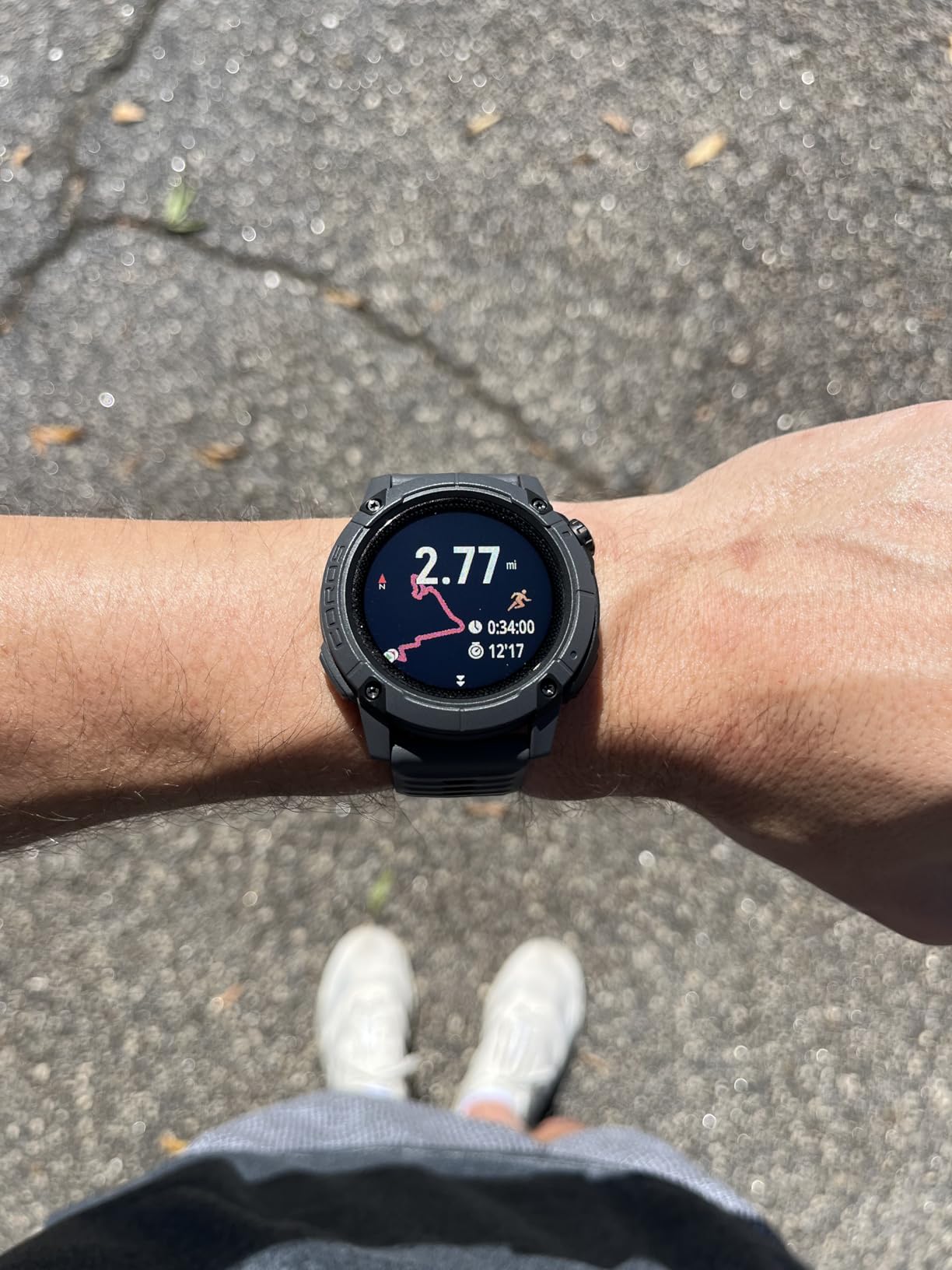
What the Nomad does that breadcrumb-navigation watches do not
You can see the shape of the land around you. Contour lines, roads, water and landmarks on a colour display at 1.3 inches turn navigation from guessing into reading, which is the difference between a confident route line and a hopeful one.
The Adventure Journal turns the watch into a field notebook. Location-tagged voice notes, photos and voice-to-text are quick to capture with wet hands, and they are searchable later when you are trying to recall where a stream crossed the trail.
Where the Nomad needs work
The heart rate sensor spikes with heavy arm movement, which affects technical climbing and steep descents where you are pulling on gear. Tighten the strap before those sections or bring a chest strap for serious heart rate work.
Weather data requires a phone connection to sync, which undercuts the offline pitch on that one feature. The companion app layout needs polish, the case is large enough to worry small wrists, and the screen flashlight mode only illuminates the display rather than throwing real light into a tent.
9. COROS APEX 2 Pro: The Lightweight Pick Among the Best Smartwatches for Outdoor Adventures
COROS APEX 2 Series Outdoor GPS Watch, 1.2″ Sapphire Titanium, On-Wrist Navigation, Offline Maps, Heart Rate Monitor, Track Sleep, Running, Biking, Skiing, Climbing (APEX 2, Coral)
42 g
1.2 inch sapphire glass LCD
75 hours GPS and 30 days daily use
Grade 5 titanium bezel
Pros
- Sapphire glass and titanium bezel for a durable premium feel
- Very light at 42 g for skiing climbing and trail use
- 75 hours of GPS covers ultra-distance events
- Offline maps and on-wrist navigation
- Integrates with Strava TrainingPeaks Komoot and Stryd
Cons
- LCD is dimmer and less vibrant than AMOLED rivals
- COROS app ecosystem still catching up to Garmin
- Strap and buckle design less refined
- No music storage or built-in flashlight
The APEX 2 Pro is the watch to buy when weight is the metric you refuse to compromise on. At 42 g it is the lightest watch in this roundup by a wide margin, and yet it ships with a sapphire glass display, a PVD-coated grade 5 titanium bezel and 75 hours of GPS battery. That is an unusual amount of capability for 42 grams.
Sapphire glass is the right call for this category. Rocky terrain, gear racks, door frames and axe shafts are what destroy acrylic and hardened glass lenses, and sapphire simply shrugs. Multi-band satellite support across BeiDou, GLONASS, GPS and Galileo keeps positioning solid on technical ground.
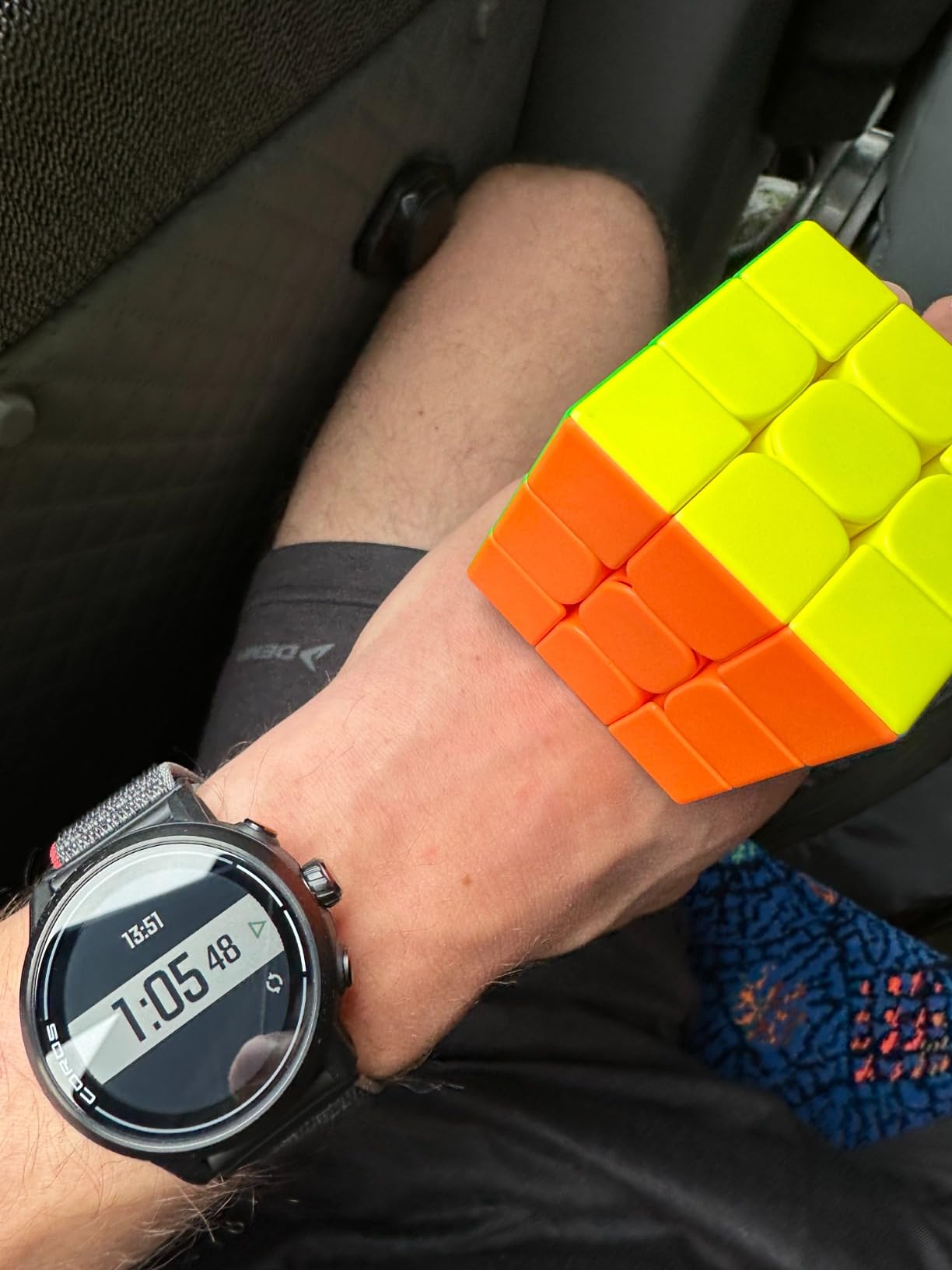
On-wrist navigation with offline maps and on-device routing means the watch does not need your phone to get you back on trail. Third-party integrations include Komoot, TrainingPeaks, Strava, Relive and Stryd, and structured workouts and training plans live in the COROS Training Hub.
Buyers are outdoor athletes who value the durability, low weight and long endurance for skiing and climbing. Deep, light and REM sleep stage tracking is also more granular than most watches at this size.
A two-hour charge time is quick enough to fit into a rest stop at a hut or a vehicle turnaround, which matters when the alternative is carrying a cable.
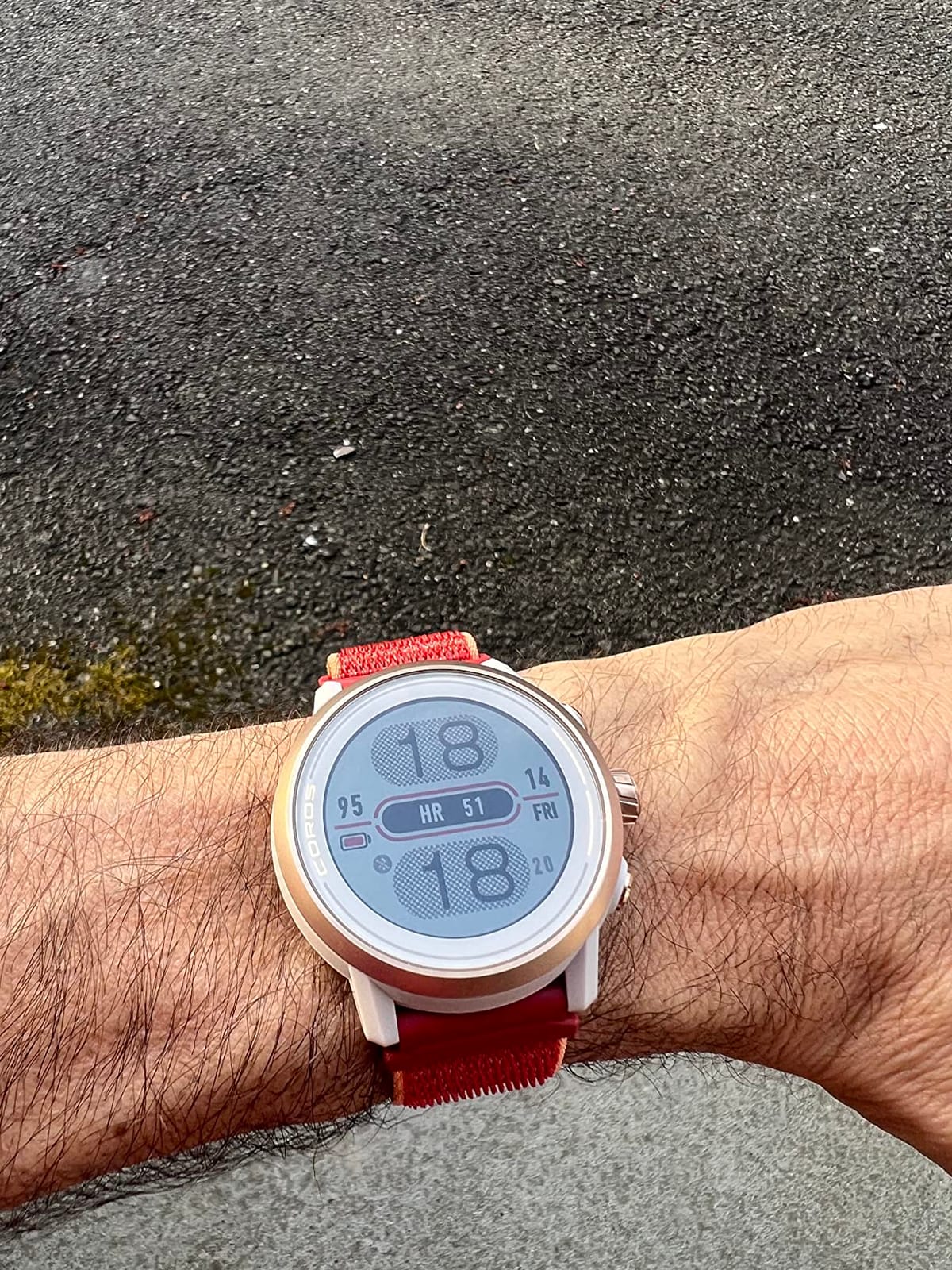
Why alpine users gravitate to the APEX 2 Pro
42 g disappears under a sleeve or inside a glove cuff. On a ski ascent or a long rock route, the weight of a bigger watch is felt on the wrist by the end of the day, and this is the pick that removes that problem entirely.
75 hours of GPS covers an ultra-distance event on a single charge, which means no charging on the race or the traverse. That single fact removes more stress than any display upgrade.
Where the APEX 2 Pro gives ground
The LCD display is dimmer and less vibrant than the AMOLED options here. In direct sun it is usable rather than impressive, and some owners moved up in spec sheets purely for the screen.
The COROS app ecosystem is still catching up to Garmin, and the strap and buckle design is less refined than rivals. There is also no music storage and no built-in flashlight, which are real omissions for a watch aimed at multi-day mountain use.
10. CARBINOX Edge: The Field and Jobsite Pick Among the Best Smartwatches for Outdoor Adventures
CARBINOX Edge Military Smart Watch for Men, Fitness Tracker, GPS, Black
1.96 inch 1000 nit AMOLED
MIL-STD-810H tested and IP69K
5 ATM
Up to 25 days basic mode
Pros
- Two to three weeks between charges
- Speaker and microphone give clear Bluetooth calls
- MIL-STD-810H stainless steel and Gorilla Glass build
- Large sunlight-readable display
- Dual-frequency GPS L1 and L5 with compass altimeter and barometer
- Works with Android and iPhone
Cons
- Strava sync produces implausible speed and elevation data
- Heart rate sensor reads low even with a tight strap
- Some units disconnect from the phone frequently
- Hiking mode does not log GPS tracks
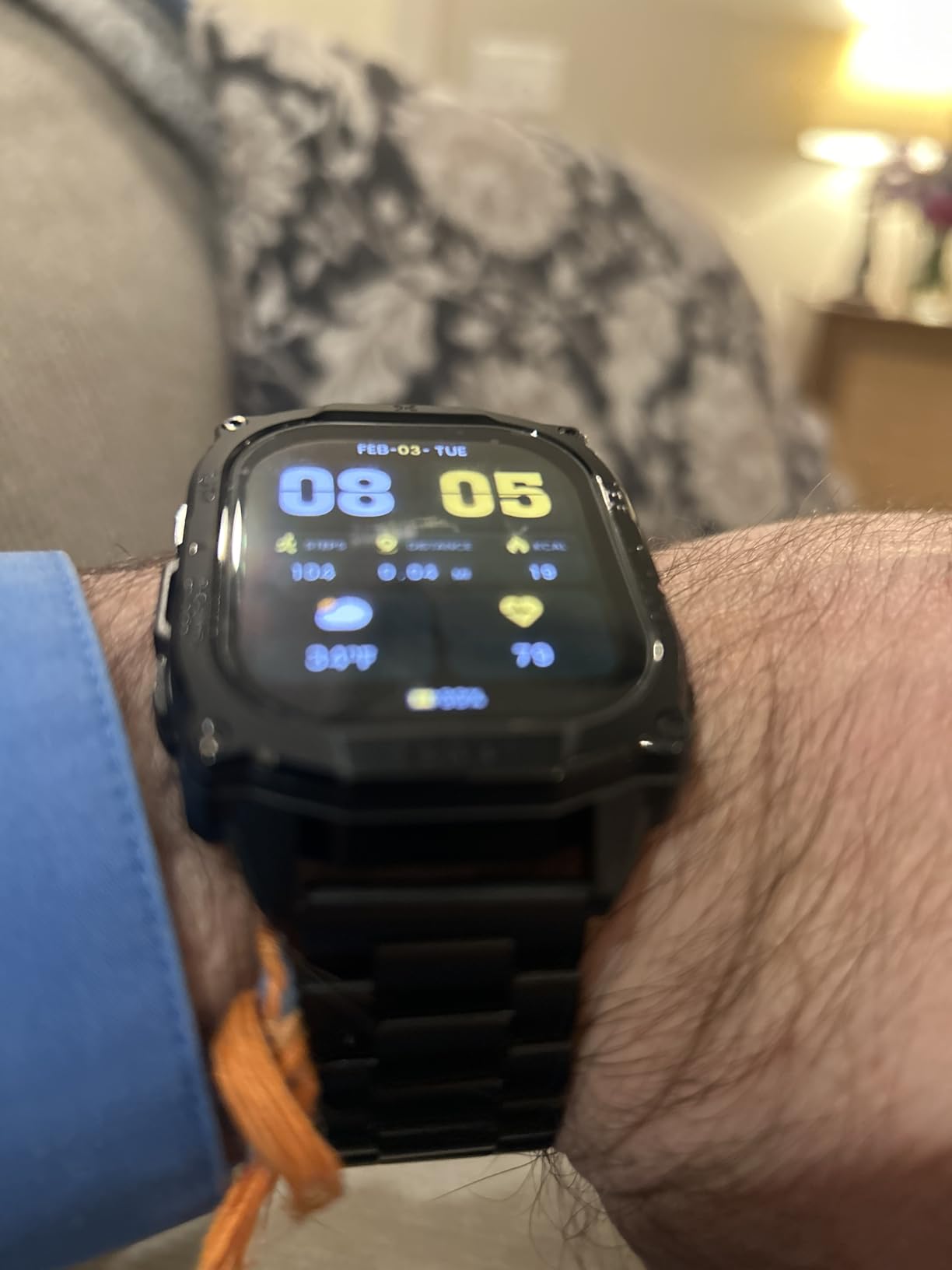
The CARBINOX Edge is the field-and-jobsite watch in this roundup, and that is a specific and useful niche. It is rated to MIL-STD-810H, sealed to 5 ATM and IP69K, with a stainless steel bezel and Gorilla Glass. Owners working outdoors report it takes the same beating as a phone that costs several times more.
The built-in speaker and microphone let you take Bluetooth calls straight from the wrist, which nobody else in this price tier offers. For anyone splitting a work shift and a trail day, or working in a place where you need to be reachable without unpacking, that is a real capability rather than a spec sheet line.
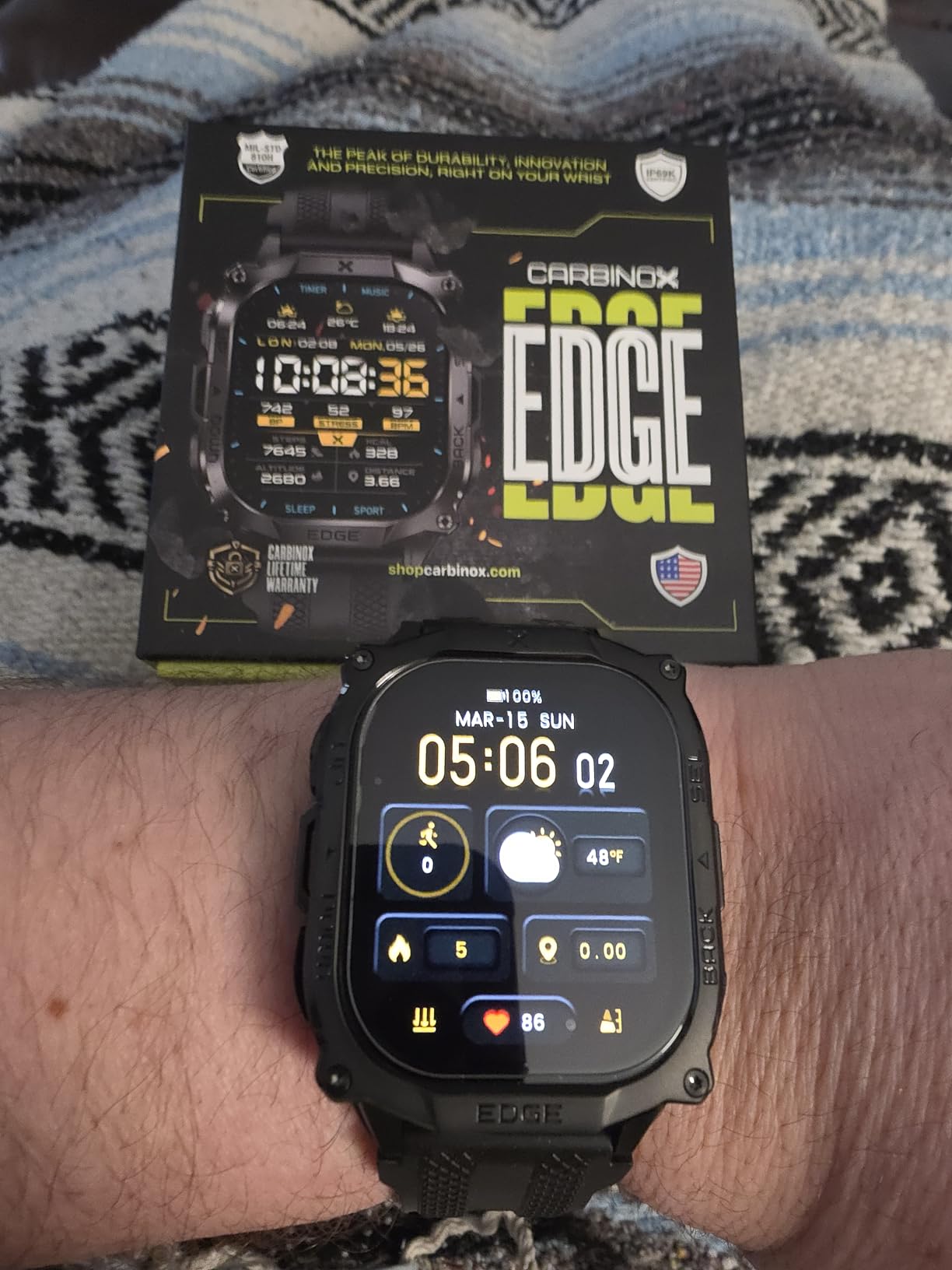
Positioning is dual-frequency across L1 and L5 with six satellite systems, plus compass, altimeter and barometer for off-grid orientation. The 1.96-inch 1000-nit AMOLED is large enough to read on a bright site and the 500 mAh cell runs up to 25 days in basic mode.
There are 160 sport modes with 24/7 heart rate, blood oxygen, sleep and stress tracking, and the 22 mm quick-release strap plus included screen cover make swapping between work and outdoor setups quick.
Value-focused buyers are largely delighted with battery life, build toughness and the ability to answer calls. A limited lifetime warranty is also unusual at this tier.
Why field and site workers rate the Edge highly
Bluetooth calling from the wrist removes the need to pull a phone out of a vest with gloves on. Combined with notifications, that turns the watch into a genuine communication tool rather than a notification mirror.
Multi-constellation dual-frequency GPS with a compass, altimeter and barometer gives a decent orientation baseline, and the magnetic charger reaching full charge in about two hours is fast enough to top up overnight.
Where the Edge is not a training device
The most serious complaint is data quality. Strava sync produces implausible speed and elevation figures for some users, and the heart rate sensor reads low even with a tight strap. If your training depends on accurate numbers, this is not the watch.
Some units also disconnect from the phone frequently, the weather app is not very accurate, and hiking mode does not log GPS tracks. Several sport modes are missing as well, including e-bike riding, so check your activity list before committing.
11. Suunto 9 Peak Pro: The Compact Pick Among the Best Smartwatches for Outdoor Adventures
SUUNTO 9 Peak and Peak Pro Sports GPS Watch for Demanding, Performance Driven Athletes and Adventurers
42 mm case
1.2 inch digital MIP at 1000 nit
40 hours best GPS and 300 tour
100 m and sapphire glass
Pros
- Most owners report well over a week of battery
- MIP display stays readable in sunlight and saves power
- Compact 42 mm sizing suits many wrist sizes
- Accurate GPS with fast satellite lock
- Quick reply works with iPhone and Android
- Full charge in one hour
Cons
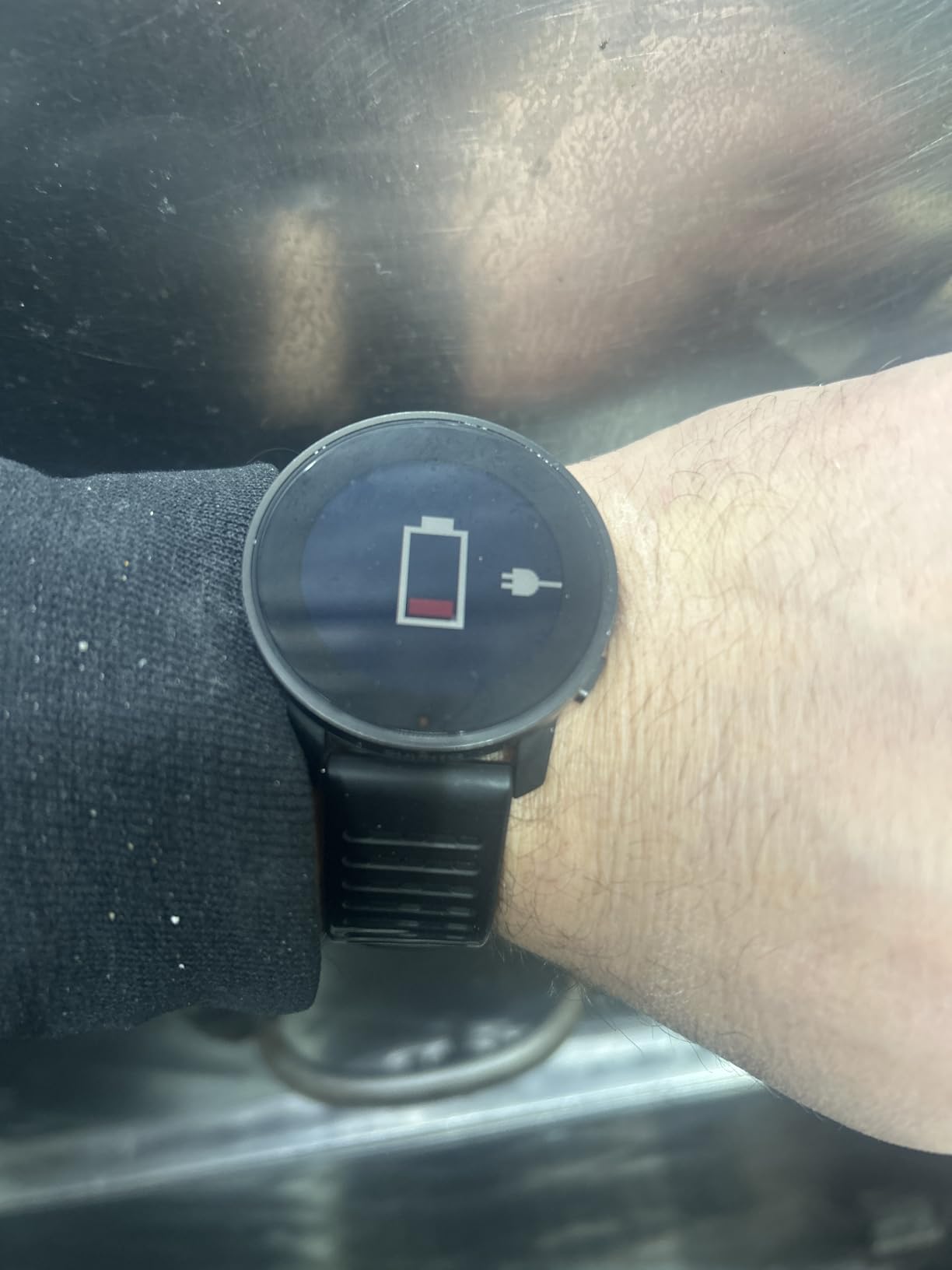
- Recent firmware updates drained battery faster for some users
- Heart rate readings inconsistent in some activities
- Sleep tracking misses a second sleep period
- Buttons uncomfortable when worn tight
- Included strap is short and can come undone
The 9 Peak Pro is the answer to small-wrist frustration, and it is the only watch in this roundup at a genuinely compact 42 mm case. If you have been eyeing the fēnix line and been put off by the bulk, this is the practical version of the same idea.
The digital MIP display at 1000 nit stays readable in sunlight while preserving battery, which is the sensible pairing for a watch whose job is endurance. Owners report well over a week of real-world battery, with 40 hours in best GPS mode, 70 hours in endurance mode and 300 hours in tour mode.
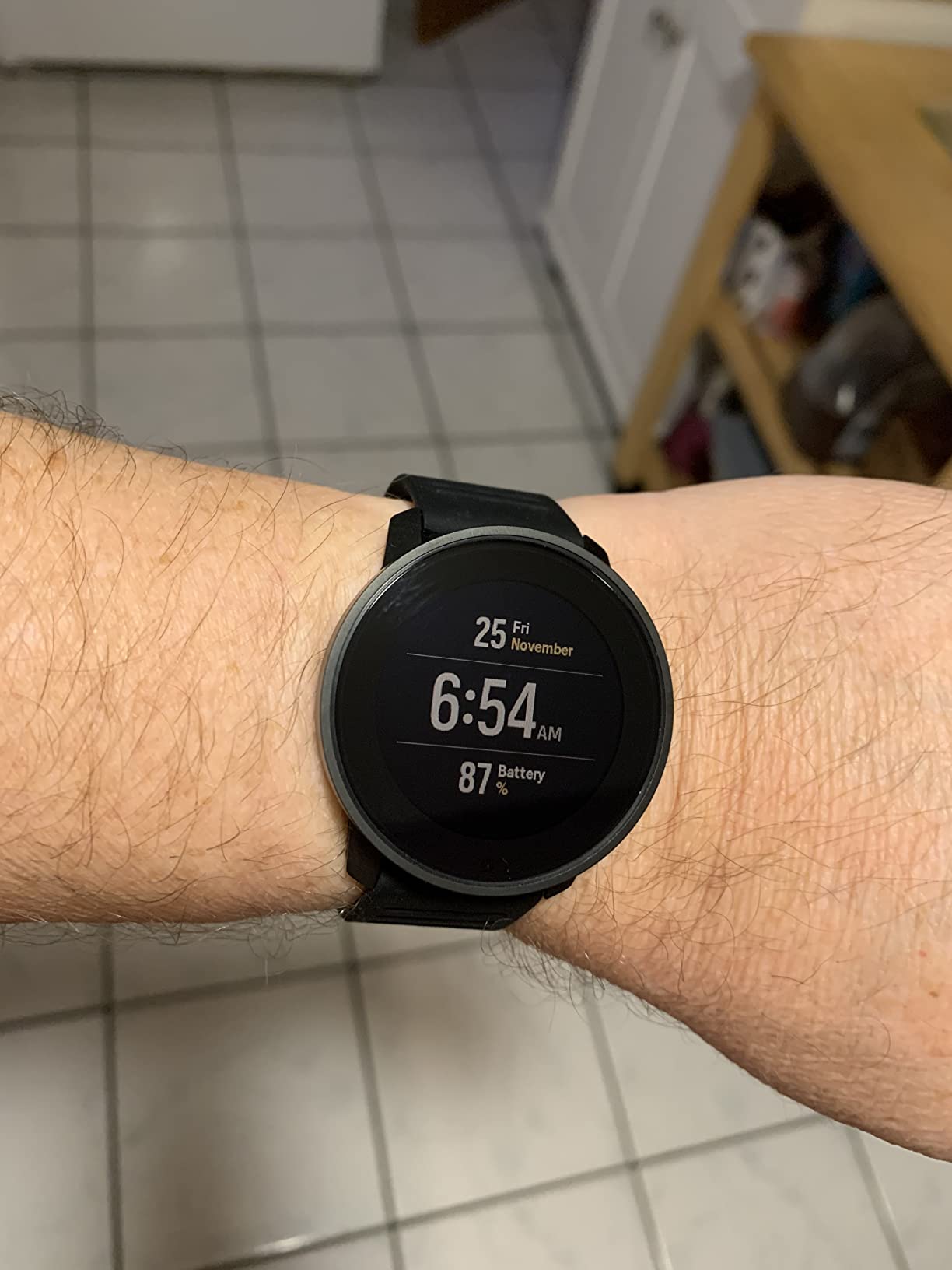
Charging is genuinely fast: a full charge in one hour, and a 10-minute quick charge adds two hours of GPS. That is the practical feature that rescues the battery figure on a short trip, because a coffee stop is enough.
Four satellite systems give fast, reliable tracking among buildings and in canyons. Turn-by-turn navigation with weather alerts and avalanche maps is a real safety feature for backcountry ski trips, and the Suunto app supports structured workouts, Strava, TrainingPeaks and 200-plus fitness apps.
Titanium, stainless steel and sapphire glass with 100 m water resistance make it a durable watch, and 97 sport modes cover the usual outdoor spread.
Why small-wrist buyers should look here
Case size is the most common reason people reject otherwise excellent outdoor watches, and 42 mm solves it without giving up the ABC sensor package or the sapphire lens. It also wears well under a cuff, which matters on a climbing or paddling trip.
Notifications and quick reply work reliably with both iPhone and Android phones, which makes it one of the few cross-platform picks here that does more than display messages. The app feed and activity sharing are easy to use.
Where the 9 Peak Pro has slipped
The rating reflects real gripes. Recent firmware updates drained battery far faster for some users, which is worth knowing before you buy on the strength of the old figures. Check recent owner feedback on software versions.
Heart rate readings can be inconsistent in some activities, sleep tracking misses a second sleep period in the night, and the buttons can be uncomfortable when worn tight. The included strap is also short and can come undone, so budget for a replacement band.
12. Tiwain ZK67 Military Smartwatch: The Starter Pick Among the Best Smartwatches for Outdoor Adventures
Military Smart Watch for Men, Built-in GPS, 30-day standby, 1.43″ AMOLED
1.43 inch AMOLED
IP68 sealed
Zinc alloy and ABS case
7 to 10 days battery
Pros
- Comparable features at a fraction of branded price
- Battery lasts over a week and up to 30 days in standby
- LED flashlight illuminates up to 20 meters
- Zinc alloy body shrugs off drops
- GPS across six satellite systems with compass altimeter and barometer
- Pairs reliably with iPhone and Samsung Android phones
Cons
- No map display on the GPS
- Does not connect to Strava or Apple Health
- No way to reply to messages
- Distance readings may not be precise
- Not intended for salt water or sauna exposure
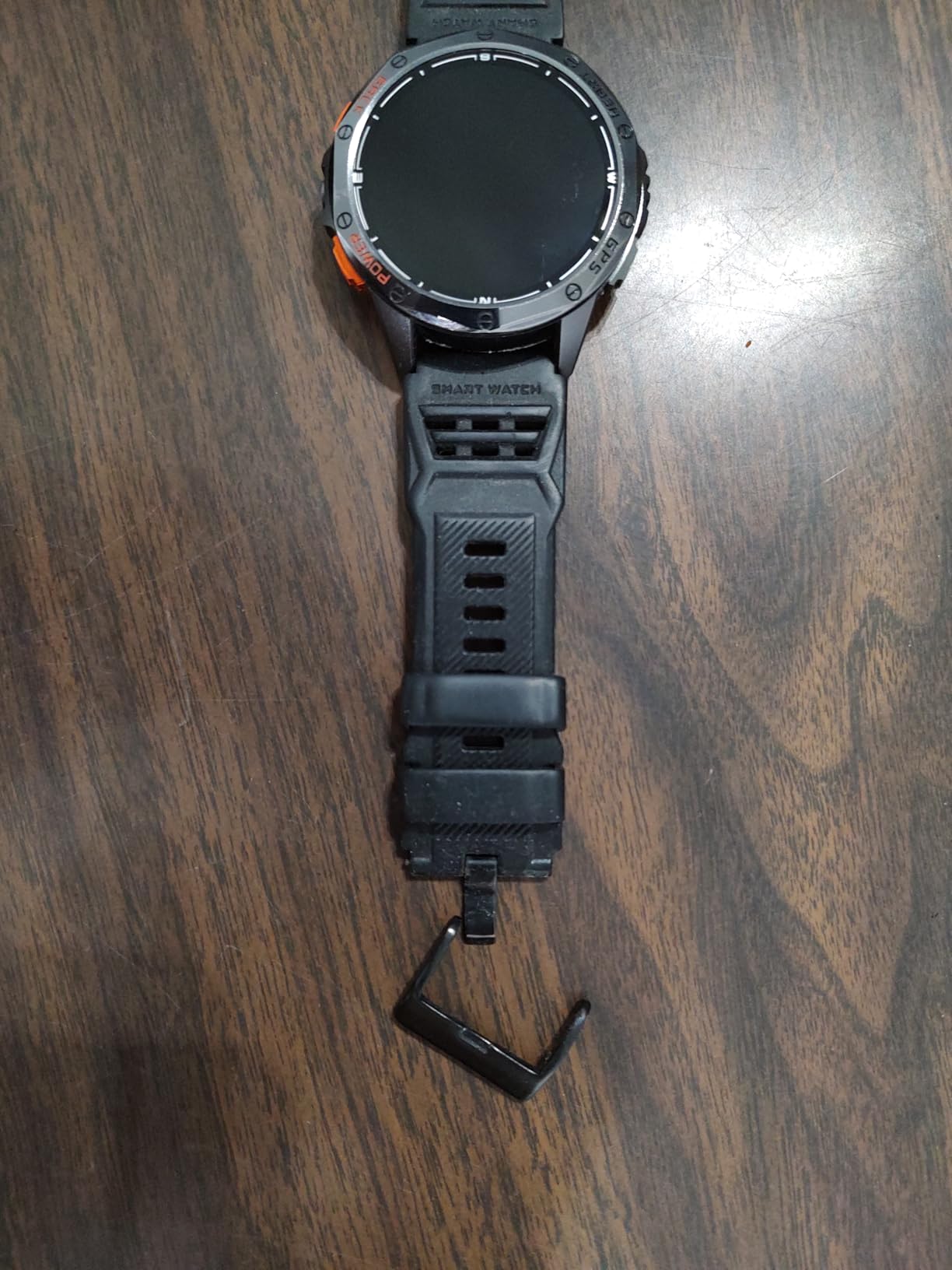
The ZK67 is here because the best smartwatches for outdoor adventures should not require a big budget, and because it answers a question most roundups skip. If you want a watch that records your track, tells you your altitude, lights your tent and lasts more than a week, this does all four.
Built-in GPS covers six satellite systems including GPS, GLONASS, BeiDou, Galileo, NAVIC and QZSS, with compass, altimeter and barometer for altitude, air pressure and position. The LED flashlight on the side button illuminates up to 20 meters, which is a real feature for night trail work and evening camp tasks.
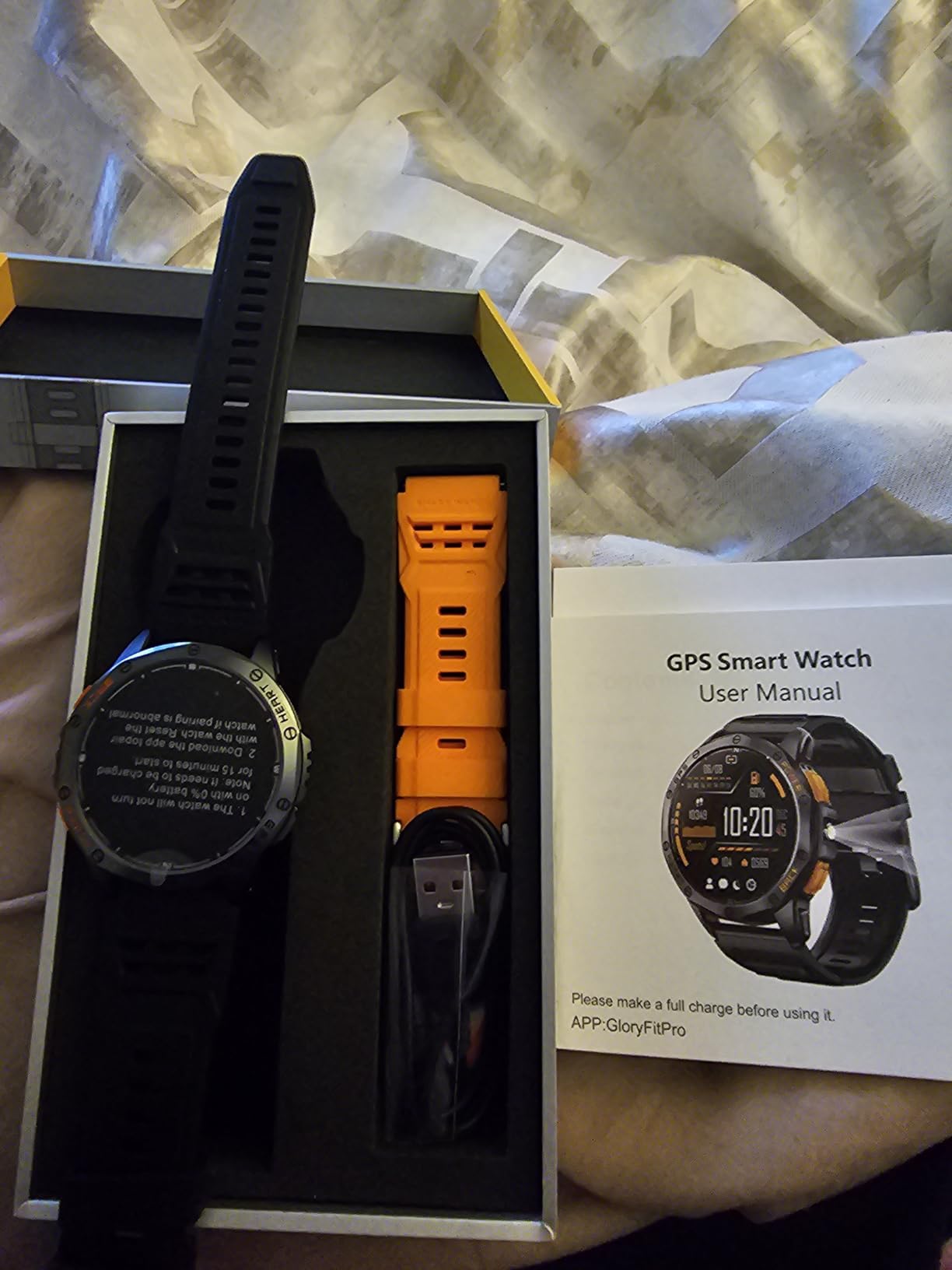
Battery life runs 7 to 10 days with heavy use and up to 30 days in standby, on a 530 mAh cell that fully recharges in about two hours. Continuous GPS use is about three days, which is enough for a long weekend but not a week-long trip.
The zinc alloy and vacuum-plated ABS case survived drops without scratching in owner accounts, and the 1.43-inch AMOLED touchscreen is responsive. It includes two bands, a stainless steel option and a silicone option, plus a free watch face marketplace with animated faces.
There are 170-plus sport modes with exercise goals and app sync, plus real-time heart rate, sleep and blood oxygen monitoring with vibration alerts and Bluetooth calling with receive-only message notifications.
Why the ZK67 works as a first outdoor watch
It pairs reliably with both iPhone and Samsung Android phones, which is rare at this level, and the sensor package covers the ABC basics that hikers actually rely on. Bluetooth calling means you can answer a phone from the wrist.
Owners consistently treat it as a high-value secondary or budget watch, praising battery life, the flashlight, durability and reliable phone pairing. If you keep your main watch for the office and want a beater for the trail, that is exactly the role it fills.
Why the ZK67 is not a navigator
There is no map display on the GPS. You get a track and a breadcrumb, not a topographic map, which means it cannot get you out of trouble when two side trails look identical. If route-finding is part of your trip, look at the fēnix 7 Pro, the Suunto Vertical or the COROS Nomad instead.
It does not connect to Strava or Apple Health, so your workout data stays in its own app. Distance readings may not be precise, blood pressure readings vary with fit, you cannot reply to messages, and the watch is not intended for salt water or sauna exposure.
Watches We Did Not Recommend Among the Best Smartwatches for Outdoor Adventures
We would rather explain the gaps than pad the list. Three categories of watch came up repeatedly in our research and did not make the cut.
Tracker-first watches without offline routable maps. The Garmin Instinct line is the clearest example, and forum consensus repeatedly names that distinction as the dividing line between a real hiking watch and a fitness watch. Any watch that cannot hold a routable map without your phone was demoted, even with excellent battery life.
Watches where battery claims rest entirely on tour mode. A headline figure of several hundred hours usually means positioning is throttled to a fraction of normal. If the same watch shows only single-digit GPS hours in best mode, we passed on it rather than repeat the flattering number.
Newer brands with unresolved software trust. Owners on r/hikinggear and r/Garmin raise a fair point about mapping reliability and update quality on some newer ecosystem brands. Where track logging or third-party sync showed recurring problems, we either flagged it heavily or left it out.
One more gap is worth naming: satellite communications. No watch in this roundup pairs natively with a dedicated satellite communicator for two-way messaging when there is no coverage. Watch emergency SOS works on cellular and, on some models, satellite networks, but a satellite communicator is still a separate device worth carrying on genuinely remote trips.
Buying Guide: How to Choose the Best Smartwatches for Outdoor Adventures
Here is how to think about the decision before you commit, in the order that actually matters. If you are still weighing categories rather than models, our smartwatch guide for men and guide for women both cover case sizing in more detail than we can here.
1. Match battery life to trip length, not to marketing
For a day hike, almost anything works, including a watch that needs charging every other night. For a weekend trip you want at least 30 hours of GPS so you can charge on the drive home. For a week-long traverse you want 60 hours of GPS or a solar or expedition mode that changes the equation. For anything beyond a week, look at smart-mode endurance measured in weeks, because that is the number that decides whether you carry a cable.
A useful cheat sheet: day hike under 15 hours of GPS, weekend 30 to 40 hours, week-long 60 to 75 hours, expedition solar or multi-week smart mode. Cold weather cuts these figures further, so add a margin if you are above the treeline in winter.
2. Understand single-band, dual-frequency and multi-band GPS
All three lock onto satellites. The difference is how they behave when the signal is complicated. Single-band uses one frequency and struggles under dense canopy or between canyon walls. Dual-frequency uses two, which fixes most of those problems. Multi-band, often paired with an auto-switching mode such as SatIQ, uses more frequencies still and holds the tightest track, at the cost of battery.
If your terrain includes trees, cliffs or deep valleys, dual-frequency is the minimum worth paying for. Multi-band is worth it if your trips are technical rather than trail-running flat.
3. Decide between breadcrumb navigation and full topographic maps
Breadcrumb navigation draws the line you walked so far and gets you back along it. That is enough for a marked trail and useless at a fork with no signage. Full offline topographic maps with turn-by-turn guidance let you look ahead, spot water, see contour lines and navigate when the trail vanishes.
If you regularly hike somewhere with route choices, pay for maps. If you run loops on known paths, breadcrumb tracking is fine. This is the one place where spending more genuinely buys a capability rather than a spec bump.
4. Check water resistance and lens material for the terrain you actually use
A 100 m or 10 ATM rating covers open-water swimming, kayaking, rain and accidental immersion. A 50 m rating covers rain and surface water. IP69K adds dust and high-pressure water resistance for dusty jobsites. None of these watches should go in a hot sauna or steam room unless the manufacturer says so, and seals age.
For rocky, alpine or canyoning terrain, a sapphire crystal lens is the upgrade that matters. Acrylic and standard hardened glass scratch; sapphire resists the ledge, the gear rack and the boulder face. Skip it on gentle trails and you will barely notice the difference.
5. Read the display in sunlight, not in the spec sheet
AMOLED panels are brighter and more colourful in shade and at dusk, which is why the Apple Watch Ultra 2 and Samsung Galaxy Watch Ultra reach 3000 nits. MIP transflective screens stay readable in direct sun with the backlight off and cost far less battery. A gesture-activated or raise-to-wake backlight on an AMOLED gets you most of the way in sunlight while keeping the battery figure.
Whichever you choose, set up a glove mode or raise-to-wake setting on the trail. A screen you cannot wake with a gloved hand is a screen you will not use.
6. Get the case size right for your wrist
Case diameter is the number that decides comfort. Around 42 to 44 mm suits most wrists and stays under a cuff or glove liner. 45 to 47 mm works for average to large wrists. 49 mm is a large watch and people with smaller wrists tend to dislike it within a week. Measure your wrist circumference and compare it with the manufacturer’s stated range, because a strap that is too short will not survive a long trip.
Weight matters too. Above roughly 60 g you will notice the watch overnight, which affects sleep and recovery tracking. Below 50 g it genuinely disappears.
7. Match the ecosystem to your phone
This is the filter most outdoor roundups skip, and it changes the outcome more than any other single factor. Apple Watch hardware works properly with iPhones only. Wear OS watches such as the Galaxy Watch Ultra are built for Android. Garmin, COROS, Suunto, Amazfit, Polar and CARBINOX work across both, which matters if you switch phones or share a watch.
What you give up with a cross-platform watch is cellular calling and richer app ecosystems. What you gain is multi-week battery and real mapping. For most hikers that trade is worth making; for someone who wants their wrist to handle calls and payments, it may not be.
8. Look at safety features, and know their limits
Incident detection and hard fall detection can trigger an alert if you stop moving after a fall. Emergency SOS works over cellular on most models. Live tracking lets a contact follow you in real time. All of these need your phone nearby, or a watch with its own cellular or satellite connection.
Plan the feature before you need it: add emergency contacts, test the alert with a friend, and decide in advance what you will do with a false alarm. For remote terrain, pair the watch with a satellite communicator rather than relying on SOS alone. And if you are training to heart rate numbers, know that optical sensors are less accurate on darker skin tones, over tattoos, when loose, or when sweat and movement are both present. A chest strap solves all four.
These are the questions people ask most often when choosing an outdoor watch, answered directly.
Frequently Asked Questions
What is the best watch for outdoor adventure?
The Garmin fenix 7 Pro Sapphire Solar is our top pick for most outdoor adventures because it combines multi-band GPS with SatIQ, a solar charging lens, a sapphire crystal and a built-in flashlight, so it handles multi-day trips, mapping and rough terrain without a nightly charge. If your trips are shorter or you need phone-free calling, the Samsung Galaxy Watch Ultra is the Android alternative, and iPhone owners should look at the Apple Watch Ultra 2.
What is the best smartwatch for outdoor use?
For outdoor use, a watch needs three things: reliable GPS positioning that holds under tree cover or between cliffs, battery life measured in GPS hours, and a display you can read in direct sun. The Garmin Instinct 3 AMOLED delivers two-plus weeks between charges with multi-band GPS and a flashlight, while the COROS PACE Pro adds free offline topographic maps and turn-by-turn routing at 49 g. Whichever you pick, confirm it holds routable maps offline if you navigate anywhere without signage.
What is the best watch for adventure travel?
Adventure travel rewards connectivity more than endurance, because you move between countries and signal quality changes daily. The Apple Watch Ultra 2 stands out with cellular calling, texting and music away from your phone, plus offline maps and a full dive computer, and the Samsung Galaxy Watch Ultra offers LTE connectivity and a very bright 3000-nit display for Android users. If your trips are remote rather than international, a multi-week battery watch such as the Garmin fenix 7 Pro Solar may serve you better.
Do GPS watches need internet to work?
No. GPS positioning works without any connection because it receives signals directly from satellites, and offline maps, breadcrumbs, the altimeter, barometer and compass all function without a phone. What you do need a connection for is syncing routes, downloading maps before a trip, fetching weather updates and any safety alerts that rely on the cellular network. Sync your maps and routes at home, and the watch will work fine with no signal at all.
Are GPS watches worth the cost compared with a phone?
For hiking and backpacking, a dedicated watch is worth it because your phone is a battery you should not be draining for navigation, and you can keep the phone off for navigation, photos and emergencies. A watch gives you a dedicated track recording, an altimeter and barometer, incident detection and hours of GPS runtime. If you only walk marked trails on day hikes and always carry a charged phone, a budget model such as the Tiwain ZK67 or the COROS PACE Pro covers the essential functions well.
Why are people ditching smartwatches?
The most common reasons are battery anxiety, size and ecosystem lock-in. Many people are tired of charging nightly on multi-day trips, find smartwatch cases too bulky for smaller wrists, or are frustrated by paying flagship money for a device that charges every night. Others dislike that Apple Watch hardware pairs only with iPhones. The shift toward multi-week GPS watches is a response to all three problems: endurance, size and cross-platform support.
What Garmin do Navy SEALs wear?
US military units that issue wrist GPS commonly use the tactical variants in the Garmin Instinct and fēnix families, which add features like night-vision-compatible modes, covert activity tracking and military-style data fields on the same platforms as the consumer watches. The Garmin fenix 7 Pro Sapphire Solar in this roundup shares that core platform, including multi-band GPS with SatIQ, ABC sensors and 10 ATM water resistance. Availability and specific configurations vary by unit, so check with the issuing organisation rather than assuming a consumer model matches.
Why the Best Smartwatches for Outdoor Adventures Matter in 2026
A watch is the one piece of technology that keeps working when everything else stops. It knows where you are without a signal, it knows how far you climbed, it warns you about a storm front before the rain arrives, and it does not ask you to choose between a navigation screen and your phone battery. In 2026 the options span from a lightweight tracker to a titanium device with a dive computer, which means the right question is no longer whether an outdoor watch is worth buying but which one matches your terrain, your trip length and your phone.
So here is the short version of our decision path. Multi-day trips and full mapping with expedition durability? Take the Garmin fenix 7 Pro Sapphire Solar. Two-plus weeks between charges and buttons you can hit with gloves? Take the Garmin Instinct 3 AMOLED 45mm. Maps and routing without paying flagship money? Take the COROS PACE Pro. Phone-free calling on Android? Take the Samsung Galaxy Watch Ultra. Cellular, dive computer and offline maps inside the Apple ecosystem? Take the Apple Watch Ultra 2. Biggest battery with free global maps at a modest cost? Take the Amazfit T-Rex 3. Confident navigation with the longest endurance? Take the Suunto Vertical. Full-colour maps on a long battery and a field journal? Take the COROS Nomad. Lightest option for alpine days? Take the COROS APEX 2 Pro. Jobsite toughness with wrist calling? Take the CARBINOX Edge. A small wrist and cross-platform notifications? Take the Suunto 9 Peak Pro. A starter watch with a flashlight and a very long standby? Take the Tiwain ZK67.
Whichever you choose, set up the maps, download the routes and test the emergency alerts before you leave. The best smartwatches for outdoor adventures are the ones that are configured the night before, not the ones with the longest specification sheet. Pack a headlamp regardless, check the forecast before the trailhead, and use our runner-focused smartwatch guide if you want to squeeze more out of your training data on the days you are not in the mountains.