
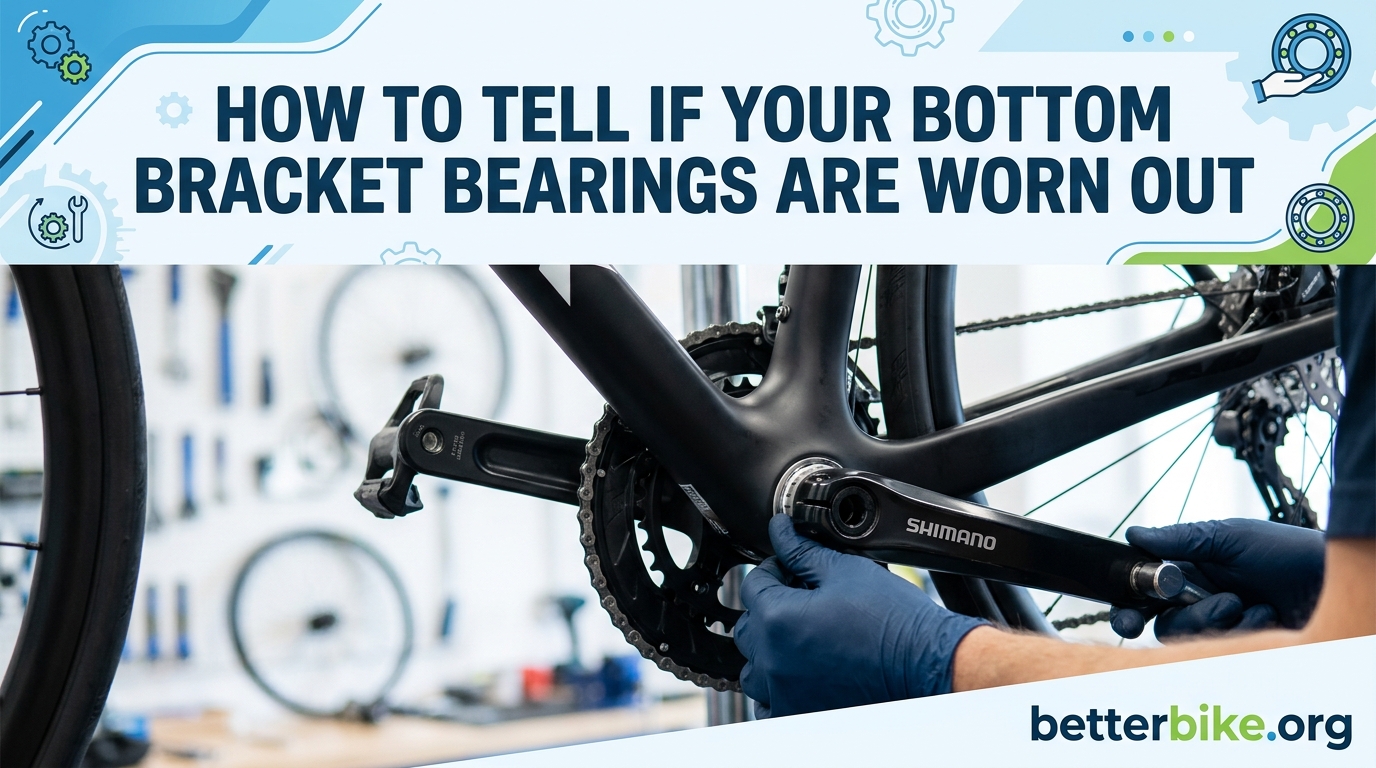
If your bike has started clicking, creaking, or feeling rough when you pedal, you are probably wondering how to tell if your bottom bracket bearings are worn out. The good news is that most warning signs show up long before a complete failure, and you can diagnose them in your garage with no special tools.
Our team has rebuilt hundreds of bottom brackets over the years, and the same five symptoms keep showing up. In this guide, I will walk you through each one, show you a quick field test you can do right now, and help you decide whether to keep riding or schedule a replacement.
Table of Contents
What a Bottom Bracket Does and Why Bearings Matter
The bottom bracket is the set of bearings and spindle that your crankset spins on. It sits inside a shell at the bottom of your frame and connects the two crank arms so your pedaling force transfers smoothly to the chain.
Inside the bottom bracket housing, two sets of bearings let the spindle rotate freely. When those bearings are fresh and clean, the cranks spin with almost no resistance. When they wear out, every pedal stroke loses a little energy to friction, and that wasted energy shows up as noise, play, and a rough feel under your feet.
Most modern bikes use sealed cartridge bearings. Once the seals fail and water or grit gets in, the damage tends to accelerate fast. That is why catching worn bottom bracket bearings early can save you from bigger repairs down the line.
Quick Checklist: 5 Signs Your Bottom Bracket Bearings Are Worn
Before diving into the details, here is the short list. If two or more of these sound familiar, your bearings are likely on their way out.
- Creaking, clicking, or knocking noises that get worse when you pedal hard
- Visible side-to-side play or wobble in the crank arms
- Grinding, rough, or gritty feeling when you spin the cranks backward
- Rust, pitting, or moisture seeping out around the bottom bracket shell
- A sudden drop in pedaling efficiency or a sensation of resistance that was not there before
The Main Signs of Worn Bottom Bracket Bearings
Now let us go deeper into each symptom. Any one of these on its own can point to the bottom bracket, but the more signs you see together, the more confident you can be.
Creaking, Clicking, and Knocking Noises
A healthy bottom bracket is nearly silent. If you hear creaking, clicking, or knocking that gets louder under load, worn bearings are the first thing I would check.
The noise usually comes from the bearings themselves grinding against pitted races, or from tiny play that allows parts to shift under power. Many riders first notice it while climbing out of the saddle, when the most force goes through the crankset.
One thing to keep in mind: creaking from a bottom bracket area is not always the bearings themselves. Loose crank bolts, a dry chainring spider, or even a dirty seat post can make a similar sound. We will cover those culprits a bit later so you do not replace parts you do not need to.
Side-to-Side Play in the Cranks
Grab the drive-side crank arm and try to rock it toward and away from the frame. There should be zero movement. If you can feel the crank clunk or shift in the bearing, your bottom bracket bearings are almost certainly worn.
Even a small amount of play matters. A brand new bottom bracket feels completely solid. Anything that wiggles, even half a millimeter, means the bearing race or the cartridge itself has loosened up.
Be careful to test the crank itself, not the crank bolt. A loose crank bolt can mimic bearing play. Hold the arm steady and check whether the movement comes from the bolt interface or from the spindle itself.
Grinding or Rough Pedaling Sensation
Spin the cranks backward with the chain off the big ring. They should glide for several seconds and come to a smooth, silent stop. If they feel gritty, lumpy, or make a rubbing sound, the bearings are wearing.
This is the most reliable test for catching wear before it becomes a noise problem. By the time a worn bearing is loud enough to hear over wind and traffic, it has usually been rough for months. Running the spin test once a month takes ten seconds and tells you a lot about the state of your bearings.
Pay attention to specific rough spots in the rotation. A single bad patch usually means one pitted spot on the race, while a consistent gritty feel throughout the spin means contamination has spread through the grease.
Visible Rust, Pitting, or Moisture Damage
Pop the bike on a stand and look closely at the bottom bracket shell. White calcium buildup, orange rust streaks, or dark wet grime around the cups are all red flags. By the time moisture is visible on the outside, it has almost certainly been working on the inside for a while.
This is especially common on bikes ridden in rain, on wet trails, or stored outside. Salt from winter roads is even worse. If you regularly expose your bike to water, learning proper bike washing techniques can extend the life of every bearing on your frame, not just the bottom bracket.
Pitting looks like tiny pinprick corrosion on the metal. You can often see it on the cup edges or where the crank meets the spindle. If you spot it, the bearing has reached the end of its useful life.
Reduced Power Transfer and Riding Efficiency
Sometimes the bearings never get loud or visibly rusty, but they simply start dragging. You may notice that your usual loop feels harder, or that you cannot hit the same average speed without working harder. Worn bearings turn some of your leg power into wasted heat and friction.
Other riders describe it as the bike feeling “thick” or “sticky” through the pedals. On a trainer this is even more obvious, because there is no wind noise to mask the small resistance. If your indoor numbers have slipped without a fitness change, suspect the bottom bracket first.
How to Check Your Bottom Bracket Without Removing It
The number one question we see on bike forums is whether you can diagnose a worn bottom bracket without pulling the cranks. You absolutely can, and here is the field test I use myself.
Step 1: Shift to the smallest chainring and smallest cog. This removes chain tension so the cranks spin freely.
Step 2: Lift the drive-side crank to the 12 o’clock position. Let it drop. A healthy bearing lets the crank swing smoothly back and forth several times before stopping. Worn bearings make it drop with a clunk or stop almost immediately.
Step 3: Spin the cranks backward by hand. Listen and feel for any grinding, clicking, or resistance variation. Pay attention to consistency: smooth and silent is good, rough and lumpy is bad.
Step 4: Check for play again. Pull the crank toward you and push it away. Any movement means the bearing has lost preload or has worn races.
Step 5: Inspect the shell. Look for rust streaks, moisture, or grit around the cup edges. Wipe the area with a clean rag and check whether it comes back damp after a day of riding.
If three or more of these checks fail, the bearings are done and a replacement is the right call. If only one mild symptom shows up, you might get more life by re-greasing if your bottom bracket is the serviceable cup-and-cone type, but sealed cartridges should be replaced outright.
Other Components That Mimic Bottom Bracket Failure
Before you order a new bottom bracket, rule out the usual suspects. About a third of the “bad bottom bracket” complaints I see on the bikes that come into my garage turn out to be something cheaper and easier to fix.
Loose crank bolts or crank interface. A drive-side crank arm that has loosened on the spindle will click every time you put power down. Re-torque the bolts to spec and the noise often disappears.
Chainring bolts. If you have a spider with five arms, the bolts that hold the chainrings can loosen over time. Tighten them in a star pattern and test again.
Pedals. Worn pedal bearings or a dry pedal spindle can produce a creak that sounds like it is coming from the bottom of the bike. Spin each pedal by hand and feel for roughness.
Seat post and seat clamp. A dry or carbon seat post in a metal frame is famous for creaking under load. If the noise changes when you stand or sit, suspect the saddle interface first.
Doing these quick checks takes five minutes and can save you a full bottom bracket swap. Always chase the cheapest, most likely cause before pulling the cranks.
When to Replace Versus Service Your Bottom Bracket
How long a bottom bracket lasts depends on riding style, conditions, and how well the bearings are sealed. Here is a rough guide based on what I have seen in real-world use.
- Road bike: 3,000 to 5,000 miles for most sealed cartridges, much longer for high-end steel-bearing units in dry climates.
- Mountain bike: 1,500 to 3,000 miles, sometimes less if you ride mud, creeks, or power-wash the bike often.
- Gravel bike: 2,000 to 4,000 miles, somewhere between road and MTB lifespan.
- Commuter or winter bike: 1,000 to 2,500 miles, since road salt and wet commutes kill bearings fast.
Sealed cartridge bottom brackets are not designed to be serviced. Once the seal is compromised, replacing the whole unit is the only real fix. Cup-and-cone bearings, found on some older and higher-end threaded bottom brackets, can be cleaned, re-greased, and re-installed with a new set of balls if the races are still smooth.
Press-fit bottom brackets deserve a special note. They can develop creaks even when the bearings are fine, because the cups can move slightly in the frame. If you have a creaking press-fit bike, the fix is often a proper reinstallation with assembly compound rather than new bearings.
If you ignore worn bottom bracket bearings, the damage spreads. The pitted races grind the spindle, the spindle damages the crank interface, and water that gets past failed seals can start corroding the frame. A 60 dollar bottom bracket swap protects a frame that costs a thousand dollars or more, which is why I always recommend replacing early rather than waiting for a complete failure.
FAQ’s
How often should bottom bracket bearings be replaced?
Most sealed bottom bracket bearings last 2,000 to 5,000 miles depending on conditions. Road bikes in dry climates go longest, while mountain bikes and winter commuters often need replacement at 1,500 miles or less. Replace whenever you hear grinding, feel play, or see rust.
Should I grease bottom bracket bearings?
You should never grease sealed cartridge bearings. They come pre-lubricated from the factory and grease inside the cartridge traps heat. For cup-and-cone bearings, pack the races with waterproof grease on every service. Always grease the bottom bracket shell threads on threaded units.
What is the lifespan of a bike bottom bracket?
A typical bottom bracket lasts 2 to 4 years for casual riders and as little as one season for aggressive mountain bikers or winter commuters. Mileage is a better guide than calendar age, with most failing somewhere between 1,500 and 5,000 miles.
What does a bad bottom bracket feel like?
A worn bottom bracket feels rough, gritty, or lumpy when you spin the cranks by hand. You may notice side-to-side play in the crank arms, resistance that gets worse under load, and creaking or knocking sounds that change with pedaling cadence. The pedals may also feel like they are catching in spots during a full rotation.
Final Thoughts on Spotting Worn Bottom Bracket Bearings
Knowing how to tell if your bottom bracket bearings are worn out comes down to using your ears, your hands, and your eyes. Creaking under load, side-to-side play in the cranks, and a rough spin test together are almost always enough to confirm what you are dealing with.
Do the five-step field test this month, rule out the easy mimics like crank bolts and pedals, and replace the bottom bracket as soon as the symptoms show up. Catching worn bearings early is one of the cheapest ways to protect your frame and keep every watt of pedaling power going to the rear wheel.
If you want to keep your new bearings healthy for the long run, start with proper bike washing techniques and check back here for more hands-on maintenance guides.