
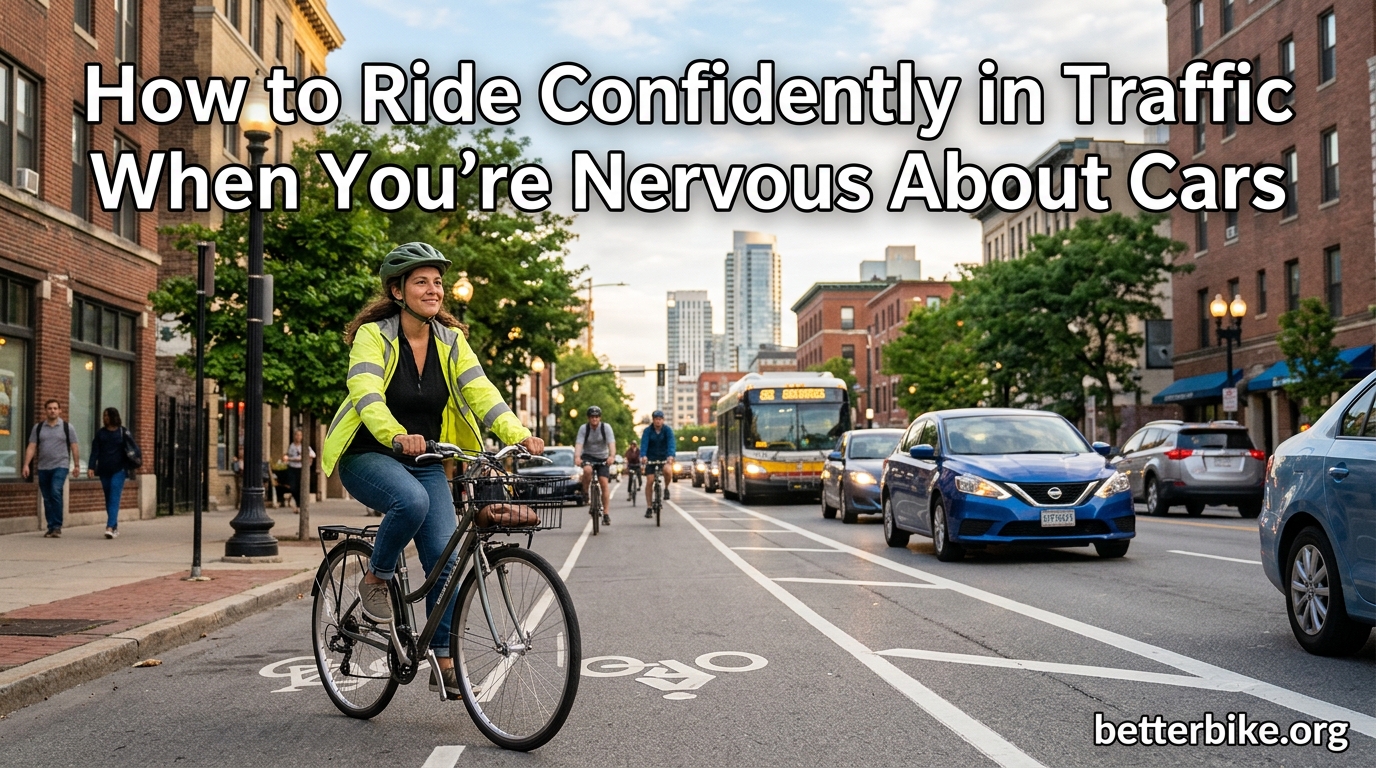
If your heart races every time a car passes you on the bike, you’re not broken. You’re a normal cyclist dealing with something most of us have felt. The good news: you can learn how to ride confidently in traffic, even if right now it feels like the cars are winning.
I started cycling in my twenties after a close call on a roundabout left me shaky for months. What rebuilt my confidence wasn’t bravery. It was a set of practical techniques, repeated small rides, and learning to take up space on the road. In this guide, I’ll walk you through the exact approach I wish I’d had on day one, with tips that work for nervous cyclists, returning riders, and anyone whose stomach drops when an SUV rolls up from behind.
Table of Contents
Why Cycling Anxiety Around Cars Is Normal (and What to Do About It)
Being scared of traffic on a bike is one of the most common cycling anxieties. Surveys of urban cyclists consistently rank “fear of being hit by a car” above concerns about theft, weather, or fitness. Your brain is doing what brains do. It is trying to keep you safe.
The problem is that anxiety itself makes riding less safe. Tense shoulders mean slower reactions. Hunched posture blocks your view. Hugging the gutter puts you in the exact spot where drivers are most likely to misjudge clearance. So the real fix is not just courage. It is learning the specific skills that turn fear into focus.
Across every cycling association and forum I read while preparing this guide, three themes kept coming up. Be predictable, be visible, and take control of your space. Every other tip in this article hangs off those three pillars.
How to Ride Confidently in Traffic: The Three Pillars
Riding confidently in traffic comes down to mastering three things: being predictable to drivers, being visible at all times, and taking ownership of your lane. These pillars apply whether you’re commuting, training, or just trying to enjoy a weekend ride without white-knuckling the handlebars.
Most cycling confidence problems are not really about fear. They are about not yet having a system. Once you have a system, your brain has something to do other than panic. The rest of this article gives you that system.
Road Positioning: Where Exactly to Ride on the Road
Ride about a meter away from the curb or parked cars, not in the gutter. This is called the primary position, and it is the single biggest change you can make to feel safer in traffic.
Hugging the curb feels safer because you’re “out of the way.” In practice, it does the opposite. Drivers approaching from behind see less of you, have to guess your line, and squeeze past with inches to spare. Riding a meter out makes you clearly visible, encourages drivers to actually change lanes to pass, and keeps you out of the door zone of parked cars.
The 80% Rule in Cycling Explained
The 80% rule says that on most roads, a cyclist is safest riding in a position that forces 80% of following drivers to cross the centre line to overtake. In practical terms, this means positioning yourself roughly in the right third of the lane on narrower roads, not the edge.
On wider roads with a real shoulder or marked bike lane, you can ride closer to the kerb. On anything tighter, take the lane. Drivers may grumble. Studies from the UK and Netherlands both show that taking the lane actually reduces close passes compared with gutter riding.
Primary and Secondary Position
Primary position is centered enough in the lane that a car cannot share it with you safely. Use it approaching junctions, on narrow streets, and anywhere you need to be seen. Secondary position is roughly a meter from the kerb, used on open roads and clear stretches. Switching between them as conditions change is the core skill of urban cycling.
Visibility and Lighting: Making Sure Drivers See You
Most “I didn’t see the cyclist” stories are visibility problems, not malice. A driver looking through a windshield sees roughly 2% of the visual field a pedestrian does. Your job is to land in that 2%.
Run a white front light and a red rear light at all times, not just at night. Daytime running lights have been shown to reduce collision rates by around 19% in multiple European studies. A simple USB-rechargeable set is enough.
What to Wear
Bright, contrasting colors work best. Neon yellow, orange, and white stand out against tarmac, hedges, and parked cars. Black at dusk is the worst possible combination. You don’t need a full lycra kit. A high-vis vest over your normal jacket is enough.
Add reflectors on your pedals and wheels. These catch car headlights from the side, which is where most overtaking comes from. Combined with the lights and the road positioning above, you’ll be more visible than 90% of riders out there.
Hand Signals and Communication With Drivers
Signaling early and clearly is one of the fastest ways to feel in control. Drivers can’t read your mind, but they can read your arm. Standard hand signals have been around for a century for a reason. They work.
Use the left arm straight out for a left turn, left arm bent up at 90 degrees for a right turn (in countries that drive on the right), and left arm bent down for slowing or stopping. Signal at least three seconds before you change speed or direction. That gives the driver behind time to react rather than guess.
Eye Contact and Shoulder Checks
Make eye contact with drivers at junctions. It confirms they have seen you and tends to make them more careful. If you can’t make eye contact, assume they haven’t seen you and prepare to brake.
Do a shoulder check before any lateral move: changing lane, passing a parked car, or avoiding a pothole. Twist from the hips, not the neck, so the bike stays stable. A handlebar-end mirror makes this less stressful because you know what’s behind you before you move.
For nervous riders, a mirror is a confidence multiplier. You spend less mental energy wondering “is there a car back there?” and more energy riding.
Gradual Exposure: A Step-by-Step Confidence Plan
You do not become a confident city rider in one ride. You become one by stacking small, controlled exposures over weeks. This is the same approach therapists use for phobias, and it works for cycling too.
Step 1: Off-Road Practice (Week 1)
Spend a few sessions in a quiet parking lot. Practice signaling, emergency braking, shoulder checks, and tight turns. Get used to how your bike handles at low and moderate speeds. The point is to remove the “new bike, new me” feeling before traffic enters the picture.
Step 2: Bike Paths and Parks (Week 2)
Move to traffic-free paths and parks. Practice passing pedestrians, dealing with dogs, and using your bell. You will be sharing space, just not with cars yet.
Step 3: Quiet Residential Streets (Weeks 3-4)
Pick a route through residential streets at off-peak times, ideally 9am to 3pm or after 7pm. Keep rides short, 20-30 minutes. Pick a destination like a coffee shop, so the ride has a reward.
Step 4: Busier Roads (Weeks 5-6)
Add a busier road to your route. Stay in primary position. Use lights and high-vis. Pick a buddy if possible. Riding with a more confident friend is one of the fastest ways to internalize good positioning.
Step 5: Your Real Commute (Week 7+)
By now you have a workable route, a list of your tricky spots, and a sense of what you can handle. Start integrating cycling into your actual trips. Each successful ride is data your brain uses to update its threat model.
If you ever feel panicky on a busy road, it is completely fine to hop off and walk your bike across the worst section. Many experienced cyclists do this at intimidating junctions. There is no medal for white-knuckling through it.
What to Do When You Feel Panic Mid-Ride
Even experienced riders get the wobbles. The difference is they have a plan. Here’s the one I use when my chest starts to tighten.
Breathe out longer than you breathe in. Aim for a 4-second inhale and a 6 to 8-second exhale. This activates your parasympathetic nervous system and drops your heart rate within a minute or two. Most panic responses are physical first, mental second.
Find a Safe Spot to Pull Over
If the breathing isn’t enough, signal, check behind, and pull into a driveway, bus stop, or wide kerb. Step off the bike. Stand for a moment. There’s no rule that you have to keep riding when your body is telling you to pause.
After a Close Call
Close passes shake everyone. The next day, do an easy recovery ride somewhere you feel safe. Talk it through with a friend or a forum. Cycling communities on Reddit and BikeForums are full of people who have had the same experience. It does not mean you are bad at cycling. It means you had a bad moment, and you will have many more good ones.
Route Planning for Nervous Cyclists
Good route planning can remove 80% of the stress before you even clip in. Start with the assumption that the shortest route is rarely the safest one.
Use Google Maps or Komoot with the cycling layer on. These tools highlight bike paths, residential streets, and avoid motorways. Spend 20 minutes before your first ride plotting a route that uses dedicated infrastructure wherever possible.
Build a Mental Map of Quiet Streets
After a few rides, you’ll start to know which side streets are calm, which intersections have decent sightlines, and which shopping centers let you cut through their parking lot. A good personal route network is worth its weight in gold for a nervous cyclist.
Time Your Rides
Rush hour is the worst time to start. Off-peak hours, weekends, and school holidays all have less aggressive traffic. Once you have a few months of off-peak experience, the rush hour feels less alien. Don’t skip straight to the hard mode.
For longer stops, having solid bike security measures in place means you can use shop stops as confidence milestones. Lock up, buy a coffee, talk to a human, and ride home.
Long-Term Confidence: Building Skills That Last
Confidence is a renewable resource, but only if you keep investing in it. Three habits keep the gains coming.
First, ride with people better than you. Group rides, club spins, and friends with a few years of experience will teach you positioning and cornering that no article can. Many clubs have dedicated beginner sessions. Local bike shops usually know who runs them.
Second, take a course. Bikeability, Cycling UK, League of American Bicyclists, and similar organizations run traffic-skills classes. A single day course often unlocks the mental model you have been missing.
Third, ride year-round when you safely can. Winter keeps your handling sharp and proves to yourself that you can handle rain, dark, and cold. That is the kind of evidence your anxious brain respects.
FAQ’s
What is the 80% rule in cycling?
The 80% rule says a cyclist is safest riding in a position that forces 80% of following drivers to cross the centre line to overtake. In practice, that means riding in the right third of the lane on narrower roads, not hugging the gutter. This makes you clearly visible and discourages unsafe close passes.
How do I get over the fear of biking next to cars?
Use gradual exposure. Start in parking lots, then bike paths, then quiet residential streets at off-peak times, then busier roads. Pair this with proper road positioning, lights, and high-vis clothing. After 6-8 weeks of consistent short rides, most cyclists find their fear has dropped dramatically.
How can I avoid getting hit by a car on a bike?
Ride in primary position (center of the lane where needed), run daytime lights, wear bright clothing, signal every move, make eye contact at junctions, and check behind with a shoulder check or mirror before changing position. Most collisions are caused by drivers failing to see cyclists, so visibility is your biggest defense.
How do I stay calm when a car passes too close?
Use box breathing: 4 seconds in, 4 seconds hold, 4 seconds out, 4 seconds hold. Pull into a safe spot like a driveway or bus stop if you need to. Do an easy recovery ride the next day, and consider talking it through with other cyclists. One close pass does not mean you are unsafe.
Is it normal to be nervous cycling in traffic?
Yes. Surveys of urban cyclists consistently show fear of cars is the number one reason people avoid cycling. The skill gap is the issue, not you. Skills, exposure, and a system for handling traffic reliably reduce that fear over time.
Should I ride in the gutter or take the lane?
On most narrow roads, take the lane. Riding a meter from the curb keeps you out of the door zone, makes you more visible, and discourages dangerous overtakes. On wider roads with a marked bike lane or generous shoulder, riding closer to the kerb is fine.
Confidence Is Built One Ride at a Time
Learning how to ride confidently in traffic when you’re nervous about cars is not a single breakthrough. It is a stack of small wins. A first signal a driver actually responded to. A first commute where you didn’t want to pull over. A first time you took the lane and the car behind changed lanes to pass you.
Stick to the three pillars. Be predictable, be visible, and take control of your space. Build up your exposure gradually, breathe through the wobbles, and plan routes that respect where you are right now. A year from now, you will pass a nervous new cyclist and remember exactly how they feel. That is how you will know the fear has gone.