
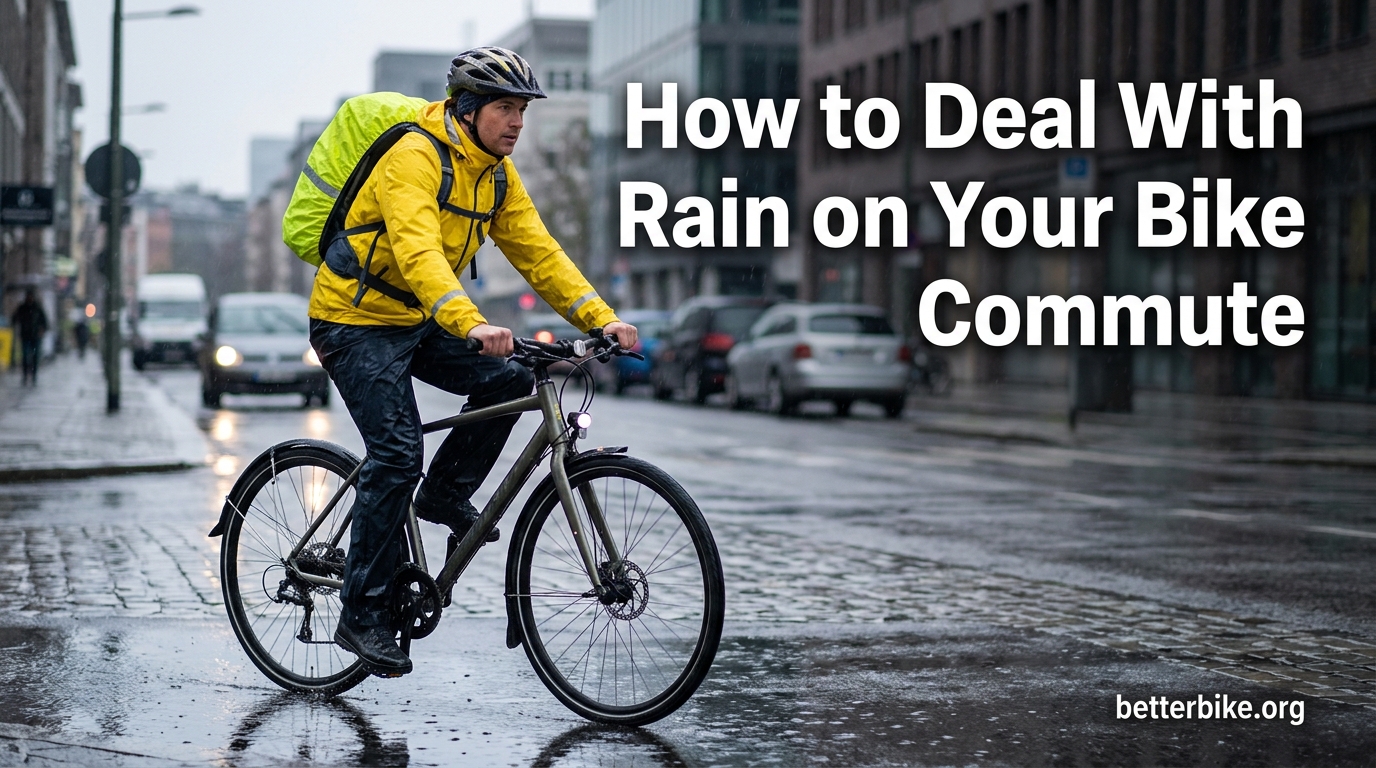
I used to dread the first gray skies of fall. Then I spent three winters commuting in Portland, where rain shows up 155 days a year, and I learned something that changed my entire outlook: bike commuting in rain is not about staying dry. It is about staying warm, visible, and confident enough to finish the ride.
If you have ever arrived at work looking like you swam there, this guide is for you. I will walk you through the gear I trust, the mistakes I made, and the exact routine I use to roll into the office nearly dry after a wet ride. The keyword is routine. Once rain riding becomes part of your muscle memory, it stops feeling like a problem and starts feeling like a small daily win.
Here is how to deal with rain on your bike commute without getting soaked.
Table of Contents
Essential Rain Gear That Actually Works
You do not need a $400 cycling kit to ride in the rain. You need the right five pieces, chosen for function, not fashion. These are the items that consistently show up in the bags and on the bikes of year-round commuters.
1. A Waterproof Jacket With a Real Hood
Skip the cheap nylon windbreaker. You want a jacket with a taped or welded seam construction and a hood that actually fits over your helmet. I look for jackets with a 10k or higher waterproof rating and pit zips for ventilation, because riding in a non-breathable shell means you swap rain sweat for sauna sweat.
A cycling-specific cut keeps the hem from flapping and the sleeves from riding up your forearms. If the jacket has a tall collar, even better. It keeps cold water from running down your neck when you brake hard.
2. Rain Pants or Leg Coverings
Your thighs take more spray than almost any other body part. A pair of lightweight rain pants or even waterproof leggings makes the difference between a chilly ride and an uncomfortable one. The commuter favorites are pull-on pants with ankle zips, so you can slip them on over your work pants without removing your shoes.
3. Fenders (Your Bike’s Rain Umbrella)
If you buy one upgrade for rainy bike commuting, buy fenders. Full-coverage fenders keep road spray off your feet, your drivetrain, and your back. I run 45mm fenders on my commuter and they handle everything except the deepest puddles.
For a quick install, look for clip-on fenders if your frame does not have eyelets. They are not as pretty, but they work.
4. Shoe Covers or Waterproof Socks
Wet feet ruin a commute faster than anything else. You have two main options. Neoprene shoe covers slip over your shoes and block spray. Waterproof socks (like Sealskinz or DexShell) go inside your shoes and keep your feet dry even if water gets in.
Forum regulars on r/bikecommuting consistently report that waterproof socks outperform shoe covers for long rides. The socks seal at the ankle and stay put, while covers often ride up.
5. Cycling Gloves With Grip
Wet handlebars are slippery, and cold hands make every other problem worse. Full-finger gloves with silicone grip palms and a waterproof or water-resistant shell give you control and warmth. In warmer rain, a thin grippy glove beats a thick insulating one.
Visibility: Your First Line of Safety
Drivers lose about 30% of their visual acuity in heavy rain. That means you need to compensate by being louder visually than you would on a sunny day. Visibility is not optional on a wet bike commute. It is survival.
Run Lights Day and Night
I run a 400-lumen front light and a rear flasher even on overcast midday rides. A blinking rear light, even in daylight, is the single most effective visibility upgrade you can make. Drivers’ eyes pick up motion much faster than static reflections.
Choose Bright Colors and Reflective Trim
A black rain jacket looks sleek but disappears in a storm. A high-vis yellow or bright orange shell with reflective piping shows up in any light. If you cannot stand neon, look for jackets with reflective cuffs, collars, and hems that flash under headlights.
Avoid the Hood Problem
Most rain jacket hoods block your peripheral vision. A cycling cap worn under the helmet pushes the hood back just enough to keep rain off your face without restricting your sight lines. The bill also keeps water from running straight down into your eyes.
Braking Techniques for Wet Roads
Wet braking is where most rain-commuting injuries happen. Your tires have less grip, painted lines are slick, and metal surfaces turn into ice. A few small adjustments to how you ride keep you upright when conditions turn sketchy.
Double Your Stopping Distance
On dry pavement, a typical bike stops in about 15 to 20 feet from 15 mph. In the rain, that number doubles. Start braking earlier than you think you need to. Use both brakes evenly and avoid grabbing the front brake hard, which can lock the wheel and send you over the bars.
Watch for Painted Lines and Metal
Crosswalks, lane markings, manhole covers, and metal grates become nearly frictionless when wet. Treat them like ice. Cross them as upright as possible, avoid leaning, and never brake hard while rolling across them.
Lean Less in Turns
Your tires have a smaller contact patch in the rain, so aggressive cornering lean angles will slide out. Take turns wider and slower, and keep your inside pedal up to avoid clipping the ground.
Layering for Different Temperatures
Rain riding presents a paradox. You get wet from the sky, but you also sweat from effort. The solution is layering that manages both moisture and warmth without trapping heat.
Start With a Merino Wool Base Layer
Wool regulates temperature, resists odor, and keeps you warm even when damp. A long-sleeve merino top under your shell is the gold standard for cool rain rides. For warmer rain (60 degrees F and up), skip the base layer and go with a breathable jersey.
Mid Layer for Cold Rains
In temperatures below 50 degrees F, add a thin fleece or synthetic insulating layer between the base and shell. Avoid cotton. Once cotton gets wet, it stays wet and cold.
The Shell Does the Water Work
Your outer layer’s only job is to keep rain out and let sweat escape. Pick one with pit zips or a two-way front zipper so you can dump heat on climbs without removing the jacket entirely.
Protecting Electronics and Work Clothes
The morning meeting does not care that it rained. You still need a dry laptop, dry documents, and dry shoes under your desk. This is where most commuters learn the hard way.
Use a Pannier or Waterproof Bag
A backpack with a rain cover works, but a proper roll-top pannier is more reliable. Look for a bag with a welded-seam liner and a closure that rolls at least three times. Backpacks that are not waterproof let water soak through the shoulder straps and pool at your lower back.
Double-Bag Your Electronics
I keep a thin dry bag inside my pannier for my laptop and phone. If your bag is not fully waterproof, ziplock bags around each device cost almost nothing and have saved my gear more times than I can count. Forum users in r/bikecommuting swear by this trick.
Keep a Dry Clothes Cache at Work
Leave a spare pair of socks, a shirt, and a microfiber towel in your desk or locker. On the worst days, this is the difference between a productive day and a miserable one. Swap your shoes under your desk and let them air dry on a boot tray.
Emergency Protocol When Caught in Heavy Rain
Sometimes you check the forecast and it lies. A sunny morning turns into a downpour by mile three. Here is the protocol I use when conditions catch me off guard.
Find the Safest Shelter Quickly
Bus stops, awnings, gas stations, and the overhangs of parking garages all work. The goal is not to wait out the storm. It is to put on or adjust gear you could not safely manage on a moving bike. If you can safely pull into a parking lot, do it.
Switch to Flash Mode on Your Lights
Drivers slow down for flashing lights. If rain suddenly intensifies and visibility drops, switching your rear light to rapid flash makes you stand out in spray and fog.
Avoid the Shoulder and Storm Drains
Road edges collect oil and debris in the rain. Storm drain grates and potholes fill with water and become invisible hazards. Ride about a foot further from the curb than usual and scan well ahead.
Post-Ride Maintenance After Wet Commutes
Rain is hard on bikes. A few minutes of care after each wet ride prevents rust, sticky cables, and worn drivetrains. You do not need to do everything every time, but a quick routine goes a long way.
Wipe Down the Frame and Drivetrain
Old towel, two minutes. Wipe the chain, the crankset, and the frame down tubes. Removing grit and moisture stops corrosion before it starts. For a deeper clean, check out our guide to washing a bike without ruining the bearings.
Re-Lube the Chain
Wet riding strips chain lube quickly. Apply a wet-weather chain lube after your last wet ride of the day, then wipe off the excess. For bikes stored outdoors, our article on preventing bike rust from rain exposure covers longer-term storage tips.
Check Your Brakes
Rim brakes lose power when wet and can squeal on the first dry stop. Disc brakes handle rain better but still benefit from a pad check every few weeks. Squeeze the levers before you ride away to make sure they feel firm.
Mental Preparation for Nervous Riders
The biggest barrier to rain commuting is not gear. It is fear. I have coached friends through their first wet rides, and the pattern is the same: most of the danger lives in the anticipation, not the actual riding.
Start With Short Rides
Do not attempt a 10-mile commute in a downpour as your first rainy ride. Pick a Saturday, dress for it, and ride 20 minutes around the neighborhood. You will learn what works and what does not without pressure.
Focus Forward, Not Down
Anxious riders stare at the front wheel. Confident riders look 30 to 50 feet ahead, scanning for hazards and giving themselves time to react. The same principle applies on dry days, but it matters more in the rain.
Remember That Drivers Are Noticing You
If you have lights running and bright clothing on, you are more visible than you think. Most drivers will give you space. Trust the routine you have built, and the ride becomes just another ride.
Frequently Asked Questions
How do you stay dry bike commuting in the rain?
Stay dry by wearing a waterproof jacket with taped seams, rain pants, and waterproof socks, plus full-coverage fenders on your bike. Add a cycling cap under your helmet to keep rain off your face, and store electronics in a dry bag inside your pannier.
What should I wear cycling in the rain?
Wear a merino wool base layer, a breathable waterproof shell with pit zips, rain pants, waterproof socks or shoe covers, and full-finger gloves with grip. Bright colors or reflective trim improve visibility in low light and heavy rain.
How do I brake safely when cycling in the rain?
Brake safely by doubling your normal stopping distance, using both brakes evenly, and avoiding hard front-brake grabs. Treat painted lines, manhole covers, and metal grates as ice by crossing them upright without braking.
Is it safe to bike in the rain?
Biking in the rain is safe when you reduce your speed, increase visibility with lights and bright clothing, and adjust braking for wet roads. Most rain-commuting injuries come from overconfidence, not the weather itself.
How do I protect my bike from rain damage?
Protect your bike by wiping down the frame and chain after each wet ride, re-lubricating with wet-weather chain lube, and checking brake pads regularly. For long-term outdoor storage, use a breathable bike cover and store the bike off the ground.
Final Thoughts: Ride Through, Not Around
Rain bike commuting is a skill you build one wet ride at a time. Once your gear is dialed in, your routine becomes automatic, and you stop checking the radar every morning. You will roll into work a little proud of yourself, and you will wonder why you ever drove on a day with two inches of rain in the forecast.
Start with the five essentials, build the post-ride habit, and trust yourself on the road. Your bike does not care about the weather, and after a few weeks, neither will you.