
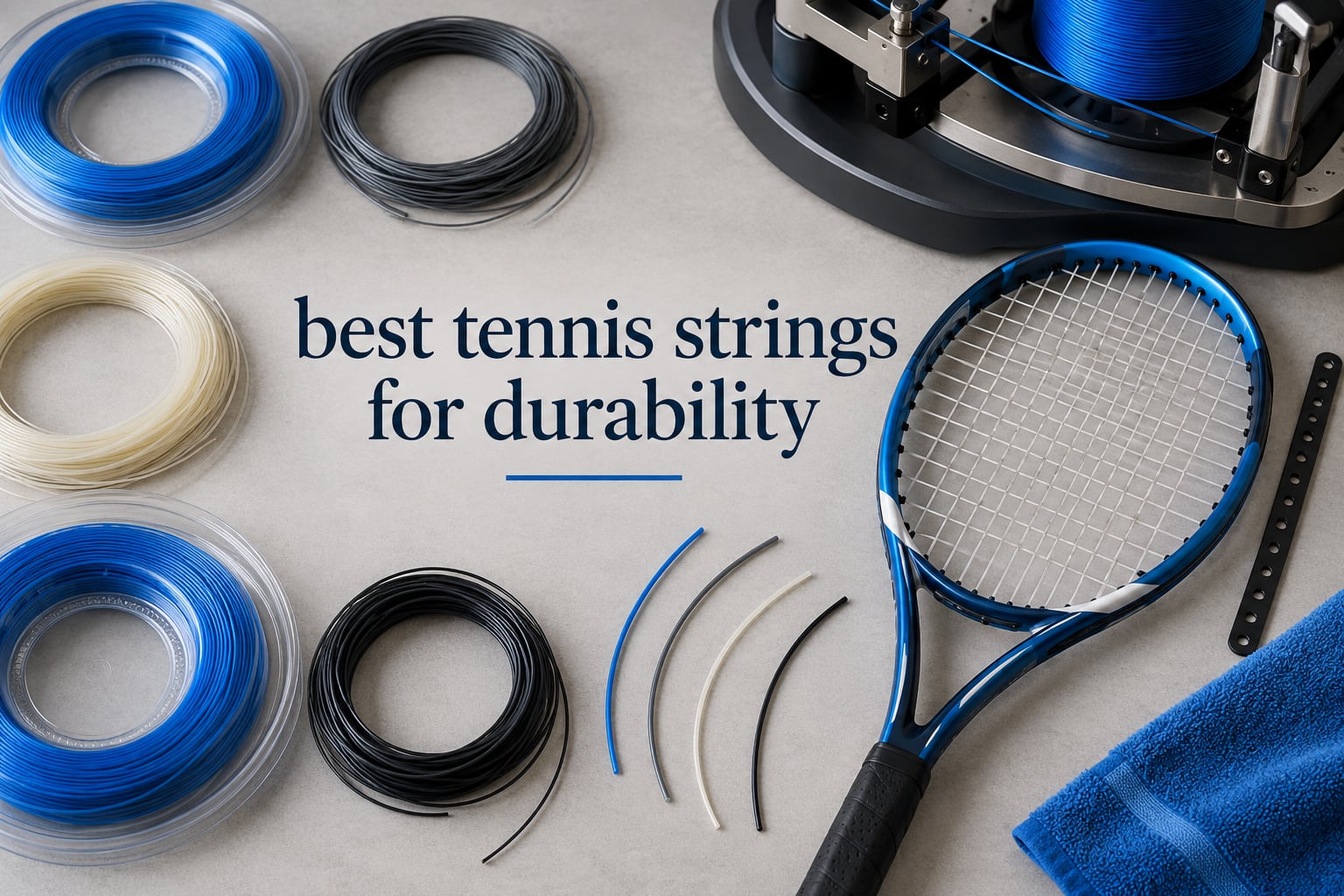
Most string breakages have nothing to do with bad luck. They come down to material, gauge and how much tension the string is carrying, and once you understand those three things the search for the best tennis strings for durability gets much easier. Polyester and co-polyester monofilaments outlast everything else on the shelf, and among them the shaped control strings hold tension longest before the bed goes dead.
We pulled together ten strings that reviewers consistently describe as long lasting, from a 100 percent tour-grade poly to a soft nylon reel that will not bother your elbow. Each pick below carries a durability verdict, the gauge and tension we would start at, and the player type it suits best. Three of them make our short list for most players; the rest fill specific gaps, including one reel built for coaches who string eight rackets a week.
One honest note before we start. Durability and comfort pull in opposite directions, and the most durable string in the shop is rarely the most comfortable one. A thicker gauge stretched at a lower tension can outlast a thin string strung tight, and a full poly bed will outlast a soft multifilament every time. What follows is written for people whose strings keep snapping mid-rally, not for people shopping by brand name.
If you are still choosing a frame rather than a string, our tennis racket roundup covers the stiff-versus-flexible question that changes how any string behaves. Spin-focused setups are covered separately in our picks for the best tennis strings for spin.
Table of Contents
Top 3 Durable Tennis String Picks for October 2026
These three cover the widest range of player types. The first is the safe all-rounder, the second is the hardest-wearing string in the group, and the third is the cheapest way to stop breaking strings every fortnight.

Luxilon ALU Power
- 100% Polyester monofilament
- 1.20mm to 1.30mm gauge range
- Impervious to moisture
- Set and reel formats

Solinco Tour Bite
- Co-polyester construction
- 16L 1.25mm in this set
- 15L to 19 gauge available
- Great tension maintenance

HEAD Lynx
- Co-polyster monofilament
- Smooth round profile
- 16 17 and 18 gauge
- Hybrid-friendly and low abrasion
A fourth name deserves a mention even though it did not make the top three. The Solinco Hyper-G reel carries TruTension technology aimed squarely at long matches, and if your game is built on heavy topspin rather than flat hitting it is the one we would test first.
Best Tennis Strings for Durability in October 2026
All ten strings in the roundup appear below with the specs that actually drive string life. Gauges are listed in both standard and millimetre form because the two naming systems confuse people constantly.
| Product | Specifications | Action |
|---|---|---|
| Luxilon ALU Power |
|
Check Latest Price |
 Tourna Premium Poly Tourna Premium Poly |
|
Check Latest Price |
| HEAD Lynx |
|
Check Latest Price |
| Solinco Tour Bite |
|
Check Latest Price |
 Kirschbaum Super Smash Kirschbaum Super Smash |
|
Check Latest Price |
 HEAD Hawk Touch HEAD Hawk Touch |
|
Check Latest Price |
 Solinco Hyper-G Reel Solinco Hyper-G Reel |
|
Check Latest Price |
 Tourna Black7 Tourna Black7 |
|
Check Latest Price |
 Wilson Natural Gut Wilson Natural Gut |
|
Check Latest Price |
 Kirschbaum Synthetic Gut Kirschbaum Synthetic Gut |
|
Check Latest Price |
1. Luxilon ALU Power Is Our Best Overall Durable Tennis String
Luxilon ALU Power 125 Tennis String – Set, Lime Green
100% Polyester
1.25mm as standard
1.20mm to 1.30mm range
Set and reel
Pros
- Tour-proven poly-ether-ether construction
- Impervious to moisture in any weather
- Excellent bite and spin generation
- Holds tension across many strung rackets
- Set plus 200m and 220m reel formats
Cons
- Costly next to newer budget polys
- Rough and soft variants feel less crisp
- Full-bed setups can demand a shock absorber
Luxilon ALU Power is the string we keep coming back to after years of swapping setups. It is the only option in this roundup described as impervious to atmospheric conditions such as moisture, which matters more than most players expect once a bed has been sitting damp in a car over winter. The poly-ether-ether material is stiff enough to resist notching and slippery enough that the mains keep their position in the grooves instead of creeping.
Reviewers report stringing ten or more rackets from a single reel, and they report consistent gauge measurements from reel to reel, which matters if you are stringing several frames to the same spec. The spin bite is the part that keeps hardcore players coming back: it grips the ball on heavy topspin and still has enough snap for flat serves.
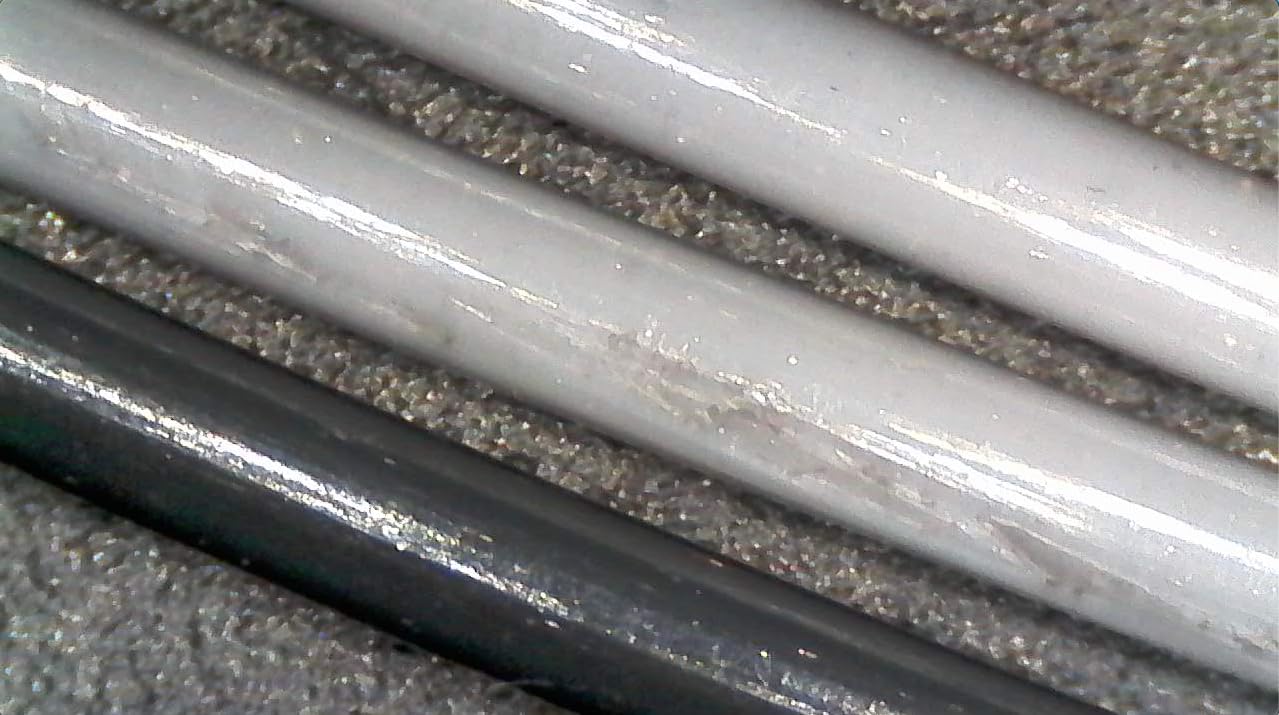
Start at 1.25mm and pull 3 to 4 pounds below your normal poly tension. The standard 1.25mm is the sweet spot for feel; the 1.30mm Rough variant is what you want if breakage is the problem rather than tension loss. We would not string a full ALU Power bed in a stiff frame without a dampener, because there is no shock absorption in a pure monofilament.
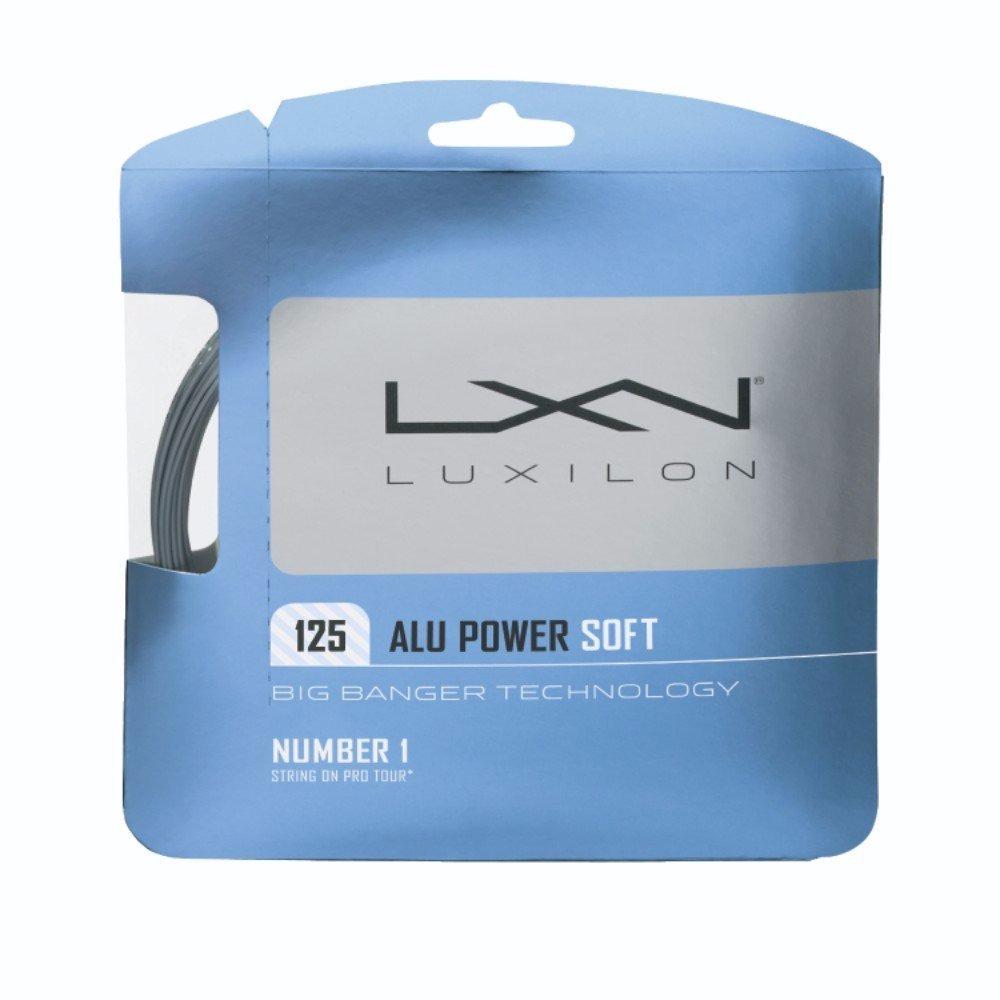
Why ALU Power Outlasts Most Beds
The durability here comes from three places stacked on top of each other: a stiff monofilament core, a slick surface that reduces friction at the crossings, and a material that does not soften in humidity. That last point is what keeps a July outdoor bed feeling like a spring bed in September.
Players who break strings twice a week report finishing a full bed from one set. The 200m and 220m reel formats also make it practical for a household stringing several rackets at the same tension.
Where ALU Power Falls Short
Price is the first objection we hear, and it is fair next to newer budget polys that perform nearly as well. The second is feel: the rough and soft variants lose some of the crisp response the standard 1.25mm gives you.
If you have elbow or shoulder issues, a full poly bed of this string will not be the answer. Pair it with a soft cross or step down to the Kirschbaum options later in this list.
2. Tourna Premium Poly Is the Best Durable Reel for Heavy Topspin
Tourna Premium Poly Durable Tennis String, Optic Yellow
Co-Poly material
660ft reel
16 17 and 18 gauge
Optic Yellow
Pros
- Exceptional wear life under heavy topspin
- Stays centred in the grooves
- Delivers spin and power at low tension
- Easy to string for a full poly
- Good value against premium polys
Cons
- Gauge labelling can measure thin on some 17g batches
- Muted feel for some stringers
- Stiff monofilament that needs 8-10 lbs dropped
This is the reel we recommend to anyone stringing more than two rackets a week. A 660-foot reel covers a lot of beds, and the co-poly construction holds alignment beautifully, which means the mains do not slide out of position between the grommets. That single detail is what stops most co-poly strings from notching in the first place.
One reviewer reports hitting 35k+ balls with no measurable tension loss, and several owners have strung multiple rackets from a single reel before opening the next one. For a coach or a club member with a bag full of frames, that wear life is the whole argument.
String it below 55 pounds if you want to keep it playable, and drop another 8 to 10 pounds from your normal tension if the frame is stiff. The design is explicitly aimed at heavy topspin play, so it rewards a swing that brushes up the back of the ball rather than one that pushes flat.
Why This Reel Survives Topspin
Heavy topspin is abrasive by nature, and this string resists it better than most of its price class. Keeping the string centred in the grooves distributes the load across the whole bed instead of concentrating it at two or three crossings.
Low-tension stringing adds to the effect. A softer pull tension reduces the stress placed on each individual crossing, and this is one string where we would deliberately string below the frame maximum.
Who Should Walk Away From It
Players who want a lively, connected response will find it dull. Several reviewers describe the feel as dead, particularly in a stiff frame, and the spin can feel muted next to a seven-sided string.
Check the gauge on arrival if you care about consistency. Some 17g batches have measured closer to 16g, which changes how the string feels and how long it lasts.
3. HEAD Lynx Is the Best Value Durable String for Club Players
HEAD Lynx Tennis Racket String, 40′ Set, 17G, Anthracite
Co-Polyster monofilament
17 gauge 40ft set
Smooth round profile
Anthracite
Pros
- Soft arm-friendly feel with real control
- Holds up over months of regular play
- Less abrasive than shaped strings
- Available in 16 17 and 18 gauge
- Easy to work with even for stiff string types
Cons
- Softer and stretchier than most competitor polies
- Some variants arrive without the HEAD logo printed
- Listed racket weight figure is inaccurate
HEAD Lynx is the string we hand to intermediate and junior players who break strings more than they would like but do not need a tour-level bed. It is a single-tube co-polyster monofilament with a smooth round profile, and that smoothness is the durability story. Round strings have fewer edges to catch on, so they notch later and abrade more slowly than box or octagonal shapes.
Owners frequently report good tension maintenance across a full season, and the feel is soft enough for players who find most polys hard on the forearm. It is also the most common cross string we see in hybrids, precisely because it is less abrasive than the shaped polys people want in the mains.
Because it is softer and stretchier than most competitor polys, string it 2 pounds higher than you would string a hard poly. Coming in 16, 17 and 18 gauge in 40-foot sets and 660-foot reels, it covers most frame specifications without hunting.
Why the Smooth Round Profile Matters
Durability mechanics reward smoothness. A round string has no edges to abrade against, and it moves more evenly through the string bed, which spreads wear across the entire length rather than at two or three fixed points.
The trade-off is spin. Shaped strings bite the ball harder, and you give up some of that bite when you go round. For most club players the difference is small; for heavy top spinners it is noticeable.
Where Lynx Is the Wrong Choice
Players who want maximum snap and a connected, strung-to-the-racket feel will find Lynx too soft. It stretches more than most polys, so if you string it at a typical poly tension you will get a loose bed and a loss of control.
It is also not the pick for anyone who needs a specific finish on the string. Some variants arrive without the HEAD logo printed, and the manufacturer weight figure is not something we would rely on.
4. Solinco Tour Bite Is the Most Durable String in the Roundup
Solinco Tour Bite Tennis String Set
Co-polyester construction
16L 1.25mm set
40ft 12.2m
Silver grey
Pros
- Highest rated string in the group
- Strong spin and control balance
- Great tension maintenance
- Comfortable in a softer frame
- Gauge range from 15L to 19
Cons
- Can be tricky to string for some stringers
- Very stiff in stiff frames
- 20 gauge variant broke early for one reviewer
Solinco Tour Bite is the one we would put at the top of a durability list, and the rating data backs that up. It carries the highest average rating of any string here, with 87 percent of its reviews handing out five stars, and reviewers repeatedly describe it as a cheaper stand-in for premium branded polys without giving up the things that matter.
Tension maintenance is the headline. Players string it in modern frames and in hybrids and report beds that stay playable far longer than the price would suggest. This set is 16L, which is 1.25mm, sitting right in the middle of the range where durability and feel stop trading against each other so sharply.
If you suffer elbow problems, be careful with the gauge choice. In a stiff frame this string will aggravate the joint, and 15L or 16 is the move rather than 17 or 18. We would also flag that some stringers find it awkward to work with, so if you are restringing at home for the first time this is not the beginner string.
Why Tour Bite Holds Tension So Well
Co-polyester at 1.25mm gives you a string with enough body to resist notching without the boardy feel of a thin gauge. The wider range, up to 19 gauge and back down to 15L, means you can move in either direction depending on your arm and your frame.
Reviewers who use it as a full bed report long-lasting string life. Reviewers who hybrid it report the same, which tells you the string is not simply surviving a low-tension, low-load setup.
Who Should Skip Tour Bite
Stringers report difficulty getting it tensioned evenly, and a stiff frame plus a firm pull tension is the combination most likely to end in a sore arm. If you already have elbow trouble, start with the Kirschbaum synthetic gut or the Wilson natural gut instead.
The 20 gauge variant is a different string in all but name. One reviewer broke that version in under three sets, so stay at 16L or thicker if longevity is the goal.
5. Kirschbaum Super Smash Is the Best Durable Poly for Tender Arms
Kirschbaum Reel Orange 1.23 mm (17g) 660ft.
Polyester monofilament
1.23mm 17 gauge
660ft reel
Orange
Pros
- Exceptional arm friendliness at moderate tension
- Very durable for a soft poly
- Strong price to performance ratio
- Easy to string
- Good spin and control for the class
Cons
- Loses elasticity after 10-12 hours
- Stiff when pulled high
- Round profile where some buyers want shape
- Listing dimensions and weight are inaccurate
Kirschbaum Super Smash solves a problem the rest of this list mostly ignores: how to get poly-level durability without poly-level hardness. It is a polyester monofilament with a soft feel that reviewers repeatedly call exceptional for arm comfort, and several players report getting a full season out of a single stringing.
The 660-foot reel comes in 1.23mm (17 gauge) and 1.28mm (16 gauge), and both work well as a full bed or as a hybrid cross. Most owners string the full bed between 42 and 53 pounds, and the 16 gauge version is the one to pick if your breakage rate is high.
Be clear-eyed about one behaviour nearly all poly strings share. This one loses elasticity after 10 to 12 hours of play, which means the bed goes dead well before it breaks. If the frustration is not breakage but a string that loses its pop mid-season, this will not solve that.
Why Soft Poly Lasts as Long as It Does
Durability and hardness are not the same property. A monofilament polyester at moderate tension resists notching because of its construction, not because it is rigid. Stringing Super Smash lower, in the low 40s to low 50s, gives you both the softness and the long life.
It is also the value pick here. The reel format stretches the cost across many stringings, and the durability per unit of string is excellent for a soft construction.
Where It Falls Down
Pull it above about 55 pounds and the arm-friendly reputation disappears. The round profile also means less bite, and some buyers would rather have a six- or eight-sided shape for extra hold.
If your strings are dying from lost tension rather than snapping, read the longevity section below before you buy. This string is built for the breakage problem specifically.
6. HEAD Hawk Touch Is the Best Durable Control String
HEAD Lynx Tour Tennis Racket String, 660′ Reel, 17G, Champagne
6-edge co-polyester
17 gauge 660ft reel
Champagne
Intermediate to advanced
Pros
- New co-polymer blend improves durability
- Tension stays stable over long sessions
- 6-edge design gives spin and placement
- Firm but comfortable for long sessions
- Reel suits clubs and coaches
Cons
- Premium reel cost
- Firm feel not suited to soft-bed seekers
HEAD Hawk Touch is a six-edge co-polyester built around tension stability rather than raw power. The blend is described as new, and the point of it is that the string holds its tension through long sessions instead of dropping into a slack, lifeless bed after a few hours. For a baseliner who plays three-hour matches, that is the durability feature that matters most.
The 660-foot reel works out to a lot of stringings, and it is a sensible choice for a club or a coach who restrings on a schedule rather than on a break. Gauge options cover 16, 17 and 18, and the colourways run anthracite, grey and champagne.
It is a firm string, and we want to be direct about that. Players chasing a soft, arm-friendly bed should look elsewhere in this roundup. But the comfort level reported for a firm string is good, with 81 percent of reviews handing out five stars, and the control on heavy groundstrokes is the best in this group.
Why Tension Stability Equals Durability in Practice
A string that keeps its tension keeps its playability. The same bed that holds 50 pounds in week six still gives you predictable depth and control, which is the actual measure of how long a stringing lasts for you.
The six-edge profile adds grip and placement, and the co-polymer blend resists the abrasion that normally softens a shaped string’s edges. For a flat or semi-flat baseliner, the combination holds up well without feeling punishing.
Who Should Pass on Hawk Touch
The reel carries a premium price, so a single-string buyer gets much more out of a cheaper set. More importantly, the feel is firm. If you have a history of elbow discomfort, move to a soft poly or a synthetic gut rather than pushing through this one.
At 255 reviews it has the thinnest evidence base in this roundup, so treat our verdict as a direction rather than a certainty. It is a good string, but buy a set before you commit to a reel.
7. Solinco Hyper-G Is the Best Durable String for Heavy Topspin
Solinco Hyper-G Co-Polyester Tennis String Reel 656 ft / 200 m Extreme Spin, Power & Control – TruTension Technology, Durable High-Performance Polyester,16L
Shaped co-polyester
16L 1.25mm
656ft 200m reel
TruTension technology
Pros
- Bites hard for topspin slice and kick serves
- TruTension extends tension hold through long matches
- Pro-level power with accuracy
- 15L to 20 gauge range
Cons
- Higher cost than entry-level polyester reels
- Shaped profile can be harsh in stiff frames
Solinco Hyper-G is the shaped answer. Where smooth round polys last longer by wearing slowly, a shaped poly lasts long enough by holding its edge and its tension, and this one leans hard on TruTension technology, which is specifically aimed at extending tension hold through long matches. Reviewers highlight spin, punch and tension retention as the three things this string delivers.
The reel holds 656 feet, or 200 metres, and the gauge list runs from 15L all the way to 20. That spread is unusually wide and it matters for durability: go up to 16 or 16L if you break strings often, drop to 18 or 19 only if your arm needs the softness.
Two caveats. The reel costs more than entry-level polyester reels, and the shaped profile is not arm-friendly in a stiff frame pulled tight. For heavy top spin players in a modern frame, we would try 16L at 48 to 52 pounds before anything else.
Why TruTension Matters for String Life
String life and tension stability are the same conversation. A string that loses tension stops performing long before it breaks, so the technology that delays tension loss effectively extends the usable life of the bed.
That is why we would pick this over a cheaper shaped poly for anyone playing long matches. The bite does not fade, and the bed does not go soft halfway through a set.
Where Hyper-G Is the Wrong Call
Comfort is the limit. If you already have arm trouble, a shaped poly pulled at a firm tension in a stiff frame is the classic way to make it worse. The softer Kirschbaum options or the natural gut in this roundup exist for that scenario.
It is also a reel, and reels only make sense if you string several rackets. If you are restringing one club racquet a season, a set is the sensible format.
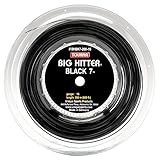
8. Tourna Big Hitter Black7 Is the Best Durable Spin String
Tourna Big Hitter Black 7 Ultimate Spin String, Black7 16g Reel
7-sided polyester
16 gauge
660ft reel
Made in Germany
Pros
- Seven-sided profile for strong spin and control
- Awarded number one for spin in USRSA playtests
- Soft co-poly construction
- 660ft reel covers about 16 rackets
Cons
- Lowest rated string in the group
- Premium reel cost
- Some find the response firm or muted
Black7 was awarded number one for spin in USRSA playtests, and that award is the reason to own it. A seven-sided polyester profile grips the ball hard enough for topspin, slice and kick serves, and at 16 gauge it has enough body to survive the abuse that comes with a high-bite string.
What surprised us more is the feel. The co-poly construction is described as soft, and it is noticeably kinder than most seven-sided strings. For a player who wants maximum bite without the usual arm penalty, that is the whole value proposition.
It is also the lowest rated string in this roundup at 4.3, with a 68 percent five-star share, so treat the spin award as the headline and the overall consensus as mixed. Some reviewers simply find the response firm or muted compared with softer polys, and the reel price is high for a spin-focused string.
Where it sits in a hybrid matters as much as the gauge. Running Black7 in the mains with a softer cross spreads the impact that normally notches a seven-sided profile, and at 16 gauge there is enough body left to survive the rest.
Why Shaped Strings Still Break Less Than You Think
The usual durability argument against shaped strings is notching, and it is partly true. A seven-sided profile creates edges that can wear. At 16 gauge, though, there is simply more material to wear through before the string fails.
The combination of a thick gauge and a soft co-poly core is why this string holds up better than its shaped reputation suggests. Match it with a modern frame and keep the tension in the high 40s.
Who Should Buy Something Else
If your priority is the longest possible string life rather than the hardest possible spin, a smooth round co-poly from earlier in this list will outlast it. The Hyper-G is a better spin choice but not a better longevity choice.
At 228 reviews and a 4.3 rating, we would buy a set before a reel. Our other soft options also carry cheaper entry points for a first test.
9. Wilson Natural Gut Is the Best Durable String for Arm Comfort
Wilson Natural Gut 17 Tennis String – Set, White
Natural serosa fibres
17 gauge set
White
1 year limited warranty
Pros
- Best-in-class feel control and arm comfort
- Excellent tension maintenance
- Manufacturer states 15% durability gain
- Outer coating eases installation
Cons
- Costs more per set than synthetics
- Sensitive to moisture
- Needs more regular restringing than poly
Natural gut is the odd one out on a durability list, so let us be clear about where it does and does not win. It is not the longest lasting material. What it does better than anything else here is keep its playability, keep its tension and keep a sore arm healthy while it lasts. Buyers report excellent tension retention and a noticeably comfortable response, with 75 percent of reviews at five stars.
The construction is natural serosa fibres twisted together with a special outer coating for protection and easier installation, available in 16 and 17 gauge, and sold as a set. The manufacturer states 15 percent greater durability than previous versions, which is a manufacturing claim rather than a playtest result, so treat it accordingly.
The two real drawbacks are cost per set and moisture sensitivity. Gut reacts to damp conditions faster than polyester, and it typically needs more regular restringing than a poly bed. If you play outdoors in winter, that is a real cost in both money and lost tension.
Stringing is also gentler than most players expect, because the coated fibres are more forgiving than a stiff monofilament. That matters if you restring at home and have fought a poly before.
Why Gut Wins on Playability Rather Than Longevity
Durability has two definitions. Gut often loses the first one, snapping or going slack like anything else. It wins the second, which is how long the bed stays lively and comfortable.
For players with elbow or shoulder history, that second definition is the one that counts. A poly that lasts three weeks and hurts is worse than a gut that lasts ten days and feels like nothing.
Who Should Not Buy Natural Gut
Recreational players playing once or twice a week. At the cost per set, gut does not make sense for low-frequency use, and a polyester set will serve you better for a fraction of the outlay.
It is also a poor choice for anyone who leaves strings in a car or plays in cold damp weather. Polyester is simply more forgiving of the conditions gut hates.
10. Kirschbaum Synthetic Gut Is the Best Durable Nylon Reel
Kirschbaum Reel Synthetic Gut Tennis String, Natural, 1.30mm/16-Gauge
Nylon construction
1.30mm 16 gauge
9.84 inch reel
Made in Taiwan
Pros
- Soft comfortable feel for arm-sensitive players
- Consistent in cold or damp conditions
- Hybrid compatible with Kirschbaum polyester
- Reel format supports repeated stringings
Cons
- Less spin and control than a full poly bed
- Premium price for a synthetic string
Kirschbaum synthetic gut carries a 4.7 rating, the second highest in this group, and it earns it with consistency rather than raw spin. The refined nylon construction keeps a soft, gut-like response in cold and damp conditions, which is exactly where real gut gives up. For players who want the comfortable response without the moisture sensitivity, this is the pick.
It is also the most useful cross string in this roundup. Hybrid compatible with Kirschbaum polyester strings and offered in 1.30mm (16 gauge) and 1.35mm (15 gauge), it slots into a poly-mains setup and softens the bed without adding much weight or losing the mains’ durability.
Be clear that you give up spin and control. This is not a string for a player who wants to hit flat and flat-heavy. As a cross string in a hybrid, it does a much better job than most people give it credit for.
Why Nylon Is the Smarter Cross
Crosses are the string that absorbs the most impact in most beds, and they are the string that usually snaps first. A soft nylon cross extends bed life because it takes those hits without snapping, while the poly mains keep the drive.
The 1.35mm option is worth a mention for durability specifically. Thicker means more material to abrade, and this reel format supports repeated stringing sessions rather than one-off jobs.
Where Synthetic Gut Falls Short
It is a premium-priced synthetic, which is the main objection. Cheaper synthetics exist, and the durability difference between them and this one is smaller than the price gap.
As a full bed, it will feel vague to an experienced player and produce less control and spin. Keep it in the crosses where it does the most good.
What Actually Makes a Tennis String Durable?
Three factors decide string life, and only one of them is the brand on the box. Material sets the ceiling, gauge sets the range, and string shape decides how quickly the string wears down inside that range.
Material. Polyester and co-polyester monofilaments sit at the top of the durability ranking. Their stiff construction resists abrasion, and their slick surface reduces the friction that causes notching. Aramid and nylon hybrids also last well. Natural gut and multifilament strings break earlier, though gut often outlasts them in playability terms. That is the honest version of the answer to which tennis string is the most durable.
Gauge. Each step up in diameter adds real material and real life. A rough guide runs from 18 (1.15mm) at the short end through 17 (1.20mm), 16L (1.25mm), 16 (1.30mm) and 15L (1.35mm) at the durable end. Going from 18 to 16 typically extends string life substantially, at the cost of feel, control and a little spin. The common myth is that thin strings break because they are thin. They break because thin strings carry more stress per unit of material and notch sooner.
Shape. Round strings wear slowly because they have no edges to abrade. Box, octagonal, six-edge and seven-sided shapes generate more spin and hold the ball better, but the edges are exactly where notching starts. If breakage is your problem and spin is not, a smooth round string is the quieter fix.
There is a fourth factor that does not show up in any spec sheet: tension. Every pound you add multiplies the load on each crossing. A string that will not break at 50 pounds will usually break at 55.
How to Make Tennis Strings Last Longer?
Seven changes, in the order they give the biggest return. Most players who work through this list stop breaking strings within a month.
1. Go up one or two gauges. Moving from 18 to 17 to 16L is the single largest durability gain available. You will feel the difference in feel and spin, so step up one gauge first and give it a month before deciding.
2. Pull tension down 3 to 5 pounds. Tension multiplies the load at every crossing. Dropping tension extends string life and adds power, and the only real cost is precision.
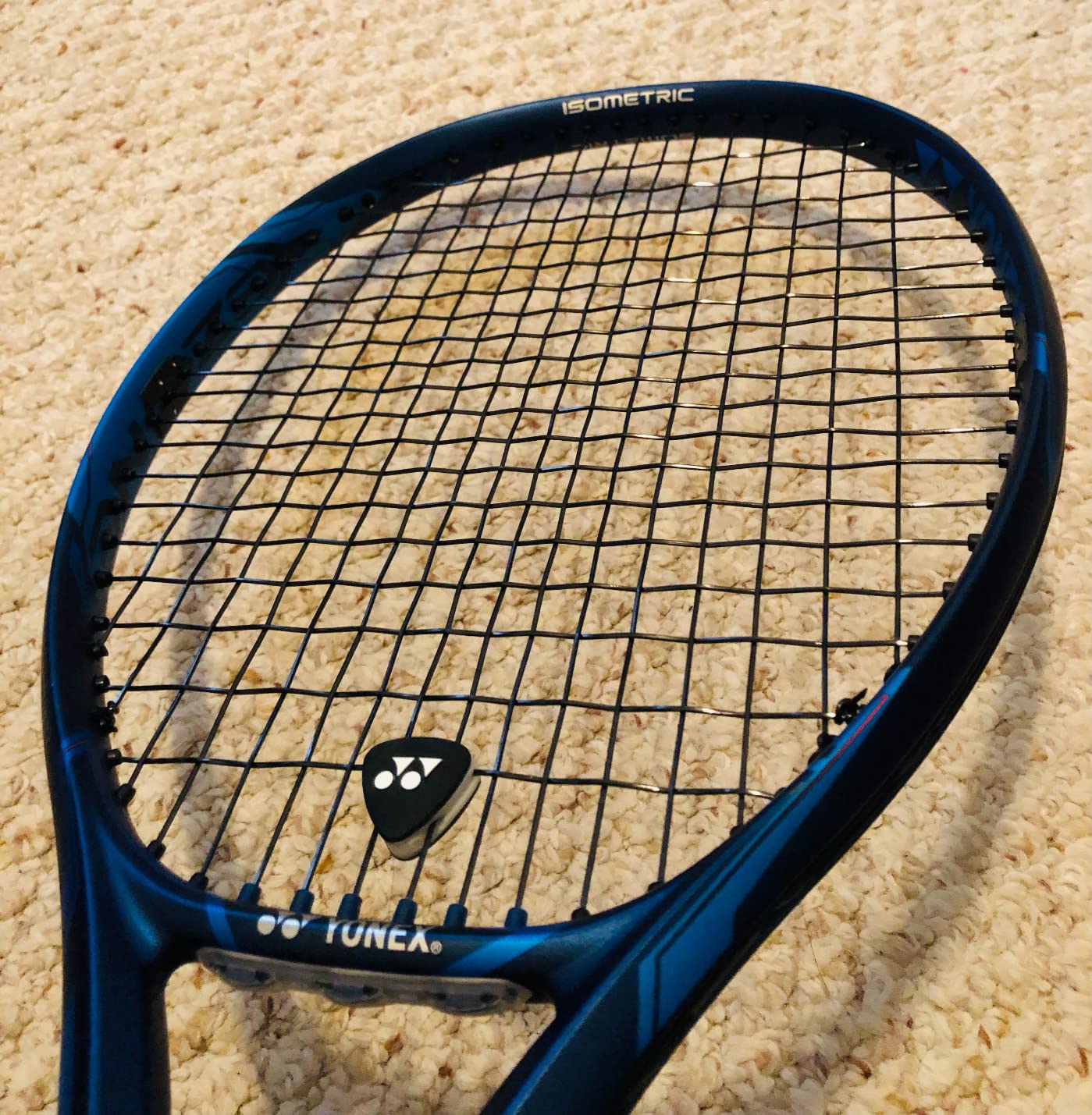
3. Use string savers and grommet bumpers. Yes, they work. A saver is a small plastic or silicone ring that holds the string away from the sharp edge of the grommet hole, which is where most strings snap at the top of the bed. They are the cheapest durability upgrade available, and they cost less than a single stringing.
4. Choose smooth over shaped. If you are breaking strings mid-bed rather than at the top, notching is the culprit. A round string in the mains will outlast a box shape at the same gauge.
5. Hybrid it. A poly mains with a soft nylon or multifilament cross is a well-worn community trick. The cross absorbs the impact that usually breaks the mains, and you can even run two gauges of the same string to save money.
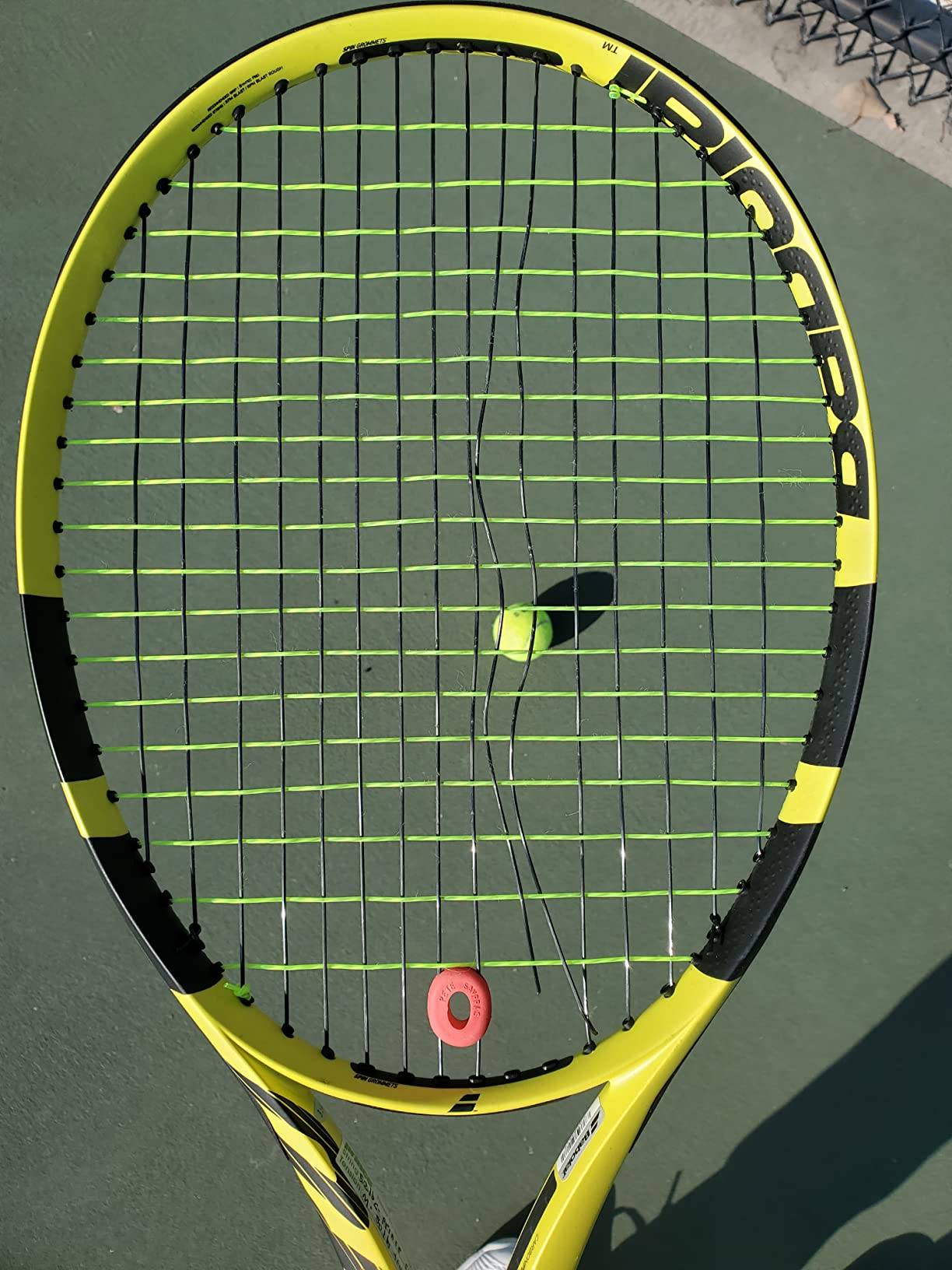
6. Protect the top of the bed. Check your grommets. If strings keep snapping within a few inches of the handle, the grommet strip is worn through and no string on the market will fix it. Grommet replacement costs a fraction of a year of restrings.
7. Restring on a calendar, not on a break. Strings go dead long before they fail. If you play 5 to 10 hours a week, a monthly schedule keeps the bed performing; a twice-yearly schedule will leave you playing on a dead bed for months. If you play about an hour a week, durability is not your problem at all and you are likely over-specifying the string.
For the gear around the string, our picks for the best tennis shoes and the best tennis bracelets both matter more to comfort than most players expect during a long session on a firm poly bed.
How to Choose a Durable Tennis String?
Start from your breakage rate, not from a spec sheet. If you break strings less than once a month, any co-poly at 17 or 18 gauge will serve you, and you can pick for feel instead of life. If you break them every week, stay at 16L or thicker and drop your tension.
Next, be honest about your arm. The most durable strings are also the least forgiving, and that is the trade-off every player in this roundup is making. A full poly bed in a stiff frame is the classic recipe for elbow pain, and no amount of string durability compensates for an injury. Players with any history of discomfort should look at a soft poly, a synthetic gut cross or a gut mains setup.
Then consider hybrids, which are under-used and quietly effective. Poly mains carry the durability and the control, a soft cross absorbs impact, and you can dial the two tensions separately to change the feel without restringing the whole bed with a different string. If you are not sure which direction to build it, put the stiffer string in the mains.
One last practical note on what professionals use. Tour players almost universally run a full polyester or co-polyester bed, usually a shaped control string, and many of them break strings weekly or more. That setup is the most durable construction available and also the least comfortable, which is why copying a pro string spec is a poor default for a recreational player with a stiff frame.
If you are stringing for a junior, our junior equipment picks cover the softer end of the market where durability matters less than touch, and a junior frame is usually more flexible than an adult one, which changes how any string behaves.
Frequently Asked Questions
Which tennis string is the most durable?
Polyester and co-polyester monofilaments are the most durable tennis strings, because their stiff, low-friction construction resists abrasion and notching. Add a gauge step and drop the tension a few pounds. Our pick for most players is the Luxilon ALU Power, while the Solinco Tour Bite is the longest-lasting bed in our roundup and the HEAD Lynx is the cheapest durable option.
How long do tennis strings typically last?
A poly bed strung at moderate tension gives most club players roughly 10 to 20 hours of play before it loses elasticity, and a co-poly at 16L or thicker often reaches 30 to 50 hours before breaking. A player hitting 10 hours a week should expect to restring every three to five weeks. Someone playing one hour a week will usually lose tension long before the string breaks, so longevity is rarely their problem.
Why do my tennis strings break so often?
There are three usual causes. Breaks within a few inches of the handle point to worn grommets, and no string will fix that until the strip is replaced. Breaks mid-bed usually mean notching, which calls for a rounder or thicker string. Breaks during stringing or shortly after usually mean the tension was pulled too high for the gauge. If your strings snap at the top of the bed, add string savers before you change string.
Do tennis string savers work?
Yes. A string saver is a small ring that holds the string clear of the sharp edge of the grommet hole, which is the single most common break point. Reviewers regularly report fewer top-of-bed breaks once they are fitted. They are also the cheapest durability upgrade available, costing less than a single stringing, so they are worth fitting every time you restring.
Which hybrid tennis strings are the best?
A poly or co-poly in the mains with a soft multifilament or nylon cross is the most reliable durable hybrid. The mains supply control and tension stability while the cross absorbs the impact that usually breaks them. Run the stiffer string in the mains. Our picks for this setup are the Luxilon ALU Power or Solinco Tour Bite in the mains with the Kirschbaum Synthetic Gut in the crosses.
What tennis strings do professionals use?
Tour players mostly run full polyester or co-polyester beds, often a shaped control string such as the Solinco Hyper-G or a six-edge design like the HEAD Hawk Touch. That is the most durable construction available and also the least comfortable, and many of the best players break strings weekly or more. Copying a pro spec on a stiff recreational frame is a common way to end up with a sore elbow.
Conclusion: The Best Tennis Strings for Durability in 2026
The best tennis strings for durability are co-polyester and polyester monofilaments at 16L or thicker, strung 3 to 5 pounds below your normal tension, with string savers fitted at the grommets. Start with the Luxilon ALU Power if you want one string that does everything well, the Solinco Tour Bite if you want the longest-lasting bed, and the HEAD Lynx if you want durability on a budget.
Match your string to your arm, and remember that a comfortable string you keep for two weeks beats a durable string you put down after one. Once you know how often you actually break strings, the rest of the decision is a ten-minute job.